
Custom aluminum CNC milling is used when a part needs a controlled shape, defined dimensions, and material properties that suit lightweight metal components. It is common in aircraft aerospace structures, EV battery parts, precision equipment, medical devices, fixtures, housings, brackets, heat-transfer parts, fuel system components and structural prototypes.
The decision is rarely just “Can it be machined?” A more useful question is whether milling is the right process for the geometry, alloy, tolerance, finish, quantity, inspection level, and risk profile. A part may be technically machinable but still expensive, unstable, slow to inspect, or difficult to finish.
This guide focuses on engineering decisions: when custom aluminum CNC milling fits, where it becomes risky, how alloy and finish choices affect the result, and what buyers should verify before production.
What Custom Aluminum CNC Milling Is and Why It Matters
Custom aluminum CNC milling is a subtractive process. A rotating cutting tool removes material from aluminum stock under computer numerical control. The starting material may be plate, bar, billet, extrusion, or near-net stock. The final part is created by programmed toolpaths, fixturing, controlled cutting, deburring, and inspection.
It matters because aluminum combines low weight, good machinability, corrosion resistance in many environments, and a wide range of available alloys. CNC milling also gives engineers direct control over local features such as pockets, bosses, slots, mounting faces, threads, sealing surfaces, and precision interfaces.
The trade-off is material removal. If the design removes most of a billet, cycle time, tool wear, chip evacuation, distortion risk, and cost all rise.
When custom aluminum CNC milling is the right manufacturing path
Custom aluminum cnc milling is usually the right path when the part needs precision geometry, moderate to complex 3D features, controlled interfaces, or low-to-medium production volume. It is also useful when the design is still changing, because CNC programs and fixtures can often be revised more easily than casting dies or extrusion tooling.
Milling is less attractive when the part is a simple flat profile, a long constant cross-section, or a very high-volume shape that can be cast, stamped, or extruded with less waste.
| Process | Best fit | Main constraint | Decision signal |
|---|---|---|---|
| CNC milling | Complex aluminum parts with controlled surfaces | Material removal and setup time | Use when geometry, tolerance, or flexibility matters |
| Casting | Near-net shapes and higher-volume parts | Tooling, porosity risk, post-machining | Use when volume supports tooling |
| Extrusion | Long parts with constant cross-section | Cross-section limits | Use when the profile repeats along length |
| Cutting | Flat plates and 2D profiles | Edge quality and secondary operations | Use when the part is mostly planar |
What makes aluminum suitable for CNC milled parts
Aluminum is widely used for CNC milled parts because it is light, cuts efficiently, and can accept common finishes such as anodizing and powder coating. Chip formation, burr tendency, and surface finish response vary by alloy and temper, so aluminum should not be treated as one machining category. Freer-machining grades usually clear chips more predictably, while softer or gummier grades are more prone to edge buildup, smeared surfaces, and heavier deburring. This helps reduce heat buildup and supports smoother surfaces.
The best aluminum grade for CNC machining depends on the function. 6061 is often used for general machined components because it balances machinability, strength, corrosion behavior, and finish response. 7075 aluminum parts are used when strength-to-weight ratio is more important, but it brings added corrosion and inspection concerns. 5052, 6063, 7050, and other alloys may be better in specific cases.
What project requirements should be defined before quoting?
Before quoting custom aluminum CNC milling, the design package should define the part well enough to assess machining risk. Missing information often leads to conservative pricing or later design changes.
A practical CAD design quoting checklist includes:
- CAD model in a usable 3D format
- 2D drawing for critical dimensions and notes
- Aluminum alloy and temper, if known
- Required tolerances only where needed
- Surface finish and coating requirements
- Quantity and expected repeat demand
- Cosmetic requirements
- Thread, insert, and hardware details
- Inspection needs, such as first article inspection or CMM report
- Traceability or documentation needs for regulated use
If a buyer does not know the alloy or finish yet, the drawing should at least define the environment, loads, mating parts, and appearance needs.
Where multi-axis and high-speed milling change the decision
Multi-axis milling changes the decision when the part has angled faces, deep features, thin walls, compound surfaces, or features on several sides. A 5-axis setup can reduce repositioning and may improve access to difficult geometry. It can also reduce tolerance stack-up caused by multiple setups.
High-speed milling can improve aluminum productivity when spindle capability, radial engagement, chip evacuation, tool balance, and workholding support stable cutting. It is not automatically beneficial on long-reach tools, thin walls, or low-rigidity setups, where higher speed can increase chatter and reduce accuracy. A 5-axis setup can also reduce repositioning and improve access, but higher programming effort, collision control, and machine-hour cost may outweigh those gains on simple parts.
| Feature | 3-axis milling | 5-axis milling |
|---|---|---|
| Tool approach | Mainly top-down | Multiple angles |
| Setup count | Often higher for multi-face parts | Often lower |
| Best use | Prismatic parts, plates, brackets | Complex contours, angled faces, thin-wall access |
| Cost trade-off | Lower machine complexity | Higher programming and machine cost, fewer setups possible |
Feasibility: Can the Aluminum Part Be Manufactured?
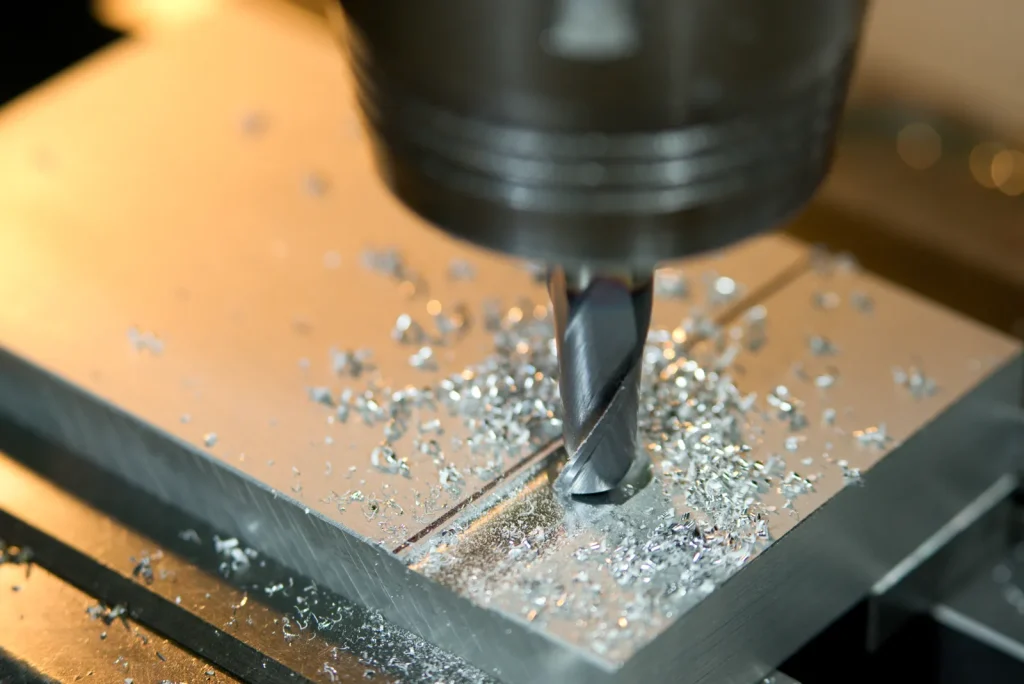
Feasibility depends on geometry, alloy, stock form, tolerances, finishing, inspection, and how the part behaves after material is removed, referencing precision specifications from NIST. Non-magnetic aluminum is generally considered easy to CNC mill compared with many harder metals, but that does not mean every aluminum design is low risk.
The main issues are deflection, chatter, burrs, residual stress, tool access, workholding, and finish sensitivity.
Design features that increase cost in custom aluminum parts
Several design features increase cost in custom aluminum parts because they add machining time, special tooling, extra setups, or inspection difficulty.
| DfM feature | Why it increases cost | Design check |
|---|---|---|
| Deep pockets | Long tools deflect and chatter | Increase corner radii or reduce depth where possible |
| Tight internal corners | Small tools cut slowly | Match radius to practical cutter size |
| Undercuts | Need special tools or multi-axis access | Confirm access early |
| Thin walls | Deflect during cutting | Add support, ribs, or relax tolerance |
| Many setups | Adds alignment risk | Combine features by datum strategy |
| Cosmetic faces | Need controlled handling | Define appearance zones clearly |
The key point is not to remove complexity for its own sake. It is to place precision and complexity only where the part needs them.
Challenges of machining thin wall aluminum parts
Challenges of machining thin wall aluminum parts come from low stiffness. Thin walls can move away from the cutter, vibrate, or spring back after the tool passes. This affects flatness, wall thickness, and surface finish.
The main decision factors are deflection, chatter, heat, fixture strategy, and tolerance risk. A thin wall may need staged roughing, balanced material removal, custom soft jaws, vacuum fixturing, tabs, or temporary support features. If the wall is also cosmetic or anodized, tool marks and handling marks become more important.
Thin-wall aluminum parts are feasible when wall thickness, unsupported span, datum strategy, and finish requirements are aligned with the process plan. If the wall is primarily incidental, reducing height, adding support ribs, increasing corner radius, or changing stock form is often more reliable than trying to control distortion only through machining technique. When geometry cannot be changed, the drawing should clearly separate critical features from noncritical walls so process controls and inspection can be focused where function depends on them.
Waterjet cutting vs CNC milling for aluminum plate parts
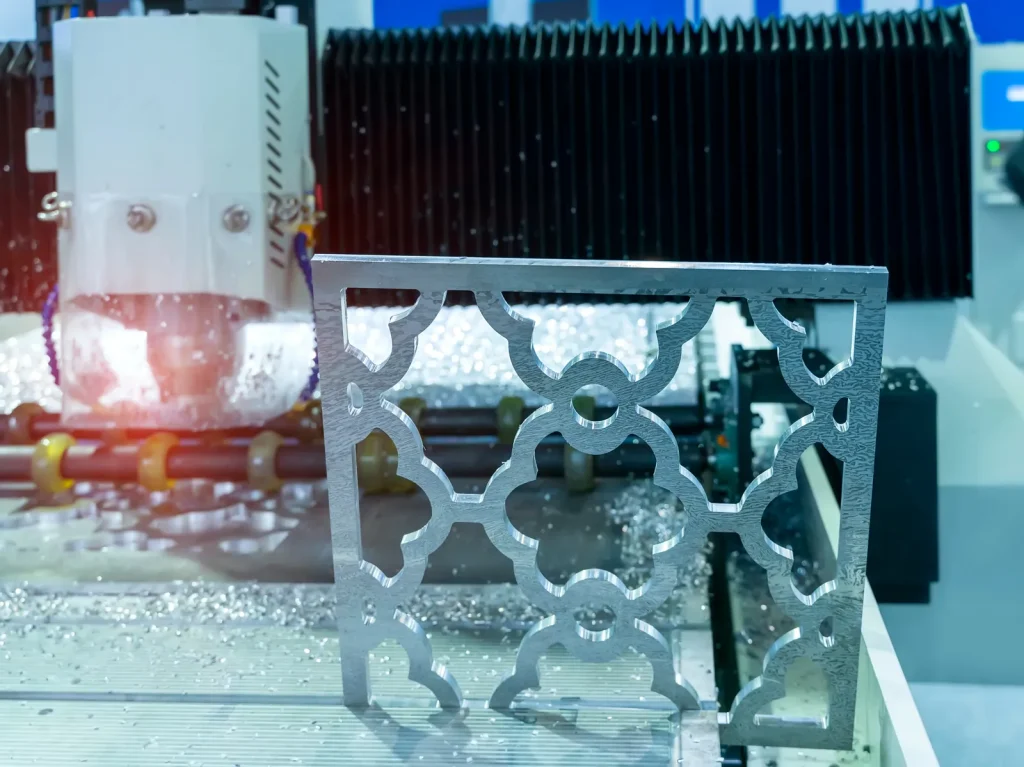
Waterjet cutting vs CNC milling for aluminum plate parts is mainly a question of geometry and edge requirements. Waterjet is useful for flat profiles cut from plate. CNC milling is better when the part needs pockets, precise holes, tapped features, controlled faces, chamfers, or tighter relationships between features.
| Requirement | Waterjet cutting | CNC milling |
|---|---|---|
| Sheet metal flat outside profile | Strong fit | Possible but may be slower |
| Precision holes | Often needs secondary machining | Strong fit |
| 3D features | Not suitable | Strong fit |
| Edge finish | May need cleanup | Controlled by toolpath |
| Threads and pockets | Secondary process needed | Directly machinable |
| Thick plate accuracy | Affected by taper and stability | Affected by cutter reach and fixturing |
A hybrid route is common: rough cut the blank, then CNC mill critical features.
How plate thickness influences aluminum cutting accuracy
Plate thickness influences aluminum cutting accuracy because thicker stock changes how the material is held, how deep tools must reach, and how much stress may be released during machining. Thick plate can require longer tools, which can reduce rigidity. Thin plate can vibrate or lift if fixturing is poor.
Inspection planning also changes with thickness. Flatness, parallelism, and position may shift after roughing or after parts are released from fixtures. If the part has large flat faces, the process may need rough machining, rest time or stress control, and finish machining.
How Custom Aluminum CNC Milling Works
A typical workflow moves from design review to programming, setup, machining, finishing, and inspection. Each step can change cost or risk. For example, a design that looks simple in CAD may need multiple fixtures because features are located on opposite faces.
From CAD/CAM to finished aluminum component
The process starts with manufacturability review. The machinist or manufacturing engineer checks tool access, stock choice, datum structure, tolerance callouts, and finish needs. CAM software then converts the CAD model into toolpaths.
A simplified process flow is:
CAD model → drawing review → stock selection → CAM programming → fixture planning → rough machining → finish machining → deburring → surface finish or coating → inspection → packaging
Each step should match the part’s function. A prototype bracket may need fast geometry verification. A regulated precision component may need more documentation, controlled inspection, and traceability.
3-axis vs 5-axis milling for aluminum parts
3-axis milling is suitable for many prismatic aluminum parts, including plates, brackets, housings, and fixtures. It is usually simpler to program and set up when most features are accessible from one or two directions.
5-axis milling is useful when geometry complexity, setup reduction, and access to multiple faces matter. It can help with angled surfaces, complex contours, and thin-wall features that need better tool orientation. The cost trade-off is higher programming complexity and machine time rate, which may or may not be offset by fewer setups and less manual handling.
Impact of aluminum grade on machinability and tool wear
The impact of aluminum grade on machinability and tool wear is significant. Softer or more ductile alloys may smear, form built-up edge, or create burrs if cutting conditions are poor. Stronger alloys can be more abrasive or demanding on tools, depending on temper and composition.
Cutter selection, flute design, coating choice, coolant strategy, and chip evacuation all matter. Feeds and speeds for aluminum milling cannot be chosen from alloy alone. They depend on tool diameter, tool length, machine rigidity, workholding, depth of cut, chip load, coolant, and surface finish needs.
Effects of stress relief on precision aluminum machining
Effects of stress relief on precision aluminum machining are most visible in flat, thin, or heavily pocketed parts. Aluminum stock can contain residual stress from rolling, extrusion, heat treatment, or prior processing. When material is removed unevenly, the part may move.
Stress relief is a decision factor when the part has tight flatness, parallelism, or positional needs. Process planning may include balanced roughing, semi-finishing, rest periods, or selecting stock with better stability. The main risk is post-machining movement after the part leaves the fixture.
Aluminum Grades, Finishes, and Trade-Offs
Alloy selection affects strength, corrosion behavior, machinability, tool wear, finish quality, weldability, and cost sensitivity. No single aluminum grade is best for all CNC milled parts.
6061 vs 7075 aluminum for CNC machined parts
6061 vs 7075 aluminum for CNC machined parts is one of the most common material decisions. 6061 is often selected for general-purpose machined parts because it balances machinability, corrosion resistance, finish compatibility, and availability across common stock forms. 7075 is chosen when higher strength-to-weight ratio matters, but it is not a simple upgrade because finish protection, service environment, fastener compatibility, and structural inspection expectations usually become more demanding. The material decision should be based on load case, corrosion exposure, cosmetic finish needs, weldability, and certification requirements rather than strength alone.
| Factor | 6061 aluminum | 7075 aluminum |
|---|---|---|
| Strength | Moderate to high for general use | Higher strength |
| Machinability | Generally favorable | Good, but more demanding |
| Corrosion behavior | Better general corrosion resistance | More corrosion-sensitive |
| Finish response | Often suitable for anodizing | Finish may need closer control |
| Typical decision | Brackets, housings, fixtures | Structural lightweight parts |
Application risk should guide the choice. If the part is structural, loaded, or fatigue-sensitive, material selection should be reviewed with the full load case.
When to choose 5052 aluminum over 6061 for machined components
When to choose 5052 aluminum over 6061 for machined components depends on corrosion exposure, forming needs, and strength requirements. 5052 is often considered where corrosion resistance and formability matter more than high strength or extensive machining.
It may be useful for covers, panels, marine-exposed parts, formed-and-machined components, or parts where bending occurs before machining. The trade-off is that machining behavior and achievable detail may differ from 6061. If the part has many precision milled features, the machining plan should be reviewed before changing from 6061 to 5052.
Limitations of machining 7075 aluminum for structural parts
Limitations of machining 7075 aluminum for structural parts include corrosion risk, stress sensitivity, finish requirements, and inspection needs. 7075 can be a strong material choice, but it should not be treated as a simple upgrade from 6061.
For structural parts, designers should consider grain direction, sharp transitions, surface condition, and coating. The part may also need closer inspection if it will see cyclic loading or safety-related service. If corrosion exposure is present, protective finish and material compatibility become part of the design, not an afterthought.
Reasons to use 7050 instead of 7075 in aerospace parts
Reasons to use 7050 instead of 7075 in aerospace parts are usually linked to aerospace structural requirements and stress corrosion concerns. Aerospace material decisions are often tied to certified material specifications, heat treatment condition, inspection requirements, and documented traceability.
7050 may be considered where thick-section performance, fracture-related concerns, or stress corrosion behavior are central to the design review. This decision should be made in the context of applicable aerospace standards, material specifications, and engineering approval, not just machine shop preference.
Surface Finish, Coating, and Corrosion Decisions
Surface finish is both a functional and cosmetic decision. It can affect friction, sealing, fatigue behavior, corrosion resistance, coating quality, and visual acceptance. For aluminum CNC parts, machining marks and burrs often remain visible unless the finish process is planned.
Factors affecting anodized finish quality on CNC milled aluminum
Factors affecting anodized finish quality on CNC milled aluminum include alloy choice, surface preparation, tool marks, burrs, and handling damage. Anodizing does not hide every machining defect. In many cases, it makes scratches, chatter marks, and inconsistent texture easier to see.
An anodizing quality checklist should include:
- Alloy and temper compatibility
- Consistent machined texture on visible faces
- Burr removal before finishing
- Avoidance of deep scratches before anodizing
- Defined cosmetic surfaces
- Controlled handling and packaging
- Awareness that different alloys may color differently
Why anodize aluminum CNC parts? The main reasons are corrosion resistance, surface hardness, wear behavior, and appearance. The choice depends on the environment and the required finish.
When powder coating is better than anodizing for aluminum parts
When powder coating is better than anodizing for aluminum parts depends on appearance, coating thickness, color consistency, wear exposure, and environment. Powder coating can provide a thicker colored barrier when appearance and broad environmental protection matter more than tight dimensional control. That added buildup can affect hole diameters, edges, threads, and masked features, so it is usually a poor choice for close-fitting interfaces unless coating allowance and masking strategy are defined in advance. Anodizing is often more suitable where dimensional sensitivity, wear surface behavior, or metal appearance is part of the requirement.
Anodizing is integrated with the aluminum surface and is often chosen for thinner, harder surface treatment. Powder coating adds a layer that can affect dimensions, edges, and fits. Designers should account for coating buildup if the part has close-fitting features.
Common surface finish problems in machined aluminum parts
Common surface finish problems in machined aluminum parts include chatter marks, scratches, visible tool paths, inconsistent texture, burr shadows, and post-process defects. These issues can come from tool condition, long tool reach, poor chip evacuation, unstable fixturing, or handling after machining.
Cosmetic requirements should be stated clearly in the drawing. A fully cosmetic part is different from a part with only one visible face. Without clear zones, suppliers may over-process nonfunctional surfaces or under-control visible ones.
Corrosion risks in CNC machined aluminum components
Corrosion risks in CNC machined aluminum components depend on alloy selection, galvanic contact between aluminum and copper, magnesium, zinc materials, coating choice, and the end-use environment. Galvanic corrosion can occur when aluminum contacts a more noble metal in the presence of an electrolyte. Coating damage, trapped moisture, and sharp edges can increase risk.
Designers should consider fastener materials, isolation washers or barriers, drainage, finish coverage, and maintenance exposure. Corrosion standards and material compatibility guides are useful when the part will be used outdoors, near salt, in vehicles, or in mixed-metal assemblies.
Common Failure Scenarios and How to Prevent Them
Most failures in aluminum CNC milling are not caused by milling itself. They come from incomplete requirements, unstable geometry, wrong alloy choice, poor fixture planning, unclear finishes, or unnecessary tolerance demands.
Causes of burr formation in aluminum CNC milling
Causes of burr formation in aluminum CNC milling include cutter condition, feeds and speeds, exit edges, alloy behavior, and lack of a deburring plan. Ductile aluminum can form burrs when the material bends instead of shearing cleanly at an edge.
How to prevent burrs in aluminum milling starts with sharp tools, stable cutting, suitable toolpaths, and edge-break requirements. Burr control should be designed into the process. If an edge is functional, such as a sealing edge or sliding interface, the drawing should define the acceptable edge condition.
What causes dimensional instability in aluminum machined parts?
Dimensional instability in aluminum machined parts is usually linked to residual stress, thin walls, uneven material removal, heat, and fixturing. A part may measure correctly while clamped, then move after unclamping.
Large pockets, asymmetric machining, and thin webs increase this risk. Process planning can reduce movement by roughing both sides, leaving stock for finishing, using stable fixturing, and avoiding unnecessary tight tolerances on flexible features.
How to prevent surface scratches on custom aluminum components
How to prevent surface scratches on custom aluminum components depends on handling, packaging, toolpath strategy, finishing sequence, and inspection criteria. Aluminum scratches easily compared with harder metals. Chips, clamps, trays, and uncontrolled stacking can mark the part.
The drawing should define cosmetic surfaces and acceptable defects. The process should keep finished faces away from loose chips and hard contact. If anodizing or powder coating follows machining, the finishing sequence should avoid creating marks that the coating cannot hide.
Weldability tradeoffs between 6061 and 6063 aluminum parts
Weldability tradeoffs between 6061 and 6063 aluminum parts matter when milled components become part of a welded assembly. 6063 is often associated with extruded profiles and may be selected for appearance or forming-related needs. 6061 is common for machined brackets and structural components.
Welding can change strength near the weld and may require post-weld machining or finishing. If the part must be welded and then machined, datum planning should account for distortion. Finish compatibility also matters if the welded assembly will be anodized or powder coated.
Cost, Tolerance, and Lead-Time Factors
The cost of custom aluminum parts is driven by material, machine time, setup count, tool access, tolerance, inspection, finishing, documentation, and quantity. Unit price alone can hide risk if quotes make different assumptions about deburring, coating, inspection, or drawing notes.
How tight tolerances affect cost of custom aluminum machining
How tight tolerances affect cost of custom aluminum machining is tied to inspection time, machine time, setup complexity, and scrap risk. Tight tolerances may require slower finishing passes, better fixturing, controlled temperature, extra inspection, or more stable material removal.
| Tolerance demand | Typical cost effect | Main reason |
|---|---|---|
| General machining tolerance | Lower sensitivity | Standard setup and inspection may be enough |
| Tight functional interface | Medium to high sensitivity | More controlled cutting and measurement |
| Tight tolerance on thin wall | High sensitivity | Deflection and movement risk |
| Tight cosmetic and dimensional demand | High sensitivity | Finish and measurement both need control |
| Unneeded tight title-block tolerance | Avoidable cost | Precision is applied where it may not matter |
Which tolerances actually matter for aluminum CNC parts?
The tolerances that matter are the ones linked to function. These often include bearing seats, sealing faces, bolt patterns, dowel holes, sliding fits, alignment features, and assembly interfaces.
Cosmetic surfaces, clearance pockets, and noncritical reliefs usually do not need the same precision. Unnecessary precision can increase cost and lead time without improving the part. A good drawing separates critical-to-function dimensions from general features.
Lead-time variables in custom aluminum CNC milling
Lead-time variables in custom aluminum CNC milling include alloy availability, machine capacity, programming time, fixture needs, finishing, inspection, and revision cycles. Supply chain conditions can also affect aluminum stock and finishing schedules.
Automation, high-speed machining, and multi-axis equipment are industry trends that can reduce some setup and cycle-time burdens. Even so, they do not remove the need for material, approved drawings, stable requirements, and inspection planning. Late design changes remain one of the most common causes of schedule slip.
How volume changes the manufacturing decision
Volume changes the manufacturing decision because setup effort is spread across more parts. For a prototype, the goal may be design learning and fast revision. For bridge production, repeatability and fixture planning become more important. For repeat production, dedicated fixtures, process documentation, and inspection plans can reduce variation.
At higher volume, milling may still be suitable if the geometry needs it. But if the part is simple or near-net, casting, extrusion, or cutting plus secondary machining may deserve review.
Applications and Use Cases for Custom Aluminum CNC Milling
Custom aluminum CNC milling is used where low weight, controlled geometry, and functional surfaces intersect. The application should guide alloy, finish, tolerance, and inspection decisions.
Aerospace lightweight and structural components
Aerospace lightweight and structural components often need strength-to-weight performance, multi-axis geometry, and inspection documentation. Milled aluminum may be used for brackets, housings, ribs, mounts, tank accessories and other structural or semi-structural parts.
The risks are higher than for general industrial parts. Material specification, traceability, stress corrosion behavior, fatigue, surface finish, and inspection records may all be part of the requirement. Aerospace parts should be reviewed against the relevant standards and approved design data.
EV battery structures and lightweight vehicle parts
EV battery structures and lightweight vehicle parts use aluminum to reduce mass while supporting stiffness, crash behavior, and repeatability. CNC milling may be used for prototypes, battery enclosure features, cooling plates, structural nodes, and complex interfaces.
Thin walls, long sealing surfaces, and large plate features can create distortion and flatness issues. Cycle time also matters as volume increases. The decision should compare full CNC milling with extrusion, casting, forming, cutting, and secondary machining.
Medical device and precision equipment components
Medical device and precision equipment components often need tight tolerances, smooth finishes, reliability, and controlled documentation. Aluminum may be used for instrument housings, fixtures, motion components, optical mounts, and equipment frames.
Surface finish and cleaning requirements should be defined early. If the part is used in regulated equipment, inspection records, material traceability, and revision control may be as important as the machined geometry.
Fatigue considerations for machined 6061 aluminum components
Fatigue considerations for machined 6061 aluminum components matter when the part sees cyclic loading. Sharp internal corners, tool marks, scratches, abrupt section changes, and poor surface finish can raise local stress.
Designers should use generous transitions where possible, avoid unnecessary notches, and define finish requirements on loaded surfaces. Inspection should focus on high-stress areas, not only overall dimensions. If loads are safety-related, fatigue review should be part of the engineering process.
How to Evaluate a Custom Aluminum CNC Milling Supplier
Selecting a supplier is a technical risk decision. The best match depends on the part’s alloy, tolerance, finish, inspection, volume, and application. A low unit price is not useful if the quote excludes finishing, assumes loose tolerances, or ignores documentation.
What should buyers check before selecting a machining partner?
Buyers should check whether the supplier’s equipment, experience, and quality system match the part. Important items include:
- 3-axis and/or 5-axis milling capability
- Experience with the required aluminum alloy
- Ability to machine thin walls, deep pockets, or multi-face features
- Tolerance capability for the required geometry
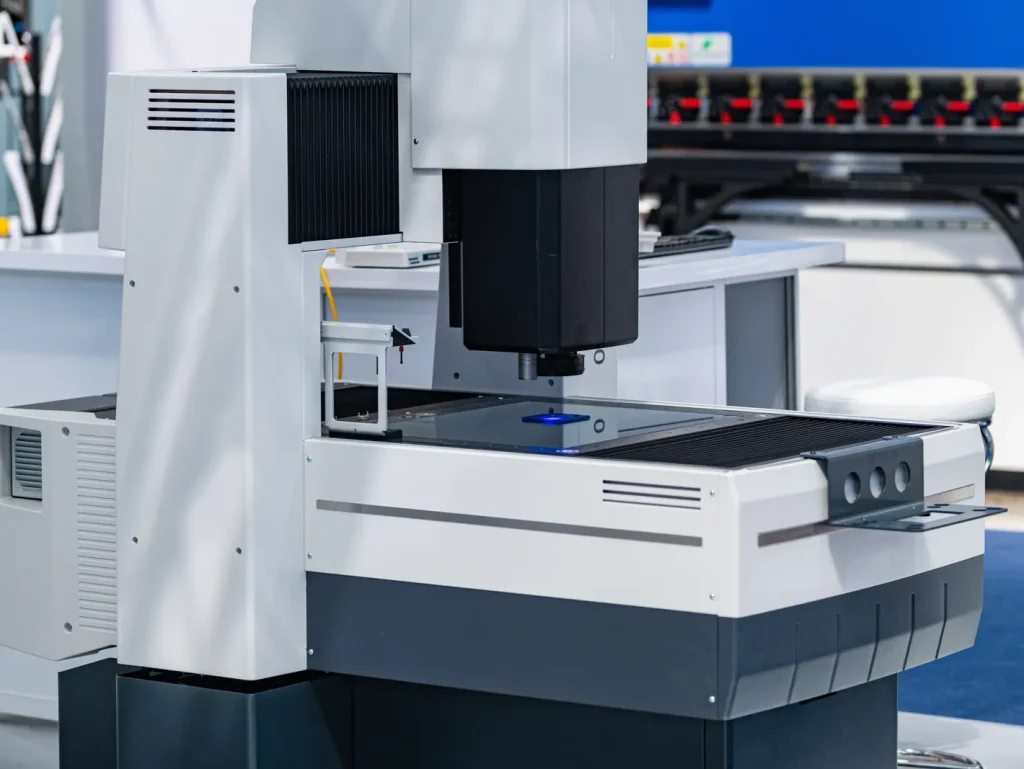
- Inspection equipment, such as CMM capability
- Finishing control for anodizing or powder coating
- Deburring and edge-break process
- Packaging for cosmetic aluminum surfaces
- Material traceability and documentation support
- Revision control process
The supplier does not need every capability for every part. The key is alignment with the risk profile.
Supplier evaluation should also account for sourcing model and handoff risk. A prototype-focused shop may respond quickly on early revisions but may not control repeat production, finishing coordination, revision traceability, or inspection documentation at the same level as a production-oriented supplier. If finishing is outsourced, buyers should confirm who owns masking, cosmetic acceptance, dimensional checks after finish, and nonconformance resolution.
Questions to ask about quality assurance and inspection
Quality assurance should match the application. For general parts, dimensional inspection and drawing conformance may be enough. For aerospace, medical, or precision equipment, first article inspection, CMM reports, traceability, and quality management standards may be required.
Buyers should confirm how critical features are measured, how revisions are controlled, and how nonconforming parts are handled. If a drawing calls out tight tolerances but does not define inspection method, measurement disagreement can occur later.
How to compare quotes without relying only on unit price
Quote comparison should normalize assumptions. Two quotes may look different because one includes finishing, deburring, and inspection while another excludes them.
| Quote item | Why it matters | Check before award |
|---|---|---|
| Alloy and temper | Affects strength, finish, availability | Confirm exact material |
| Tolerance assumptions | Drives cost and inspection | Compare drawing interpretation |
| Finish scope | Adds process steps | Confirm anodize or powder details |
| Deburring | Affects fit and handling | Define edge condition |
| Inspection | Affects acceptance | Confirm reports and methods |
| Packaging | Protects cosmetic surfaces | Define scratch sensitivity |
| Revision handling | Affects schedule | Confirm how changes are quoted |
When to revise the design before production
Design revision before production is useful when manufacturability risks are clear. Examples include deep pockets with tight internal corners, thin walls with tight flatness, finish conflicts, undercuts that need special tools, or tolerances applied to nonfunctional surfaces.
Revisions should aim to reduce risk without changing function. Increasing internal radii, clarifying datum structure, relaxing noncritical tolerances, separating cosmetic and functional surfaces, or changing alloy can reduce cost and lead time.
Conclusion
Custom aluminum CNC milling is a strong manufacturing path when a part needs lightweight material, controlled geometry, precision interfaces, and design flexibility. It is especially useful for prototypes, complex brackets, housings, thin-wall structures, multi-face parts, and precision equipment components.
It may be the wrong path when the design is a simple flat profile, a long constant extrusion, a high-volume near-net shape, or a part with features that create avoidable machining risk. Before production, buyers should define alloy, tolerance, finish, quantity, inspection, and cosmetic requirements. The best decisions come from matching the process to the function of the part, not from choosing the strongest alloy or the tightest tolerance by default.
FAQs
Is aluminum easy for CNC mills?
Aluminum machines far easier than harder metals, making custom aluminum CNC milling ideal for lightweight industrial components. It delivers smooth chip formation and efficient cutting with standard tooling and coolant setups. Even so, thin walls, deep pockets and weak fixturing can still cause burrs, chatter and part distortion. Unclear finish requirements also lead to inconsistent results in everyday milling work. Choosing proper cutters and stable cutting parameters ensures reliable aluminum machining quality.
What is the best aluminum grade for CNC machining?
No single aluminum alloy works for all CNC milling applications across industrial projects. Precision 6061 aluminum machined parts balance strength, machinability and corrosion resistance for general use. High-load scenarios often adopt CNC machined 7075 aluminum structural parts for superior strength-to-weight performance. Other grades like 5052, 6063 and 7050 fit marine, forming and aerospace specialized demands. Selecting alloy based on function, environment and finish needs always delivers the best outcome.
How can burrs be prevented in aluminum milling?
Sharp cutters, stable feeds and speeds form the foundation of clean aluminum milling production. Effective chip evacuation and optimized toolpath exits greatly reduce edge burrs during processing. Clear deburring plans and defined edge-break rules on drawings standardize edge quality control. Functional surfaces like sealing faces and sliding interfaces need strict edge finishing standards. Following consistent machining workflows keeps aluminum parts smooth and assembly-ready.
What affects the cost of custom aluminum parts?
Alloy type, stock size, material removal and setup complexity directly impact aluminum machining cost. Overly tight tolerances on noncritical features raise inspection time and scrap risk unnecessarily. Finishing, deburring, inspection and order quantity also add clear cost variables to projects. Smart DfM design and reasonable tolerance control help cut overall manufacturing expenses. Well-planned specifications lower spending on custom 6061-T6 aluminum components efficiently.
Why anodize aluminum CNC parts?
Anodizing enhances corrosion resistance, surface hardness and visual appeal for milled aluminum components. Professional anodized aluminum milling relies on clean surface prep and full burr removal before treatment. Existing tool marks and scratches become more noticeable after the anodizing process finishes. Proper handling protects cosmetic surfaces from damage during pre-finish preparation. It remains a top surface solution for outdoor, marine and high-wear aluminum applications.
Feeds and speeds for aluminum milling?
Feeds and speeds for aluminum milling cannot be determined by alloy type alone in actual production. Tool size, overhang, machine rigidity and workholding all influence cutting stability greatly. Different aluminum grades need adjusted parameters to avoid edge buildup and tool wear. Poor settings easily cause chatter marks and poor surface finish on milled parts. Optimized parameters perfectly suit routine 6061 aluminum machining for steady output quality.

 English
  German
  French
  Italian
  Spanish
  Polish
  Czech
Czech  Japanese