
Medical device component machining is a core manufacturing decision within the medical field, with direct effects on part function, inspection burden, regulatory documentation, and production risk for medical equipment, ventilator components and prosthetic devices. For an engineer or technical buyer, the main question is not simply whether a part can be cut on CNC machines. The better question is whether the selected machining process can hold the required geometry, surface condition, material behavior, cleanliness level, and traceability over the intended production life.
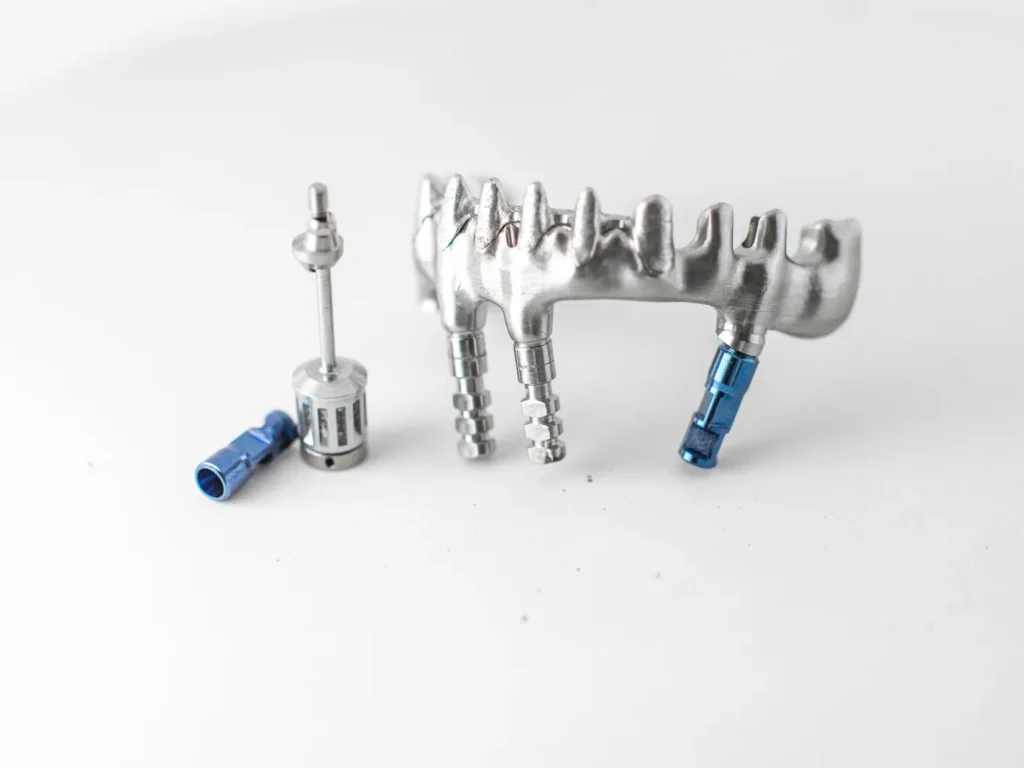
CNC machining for medical is commonly used for implants, dental implants, prosthetic parts, orthopedic components, surgical instruments, spinal hardware including titanium spinal fixation parts, diagnostic equipment parts, micro-components, and reusable device hardware. Processes may include CNC milling, CNC turning, Swiss machining, wire EDM, laser machining, grinding, and related finishing steps. Each process has different strengths. Milling can generate complex prismatic shapes. Turning is well suited to round or symmetrical parts. Swiss machining supports small, slender, high-precision components. Wire EDM can create sharp internal features or fine openings in difficult materials. Laser machining can help with small features where mechanical tooling is limited.
The feasibility decision depends on material, geometry, tolerance, burr risk, inspection access, sterilization method, and production volume. Titanium may be preferred for many implant applications such as cnc machined titanium bone plates, while stainless steel may be preferred for many surgical instruments in surgical instrument manufacturing. Medical-grade plastics can be suitable for making biocompatible cnc machined parts, but implantable plastic parts raise different questions than metal parts, especially around biocompatibility, wear, cleaning, and sterilization.
This guide explains how medical machining differs from general CNC machining, where it works well, where it can fail, and what to verify before moving from prototype to production.
What Is Medical Device Component Machining?
Medical device component machining is the controlled removal of material to produce parts used in medical devices, surgical tools, implants, orthopedic systems, and precision medical assemblies. The source material may be metal bar stock, plate, tube, or engineered plastic. The machining method may be subtractive, such as milling or turning, or may use non-contact or thermal processes, such as EDM or laser machining.
The term “medical grade machining” is often used in industry, but it does not mean the machine itself makes a part medically acceptable. It means the part is made under controls that support medical device use. Those controls follow rigorous industry standards and may include approved materials, controlled processes, in-process inspection, final inspection, documentation, lot traceability, cleanliness controls, and quality-system requirements such as ISO 13485:2016.
How CNC Machining for Medical Stands Out in the Manufacturing Field
General CNC machining focuses on producing a part to drawing requirements. Medical device component machining also does that, but with added attention to risk, documentation, and repeatability. A non-medical machined bracket may only need dimensional inspection and material confirmation. A medical component may need controlled material records, revision control, inspection records, process documentation, and evidence that the part was made under a controlled quality system.
The difference is not always visible in the part shape. A small stainless steel pin for a medical device may look similar to a pin used in another industrial assembly. The difference is in the required controls. The medical part may need lot-level traceability, controlled handling, defined cleaning, and records that link the finished component back to material and production data.
This is why medical device machining should be considered early in design. If a feature is hard to inspect, hard to clean, or likely to form burrs, it can create risk even if the CNC program can produce the nominal shape.
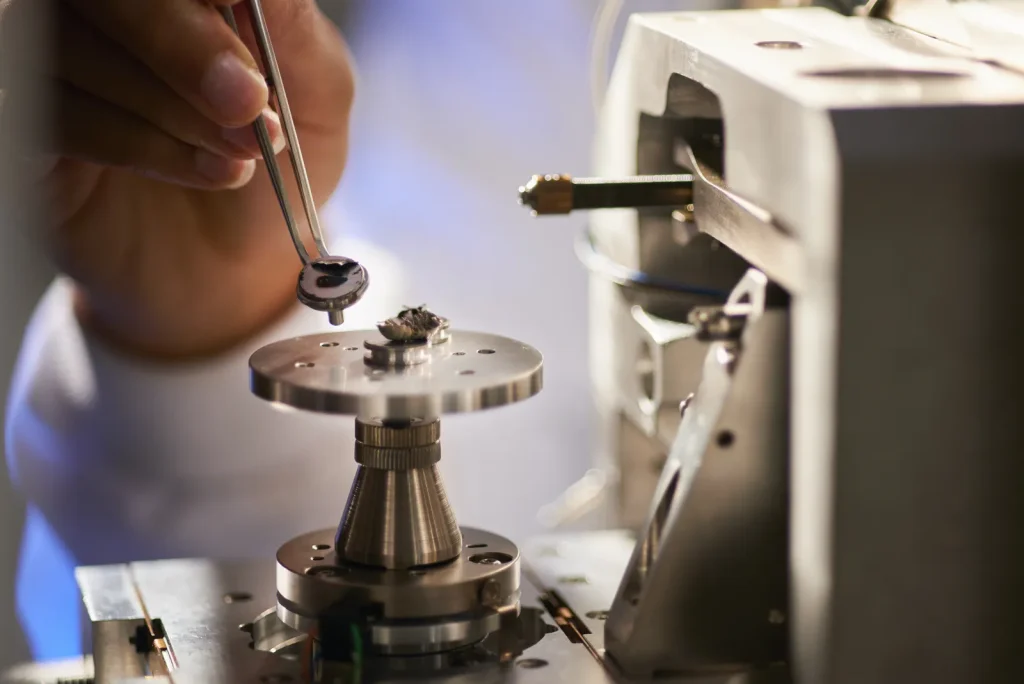
Why Precision and Quality & Reliability Define Medical Component Production
Tolerance risk in medical components should be reviewed through datum strategy, feature function, and the method used to verify each critical dimension, as precision in medical applications demands tight tolerances, strict precision and quality and long-term reliability that are non-negotiable for medical applications. A supplier may be able to machine a feature but still lack the inspection method needed to prove it reliably, especially for small bores, complex surfaces, and thin-wall features. GD&T, measurement system suitability, and the difference between attribute checks and variable measurement should be reviewed early because inspection capability can limit manufacturability as much as cutting capability.
Traceability is also central. Traceability requirements in medical device component manufacturing usually connect the finished component to material lots, process records, inspections, and revision history. This does not improve geometry by itself, but it supports investigation if a nonconformance occurs. It also helps confirm that the correct material, process route, and inspection plan were used.
For buyers, the key point is simple: the drawing is only one part of the requirement. The process record and quality evidence are also part of the manufacturing output.
What Types of Medical Components Are Machined for Medical Devices?
Medical machining is used across several component groups. Common examples include orthopedic implants, bone screws, spinal fixation components, spinal cages, bone plates, surgical instruments, reusable device hardware, housings, connectors, shafts, pins, small gears, springs, and precision components for minimally invasive devices.
CNC turning is often used for round parts such as screws, pins, and shafts. Milling is used for plates, housings, instrument bodies, and contoured implant features. Swiss machining is useful for long, small-diameter, or intricate components. Wire EDM may be selected for hard materials, narrow slots, small holes, and sharp internal corners. Laser machining can support fine features and micro-scale work where mechanical tool access is limited.
Table: Medical machining processes vs typical component types
| Machining process | Typical medical component types | Main decision fit | Main constraints to check |
|---|---|---|---|
| CNC milling | Bone plates, housings, instrument bodies, implant features | Good for prismatic and contoured features | Tool access, burrs, surface finish, inspection access |
| CNC turning | Bone screws, shafts, pins, round connectors | Good for rotational parts | Slenderness, thread quality, concentricity, burrs |
| Swiss machining | Small screws, pins, micro-connectors, long slender parts | Good for small precision parts | Material behavior, tool wear, part handling |
| Wire EDM | Spinal cages, fine slots, sharp internal features | Good for hard materials and fine internal geometry | Conductive materials, recast layer concerns, secondary finishing |
| Laser machining | Micro-features, fine holes, thin features | Good where tool contact is difficult | Heat effects, edge condition, material response |
| Micro-machining | Tiny gears, springs, connectors | Good for minimally invasive and precision devices | Tool fragility, burr control, inspection limits |
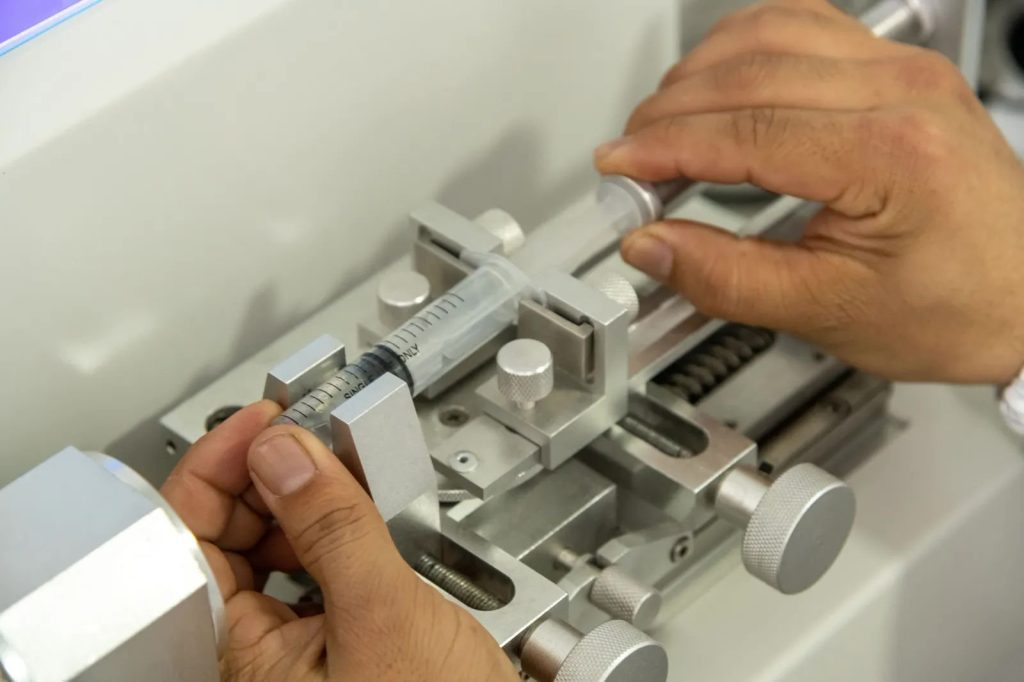
Feasibility: Can the Medical Component Be Machined?
A medical component may be machinable in theory but risky in production. Feasibility depends on whether the design can be cut, held, measured, cleaned, and repeated. Engineers should evaluate manufacturability before design release, not after supplier quoting.
The most common feasibility issues are narrow tool access, deep pockets, thin walls, tight internal radii, sharp corners, difficult materials, burr-prone edges, and inspection features that cannot be reached. A part with many of these features may still be possible, but it may need a different process route, added setups, secondary finishing, or a design change.
Material Selection in Machining Medical Implant Components
Implantable plastics and metals should be compared by exact grade, mechanical demand, sterilization exposure, wear risk, and cleaning sensitivity. Metals such as titanium, stainless steel, cobalt-chrome, and nitinol may offer higher strength or fatigue performance, while PEEK, UHMWPE, ceramics, or bioabsorbable materials may be chosen for imaging, wear, articulation, or temporary-support reasons. The manufacturing decision is not only metal versus plastic; it is whether the selected grade can be machined, finished, cleaned, and verified without creating unacceptable surface or residue risk.
Implantable plastic components need careful review because machining can affect surface condition, debris generation, edge quality, and cleaning. Plastics may respond differently to heat, coolant, tool pressure, and sterilization. Metals also have risks. Titanium can be difficult to machine because heat and tool wear must be controlled. Stainless steel may be easier to source and machine in many applications, but it still needs appropriate material grade selection and process control.
The decision should start with the intended use. Implantable, reusable, disposable, and instrument components do not carry the same material risks.
Limitations of CNC Machining for Complex Medical Devices Geometries
The limitations of CNC machining for complex medical device geometries often come from tool access. A rotating cutting tool needs space to reach the surface. Internal undercuts, very small internal radii, deep narrow cavities, and enclosed features may not be practical with standard milling.
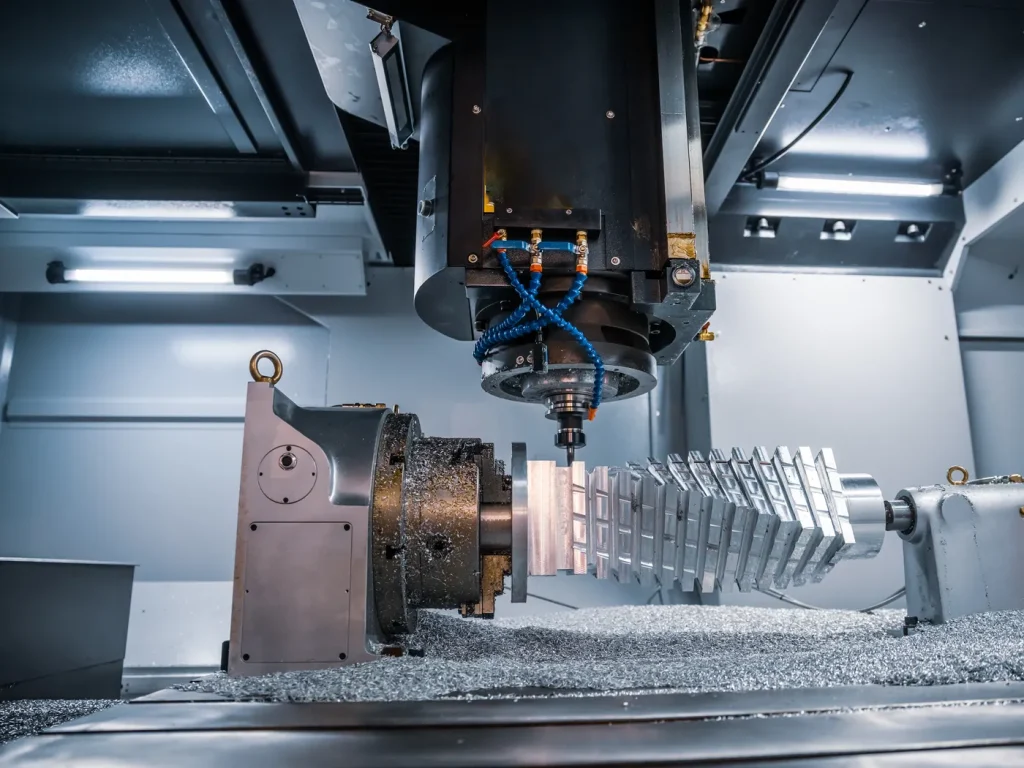
Multi-axis machining can reduce setup changes and improve access to angled features, but it does not remove all limits. Cutting tools still have finite diameter, length, stiffness, and reach. Long tools can deflect. Small tools can break. Thin walls can move under cutting forces. Some internal corners may need EDM or a design radius change.
Inspection can also limit feasibility. If a feature cannot be measured with available methods, it becomes hard to prove conformance. In medical device production, “machinable” is not enough. The part must also be verifiable.
When CNC Machining Is Not Suitable for Medical Device Production
CNC machining is not suitable for medical device production when the design requires features that cannot be reached by tools, when the required surface condition cannot be achieved or inspected, or when burrs and contamination cannot be controlled to the required level.
It may also be a poor fit when the production volume and geometry are better served by another method, such as molding, forming, additive manufacturing, or a hybrid process. For example, a highly organic internal lattice may not be practical by subtractive machining alone. A component with very fine internal channels may require EDM, laser machining, or a different design approach.
The decision should consider the full route: rough machining, finishing, cleaning, inspection, packaging interface, and traceability. If any step cannot be controlled, the machining plan needs revision.
Checklist: CAD model, material, geometry, inspection, and documentation readiness
| Readiness area | What to verify before quoting or production |
|---|---|
| CAD model | Current revision, complete geometry, no unclear features, clear datum strategy |
| Drawing | Critical dimensions, surface finish needs, material callout, edge break or burr requirements |
| Material | Medical suitability, material certification needs, sterilization compatibility, lot traceability |
| Geometry | Tool access, wall thickness, internal radii, undercuts, sharp corners, fixturing surfaces |
| Machining route | Milling, turning, Swiss, EDM, laser, or combined process route |
| Inspection | Measurable datums, access for inspection tools, defined critical features |
| Cleanliness | Cleaning method, residue control, particulate concerns, coolant compatibility |
| Documentation | Inspection records, material records, process controls, revision control, traceability needs |
How Medical CNC Machining Powers Medical Device Manufacturing
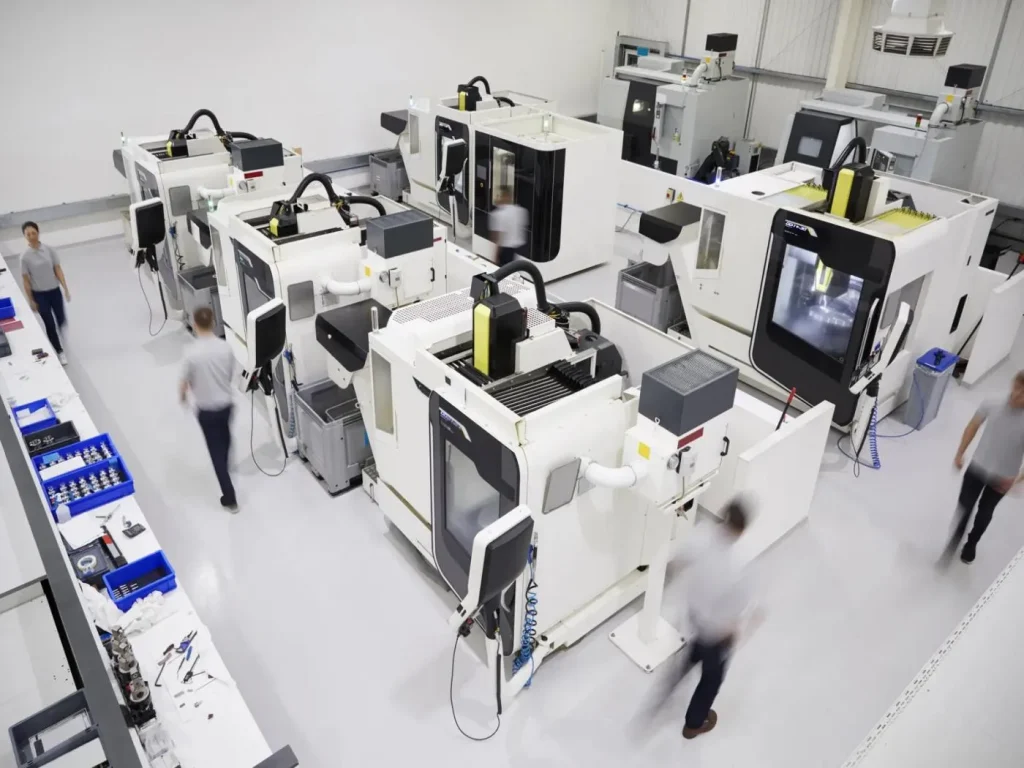
Medical CNC machining follows the same basic subtractive principles as other precision machining, but the workflow places more weight on controlled inputs and documented outputs. The process usually begins with a CAD model and drawing, followed by material selection, programming, setup, machining, inspection, finishing, cleaning, and record retention.
Each step can affect the final component. A correct CAD model does not protect against poor fixturing. A good machine does not solve unclear inspection requirements. A qualified material can still be damaged by poor tool selection or poor cleaning.
CAD & Machining Process Workflow for Medical Device Production
The CAD model defines the nominal shape. The drawing defines tolerances, surface requirements, material, and any special notes. Material selection should happen before programming because tool choice, cutting speed strategy, coolant, and workholding depend on the material.
Programming converts the model into toolpaths. For medical parts, programming must account for critical surfaces, burr-sensitive edges, and inspection datums. Machining then removes material through one or more setups. In-process inspection may be used to confirm that critical dimensions remain under control before final operations are complete.
Final inspection compares the part to drawing requirements. For medical components, inspection records may need to link to the material lot, production lot, and drawing revision. A quality system certification and regulatory obligations are related but not identical. ISO 13485 addresses the quality management system, while medical device production may also require controls associated with regulatory requirements such as documented process validation, change control, nonconformance handling, and device-history-style production records where applicable. Buyers should verify how a supplier controls special processes, revision changes, training, and record retention rather than checking certification status alone.
CNC milling, turning, Swiss machining, wire EDM, and laser machining selection
Process selection depends on geometry first, then material, tolerance, surface finish, volume, and inspection needs. CNC milling is suited to plates, pockets, contours, and instrument bodies. CNC turning is suited to round parts such as screws, shafts, and pins. Swiss machining is often selected for small, slender, high-precision parts that need support close to the cutting zone.
Wire EDM is useful when the material is conductive and the geometry includes fine slots, sharp corners, or features that are hard to mill. It is also useful for difficult materials where mechanical cutting forces are a concern. Laser machining may be used for small holes, fine features, or thin sections, but heat effects and edge condition must be reviewed.
A combined route is common. A spinal cage, for example, may need milling for outer geometry and EDM for internal features. A surgical instrument may need milling, turning, grinding, finishing, and deburring.
Prototyping vs Production Machining for Medical Industry Projects
A comparison between prototyping and production machining for medical devices should focus on risk transfer. Prototype machining is used to test fit, geometry, and early function. It may use flexible setups and more manual adjustment. Production machining must control variation over repeated runs, leverage process automation to stabilize output, and must produce records that support quality requirements.
A prototype can prove that a geometry is possible. It does not prove that it is stable at production scale. Production requires a controlled process route, defined inspection plan, repeatable fixturing, and clear handling and cleaning expectations.
The shift from prototype to production is often where design-for-manufacturing issues become visible. Features that are acceptable for one or two prototypes may create high inspection effort, burr removal risk, or setup variation in repeated production.
Process diagram: Prototype-to-production machining and quality-control checkpoints
| Sequence | Process Step | Checkpoint Items |
|---|---|---|
| 1 | Design input | — |
| 2 | CAD model and drawing review | material, datums, critical dimensions, surface requirements |
| 3 | Material selection | biocompatibility needs, sterilization fit, material records |
| 4 | Process planning | milling/turning/Swiss/EDM/laser route, fixturing, tool access |
| 5 | Prototype machining | dimensional inspection, burr review, surface review |
| 6 | Design or process adjustment | manufacturability and inspection access |
| 7 | Production planning | documented setup, in-process inspection, traceability |
| 8 | Production machining | process control and nonconformance handling |
| 9 | Final inspection and cleaning | records, cleanliness expectations, release documentation |
Materials, Biocompatibility, and Sterilization Decisions
Material choice in medical device component machining affects machinability, tool wear, surface condition, cleaning, sterilization, and part function. Common materials include titanium, stainless steel, Inconel, Kovar, Invar, and medical-grade plastics. The right choice depends on whether the part is implantable, reusable, disposable, load-bearing, electrically functional, or part of a surgical instrument.
Common medical machining materials extend beyond titanium and stainless steel to include cobalt-chrome alloys, nitinol, PEEK, UHMWPE, ceramics, and some bioabsorbable polymers. Selection should be reviewed by exact grade and applicable material specification, because machinability, surface damage sensitivity, sterilization compatibility, and inspection method can change significantly across these material families. A practical material review should compare function, machinability, cleanability, and post-process requirements together rather than treating biocompatibility as a material label alone.
Biocompatibility is not created by CNC machining alone. It depends on the selected material, the surface condition, the presence of residues, and the way the part is cleaned and used.
Key Factors for Biocompatible CNC Machined Parts in Medical Production
Factors affecting biocompatibility in CNC machined medical parts include base material, surface finish, machining residues, embedded contaminants, burrs, cleaning method, and sterilization exposure. A material that is commonly used in medical applications can still become unsuitable if machining leaves unacceptable residues or damaged surfaces.
Coolants, cutting oils, polishing compounds, and cleaning agents must be reviewed because they can contact the part surface during production. Burrs and rough edges can trap residue or particles. Surface finish can affect how a part interacts with tissue, mating components, or cleaning processes.
For implantable parts, these questions carry higher risk. For reusable instruments, cleaning and sterilization cycles are also important because the component must remain functional after repeated processing.
Challenges of machining titanium medical implants
The challenges of machining titanium medical implants are mainly linked to heat control, tool wear, surface integrity, and burr formation. Titanium is widely used in implant applications, but it can be more difficult to machine than many common engineering metals. Cutting strategy, tool material, coolant use, and setup rigidity all matter.
Poor process control can increase tool wear or affect the surface. Thin implant features may also move under cutting forces. Internal features can be hard to deburr or inspect. Because implants often have critical interfaces, the machining plan should identify load-bearing surfaces, mating features, and areas that need controlled finish.
Titanium may be a good choice for implant function, but it should not be selected without considering machining and finishing risk.
When stainless steel is preferred over titanium for surgical instruments
Stainless steel is often preferred over titanium for surgical instruments when the design needs a balance of machinability, durability, stiffness, edge quality, cost control, and reuse. Many surgical tools are not implanted, so the material decision differs from implant hardware. Stainless steel is also widely used for general medical components and instrument hardware.
Titanium may still be useful where low weight or implant-related requirements matter. On the other hand, stainless steel can be more practical for handles, shafts, clamps, reusable hardware, and instrument components that must maintain shape and function after cleaning and sterilization.
The decision should be made by part role. A bone screw, a spinal cage, a cutting guide, and a reusable driver may each need a different material strategy.
How sterilization affects material selection for machined medical parts
Sterilization affects material selection for machined medical parts because heat, moisture, chemicals, or radiation exposure can change material behavior or surface condition. Metals and plastics respond differently. Some plastics may change dimension, discolor, lose strength, or absorb chemicals depending on the sterilization method. Metals may face corrosion concerns if the grade, surface condition, or cleaning process is not suitable.
Sterilization also affects design details. Crevices, blind holes, sharp internal corners, and rough surfaces can make cleaning harder. For reusable devices, the part must survive repeated cleaning and sterilization without losing function.
Material selection should therefore be reviewed with machining, cleaning, and sterilization as one connected decision.
Rigorous Standards & Automation in Medical Precision Machining
CNC medical machining is valuable because it can create precise components from approved metals and plastics without tooling methods such as molds or dies. It supports prototypes, small batches, customized components, and production parts. It also supports complex geometry when milling, turning, Swiss machining, EDM, and laser machining are combined.
Its limits are just as important. Machining is constrained by tool access, fixture stability, material response, burr control, surface finish, and inspection method. A strong design for CNC machining reduces these risks before production starts.
When CNC machining supports customization and patient-specific components
CNC machining supports customization and patient-specific components when the design is based on specific geometry, small production lots, or frequent design changes. Patient-specific implants, custom surgical models, and specialized instruments can benefit because CNC programming can be updated from digital models without dedicated mold tooling.
This does not mean every custom part is easy to make. Custom geometry may include complex contours, thin features, or difficult surfaces. The manufacturing plan must still confirm tool access, finishing, cleaning, and inspection.
CNC is most useful for customization when the design can be translated into stable setups and measurable features.
Why repeatability matters in high-volume medical component production
Repeatability matters in high-volume medical component production because medical devices depend on consistent fit, assembly, and performance. A process that produces one good part but changes over time due to tool wear, thermal movement, fixture variation, or material variation is not suitable for controlled production.
Repeatability depends on machine condition, cutting tools, workholding, programming, inspection frequency, and operator controls. It also depends on the design. A part with thin walls, deep features, or burr-prone edges may show more variation than a simpler part.
For production buyers, repeatability should be reviewed through process planning and inspection evidence, not through sample appearance alone.
Where micro-machining enables tiny gears, springs, and connectors
Micro-machining enables tiny gears, springs, connectors, pins, and other small parts used in minimally invasive and precision medical devices. High-RPM machining and micro-tools can produce fine features that are not practical with larger tools.
The challenges of micro-machining for medical devices include tool fragility, burr control, heat, part handling, and inspection. Small parts can be damaged during machining, cleaning, or measurement. A feature that looks simple on a CAD model may be hard to hold or verify at micro scale.
Micro-machining is best considered early because geometry, material, and inspection method must be aligned from the start.
Decision matrix: CNC machining vs EDM vs Swiss machining vs laser machining
| Process | Best fit | Limits | Decision signal |
|---|---|---|---|
| CNC milling | Plates, housings, contoured implant and instrument features | Tool access, internal corners, burrs | Use when features are reachable and fixturing is stable |
| CNC turning | Screws, pins, shafts, round parts | Non-round features need secondary operations | Use when geometry is mainly rotational |
| Swiss machining | Small, slender, precise components | Setup complexity and small-tool control | Use when small diameter parts need stable support |
| Wire EDM | Fine slots, sharp corners, hard conductive materials | Conductive materials only; finish review needed | Use when milling cannot reach or hold feature shape |
| Laser machining | Fine holes, thin features, micro details | Heat effects and edge condition | Use when mechanical tools are too large or too fragile |
Failure Risks in Machining for Medical Devices & Medical Components
Failure risks in medical machining often come from small details: tolerance stack-up, burrs, rough surfaces, contamination, tool wear, poor datum control, or incomplete documentation. Many risks are preventable if they are reviewed before production.
Medical parts should be evaluated by feature criticality. Not every dimension carries the same risk. Interfaces with bone, screws, instruments, moving assemblies, or other device parts need special attention.
Tolerance risks in machining spinal fixation components
Tolerance risks in machining spinal fixation components often involve mating interfaces, screw paths, locking features, and alignment surfaces. If these features drift, the system may not assemble or function as intended. Complex spinal parts may also include hard-to-reach internal features and small contact surfaces.
Multi-axis machining can help create complex geometry, but it can also introduce variation from setup, tool length, tool deflection, thermal effects, and datum transfer. Causes of dimensional variation in multi-axis machining of medical parts should be reviewed during process planning, especially when several surfaces must relate to one another.
The safest approach is to define critical datums clearly and confirm that each critical feature can be machined and inspected from a stable setup.
Surface finish requirements for CNC machined bone plates
Surface finish requirements for CNC machined bone plates depend on the plate’s function, contact surfaces, screw interfaces, and post-machining finishing route. A rough or inconsistent surface may affect cleaning, fit, comfort, or interaction with surrounding structures. Burrs near holes or edges can also create problems.
Surface finish is influenced by tool condition, feed strategy, material, fixturing, and finishing method. If a bone plate includes curved surfaces or many screw holes, the process plan should define how edges are deburred and how critical surfaces are inspected.
The drawing should avoid vague finish expectations. It should state which surfaces are critical and how edge condition is controlled.
How to reduce burrs on CNC machined surgical instruments
How to reduce burrs on CNC machined surgical instruments starts with design and toolpath planning. Burrs tend to form at exits, intersections, holes, slots, and sharp edges. Material choice, tool sharpness, cutting direction, feed, and tool wear all affect burr size and location.
Deburring should not be treated as an afterthought. Manual deburring can introduce variation if the feature is small or functional. Automated or controlled finishing may be needed for repeated production. Edge break requirements should be defined on the drawing so the supplier knows which edges must remain sharp and which must be softened.
Burr control is also a cleanliness issue. Burrs and particles can remain on a part or trap residue during cleaning.
Common quality control failures in medical device machining
Common quality control failures in medical device machining include incomplete material traceability, unclear revision control, missed critical dimensions, poor surface finish documentation, burrs, contamination, and inspection methods that do not match the drawing.
Another frequent issue is assuming that final inspection alone will catch all problems. If a feature is hard to reach after final machining, in-process inspection may be needed. If a part has many small holes or slots, visual inspection alone may not be enough.
Quality control should be planned with the machining route. It should not be added only at the end.
Cost, Tolerance & Lead-Time Factors in Medical Manufacturing
Cost, tolerance, and lead time in medical device component machining are linked. Tight requirements often increase setup work, tool wear management, inspection time, finishing effort, and documentation. Material selection can also affect both cost and schedule because some materials are harder to machine or require more controlled handling.
Because the provided evidence does not support specific cost, tolerance, or lead-time benchmarks, these factors should be treated qualitatively. The practical goal is to identify what drives effort and risk.
Cost Drivers in Custom Machining for Medical Device Manufacturing
Cost usually rises fastest when a part requires difficult multi-axis access, secondary EDM or laser operations, tight surface-finish control, extensive inspection, or heavier documentation and traceability burden. Thin walls, deep internal features, hard-to-machine materials, and burr-sensitive edges can also increase setup complexity, scrap risk, and manual finishing time. Relative cost should be judged by which feature adds process steps and verification effort, not by material choice alone.
Small production lots may carry more setup effort per part. Patient-specific or custom implants may also require more engineering review because each design can differ. If the design has hard-to-reach features, EDM or secondary operations may be needed.
Cost can often be reduced by simplifying features that do not affect clinical or mechanical function, improving datum strategy, and defining only necessary critical tolerances.
Causes of dimensional variation in multi-axis machining of medical parts
Causes of dimensional variation in multi-axis machining of medical parts include fixture movement, tool deflection, tool wear, thermal change, datum transfer between setups, programming strategy, and material stress release. Multi-axis machining improves access, but it also requires careful control of part orientation and tool engagement.
Thin walls and long features are more sensitive to cutting forces. Small tools may deflect or wear quickly. Deep features may be affected by tool reach. If the material moves after roughing, a finishing strategy may be needed to stabilize final dimensions.
The drawing should identify which relationships matter most. This helps the process planner protect the critical features rather than over-controlling every surface.
Impact of coolant selection on medical device machining compliance
The impact of coolant selection on medical device machining compliance is tied to residue control, material compatibility, cleaning, and documentation. Coolants and cutting fluids help control heat and tool wear, but they contact the part surface during machining. If residue remains, it can affect cleanliness and biocompatibility expectations.
Coolant selection should be reviewed with the material and the cleaning process. Some materials are sensitive to chemistry. Some part geometries trap fluid in holes, slots, or crevices. Cleaning validation and cleanliness standards for medical CNC machining should account for these risks.
For buyers, coolant is not just a shop-floor detail. It is part of the manufacturing route that can affect final part acceptance.
Table: Industry-level cost and schedule factors without unsupported benchmarks
| Factor | Effect on cost | Effect on schedule | What to review |
|---|---|---|---|
| Material | Harder or higher-value materials increase machining care and scrap risk | Material availability and certification can affect timing | Grade, source, records, sterilization fit |
| Geometry | Deep pockets, thin walls, and fine features increase setup and tooling effort | More operations and reviews may be needed | Tool access, rigidity, burr risk |
| Tolerances | Tight relationships increase inspection and process control | More in-process checks may be needed | Critical dimensions and datum scheme |
| Surface finish | Finishing and polishing add labor and control steps | Secondary finishing may extend route | Critical surfaces and edge condition |
| Volume | Low volume has more setup share per part; high volume needs process stability | Scaling requires repeatable controls | Prototype versus production plan |
| Cleanliness | Cleaning and residue control add process steps | Cleaning review may affect release | Coolant, debris traps, packaging interface |
| Documentation | Records and traceability add quality effort | Missing documents can delay acceptance | Material certs, inspection records, revisions |
Applications of Machining Services in the Healthcare Industry
Medical machining is used where precision, material control, and repeatability are needed. The applications differ by component type, and each type has different manufacturing risks.
Implants emphasize material suitability, surface condition, and geometry control. Instruments emphasize durability, cleaning, edge quality, and repeated use. Micro-components emphasize fine features, small tools, handling, and inspection.
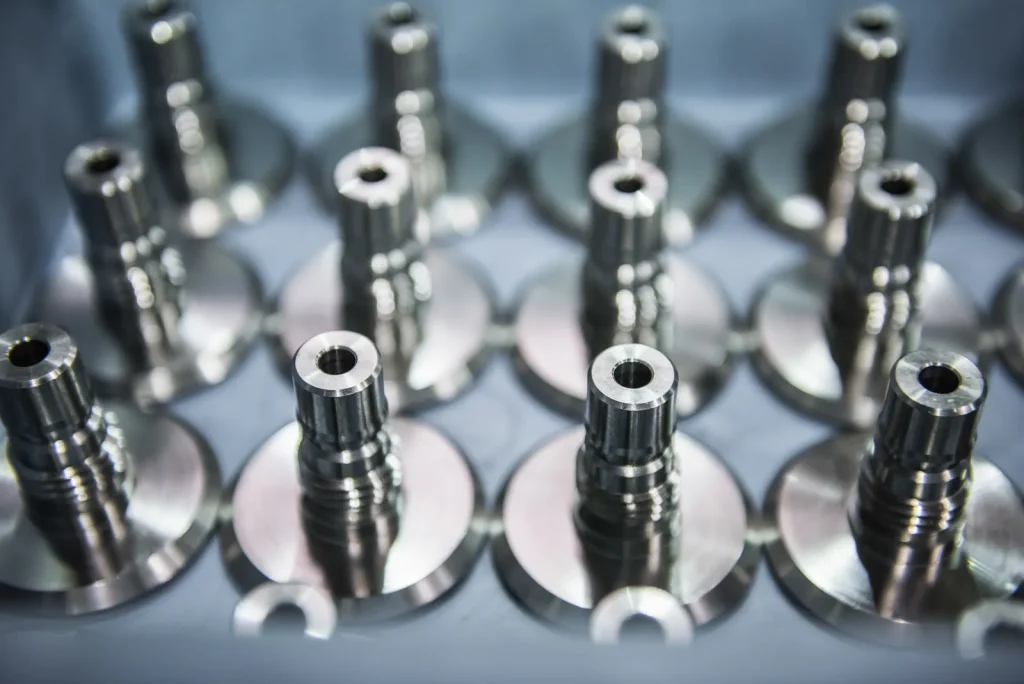
CNC Machined Titanium Bone Plates & Titanium Spinal Fixation Parts Overview
Implants and orthopedic components include bone plates, spinal cages, fixation parts, bone screws, and related hardware. CNC milling is common for plates and contoured parts. Turning is common for screws and pins. EDM may be used where spinal cages or implant components need fine openings, slots, or internal geometry.
For these parts, feasibility depends on material, contact surfaces, thread quality, burr control, and inspection access. Titanium is often used for implants, while other metals may be selected based on device function. Surface finish and cleaning expectations should be defined early because they can change the manufacturing route.
Surgical Instrument Manufacturing for Medical Equipment Components
CNC machines can make surgical tools, instrument components, and reusable device hardware when the design supports machining, finishing, cleaning, and inspection. Examples include handles, shafts, drivers, clamps, cutting guides, connectors, and instrument bodies.
Stainless steel is often preferred for many surgical instruments because it can support strength, durability, cleaning, and repeated use. The machining plan should control burrs, edges, and mating features. Reusable hardware also needs material and surface choices that can tolerate cleaning and sterilization.
For surgical tools, feel, fit, and edge condition may matter as much as basic dimensions.
Micro-components for minimally invasive and precision medical devices
Micro-components include tiny gears, springs, connectors, pins, and small mechanical features used in minimally invasive and precision devices. These parts may require high-RPM machining, micro-tools, Swiss machining, laser machining, or a combined route.
The main risks are tool breakage, burr formation, part loss or damage during handling, and measurement limits. Very small parts may need custom fixtures or special inspection methods. Material choice also matters because some materials machine cleanly at small scale while others create burr or heat problems.
Micro-component feasibility should be checked with both machining and inspection teams before production planning.
Case Examples: Advancements in CNC & Medical Device Manufacturing
A useful case example should show what changed in the process route and why that improved production readiness. Typical improvements include fewer setups by changing datum strategy, lower burr risk by revising edge-break expectations, improved inspectability by opening line-of-sight access for optical or tactile measurement, and fewer manual finishing touches after better toolpath and feature sequencing. These outcomes are often more decision-useful than a generic statement that production became more consistent.
The first is micro-manufacturing of ultra-precise components. Medical applications may need tiny gears, springs, or connectors. High-RPM CNC machining with micro-tools can produce intricate parts with high precision. This matters because minimally invasive devices depend on small components that still need controlled mechanical function.
The second is prototype-to-production scaling. A component may begin as a machined prototype, then move into production using milling, turning, Swiss machining, wire EDM, grinding, in-process inspection, and traceability. The key lesson is that production requires more than repeating the prototype. It needs process control and documentation.
The third is ISO 13485 production for implants, instruments, and orthopedic components. CNC machining under a medical quality system supports controlled production where records, traceability, inspection, and process discipline are required. This matters because life-critical applications need evidence, not only finished parts.
How to Choose a Supplier for Medical Device Machining Services
Supplier selection should focus on technical fit, quality-system maturity, process capability, material control, inspection ability, cleaning controls, and documentation. A supplier that can make a simple industrial part may not be prepared for medical documentation and traceability requirements.
Supplier fit should be judged differently for prototype, pilot, and repeat production. Prototype work may favor speed and process flexibility, while repeat production requires stronger change control, validated cleaning or special-process controls where needed, stable inspection methods, and first-article expectations tied to critical features. At RFQ stage, buyers should request evidence such as sample inspection formats, material certifications, process flow, cleaning approach, and how nonconformances and drawing revisions are controlled.
The buyer should provide a complete technical package. This includes the CAD model, drawing, material requirements, critical features, expected inspection records, cleaning needs, and production intent. A supplier cannot assess feasibility well if these inputs are unclear.
How to choose a medical device component machining supplier
How to choose a medical device component machining supplier starts with matching the part to the process. A bone screw may need turning or Swiss machining. A contoured plate may need multi-axis milling. A spinal cage may need milling plus EDM. A micro-connector may need micro-machining or Swiss machining.
The supplier should be able to explain the planned process route, not just quote the part. They should identify tool access issues, burr risks, inspection limits, material concerns, and cleaning needs. They should also be able to support the production stage, whether the work is prototype, pilot, or repeat production.
A strong supplier review includes sample inspection records, material traceability methods, nonconformance handling, and change control.
ISO 13485 Requirements for CNC Machine Shops in Medical Industry
ISO 13485 machining requirements for CNC machine shops focus on quality management for medical device production. In practice, this means controlled documents, trained personnel, controlled processes, inspection records, traceability, purchasing controls, and nonconformance management.
Certification alone does not prove that a shop can make every medical component. It shows that the quality system has been structured for medical device work. The buyer still needs to verify process fit, inspection capability, material experience, and cleanliness controls for the specific component.
For regulated medical device supply chains, ISO 13485 alignment is often a key screening requirement.
Traceability requirements in medical device component manufacturing
Traceability requirements in medical device component manufacturing usually include material lot records, production records, inspection results, drawing revision, process route, and sometimes operator or equipment records. The exact need depends on the device risk, customer requirements, and quality agreement.
Traceability helps connect a finished part to the conditions under which it was made. If a material issue or process deviation is found, traceability allows affected parts to be identified. Without it, containment and investigation become much harder.
Buyers should define traceability expectations before ordering. Adding traceability after production is difficult if records are not captured during work.
Supplier checklist: materials, processes, inspection, cleanliness standards, and documentation references
Supplier review area | What to ask for or verify |
|---|---|
| Materials | Experience with titanium, stainless steel, medical-grade plastics, and other specified materials |
| Process fit | Milling, turning, Swiss machining, wire EDM, laser machining, finishing, and deburring capability |
| Inspection | Ability to inspect critical dimensions, surface condition, and hard-to-reach features |
| Quality system | ISO 13485 alignment or certification where required by the device program |
| Traceability | Material lot control, revision control, inspection records, and production records |
| Cleanliness | Defined cleaning process, residue control, particle control, and coolant compatibility |
| Documentation | Material certificates, inspection reports, nonconformance records, and change control |
| Production readiness | Ability to move from prototype to repeatable production with controlled processes |
Medical device component machining is suitable when the part can be cut, held, finished, cleaned, inspected, and documented with acceptable risk. It is often a strong choice for implants, surgical tools, orthopedic hardware, spinal components, and precision micro-parts. It may be a poor choice when geometry blocks tool access, when burrs cannot be controlled, when inspection is not practical, or when another manufacturing process better fits the volume or shape.
The main decision logic is to evaluate the full manufacturing route, not just the CNC operation. Material, geometry, tolerance, surface finish, sterilization, cleanliness, and traceability must work together. If any one of these areas is weak, the design or process should be reviewed before production release.
FAQs
What is medical grade machining?
Medical grade machining makes medical device parts under strict, regulated production controls.It covers documented material sourcing, full inspection, traceability, cleanliness and formal change control.Having a regular CNC machine alone cannot guarantee you get fully compliant medical components.It’s never just about the equipment, but the standardized workflow running behind production.The biggest difference lies in the complete quality management system and detailed production records.
Which materials are biocompatible for CNC machined medical parts?
A wide range of metals and plastics work to produce biocompatible cnc machined parts for orthopedic implants, surgical tools and prosthetic devices in the medical industry.Titanium, stainless steel, specialty plastics, Inconel, Kovar and Invar are the most common options.True biocompatibility relies on material grade, surface quality, residues, cleaning process and usage purpose.Implanted medical parts require much stricter material screening and process validation standards.Regular surgical instrument parts follow basic biocompatibility rules with fewer strict restrictions.
Can CNC machines make surgical tools?
CNC machining is fully capable and widely used to manufacture professional surgical tools.It produces instrument parts, reusable hardware, drivers, clamps, handles and precision cutting guides.Part designs need to support stable machining, burr removal, finishing, proper cleaning and full inspection.Stainless steel is the top pick for most surgical tools due to great durability and easy repeated cleaning.It holds up well under frequent sterilization and long-term daily clinical use over time.
How are machined medical parts cleaned?
Machined medical parts follow standardized formal cleaning workflows after production.The goal is to remove machining residues, leftover coolant, fine particles and surface debris completely.Cleaning methods are always matched to the part’s material, shape geometry and end medical use.Complex structures like blind holes, narrow slots and rough surfaces make cleaning far more challenging.These hard-to-reach areas easily trap contaminants and need targeted cleaning for medical compliance.
What are the main challenges of micro-machining for medical devices?
Medical micro-machining faces several unique practical hurdles in actual production.Key challenges include delicate fragile tools, tiny burrs, heat management and careful part handling.Limited inspection access on ultra-small features also adds difficulty to quality verification work.Small parts like gears, springs and connectors can be made but need thoughtful fixturing and measurement plans.Material cutting performance becomes far more critical when working with tiny precision medical features.
References
https://www.iso.org/standard/59752.html
https://www.ecfr.gov/current/title-21/chapter-I/subchapter-H/part-820

 English
  German
  French
  Italian
  Spanish
  Polish
  Czech
Czech  Japanese