
Titanium CNC turning is the go-to solution for manufacturing high-strength, lightweight, and corrosion-resistant rotational parts across aerospace, medical, automotive, and industrial sectors. Though valued for its unique properties and exceptional material traits, titanium is notoriously challenging to machine due to intense heat buildup, rapid tool wear, and strict tolerance demands.
This guide breaks down the fundamentals of titanium CNC turning services, compares turning with milling and grinding, analyzes alloy selection and geometric limitations, and covers process workflows, cost drivers, quality control, and practical tips for selecting reliable machining suppliers. Whether you are sourcing custom turned components or optimizing part design for manufacturability, you will find clear, actionable insights for every stage of titanium CNC machining.
What Titanium CNC Turning Services Are and Why They Matter
To fully grasp the value and application of titanium CNC turning services, we first clarify their core definition, key material advantages, and practical scenarios where turning outperforms other machining methods.
What are titanium CNC turning services?
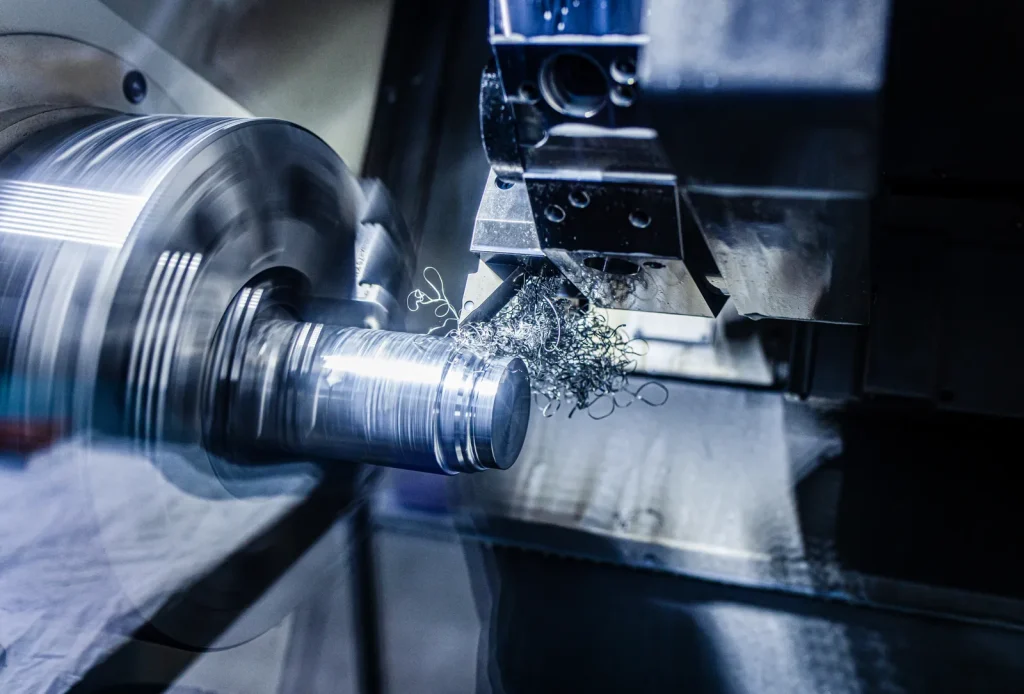
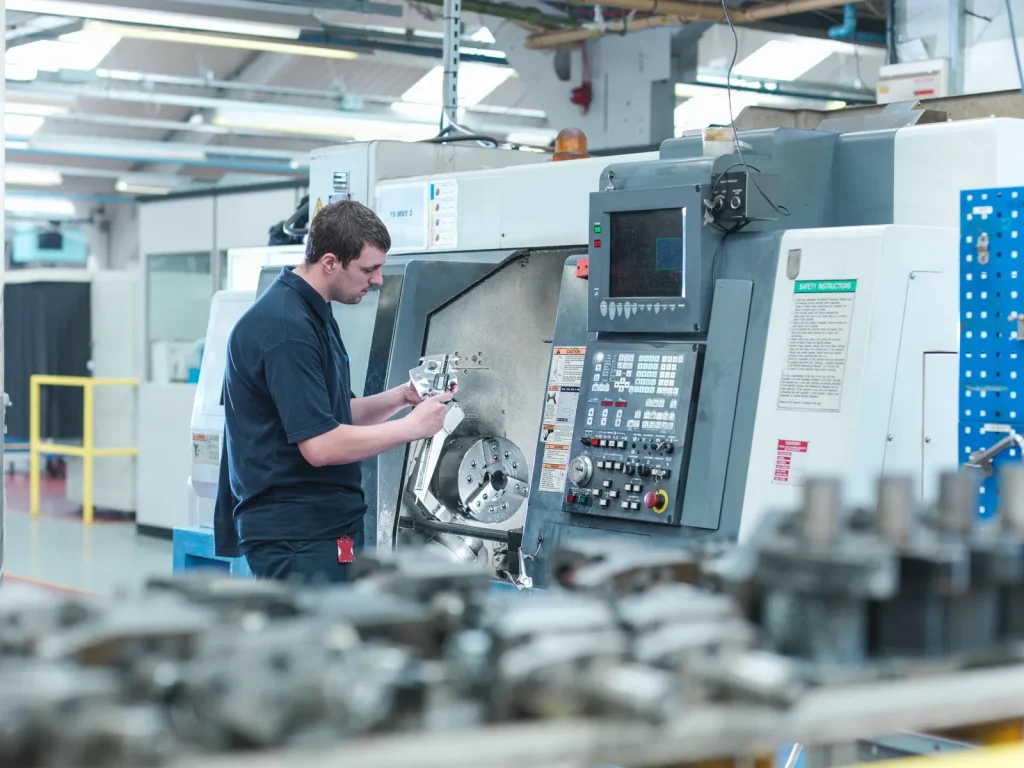
Titanium CNC turning services produce round or axis-based titanium parts on computer-controlled lathes and turning centers. The workpiece rotates while cutting tools remove material from the outside diameter, inside diameter, faces, grooves, threads, tapers, and other rotational features.
In engineering purchasing, the term usually covers more than basic lathe work. It can include material preparation, design-for-manufacturing review, turning, drilling, tapping, limited milling on mill-turn equipment, deburring, surface finishing, and inspection. The key point is that the primary geometry is made by rotating the titanium stock against a fixed or moving cutting tool.
Titanium is selected when the part needs high strength with low weight, excellent corrosion and impact resistance, or performance in demanding environments. These benefits also make titanium harder to machine than many common metals. It can cause tool wear, heat buildup, surface finish problems, and burr formation if the process is not controlled.
For every customer, titanium CNC turning services are not just a sourcing category. They are a feasibility question. The part drawing, alloy, wall thickness, tolerance, surface finish, inspection needs, and production volume all affect whether turning is practical.
How strength-to-weight ratio influences titanium part selection
The excellent strength-to-weight ratio is one of the main reasons engineers choose titanium. A part can carry load without adding as much mass as some heavier metals. This matters in aerospace, defense, space, medical devices, automotive performance parts, and industrial equipment where weight affects motion, energy use, or system efficiency.
The design decision should not stop at material selection. A titanium part that looks attractive on a performance basis may become difficult or costly to machine if the geometry is thin, deep, interrupted, or tolerance-heavy. In many cases, the right question is not only whether titanium is strong enough. It is whether the required titanium geometry can be turned repeatably without distortion, heat damage, unstable cutting, or excessive tool wear.
How strength-to-weight ratio influences titanium part selection also depends on the load path. Shafts, pins, bushings, sleeves, threaded adapters, fittings, fasteners, spacers, and rotational medical or aerospace components are typical turned forms. If most features are concentric with the centerline, CNC turning is often a logical process. If the part has many flat faces, pockets, off-axis features or organic geometries, milling or mill-turn machining may be more suitable.
When is titanium CNC turning better than milling?
Titanium CNC turning is usually better than milling when the part is mainly cylindrical. Turning is well suited for outside diameters, inside diameters, shoulders, grooves, tapers, and threads that share a common axis. It can also be efficient for titanium shafts, sleeves, bushings, spacers, nozzles, connectors, and fittings.
Milling is better when the part is prismatic, has large flat surfaces, has many off-center features, or needs complex pockets. Grinding may be considered when a turned shaft needs very fine roundness, close diameter control, or a specific final finish after rough turning. The process choice is not fixed by material alone. It is driven by geometry, tolerance, surface finish, volume, and inspection risk.
When titanium CNC turning is better than milling, it is often because fewer setups are needed. A lathe can create multiple coaxial features in one workholding condition. Fewer setups can help reduce stack-up error between diameters, faces, grooves, and threads. On modern multi-tasking turning centers, turning, milling, drilling, and tapping can be combined in one setup, which can reduce handling and improve feature relationship control.
Table: Titanium turning vs milling vs grinding decision factors
| Factor | CNC turning | CNC milling | Grinding |
|---|---|---|---|
| Best fit | Cylindrical, concentric, round parts | Prismatic parts, pockets, flats, off-axis features | Final sizing or finish on round features |
| Typical titanium use | Shafts, sleeves, pins, threaded fittings, bushings | Brackets, housings, plates, complex contours | Precision shafts, bearing surfaces, finishing passes |
| Setup logic | Workpiece rotates around centerline | Tool rotates and moves across fixed workpiece | Abrasive wheel removes small amounts |
| Main risk | Heat buildup, tool wear, chip control, burrs | Tool wear, heat, vibration in pockets | Heat, surface integrity, added process time |
| Cost driver | Alloy, setup, tool life, cycle time, tolerance | Material removal volume, toolpath time, setup count | Added finishing step, inspection, handling |
| When inefficient | Non-round parts with many flats or pockets | Mostly round parts that could be turned faster | Large stock removal from raw material |
Feasibility: Can the Titanium Part Be Turned?
Before confirming whether a titanium component is suitable for CNC turning, it is critical to evaluate key influencing factors, including material grade characteristics, structural geometry design, thin-wall processing constraints, and complete technical documentation requirements. Each element directly determines manufacturability, processing difficulty, dimensional stability and overall production cost.
Impact of titanium alloy choice on machinability
The impact of titanium alloy choice on machinability is a first-order feasibility issue. Titanium is not a single material. Different grades vary in strength, ductility, corrosion behavior, weldability, and cutting response.
Commercially pure grades are often chosen for corrosion resistance and formability, while Grade 5 is usually chosen for higher strength and Grade 23 for similar use in medical applications with tighter material control. For turning, the practical question is not only strength but also why the grade was selected, because corrosion-driven, strength-driven, and regulatory choices create different machining risk, sourcing constraints, and inspection needs. Buyers should confirm the exact grade and specification before quoting rather than grouping material only as pure or alloyed titanium.
Medical components may use titanium grades selected for biocompatibility and material controls. The best titanium grade for medical CNC machined components depends on the device function, regulatory path, surface condition, and material standard. The machining supplier should not make that choice alone. Engineering, quality, and regulatory teams need to define the grade before quoting.
The tradeoff is clear: stronger or more specialized titanium alloys may improve part performance but can raise machining risk. If a drawing allows more than one grade, the machinability difference should be reviewed before release.
What part geometries make titanium difficult to machine?
Several geometry types can make titanium turning difficult. Long slender parts can deflect under cutting forces. Deep bores can increase chatter and chip evacuation problems. Thin walls can move during machining or distort after material is removed. Sharp internal corners can concentrate tool load. Interrupted cuts can damage tools and reduce surface quality.
What part geometries make titanium difficult to machine often comes down to stiffness and heat control. Titanium does not remove heat from the cutting zone as easily as some metals. If the tool and workpiece stay hot, tool wear can increase and the surface may suffer. Parts with poor tool access or long tool overhang make this worse.
Common high-risk features include:
- Long shafts with small diameters
- Thin sleeves and tubes
- Deep internal grooves
- Deep drilled or bored holes
- Tight threads in hard alloys
- Very small radii at shoulders
- Multiple interrupted features on a turned profile
- Parts that need heavy material removal from solid bar
A feasible design may still be inefficient if it forces slow cutting, many tools, frequent inspection stops, or special workholding.
Limitations of CNC machining thin wall titanium parts
The limitations of CNC machining thin wall titanium parts are linked to stiffness, heat, and stress release. Thin titanium walls can flex while being cut. They can also change shape when clamping force is released. If a thin wall must hold a tight diameter, roundness, or wall thickness, the process may need staged roughing and finishing, special jaws, mandrels, or support tooling.
Thin wall titanium parts are also sensitive to burr formation and surface finish variation. A light finishing cut may reduce force, but too light a cut can rub instead of cut, depending on the tool and setup. A heavier cut may improve chip formation but can distort the wall. This balance must be proven during process planning.
Design changes can improve manufacturability. More wall thickness, larger radii, better tool access, relaxed cosmetic requirements, or splitting the part into separate components may reduce risk. If the wall is thin because of weight targets, the engineering team should define which dimensions are truly critical and which can be adjusted for manufacturing.
Checklist: Drawing, alloy, tolerance, surface finish, volume, and inspection inputs
A titanium turning quote or feasibility review should start with complete technical inputs. Missing information can lead to wrong process assumptions.
| Input | Why it matters |
|---|---|
| 2D drawing and 3D model | Defines geometry, datums, threads, finishes, and critical dimensions |
| Titanium alloy and material condition | Controls machinability, sourcing, inspection, and compliance |
| Tolerances | Drives toolpath strategy, setup control, inspection time, and scrap risk |
| Surface finish requirements | Affects finishing passes, tool choice, deburring, and secondary operations |
| Wall thickness and length-to-diameter ratio | Shows deflection and workholding risk |
| Volume | Changes setup economics, fixture choices, and process validation effort |
| Inspection requirements | Defines measurement methods, documentation, and traceability |
| Secondary operations | Heat treatment, cleaning, passivation-like requirements, marking, or assembly steps can affect planning |
| Application environment | Aerospace, medical, defense, industrial, and automotive parts can need different documentation levels |
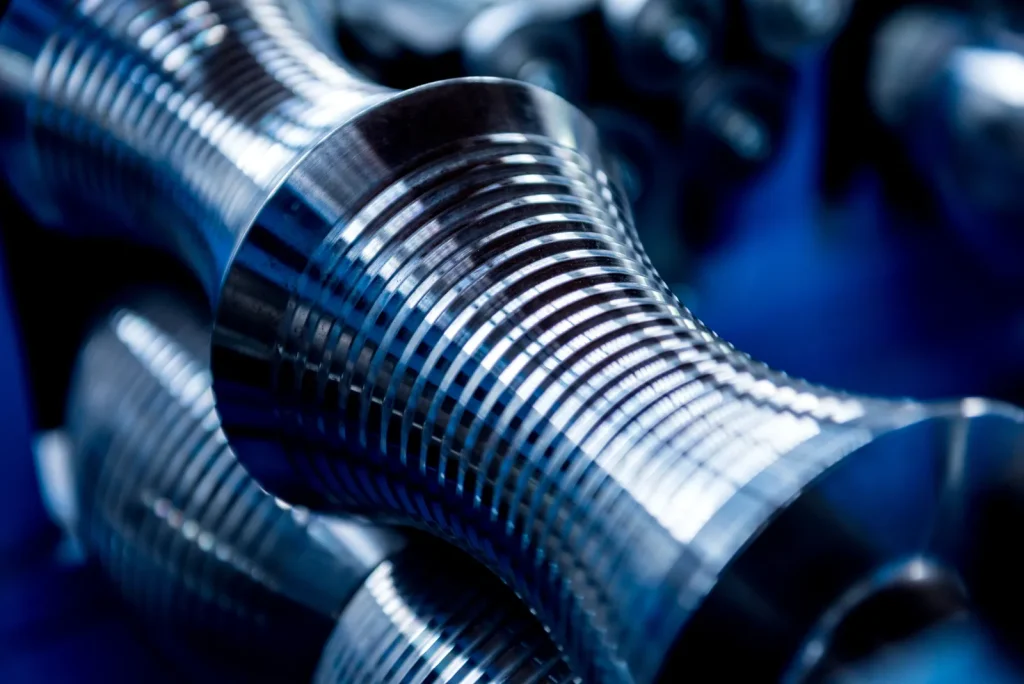
How Titanium CNC Turning Works in Practice
Understanding the real-world operation of titanium CNC turning requires examining standardized workflows, advanced machine capabilities, consistent process stability, and industry technical benchmarks.
Process flow: DFM review, material prep, turning, secondary operations, inspection
A practical titanium CNC turning workflow starts with design-for-manufacturing review. The drawing is checked for alloy, stock form, datum structure, tolerances, threads, surface finishes, wall sections, and risk features. This step often identifies whether the part should be turned, milled, mill-turned, ground, or made from a near-net-shape blank.
Material preparation follows. Titanium may arrive as bar, tube, plate, or forging, depending on the design. Public capability examples in the market show a wide range of titanium stock diameters, from very small bar sizes to large forgings, but these ranges are not universal. Buyers should verify actual machine envelope, bar capacity, chuck size, spindle bore, and workholding plan for the specific part.
Turning then removes material in roughing and finishing stages. Roughing removes stock while controlling heat and tool load. Finishing creates the final dimensions and surface condition. Secondary operations may include drilling, tapping, milling, deburring, cleaning, marking, or grinding. Inspection confirms that the part meets drawing requirements.
DFM work is especially important for titanium because material waste and cycle time are major cost pressures. Near-net-shape blanks, optimized toolpaths, and controlled coolant delivery can reduce unnecessary cutting. These steps do not remove titanium’s machining difficulty, but they can reduce avoidable risk.
Multi-tasking CNC turning: turning, milling, drilling, and tapping in one setup
Modern CNC turning centers often combine turning, milling, drilling, and tapping in one setup. This is useful for titanium parts that are mostly round but also need flats, cross holes, slots, wrench features, or tapped side holes.
Mill-turn is usually most effective when secondary features are limited and remain closely tied to the turned datums. If live-tool time starts to dominate because the part has many flats, pockets, cross features, or complex milling content, a separate milling route can be more efficient even with an extra setup. The process choice should be based on where most of the cutting time and accuracy risk actually sit.
The main benefit is feature relationship control. If a shaft has turned diameters and milled flats that must align with a hole pattern, a multi-tasking machine can reduce handling between machines. Each extra setup adds risk because the part must be re-clamped and re-indicated. For titanium, fewer setups can also reduce the chance of surface damage and handling marks.
Multi-tasking is not always the lowest-cost path. If a part has heavy prismatic machining and only one simple turned feature, milling may be better. If the part is a simple round spacer, a basic turning process may be enough. The decision should be based on the feature mix, tolerance relationships, batch size, and inspection plan.
How repeatability is maintained in titanium CNC turning
How repeatability is maintained in titanium CNC turning depends on stable process control. Repeatability means that each part comes out close to the same size and condition under the same setup. Titanium makes this harder because heat, tool wear, and chip behavior can change during a run.
Repeatability is supported by rigid workholding, controlled cutting parameters, suitable tools, coolant control, planned tool changes, and in-process checks. Tool wear must be monitored because a worn tool can change diameter, surface finish, burr size, and thread quality. Heat buildup must also be controlled because thermal growth can affect dimensions during machining.
Inspection planning matters as much as cutting. First-article inspection can confirm setup. In-process measurement can detect drift before a full batch is affected. Final inspection checks drawing compliance. For aerospace, medical, and defense work, documentation and traceability may be as important as the measured feature itself.
For most buyers, repeatability should be judged by control of thermal drift, tool wear, workholding variation, material condition, and documented inspection response rather than by general claims about advanced analytics.
Reference notes: CNC technology sources, machine capability data, standards bodies
Engineering buyers should separate three kinds of information when evaluating titanium CNC turning services.
First, machine capability data defines the physical limits of equipment. This includes turning diameter, turning length, spindle bore, bar capacity, live-tool capability, and available workholding. Published examples may list broad titanium machining ranges, but only machine-specific data confirms whether a part fits.
Second, CNC technology sources describe what current machines can do. Multi-tasking turning centers that combine turning, milling, drilling, and tapping are now common in advanced machining environments. Future systems may add more self-learning functions, but buyers should verify current installed capability, not future claims.
Third, standards bodies provide common language for materials, testing, quality systems, and documentation. For regulated or safety-critical components, standards alignment can affect material traceability, inspection records, and acceptance criteria.
Advantages vs Limitations of Titanium Turning
While titanium CNC turning delivers distinct performance benefits for high-demand applications, it also presents inherent machining limitations and process tradeoffs.
Machining titanium vs stainless steel for corrosion resistance
Machining titanium vs stainless steel for corrosion resistance is not only a material comparison. Both materials may be selected for corrosion performance, but they behave differently in machining and in service. Titanium is often chosen when corrosion resistance must be combined with low weight. Stainless steel is often chosen when cost, availability, weldability, or general corrosion resistance are sufficient.
From a turning perspective, titanium can be more sensitive to heat buildup and tool wear. Stainless steel can also work harden and cause machining issues, but the process window is different. A shop experienced with stainless steel is not automatically prepared for titanium. The tooling, coolant control, chip management, and inspection plan may need to change.
The buyer should compare the full requirement: load, weight, corrosion environment, temperature, joining method, surface finish, and cost. If corrosion resistance is the only driver, stainless steel may be easier or less costly. If weight and strength are also critical, titanium may justify the added machining complexity.
Tradeoffs between weldability and machinability in titanium alloys
Tradeoffs between weldability and machinability in titanium alloys should be reviewed early. Some titanium grades are selected because they are easier to weld or form. Others are selected because they provide higher strength. Higher strength may increase machining difficulty, while more weldable or formable grades may not meet the same mechanical requirements.
If the part will be welded after turning, the machined surface condition and contamination control may matter. If the part will be machined after welding, distortion and residual stress may become inspection concerns. The turning process should be planned around the final state of the component, not only the raw material.
The practical decision is to avoid choosing an alloy from one requirement alone. A titanium alloy that is ideal for service performance may raise manufacturing risk. A grade that is easier to machine may not meet mechanical or regulatory needs. The best choice balances performance, joining, machining, inspection, and supply chain availability.
When custom titanium shafts require CNC turning instead of grinding
Custom titanium shafts and axles often start with CNC turning because turning removes stock efficiently and creates the main geometry. Grinding is more often used as a finishing process when the shaft needs final control of diameter, roundness, or surface condition.
When custom titanium shafts require CNC turning instead of grinding, the reason is usually material removal and feature creation. Turning can create steps, grooves, tapers, threads, shoulders, and end features. Grinding is not efficient for creating most of those shapes from raw stock.
A combined process may be best for demanding shafts. Turning can rough and semi-finish the part, then grinding can finish selected bearing or sealing surfaces. The buyer should define which surfaces truly need grinding. Applying grinding to every surface may add cost and lead time without improving function.
Decision matrix: When titanium turning is suitable, risky, or inefficient
As a practical go or caution screen, turning is usually a go for stiff rotational parts with realistic finish demands and limited secondary features, caution for thin-wall or long-slender geometry, and often a no-go when milling content, grinding-level requirements, or severe material waste dominate the routing. It is also a poor fit when the part needs extensive off-axis geometry that is only weakly related to the turned datums. Buyers should use that screen before requesting quotes to avoid comparing suppliers on an unsuitable process.
| Situation | Suitability | Reason |
|---|---|---|
| Round part with coaxial diameters and threads | Suitable | Turning matches the main geometry |
| Shaft, sleeve, bushing, fitting, spacer, or pin | Suitable | Features can often be made in one setup |
| Round part with limited cross holes or flats | Suitable with mill-turn | Multi-tasking can reduce setups |
| Thin wall sleeve with tight roundness | Risky | Deflection and clamping distortion can occur |
| Long slender shaft | Risky | Chatter and deflection may affect finish and size |
| Grade 5 titanium with tight features | Risky | Tool wear and heat control become more critical |
| Part with many pockets and flat faces | Inefficient | Milling may match geometry better |
| Simple round part needing only final finish | Depends | Turning may be enough; grinding may be needed for final condition |
| Heavy stock removal from solid titanium | Cost-sensitive | Material waste and cycle time can dominate |
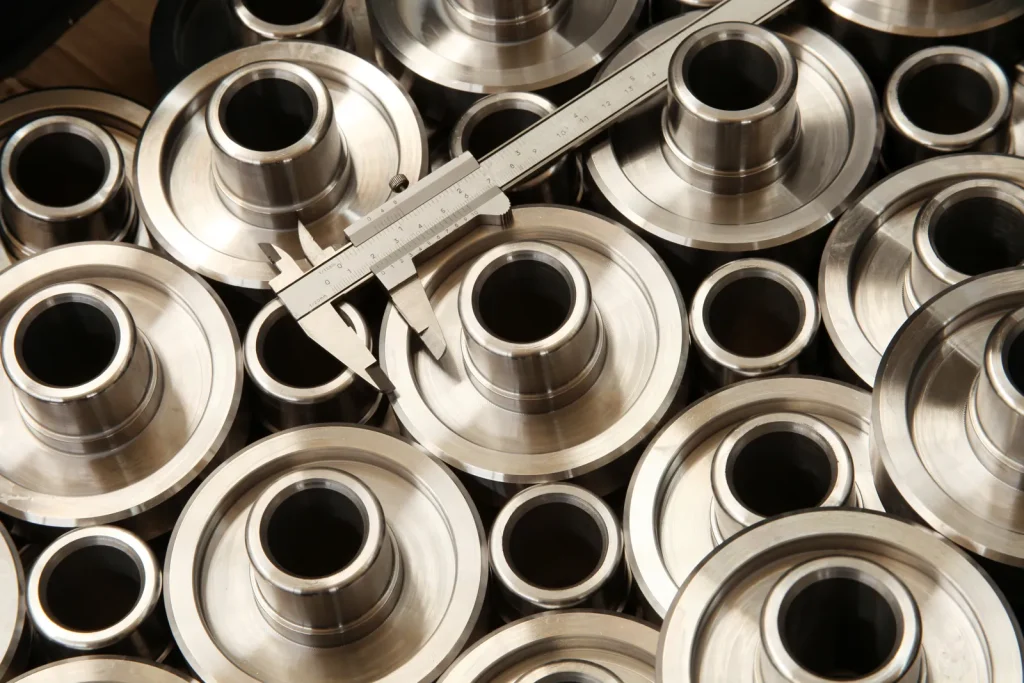
Common Failures, Risks, and Process Constraints
Titanium CNC turning presents inherent machining hurdles alongside material and process-related limitations that directly impact production stability, part quality, and cost efficiency.
Challenges of CNC turning Grade 5 titanium
The challenges of CNC turning Grade 5 titanium are linked to its strength and cutting behavior. Grade 5 is widely used where higher strength is needed, but it can be harder on tools than commercially pure titanium grades. Cutting heat, tool wear, and surface finish control needs more attention.
A Grade 5 part with simple geometry may be feasible. A Grade 5 part with thin walls, deep bores, tight threads, and fine surface finish requirements may need a more cautious process. The drawing should be reviewed for risk stacking. One difficult feature may be manageable. Several difficult features in the same part can make production unstable.
For buyers, the key is to identify which features are critical and which are preferences. If every dimension is tightly controlled, cost and lead time can rise. If only functional features are tightly controlled, the process can be planned with less waste.
Causes of tool wear in titanium CNC machining
The main causes of tool wear in titanium CNC machining include heat concentration, high cutting forces, poor chip evacuation, rubbing, interrupted cuts, and unsuitable tool geometry. Titanium can keep heat near the cutting edge. This can soften or damage the tool and change the cutting action.
Tool wear is not just a tooling cost. It affects part quality. A worn tool can leave poor finish, oversized burrs, thread defects, or drifting diameters. It can also increase cutting force, which creates more heat and can start a feedback loop.
The best tools for titanium turning are not defined by one universal insert or cutter. Tool choice depends on alloy, operation, rigidity, coolant, surface finish, and production volume. In general, rigid toolholding, sharp and appropriate cutting geometry, planned tool replacement, and controlled coolant delivery are more important than choosing a tool by label alone.
Risks of heat buildup during titanium turning
The risks of heat buildup during titanium turning include rapid tool wear, dimensional drift, surface damage, burr growth, and poor chip control. Heat can also affect repeatability across a batch. A first part may pass inspection, while later parts change as the tool and setup warm up.
Coolant requirements for titanium turning should be treated as a process-control issue. Coolant must help remove heat and move chips out of the cutting zone. High-pressure coolant systems are often used in cost-reduction and tool-life strategies for titanium machining, but the correct setup depends on the machine, tool, and feature geometry.
Dry or poorly controlled cutting can raise risk, especially in deep grooves, bores, and high-duty roughing. The process plan should define how heat will be managed before production starts.
Surface finish problems and burr formation issues in precision turned titanium components
Surface finish problems in precision turned titanium components often come from tool wear, vibration, rubbing, heat, or chip interference. A dull tool may smear or tear the surface instead of cutting cleanly. Long chips can scratch the part. Chatter can leave visible marks and create inspection failures.
Burr formation issues in titanium lathe parts are common around grooves, threads, cross holes, and sharp edges. Burrs matter because they can interfere with assembly, sealing, fatigue performance, cleanliness, and medical or aerospace acceptance requirements.
How to achieve high surface finish on titanium depends on stable cutting, proper finishing allowances, sharp tools, coolant control, and deburring plans that do not damage critical edges. The drawing should define the surface finish only where function requires it. Broad cosmetic finish requirements can raise cost without improving performance.
Cost, Tolerance, and Lead Time Factors
Cost, tolerance, and lead time are core considerations that directly shape project planning and sourcing decisions for titanium CNC turning projects.
Factors affecting cost of titanium CNC machining services
The factors affecting cost of titanium CNC machining services include alloy cost, stock form, material waste, cycle time, setup time, tooling, workholding, inspection, secondary operations, and documentation. Titanium material is often a major cost driver, so removing large amounts of stock from a solid blank can be expensive.
In many titanium turning quotes, the main cost drivers are material cost and waste, setup count, cycle time on difficult features, and inspection or documentation burden. Prototype work often carries a higher setup share per part, while repeat production shifts more cost toward cycle stability, tooling consumption, and inspection efficiency. A low quote is often missing risk in one of those areas rather than reflecting a fundamentally different titanium process.
Geometry also matters. Thin walls, deep bores, tight threads, small internal radii, and long slender features may need slower machining, special tools, or extra inspection. Multi-tasking equipment can reduce setups for some parts, but complex mill-turn programming may add planning time.
Volume changes the cost structure. A prototype may carry more setup and programming cost per part. A production run may justify refined tooling, near-net-shape blanks, or dedicated workholding. Cost should be judged against the full manufacturing plan, not only machine time.
How tight tolerances affect titanium turning costs
How tight tolerances affect titanium turning costs depends on where the tolerances are applied. A tight tolerance on one short, accessible diameter may be manageable. Tight tolerance across a long thin wall, deep bore, or flexible shaft is more difficult.
Tight tolerances can increase cost because they require more stable workholding, controlled thermal conditions, finishing passes, tool wear monitoring, and inspection time. They can also increase scrap risk if the process window is narrow.
A practical screen is to separate standard turning control, close turning control, and grinding-level requirements. Turning alone is often suitable when the part mainly needs realistic diametric control and surface finish from a stable lathe setup, but bearing journals, sealing surfaces, and roundness-sensitive features may require grinding or another finishing step. Buyers should identify which dimensions are function-critical so the process can be matched to the real requirement rather than defaulting the whole part to an unnecessarily tight class.
The best practice is to separate functional tolerances from default drawing tolerances. If a feature locates a bearing, seal, thread, or mating component, tight control may be justified. If a feature is noncritical, relaxing, it can reduce cost and improve lead time without changing part function.
Lead time factors for custom machined titanium parts
Lead time factors for custom machined titanium parts include material availability, alloy certification needs, blank preparation, programming, tooling, machine capacity, inspection requirements, secondary operations, and quality documentation. Large or uncommon stock forms can add time. Special forgings or tubes may require more planning than standard bar.
Design maturity also affects lead time. A clear drawing with alloy, tolerances, surface finish, and inspection notes can move into planning faster. A drawing with missing specifications may need clarification before manufacturing can start.
Production volume affects scheduling. A prototype may be limited by programming and setup. A repeat order may be faster if the process is already proven, though material and inspection needs still apply. Regulated sectors can add documentation steps that must be planned into the schedule.
What factors affect a titanium CNC turning quote?
Quote factors for custom titanium CNC machining services include:
- Titanium grade and material form
- Part size and stock removal
- Turning length and diameter
- Thin walls, deep bores, grooves, and threads
- Tolerance and surface finish requirements
- Batch size and repeat order expectations
- Mill-turn features such as flats, holes, slots, and tapping
- Deburring and finishing needs
- Inspection method and report requirements
- Traceability, certification, and documentation
- Packaging or cleanliness requirements
- Delivery timing and material availability
A complete quote should reflect risk, not only time. If the drawing contains difficult features, the supplier should identify them during review. A low quote that ignores Grade 5 tool wear, thin wall distortion, or inspection effort may create problems later.
Applications and Use Cases for Turned Titanium Parts
Titanium CNC turned components serve critical roles across multiple high-demand industries, each with unique performance, regulatory, and precision requirements.
Why aerospace titanium parts require tighter process control
Aerospace titanium parts require tighter process control because they often operate under high load, weight limits, corrosion exposure, and long service expectations. The cost of failure can be high, so material traceability, dimensional control, and inspection documentation matter.
Aerospace also drives demand for lightweight titanium parts. Public industry research identifies aerospace, defense, and space programs as major drivers of titanium machining adoption. These sectors often need precision parts made from bars, tubes, plates, or forgings.
For turned parts, process control may include documented material, controlled setups, defined inspection steps, and repeatable machining parameters compliant with ASME industrial guidelines. The part may be physically simple, such as a pin or sleeve, but the documentation and acceptance requirements can still be demanding.
Best titanium grade for medical CNC machined components
The best titanium grade for medical CNC machined components depends on the device, body contact, mechanical load, surface condition, and regulatory requirements. Medical titanium parts may include bone screws, dental parts, surgical instrument components, sleeves, adapters, and implant-related hardware.
In turning, CP grades are commonly considered when corrosion resistance and lower strength demands dominate, while Grade 5 and Grade 23 are more often selected when strength or medical specification requirements are higher. Grade 23 is often evaluated alongside Grade 5 for medical parts because the machining route may be similar, but sourcing, certification, and documentation expectations can be stricter. The grade decision should therefore be matched to function, regulatory requirements, and the supplier’s ability to maintain traceability through machining and inspection.
Medical buyers should define the alloy and applicable material standard before requesting machining. The machining supplier can comment on manufacturability, but the grade choice must align with product requirements and regulatory review.
Surface condition, burr control, cleanliness, and traceability are often central for medical components. A small burr or poor finish may be unacceptable even if the dimension is correct. This is why medical turned titanium parts often need close coordination between design, machining, finishing, and inspection.
Automotive, defense, space, and industrial turning applications
Titanium turning is used where round components need strength, corrosion resistance, weight reduction, or high performance. Automotive applications may include performance shafts, fasteners, valve-train-related parts, spacers, and connectors. The broader CNC turning market has strong automotive demand because engine and precision components often need tight machining and repeatability.
Defense and space applications may include lightweight connectors, threaded fittings, pins, bushings, sensor housings, and propulsion-related hardware. Industrial uses may include corrosion-resistant shafts, pump parts, chemical processing components, and custom sleeves.
The common link is not industry name alone. The part must justify titanium’s cost and machining difficulty. If the same function can be met with stainless steel or another alloy at lower risk, titanium may not be needed.
Sustainability considerations: titanium chip recycling, coolant control, and material utilization
Sustainability in titanium CNC turning is tied to material utilization, chip recycling, coolant control, and machine energy use. Titanium chips can represent a large portion of the purchased material when parts are cut from solid stock. Better blank selection and DFM review can reduce waste.
Coolant control matters because titanium turning often depends on heat management and chip removal. Coolant handling, filtration, and recycling practices can affect environmental impact and process stability. Public industry examples describe energy-efficient CNC machines, optimized material usage, and recycling methods for titanium chips and coolants, but many claims lack public quantified results.
For buyers, sustainability should be reviewed in practical terms. Ask how material yield is improved, how chips are segregated, how coolant is managed, and whether the process avoids unnecessary stock removal. These steps can also support cost control.
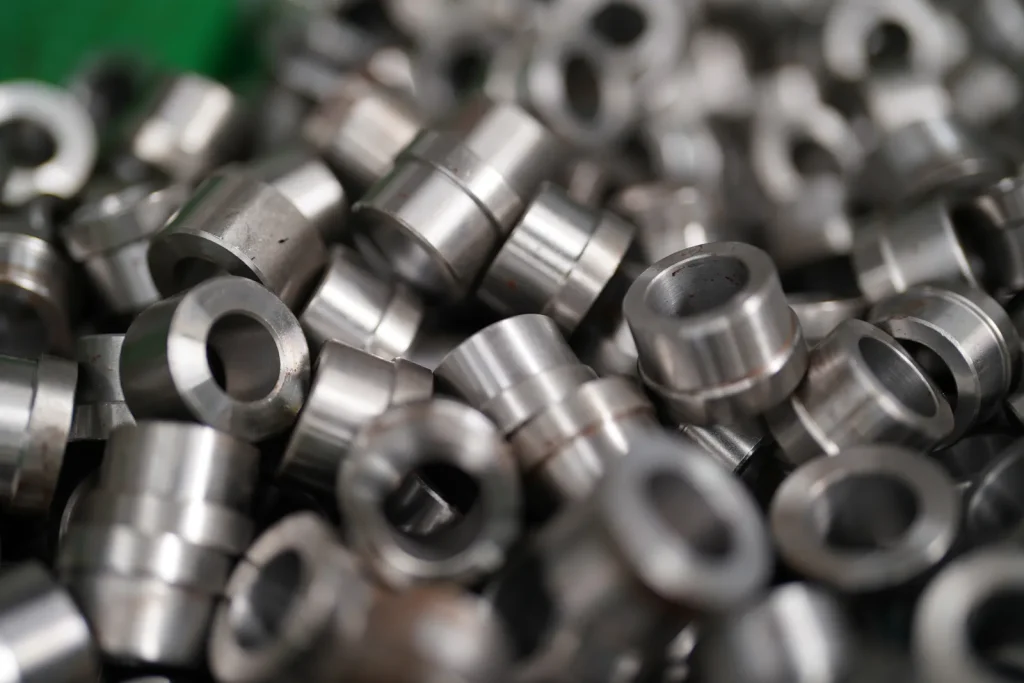
How to Evaluate Titanium CNC Turning Services
Evaluating professional titanium CNC turning providers requires systematic assessment across core operational strengths, quality protocols, verifiable technical evidence, and overall service suitability.
Capability checklist: alloy experience, turning capacity, workholding, and secondary operations
A capability review should confirm whether the supplier has the technical expertise to handle the alloy, geometry, size, and feature mix. Titanium experience matters because the process differs from common aluminum or mild steel turning.
Key capability items include:
- Experience with the specified titanium alloy
- Turning diameter and length capacity
- Bar, tube, plate, or forging handling
- Workholding plan for thin walls or long shafts
- Live tooling or mill-turn capability
- Drilling, tapping, grooving, threading, and boring capability
- Deburring and surface finishing options
- Ability to manage heat, chip control, and tool wear
- Secondary operations such as grinding when needed
- Inspection equipment suitable for the drawing
The supplier should be able to explain risks in plain technical terms. If the answer to every feature is “no problem,” the review may not be deep enough.
Quality checklist: inspection methods, documentation, traceability, and process control
Quality capability should match the part’s application. Industrial parts may need standard dimensional inspection. Aerospace, medical, defense, or space parts may need stronger documentation, traceability, and process control.
Useful checks include:
- Material traceability to the specified titanium grade
- First-article inspection when required
- In-process inspection for features that may drift
- Final inspection against drawing requirements
- Surface finish measurement when specified
- Thread inspection method
- Documentation of nonconformance handling
- Revision control for drawings and models
- Process records for repeat production
- Calibration control for inspection equipment
Quality should not be treated as paperwork after machining. For titanium, process control affects the chance of meeting inspection requirements in the first place.
Evidence to request: DFM feedback, comparable part examples, certifications, and inspection reports
The strongest evidence is specific and technical. DFM feedback should identify thin walls, deep bores, tight tolerances, heat risk, burr risk, and tooling concerns. Comparable part examples should match alloy, size, geometry, or industry requirements. Certifications and inspection reports should match the risk level of the application.
Useful evidence includes:
- Written manufacturability comments on the drawing
- Explanation of turning vs milling vs grinding choice
- Workholding concept for flexible parts
- Tool wear and coolant control approach
- Inspection plan for critical features
- Sample inspection report format
- Material traceability process
- Documentation practices for regulated work
Supplier evaluation should also include sourcing trade-offs such as documentation depth, material traceability confidence, communication accuracy on tolerance interpretation, and lead-time risk from the material supply chain. Lower price may come with weaker control of certification flow, slower issue resolution, or less reliable understanding of which dimensions are truly critical. Buyers should compare suppliers on evidence quality, not only quote level.
How do you choose a titanium CNC turning supplier?
Choose a titanium CNC turning supplier by matching the part risk to the supplier’s process capability. A simple spacer does not need the same controls as an aerospace shaft or medical implant-related component. The more critical the part, the more important alloy experience, workholding, inspection, traceability, and documentation become.
The decision logic is direct. Use titanium CNC turning services when the part is mainly round, titanium is justified by performance, and geometry can be held without excessive deflection or heat risk. Be cautious when the part combines Grade 5 titanium, thin walls, deep bores, tight tolerances, and strict surface finish requirements. Avoid turning as the primary process when the part is mostly prismatic or when grinding is clearly needed as the final process for critical shaft surfaces.
A good evaluation should produce one of three outcomes: the part is suitable for turning, the part needs design changes, or a different process route is better. That conclusion is more useful than a fast quote that does not address manufacturability.
FAQs
Is titanium hard to turn on a CNC lathe?
Yes, titanium is generally harder to turn than many common metals because heat, tool wear, and chip control are harder to manage during the cutting process for titanium CNC turning services. The overall machining difficulty varies significantly based on the specific titanium alloy grade, complex part geometry, tight tolerance requirements, and the rigidity of the machine setup and workholding. Experienced manufacturers adjust cutting parameters and tool selection to overcome these inherent challenges and maintain stable turning quality, ensuring consistent results even for demanding projects.
Why is titanium machining so expensive?
Titanium machining can cost more because the material is costly, tool wear can be high, and cutting conditions must be strictly controlled throughout production, especially for Grade 5 titanium machining. Complex part geometry, ultra-tight dimensional tolerances, premium surface finish needs, and detailed inspection documentation all add extra time and operational expenses to every project. Additional factors such as low material removal efficiency and strict process control further raise the overall manufacturing cost of titanium components.
What coolant is used for titanium turning?
Titanium turning usually needs controlled coolant delivery to manage heat and remove chips from the cutting zone effectively during continuous operation for titanium lathe parts. High-pressure coolant systems are widely adopted in professional titanium machining strategies to lower temperature and extend tool service life. The exact coolant type, flow rate, and pressure setup always depend on the machine model, cutting tool type, titanium alloy grade, and complex feature geometry of the workpiece.
Best tools for titanium turning?
Selecting the best tools for titanium turning relies on matching insert material, cutting geometry, and tool rigidity to the specific titanium grade and part features, particularly for medical grade titanium components. Sharp, heat-resistant tool inserts with optimized edge preparation help reduce friction, heat buildup, and rapid tool wear during continuous turning runs. Proper toolholding stability and reasonable feeds and speeds also play a key role in improving surface finish and maintaining consistent part dimensional accuracy.
Titanium vs Steel: Machining differences?
Titanium and steel differ greatly in heat conductivity, cutting force, and work hardening behavior during CNC machining operations, with distinct nuances in machining titanium vs stainless. Titanium traps heat near the cutting edge and accelerates tool wear, while steel tends to work harden and create vibration under improper cutting conditions. Each material requires unique tooling, coolant strategies, and cutting parameters to achieve reliable precision, surface quality, and production efficiency.
How to achieve a high surface finish on titanium?
Achieving a high surface finish on titanium requires stable machine rigidity, sharp cutting tools, and well-controlled cutting speeds and feeds throughout the turning process for precision CNC turned titanium components. Effective coolant delivery helps reduce heat buildup, vibration, and chip interference that commonly cause surface flaws and chatter marks. Proper finishing allowances, systematic deburring, and controlled tool wear monitoring further ensure smooth, consistent, and high-quality surface results on precision titanium parts.

 English
  German
  French
  Italian
  Spanish
  Polish
  Czech
Czech  Japanese