
Choosing between titanium and stainless steel is rarely a simple material comparison. In machining, the same part geometry can behave very differently once the cutter meets the workpiece. Heat, chip control, tool life, cycle time, surface finish, and scrap risk all change. So the real question is not only which metal has better properties on paper. It is which one can be machined into your part with acceptable cost, consistency, and risk.
For engineers and buyers who compare titanium against stainless steel primarily on property tables, this is where many decisions go wrong. The differences between titanium and stainless steel in a machining context go well beyond what a property table can show. Titanium often looks attractive because of weight savings and corrosion resistance. Stainless steel often looks safer because it is cheaper and easier to machine. Both views are partly right. Getting titanium vs stainless steel machining right means connecting material properties directly to manufacturing behavior — that is what drives feasibility. That is what drives feasibility.
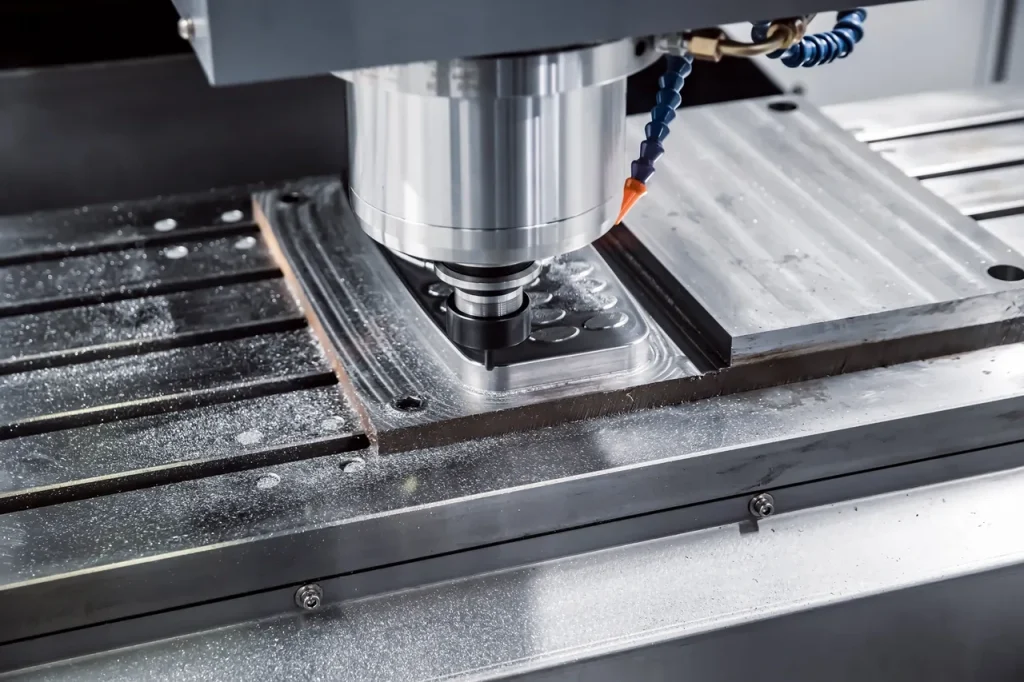
Titanium vs stainless steel machining differences that affect material selection
Beyond process selection, material choice introduces another layer of trade-offs that directly affect machining difficulty, cost, and final part performance. Comparing materials like titanium and stainless steel highlights how engineering decisions must balance functional requirements with manufacturing realities, especially when machining is the primary production method.
What titanium vs stainless steel machining means for engineering decisions
The phrase titanium vs stainless steel machining is really about trade-offs between part performance and production difficulty. Titanium offers high strength-to-weight performance, strong corrosion resistance, and good fatigue behavior. Stainless steel is heavier, but it is easier to machine in most shops and usually gives faster throughput and lower part cost.
This matters early in design. If the part is weight-critical, used in corrosive service, or intended for medical or aerospace use, titanium can justify the extra manufacturing effort. If the part is not weight-sensitive and needs predictable cost, shorter machine time, and easier scaling into production, stainless steel is often the better choice.
When compare between titanium and stainless steel for a new component, the starting point should always be the performance requirement. Selecting between titanium and stainless steel correctly means recognizing that the right answer between titanium and stainless steel depends on part function, production volume, and total delivered cost — not raw material price alone. A useful way to frame the decision is this: titanium solves performance problems, while stainless steel often solves manufacturing and budget problems. That does not mean stainless is a compromise in every case. In many industrial components, it is the more practical engineering answer because the part does not gain enough value from titanium’s weight savings or corrosion performance to offset machining difficulty.
Weight difference between titanium and stainless steel and why it changes part design
A detailed comparison weight of titanium vs steel shows that titanium has a density of roughly 4.5 g/cm³ against stainless steel’s 8.0 g/cm³ — confirming that titanium is lighter by approximately 45%, a gap that becomes structurally significant in assemblies where every gram has a system-level effect. That means titanium is about 45% lighter than stainless steel, a gap that becomes structurally significant in assemblies where every gram has a system-level effect.
That density gap can change the design at system level, not just at part level. A bracket, housing, implant, or rotating component made from titanium can reduce assembly weight in a meaningful way. In aerospace or handheld devices, that can improve function directly. In moving assemblies, lower mass can also reduce inertia, which may help motion response or reduce loads on connected parts.
Still, weight reduction only matters if it affects the product outcome. Titanium and stainless steel often appear in the same application categories. Titanium is widely used in aerospace, implants, and marine components where its density advantage matters directly, while both titanium and stainless steel are widely used across industrial manufacturing but serve different performance niches. If a static industrial mount sits on a machine base and mass is not a penalty, the lower density of titanium may not create real value. In that case, paying more for a harder-to-machine metal may not be justified.
Strength-to-weight tradeoffs between titanium and stainless steel
The strength-to-weight tradeoffs between titanium and stainless steel are why titanium remains attractive even when it is harder to machine. Titanium has a higher strength-to-weight ratio. So for parts where both strength and low mass matter, titanium can outperform stainless.
Stainless steel still has clear advantages. Stainless steel offers better impact resistance and surface hardness than titanium under most service conditions, and stainless steel also offers more consistent tolerance behavior across production lots. So if a part sees abrasive contact, repeated handling, or needs stable production capability across many lots, stainless may be easier to control.
A comparison of titanium alloys such as Grade 5 (Ti-6Al-4V) against common stainless grades makes the trade-off concrete: a comparison of titanium on specific strength shows an advantage, but machinability and cost move in the opposite direction. This is also where buyers should avoid a common shortcut question such as, “Is titanium stronger than stainless steel?” In machining decisions, that question is incomplete. A more useful question is whether titanium’s specific strength helps the application enough to justify slower cutting, more tool changes, and higher rework risk. If not, stainless is often the more rational selection.
Table: Core property comparison for titanium vs stainless steel parts
| Property | Titanium | Stainless Steel |
|---|---|---|
| Density | 4.5 g/cm³ | 8.0 g/cm³ |
| Thermal conductivity | 6.7–7 W/m·K | 16–16.2 W/m·K |
| Relative weight impact | ~45% lighter | Heavier |
| Strength-to-weight ratio | Higher | Lower |
| Impact resistance / surface hardness | Lower in comparison | Better in comparison |
| Corrosion resistance | Excellent, especially aggressive environments | Good to very good, depends on grade and environment |
| Machinability | More difficult | Easier |
| Typical machine time | 30–40% more than stainless | Lower |
| Typical tool life | 20–30 min | 45–60 min or longer |
| Standard surface finish range | 32–125 μin | 16–63 μin |
Unlike titanium, which is a pure element or simple binary alloy, stainless steel is made from iron alloyed with chromium, nickel, and other elements — a composition that determines its grade, strength profile, and corrosion behavior.
Can titanium or stainless steel be manufactured efficiently for your part?
Understanding the differences between titanium and stainless steel is only part of the decision.
Ease of machining titanium compared to stainless steel in prototype and production runs
The ease of machining titanium compared to stainless steel changes with volume. In prototypes, both materials can be machined, but titanium often creates more setup sensitivity. Titanium requires sharper tools, rigid fixturing, smaller depths of cut, and high-pressure coolant to keep heat under control — each adding setup time and process uncertainty on the first run. That adds time and raises uncertainty in the first run.
In production, the gap gets wider. Stainless steel for cnc machining is generally more efficient. Stainless steel is generally easier to process because standard coolant practice and more forgiving cutting behavior allow larger cuts and better throughput. Stainless steel’s ease of machining, combined with wider process windows, is exactly why the combination of ease of machining and lower raw material cost makes it the default for most production environments. Stainless is simply easier to machine than titanium across almost every measurable dimension of shop performance. Research sources describe titanium as about 30% more difficult to machine and requiring 30–40% more machine time. This cost escalation is one of the most consistent findings in titanium vs stainless steel machining: the production gap widens as volume grows and process inefficiencies compound.
So if your part is still in design change mode, stainless can reduce prototype risk. If the finished application later proves that weight or corrosion needs are critical, the design can then be reviewed for transfer to titanium. That approach helps avoid early scrap on a costly material.
Material selection factors for titanium vs stainless steel parts
The main material selection factors for titanium vs stainless steel parts are usually these: required weight, corrosion exposure, strength-to-weight need, production volume, tolerance sensitivity, finish requirement, and cost ceiling.
Titanium is generally the stronger candidate when the service environment is aggressive and part weight directly affects system performance. If corrosion is severe, titanium gains ground quickly. If cycle time and budget are the main limits, stainless usually wins. If the geometry is thin, deep, or difficult to fixture, titanium may become much less practical because heat and deflection can combine to shorten tool life and affect finish.
This is why material selection should be tied to part geometry and process plan, not only the bill of materials. A titanium part that looks ideal in a property table may still be a poor manufacturing choice if the design has long reach tools, thin walls, interrupted cuts, or demanding finish targets.
Limitations of stainless steel for lightweight components
The main limitations of stainless steel for lightweight components come from density. At 8.0 g/cm³, stainless can add too much mass in weight-sensitive products. Engineers may try to machine away more material to compensate, but that can lead to thin sections, longer cycle times, or weaker stiffness paths.
So stainless is not always the practical low-cost answer if low weight is a design requirement. A stainless part may cost less per kilogram and machine faster, yet still fail the system requirement because it remains too heavy. In those cases, engineers may rule out stainless steel due to weight constraints and justify titanium even with a higher machining burden.
When can titanium vs stainless steel machining become impractical?
Machining either material becomes impractical when the part demands exceed what the material can support economically. For titanium, that often means complex geometry, poor rigidity, tight finish demands, or high-volume production with strong cost pressure. For stainless steel, impracticality usually appears when weight limits or aggressive corrosion conditions make the part unsuitable in service.
How machining behavior changes between titanium and stainless steel
Once feasibility is established, the next question is how each material behaves during actual cutting. Differences in heat transfer, hardness, and tool interaction directly influence machining stability, tool life, and cycle time—making machining behavior a critical factor in material selection decisions.
Why low thermal conductivity makes machining challenges with titanium alloys worse
The largest driver behind machining challenges with titanium alloys is low thermal conductivity. Titanium’s thermal conductivity at around 6.7–7 W/m·K is significantly lower than stainless steel’s 16–16.2 W/m·K — though stainless steel has a lower conductivity than copper or aluminum, it still moves heat away from the cutting edge far more effectively than titanium does. To put it simply, titanium does not move heat away from the cut very well. Based on NIST materials database, titanium thermal conductivity data confirms that approximately 80% of cutting heat concentrates at the tool edge, versus more distributed heat dissipation in stainless steel alloys.
Research sources state that about 80% of heat concentrates at the cutting edge in titanium machining. That means the tool, not the chip or the workpiece, sees most of the thermal load. This heat concentration is what makes titanium significantly more demanding to machine than stainless steel — it raises wear quickly, weakens the cutting edge, and can damage surface integrity if the process is not carefully controlled.
Stainless steel also creates heat, but it spreads more of that heat into the workpiece. That helps the tool survive longer. This is one reason titanium is not just “harder” in a simple sense. The real issue is thermal behavior.
Impact of titanium hardness on machining time, tool wear, and heat concentration
The impact of titanium hardness on machining time is tied to how the material reacts under load and heat. Titanium tends to work-harden rapidly and deeply under cutting loads. Titanium typically builds a hardened surface layer faster than most steel alloys, which means the next tool pass sees a tougher surface and pushes wear even faster. Once that hardened layer forms, the next tool pass sees a tougher surface, which pushes wear even faster.
In practice, tool life drops to around 20–30 minutes when machining titanium compared to stainless steel, which typically sustains 45–60 minutes or longer under standard cutting conditions. Some ranges vary by grade and test conditions, but the pattern is clear: titanium needs more frequent tool changes, often 2–3 times as often.
More tool changes mean more than insert cost. They also mean interruptions, more offset checks, more chances for dimensional drift, and more rework. That is one reason titanium CNC parts cost more than stainless steel even when the part shape is the same.
Cutting speed, feed, and coolant differences in titanium vs stainless steel machining
The cutting data shows clear differences. Titanium cutting speeds are reported around 30–60 SFM in some sources, with broader ranges of 50–150 SFM in others. Stainless steel is shown at 70–100 SFM in one set of data and 200–400 SFM in others. The variation reflects grade and test method differences, but the trend is consistent: titanium runs slower.
Feeds also differ. Titanium is reported around 0.002–0.005 IPR, while stainless steel is around 0.004–0.008 IPR. That lower speed and controlled feed strategy is part of why titanium machining takes longer.
Coolant practice changes too. Titanium benefits from high-pressure coolant because heat removal at the edge is critical. Stainless steel usually works with more standard coolant methods. This is one reason stainless steel is easier to scale for production. The process window is wider. According to ASME standards, recommended cutting speed for titanium ranges from 50–150 SFM while stainless steel tolerates 200–400 SFM, reflecting the broader machining window that stainless steel offers in production environments.
Process diagram: Heat, chip load, and tool-life differences at the cutting edge
A simple process view helps explain the difference:
| Cutting-edge factor | Titanium | Stainless Steel |
|---|---|---|
| Heat flow | Heat stays near tool edge | More heat spreads into workpiece |
| Thermal effect on tool | High edge temperature | Lower edge temperature in comparison |
| Cutting speed window | Lower | Higher |
| Feed window | Narrower, more controlled | Wider |
| Tool life | Shorter, about 20–30 min | Longer, about 45–60 min or more |
| Tool change frequency | Higher | Lower |
| Scrap and rework sensitivity | Higher | Lower |
Advantages and limitations of titanium vs stainless steel in machining
After understanding how each material behaves during machining, the final step is weighing their practical advantages and limitations in real applications.
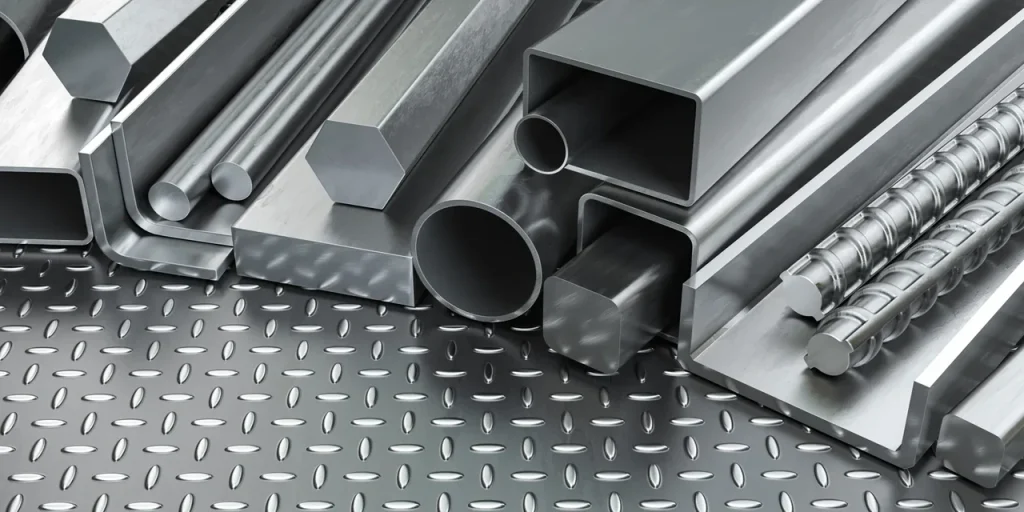
When to choose titanium over stainless steel for performance-driven parts
When to choose titanium over stainless steel is usually clear in performance-driven parts. Titanium makes sense when low weight, high strength-to-weight ratio, corrosion resistance, and fatigue endurance matter more than machining cost. Aerospace components, corrosion-critical parts, and some medical applications fit this pattern. Machined parts made from titanium in these categories often justify higher process cost through performance advantages that stainless steel cannot deliver at equivalent part weight.
Titanium is also worth considering when a heavier stainless part would force a larger redesign. If switching to titanium reduces total assembly mass enough to improve function, the higher machining cost may be justified at system level.
When stainless steel is a better choice than titanium for cost and throughput
When stainless steel is a better choice than titanium comes down to volume and economics. Stainless is usually the better option when raw material cost matters, throughput matters, and the part does not depend on weight savings to succeed.
Research shows titanium raw material at about $35–55/kg, compared with stainless at about $3.50–6.50/kg. Stainless steel offers a much wider process window, faster cycle times, and significantly lower scrap exposure compared to titanium, which cuts slower, wears tools faster, and increases rework risk across every stage of the machining process. So stainless fits general industrial, structural, and budget-driven parts much better.
This matches common shop-floor feedback as well. Machinists often say that if cost is a major factor, stainless is the safer route. That reflects process behavior, not preference.
Corrosion resistance of titanium vs stainless steel in aggressive environments
A direct corrosion resistance comparison between titanium and stainless steel is one of the strongest reasons to accept titanium’s machining burden, particularly in environments where chlorides or aggressive media are present. Research consistently shows that titanium is highly resistant to corrosion in aggressive environments, especially where chlorides or salt exposure are present. According to ASTM corrosion testing standards, salt-spray and electrochemical corrosion tests (ASTM B117 equivalent) demonstrate titanium’s superior resistance in chloride-rich environments compared to 304 and 316L stainless steel grades. In less severe conditions, stainless steel may provide adequate protection at substantially lower cost.
Stainless still offers good corrosion resistance, and in many general industrial environments it is more than sufficient — though the type of stainless steel matters significantly, as 316L performs better in chloride environments than 304. The issue is not that stainless corrodes quickly in every case. The issue is that titanium provides more margin in severe environments, which can justify higher part cost if failure would be expensive.
In aggressive corrosive environments, titanium generally lasts longer in service than stainless steel, which is one of the strongest justifications for accepting its higher machining burden in marine, chemical, and implant applications.
Temperature resistance comparison of titanium and stainless steel
The temperature resistance comparison of titanium and stainless steel is more balanced. Although titanium has a higher melting point than stainless steel — approximately 1668°C versus 1400–1450°C for most grades — stainless steel is often the better practical choice for sustained high-temperature service because of its mechanical stability and lower fabrication cost in that role. If the application is strongly temperature-driven rather than weight-driven, stainless may be more practical.
So for buyers asking, “Which is better for high-temperature applications?” the answer often leans toward stainless steel, especially where lightweight design is not the main requirement.
Common machining risks, failures, and quality issues
Even when a material is selected for its performance benefits, machining risks can significantly affect cost, quality, and delivery.
Manufacturing risks when machining Grade 5 titanium
The main manufacturing risks when machining Grade 5 titanium are heat concentration, work hardening, rapid tool wear, and setup sensitivity. Research data also notes tool life around 30–45 minutes at 150–250 SFM for Grade 5 under certain conditions, which still points to tight process control needs.
For difficult geometries, these risks can stack up. Heat shortens edge life, worn tools hurt finish, and any re-cut on a work-hardened area can raise scrap risk. Parts with long unsupported sections or fine features can be especially sensitive.
Surface finish challenges in titanium CNC machining versus stainless steel
The surface finish challenges in titaniumCNC machining are linked to heat and elasticity. Standard finish ranges are reported at 32–125 μin for titanium and 16–63 μin for stainless steel. That means stainless usually achieves a smoother finish more easily under standard conditions.
If the part needs a refined surface, titanium may need more finishing work or tighter process control. For buyers, that affects both cost and planning. A part that looks feasible dimensionally may still need added operations because titanium does not finish as predictably.
Why titanium CNC parts cost more than stainless steel when scrap and rework rise
The true cost of titanium CNC parts extends well beyond raw material, and understanding this gap is essential before committing to the material. Titanium is generally more expensive than stainless steel at the raw material level — often 8–10 times higher per kilogram. Part of this is structural: titanium extraction is more energy-intensive and technically complex than refining processes used for most steel alloys, which keeps base material costs high regardless of machining conditions. Then slower cutting, shorter tool life, more setup care, and higher scrap sensitivity add more cost.
Sources report total cost differences from 2–3 times higher up to 30 times higher depending on whether the comparison includes raw material only, full machining cycle, and production context. That range is wide, but the decision lesson is still useful: titanium cost exposure rises fast when a process is not stable. In titanium vs stainless steel machining, buyers often underestimate cost exposure because scrap and rework compound quickly — both the material and the machine time carry high unit cost.
Why does titanium seem to eat tools faster than stainless steel?
Titanium seems to wear out tools faster because it keeps heat near the cutting edge instead of moving it away. Research suggests about 80% of machining heat stays at the tool edge in titanium. It also work-hardens quickly, so the tool often cuts a tougher surface on the next pass.
Cost factors, tolerances, and lead time in titanium vs stainless steel machining
After identifying machining risks, the next step is understanding how they translate into cost, tolerance control, and delivery timelines.
Cost factors for titanium CNC machining beyond raw material price
The main cost factors for titanium CNC machining beyond stock price are slower cutting speed, more tool changes, rigid fixturing needs, coolant demands, and extra finishing or inspection when surface quality is difficult. These are process costs, not material costs.
This matters because some buyers compare only the metal price. That understates the real gap. In titanium machining, machine time often grows because cuts are slower and more cautious. Tooling spend rises because edge life is shorter. If rework appears, the penalty per part becomes much larger than in stainless.
Industry-level comparison: machine time, tool life, and total cost ranges
Industry comparison data in the provided research points to a repeatable pattern: titanium often needs 30–40% more machine time, has 20–30 minute tool life, and requires 2–3 times more frequent tool changes. Stainless often reaches 45–60 minutes or longer tool life with faster cutting. In stainless steel production runs, the wider process window and longer tool life allow shops to sustain throughput that titanium machining cannot realistically match at competitive cost.
On cost, reported ranges vary widely. Some sources put titanium machining at 2–3 times the total cost of stainless in practical work. Others show extreme cases up to 30 times. The gap depends on part complexity, volume, scrap rate, and whether the comparison includes only machining or full delivered part cost. So the right use of these figures is directional, not absolute.
Tolerance consistency and finish capability in titanium vs stainless steel machining
On tolerance consistency, the research does not provide exact tolerance values, so it is better to discuss behavior rather than promise numbers. Stainless steel tends to offer more consistent tolerance hold in production because it runs cooler at the tool edge, allows longer tool life, and supports a wider machining window.
Titanium can still be machined accurately, but consistency depends more heavily on tool condition, setup rigidity, and heat control. That means tolerance capability is often less about the machine itself and more about process discipline. For parts with repeated tight requirements, engineers should check how often tools are changed, how finish is controlled, and whether rework on hardened surfaces is likely.
Table: Cost, tolerance, and lead time drivers by material and production volume
| Driver | Titanium | Stainless Steel |
|---|---|---|
| Raw material price | High, about $35–55/kg | Lower, about $3.50–6.50/kg |
| Machine time | 30–40% more | Lower |
| Tool life | Shorter | Longer |
| Tool change frequency | Higher | Lower |
| Finish capability under standard conditions | Rougher surface more likely | Smoother surface more likely |
| Tolerance consistency in production | More process-sensitive | More stable in comparison |
| Prototype lead time risk | Higher due to setup sensitivity | Lower |
| Production scaling | Harder, especially at cost-sensitive volumes | Easier for high-volume throughput |
Applications where each material makes more sense
Looking at typical applications helps clarify when titanium’s performance advantages justify its cost, and when stainless steel provides a more practical and efficient solution.
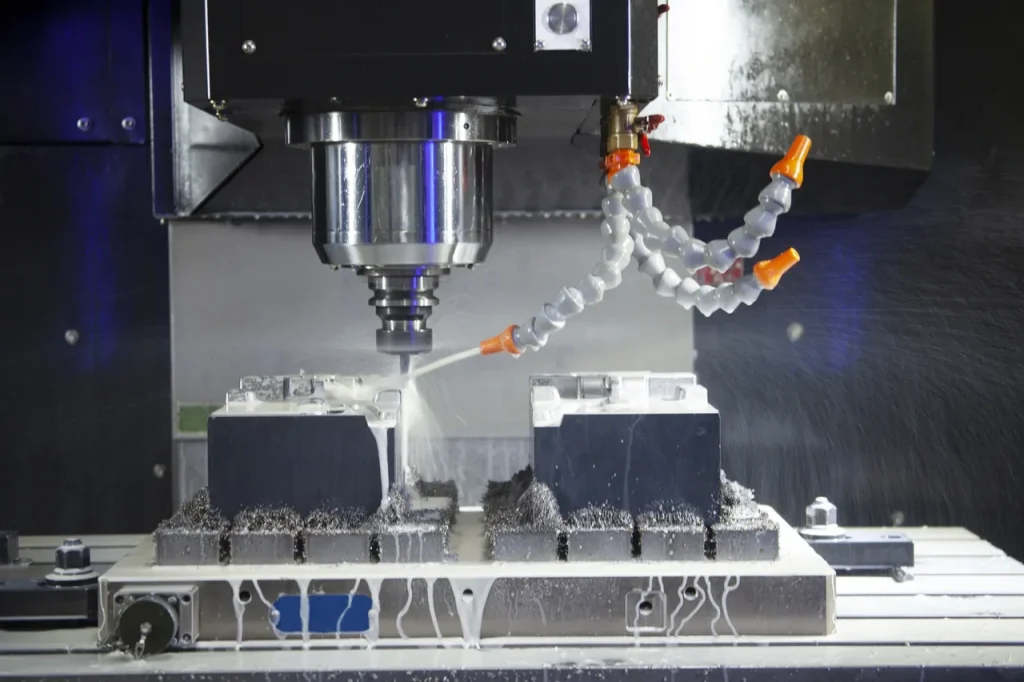
Titanium vs stainless steel for corrosion-critical environments
For titanium vs stainless steel for corrosion-critical environments, titanium usually leads. If the part will face aggressive media and failure is costly, titanium’s corrosion resistance can outweigh its machining penalty. This is why it is often selected for marine, chemical, and other severe-service parts.
Stainless can still be the right answer in moderate environments. If the service is not highly aggressive, stainless may provide enough corrosion resistance at much lower manufacturing cost.
Stainless steel vs titanium for medical implants
The true cost of titanium CNC parts When selecting medical grade metals, titanium is often favored over stainless steel for implants because of its corrosion resistance, biocompatibility, and fit with the demanding use cases cited in the research. Based on ISO medical device material standards, specifically ISO 5832 for implant metals, commercially pure titanium and Ti-6Al-4V are designated as preferred biocompatible alloys for long-term body exposure, while stainless steel remains secondary due to potential nickel release concerns. Ends well beyond raw material, and understanding this gap is essential before committing to the material. Stainless remains used in many medical-related components, but when implant performance and long-term body exposure matter, both pure titanium and its alloys often have the stronger case, depending on the specific structural and biocompatibility requirements.
The manufacturing implication is that implant-related titanium parts need a process that controls heat, finish, and rework carefully. The material choice cannot be separated from machining discipline.
Aerospace, structural, and general industrial use cases
Aerospace and weight-sensitive structural applications are where titanium components most clearly justify their higher machining cost and tighter process requirements. The lower density and high strength-to-weight ratio support parts where mass reduction matters directly.
General industrial parts usually point toward stainless steel. If the part is structural, not weight-critical, and cost matters, stainless gives a more efficient path through machining. It is also a better fit where production volume and throughput are important.
Is titanium worth machining for non-weight-critical parts?
The decision to use titanium is usually hard to justify for non-weight-critical parts unless corrosion resistance or another specific service requirement makes it necessary. If weight is not important and the environment is not severe, stainless steel is often the more practical choice because it is cheaper, faster to machine, and easier to scale.
Secondary manufacturing considerations engineers should check early
Beyond primary machining decisions, secondary manufacturing factors can significantly influence overall feasibility, cost, and risk. Evaluating these considerations early helps prevent late-stage issues when parts move from standalone components into assemblies and full production environments.
Weldability differences between titanium and stainless steel
The weldability differences between titanium and stainless steel should be reviewed early if the machined part is part of an assembly. In general, stainless steel is easier to weld than titanium because it does not require the same level of inert-gas shielding and contamination control. Stainless steel is generally easier to process across welding, forming, and machining operations, which contributes to lower total fabrication cost.
The provided research package does not give quantified welding data, so the safe conclusion is procedural: welding requirements can change the process route, inspection plan, and risk profile, so they must be checked with the fabricator before final material selection.
How titanium density affects part weight reduction in assembled systems
How titanium density affects part weight reduction becomes more important in assemblies than in single-part comparisons. Because titanium is about 45% lighter, a set of brackets, fittings, or enclosures can remove meaningful system mass. This can affect handling, motion, or support structure loads.
That said, not every assembly benefits enough to justify titanium. Buyers should ask whether the weight reduction improves product function, or if it only looks good in a spreadsheet.
Surface finish, post-processing, and inspection implications
Surface finish and post-processing often separate a feasible titanium part from an expensive one. Titanium starts with a rougher standard machining finish range, so extra finishing may be needed. That can lengthen lead time and increase inspection effort because more steps introduce more chances for variation.
Stainless steel is usually simpler in this respect. Better standard finish behavior reduces the need for corrective finishing. For inspection, this often means fewer concerns about wear-driven drift during long runs.
Checklist: Questions to confirm process capability with suppliers
Before release, engineers should confirm a few basics with any supplier offering custom cnc machining to validate process capability for the selected material. For example, experienced manufacturers such as UNeed specialize in precision CNC turning and CNC milling, and can provide practical feedback on titanium vs stainless steel machining feasibility, tooling strategy, and cost optimization early in the project.
- Have they machined similar titanium or stainless parts before?
- What cutting-speed and coolant strategy do they plan to use for the selected material?
- How often do they expect tool changes during the run?
- How will they manage finish requirements if the part is titanium?
- What features in the geometry are most likely to cause heat, chatter, or rework?
- Is the prototype process the same as the production process, or only a temporary method?
How to evaluate and choose between titanium and stainless steel
The final step is making a clear, structured choice. A decision framework helps translate these factors into a practical selection that balances performance requirements with manufacturing efficiency and cost control.
Decision matrix: performance, machinability, cost, and risk
A simple decision matrix for titanium vs stainless steel machining helps engineers weigh performance needs against manufacturing constraints before committing to a process plan. Use it to select the right path before committing to a process plan:
| Decision factor | Titanium | Stainless Steel |
|---|---|---|
| Weight reduction | Strong advantage | Weak |
| Strength-to-weight ratio | Strong advantage | Moderate |
| Corrosion-critical service | Strong advantage | Depends on environment |
| High-temperature focus | Less favorable | Better choice |
| Ease of machining | Weak | Strong advantage |
| Throughput in production | Weak | Strong advantage |
| Cost control | Weak | Strong advantage |
| Scrap and rework risk | Higher | Lower |
Engineers who need to choose between titanium vs stainless for a given part should run through the matrix systematically. Titanium may win on performance criteria, but if machinability, cost, and risk are the priority, stainless usually wins. If performance is the primary driver, titanium often wins. If machinability, cost, and lower risk are the priority, stainless usually wins.
When to prototype in stainless steel before moving to titanium
A useful strategy is to prototype in stainless steel before committing to titanium when geometry is still changing. This can reduce early cost and speed up learning on dimensions, fixturing, and function.
The main caution is that stainless and titanium do not machine the same way, so a stainless prototype cannot prove titanium process capability. It can validate shape and fit, but not final cycle time, tool wear, or finish behavior.
When should you choose titanium over stainless steel despite higher machining cost?
Choose titanium when the part needs meaningful weight reduction, strong corrosion resistance, or performance that stainless cannot deliver at the same mass. The higher cost is easier to justify in aerospace, medical, and severe-environment components where material performance directly affects safety or function. If those requirements are not real, the higher machining cost is usually hard to defend.
References needed: standards bodies, academic sources, and industry reports
For a final production decision, engineers should support the comparison with formal references, not just shop data. The best sources are standards bodies, academic materials science references, and industry reports that define alloy properties, corrosion behavior, and application-specific requirements.
FAQs
Yes. In most machining conditions, titanium vs stainless steel machining comparisons consistently show titanium as the more demanding material, primarily because of heat concentration at the cutting edge. The main reason is low thermal conductivity, which keeps heat at the cutting edge and shortens tool life.
Titanium costs more because the raw material is much more expensive, cutting speeds are lower, machine time is longer, and tool wear is higher. Scrap and rework also hurt more because each failed part carries higher material and process cost.
The research provided compares titanium at about 4.5 g/cm³ and stainless steel at about 8.0 g/cm³. That means titanium is about 45% lighter, which can matter a lot in weight-sensitive assemblies.
Stainless steel is often the better choice when high temperature is the main design issue. Titanium is strong and light, but stainless is usually favored where heat resistance matters more than weight reduction.

 English
  German
  French
  Italian
  Spanish
  Polish
  Czech
Czech  Japanese