
Thermal expansion in CNC is a critical factor in precision machining, as even minor temperature changes can cause expansion or contraction of machine components and workpieces—especially in processes like cnc milling and cnc turning. Understanding this phenomenon helps manufacturers manage thermal expansion, reduce errors, and maintain tight tolerances, directly addressing the risk of thermal deformation in CNC operations.
What thermal expansion in CNC means and why it matters
Thermal expansion in CNC means that machine parts, cutting tools, fixtures, and the workpiece change size as temperature changes. In machining, even a small size change can matter because the machine is trying to place the cutting edge in a very exact position. If heat builds up in the spindle, tool, or part, the cut may be correct at that moment but wrong after the part cools back to room temperature.
This is why thermal behavior matters in both engineering review and purchasing. A print may be feasible in theory, but the real question is whether it is feasible across an entire production run, over different shifts, and through changing shop temperatures. The key point is that thermal expansion is not one problem. It is a system problem involving the machine, tool, fixture, coolant, and part.
How thermal deformation affects machining accuracy in turning, milling, and long cycles
How thermal deformation affects machining accuracy depends on where the heat enters the process and how long it stays there. In turning, the spindle, chuck, turret, and long rotating workpieces can grow as they heat up. This changes diameters, lengths, and tool position. In milling, the spindle cartridge, tool holder, cutter, and part can all expand at different rates, which shifts tool center position and can change pocket size, flatness, and true position.
Long machining cycles increase risk because the machine does not stay at one stable temperature. It warms up during roughing, may stabilize during repeated cuts, and then drift again if spindle speed, tool engagement, or coolant conditions change. These thermal stability challenges in long machining cycles are often more serious than simple static expansion because the error keeps moving during the job.
A common shop-floor complaint is that setups look correct in the morning, then drift after several parts. This reflects how thermal deformation affects machining accuracy in a real process: the first-off may not match the tenth part if the thermal state is still changing.
Causes of thermal expansion in CNC machining: spindle heat, cutting friction, motors, and ambient shifts
The main causes of thermal expansion in CNC machining are internal heat sources and external temperature changes. Internal sources include spindle bearings, drive motors, ball screws, guideways, and cutting friction at the tool-workpiece interface. Higher spindle speed increases frictional heat, which can accelerate machine growth and tool heating. One source states spindle heat can cause warping of up to 0.004 inch or less, though that figure should be treated as single-source guidance rather than a universal rule.
Cutting friction matters because much of the heat is generated right where the metal is being sheared. That heat may go into the chip, tool, and workpiece in different amounts depending on the material and cutting conditions. Motors and hydraulic units also warm nearby structures.
External changes matter too. The impact of ambient temperature on CNC precision can show up during shift changes, doors opening, sunlight on one side of the machine, or seasonal weather swings. A machine that is accurate in a stable metrology room may not behave the same way on an open shop floor.
How temperature fluctuations affect workpiece tolerance and setup repeatability
How temperature fluctuations affect workpiece tolerance is simple in concept but difficult in production. If the part is measured while warm, it may seem larger or smaller than it will be after cooling, depending on geometry and material. This can lead to false offset changes. The result is often a cycle of overcorrection: the operator adjusts the machine to fix a temporary thermal condition, then the part goes out in the other direction after temperatures stabilize.
Setup repeatability is affected in the same way. If the fixture, machine structure, and reference surfaces are at different temperatures from one setup to the next, the starting point changes. In short, repeatability is not only about location and clamping force. It is also about thermal state.
For buyers and planners, this means tight work often needs a defined temperature condition for setup, machining, and inspection. It also explains why parts may change size after machining. The cut may have been made on a hot part, but acceptance usually happens after the part reaches a more stable temperature.
Table: Material coefficient of thermal expansion in precision machining for aluminum, stainless steel, titanium, Inconel, brass, and alloy steels
The material coefficient of thermal expansion in precision machining is one of the first checks in feasibility review. Reported values can vary by exact alloy and source, so the values below should be treated as typical reference points from the provided research.
| Material | Typical CTE from provided sources | Machining implication |
|---|---|---|
| Aluminum | around 13 per unit length per degree; also cited as about 13.1 × 10⁻⁶/°F | High expansion, so size can move quickly with temperature |
| Stainless steel | 9.6 × 10⁻⁶/°F | Moderate expansion; alloy family matters |
| Titanium | 4.9 × 10⁻⁶/°F | Low bulk expansion, but heat tends to stay localized |
| Inconel | 7.2 × 10⁻⁶/°F | Moderate expansion with strong heat generation during cutting |
| Brass | 10.4 × 10⁻⁶/°F | Relatively high expansion for precision work |
| Alloy steels | around 7.5 micro-inches per inch per °F | More stable than aluminum, but still sensitive in long parts |
The uncertainty in these figures matters. For example, stainless steel values vary by grade, and aluminum values vary by alloy. So the design review should use the specific alloy if tolerance risk is high.
When thermal control is feasible in CNC production
Thermal control is feasible when the process is repeatable enough that heat input and heat removal can be predicted or managed. It is easier in stable production than in mixed-job environments where spindle loads, cycle times, and materials change all day.
Predicting thermal expansion before precision machining: size, material, duty cycle, and tolerance stack-up
Predicting thermal expansion before precision machining starts with four checks: part size, material, duty cycle, and tolerance stack-up. A larger part has more absolute growth for the same temperature change. A high-CTE material such as aluminum changes size faster than titanium or many steels. A long duty cycle gives more time for the machine and part to heat up. Tight tolerance stack-ups leave less room for drift.
This review is not just about the final dimension. It should ask where heat will be generated, whether the part can cool evenly, and whether measurement will happen at a constant temperature. If the tolerance chain depends on several machined features from different operations, thermal drift can accumulate across setups.
When thermal equilibrium matters in precision machining for first-off approval and finish passes
When thermal equilibrium matters in precision machining is usually at two points: first-off approval and final finishing. If the first part is approved before the machine reaches a stable thermal state, later parts may drift. In some cases, the reverse also happens: the machine is tuned hot, then an interruption or idle period changes the condition before the next run.
Finish passes are especially sensitive because they remove little material and rely on the machine and part being dimensionally settled. This is why some precision strategies use roughing first, then cooling or stress relief, then finish machining. That sequencing was highlighted in the provided aluminum and titanium cases.
Limitations of machining high thermal expansion materials such as aluminum in tight-tolerance work
The limitations of machining high thermal expansion materials are clear in aluminum. Aluminum is attractive because it machines quickly, but it expands rapidly compared with steels and titanium. During multi-operation work, the part can change shape or size between roughing, semi-finishing, inspection, and finish cutting.
That does not make tight-tolerance aluminum impossible. It means process planning becomes part of manufacturability. Roughing first, allowing the part to cool, stress relieving where needed, and then finishing at a stable temperature is often more realistic than trying to hit final size in one hot cycle. For buyers, the practical constraint is that high-CTE materials often need more attention to thermal state, which can affect setup time, inspection timing, and schedule confidence.
Can tight tolerances be held without active thermal compensation?
Yes, sometimes. Tight tolerances can be held without active thermal compensation when the machine is thermally stable, the cycle is short, the material is not highly sensitive, and ambient conditions are controlled. If those conditions are not stable, passive control alone may not be enough.
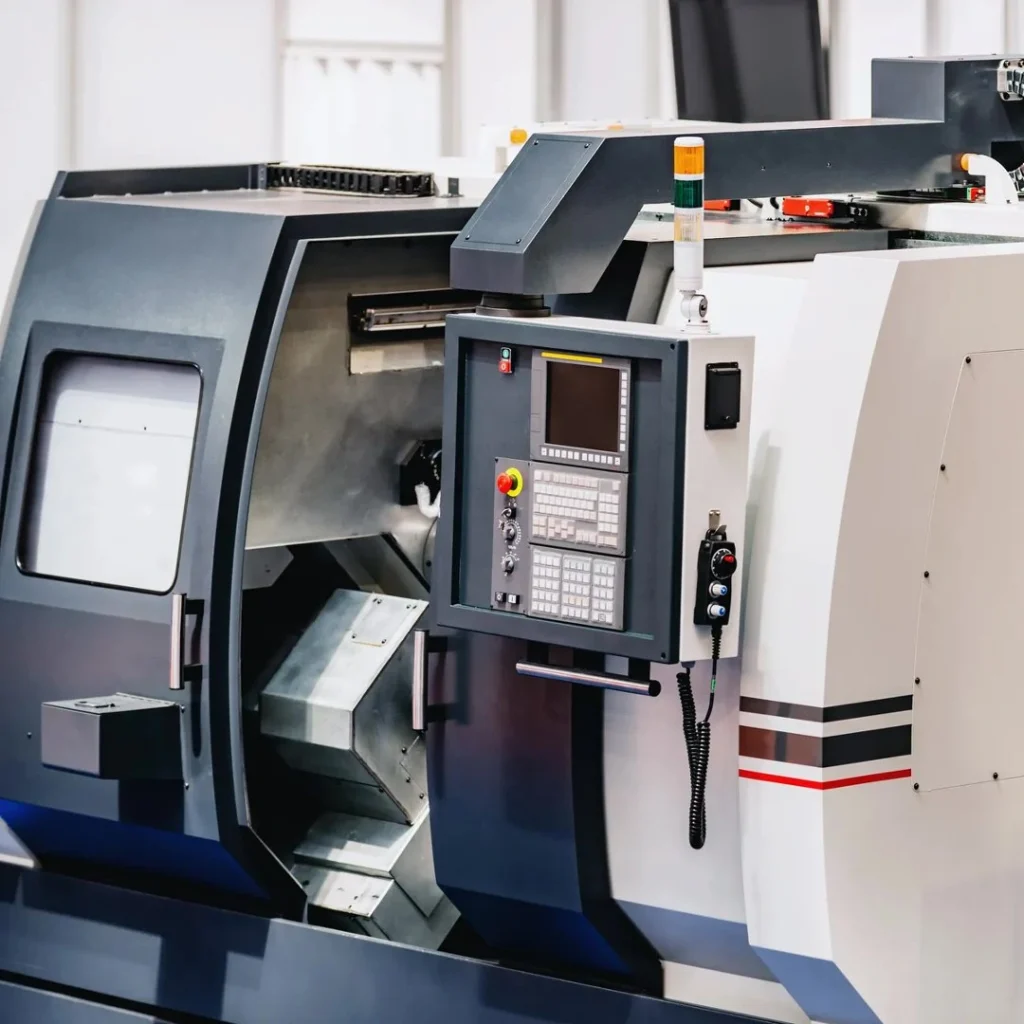
How thermal expansion develops through the machine-part-tool system
In thermal expansion in machining, heat during machining directly impacts precision and stability. Advanced CNC systems predict and correct thermal growth to enhance machining accuracy.
How spindle heat causes dimensional drift in bearings, housings, and tool center point
How spindle heat causes dimensional drift starts with bearing friction and motor losses. As those parts warm up, the spindle shaft and housing expand. That can shift the tool center point, meaning the tool tip is no longer where the control assumes it is. The change may be axial, radial, or both.
This matters because the spindle is not only a heat source. It is the reference for cutting position. If the spindle nose moves as it heats, the machine can produce a consistent but wrong size until compensation or stabilization occurs.
Differential expansion between tool and workpiece during roughing and finishing
Differential expansion between tool and workpiece is common because the tool and part usually have different masses, materials, and heat paths. During roughing, the cutting zone is hot, the part may swell near the cut, and the tool may lengthen. During finishing, heat input is lower, but even small mismatches matter because the depth of cut is small.
This is one reason a part may measure one way in the machine and another way after cooling. If the workpiece is hot and the tool has also grown, the effective cut condition may differ from the final room-temperature geometry.
Thermal gradients and uneven expansion in machined parts from localized heat and poor conductivity
Thermal gradients and uneven expansion in machined parts happen when one area gets hot and another stays cooler. This is common in pockets, thin walls, interrupted cuts, and low-conductivity materials. Titanium is a good example. It has a low CTE compared with aluminum, but poor thermal conductivity means heat can stay near the cut, creating hot spots and local distortion.
How heat generation during machining impacts part stability is therefore not only a CTE issue. A part with low average expansion can still distort if temperature is uneven across the section. This is why thin features, rings, and long shafts deserve extra review.
Diagram: Heat flow path from spindle, tool, coolant, fixture, and workpiece
A simple way to view the system is as a heat flow path:
| Source or path | What heats up | Typical effect on accuracy |
|---|---|---|
| Spindle and bearings | Housing, shaft, tool center point | Positional drift |
| Tool-chip interface | Tool edge, holder, near-surface workpiece | Size shift and finish change |
| Coolant | Tool, part, guides, enclosure air | Can stabilize or introduce variation if uncontrolled |
| Fixture and chuck | Clamped surfaces, local part areas | Distortion or biased growth |
| Workpiece bulk | Whole part or local hot zones | Dimensional change during and after machining |
The key point is that heat does not stay where it is generated. It travels, and the path affects the final error.
Thermal compensation methods in CNC machines
Thermal compensation methods in CNC machines combine sensing, cooling, machine design, and process planning. No single method solves every thermal problem.
Real-time temperature monitoring for CNC accuracy using sensors, offsets, and control feedback
Real-time temperature monitoring for CNC accuracy uses sensors to detect temperature changes in the spindle, structure, or sometimes the environment. The control can then apply offsets based on measured conditions. Some systems also use historical patterns and machine learning to predict growth before the error becomes large.
This approach works best when the thermal behavior is repeatable. If the machine sees similar loads and cycle patterns every day, software can track the drift well. If jobs vary a lot, compensation may be less reliable because the model has fewer stable patterns to follow.
Coolant temperature control for tight tolerances with chillers and recirculating TCUs
Coolant temperature control for tight tolerances is one of the more direct ways to limit thermal swing. The provided research states that active cooling systems such as chillers and recirculating temperature control units can maintain stability as close as ±0.1°C in tooling and guides.
This does not mean coolant alone guarantees part accuracy. The practical question is whether coolant temperature is stable relative to machine structure, workpiece, and room conditions. If coolant is cold but the machine and part are warming unevenly, gradients can still remain. The best coolant for temperature control is therefore less about coolant type in general terms and more about stable, controlled delivery in the full process.
Managing thermal growth in CNC machine components through low-expansion materials, geometry, and isolation
Managing thermal growth in CNC machine components often starts with machine design. The provided research points to low-expansion materials such as cast iron or polymer composites, balanced geometry that distributes thermal stress more evenly, and isolation of heat sources such as spindles.
For a buyer, this matters when comparing machine concepts for difficult work. A machine designed to keep heat away from critical axes will usually be easier to hold stable than one that relies only on software correction after the fact.
Table: Thermal compensation methods in CNC machines by complexity, response speed, and typical use case
| Method | Complexity | Response speed | Typical use case |
|---|---|---|---|
| Warm-up and stable scheduling | Low | Slow | Repeated jobs with predictable duty cycle |
| Rough, cool, then finish | Low to medium | Medium | High-CTE materials and distortion-prone parts |
| In-process offsets from measured drift | Medium | Medium to fast | Stable production where drift pattern is known |
| Sensor-based real-time compensation | Medium to high | Fast | Precision work with measurable machine growth |
| Chillers or recirculating TCUs | High | Fast once stabilized | Tight tolerances and long cycles |
| Machine design with low-expansion structures and thermal isolation | High, but built-in | Continuous | Production environments needing long-term stability |
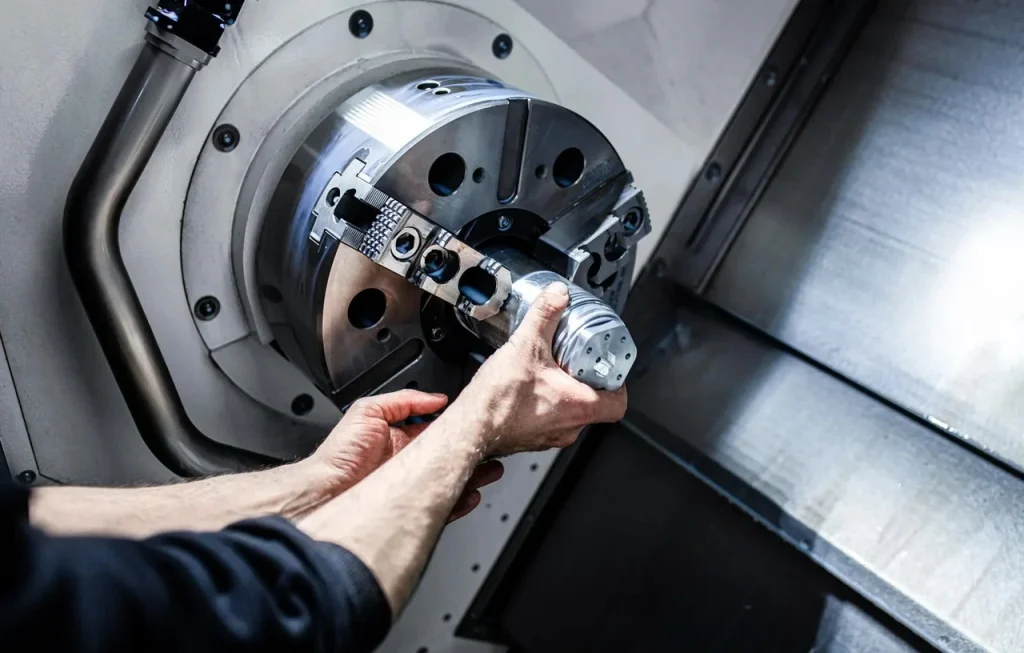
Advantages and limitations of thermal control strategies
Thermal control strategies for thermal expansion in CNC aim to minimize thermal effects, enhance machining accuracy, and address thermal impacts that affect performance of cnc machines.
Ways to reduce thermal error in CNC milling versus thermal control in CNC turning
Ways to reduce thermal error in CNC milling often focus on spindle growth, tool length change, and local heating of the workpiece during pocketing or face milling. Milling also sees more variation in heat input as engagement changes through the toolpath. This makes toolpath consistency, coolant delivery, and finish-pass timing important.
Thermal control in CNC turning often centers more on spindle and chuck temperature, shaft growth, and the factors affecting dimensional stability during CNC turning, especially for long slender parts and thin rings. Since the work rotates, workholding and heat flow through the chuck can be major contributors.
Benefits of software compensation versus hardware cooling for different production profiles
Software compensation is useful when the drift pattern is repeatable and measurable. It can react quickly and does not require major hardware changes. It fits stable production profiles well, especially when sensors are already present.
Hardware cooling is stronger when the process itself creates large heat loads or when the machine runs long enough that passive stability is not realistic. It can reduce the thermal problem at the source rather than correcting after the fact. On the other hand, active systems add complexity, maintenance, and cost.
Constraints of in-process offsets when thermal gradients are unstable or material behavior varies by alloy
In-process offsets have limits. If thermal gradients are unstable, the measured error at one point may not represent the whole part. If the material behavior varies by alloy, temper, or section thickness, the same correction may not hold from one batch to the next.
This is where overcorrection becomes a real risk. The machine may chase a moving target if the thermal condition is not settled. In short, offsets are strongest when the thermal pattern is repeatable, not random.
Which works better for tight tolerances—cooling, compensation software, or process planning?
It depends on what is causing the error. Cooling helps when the machine or coolant loop is the main heat source, software helps when drift is repeatable and measurable, and process planning helps when the part itself needs time to cool or relax. Tight work often uses a mix of all three rather than one method alone.
Common failure scenarios and troubleshooting
Thermal issues in thermal expansion in CNC often stem from instability caused by thermal, and recognizing these signs helps account for thermal risks and avoid scrap.
Thermal stability challenges in long machining cycles and unattended operation
Thermal stability challenges in long machining cycles are common because the machine state changes over time. During unattended operation, there may be no operator to catch early drift, adjust offsets, or stop a cycle when the environment changes.
Runs with mixed roughing and finishing are especially vulnerable. Heavy roughing may heat the machine and part, then a finish pass arrives before the system reaches a stable condition. This is a common route to first-pass scrap.
How heat generation during machining impacts part stability, surface finish, and post-cooling dimensions
How heat generation during machining impacts part stability shows up in several ways. The part may distort during clamping, smear or tear at the surface, and then change dimension again after cooling. Surface finish can also degrade if the tool edge sees excess heat or if material softens locally.
Why do parts change size after machining? Because the final inspected condition is often cooler and more uniform than the cut condition. If the process does not account for that difference, the measured result will move.
Impact of ambient temperature on CNC precision during shift changes, warm-up, and seasonal variation
The impact of ambient temperature on CNC precision is often underestimated because it changes slowly. Machines may be stable after warm-up, then drift when night shift starts, bay doors open, or winter and summer conditions differ. Even without major weather swings, local drafts or radiant heat can matter.
How to measure parts at a constant temperature is therefore a basic control step. Inspection should happen after the part reaches a defined stable condition, and that condition should match the process plan as closely as possible.
Checklist: Signs of thermal deformation risk in modern CNC machining before parts go out of tolerance
| Warning sign | Why it matters |
|---|---|
| First-off is good, later parts drift | Machine is still warming or drifting |
| Parts measure differently in-machine and after cooling | Workpiece or tool temperature is not stable |
| Errors get worse at higher spindle speed | Heat generation is linked to rpm and friction |
| Aluminum jobs are less repeatable than steel jobs | High CTE is driving size movement |
| Thin walls, rings, or shafts move after unclamping | Local heat and stress release are interacting |
| Different shifts produce different results | Ambient conditions are affecting the process |
| Offsets need constant chasing | Compensation is reacting to unstable gradients |
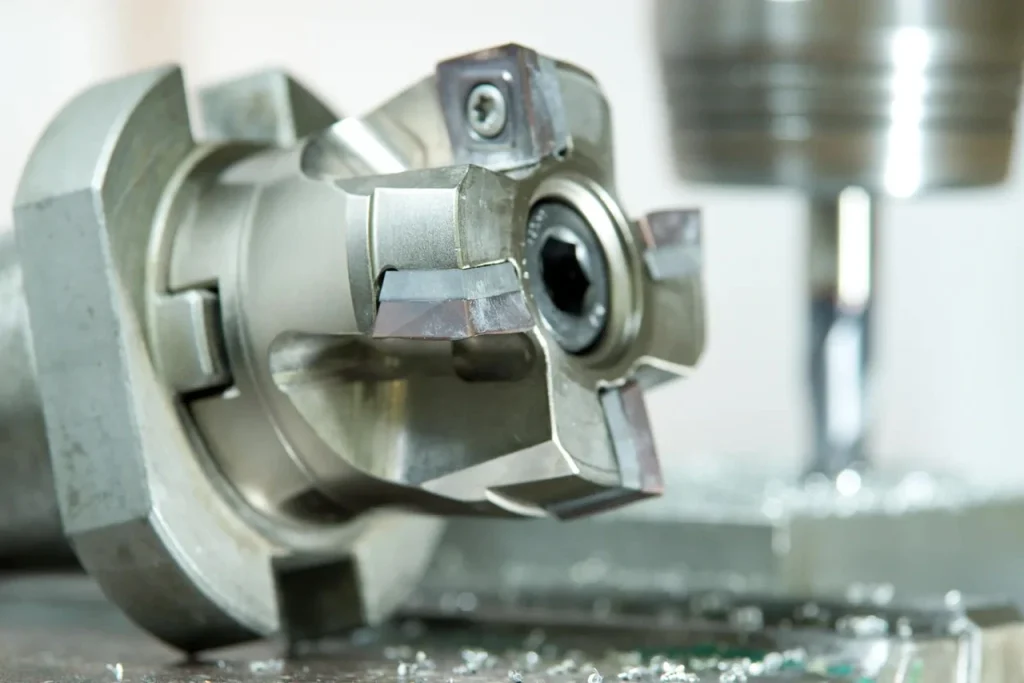
Cost, tolerance, and lead time factors at industry level
In thermal expansion in CNC, reduction in thermal boosts stability during machining, accounting for temperature change to enhance CNC performance and avoid material growth risks.
What tolerance bands make thermal control a priority in precision machining
The provided research does not define a universal tolerance threshold where thermal control becomes mandatory. Still, thermal control becomes a priority when the tolerance band is small relative to expected growth from the material, size, and temperature swing. This is especially true for large aluminum parts, long shafts, and any process with long or hot cycles.
A practical decision is to compare expected thermal movement with the total tolerance stack-up. If the thermal movement is a meaningful share of the allowed variation, the process needs a control plan.
Industry-level trade-offs between slower cycle strategy, active cooling, and software compensation
A slower cycle strategy can reduce heat generation and allow more stable cutting, but throughput drops. Active cooling can improve stability, but it adds equipment and system complexity. Software compensation can be efficient, but only when thermal behavior is predictable enough for the model to stay valid.
These are industry-level trade-offs, not fixed rules. A short production run may prefer process planning and longer cool-down periods. A repeat production line may justify active cooling and real-time compensation because the same drift pattern appears every day.
How thermal risk affects setup time, inspection frequency, scrap exposure, and schedule confidence
Thermal risk usually increases setup time because the machine may need warm-up, the part may need to cool between operations, and inspection may need to wait for a stable temperature. Inspection frequency can also rise if the process has a history of thermal drift.
Scrap exposure increases when the process relies on a thermal state that is not verified. Schedule confidence drops for the same reason. If dimensions are moving with ambient or cycle heat, planners cannot assume the run will behave the same way all day.
References needed: industry reports, machine builder guidance, and standards-relevant tolerance sources
For decision-making, buyers and engineers should not rely only on general articles. They should ask for machine builder guidance on thermal compensation, review material property data for the exact alloy, and compare tolerance assumptions with recognized standards-relevant sources used in their industry. This matters because alloy-specific CTE values and inspection temperature practices can change the feasibility judgment.
Applications and material-specific use cases
For thermal expansion in CNC, understanding a material’s relatively low thermal expansion coefficient helps tailor strategies to enhance machining accuracy.
Precision machining of aluminum: rough first, cool, stress relieve, then finish to account for growth
The provided case material shows a practical approach for precision machining of aluminum: rough first, allow the part to cool, stress relieve if needed, then finish at a stable temperature. In some cases, the part is machined slightly undersize to account for room-temperature growth, but that requires a stable and validated process.
This is one of the clearest examples of predicting thermal expansion before precision machining and using process planning to keep it manageable. It is suitable when the part value justifies multiple stages and when schedule allows cooling time.
Titanium machining hot spots: low CTE but localized heat and uneven expansion risk
Titanium is often misunderstood. Its CTE is low, so bulk growth is limited compared with aluminum. But titanium machining hot spots remain a serious issue because heat stays near the cut. That creates thermal gradients and uneven expansion in machined parts, even when average size change is not large.
The provided case points to stress relieving and sequencing as useful controls. This is relevant for aerospace and medical parts where local geometry and surface integrity both matter.
Factors affecting dimensional stability during CNC turning for shafts, rings, and thin-wall parts
The main factors affecting dimensional stability during CNC turning are spindle heat, chuck heat transfer, workpiece slenderness, wall thickness, and cycle duration. Shafts can grow in length and deflect as temperature changes. Rings and thin-wall parts can distort from clamping plus local heat, then spring to a new shape after release.
These parts are manufacturable, but the process plan needs to account for support, heat path, and measurement timing. In fact, turning often looks stable until the part cools or is unclamped, which is why post-process checks matter.
Case table: CNC lathe production cycles, high spindle speed machining, aluminum tolerance control, and titanium heat management
| Scenario | Main thermal risk | Control used in provided research | Why it matters |
|---|---|---|---|
| CNC lathe production cycles | Spindle, friction, ambient change | Temperature-controlled spindle, compensation algorithms, active coolant/TCU, predictive control | Supports stable dimensions across runs |
| High spindle speed machining | Friction heat, bearing wear, tool distortion | High-pressure coolant, SFM-based planning, adaptive correction | Helps balance speed and accuracy |
| Aluminum tolerance control | High CTE and multi-op growth | Rough, cool, stress relieve, then finish | Improves post-cooling size control |
| Titanium heat management | Local hot spots from poor conductivity | Stress relieving and strategic sequencing | Reduces uneven expansion risk |
How to evaluate and choose the right approach
Selecting the right strategy for thermal expansion in CNC can significantly enhance CNC performance and ensure stability during machining.
Decision matrix: material, geometry, spindle speed, cycle time, coolant control, and tolerance target
| Factor | Lower thermal risk | Higher thermal risk |
|---|---|---|
| Material | Lower-CTE alloys | High-CTE alloys such as aluminum |
| Geometry | Compact, rigid sections | Thin walls, long shafts, large flat parts, rings |
| Spindle speed | Moderate and stable | High rpm with high friction heat |
| Cycle time | Short, repeatable | Long, mixed rough/finish cycles |
| Coolant control | Stable temperature and flow | Variable coolant temperature or delivery |
| Tolerance target | Broad relative to expected growth | Tight relative to expected growth |
If several factors fall in the higher-risk column, thermal control should be treated as a primary process variable rather than a secondary detail.
What buyers should check in machine design, sensing, fixturing, and compensation capability
Buyers should check whether the machine is designed for managing thermal growth in CNC machine components through stable structure, balanced geometry, and heat isolation. They should ask what sensing is available for real-time temperature monitoring for CNC accuracy, and whether offsets can be applied in process. Fixturing also matters. Workholding should support the part without locking in distortion as the part heats and cools.
For those looking for professional precision CNC services, including CNC turning and milling, UNeed provides expertise in manufacturing high-precision parts with strict thermal and dimensional control.
The same review should include coolant strategy, because coolant temperature control for tight tolerances depends on both temperature stability and how evenly coolant reaches the tool and part.
How do you compensate for workpiece expansion in CNC without overcorrecting?
Use compensation only after the thermal pattern is understood. If the part, tool, and machine are still drifting unpredictably, offsets can make the result worse. A safer method is to combine stable process timing, controlled temperature, and measured correction based on repeatable data.
Checklist: Step-by-step evaluation for thermal expansion risk, control method, and verification plan
| Step | What to check |
|---|---|
| 1 | Identify material CTE and confirm the exact alloy if tolerance is tight |
| 2 | Review part size and geometry for thin walls, long spans, rings, or large flat faces |
| 3 | Estimate where heat will be generated: spindle, cut zone, fixture, coolant loop, ambient |
| 4 | Compare expected thermal movement with the tolerance stack-up |
| 5 | Decide whether process planning alone is enough or whether active cooling or compensation is needed |
| 6 | Define when thermal equilibrium matters in precision machining for setup, first-off, and finish passes |
| 7 | Set a measurement plan so parts are checked at a stable temperature condition |
| 8 | Watch for thermal deformation risk in modern CNC machining during pilot runs before release |
In short, thermal expansion in CNC is manageable when the heat path is understood, the material behavior is known, and the process is built around stable conditions. It becomes risky when high-CTE materials, long cycles, unstable ambient conditions, and thin or flexible geometry are combined without a control plan. Use simple process planning for lower-risk work. Add sensing, compensation, or active cooling when drift becomes a meaningful part of the tolerance budget. Avoid assuming that a part is feasible just because one sample measured correctly while still warm.
FAQs
Heat changes the size of the machine, tool, fixture, and workpiece, causing expansion that shifts the true cutting position and can change dimensions during the cut and again after cooling; this thermal deformation in cnc directly impacts machining accuracy by introducing unintended errors in part dimensions and tool alignment.
The provided sources place aluminum at around 13 per unit length per degree, with one source listing about 13.1 × 10⁻⁶ per °F, making it one of the materials with high thermal expansion properties; the exact value depends on the alloy, so the specific grade should be checked for tight work, as high thermal expansion coefficients can lead to greater dimensional shifts during machining.
Compensation is usually done with measured offsets tied to temperature or known drift patterns, and understanding thermal behavior of the CNC machine and workpiece is key to effective compensation; it works best when the thermal behavior is repeatable and the machine has a stable sensing and feedback method, allowing operators to compensate for thermal expansion and minimize errors.
They often leave the machine at a different temperature than the final inspection condition, and expansion and contraction of the workpiece as it cools to ambient temperature cause dimensional shifts; this impact of thermal expansion is particularly noticeable in precision machining, where even small temperature changes can lead to out-of-tolerance parts.
The more useful question is whether coolant temperature and delivery are controlled, as precision cooling techniques and aggressive thermal management are more critical than coolant type; stable coolant supplied through a managed chiller or recirculating temperature control unit helps maintain consistent machining temperatures and reduce thermal issues in running machines.
To ensure accurate measurements, parts should be allowed to reach thermal equilibrium with the inspection environment, avoiding thermal fluctuations that can skew results; this step is vital for minimizing thermal deformation, as measuring a warm part can lead to false readings due to expansion due to thermal expansion, which undermines dimensional stability in parts.

 English
  German
  French
  Italian
  Spanish
  Polish
  Czech
Czech  Japanese