
Selecting between sheet metal fabrication and CNC machining is a foundational decision for custom metal part design and manufacturing—one that shapes part performance, cost efficiency, and production scalability. Far more than a simple cost comparison, this choice hinges on aligning manufacturing processes with a part’s core geometry, tolerance needs, functional requirements, and production volume.
What sheet metal vs CNC machining means for part selection
Choosing between sheet metal and CNC machining is not just a process question. It is a part architecture question. The best method depends on what the part needs to do, how it will be made, and what kind of variation the design can tolerate.
For many buyers, the first instinct is to compare cost per part. That matters, but it is rarely the right starting point. A part that is naturally a bent shell, cover, or bracket should not be treated like a machined block. In the same way, a part with critical bores, threads, and complex 3D features should not be forced into a sheet metal workflow just because the raw material starts as metal in both cases.
The key point is simple: the geometry usually decides the process before the quote does.
Sheet metal fabrication vs CNC machining: what each process actually makes
Sheet metal fabrication starts with a flat sheet of metal and uses a fabrication process that involves cutting and forming. Metal sheets are shaped through a fabrication process that involves cutting and bending into the desired form. Common steps include laser cutting and bending. This makes the process well suited to parts such as panels, covers, enclosures, brackets, trays, and formed supports. Research provided here places typical sheet metal thickness in the 0.5–6 mm range, which fits many thin-walled industrial components.
Feature-level feasibility often decides faster than general shape. Thin sheet usually needs formed threads or self-clinching hardware instead of deep tapped holes, while CNC is better for bearing seats, sealing faces, deep pockets, press-fit bores, and burr-controlled edges. Louvers, embosses, beads, and hems are natural sheet-metal features, but countersinks, counterbores, and thick threaded sections often push the design toward machining or hybrid construction.
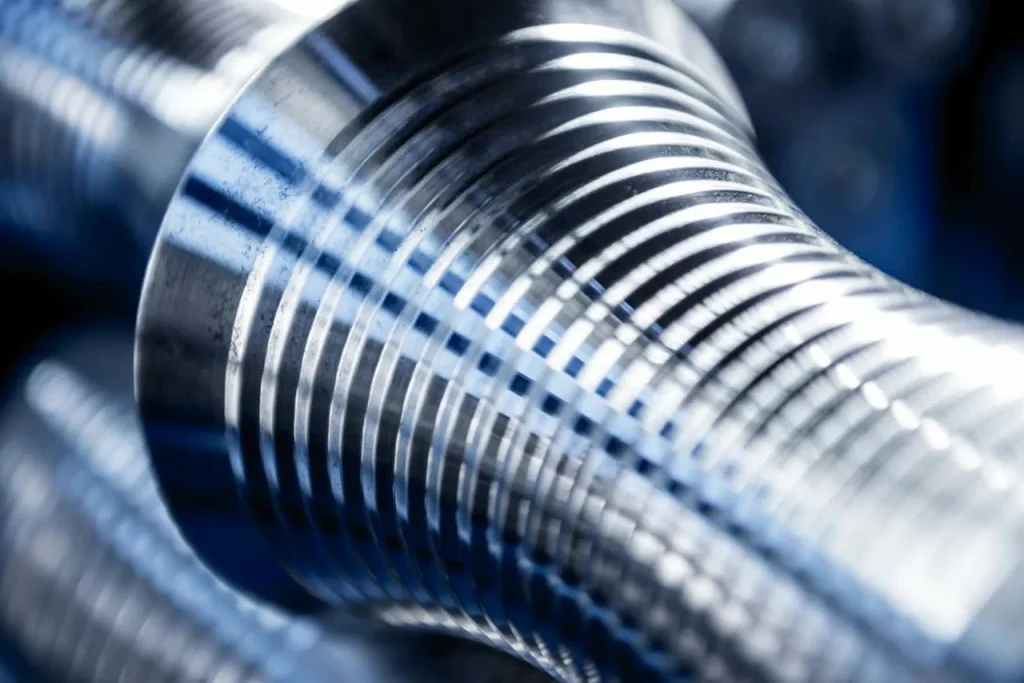
Computer numerical control machining starts with solid stock and CNC machining is a subtractive process that removes material. CNC machining involves core machining operations such as milling and turning. CNC machining offers far greater freedom for complex 3D geometries and precise internal features. Pockets, threads, bores, stepped features, and precision interfaces are all easier to create this way. For professional precision parts, companies like UNeed provide expert CNC turning and milling services tailored to complex geometries and tight tolerances. The machining process also supports a wider range of materials including metals, plastics and composites, while Sheet metal is mainly limited to bendable sheet metals such as steel, aluminum, and copper, with material specifications and formability requirements detailed in standards from ASTM International.
Sheet metal fabrication delivers consistent, cost-effective results for flat patterns that become formed components. When reviewing the key differences between cnc machining and sheet metal, precision 3D solid parts are best suited for CNC.
Why the choice matters for precision, geometry, cost, and production volume
This choice affects four things right away: achievable tolerance, geometric freedom, cost structure, and how the part scales in production.
On precision, the supplied research shows CNC machining reaching about ±0.005–0.01 mm, while sheet metal is typically around ±0.1 mm. There is some variation in reported figures across sources, but the directional difference is clear. CNC is the stronger option when fits, hole position, or mating surfaces are critical.
Unlike CNC, sheet metal favors thin walls, bends, and folded structures with minimal material waste. CNC favors complex 3D forms and internal features. A part can fail in practice if it is assigned to the wrong process. For example, asking sheet metal to hold very tight positional relationships across multiple bends can create risk. Asking CNC to produce a very large, thin shell from solid stock can create waste and distortion issues.
On cost, the process economics differ. For low-volume prototypes, especially 1–10 pieces, CNC is often the easier path because there is no tooling and design changes can be made through CAM updates. For medium to higher volumes, sheet metal can scale better, and the research provided indicates cost savings of about 30–60% at 50+ pieces in suitable part types.
At production volume, buyers should think about repeatability and setup. A simple bent bracket may become much cheaper in sheet metal once the setup is stable. A precision machined part may remain the right answer even at higher volumes if the geometry demands it.
Table: sheet metal vs CNC machining at a glance for engineers and buyers
| Factor | Sheet Metal Fabrication | CNC Machining |
|---|---|---|
| Starting form | Flat sheet stock | Solid block, plate, bar, or round stock |
| Best for | Enclosures, brackets, panels, covers, formed parts | Precision components, threaded parts, bores, complex 3D features |
| Typical thickness range in provided research | 0.5–6 mm | Any thickness stated directionally in research |
| Geometry strength | Flat parts with formed features | Complex 3D geometry and internal features |
| Typical tolerance in provided research | Around ±0.1 mm | About ±0.005–0.01 mm |
| Surface finish | Often shows cut edges, bend lines, or marks | Smoother finish, Ra <1.0 µm possible in provided research |
| Material efficiency | Better nesting, less waste | More waste from subtractive removal |
| Low-volume prototyping | Good for simple parts | Often better for 1–10 pieces |
| Medium-high volume | Often favorable for 50+ parts | Can become costly for simple thin parts |
| Material range | Mainly bendable sheet metals | Metals, plastics, composites |
What is the best starting point for choosing the right manufacturing method for custom metal components?
Start with the part’s natural shape in use, not the CAD file alone.
Ask these four questions first. Is the part mainly a thin-walled shell or bracket? Does it need tight bores, threads, or 3D contours? Are the critical dimensions created before or after bending? Is the expected production volume low and iterative, or stable and repeatable?
This is the best starting point for choosing the right manufacturing method for custom metal components because it separates feasible process paths from attractive but risky ones. In many cases, the decision is not sheet metal or CNC for the whole product. It may be a sheet metal assembly with a few machined inserts or features added where needed.
Geometry usually narrows the process first, but it is not the only decision driver. Cost, required certifications, finishing route, supplier capability, and assembly method can still change the best choice.
Can the part be made this way? Feasibility before comparison
Before comparing quotes, it is worth checking whether the process fits the design at all. Many poor sourcing decisions come from treating manufacturability as a pricing issue instead of a geometry issue.
Best process for flat metal parts with formed features
If the part begins as a flat pattern and gains function through bends, tabs, flanges, and cutouts, sheet metal is usually the best process for flat metal parts with formed features. This includes control box housings, mounting brackets, shields, and simple structural panels.
Here’s why. The process follows the part logic. Laser cutting defines the blank, then bending creates stiffness and final shape. Thin walls are efficient in this format. Material use is better because parts can be nested in sheet stock. For repetitive parts, this is often more efficient than machining the same geometry from a solid plate and removing most of the material.
When CNC machining is not suitable for thin metal parts
When CNC machining is not suitable for thin metal parts, the issue is usually not that the machine cannot cut the material. The issue is that the part architecture is inefficient or unstable when made from solid stock.
Very thin walls can be harder to hold during machining. Large amounts of material may need to be removed to create a shell-like part. That adds cost and increases material waste in subtractive machining compared to sheet metal fabrication. It can also make distortion and chatter more likely during cutting, especially when the remaining structure is slender.
So CNC can make thin metal features, but it is often the wrong economic and structural choice for broad, bent, lightweight forms.
Limitations of sheet metal fabrication for complex geometries
The limitations of sheet metal fabrication for complex geometries are tied to how the part is formed. A sheet can be cut and bent, but it is still a thin sheet. It does not naturally create deep internal pockets, thick bosses, complex 3D surfaces, or precision bores through heavy sections.
Bends also introduce variation. Each bend changes the part in a way that depends on material behavior and process control. This is why sheet metal accuracy issues often show up in parts with many bends or with dimensions that stack across formed features. In simple terms, the more the final function depends on exact 3D relationships after forming, the more cautious the buyer should be.
Checklist: geometry, wall thickness, bend needs, and assembly requirements
Before choosing a process, check:
- Is the part mostly flat before forming, or mostly 3D from the start?
- Does the design fit the sheet metal thickness range of about 0.5–6 mm from the provided research?
- Are bends required for stiffness or shape?
- Do any features need threads, precision bores, or tight mating fits?
- Will the part be a single component or a fabricated assembly?
- Are critical dimensions measured in the flat state or after bending?
- Does assembly depend on cosmetic appearance, flush joints, or repeated interchangeability?
This kind of review catches many process mismatches early.
How each process works and what design rules drive outcomes
The process route shapes the final part quality. Designers should understand that what looks similar in CAD may behave very differently in production.
How laser cutting and bending create sheet metal parts and assemblies
Sheet metal fabrication involves starting with a flat pattern and using laser cutting and bending to shape parts. Laser cutting creates the profile, holes, and slots. Then press brake bending forms flanges, channels, or box-like shapes. Additional joining may be needed if the final product is an assembly rather than a single folded part.
Sheet metal feasibility depends on bend rules as much as cut geometry. Minimum bend radius, flange length, hole-to-bend distance, bend relief, grain direction, and springback all affect whether the part can be formed without cracking, distortion, or dimension shift. Multiple bends also accumulate variation, so dimensions that cross formed flanges are usually less stable than features controlled in the flat.
This means design rules in sheet metal are tied to bend placement, feature spacing near bends, and how dimensions change after forming. It also means that the final part quality depends on both cut accuracy and bend consistency. A clean flat pattern does not guarantee a precise final assembly if the formed features control fit.
How CNC turning and milling vs fabricated assemblies changes part architecture
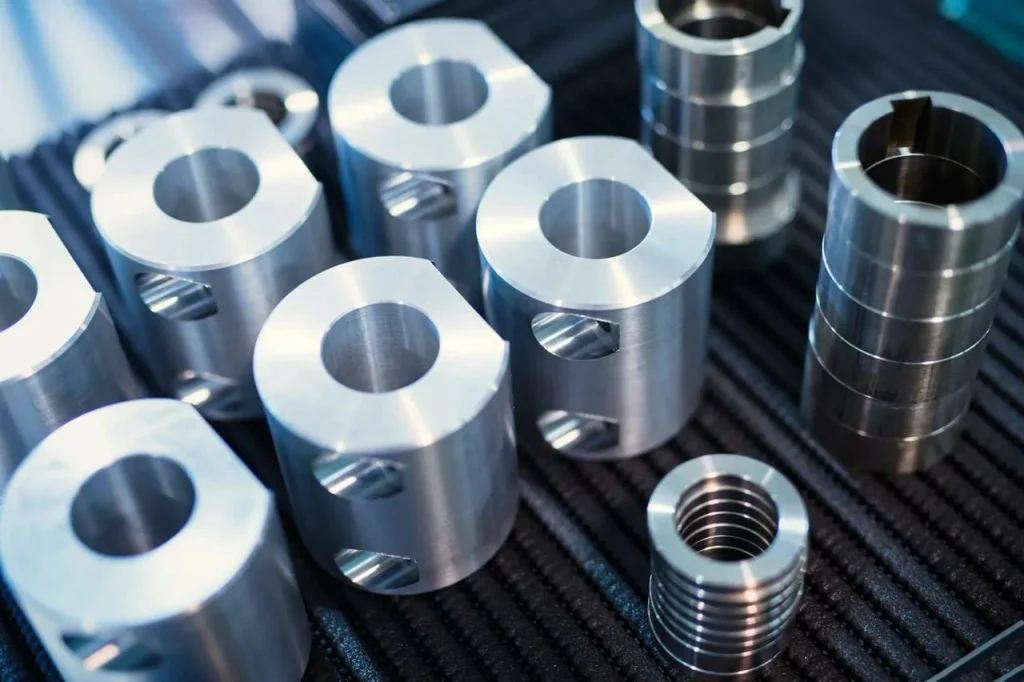
CNC turning and milling vs fabricated assemblies is really a question of monolithic versus built-up design. CNC often allows several features to exist in one solid part. A machined housing may include bores, pockets, threaded holes, and precise mounting faces without relying on post-form assembly.
Machining operations are often limited by tool access and part stiffness during production. Internal corners follow cutter radius, deep cavities become harder to machine as aspect ratio increases, thin walls can deflect under pressure from cutting tools during machining, and workholding can distort low-rigidity parts. These limits affect achievable geometry, inspection access, and machining cost even when the CAD model looks manufacturable.
A sheet metal version of the same function may need several panels, bends, and fastened joints. This can be efficient for enclosures and covers, but less ideal when alignment between multiple critical features must be held tightly.
So process choice changes architecture. It is not only about making the same shape two different ways.
Design complexity impact on CNC machining vs sheet metal selection
The design complexity impact on CNC machining vs sheet metal selection is large. Complex 3D geometry usually pushes the decision toward CNC. Complex bend sequences do not always mean the same thing as complex machined geometry. In fact, a part with many bends may still be less functionally complex than a machined part with several precision interfaces.
Use this rule of thumb: if complexity comes from folds in a thin sheet, sheet metal may still work. If complexity comes from depth, contour, internal access, threads, or feature relationships in three dimensions, CNC is usually safer.
Process diagram: from CAD to finished part in CNC machining and sheet metal fabrication
A simple process view helps explain where risk enters.
| Stage | Sheet Metal Fabrication | CNC Machining |
|---|---|---|
| CAD input | Flat-pattern-capable model or formed model | Solid 3D model |
| Process planning | Nesting, cut path, bend sequence | CAM programming, toolpath planning |
| Material form | Sheet stock | Solid stock |
| Main shaping step | Laser cutting | Milling or turning |
| Forming step | Bending | Not required for basic shape |
| Secondary operations | Joining, finishing, coating | Deburring, finishing, secondary ops |
| Typical risk point | Bend variation, deformation, marks | Tool access, waste, thin-wall stability |
Advantages and limitations of sheet metal vs CNC machining
No process is better in all cases. Each one solves a different set of design problems.
CNC machining vs sheet metal for tight tolerances
For cnc machining vs sheet metal for tight tolerances, CNC is the stronger process based on the supplied evidence. The research points to CNC tolerances around ±0.005–0.01 mm, while sheet metal is closer to ±0.1 mm in typical fabrication work.
Tolerance strategy should match the process, not just the target number. On sheet metal parts, critical dimensions should be tied to practical datums, with flat-pattern features separated from formed-state requirements where possible. If function depends on hole position across bends, sealing flatness, or a precision interface, a machined datum or hybrid design is usually safer than forcing all requirements onto formed features.
There is uncertainty in exact values across the sources, and buyers should avoid treating any single figure as universal. Still, the pattern is clear. If the part needs close fits, bearing-like alignment, critical hole spacing, or repeatable interfaces, CNC is usually the more realistic path.
Surface finish differences between laser cut sheet metal and CNC machined parts
Surface finish differences between laser cut sheet metal and CNC machined parts matter when appearance or sealing surfaces are important. The supplied research indicates CNC can achieve smoother surfaces, with Ra below 1.0 µm possible in some cases. Sheet metal often carries signs of processing such as laser edge effects, burn marks, bend lines, or handling marks.
This is why users often feel that CNC “looks premium” while sheet metal may need coating or finishing to meet visual expectations. For visible enclosures, that finish step can affect both cost and lead time.
Material versatility, thickness limits, and structural efficiency
CNC offers greater material versatility. The provided research states it can process metals, plastics, and composites, and is not constrained to the sheet metal thickness band of about 0.5–6 mm listed for sheet fabrication.
Sheet metal, on the other hand, is structurally efficient for thin parts. A bent flange can add stiffness without adding much weight. This is why sheet metal is often strong for its mass in enclosures and brackets. So the better process depends on whether the part needs bulk material for function or thin-wall geometry for efficiency.
Accuracy tradeoffs between bending operations and CNC milling
Accuracy tradeoffs between bending operations and CNC milling are usually about predictability. CNC milling controls shape by direct material removal. Bending controls shape by deformation of the material. That means springback, bend consistency, and the sequence of operations matter more in sheet metal.
To put it simply, dimensions tied to machined surfaces are usually easier to control tightly than dimensions created across several bends.

Common risks, quality issues, and failure scenarios
A process can be technically feasible and still create quality risk. This is where many design reviews need more attention.
Risks of deformation in thin sheet metal fabrication
The risks of deformation in thin sheet metal fabrication increase as the material gets thinner, the unsupported spans get larger, or the part relies on broad flatness after cutting and bending. Thin panels can move during fabrication, handling, or coating. If the part later needs precise fit against another component, this movement becomes a real problem.
This is one reason some engineers say thin sheet metal “always warps on bends.” That statement is too broad, but the concern behind it is valid.
Challenges holding tight tolerances in sheet metal bending
The challenges holding tight tolerances in sheet metal bending come from process variation in angle, springback, and how one bend affects another. Hole locations cut accurately in the flat state can end up slightly shifted relative to the final assembly datum after forming.
So if a drawing applies tight tolerances to features that are separated by bends, the buyer should confirm that those dimensions are realistic for the process.
When warping, bend variation, or cosmetic marks create downstream fit issues
Warping, bend variation, and cosmetic marks become serious when downstream assembly depends on flush contact, panel alignment, or visible finish quality. Enclosures are a common example. A simple housing may be easy to make in sheet metal, but if doors, covers, or mating panels require clean external lines, small distortions can become a quality issue.
This is also where the question “Which is cheaper for electronics enclosures?” needs a careful answer. Sheet metal is often cheaper in bulk for enclosure-type parts, but if visible quality and feature precision are high priorities, secondary finishing and tighter controls may narrow that advantage.
What are the most common quality failures when comparing sheet metal to CNC machining?
The most common quality failures in this comparison are different by process.
For sheet metal, common failures include bend variation, deformation, misalignment across formed features, and cosmetic marks from cutting or handling. For CNC machining, common concerns are less about forming variation and more about whether thin or deep features are practical and whether the design drives excessive cost or waste. In short, sheet metal more often struggles with formed accuracy; CNC more often struggles with efficiency when the geometry should have been fabricated instead.
Cost, tolerance, and lead time comparison
Cost and lead time are where many teams focus first, but they only make sense after manufacturability is clear.
Cost differences between sheet metal fabrication and CNC machining
Cost differences in machining vs sheet metal fabrication come from setup, cycle time, material usage, and finishing. Machining is a subtractive manufacturing process that removes material from solid stock, leading to higher material waste for hollow or thin parts. Fabrication is a manufacturing process that uses flat stock more efficiently, especially when nesting is optimized.
Sheet metal is often more economical at repeat volume for parts that match sheet-based geometry, but cost depends on bend count, secondary hardware, welding, finish, inspection burden, and assembly labor. But that does not make sheet metal cheaper in every case. If the design needs many precision secondary features or if the geometry is not naturally a formed sheet part, the economics can reverse.
Production volume break even between CNC machining and sheet metal fabrication
The production volume break even between CNC machining and sheet metal fabrication depends on the part shape more than on a fixed unit count. The provided sources point to CNC being strong for low-volume prototypes, especially 1–10 pieces, because there is no tooling delay. Sheet metal tends to improve as volume rises, with 50+ pieces often cited as a range where scaling becomes attractive.
Buyers should treat these numbers as directional, not universal. A simple bracket may break even early. A one-off machined housing with many threaded features may still favor CNC even if more parts are needed later.
Tooling cost considerations in sheet metal fabrication vs CNC machining
Tooling cost considerations in sheet metal fabrication vs CNC machining matter most when designs are still changing. CNC generally avoids dedicated tooling for the basic process, so design changes are easier to absorb through programming. Sheet metal may have low setup for simple laser-cut and bent parts, but production methods tied to more dedicated tooling become less flexible if revisions continue.
This is also where how metal stamping compares to CNC machining for custom parts becomes relevant. The supplied research notes that high initial stamping tooling can offset the benefits at low volume. So custom parts with uncertain demand often stay in CNC or flexible sheet metal fabrication first, then move to more dedicated processes later if volume justifies it.
Lead time comparison for CNC machining and sheet metal prototypes
The lead time comparison for CNC machining and sheet metal prototypes is not fixed. The sources provided show some conflict. CNC is cited at roughly 5–10 days in one source and shorter in another. Sheet metal is cited as 2–4 days for simple enclosure work in one source, but may take longer depending on setup and tooling queues.
The practical takeaway is more useful than the exact numbers. CNC often works well for iterative designs because changes can be made in CAM without waiting on tooling. Sheet metal can be very quick for simple laser-cut and folded parts if the design is straightforward and the fabrication route is stable.
Table: typical tolerance, finish, setup, and lead time ranges by process
| Factor | Sheet Metal Fabrication | CNC Machining | Notes |
|---|---|---|---|
| Typical tolerance from provided research | Around ±0.1 mm | About ±0.005–0.01 mm | Sources vary; use as directional only |
| Surface finish | Often needs finishing for cosmetic parts | Smoother; Ra <1.0 µm possible in provided research | Finish depends on geometry and process settings |
| Setup flexibility | Good for simple formed parts | Very good for iterative programming changes | Design revision stage matters |
| Prototype lead time in provided research | Around 2–4 days for simple enclosure-type parts | Around 5–10 days in one source | Conflicting reports across sources |
References needed: industry reports, supplier capability guides, standards where applicable
For tolerance, finish, and lead time decisions, teams should not rely on comparison articles alone. They should check standards, formal capability guides, and process-specific drawing practices. This matters because published blog values often describe typical commercial behavior, not guaranteed outcomes.
Material use, waste, and manufacturing efficiency
Material strategy matters more when raw material cost is high or part geometry drives heavy removal.
Material waste in subtractive machining compared to sheet metal fabrication
Material waste in subtractive machining compared to sheet metal fabrication is one of the clearest differences between the two methods. CNC starts with a larger piece of stock and cuts away what is not needed. Sheet metal starts much closer to the final wall thickness, so less material is removed.
The supplied research supports this directional difference. For lightweight shells or wide thin components, sheet metal often has a clear efficiency advantage.
Sheet metal vs CNC machining for low volume production
Sheet metal vs CNC machining for low volume production depends on whether the part is simple enough to fabricate without much setup pain. For 1–10 pieces, the provided research points to CNC as the stronger option for prototypes because it avoids tooling and handles design changes well.
Still, simple low-volume brackets or covers may work fine in sheet metal if the design is stable and the features are easy to cut and bend. So low volume alone does not decide the process.
How nesting efficiency and flat patterns affect yield in sheet metal fabrication
How nesting efficiency and flat patterns affect yield in sheet metal fabrication is important for cost and scrap. If parts can be arranged tightly on the sheet with little unused area, material yield improves. If the flat pattern is awkward, the cost advantage may shrink.
This means buyers should think about blank layout early, especially for larger parts or expensive alloys.
When scrap, stock size, and raw material cost change the process decision
When scrap, stock size, and raw material cost change the process decision, the answer usually shifts toward whichever method uses purchased material more efficiently. A machined part cut from thick stock can carry hidden cost if most of that stock becomes chips. A sheet metal part can also become inefficient if the blank size wastes large unused areas.
In short, material economics should be reviewed together with geometry, not after process selection.
Applications and use cases by part type
Process choice becomes easier when tied to actual part families.
If neither process fits cleanly, consider alternatives before forcing the design. Extrusion plus machining, welding from standard sections, casting, die casting, additive manufacturing, or stamping may be more suitable depending on volume, wall geometry, and required features.
When to choose sheet metal fabrication over CNC machining for enclosures and brackets
When to choose sheet metal fabrication over CNC machining for enclosures and brackets is one of the most common sourcing questions. If the part is a thin-walled cover, housing, bracket, or panel with formed edges and repeating volume, sheet metal is usually the better fit.
The supplied enclosure case study shows the pattern clearly. CNC worked better for complex, thick structures and prototype needs. Sheet metal worked better for flat and bent panels in production because batch cost was lower and material use was more efficient.
Low-volume prototypes with threads, bores, and complex 3D features
Low-volume prototypes with threads, bores, and complex 3D features usually favor CNC. The research includes examples of 1–10 piece prototypes produced without tooling delays, with strong precision and the ability to include threaded and bored features directly.
This is often the right answer when engineers expect revisions after the first build.
Sheet metal fabrication vs machining for aerospace parts
Sheet metal fabrication vs machining for aerospace parts should be treated as a geometry and function question, not an industry label. Thin formed parts, covers, and brackets may fit sheet metal well. Precision components with strict interfaces, internal features, or higher accuracy demands are more likely to require machining.
The key point is that aerospace does not automatically mean CNC. But tolerance-critical parts often do.
How metal stamping compares to CNC machining for custom parts
How metal stamping compares to CNC machining for custom parts comes down to flexibility versus dedicated efficiency. The supplied research indicates stamping can be efficient for simpler parts at volume, but high initial tooling cost makes it less attractive for low-run custom work.
So if the part is still changing, CNC or flexible sheet metal fabrication is usually the safer early-stage route.
Case examples: custom enclosures, high-volume brackets, precision components
Three patterns from the provided cases are useful.
For custom enclosures, CNC fits thicker or more complex housings and early prototypes. Sheet metal fits simple panel-based housings and scales better in batches.
For high-volume brackets, sheet metal fabrication is often the clear winner when the part is thin, bent, and repetitive. The supplied research cites 30–60% savings at 50+ pieces in the right use case.
For precision components, CNC remains the better choice when accuracy and internal geometry drive the design. This includes parts with tight fits, machined interfaces, and features that a bend-and-cut process cannot produce reliably.

How to evaluate and choose the right process
A good decision combines geometry, tolerance, appearance, and expected volume.
Decision matrix: geometry, tolerance, finish, material, and production volume
| Decision factor | Favors Sheet Metal | Favors CNC Machining |
|---|---|---|
| Geometry | Flat pattern, bends, thin walls | Complex 3D form, internal features |
| Tolerance | Moderate functional tolerance | Tight fits and precision interfaces |
| Finish | Accepts coating or formed appearance | Needs smoother as-machined surfaces |
| Material | Bendable sheet metals | Wider material range |
| Production volume | Medium to higher volume for suitable parts | Low volume, iteration, complex features |
When does sheet metal beat CNC on cost and when does it not?
When does sheet metal beat CNC at cost? Usually when the part is naturally a sheet part: thin, bent, repetitive, and produced in enough quantity for setup efficiency to matter. That is why sheet metal is often cheaper than CNC for electronics enclosures and brackets in production runs.
When is it not? When the design needs tight tolerances, complex 3D geometry, many threaded features, or major secondary operations to correct the limits of formed geometry. In those cases, lower raw part cost can disappear in rework, assembly issues, or added finishing.
What buyers should check before requesting quotes or releasing drawings
Buyers should check whether the drawing reflects the process reality. Are critical dimensions tied to formed features that may move? Are cosmetic expectations stated clearly? Are the required materials appropriate for bending or machining? Is the volume estimate stable enough to support the chosen cost model?
Buyers should ask how critical formed dimensions will be controlled, which dimensions are inspected after finish, whether threads will be tapped, formed, or inserted, and what flatness is realistic after bending or welding. If appearance matters, define cosmetic acceptance criteria and masking requirements. If repeatability matters, request first-article inspection expectations and the datum scheme used for measurement.
They should also check whether the design can combine methods. Can you combine CNC and sheet metal? Yes, in many cases that is the practical answer. A fabricated enclosure may use machined components where threads, bores, or precision interfaces are needed.
Checklist: choosing the right manufacturing method for custom metal components
Use this checklist before release:
- Is the part a thin formed structure or a solid precision component?
- Are critical dimensions compatible with the process tolerance range?
- Does the part need complex 3D geometry, bores, or threads?
- Is the expected volume closer to prototype work or repeat production?
- Will visible finish quality require post-processing?
- Is material waste a major cost factor?
- Can a hybrid design reduce cost without adding assembly risk?
References needed: standards bodies, academic sources on tolerancing, and industry benchmarks
For final decision-making, use comparison articles only as a starting point. Formal tolerancing standards, material standards, and academic sources on manufacturing variation should guide drawing strategy and risk review.
In short, sheet metal vs CNC machining is not a simple better-or-worse comparison. Sheet metal fits thin, bent, efficient structures and often wins on batch economics. CNC fits precision, complex geometry, and fast design iteration at low volume. The right choice comes from matching the process to the part’s natural form, tolerance needs, finish expectations, and production plan. If those factors point in different directions, a hybrid design is often worth considering.
FAQs
The key distinction in fabricating vs machining is how each method shapes metal components. Sheet metal fabrication works with flat stock through cutting and bending vs milling parts that remove material from solid blocks. This difference directly helps you decide when to use sheet metal fabrication for thin, folded parts like brackets and enclosures. Machining creates detailed 3D geometries with tight internal features that forming alone cannot easily achieve.
For standard electronics enclosures, sheet metal fabrication is more cost-efficient at medium to high volumes thanks to low material waste and scalable production. When weighing fabricating vs machining, sheet metal avoids the excess material removal common in milling processes. Bending vs milling parts also changes the cost structure, as bending is faster for simple housing shapes. CNC remains a better choice for small prototype runs with complex precision features.
Standard sheet metal fabrication typically holds tolerances around ±0.1 mm, which works well for most structural parts and casings. Comparing fabricating vs machining reveals a clear precision gap, as CNC can hold much tighter tolerances for critical mating surfaces. Bending vs milling parts adds dimensional variation across bends, reducing overall accuracy compared to fully machined surfaces. This helps you determine when to use sheet metal fabrication for less tolerance‑sensitive applications.
Combining sheet metal and CNC is a practical solution when balancing the strengths of fabricating vs machining. You can use sheet metal fabrication for main enclosures and chassis to keep costs low and weight minimal, then add CNC‑machined components for precision threads and fitting bores. This hybrid approach eases compromises in bending vs milling parts and supports smarter decisions for when to use sheet metal fabrication in real‑world assemblies.
Sheet metal fabrication performs best with flexible, bendable metals such as steel, aluminum, and copper that support cutting and forming. When comparing fabricating vs machining, CNC offers far broader material versatility, working with metals, plastics, and composites alike. This material range helps clarify when to use sheet metal fabrication for standard formable alloys. Bending vs milling parts also depends on material rigidity and the structural needs of your final component.


 English
  German
  French
  Italian
  Spanish
  Polish
  Czech
Czech  Japanese