
A horizontal cnc mill is often the fastest route to multi-face machining, clean chip evacuation, and reliable lights-out throughput. But choosing, justifying, and optimizing an HMC can feel complex. This guide gives you a clear, data-backed answer to “Why horizontal?” and then walks you through fundamentals, applications, key specifications, selection and ROI, process optimization, and automation. You’ll find practical checklists, simple benchmarks, and sample calculators. Whether you run a job shop, plan a flexible manufacturing system, or compare horizontal vs vertical for your next machine, use this guide to frame decisions and avoid costly missteps.
To put it simply, horizontal machining helps you cut more faces per setup, keep chips out of the cut, and keep the spindle working while you load the next part. That is why many shops see a 20–30% cycle-time reduction when moving the right parts from a vertical milling machine to a horizontal milling machine. Here’s how to make that happen in your shop.
Why a horizontal cnc mill? Quick answer
The fast answer: an HMC pairs a horizontal spindle with a B-axis worktable and usually a pallet changer. This design allows you to approach the workpiece from the side, mount parts on multiple faces of a tombstone, and let gravity clear chips. The result is fewer setups, better tool life, and higher spindle utilization.
Immediate gains: multi-face machining, chip evacuation, 20–30% cycle-time cuts
- Reduced setups: machine 3–5 faces in one load instead of flipping on a vertical.
- Fewer handling errors: less manual part movement reduces scrap and rework.
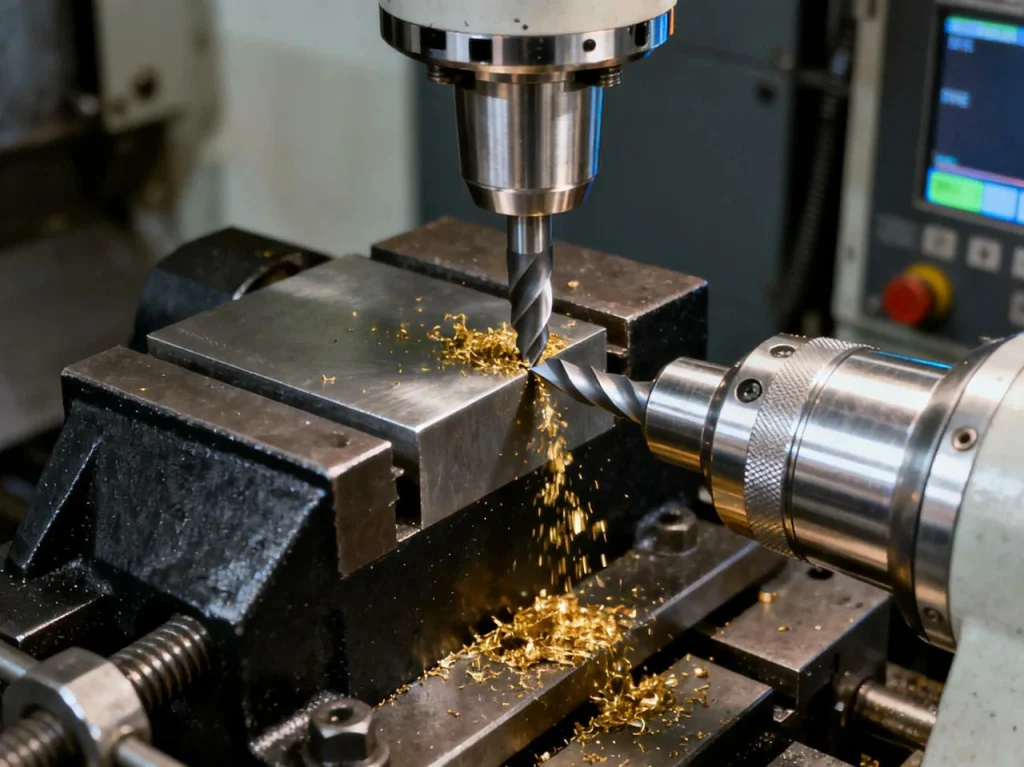
- Improved surface finish: chips fall away, improving coolant flow to the cutting zone.
- Tool-life gains: cleaner cuts and stable engagement reduce heat and wear.
- 90%+ spindle utilization with palletization: load on one pallet while the other is cutting.
Where HMCs excel: automotive, aerospace, medical, energy
- Aerospace: <10 µm tolerances on aluminum and titanium structures are common with proper thermal control and in-process probing.
- Automotive: high-volume engine, transmission, and gear housing families favor horizontal milling and pallet pools for takt-time control.
- Medical: small-batch implants and instruments benefit from fast changeovers and tight process control.
- Energy: heavy-duty valves, manifolds, and pump bodies need rigid cuts and strong chip evacuation.
Is a horizontal more productive than a vertical?
- When HMCs outperform VMCs: multi-face parts, deep cavities, tough materials, or any part family that benefits from palletization and standardized tombstones.
- Exceptions: simple 2D parts, flat plates, prototypes, and very low-volume jobs may run faster and cheaper on a vertical mill or even a turret milling machine.
- Low-volume scenarios: if fixturing is complex or if cycle time is very short and setup dominates, a VMC may be the better first step.
- Fixturing complexity: HMCs shine when you invest in smart fixtures; without that, you leave capacity unused.
HMC vs VMC at-a-glance
| Factor | Horizontal Machining Center (HMC) | Vertical Machining Center (VMC) |
|---|---|---|
| Typical setups per part | 1–2 | 2–6 |
| Chip flow | Gravity-assisted, cleaner cut | Chips pile in pockets; needs more flushing |
| Multi-face machining | Excellent with tombstone/B-axis | Limited without 4th-axis and custom fixtures |
| Palletization | Common; boosts utilization | Less common; often single table |
| Typical cycle-time delta | 20–30% faster for suitable parts | Baseline for simple/flat work |
| ROI window (good fit) | 12–24 months | Lower capex; faster to start |
| Best fit | Part families, medium to high volume, lights-out | Prototyping, short runs, simple geometry |
Diagram suggestion: show chip flow paths on horizontal vs vertical, with gravity pulling chips off the cut on the HMC.

What is a Horizontal Machining Center (HMC)?
An HMC is a cnc milling machine with a spindle that sits horizontally, parallel to the worktable’s surface. The worktable usually rotates around the B-axis, and many machines include a dual-pallet changer so you can load one pallet while the other is cutting. The cutting tool spins in the spindle, and the worktable can move in X/Y/Z while the B-axis indexes the part.
Core architecture: horizontal spindle, B-axis table, tombstone, pallet changer
- Travels (X/Y/Z): define the work envelope. Check the “swing” around a tombstone to avoid interference.
- Rotary B-axis: indexes the workpiece for access to multiple faces.
- Tombstone: a vertical fixture block with multiple faces to hold many parts at once.
- Toolchanger capacity: 60–300+ tools is common for part families and lights-out work.
3-, 4-, and 5-axis options: when to add a rotary or tilt
- 3-axis HMC: horizontal spindle, linear X/Y/Z. Good for indexed multi-face work.
- 4-axis (B-axis indexing): rotate the work to hit more faces without a re-setup.
- 5-axis (tilt/rotary): adds continuous contouring for complex shapes, undercuts, and fixture simplification. Best for intricate aerospace or medical features.
Precision engineering: rigidity, thermal stability, accuracy/repeatability
- Guideways: box ways for heavy cuts; linear guides for high speed. Choose based on material removal needs.
- Spindle bearings and structure: more mass and wider columns help damp vibration.
- Thermal compensation: sensors and software reduce drift during long cycles.
- Accuracy tests: ISO 230 and ISO 10791 define positioning, repeatability, and cutting accuracy checks.
Visual suggestion: a labeled diagram of axis layout, dual pallets, guarding, and coolant/TSC plumbing.
Industry use cases and parts that win on HMCs
A simple rule helps: if your part has features on 3+ faces, deep cavities, or needs high and steady chip removal, a horizontal milling machine will likely outperform.
Automotive: blocks, heads, gear housings—takt time and throughput
Standardized tombstones, common tool libraries, and pallet pools let you hit takt time with high uptime. In-line probing and SPC checks reduce scrap and keep quality stable. With dual pallets and a good chip evacuation plan, you can keep the spindle cutting most of the shift.
Aerospace: titanium/aluminum structures—tight tolerances and tool life
Adaptive toolpaths, high-pressure coolant, and stable fixturing improve tool life in titanium. 5-axis trims or one-hit drilling patterns become easier when the B-axis brings features into the best orientation for the cutter.
Medical and energy: implants, valves, manifolds—small-batch vs heavy-duty
Fast changeover and cleanliness matter in medical; hydraulic or pneumatic fixtures with quick-change plates reduce setup time. In energy, heavy cuts on stainless and superalloys need a rigid base, high-torque spindle, and proper coolant filtration to protect the machine.
Visual suggestion: a matrix showing part families vs setups (materials, axes, coolant), highlighting when to use 4-axis indexing or 5-axis contouring.

Key specifications that actually matter
Specs can overwhelm. Focus on the few that change your daily results: work envelope, spindle power/torque/rpm, coolant delivery, tool capacity, motion performance, and accuracy.
Work envelope and payload: travels, table sizes, swing around tombstone
- Part size/weight fit: confirm max part and fixture weight per pallet.
- Interference zones: model tool, holder, and fixture to check clearances.
- Door openings and crane access: plan for safe loading of large parts.
- Swing around tombstone: ensure tools reach far faces without collision.
Spindle power/torque/rpm, TSC, tool capacity, probing
- Taper types: CAT, BT, HSK. Choose based on tool change speed, rigidity, and current tooling.
- Torque curve: match to your material removal strategy (high-torque for heavy cuts; high-rpm for aluminum and small tools).
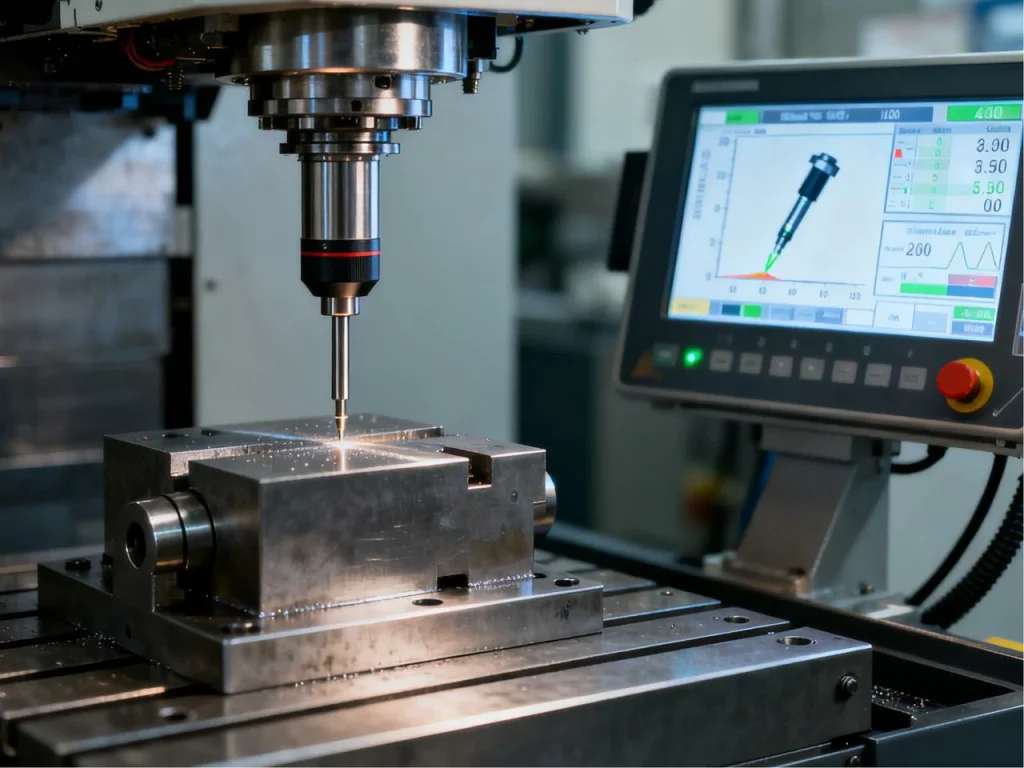
- Through-spindle coolant (TSC): 70–1000 psi for deep holes, chip breaking, and heat control.
- Probing: part and tool probes for in-cycle checks, offset updates, and broken tool detection.
Motion and accuracy: rapids, accel, positioning, repeatability (ISO 230/ISO 10791)
- Thermal drift: counter with warmup cycles and active compensation.
- Scale feedback: linear scales reduce backlash and improve repeatability in long cycles.
- Ball screw vs linear motor: screws for torque and cost; linear for speed and low maintenance.
- Backlash control: critical on 4th/5th axes for repeatable multi-face indexing.
What tolerances can an HMC hold consistently?
- Typical: ±0.005–0.01 mm with good environment, stable fixtures, and in-process probing.
- Fine cases: <0.01 mm when you manage heat, tool wear, and measure in-cycle.
- Metrology setup: verify on a CMM in a climate-controlled room when specs are tight.
Spec comparison: common HMC classes (typical values)
| Class | Pallet size | Travels (X/Y/Z) | Spindle rpm | Power/Torque | Tool capacity | Positioning/Repeatability |
|---|---|---|---|---|---|---|
| A | 400 mm | 600–700 / 600–650 / 600–650 mm | 12k–15k | 15–30 kW / 150–300 Nm | 60–120 tools | ±2–3 µm / ±2 µm |
| B | 500 mm | 800–900 / 800–900 / 800–900 mm | 10k–15k | 20–40 kW / 200–400 Nm | 90–200 tools | ±2–4 µm / ±2–3 µm |
| C | 630 mm | 1000–1200 / 900–1000 / 1000–1100 mm | 6k–12k | 30–50 kW / 300–800 Nm | 120–300 tools | ±3–5 µm / ±3 µm |
Values are representative and vary by builder and options.
Selection guide: match machine to part, volume, and budget
Choosing between horizontal milling machines and vertical machines is easier when you list hard needs first, then nice-to-haves. Think beyond the machine and include workholding, coolant, and inspection in the plan.
Requirements checklist
- Materials and tools: aluminum, steels, stainless, titanium, superalloys. Map to spindle torque/rpm and TSC.
- Tolerances and finish: define ISO testing at acceptance and your inspection plan.
- Takt time and volume: single-piece flow or batch? Palletization and queues change the math.
- Floor space and utilities: power, HVAC, coolant capacity, and chip conveyor path.
- Filtration and mist: protect the machine and the operator with proper coolant filtration and mist collection.
Options that move the needle
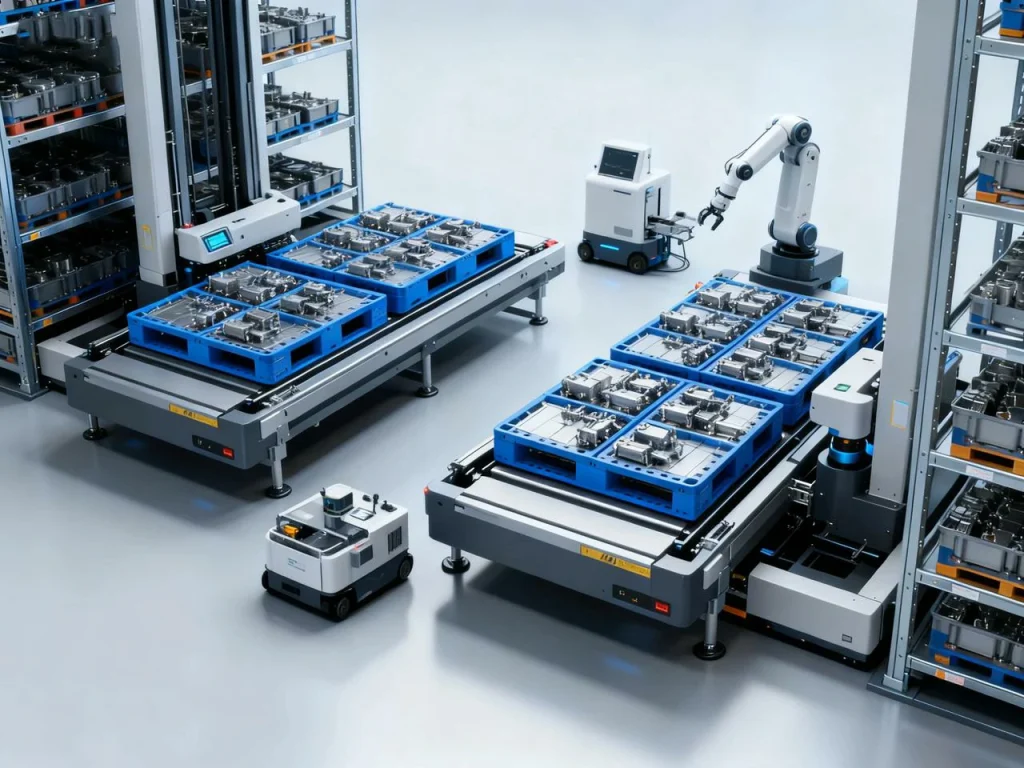
- Pallet pool: mandatory for part families and lights-out. Even a 2-pallet system helps a lot.
- Automation: robots, AGVs, or a small FMS reduce labor per part and stabilize flow.
- 5-axis: add when you need fewer fixtures, fewer setups, or complex geometry.
- High-pressure coolant: key for deep drilling and tough alloys; consider 300–1000 psi.
- Probing and tool monitoring: standardize for offset control and fewer surprises.
Vendor due diligence
- Service network and response time: ask about local techs, spare parts, and training.
- Uptime and MTBF: request data and references from similar users.
- CAM/post support: verify posts for your control and simulate complex 4/5-axis moves.
- Connectivity: MTConnect or OPC UA for dashboards and data.
- Acceptance tests: use ISO 230/10791 plus your tolerances and demo cuts with your tools.
For teams seeking a reliable CNC partner for metal and plastic parts, U-Need offers precision milling, turning, and prototyping services with tight tolerances, multi-face capabilities, and fast turnaround. Their expertise spans from small-batch prototypes to production runs, making them a practical choice for horizontal and vertical machining applications.
Is a horizontal cnc mill overkill for a small shop?
- Hybrid cells: one HMC plus one or two VMCs can balance work and cost.
- Used/refurb paths: start with a clean 400–500 mm class machine if budget is tight.
- Starter tombstones: modular plates let you grow fixture density over time.
- Phased automation: begin with 2 pallets; add a pallet pool later.
Decision support suggestion: a simple decision tree that maps part size, faces required, tolerance, and volume to HMC classes and options.
Horizontal milling machine vs vertical milling machine: the practical differences
Both are cnc machines that remove material from a workpiece using a rotating cutter. The difference is how the spindle is oriented and how the tool approaches the job.
- On a vertical, the spindle is perpendicular to the table. It’s simple and adept at facing and grooving on flat parts.
- On a horizontal, the spindle is parallel to the table. It can approach features from the side and keeps chips from crowding the cut.
In mixed shops, horizontal and vertical machining centers often work together. Verticals handle prototypes and 2D tasks; horizontals handle part families and dense multi-face setups. While there are many types of milling machines (including turret mills, bed milling machines, and 5-axis gantries), HMCs provide a strong balance of precision and efficiency for most production parts.
A quick note on turning: a horizontal or vertical turning machining center is a lathe-based machine for rotating parts. It’s a different process than milling, though many mill-turn centers blend both. Be clear about the difference when selecting the right machine.
Costs, ROI, and total cost of ownership (TCO)
You pay more up front for an HMC, but palletization, fewer setups, and steady uptime change the per-part math. The key is to model the work you actually plan to run.
CAPEX vs OPEX
- CAPEX: machine price, tooling and holders, tombstones and fixtures, installation.
- OPEX: power, coolant, filters, probes and tips, tool monitoring sensors, spare consumables.
- Software and training: CAM seats, post processors, operator training time.
- Maintenance: coolant system cleaning, way lube, spindle warmup cycles, calibration checks.
Utilization math: why palletization matters
- Setup time delta: HMC with tombstones can cut setup time by 50–80% versus a VMC that needs multiple re-fixtures.
- Labor reduction: load while cutting; one operator can manage multiple pallets or machines.
- Scrap rate: less handling reduces errors; in-process probing catches drift.
- Uptime: aim for 75–90% spindle utilization with a 2+ pallet system.
Sample ROI calculator (quick steps)
- Gather data:
- Current cycle time on VMC (min/part).
- Setups per part and setup time per setup (min).
- Scrap rate (%) and rework time (min/part).
- Hourly burden rate ($/hr), including labor and overhead.
- Planned HMC cycle time (min/part) and expected setups (count).
- Parts per month.
- Compute VMC hours/month:
- Cutting = cycle time × parts
- Setup = setup time × setups per part × parts
- Rework = rework time × (scrap rate × parts)
- Total VMC time = sum of all above
- Compute HMC hours/month with palletization:
- Cutting = new cycle time × parts
- Setup = reduced setup time × setups per part × parts (often 60–80% less)
- Rework = rework time × (new scrap rate × parts) (assume a 25–50% drop)
- Total HMC time = sum of all above
- Monthly savings:
- Hours saved = VMC time – HMC time
- Cost saved = Hours saved × burden rate
- Payback:
- Payback months = (HMC CAPEX – resale of old equipment if any) ÷ monthly savings
Sensitivity tip: test best/worst cases for cycle-time reduction (10%, 20%, 30%), setup reduction (50%, 70%, 80%), and scrap drop (10–50%) to see the breakeven range.
Automation, FMS, and Industry 4.0 integration
Yes, horizontal milling can be automated. In fact, HMCs are the most common base for pallet systems and flexible manufacturing systems.
Pallet systems, robots, AGVs: scheduling for lights-out manufacturing
- Cell controllers queue jobs and handle priorities by due date or tool availability.
- Robots manage part loading, barcode/RFID tracking, and finished goods flow.
- Pallet pools add buffer capacity so the cnc mill keeps cutting while the operator is away.
Digital stack: IoT dashboards, predictive maintenance, MTConnect/OPC UA
- Sensors for vibration, oil debris, and temperature warn you before failures.
- Condition-based maintenance reduces unplanned stops and extends spindle life.
- Open data standards let you feed machine status to MES/ERP dashboards.
Scaling up: from single HMC to flexible manufacturing system (FMS)
- Standardize tooling libraries and fixture interfaces first.
- Add buffer capacity with more pallets, not just more machines.
- Keep offsets, tool naming, and probing cycles common across machining centers.
Visual suggestion: a cell layout with one HMC, a pallet pool, a robot, and a data-flow chart from the machine to dashboards.
Real-world example: moving a part family from VMC to HMC
A job shop ran a gearbox housing on a vertical with four setups. The team switched to an HMC with a tombstone holding eight parts. They indexed the B-axis to hit all needed faces, added in-cycle probing for bores, and used 300 psi TSC for deep drilling. Setups dropped from four to one, and cycle time fell by 25%. The operator now loads the next set while the machine cuts. Scrap fell because they touched off and probed in-cycle. The shop did not add staff but doubled monthly output for that part family.
Troubleshooting quick list
- Poor finish in deep pockets: raise TSC pressure, switch to variable-helix tools, add chip breakers, and program pecking or dwell breaks.
- Size drift over long cycles: add warmup, enable thermal compensation, probe in-cycle, and check coolant temperature control.
- Tool chatter in hard steel: shorten stickout, lower radial engagement, raise feed per tooth slightly to avoid rubbing, and increase rigidity at the holder.
- Chip buildup on tombstone: improve washdown nozzles, add programmable coolant spigots, and adjust air blasts at the tool.
Safety, environment, and compliance notes
Keep guards closed, lock out energy sources during maintenance, and follow safe lifting for pallets and tombstones. Maintain mist collection and coolant filtration. Use ISO-aligned acceptance tests and documented procedures for verification. These steps protect the operator and the machine while keeping quality steady.
FAQs
CNC horizontal milling is a type of machining where a cutting head or spindle rotates on a horizontal axis to remove material from the workpiece. Unlike vertical CNC milling, where the spindle is vertically oriented, horizontal CNC mills allow tools to approach the workpiece from the side, improving chip evacuation and enabling multi-face setups. Horizontal and vertical CNC machines feature different milling strategies, fundamental differences in tool geometry, and types of cuts they can perform. Horizontal mills offer higher material removal rates for deep cavities and heavy parts, while vertical mills may provide more versatility for shallow cuts and intricate features. Choosing between vertical and horizontal milling depends on milling tasks, part geometry, and production volume. Machine shops often use a combination of horizontal and vertical milling to optimize throughput and precision. Horizontal cutters throw chips away efficiently, helping maintain consistent results in complex milling operations.
Yes, horizontal CNC mills are highly suited for automation in production environments. Machines feature dual pallets, robotic loaders, and computer numerical control (CNC) systems that allow lights-out operation. Automation reduces manual handling, optimizes spindle utilization, and maintains consistent quality. Horizontal and vertical milling can both be automated, but horizontal mills often excel in multi-face milling tasks due to their horizontal axis and palletization capabilities. By integrating CNC controls with tool monitoring, machine shops can run continuous milling operations with fewer interruptions. Automated horizontal milling systems handle different milling types, including roughing, finishing, and drilling, without operator intervention. This contrasts with CNC vertical milling machines, which may require more frequent setups or repositioning. Choosing the right level of automation depends on part complexity, milling process, and the production of intricate features. Horizontal mills offer efficiency gains, especially in high-volume workpieces where lower removal rates would slow vertical milling machines.
The choice between vertical and horizontal CNC milling depends on the application and milling tasks. Horizontal CNC mills excel in multi-face machining, high material removal, and heavy-duty cuts thanks to the horizontal axis and tool geometry. Vertical CNC milling machines are more versatile for light-duty cuts, shallow pockets, and intricate features. Machine shops often use horizontal and vertical milling together to optimize throughput. Fundamental differences include chip evacuation, spindle orientation, and type of machining that each performs best. Horizontal mills may remove material faster in deep cuts, while vertical milling machines and vertical CNC milling excel at precise, intricate surfaces. Understanding differences between horizontal and vertical milling helps shops choose the right machine for production, balancing higher material removal rate with lower removal rate operations. Both types of milling machines feature CNC controls, enabling complex milling processes and varied cutting strategies.
Horizontal CNC mills offer several advantages for machining operations. With a horizontal axis, chips fall away from the cut, improving surface finish and tool life. Multi-face milling is easier because horizontal cutters can reach several sides of a workpiece without multiple setups. Horizontal milling allows higher material removal rates compared to vertically oriented spindles and reduces cycle times in production of intricate or heavy parts. Horizontal and vertical CNC machines differ in versatility: vertical mills handle more shallow or detailed cuts, while horizontal mills handle deeper pockets and longer cuts. CNC controls on horizontal mills support automated palletization, probing, and in-cycle measurements. Horizontal milling is best suited for medium- to high-volume production, repetitive milling tasks, and multi-part setups. Machine shops value horizontal mills for throughput, consistent results, and their ability to complement vertical milling machines and vertical CNC milling in mixed operations.
CNC milling, whether horizontal or vertical, comes with pros and cons. Horizontal CNC mills require more floor space, larger initial investment, and complex fixturing. Choosing between vertical and horizontal milling involves considering the fundamental differences in tool geometry, spindle orientation, and type of machining. Horizontal milling machines feature horizontal cutters and a horizontal beam, which improves material removal but adds setup complexity. Vertical CNC milling machines may provide more versatility for low-volume or intricate parts, but cuts are not as deep, resulting in a lower removal rate. Both types of milling require trained operators and careful programming of CNC controls. Machine shops must consider production goals, milling tasks, and milling process requirements. Horizontal mills may excel in volume production, while vertical and horizontal milling combined often achieve the best balance. CNC vertical milling also demands attention to tool wear and fixture stability.
Horizontal CNC mills are highly versatile and can handle a wide range of materials, including aluminum, steel, stainless steel, titanium, copper, and plastics. Horizontal and vertical milling machines both remove material from the workpiece, but horizontal mills offer higher material removal rates on tough alloys due to their horizontal axis and cutter geometry. Machine shops use horizontal milling for production of intricate parts, deep pockets, and heavy components. Different milling operations, tool geometry, and CNC controls must be chosen carefully to suit the material type. For softer metals, horizontal mills may run at higher spindle speeds; for harder alloys, lower removal rate strategies prevent tool wear. Choosing the right machine, whether a horizontal CNC mill or vertical milling machine, depends on part geometry, desired surface finish, and type of machining. Horizontal mills are best suited for large batches, multi-face machining, and high-efficiency milling processes.
References
https://www.iso.org/standard/73814.html
https://www.iso.org/standard/46449.html
https://www.osha.gov/machine-guarding


 English
  German
  French
  Italian
  Spanish
  Polish
  Czech
Czech  Japanese