
A cnc machining rfq template is a structured way to request pricing and feasibility review for a machined part. In practice, it is not just a blank form. It is the full quote package that lets a cnc shop decide whether the part can be made, how it should be made, what risks exist, and what assumptions must be used in pricing.
In a competitive environment, buyers requesting quotes for CNC machined parts quickly discover that the quality of the RFQ controls whether they receive a high-quality response or a conditional estimate full of assumptions. For custom manufacturing, a weak package almost always means an unreliable quote. If the technical package is incomplete, the supplier has to guess. Those guesses can affect price, lead time, process choice, inspection scope, and even whether the quoted method is suitable for the real function of the part.This is why buyers searching for how to write a cnc rfq for custom parts are usually not looking for a general procurement template. They need a package that supports manufacturability review.
A useful RFQ template creates consistency across suppliers. It helps when sending an RFQ to multiple shops because each supplier receives the same model, drawing, material callout, quantity assumptions, finish requirements, and timing expectations. That makes quote comparisons more meaningful. Without that consistency, price differences may reflect different assumptions rather than real differences in capability or cost structure.
For example, companies like UNeed specialize in CNC turning and milling, offering high-precision machining for custom parts. Using a well-prepared RFQ when approaching such suppliers ensures faster, more accurate quotes and reduces the risk of miscommunication or rework.
Difference between request for quote and request for quotation in manufacturing
In manufacturing, “request for quote” and “request for quotation” usually mean the same thing. Both refer to a formal request asking a supplier to review a part or assembly and return pricing, lead time, and commercial terms based on the supplied requirements.
The practical difference is usually none. What matters more is whether the RFQ package is technically complete. A document titled “request for quotation” does not help if it lacks a 3D model, drawing tolerances, or finishing notes. In machining, the supplier reviews the content, not the title.
How to write a CNC machining RFQ for accurate supplier review
The best RFQs are written so that a manufacturing engineer can answer four questions quickly:
- What is the part?
- What function matters most?
- What controls apply?
- What volume and timing are expected?
A well-designed cnc machining rfq template should present one clear technical baseline—a machining specification list that covers geometry, tolerances, material, finish, quantity, and timing. This baseline ensures that all suppliers receive the same information and can provide comparable quotes without having to reverse-engineer design intent. The package typically starts with a 3D CAD model, often a STEP file, and a 2D PDF drawing that defines tolerances, GD&T, notes, surface finish, and material specifications. If the part has critical-to-function features, those should be marked clearly. Research indicates that identifying about three to five critical features with functional notes and a key-dimension inspection plan can reduce unnecessary cost and make supplier review easier.
Copyable RFQ template: Part number and revision; 3D model and 2D drawing; material with alloy, temper or condition, standard if required, and raw form; quantity by prototype, pilot, production lot, and annual usage; finish and masking notes; inspection and documentation scope; target delivery date and whether expedite is requested; approved alternates or no-substitution requirement. Example: “17-4 PH H900 per applicable material standard, bar stock, 10 prototype parts, passivate after machining, dimensional report on identified features, same revision across all files.”
To put it simply, a quote request should not force the shop to reverse-engineer design intent. If the part seals, aligns, rotates, locates, or mates to another component, say so where it affects tolerances or inspection. If the part is a prototype, say that too. If it is a production item, include annual demand and any control needs. This is one of the main differences between a generic form and a cnc machining rfq template for custom parts.
What to include in a CNC machining quote request
Buyers often ask what to include in a cnc machining quote request. The core package usually includes:
- 3D CAD model
- 2D technical drawing
- material specification
- quantity or annual usage
- required finish or post-processing
- timing expectations
- any assembly, testing, or inspection needs
Source material shows that RFQ submission commonly starts by emailing or uploading part drawings, blueprints, CAD models, material specs, annual quantities, timelines, and required processes such as machining, assembly, or testing. Any specific requirements—non-standard finishes, traceability documentation, or unique packaging—should be listed explicitly rather than assumed. That commercial and technical mix matters because a quote for one-off machining is different from a quote for recurring production with packaging and logistics requirements.
If the RFQ will go to multiple shops, keep the package controlled. Use the same revision level, the same file set, and the same assumptions. If clarifications are issued later, send them to all quoting suppliers. This is the simplest way to avoid comparing different interpretations of the same part.
Material specification and alloy selection
Material should be specified to the level needed for function and compliance: alloy, temper or condition, any required standard per ASTM International specifications — and raw material form when it affects cost or manufacturability. “6061-T6” may be enough for a simple commercial part, but higher-risk parts may require a callout such as “17-4 PH H900, bar stock, certification required.” If plate, bar, tube, casting, or forging is acceptable only in certain forms, state that in the RFQ. Where cost is a concern, noting whether alternative materials are acceptable allows the supplier to suggest substitutions that meet functional requirements at lower overall cost.
Table: Core fields in a CNC machining RFQ template for custom parts
| RFQ field | Why it matters for quoting | Common problem if missing |
|---|---|---|
| Part number and revision | Sets document control and prevents quoting the wrong design | Shops quote outdated geometry |
| 3D CAD model (.STEP) | Supports geometry review, programming approach, and cycle-time estimating | Shape details may be misread from 2D only |
| 2D drawing (.PDF) | Defines tolerances, GD&T, notes, finish, and inspection intent | Supplier must assume limits |
| Material specification | Affects machinability, strength, cost, and sourcing | Wrong alloy or temper can be selected |
| Quantity and annual volume | Changes setup strategy, tooling, and price assumptions | One-off pricing used for recurring demand |
| Surface finish / post-processing | Drives outside processing, routing, and lead time | Finish cost omitted or guessed |
| Critical-to-function features | Helps focus process control and inspection | Over-control or under-control of dimensions |
| Inspection or first article needs | Affects quote scope and documentation work | Quality tasks added later as surprise cost |
| Timeline or required date | Lets supplier assess capacity and outside-process timing | Quote may be unrealistic for schedule |
| Packaging / logistics notes | Relevant for fragile, cosmetic, or recurring shipments | Quote excludes handling needs |
Can the part be manufactured from the RFQ package?
A machine shop can quote at different confidence levels depending on the package quality. Early-stage parts may receive a budgetary quote or feasibility review with assumptions, while a production quote needs controlled files, defined material, tolerances, finish, and inspection scope. If key inputs are missing, the quote should be treated as conditional rather than fully comparable.
When a 3D model is required for CNC quoting
A 3D model is usually required when part geometry is not easy to interpret from a 2D drawing alone. Shops use CAM software to plan toolpaths and estimate cycle times from the solid model, making it essential for anything beyond simple prismatic features. This includes contoured surfaces, pockets with blended forms, angled features, multi-axis work, and parts where tool access depends on the solid model. Research shows that a complete RFQ package typically includes a 3D CAD model, often a STEP file, as a core input for custom CNC quoting.
For simple prismatic parts, a drawing may be enough for an initial budget quote. But for many custom parts, the 3D model is the fastest way to confirm if the part can be machined, what setups may be needed, and whether feature relationships are practical. This is also why buyers ask when a 3d model is required for cnc quoting. The answer is usually: whenever geometry, toolpath strategy, or collision risk cannot be judged clearly from the drawing.
How 2D drawings, tolerances, and GD&T confirm manufacturability
The 3D model shows the shape. The 2D drawing shows the design intent. In CNC quoting, both matter.
A drawing confirms dimensional limits, tolerance zones, geometric dimensioning and tolerancing (GD&T) — according to ASME standards for geometric dimensioning and tolerancing — surface finish, technical notes, and material callouts. Without those, the shop can see the part but cannot know how tightly it must be controlled. This is why how to specify tolerances in an RFQ is a central issue. The drawing should define only the tolerances that matter to function, and it should align with the model.
GD&T helps when fit, position, orientation, or datum relationships matter more than simple plus-minus dimensions. It tells the shop what has to be true for the part to work in the assembly. If these controls are absent, a supplier may quote to default assumptions or broad title-block limits. If they are excessive, cost and lead time can increase for no functional gain.
When complex part geometry delays CNC quotations
Complex geometry delays quoting when it creates uncertainty about process route, setup count, tool access, holding method, or inspection approach. Examples include deep cavities, hard-to-reach internal features, compound angles, thin walls, or mixed turning and milling features on one part.
This does not mean the part cannot be made. It means more engineering review is needed before quoting. Research notes that shops review RFQs for feasibility, blueprint inconsistencies, cycle times, and possible cost-effective alternatives. So if geometry suggests special tooling, extra setups, or a different material or process strategy, the quotation stage may slow down while those issues are checked.
Checklist: What buyers should verify before sending a machining RFQ
Before sending a machining RFQ, the buyer should verify:
- the 3D model and 2D drawing match
- the drawing has a revision level
- material includes exact alloy, grade, temper, or standard when needed
- critical dimensions are identified
- tolerances reflect function, not copied defaults
- finish and post-processing are stated
- quantity assumptions are clear
- prototype or production intent is stated
- inspection requirements are included
- delivery timing, packaging, and logistics assumptions are defined if relevant
Do not send the RFQ yet if the design is still changing, the tolerance stack is unresolved, the process is not selected, or the geometry shows obvious manufacturability risk such as deep pockets, thin walls, unrealistic internal corners, difficult workholding, or inaccessible inspection datums. A standard machining RFQ is also insufficient when the part may be better produced as a casting, forging, or extrusion before finish machining, or when the scope is really an assembly, NPI, or regulated documentation package.
This is the practical answer to what buyers should verify before sending a machining rfq. If any of these are unclear, expect back-and-forth before the quote is usable.
How the CNC RFQ process works from submission to internal review
Understanding the quoting process helps buyers prepare packages that move through supplier review without unnecessary delays. The quotation process starts when the buyer submits the package, which may be emailed or uploaded to a supplier portal. That package may be emailed or uploaded to a supplier portal. It typically includes technical files and commercial inputs such as quantities and timing.
After submission, the supplier usually checks whether the package is complete enough to review. If key files are missing or inconsistent, clarification comes first. If the package is usable, the supplier moves into feasibility and cost review.
Required files and data: CAD, PDF drawings, material, quantities, finishing, timelines
The minimum package for most custom CNC quoting includes the CAD model, PDF drawing, material, quantities, finishing needs, and timeline. Research supports this set directly. These inputs shape the machining route and the business case at the same time.
Material affects sourcing and machining strategy. Quantity affects setup planning. Finishing can add outside processing. Timeline interacts with current capacity and supplier scheduling. If a buyer wants a quote that is useful for planning, these items should be sent together, not one at a time.
How bill of materials supports custom part quoting
For a single machined component, a bill of materials may be simple or not needed. But for assemblies, kits, or parts with inserts and purchased items, the BOM supports custom part quoting by showing what is machined, what is bought, and what must be assembled or handled together.
This matters because the quote may need to include more than cutting metal. If the package includes hardware, subcomponents, or process-specific consumables, the supplier must know what is in scope. In short, how bill of materials supports custom part quoting comes down to scope control. It prevents hidden work from appearing after the quote is issued.
How shops review feasibility, inconsistencies, capacity, and outside processes
Research indicates that CNC shops review RFQs internally for feasibility, blueprint inconsistencies, and cycle times using a cost estimator to model machining routes and outside process requirements, as well as cost-effective alternatives such as material changes or automation. They also consider internal capacity, external partners for finishing or testing, packaging, scrap, logistics, and clarifying statements about tolerances or drawing errors.
From the buyer’s side, this is why a quote may contain assumptions or notes. Those notes are not just legal language. They often signal where the RFQ package left open questions. If plating, anodizing, heat treatment, testing, or special packaging is required, those items can change routing and risk. That makes them part of manufacturability, not just commercial detail.
Process diagram: RFQ submission, clarification, review, and quotation stages
| Stage | What happens | |
|---|---|---|
| What happens | ||
| RFQ submission | Buyer sends model, drawing, specs, quantities, finish, and timing | Key files missing |
| Initial screening | Supplier checks completeness and revision control | Quote cannot start |
| Clarification | Questions issued on tolerances, material, geometry, or scope | Delay and differing assumptions |
| Feasibility review | Manufacturing review of setups, tooling, capacity, and outside processes | Hidden process risk |
| Costing and lead-time review | Routing, cycle-time, purchased processes, scrap, packaging, logistics | Inaccurate quote basis |
| Quotation release | Supplier returns quote with assumptions or exceptions | Buyer compares unlike offers |
rototype vs production CNC machining RFQ template
Prototype and production RFQs should not be treated as the same request. Research specifically supports separating prototype RFQs, which emphasize speed and design feedback, from production RFQs, which focus more on cost, quality systems, and process control.
This distinction matters because a supplier may quote the same geometry in very different ways depending on the stage of the program.
When to separate prototype RFQs from production RFQs
You should separate them when the prototype is mainly for fit, test, or design learning, while production will need repeatability, control plans, recurring supply, or formal quality documentation. Mixing both in one RFQ often creates confusion. One supplier may optimize for speed. Another may assume long-term process control. Their quotes will not be comparable.
This is the practical answer to when to separate prototype RFQs from production RFQs. If the objectives differ, the RFQs should differ too.
Why design for manufacturability matters before requesting CNC quotes
Why design for manufacturability matters before requesting cnc quotes is simple: suppliers can only price what the design asks them to make. If the part contains hard-to-machine features—such as an undercut that prevents standard tool access, an internal radius tighter than available tooling, or a chamfer placed where a simpler break-edge would serve the same function—the quote will reflect that burden.
An RFQ is not the best place to discover that the design needs major simplification. Some suppliers may suggest alternatives during review, and research notes that shops may look for cost-effective alternatives. But the best quotes come when the design has already been checked for realistic machining access, reasonable tolerances, and sensible material choice.
What changes between speed-focused prototype quoting and control-focused production quoting
Prototype quoting is often driven by speed, quick setup choices, and feedback on manufacturability. Production quoting shifts toward process stability, recurring cost, consistency, inspection scope, and supplier controls. Research also notes that production RFQs may focus more on certifications and process controls, while prototype RFQs emphasize speed and DFM feedback.
The key point is that low-friction prototype methods may not be the right basis for a long-term production quote. A production RFQ usually needs clearer annual quantities, packaging needs, and quality expectations.
Comparison table: Prototype vs production RFQ requirements
| RFQ aspect | Prototype RFQ | Production RFQ |
|---|---|---|
| Main objective | Fast parts and design feedback | Stable repeat supply and controlled cost |
| Quantity input | Small initial quantity | Annual or recurring quantities |
| DFM feedback | High priority | Still useful, but cost control is central |
| Inspection scope | Often focused on key dimensions | More formal and repeatable requirements |
| Supplier review focus | Speed, feasibility, setup approach | Capacity, controls, outside processes, logistics |
| Documentation emphasis | Enough to build and verify fit/function | Stronger revision control and process definition |
Advantages and limitations of using a CNC machining RFQ template
Using a structured cnc machining rfq template helps address many preventable RFQ failures—missing files, unclear quantities, vague materials, and forgotten finish requirements. A well-designed template reduces these errors by enforcing consistency and completeness across submissions to multiple suppliers.
At the same time, a template cannot replace engineering judgment. It organizes information, but it does not decide which dimensions matter, whether the geometry is practical, or how much control the part really needs.
Where templates reduce back-and-forth and improve quote completeness
Templates reduce back-and-forth when they force the buyer to state the obvious but often missed items: file type, revision, material, quantity, finish, and timeline. Research supports using RFQ checklists for turned, milled, or Swiss-type parts to minimize back-and-forth and improve quote speed and accuracy.
This is the strongest case for using a template when sending RFQs to several shops. It creates a consistent package, helps buyers get faster responses, and reduces the chance that one supplier gets more complete information than another.
Where templates fail without part-specific tolerances, notes, and inspection needs
A generic RFQ form fails when it stops at commercial fields and does not include the engineering controls that make the part functional.Precision machining demands more than quantity and material—it requires controlled drawings, functional tolerances, and clearly defined inspection scope that no generic form can substitute for. They need part-specific tolerances, notes, finish requirements, and inspection expectations.
This is why a template by itself is not enough for critical parts. The drawing still carries the real manufacturing intent. If the drawing is weak, the template cannot fix it.
Critical dimensions to highlight in a machining RFQ
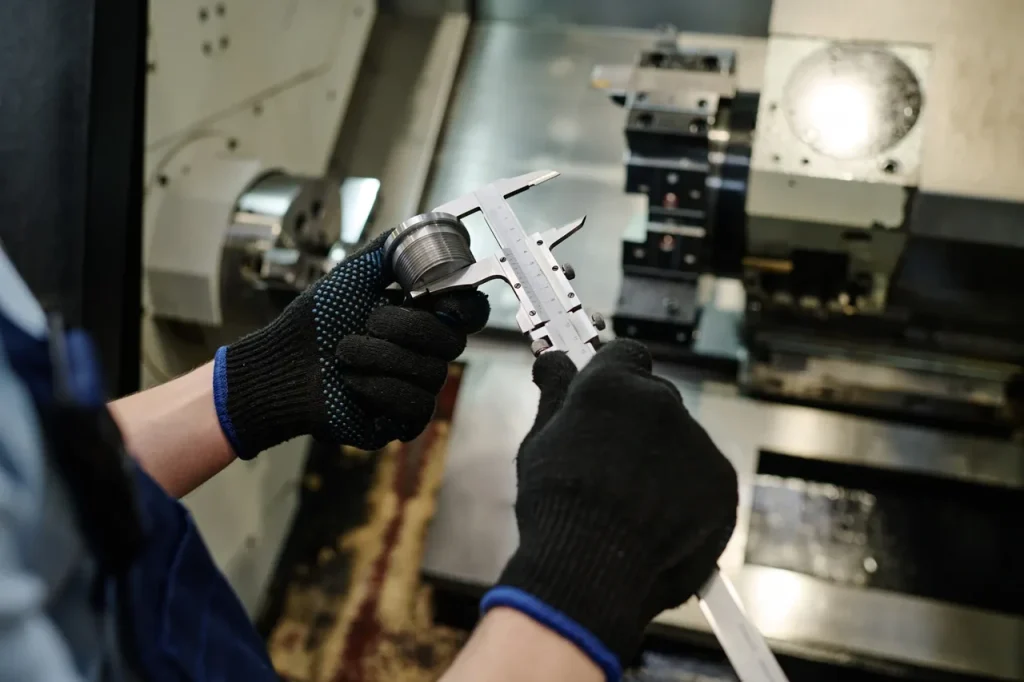
Buyers often ask about critical dimensions to highlight in a machining rfq. Research suggests marking three to five critical-to-function features on the drawing with functional notes and including a key-dimension inspection plan.
That approach helps both cost and clarity. If a bore controls alignment, say so. If a face controls sealing, mark it. If a thread is cosmetic only, do not let it inherit the same implied priority as a locating feature. Clear prioritization helps the supplier choose where to focus process control.
PAA: Is a generic RFQ template enough for precision machined parts?
No, not by itself. A generic template helps organize files and commercial details, but precision machined parts still need a controlled model, a complete drawing, and clear functional tolerances. The template is the container, not the full technical definition.
Common mistakes in CNC machining RFQs and failure scenarios
Many RFQ problems come from document mismatch rather than missing effort. The buyer may provide a lot of data, but if the data conflicts, the quote still becomes unreliable. The most common mistakes affect tolerance interpretation, material choice, and geometry control.
Risks of missing tolerance data in CNC RFQs
The risks of missing tolerance data in cnc rfqs are straightforward. The supplier must either assume a tolerance, ask questions, or decline to quote. None of those outcomes is ideal if the buyer needs a fast and comparable response.
Missing tolerance data can also hide manufacturability risk. A feature that looks simple in the model may be expensive or unstable to machine once actual functional limits are known. So the quote may change later after clarification.
How copied title blocks and mismatched tolerances distort quote accuracy
One documented case involved an engineer copying a title block from a high-precision project onto a simple bracket RFQ. The shop quoted based on the implied high-precision tolerances in that title block, which inflated cost far beyond what the part actually required.
This is a classic RFQ failure. General tolerances must match the real needs of the part. If the title block is tighter than needed, every unassigned feature may be treated as critical. That affects machining method, inspection effort, and quote price.
Why 3D model and 2D drawing disconnects delay quoting
A known failure scenario is the 3d model and 2d drawing disconnect. Research describes cases where the model and drawing did not agree, causing quoting delays and interpretation risk. This problem is common because the model may be revised while the drawing is not, or a dimension may be updated in one place only.
For CNC quoting, the supplier needs one source of truth. The 2D drawing should complement the model, not contradict it. If there is conflict, the supplier has to stop and ask which one governs.
Case table: Incomplete material specs, inflated tolerances, and drawing-model conflicts
| Case | RFQ problem | Result | Why it matters |
|---|---|---|---|
| Incomplete material specification | Material listed only as “aluminum” without temper or standard for a high-strength part | Parts passed dimensionally but failed strength testing, leading to scrap | Material callout must include exact alloy and condition when function depends on it |
| Copied title block cost inflation | Tight general tolerances copied from unrelated precision project onto simple bracket | Quote inflated because shop assumed unnecessary precision requirements | Documentation must match part complexity |
| Drawing-model conflict | 3D model and 2D drawing did not match | Quoting delayed and risk of manufacturing error increased | Model and drawing must align before RFQ release |
Cost, tolerance, and lead time factors in CNC quote accuracy
A CNC quote is only as accurate as the assumptions behind it. Understanding the main cost factors—tolerance, material, volume, finish, and process complexity—helps buyers evaluate whether a credible quote reflects real scope. Without complete inputs, suppliers cannot offer transparent pricing, and may instead include contingency, add clarifying notes, or delay response until questions are answered. Three of the strongest quote drivers are tolerance, material, and surface finish.
How tight tolerances affect CNC quote accuracy
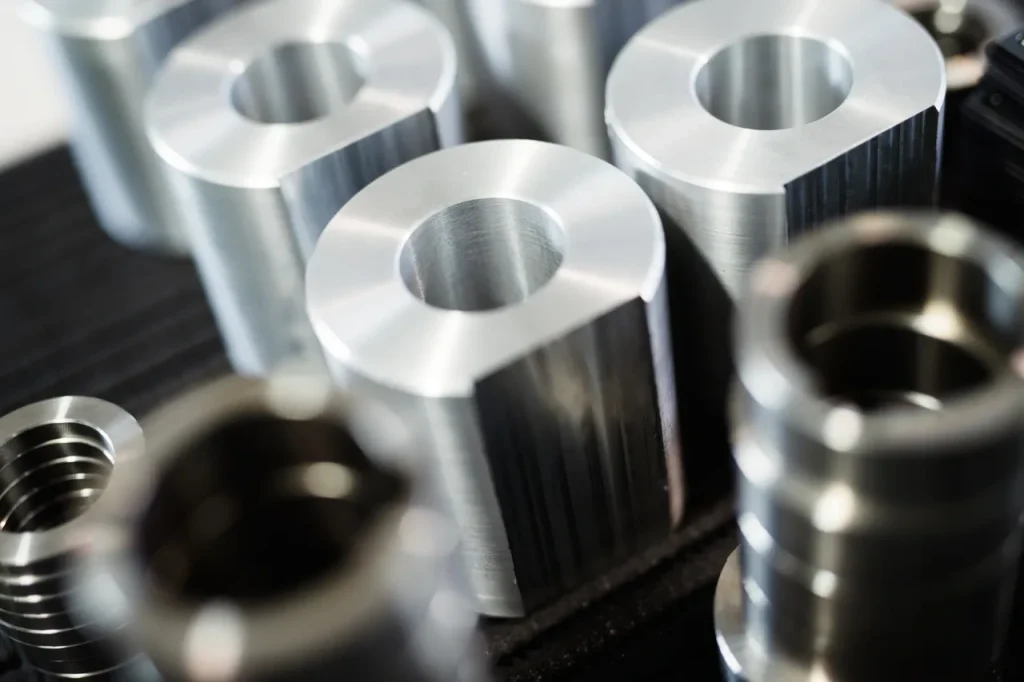
How tight tolerances affect cnc quote accuracy comes down to process burden. Tighter tolerances can change machine choice, setup strategy, inspection time, scrap risk, and the need for controlled datums or secondary operations. They also force more conservative cutting parameters and slower feed rates, which reduce tool life and raise per-part cost even before inspection overhead is considered. Even when no exact number is given in the RFQ, a drawing that implies precision through title-block limits or GD&T controls can shift the whole routing.
This is why tolerances should reflect function. If only a few features matter, identify those clearly instead of applying strict limits everywhere. Research supports highlighting critical-to-function features for this reason.
How material selection changes CNC machining pricing
How material selection changes cnc machining pricing is not only about raw material cost. Material also affects machinability, tool wear, sourcing risk, and whether heat treatment or certification is needed. Research includes a case where a generic “aluminum” callout led to the wrong assumption and scrapped parts after strength testing.
For accurate quoting, material should be specified fully when function depends on grade, temper, or standard. Vague material language may produce a quote that is low on paper but wrong in practice.
Impact of surface finish requirements on machining cost
The impact of surface finish requirements on machining cost appears in two ways. First, the machined surface itself may need slower passes, different tooling, or more controlled processing. Second, the part may require outside finishing such as anodizing, coating, or heat treatment, all of which affect routing and supplier coordination.
Research states that complete RFQ packages should include post-processing details like anodizing or heat treatment. If finish is omitted, the quote may understate both cost and lead time.
Inspection or first article needs
State the inspection scope, not just that inspection is required. Use first article inspection when the part is entering a new build, process risk is high, or production control must be confirmed; for simple prototype work, a full first article may be unnecessary. Call out whether you need a ballooned drawing, dimensional report, CMM inspection for critical geometry, or capability and SPC (Statistical Process Control) expectations for repeat production — based on NIST guidelines for measurement and quality assurance.
Quantity and annual volume
Request quote tiers that match the sourcing decision: prototype quantity, pilot quantity, production lot quantity, and expected annual usage. This lets suppliers separate one-time setup assumptions from repeat production economics and makes quote comparisons more meaningful. If minimum order quantity or lot-size assumptions apply, those should be visible in the returned quote.
Factors that increase CNC machining lead time
Separate quote turnaround time, production lead time, material lead time, and outside-process lead time in the RFQ and in the supplier response. Also state whether the requested date assumes stocked material, standard processing, or expedite. Two quotes are not comparable if one includes outside processing or material delay and the other does not.
Additional quote drivers buyers often miss
Some quote drivers are easy to miss because they are not visible in the model. They appear in the process plan, the inspection plan, or the supply chain behind the part. These details often explain why a quote changes after initial review.
Why secondary operations raise machined part quotes
Why secondary operations raise machined part quotes is simple: every added process adds handling, routing, scheduling, and risk. This includes deburring beyond normal practice, heat treatment, anodizing, plating, marking, assembly, or testing. Research confirms that RFQ packages often include required processes such as machining, assembly, or testing, and that outside partners may be part of the quote path.
If these operations are known at RFQ stage, include them. If not, the initial quote may look low but will not reflect the finished part.
How first article inspection affects supplier quotes
How first article inspection affects supplier quotes because it adds documentation and verification work beyond normal production checks. If the buyer needs first article review, key-dimension reporting, or formal submission records, that should be stated in the RFQ.
Research does not provide a cost benchmark, but it does support including key-dimension inspection plans and clear critical features for precision work. For some parts, this can be a normal requirement. For others, it may be unnecessary overhead.
Cost impact of special tooling in custom machining
The cost impact of special tooling in custom machining shows up when standard cutting tools, fixturing, or workholding are not enough. Complex geometry, hard-to-reach features, or repeat production needs can trigger custom fixtures or process tools. Tooling costs for these items can be significant and should appear as a separate line item in the quote when applicable.
A template cannot predict this by itself. But a complete RFQ helps the supplier see it early. If a part needs unusual access or stable repeat location, special tooling may affect whether the quote is practical for prototype, production, or both.
How setup time influences low-volume CNC part pricing
How setup time influences low-volume cnc part pricing is important for custom parts. In low volume, setup often carries more weight because the preparation effort is spread across fewer parts. A part requiring a dedicated fixture, multiple orientations, difficult workholding, or several operations may be expensive in low quantity even if the per-part cutting time looks reasonable.
This is one reason prototype and production RFQs should be separated. The same geometry may be quoted in very different ways depending on whether the setup cost is being absorbed across a few parts or many.
Applications, use cases, and how to evaluate supplier responses
A useful RFQ structure depends on part type and buying context. Milled, turned, and Swiss-type components do not present the same quoting questions. The buyer should also review supplier responses for feasibility, not just price.
Best-fit RFQ structures for milled, turned, and Swiss-type parts
Research indicates that RFQ checklists for CNC turned, milled, or Swiss parts help reduce back-and-forth and improve quote quality. The reason is that each part family has different risk points.
For milled parts, key concerns often include access, workholding, datum strategy, and surface relationships. For turned parts, diameters, concentric relationships, and secondary milling features are often central. For Swiss-type parts, the RFQ should make small-feature detail, length-to-diameter concerns, and recurring volume expectations clear, because process choice may depend on production intent.
How annual quantities, packaging, and logistics affect quote applicability
A quote may be technically correct but commercially unsuitable if it ignores annual quantities, packaging, or logistics. Research shows that suppliers consider annual quantities, packaging, and logistics in their review.
This matters because pricing for one lot may not apply to recurring demand. Packaging may matter for cosmetic surfaces, thin-walled parts, or traceable kits. Logistics assumptions also affect lead time and total landed cost. If these items are omitted, quote comparisons may be misleading.
PAA: What buyers should verify before sending a machining RFQ?
Buyers should verify that the model and drawing match, material is fully specified, quantities are clear, and finish and inspection needs are stated. They should also check whether the RFQ is for prototype or production, because that changes how shops quote the work.
Decision matrix: How to compare CNC quotes for feasibility, clarity, and risk
| Evaluation area | What to check in supplier response | Risk if weak |
|---|---|---|
| Technical clarity | Are assumptions, exceptions, or missing data identified clearly? | Hidden mismatch between quote and design intent |
| Feasibility | Does the quote reflect geometry, finish, and required processes realistically? | Part may be under-reviewed |
| Tolerance understanding | Are critical features or inspection needs acknowledged? | Precision risk or overpricing |
| Scope completeness | Are post-processing, testing, packaging, and logistics included where relevant? | Cost added later |
| Quantity basis | Is pricing tied to the stated quantity or annual usage? | Quote not valid for actual buying case |
| Timeline basis | Does timing appear linked to current scope and outside processes? | Schedule risk |
| Documentation control | Are revision levels and referenced files clear? | Wrong design may be quoted |
Final CNC machining RFQ template checklist for decision-making
The best RFQ template is the one that supports a real manufacturing decision. It should help answer whether the part can be made from the package provided, whether the quote covers the true scope, and whether supplier responses can be compared on equal terms.
Use a template when you need consistency across multiple suppliers or across internal programs. Avoid relying on the template alone when the part has precision features, assembly interfaces, or inspection needs that only a proper drawing and clear notes can define.
Checklist: Minimum technical package before requesting quotes
These technical requirements should align with SAE International standards for engineering specifications and industry best practices for precision manufacturing documentation.
- 3D CAD model in a usable neutral format such as STEP
- 2D PDF drawing with revision
- material specification with exact alloy, grade, temper, or standard when needed
- tolerances and GD&T where function requires them
- surface finish requirements
- critical-to-function dimensions marked on the drawing
- post-processing requirements such as anodizing or heat treatment
- any testing, assembly, or inspection requirements
Checklist: Commercial and timeline inputs needed for supplier evaluation
- quote quantity and, if relevant, annual quantity
- prototype or production intent
- requested delivery timing
- packaging requirements if important to part condition
- shipping or logistics assumptions if they affect quote applicability
- BOM if the RFQ includes assembly content or purchased items
- note of any expected clarifications or open design questions
PAA: What is the most important file in a CNC machining RFQ?
There is rarely one file that stands alone. The 3D model is often the fastest way to review geometry, but the 2D drawing defines tolerances, GD&T, notes, and finish. For accurate quoting, the most important condition is that both files agree and reflect the same revision.
References needed: standards bodies, industry guides, and certification sources
“For buyers building or reviewing a CNC RFQ template, the most useful references are drawing and model standards — according to ISO international standards for technical drawing and product definition — material standards, and quality system references. These documents help define how dimensions, tolerances, product definition, and quality controls should be communicated.
In short, use a template to enforce completeness, not to replace engineering content. A good RFQ supports pricing, manufacturability review, and quote comparison. A weak RFQ creates assumptions. In machining, assumptions are where delays, inflated costs, and preventable failures often begin.
FAQs
A solid CNC RFQ should include everything a shop needs to understand and price your part. That usually means a 3D CAD model, 2D drawing with tolerances, material specs, quantity, surface finish, and delivery timing. If there’s assembly, inspection, or testing involved, include that too. Think of it as a complete “build package” so the supplier doesn’t have to guess anything important.
Keep it simple and consistent. Send the exact same files, revision level, and requirements to every shop. Don’t tweak details between suppliers. If you make updates or answer questions, share them with all shops. This way, everyone is quoting the same job, and you can actually compare prices fairly instead of comparing different assumptions.
Because unclear RFQs lead to guessing—and guesses affect price. If details like tolerances, material, or finish are missing, shops may add extra cost to cover risk or delay the quote to ask questions. A clear RFQ reduces uncertainty, speeds things up, and gives you more accurate, apples-to-apples pricing from different suppliers.
Yes, and you probably should. A template helps you stay organized and makes sure you don’t forget key info like material, quantity, or finish. But it’s not enough on its own. You still need proper drawings, tolerances, and notes. Think of a template as a checklist—it keeps things consistent, but it doesn’t replace engineering details.
Focus on what actually matters for the part’s function. Don’t just apply tight tolerances everywhere—it drives up cost. Instead, clearly mark critical features (usually 3–5) and explain why they matter, like sealing or alignment. Use your 2D drawing and GD&T where needed. The goal is to guide the shop, not overwhelm them with unnecessary precision.



 English
  German
  French
  Italian
  Spanish
  Polish
  Czech
Czech  Japanese