
In the realm of prototype manufacturing, selecting the optimal production method is a critical decision that directly impacts the success of product development cycles. Two technologies stand out as the most widely used and reliable options: 3D printing and CNC machining. While both are capable of producing high-quality prototypes for plastic and metal components, they operate on fundamentally different principles—additive and subtractive manufacturing—and each brings unique strengths, limitations, and cost considerations to the table.
What 3D Printing vs CNC Machining Means for Part Decisions
Choosing between 3D printing vs CNC machining directly shapes how you design, produce, and cost out parts across every stage of development. Understanding additive vs subtractive manufacturing helps you evaluate geometry, strength, lead time, and scalability for both plastic and metal components.
Additive vs subtractive manufacturing for metal parts: the core difference
In 3d printing vs cnc machining, the first question is simple: is the part built up, or cut away?
3D printing offers an additive manufacturing process that builds parts layer by layer using a 3D printer. This manufacturing process forms the part layer by layer from feedstock such as filament, resin, or metal powder. CNC machining is subtractive manufacturing. It starts with a solid block, bar, or plate and removes material with cutting tools until the part shape is reached. That core difference drives almost every trade-off in geometry, tolerance, surface finish, waste, setup, and scale.
For metal parts, this distinction matters even more. Additive vs subtractive manufacturing for metal parts is not just a process choice. It affects density, post-processing needs, and whether the part can reach the required mechanical performance in the final application. CNC machining usually starts from wrought stock, which is already dense and well understood in engineering use. Metal 3D printing can create shapes that machining cannot reach easily, but printed parts often need more downstream work before they function like a finished industrial component.
The key point is that neither process is “better” in a general sense. Each process makes certain design decisions easier and others harder.
Why this comparison matters for prototypes, functional parts, and production planning
This comparison matters because the wrong process can fail in three different ways.
First, the part may not be manufacturable at all at acceptable cost. A shape with deep internal channels, trapped cavities, or organic lattice zones may be realistic for 3D printing but very hard to machine. On the other hand, a part with flat datum surfaces, drilled holes, and standard pockets may be much easier to machine than to print and finish.
Second, the part may be manufacturable but not fit for use. A printed prototype might look correct but miss tolerance, warp, or show weaker behavior along layer lines. A machined part might meet accuracy needs but cost too much for one or two early design iterations. These are different risks.
Third, the process choice affects production planning. Setup time is usually low for 3D printing because fixtures are not required in the same way, making rapid prototyping highly efficient. CNC machining needs programming, tool choice, workholding, and inspection planning, so the first part can take longer to launch. But once setup is done, CNC often scales better for repeat production.
This is why engineers and buyers compare 3d printing vs cnc machining not only for prototypes, but also for validation parts, pilot runs, and low-to-medium volume production.
3d printing vs cnc machining for prototyping cost: what decision-makers usually need to know first
For prototyping, cost is rarely just “price per part.” It is a mix of setup, time to first article, number of design changes, and how close the prototype must be to the final production part.
In many early-stage prototype cases, 3D printing is cheaper because setup is light and geometry changes do not require new fixtures or toolpaths of the same complexity. Sources agree that 3D printing tends to favor prototypes and very small runs, especially when the shape is complex. It is also often the fastest way to get a first article in hand when fit checking, concept review, or assembly learning is the main goal.
But the answer changes if the prototype must behave like the final part. If the part needs tight tolerance, a controlled surface finish, or material properties closer to wrought metal, CNC may be the more useful prototype process even if the first part costs more. That is why 3d printing vs cnc machining for prototyping cost should be framed around prototype purpose, not just quote value.
A low-cost printed part that cannot verify fit, load path, or mating geometry may create more delay than a more expensive machined part that answers the engineering question on the first cycle.
Table: High-level comparison of geometry, precision, materials, speed, and scale
| Factor | 3D Printing | CNC Machining |
|---|---|---|
| Process type | Additive, layer-by-layer build | Subtractive, material removal from stock |
| Geometry freedom | Strong for internal features, overhangs, and complex forms | Limited by tool access and workholding |
| Precision | Lower than CNC; often around ±0.2–0.3 mm or 0.3–0.4% | Higher precision and repeatability; can be below ±0.02 mm |
| Setup burden | Low for one-offs; no fixture setup in the same sense | Higher due to programming, tooling, and fixturing |
| Surface finish | Rougher as-built; often 5–15 µm Ra before finishing | Better native finish; around 0.4–1.6 µm Ra, with 1–2 µm Ra post-processing |
| Materials | Broad in plastics and resins; metal available but slower and costlier | Broad material support, especially strong engineering metals |
| Best volume range | Prototypes and low-volume production | Medium-to-high volume repeat production |
| Production speed | Fast first-part launch, but slower build rates for larger parts | Faster cycle time for simple parts and batch runs |
| Waste | Low material waste in many cases | More scrap from removed stock |
| Scalability | Can scale with printer farms, but variability is a concern | Better suited to repeatable batch production |

Can the Part Be Manufactured at All?
When comparing 3D printing vs CNC machining, the first practical step is to determine whether your part is truly manufacturable with either process. Additive vs subtractive manufacturing each have hard limits in geometry, access, and part structure that directly determine feasibility.
How part geometry impacts CNC machining feasibility
Before comparing cost or lead time, ask a harder question: can the part be machined with normal tool access and workholding?
How part geometry impacts CNC machining feasibility comes down to accessibility. CNC tools need a path into the material. If a cutter cannot reach a surface, that surface cannot be machined without redesign, special tooling, or splitting the part into multiple pieces. Deep narrow pockets, internal channels, undercuts, and enclosed cavities often create problems. So do thin walls that may deflect during cutting.
Part orientation also matters. A part may be machinable in theory but require many setups to reach all faces. Each setup adds time and raises the chance of stack-up errors. That is one reason some parts become expensive in CNC even when they look simple in CAD.
Buyers should also check whether standard datum surfaces exist. If the part has no stable clamping area, fixturing becomes difficult, and the part may distort or shift during machining. In short, geometry in CNC is not only about shape. It is about shape plus access plus restraint.
Challenges machining complex geometries vs 3d printing them
There is a real gap between what looks printable and what looks machinable.
The main challenges machining complex geometries vs 3d printing them are internal features and inaccessible surfaces. 3D printing can make overhangs, lattice structures, hollow sections, and organic shapes that would be very hard or impossible to cut from a solid block in one piece. This is why additive is often chosen for lightweight structures and custom forms.
Part size also filters feasibility early. CNC is limited by machine travel, workholding reach, and available stock size, while 3D printing is limited by build volume and, for larger parts, higher distortion, support burden, and post-processing difficulty. If the part approaches machine-envelope or build-chamber limits, the practical choice may become segmented manufacture or a hybrid route instead of a single-process part.
But printable geometry is not free geometry. Printed parts may need support structures, careful build orientation, and post-processing to remove support scars or improve surfaces. Some internal features can be built but then become hard to clean or inspect. So 3D printing solves one geometry problem while creating another.
Machining has the opposite pattern. It struggles with hidden or trapped features, but it handles open, accessible, prismatic geometry very well. Flat faces, slots, holes, and external contours are usually stronger candidates for CNC, especially when dimensional control matters.
Minimum feature size in CNC machining vs 3d printing
Minimum feature size in CNC machining vs 3d printing depends on machine capability, material, and process settings, so no single number fits all cases in the provided research. What the evidence supports is directional guidance.
“3D printing” should not be treated as one capability band. FDM, SLA, SLS, and metal powder bed fusion differ substantially in minimum wall thickness, small-feature reliability, support needs, and as-built surface condition, so process-specific limits should be confirmed before quoting. A statement that is reasonable for a resin prototype may be misleading for a powder-bed metal part.
In CNC, minimum feature size is limited by cutter diameter, tool reach, part rigidity, and the risk of tool deflection. Very small internal corners are hard because round tools leave a radius. Deep, narrow features can also be difficult because long tools are less stable.
In 3D printing, minimum feature size is limited by nozzle width, laser spot size, layer thickness, powder behavior, or resin curing behavior, as each printing technology operates differently. Fine details may be printed, but they may not hold shape well or survive post-processing.
For decision-making, the right approach is to treat small features as a risk point in both methods. In CNC, ask whether a standard tool can reach and cut the feature. In 3D printing, ask whether the feature will print consistently and remain stable after support removal and finishing.
Can every part be both CNC machined and 3D printed?
No. Many parts can be made by both methods, but not every part is practical in both. Geometry, tolerance, internal access, material requirements, and post-processing needs can make one process far more feasible than the other.
A part may be printable but not realistically machinable as one piece. A part may also be machinable but poor for printing if it needs very tight tolerance, dense material behavior, or a smooth functional surface without heavy finishing.
How Each Process Works and Where Time Is Spent
Understanding the real-world timeline of production means breaking down exactly how 3D printing vs CNC machining build and finish parts.
3D printing workflow: CAD, slicing, build orientation, support strategy, post-processing
The 3D printing workflow often looks simple from the outside, but each 3D printing technology adds unique steps to the overall process.
The CAD model is first converted into a printable format. Then the part is sliced into layers. Build orientation is selected because orientation affects support needs, surface quality, and the chance of warping or distortion. Support strategy matters because supports can stabilize the part during the build, but they also add removal time and can damage cosmetic or functional surfaces.
After printing, post-processing usually follows. This may include support removal, cleaning, heat-related steps, or surface finishing. For metal 3D printed parts, post-processing requirements can be substantial, as highlighted in research from NIST on additive manufacturing best practices. So while setup time is low compared with CNC, the total time to a usable functional part may be longer than expected.
This is why 3D printing can be fast for concept parts but slower for final-use parts that need dimensional or surface refinement.
CNC workflow: programming, tool selection, fixturing, machining, inspection
CNC front loads more time before the first cut.
The process begins with CAD/CAM programming. Toolpaths must be defined, and tool selection must match the geometry and material. Fixturing is then planned so the part can be held safely and repeatably. Once machining begins, the cutting cycle itself may be very fast for simple parts. Inspection follows to confirm dimensions and critical features.
This workflow explains why CNC can feel slow for one-offs and very efficient for repeat production. The part may spend more engineering time before the first piece is complete, but after setup is stable, each additional part can be produced with lower incremental effort.
Inspection burden should be treated as a process-selection factor, not only a final step. Machined parts are often verified feature by feature with calipers, gauges, or CMM methods, while printed parts with internal passages or concealed geometry may require indirect validation or CT-based inspection to confirm internal condition. GD&T requirements matter because a part is not practically manufacturable if critical datums and internal features cannot be inspected with confidence.
Factors affecting CNC machining setup cost
Several factors affect CNC machining setup cost, and this is where many quoting surprises come from.
Part complexity is one driver. More faces, more tools, and more setups increase programming and handling time. Material also matters because harder materials may need different tooling and more conservative cutting conditions. Feature accessibility matters because difficult geometry may require special fixturing or extra operations. Inspection requirements add cost when critical dimensions must be checked carefully.
So factors affecting CNC machining setup cost are not just machine time. They include CAM work, tool changes, fixture planning, workholding stability, and inspection effort. That is why CNC setup can feel “expensive” for one part but becomes easier to justify across larger batches.
Diagram: Setup time vs production time for single parts and batch runs
A useful way to think about time is this:
| Scenario | 3D Printing Time Pattern | CNC Machining Time Pattern |
|---|---|---|
| Single part | Low setup, then build time, then post-processing | Higher setup, then short machining cycle, then inspection |
| 5-part run | Same digital setup reused, but machine time scales with each part | Setup amortized across parts; per-part cycle time often favorable |
| Batch run | Printer capacity and variability become key constraints | Setup spread across many parts; repeatability improves economics |
In short, 3D printing often wins on setup time, while CNC machining often wins on production time once the process is launched.
Advantages and Limitations That Change the Decision
Each manufacturing approach brings clear strengths and real limits to 3D printing vs CNC machining. By comparing tolerance, surface quality, structural performance, and real-world usability, you can quickly identify which process fits your part requirements.
When CNC machining is better than 3d printing
When CNC machining is better than 3d printing is usually clear in four cases.
First, when the part needs tight tolerance. CNC repeatability can be below ±0.02 mm, while 3D printing is commonly around ±0.2–0.3 mm or 0.3–0.4%. Second, when the part needs a smooth functional surface. CNC native roughness is much lower than printed as-built surfaces. Third, when the material needs to behave like standard engineering metal stock. Fourth, when production volume is moving into repeat batch territory, often in the 100–500 unit range where setup can be amortized.
CNC is also the safer choice when the geometry is simple and the part has standard machinable features. In that case, additives offer less advantages.
When 3d printing is not suitable for end-use parts
When 3d printing is not suitable for end-use parts usually comes down to tolerance, consistency, surface demands, or structural needs.
If the part must hold a tight fit with mating components, printed variation may be too high without secondary machining. If the part sees meaningful load and failure would matter, layer-related behavior and process variability must be reviewed carefully. User feedback in technical communities often reflects this issue in plain language: parts may look right, but they can feel weak or inconsistent in use.
3D printing may also be a poor fit when the part requires a very smooth sealing surface, precise bearing fit, or repeated dimensional consistency across many units. In those cases, printed parts often need enough post-processing that the initial process advantage shrinks.
Surface finish differences between CNC machining and 3d printing
The surface finish differences between cnc machining and 3d printing are one of the easiest ways to separate the two methods.
CNC machining generally produces lower and more consistent roughness than as-built printed surfaces, but achievable finish depends on the machining operation and any secondary finishing method. For printed parts, orientation strongly affects surface condition, and Ra alone may not capture whether a surface is suitable for sealing, sliding contact, mating fits, or fatigue-sensitive use. Secondary finishing is often mandatory on functional faces even when the rest of the part remains as-built.
For engineering decisions, this matters when surfaces slide, seal, mate, or affect fatigue behavior. Rough printed surfaces can be acceptable on non-critical external forms, but they become a risk on interfaces. Surface quality is not cosmetic only. It affects function.
Dimensional accuracy comparison of 3d printing and CNC machining
The dimensional accuracy comparison of 3d printing and cnc machining strongly favors CNC for precision work.
The research provided shows CNC tolerances below ±0.02 mm and 3D printing around ±0.2–0.3 mm or 0.3–0.4%. That gap is large enough to shape process selection early. If the part needs controlled hole location, flatness, alignment, or fit with other machined components, CNC is usually the safer baseline.
3D printing can still be accurate enough for many prototype and low-risk uses. But if tolerance drives function, printed parts often become near-net shapes that still need machining on critical features.
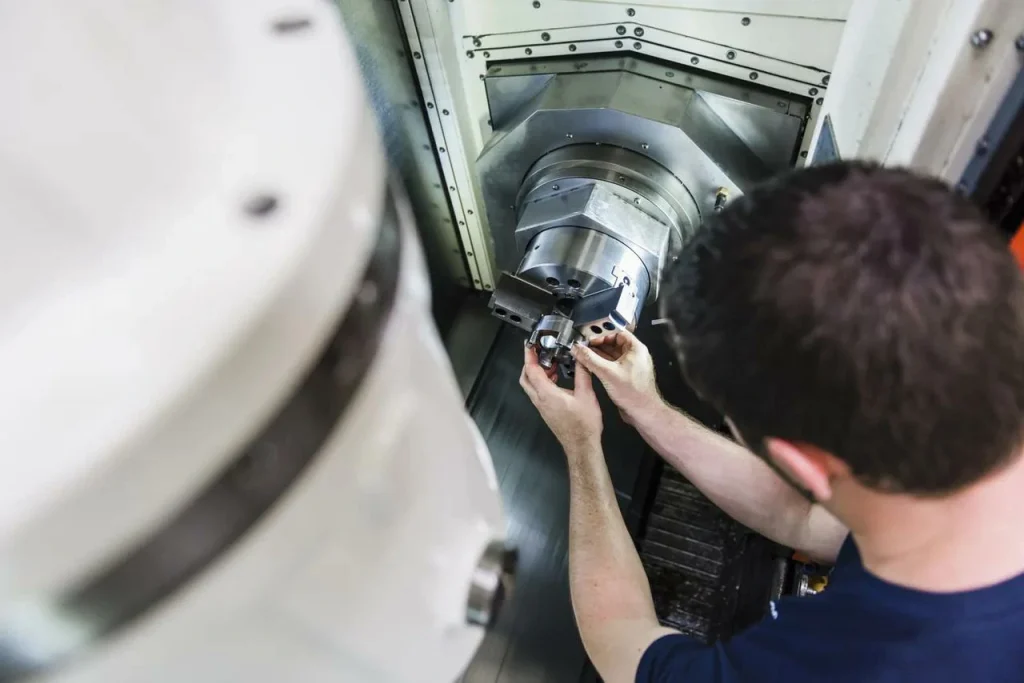
Common Problems, Failure Modes, and Selection Risks
Every manufacturing method comes with its own set of challenges and potential drawbacks. When comparing 3D printing vs CNC machining, it’s critical to recognize the common risks, performance limits, and consistency issues that can impact part quality and project success.
Risks of choosing 3d printing over traditional machining
The main risks of choosing 3d printing over traditional machining appear when buyers focus only on shape freedom and ignore performance checks.
A printed part can pass visual review but fail on tolerance, stiffness, or repeatability. Material behavior may differ from what the design team expects from wrought or machined stock. Lead time can also be misunderstood. Printing starts fast, but support removal, finishing, and rework can add delay.
Another risk is false economy. Technical users often assume 3D printing is always cheaper because waste is low. The evidence does not support that as a blanket rule. For large parts or repeat quantities, print time and post-processing can outweigh material savings.
Why 3D prints warp, vary, or miss tolerance on functional prototypes
This is a common source of frustration in prototype work.
Build orientation, support strategy, thermal behavior, and layer-by-layer construction all affect print outcome. If the part is thin, asymmetric, or poorly supported, it may warp. If the geometry traps heat or creates unstable sections, local variation can appear. Each of these can push dimensions away from nominal and make the prototype less useful for fit checks.
That is why users often ask why printed parts vary while machined parts seem more stable. A machined part is cut from solid stock with defined toolpaths and controlled fixturing. A printed part is created through a thermal or curing process that can shift during the build.
Limitations of 3d printing for tight tolerance parts
The limitations of 3d printing for tight tolerance parts are clear from the accuracy data alone. With typical values around ±0.2–0.3 mm, printed parts are not the natural choice for features that need close control.
This does not mean 3D printing cannot contribute to such parts. It means the process is often used to create the general shape, while critical surfaces or holes are finished later. For design review, this distinction matters. A printed part may be fine for form and assembly learning, but not for final fit validation unless secondary operations are planned.
Why does CNC hold tolerance more reliably than 3D printing?
CNC holds tolerance more reliably because it removes material from stable stock using controlled tool motion and fixed workholding. The process is less affected by layer build behavior, thermal distortion, or support interaction.
3D printing can achieve useful accuracy, but it is more sensitive to orientation, thermal effects, and post-processing steps. So tolerance is often less predictable unless the application accepts broader variation.
Cost, Tolerance, and Lead Time Factors at Industry Scale
This section breaks down real-world cost, tolerance, and lead time differences between 3D printing vs CNC machining at industrial production scales. When comparing additive vs subtractive manufacturing for functional and metal components, these three factors often define the most practical choice for engineering and procurement teams.
Cost comparison between CNC machining and metal 3d printing
A practical crossover check is to separate fixed cost from per-part cost. CNC cost is driven by programming, fixturing, setup, cycle time, tooling, scrap risk, and inspection, while 3D printing cost is driven by build preparation, machine time, support generation, powder or material use, post-processing, and any secondary machining. Simple parts usually favor CNC sooner as quantity rises, while complex low-volume parts can stay economical in additive until post-processing and inspection erase the apparent advantage.
Metal additive changes the picture again. It can reduce waste and enable shapes machining cannot produce easily, but it is slower and costlier than many plastic printing methods and often needs significant post-processing. So metal 3D printing should not be treated as a default replacement for CNC.
How production volume affects CNC vs 3d printing costs
How production volume affects CNC vs 3d printing costs is one of the most important decision points.
The evidence supports a broad trend, not a fixed rule. 3D printing tends to win at very low quantities, especially under 5 complex prototypes. CNC becomes more cost-efficient around medium volumes such as 100–500 units.
The exact crossover is uncertain and depends on geometry, finish, and material. The sources do not agree on one universal break point.
This is why buyers should avoid asking, “Which process is cheaper?” and ask instead, “At what quantity does setup stop dominating?” For additive, cost grows with build time and post-processing. For CNC, cost falls per part as setup is amortized.
Lead time differences between CNC machining and 3d printing
The lead time differences between CNC machining and 3d printing are often misunderstood.
Lead time comparisons are highly geometry- and workflow-dependent, so single numeric speed claims should be treated cautiously. Actual turnaround changes with part complexity, material, machine type, queue time, post-processing, and whether critical features still require machining or inspection after printing.
3D printing usually wins on time to the first part because it does not need traditional fixturing and can move from CAD to build quickly. But for larger parts or multiple units, the build rate is slow. The data provided shows build speed around 5–20 cm³/hour for 3D printing versus 100–500 cm³/hour for CNC, and metal 3D printing may take 20–60 minutes per layer.
CNC may start slower because of setup, but simple parts can machine very quickly. The same source set notes cycle time of 5–15 minutes per part for simple CNC shapes, and that CNC was about 40% faster than metal 3D printing for parts under 100 mm³. So the answer to “Which is faster?” depends on whether speed means first article or finished batch.
Table: Tolerances, build speed, cycle time, surface roughness, and volume crossover ranges
| Metric | 3D Printing | CNC Machining |
|---|---|---|
| Typical accuracy / tolerance | ±0.2–0.3 mm or 0.3–0.4% | Below ±0.02 mm repeatability |
| Build / removal rate | 5–20 cm³/hour | 100–500 cm³/hour |
| Cycle time | Metal printing: 20–60 minutes per layer | Simple parts: 5–15 minutes per part |
| Surface roughness | 5–15 µm Ra as-built | 0.4–1.6 µm Ra native |
| Cost advantage zone | Very low volume, complex prototypes | Medium-volume repeat runs, often 100–500 units |
| Speed advantage zone | Fast first article | Faster repeated production of simple shapes |
Materials, Strength, Waste, and Post-Processing Requirements
This section breaks down how 3D printing vs CNC machining compare in material performance, structural integrity, material efficiency, and post-processing needs.
Strength limitations of 3d printed metal parts
For strength-critical metal parts, the main engineering issue is not only peak tensile data but consistency of material condition. Printed metal can show anisotropy, residual porosity, and fatigue sensitivity that depend on build orientation, process control, and post-processing such as stress relief or HIP, while CNC starts from wrought stock with more established and isotropic behavior. For safety-critical or cyclic-load applications, printed metal usually requires additional validation and machining of critical interfaces before it should be treated as equivalent to machined stock.
Printed metal parts can work well in the right geometry and application. In fact, they may allow weight reduction or stress-optimized forms that machining cannot create easily. But if the design depends on predictable bulk material behavior and tight tolerance at the same time, printed metal often still needs machining and process validation.
So for strength-critical parts, the process choice should include not only shape freedom but also how the part will be tested, finished, and inspected.
Material waste in subtractive vs additive manufacturing
The material waste in subtractive vs additive manufacturing is one area where additive usually has a clear advantage in principle.
3D printing generally creates less waste because material is placed where needed. CNC machining removes material from a larger stock form, so scrap is expected. This matters most for expensive materials and shapes with a low buy-to-fly ratio, where a large amount of stock becomes chips.
But waste does not equal total cost. A process with low waste can still be slower and more expensive per usable part. For this reason, waste should be treated as one cost factor, not the only one.
Post-processing requirements for metal 3d printed parts
Post-processing requirements for metal 3d printed parts are often under-estimated during quoting and planning.
Printed metal parts may need support removal, surface finishing, and machining of critical features. In practical terms, many metal printed parts are not finished parts when they leave the building chamber. They are near-net parts that still require secondary work to meet tolerance or surface needs.
This is one reason hybrid workflows are common. The additive step creates hard geometry. Machining brings key interfaces into tolerance.
Is 3D printing or CNC better for metal parts that need strength?
CNC is usually the safer choice when metal parts need high strength, tight tolerance, and predictable material behavior. It starts from conventional metal stock and gives better dimensional control.
3D printing can be a strong option when geometry drives performance, such as lightweight or topology-optimized designs. In those cases, the part often still needs post-processing and careful validation before end use.
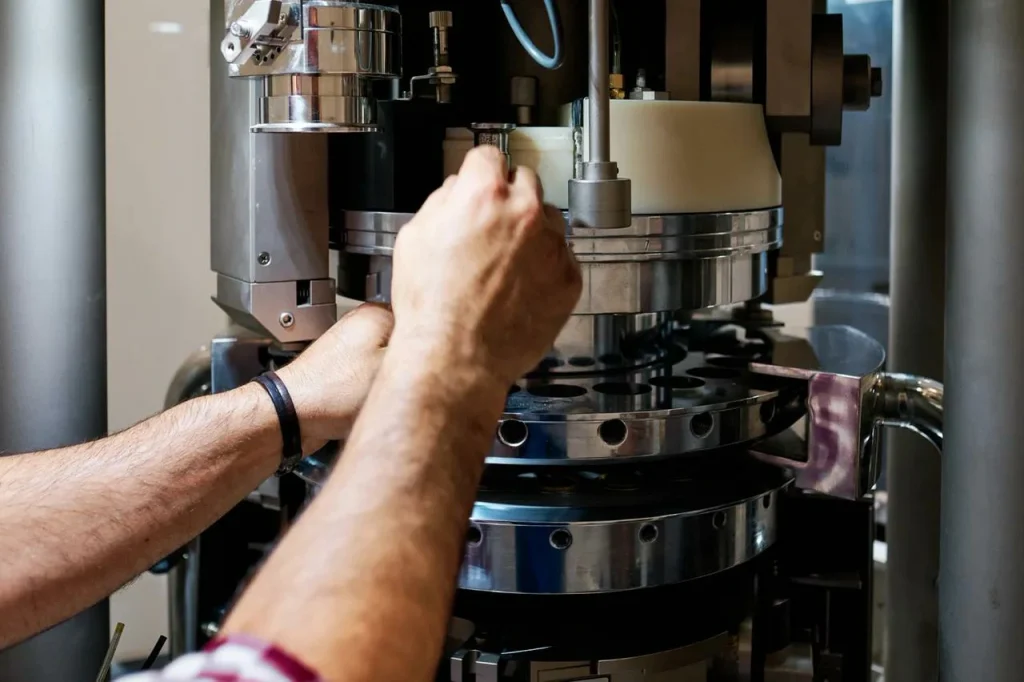
Best-Fit Applications and Real-World Use Cases
Each real-world application brings unique demands for production, performance, and cost efficiency.
CNC milling vs 3d printing for functional prototypes
For cnc milling vs 3d printing for functional prototypes, the right choice depends on what must be proven.
Use 3D printing when the prototype is meant to check shape, package space, assembly concept, or complex geometry at low setup cost. Use CNC when the prototype must test fit, surface interaction, mechanical function, or final-material behavior more closely.
This is why printed prototypes are common early, while machined prototypes appear later in validation. One process is not replacing the other. They answer different prototype questions.
Low-volume custom parts vs medium-volume repeat production
Low-volume custom parts often favor additive because setup is fast and design variation is easy. This is especially true where geometry complexity is high and quantity is low. Medium-volume repeat production tends to favor CNC because setup cost spreads across parts and repeatability is stronger.
Technical users often summarize this trade-off in simple terms: 3D printing saves setup pain on one-offs, while CNC becomes the practical choice once quantity rises. That lines up with the research, even if the exact crossover point is uncertain.
Case examples: aerospace inventory reduction, automotive brackets, medical implants
The case data provided gives a useful view of where each method fits.
In one aerospace example, 40% of CNC runs were shifted to metal additive for low-volume, complex parts. Inventory costs fell by 22%, and the parts met required validation standards. This shows that additive can help with on-demand supply and inventory reduction when geometry and volume fit the process.
In an automotive bracket example, CNC machined 500 aluminum brackets in under 48 hours, while metal 3D printing took 72 hours. But additives enabled a 30% weight reduction through lattice design. This is a good illustration of the usual trade-off: CNC was faster for simple repeat production, while additive created a better geometry outcome.
In medical implants, metal 3D printing supported topology-optimized custom designs and showed 20% better stress distribution, with a 25% lead time reduction for assemblies. This is the kind of application where geometry freedom can be worth more than the loss in process simplicity.
Hybrid manufacturing combining 3d printing and CNC machining
Hybrid manufacturing combining 3d printing and cnc machining is often the most practical answer for complex metal parts.
The additive step creates the shape that is hard to machine, such as internal channels, lightweight structures, or custom forms. CNC is then used on datum surfaces, holes, sealing faces, and other critical interfaces. This approach reduces the need to force one process to do everything.
For buyers, hybrid manufacturing is worth considering when the part is too complex for efficient machining alone but too tolerance-sensitive for printing alone.
How to Evaluate and Choose the Right Process
Choosing between 3D printing vs CNC machining depends on balancing real-world production needs and part performance. A clear, structured evaluation helps you avoid costly mistakes and select the best process for additive vs subtractive manufacturing, prototype development, and metal part production.
For professional precision machining services, including CNC turning and CNC milling for complex metal parts, you can consult UNeed to ensure high-quality results that meet engineering specifications.
Checklist: Volume, tolerance, geometry, material, finish, and delivery requirements
Use this checklist before choosing a process:
- Volume: Is this one part, five parts, or hundreds?
- Tolerance: Does the part need printed-level accuracy, or CNC-level control?
- Geometry: Are there enclosed channels, undercuts, or shapes that need unrestricted design freedom?
- Material: Does the application need standard wrought metal behavior or just a functional approximation?
- Finish: Are there sliding, sealing, or mating surfaces?
- Delivery: Is the priority first article speed or repeat production speed?
This simple review covers most of the selection risk in 3d printing vs cnc machining.
Before RFQ or release, confirm critical tolerances by feature, datum strategy, required finish by face, material certification, and inspection method. For printed metal, also confirm heat treatment or stress relief, HIP if required, support-removal access, powder cleanout, internal-feature inspection feasibility, and which surfaces will be post-machined. Buyers should also verify part size against stock limits or build volume and state any thread, sealing, or bearing-fit requirements explicitly.
Decision matrix: single prototype, 5-part validation run, 100-500 unit production, complex metal part
| Scenario | Better Default Choice | Why |
|---|---|---|
| Single prototype | 3D Printing | Low setup, fast first article, good for form and concept checks |
| 5-part validation run | Depends on tolerance and function | Printing often wins on setup; CNC wins if fit or material behavior must be validated |
| 100–500 unit production | CNC Machining | Setup amortizes, repeatability improves, per-part cost usually falls |
| Complex metal part | Hybrid or 3D printing with machining | Additive handles geometry; machining finishes critical features |
What is the fastest way to make parts without sacrificing fit or strength?
For concept parts, 3D printing is often the fastest route because setup is low. But if fit or strength cannot be compromised, CNC or a hybrid approach is often faster in the real sense because it avoids rework and failed validation.
The fastest process is the one that answers the engineering need on the first useful iteration, not just the one that starts quickest.
References to support this section: standards bodies, academic comparisons, and industry reports
For final process selection, decision-makers should compare supplier input with neutral references. Standards bodies and academic work are useful because they define terminology, testing methods, and process expectations more clearly than marketing material.
This is especially important for printed metal parts, hybrid workflows, and any part where strength, tolerance, or inspection burden affects release decisions.
In short, use 3D printing when geometry freedom, low setup, and low-volume flexibility matter most. Use CNC machining when tolerance, surface finish, and repeat production matter most. Use a hybrid path when the part needs both.
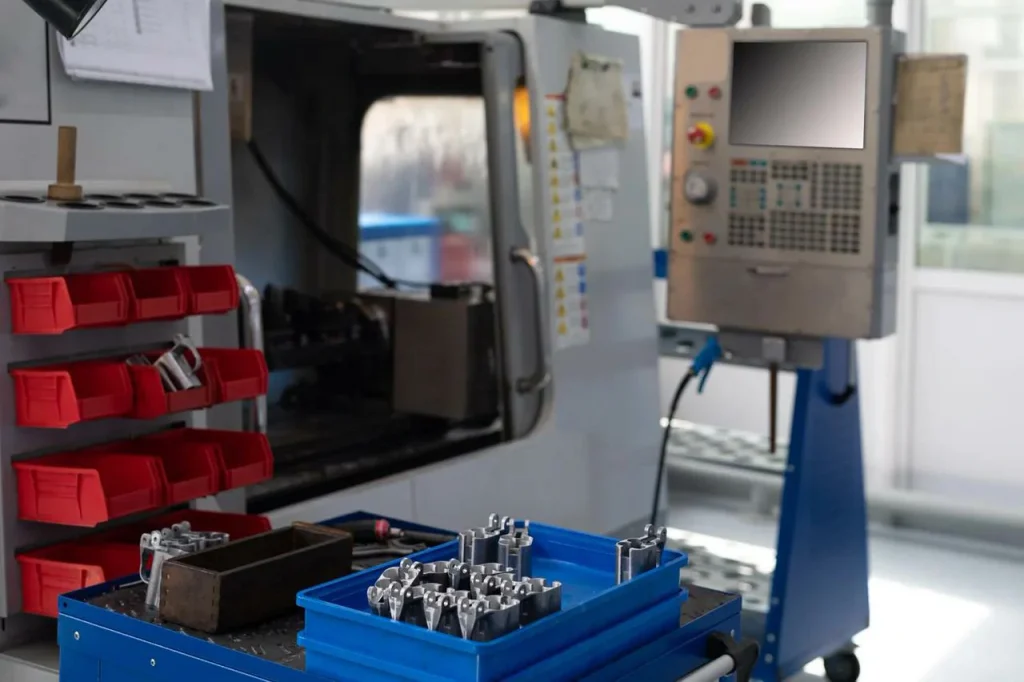
FAQs
No, 3D printing isn’t replacing CNC machining—3D printing vs CNC machining shows they serve distinct roles. Additive vs subtractive manufacturing each have strengths: 3D printing leads for complex shapes, while CNC dominates precision and batches. In metal 3D printing vs CNC, both serve unique goals, and prototyping cost comparison highlights their different budget fits. Hybrid setups are common for high-performance parts, and CNC remains key for tolerance and strength. Together, they create flexible workflows, not replacement.
Speed in 3D printing vs CNC machining depends on part type, volume, and priorities. Additive vs subtractive manufacturing differ: 3D printing has faster prototype setup, while CNC excels at batch cycle times. In metal 3D printing vs CNC, metal printing is slower per layer, while CNC cuts solid stock quickly. Prototyping cost comparison ties to speed—faster early prototypes lower iteration costs. 3D printing is quicker for complex one-offs; CNC leads for batches and simple shapes.
Accuracy is key in 3D printing vs CNC machining, with CNC milling outperforming 3D printing. Additive vs subtractive manufacturing behave differently: CNC uses stable stock for tight tolerances. In metal 3D printing vs CNC, printed parts have more variation from layer construction. This impacts prototyping cost comparison—high-accuracy parts may need CNC despite higher initial costs. It also affects strength of 3D printed metal; CNC is more reliable for critical fits.
Use 3D printing for prototypes when evaluating 3D printing vs CNC machining for early design tests. Additive vs subtractive manufacturing makes it ideal for complex, hard-to-machine shapes. In metal 3D printing vs CNC, it’s great for custom metal prototypes. A prototyping cost comparison shows it cuts setup costs and enables quick design changes. It works for form/geometry tests, but note strength of 3D printed metal may need post-processing.
Cost per part in 3D printing vs CNC machining depends on volume, complexity, and material. Additive vs subtractive manufacturing have different cost structures: 3D printing has low setup costs for small batches; CNC shines at higher volumes. In metal 3D printing vs CNC, metal printing has higher per-part costs. A prototyping cost comparison shows 3D printing is cheaper for one-offs; CNC is better for medium batches. Factor in post-processing and strength of 3D printed metal for real cost.
CNC can’t match 3D printing’s geometric freedom in 3D printing vs CNC machining. Additive vs subtractive manufacturing limits CNC—tool access makes internal cavities and lattices nearly impossible. In metal 3D printing vs CNC, metal printing unlocks lightweight, organic structures CNC can’t replicate. This affects prototyping cost comparison—complex parts need multiple CNC setups vs one print. CNC handles external details well but not internal complexity, impacting performance and strength of 3D printed metal.
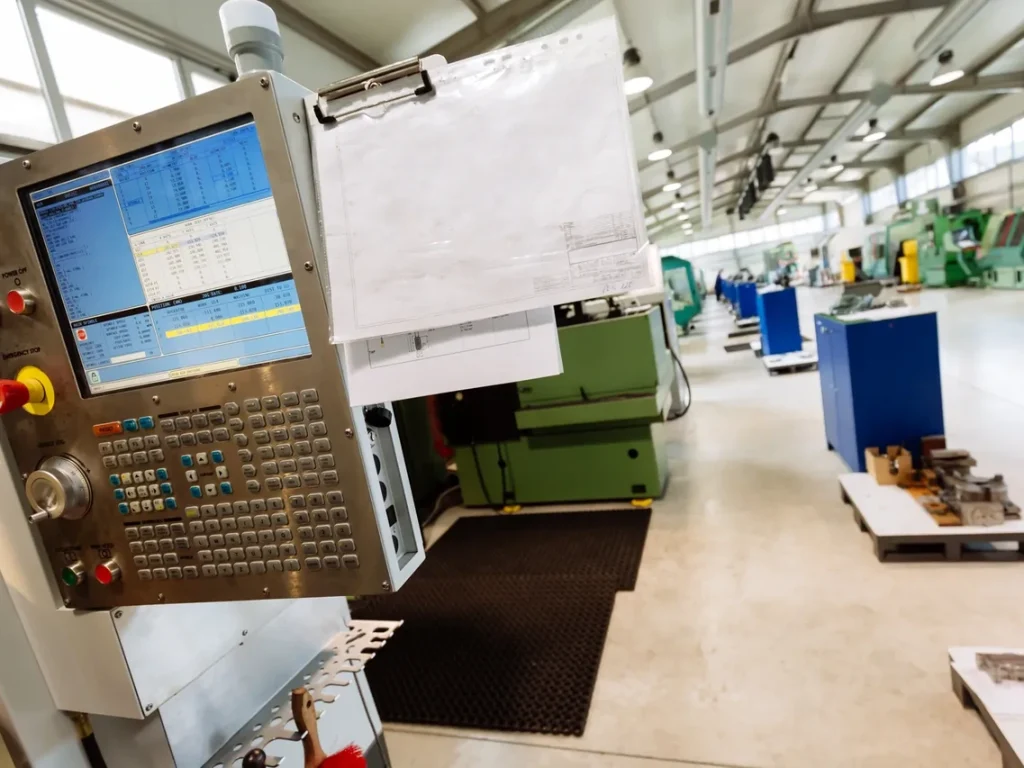


 English
  German
  French
  Italian
  Spanish
  Polish
  Czech
Czech  Japanese