
Lathe users search for tools for the lathe to get cleaner finishes, faster cycle times, and lower costs—but the wrong tooling hurts surface finish, cutting edges, tool life, and budgets. This guide solves that by combining 2025 market data, expert tips, and field-backed examples to show exactly which lathe machine cutting tools to use, when, and why. You’ll get quick answers first, then deeper sections on tool types, materials, holders, choosing the right tool, design, chamfer, selection methods, setup and safety, real outcomes, and current trends. We end with fast FAQs, authoritative references, and a simple action plan you can follow today, all based on the machining needs and hardness of the workpiece.
Want the short version? If you run a manual lathe, high-speed steel (HSS) is still your most flexible, low-cost choice, providing sharp cutting edges and adjustable design for custom forms and chamfer work. If you run CNC, indexable carbide with modern chipbreakers leads for speed and consistency, with hardness suited for demanding tic tasks. For very hard steels, go CBN. For aluminum and composites, PCD gives mirror finishes and long tool life. That’s the high-level picture—now let’s get specific, based on the machining requirements.
Tools for the Lathe: How to Select the Right Type of Lathe Cutting Tool
Before diving into details, here’s a quick overview of the best tools for the lathe, helping you choose the right tool for your machine, material, and desired finish. These top picks save time and ensure consistent results
First choices by machine type: manual (HSS) vs CNC (indexable carbide)
If you own a manual lathe, you want HSS tools as your daily drivers. They’re forgiving, easy to sharpen to a sharp edge, and great for interrupted cuts. You can grind custom forms at the bench. Yes, HSS has lower heat resistance than carbide, but at manual speeds and feeds, it shines.
If you run a CNC, the first pick is indexable carbide. Modern inserts offer durable cutting edges, strong heat resistance, and repeatable performance. That means faster cycle times, fewer adjustments, and predictable cost-per-part. For finishing on steels and cast iron, cermets and ceramics are strong choices. For hardened steels, CBN rules. For aluminum, polished, high-positive carbide or PCD wins on finish.
If you need professional CNC machining or precision component manufacturing, consider U-Need — an expert provider of custom CNC parts with high accuracy and consistent quality for industrial and prototype applications.
Is CNC turning hard to learn? The basics are not hard.
You can learn safe setup, basic G-code, and common operations in a short course or weekend practice, then grow with experience. The hardest parts are consistent workholding, parameter tuning, and process planning—skills that improve with logs and careful iteration.
Top 5 operations and best tool matches
If you only need five tools to start, cover the five most-used machining operations:
- Turning: external right-hand turning tool (HSS for manual, carbide insert for CNC).
- Facing: facing tool with a slight lead angle, stable setup, and a small nose radius for finish.
- Boring: rigid boring bar; pick the largest bar that fits for stiffness.
- Threading: internal/external threading tools with the right profile and pitch insert or HSS form tool.
- Parting: stable parting-off tool with sharp, supported blade; ensure alignment and coolant.
Safety-first checklist before cutting
- Keep tool overhang as short as possible for rigidity.
- Set center height exactly at spindle center; adjust with shims if needed.
- Confirm clearance: side rake and back rake angles must clear the work.
- Lock the compound and carriage when possible. Tighten gibs.
- Check that the left side of the tool and right side of the tool won’t hit the chuck or tailstock during the planned feed direction (you may move from left to right or right to left based on setup).
- Use the right speed and feed for the material from a workpiece—you should see steady chips, not dust or long bird’s nests.
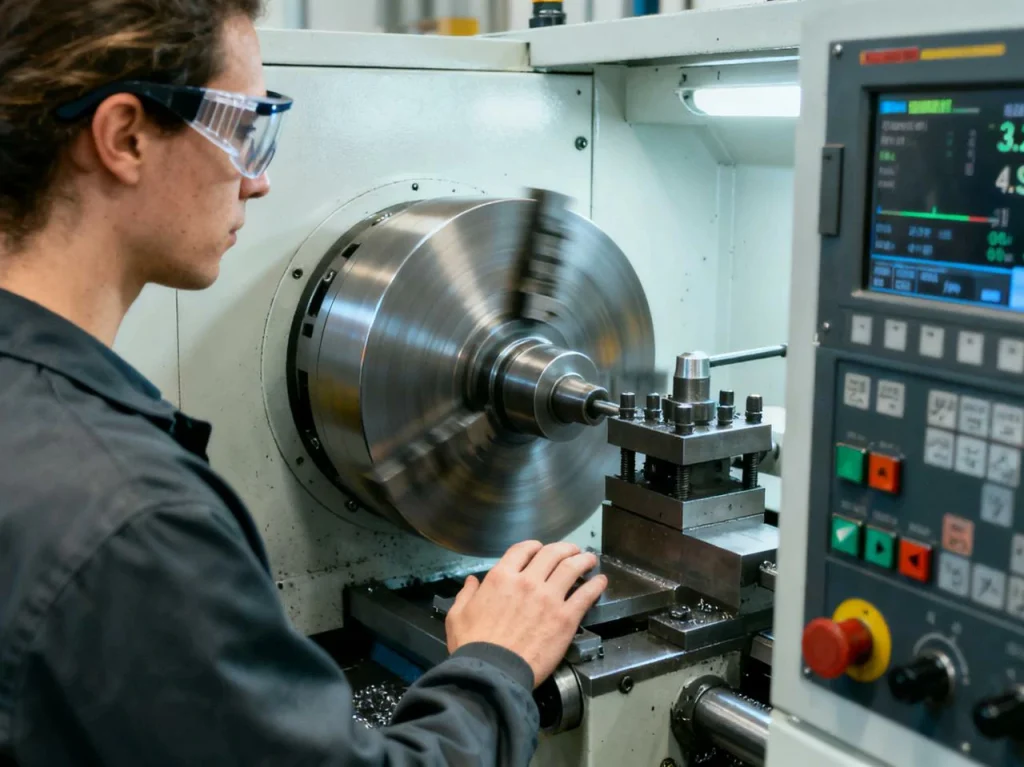
- Wear eye protection and avoid loose clothing; tie hair; never reach across a spinning chuck.
Types of cutting tools for the lathe and functions
Understanding the different types of lathe cutting tools is crucial. Each tool has a specific design, shape, and function, whether for turning, facing, boring, threading, or parting, and knowing their purpose helps you select the right one for each machining operation.
Turning and facing tools
Most common lathe cutting tools are single-point tools for turning and facing. External turning tools reduce diameter, shape a cylindrical surface, and can add a chamfer or profile. Internal tools handle bores and shoulders. Roughing tools use stronger edges and larger depth of cut, while finishing tools use finer nose radii and sharp edges to improve surface finish and hold tight tolerances.
A right-hand turning tool cuts as the lathe cutter moves from right to left. A left-hand tool cuts left to right. Choose based on your workholding, toolpost orientation, and features you need to reach. The tool face, inclination angle, and side/back rake angles set how the chip forms and flows.
Boring bars and grooving tools
A boring bar enlarges and trues internal holes. A general rule is to pick the largest bar diameter that fits for best rigidity. For deep bores, use carbide shanks or anti-vibration bars. For grooving, choose a grooving tool with a width that matches the groove and a chipbreaker suited to the feed direction and material. Internal groove tools need care to avoid rubbing; make sure you have enough clearance and stable overhang.
Threading and parting-off tools
Internal and external threading tools follow a profile (metric, UNC/UNF, pipe, specialty). Insert tooling simplifies setup: you choose the insert with the right profile and pitch range, then match it to a rigid holder. HSS form tools also work for manual machines and odd pitches. Parting-off needs a straight, square tool with solid support. Keep it on center, reduce overhang, and use coolant for steels and stainless to prevent built-up edge and binding.
Drills, knurling, and specialty tools for metal and plastics
A lathe can also drill, ream, and tap. Center drills help start holes. For plastics like acrylic and Delrin, use sharp points, polished flutes, and reduced rake where needed to avoid grabbing. Knurling creates a pattern on the machined surface for grip; it’s a forming operation, not cutting, so set firm pressure and lubricate. Specialty tools include form tools for consistent shapes, cutoff blades with chip control, and custom grinds for special applications or materials.
Tool materials and coatings: performance and use-cases
Not all tools for a lathe are created equal. The material and coating define hardness, heat resistance, and longevity. This section explores when to use HSS, carbide, ceramic, CBN, or PCD and how coatings enhance cutting edges and overall performance.
HSS
High-speed steel blends elements like tungsten, molybdenum, vanadium, chromium, and sometimes cobalt to balance hardness and toughness. HSS is easy to sharpen to a very sharp edge that handles interrupted cuts without chipping. It’s ideal for manual lathes, prototypes, and custom shapes. The tradeoff is heat resistance—the edge softens at high SFM, so you keep speeds moderate.
When to choose HSS:
- You want a specific form or profile, and you can grind it.
- Your lathe lacks high RPM or horsepower.
- You cut plastics, brass, or small steel parts where a keen edge matters.
Carbide + coatings (TiN, TiCN, Al2O3)
Carbide tools (tungsten-carbide grains in a cobalt binder) bring high hot hardness and durability. Pair them with coatings like TiN, TiCN, Al2O3, or multilayer stacks to boost wear resistance and heat control. Coated carbide runs fast and dry in many jobs, with chipbreakers that shape, curl, and break chips to protect the part and tool. This is why lathe tooling for CNC machining is mostly indexable carbide—quick changes, repeatable results, and multiple cutting edges per insert.
When to choose carbide:
- You want shorter cycle time and longer tool life.
- You run production with consistent materials and setups.
- You need to hold tight size with predictable wear.

Ceramics and cermets
Ceramic inserts handle extreme heat and cut dry at high speeds, especially on cast iron and many steels. They’re brittle, so they prefer steady cuts and stable setups. Cermets blend ceramic and metal to improve edge stability and finish on steels. They excel at fine finishing with low tool wear, leaving a clean finish on continuous cuts.
When to choose ceramics/cermets:
- You need high-speed finishing on stable parts.
- Your process is not interrupted (no keyways or hard spots).
- You want better surface finish and dimensional control at speed.
CBN and PCD
Cubic boron nitride (CBN) is best for hardened steels (often above 45 HRC). It keeps a sharp main cutting edge at high heat and cuts hard turning tasks that replace grinding in some shops. Polycrystalline diamond (PCD) is the hardest tool material used on lathes and is ideal for aluminum, copper, magnesium, graphite, and carbon-fiber composites. It gives long tool life and a polished finish with the right geometry. Do not use PCD on ferrous steels—it wears fast due to chemical reactions at high heat.
Tool Structures and Holders: How to Select for Your Lathe Components
How a tool is built affects rigidity, stability, and regrind potential. From single-body HSS tools to indexable insert systems, understanding tool structures and holders helps you optimize setup, reduce downtime, and maintain consistent quality.
Single-piece and brazed tools: cost, rigidity, and regrind potential
Single-piece HSS tools are one solid bar you can shape and regrind many times. They are cost effective and flexible. Brazed carbide tools have a carbide tip brazed to a steel shank. They’re affordable, but the carbide grade and geometry are fixed; when worn, you regrind a few times and replace. Both are useful in manual shops and for custom work.
Indexable inserts: multi-edge economy, quick changes, ISO insert shapes
Indexable systems clamp a small insert with multiple edges into a rigid holder. When an edge wears, you index to a fresh edge or swap the insert. This saves time, keeps lengths consistent, and supports a wide range of types of lathe tools—from turning and facing to grooving, parting, and threading. Common ISO insert shapes include squares (S), diamonds (C, D, V), triangles (T), rounds (R), and trigons (W). Shape and included angle affect strength and reach into features.
Toolholders and shanks: rigidity, overhang, and center-height setup
The toolholder connects the insert to your lathe machine. A sturdy shank with correct fit to your toolpost or turret gives the rigidity you need. Keep overhang short to cut chatter. Set center height correctly—too high or low hurts surface finish and raises cutting forces. On CNC, choose left-hand or right-hand holders to match the cutting direction and reach. Use the largest shank your machine can handle for stiffness.
Selection framework: match tool to material, machine, and finish goals
Choosing the right tool for the lathe depends on the material, the lathe machine type, and your desired finish. This framework guides you to make informed decisions based on the machining requirements, part geometry, and production goals.
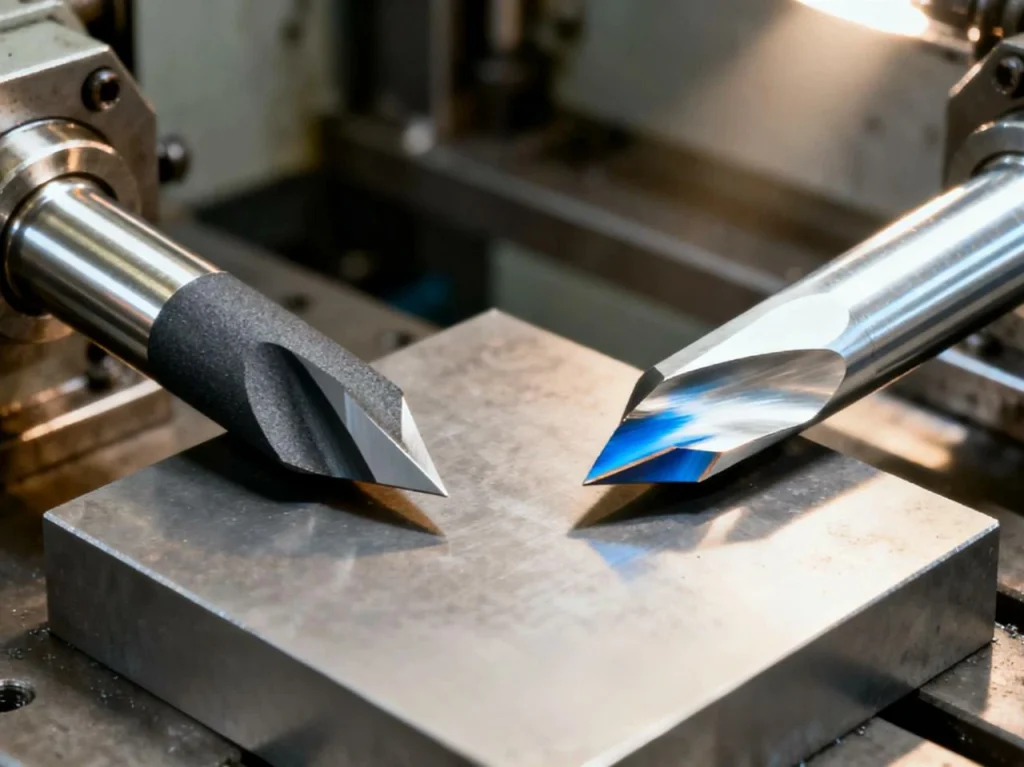
Material-matched picks
Start with your work material:
- Steels (P): Coated carbide for most jobs; HSS for manual or delicate features; ceramics for finishing at high speed; CBN for hardened.
- Stainless (M): Tough carbide grades with sharp edges and positive rake to fight work-hardening. Use coolant. Keep feeds steady to avoid rubbing.
- Cast iron (K): Carbide or ceramic; dry cutting often works; use negative rake for roughing and stable fixturing.
- Aluminum (N): Polished, uncoated carbide with large positive rake; PCD for ultra-long life and high gloss finishes. Keep tools very sharp to avoid built-up edge.
- Plastics (N variants): HSS or polished carbide with high-positive rake and a very sharp edge. Control heat—use air blast or pecking to avoid melting.
- High-temp alloys (S): Strong, heat-resistant carbide with secure clamping; lower SFM, high chip load. Keep the edge engaged.
Machine constraints
Your machine sets limits. On a manual lathe with lower spindle speeds, HSS and simple lathe tooling make sense. On CNC with high RPM and coolant, carbide and advanced materials shine. Consider:
- Horsepower and torque at your target diameter.
- Maximum RPM (matters most for small diameters and aluminum).
- Workholding type and grip length—rigidity controls chatter and tool life.
- Toolpost or turret size—use the largest tool shank that fits.
- Coolant availability—some materials and types of cutting run far better with flood or MQL.
Target outcomes
Define the “win.” Do you want a mirror finish on an aluminum shaft? Pick polished carbide or PCD, small nose radius, fine feed, and good coolant. Need to hit a tough tolerance on a stainless fit? Choose a stable turning tool, lower tool overhang, tough insert grade, and a plan for spring passes. Want faster throughput on cast iron? Consider ceramic finishing and dry cutting to save time and fluids. Then track tool life and cost-per-part to see what works in your shop.
Visual: Quick-pick table—material × operation × tool
Use this as a fast selector when choosing the right tool based on the material and operation.
| Work material | Operation | First choice tool material | Typical geometry or note | Why it works |
| Low/medium carbon steel | Turning/Facing | Carbide (coated) | 80° diamond (C), 0.4–0.8 mm nose radius | Good wear, stable, versatile |
| Stainless steel | Turning/Threading | Carbide (tough grade) | Positive rake, sharp edge | Fights work-hardening |
| Cast iron | Roughing/Finishing | Carbide or Ceramic | Negative rake for roughing; ceramic for finishing | Dry cutting possible, high speed |
| Hardened steel (>45 HRC) | Finishing | CBN | Small nose radius, wiper if needed | Best for hard turning |
| Aluminum | Finishing | Polished Carbide or PCD | High-positive rake, sharp, uncoated or PCD | Mirror finish, no built-up edge |
| Plastics (Delrin, acrylic) | Turning/Boring | HSS or polished carbide | High-positive rake, sharp edge | Clean cut, less heat |
| Copper/brass | Turning/Parting | HSS or uncoated carbide | Sharp edge, light feed | Reduces smearing/burring |
Note: HSS is a strong daily choice for manual lathes across these materials; switch to carbide when speeds, wear, or production needs increase.
Setup and Parameters: Correct Feed Direction and Component Positioning for Lathe Tools
Proper setup and parameter tuning are critical. This section covers center height, overhang, speeds, feeds, and safety measures, ensuring your tools for a lathe perform efficiently and last longer while producing precise, high-quality parts.
Cutting parameters
Use these starting points, then tune while watching the chip and cutting action.
| Material | Tool material | SFM start | IPR (finish) | IPR (rough) | Notes |
| Low/med steel | HSS | 80–120 | 0.002–0.005 | 0.006–0.012 | Use coolant or oil |
| Low/med steel | Carbide (coated) | 400–600 | 0.003–0.006 | 0.010–0.020 | Chipbreaker helps |
| Stainless | HSS | 50–80 | 0.002–0.004 | 0.005–0.010 | Keep feed steady |
| Stainless | Carbide (tough) | 250–400 | 0.002–0.005 | 0.008–0.015 | Use coolant |
| Cast iron | Carbide | 600–900 | 0.003–0.006 | 0.010–0.020 | Often dry |
| Aluminum | HSS | 200–400 | 0.002–0.005 | 0.008–0.015 | Sharp edge, avoid BUE |
| Aluminum | Carbide/PCD | 600–1200 | 0.002–0.006 | 0.010–0.020 | Polished rake |
| Plastics | HSS/Carbide | 200–600 | 0.002–0.006 | 0.006–0.015 | Control heat |
| Hardened steel | CBN | 350–600 | 0.001–0.004 | 0.004–0.010 | Stable setup only |
These are baseline starts, not hard limits. Increase or decrease step by step based on heat, noise, chip shape, and finish.
Geometry and chip control
- Positive rake inserts cut freely with lower forces and a sharp feel. Great for stainless, aluminum, and light machines.
- Negative rake inserts are stronger for heavy cuts and roughing but need more rigidity.
- A larger nose radius can improve finish and strength, but it can cause chatter if the setup is not rigid. Small radii reduce cutting force.
- A lead angle that “sweeps” into the cut spreads load and improves finish on facing.
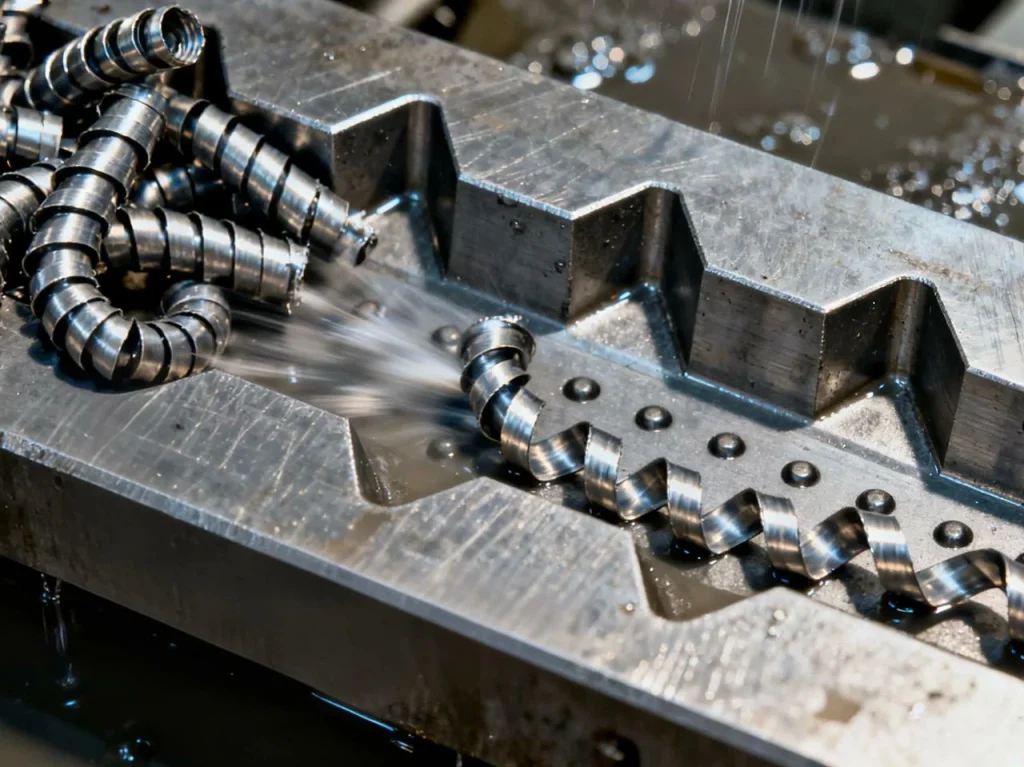
- Seek a steady, curled chip that breaks into short lengths. Long stringers hurt finish and safety. Choose a chipbreaker that matches your feed direction and feed rate range.
Coolant and lubrication
- Steels and stainless: flood coolant improves tool life and finish; MQL can work at high speed. Avoid “on-off-on” coolant with hot carbide to prevent thermal shock.
- Cast iron: often dry; use dust control.
- Aluminum: high-positive rake and coolant help avoid built-up edge. Kerosene-like lubricants can help with sticky grades; use safe, approved fluids.
- Plastics: avoid heat buildup; use air blast or brief coolant. Keep tools very sharp and feeds light to prevent melting and poor edges.
Case studies, community insights, and 2025 market data
See real-world examples of how shops optimize lathe cutting tools for different materials, finishes, and production needs. These case studies, combined with 2025 market data, highlight trends, common challenges, and actionable insights for any lathe operator.
Case study: CNC stainless shaft—carbide inserts improve finish and cost
A small shop struggled with a 304 stainless shaft cut on a manual lathe. Finish was inconsistent, and tool life of brazed tips varied. The team moved the part to a CNC lathe with a tough, sharp-edged carbide insert and steady flood coolant. They set a positive rake geometry to fight work-hardening, raised the SFM into the 300–350 range, and used a light finishing feed. Result: Ra dropped from ~1.6–2.0 µm to ~0.8 µm, cycle time fell by 30%, and scrap dropped to near zero. The key was matching the turning tool geometry and feeds to stainless behavior and locking in a repeatable process.
Hobbyist journeys
Many home shops keep both HSS and carbide. HSS handles small runs, custom forms, and older machines with lower speeds. Carbide helps when you need a smooth pass on steel or a better tool life on tougher metals. For plastics like Delrin and acrylic, both work well if you keep tools sharp and positive. The common lesson: pick the right tool based on the material, the cutting direction, and the finish you want.
2025 stats
Industry estimates for 2025 place lathe tooling demand near $12.5B worldwide. Carbide and indexable systems hold roughly 70% of industrial share thanks to speed, repeatability, and multi-edge economy. CNC lathes make up more than 60% of new installs, which reinforces a shift toward indexable carbide, ceramics, CBN, and PCD for specific tasks. These figures align with what many shops see: simple HSS for manual tasks, and engineered inserts for production.
FAQs
The main tool used for turning on a lathe is a right-hand metal lathe cutting tool designed to remove material from a workpiece as it rotates on its axis. These tools for the lathe are mounted on a lathe and used to create precise, smooth, and aesthetics-focused parts. A turning tool’s specific shape, sharpness, and rake plane depend on the machining operations that require roughing or finishing. For example, carbide tools are suitable for hard materials like titanium, while HSS tools are ideal for soft metals. The right cutting edge is on the left for standard feed direction, and vice versa when reversed.
There are several types of tools for a lathe, each with a specific shape and characteristic suited to different materials and operations. Common metal lathe cutting tools include turning, facing, boring, parting, threading, and grooving tools. Each tool is mounted on a lathe and used to remove material from a workpiece in distinct ways to achieve precise dimensions and aesthetic finishes. Tools for the lathe can be made from HSS, carbide, or ceramic, depending on the manufacturing need. The design and geometry you select must be compatible with your lathe setup and suitable for machining soft or hard materials.
There are 15 main machining operations that require tools for the lathe: turning, facing, taper turning, contouring, shoulder turning, chamfering, form turning, threading (internal/external), parting, boring, drilling, reaming, knurling, and grooving. Each process depends on the type of lathe cutting tool and its specific shape. These metal lathe cutting tools, when mounted on a lathe, are used to remove material from a workpiece and used to create or refine components with high precision and aesthetic appeal. The property of the tool material—like carbide’s toughness or HSS’s sharpness—defines whether it’s suitable for rough machining or fine finishing.
CNC machining operations that require tools for the lathe are not difficult to learn when approached step by step. You learn how to select the right metal lathe cutting tools, set tool offsets, and understand design principles for producing turned parts. CNC systems automate motion along the axis, improving precision and aesthetics. Once the tools are mounted on a lathe, programming controls how each specific shape of the tool interacts with different materials. With practice, you’ll understand which tool property or plane suits hard materials like titanium versus softer alloys. Consistency and setup accuracy are crucial for achieving your desired component quality.
Despite high accuracy, CNC tools for the lathe have some disadvantages. They require costly machines and tools for a lathe that are compatible with automated holders. Programming and setup time can be longer for one-off parts compared to manual metal lathe cutting tools. Operators must select the right tool design and ensure each is properly mounted on a lathe to avoid vibration. While CNC excels in producing turned parts from hard materials like titanium, it may be less efficient for small runs or when aesthetics and manual control are preferred. Maintenance and software skills are also crucial, as every machining operation depends on alignment, sharpness, and precision.
References
https://www.iso.org/standard/62131.html
https://www.osha.gov/machine-guarding



 English
  German
  French
  Italian
  Spanish
  Polish
  Czech
Czech  Japanese