
Choosing the top fastener manufacturer USA can mean tighter tolerances, shorter lead times, and fewer failures across different types of fasteners, from standard screws to safety-critical bolts. This 2025 guide blends market data, engineering criteria, and a buyer’s checklist to help you shortlist best-fit partners for automotive, aerospace, construction, and heavy machinery.
Fast take: rankings, market size, and right fastener buying actions
Why this matters now
The U.S. buyer is under pressure to reduce risk and speed production. The global industrial fastener market is valued around $108–124B in 2024–2025 and is forecast to reach $168–172B by 2034, at 3.4%–5.2% CAGR. Automotive drives the largest share at roughly 30–32%, while aerospace fasteners grow fastest near 5.9% CAGR. In short, reliable domestic capacity and the right type of fastener for each environment are your best hedge against delays and rework.
Who stands out (shortlist to validate in your sourcing)
Instead of fixating on a brand name, start with capability clusters. Top U.S. choices usually fall into one of these buckets:
- Integrated precision fastening groups with strong automotive and aerospace divisions (quality systems, high-volume automation).
- Sheet-metal fastener specialists known for threaded inserts, self-clinching hardware, and rich engineering resources.
- Structural and anchor bolt makers focused on large-diameter, ASTM/SAE-compliant types of bolts for bridges, buildings, and heavy civil work.
- Domestic custom shops for specials in exotic alloys (titanium, duplex stainless, nickel), quick-turn, and short-run needs.
- Program-oriented suppliers for construction and retail with branded lines (drywall, wood, concrete anchors) and national distribution.
What to do first (3 immediate actions)
- Align required certifications: AS9100, IATF 16949, ISO 9001/14001, and, if relevant, ITAR or NADCAP for special processes.
- Match materials and coatings to the environment: carbon/alloy steel, stainless, aluminum, titanium; zinc-plated, hot-dip galvanized, phosphate, or chrome.
- Check engineering depth and domestic capacity: CAD models, DFMA help, prototyping, testing, and U.S. plants to reduce lead-time risk.
Methodology: how we ranked U.S. fastener manufacturers
What makes one supplier “top” for you might be different for another buyer. So we used objective, comparable criteria that a sourcing team can validate during an RFQ. The weighting favors engineering rigor, certification coverage, and the fastener types and materials needed for safety-critical industries.
- Company size: Estimated revenue bands and employee counts provide a basic proxy for scale and resiliency. Larger groups often offer broader mechanical fasteners and deeper tooling benches. Smaller domestic shops sometimes win on agility and specials.
- Certifications: We looked for ISO 9001 as the base, plus IATF 16949 for automotive, AS9100 for aerospace, ISO 14001 for environmental management, and ITAR/NADCAP when defense or special processes apply.
- Industry focus: Automotive, aerospace, construction/infrastructure, energy, medical, electronics, heavy machinery, and MRO. Clear domain strength reduces your learning curve and risk.
- Product range: Standard vs. custom; the category of fasteners such as bolts, screws, nuts, rivets, inserts, studs, washers, anchors, pins, and clips; and the types of fasteners available by material (carbon steel, stainless, alloy, titanium, aluminum, brass, copper, nickel alloys) and coating (zinc, hot-dip galvanized, chrome, phosphate).
- Engineering & tooling: CAD libraries, configurators, DFMA support, CNC turning and CNC milling for tooling and secondaries, prototype runs, torque/tension testing, metallurgical labs, and CMM.
- Manufacturing footprint & automation: Number of domestic plants, automation (cold headers, thread rollers, vision systems, robots), and in-house special processes to reduce outsourcing.
- Innovation: Patents, proprietary forming systems, unique coatings, or fastening systems that reduce assembly time or weight.
Sources and limits
We synthesized public data from industry reports and manufacturer disclosures. Revenue bands and employee counts are estimates. Certifications can vary by plant. Treat these rankings as a smart starting point—not a final verdict—and validate every detail during sourcing.
Top fastener manufacturer USA: our 2025 rankings
Instead of only listing names, this section ranks by capability profiles. Use it as a map. During RFQ, match your needs to the profile, then verify certifications and capacity at the plant level.
- Integrated precision fastening specialist — best for high-volume automotive and certified aerospace If you need millions of threaded fasteners with tight Ppk/Cpk and full documentation, this is your target. These groups hold ISO 9001, IATF 16949, and often AS9100. They excel at cold forming, thread rolling, in-line inspection, and coatings at scale. Expect support for PPAP/APQP, torque-tension studies, and advanced joint analysis. Best for: EV platforms, safety-critical joints, and different types of screws and their uses in mixed-material assemblies.
- Sheet-metal fastener and insert expert — best for electronics, medical, and thin-sheet assemblies Think threaded inserts, self-clinching hardware, standoffs, micro screws, and clean-room packaging. You’ll find deep CAD libraries, application notes, and press-fit guidance. Certifications often include ISO 9001 and select units with AS9100 for medical/aero skus. Best for: consumer electronics, medical devices, telecom racks, and machine screws in sheet metal.
- Automotive engineered fastener leader — best for powertrain, chassis, and EV battery packs Look for IATF 16949, automated cold heading, vision inspection, and proprietary coating systems. These suppliers support complex PPAP levels and can provide class 3 thread fits when needed. Best for: high-volume, high-strength types of bolts and screws that must meet fatigue, salt spray, and warranty targets.
- Structural and anchor bolt manufacturer — best for bridges, stadiums, heavy civil These shops are masters in large-diameter bolts, studs, and washers, domestic mill certs, and ASTM compliance (e.g., A325/A490 equivalents). Expect hot-dip galvanizing and heavy hex lock nuts matched to spec. Best for: infrastructure, steel erection, and seismic-rated connections.
- Program-driven construction supplier — best for retail and jobsite availability If you need deck screws, drywall, wood, and concrete anchors with nationwide distribution, choose a program-oriented supplier. They shine at planogram design, branded packaging, and high fill rates. Best for: construction, retail, and MRO where availability and cost predictability matter.
- Energy and heavy industry fastener partner — best for refineries, wind, and mining Project-based kitting, strong documentation, and corrosion-resistant stainless steel fasteners are the focus. Look for domestic stock on specials, plus lab-backed coating advice. Best for: turnarounds, shutdowns, and field service kits.
- Custom specials and exotic materials specialist — best for titanium, duplex, nickel alloys These are the shops to call when your print calls for CNC turning and CNC milling, unusual diameters, non-standard thread pitches, or titanium fasteners. Expect short runs, quick-turn prototypes, and tight scheduling. Best for: aerospace brackets, medical fixtures, and marine hardware.
- Weld fastener and assembly hardware maker — best for industrial and appliance Studs, weld nuts, and clips that streamline assembly. Look for robust fixture design help and repeatable locating features. Best for: high-throughput assembly lines aiming to reduce cycle time.
- Precision small-parts producer — best for miniature, high-accuracy components Microsized mechanical fasteners for sensors, optics, lab equipment, and wearables. Expect extremely tight tolerances, sometimes with class 3 threads inside tiny envelopes. Best for: electronics and medical.
- Large-diameter machining shop — best for heavy truck and off-road Precision turned and milled parts with controlled grain flow in heads, splines, and hexagonal head designs. Provides test data and PPAP when required. Best for: axle, suspension, and hydraulic assemblies.
- Bridge and structural specialist — best for rivets and bolts for public works Focus on types of rivets and AISC-compliant sets, with project documentation and inspection support. Best for: DOT specs, bridge rehab, and structural steel.
- Domestic threaded-rod and U-bolt manufacturer — best for hangers and clamps Strong in threaded rod, U-bolts, and custom bent parts. Offers quick lead times and many finishes. Best for: HVAC, electrical, and pipe supports.
- Corrosion-resistant fastener provider — best for marine and chemical plants Deep stocks of 316 stainless, duplex, Monel, and coated options. Pairs material advice with salt spray or immersion data. Best for: ports, offshore, and desalination.
- Construction logistics pro — best for jobsite delivery and Just-in-Time Combines a broad line card with kitting and regional hubs to shorten last-mile delivery. Best for: large projects with tight schedules.
- OEM/MRO hybrid distributor-manufacturer — best for breadth and sourcing speed A fit when you need one PO to cover standards plus a handful of specials. Adds value with inspection, certs, and VMI programs. Best for: plants seeking fewer suppliers and steady replenishment.
Note: Always validate certifications and capabilities per plant or division during the RFQ phase.
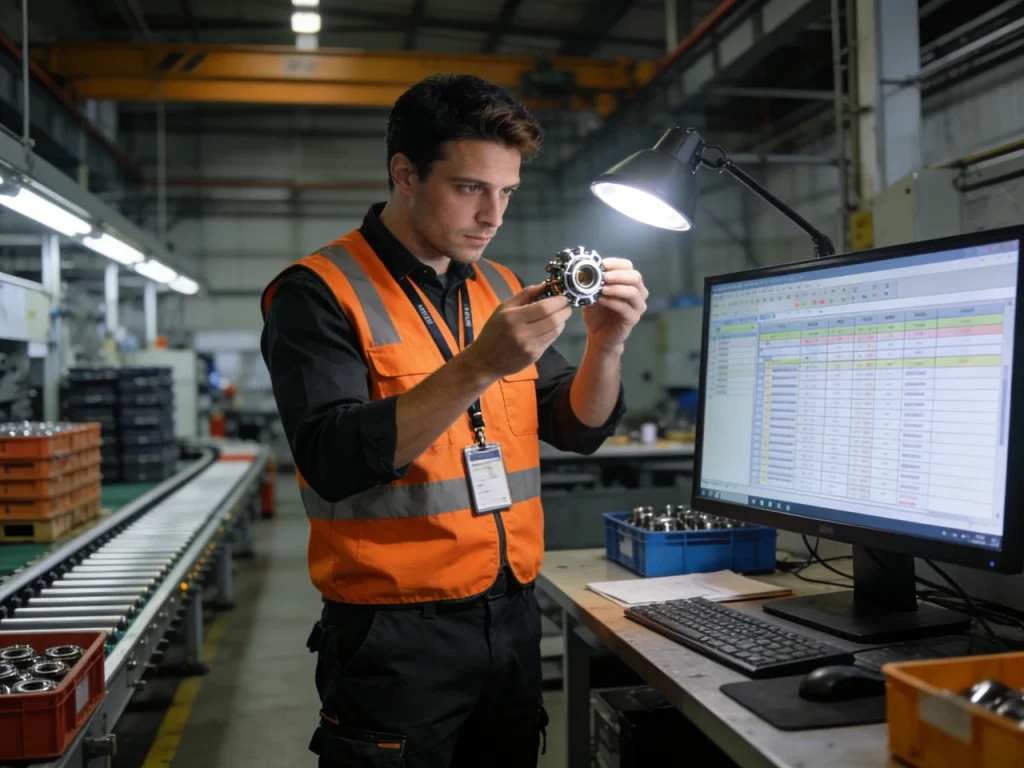
What to compare: build a fasteners in manufacturing matrix
You don’t need a huge spreadsheet; you need the right columns. Here’s what to capture so you can sort by what matters:
- Manufacturer; estimated revenue band; employee range; domestic plant locations.
- Certifications: AS9100, IATF 16949, ISO 9001/14001, ITAR, NADCAP (process-specific).
- Core products: bolts, screws, nuts, threaded inserts, studs, washers, anchors, clips, rivet types, pins.
- Materials and coatings: carbon/alloy steel, stainless, aluminum, brass, copper, titanium, nickel alloys; zinc plating, hot-dip galvanized, chrome, phosphate, dry-film lubricants.
- Industries served; engineering support (CAD/DFMA/testing); custom capability; typical MOQs/lead times; differentiators; best-for use cases.
Tip: Make the table sortable by certifications, industries, and materials to speed your shortlist.
Different types of fasteners and applications (what to source)
Let’s clear a few basics many teams ask during sourcing.
What are fasteners?
Fasteners are mechanical parts used to fasten or join two or more components. They can be non-permanent fasteners that you can remove (like nuts and bolts) or permanent fastener types you do not remove without damaging them (like many rivets). In production, fasteners are used in manufacturing to connect frames, panels, housings, and moving parts. They come in many types, sizes, and materials to suit different applications.
What is a fastener vs screw vs bolt?
- A bolt is usually an externally threaded fastener used with a matching nut. It often has a non-tapered shank and a head on one end (often a hex), and it clamps parts when you apply torque to the nut.
- A screw is an externally threaded fastener that mates with an internal thread in the part (or forms its own). A wood screw or self-tapping screw cuts its own internal thread; machine screws use a pre-tapped hole or insert.
- “Fastener” is the broader term that also includes rivets, clips, pins, washers, and more.
What are the five basic types of fasteners?
To put it simply, most people group the basics as:
- Bolts, 2) Screws, 3) Nuts, 4) Washers, and 5) Rivets. Some add “pins/clips” as another common type of fastener.
What is the most common fastener used?
Across general hardware and industry, the most common is the screw because it is a versatile fastener used in wood, metal, and plastic—often without a separate nut.
What is a class 3 fastener?
This refers to thread class (Unified thread, Class 1/2/3). A class 3 thread (3A external, 3B internal) is a very tight fit for high accuracy and low play—used when precision matters. It needs careful tolerance control and clean threads.
What is the purpose of fasteners?
Fasteners provide clamping force and alignment so parts act as one. They transfer loads, resist vibration, and let you assemble, service, and upgrade equipment. In short, they keep your product safe, serviceable, and repeatable to build.
Now, let’s place fastener types in context, with simple cues on where each fits.
- Externally threaded (about 43–49% share): Bolts, screws, and studs dominate because they form non-permanent fasteners you can remove to service machines. Think types of threaded parts across cars, trucks, and buildings. Screws are similar to bolts in shape, but they usually engage a tapped or formed hole rather than a nut.
- Internally threaded: Nuts and threaded inserts. Nuts pair with bolts to create reversible joints. Inserts reinforce sheet metal and plastics so you can use a fastener repeatedly without damage.
- Non-threaded and specialty: Rivets, pins, clips, retaining rings, anchors, and washers. These reduce loosening, distribute load, or give you a permanent joint when needed. Many common types of rivets are pop rivets (blind), solid, and structural rivets.
Material choices and when to use them
- Carbon and alloy steel: High strength and good value for frames, engines, and heavy equipment.
- Stainless steel (304/316): Corrosion resistance for food, marine, chemical, or outdoor.
- Aluminum and titanium: Lower weight, good for aerospace and EVs; titanium fasteners carry high strength-to-weight.
- Brass and copper: Conductive, non-magnetic, and corrosion resistant in specific chemistries; common in electronics.
Coatings and treatments
- Zinc plating: General corrosion protection, cost-effective.
- Hot-dip galvanizing (HDG): Thick zinc layer for outdoor steel, bridges, and towers.
- Chrome plating and phosphate: Wear and corrosion control; phosphate also helps with lubrication.
- Dry-film lubricants, sealers, and passivation: For torque control and better corrosion results.
Selection cues by environment
- High temperature: Alloy steels or titanium, plus coatings that tolerate heat.
- Marine/coastal: 316 stainless or duplex stainless; for structural steel, consider HDG.
- Electronics: Thread-forming screws and inserts for plastics or thin sheet; watch heat and ESD needs.
- Structural steel: Match ASTM/SAE grades and use correct types of washers and lock nuts for the joint.
Industry playbook: match needs to manufacturers
Automotive (largest share ~30–32%)
You want IATF 16949, high automation, vision systems, and PPAP/APQP support. Ask for fatigue data, salt spray results, and stable coating suppliers. Lightweight mechanical fasteners are key on EV platforms.
Aerospace (fastest CAGR near 5.9%)
Look for AS9100, process approvals, and traceability. Materials include titanium, Inconel, 17-4 stainless, and special alloys. Class 3 fit, close tolerances, and detailed cert packages are common. Confirm NADCAP for heat treat or plating if needed.
Construction/infrastructure
Demand ASTM/SAE compliance, especially for structural bolts and anchors. Confirm hot-dip zinc and test reports. Choose suppliers with large-diameter ability and domestic steel sources.
Heavy machinery, mining, shipbuilding
High-strength alloys, oversized hardware, and strong MRO support. You may need on-site kitting or consignment and fasteners designed for shock and vibration.
Energy & renewables
Corrosion resistance, project kits, and document control matter. Look for stainless steel fasteners, duplex grades, or coated carbon steel with lab data.
Electronics/medical
Miniature types of fasteners and thin-sheet inserts. Clean-room packaging, lot traceability, and biocompatible materials for medical devices. CAD libraries speed DFM work.
Trends shaping supplier selection (2025–2034)
Lightweighting and material advances
You’ll see more aluminum and titanium specs, and advanced coatings that meet aggressive corrosion tests. Metal fasteners still hold most share, while plastic fasteners gain in weight-sensitive assemblies.
Smart manufacturing and customization Fastener makers use CNC, automation, and even 3D printing for tooling and quick samples. Configurators and CAD support reduce design cycles and help you choose the right fastener early.
Sustainability and compliance
Teams now ask for ISO 14001, recycled inputs, and take-back/traceability programs. That trend is strongest when public funding or OEM ESG goals are in play.
Specialty growth
High-certification segments—aerospace, energy, and medical—are growing. Expect tight tolerances, strong document control, and higher margins due to complexity.
How to choose: decision framework + buyer’s checklist
Four-step framework
- Define loads, environment, standards, and lifecycle cost Spell out service loads, vibration, temperature, and chemicals. List ASTM/SAE/ISO/DIN standards your design must meet and the type of fastener you expect (bolt vs. screw vs. rivet). Consider total cost, not only unit price.
- Map required certifications to industry Automotive: IATF 16949; Aerospace: AS9100 (+ NADCAP if needed); General: ISO 9001; Environmental: ISO 14001; Defense: ITAR and controlled processes.
- Match materials/coatings to environment Armor your joint against its real world—salt, heat, shock, or clean-room. The right fasteners and their uses depend on both the fastener type and its surface finish and base material.
- Score suppliers on engineering depth, capacity, QA, lead time, and TCO Ask about CAD, DFMA help, prototyping, and testing. Confirm CNC turning, CNC milling, tooling in-house vs. outsourced, turning capacity, and automation. Validate QC (CMM, torque-tension, metallurgical analysis). Review lead times, surge capacity, stocking, and logistics.
10 questions to ask suppliers
- Which certifications cover my application (AS9100, IATF 16949, ISO 9001/14001, ITAR/NADCAP)?
- Domestic vs. offshore production—by plant and product family?
- Material and coating options for my environment and required standards?
- Custom capability: can you prototype, supply CAD, and provide samples for testing?
- Typical lead times, MOQs, surge capacity, and stocking/VMI programs?
- QC processes: PPAP levels, CMM reports, torque/tension testing, cert packages?
- Traceability: lot control, heat numbers, barcode/RFID labeling, digital records?
- Industry references and field failure/returns data?
- Warranty terms and how you handle non-conformances (8D, CAPA)?
- Digital support: CAD models, configurators, and EDI/portal order tracking?
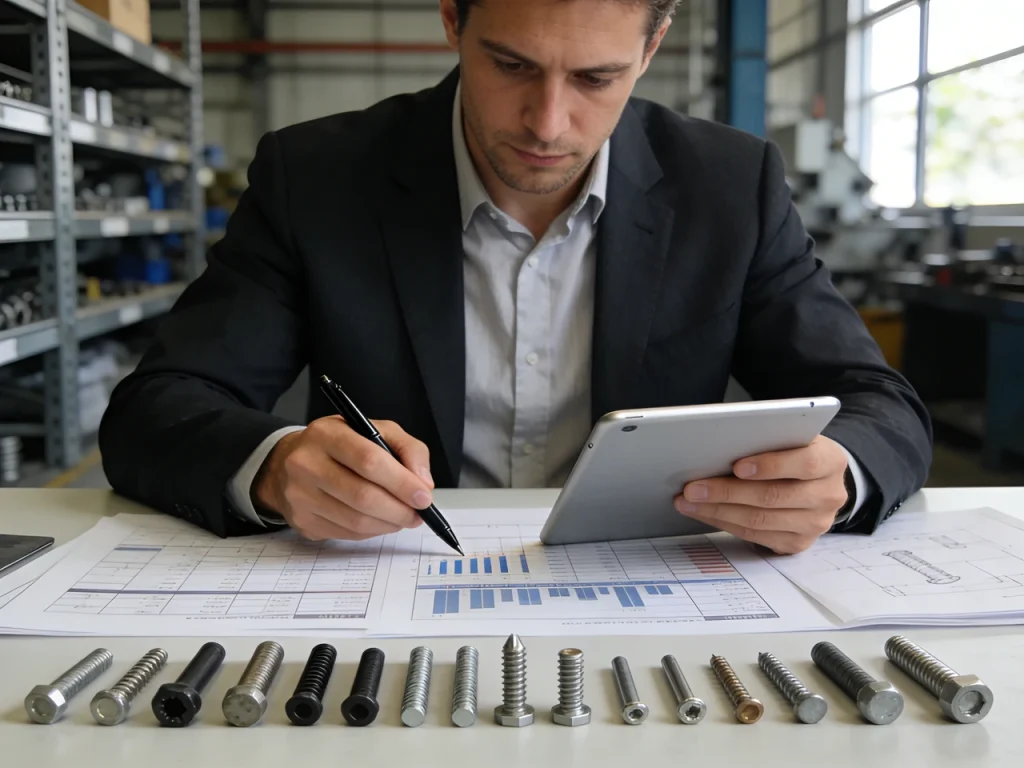
U.S. fastener market snapshot (2024–2034)
Size and growth
The market sits near $108–124B today and is projected to reach $168–172B by 2034. Expect 3.4%–5.2% CAGR depending on segment mix and adoption of lightweight materials.
Segments
Automotive is the largest consumer at roughly 30–32%. Aerospace fasteners grow fastest near 5.9% CAGR due to high-performance alloys and tight specs. Heavy-duty and industrial orders track with infrastructure upgrades in the U.S. and globally.
Type and material mix
Externally threaded parts lead, with bolts, screws, and studs powering most assemblies. Metal fasteners dominate by share, while plastics gain ground in weight-critical assemblies.
Sourcing implications
Industries with heavy certification needs often consolidate to fewer, higher-capability suppliers. Reshoring and automation strengthen domestic options and reduce shipping risk.
Summary table: select numeric highlights
| Aspect | Range or figure |
|---|---|
| Market size (2024–2025) | $108–124B |
| Market size (2034 forecast) | $168–172B |
| CAGR (2025–2034) | 3.4%–5.2% |
| Largest segment | Automotive (~30–32%) |
| Fastest-growing segment | Aerospace fasteners (~5.9% CAGR) |
| Externally threaded share | ~43–49% |
Proof from the field: social and practical insights
Engineers often trade notes about fastener types on forums and video channels. You’ll see recurring themes: how to pick the correct grade by ASTM or SAE standard, how to set the right torque to prevent joint failure, and how coatings change torque-tension outcomes. These real-world lessons matter. If installers guess torque or skip lubrication where it is specified, you can get clamp loss, fretting, or shear failures. One simple practice helps: include torque specs, lubrication or coating notes, and joint stack-up details in your RFQs and PO lines. That prevents a “close enough” purchase from becoming a warranty claim later.
Featured how-to: common types of fasteners and how to choose a manufacturer
Types of fasteners (quick guide for spec writers)
- Bolts and nuts: For joints that need high clamping force and serviceability. Pair with the right types of washers (flat, lock, Belleville) to manage load and loosening.
- Screws: The common fastener for sheet, wood, and plastics. Wood screw lines cut into wood; machine screws fit tapped holes; self-tapping screws form threads in thin alloys or plastics.
- Rivets: A permanent fastener for sheet and structure; choose solid or blind rivets by access and load.
- Washers: Spread load, improve torque control, or lock.
- Inserts: Add durable internal thread to thin or soft materials.
How to choose a fastener manufacturer (fast path)
- Define where the fastener sits in the product: temperature, vibration, chemicals, and safety impact.
- Pick the fastener type that matches the joint design (bolt + nut, screw into tapped hole, or rivet).
- Map the material and coating to the environment (stainless for marine, HDG for outdoor structural steel, zinc for indoor assemblies).
- Match certifications to your industry (AS9100, IATF 16949, ISO 9001/14001).
- Shortlist suppliers with the right engineering support: CAD, DFMA, testing, and clear documentation.
Your comparison matrix (columns to use)
Set up a sortable table with these columns so your team can see the trade-offs:
- Manufacturer; revenue band; employees; U.S. plants.
- Certifications: AS9100, IATF 16949, ISO 9001/14001, ITAR, NADCAP.
- Core products and fasteners include: bolts, screws, nuts, inserts, rivets, studs, washers, anchors, clips, pins.
- Materials/coatings: steel, stainless, aluminum, brass, copper, titanium, superalloys; zinc, HDG, chrome, phosphate, dry-film.
- Industries served; engineering support (CAD/DFMA/testing); custom capability (yes/no); typical MOQs/lead times; differentiators; best-for use cases.
If your ERP or sourcing platform lets you sort by certification or industry, you’ll find and use fasteners from the right set of suppliers faster.
Practical examples (from shop floor to field)
- Choosing a type of screw for thin aluminum: A thread-forming screw with a trilobular shape can reduce strip-out, cut cycle time, and remove the need for tapping. Pair it with a threaded insert only when service loads are high or repeated.
- Picking between coated carbon steel and stainless outdoors: When cycles are short and corrosion risk is moderate, zinc plating may be fine. For marine spray or chemical exposure, 316 stainless or duplex stainless pays off in fewer replacements.
- When to specify class 3 threads: If you have critical alignment or leakage paths, class 3 can help. But be sure your parts and coatings can hold the tolerance and that installers use proper torque and lubrication.
Common design and installation mistakes (and easy fixes)
- Mismatched standards: Mixing metric and inch thread forms or confusing ASTM grades with SAE grades. Fix: call out the exact standard on the print and RFQ.
- Over-torquing or dry threads when lube is required: This kills clamp load reliability. Fix: include torque and lubrication notes and have suppliers confirm the coefficient of friction.
- Ignoring joint stiffness: A too-soft stack-up loosens under vibration. Fix: use hardened washers or change the joint geometry.
- Choosing the wrong fastener type for service: A rivet in a serviceable joint can drive repair costs. Fix: stick to non-permanent fasteners where maintenance is routine.
What your RFQ should include (so suppliers can help you faster)
- 2D/3D files with thread callouts, tolerances, and finish notes.
- Standards and grades (ASTM, SAE, ISO, DIN) and inspection level.
- Material and coating, or at least the environment and desired life.
- Expected volumes, MOQs, target lead time, and stocking needs.
- Any special packaging, lot traceability, or label/barcode rules.
- If you want help choosing among the many types of fasteners, state the joint loads and assembly method (power tool type, torque range).
Conclusion: shortlist your best-fit partners
The fastest way to a reliable shortlist is to line up three things: the type of fastener your joint needs, the certifications your industry demands, and the materials/coatings your environment requires. From there, look for engineering depth—CAD, DFMA support, and testing—and a domestic footprint that matches your timelines. Use the matrix columns above, run focused RFQs with clear specs, and start with pilot orders to confirm quality and fit. That simple process will help you find the right fastener and the right manufacturer for 2025 and beyond.
FAQs
The five basic fasteners are bolts, screws, nuts, washers, and rivets. Bolts and screws provide clamping force, nuts secure bolts, washers spread load or prevent loosening, and rivets make permanent joints. Many engineers also include pins and clips for alignment or quick assembly. These categories cover most applications, from machinery to furniture. Choosing the right fastener usually starts here before narrowing down by material, size, thread, or environment, making them the backbone of almost every mechanical assembly.
The screw is the most commonly used fastener because it’s versatile and easy to install. Screws can work in wood, metal, plastic, and composites, often without a nut. Some form their own threads, while others fit pre-tapped holes. They come in many head types, drives, and thread designs, suitable for light to medium-duty or even structural applications. Because screws balance strength, cost, and speed, they are often the default choice unless a joint specifically needs a bolt-and-nut or a permanent fastener like a rivet.
A class 3 fastener refers to thread fit, not strength. Class 3 threads (3A external, 3B internal) are very tight, giving minimal play and precise alignment. They are ideal where accuracy, vibration resistance, and repeatability matter, like aerospace, high-performance machinery, or precision tools. These threads require better manufacturing control and clean assembly. While not needed for every application, class 3 fasteners are crucial when precision and reliability are priorities.
A fastener is any hardware used to join parts, including screws, bolts, nuts, rivets, pins, and clips. A bolt works with a nut; the nut provides clamping force. A screw is driven into a tapped hole or directly into material, forming or engaging threads to clamp parts. Screws and bolts can look similar, but the main difference is how they generate clamping force in the joint.
Fasteners hold parts together safely and reliably, transferring loads, resisting vibration, and maintaining alignment. They allow disassembly, repair, or upgrades without damaging the assembly. From machinery and vehicles to electronics and structures, fasteners ensure long-term durability, predictable performance, and ease of maintenance. Choosing the right fastener ensures the assembly works as intended, remains safe, and lasts over its service life.

 English
  German
  French
  Italian
  Spanish
  Polish
  Czech
Czech  Japanese