
Looking for a fast, reliable view of galvanized metal market trends 2025? Here’s the executive snapshot buyers and engineers need: where demand for metal for galvanizing is growing, where capacity by type of metal and sheet metal production is tightening, how prices are moving across different industries, and how to choose the right metal, process, and supplier to capture the benefits of galvanizing for corrosion-resistant steel that meets cost, sustainability, and performance targets.
Executive Snapshot
What galvanized metal is
Galvanized metal is steel or iron with a zinc coating that protects the base metal from rust. Two common methods are hot-dip galvanizing (HDG) and electro-galvanized (EG).
Key figures:
- Global galvanized steel value: $174.56B (2024) to $248.46B by 2031; about 4.0% CAGR.
- Hot-dip galvanized steel: $83.7B by 2032; about 6.1% CAGR.
- US market: $25.99B (2024) to $32.5B by 2030; about 3.8% CAGR.
- China operating capacity: 56.21% (June 2025), signaling overcapacity and soft demand.
- Industrial galvanized: $65B (2023) to $120B (2032).
Fastest-moving segments:
- Building and construction are largest by volume and revenue.
- Appliances show the fastest growth rate as makers want smoother EG finishes.
- Automotive remains steady; EV platforms keep galvanized sheet central for car bodies and underbody protection.
2025 price outlook
- Expect moderate volatility with upward cost pressure from energy and regulations. Regional divergence will be real; emerging markets look steadier, backed by construction and infrastructure.
What to do next:
- Specify process and coating grade early (for example, ASTM A653 G90 or Z275) to lock performance.
- Shortlist suppliers with clear green processes and resilient logistics.
- Compare lifecycle cost vs stainless or painted alternatives before you finalize the BOM.
Galvanized Metal Market Trends 2025
The story for 2025 is mixed: stable end-use demand in construction, appliances, and transport, but supply chain fragility and regulatory costs keep prices choppy.
- Utilization downturn in China: The industry saw four straight weeks of declines in Q2 2025. Mills used temporary closures to balance inventory. Operating capacity at 56.21% shows overcapacity and weak domestic demand. This can pull global prices in two directions: short-term spot deals from surplus regions, yet less predictable lead times.
- Supply chain fragility: Freight disruptions, energy price spikes, and trade friction add price volatility and lead-time risk. If you depend on imported galvanized sheet and coil, build in extra time and consider dual-source contracts.
- Environmental regulations: Tighter rules lift compliance costs and push capex toward greener lines and digital quality control. Expect low-embodied-carbon supply options to carry a modest premium with clearer documentation (EPDs, LCAs).
Regional divergence
Asia-Pacific: According to the OECD, India may see up to 8% demand growth (2024–2025) on public works and industrial capex. China works through overcapacity, which could mean aggressive quotes but occasional scheduling shifts.
North America/Europe: Demand for low-footprint galvanized products is growing. Expect stricter compliance and data-backed sustainability in RFQs.
Sector dynamics
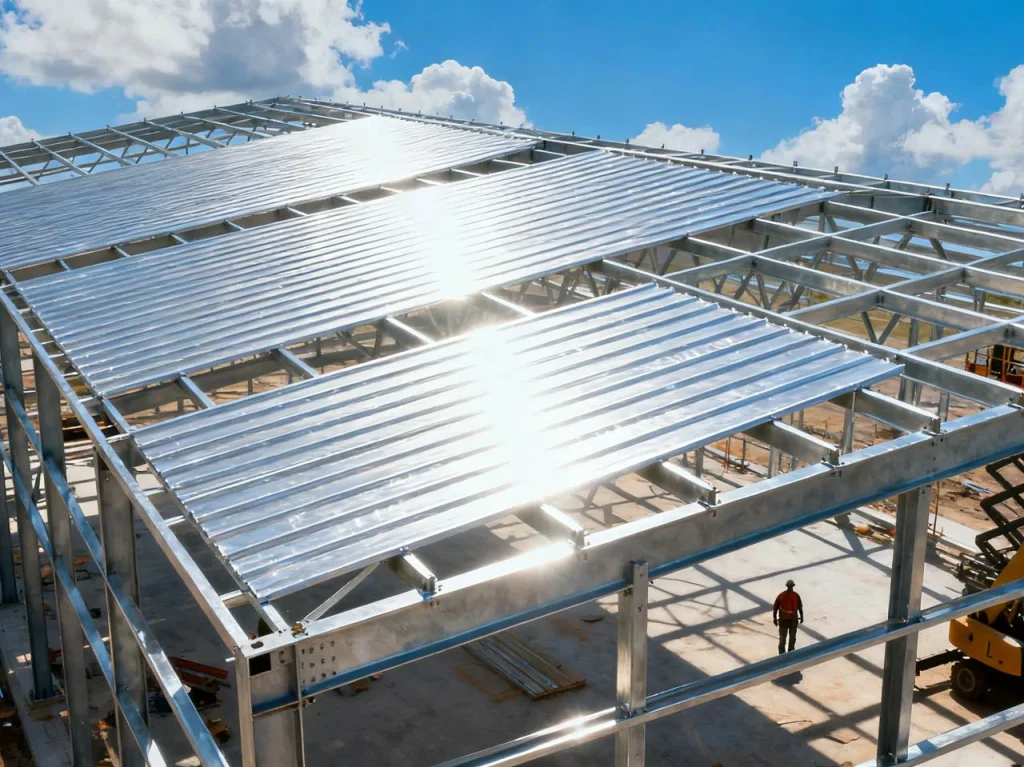
- Construction and infrastructure anchor demand worldwide (roofing, guardrails, bridges).
- Appliances surge as brands value consistent surface finish and design integration.
- Automotive: Even as EVs evolve, galvanized sheet remains essential for BIW corrosion performance and underbody defense.
- Materials innovation: Zinc-aluminum-magnesium (ZAM) coatings are gaining share for better edge protection and longer life at thinner coating mass.
In short, the market is solid, but you should plan for hiccups in supply and marginal cost increases tied to energy and compliance.
Quick Comparison Table – Top Global Suppliers
The following table is a planning outline you can adapt to build your shortlist. It highlights technical ranges, sustainability signals, and logistics—factors that matter most in 2025.
| Region | Core Products | Coating Range | Standards | Sustainability | Lead Times | Min/Max Order | Logistics Footprint |
| Asia | Sheet/Coil, Pipe | G30–G235; ZAM options | ASTM A653/A123/A153; ISO 1461 | EPDs on demand; grid + gas mix | 4–8 weeks | 5–1,000 MT | Ports + rail, inland DCs |
| Europe | Sheet/Coil/Plate | Z100–Z350; ZAM available | EN/ASTM; ISO 1461 | High renewable share; LCA disclosed | 3–7 weeks | 10–800 MT | Multi-country hubs |
| North America | Sheet/Coil | G40–G210; EG focus | ASTM A653; IATF 16949 lines | EPD-ready; scrap loop | 2–6 weeks | 10–1,200 MT | Nationwide centers |
| Middle East | Pipe/Structural HDG | G60–G185 | ASTM A123/A153 | Water/heat recovery in pickling/galv | 3–8 weeks | 2–600 MT | GCC + Africa corridors |
| South Asia | Sheet/Coil/Wire | Z100–Z275 | ASTM/IS; ISO 1461 | Emerging EPDs; efficiency upgrades | 4–9 weeks | 8–900 MT | Ports + inland ICDs |
Spotlights (generic examples):
- Asia-based flexible mill: Flexible production with quick changeovers and fast cross-border logistics. Kept on-time delivery strong during freight shocks by switching port pairs and building safety stock near customers.
- Global R&D-focused producer: Invests in advanced coatings (including ZAM) and green upgrades aligned with major infrastructure programs. Adds digital traceability to improve quality assurance and warranty support.
Suggested filters:
- Region, process (hot-dip vs electro), minimum order quantity, sustainability certifications (ISO 14001, EPD/LCA), ZAM availability.
Galvanized Metal Fundamentals (hot-dip vs electro-galvanizing)
To put it simply, galvanizing adds a protective layer of zinc to steel and iron. Zinc acts as a sacrificial anode. It corrodes first, so the underlying metal lasts longer—even if small scratches expose bare steel.
What metal is galvanized?
- Most galvanized products use carbon steel or low-alloy steel. Cast iron and malleable iron can also be hot-dip galvanized. The metallurgical bond forms between iron and zinc, so this method is not for aluminum, copper, or stainless steel. Those metals may accept other zinc-coated methods (like electroplating), but classic hot-dip galvanization is for steel/iron.
Processes:
- Hot-dip galvanizing (HDG): Parts or continuous strip go into molten zinc at about 450°C. This creates a zinc-iron intermetallic and a zinc layer on top. The coating is thicker and more rugged. It handles outdoor use, impact, and abrasion well. Typical uses include bridges, guardrails, poles, nuts and bolts, and structural shapes.
- Electro-galvanizing (EG): A zinc deposit is applied by electroplating. The coating is thinner and very smooth, which helps with paint adhesion and appearance. It is common in automotive interior panels, appliances, and HVAC housings that need a clean look and tight tolerances.
Three main methods you will see:
- Hot-dip galvanizing (batch and continuous/coil).
- Electro-galvanizing (electrolytic zinc).
- Zinc thermal spray (metallizing) or mechanical plating for field repair or special parts when a dip or plating line is not practical.
What are the steps of galvanising?
- For HDG batch lines, the steps are:
- Cleaning/degreasing to remove oil and dirt;
- Pickling in acid to remove scale and rust;
- Fluxing (often zinc ammonium chloride) to improve wetting;
- Hot-dipping in molten zinc;
- Cooling, inspection, and repair if needed (per ASTM A780).
- For continuous coil lines (sheet/coil), prep, anneal, hot-dip, air knives to set coating thickness, then cooling and passivation.
How long is the galvanization process?
- Batch HDG for a typical part can take 1–4 hours including cleaning, pickling, drying, dipping, cooling, and inspection. The dip itself is often minutes.
- Continuous galvanizing for sheet/coil happens at high line speeds; the zinc coating is applied in seconds, with total processing measured in minutes.
- Electro-galvanizing coats thin layers quickly; throughput depends on line speed and desired coating mass.
Coating systems and nomenclature:
- In North America, G-classes such as G60, G90, G185 describe the coating mass (both sides total). In metric markets, you’ll see Z-coatings like Z275.
- ZAM (zinc-aluminum-magnesium) coatings improve edge protection, so a thinner coating can sometimes match or exceed the life of a thicker pure zinc layer.
Typical thickness ranges and trade-offs:
- HDG: Higher coating mass (for example, G185 or more) gives longer life outdoors and in marine or industrial zones. Surface may be matte with visible spangle (the crystal pattern on the metal), depending on the line.
- EG: Lower coating mass but smoother finish and better formability. Great for painted parts where looks matter.
Standards and specs to know:
- ASTM A653 (sheet/coil), ASTM A123 (structural), ASTM A153 (hardware), ASTM A780 (repair), ISO 1461 (hot-dip galvanized coatings).
Does galvanized metal ever rust?
- Yes, but later. The zinc corrodes first to protect the substrate. In tough environments (coastal salt, industrial pollution), the zinc may be consumed faster. You might see white rust (zinc corrosion products) first. Red rust shows when zinc is gone or there’s a large breach.
Is galvanized metal safe?
- For general use, yes. Galvanized steel is common in roof, fencing, ducting, and agricultural structures. For drinking water pipes, codes vary by region; most modern systems avoid new galvanized iron because of deposits and possible legacy lead trapping. Do not use with acidic foods; avoid direct contact in food prep where acids are present. When welding galvanized, manage fumes safely.
Can you galvanize already rusted metal?
- Yes, but it must be clean. Mills or shops remove rust by pickling or abrasive cleaning. If heavy rust remains, the coating can not bond well. For field fixes, metallizing or zinc-rich paint can be used after proper prep.
What metals cannot be galvanized?
- Classic hot-dip galvanizing is for steel and iron. Aluminum, copper, brass, and stainless do not form the same zinc-iron bond in a hot-dip bath. Some can receive zinc plating by other methods, but it’s not the same galvanising process or performance.
How to tell if steel is galvanized:
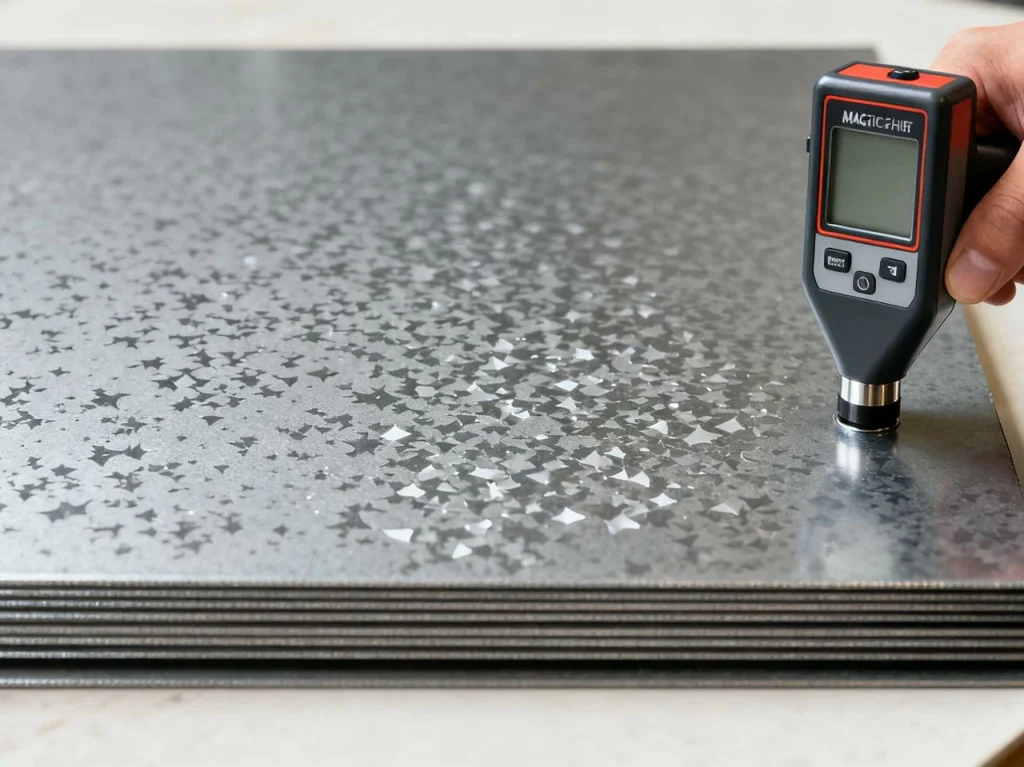
- Look for a gray or matte surface, sometimes with spangle. A magnetic gauge can verify coating thickness. If you cut or drill and see a distinct zinc layer over steel, that is another clue.
Applications and Sector Demand
Building and construction
- The largest revenue driver. Roofing, purlins, framing, guardrails, bridges, and cable trays depend on the protective coating to withstand outdoor use for decades. For seaside projects, higher coating thickness or ZAM can push life further.
Appliances (fastest growth)
- White goods, washers/dryers, and HVAC housings benefit from EG’s smooth metal surface. Paint appearance and tight forming are key here. The galvanized coating also protects during transport and years of moisture exposure.
Automotive
- Bodies-in-white (BIW), underbody, and fasteners use both HDG and EG. EV platforms still need corrosion protection for long warranties. ZAM can help with edge creep and cut-face durability around fasteners.
Industrial, agriculture, marine, electrical:
- Think fencing, irrigation, docks, electrical enclosures, and wireways. Where salt spray or abrasion is common, higher zinc coating or duplex systems (galvanize + paint) can extend lifespan.
Direct comparison to guide planning:
| Material | Upfront Cost | Typical Corrosion Life (outdoors) | Maintenance Need | Recyclability | Notes |
| Galvanized steel | Low–Medium | Medium–High (depends on G/Z class and environment) | Low | High | Best value for many structures; can be painted (duplex) |
| Stainless steel (304/316) | High | Very High | Very Low | High | Use in harsh marine/chemical zones; higher upfront |
| Painted/coated carbon steel | Low–Medium | Medium (depends on prep/coats) | Medium–High | High | Needs regular paint upkeep; good for mild environments |
2025 Pricing and Cost Outlook
Expect moderate volatility with periodic upticks tied to energy and compliance costs. Trade actions and shipping constraints can raise delivered prices even if mill prices look stable. Emerging markets may be more stable because construction and public works keep demand steady.
Procurement tips:
- Use quarterly contracts with index clauses for energy and zinc. This can hedge swings.
- Validate coating equivalence. If ZAM at a thinner mass meets your salt spray or field life need, you can hit cost and weight targets without walking back durability.
- Run lifecycle cost models to compare galvanized vs stainless vs painted steel by environment.
Technology and Innovation
- Advanced coatings: ZAM and hybrid layers improve edge and cut-face protection. This matters for slitting, blanking, and stamping, where edges are exposed.
- Digitalization and automation: Inline sensors and AI flag coating defects and optimize bath chemistry. This improves uniformity, cuts rework, and provides traceability.
- Environmental upgrades: Heat recovery, emissions controls, and smarter flux and pickling steps lower energy and waste, improve bath life, and stabilize quality.
- R&D direction: Work continues on nanocoatings, new pre-treatments, and low-temperature processes to save energy and improve paint adhesion.

Regional Outlook and Risks
Asia-Pacific:
- China: Overcapacity with 56.21% utilization (June 2025). Watch policy signals and infrastructure plans for a turnaround. Short-term, be ready for spot opportunities but plan for scheduling changes.
- India: Up to 8% growth in 2024–2025 tied to public works and private capex.
North America/Europe:
- Buyers seek low-embodied-carbon steel with EPDs and LCAs. Construction, appliances, and light manufacturing look strong. Expect higher compliance standards in RFQs and audits.
Risk map:
- Freight and energy volatility can shift delivered cost quickly.
- Trade disputes and tariffs change sourcing math.
- Environmental regulations tighten specs and documentation.
- Seasonal construction cycles drive quarterly demand swings.
Buyer’s Framework and Checklist
Supplier criteria:
- Certifications: ISO 9001 for quality, ISO 14001 for environment, IATF 16949 if automotive. Ask for EPD/LCA.
- Capabilities: HDG, EG, ZAM options; coating ranges; slit/blanking/pressing; lab testing for coating mass, adhesion, and corrosion.
- Quality control: Magnetic gauge checks for coating, salt spray benchmarks per spec, tight bath chemistry control.
- Logistics: Multi-warehouse coverage, strong delivery performance, multi-route shipping, flexible MOQ.
- Sustainability: Share energy mix, emissions intensity, and zinc dross/waste management practices.
RFQ checklist:
- Base grade/spec and coating designation (G or Z).
- Method: HDG or EG; consider ZAM availability.
- Post-processing: forming radius, welding, painting, or powder-coat.
- Corrosion environment: rural, urban, marine, industrial.
- Dimensions: thickness, width, coil or sheets, tolerances.
- Required standards: ASTM/ISO and any customer-specific specs.
- Inspection: COA, test plans, sampling rate.
- Packaging: dry storage, VCI, separators to prevent white rust.
- Delivery windows and logistics constraints.
Lifecycle, Maintenance, and Common Failures
Service life by environment:
- Rural zones with clean air give the longest life.
- Urban/industrial areas with SOx/NOx shorten life.
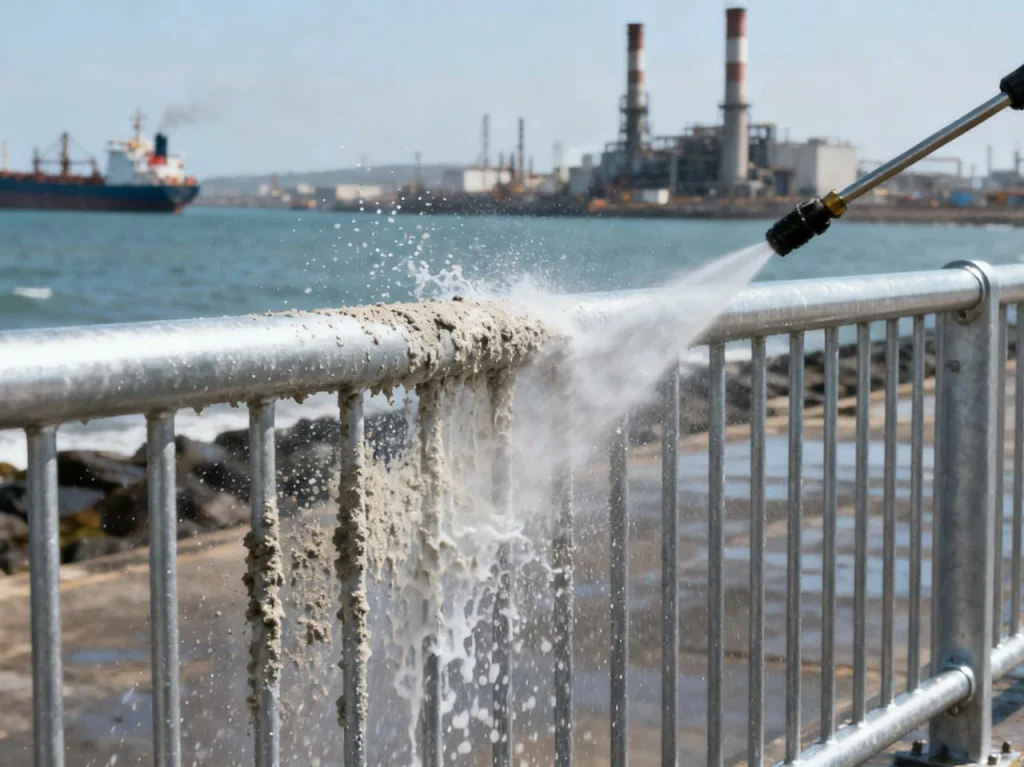
- Marine/coastal sites are toughest due to chlorides. Here, consider higher G/Z class, ZAM, or duplex systems.
Common failure modes:
- White rust: Moist storage corrosion on fresh zinc, especially if packed wet without airflow.
- Edge creep: Corrosion starting at cut edges if coating is thin or the environment is harsh.
- Handling damage: Scratches or dents expose steel.
- Improper surface prep for painting: Poor adhesion leads to peeling; use proper pre-treatment.
- Over-pickling or brittle intermetallics: Can occur with poor process control.
Inspection and repair:
- Follow ASTM A780 for repair. Use zinc-rich paints, solder, or metallizing to touch up bare spots.
- For storage, keep parts dry, add spacers, and avoid condensation.
Maintenance tips:
- Wash off salt or dust in coastal or industrial settings.
- For painted galvanized (duplex), inspect paint every few years; repair chips fast.
Fabrication and Machining Tips (CNC, drilling, welding, painting)
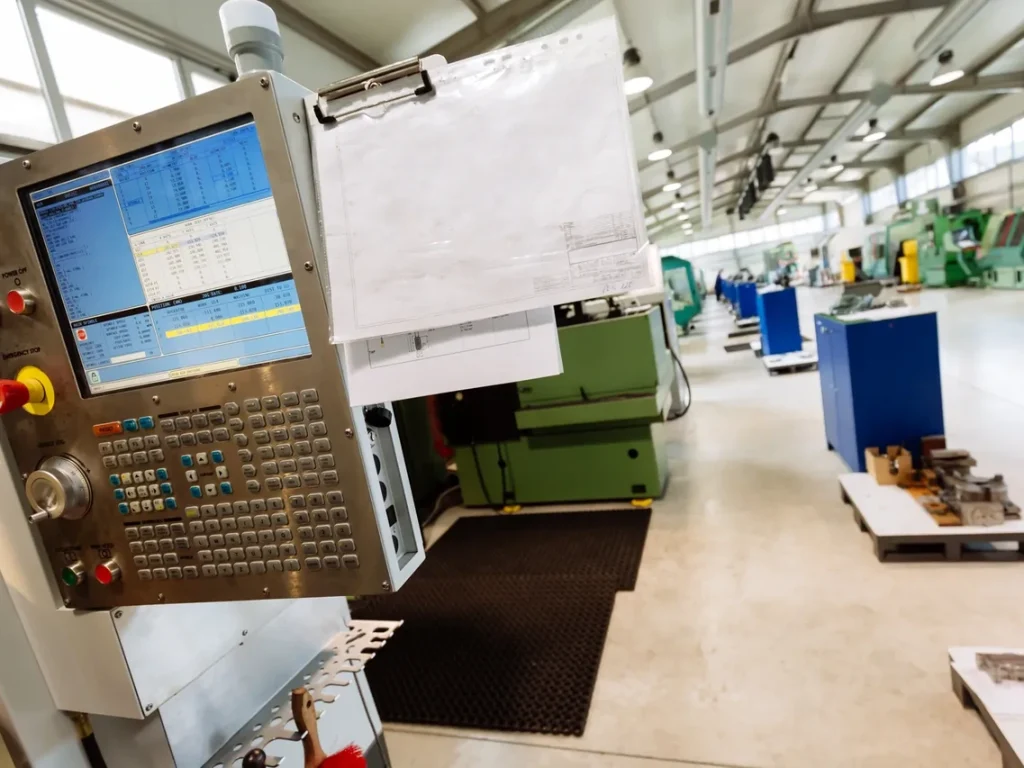
Working with galvanized steel in fabrication is common across cnc drilling, cnc milling, and cnc turning. The zinc layer melts at a much lower temperature than steel, so set your process to protect the coating and avoid health risks.
- Drilling and milling: Use sharp tools and moderate speed to prevent smearing or burning of zinc. Chip control helps keep edges clean. If you need tight tolerances or high speed machining, cut first on uncoated steel when possible, then galvanize. If you must machine after galv, plan for edge protection (touch-up).
- Turning: For nuts and bolts or threaded parts, size allowance is key. Threads may need to be cut or chased after coating; then repair with zinc-rich touch-up if spec allows.
- Welding: Remove coating locally or use ventilation and fume controls. Weld fumes from zinc can be harmful; follow safety guidance. After welding, repair the coating per ASTM A780.
- Painting: For better paint adhesion, use proper pre-treatment (cleaning, light sweep blasting or a primer made for galvanized surfaces). A duplex system can last longer than either paint or galvanizing alone.
Case Studies and Proof Points
Logistics agility case:
- An Asia-based producer switched port routings and staged safety stock near clients. Result: Lead-time reduction by 20–30% during freight congestion and higher on-time delivery even as others slipped.
Advanced coatings case:
- A global mill rolled out ZAM on upgraded lines with heat recovery and bath controls. Projects tied to large infrastructure saw longer corrosion life at lower coating mass, and energy use per ton fell.
Best practices distilled:
- Dual-source critical items to cut risk.
- Hold safety stock during peak build seasons.
- Standardize specs across SKUs to pool coil and reduce rework.
Social and Video Insights (what buyers ask)
In 2025, Reddit and short-form video channels keep raising the same practical issues:
- Real-world rust resistance: How long does it last outside? People compare HDG vs EG and ask about ZAM at cut edges.
- DIY vs industrial grade: Can you galvanize small parts yourself? What about painting over galvanized?
- Cost talk: Why did prices jump last quarter? Many call out energy and freight spikes.
- Sustainable builds: How to source low-footprint galvanized sheet with EPD.
We address these throughout: specify the method of galvanizing, coating class, and environment, and plan for supply and quality. For welding galvanized, follow fume safety. For painting, prep is key.
Conclusion – Key Takeaways and Next Steps
- The galvanized metal market in 2025 is large, moderately growing, and adopting ZAM and greener processes to raise performance and cut footprint.
- Pricing shows moderate volatility. Expect energy and regulatory costs to pass through.
- Construction and appliances lead demand; automotive remains foundational with the EV shift.
Next steps for buyers:
- Finalize specs (process and coating class) matched to your environment and forming plan.
- Shortlist two to three suppliers with proven sustainability and logistics strength.
- Run lifecycle cost comparisons before placing long-term orders.
FAQs
Yes. Hot-dip galvanized steel generally lasts much longer in marine environments because the hot-dipping process creates a thick, metallic zinc coating that reacts faster than the base metal when exposed to corrosive substances like saltwater or humidity. This sacrificial action gives superior corrosion resistance and edge protection, making it ideal for docks, bridges, and coastal buildings. The coating, made from galvanized steel, is long-lasting, economical, and offers proven durability compared to thinner electro-galvanized finishes. For extreme conditions, use higher G/Z classes, also used in offshore or industrial applications, or upgrade to ZAM coatings or duplex systems for extended life and versatility.
For coastal or industrial areas, most buyers choose G90/Z275 or higher coating designations to ensure long-lasting corrosion resistance. These heavier coatings, created through the hot-dipping process, react faster than the base metal, forming a metallic barrier that prevents steel from rusting when exposed to corrosive substances like sea spray. The type of steel used—typically low-carbon or structural grades—affects the adhesion and performance of the coating. Duplex systems (paint plus galvanizing) are also used for extra protection. This economical solution offers widespread use across construction, marine, and infrastructure sectors, where the need to create a zinc coating for lasting durability is critical.
Yes, steel used for welding can be made from galvanized steel, but you must manage safety and coating integrity. When welded, the metallic zinc coating may react faster than the base metal, releasing fumes from corrosive substances like zinc oxide, so proper ventilation and PPE are essential. It’s best to remove the zinc layer near the weld area before joining, then repair it using ASTM A780 methods such as zinc-rich paint or thermal spray. The hot-dipping process that helps create a zinc coating ensures strong corrosion resistance and can be restored easily after welding. This makes galvanized steel both economical and versatile, also used in marine, structural, and industrial fabrication.
ZAM coatings—zinc, aluminum, and magnesium blends—perform better at cut edges because the metallic coating reacts faster than the base metal, sealing exposed steel from corrosive substances like salt spray. This advanced system, made from galvanized steel through a modified hot-dipping process, provides superior corrosion resistance while allowing thinner coatings, making it economical and lightweight. ZAM is also used in different industries such as automotive and construction for its versatility and long-lasting surface protection. The coating helps create a zinc coating matrix that self-heals small scratches, extending durability far beyond traditional galvanization.
To prevent white rust, store sheet metal made from galvanized steel in a dry, ventilated area. White rust occurs when corrosive substances like moisture cause the metallic zinc coating to react faster than the base metal, forming a dull white film. Avoid stacking parts wet or sealing them airtight. Apply light oil or passivation, commonly also used after the hot-dipping process, to improve corrosion resistance. Using spacers between panels ensures airflow and helps maintain the long-lasting protective layer. This simple yet economical step protects your steel’s versatility and extends service life for steel used in construction, appliances, and other widespread use applications.


 English
  German
  French
  Italian
  Spanish
  Polish
  Czech
Czech  Japanese