
Custom CNC is the fastest route to precision parts when tolerances are tight, geometries are complex, and timelines are compressed. The central challenge is simple to state but hard to solve: how do you turn CAD into compliant, cost-effective components while balancing materials, processes, and quality? This guide breaks it down into practical steps you can use right away. We’ll cover market context and use cases; process selection; material and DFM choices; quality and compliance; speed, cost, and quoting; real-world outcomes; and the 2025 tech trends reshaping custom CNC machining. You’ll also see ideas for visuals and interactive tools, so you can plan, quote, and deliver with confidence.
To set the stage, let’s define the basics. What does CNC stand for? CNC means computer numerical control—a manufacturing process that uses programmed instructions to move tools with high accuracy. When you ask “what is CNC system?” or “define CNC machine,” think of a cnc device (milling machine, lathe, router, grinder, EDM) that follows a programme generated from computer-aided design (CAD) and CAM software. The cnc meaning is that you replace manual control with precise, repeatable, automated motions along multiple axes. The result is precision machining for prototypes and production parts in metal or plastic.
In short, a custom CNC job takes your model and turns it into a real workpiece with the right geometry, finish, and specification, delivered on time and within budget. Now, let’s get you from cnc design to reliable parts—step by step.
If you are looking for a German explanation, see our guide on CNC meaning (German)
Custom CNC at a Glance: Market, Value, Use Cases
Custom CNC machining has become a cornerstone of modern manufacturing. In 2025, its market continues to expand as industries—from aerospace to EV startups—seek precision, repeatability, and faster turnaround without compromising quality. This section provides a quick overview of where Custom CNC delivers the most value, what drives its growing demand, and how companies are using it to innovate and stay competitive.
Key 2025 stats and signals
CNC is a backbone of modern manufacturing. In 2025, the global CNC metal cutting machine tools market is valued around $107.09B, with a projected 10.2% CAGR through 2034. Demand for skilled machinist talent and CNC programmers stays strong, with U.S. median pay for experienced programmers above $60k and higher in major hubs, according to the U.S. Bureau of Labor Statistics (BLS, 2025). These signals reflect a steady need for cnc technology, precision, and fast iteration.
CNC’s role has grown because products keep getting more complex. Teams need custom cnc machining services to hold tight tolerances, cut titanium and nickel alloys, and combine CNC milling and turning operations for lighter, smarter, and smaller parts. Shops are adding AI-driven CAM, in-process inspection, and connected machines to shorten lead times and improve first-pass yield.
Where Custom CNC excels
Some sectors depend on custom CNC every day:
- Aerospace: High strength, lightweight structures with safety-critical tolerances—often using alloy steels, titanium, and nickel superalloys with excellent corrosion resistance and performance at extreme temperatures.
- Medical devices: Personalized implants, surgical tools, and fixtures. Materials like PEEK, PTFE, and stainless steel support biocompatibility and chemical resistance. Quality and traceability are non-negotiable.
- EV/automotive: Rapid design changes, prototype runs, and bridge production before molding tools are ready. Tolerance and thermal stability matter under load and heat.
- Electronics: Miniaturization drives small metal parts and plastic housings with tight fits, precise hole diameter, and clean finish. Aluminum, brass, and polycarbonate are often used.
Why now: complexity, reshoring, digital workflows
More SKUs, tighter timelines, and thin margins force teams to design for manufacturability and pick suppliers who can scale. Reshoring and supply-chain risk push work closer to home, while digital thread practices connect CAD/CAM, machines, and QC feedback for accurate, parts on time delivery. The meaning of “custom” has shifted—from occasional prototypes to steady, small-batch production that supports product lifecycles.
Choosing the Right CNC Process (Milling, Turning, EDM, Hybrid)
Choosing the right CNC process is a critical step in turning your design into a precise, functional part. Each method—milling, turning, EDM, or hybrid—has unique strengths depending on geometry, material, and tolerance requirements. Understanding which process fits your part not only ensures accuracy and finish but also optimizes cost, speed, and manufacturability.
Process comparison: 3-axis vs 5-axis milling, CNC turning, Swiss, EDM, routing
Selecting the right manufacturing process is half the job. Use this quick comparison to map your geometry, tolerances, and finish to the best process.
| Process | Best for geometry/features | Typical tolerance | Typical surface finish (Ra) | Notes/limits |
|---|---|---|---|---|
| 3-axis milling | Flats, pockets, simple 3D contours | ±0.001–0.005 in (±0.025–0.13 mm) | 63–125 μin (1.6–3.2 μm) as-milled | Most widely used; best cost for simple shapes |
| 4-axis milling | Features around one rotation | ±0.001–0.003 in | 32–125 μin | Reduces re-fixturing for features around a single axis |
| 5-axis milling | Complex 3D surfaces, undercuts, fewer setups | ±0.0005–0.002 in | 16–63 μin with fine tooling | Fewer fixtures, better feature alignment; higher hourly rate |
| CNC turning (lathe) | Round parts, tight OD/ID diameter, threads | ±0.0005–0.002 in | 32–63 μin by turning | Fast for shafts, bushings, and threaded features |
| Swiss turning | Very small, long slender parts | ±0.0002–0.001 in | 16–63 μin | Excellent for micro-features and small runs |
| Wire EDM | Sharp internal corners, very hard alloys | ±0.0001–0.001 in | 16–63 μin | No-cutting-force accuracy; slower; heat-affected zone low |
| Sinker EDM | Cavities, fine details in molds/tools | ±0.0005–0.002 in | 16–125 μin | Great for deep cavities where tools cannot reach |
| CNC routing | Panels, plastics, composites | ±0.005–0.015 in | 63–250 μin | Large-format sheets; router excels with polymers, wood |
| Grinding | Precision flats and roundness | ±0.0001–0.0005 in | ≤8–16 μin with fine wheels | Achieves ultra-fine finish after milling/turning |
When choosing the right CNC process for your part, start with milling for most geometries—3-axis milling is cost-effective for flats, pockets, and simple 3D contours, while 5-axis milling handles complex surfaces, undercuts, and features on multiple faces with fewer setups. For round components like shafts, bushings, and threaded parts, CNC turning provides high precision and efficiency, making it the go-to choice for cylindrical parts. When sharp internal corners, deep cavities, or extremely hard alloys are involved, EDM offers unmatched accuracy and surface finish, ideal for features that traditional milling or turning cannot reach. Hybrid workflows, which combine additive and subtractive techniques, are perfect for near-net shapes, internal channels, or features that require both printing and precision machining.
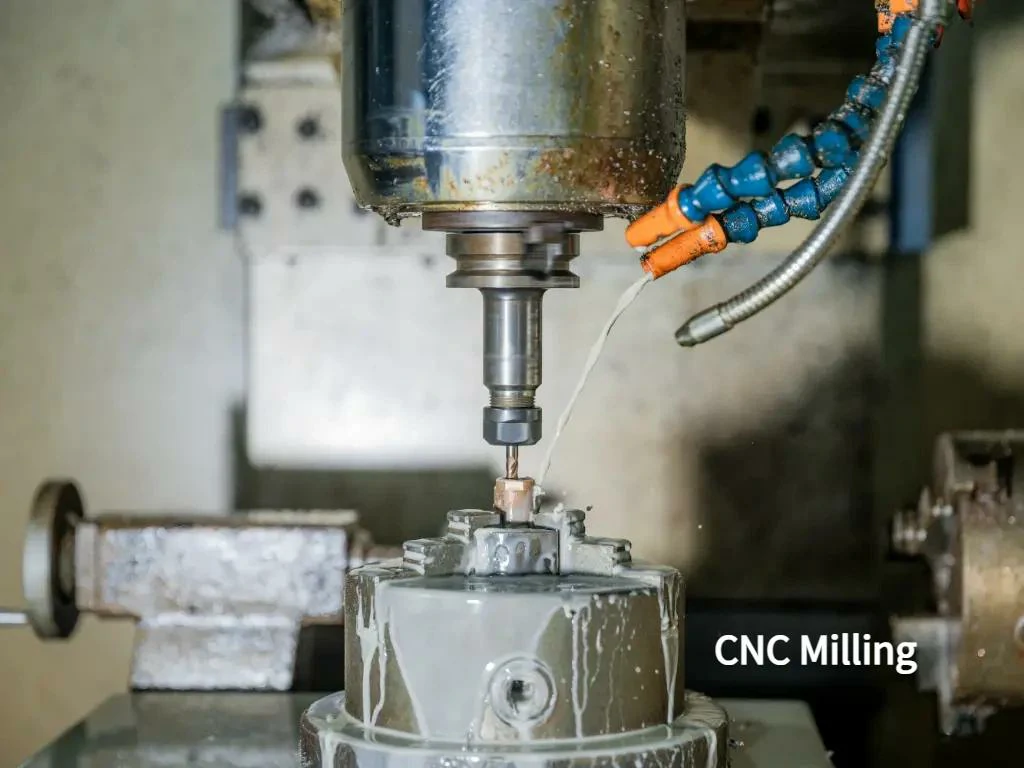
Selection framework: match process to tolerance, volume, material, and complexity
Think in four passes:
- Geometry fit: Can tools reach the features? Deep pockets, internal corners, and undercuts may need 5-axis or EDM.
- Tolerance stack: Define only what matters. If your general tolerances can be ±0.005 in, use 3-axis or turning. If you need ±0.0005 in on a fit, you may add a grind pass.
- Material behavior: Aluminum cuts fast. Stainless steel and titanium need lower feeds to protect the cutting tool and prevent heat. Polymers like Delrin (acetal), nylon, PTFE, and polycarbonate need proper support to avoid warp.
- Volume and change rate: For frequent design updates and low-to-mid volumes, subtractive manufacturing is economical. For brackets with complex internal channels, consider a hybrid workflow (print near-net, then mill to tolerance).
A quick rule: pick the simplest process that meets your tolerance and finish needs. Each extra setup or rare tool path adds time and cost.
Is 3-axis or 5-axis better for my part?
Neither is “better” in general. 3-axis is cheaper per hour and perfect for many parts with accessible features. 5-axis shines when the model has compound angles, sculpted surfaces, or needs feature alignment across multiple faces without re-fixturing. If 5-axis removes two setups and holds tighter true-position, it can be cheaper for complex work—even with a higher hourly rate.
Materials & DFM: Metals, Plastics, Composites
Selecting the right material and designing for manufacturability (DFM) are key to getting the most out of CNC machining. Metals, plastics, and composites each offer distinct properties—strength, corrosion resistance, thermal stability, and machinability—that influence which process to choose and how to design features.
Metals overview: aluminum, stainless steel, titanium
Choosing the right metal is about machinability, strength-to-weight, corrosion resistance, and finish.
- Aluminum (e.g., 6061, 7075): Fast to cut, great strength-to-weight, easy to finish, high conductivity. Ideal for enclosures, brackets, and prototype frames. Good for 3-axis milling and turning.
- Stainless steel (e.g., 304/316): Good wear and corrosion resistance, stable at temperature. Slower to cut than aluminum. Often used for medical, food-grade, and marine parts.
- Titanium (e.g., Ti-6Al-4V): Light and strong with excellent mechanical properties at extreme temperatures. Higher tool wear and heat management needs. Best for including aerospace and medical implants.
- Brass and copper: Easy to machine, high conductivity, clean finish. Common for fittings, connectors, and optics.
- Nickel alloys: Tough, heat-resistant, good for hot zones. Slower feeds and specialized tooling.
Plastics and composites: PEEK, Delrin (acetal), nylon, carbon-fiber
Engineering plastics offer unique properties:
- PEEK: High temperature, chemical resistance, and strength; good for medical and aerospace insulators. Stays stable through sterilization.
- Delrin (acetal): Low friction, easy to machine, dimensionally stable. Great for bushings and gears.
- Nylon: Light and tough; absorbs moisture, so consider environment. Good for pulleys and spacers.
- Polycarbonate: Very high impact strength and clarity; good for guards and covers.
- PTFE (Teflon): Very low friction, high molecular weight, excellent chemical resistance; soft and needs support.
- Composites: Carbon-fiber laminates with epoxy resin reinforcement are lightweight with high strength. Usually trimmed by router or EDM; use dust control.
DFM levers: wall thickness, fillets, tolerances, fixturing, toolpaths, surface finish (Ra)
Good cnc design makes parts cheaper and faster. Here are simple, high-impact rules:
- Wall thickness: Metals ≥ 0.8–1.0 mm; plastics ≥ 1.5–2.0 mm to reduce chatter and warp.
- Internal corners: Add fillets (radius ≥ 0.5× tool diameter). Avoid sharp inside corners unless EDM is chosen.
- Holes: Use standard drills; minimum practical hole is ~1.0 mm in metals; larger for plastics.
- Threads: Limit depth to ~2× diameter for strength and chip evacuation.
- Deep pockets: Keep depth ≤ 4× tool diameter; add relief features if deeper is needed.
- Tolerances: Apply tight callouts only where function demands; use general tolerances for the rest.
- Finish: State Ra targets only when needed. As-milled often meets functional needs at 63–125 μin; grinding or lapping is for sealing or bearing surfaces.
- Fixturing: Group features to minimize re-clamps and keep the workpiece rigid.
- Toolpaths: Use constant engagement for hard alloys. Reduce step-downs in titanium to protect tools.
Think of a tolerance vs. cost curve. As you push toward ±0.0005 in and Ra ≤ 16 μin, machine time, setups, and inspection all rise. The key point is to reserve that level only for critical interfaces.
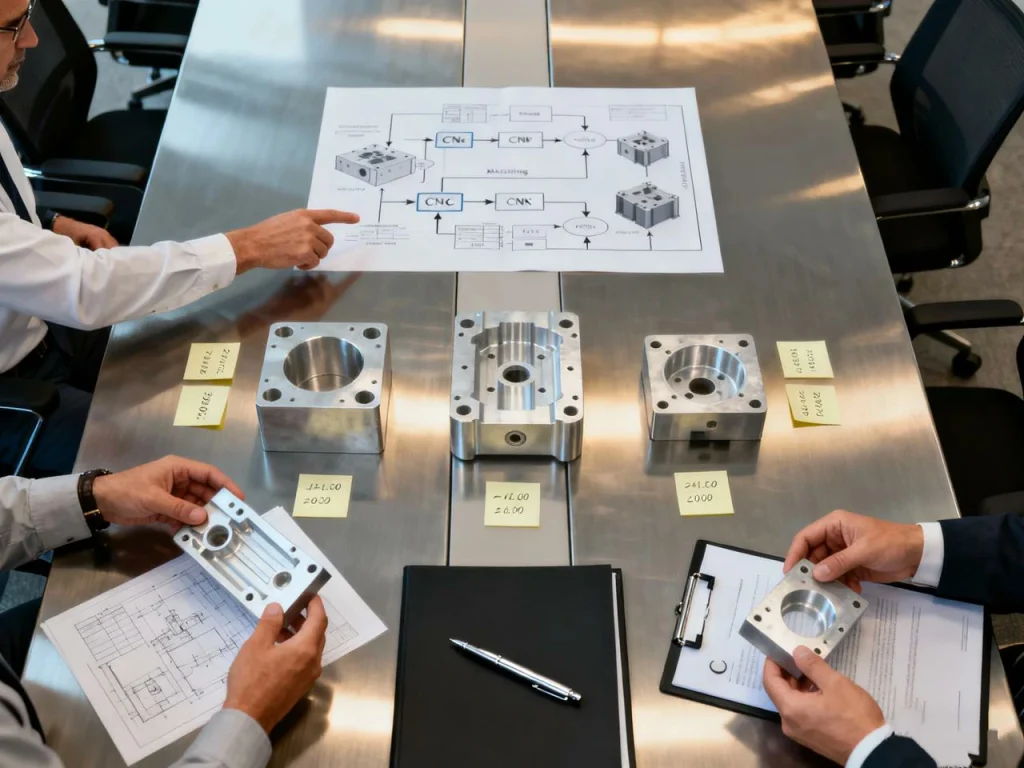
Quality, Tolerances & Compliance (ISO, AS9100, ITAR)
Ensuring consistent quality and meeting industry standards is crucial in CNC machining, especially for high-precision or regulated parts. Understanding tolerances, inspection methods, and relevant compliance frameworks helps manufacturers deliver reliable, repeatable results while minimizing risk. This section explores how quality control, measurement practices, and certifications like ISO, AS9100, and ITAR guide every step of the process.
Quality stack: in-process inspection, CMM, laser scanning, SPC, PPAP/FAI; AI-driven autonomous QC
Reliable precision comes from process and proof. In-process checks (probes, tool setters, torque monitors) catch drift early. CMM and laser scanning validate complex geometry. SPC tracks capability over time. For new parts, FAI (first article inspection) and PPAP (when needed) build a baseline. Shops are now adding AI for tool wear prediction and closed-loop corrections, linking the cnc control back to the next pass.
Standards explained: ISO 9001, AS9100, ISO 13485, ITAR
- ISO 9001: Quality management across industries. Good for most manufacturing process work.
- AS9100: Adds aerospace-specific controls like risk, product safety, and configuration management.
- ISO 13485: Medical device quality, with focus on risk, traceability, cleanliness, and validation.
- ITAR: U.S. export controls for defense-related parts, drawings, and data. Requires secure handling and proper registration.
When do they apply? Aerospace primes or flight hardware often require AS9100 and sometimes ITAR. Medical devices may require ISO 13485 and specific validation reports. Commercial parts can run under ISO 9001 with agreed inspection plans.
What tolerances can Custom CNC achieve?
Practical ranges depend on material, size, and process. A good baseline:
- General machining: ±0.005 in (±0.13 mm)
- Precision milling: ±0.001–0.002 in (±0.025–0.05 mm)
- Precision turning: ±0.0005–0.001 in (±0.013–0.025 mm)
- Fine features (EDM/grind): down to ±0.0001–0.0005 in (±0.0025–0.013 mm)
- Surface finish: as-milled 63–125 μin (1.6–3.2 μm); fine-turning near 32–63 μin; grinding to 8–16 μin; lapping can reach ≤8 μin
To put it simply: if you only need ±0.005 in, don’t call out ±0.001 in. Keeping tolerances realistic saves cost and time without hurting function.
Speed, Cost & Quoting: From CAD to Parts
Turning a digital design into a finished part involves more than just machining—it’s a careful balance of time, resources, and processes. Knowing what affects cost, how lead times are calculated, and where bottlenecks can occur allows teams to plan efficiently and make informed decisions. This section explores the main factors that determine both speed and expense from CAD to the final component.
Cost drivers: where your budget goes
The price of custom CNC parts comes from a few levers:
- Material: Stock price for steel, aluminum, titanium, brass, or metal and plastic shapes.
- Setup time: Programming, tooling, and fixturing. Complex parts need more setup.
- Cycle time: Machine minutes to remove material at safe feeds and speeds.
- Tool wear: Hard alloys and tiny tools raise cost.
- Quantity breaks: Higher volume lowers per-part cost by spreading setup.
- Secondary ops: Deburr, bead blast, anodize, passivate, heat treat, grind.
- QA scope: Basic inspection vs full FAI, CMM, and certification packages.
- Compliance: Documentation for ISO/AS and ITAR adds controlled steps.
Typical shop rates vary:
- 3-axis milling and turning: about $60–$150 per hour
- 5-axis: about $120–$250 per hour
- EDM: about $100–$180 per hour
- Engineering/programming: scoped to complexity
These are ranges; your exact quote depends on your part and supplier region.
Lead-time playbook: how to move faster
If your timeline is tight, try these moves:
- Simplify tolerances and finish to the minimum needed.
- Split a complex part into two simpler pieces with a standard fastener.
- Use common stocks and fasteners from a standard material drop-down.
- Approve a quick-turn prototype in the same material and faces that matter.
- Lock the CAD and send clean technical drawings with critical callouts only.
- Book early for finishing services, especially anodize and passivation.
How much does Custom CNC cost per part?
Expect wide ranges based on complexity and quantity:
- Simple turned aluminum spacer (qty 100): $6–$20 per part
- Milled aluminum bracket with 3 setups (qty 20): $40–$150 per part
- 5-axis titanium bracket (qty 5): $250–$1,200 per part
- Medical-grade stainless instrument with passivation and CMM report: add 15–30% to base machining
- Wire EDM profile in 0.5 in thick tool steel: $80–$300 depending on length and features
Use these numbers as planning anchors. Actuals depend on features, axes needed, inspection level, and finishing.
Is it cheaper to build your own CNC?
For hobby work or simple wood/plastic panels, building a small cnc machine can be cost-effective and a great learning project. But for high precision metal parts with tight specifications, it’s rarely cheaper in total cost. You’ll spend on a rigid frame, quality cnc control, spindles, motion components, safety, and a programming tool stack. Then add time to tune, maintain, and validate accuracy. If you need compliant parts with tolerances like ±0.001 in and documentation, a professional shop or online cnc machining service is the practical route.
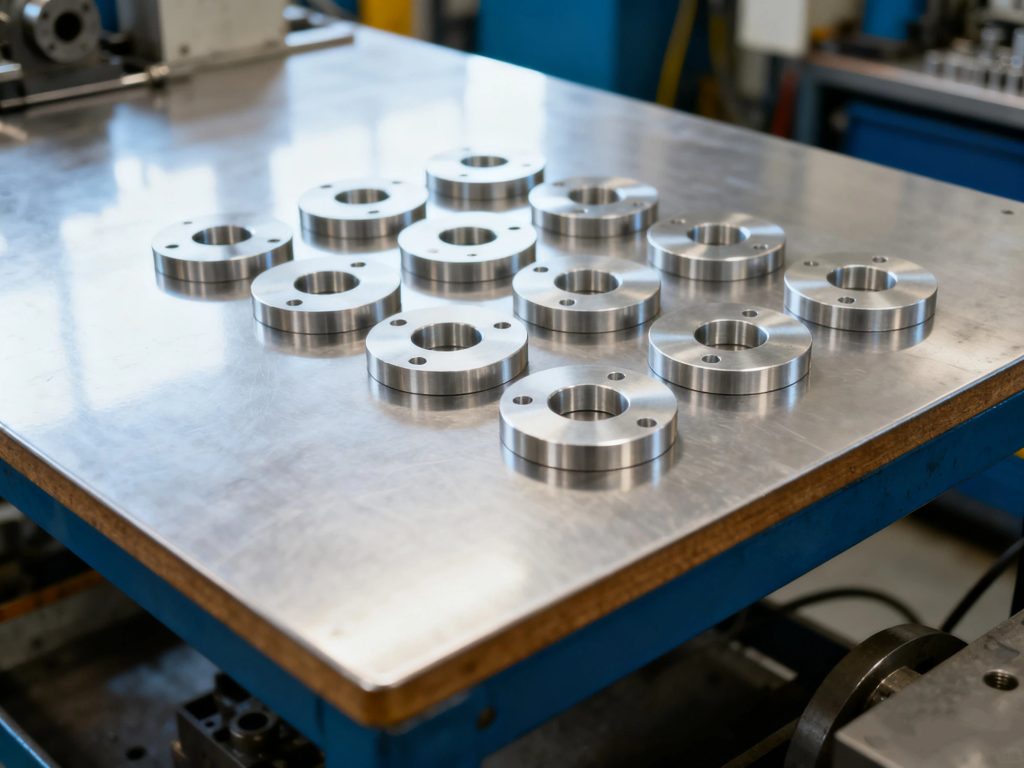
Industry Case Studies: Outcomes and ROI
Real-world examples reveal how theory translates into measurable results. By examining case studies across aerospace, medical, and automotive sectors, we can see how precision, process choices, and strategic planning impact efficiency, cost, and overall return on investment. This section highlights tangible outcomes and lessons learned from actual projects.
Aerospace: high strength, lightweight, safety-critical
An aerospace supplier needed a titanium hinge with a thin wall and tight positional tolerance across faces. Moving to 5-axis cut two setups and improved datum alignment. With tool-path optimization and on-machine probing, they hit ±0.001 in across the stack and cut cycle time by 18%. Weight dropped 12% with pocketing while meeting tensile strength and fatigue targets. The project met audits with full AS9100 documentation.
Medical devices: personalized implants and surgical tools
A team developing a patient-specific implant chose PEEK for biocompatibility and imaging needs. They set realistic surface Ra on the non-contact areas and reserved a finer finish for the mating surfaces. A short bridge production run under ISO 13485 controls proved repeatability. Lead time from approved CAD to first article was three weeks, aided by early DFM and a clean drawing package.
EV startups: faster iteration and lower prototype cost
An EV startup faced weekly changes to a thermal management block. Running milling and turning on aluminum with a simple router trim for a composite cover, they iterated in days. Compared with legacy methods, they saw up to 40% lower prototype spend across three sprints because they avoided expensive tooling and validated the design before any molding.
Operator insights: AI upgrades, small-batch reshoring
Shops report up to 30% efficiency gains after adding AI-driven CAM suggestions and predictive maintenance. In small-batch work, fewer scrap events and less unplanned downtime mean better on-time delivery and more stable quoting. These gains support reshoring by keeping total landed cost competitive without sacrificing quality.
Tech Trends Shaping Custom CNC (AI, Hybrid, Digital Thread)
The landscape of custom CNC is evolving fast, driven by emerging technologies that boost precision, speed, and flexibility. From AI-assisted toolpath optimization to hybrid additive-subtractive workflows and fully connected digital threads, these trends are reshaping how parts are designed, manufactured, and tracked. This section explores the innovations shaping the future of CNC machining.
AI-driven automation: CAM optimization and closed-loop feedback
AI now helps choose tools, feeds, and stepovers for your material and workpiece size. It predicts tool wear and suggests when to swap inserts to avoid tolerance drift. Closed-loop systems compare measured results to targets and adjust future passes. The goal is less guesswork and more stable precision machining.
Hybrid manufacturing: additive + subtractive
Hybrid combines strengths: print a near-net shape for internal channels, then mill sealing faces and grind bearing surfaces. It reduces waste in costly alloys like titanium and speeds up prototype cycles. Hybrids also help when a feature is impossible with tools alone; you can combine processes for the best result.
When is 3D printing better than CNC?
Choose 3D printing when:
- Internal channels or lattices cannot be machined
- Very low volumes with frequent design changes
- Large undercuts and freeform surfaces with limited load
- You need quick, functional geometry checks without tight tolerances
Choose custom CNC when:
- You need tight tolerances and smooth functional surfaces
- The part is structural and needs known mechanical properties
- The material is a standard alloy or engineering plastic with known certification
- You need consistent finish and dimensional stability across batches
Digital thread diagram
- A line showing CAD → CAM → machine (cnc control) → in-process metrology → CMM → SPC dashboard → corrective action back to CAM. Add IoT status (uptime, alarms) and part history traceability.
Getting Started, Supplier Vetting & Resources
Starting a custom CNC project involves more than sending a CAD file—it’s about choosing the right partner, understanding requirements, and planning for smooth execution. This section covers the steps to get started, how to vet suppliers effectively, and the resources you can rely on to ensure your parts are delivered on time, on budget, and to specification.
Onboarding steps: from CAD to shipment
- Upload CAD and technical drawings (call out only critical tolerances and finish).
- Get a DFM review: confirm materials, minimum walls, holes, and thread standards.
- Receive a quote with process, lead time, and inspection scope; push for clear quantity breaks or instant quotes if available.
- Approve and kick off programming and fixturing; agree on a first article plan.
- Machining and any finishing steps (anodize, passivate, grind).
- Inspection and QA package: certificates, CMM, and material certs if needed.
- Shipment with handling instructions for delicate machine parts.
Supplier checklist: what to verify
- Certifications that match your needs (ISO 9001, AS9100, ISO 13485)
- Equipment list: 3-axis, 4-axis, 5-axis, lathe, EDM, router, grind
- Sample inspection reports and GD&T knowledge
- Security for ITAR and sensitive data; ask about NIST 800-171 controls if applicable
- On-time delivery metrics and corrective-action process
- Material traceability and counterfeit avoidance policies
- Clear communication on drawing changes and DFM feedback
For teams seeking a reliable partner, U-Need provides custom CNC machining services for metal and plastic prototypes, with rapid prototyping, precision milling, turning, and full production capabilities. Their expertise spans tight tolerances, complex geometries, and small-batch runs—making them a practical choice for engineers needing quality parts fast.
How fast can I get custom CNC parts?
For simple aluminum prototypes with stock material, 2–7 days is common. Complex parts with multiple ops or finishing steps may take 1–4 weeks. Regulated parts with full validation can need 4–12 weeks depending on audits, test reports, and capacity. Expedite slots help, but only if you keep design and inspection scopes lean.
Friendly tips that save time and money
You’ve seen the details. Here are a few plain-language tips that work:
- Keep your general tolerances wide; call out only the critical fits.
- Add fillets to inside corners; save EDM for features that need it.
- Increase wall thickness slightly on plastics to help stability.
- Choose materials you can verify and stock locally if speed matters.
- Ask for a DFM pass earlier than you think—you’ll avoid rework.
- If you need exact Ra, explain why; if not, accept as-milled and save.
FAQs
Building your own CNC machine can be a fun project for hobbyists or simple panel work, but for precision parts, it’s rarely cost-effective. A professional-grade CNC capable of tight tolerances requires a rigid frame, quality motion components, reliable spindles, and sophisticated control software. You also need time for tuning, calibration, and ongoing maintenance. On top of that, building a machine doesn’t give you the expertise, tooling, inspection capabilities, or documentation needed for regulated industries or high-precision parts. In contrast, using a professional CNC service ensures accurate, repeatable results with minimal risk, even for complex 5-axis or hybrid jobs. Essentially, DIY makes sense for learning or small projects, but for high-quality, compliant, and repeatable parts, outsourcing to an experienced CNC shop is the smarter, faster, and ultimately cheaper route.
The cost of custom CNC machining depends on several factors: process, material, complexity, and quantity. Simple turned spacers produced in volume may only cost a few dollars each, while intricate 5-axis titanium brackets with multiple setups, inspection reports, and finishing steps can reach hundreds or even thousands per piece. Other factors like secondary operations—anodizing, heat treatment, or passivation—add to the price. Lead times, tooling needs, and tolerances also influence cost. Generally, higher precision and more complex geometry require additional setup, longer machine time, and stricter quality checks, which increase expenses. The best way to plan your budget is to provide clear CAD files with only critical tolerances and finishes, get a detailed quote, and consider trade-offs between cost, time, and accuracy to meet your project’s requirements efficiently.
Custom CNC is all about precision and adaptability. Essentially, it’s the use of CNC technology—milling, turning, EDM, and hybrids—to create parts exactly to your specifications. Whether you’re producing prototypes, bridge runs, or small-batch production, CNC turns a digital CAD model into a physical part with remarkable accuracy. The “custom” part refers to tailoring processes, materials, and tolerances to meet the unique needs of your design. From metals like aluminum, stainless steel, and titanium to plastics like PEEK, polycarbonate, and nylon, CNC can handle a wide range of materials. Along the way, it provides traceability, consistent surface finishes, and repeatability. With proper planning and collaboration with experienced shops, CNC ensures that your design intent is realized in a functional, high-quality part.
CNC machining is incredibly precise, but it’s not without risks. First, safety is a top concern—unguarded machines or operators who aren’t properly trained can lead to accidents. Next, tolerances can drift if tools wear down or heat isn’t managed, which can ruin a part. Intellectual property and data security also matter; CAD files and toolpaths must be protected to prevent leaks. Schedule risks arise when rare materials or special finishes are needed, causing delays. Finally, quality can suffer if drawings are unclear or tolerances are over-specified. The key is planning: ensure operators are trained, control temperatures, monitor tool wear, secure data, and communicate tolerances clearly. When managed correctly, these risks are minimized, allowing CNC to reliably deliver high-quality, repeatable parts for any industry.
CNC machining offers a combination of precision, speed, and flexibility that’s hard to beat. First, it provides high accuracy and repeatability, so every part in a batch meets the same tight tolerances. Second, it works with a wide range of materials—metals like aluminum, titanium, and stainless steel, as well as plastics like PEEK or polycarbonate—allowing engineers to choose the best material for performance and cost. Third, CNC enables fast changeovers and rapid prototyping, letting teams iterate designs quickly without extensive setup. Fourth, it ensures strong digital traceability: CAD and CAM files feed directly into the machine, creating a clear link between design intent and final parts. Finally, CNC reduces human error and can scale from single prototypes to small-batch production, making it a reliable choice for industries where precision, consistency, and quality matter.
CNC remains a cornerstone of modern manufacturing. Industries from aerospace to medical devices to EVs all rely on CNC to make parts smaller, stronger, and more precise. The demand for skilled CNC programmers and operators continues to grow, with median pay often exceeding $60,000 in the U.S., reflecting the critical role these professionals play. The trend isn’t just about volume—it’s about complexity and speed. Products are evolving rapidly, and CNC allows manufacturers to iterate quickly while maintaining exacting tolerances. Whether for prototypes, low-volume production, or bridging the gap before injection molding, CNC ensures accuracy, repeatability, and efficiency. This growing reliance shows that investing in CNC skills or services is a strategic move for businesses seeking agility and quality in 2025.

 English
  German
  French
  Italian
  Spanish
  Polish
  Czech
Czech  Japanese