
If you’ve searched “types of milling,” you probably want a clear answer you can use right now, not a maze of jargon. To put it simply: there are two pillars you should know. First, types of milling operations (how the milling cutter cuts the part). Second, types of milling machines (the machine configuration that does the work). When you match these pillars, you choose tools and setups that finish parts faster, hold tolerance, and fit your budget.
This guide starts with a quick, plain‑English summary for fast decisions. Then it walks through core milling operations like face and end milling, common machine types like vertical and horizontal, typical specs, and performance. You’ll see real shop examples, a simple selection framework, trends like HEM/HSM and 5‑axis, and regional buying tips. Along the way, you’ll also see key questions answered: How many types of milling are there? What is CNC milling? What’s the milling machine process step‑by‑step?
Use the headings to jump where you need. Keep the rest for deeper validation and training.
Quick answer: different types of milling at a glance
What is milling? Milling can seem complex with so many operations and machines available, but a quick overview helps you navigate efficiently. This section summarizes the different milling approaches, the core milling technology behind each process, and the various milling methods most shops use daily. By understanding these basics, you can match the right operation to the right machine and optimize your workflow from the start.
Core categories (the two pillars)
When people ask “How many types of milling are there?” the most practical answer is two groups:
- By operation (how you cut): face, peripheral/slab, end milling, slot/keyway, profile/contour/form, angular/helical/gear, plus modern HSM/HEM strategies.
- By machine (what you cut on): vertical mills (knee/turret, bed, VMC), horizontal mills and HMCs, universal, ram‑type, plano millers, and CNC 3–5 axis configurations.
Most shops cover over 80% of day‑to‑day work by pairing 2–3 operations (often face + end + slot) with 1–2 machine types (often a vertical and, if needed, a horizontal or 5‑axis). For those looking to explore a range of CNC milling machines and tools suitable for these operations, a dedicated CNC milling resource provides detailed specifications and options.
Fast decision guide (match need to machine)
- Flat stock prep, general jobbing and prototypes → Vertical knee/bed or VMC
- Heavy removal, multi‑face production, easy chip flow → Horizontal or HMC with pallets
- Complex 3D surfaces, fewer setups, tight features → 5‑axis CNC
- Education, hobby, R&D, training → Benchtop CNC or turret mill
What are the main types of milling?
- Operations: face, peripheral/slab, end milling, slot/keyway, profile/contour/form, angular, helical, gear, and HSM/HEM strategies. Use case example: face milling to square stock, end milling for pockets and 2D contours, ball‑nose for 3D surfaces.
- Machines: vertical (knee/turret, bed, VMC), horizontal (HMC), universal, ram‑type, plano miller, and CNC in 3‑, 4‑, 5‑axis. Use case example: VMCs for job‑shop work, HMCs for production parts, 5‑axis for complex geometry.
Types of milling operations (CNC milling & manual milling)
When people say milling is a versatile machining process, they mean one thing: the same machine tool can perform many milling operations by changing the cutter, the toolpath, and the setup. Selecting the appropriate milling operation is key to getting the best results efficiently. Here are the common types of milling operations you’ll use most often.
Core operations: face, peripheral/slab, end milling
Face milling
In face milling, the spindle axis is perpendicular to the work surface and a face mill does most of the cutting with its end teeth. Think of it as the fastest way to make a surface flat and clean. It’s ideal for squaring stock, preparing a casting, or hitting a flatness callout before drilling. Many shops also use manual milling machines for simple flat surfaces, combining manual operations with automatic ones in a flexible workflow. Using milling in this way ensures the process is both efficient and consistent. Many shops also rely on milling cutters or end mills for finishing passes, since milling is the most precise method for achieving flat surfaces.
- Typical cutting speed in steel: about 100–300 m/min with carbide.
- On modern VMCs with strong workholding, material removal rates (MRR) can exceed 500 cm³/min in favorable setups.
- In shops, squaring 1018 steel blocks often uses a 50–80 mm face mill at about 0.15–0.25 mm/tooth, taking one or two passes to size and finish.
Peripheral or slab milling
Here the cutter axis is parallel to the surface. The work happens on the periphery of a wide slab mill. If you need to reduce thickness fast, machine a large flat in one pass, or straddle two faces at once, this is your go-to. Horizontal mills are often preferred for gang milling, where multiple cutters machine several surfaces simultaneously. This setup allows various operations to be performed efficiently in one cycle.
- Often done on horizontal milling machines for better rigidity and arbor support.
- Straddle milling uses two cutters to finish both sides of a part at the same time, a classic production move.
End milling
This uses an end mill and can cut with both the end and the side of the tool. It’s the daily driver for slots, pockets, 2D profiles, and 3D surfaces. On CNC machines, profile milling is commonly applied to follow complex contours and 3D shapes.
- Square end mills, corner‑radius, and ball‑nose are common.
- On a CNC milling machine, end milling plus good CAM gives you contouring, pocketing, and even smooth 3D surfacing.

Slotting & keyway milling (T‑slots, side‑and‑face)
Slots and keyways show up on shafts, hubs, fixtures, and machine tables. You might cut them in a few ways:
- On a horizontal mill, side milling cutters handle deep, narrow grooves with solid guidance on an arbor.
- On a VMC, slotting end mills can mill keyways and T‑slots in fewer setups.
- For deep slots, keep chip evacuation in mind. Use through‑spindle coolant if possible, reduce radial engagement, and consider helical ramping rather than full‑width plunges to protect the tool.
Profile, contour, and form milling (2D/3D)
Profile or contour milling follows a 2D path around a shape. With CNC, you can also follow 3D curves for molds, dies, aerospace skins, and medical parts.
- Form milling uses form‑relieved cutters to generate a shape in one pass—think grooves, radii, or gear‑like forms.
- For 3D, a ball‑nose end mill is common. A small stepover (often 5–10% of the tool diameter) controls scallop height. Yes, this can take hours per cavity when the finish must be excellent.
Special strategies: angular, helical, gear, HSM/HEM
- Angular milling uses single‑ or double‑angle cutters to machine chamfers and angled faces.
- Helical milling follows a helix for thread‑like grooves or special channels.
- Gear milling uses form tools or indexing methods to cut tooth forms on a mill.
- HSM/HEM (high‑speed or high‑efficiency milling) uses high surface speed, low radial engagement, and deep axial cuts. The benefits are steady temperature, longer cutting tool life, and strong MRR with fewer stalls. CAM often calls this adaptive or trochoidal. Modern setups may integrate cam milling and a full CNC milling process to optimize toolpaths and feed rates.
To put it simply, end milling is ideal for pockets and profiles, face milling is ideal for flatting and squaring, and HEM helps you rough fast with less wear.
Types of milling machines and configurations
Understanding your machine type shapes what you can achieve on the shop floor. There are different types of milling machines, and knowing their strengths helps you plan work efficiently. From vertical and horizontal milling machines to CNC setups, milling machines can perform everything from simple slotting to complex 3D contours.
Vertical mills (knee/turret, bed, VMC)
A vertical milling machine has a vertical spindle. The table moves in X–Y; Z comes from a knee or a moving head.
- A knee/turret mill (often called a turret or Bridgeport‑style) is flexible and friendly for job shops, maintenance, and training. It shines at manual work and light CNC conversions.
- A bed/column type fixes the table and moves the head, adding stiffness for heavier cuts.
- A vertical CNC VMC adds automatic tool change, probing, and fast feeds for production.
Typical representative specs for mid‑size verticals:
- Max spindle speed around 4,000 rpm for traditional manual verticals
- Table about 1000 × 500 mm
- Max workpiece weight around 500 kg
Horizontal mills and HMCs
A horizontal milling machine has a horizontal spindle. Cutters mount on an arbor. The setup is naturally strong and clears chips well.
- Perfect for slab and straddle milling, slots, and gear‑style work.
- In CNC form, an HMC with pallets and tombstones machines many faces in one cycle. You gain uptime and parallel loading.
Typical representative specs for mid‑size horizontals:
- Max spindle speed around 3,500 rpm
- Table about 1200 × 600 mm
- Max workpiece weight around 800 kg
Universal and ram‑type; plano millers
A universal milling machine can work as a horizontal or vertical and often includes a swiveling table (commonly ±45°). These machines accept attachments like indexing heads and rotary tables, which is useful in toolrooms and for one‑off jobs.
A ram‑type mill has a spindle mounted on a ram that can move forward and back, which helps reach awkward features or set up special cases.
A plano miller is a large gantry‑style machine with a moving table. It’s meant for very large parts where a standard column‑and‑knee won’t do.
CNC axis configurations (3‑, 4‑, 5‑axis and multitasking)
- 3‑axis CNC (X, Y, Z) handles most prismatic parts, pockets, and 2D profiles.
- 4‑axis adds a rotary. You can index or run continuous rotation for cylinders, flats around shafts, or simple helical features.
- 5‑axis adds tilting or a second rotary. This allows better access to complex surfaces, shorter tools, and fewer setups.
- Mill‑turn and turn‑mill combine turning and milling. For shafts and symmetric parts with flats, holes, and keyways, these hybrids can finish parts in one machine. For readers interested in exploring these combined machining operations, a CNC turning resource provides examples of machines and configurations commonly used in multi-process workflows.
To answer “How many types of CNC milling machines are there?” most shops group them by axis count: 3‑axis, 4‑axis, and 5‑axis. Within those, you’ll find vertical and horizontal variants, and different table or head styles.

Specs and performance benchmarks (data‑driven)
Numbers help you plan. The ranges below are typical for many mid‑size machines. Always check the exact spec sheet for your model and cutter.
Operation‑level benchmarks (typical numbers)
Face milling in steel often runs cutting speeds near 100–300 m/min with carbide. Feed per tooth around 0.15–0.25 mm/tooth is common in many shop examples for moderate-sized face mills. Based on ISO 10791-1, these ranges represent typical values for mid-size vertical milling machines under standard conditions. With a steady setup, a modern VMC can push MRR above 500 cm³/min in roughing passes.
For HEM in aluminum, the recipe is high surface speed, light radial stock (often ≤20% of tool diameter), and deep axial engagement. The payoff is large MRR with stable temperatures and longer tool life.
For 3D surfacing with a ball‑nose, a stepover near 5–10% of the tool diameter balances finish and time. Smaller stepover means finer finish and longer runtime. This is why finishing mold cavities can take hours.
Machine‑level specs by type (representative ranges)
Use the table below as a quick reference. Actual values vary by class and builder.
| Machine type | Axis class | Typical max spindle speed | Typical table size | Typical max workpiece | Best applications | Pros | Cons |
|---|---|---|---|---|---|---|---|
| Vertical knee/turret | Manual/CNC‑assist | ~4,000 rpm | ~1000 × 500 mm | ~500 kg | General jobbing, training | Flexible, low cost | Lower rigidity, manual setups |
| Vertical bed / column | 3‑axis | ~3,000 rpm | ~1400 × 700 mm | ~1,000 kg | Heavy cuts, larger plates | Stiff, simple | Larger footprint |
| CNC VMC | 3‑ or 4‑axis | ~8,000–12,000 rpm (common) | ~800 × 400 mm (varies) | ~300 kg (varies) | Production/prismatic parts | Automation‑ready | Limited chip fall on deep pockets |
| Horizontal / HMC | 3‑ to 5‑axis | ~3,500 rpm | ~1200 × 600 mm | ~800 kg | Multi‑face production | Chip evacuation, pallets | Higher price, programming setup |
| Universal / ram‑type | Manual/CNC | ~5,000 rpm | ~1100 × 550 mm | ~600 kg | Toolroom, complex setups | Versatile | Slower than VMC/HMC |
| Plano miller | CNC/manual | Lower SFM | Very large | Very heavy | Big bases, gantry parts | Huge capacity | Not for small parts |
How do I calculate material removal rate (MRR)?
- Core formula for slotting or straight passes: MRR = width of cut × depth of cut × feed rate.
- Feed rate (mm/min) = feed per tooth × number of teeth × spindle rpm.
- For HEM, use the effective chip thickness (because chip thinning applies) and the radial engagement used. Your CAM system often reports an estimated MRR. Always sanity‑check with your toolmaker’s data.
How to choose the right milling setup (framework)
Every good choice starts with the part. Size, material, tolerance, surfaces, and batch size point you to the right milling process and type of milling machine. Here’s a simple way to decide.
Match operation to machine type (vertical vs horizontal vs universal)
If you need to flatten, square, or prep stock, a face mill on a vertical or VMC is fast and flexible. If you need large flats or to reduce thickness in one pass, a slab mill on a horizontal is efficient.
If your part has many slots and keyways, a horizontal with side‑and‑face cutters will feel at home, but a rigid VMC with the right slotting end mills can also do the job while staying in one setup.
If your part is rich in contours or needs tight 3D surfaces, pick 3‑ to 5‑axis CNC. A 4th axis helps index faces on prismatic parts; a full 5‑axis reduces setups and keeps short tools on steep walls.
Industry‑based recommendations (aerospace, automotive, mold & die, education)
For aerospace and medical, 5‑axis and solid probing are key. Tool reach, tight surface finish, and thermal stability matter.
For automotive and general production, HMCs with pallets and tombstones keep spindles cutting. Multi‑face machining and good chip evacuation deliver higher uptime.
For mold and die, a 5‑axis machine with high‑speed spindles and ball‑nose finishing is common. Toolpath control, tilting to keep constant engagement, and careful stepover are the daily moves.
For education and hobby use, a benchtop CNC or a turret mill is budget‑friendly and safe for training. You can still teach feeds, speeds, climb milling vs conventional milling, and basic milling technique.
Budget and ROI tiers (benchtop, mid‑range VMC, high‑end 5‑axis)
An entry setup (manual or compact CNC) builds skills and supports one‑off parts. It’s the most affordable way to learn.
A mid‑range VMC with a 4th axis is a strong value for job shops. It handles most brackets, plates, and housings. You can add probing and tool setters later.
A high‑end 5‑axis or HMC with pallets pays back on complex parts, setup reduction, and longer unattended runs. The cost is higher, but so is spindle utilization.
Is a 5‑axis CNC worth it for a small shop?
It depends on your part mix. If you see repeated multi‑face parts, deep 3D surfaces, or tight features that need many setups, 5‑axis can cut total time and scrap. Factor in CAM software, posts, and training. If most jobs are simple 2D plates, a solid VMC with a 4th axis may be smarter at first.
Real‑world examples and case snippets
Real‑world examples help bridge theory and practice by showing how different setups perform on actual parts. In this section, we explore how a CNC machine handles complex machining operations using the right cutting tool. These case snippets illustrate the decisions and techniques that make milling both an art and a science.
Squaring 1018 steel on a VMC with a 50–80 mm face mill
You clamp a rough‑cut block, set a safe tool length, and face the high side first. A face mill with carbide inserts runs around 0.15–0.25 mm/tooth. Two passes often bring you to size: a roughing pass, then a light finishing pass for flatness and finish. Many shops prefer climb milling to improve surface and protect the cutter, as long as backlash and rigidity are under control. Good parallels, a stable vise, and a short stick‑out keep chatter away.
5‑axis mold cavity surfacing
You rough with HEM, then switch to a ball‑nose for finishing. A 5–10% stepover holds scallop height steady. You tilt the tool slightly to keep the contact point off the ball center. This improves chip flow and finishes. Expect long finishing times; the payback is fewer hours polishing later. For deep pockets, use shorter tools with 5‑axis tilt to keep them rigid.
Horizontal machining with pallets for multi‑side parts
You set tombstones with repeatable fixtures. While the spindle machines one side, the other pallet is loaded. Indexing gives access to many faces, and chips fall away from the cut. Shops that switch from 3‑axis vertical to palletized horizontal often see spindle utilization above 80% because loading and measuring move outside the cut cycle.
High‑efficiency milling (HEM) in aluminum
You program an adaptive clearing toolpath with 10–20% radial engagement and 2–3× tool diameter in axial depth. Surface speed is high. The tool sees a steady chip load and heat leaves with the chip. In practice, you see smoother spindle load, better tool life, and faster roughing. Remember to use chip thinning in your feed per tooth and confirm the coolant flow is strong.
Trends that affect types of milling in 2025
As milling technology evolves, new innovations are shaping various types of milling and how they are applied in modern production. This section highlights trends in automation, digital integration, and high-efficiency strategies, showing how a CNC machine can transform the manufacturing process to achieve higher precision, faster cycles, and more consistent results.
Automation and palletization (HMC/VMC)
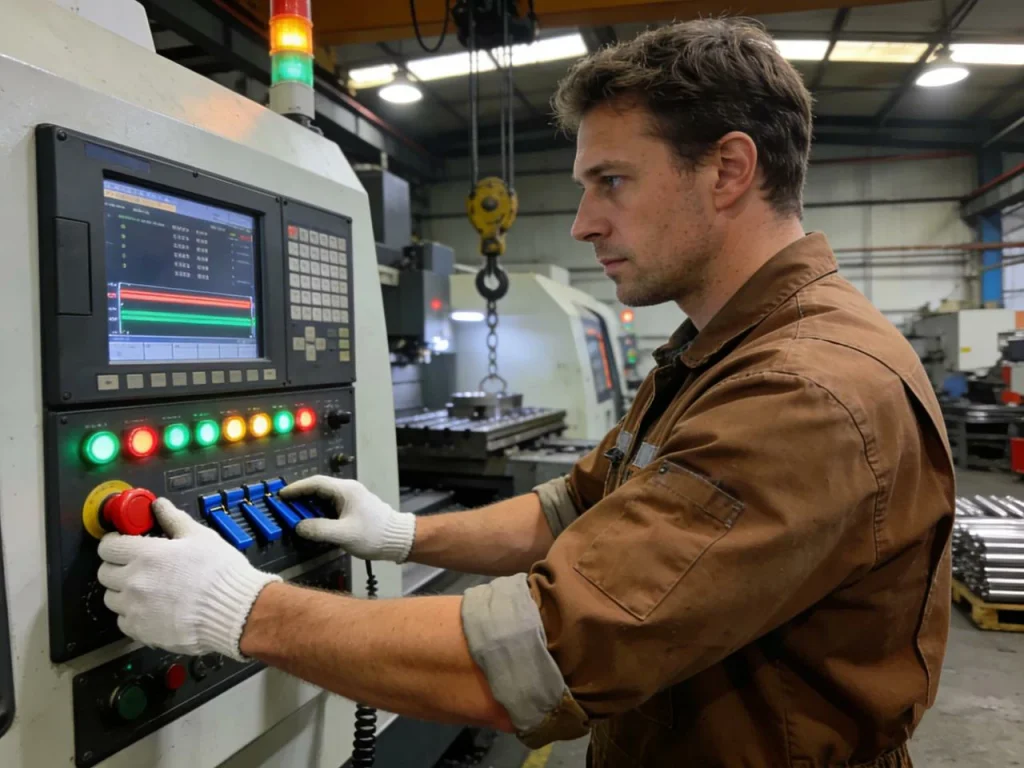
Pallet pools and zero‑point fixturing let you set many jobs and run lights‑out. In‑process probing helps verify offsets and catch errors. Even a small VMC gains a lot from repeatable fixtures and simple load carts.
Digital CNC: IoT, digital twins, predictive maintenance
Sensors on spindles, coolant, and drives stream data to dashboards. You can trend vibration and temperature to plan tool changes before failure. Digital twins mirror your setup to test toolpaths and detect clashes before you cut.
AI CAM toolpaths and smart tooling
CAM now suggests adaptive strategies and feeds that match chip thinning. Tool libraries include real edge geometries and recommended feed per tooth, which increases first‑part success. Some tools carry chips of their own data, reporting wear and cycle count.
Sustainability: coolant management and energy‑efficient spindles
Coolant filtration, tramp oil skimmers, and MQL cut waste and improve safety. Newer spindles can throttle power use, and warm‑up cycles stabilize thermal growth faster. Your parts hold size with less scrap and less energy.
Regional and market considerations for machine choice
Choosing the right milling machine goes beyond technical specs—it also depends on regional availability, service networks, and market focus. This section explores how geographic and economic factors influence machine selection, highlighting differences between European, American, and Chinese OEMs.
German/Japanese OEM profiles (precision and lifecycle support)
These vendors are known for tight accuracy, long machine life, and structured service. They often provide deep training, robust controls, and broad application libraries. The trade‑off is higher price and longer lead time in some markets. If your parts demand microns and long uptime windows, the value can be clear.
American OEM profiles (value and education focus)
These builders often emphasize ease of use, wide dealer networks, and training options. They can be a good fit for small shops, schools, and mid‑volume production. Ultra high‑end 5‑axis and heavy gantry options may be fewer than from some European or Asian makers, but the total cost of ownership can be attractive.
Chinese OEM profiles (cost and speed‑to‑purchase)
You can source machines quickly with low upfront cost. Quality and support vary, so do your due diligence. Look for third‑party accuracy tests, service commitments, and local parts stock. For simple parts and short lead times, the value can be strong if you validate the machine.
Which country makes the best CNC milling machines?
There is no single “best.” Match your tolerance targets, service needs, and budget. If you run high‑precision aerospace work, you may favor vendors with proven 5‑axis control and strong service. If you train students or run prototypes in aluminum, local support and straightforward controls may matter most.
The milling machine process: a short step‑by‑step
Here is the milling process in simple steps. This helps new operators connect the dots.
- Define the part: material, drawing, tolerance, finish.
- Choose the operation: face, end, slot, profile, or a mix; decide on climb or conventional milling when needed.
- Pick the machine: vertical, horizontal, universal, or CNC with 3–5 axes.
- Select tooling: face mill, end mill, form mill, side‑and‑face, or thread mill.
- Plan workholding: vise, clamps, tombstones, zero‑point, or soft jaws.
- Program feeds and speeds: set surface speed and feed per tooth; confirm coolant and chip evacuation.
- Run a safe setup: indicate, probe, dry run, then cut.
- Measure and adjust: verify features, adjust offsets, and finish.
This simple loop—plan, cut, measure—defines most milling operations.
Practical selection examples you can copy
- Flat plate in mild steel, two faces to clean, one slot: Use a VMC with a 63 mm face mill to square, then a 10 mm end mill to slot. Keep the slot depth under 2× diameter per pass or use ramping.
- Large bar that needs thickness reduced: If available, use a horizontal mill with a slab mill for one‑pass removal. Straddle if you need matched faces.
- Aluminum bracket with pockets and chamfers: A 3‑axis VMC with adaptive roughing and a small chamfer mill for edges. Use HEM to rough fast, then a finishing pass to size.
- Complex impeller with tight 3D surfaces: A 5‑axis CNC with ball‑nose finishing. Tilt the tool to keep point contact off center.
Common mistakes to avoid
- Using full‑width slotting on deep features when a helical ramp and constant‑engagement strategy would cut cooler and faster.
- Ignoring chip evacuation in deep pockets, especially on vertical machines.
- Skipping probing and then chasing offsets by hand for hours.
- Choosing a machine by price only, not by support, tolerance needs, and part mix.
Conclusion
Understanding different operations and the variety of types of milling machines is key to efficient and precise machining. From face and end milling to profile, slot, and high-efficiency strategies, each operation has its ideal machine and setup. By selecting the right milling approach for a part’s material, geometry, and tolerance, users can optimize productivity, reduce setup time, and maintain high-quality results.
Whether working on simple job-shop tasks or complex 3D components, this guide equips readers to make informed choices about milling operations and machine configurations, ensuring consistent performance and cost-effective production.

Short FAQs
There are many different types of milling that shops use every day. Broadly speaking, they fall into operations and machines. Operations include face milling, peripheral/slab milling, end milling, slot or keyway milling, contour/profile milling, angular milling, and high-speed or high-efficiency strategies. On the machine side, you’ll find vertical mills (knee, turret, bed, or VMC), horizontal mills, universal milling machines, ram-type, and large plano mills. Each machine type has strengths: vertical mills are flexible and good for setup changes, horizontals excel at chip evacuation, and universal machines offer tilt and swivel for complex angles. Understanding common types of milling is key to choosing the right combination of cutter, toolpath, and setup, ensuring faster, more accurate production while reducing wear on tools and machines.
CNC milling technology adds a whole new layer to traditional milling. Instead of manually moving the table and spindle, a computer reads a program and controls the cutting paths automatically. This allows for precise replication, complex geometries, and fewer setups, especially when working with 4‑ or 5‑axis machines. CNC milling is particularly useful for parts that need tight tolerances or intricate surfaces that would be nearly impossible to achieve manually. Operators still need to understand speeds, feeds, and tool engagement, but the software handles the motion and coordination. In modern shops, CNC milling services are common because they let manufacturers switch between job types efficiently, reduce scrap, and produce high-quality milling parts consistently. Essentially, CNC transforms milling from a manual craft into a highly repeatable and versatile manufacturing process.
When people talk about face milling and end milling, they’re referring to different types of milling operations. Face milling uses the flat face of a cutter to remove material and create a smooth, flat surface. It’s ideal for squaring stock or flattening a casting quickly. End milling, on the other hand, uses the end and sides of a cutting tool—like milling cutters or end mills—to cut slots, pockets, and profiles. The end mill’s versatility allows it to follow complex paths and even carve 3D surfaces on a CNC machine. Shops often combine these operations depending on part geometry: a face mill for bulk removal and flatness, then end mills for precision features. Both operations are standard in job shops, prototyping, and production environments, highlighting how a single machine can handle multiple tasks with the right tooling.
CNC milling machines are generally classified by axis count and configuration, with horizontal and vertical milling machines covering most shop needs. A 3‑axis machine handles basic prismatic parts, pockets, and profiles. Adding a 4th axis allows rotation for cylinders or indexing, while a 5th axis enables tilting or multiple rotations for complex 3D surfaces. Within each class, there are variations like knee mills, bed mills, or turret-style machines. Each type is designed for specific use cases: verticals for job-shop flexibility, horizontals for production efficiency, and universal machines for more specialized tasks. Selecting the right machine depends on part geometry, batch size, and tolerance requirements. By understanding types of CNC milling operations, manufacturers can optimize their workflow, minimize setups, and achieve high precision across a range of materials and geometries.
Milling is a step-by-step process that ensures parts are produced accurately and efficiently. First, you define the part by considering the material, drawing, tolerance, and finish. Next, you plan the different milling operations needed—this might include face milling, end milling, slotting, or profiling—depending on part geometry. Then you choose the right types of milling machines include vertical, horizontal, universal, or multi-axis CNC setups, and select appropriate tools for each task. Proper workholding—using vises, clamps, tombstones, or zero-point setups—is crucial for stability. Afterward, you program feeds, speeds, and coolant flow, and run a test cut to ensure everything is correct. During cutting, the operations performed must be carefully monitored, and adjustments are made as necessary. Finally, measurement and verification close the loop, showing why milling is a versatile machining process that’s widely used in modern manufacturing.
References

 English
  German
  French
  Italian
  Spanish
  Polish
  Czech
Czech  Japanese