
A mechanical shaft is the rotating backbone of countless machines—if it’s underspecified, misaligned, or poorly made, you can end up with vibration, bearing damage, fatigue cracks, and expensive downtime. This guide answers the main questions people search for: what a mechanical shaft is, how it transmits torque and rotational power, and how to choose, size, and maintain one so it lasts. We’ll start with clear definitions and the most-used types of shafts, then move into real design loads and core checks (torsion plus bending), materials and heat treatment, manufacturing and tolerances, and the failure modes engineers see most often. You’ll finish with practical specification and maintenance checklists you can use right away.
Mechanical shaft fundamentals
According to ISO 66848, Mechanical shafts are fundamental components in almost every machine that rotates or transmits power. Understanding what a shaft is, how it differs from similar components like axles and spindles, and how torque, power, and speed interact is the first step toward designing, specifying, or analyzing any rotating system. This section breaks down these basics so you can see why shafts aren’t just simple rods—they are carefully engineered bridges that carry energy, load, and motion with precision.
What is a mechanical shaft (torque, power, alignment)
What is a mechanical shaft? A mechanical shaft is a rotating, usually cylindrical part that helps transmit power and transmit torque from a power source (like a motor or engine) to a part that uses that power (like a pump, fan, gearbox, or propeller). In plain terms, a shaft is the strong “rotary bridge” that moves energy from one part to another.
A shaft does more than spin. In many machines, the shaft also supports rotating parts like a gear, pulley, sprocket, coupling, or flywheel. That means a shaft must stay straight enough to protect bearing life and keep parts in line. If alignment drifts, loads grow fast, vibration rises, and the shaft can crack under cyclic loading.
Early in a project, it helps to define a few key numbers because they shape almost every later decision: power (kW), speed (rpm), torque (N·m), shaft diameter, length, and the bearing span. You can have a shaft that is “strong enough” but still fails because it is too flexible, too rough at the bearing seat, or not balanced for the speed.
Shaft vs axle vs spindle (avoid common spec mistakes)
People often mix up “shaft,” “axle,” and “spindle,” and that can cause costly spec errors.
A shaft rotates and transmits torque. In shaft mechanical engineering, that is the core idea: it carries torsional loads and often also sees bending.
An axle is mainly there to support load. It may not transmit much torque at all. Some axles are fixed and do not rotate, even though wheels or pulleys rotate around them. So an axle is often a bending member more than a torque member.
A spindle shaft is a short, high-accuracy shaft, often used in machine tools. A spindle might spin at high rpm, where tiny runout and balance errors become big problems. In other words, a spindle is a type of shaft, but with much tighter needs for precision, vibration control, and surface finish.

Here’s a simple way to picture the load differences:
| Component | Primary Function | Loads Experienced | Rotation | Key Characteristics / Notes |
|---|---|---|---|---|
| Shaft | Transmit torque | Torque + often bending | Rotates | Core idea in shaft mechanical engineering: carries torsional loads and often bending loads. Common in mechanical systems. |
| Axle | Support load | Mainly bending, little/no torque | May not rotate | Often fixed while wheels or pulleys rotate around it. Focus on bending and stiffness rather than torque. |
| Spindle | High-precision rotation | Torque + high precision | Rotates, often at high RPM | Short, high-accuracy shaft used in machine tools. Tight tolerances, vibration control, and surface finish are critical. |
If you are writing a drawing or RFQ, this distinction matters because it changes the design checks. A “shaft” suggests torque plus fatigue. An “axle” suggests bending and stiffness. A “spindle” suggests tight tolerances, grinding, and dynamic balance.
How power, speed, and torque relate (fast sizing inputs)
If you know power and speed, you can estimate torque quickly. In metric units:
[T = 9550 , frac{P}{N}]
Where T is torque in N·m, P is power in kW, and N is speed in rpm.
This one formula often decides whether you are in “small diameter” territory or in heavy-shaft territory. High power at low rpm can create huge torque, which can push you toward larger diameters, splines instead of keys, and better control of stress risers like grooves and shoulders.
A quick “feel” for typical torque ranges helps set expectations:
| Application area | Typical speed (rpm) | Typical torque range (rough order) |
|---|---|---|
| Passenger vehicle driveline | 1,000–6,000 | 100–500 N·m |
| Industrial pumps/fans | 500–3,600 | 200–5,000 N·m |
| Large turbines/wind main shafts | 5–30 (main shaft) | 100,000+ N·m |
These ranges vary a lot, but they highlight the key point: the same mechanical part can look very different depending on rpm and torque.
Types of mechanical shafts
Mechanical shafts come in many shapes and serve a variety of purposes. Understanding the different types—whether classified by their function in a machine or by their geometry—helps engineers select the right shaft for the loads, speeds, and precision required. Below, we’ll explore how shafts are categorized, what each type is used for, and the design considerations that come with them.
Functional classification (where each type is used)
When people ask about the types of shafts, they usually mean “what job does the shaft do in the machine?” This functional view is useful because it hints at the real loads—torsion, bending, axial forces, and vibration.
| Shaft type | Main job | Common loads | Typical industries |
|---|---|---|---|
| Transmission shaft (line shaft, countershaft, driveshaft) | Move power from one machine to another or between sections | Torsional + bending from pulleys/gears | Manufacturing lines, conveyors, vehicles |
| Machine shaft | Part of the machine mechanism itself | Combined loading, high fatigue demand | Engines, compressors, machine tools |
| Crankshaft | Convert piston motion to rotation | High cyclic bending + torsion | Automotive, generators |
| Camshaft | Time valve motion | Bending + local contact wear | Engines |
| Pump/compressor shaft | Drive impeller/rotor | Bending (overhung), axial thrust, seal wear | Process plants, HVAC |
| Spindle shaft | Spin a tool/workpiece with accuracy | High rpm, tight runout, balance | CNC and machining centers |
| Propeller shaft | Transmit power to propeller | Torque + bending + axial thrust + corrosion | Marine, some vehicles |
| Flexible shaft | Route power around bends | Torsion with limited capacity | Portable tools, special devices |
If you’re choosing among these, ask one simple question: is this shaft mostly about transmission of power, or is it also about positioning, timing, and precision? That answer changes the tolerances, finish, and inspection you should demand from a supplier.
Geometry-based types (solid, hollow, stepped, splined)
A second way to classify different types of mechanical shafts is by shape. Geometry changes weight, stiffness, and fatigue behavior.
A solid shaft is the simplest: full round cross-section, easy to make, and strong in torsion. A hollow shaft can be lighter for the same outside diameter, and it often performs well in torsion because much of torsional stiffness comes from material farther from the center. Hollow designs also help when weight of the shaft matters for dynamics and handling, like in automotive shafts or high-speed rotating equipment.
A stepped shaft has multiple diameters. This is common because steps create shoulders to locate bearings and hubs. The risk is that each shoulder and groove can act like a stress raiser, so fillet radius and finish matter.
A splined shaft uses multiple ridges to transmit torque to a mating hub. A spline can carry high torque and can allow axial sliding. A keyed shaft is simpler but the keyway reduces fatigue strength more than many people expect.
Pros/cons comparison table (fast “which should I choose?”)
| Type | Torque capacity | Stiffness | Weight | Manufacturability | Fatigue risk points | Cost (typical) |
|---|---|---|---|---|---|---|
| Solid | High | High (for given OD) | Higher | Easiest | Keyways/shoulders | Lower |
| Hollow | High (good for weight) | Good (depends on OD/ID) | Lower | More steps/processes | Welds/ends/shoulders | Medium |
| Stepped | High | High locally | Depends | Common | Shoulder fillets | Medium |
| Keyed | Medium–High | Good | Depends | Easy | Keyway root | Lower |
| Splined | High | Good | Depends | Precision needed | Spline roots | Medium–High |
| Flexible | Limited | Low | Low | Specialized | Cable wear | Medium |
What are the main types of shafts in mechanical engineering?
In mechanical engineering, the main categories are transmission shafts, machine shafts, spindles, propeller shafts, and flexible shafts. Many specific shafts—like a crankshaft or pump shaft—fit inside these groups.
Mechanical shaft design: loads, stress, and sizing workflow
Designing a mechanical shaft is more than picking a diameter. Shafts experience a mix of torsion, bending, axial forces, and occasional shocks, all of which influence size, material, and geometry. Before running detailed calculations, it helps to visualize the loads and understand how they interact—this sets the stage for stress checks, fatigue considerations, and proper sizing.
Loading map: torsion + bending + axial + shock
Real shafts almost never see “pure torque only.” A shaft might be sized for torsion, but fail from bending fatigue. So it helps to map loads early.
Torsion comes from the torque you need to transmit. If the shaft is used to transmit power from one part of a machine to another, torsion is always present.
Bending often comes from belt pull, gear mesh forces, overhung impellers, and the shaft’s own weight. If a pulley sits outboard of a bearing, that overhung load can create a big bending moment.
Axial forces show up with helical gears, thrust bearings, propellers, and some pump designs. Axial load can change bearing choices and can add stress at shoulders.
Shock loading happens when a machine jams, a clutch engages hard, or a cutting tool hits unexpectedly. Shock is not just “higher torque.” It can drive sudden peak stress and can trigger cracks that grow later under normal cycles.
If you picture a belt-driven shaft, the belt tensions pull sideways on the pulley. That side load bends the shaft between bearings. So even if torsion is steady, bending stress can be fully reversing as the shaft rotates, which is a common recipe for fatigue.
Strength calculations (core formulas + design checks)
A shaft must handle both torsional shear stress and bending normal stress.
For torsion:
[tau = frac{T r}{J}]
For a solid round shaft, (J = frac{pi d^4}{32}), and (r = d/2). That leads to a common form:
[tau_{max} = frac{16T}{pi d^3}]
For bending:
[sigma = frac{M c}{I}]
For a solid round shaft, (I = frac{pi d^4}{64}), and (c = d/2). That gives:
[sigma_{max} = frac{32M}{pi d^3}]
Because shafts often see both at once, designers use combined-stress checks such as von Mises stress (common for ductile steels) or maximum shear stress theory. In fatigue design, the method gets more detailed because load cycles, surface finish, size, and stress raisers change the allowable stress.
The key point is simple: don’t size only for yield. Many shafts break by fatigue at stress concentrations long before a “static strength” limit is reached.
Worked example (power → torque → diameter)
Let’s walk through a simple sizing example. This is not a full fatigue design, but it shows the workflow many engineers start with.
Given
- Power (P = 15 , text{kW})
- Speed (N = 1{,}500 , text{rpm})
- Estimated bending moment at a critical section (M = 250 , text{N·m}) (from pulley/gear forces and bearing span)
- Use an allowable von Mises stress of about ( sigma_{allow} = 80 , text{MPa} ) for a first pass (this already assumes a safety factor and that we will revisit keyways/fillets)
Step 1: Find torque
[T = 9550 frac{P}{N} = 9550 frac{15}{1500} approx 95.5 , text{N·m}]
Step 2: Combine bending and torsion (simple von Mises approach) For a solid shaft at the surface, bending gives normal stress and torsion gives shear. A simple equivalent stress is:
[sigma_{eq} = sqrt{sigma^2 + 3tau^2}]
We express (sigma) and (tau) in terms of (d):
[sigma = frac{32M}{pi d^3}, quad tau = frac{16T}{pi d^3}]
Plug in (M = 250) and (T = 95.5), keeping N·m and meters consistent (or convert to N·mm and mm to avoid unit mistakes). Using N·mm and mm is common in shop calculations:
- (M = 250 , text{N·m} = 250{,}000 , text{N·mm})
- (T = 95.5 , text{N·m} = 95{,}500 , text{N·mm})
So:
[sigma = frac{32(250{,}000)}{pi d^3} = frac{8{,}000{,}000}{pi d^3}]
[tau = frac{16(95{,}500)}{pi d^3} = frac{1{,}528{,}000}{pi d^3}]
Step 3: Solve for diameter (first pass) We want (sigma_{eq} le 80 , text{MPa} = 80 , text{N/mm}^2).
A quick trial shows that d ≈ 40 mm gives:
- ( sigma approx frac{8{,}000{,}000}{pi(64{,}000)} approx 39.8 , text{MPa})
- ( tau approx frac{1{,}528{,}000}{pi(64{,}000)} approx 7.6 , text{MPa})
- ( sigma_{eq} approx sqrt{39.8^2 + 3(7.6^2)} approx 41.9 , text{MPa})
That is below 80 MPa, so 40 mm looks safe for this simplified check.
Step 4: Reality check (keyways, shoulders, shock, fatigue) If this shaft has a keyway at the same location, the fatigue strength drops because the keyway is a notch. If there is shock loading, you might increase the effective torque/bending by a factor. If the shaft is long, you must also check deflection and critical speed. So the “final” diameter might be higher than 40 mm.
This is why many failures happen even when calculations were done—because the calculation used ideal geometry but the real shaft has shoulders, grooves, and a keyway.
Stiffness, deflection, and critical speed (don’t skip)
A shaft can be strong enough and still cause trouble because it bends or twists too much. Excess twist can hurt timing (in some machines) and can cause coupling issues. Lateral deflection can push seals out of their comfort zone and can load bearings in ways they were not meant to handle.
Critical speed is another common trap. Every rotating shaft has natural frequencies. If running speed gets close to a natural frequency, resonance can cause large vibration, even if the shaft is perfectly balanced at low speed.
A simple rule: if the shaft is long and slender, or if rpm is high, do a critical speed check early. If you are unsure, ask: “If vibration doubles, what breaks first—bearings, seals, couplings, or the shaft?” That question often changes the design.
Materials & surface engineering for shaft reliability
Choosing the right material and surface treatment is key to a shaft’s long-term reliability. Strength, fatigue resistance, corrosion, and wear all depend not just on the base metal, but also on how the surface is finished, hardened, and fitted. Understanding these factors early helps prevent cracks, excessive wear, and premature failure.
Material selection (carbon steel → alloy → stainless → superalloys)
For many machines, common shaft materials are medium carbon steels and alloy steels because they offer a good mix of strength, fatigue resistance, cost, and machinability. If you hear someone say “steel shaft,” it usually means one of these families.
When corrosion is a major risk—like in marine or chemical settings—stainless steel becomes more attractive. Corrosion pits can act like tiny notches, and those notches can start fatigue cracks under cyclic loads. That is why corrosion fatigue is a common theme on shafts that see saltwater, moisture, or aggressive fluids.
At very high temperature and high speed, like in turbines, materials can move into high-alloy steels or superalloys. Here, creep resistance and high-temperature strength start to matter, not just room-temperature yield strength.
A simple comparison helps during early selection:
| Material family | Strength potential | Fatigue resistance | Corrosion resistance | Machining cost | Where it fits |
|---|---|---|---|---|---|
| Medium carbon steel | Medium–High | Good | Low | Low | General industrial shafts |
| Alloy steel (heat treated) | High | Very good | Low | Medium | Higher torque, shock, fatigue |
| Stainless steel | Medium–High | Good (depends on grade/finish) | High | Medium–High | Marine, food, chemical |
| High-temp alloys | High at temperature | Good | Varies | High | Turbines, hot environments |
Heat treatment and surface hardening (where it matters)
Heat treatment is often the difference between “works on paper” and “works for years.”
Through-hardening (like quench and temper) strengthens the full cross-section and can raise fatigue strength. Surface hardening focuses hardness near the surface while keeping the core tougher, which helps resist crack growth and impact.
Common surface hardening choices include induction hardening, nitriding, and carburizing. These are often targeted at bearing journals, seal lands, splines, and gear seats—areas that see wear and contact stress.
There is always a trade: higher surface hardness improves wear resistance, but you still need enough core toughness so the shaft doesn’t become brittle under shock loading.
Surface finish, fits, and runout (precision drivers)
Many shaft problems do not start from “wrong diameter.” They start from the wrong finish, fit, or runout.
Bearing seats and seal journals often need smooth finishes so the bearing fits correctly and the seal does not wear out fast. Runout (how much the surface wobbles as it rotates) also matters because runout looks like misalignment to a bearing.
Fits are another common source of fretting and cracks. Too loose and the hub can micro-move under torque, causing fretting corrosion and crack initiation. Too tight and you can overstress the hub or distort the shaft.
Standards for limits and fits help here, but the real habit that prevents failure is simple: specify the fit, not just the diameter. Saying “Ø40” is not enough when a bearing seat needs a controlled tolerance band.

Shaft features & interfaces (keys, splines, shoulders, bearings, seals)
Shafts rarely exist in isolation—they connect to other components through keys, splines, shoulders, bearings, and seals. These features define how torque is transmitted, how loads are supported, and where stress concentrations appear. Understanding these interfaces is essential for designing shafts that are strong, durable, and serviceable in real machines.
Keys and keyways (torque transfer vs fatigue penalty)
Keys are common because they are simple and cheap. They also have a hidden cost: the keyway is a notch, and notches raise stress. Under rotating bending, that notch sees high local stress every revolution, which is a classic fatigue setup.
If you must use a key, pay attention to details. Sharp internal corners are risky. Good fillets, good surface finish at the keyway root, and placing the keyway away from the highest bending moment all help.
In one plant story I’ve heard more than once, a pump “kept eating bearings,” and the team replaced bearings again and again. The root cause turned out to be a keyed coupling fretting on the shaft because the fit was wrong. The fretting made debris, the debris damaged the bearings, and the vibration pushed the shaft closer to fatigue failure. The machine did not need a new bearing brand—it needed a better joint.
Splines and couplings (high torque + serviceability)
Splines spread torque over more contact area than a single key, so they can carry higher torque in the same space. They also allow axial sliding, which is useful in drivelines where length changes with suspension movement or thermal growth.
Couplings connect one shaft to another. A rigid coupling is simple but demands good alignment. A flexible coupling can handle some misalignment and reduce transmitted vibration, but it can also introduce backlash or wear depending on the type.
If you’re choosing a coupling, think about what happens in the field. Will the machine be perfectly aligned forever? If not, a flexible coupling plus good alignment practices often gives better reliability than a rigid coupling that depends on “perfect forever.”
Bearings, seals, and lubrication interfaces
Bearings set the shaft’s support points, which sets bending moments. An overhung layout (load outside the bearings) increases bending and often drives fatigue. A between-bearings layout usually reduces bending at the load, but it can complicate assembly.
Seals protect the machine from leaks and protect bearings from contamination. Common choices include lip seals, labyrinth seals, and mechanical seals. Seal choice depends on speed, pressure, temperature, and the fluid involved.
Lubrication is not just about bearings. Poor lubrication can also cause shaft journal wear, temperature rise, and surface damage that becomes a crack starter.
What is the difference between a keyed shaft and a splined shaft?
A keyed shaft uses a single key and keyway to transmit torque. A splined shaft uses many ridges (splines) that share the load. Splines often carry higher torque and can allow sliding, while keyways are simpler but can reduce fatigue strength more.
Manufacturing & quality control
Turning a shaft from raw material to a finished, reliable component requires more than just machining. Every step—roughing, heat treatment, finishing, and balancing—affects strength, precision, and fatigue life. Understanding the typical process flow and quality checks helps engineers and machinists ensure the shaft performs safely in the field.
Process flow (typical industrial route)
Many shafts follow a similar route: start with forging or hot-rolled bar, do rough machining, heat treat if needed, then finish machining and grinding, and finally balance (when speed is high).
This is where machining choices matter. When people ask, “What type of machining should be used to make a shaft?” the honest answer is: it depends on the shaft features and tolerances. Still, most shafts use a core set of processes.
- Turning creates the main cylindrical surfaces.
- CNC milling cuts keyways, flats, and pockets.
- Grinding finishes bearing journals and seal surfaces when tight tolerance and low runout are required.
- Broaching, shaping, or hobbing can form splines depending on the design.
If you need high-speed performance and low vibration, grinding and balance move from “nice to have” to “must have.”
Machining features that drive cost and risk
Features like shoulders, threads, grooves, keyways, splines, and oil holes can all be necessary, but each one adds manufacturing steps and introduces fatigue risk points.
A small groove for a retaining ring seems harmless until you realize it sits at a high bending moment location. A thread runout can be a crack starter. A sharp shoulder with a tiny fillet can undo the benefit of a strong material. Many shaft failures are really “detail failures.”
What is a shaft in machining?
In machining, a shaft is a workpiece—usually cylindrical—that is produced mainly by turning operations. It often has steps, grooves, and seats for bearings and hubs. So when machinists say “shaft work,” they usually mean lathe-based work plus secondary ops like milling keyways and grinding journals.
What is CNC VMC and HMC?
If you are sourcing shafts, you may hear these terms from a shop.
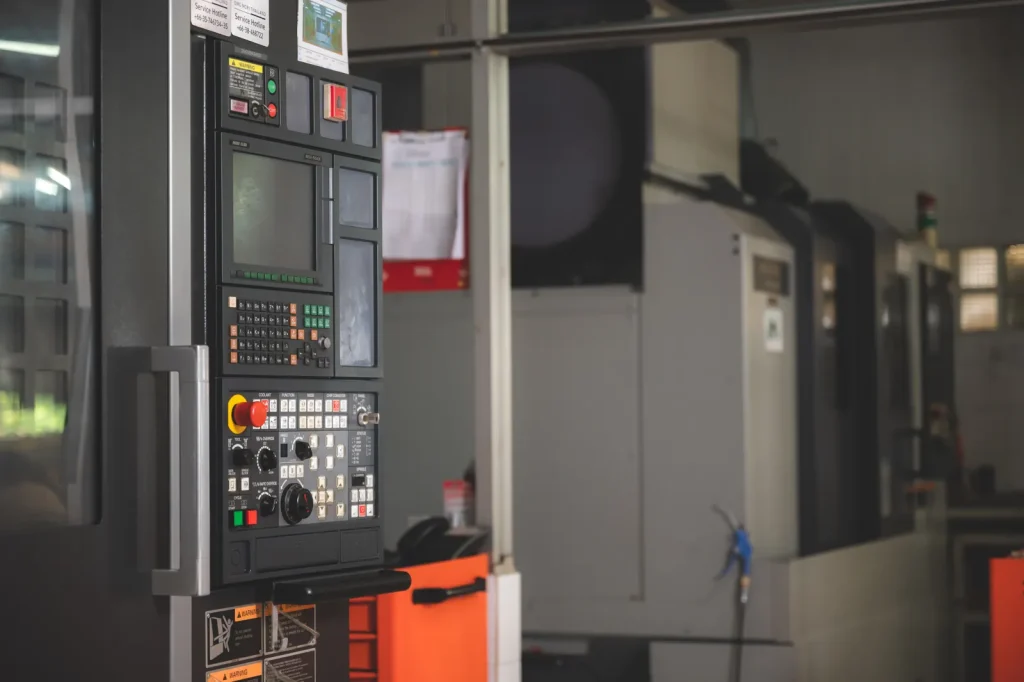
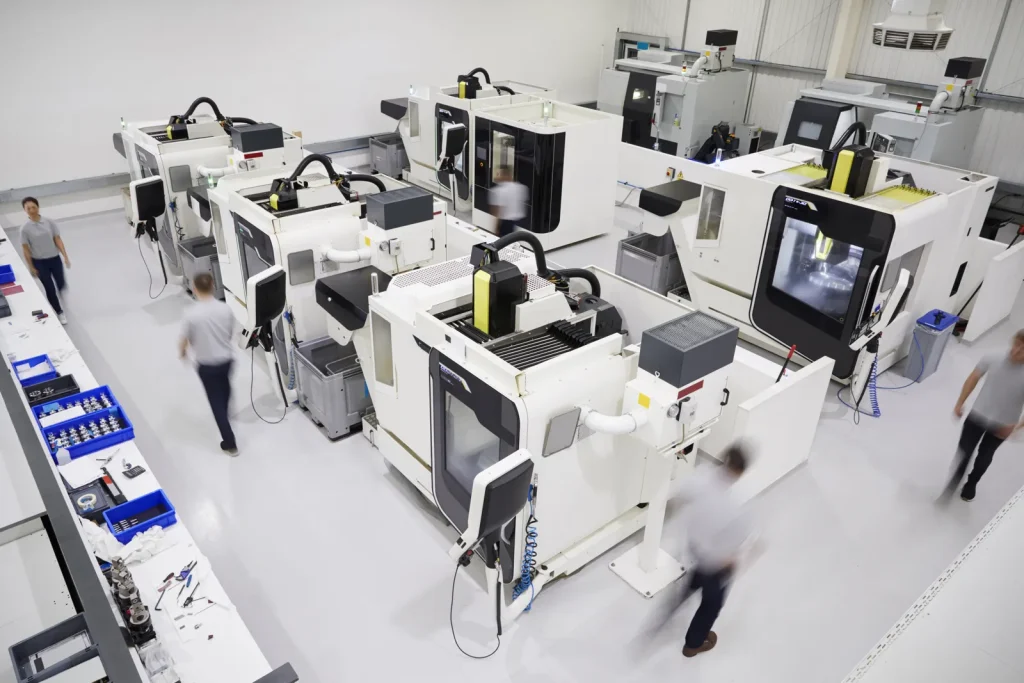
A CNC VMC is a Computer Numerical Control Vertical Machining Center. The spindle is vertical. VMCs are commonly used for cnc milling tasks like cutting keyways, drilling bolt circles, and machining flats on shafts held in fixtures.
A CNC HMC is a Horizontal Machining Center. The spindle is horizontal. HMCs are useful for heavier cuts, good chip flow, and multi-side machining with pallets and tombstones. For shaft-related work, an HMC may machine features on flanges, housings, or complex shaft-end parts, while the main shaft body is still often turned on a lathe.
Inspection and NDT
Quality control for shafts usually checks straightness, diameter, runout, surface finish, and hardness (when heat treated). For critical shafts, non-destructive testing (NDT) helps detect cracks and internal flaws before the shaft goes into service.
| Check | What it finds | Typical tools |
|---|---|---|
| Straightness/runout | Bent shaft, setup errors | Dial indicator, CMM |
| Surface finish | Seal/bearing wear risk | Profilometer |
| Hardness | Heat treat problems | Hardness tester |
| Magnetic particle | Surface/near-surface cracks (ferromagnetic) | MT equipment |
| Ultrasonic | Internal flaws | UT equipment |

Failure modes, troubleshooting, and prevention
Shaft failures rarely happen out of the blue—they usually follow predictable patterns. Fatigue, misalignment, wear, and corrosion all leave telltale signs that can guide troubleshooting. Understanding these failure modes and how to prevent them is key to designing shafts that last and keeping machines running smoothly.
Fatigue failures at stress concentrators
When a shaft breaks “for no reason,” fatigue is often the real reason. A crack starts at a notch—like a keyway, shoulder, spline root, thread runout, or sharp groove—then grows over time. The break may look sudden, but the crack growth phase can take weeks, months, or years.
A fatigue fracture often shows a smooth region where the crack slowly grew and a rough final region where the remaining area could not carry the load. If you ever see curved “beach marks,” that’s a sign the shaft failed under cyclic loading, not one-time overload.
Prevention usually comes down to basics: generous fillet radii, smooth finish where stress is high, good fits to avoid fretting, and avoiding placing notches at the highest bending moment.
Misalignment, vibration, and resonance
Misalignment adds bending load. That extra bending raises bearing load, increases heat, and can push vibration into a harmful range. If the shaft is near a critical speed, the vibration can spike and stay high.
Field checks that help include laser alignment, vibration trending, and runout checks at coupling hubs. If you see repeated bearing failures, ask a simple question: is the bearing failing because it is “bad,” or because the shaft system is forcing it to live in a bad alignment?
Wear, fretting, corrosion fatigue (marine/process environments)
Wear at journals often points to lubrication or contamination problems. Fretting shows up where a hub or coupling micro-moves on the shaft because the fit is wrong or the joint is not clamped well. Fretting debris can look like reddish-brown powder on steel parts.
Corrosion fatigue is common when the operating environment attacks the surface. A tiny corrosion pit becomes a notch, and under cyclic stress, cracks can start early. In marine propeller shafts, protecting the surface and controlling water entry at seals is often just as important as choosing a strong material.
A practical troubleshooting matrix helps teams move faster:
| Symptom | Likely cause | What to check | Typical fix |
|---|---|---|---|
| Repeating bearing failures | Misalignment, bent shaft, resonance | Alignment, runout, vibration spectrum | Align, correct supports, balance |
| Crack at keyway/shoulder | Fatigue + stress concentration | Fillet radius, keyway finish, bending moment location | Redesign details, improve finish, move features |
| Polished wear at hub seat | Fretting from loose fit | Fit tolerance, clamp load, surface damage | Correct fit, improve clamp, use proper surface finish |
| Rust pits + crack | Corrosion fatigue | Environment, coating, sealing | Better material/coating, improve sealing |
What causes a shaft to break (torsion vs fatigue)?
A shaft can break from sudden torsional overload (like a jam), but many shafts break from fatigue. Fatigue happens when bending stresses and torsional stress repeat for many cycles, especially near notches like keyways and shoulders.

Application-specific design notes
Shaft design is never one-size-fits-all—requirements change with the industry. Automotive, power generation, and marine applications each bring unique challenges like vibration, balance, corrosion, and axial loads. Understanding these context-specific factors helps engineers tailor shafts for reliability, performance, and longevity.
Automotive driveshafts and mobile equipment (NVH + balance)
Automotive driveshafts often favor hollow or tubular designs because lower mass helps vibration control and handling. Balance matters because high rpm magnifies any uneven mass. Welded joints and spline wear are common risk points, especially when angles and loads change during vehicle motion.
If you’ve ever felt a vibration that appears only at a certain speed, you’ve seen how a rotating system can be smooth at one rpm and rough at another. That is why balance and critical speed checks matter as much as static strength.
Power generation and heavy rotating equipment
Large rotating trains store huge energy. Long spans make stiffness and performance and stability the priority. In these systems, alignment and rotor dynamics (including torsional vibration) are often the difference between long life and repeated trips.
For heavy equipment, engineers often choose conservative stress limits and demand stronger inspection—because the cost of failure is not just a broken shaft, but damaged bearings, couplings, seals, and sometimes housings.
Marine propeller shafts (corrosion + thrust + sealing)
Marine shafts see torque, bending from shaft line geometry, and axial thrust from the propeller. They also live in a harsh corrosion environment, so surface protection and sealing are central to reliability.
A key question in marine systems is not only “Can the shaft withstand the torque?” but also “Will it survive years of small vibration and seawater exposure without corrosion pits starting cracks?”
When should I use a hollow shaft instead of a solid shaft?
Use a hollow shaft when you need lower weight, better dynamic behavior, or space for internal routing (like cooling or wiring), while keeping good torsional performance. It is common in driveshafts and some high-speed systems.
Specifying, maintaining, and extending mechanical shaft life
Specifying and maintaining a shaft properly is just as important as designing it. Clear drawings, a solid inspection plan, and timely maintenance all help prevent unexpected failures and extend service life. Understanding when to repair versus replace ensures reliability while keeping costs and downtime under control.
Specification checklist: what to put on the drawing / RFQ
A shaft drawing should help a supplier build the right part and help your maintenance team inspect it later. The best specs describe loads, geometry, material, and inspection—without forcing unnecessarily tight tolerances everywhere.
| Spec area | What to include | Why it matters |
|---|---|---|
| Loads | Torque, bending estimate, axial thrust, duty cycle, shock factor | Sets size and fatigue approach |
| Geometry | Diameters, lengths, shoulders, fillets, grooves, keyway/spline | Controls stress raisers and assembly |
| Tolerances | Fits at bearing seats, runout limits, straightness | Prevents vibration and fretting |
| Surface finish | Journals and seal lands | Controls wear and leakage |
| Material & heat treat | Grade, hardness zones, case depth (if used) | Controls strength, wear, fatigue |
| Balance | Balance grade if speed is high | Reduces vibration |
| Inspection | Hardness checks, NDT level if critical | Catches defects early |
This kind of table often shortens back-and-forth with a supplier because it answers the questions they would ask anyway.
Maintenance and inspection plan (condition-based basics)
Condition-based checks catch shaft problems before they become breaks. Vibration trending, bearing temperature checks, lubrication sampling, and seal leak checks are often more useful than waiting for noise.
| Criticality | Typical checks | Typical interval (example) |
|---|---|---|
| Low | Visual leaks, listen for noise, basic temp check | Monthly/quarterly |
| Medium | Vibration trend, alignment check at outages, runout spot check | Monthly + each outage |
| High | Detailed vibration analysis, laser alignment, runout mapping, NDT at planned intervals | Monthly/weekly + planned NDT |
Intervals depend on the machine and risk. The main idea is to match inspection effort to the cost and safety impact of failure.
Repair vs replace: practical decision triggers
Many shafts can be repaired by regrinding, sleeving, or metal spray on worn journals—if the base material is still sound and runout can be restored. Repair is common when lead time is long or when the shaft is large.
Replacement is often the better choice when cracks are present, when repeated failures suggest an unfixable root cause in the system, or when runout cannot be brought back into spec after repair. If a shaft has a deep crack near a shoulder or keyway, the risk is not only that it breaks, but that it breaks in a way that damages the rest of the machine.
FAQs
A mechanical shaft is a cylindrical component used in shaft mechanical engineering to transmit power or rotational motion from one part of a machine to another. Think of it as the backbone of many machines—it connects gears, pulleys, and other components so everything works smoothly. Shafts can handle torque, bending, and sometimes even axial loads, depending on the design. In short, in mechanical engineering, shafts are essential for transferring motion efficiently.
Shafts typically require precision machining to ensure they’re perfectly round and straight. Common methods include CNC milling, turning on a lathe, and grinding for smooth finishes. The choice depends on the shaft material, size, and tolerance requirements. For instance, hardened steel shafts often need grinding after CNC milling to reduce friction and vibration, making them ideal for high-performance machinery.
CNC VMC (Vertical Machining Center) and CNC HMC (Horizontal Machining Center) are computer-controlled machines widely used in shaft mechanical engineering for producing precise parts. VMC machines cut vertically, while HMC machines cut horizontally. HMC is often preferred for larger or multi-sided components because it reduces the need to reposition the shaft. Both types are crucial when machining high-precision shafts for motors, pumps, or industrial equipment.
A typical example is a car drive shaft, which connects the engine or transmission to the wheels, transmitting torque. Another example is the rotor shaft in an electric motor, which spins to produce mechanical energy. These examples show how types of shafts vary depending on their application, from automotive to industrial machinery.
Mechanical shafts work by transmitting torque and rotational motion between components. When a motor turns the shaft, it drives gears, pulleys, or other mechanical elements. Shafts are designed to resist bending and handle forces efficiently. Proper alignment and precision machining ensure smooth operation, which is why shaft mechanical engineering focuses so much on materials, tolerances, and surface finishes.
The function of a machine shaft is to transmit power, motion, and torque within a system. It can rotate, support components like gears, pulleys, or sprockets, and sometimes even handle axial loads. Essentially, the function of a machine shaft is to make all the moving parts in machinery communicate effectively—without it, gears and motors wouldn’t be able to work together.
In machining, a shaft is a precision-engineered cylindrical part, often created using CNC milling or turning, that fits exactly into a machine assembly. Machinists pay close attention to diameter, length, straightness, and surface finish because any deviation can cause vibration, noise, or wear. Shafts are critical in engines, pumps, motors, and countless other machines, making them a core topic in shaft mechanical engineering.

 English
  German
  French
  Italian
  Spanish
  Polish
  Czech
Czech  Japanese