
Choosing the right manufacturing method can make or break a product launch, yet many engineers and designers struggle with deciding between injection molding vs CNC machining. Each process has its own strengths, costs, and constraints, and picking the wrong one early can lead to delays, wasted budget, or parts that don’t meet functional requirements. Whether you’re prototyping a new design, producing low-volume batches, or planning a large-scale run, understanding how volume, tolerance, geometry, and material selection affect each method is crucial. This guide walks you through the practical trade-offs, real-world considerations, and hybrid strategies that help you make faster, smarter decisions while balancing cost, precision, and production speed.
Injection molding vs CNC machining: what matters first
The first step in comparing injection molding vs CNC machining is not asking which process is “better” in general. The useful question is whether your part needs flexibility, precision, or scale first. These two processes solve different manufacturing problems.
CNC machining is a subtractive manufacturing process that removes material from solid stock using computer-controlled cutting tools. By contrast, molding is a manufacturing method where injection molding is a manufacturing process that forces molten plastic into a mold cavity. It is a forming process with high tooling dependence. Because of that, the decision usually comes down to a few practical issues: expected volume, tolerance needs, geometry, material availability, and the chance that the design will change.
If the part is still evolving, CNC often reduces risk because CAD changes can be implemented quickly. If the design is stable and annual demand is high, molding often becomes attractive because the unit cost can drop sharply once tooling cost is spread across many parts. The key point is that the process choice should follow the business and engineering state of the part, not just the shape of the part.
What each process makes best: repeatable molded parts vs flexible machined parts
Injection molding is strongest when the part is production-stable, moldable, and needed in repeated quantities, but repeatability depends on tool quality, resin consistency, process control, and cooling balance. CNC machining offers greater design flexibility, making it ideal when the design may change or when critical features need direct machining control. Injection molding ensures repeatable shapes and high production consistency once the mold is set, with performance characteristics verified according to guidelines provided by NIST. Similarly, material selection in CNC machining can be referenced against NIST material standards to ensure mechanical performance. Part size also matters: large projected areas can drive mold cost and press tonnage, while CNC feasibility depends on machine travel, stock size, fixturing, and cycle time.
CNC machining is strongest when the goal is design flexibility, fast iteration, or higher precision on lower volumes. It works well for prototypes, early production, and custom parts. It also handles a wider range of materials, including plastics and metals, because it starts from solid stock rather than requiring a moldable feedstock and dedicated tooling.
This is why many teams use CNC for early development and low-volume production, then move to molding only after the part is stable enough to justify tooling. In short, molding rewards design stability and scale. CNC rewards flexibility and control.
For projects that require high precision and fast turnaround in this stage, UNeed provides professional CNC turning and CNC milling services to support prototypes and low-to-mid volume production with consistent quality.
Why the choice changes with volume, tolerance, geometry, and change risk
Four variables drive most decisions.
Volume is usually the largest factor. Injection molding can produce parts efficiently in large quantities of plastic parts, resulting in a lower cost per unit once the mold investment is amortized. Research provided here shows injection molding becomes cost-effective in high-volume production, often somewhere above roughly 5,000 to 20,000 units depending on part and project assumptions. CNC machining usually makes more sense for low-to-medium volumes such as 20 to 5,000 units because there is no mold cost to recover.
Tolerance is another major filter. CNC machining routinely reaches about ±0.025 to 0.05 mm, and in high-precision cases about ±0.005 mm. Injection molding typically works in a wider range, such as ±0.3 to 0.5% of dimension or about ±0.08 to 0.1 mm under standard conditions from the supplied research. That difference matters for mating features, precision alignment, and critical sealing or fit functions.
Geometry affects both methods, but in different ways. Injection molding can form features that would be time-consuming to machine, but the part must still release from the mold and manage wall thickness, draft, and shrinkage. CNC can create intricate details and allows quick design updates, but very complex internal plastic geometries, deep cavities, and undercuts may require multiple setups, special tooling, or become impractical.
Change risk is often underweighted. If the design may change after pilot builds, CNC protects against expensive mold rework. That is why the topic of design changes after tooling in injection molding should be discussed early, not after approval.
Is injection molding or CNC machining better for engineering prototypes?
For engineering prototypes, CNC machining is usually the safer default when function, fit, and revision speed matter more than production economics. You can move directly from CAD to part without waiting for tooling, and design changes can be made quickly. The research supplied here points to CNC lead times measured in days for setup, while injection molding prototype tooling often takes 4 to 12 weeks minimum.
That does not mean molding is wrong for prototypes. Molding becomes useful when prototype learning must include molded-part behavior, such as shrinkage effects, production-like material flow, or production-like piece cost. But if the design is still changing, tooling can slow the program and create rework risk.
So if the question is which has better lead time: CNC or molding, the answer is usually CNC in the prototype phase. If the question is whether the prototype must behave like a molded production part, then molding may still have value despite longer lead time.
Table: high-level comparison of cost, speed, precision, materials, and design freedom
| Factor | CNC Machining | Injection Molding |
|---|---|---|
| Best fit | Prototypes, low-to-medium volume, evolving designs | Stable designs, high-volume plastic production |
| Upfront cost | Low relative tooling commitment | High because mold tooling is required |
| Unit cost | Higher at scale | Lower at high volume after tooling amortization |
| Typical volume range from supplied research | About 20 to 5,000 units is often favorable | Often more favorable above about 5,000 to 20,000 units |
| Lead time to first parts | Often days after setup | Tooling often 4 to 12 weeks minimum |
| Tolerance capability from supplied research | Routinely ±0.025 to 0.05 mm, as tight as ±0.005 mm in precision work | Typically ±0.3 to 0.5% of dimension or about ±0.08 to 0.1 mm |
| Design changes | Fast, CAD-driven | Costly if tooling must be modified |
| Materials | Broad range, including plastics and metals | Optimized for plastics in this comparison |
| Surface finish | Often very good directly off process | May require post-processing for premium cosmetic finish |
| Design freedom | Strong for revisions and custom geometry | Strong for repeatable shapes, but moldability rules apply |
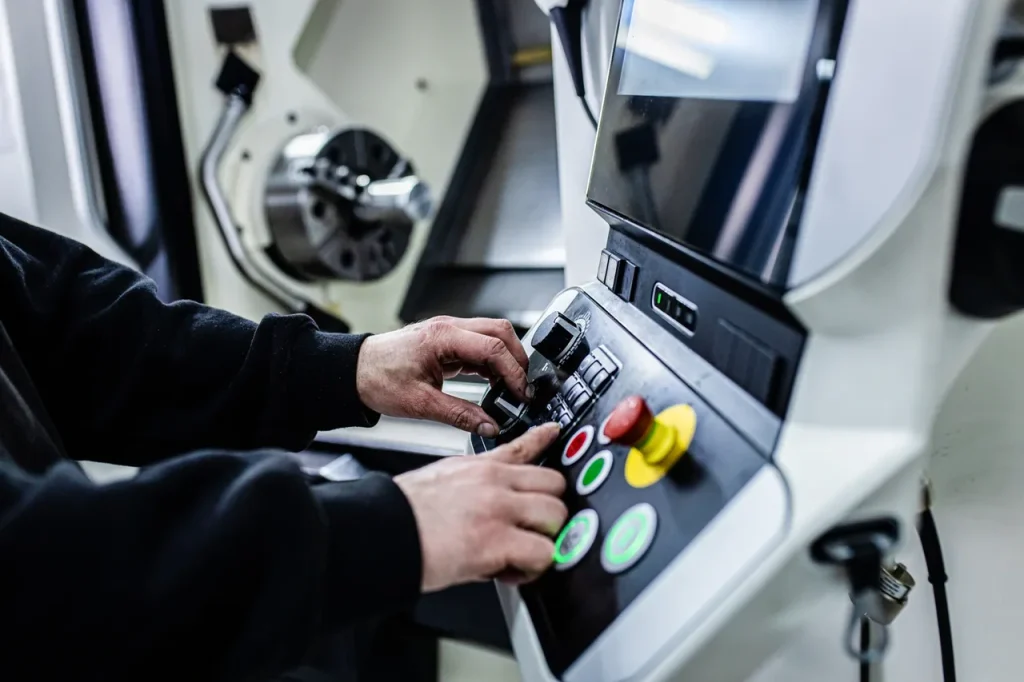
Can the part be manufactured with either process?
Many plastic parts can technically be made by CNC machining or injection molding, but practical feasibility depends on the design. Comparing plastic machining vs molding highlights how injection molding vs CNC differs in tooling needs, cycle times, and material constraints. A part may be technically possible in both processes and still be a poor candidate for one of them because of cost, tolerance, tooling risk, or geometry.
Many plastic parts can technically be made by either process, but practical feasibility depends on size, geometry, material, and tolerance by feature. Injection molding becomes difficult when the part drives large projected area, uneven wall thickness, side actions, shutoffs, or ejection risk that the volume cannot justify. CNC machining becomes difficult when tool access is poor, setups multiply, thin walls deflect, soft plastics distort in workholding, or internal corners require radii that the design does not allow.
How part geometry affects injection molding feasibility
Injection molding can produce complex features efficiently only when the part fills, cools, and ejects reliably. Uniform wall thickness, rib and boss layout, gate location, venting, parting line position, and shutoff design all affect sink, weld lines, warpage, flash risk, and dimensional stability. A part that looks simple in CAD may still require costly tool actions or show unstable dimensions across long spans or near gates.
This matters because how part geometry affects injection molding feasibility is not just a tooling issue. It affects scrap risk, cycle time, and dimensional repeatability. Shrinkage is one reason. Molded plastic cools and contracts, and that creates part-to-part variation risk if the geometry is not balanced. Thin-to-thick transitions can also create local distortion or sink-related quality problems.
Undercuts are another issue. Injection molding can make some undercut features, but tooling complexity rises when side actions or more advanced tooling features are needed. So the part may still be moldable, but the tool cost and schedule can change enough to affect the process decision.
Limitations of CNC machining for complex plastic geometries
CNC machining excels in precision and excels in creating highly detailed features, which may be challenging for molds. Certain internal features, undercuts, or fine textures may be better suited to CNC compared to injection molding, while molded parts offer repeatability compared to CNC machining. Multiple setups can accumulate error, internal corners usually need radii, and thin walls or long slender features may chatter or deflect during cutting. Soft plastics may also creep under clamping, smear with heat, or form burrs that affect final geometry and finish.
These are some of the real limitations of CNC machining for complex plastic geometries. The issue is not whether the machine can move in enough axes. The issue is whether the part can be held, reached, and cut without excessive cycle time or tool deflection. Plastic parts add another challenge because softer materials can deform under clamping or heat.
So if someone asks, Can I CNC machine a molded part? the answer is often yes for many external and accessible features. But a molded geometry may include internal features, texture, or thin-wall forms that are difficult or expensive to reproduce by machining from solid stock.
Material selection limits in CNC machining vs injection molding
CNC and injection molding can handle metal and plastic, but not all high-performance plastic grades exist in machinable form. Some specialized plastic components may only be feasible through molding due to material flow, shrinkage, or mechanical performance. Machined parts inherit the properties of cast or extruded stock, while molded parts can show flow orientation, weld lines, residual stress, shrinkage variation, and occasional void risk in thicker sections. Not all molded grades exist as machinable stock, and grade differences such as filler content, moisture sensitivity, flame rating, ESD, wear, medical, or FDA status must be checked by process route.
This can create confusion when a prototype made by CNC behaves differently from a molded production part. The material family may be similar, but the feedstock form, molding conditions, and final orientation effects can differ. A buyer should verify whether the machined prototype material and molded production material are truly equivalent for the intended function.
Injection molding vs CNC machining for high-performance plastics
For injection molding vs CNC machining for high-performance plastics, the right answer depends on both volume and material availability in the required form. CNC is often favored when the project needs a specific stock shape, a lower quantity, or quick access to a high-performance plastic without waiting for tooling. It also helps when the design may change and the material itself is expensive enough that tool commitment should be delayed.
Injection molding can still be the right production method for high-performance plastics if the part will scale and if the geometry suits molding. But the feasibility check should include how the material flows, shrinks, and holds tolerance in molded form, not just whether it exists as a resin.
How the two processes work and where constraints appear
The process flow explains most of the tradeoffs. Constraints do not appear at the same stage.
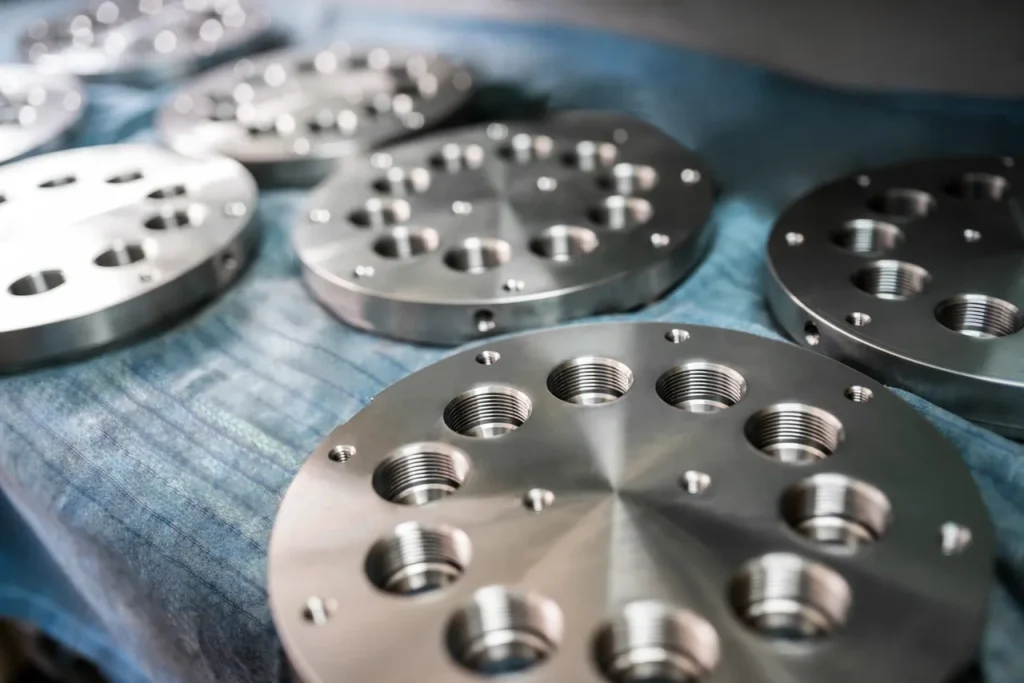
CNC machining workflow: CAD-driven subtractive production with fast design iteration
In CNC machining, the starting point is a CAD model. That model is converted into toolpaths, stock is selected, and fixtures are prepared before cutting. Many CNC machining services also include finishing and inspection. Similarly, injection molding services rely on specialized injection molding machines to produce high volumes reliably. Inspection can happen quickly, and revisions can return to the CAD stage with limited process disruption.
This is why CNC machining supports fast design iteration. The workflow is digital and does not depend on a hard production tool. If a hole moves or a wall thickens, the program can be updated without replacing a mold. In practical terms, that makes CNC a strong option for engineering validation, fixture interfaces, and changing product designs.
Injection molding workflow: tooling, molding cycles, and scaling economics
Injection molding also starts with CAD, but the next major step is tool design and mold fabrication. That stage introduces a large share of the schedule and risk. After the mold is built, the process shifts to molding cycles, where molten plastic fills the cavity, cools, and is ejected. At that point, scale economics improve because each new part uses the same tooling.
This is why upfront tooling cost vs unit cost in injection molding is the central economic tradeoff. Tooling delays the first production parts, but after launch, the process can produce parts rapidly and repeatedly. So the later economics can be very favorable if demand is high and design changes are unlikely.
Choosing between prototyping and production tooling
Choosing between prototyping and production tooling is less about process preference and more about confidence level. If the part is still moving in design review, production tooling creates avoidable risk. If functional needs are proven and volume is real, delaying tooling may waste time and keep unit cost high.
A common hybrid path is to use CNC for prototypes and bridge quantities, then move to injection molding when the geometry, material, and demand curve are stable enough. The supplied case material supports this pattern. It is a practical way to avoid tool changes while still preparing for scale.
Process diagram: from CAD to first article to scaled production
A simplified decision path looks like this:
| Stage | CNC Machining Path | Injection Molding Path |
|---|---|---|
| CAD release | Program toolpaths | Design mold/tooling |
| First article | Fast, often after setup in days | Slower because tooling must be built |
| Design revision | CAD/program update | Tool modification may be required |
| Early production | Suitable for low-volume and bridge builds | Less efficient until tooling is ready |
| Scaled production | Cost rises with labor and cycle time per part | Unit cost drops as tool cost is amortized |
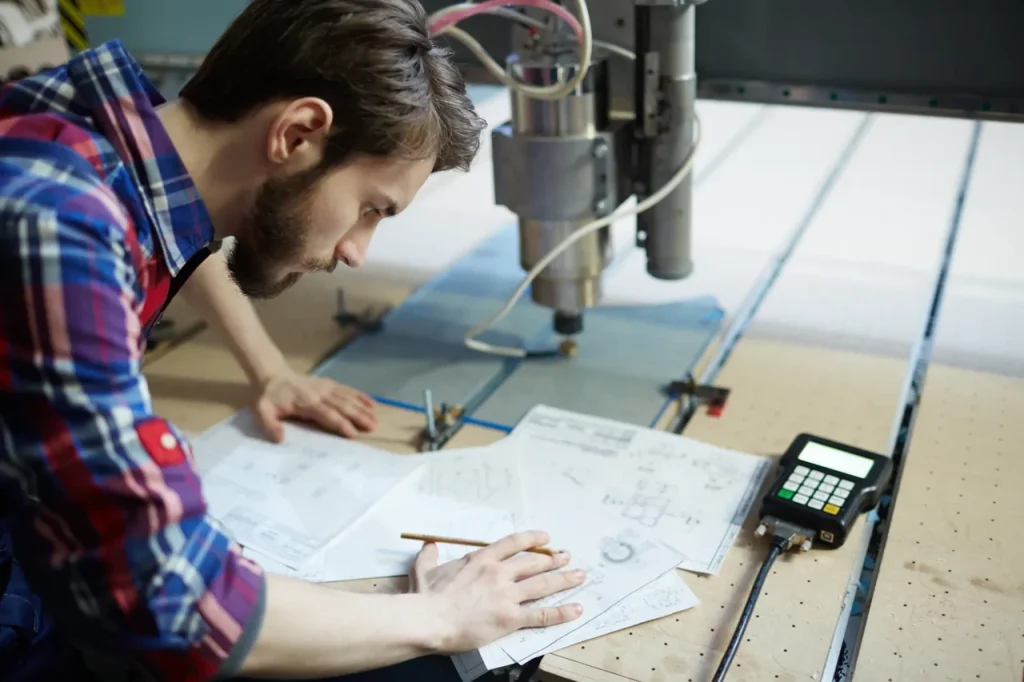
Tradeoffs between design flexibility and production efficiency
Choosing between CNC machining and injection molding is rarely a matter of one being “better” than the other. Each method comes with its own strengths and tradeoffs, especially when balancing design flexibility, tooling investment, and production efficiency. Understanding these tradeoffs early helps teams decide whether to prioritize fast iteration or long-term cost savings, and sets the stage for smarter decisions around prototypes, tooling, and full-scale production.
Tradeoffs between design flexibility and tooling investment
The main tradeoff is simple: CNC buys flexibility by avoiding tooling, while injection molding buys efficiency by committing to tooling. In engineering terms, this is a trade between uncertainty and repetition.
If the design is unstable, the tradeoffs between design flexibility and tooling investment favor CNC. If the design is stable and repeat orders are likely, the economics shift toward molding. A process choice made too early can trap a team in expensive mold changes. A choice made too late can leave a mature product with unnecessarily high unit cost.
Design changes after tooling in injection molding
Design changes after tooling in injection molding are one of the most expensive turning points in a product program. A change that seems small in CAD may require cavity modification, shutoff changes, or even major rework depending on the feature. That can add cost and extend the timeline.
This is why prototype approval should not only verify fit and function. It should also check moldability assumptions. Teams that validate only the nominal geometry often miss shrinkage behavior, ejection concerns, and tolerance stack issues that appear later in molded production.
Manufacturing method for fast plastic parts with evolving designs
If the part must ship quickly and the design is still evolving, the manufacturing method for fast plastic parts with evolving designs is usually CNC machining. It supports fast iteration, does not depend on mold release geometry, and avoids waiting for production tooling.
That said, this path has limits. If order volume starts rising and the design stabilizes, CNC may become a temporary method rather than the long-term answer. This is where bridge production planning becomes important.
Surface finish differences between machined and molded plastic parts
The supplied research indicates meaningful surface finish differences between machined and molded plastic parts. CNC machining often delivers strong surface finish and dimensional stability without secondary operations. In user-language terms, machined parts are often closer to ready-to-use straight off the machine.
Molded parts can also achieve good surfaces, but premium visual requirements may need extra finishing or tighter tool control. So if cosmetic consistency is critical, the buyer should confirm whether the required finish comes directly from the mold or depends on post-processing.
Where projects fail, stall, or become expensive
Even with careful planning, projects can stall or balloon in cost when the nuances of molding and machining aren’t fully understood. Early choices around prototyping, design stability, and process selection strongly influence whether a part meets tolerances, stays on schedule, and avoids expensive rework. Understanding these pitfalls helps teams anticipate where CNC and injection molding may succeed—or fail—before committing to tooling.
Risk of mold rework after prototype approval
The risk of mold rework after prototype approval is real when prototype learning is incomplete. A CNC prototype may validate assembly and function but still fail to reveal molded-part behavior. If tooling proceeds on that basis, shrinkage, warpage, gate effects, or ejection issues can appear later.
The failure mode is often not that the part cannot be molded. It is that the first mold does not produce the part within the needed tolerance or cosmetic range. At that point, rework can affect cost and schedule more than the original process decision.
When injection molding is not cost-effective
A common misconception is that molding is always cheaper. It is not. When injection molding is not cost-effective, the usual reason is low volume or high design uncertainty. If the order quantity is too small, the tool cost never gets absorbed. If revisions are likely, the risk-adjusted cost rises because tooling may need modification.
This is why molding vs machining cost for plastic parts cannot be answered by unit price alone. The full comparison must include tooling, engineering changes, time to first article, scrap risk, and the cost of being wrong about demand.
Why shrinkage and variation affect molded-part precision decisions
Molded-part precision decisions are shaped by shrinkage and process variation. The supplied research shows that CNC has tighter routine tolerance capability, while injection molding usually works within broader dimensional bands. That does not make molding inaccurate. It means tolerance should be assigned according to function and realistic process behavior.
So when a part has very tight mating features, alignment demands, or precision interfaces, buyers should ask whether the tolerance requirement is truly necessary across the entire part or only at certain features. In some designs, critical features can justify machining, while non-critical geometry suits molding. In other cases, the whole part may remain better suited to CNC.
What happens if a design changes after an injection mold is built?
If a design changes after a mold is built, the tool may need rework. Small changes may be manageable, but some revisions can force major tooling changes or a new mold. That is why design freeze discipline matters before tooling release.
Cost, tolerance, and lead time differences that drive the decision
Cost, tolerance, and lead time are often the deciding factors between CNC machining and injection molding. Early-stage decisions hinge not just on unit price, but on how volume, design stability, and tooling investment interact. By understanding where each process shines—fast iteration versus large-scale efficiency—teams can plan smarter, avoid costly surprises, and match the manufacturing method to the project’s real-world demands.
Molding vs machining cost for plastic parts
For plastic parts, molding vs machining cost for plastic parts depends on where you are on the volume curve. CNC usually has lower startup cost because no mold is needed. Injection molding usually has lower cost per part at higher volumes because the tool cost is spread across many units.
The supplied research states that injection molding can be cost-effective above about 5,000 to 20,000 units, with high-volume molded or molded-equivalent production showing significant per-part savings versus CNC. Exact breakpoints vary, so the right question is not “which is cheaper?” but “at what volume and design maturity does the cost curve cross?”
Upfront tooling cost vs unit cost in injection molding
This tradeoff is the core reason many teams delay molding until later. Upfront tooling cost vs unit cost in injection molding means you pay more early to pay less later. That is attractive only when the design is stable and volume justifies recovery of the tooling investment.
If demand is uncertain, a low unit cost on paper may not matter because the mold never reaches the break-even volume. In short, molding favors confidence in both design and demand.
Cost per part at different production volumes
Cost per part at different production volumes tends to follow a clear pattern. At low quantities, CNC is often more economical because setup is fast and there is no tooling burden. At medium quantities, the answer becomes project-specific. At higher quantities, injection molding often wins because repeated cycles reduce unit cost sharply once tooling is amortized.
This is also why there is uncertainty in public volume thresholds. The supplied research shows no single consensus point. Some discussions place the switch above 5,000 units, while others put it closer to 20,000 units. Geometry, material, tolerance, and revision risk shift that breakpoint.
Lead time differences between CNC machining and injection molding
The lead time differences between CNC machining and injection molding are usually clear. CNC can move from CAD to parts quickly because there is no mold build stage. Injection molding takes longer to launch because tooling often requires 4 to 12 weeks minimum in the supplied research.
After launch, the picture changes. CNC remains slower per part because cutting time scales with each part. Molding can produce parts in seconds to minutes per cycle. So if the question is speed to first parts, CNC often wins. If the question is speed to produce many identical parts after tooling, molding often wins.

Precision, volume, and scale breakpoints
Precision requirements and production scale often determine whether CNC machining or injection molding is the better choice. Understanding the interplay between tight tolerances, unit volume, and tooling investment helps teams decide when flexibility matters most and when long-term efficiency takes over. These breakpoints guide smart process selection, avoiding costly missteps as designs move from prototype to full production.
CNC machining vs injection molding for tight tolerances
For CNC machining vs injection molding for tight tolerances, CNC is usually the safer process. The supplied data supports routine CNC tolerances around ±0.025 to 0.05 mm, with precision work as tight as ±0.005 mm. Injection molding typically works in broader ranges because shrinkage and process variation affect the finished part.
This does not mean molded parts are unsuitable for all precision applications. It means tolerance decisions should match process behavior. If a plastic part has a few critical features and many non-critical ones, the design review should focus on where tight tolerance really matters.
Impact of production volume on CNC machining vs injection molding
The impact of production volume on CNC machining vs injection molding is central because these processes scale differently. CNC adds cost with each part because each unit consumes machine time. Injection molding carries major upfront cost but lower incremental cost per unit after the tool exists.
So if the annual demand is small or uncertain, CNC often stays competitive. If the demand is high and repeatable, injection molding often becomes the more efficient long-term method.
When to switch from CNC machining to injection molding
When to switch from CNC machining to injection molding depends on three signals appearing together: the design is stable, demand is becoming predictable, and the unit economics show tooling recovery within an acceptable volume range.
A practical trigger is when bridge production by CNC starts to feel expensive not because machining is bad, but because the product has stopped changing. That is when continued flexibility no longer creates enough value to offset higher part cost.
At what volume does injection molding become cheaper than CNC machining?
There is no single volume that fits every part. In the supplied research, common estimates range from above about 5,000 units to above about 20,000 units. Geometry, tolerance, material, and the chance of design changes all affect the break-even point.
Best-fit applications and hybrid production paths
Choosing the right manufacturing process often depends on volume, design stability, and timing. For low-volume parts or projects with evolving designs, CNC machining provides flexibility and quick turnaround, while injection molding shines once the design is stable and demand grows. Hybrid strategies—starting with CNC prototypes and later moving to molding—allow teams to balance speed, cost, and risk across the product lifecycle.
Injection molding vs CNC machining for low-volume plastic parts
For injection molding vs CNC machining for low-volume plastic parts, CNC is usually the practical choice. Low volume does not spread mold cost well, and low-volume programs often still have design uncertainty. CNC also helps when the part must be changed quickly between revisions.
Injection molding can still be justified for low-volume parts if molded material behavior must be validated or if the geometry strongly favors molding. But in most low-volume decision cases, CNC carries less upfront risk.
Best process for bridge production before injection molding
The best process for bridge production before injection molding is often CNC machining. Bridge production means making parts while the final production method is still being prepared or validated. CNC works well here because it fills schedule gaps and supports final design edits without hard tooling changes.
This is one of the most common reasons hybrid manufacturing paths succeed. The project keeps moving while the design reaches the confidence needed for tooling.
Hybrid path: CNC prototypes first, then molding for scale
A common and rational path is hybrid path: CNC prototypes first, then molding for scale. Early CNC prototypes validate fit, function, and assembly. If the product proves stable and demand grows, molding can then reduce long-run part cost.
The supplied case material supports this progression. It is not a compromise. It is often the cleanest way to manage uncertainty in development and efficiency in production.
Table: example use cases by prototype, bridge, low-volume, and high-volume production
| Project stage | Typical best-fit process | Why |
|---|---|---|
| Early engineering prototype | CNC machining | Fast CAD changes, quick lead time, no tooling lock-in |
| Functional pilot builds | CNC machining | Good for revision-heavy development and tolerance checks |
| Bridge production | CNC machining | Supports delivery while tooling decisions are finalized |
| Stable high-volume plastic production | Injection molding | Lower unit cost after tooling, fast repeat cycles |
| High-volume mature part with repeat demand | Injection molding | Best match for scaling economics and repeatability |
How to choose the right process for your part
Choose CNC machining when the design is still changing, when demand is uncertain, when critical tolerances are local and accessible, or when tooling risk is not yet justified. Choose injection molding when the design is production-frozen, the geometry follows molding rules, the expected demand can absorb tooling, and the required quality plan matches a controlled molding process. Reconsider both assumptions if the part needs secondary operations, special inserts or threads, inspection documentation, or if the prototype material is not representative of the intended production resin.
Checklist: questions to ask about geometry, tolerance, annual volume, and material
A useful process decision starts with a short feasibility checklist:
- Does the geometry require draft, controlled wall thickness, or ejection-friendly features to be moldable?
- Are there undercuts, deep pockets, or internal features that are difficult to reach with cutting tools?
- What features truly need tight tolerance, and are they within typical CNC or molding capability from the supplied data?
- What is the expected annual volume, and is it stable enough to justify tooling?
- How likely is the design to change after first articles?
- Is the required material available in both machined stock and moldable resin form?
- Does the part need premium cosmetic finish directly off process, or is secondary finishing acceptable?
These questions help reveal whether the problem is mainly about geometry, economics, or schedule.
Before requesting quotes, define which dimensions are critical to function, which tolerances are truly required, the exact material grade, cosmetic expectations, quantity basis, and any inserts, threads, assembly, or secondary machining needs. Also specify how critical features will be inspected and whether first article, traceability, material certification, or other validation documents are required. For molding, confirm cavity count, tool material, and expected tool life; for CNC, confirm setup count, datum strategy, and workholding risk.
How do I choose between CNC machining and injection molding for plastic parts?
Choose CNC when the part is low volume, still changing, or needs tighter tolerances and faster first articles. Choose injection molding when the plastic part is stable, repeat demand is high, and lower unit cost matters more than design flexibility. If the answer is unclear, bridge with CNC and reassess once the design is frozen.
Decision matrix: prototype, bridge production, or full-scale molding
| Decision factor | CNC prototype path | CNC bridge path | Full injection molding path |
|---|---|---|---|
| Design stability | Low | Medium | High |
| Volume certainty | Low | Medium | High |
| Tolerance priority | High | Medium to high | Moderate unless proven otherwise |
| Need for fast first parts | High | High | Low |
| Sensitivity to upfront tooling cost | High | High | Lower |
| Best use case | Validation and iteration | Interim supply before scale | Mature, repeatable production |
References needed: standards bodies, industry reports, and process capability sources
For a formal sourcing decision, buyers should ask for references from standards bodies, institutional capability guidance, and process capability sources. That is especially important when the part has strict dimensional, material, or validation needs. General blog comparisons can frame the decision, but they should not be the only basis for tool release or tolerance signoff.
Conclusion
The decision between injection molding vs CNC machining is usually not about which process is more advanced. It is about where your project sits on the curve from uncertainty to scale.
Use CNC machining when the part is still changing, when first articles are needed quickly, when volumes are low, or when tight tolerances are critical. Avoid using CNC as the long-term answer for a mature high-volume plastic part unless the economics still support it.
Use injection molding when the part design is stable, annual demand is strong enough to absorb tooling cost, and the geometry is truly moldable. Avoid moving to molding too early if the design may change or if the volume forecast is weak.
In short, CNC reduces development risk. Injection molding reduces production cost at scale. Many successful projects use both, in sequence rather than as direct substitutes.
FAQs
Injection molding vs CNC machining usually becomes more cost-effective when producing larger quantities of identical parts. The upfront cost of designing and building a mold can be significant, but once the mold is ready, each additional part is relatively inexpensive. In contrast, CNC requires machining each piece individually, which adds up quickly for mass production. So, if you’re planning a high-volume run, injection molding generally offers better economics and efficiency.
Yes, CNC machining can be applied to a molded part, especially when high precision is required. For example, molded parts may need holes, threads, or very tight tolerances that the molding process can’t achieve. Many companies adopt a hybrid approach: create the main shape through molding and refine critical areas with CNC. This strategy is common when balancing plastic prototyping vs production, allowing both speed and accuracy.
The material characteristics differ between the two processes. Injection-molded parts can experience internal stresses during cooling, which can affect strength or flexibility in certain directions. CNC parts, machined from solid stock, tend to be more uniform and stronger because they haven’t undergone thermal stress. Choosing the right method depends on whether you prioritize complex geometry or mechanical strength, highlighting the distinction in plastic prototyping vs production.
There’s no exact number, but generally, producing several hundred to a few thousand pieces justifies the upfront mold cost. For smaller quantities, CNC is usually more economical because you avoid tooling expenses. Understanding when to switch to injection molding is key for planning budgets and production schedules, especially if you anticipate scaling from prototypes to full production runs.
CNC machining often wins for lead time on small batches because you can start immediately using stock materials. Injection molding requires mold design, fabrication, and testing, which adds weeks to the initial schedule. However, once the mold is ready, it supports fast plastic parts manufacturing, producing hundreds or thousands of components much faster than CNC could for the same quantity. It’s a trade-off between quick startup and rapid mass output.
Absolutely. CNC machining shines for low-volume plastic production because there’s no need for costly molds. It allows flexibility to modify designs quickly, test new prototypes, or produce a small batch efficiently. This makes CNC the preferred choice for small batch orders, especially when design iterations or rapid turnaround times are important.


 English
  German
  French
  Italian
  Spanish
  Polish
  Czech
Czech  Japanese