
Choosing between hot dip vs electro galvanized steel is not a small detail. The choice of galvanized metal affects how your steel may resist rust and corrosion, how long it lasts, how it looks, and how much you spend over time. If your steel will face rain, salt, abrasion, or long service intervals, a hot-dip galvanized coating—often around 80–100 microns—delivers decades of protection. If you need a smooth, shiny, uniform surface with tight tolerances for indoor use or paint-ready parts, electro galvanized steel—often around 10–12 microns—fits better.
This guide gives you a clear, data-led comparison of hot dip vs electro galvanizing, then moves through process, metallurgy, performance, use cases, standards, cost, and maintenance. You’ll see where each method shines and where it struggles. You’ll see where each method shines, and where it struggles. By the end, you’ll know which zinc coating to specify, why it works, how to install and care for it, and what to expect over the service life.
Hot Dip vs Electro Galvanizing: Which Zinc Coating Suits Your Steel?
Before diving into the numbers and comparisons, here’s a quick reality check: not all galvanized steel is created equal. Where your steel lives, what it carries, and how long you want it to last will determine whether hot-dip or electro galvanizing is the smarter choice. The table below sums up the most critical takeaways at a glance.
Quick Decision Matrix (most critical takeaways)
- If the steel will live outdoors, carry loads, see marine splash, or take frequent hits, choose hot-dip galvanized steel. The hot dip galvanized coatings withstand harsh conditions and provide better corrosion resistance, shrugging off abrasion and slowing rust for a very long time.
- If you need a smooth, consistent, paint-ready finish on thin sheet or small parts used indoors, choose electro. Its thin, uniform coating gives clean looks and tight dimensional control.
- Upfront budget vs long-term value: Electro is usually cheaper for very thin coatings. Hot-dip tends to win on total cost of ownership when downtime, repainting, and replacement risk matter.
- For pitting, impacts, and salt spray, hot-dip has superior sacrificial protection and better edge coverage.
Key Numbers at a Glance
| Attribute | Hot-Dip Galvanizing | Electro Galvanizing |
|---|---|---|
| Typical coating thickness | 80–100 µm (can be more or less by steel chemistry and time in the bath) | 10–12 µm (controlled by current density and time) |
| Expected service life outdoors | About 20–50+ years, depending on environment | Months to a few years without paint; longer indoors |
| Finish and look | Dull to matte silver, sometimes rough or spangled, not perfectly uniform | Smooth, bright, very uniform, paint-ready |
| Abrasion and impact | Strong; intermetallic layers resist wear | Fair to poor; thin layer scratches easily |
| Maintenance | Minimal; inspect as part of routine | Often needs a paint topcoat in humid or polluted areas |
| Fit for edges and complex shapes | Excellent coverage and edge protection | Limited cut-edge protection; relies on paint synergy |
Primary Use Cases and Environments
In applications where durability matters, hot dip vs electro galvanizing comparisons clearly favor hot-dip for outdoor and marine environments. Bridges, poles, beams, marine hardware, fencing, farm and utility gear, buried or splash-zone items all benefit from its thick, sacrificial zinc coating. Electro galvanized is common for automotive body panels, appliances, electronics enclosures, indoor fixtures, and precise fasteners where a thin, aesthetically pleasing finish matters.
In harsh air (coastal, industrial pollution) or where parts see grit and hits, hot-dip is the safer call. In clean indoor spaces or where paint quality is king, electro is the standard choice.
Processes and Coating Structure: Hot Dip vs Electro Galvanizing
The two methods galvanize steel in very different ways. That difference creates different coating structures, which is why they behave so differently in use.
What is Hot Dip Galvanizing
In the hot-dip galvanizing process, steel is cleaned and then immersed in a molten zinc bath. The steel is submerged in molten zinc at a temperature around 450°C, forming a layer of pure zinc on the steel surface. The heat and chemistry drive zinc into the steel surface to form zinc-iron alloy layers, then a top layer of pure zinc. This metallurgical bond is the heart of its durability.
Basic steps:
- Clean and degrease the steel to remove oil and dirt.
- Pickle in acid to clear rust and scale.
- Rinse and flux to aid wetting and bonding.
- Immerse in molten zinc (about 450°C) until the reaction forms the coating.
- Drain, cool, and inspect thickness and finish.
The final coating usually has several intermetallic alloy layers (Gamma, Delta, Zeta) topped by a free zinc Eta layer. Those inner layers are hard and wear-resistant; the outer layer gives sacrificial corrosion protection.
This method coats the inside and outside of complex shapes, gives great edge coverage, and wraps uneven surfaces with a continuous, thick zinc layer. For large fabrications and structural shapes, hot dip galvanization is a natural fit.
What is Electro Galvanizing?
Electro-galvanized steel is created using an electroplating process. In an electroplating bath, zinc ions are transferred and applied to the steel, so that the steel is coated with zinc uniformly and thinly. A controlled electric current moves zinc from an anode onto the steel surface. The result is a thin, very uniform coat of zinc.
Key features:
- Thin, clean, and shiny finish that looks great and forms well.
- Easy to control thickness on coil and sheet, so it fits high-speed lines.
- Ideal for small parts and fasteners where tight fit is needed.
Because the coating is thin and mostly pure zinc, it offers good initial corrosion protection indoors and under paint, but it lacks the thick coating and hard alloy layers that resist wear and salt in the open air.
Metallurgy, Adhesion, and Edge Protection
Hot-dip layers grow into the steel. This diffusion bond gives strong adhesion and makes the coating less likely to flake under impact. Those alloy layers are much harder than pure zinc, so they resist abrasion from sand, tools, and handling. Even when the outer layer is scratched, the zinc continues to protect through sacrificial action, and the coating tends to thin rather than peel.
Electro galvanized coatings are thin and mostly act as a barrier. They are very uniform across flat areas, so they look great and paint well. But on cut edges, threads, sharp corners, and high-stress spots, the thinner layer of zinc can break or wear through sooner, especially without paint. That’s why electro galvanized parts often rely on a duplex system (zinc plus paint) to reach target life.

Performance and Service Life
Understanding performance isn’t just about numbers—it’s about where and how the steel will live. Exposure to salt, moisture, and mechanical wear can drastically change service life. The sections below break down corrosion resistance, handling durability, and expected lifespan so you can see why coating thickness and environment matter.
Corrosion Resistance by Environment
Steel corrodes faster as exposure gets harsher: coastal air, industrial pollution, and wet/dry cycles all increase corrosion rates. Hot-dip generally outperforms electro in every outdoor case because it starts with more zinc and has hard alloy layers that slow wear.
In rural air, thick hot dip galvanized coatings often last many decades before 5% rust appears on the base steel. In typical urban air, service life is still measured in decades. In industrial or marine zones, life depends on exact conditions, but the trend holds: more zinc equals more years. With electro galv, the thin zinc coating may delay red rust indoors or under paint, but it struggles in open, wet, or salty environments without added protection.
Salt spray tests and cyclic corrosion tests often show electro galvanized samples reaching red rust in days to weeks under harsh cycles, while hot-dip samples remain largely intact over longer periods. Lab tests are not the same as field exposure, but they mirror the real-world gap.
The key point is simple: zinc is a sacrificial metal. It gives itself up to protect steel. Thicker zinc takes longer to consume. That is why an 80–100 µm coating can last 20–50 years outdoors, while a 10–12 µm coating may only last months to a couple of years without paint.
Abrasion, Impact, and Handling
Hot-dip’s alloy layers are hard. They resist scuffs and knocks during transport and install. This helps keep the coating continuous so zinc can keep protecting the base steel.
Electro galvanized coatings are thin and softer. They scratch more easily during handling, so it helps to package and move them with care, or add a paint or clear coat when appearance matters. Once scratched to bare steel, rust can start quickly in damp air.
Lifespan Benchmarks and Maintenance Frequency
- Hot-dip: Field data and standard guidance often show 20–50+ years of life in many outdoor settings, with simple inspection and almost no routine maintenance. In severe marine splash or industrial fume, life can be shorter but still long compared to thin coatings.
- Electro: Outdoors, unpainted life often ranges from months to a few years depending on exposure. Indoors, or with a well-chosen paint system, it can last longer. Regular inspection is needed, and touch-up or repainting becomes part of the plan in humid or polluted areas.
How long does electro-galvanized steel last outside?
- Dry rural or mild suburban air: 1–3 years without paint; much longer if primed and topcoated and edges are sealed.
- Typical urban air with humidity: Often less than 1–2 years without paint; 5–10 years or more with a sound paint system and regular touch-up.
- Coastal or marine splash: Months without paint; with a high-build primer and topcoat, still plan on frequent inspection and shorter repaint cycles.
- Industrial pollution or acid rain: Months without paint; paint is required, and intervals depend on pollutant load and design (drainage, crevices).
Tips to extend life:
- Seal cut edges and drill holes with a zinc-rich primer.
- Add drain paths so water does not pool.
- Use compatible primers and keep coating systems clean and dry during curing.
- Touch up promptly after any damage in the field.
Applications and Case Studies of Hot Dip vs Electro Galvanizing
How zinc coatings perform in the real world depends on where and how the steel is used. From massive bridges to tiny fasteners, different applications demand different protection strategies. The following sections highlight typical uses, show why coating choice matters, and illustrate real-world outcomes from both hot-dip and electro galvanized steel.
Structural, Infrastructure, and Utilities
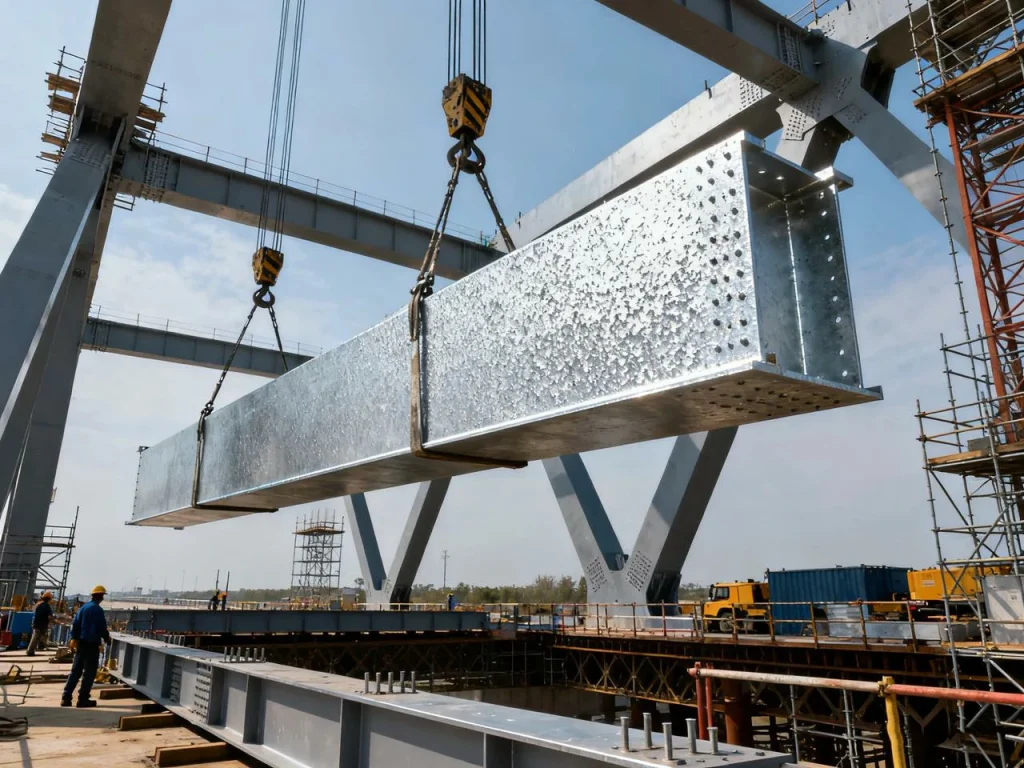
For bridges, guardrails, towers, sign structures, pipelines, utility poles, and similar assets, long life with low touch matters. Hot-dip galvanized products are proven to last decades in the field. These galvanized products made of steel or iron have coated steel surfaces that remain durable even when exposed to the elements. In buried or splash zones, it continues to protect due to sacrificial action, even if the outer layer is worn or scratched. Soil chemistry matters, of course. In very acidic soils or where stray current is present, extra measures like wraps or cathodic protection may be needed. But as a base coating, hot dip is the standard to beat.
Automotive, Appliances, and Consumer Goods
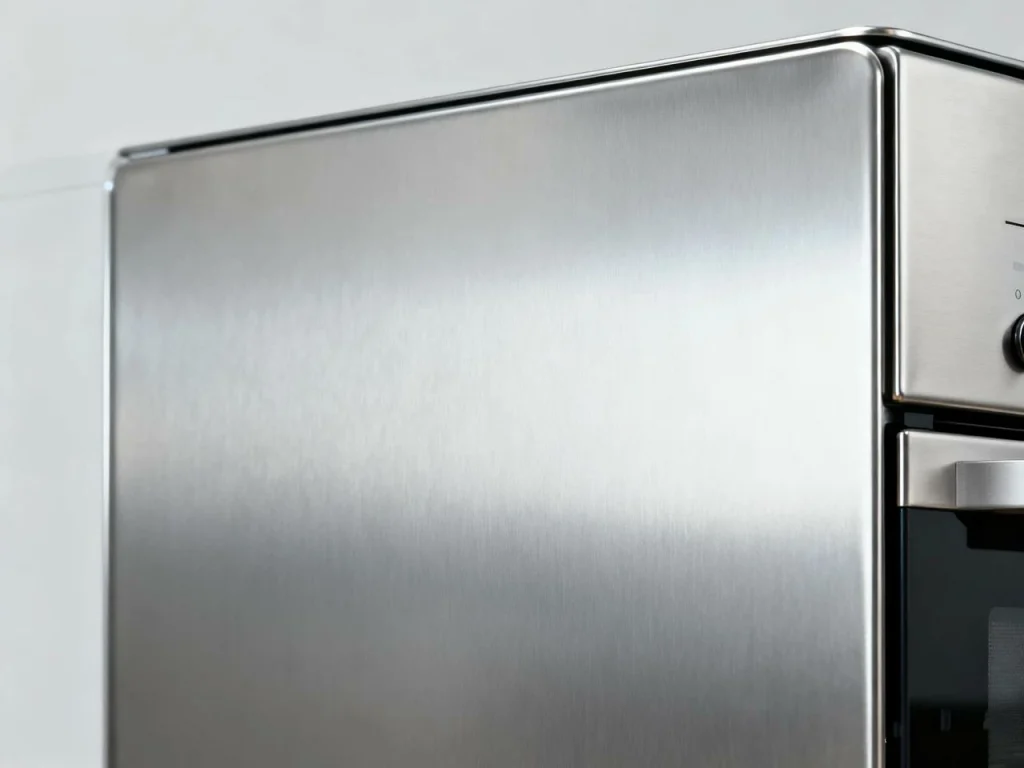
Automotive body panels and appliance skins often start with electro galvanized steel because it forms well, looks clean, and accepts paint with minimal prep. Where parts see grit, salt, and impacts (frames, underbodies, brackets near the road), thicker zinc from hot-dip or other heavy zinc coatings are preferred. Paint systems bring both to the next level, and many designs pair zinc coatings with e-coat primers for better corrosion resistance.
Formability and weldability are usually better with thinner, uniform coatings. Electro is a good match for tight draw work and spot welding on thin sheet. Hot-dip can be welded, cut, and formed too, but heat and thickness change the feel. Good shop practice and the right procedures keep parts within tolerance.
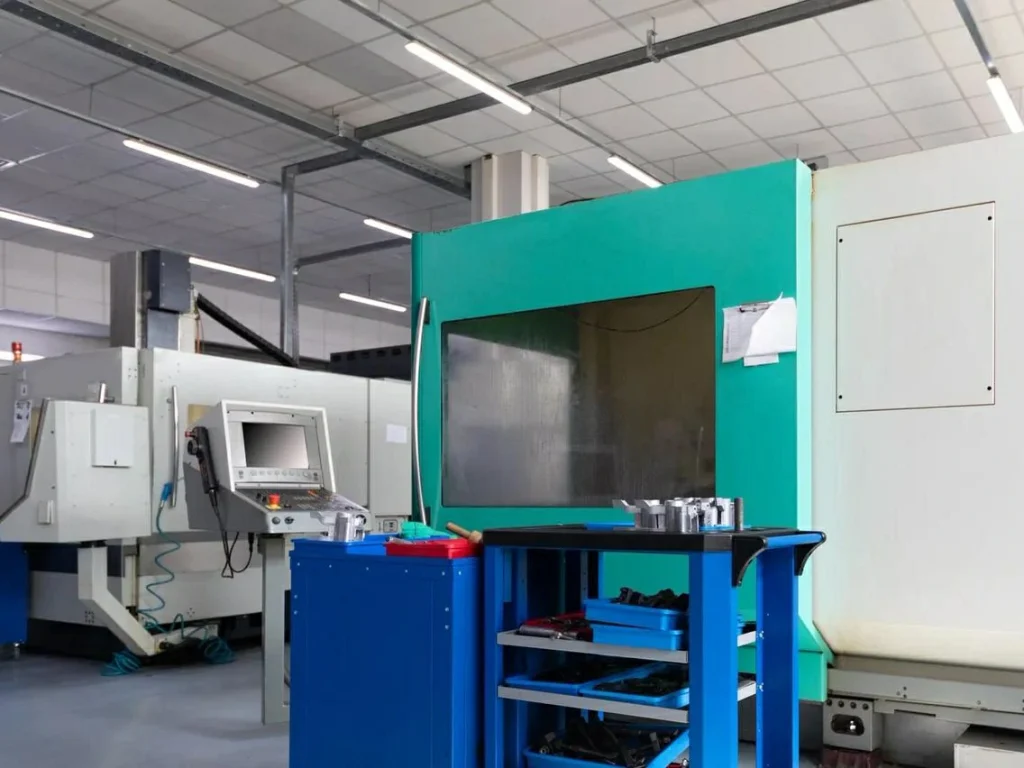
For precision machining of automotive brackets, appliance panels, or other small zinc-coated components, CNC Turning and Metal Stamping services can ensure tight tolerances, smooth finishes, and consistency whether you’re using hot-dip or electro-galvanized steel.
For high-quality CNC parts processing, U-Need offers precision milling, turning, and prototyping services. Their expertise ensures tight tolerances, smooth finishes, and consistent results for small and complex zinc-coated components, making them a practical partner for both hot-dip and electro-galvanized applications.
Fasteners, Hardware, and Small Parts
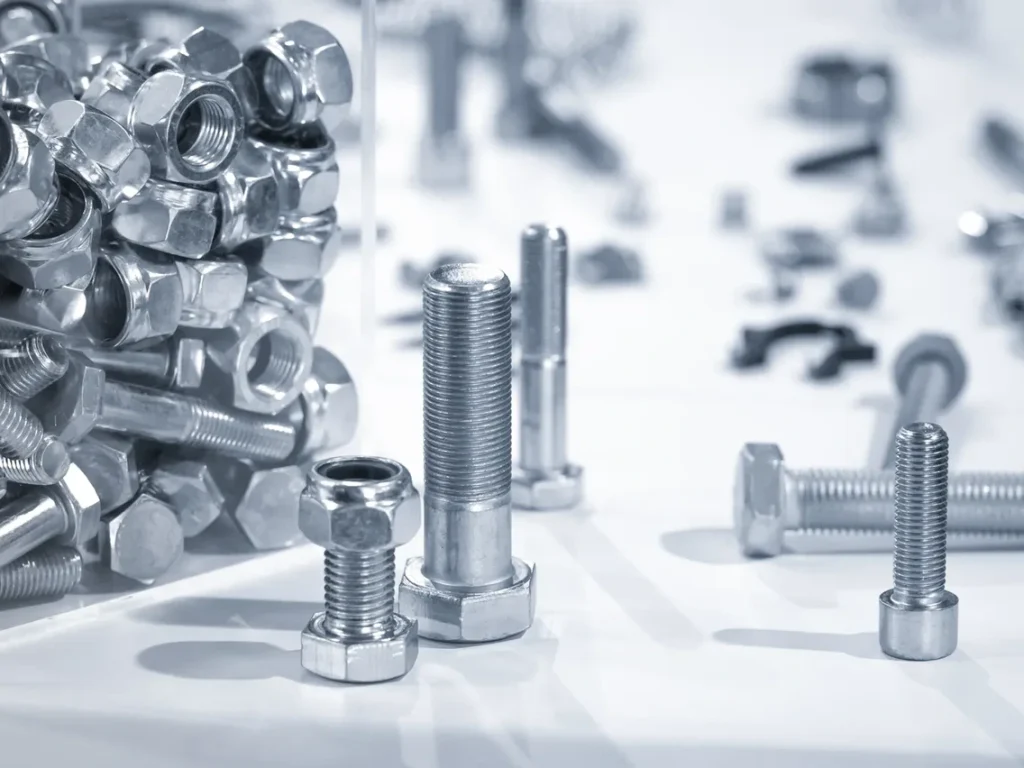
Electro galv is common for small clips, brackets, and fasteners where a shiny finish and precise fit matter. For outdoor bolting and anchors, hot-dip or other heavy zinc coatings (including mechanical galvanizing for threaded parts) make sense because they hold up to wet and salt. Thread fit needs attention: heavy coatings reduce clearance. Fastener grades, lubrication, and torque settings should match the coating thickness.
Real-World Evidence
Field crews’ reports highlight the practical difference in hot dip vs electro galvanizing, showing that hot-dip galvanized steel outlasts electro galvanized parts in harsh outdoor conditions, even near coasts or in winter road salt. On the other hand, hot-dip galvanized items on city streets, farms, or marine docks often stay serviceable for decades before the first major rehab. That gap reflects the difference in zinc thickness and layer structure, not just the process name.
Cost, ROI, and Budgeting
Cost isn’t just the price on the purchase order—it’s about how long the steel lasts, how often it needs attention, and what downtime or replacements might cost. The sections below break down upfront expenses, total lifecycle costs, and factors that influence ROI so you can see which coating really delivers value over time.
Upfront Cost Drivers
Coating cost depends on part size and weight, surface prep, coating thickness, and whether the process is batch or continuous. Electro is usually cheaper for thin coats on sheet and small parts. Hot-dip costs more per part when thickness and size grow, but the coverage is complete and the durability and corrosion resistance are much higher.
Lifecycle Economics (TCO)
A thin zinc layer that needs early repainting or frequent replacements is not “cheaper” once you add labor, downtime, access gear, safety plans, and disposal. In harsh settings, hot-dip often gives the lowest total cost over 10–20 years because it just keeps working. Indoors, or for parts that are easy and cheap to replace, electro plus paint can be the smart spend.
ROI Calculator Inputs (build into a simple tool on your page)
- Environment (rural, urban, coastal, industrial)
- Target service life (years)
- Repaint cycles and costs (labor, materials, access)
- Downtime cost (lost operation, lane closures, equipment rental)
- Replacement risk (failure impact, emergency repairs)
- Coating thickness and material cost
- Discount rate to compute net present value (NPV)
With these inputs, you can compare a 10–20 year NPV for a hot-dip system vs an electro system with paint. In many outdoor cases, the “cheaper” choice at order time ends up costing more by year five to eight.
Is hot-dip always more cost-effective?
Not always. Electro may win when:
- The item lives indoors.
- A smooth, aesthetically pleasing finish is essential.
- The part is thin sheet with tight bends and close tolerances.
- The item is low-cost and easy to replace.
Hot-dip often wins when:
- The item is outdoors, critical, or far from service.
- Abrasion, impacts, salt, or pollution are common.
- The asset must last decades with little maintenance.
Standards, Quality, and Sustainability
Standards and quality controls aren’t just paperwork—they’re your guarantee that the coating will perform as expected and last. From specifying thickness to checking adhesion, and even considering environmental impact, the following sections cover how to ensure your galvanized steel meets performance, safety, and sustainability goals.
Specifications and Compliance
Standards help you order the right coating and check it on delivery. They define thickness classes, appearance, and acceptance criteria.
- Hot dip: Use standards like ASTM A123/A153 and ISO 1461 to set thickness and quality. They cover structural shapes, plate, fasteners, and more.
- Electro: Use standards like ASTM B633 and ISO 2081 to choose the coating class by thickness and specify appearance.
Specifying by name helps your vendors and lets your inspectors use a gauge and a checklist to sign off the work.
Inspection, Testing, and QA/QC
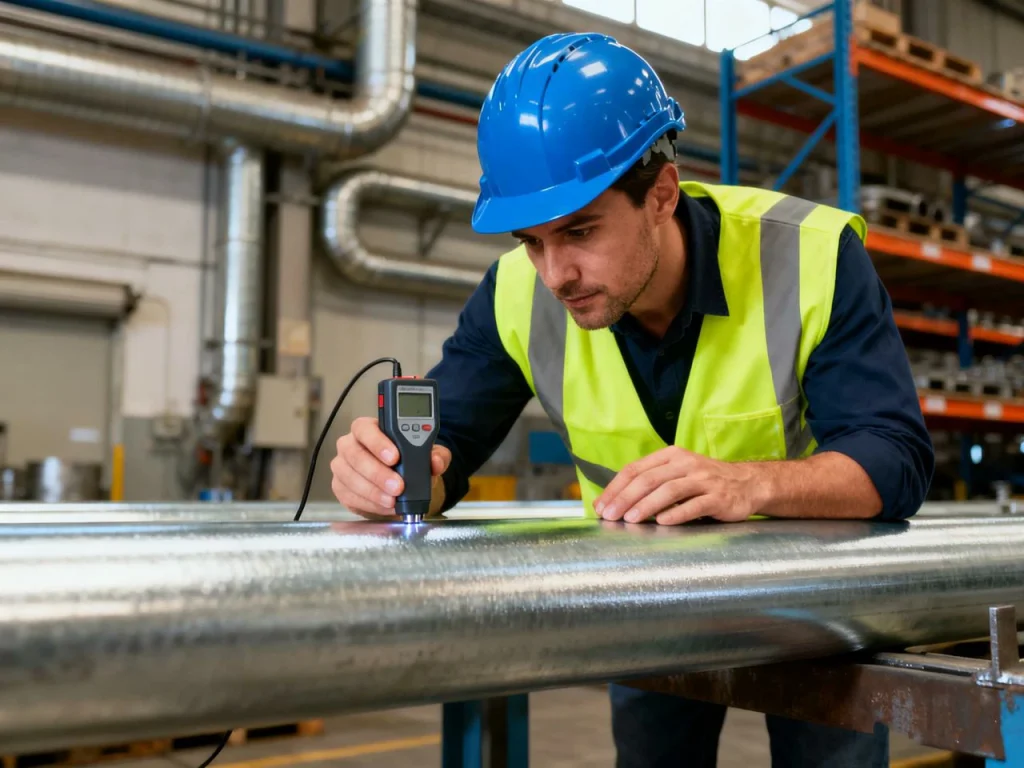
Quality checks are simple. Coating thickness on steel can be measured by magnetic or eddy-current gauges. You can test adhesion with simple bend or punch checks as noted in standards. You can also inspect for “holidays” (breaks in coating) on critical parts and verify bath chemistry and process records for each lot. Ask for certifications and traceability.
If you accept paint over zinc (a duplex system), include surface prep and paint cure records. A sound paint system can double or more the life of hot-dip or electro galvanized parts by sharing the load: paint keeps oxygen and water off the zinc, and zinc keeps rust from undercutting the paint.
Environmental Footprint and Recycling
Zinc is recyclable. Baths are managed for many years, and most zinc by-products can be captured and reused in other industries. The biggest environmental gain comes from durability. When your coating reduces replacements and repaint cycles, you save material, transport, and labor emissions over the life of the asset. A coating that lasts 30 years instead of five often wins on embodied carbon even if it uses more zinc at the start.
Installation, Maintenance, and Repair
Good installation, maintenance, and repair start before the steel even hits the galvanizer. How you design, prep, and protect the surface affects coating longevity, ease of painting, and field serviceability. The sections below outline best practices for surface prep, duplex systems, touch-ups, and safe handling so your zinc coating keeps working for decades.
Design for Galvanizing and Surface Prep
Good design makes good coatings. For hot-dip, add drain and vent holes so the molten zinc can flow in and out. Round sharp edges so the coating is even. Seal overlapping joints and avoid tight crevices that trap fluids. Clean welding slag and spatter; poor prep leads to bare spots.
Thin sheet can distort in the hot-dip process if stresses are high, so watch part geometry, reduce asymmetry, and ask your galvanizer about rack and dip practices. For electro, make sure parts are free of oil and scale so current can plate evenly. For threads and close fits, call out your coating class in the spec to keep tolerances.
Painting Over Zinc (Duplex Systems)
Zinc plus paint is called a duplex system. The galvanizing provides a strong base because the process of coating steel leaves a layer that can form zinc carbonate over time. Each layer protects the coated steel, extending service life far beyond either layer alone.
For fresh hot-dip or electro galvanized surfaces:
- Clean and degrease to remove oil and passivation films.
- Lightly roughen (sweep blast or scuff) if needed for adhesion.
- Use a zinc-friendly primer (often epoxy or a wash primer) and a compatible topcoat.
- Follow recoat windows. If the surface has aged and formed a zinc carbonate patina, wash, rinse, and abrade as needed before painting.
When done well, paint on zinc can push service life far beyond either layer alone.
Field Repairs and Touch-Ups
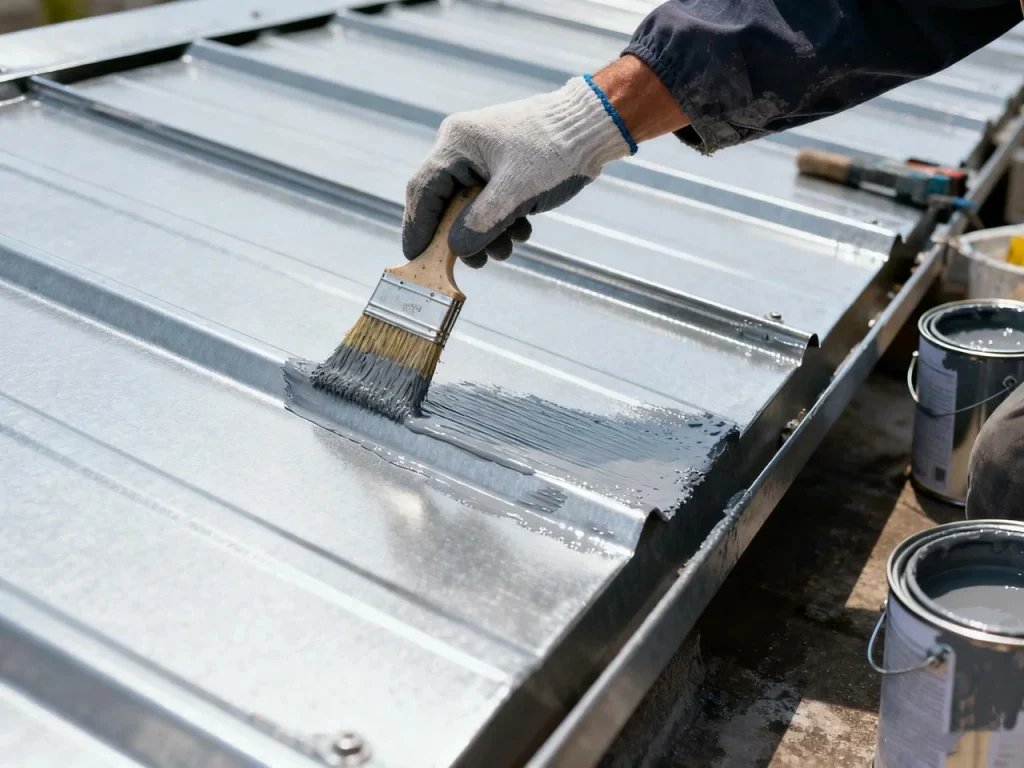
Damage happens. Touch-up keeps corrosion from starting. For small chips and cuts, use zinc-rich paints to restore protection. Ensure the steel surface where steel is coated with zinc is clean and prepared according to the galvanizing process guidelines. For larger repairs, thermal spray (metallizing) can rebuild a thick zinc layer with strong bond. Aim to match the original coating thickness or the minimum in your spec.
For mixed metals, watch galvanic compatibility. Use galvanized or coated fasteners with galvanized substrates when possible. If you must mix, separate with washers, sleeves, or sealants to reduce galvanic action.
Can you weld or machine galvanized steel safely?
You can, but you need controls. Heating or welding releases zinc oxide fumes. Work in well‑ventilated areas, use local exhaust, and wear proper respiratory protection as required. Remove the zinc locally before welding, and restore protection after with zinc-rich paint or thermal spray. For machining, keep speeds and feeds reasonable, and manage chips and dust with extraction.
Actionable Takeaways & Next Steps
If your steel lives outdoors or in harsh service, specify hot dip to standards like ASTM A123 or ISO 1461, and call out your minimum coating thickness. If your steel is indoors or you need a thin, shiny finish, specify electro to ASTM B633 or ISO 2081 with a class that fits your tolerances and paint plan. Validate your choice with small sample coupons first, confirm thickness with a gauge, and set a QA plan so everyone knows the target and how you will check it.
FAQs
Well, it really depends on where your steel is going to live and what you expect it to do. If the steel is going to be outside, supporting a building, near water, or in a place where it’s going to get a lot of wear and tear, hot-dip galvanizing is usually the better choice. Why? Because it gives a much thicker, harder coating that sticks around for years—sometimes decades. On the other hand, if your steel is mostly indoors, or it’s a part where looks matter, or it needs to be thin and paint-ready, electro galvanizing is the way to go. It makes a smooth, even surface and keeps the dimensions really tight, which is great for parts that need to fit together precisely. So basically, it’s a trade-off between durability and surface finish.
Yes, it can. Electro galvanized steel gets a thin layer of zinc, which does help to slow down rusting, but it’s not magic. If it’s sitting in damp air, or near the ocean with salty air, it can start showing rust in just a few months if it’s left bare. Indoors, or if you paint it with a good coating, it will last much longer and give you many years of trouble-free service. So don’t think of it as completely rust-proof—it’s more like rust-resistant, especially if you give it a bit of extra protection.
Hot-dip galvanizing is awesome for protecting steel, but it’s not perfect. First, it can make your steel a bit heavier, which might matter if you’re trying to keep weight down. The coating isn’t always perfectly smooth either—it can have a dull or “spangled” look that some people don’t find attractive. Also, because it adds thickness to the steel, parts that need to fit together tightly might have some trouble. If you have very thin or stressed pieces, the heat from the hot-dip process can sometimes warp them. And last, the upfront cost per piece can be higher, especially if you’re working with really big items or need a minimum coating thickness. So it’s super durable, but there are a few practical trade-offs to keep in mind.
It can be, but only under mild conditions or if you don’t need it to last decades. Electro galvanizing by itself isn’t enough for harsh weather, salty air, or heavy wear. If you really want to use it outdoors, you need a strong paint system on top, and good design details like sealed edges and proper drainage to stop water from sitting on the surface. For long-term, worry-free outdoor use, hot-dip is generally the safer bet—it’s the one that will last without constant maintenance.
Soil can be tough on steel, and it’s really unpredictable depending on moisture, acidity, and other factors. A thin electroplated zinc coating isn’t a great choice if the steel is going to be buried—it can fail pretty quickly in wet or acidic soils. If you absolutely have to bury steel, hot-dip galvanizing is the way to go, ideally with some extra protection like wrapping or cathodic protection. And if you want to be sure, it’s smart to do a soil test first, because soil conditions make a big difference in how long your steel will last underground.
Nope, not in normal situations. Hot-dip galvanizing doesn’t reduce the steel’s strength. For very high-strength steels, there’s a tiny risk of something called hydrogen embrittlement during the cleaning stage, but standard practices adjust for this—like careful pickling and baking—to make sure it doesn’t happen. For most common structural steels, the strength and toughness remain perfectly within spec. So you can get that thick, durable zinc coating without worrying about weakening your steel.

 English
  German
  French
  Italian
  Spanish
  Polish
  Czech
Czech  Japanese