
In hard milling vs wire edm, the decision usually comes down to precision, speed, and cost considerations. Many engineers struggle to choose between these two methods without a clear comparison of capabilities. Hard milling removes material quickly but is affected by tool deflection, vibration, and wear when machining hardened metals, making it unattended operations less reliable for delicate profiles. Wire EDM Machining is slower per cut, but its non-contact process allows exceptionally precise control of thin walls, small-radius internal features, and a superior surface texture in conductive hardened steels, provided the cut is a through-profile and suitable skim passes are used.
The practical outcome is selecting the unique process (or a hybrid workflow) for your tolerance, surface finish, material hardness, and geometry, based on the part’s functional requirements. This article starts with a quick decision view, then benchmarks tolerance/finish/speed, then looks at cost and “cost per good part.” It ends with case studies and a checklist you can use during quoting or design review.
Hard Milling vs Wire EDM Quick Decision Guide
Choosing between hard milling vs wire edm depends on precision, speed, and cost, and also on geometric range and surface quality outcomes, as defined across conventional and non‑conventional machining process descriptions in ASM machining standards. This hard milling vs wire edm comparison helps clarify which process fits a given part’s requirements. This section gives an overview of the trade-offs and explains when each process is technically advantageous.
Best Uses: Roughing and Bulk Removal vs Precision Finishing
For many die and mold making tech jobs, the split is simple:
In hard milling vs wire edm, hard milling is usually the better option when you need roughing and bulk removal, especially when the geometry is open and tool access is good. Comparing hard milling vs wire edm for bulk removal helps engineers decide efficiently. It is a “contact” cut, so the tool pushes on the workpiece and the setup must resist cutting forces.
Wire EDM is often preferred for precision profile cutting, thin-wall features, and small internal radii that are difficult to mill. The wire and spark erosion process avoids direct contact, reducing mechanical stress on delicate sections. Feasibility still depends on a continuous wire path, part conductivity, and access for flushing and slug retention.
Quick Comparison of Accuracy, Surface Finish, Speed, Tool Wear, and Thin-Wall Risk
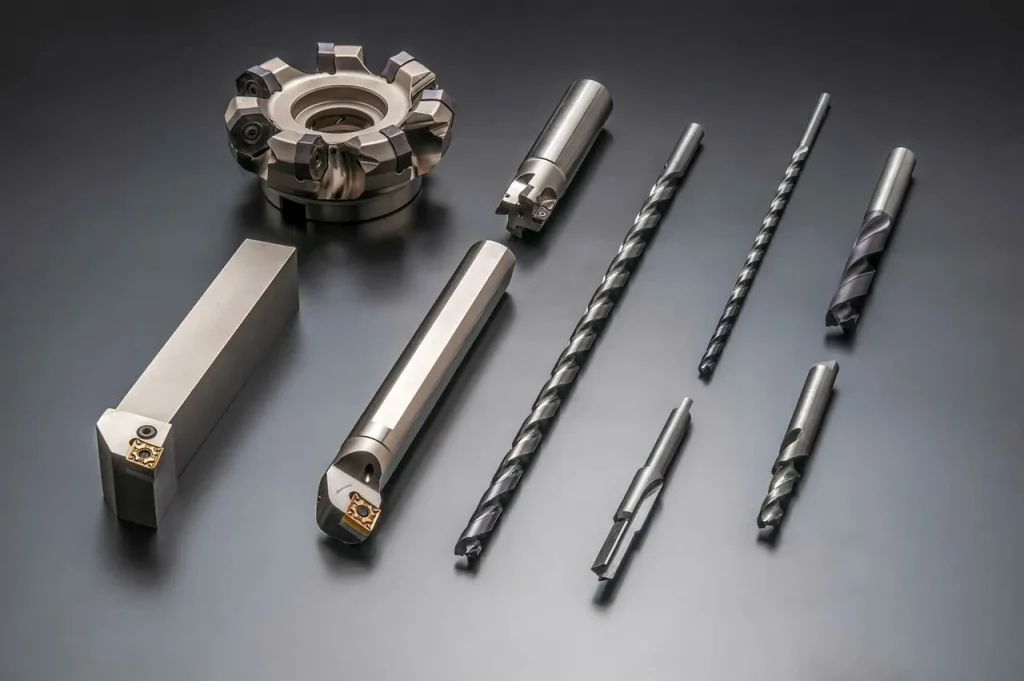
| Factor | Hard milling | Wire EDM |
|---|---|---|
| Accuracy / tolerance capability | Limited by tool deflection, vibration, cutter wear, and fixturing; performance improves with rigid setups, short tool stick-out, and finishing passes | Can achieve very fine tolerances on conductive materials when using skim cuts and stable temperature/control; minimum internal radii are constrained by wire diameter and spark gap |
| Surface finish | Depends on cutter geometry, step-over, and tool wear; high-precision faces often require polishing | Consistent matte-like finish possible with skim passes; recast layer may affect fatigue-sensitive or edge-critical features |
| Speed / throughput | Usually faster for bulk material removal | Slower per cut; cycle time depends strongly on part thickness, number of skim passes, taper, and contour complexity |
When To Use Wire EDM Instead of Hard Milling
Use Wire EDM in the hard milling vs wire edm decision when the material is electrically conductive and the critical features are through-cut profiles that require tight dimensional control, thin-wall protection, or small internal radii. Consider skim passes for tight tolerances and surface integrity, and confirm the wire path is continuous and slug management is feasible. Hard milling is usually better for bulk removal or open geometry where tolerances and finish can be met without extensive finishing. If cycle time is the main constraint and tolerances are not near the micron range, hard milling is often the first process to check.
Hybrid Workflow For Dies and Molds
Many projects in hard milling vs wire edm scenarios do not pick one method. They combine them to control both time and precision, using hard milling vs wire edm strategically in a hybrid workflow.
| Step | Process / Action | Notes |
|---|---|---|
| 1 | Start | Hardened tool steel block |
| 2 | Hard milling | Roughing / bulk material removal |
| 3 | Stress relief / inspection | Performed as needed |
| 4 | Wire EDM | Final profile, sharp corners, tight tolerances |
| 5 | Light deburr / validation | Validate dimensions and remove burrs |
This hybrid is common for dies and molds because hard milling clears volume quickly, while Wire EDM finishes the critical profile where tolerance and corner quality matter most.
Accuracy and Tolerance Advantages of Wire EDM
Wire EDM provides micron-level precision on hardened steels, largely because it avoids cutting forces that cause tool deflection, making it ideal for high-accuracy die and mold features.
Wire EDM Enables Fine Tolerances on Hardened Steels with Strategic Planning
Across the provided technical writeups, Wire EDM is repeatedly tied to micron-level accuracy. A practical benchmark that appears consistently is ±0.006 mm (6 microns) for precision cuts in hard metals. Some modern setups are described with claims reaching ±1 micron.
For feasibility decisions, the key point is not the best-case number. It is that Wire EDM accuracy is not limited by cutting force pushing a tool offline. That is why it is selected for tight tolerance die geometry and high-precision mold details.
Hard Milling Challenges vs Wire EDM No-Contact Cutting
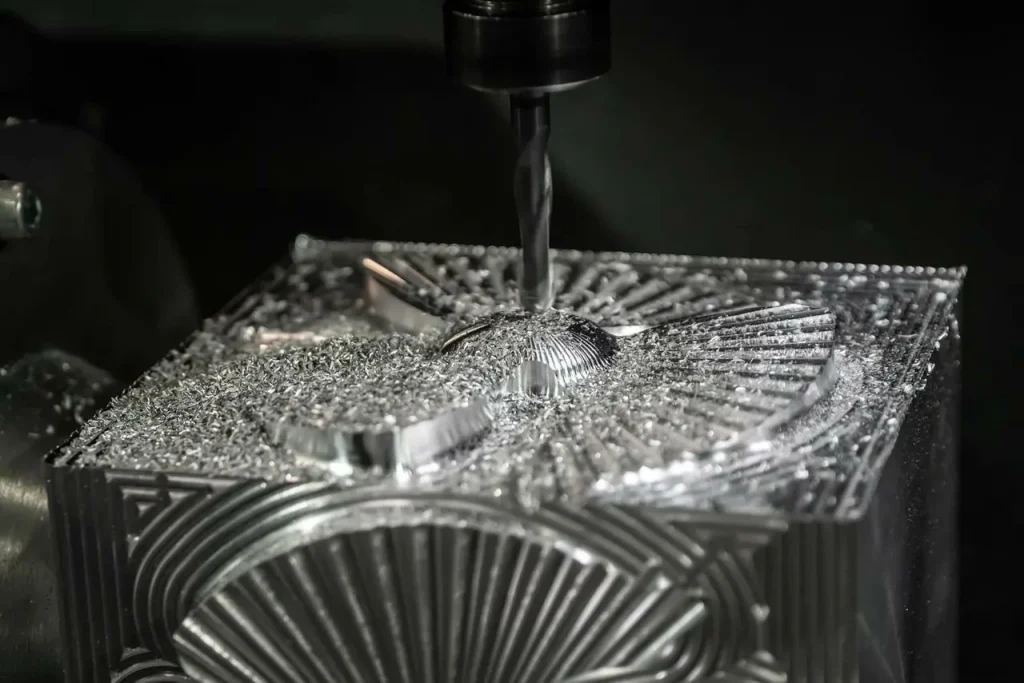
Hard milling in hardened steel is still milling. The cutter engages the workpiece, which creates force. That force can bend the tool (deflection) and can also flex thin workpiece sections. In hard metal, cutting forces and vibration can rise, and the tool can wear faster. As wear changes, the effective cutter shape changes too, which affects size and finish.
Wire EDM removes metal using controlled electrical sparks between the wire and the conductive material. Because there is no physical contact, there is no cutting force that bends a tool or pushes a thin wall away. That is a large reason Wire EDM is used when “precision for hard metals” is the main requirement.
Is Wire EDM More Accurate Than Hard Milling?
For hardened steel, Wire EDM is commonly described as more accurate because it avoids tool deflection and avoids the same kind of tool wear effects seen in milling. Reports cite ±0.006 mm and even ±1 micron in modern setups, which is why it is used for high-precision die work. Milling can still be accurate, but its limiting factors in hard metal are more sensitive to tooling, setup stiffness, and wear.
Micron-Level Accuracy Impact on Fit and Performance
When the tolerance target moves into microns, small process side-effects become main risks. A few examples:
- A die detail that is off by a few microns can change shutoff conditions, parting line behavior, and flash risk.
- An insert that is slightly out of size can turn an easy assembly into a press-fit problem, or create gaps that show up as wear.
- A profile error can stack with other errors and force hand fitting or rework.
A simple way to frame it during design review is to mark which features are “function-driving” and which are “clearance-driving.”
| Feature / Function-Driving Area | Tolerance Requirement / Notes |
|---|---|
| Function-driving profile | Needs tight tolerance (micron-level target) |
| Clearance pocket | Looser tolerance may be acceptable |
| Thin-wall rib | Risk of deflection if milled |
If your drawing has several function-driving profiles in hardened tool steel, Wire EDM tends to be the safer technical route.
Surface Finish and Post-Processing Considerations
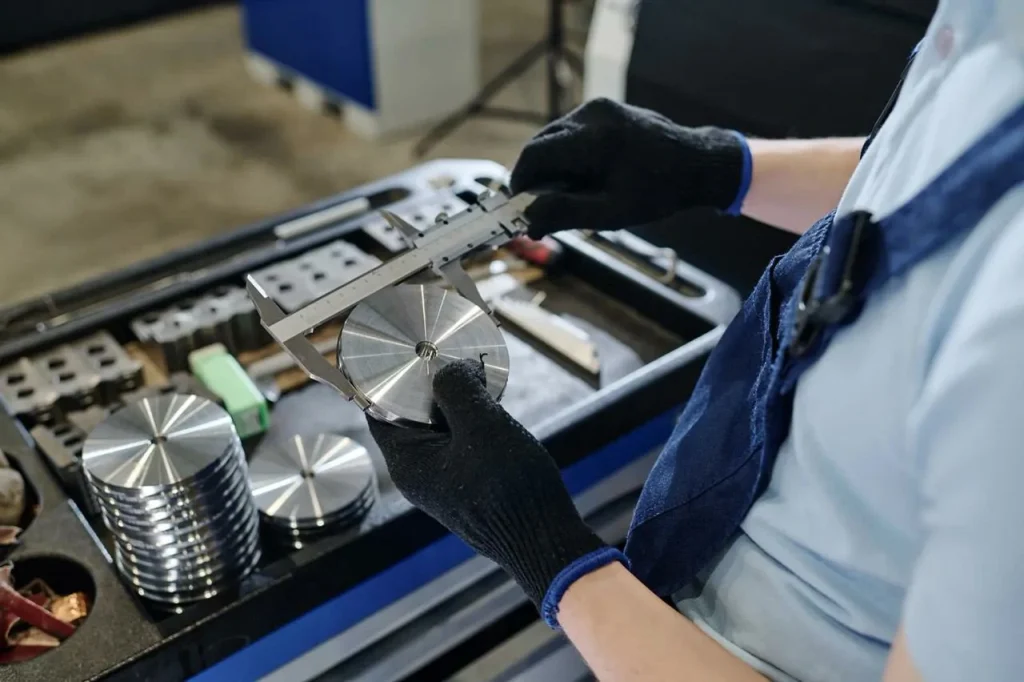
Wire EDM provides consistent matte-like surfaces with controlled recast layers, while milling may require additional polishing to meet high-precision surface requirements.
Wire EDM Yields Consistent Matte-Like Surfaces with Controlled Finish
Wire EDM is often selected for its surface consistency on hard metal. The provided sources describe a typical Wire EDM surface finish around Ra 0.8, with claims down to 0.1-micron Ra in some contexts. The finish is often described as a consistent matte surface rather than a tool-mark pattern.
There is still a surface layer created by EDM. The same research notes that a Wire EDM recast layer range of 5–25 µm. That matters in fatigue-prone parts and edge conditions because the outer layer behavior can differ from the bulk material.
Milling Surface Reality: Tool Marks and the Common Need for Polishing on High-Precision Surfaces
Hard milling can produce good finishes, but the surface finish in hard milling is tied to cutter geometry, step-over, vibration, and tool wear. Even when size is right, the face may show tool marks. For parts that need a uniform sealing face, bearing surface, or mold shutoff surface, tool marks often lead to polishing or bench work.
This is where engineers get surprised on “total effort.” The milling cycle can be short, yet the post-processing time can grow, especially if several faces need the same cosmetic or functional finish.
Wire EDM Surface Finish Compared to Milling
The provided benchmarks for Wire EDM are Ra 0.8 and claims down to 0.1-micron Ra, with a consistent matte look. Milling finishes depend strongly on toolpath and tool condition, and visible tool marks are common enough that polishing is often planned for high-precision faces. If the requirement is a predictable finish on hardened steel profiles, Wire EDM is often easier to plan around.
Finishing Checklist For Milling and Wire EDM
Below is a practical checklist used during process selection. It is not a rule, but it helps identify where time may move from machining to finishing.
| Condition | Hard milling: likely follow-up | Wire EDM: likely follow-up |
|---|---|---|
| Tight tolerance profile in hardened steel | Rework risk if deflection shows up; edge deburr | Light deburr; validate size; profile is often close to final |
| High-precision sealing / shutoff surface | Polishing often planned to remove tool marks | May meet finish target without polishing in some cases; confirm Ra and layer needs |
| Thin-walled parts | Risk of distortion; extra inspection | Lower stress; still inspect for straightness and taper needs |
| Burr-sensitive edge | Burr management often required | Through-cuts often described as burr-free; still inspect edges |
Materials & Hardness: Tool Wear vs Conductivity Limits
Wire EDM avoids cutter wear even on hardened steel and carbide, but the material must be electrically conductive. Milling tool wear increases with hardness, affecting costs and repeatability.
Wire EDM: Cutting Conductive Hard Materials Without Milling Tool Wear
A major reason Wire EDM is used in machining hardened tool steel is that hardness does not create the same tool wear issue as it does in milling. The sources describe Wire EDM cutting >40 HRC tool steels and also carbide effectively, without tool wear in the usual sense of a cutting edge dulling.
Hard milling can cut hard metal, but the economic and quality tradeoff often becomes tooling-focused. Tool wear and tool cost become part of the process capability. Wear changes cutting behavior, and that can drive variation in size and surface.
Conductivity Requirements for Wire EDM
Wire EDM is a type of electrical discharge machining. It needs the workpiece to be electrically conductive. This is a hard limit. If the material is not conductive, Wire EDM is not feasible.
This is also a common misunderstanding in early sourcing. A buyer may see “EDM capabilities” and assume it applies to any hard material. The actual decision criterion is conductivity, not hardness.
Tooling Economics: Milling vs Wire EDM Costs
Hard milling costs often rise in hard metal because cutters wear and must be replaced. That cost is not only the cutter itself. It also shows up as tool management and variation control.
Wire EDM has consumables too, mainly wire. The cost model is different: you are paying for wire use and machine time rather than for frequent cutter replacement and the process shifts that come with wear. For low-volume precision work, that difference can matter more than the raw machine hourly rate.
Can Wire EDM Cut Carbide and Hardened Steel?
Yes, Wire EDM is described as effective on carbide and on hardened tool steels above 40 HRC, because hardness does not cause cutting edge wear the way it does in milling. The key constraint is that the material must be electrically conductive. If it is conductive, hardness by itself is not the limiting factor for feasibility.
Speed and Throughput Trade-Offs
Hard milling is faster for bulk material removal, whereas Wire EDM prioritizes precision and surface integrity, making cycle time a secondary consideration for high-accuracy parts.
CNC Milling vs Wire EDM: Speed for Roughing and Precision Finishing
If your main driver is “remove a lot of material quickly,” hard milling is usually the first method to test. The provided sources describe CNC milling as much faster for roughing and bulk removal.
Wire EDM is usually selected when the main driver is precision, finish, or geometry, and the cut is a profile or through-cut. It is slower, but it avoids some failure modes that create rework, scrap, or polishing time.
This also answers a common planning question: Is hard milling faster than EDM? For roughing, yes in most cases. For a feature that forces multiple milling setups, long polishing, or repeat rework, the “faster method” can shift when you measure total time to a good part.
Wire EDM Material Removal Rates Compared to Sinker EDM
The provided EDM studies give a Wire EDM material removal rate context of about 50–300 mm³/min. That is one reason Wire EDM is rarely the first choice for bulk removal.
The same sources list sinker EDM (a related but different electrical discharge machining method) with material removal rates up to about 5,000 mm³/min for cavities. That matters for one of the key buyer questions: Which process is better for deep cavities? Wire EDM is mainly for profiles and through-cuts. For deep cavities, sinker EDM is commonly referenced as the EDM method aimed at cavities, while milling remains a main approach when the cavity is accessible and tool reach is not a limiting factor.
Understanding Hard Milling Speed Benchmark Variations
Direct speed benchmarks for hard milling vs EDM are hard to compare cleanly, based on the provided research. Most sources compare “CNC milling” in general against Wire EDM, not a controlled “hard milling” study with the same geometry, same tolerance goal, and same inspection method.
A simple way to communicate this uncertainty in planning is to treat speed as a range driven by part type:
| Feature Type | Milling | Wire EDM | Sinker EDM |
|---|---|---|---|
| Bulk Removal / Open Faces | Often fast (geometry-driven) | Rarely used for this | — |
| Precision Profile / Through-Cut | May need multiple operations + polish | Slower cutting, fewer force-related issues | — |
| Deep Cavities | Depends on reach and access | Not a cavity method | Up to ~5,000 mm³/min for cavities |
This keeps the discussion tied to what you can verify: the feature type and the tolerance/finish targets.
Production Planning: Cycle Time vs Rework
Cycle time dominates when the geometry is open, the tolerance is not near micron level, and you can hold size with stable tooling. In that case, hard milling often wins.
Rework and post-polish dominate when the drawing calls out tight tolerance on hardened steel profiles, or when a surface finish requirement is strict and the milling surface marks are not acceptable. In that case, a slower Wire EDM cut can still shorten the path to an accepted part because it reduces finishing work and reduces the chance of size chasing.
Geometry, Corner Quality, and Part Stress
Wire EDM excels at sharp corners, thin walls, and small internal radii, while milling faces limitations due to tool diameter, deflection, and mechanical stress.
Intricate Geometry: Sharp Corners and Micro-Features with Wire EDM
Geometry is where the “hard milling vs wire edm” decision becomes obvious. Milling tools have a physical diameter, so they leave an internal radius unless you use a very small tool. Small tools increase cycle time and breakage risk, and they amplify deflection.
Wire EDM uses a thin wire to cut profiles, enabling small features and internal radii that are difficult to achieve by milling. The minimum radius is limited by wire diameter and spark gap. Features that are not through-cuts may require alternative EDM methods such as sinker EDM.. This is why Wire EDM is common in tool and die work where corner detail controls part behavior.
No-Contact Advantage for Thin Walls and Delicate Parts
Thin-walled parts and thin features fail in predictable ways during milling. The tool pushes, the wall bends, and the final size can spring back after the pass. The part can also chatter, which affects surface finish and edge quality.
Wire EDM creates the shape without pushing on the wall. That reduces mechanical stress on delicate parts.
| Process | Effect on Thin Walls | Outcome |
|---|---|---|
| Milling | Cutter force → thin wall bends away | Size and finish at risk |
| Wire EDM | Spark erosion (no contact) → thin wall bends less | Better control, reduced stress |
This does not remove every risk. Fixturing still matters, and thermal effects and cutting strategy matter, but the lack of cutting force is a real advantage.
Kerf and Profile Control in Wire EDM
Wire EDM is mainly a profile and through-cut process. The kerf (the width of material removed) is controlled by the wire path and the spark gap. The provided sources also describe taper capability, which matters when the design calls for drafted walls in a through-cut feature.
For feasibility, the key point is that Wire EDM has a different set of geometric limits than a mill. Milling is limited by tool access and minimum internal radius. Wire EDM is limited by the need for a through path and conductive material, and by the fact that it is not a cavity-making method in the same way as sinker EDM.
Wire EDM Sharp Corner Capability vs Milling
Yes. Wire EDM is widely used when sharp internal corners and narrow features are required, because milling tools leave an internal radius and can struggle with tool access. Wire EDM’s no-contact cutting also helps when the corner sits on a thin wall that would deflect under milling forces. If the corner is not a through-cut feature, you may need a different method such as sinker EDM for cavities.
Cost, Volume, and Total Cost Per Part
Process economics depend on volume, tolerance, and post-processing needs. Hard milling is often cost-effective for high-volume bulk removal, whereas Wire EDM can save time and scrap in precision work.
Low-Volume Precision vs High-Volume Removal: Wire EDM vs Milling Costs
Cost is hard to compare because it depends on part geometry, inspection burden, and the probability of rework. Still, a pattern shows up in the provided findings:
- Hard milling is often cost-effective for high-volume removal because it is fast at roughing.
- Wire EDM can be cost-effective for low-volume precision because it avoids frequent cutter replacement in hard metal and avoids some of the process variation tied to tool wear.
This is also where many shop-upgrade debates come from. Some users view EDM as “expensive” because the cut is slower. That can be true if you only measure spindle time or machine time. It can be false if you measure how many parts pass inspection without hand work.
Hidden Costs: Polishing, Scrap, and Rework
The hidden cost drivers in this comparison are usually:
Polishing time: A milled surface may meet size but still need finish work. If the drawing includes a surface finish callout, you should treat polishing as a planned operation unless you have proof the milled finish meets it.
Scrap risk: Thin sections and tight tolerance profiles in hard metal increase the risk that milling deflection or vibration will push a feature out of tolerance.
Tolerance-driven rework: If the process is sensitive to tool wear, the first-off may pass and later parts may drift. Even in low volume, chasing a profile to meet a tight requirement can consume time.
Wire EDM has its own hidden costs too. If the part has features that are not through-cuts, you may need a different EDM method. Also, if the surface layer matters for fatigue or edge behavior, you may need to plan for how the recast layer (reported 5–25 µm for Wire EDM) fits your requirements.
Decision Matrix For Process Selection
Below is a decision matrix you can copy into a quote review. It is meant to be “one page” and used as a scoring aid. It does not replace a process review with the manufacturer, but it makes trade-offs visible.
Decision matrix (copy/paste template)
| Factor (weight it 1–5) | Hard milling score (1–5) | Wire EDM score (1–5) | Notes tied to your part |
|---|---|---|---|
| Tolerance requirement (micron-level vs standard) | Wire EDM reported ±0.006 mm and up to ±1 micron claims | ||
| Surface finish requirement (Ra) | Wire EDM reported Ra 0.8 and 0.1-micron Ra claims | ||
| Material hardness (>40 HRC) | Wire EDM suited to hardened steels; milling tool wear rises | ||
| Conductive material requirement | Wire EDM requires conductivity | ||
| Geometry: sharp internal corners / narrow angles | Wire EDM supports sharp corners; milling leaves radius | ||
| Thin-wall risk / delicate features | Wire EDM no-contact reduces stress | ||
| Volume and throughput | Milling faster for roughing; Wire EDM slower | ||
| Need for deep cavities | Wire EDM is not a cavity method; sinker EDM is referenced for cavities |
Simple selector (fast screen) If you want a quick go/no-go before you fill the table, run these questions in order:
- Is the material conductive? If not, Wire EDM is out.
- Is the key feature a through-cut profile with sharp corners or thin walls? If yes, Wire EDM is favored.
- Is most of the work bulk removal with open access? If yes, hard milling is favored.
- Is the requirement driven by micron-level tolerance or strict Ra finish? If yes, Wire EDM or a hybrid workflow is favored.
- Is the feature a deep cavity rather than a profile? If yes, check milling feasibility first, and consider sinker EDM rather than Wire EDM if EDM is needed.
Shop Upgrade Considerations: EDM vs Milling Costs
One forum-style pain point that shows up in the provided notes is the worry that precision EDM equipment is expensive, and that Wire EDM can feel “crude” for basic work. That lines up with what many teams experience: if you use Wire EDM for simple rough shapes, it can look slow and costly.
The more technical way to evaluate this is to compare not “machine cost per hour,” but “total cost per good part.” If hard milling drives frequent cutter replacement and still produces tolerance misses on hard metal, the purchase team sees cost in scrap and rework. If Wire EDM holds the profile without tool deflection issues, the time may be in the cut, not in correcting the cut.
Applications, Case Studies, and Final Checklist

Real-world examples illustrate hybrid workflows and Wire EDM applications across tool & die, aerospace, medical, and automotive parts, providing practical insights for process planning.
Case Study: Tool and Die Hybrid Workflow
Context: Tool and die parts often require sharp corners and tight tolerance in hardened steel. What was done: Rough milling removed bulk material, then Wire EDM finished the precision profile. Outcome described: 6-micron accuracy and Ra 0.8 finish, without polishing. Why it matters: This shows a practical hybrid workflow: use the mill where it is efficient, then use Wire EDM where precision and finish drive acceptance.
This case also matches what many die programs need: predictable geometry without hand fitting after machining.
Case Study: Aerospace Turbine Blade Through-Cuts
Context: Aerospace parts in nickel alloys and titanium can be difficult to machine with stable edge quality, and geometry often includes complex profiles. What was done: Wire EDM was used for through-cuts on these alloys. Outcome described: Burr-free edges, tolerances in microns, and good material yield from nested parts. Why it matters: When edge condition and tight tolerance drive performance, a slower but consistent cutting method can reduce downstream rework and inspection failures.
This also highlights a design-for-manufacturing point: if the part can be nested and cut as a profile, Wire EDM can support efficient material use.
Case Study: Medical Tools and Micro-Geometry
Context: Medical tools and implants can include thin-walled parts and micro-geometry where mechanical stress is a problem. What was done: Wire EDM was used for intricate geometry in conductive hard materials such as carbide. Outcome described: Surface finish claims down to 0.1-micron Ra and tolerance claims to ±1 micron. Why it matters: For micro-features, the lack of cutting force helps reduce distortion and stress-related issues that can appear when milling thin sections.
In this kind of work, deburring and edge control are also part of feasibility. A burr-free edge can reduce manual finishing steps, which can be hard to control on very small features.
Case Study: Automotive Gear Cutting in Hardened Steel
Context: Automotive gear features often use high-strength hardened steels where wear and accuracy matter. What was done: Wire EDM was used in place of milling for complex shapes above 40 HRC. Outcome described: Consistent cutting regardless of hardness and minimal tool costs compared to milling tool wear and replacement. Why it matters: This reflects a common decision point in hardened steel: milling can be feasible, but tool wear becomes a large part of the quality and cost story.
Final Decision Checklist For Milling and Wire EDM
Use this as a final screen before you lock a process plan.
| Category | Question | Recommendation |
|---|---|---|
| Material | Is the material electrically conductive? | Yes → Wire EDM is feasibleNo → Wire EDM not feasible |
| Is it hardened steel >40 HRC or carbide? | Yes → Wire EDM avoids cutter wear issues seen in milling | |
| Feature Type | Is the work mostly bulk removal with open access? | Hard milling is usually the efficient start |
| Is the feature a through-cut profile with sharp internal corners or narrow angles? | Wire EDM is often the best fit | |
| Is it a deep cavity (not a through-cut)? | Consider milling first; if EDM is needed, sinker EDM fits cavities better than Wire EDM | |
| Quality Targets | Is the tolerance near micron-level? | Wire EDM is favored (reported ±0.006 mm; up to ±1 micron claims) |
| Is the surface finish target tied to Ra and uniform texture? | Wire EDM favored (reported Ra 0.8; 0.1-micron Ra claims)Milling may need polishing due to tool marks | |
| Risk and Schedule | Are there thin walls or delicate features that can deflect? | Wire EDM reduces mechanical stress |
| Is the timeline driven by fast roughing and finish can be relaxed? | Hard milling favored | |
| Hybrid Option | Do both roughing speed and final profile precision matter? | Rough mill, then Wire EDM finish on critical geometry |
Ending logic, in short: if your part is conductive and the hard requirement is tight tolerance, sharp corners, thin-wall control, or consistent surface finish on hard metal, Wire EDM is often the safer process. If the job is mainly bulk removal with accessible geometry, hard milling is usually more time-efficient. If you need both, the hybrid workflow is common in dies and molds.
FAQs
Use Wire EDM when the part is electrically conductive and the key features need micron-level tolerance, sharp internal corners, or low-stress cutting of thin sections. Use hard milling when you need fast bulk removal and geometry allows stable tool access. For many tool steel parts, a rough mill plus Wire EDM finish is a practical mix.
For roughing and bulk removal, the sources describe CNC milling as much faster. Wire EDM is typically slower, with reported material removal rate context around 50–300 mm³/min. The faster route can change if milling creates extra polishing or tolerance rework.
Hard milling can produce good surfaces, but tool marks are common enough that polishing is often planned for high-precision faces. Wire EDM is described with Ra 0.8 and even 0.1-micron Ra claims, with a consistent matte finish. If the finish requirement is strict and must be repeatable, Wire EDM is often easier to predict.
Wire EDM is mainly for profiles and through-cuts, not deep cavities. For cavities, sinker EDM is the EDM method referenced for that use, with reported removal rates up to about 5,000 mm³/min in the provided studies. Milling is also commonly used for cavities when tool access and reach are workable.
Wire EDM is commonly reported as more accurate in hardened steel because it avoids tool deflection and avoids cutting-edge wear effects. Benchmarks in the provided material include ±0.006 mm and up to ±1 micron claims in modern setups. Milling can be accurate too, but its limits in hard metal are more sensitive to tool condition, deflection, and setup stiffness.
References
https://11753481.s21i.faiusr.com/61/2/ABUIABA9GAAg0vSHlwYo0Kzizwc.pdf?utm_

 English
  German
  French
  Italian
  Spanish
  Polish
  Czech
Czech  Japanese