
CNC machining cost reduction is less about “finding a cheaper shop” and more about removing time and uncertainty from the machining process using established machining and quality principles from International Organization for Standardization. Time shows up as setup hours, programming effort, machine cycle time, tool changes, and inspection. Uncertainty shows up as questions that force the supplier to add buffers for scrap risk, rework, and extra quality checks.
This guide is written for technical buyers and engineers who want a practical way to lower CNC machining cost per part without guessing. It focuses on the changes that most often move a quote: part design, tolerance strategy, material choice, and setup/fixture planning.
Fast Wins to Lower a CNC Machining Quote
Quickly identify the key factors driving CNC quotes to achieve CNC machining cost reduction without major design changes.
Why CNC Machining Quotes Are Often High
A CNC machining quote is high when the supplier expects long machining time, high setup time, or high risk. Risk can mean tight tolerances everywhere, hard-to-hold geometry, unclear requirements, or inspection that is not defined.
Many buyers focus on material cost, but the bigger drivers are often machine time and the steps around it: workholding (fixturing), tool changes, and metrology. Low-volume jobs also feel expensive because setup costs do not spread across many parts, so each part “carries” a large share of fixed time.
A useful way to debug a high quote is to ask which line items are dominated by cycle time, which are dominated by setup, and which are dominated by quality and scrap assumptions. Then you can decide what to change first.
Prioritize Design-First Levers for Cost Reduction
Across industry technical guides and DFM literature, design optimization is repeatedly described as the highest-impact lever. Design optimization consistently appears as the lever with the largest influence on machining cost. One manufacturer case describes significant reductions when geometry was simplified and operations minimized. The magnitude is directional and not a guaranteed outcome., but the direction is consistent: design decisions control how many operations the shop must run and how stable the process will be.
The main reason design changes outperform purchasing tactics is simple: suppliers can quote only what the process requires. If the CAD model forces extra setups, long-reach tooling, and tight inspection, the quote follows.
Chart (impact vs effort) (High impact tends to be geometry simplification, feature reduction, and tolerance zoning.)
| Lever | Typical effort (buyer/engineering) | Typical impact on cost | Why it moves the quote |
|---|---|---|---|
| Simplify geometry and reduce operations | Moyen | Haut | Less programming, fewer setups, shorter cycle time |
| Standardize tools/radii/hole sizes | Faible-Moyen | Moyenne-élevée | Fewer tool changes and less process variation |
| Relax non-critical tolerances (tolerance zoning) | Moyen | Haut | Faster cutting, less inspection, less scrap risk |
| Material change to higher machinability | Moyen | Moyen | Higher feeds/speeds, better chip control |
| RFQ package clarity (callouts, notes) | Faible | Moyen | Less rework and fewer conservative buffers |
| Fixture strategy (modular vs custom) | Moyen | Moyenne-élevée | Less setup labor; reusable workholding |
The key point is that “cheap CNC parts tips” that ignore design and tolerance strategy usually hit a ceiling fast. Real CNC machining cost reduction comes from changing what drives time and risk.
Identify Major CNC Machining Time Drivers
When a CNC quote looks out of line, the fastest way to find the cause is to scan the design for a few repeat offenders. These are not “bad design,” but they are common sources of longer machining time and higher scrap risk.
Checklist: time sinks that often increase machining cost
- Complex geometry / freeform surfaces that require dense toolpaths and small stepovers.
- Deep holes and internal undercuts, especially when depth is in the 3–10× diameter range (industry guidance in the provided sources). These features tend to force slower feeds, peck cycles, special tools, and more tool wear.
- Very tight tolerances applied universally (single-source case example) that can force slower cutting and additional inspection. Cost-focused tolerance strategy is “tight only where function demands” with non-critical areas opened to standard process capabilities.
- Long slender parts, where part length is >4× diameter (cycles slow) and >10× diameter (major slowdowns) per the provided guideline. These parts often need special support and conservative parameters to avoid deflection and chatter.
- Hard-to-reach features (deep cavities, thin webs, narrow slots) that reduce rigidity and tool life.
A quick “cnc cost driver analysis” often shows one or two of these dominate the quote. If you remove just one driver, the part cost can shift more than any negotiation.
RFQ Package Upgrades to Reduce Rework
Even with a good design, unclear requirements make suppliers assume worst-case. That raises the “cost due to uncertainty,” and it can also cause rework if assumptions differ from your intent.
Below is a compact RFQ template that reduces back-and-forth and helps a supplier quote a stable process. It is written to support design for CNC cost, not marketing.
RFQ package template (paste into your drawing notes or RFQ form)
| Section | Ce qu'il faut inclure | Why it matters for cost reduction |
|---|---|---|
| Part function summary | 1–2 sentences on what interfaces matter (mating surfaces, seals, bearings) | Helps tolerance zoning and finish targeting |
| Critical dimensions callout | Identify only the dimensions that drive fit/function | Avoids universal tight tolerances and 100% inspection assumptions |
| Datum scheme (if using GD&T) | Primary/secondary/tertiary datums tied to how the part is used | Aligns inspection to function, reduces “interpretation risk” |
| Spécifications des matériaux | Material grade, condition, and any substitutions allowed | Prevents quoting the wrong stock or conservative substitutes |
| Stock form preference | Bar/plate/near-net and allowable machining allowance if known | Reduces material allowance waste and buy-to-fly penalty |
| Surface finish notes | Only on faces that need it; state “as-machined acceptable” where true | Avoids slow finishing passes on all faces |
| Threads and holes | Standard callouts; note if thread gaging is required | Sets tooling and inspection scope early |
| Exigences en matière d'inspection | Sampling vs 100% on critical features; required records | Stops blanket inspection buffers and surprise QA charges |
| Contrôle de la révision | Drawing/CAD revision, change summary | Reduces scrap risk from version mismatch |
Small documentation upgrades do not replace DFM, but they reduce the chance that the shop prices in extra time “just in case.”
CNC Part Cost Model Overview
Understanding the main cost components of a CNC part helps link design and sourcing choices to actual machining expenses.
Machine Platform and Routing Choices
The type of machine and how the part is routed through operations can dominate realized cost even if geometry is unchanged. Multi-op setups vs done-in-one, 3-axis vs 5-axis, mill-turn, or probing/in-process inspection all influence cycle time and setup. Consider the number of handoffs, axis capability, and unattended machining potential when evaluating process choices. [Ref: industry cost engineering handbooks]
Simple CNC Part Cost Breakdown
A CNC machined part cost is usually the sum of a few predictable buckets, including material, setup, machine time, tooling, QA, and the cost of the equipment. You do not need a full cost-accounting system to benefit from this. A simple line-item view lets you map each cost bucket to a design or sourcing change and estimate the overall cost of CNC machining.
Table: line-item estimator (conceptual breakdown)
| Seau de coût | Ce qui l'anime | What you can change (often) |
|---|---|---|
| Matériau | Stock price, stock form, buy-to-fly/waste, allowance | Change material, change stock form, tighten allowance plan |
| Setup / fixturing | Number of setups, workholding complexity, fixture type | Reduce setups, standardize datums, use modular fixture strategy |
| Machine cycle time | Toolpath length, feeds/speeds, tool reach, operations count | Simplify geometry, remove features, improve access, choose better process |
| Tooling and tool changes | Number of tools, special tools, wear rate, diameter steps | Standardize radii and tool sizes, reduce diameter steps |
| QA / inspection | Tolerance tightness, measurement method, sampling plan | Tolerance zoning, define inspection scope, avoid over-spec |
| Scrap / rework allowance | Process capability risk, thin walls, deep features, unclear notes | Redesign unstable features, clarify specs, relax non-critical tolerances |
This model is also a communication tool. If you ask a supplier which buckets dominate, you can focus design changes where they matter instead of making cosmetic edits.
Cycle Time Versus Setup Time in Low-Volume Parts
Low-volume CNC work often feels overpriced because setup is a fixed cost that does not scale down with quantity. Setup can include programming, first-article planning, tool setup, and fixturing decisions. Even when the supplier is efficient, those steps exist.
Diagram: fixed vs variable cost (conceptual)
| Quantité Fourchette | Cost Behavior | Explication |
|---|---|---|
| Prototype / Low Quantity | Setup Dominates | Fixed setup costs (programming, fixturing, first-article planning) are high per part. |
| Mid Quantity | Variable Cost Dominated Zone | Setup cost spreads across more parts; machining time, material, and tooling drive cost. |
| High Quantity | Lower Unit Cost | Fixed costs are diluted; cycle time and material dominate, allowing economies of scale. |

If your run is fewer than 10 parts, it is common for setup to be the main cost driver. As you move into higher quantities, cycle time and material become more visible because setup gets spread out.
This is why “why is small batch CNC so expensive?” has a technical answer: you are buying readiness (a controlled process) more than you are buying minutes of cutting.
Hidden Cost Buckets That Increase CNC Prices
Some of the biggest quote deltas come from costs that are real but not obvious from a CAD model. These do not always show as separate line items, so they look like “markup” unless you ask.
Table: common adders that influence cnc machining costs
| Hidden adder | Qu'est-ce que c'est ? | Typical trigger |
|---|---|---|
| Material allowance waste | Extra stock purchased to ensure enough usable volume | Vague stock form, conservative allowance, poor buy-to-fly |
| Fixture cost | Custom or complex workholding | Multi-sided machining, weak datums, awkward clamping areas |
| Inspection time | Measurement planning and execution | Tight tolerances everywhere, undefined QA plan |
| Scrap buffer | Extra parts or cost built in to cover yield risk | Thin walls, deep features, long slender geometry, unclear revisions |
One source in the provided pack calls out material allowance waste as a meaningful contributor and includes case studies where allowance planning reduced cost. Use this as a prompt to ask direct questions, not as a universal percentage for all parts.
How Production Volume Affects CNC Part Cost
Volume changes the balance between setup and variable cost. The provided outline uses practical volume bands that match how many shops think about planning.
Graph: conceptual cost per-unit curve by volume band
| Volume band | Typical behavior | Why cost per part changes |
|---|---|---|
| Prototypes (<10) | Highest cost per part | Setup and programming dominate; more uncertainty |
| Low (10–100) | Drops quickly | Setup spread across more units; process stabilizes |
| Mid (100–1,000) | Flattens | Cycle time and tool wear dominate; fixtures may be justified |
| High (1,000+) | Lower per part, but decisions change | More attention on batching, tooling life, fixturing strategy |
Cost per part usually decreases with volume, but total spend increases because you are buying more material, more machine time, and sometimes more dedicated tooling. That matters when you compare CNC to other processes or when you decide how much inventory risk you can take.
DFM Design Optimization for Cost Reduction
Applying design-for-manufacturing principles—simplifying geometry, removing features, standardizing tools, and zoning tolerances—reduces cycle time and cost.
Simplify Geometry to Reduce Toolpath Complexity
Toolpaths for freeform surfaces tend to be dense. Dense toolpaths mean more machine time and more opportunities for small process issues like chatter marks, tool wear, or local surface variation.
A practical DFM approach is to use simple, machinable primitives where function allows: planes, cylinders, and cones. These features are easier to program, easier to measure, and often allow more aggressive cutting.
Before/after diagram (conceptual)
| Version | Description | Example Geometry |
|---|---|---|
| Avant | Freeform blend drives dense toolpaths | Wavy surface + sculpted pocket |
| Après | Functional surfaces kept, blends simplified | Planar faces + simple radii + cylindrical pocket |
This does not mean removing all organic geometry. It means asking which surfaces are functional and which are aesthetic or legacy. If a surface does not locate, seal, guide, or carry load in a controlled way, it is a candidate for simplification.
For “how to optimize design for faster milling,” this is usually step one: reduce toolpath complexity before you chase feeds and speeds.
Feature Removal and Consolidation for Faster Machining
A case in the research pack shows that removing features and consolidating operations led to noticeably faster machining and lower cost. The figures are directional; the key insight is that fewer features generally reduce setups and cycle time.
Many parts are expensive because they require many operations, not because any single cut is hard. Each extra feature can add tool changes, repositioning, and inspection.
A case study in the provided pack reports that feature removal and operation consolidation led to 29% faster machining and 21% cost reduction for a micro-precision part. The details are limited to the source, so treat it as directional evidence. The important engineering idea is solid: fewer features often mean fewer setups and less cycle time.
A useful review method is to mark each feature as one of:
- Functional (required for fit, load path, sealing, alignment, flow)
- Process-driven (needed for assembly, handling, or downstream operations)
- Optional (legacy, aesthetic, convenience)
Optional features are the best candidates for deletion. Process-driven features can sometimes be redesigned into simpler forms.
Standardize Tools and Features to Reduce CNC Costs
Standardization is a quiet but powerful lever because it reduces variability. Variability creates tool changes, special tools, and more setup complexity. It can also increase inspection time because each unique feature invites its own measurement plan.
Checklist: standardization moves that reduce machining time and cost
- Use a small set of common corner radii instead of many unique radii.
- Keep hole sizes to a standard set where function permits.
- Use consistent slot widths that match common tools instead of odd widths.
- Reduce the number of diameter steps on turned parts when possible (this ties directly to tool changes and parameter changes).
- Repeat feature patterns (same depth, same radius, same chamfer) so programming is reused.
Standardization is also one of the most effective low-effort engineering levers because it reduces tool changes and programming complexity. Recommendations from NIST and ASME indicate that using consistent hole sizes, radii, and features helps minimize variability and inspection effort. Adjusting a radius or hole callout often achieves cost impact without changing function.
Which Tolerances Increase CNC Machining Cost
The most expensive tolerance pattern is tight tolerances applied everywhere without a functional reason. One manufacturer example in the provided pack describes a part with ±0.01 mm applied universally. That approach tends to force slower machining and more inspection, and it can increase scrap.
Tolerances become expensive when they push the process into slower cutting conditions, require more tool wear control, or require more measurement steps. They also become expensive when they are hard to reference and inspect because datums are unclear.
A cost-focused approach is not “loose vs tight.” It is “tight only where function demands,” with everything else opened up to what the process can hold without extra effort.
Avoid Over-Spec in Tolerance Surface Finish and Inspection
Over-specifying tolerances and surface finishes can significantly increase machining time, inspection effort, and scrap risk. By focusing precision only where it matters for function, engineers can streamline CNC operations, reduce costs, and maintain part quality.
Relax Non-Critical Tolerances to Speed Machining and Minimize Scrap
Tight tolerances can slow machining because the shop may need spring passes, reduced cutting loads, more temperature control awareness, and more measurement. They can also increase scrap because any drift in tool wear or material behavior pushes the part out of spec.
A case study in the provided pack shows a tolerance optimization approach: instead of ±0.01 mm everywhere, the design applied ±0.01 mm only to two critical dimensions and relaxed non-critical dimensions to ±0.02 mm OAL. The original process was reported to have 5% scrap and a 12.8 s cycle time. The key takeaway is not the exact numbers; it is that removing unnecessary precision reduced risk.
Decision matrix (when to keep a tight tolerance)
| Question | If “yes” | If “no” |
|---|---|---|
| Does this dimension control fit, sealing, alignment, or performance? | Consider keeping it tight | Candidate to relax |
| Is the dimension part of a tolerance stack that affects function? | Keep control, but zone it | Candidate to relax |
| Is the dimension easy to measure at the needed resolution? | Less inspection burden | Tight tolerance may force costly metrology |
| Does the surface get finished later (grind, hone, lap)? | Tight tolerance may belong later | Tight tolerance in CNC stage may be waste |
This is a core “machining time and cost” connection: tighter tolerances often force slower and more controlled machining, plus added QA.
Tolerance Zoning for Critical Functional Features
Tolerance zoning means you do not treat the part as one uniform precision object. You treat it as a set of functional zones: interfaces that matter and geometry that just needs to be clear.
Diagram (conceptual zoning)
| Zone | Fonction | Exemples | Tolerance & Inspection |
|---|---|---|---|
| A: Critical Interface | Interfaces that directly affect fit, sealing, alignment, or performance | Bearing seat, seal land, datum features | Tight tolerance, defined inspection |
| B: Support Geometry | Surfaces that locate or support critical features | Mounting faces that position Zone A | Moderate tolerance, clear datum ties |
| C: Non-Critical | Cosmetic or weight-reduction features | Cosmetic faces, clearance pockets | As-machined acceptable, wide tolerance |
This also helps communication. A supplier can plan inspection around Zone A and avoid spending time measuring Zone C beyond basic checks.
Surface Finish Trade-Offs in CNC Machining
Surface finish is often specified as a blanket requirement. That is a common cost trap because achieving a tighter finish can require lighter finishing passes, smaller stepovers, sharper tools, and more attention to tool wear. Those actions increase machining time and can increase scrap if finish is used as a proxy for “quality” rather than function.
Because the provided research pack does not include numeric finish thresholds, the table below stays qualitative and process-focused.
Table: finish callout vs process implications
| Finish requirement style | Typical machining implication | Cost risk |
|---|---|---|
| “As-machined acceptable” | Normal rough + finish strategy | Lowest extra cost |
| Tight finish on select faces only | Targeted finishing passes | Moderate, localized cost |
| Tight finish on all faces | Many finishing passes, more tool wear control | High cycle time increase |
| Finish tied to functional zone (seal land, bearing seat) | Process effort placed where it matters | Best cost control |
Does surface finish affect the final cost? Yes, mainly when it forces extra finishing passes and increases tool wear. The most cost-stable approach is to call out finish only where it is needed for sealing, friction, or appearance that truly matters.
Align QA Requirements to Function and Risk
Inspection is real labor time, plus planning time. If you do not define what you need, suppliers may default to conservative inspection assumptions for tight parts, or they may quote a minimal approach that does not match your internal risk needs.
Checklist: QA alignment items to define up front
- Which dimensions are critical to function (and must be measured).
- Whether you need sampling or 100% inspection on critical features.
- Whether inspection records are required and at what level (basic results vs full reports).
- What defines acceptance for threads (go/no-go gaging needs).
- What you consider acceptable for cosmetic variation vs functional surfaces.
This is an important part of reducing CNC machining costs without reducing product performance. You are not “cutting QA.” You are matching QA effort to real risk.
Geometry Traps That Increase CNC Cycle Time
Deep holes, internal undercuts, and slender parts can dramatically slow machining; identifying these “geometry traps” enables smarter design adjustments.
Deep Holes and Undercuts That Increase Machining Time
Deep holes and internal undercuts are frequent cost drivers because they constrain tooling and chip evacuation. According to guidance from the International Organization for Standardization (ISO) and American Society of Mechanical Engineers (ASME), deep holes in the 3–10× diameter depth range are considered major contributors to machining slowdowns. As depth increases, tools become less rigid, chips clear poorly, and the process often needs pecking and conservative parameters.
Diagram: redesign options (conceptual)
| Problème | Description | Option | Solution Description |
|---|---|---|---|
| Deep internal feature | Single piece with deep narrow cavity | 1 | Split part into two halves with fasteners/locators |
| 2 | Open the feature: through-slot or open pocket for easier tool access | ||
| 3 | Change interface: replace internal undercut with external feature |
Split-part designs are not free. They add assembly steps and introduce alignment needs. The trade is often worth considering when the deep feature drives long cycle time, special tooling, and inspection difficulty.
Slender Part Guidelines for CNC Stability
Long slender parts are difficult because they deflect under cutting load. Deflection can cause chatter, taper, or size drift. To avoid that, the process uses lighter cuts and sometimes extra supports, which increases machining time.
The provided guideline flags two thresholds:
- Length > 4× diameter: cycle slows.
- Length > 10× diameter: major slowdowns are common.
Chart: stability vs L/D (conceptual)
| L/D ratio (length ÷ diameter) | Expected stability | What happens to machining time |
|---|---|---|
| ≤ 4× | Stable | Normal cutting parameters possible |
| > 4× to 10× | Moderately unstable | Lighter cuts, more passes, more checks |
| > 10× | Highly unstable | Major slowdowns, more risk of scrap/rework |
For CNC machining cost reduction, the most direct redesign is to increase diameter (stiffness), shorten the unsupported length, or change how the part is made and supported during machining.
Plan for Tool Access and Part Rigidity
Thin walls and deep cavities create a stiffness problem similar to slender parts. As wall thickness drops, the wall acts like a spring. The cutter pushes it away, then it springs back. That can create size error, chatter, and poor finish. Deep cavities add the extra issue of long tool reach.
Checklist: geometry access and rigidity questions
- Can the cutter reach the feature with a short, stiff tool, or does it need long reach?
- Are there thin walls that will deflect when adjacent pockets are cut?
- Does the design force machining deep inside a cavity with limited chip evacuation?
- Can you add ribs, change wall layout, or leave material until late in the process to keep stiffness?
- Can the feature be opened up or moved to an exterior face?
These checks are part of “design parts to reduce machining time.” They do not require process secrets. They are basic stiffness and access planning.
Avoid Custom Threads and Odd Hole Sizes
Threads and holes are common, but non-standard callouts can create special tooling needs and extra inspection steps. This is less about the cost of a tap and more about setup complexity, tool inventory, and risk if the tool is not readily available.
Table: standard vs custom feature impacts
| Feature choice | Typical process effect | Cost impact direction |
|---|---|---|
| Standard thread series and common sizes | Common tools and gages; predictable process | Lower risk, lower cost |
| Custom thread forms / unusual pitch | Special tools, longer lead time risk, special gaging | Higher cost and uncertainty |
| Common drilled hole sizes | Standard drills/reamers | Lower tool-change and planning effort |
| Odd hole sizes with tight tolerance | More steps (drill + bore/ream), more measurement | Higher cycle time |
If you need a special thread for performance, that is valid. Cost reduction here comes from verifying it is required and then documenting inspection needs clearly so the quote matches reality.
Material Selection and Stock Planning for Lower Costs
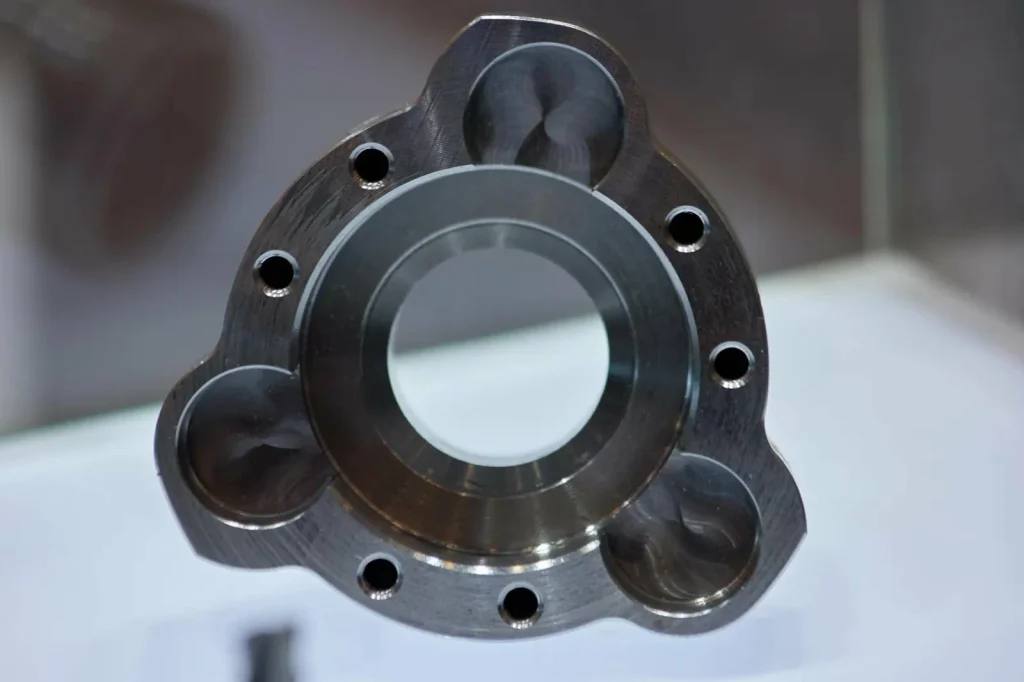
Choosing materials with high machinability and planning stock efficiently can lower cycle time, tool wear, and scrap, reducing total cost.
Choosing the Cheapest Material for CNC Machining
“Cheapest” is rarely the lowest price per kilogram. For CNC machining cost reduction, the better question is: which material gives the lowest total cost once you include machining time, tool wear, finish effort, and scrap risk.
The provided research pack points out that material selection affects cycle time, tool life, chip formation, burr levels, surface finish, and scrap. So the cheapest material in total cost terms is often a material that machines quickly and predictably, even if its raw stock price is not the lowest.
Table: “cheapest to machine” framing (qualitative)
| Material factor | If favorable | What it does to cost per part |
|---|---|---|
| High machinability | Faster cutting, better finish | Lowers machine time and tooling cost |
| Stable chip formation | Easier chip evacuation | Reduces stoppages and tool wear risk |
| Low burr tendency | Less deburring | Lowers labor and rework |
| Consistent quality stock | Fewer surprises | Reduces scrap and inspection escalation |
So “cheapest metal for CNC” depends on which cost bucket dominates your part: cycle time, tool wear, finish, or scrap.
Machinability Leaders for CNC Speed and Tool Life
The provided pack identifies Aluminum 6061 and Brass C36000 as the fastest materials for machines. “Fastest” here is about achievable cutting speed, tool life behavior, and finish stability in typical CNC processes.
Table: speed/tool life/finish considerations (qualitative)
| Matériau | Why it is often fast | Ce qu'il faut voir |
|---|---|---|
| Aluminium 6061 | Good machinability; tends to allow high productivity | Manage burrs and finish needs based on geometry |
| Brass C36000 | Very machinable; good chip control; often excellent finish | Confirm design intent for strength, wear, and environment |
This does not mean these materials fit every application. It means that when “material cost vs machining time” is the decision, these are common baselines for low machining time.
Material Speed and Tool Life Considerations
A material decision that ignores machining behavior can raise cost even if raw stock is cheaper. The way to keep the decision engineering-focused is to choose based on total cost drivers.
Decision matrix: selecting material for total machining cost
| Priorité | Material traits that tend to help | Cost bucket affected |
|---|---|---|
| Shorter machining time | High machinability, stable cutting | Temps machine |
| Lower tooling spend | Predictable wear, fewer edge failures | Tooling/tool changes |
| Lower deburr effort | Low burr tendency, good chip break | Labor and rework |
| Better yield | Consistent stock, stable process window | Scrap and QA |
| Better functional performance | Meets strength/corrosion/thermal needs | Risk of redesign and nonconformance |
If the part is already performance-limited, you may not have freedom to change material. In that case, focus on geometry and tolerance zoning to keep machining costs under control.
Reduce Material Waste to Lower CNC Costs
Material waste shows up when the purchased stock is much larger than the finished part volume, or when large allowances are used “just to be safe.” One case study in the provided pack reports 30% cost reduction tied to specifying exact material allowances and using near-net-shape sourcing with credit negotiation for unused stock. Treat the number as a case-specific result, but the mechanism is general: less waste can reduce part cost.
A practical way to discuss this is with a buy-to-fly style ratio. You do not need aerospace-level accounting; you just need to estimate waste.
Calculator (simple waste %)
- Waste % = (Buy volume − Finished volume) ÷ Buy volume × 100
If waste is high, you have three common levers:
- Choose a stock form closer to the part envelope (bar vs plate vs near-net).
- Specify realistic machining allowances based on datums and finishing needs.
- Change the design to reduce removed volume where it is not functional.
This is one of the most direct “reduce material” actions that does not change machining time, but it can still change the quote.
Process Machine and Fixture Strategy

Selecting the right machine and fixture approach reduces setup time, non-recurring costs, and improves process stability.
Process Selection for CNC Cost Efficiency
Process selection is a cost driver because it sets the baseline for cycle time and setup approach. For rotational components, Tournage CNC (including Swiss-style CNC turning) is often cost-effective for small, precision parts with mostly axial features. Its relative advantage depends on part geometry, feature orientation, secondary operations, and required tolerances, rather than being universally cheaper than 3-axis milling.
Use a simple decision tree to guide feasibility. It will not replace supplier input, but it can prevent obvious mismatches.
Decision tree (conceptual)
- Is the part primarily rotational (turned) with features aligned to the axis?
- If yes, turning-style processes tend to be efficient.
- Is it a small precision part where continuous support and controlled machining matter?
- If yes, Fraisage CNC processes tend to fit.
- Is the part prismatic with many planar faces, pockets, and non-axial holes?
- If yes, milling processes tend to fit.
- Does it need both turning and milling features in one setup sequence?
- If yes, turn-milling style approaches may reduce handling, but evaluate complexity.
The key point is that “right cnc” process selection is part of CNC cost reduction. A part designed like a turned component but quoted as a milled block will carry avoidable cost.
Standardize Diameters to Reduce Tool Changes
Tool changes are not just tool changes. Each diameter step on a turned part can require a different tool, different cutting parameters, and additional verification. The provided pack includes a case study where reducing diameter steps from five to three was reported to make machining 24% faster and reduce cost by 18%.
Before/after ops list (conceptual)
- Before: multiple stepped diameters → more tool changes + more parameter changes
- After: fewer diameter steps → fewer tool changes + simpler process control
This is a strong example of “standardize features to reduce tool changes.” It often preserves function because many stepped profiles exist due to legacy drawing habits, not because each step is needed.
Modular Versus Custom Fixture Strategy
Using modular fixtures can reduce setup effort and non-recurring cost compared to fully custom fixtures. Exact savings vary by part and volume.
Fixture strategy is a setup-time decision. Custom fixtures can make sense, but they also create non-recurring cost and long setup planning time.

The provided pack includes single-source benchmarks: 80% reduction in fixture costs using modular reusable fixtures compared to custom solutions, and about $85/hour average savings tied to standardized fixture requests.
Use these as indicators of magnitude, not guaranteed savings for every project.
Table: fixture strategy by volume (conceptual)
| Volume band | Fixture approach that often fits | Why it helps cost |
|---|---|---|
| Prototypes (<10) | Simple workholding, avoid custom fixtures | Limits non-recurring setup cost |
| Low (10–100) | Modular fixture elements where possible | Reuse reduces repeated setup time |
| Mid (100–1,000) | Modular with dedicated locating if needed | Balances repeatability and cost |
| High (1,000+) | Consider dedicated fixtures if stable design | Repeatability can justify investment |
The practical buyer action is to design and document datums and clamp areas that suit modular fixturing. If the part cannot be clamped cleanly, a shop is pushed toward custom workholding.
Setup Documentation Checklist to Reduce Rework
A lot of cost in CNC machining projects is not “machining.” It is recovering from ambiguity: which face is the datum, where can you clamp, what changed in the revision.
Checklist: setup documentation that reduces rework
- Clear datum scheme tied to function (and consistent between drawing and model).
- Notes on allowed clamp areas or “do not clamp” zones when surfaces are critical.
- Revision control that identifies what changed, not just the new revision letter.
- Identification of critical-to-function features so the supplier can plan setups around them.
This is a direct way to reduce machining costs without changing the part. You are reducing the chance of extra setups and misinterpretation.
Volume Batching and Sourcing Decisions
Adjust machining and sourcing strategies based on batch size to maximize cost efficiency without compromising flexibility.
Define Volume Bands for Cost Planning
Volume changes what is rational to invest in: programming time, fixture strategy, inspection approach, and batching.
Flowchart (conceptual)
| Quantité Fourchette | Volume Mode | Key Actions |
|---|---|---|
| <10 | Prototype | Minimize setup effort, clarify critical dimensions |
| 10–100 | Faible volume | Reuse setups, standardize features, avoid over-spec |
| 100–1,000 | Mid Volume | Optimize cycle time, reduce tool changes, define sampling |
| 1,000+ | Volume élevé | Implement batching strategy, fixture ROI, plan tool life |
These bands also help when comparing sourcing options. A process that is “cheaper” per part at high volume may be a poor fit for prototypes because fixed costs dominate.
Economies of Scale Versus Total Spend
It is normal for cost per part to drop as volume rises, while total cost rises because you are buying more parts. This matters when you decide whether to build inventory, whether to qualify an offshore supplier, or whether to redesign for a different manufacturing process.
Graph (conceptual)
| Quantité | Unit Cost | Total Spend | Notes |
|---|---|---|---|
| Low (prototype) | Haut | Modéré | Setup dominates, fixed costs not spread |
| Moyen | Decreasing | Augmentation | Variable costs more visible, setup spread over more parts |
| Haut | Plus bas | Haut | Economies of scale, total spend rises, unit cost drops |
For feasibility, the question is not only “can I reduce the cost per unit?” It is also “what is my exposure if the design changes after I commit to volume?” CNC often stays attractive in the middle ground because it allows change without dedicated tooling, but setup and inspection still need planning.
Regional and Offshore Total Landed Cost Framework
A regional comparison that looks only at quoted unit price often fails in practice. Total landed cost includes customs, logistics, lead time effects, and the cost of managing quality across distance.
Table template: total landed cost framework
| Élément | Domestic estimate | Offshore estimate | Notes / assumptions |
|---|---|---|---|
| Unit price | Quote basis, incoterms assumptions | ||
| Duties / tariffs | From government/customs resources | ||
| Freight / packaging | Mode, risk of damage | ||
| Lead time cost | Line-down risk, inventory carrying | ||
| Incoming QC effort | Sampling vs 100%, measurement time | ||
| Rework / scrap risk | Who pays, how defects are handled | ||
| Engineering change friction | Cost of iteration and communication | ||
| Total landed cost | Sum of the above |
This structure supports sourcing decisions without making claims that one region is always cheaper. The provided competitor notes mention percentage ranges in some articles, but those are not part of the verified data in the research pack, so this guide stays framework-based.
Comparing Swiss Machining to 3-Axis Milling
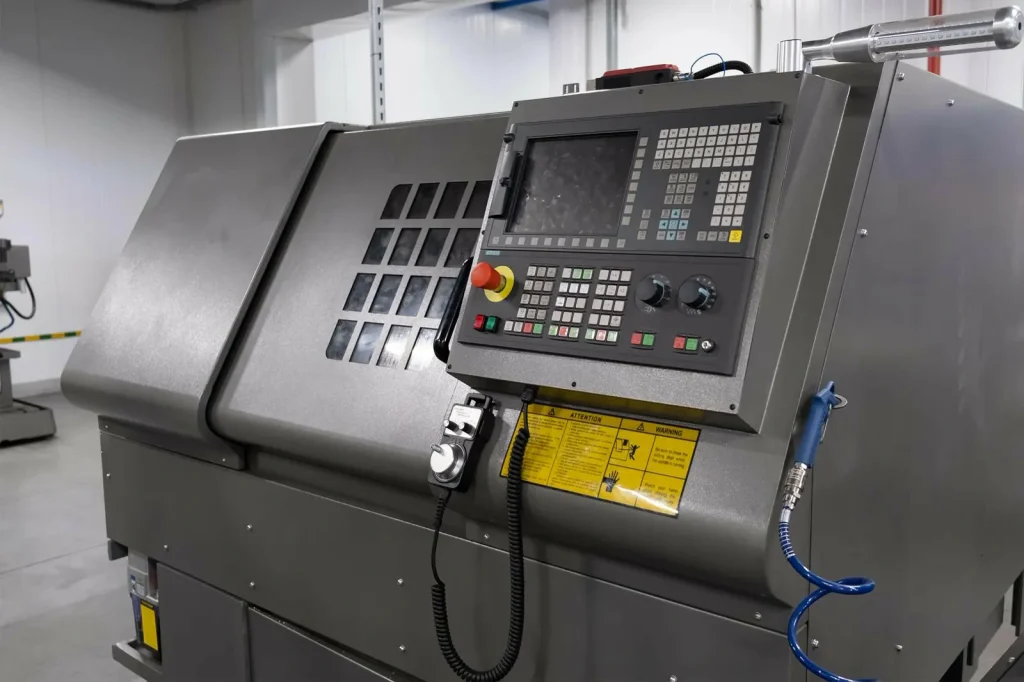
Swiss machining can be cheaper than 3-axis milling when the part is small, precision-focused, and shaped like a turned component with axial features. The provided research pack states Swiss CNC turning is the most cost-efficient for small precision parts, but it does not give a universal savings percentage versus milling.
A decision matrix helps keep the comparison grounded:
Decision matrix (conceptual)
| Part trait | Swiss-style turning tends to fit | 3-axis milling tends to fit |
|---|---|---|
| Géométrie | Rotational, axial features | Prismatic, multi-face pockets |
| Taille | Small precision parts (per provided sources) | Wide range, especially block-like parts |
| Tolerance drivers | Stable turned datums may help | Complex spatial relationships may require milling |
| Volume | Often good as volume rises and cycle time dominates | Often good for prototypes and prismatic parts |
The best feasibility step is to ask: “Is my design shaped like a turned part that I am currently machining from a block?” If yes, redesign for turning can be a large cost reduction lever.
Practical Tools for CNC Machining Cost Reduction
Checklists, quote review templates, and simple calculators help engineering and procurement teams systematically cut CNC costs.
CNC Cost Reduction Checklist
Use this as a working checklist during design review and again before RFQ. It is written to map directly to machining cost drivers.
DFM/RFQ checklist (copy/paste)
| Catégorie | Vérifier |
|---|---|
| Géométrie | Are freeform surfaces required, or can they be planes/cylinders/cones? |
| Géométrie | Are there deep holes or undercuts in the 3–10× diameter depth range? |
| Géométrie | Are there slender sections with L/D >4× or >10×? |
| Caractéristiques | Can any features be removed or combined to reduce operations? |
| Standardization | Are corner radii and hole sizes standardized to common tools? |
| Tolérances | Are tight tolerances limited to functional dimensions (zoned)? |
| Finition | Is surface finish called out only where needed (sealing, bearing, cosmetic)? |
| Matériau | Does the material choice consider machinability, tool wear, burrs, scrap? |
| Stock | Is stock form defined to reduce waste and machining allowance? |
| Fils | Are thread forms/sizes standard where possible? |
| L'inspection | Is sampling vs 100% inspection defined for critical features? |
| Documentation | Are datums, clamp notes, and revision changes clearly stated? |
This checklist is also useful for quote review because it helps you connect cost adders back to design choices.
Quote Review Worksheet for Cost Drivers
Quotes vary in format, but many can be translated into the same cost buckets. The worksheet below is meant to support a calm technical discussion with a supplier.
Quote-review worksheet (template)
| Quote line item (as received) | Map to cost bucket | Driver hypothesis | Possible change to test |
|---|---|---|---|
| Matériau | Matériau | Waste/allowance high? wrong stock form? | Specify stock form, tighten allowance plan |
| Setup / programming | Setup/fixture | Too many setups? unclear datums? | Simplify geometry, add datum scheme |
| Temps d'usinage | Durée du cycle | Toolpath complex? deep features? | Remove features, improve tool access |
| Outillage | Tooling/tool changes | Special tools? many diameter steps? | Standardize radii, reduce steps |
| L'inspection | QA | Tight tolerances everywhere? | Tolerance zoning, define sampling plan |
| Scrap allowance | Scrap | Thin walls, slender part, deep cavities | Redesign for stiffness and access |
The key point is to make each cost element actionable. If you cannot propose a change, you cannot test whether that line item is negotiable.
Mini Cost Driver Calculator Concept
A full CNC cost model is complex, but a mini calculator can still be useful if it stays honest about what it can and cannot predict. The goal is to estimate directional savings and prioritize engineering work.
Interactive tool spec (concept)
- Inputs (user provided)
- Quantity band (prototype / low / mid / high)
- Part type (prismatic vs rotational)
- Count of high-cost features (deep holes/undercuts, thin walls, slender sections)
- Tolerance strategy (universal tight vs zoned)
- Standardization level (many unique radii/hole sizes vs standardized set)
- Fixture approach (custom implied vs modular-friendly datums/clamp areas)
- Outputs (tool provides)
- Ranked list of top cost drivers for the part
- Suggested engineering levers (feature removal, standardize diameters, relax non-critical tolerances, modular fixture readiness)
- A “confidence note” reminding that results depend on supplier process choice and inspection plan
- Rules (based on provided research)
- Flag deep holes and internal undercuts at 3–10× diameter depth as likely cycle time multipliers.
- Flag slender geometry beyond L/D >4× and >10× as stability risks.
- Highlight design optimization as the highest-impact class (20–60% benchmark reported by a manufacturer authority).
- Include modular fixture option as a potential major setup cost reduction lever (single-source 80% fixture reduction benchmark).
This kind of tool supports internal alignment. It helps engineering and procurement talk about the same “drivers” instead of arguing about a single unit price.
Action Plan for CNC Cost Reduction
CNC cost reduction works best when you treat it as an iteration loop, not a one-time RFQ event. The cheapest change is the one you make before the drawing is frozen.
Workflow diagram (conceptual)
| Étape | Action | Purpose / Focus |
|---|---|---|
| 1 | Early DFM review (before release) | Confirm critical features, datums, and inspection intent |
| 2 | Design iteration | Simplify geometry, remove features, standardize tools/radii, zone tolerances |
| 3 | Process choice check | Evaluate turning vs milling vs Swiss-style vs turn-milling based on part traits |
| 4 | Volume plan | Prototype / low / mid / high band decisions, batching and fixture strategy |
| 5 | RFQ package finalization | Provide clear material, finish, and inspection notes; maintain revision control |
| 6 | Quote review using cost buckets | Map costs to levers; decide on next design changes if needed |
This loop answers the buyer questions that matter: does part complexity affect CNC price (yes, through cycle time and risk), does surface finish affect final cost (yes, when it forces extra passes and tool wear), and why small batch CNC is expensive (setup dominates).
Fin
CNC machining cost reduction is most reliable when you reduce cycle time, reduce setup effort, and reduce inspection and scrap risk. Design-first levers tend to dominate because they change how many operations the part needs and how stable those operations are. The highest-impact themes in the provided research are geometry simplification, feature removal, tool and diameter standardization, and tolerance zoning.
A cost reduction approach is suitable when you can change the CAD and drawing, adjust tolerance strategy, or choose a different process that matches the part’s natural shape. It is less suitable when the design is already constrained by function, when material cannot change, or when inspection must be 100% by requirement. In those cases, the practical next step is to remove ambiguity in the RFQ package, so the quote reflects real needs instead of conservative assumptions.
FAQ
Start with tolerance zoning and documentation clarity, since these measures often reduce unnecessary inspection and conservative buffers that inflate costs. Next, simplify non-functional geometry and standardize radii, hole sizes, and diameter steps to reduce tool changes, programming time, and machine setup effort. By applying these strategies thoughtfully, you can achieve meaningful CNC machining cost reduction without compromising part function or quality.
Yes. Complex geometry increases toolpath density, tool reach limitations, and the number of required operations, all of which drive longer machine cycle times, higher setup effort, and greater scrap risk. Even small adjustments to simplify shapes or reduce deep features can result in significant CNC machining cost reduction, particularly for low-volume parts or intricate components.
The cheapest metal in terms of total CNC cost is usually the one that machines fastest and most predictably, rather than the lowest raw stock price. Materials like Aluminum 6061 and Brass C36000 are commonly cited as fast-machining metals that minimize cycle time, tool wear, and scrap. Always consider the performance requirements of your part alongside machinability to optimize overall cost.
In prototypes or very low-volume production, setup and programming costs dominate because they are mostly fixed and do not scale with quantity. As volume increases, these fixed costs spread across more parts, lowering the per-unit cost even if the machining time per part remains similar. This explains why small batches often appear disproportionately expensive.
Yes. When a tight surface finish is required across multiple faces, additional finishing passes and stricter tool wear control are needed. These steps increase machine time and can raise scrap risk if not carefully planned. Specifying finish only on critical functional surfaces is an effective way to control costs without compromising part performance.



 French
  English
  German
  Italian
  Spanish
  Polish
  Czech
Czech  Japanese