
About these two manufacturing method, here’s a lot of things you need to know.
What is die casting and how does it differ from subtractive machining
This process choice starts with a fundamental difference in manufacturing logic. Die casting forms a metal part by forcing molten metal into a hardened tool, often called a die. The metal fills the cavity, cools, solidifies, and is ejected in near-net shape. In simple terms, the part is created by shaping liquid metal.
CNC machining works in the opposite way. By definition, machining is a subtractive process. A cutting tool removes material from solid stock such as bar, billet, or plate until the final geometry is reached. The machine follows programmed tool paths, so shape comes from controlled cutting rather than a mold cavity.
This difference affects almost every engineering decision that follows. Die casting depends on dedicated tooling and stable part geometry. CNC machining depends on machine access, workholding, cutting time, and how much material must be removed. A cast part can often include complex outer features in one shot. A machined part can often reach tighter dimensions and adjust more easily when the design changes.
A useful way to frame it is this: die casting is a production method optimized around repeatability at scale, while machining is a flexible method optimized around precision and design change.
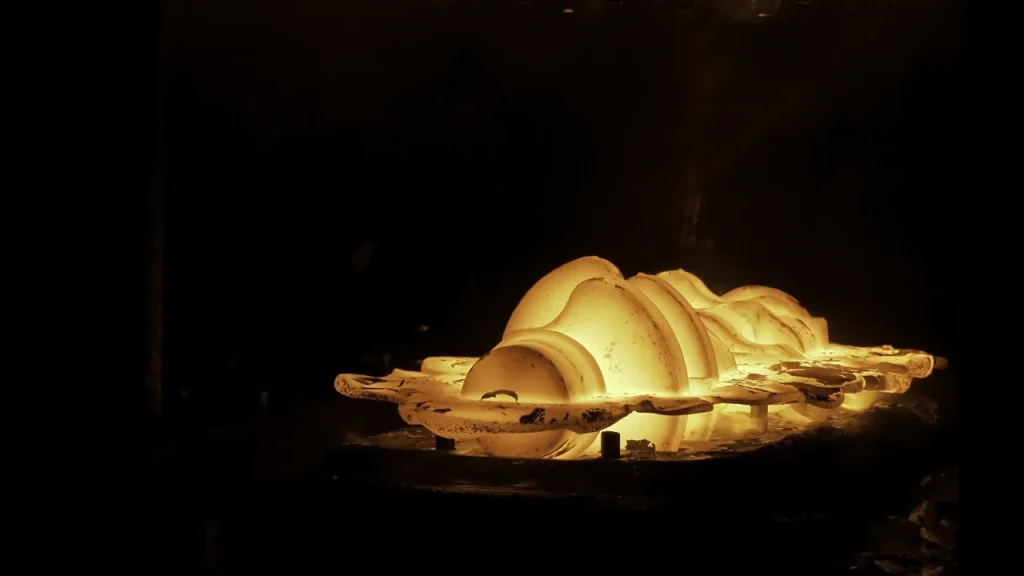
Comparison between subtractive machining and metal casting
A comparison between subtractive machining and metal casting is really a comparison between two different manufacturing logics.
In casting, the main goal is to create geometry by filling a cavity. This favors shapes that would take many machining operations to cut from solid. It can reduce waste because the starting shape is already close to the final part. It also supports high production rates once tooling is complete. On the other hand, casting introduces process risks linked to molten metal flow and solidification. In die casting, porosity and other internal defects are part of the process discussion, not an edge case.
In subtractive machining, the main goal is to remove only the material needed to expose the final surfaces. This gives direct control over finished dimensions and often better dimensional accuracy comparison between casting and machining. It also avoids casting defects tied to filling and cooling. But machining can become slow or costly when the part starts as a large block and most of that stock becomes chips. It also struggles when internal geometry cannot be reached by cutting tools.
For engineering teams, the practical difference is not just “forming versus cutting.” It is how the process behaves when volume rises, when geometry becomes more complex, when the material changes, and when tolerance requirements tighten.
Why the die casting vs cnc machining decision matters for engineering teams
Selecting the right manufacturing process matters because it affects feasibility, cost structure, quality risk, and the speed of design change.
If a team chooses die casting too early, the project may absorb tooling cost before the geometry is stable. If the design changes after the die is built, updates can create delay and extra cost. This is one reason why when die casting is not suitable for low-volume parts, the problem is not just unit count. It is also change risk.
If a team chooses CNC machining for a part that will run at high volume, the result may be acceptable technically but inefficient commercially. Per-part cost can remain high because cutting time, material waste, and setup labor repeat with every batch.
The decision also shapes quality planning. A machined part may need less concern about internal porosity, while a die-cast part may need more attention to critical sealing areas, threads, and precision interfaces. In many real programs, the answer is not one process only. It may be cast first, then machine selected surfaces.
Diagram: Side-by-side process flow for die casting and CNC machining
| Stage | Die Casting | CNC Machining |
|---|---|---|
| Starting form | Molten metal | Solid stock |
| Shape creation | Metal injected into die cavity | Material removed by cutting tools |
| Main fixed input | Tooling / die | Program, setup, fixturing |
| Main repeat cost driver | Cycle repetition and die amortization | Machine time and material removal |
| Common change issue | Tool revision delays | Program and fixture updates |
| Common quality issue | Porosity, casting defects | Tool marks, setup error, access limits |
| Typical next step | Trimming, possible secondary machining | Inspection, deburring, possible finishing |
Can the part be made this way?
While material selection determines whether a process is fundamentally feasible, it does not fully define how a part should be made.
Material selection factors in die casting vs cnc machining
Material selection factors are often the first filter for feasibility when choosing between the two processes. Die casting is associated with castable alloys, especially non-ferrous metals used in pressure die processes. CNC machining is broader in material flexibility because it starts from solid stock. It can machine many metals and non-metals as long as the material can be cut and held.
This matters because the process choice may be limited by the required alloy rather than by geometry alone. If the design needs a material that is not practical for die casting, machining becomes the default. If the design fits common die-cast alloys and the target is high-volume production, die casting becomes more attractive.
Buyers should also think about property expectations. A machined part made from wrought stock and a cast part of similar chemistry are not identical in process history. The strength of cast metal vs machined metal cannot be reduced to one simple rule, because the comparison is really cast structure versus wrought stock structure plus any process defects. In practice, if the part is highly stressed, pressure-tight, or fatigue-sensitive, engineering review should focus on actual material condition and inspection needs, not alloy name alone.
Material compatibility is a hard process gate, not just a cost variable. Die casting is commonly associated with alloy families such as aluminum, zinc, and magnesium, while CNC machining can use a much wider range of wrought stock and plate. The same nominal alloy family does not guarantee the same properties, stock form, or process suitability, so buyers should confirm both manufacturing route and required performance before comparing quotations.
Design constraints in die casting compared to machined parts
Design constraints in die casting compared to machined parts come from tool opening direction, metal flow, and ejection. Parts generally need geometry that can release from the die. Sharp internal transitions, difficult undercuts, and local heavy sections can create process problems. The design should support fill, cooling, and ejection without locking the part in the die.
Machined parts face different constraints. They do not need draft in the same way cast parts often do, and they can support design updates without changing a mold cavity. Features can be cut in stages and from different orientations if they are reachable. So machining often gives more design freedom for low-volume or changing parts.
The key point is that a shape can be “possible” in both processes but practical in only one. A housing with many exterior features may be ideal for die casting. That same housing may still be machinable, but cycle time and waste may be high. A block with very tight datums and several precision bores may be ideal for machining, even if a cast version seems cheaper on paper.
Limitations of CNC machining for complex internal geometries
The limitations of CNC machining for complex internal geometries are often underestimated at quoting stage. A cutting tool must physically reach the surface it cuts. That means enclosed channels, re-entrant forms, deep narrow cavities, and hidden internal features can be difficult or impossible to machine from solid without splitting the part, adding more setups, or changing the design.
Even when a feature is technically reachable, it may not be economical. Long tools can deflect. Deep pockets can slow down cutting. Small internal radii may be limited by cutter size. Multi-axis machining can solve some access issues, but not all.
This is where casting can sometimes be useful, because a die can form some outer and internal geometry that would be difficult to cut efficiently from solid. That does not mean die casting can create any internal shape freely; capability still depends on die pull direction, section thickness, venting, ejection, inserts, and overall tool design. Some internal features still require redesign, secondary machining, or a different manufacturing route.
When die casting is not suitable for low-volume parts
When die casting is not suitable for low-volume parts, the main reason is the front-loaded cost and effort of tooling. The die must be designed, built, and validated before production stabilizes. If annual demand is low, or if the design may change after first articles, that fixed cost is hard to recover.
This is why using CNC often wins for prototypes, bridge production, and custom industrial parts. There is no dedicated die to amortize, and design revisions can be handled through programming and fixture changes. For low volume, this flexibility often matters more than per-part speed.
For companies looking for reliable precision machining support, UNeed offers professional CNC turning and CNC milling services tailored for both prototype and low-to-mid volume production.
There is also a schedule issue. A low-volume program may need parts quickly for testing. Tooling work can lengthen the path before the first acceptable casting is produced. In short, die casting is usually strongest when volume is stable and design freeze is real.
How each process works in production
Understanding how each process works in production helps clarify why their cost, flexibility, and design constraints differ so significantly. By looking at the actual steps involved—from setup to final part output—it becomes easier to see where risks, delays, and efficiencies arise in both die casting and CNC machining.
How die casting works: tooling, molten metal injection, solidification, ejection
Die casting is a manufacturing process that begins with a hardened tool containing the negative shape of the part. Molten metal is injected under pressure into that cavity. The metal fills the shape, cools against the die surfaces, then solidifies. After solidification, the tool opens and ejector systems push the part out.
In production, success depends on much more than the cavity shape. Tool design must support metal flow, venting, cooling, and ejection. If these are not balanced, the process can produce defects such as trapped gas, incomplete fill, or distortion. The part often leaves the die close to final form, but trimming and secondary operations may still be needed.
This explains why die casting can efficiently produce parts at scale. Based on MIT OpenCourseWare manufacturing curriculum, the process logic behind near-net-shape efficiency demonstrates why tooling amortization drives volume-based decisions. Once the process is stable, the same tool creates the same geometry repeatedly. But it also explains why design changes create delay. A geometry change may require die rework rather than a simple program edit.
How CNC machining works: setup, programming, fixturing, cutting, inspection
The CNC machining process begins with digital programming, where tool paths are generated from the part model. Tool paths are created from the part model. The raw stock is then secured in fixtures, the machine is set up, and cutting tools remove material in a planned sequence. The part may require several operations or several orientations before all features are complete.
Fixturing is central to success. The machine can only cut accurately if the part is held rigidly and located repeatably. Tool selection, cutting parameters, and stock condition also influence result quality. After machining, parts are inspected for dimensional conformance and may be deburred or finished.
The process is very adaptable. If the design changes, the manufacturer may revise code, tools, or fixtures rather than rebuild a die. That is why CNC is often preferred early in a product lifecycle, or when tolerance and feature control are more important than lowest unit cost.
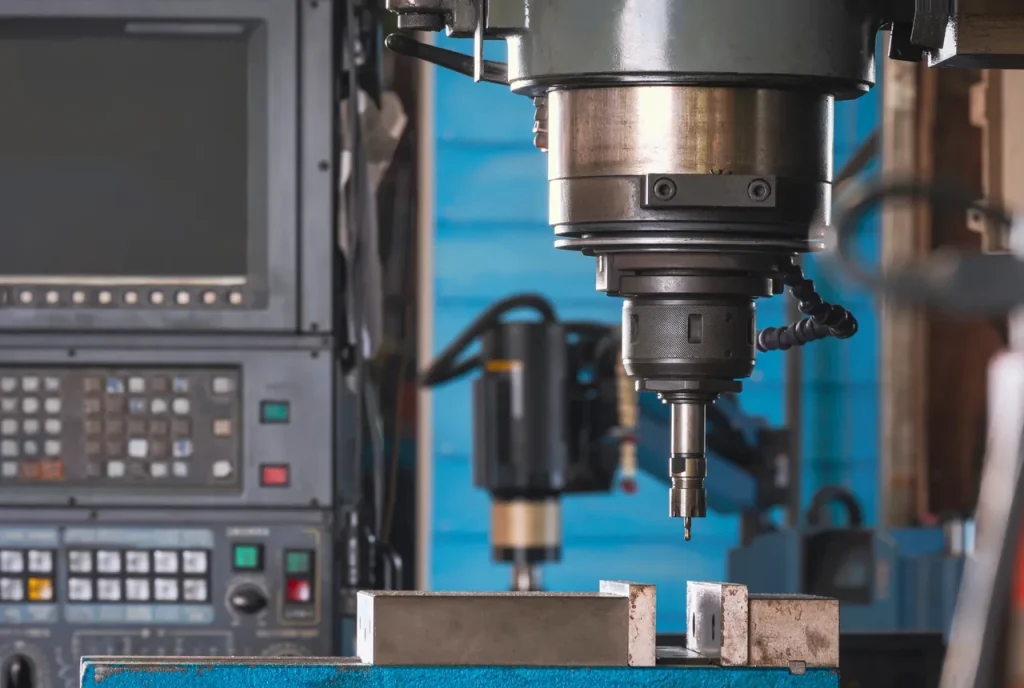
How production volume affects die casting vs cnc machining
How production volume affects die casting vs cnc machining is one of the main decision points. At low volume, CNC machining often makes more sense because setup is lighter and there is no die to fund. At high volume, die casting often becomes the best process for high-volume metal part production because the tooling cost is spread across many parts and cycle efficiency improves unit economics.
Volume should not be viewed by itself. Stable demand, repeat orders, and low design change risk are what make volume useful to a die casting decision. A program with uncertain forecasts may never recover tooling cost even if the “planned” volume looks high.
For machining, rising volume does not create the same tooling burden, but it does multiply machine hours and material use. So cnc machining vs casting cost per part often diverges as annual quantity grows. This is why many teams start with machining, then move to cast-first designs once demand and geometry are stable.
Prototype and bridge quantities are often machined first, while die casting is more often evaluated only after demand becomes repeatable and the design is unlikely to change. The practical break-even point depends on tooling scope, cycle time, and how much finish machining remains after casting. Buyers should compare annualized volume, expected design life, and the number of critical machined features rather than using “low volume” or “high volume” as stand-alone labels.
Diagram: Process steps and where design changes create delays
| Process step | Die Casting delay risk if design changes | CNC Machining delay risk if design changes |
|---|---|---|
| Initial engineering review | Moderate | Moderate |
| Tooling / programming | High, because die geometry may need revision | Moderate, because programs and fixtures may need revision |
| First article stage | High if filling or ejection changes | Moderate if setup sequence changes |
| Production ramp | High if tool rework is needed | Lower if machine capacity is available |
| Ongoing revisions | Higher for geometry changes | Lower for many feature-level changes |
Advantages and limitations by decision factor
Choosing between die casting and CNC machining ultimately comes down to how each process performs against key decision factors.
Best process for high-volume metal part production
In any high volume manufacturing comparison, die casting is often favored for repeated production of the same metal part. The reason is not only speed. Casting offers near-net shape efficiency that machining from solid cannot match once tooling is amortized.
This advantage is strongest for parts with geometry that would require substantial machining from solid. Housings, enclosures, and brackets are common examples because they combine thin walls, exterior detail, and repeat demand. If annual volume is high and the design is stable, die casting often has the better cost structure.
But “best” does not mean universal. If the part also needs many precision-critical faces, threads, bearing fits, or sealing surfaces, post-machining may still be needed. In those cases, the practical winner may be die cast plus secondary machining, not die casting alone.
When CNC machining is better than die casting
When CNC machining is better than die casting, the reasons are usually one or more of these: low volume, high design change risk, very tight dimensional control, broader material choice, or features that are easier to cut than to cast.
CNC is also a better fit when a part must be made quickly for test builds or early market demand. If the team expects several design loops, machining avoids locking the geometry into hard tooling too soon.
It can also be the safer route for precision-critical parts. If function depends on exact bores, flatness, alignment, or tight datums, machining gives direct control over those surfaces. In short, die casting forms shape efficiently; CNC machining offers more direct control over final geometry and critical surface quality.
Surface finish differences between die casting and CNC machining
Surface finish differences between die casting and cnc machining come from the way the surfaces are created. In die casting, the part surface reflects the die cavity and the behavior of molten metal as it fills and solidifies. This can produce good as-cast exterior finish for many industrial parts. It is one reason die-cast housings and covers are common.
In CNC machining, the surface is generated by a cutting tool. Tool path, cutter geometry, machine condition, and cutting parameters all shape the result. Machined surfaces are often preferred where function depends on controlled interface quality, not just appearance. Flatness, waviness, tool direction, datum relationship, and subsurface material condition can matter as much as roughness on sealing lands, bearing seats, and mating faces. As-cast surfaces may be acceptable on non-critical exterior areas, but functional surfaces should be judged feature by feature.
Dimensional accuracy comparison between casting and machining
The precision of casting vs machining tends to favor machining for critical features, a pattern that holds consistently across the dimensional accuracy comparison. Competitor analysis in the provided research notes that tighter tolerances are commonly associated with CNC machining, while casting is generally broader and may need finish machining where precision matters.
That aligns with process logic. A machined dimension is generated from a controlled setup, but final accuracy still depends on machine capability, fixture repeatability, thermal behavior, tool wear, stock condition, and datum transfer between setups. As-cast geometry is usually evaluated separately from post-machined features because different process controls apply to each.
This does not mean die casting is inaccurate. It means accuracy should be separated into two categories: as-cast capability and final part capability after secondary operations. Engineers should define which features truly need tight control and avoid over-specifying the rest.
Common Problems, risks, and failure scenarios
Even when a process appears suitable based on cost and capability, real-world production introduces risks that can affect quality, performance, and downstream operations.
Risk of porosity in die casting compared to CNC machining
The risk of porosity in die casting compared to CNC machining is one of the clearest process differences. Die casting can trap gas or create shrink-related voids during filling and solidification. These internal voids may not affect all parts equally, but they can matter for pressure retention, machining exposure, and structural reliability.
CNC machining starts from solid stock, so it does not create porosity through the machining process itself. If the stock is sound, the finished part avoids that specific casting risk. This is one reason machined parts are often preferred in highly critical fluid-handling or high-integrity applications.
For buyers, porosity is not just a quality term. It affects downstream decisions. A hole drilled into a porous casting may expose leakage paths. A sealing surface may need extra control. If internal soundness matters, inspection and acceptance criteria should be discussed before the process is locked.
This risk becomes more serious when machining opens internal voids or when the part must seal, retain pressure, or support critical bores. Inspection may require more than visual checks, depending on the function of the part and the acceptance criteria. Buyers should align in advance on defect limits, leak-test needs, and whether internal quality verification is required.
What defects are more common in die casting vs CNC machining?
In die casting, common defects are linked to metal flow, cooling, and release from the die. That includes porosity, incomplete fill, flash, distortion, and surface issues related to the die condition or process settings.
In CNC machining, common defects are more often linked to setup and cutting. These include dimensional error from poor fixturing, burrs, tool marks, chatter, wrong feature location, and damage from tool wear or incorrect programming.
The practical difference is important. Casting defects often relate to the internal and formed condition of the part. Machining defects often relate to dimensional execution on accessible surfaces. So the inspection plan should match the failure mode of the selected process.
How secondary machining impacts die casting part cost
How secondary machining impacts die casting part cost is often underestimated in early quoting. A die-cast part may seem low-cost per piece, but many industrial castings still require a finishing process — machining for threads, mating faces, bores, or datum features. Each added operation changes the economics.
This does not mean die casting was the wrong choice. It means the real comparison is often not die casting versus machining in isolation. It is die casting plus selective machining versus full machining from solid. For complex housings, this hybrid route can still be efficient because the cast process handles bulk geometry and machining is reserved for critical areas.
Buyers should ask which features will be left as-cast and which will be machined later. If too many critical features require finish cutting, the expected savings from casting can shrink fast.
Checklist: What buyers should verify before locking in the process
Before selecting a process, buyers should verify a short list of engineering issues:
| Item to verify | Why it matters |
|---|---|
| Expected annual volume | Drives whether tooling cost can be justified |
| Design stability | Frequent changes favor machining over hard tooling |
| Critical tolerances | May require CNC finishing even on cast parts |
| Internal geometry accessibility | May block machining from solid |
| Material requirement | May favor one process because of alloy availability |
| Pressure or sealing function | Raises concern about porosity and inspection |
| Cosmetic vs functional surfaces | Helps decide as-cast vs machined finish |
| Inspection requirements | Determines whether process risk is manageable |
Cost, tolerance, and lead time factors
Beyond technical feasibility and risk, process selection is ultimately shaped by cost structure, tolerance requirements, and delivery timing. These factors are closely linked, and understanding how they interact across die casting and CNC machining helps buyers make more realistic comparisons and avoid unexpected trade-offs during production.
Tooling cost considerations in die casting vs CNC machining
Tooling cost considerations between the two processes are very different in timing and structure. Die casting carries higher upfront tooling cost because the die must be built before production stabilizes. The provided competitive context notes mold costs can be significant and lead times can extend into several weeks, even though the exact values vary by part.
CNC machining usually avoids dedicated mold cost. There may still be fixture cost, programming effort, and setup labor, but these are usually less rigid than a full casting die investment. This makes machining easier to justify when demand is uncertain or early revision cycles are expected.
So the financial question is not just “Which quote is lower today?” It is “Where is the cost loaded: upfront or per part?”
Quote comparisons should also confirm die life assumptions, maintenance responsibility, cavity count, and whether tooling ownership transfers to the buyer. A lower quoted tooling price may reflect a different scope for slides, inserts, spare components, validation, or future engineering changes. Tooling revisions can also affect first article timing, especially when critical geometry or datum features are changed.
CNC machining vs casting cost per part
Cnc machining vs casting cost per part changes with production scale. Machining is typically lower in entry cost but higher in repeated unit cost because each part consumes machine time and generates scrap. Casting often has higher entry cost but lower unit cost once the tooling is amortized across many parts.
The gap analysis in the provided SERP notes also points to material waste as a cost factor. Machining can remove a large share of starting stock, while die casting usually forms closer to final shape. That affects both raw material efficiency and cycle burden.
To put it simply, machining tends to price like a repeated operation, while die casting tends to price like an investment followed by repetition. The break-even point depends on geometry, material, inspection, and how much post-machining is still needed.
Die casting vs CNC machining tolerances
Die casting vs cnc machining tolerances are a common search question because tolerance drives both feasibility and cost. The provided competitor review indicates CNC machining is commonly associated with tighter tolerance capability than die casting. It also notes that many casting comparisons online cite broader tolerances for cast features and tighter ones for machined features, though the exact numeric values vary and are not consistently supported across the provided inputs.
For engineering use, the safe conclusion is this: CNC is usually preferred when critical dimensions must be controlled tightly from the start. Die casting is often acceptable for general shape and non-critical dimensions, with finish machining added where tighter control is needed.
This is why tolerance discussion should happen feature by feature, not part by part. A casting may meet the design if only a few interfaces need machining. It may fail commercially if every surface is tolerance-critical.
Lead time tradeoffs between die casting and CNC machining
Lead time tradeoffs between die casting and cnc machining follow the same pattern as cost. CNC can move faster into first parts because it does not wait for a die to be built. This helps prototypes, pilot builds, and urgent replacement parts.
Die casting can be slower at the start because tooling development comes first. But once the die is complete and validated, production output can be much more efficient for repeat orders.
Design maturity is the key point here. If geometry is still moving, lead time can stretch in die casting because changes may require tool updates. In machining, many changes can be absorbed through new code or revised fixturing.
Table: Cost, tolerance, setup, and lead time comparison by volume
| Decision factor | Lower volume / changing design | Higher volume / stable design |
|---|---|---|
| Preferred process tendency | CNC machining | Die casting |
| Upfront cost burden | Lower | Higher |
| Per-part cost tendency | Higher | Lower after tooling is absorbed |
| Tolerance tendency | Better for critical features | Broader as-cast, tighter with secondary machining |
| Time to first parts | Often shorter | Often longer due to tooling |
| Response to design changes | Easier | Harder |
| Material waste tendency | Higher | Lower near-net shaping |
| Common hybrid option | Full machining | Cast then machine critical features |
References: industry reports, standards bodies, academic manufacturing sources
Process decisions should be checked against recognized manufacturing standards and technical references, especially when tolerance, casting quality, or inspection criteria affect function. According to ISO, dimensional tolerancing and casting quality standards provide the baseline for dimensional control. Useful sources include standards for castings, dimensional tolerancing, and quality management, plus academic manufacturing texts and institutional materials data references.
Applications and use cases by part type
After comparing general capabilities and trade-offs, it becomes clearer that the best process choice often depends on the specific part type.
Zinc die casting vs CNC machining for small parts
Zinc die casting vs CNC machining for small parts is a common comparison because small parts are sensitive to both detail and volume. If the part is small, repeatable, and ordered in large quantities, die casting can be attractive because the tooling can reproduce geometry efficiently and provide good as-cast exterior surfaces.
If the same small part is custom, low-volume, or tolerance-critical, machining often stays more practical. Small precision features, threaded details, and repeated design updates can erase the advantage of casting.
The key point is not small size alone. It is whether the part is small and standardized, or small and highly controlled.
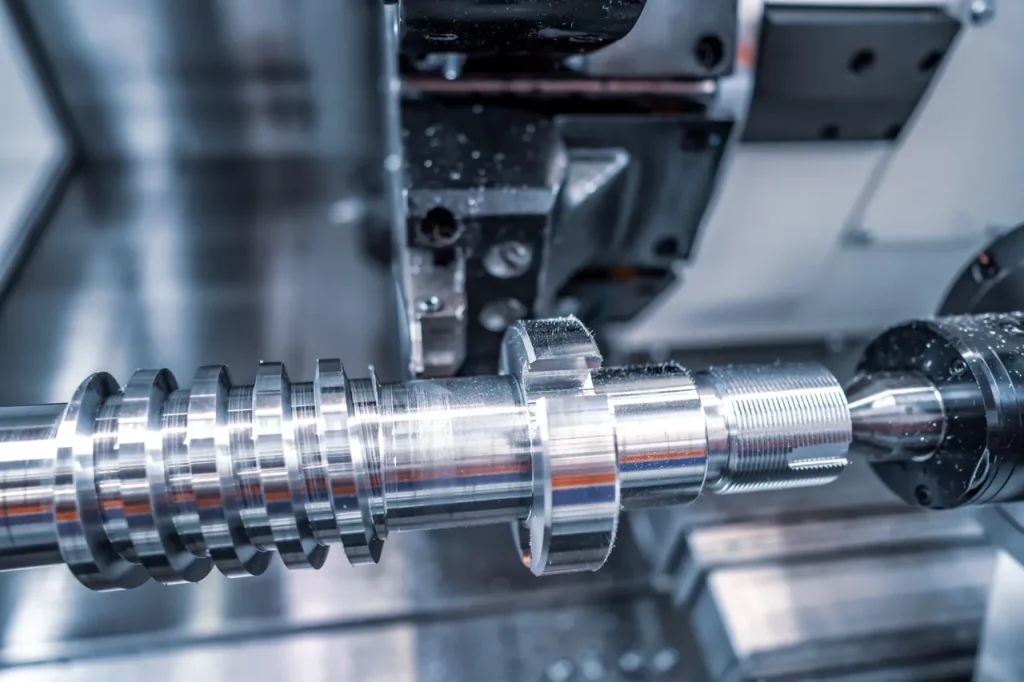
How production volume affects die casting vs CNC machining in housings, brackets, and enclosures
Housings, brackets, and enclosures are the classic geometry families where how production volume shapes the choice between casting and machining becomes obvious. These parts often have broad outer surfaces, mounting features, ribs, and pockets. Machining them from solid can be straightforward but wasteful, especially in high volume.
If annual demand is high and the design is stable, die casting often fits these parts well. It can create the overall shell efficiently, then reserve machining for holes, sealing lands, or precise interfaces. If demand is low, machining may be more sensible because there is no need to fund a die for a part that may change.
When precision-critical parts favor CNC over cast-first approaches
When precision-critical parts favor CNC over cast-first approaches, the driver is usually feature integrity. Parts with strict alignment needs, close-fitting bores, or tolerance-sensitive interfaces are often better machined directly, especially when internal soundness and dimensional control are both important.
A cast-first strategy can still work if the casting only supplies bulk shape and all critical features are machined after. But if the design leaves little non-critical area, the cast-first advantage shrinks. In that case, precision machining from solid is often simpler, more predictable, and easier to validate.
Table: Typical applications by geometry, material, and annual volume
| Part type | Geometry tendency | Material/process fit | Volume tendency |
|---|---|---|---|
| Small standardized hardware-like parts | Repetitive external features | Often suited to die casting if alloy allows | Higher annual volume |
| Brackets | Moderate complexity, mounting features | Machining for low volume, casting for repeat demand | Low to high depending on program |
| Housings / enclosures | Thin walls, ribs, outer form detail | Often strong candidates for die casting with finish machining | Medium to high volume |
| Precision interfaces / critical machine components | Tight bores, datum control, fit-critical surfaces | Often better suited to CNC machining | Low to medium volume or high precision demand |
Related process comparisons engineers also evaluate
In practice, engineers rarely evaluate die casting and CNC machining in isolation. Other manufacturing processes often enter the discussion depending on part size, complexity, and performance requirements.
Sand casting vs CNC machining for large metal parts
Sand casting vs cnc machining for large metal parts is a separate decision from die casting. For large components, sand casting is often considered because dedicated pressure dies may be impractical. Sand casting can create large rough forms that would be expensive to cut from solid.
Machining still plays a role because large parts often need finish-machined interfaces. So the decision is often between machining from a large billet versus casting the bulk form and machining only what matters.
Investment casting vs CNC machining for precision components
Investment casting vs cnc machining for precision components comes up when part geometry is difficult to machine but better detail is needed than rough casting methods can provide. Investment casting can produce complex shapes with finer detail than many other casting routes.
CNC machining still has the edge when tight dimensions define performance. So the same principle applies: use casting when geometry efficiency matters, use machining when feature control dominates, and combine them when both matter.
When cast-then-machine is more practical than either process alone
When cast-then-machine is more practical than either process alone, the part usually has two clear zones: a larger body that does not need extreme precision and selected features that do. This hybrid approach is common because it balances shape efficiency with dimensional control. Casting and machining are often combined when a part contains both complex bulk geometry and precision-critical interfaces.
For example, a housing may be cast for its outer form and internal volume, then machined for sealing faces, threaded holes, and bearing locations. This route often makes sense when full machining wastes too much material, but pure as-cast quality is not enough.
Decision matrix: Choosing among die casting, investment casting, sand casting, and CNC machining
| Process | Best fit | Main limitation |
|---|---|---|
| Die casting | High-volume repeat metal parts with stable geometry | Tooling burden and porosity risk |
| Investment casting | Complex shapes needing better detail | May still need machining for critical features |
| Sand casting | Large metal parts and lower tooling commitment | Rougher geometry and more finish work |
| CNC machining | Low volume, tight tolerance, design change, broad material options | Higher unit cost and geometry access limits |
How to evaluate and choose the right process
A clear evaluation framework helps translate these comparisons into a practical choice based on the specific needs, risks, and priorities of the part and production program.
Which process fits your volume, tolerance, geometry, and change risk?
Start with four filters: expected volume, critical tolerances, geometry accessibility, and design change risk.
If volume is low or uncertain, CNC usually stays in the lead. If volume is high and geometry is stable, die casting moves up. If critical dimensions control function, machining remains important even when the base shape is cast. If internal geometry is enclosed and hard to reach by tools, casting may solve shape creation but may introduce soundness and finishing questions.
In short, process selection is not a single-axis choice. For precision-sensitive or frequently revised parts, machining is the better choice to control the critical features, even when casting handles the bulk shape.
What should be checked before comparing supplier quotations?
Before comparing quotes, make sure each supplier is pricing the same scope. Buyers should check whether the quote includes tooling, fixtures, trimming, secondary machining, surface treatment, inspection, and any defect-control requirements.
They should also confirm which dimensions are assumed to be as-cast and which are assumed to be machined. Many quote gaps come from this mismatch, not from rate differences.
Decision checklist for die casting vs CNC machining
Use this checklist before locking in the route:
- Is annual demand high enough to justify dedicated tooling?
- Is the design frozen, or are revisions still likely?
- Which features are tolerance-critical?
- Can all needed geometries be reached by cutting tools?
- Is porosity a functional risk for this part?
- Will the part need secondary machining anyway?
- Is the material practical in both processes?
- Does the inspection plan match the likely defect mode?
Reference points: standards, material data, and inspection requirements
Engineering teams should anchor decisions in recognized standards, real material data, and inspection requirements tied to function. Who says? According to NIST materials database and ISO standards, material properties for cast versus wrought stock vary significantly and should be verified through certified test reports rather than nominal alloy designation alone. For castings, this means checking dimensional and quality standards relevant to the part class. For machined parts, it means defining datums, tolerances, and verification methods clearly enough that suppliers quote the same work content.
A process should not be selected from a general comparison table alone. It should be selected after linking function to measurable requirements.
Choosing between die casting and CNC machining comes down to where the project carries risk. Understanding when to choose die casting starts with three conditions: demand is high, geometry is stable, and the part benefits from near-net shaping. CNC machining is ideal — and usually the stronger choice — when the part is low-volume, likely to change, made from a wider material set, or driven by tight precision needs.
Many industrial parts land in the middle. In those cases, the real answer is often cast the body and machine the critical features. That approach works best when the design team knows which surfaces truly matter and which can stay as-formed.
FAQs
When comparing cnc vs casting cost, the answer depends heavily on production volume — die casting can be cheaper, but mainly at higher quantities. Die casting usually has higher upfront tooling cost, while CNC machining usually has lower startup cost but higher repeated cost per part.
Yes. In fact, many die-cast parts are machined after casting to improve critical surfaces, threads, bores, or sealing features. This is common when the base shape is efficient to cast but the final function needs tighter control.
In general, CNC machining is used when tighter tolerances are needed. Die casting can provide useful near-net shape, but critical features often need secondary machining if precision is important.
Die casting is often better for large production runs when the part geometry is stable and the material fits the process. The tooling cost is harder to justify for small or uncertain demand.
Die casting can provide good as-cast surface quality on many external features. CNC machining is preferred when surface condition is tied to sealing, fitting, datum control, or other functional requirements.

 English
  German
  French
  Italian
  Spanish
  Polish
  Czech
Czech  Japanese