
Die casting parts power high‑volume manufacturing in a very practical way. From EV battery housings and inverter covers to rugged electronics heat sinks, the process delivers accurate, repeatable cast parts at speed. Yet buyers and engineers often face the same trade‑offs: cost vs. quality, speed vs. stability, and scale vs. sustainability. If you need to choose the right alloy and die casting process, cut scrap, and ramp up with confidence, this guide is for you.
We start with short answers to common questions. Then we walk through market data, material and process selection, DFM that prevents defects, quality control, and sourcing strategy. Real‑world examples and tool ideas will help you move RFQs forward faster. By the end, you’ll know how to select aluminum, zinc, or magnesium; when to use high‑pressure die casting (HPDC) vs low‑pressure die casting (LPDC); how to minimize porosity; and how to build a compliant, traceable, and greener supply chain for scalable production.
Die Casting Parts: Definition, Benefits, Quick Answers
What are die casting parts?
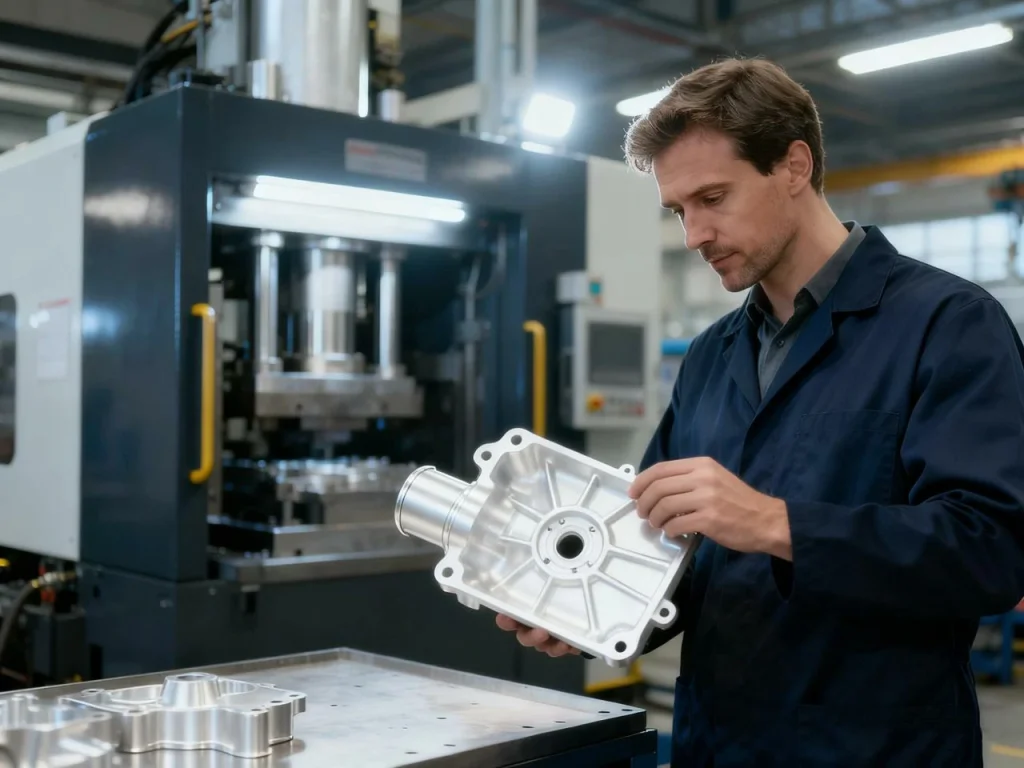
Die casting parts are metal components made by forcing molten metal into a die (a hardened steel mold) under pressure. The metal casting process creates near‑net‑shape components with fine details and stable dimensions. Common die casting alloys are aluminum (Al), zinc (Zn), and magnesium (Mg). These castings are well suited for complex parts, thin walls, and consistent repeatability across large batches. You’ll hear terms like high-pressure die casting, low-pressure die casting, hot chamber die casting, and cold chamber die casting to describe the method.
What is die cast metal? Simply put, it’s metal that has been shaped by injecting molten alloy into a reusable steel mold under high pressure. In other words, die casting involves injecting molten metal into a die cavity using a casting machine to form strong, dimensionally accurate components. The part solidifies within the die, then the casting is removed and trimmed. With smart DFM and controlled process settings, die casting produces accurate parts with very fast cycle times.
Answers you asked for, right up front:
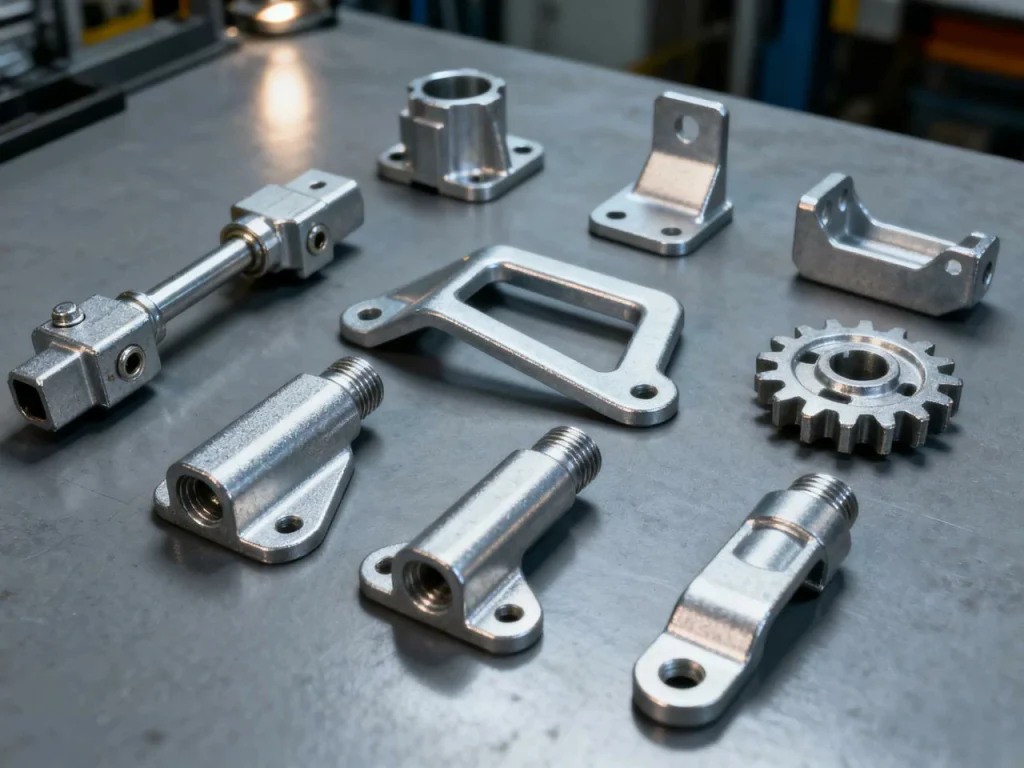
- What parts are made by die casting? Many: automotive housings, battery trays, motor/inverter covers, gearboxes, connectors, heat sinks, pump bodies, enclosures, brackets, handles, hinges, emblems, and hardware.
- What are casting parts? “Casting parts,” “castings,” or “casted parts” are metal parts made from liquid metal that solidifies in a mold or die. In die casting, the mold is a reusable steel die.
- What materials are used in diecast? Mainly aluminum, zinc, and magnesium. Some applications use brass or other alloys, but less often due to cost or process limits.
Key advantages vs machining or sand casting
Buyers often compare die cast aluminum and other cast metal options to machined, sand‑cast, or permanent mold cast parts. Here’s why die casting offers a strong mix of speed and precision:
- Speed: Short cycles (seconds to minutes) make die casting ideal for high volume. The molten metal is injected quickly, and die castings are made on automated cells.
- Precision: Near‑net shape means less CNC milling or CNC drilling, less waste, and stable GD&T across thousands of shots.
- Strength‑to‑weight: Excellent for lightweighting in automotive and electronics where thin walls still need strength.
- Finish: Smooth as‑cast surfaces reduce finishing time and accept anodizing, powder coat, e‑coat, or plating.
Are there disadvantages of die casting? Yes, and it’s best to plan for them:
- Porosity can limit pressure tightness and some heat treatments (HPDC). Vacuum die casting and good gating help.
- Tooling cost is higher than sand casting. It pays off at volume.
- Very large parts may need special presses and careful die design, or alternative casting methods.
What tolerances can die casting achieve?
Typical as‑cast tolerances are about ±0.1–0.25 mm on critical features of medium‑sized parts, and down to ±0.05 mm on small features when tooling, thermal control, and process stability are excellent. Final tolerances depend on:
- Alloy, part size, and wall thickness
- Gate location and die design
- Thermal balance of the die over the cycle
- Whether you plan post‑casting machining for tight surfaces or holes
Market Size, Growth Drivers, and Leaders
According to the North American Die Casting Association (NADCA), the die casting industry continues to grow strongly across aluminum, zinc, and magnesium castings, with automotive and electronics sectors leading the demand.
Table: Market estimates and growth
| Segment | 2024/2025 estimate | 2030/2035 projection | Growth signal |
|---|---|---|---|
| Global die casting services | USD 55.4B (2025) | USD 142.7B (2035) | ~10% CAGR |
| Automotive die casting | USD 70.6B (2024) | USD 129.7B (2033) | ~6% CAGR |
| Alt automotive estimate | USD 50B (2025) | Growth to 2033 | ~6% CAGR |
| Zinc die casting, automotive | USD 6.08B (2025) | USD 9.92B (2034) | Expanding |
| Advanced aluminum alloys in casting | — | — | ~8% annual growth in applications |
Leading markets include the United States, China, Germany, Japan, and India. Regional focus differs: North America and Europe push innovation and EV platforms, while parts of Asia focus on scale and cost.
What’s driving demand now
Lightweighting still rules because it saves fuel or extends EV range. EV adoption pushes bigger, stiffer, thermally stable housings and megacastings for body structures. Industry 4.0 ideas—sensors, analytics, and simulation—cut scrap and speed up development. And sustainability matters: recycling, energy efficiency, and waste reduction are now front‑and‑center in sourcing.
Sector and country highlights
Automotive remains the largest consumer of die cast components, including engine and transmission housings, battery trays, motor and inverter covers, and structural castings. Electronics and industrial gear rely on die cast enclosures, connectors, and heat sinks. The strongest growth is where thermal management, lightweighting, and high production speed overlap.
Visuals and sources to cite
If you’re planning a presentation, helpful visuals include an interactive chart of market growth to 2035, a map of top countries, and a donut chart of materials by share. For process facts and design rules, consider linking to NADCA (North American Die Casting Association) and The Aluminium Association. For energy and emissions, IEA and EPA/EU environment resources help your team back claims with data. For manufacturing statistics, Eurostat is helpful.
Materials and Processes for High‑Performance Castings
Selecting the right casting alloys and method is the biggest factor in part performance, unit cost, and lead time. Think about strength, thermal behavior, corrosion, finish, and how the part will be used.
Alloy selection trade‑offs (aluminum, zinc, magnesium)
Aluminum: All‑around performance at good weight, with high thermal conductivity. Grades such as A380/ADC12 are common for general use; other Al‑Si‑Cu alloys are chosen for leakage control, thermal stability, or corrosion resistance. Good for heat sinks, housings, battery enclosures, pump bodies, and die cast aluminum structural parts.
Zinc: Outstanding fluidity and detail, allowing thin walls and crisp features. Great for small parts, intricately shaped surfaces, and tight tolerances. Adds strength and excellent surface finish; accepts plating well. Tool life is long, so it’s stable at volume and can be cost‑effective for precise, smaller cast parts.
Magnesium: Ultra‑light with good stiffness and damping. Useful for weight‑critical parts and handheld products. Requires careful corrosion protection and thoughtful joining methods. Good damping can reduce vibration in housings or frames.
Table: Alloy comparison (typical ranges and tendencies)
| Property | Aluminum (A380/ADC12 family) | Magnesium (e.g., AZ91/AM60) | |
|---|---|---|---|
| Density | ~2.7 g/cm³ | ~6.6–6.8 g/cm³ | ~1.8 g/cm³ |
| Strength (as‑cast) | Medium to high | Medium, very stable | Medium |
| Thermal conductivity | High | Moderate | Moderate |
| Thin wall capability | Good (~1.5–3.0 mm typical) | Excellent (~0.6–1.0 mm) | Good (~1.0–2.0 mm) |
| Corrosion behavior | Good; can anodize, coat | Good; plates well | Needs protection |
| Tool life | Moderate | High | Lower than zinc |
| Cost tendency | Moderate | Lower for small precise parts | Moderate to higher |
Note: Exact values depend on grade, section size, and heat treatment (where applicable).
What is the composition of die cast aluminium?
Most common die casting aluminum alloys are Al‑Si‑Cu systems. In general:
- Silicon around 7–12% for fluidity and castability
- Copper around 2–4% for strength
- Small amounts of Fe, Mn, Mg, Zn for specific properties Exact chemistry follows alloy standards (for example, ADC12 and A380 families). The Aluminium Association and industry standards provide details.
Is die cast metal good?
Yes, for many uses. It is accurate, strong for its weight, and cost‑effective at volume. Just match the process to your performance needs, and plan for porosity control if you need leak‑tight parts or heat treatment.
How many sections in die casting dies?
A typical die has two main halves: the cover half (stationary) and the ejector half (moving). Many dies also use side‑actions, slides, or movable cores for features like undercuts, plus trim dies for removing runners and flash.
Process chooser: HPDC vs LPDC; hot‑ vs cold‑chamber
Most die casting operations for aluminum and magnesium use high pressure die casting in a cold‑chamber die casting machine. Zinc typically runs in a hot chamber die casting machine because of lower melt temperature and excellent fluidity.
- HPDC (high‑pressure): Fast cycles and thin walls; excellent for high volume and complex details. Use cold‑chamber for Al/Mg and hot‑chamber for Zn. Consider vacuum die casting when you need low porosity or leak‑tight parts.
- LPDC (low‑pressure): Slower but gentler fill with lower turbulence. Often used for wheels and thicker sections needing improved integrity.
- Gravity die casting (permanent mold) and semisolid die casting occupy specific niches where flow and integrity need balance or where lower turbulence is key.
Table: Process selection cues
| Need | Best‑fit process | Notes |
|---|---|---|
| Thin walls, high speed | HPDC | Use vacuum for leak‑tight parts |
| Wheels, thicker sections | LPDC | Lower turbulence, improved integrity |
| Very small, precise parts | Hot‑chamber HPDC (Zn) | Best detail and tool life |
| Lower turbulence without high pressure | Gravity die casting | Slower cycles, good integrity |
Overall, the main types of die casting include high-pressure, low-pressure, hot-chamber die casting, cold-chamber die casting, gravity, and semi-solid methods—each suited to different alloys, wall thicknesses, and production speeds.
Finishes, machining, and achievable tolerances
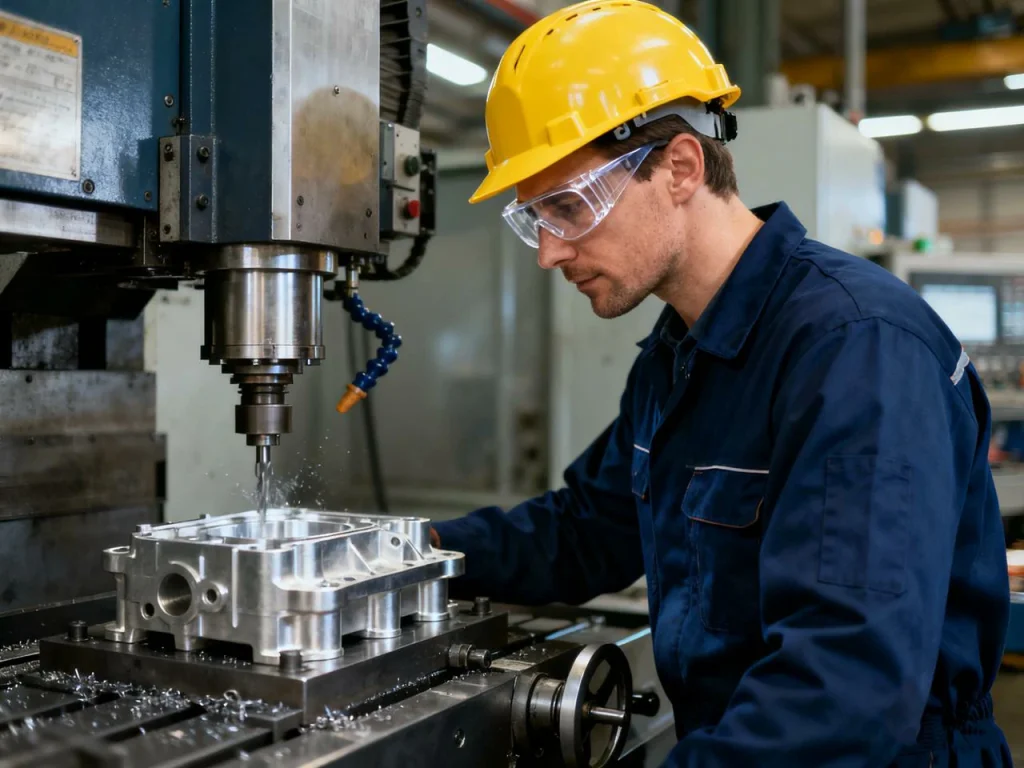
As‑cast surfaces are often good enough for functional housings. When a cosmetic look or extra protection is needed, consider anodizing (for aluminum), powder coat, e‑coat, or plating (strong on zinc). For tight bores or sealing faces, plan secondary CNC operations like reaming, drill and tap, and light mill passes. Professional CNC milling and CNC turning services can enhance precision, improve surface finish, and streamline production.
If you’re looking for reliable CNC machining and precision parts manufacturing, U-Need offers high-quality CNC milling, turning, and custom component production for industries ranging from automotive to electronics. Their expertise helps bridge the gap between die casting and final precision machining for scalable production.
A clear datum strategy helps control GD&T and reduces stack‑ups from fixture to fixture.
Table: Typical as‑cast guidance
| Feature | Aluminum HPDC | Zinc HPDC | Magnesium HPDC |
|---|---|---|---|
| General as‑cast tolerance | ±0.10–0.25 mm | ±0.05–0.15 mm | ±0.10–0.25 mm |
| Typical wall thickness | 1.5–3.0 mm | 0.6–1.0 mm | 1.0–2.0 mm |
| Draft (external/internal) | 1–2° / 1.5–3° | 0.5–1° / 1–2° | 1–2° / 1.5–3° |
Numbers vary with part size and die condition. Always confirm with your caster.
Design for Manufacturability (DFM) that Prevents Defects
Great die cast design starts with uniform sections and gentle transitions. That one rule avoids many issues—porosity, warpage, and cosmetic flaws—and it often cuts machining time too.
Draft, walls, fillets, and ribs—proven design rules
Use draft on all faces that pull from the die. For most die cast components, 1–2° works. Add more on deep features or textured surfaces so parts release cleanly without galling. Keep wall thickness as uniform as you can. For aluminum casting by HPDC, 1.5–3.0 mm works well. Zinc can go thinner—down to about 0.6–1.0 mm—because it fills so easily. Blend edges with fillets and radii to avoid stress risers and cold shuts. When you need stiffness, add ribs or gussets instead of simply thickening the wall. This reduces sink marks and shortens cooling time.
Gating, runners, overflow design for flow and porosity control
Your gating strategy is the heart of casting quality. Balanced gates help avoid cold shuts and misruns. Overflows and witness features give the trapped air somewhere to go. Venting also matters: clean vents and planned flow paths let gas escape so molten metal fills the die completely. Keep die temperature and cooling line placement consistent; hot or cold spots increase distortion. If you need leak‑tight parts or you plan any heat treatment, use vacuum die casting to lower gas content inside the metal.
Simulation‑based casting and digital twins
Before you cut steel, simulate. Flow and solidification simulation predicts where the metal slows down, where air could be trapped, and where porosity or hot spots may form. It also helps you choose gate locations, overflow size, and cooling line layout. You can iterate on virtual designs in hours, not weeks, which reduces the risk of long debug cycles. A digital twin of the die and process settings can guide a faster PPAP and a smoother ramp.
Quality Control, Inspection, and Traceability
Quality is not just inspection. It starts at the melt and follows the part through the cell.
Defect prevention plan
Common defects include porosity, cold shuts, misruns, warpage, and flash. Prevent them by controlling melt cleanliness (flux and filtration), shot monitoring (speed, pressure, and plunger position), and die temperature. Statistical Process Control (SPC) on critical dimensions helps you catch drift early. For key characteristics, agree on Cp/Cpk targets, and define reaction plans when points trend out of control.
NDT and inspection methods
It’s smart to inspect inside the part before it goes into a car or a medical device. X‑ray and CT scanning reveal voids, wall thickness, and internal features. For housings with sealing surfaces, use leak testing. For mechanical properties, use tensile and hardness tests on representative samples or separately cast coupons. CMM and optical scanning confirm geometry. For automotive projects, plan for PPAP and retain inspection records for traceability.
Standards and certifications
Quality systems and documentation keep programs on track:
- ISO 9001 for quality management
- IATF 16949 for automotive quality
- ISO 14001 for environmental management
- APQP, FMEA, control plans, MSA, and capability studies during development
Industry 4.0 quality
In‑die sensors measure pressure and temperature in real time. Shot analytics tie each casting to process data, so you can trace back any outliers. IoT dashboards help with predictive maintenance on the die and die casting equipment, which extends die life and cuts unexpected downtime.
Cost, Tooling, and Sourcing Strategy
The die is a major investment, so it pays to design for stable fills, moderate cycle time, and practical maintenance.
Cost drivers you can control
Most of your part cost comes from metal, machine time, and scrap. Control what you can:
- Alloy choice and shot weight
- Wall thickness and uniformity
- Number of cavities and die size (press tonnage)
- Cycle time and scrap rate
- Secondary steps like CNC milling, CNC drilling, tapping, and coating
- Inspection level, packaging, and shipping
- Tariffs, duties, and logistics
A small weight reduction multiplies across thousands of shots. Trimming five percent from shot weight can pay for extra ribs that improve stiffness without thick walls.
Tooling economics and die life
Die life depends on steel grade, heat treatment, cooling design, and how you run the cell. Surface treatments like nitriding or PVD can resist soldering and erosion. Zinc tools typically last longer, aluminum is in the middle, and magnesium can be shorter. Plan preventive maintenance: polish, recoat, and re‑establish vent details as needed. Spread the die cost over expected shots using an amortization model tied to your forecast.
RFQ checklist and supplier evaluation
A clear RFQ leads to faster, more accurate quotes. Include:
- 3D CAD and a 2D print with GD&T
- Alloy and finish
- Annual volume, EAU, and expected ramp
- Critical‑to‑quality dimensions and any leak‑tightness needs
- PPAP level and testing (X‑ray/CT, leak, tensile, hardness)
- Packaging, labeling, and traceability expectations
Evaluate suppliers on:
- Press tonnage range, automation, and die casting machines
- Simulation capability and DFM support
- Certifications (quality and environmental)
- On‑time performance and documented scrap/yield
- ESG reporting and ability to track recycled content
Interactive buyers’ toolkit
Consider offering or asking for simple planners:
- Cost calculator with inputs for volume, alloy, wall thickness, and cavity count
- Tolerance helper that shows what is reasonable as‑cast vs post‑machined
- Lead‑time estimator that breaks out tool build, sample runs, PPAP, and ramp
Applications and Case Studies Across Industries
Automotive and EV
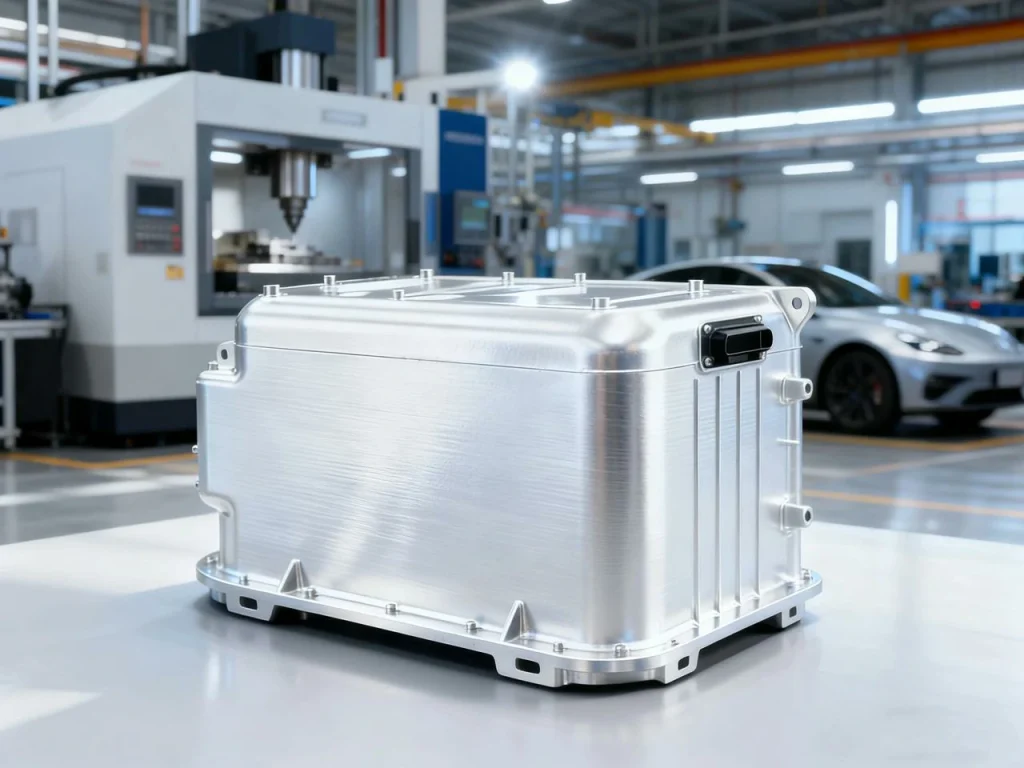
For vehicles, die casting reduces weight and part count. Common parts like engine and transmission housings, covers, brackets, and battery trays use die cast aluminum for stiffness and thermal control. EV growth (about 6% CAGR in die casting for automotive) and aluminum alloy adoption (~8% annual growth in casting applications) show how fast this is moving. With megacasting approaches, large body sections can be consolidated into a few big castings with integrated features.
Electronics and consumer goods
Electronics enclosures and heat sinks use aluminum die cast for thermal paths and rigidity. Zinc shines for small, precise parts that need fine details and tight fits—latches, hinges, and bezels. Both materials accept coatings for EMI shielding or aesthetics.
Industrial, aerospace, and medical
Industrial pumps, compressor housings, gear cases, and valve bodies benefit from die casting’s dimensional stability and repeatability. Aerospace and medical parts require strong process control, clean melts, and thorough documentation. CT scans, PPAP‑style records, and material traceability are common.
Mini case studies
- A large battery tray switched to vacuum HPDC, cutting leak defects and rework while keeping wall thickness low for weight savings.
- A zinc latch with very thin walls achieved tight positional tolerances as‑cast, saving multiple CNC steps.
- An industrial enclosure validated internal porosity with CT, then used selective post‑machining only on faces that mattered, saving time and cost.
Sustainability, Recycling, and Compliance
Die casting fits a circular materials mindset because aluminum and zinc are highly recyclable, and gating/runners can be remelted and reused.
Circular materials and CO2 impact
High recycled content in aluminium die casting components reduces embodied carbon. Track certificates that show recycled content and alloy grade. Ask for melt records and scrap loops. For lifecycle claims, use recognized LCA methods.
Process improvements for greener casting
Energy‑efficient furnaces and heat recovery cut electricity or gas use. Stable process settings lower scrap, which has a direct energy and emissions benefit. Vacuum die casting often reduces leaks and rework, saving both material and finishing energy.
Environmental reporting and certifications
Many buyers now expect ISO 14001 certification, clear waste and water metrics, and responsible sourcing documents. ESG dashboards help communicate progress. For government grants or programs tied to energy, gather your baseline data early.
Are die casting parts recyclable—and how green are they?
Yes. Die cast metal like aluminum and zinc is very recyclable, and recycling loops are short. The carbon footprint depends on the plant’s energy sources, recycle rate, and process efficiency. Ask suppliers for recycled content declarations and, when possible, LCA data.
Future Trends and Actionable Next Steps
What’s next: alloys, automation, and megacasting
Expect more Al/Mg alloys tuned for strength, thermal stability, and corrosion resistance, along with surface treatments that extend die life. Plants are adding robotics, in‑die sensing, and closed‑loop shot control to keep quality high. In automotive, mega‑casting of large body sections is expanding and will push press and die design innovation.
R&D opportunities and partnerships
Work early with your caster on topology‑optimized parts that put material only where needed. Consider conformal cooling in die inserts—sometimes made by additive manufacturing—to shorten cycle time and stabilize thermal behavior. Run simulation‑driven DFM so you can spot porosity hot spots before steel is cut.
Step‑by‑step plan from concept to PPAP
- Define CTQs, performance needs, and annual volume.
- Run a DFM review and a first‑pass fill/solidification simulation.
- Finalize tool design (gates, vents, cooling) and build the die.
- Shoot samples; inspect with X‑ray/CT and run leak tests if needed.
- Do capability studies on CTQs and complete MSA where required.
- Complete PPAP (as needed) and approve control plans.
- Ramp production with SPC and IoT monitoring on critical parameters.
Key takeaways and CTA
- Choose your alloy and casting method based on performance, volume, and finish needs.
- Design for uniform walls, proper draft, and smart ribbing to prevent defects.
- Insist on simulation and NDT to de‑risk launch.
- Measure and improve ESG factors like energy use, scrap, and recycled content.
Want to move faster? Start with a clean 2D drawing that shows GD&T and CTQs, and include your testing plan in the RFQ. That one step shortens quoting and reduces surprises later.
FAQs
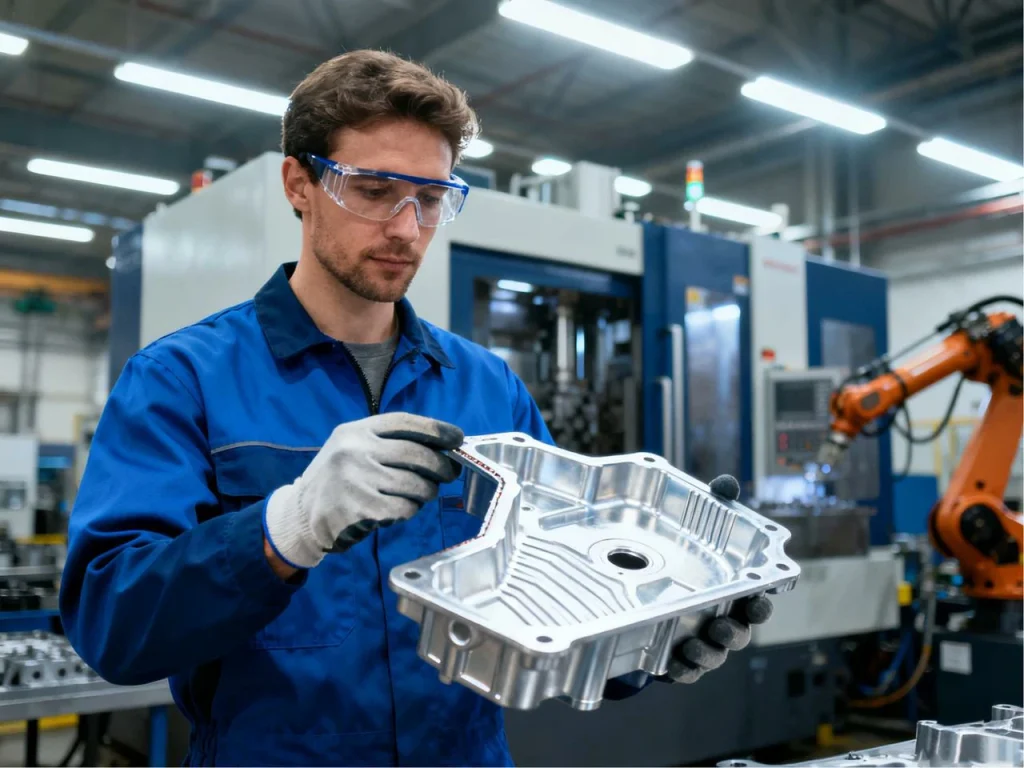
When people ask what parts are made by die casting, the list is surprisingly broad. Die casting parts aren’t just for big stuff like engine or battery tray housings—they include covers, brackets, heat sinks, connectors, hinges, handles, enclosures, and other precision hardware. Because die casting is a metal process that forces molten alloy into steel molds, you can get very fine detail, thin walls, and repeatable accuracy.
Casting also handles decorative and aesthetic elements—emblems, badges, knobs, and trim pieces—especially where consistency and fine finishes matter. You’ll even see die casting parts in electronics, like heat sink fins, LED housings, and small brackets for mounting circuit boards. In automotive, beyond major structural stuff, there are window frames, latch components, chassis brackets, and even decorative surfaces.
A typical die casting die is made up of two main sections—the cover half and the ejector half—but there’s more going on behind the scenes. Together, they form a precise cavity that shapes the molten metal into the die under high pressure. In many cases, additional components like slides, cores, and inserts are used in die casting to create holes, threads, or undercuts that can’t be made in a simple two-piece mold.
Different methods of die casting, such as hot-chamber and cold-chamber systems, may slightly change how the die operates or how it’s cooled and lubricated, but the basic layout stays the same. The cover side connects to the injection system that delivers molten metal, while the ejector side includes pins that push the finished part out once it solidifies. Altogether, the die works as a durable, reusable tool that ensures each part comes out consistent in shape and detail.
Most die cast parts are made from aluminum, zinc, and magnesium, each chosen for its specific strengths. Aluminum is lightweight, corrosion-resistant, and excellent for thin-walled components like housings and brackets. Zinc is denser and stronger, making it ideal for small precision parts such as hinges, handles, and connectors. Magnesium is the lightest option, often used where reducing weight is crucial, like in electronics or automotive interiors.
These materials are selected not just for strength and weight, but also for how well they can be cast into complex shapes. Each metal offers different surface finishes and machining characteristics, so choosing the right one helps ensure the final part meets both functional and aesthetic requirements. By understanding these differences, manufacturers can balance cost, performance, and production efficiency for high-volume runs.
Yes, die cast metal is a reliable choice for manufacturing high-volume parts that require precision, repeatability, and thin walls. This method is especially popular in industries like automotive, electronics, and consumer products because it can consistently produce complex shapes with fine details. The accuracy achieved with die cast parts often reduces the need for additional machining, saving both time and material. However, like any casting process, it’s important to consider potential porosity, which can impact leak-tightness or limit certain heat treatments. Careful die design, proper gating, and controlled process parameters can help minimize these issues, ensuring each part meets quality standards. Additionally, die casting supports a variety of metals, including aluminum, zinc, and magnesium, offering flexibility depending on strength, weight, and thermal requirements. Overall, die cast metal is a go-to solution for repeatable, high-quality components across a wide range of applications.
Die cast aluminum is primarily made from Al‑Si‑Cu alloys, which means aluminum is combined with silicon and copper to create a material that’s both strong and easy to cast. Typically, these alloys contain about 7–12% silicon, which improves fluidity so the molten metal fills the die smoothly and captures fine details. Copper, usually around 2–4%, adds strength and hardness, helping the final parts withstand stress and wear. In addition, small amounts of elements like iron, manganese, magnesium, and zinc are added to tweak specific properties, such as corrosion resistance, thermal conductivity, or mechanical performance. These tailored compositions allow die cast aluminum parts to meet the demands of everything from automotive housings and battery enclosures to heat sinks and consumer electronics. By carefully selecting the alloy and controlling the casting process, manufacturers ensure that each aluminum die cast part is durable, dimensionally precise, and ready for high-volume production without extensive post-machining.


 English
  German
  French
  Italian
  Spanish
  Polish
  Czech
Czech  Japanese