
Custom aluminum machining makes complex, high-precision parts fast, repeatable, and cost-effective. It powers prototypes and production for automotive, aerospace, electronics, medical devices, energy, robotics, and more. In 2025, buyers face a clear trade-off: you need tight tolerance parts on short timelines while dealing with tariffs, raw material swings, and supply chain risk. The good news is that CNC aluminum machining has never been more capable. Multi-axis mills, AI-assisted toolpaths, cobot tending, in‑process probing, full traceability, and greener workflows are standard in top shops.
This guide gives fast answers up front—what CNC aluminum is, when to use it, how costs and lead times work—then steps through engineering foundations (alloys, tolerances, finishes), modern machining processes (3‑axis to 5‑axis), cost and quality levers, application playbooks, sustainability, and how to pick the right supplier. You’ll also find practical DFM tips and “ready-to-use” checklists you can bring straight to your next RFQ.
Along the way, we answer common questions in plain language: What is CNC aluminum? Can a CNC machine cut aluminum? How much does CNC milling aluminum cost? How strong is CNC aluminum? Does CNC aluminum rust? If you want to go from CAD to part—confidently, quickly, and cost‑effectively—this guide is for you.
Custom aluminum machining: fast answers (2025)
In 2025, custom aluminum machining continues to be the go-to solution for producing high-precision parts quickly and reliably. From automotive subframes to aerospace brackets, aluminum alloys are widely used in CNC machining to achieve tight tolerances, complex geometries, and fast prototype turnaround. This section provides fast answers on what custom aluminum machining entails, when it is most effective, and how modern CNC processes make it easier than ever to turn designs into functional parts.
What it is and when to use it
CNC aluminum machining is the use of computer‑controlled mills and lathes to cut aluminum stock into finished custom aluminum parts. It is ideal for low to mid volumes, rapid prototypes, tight tolerances, and complex shapes that don’t fit tooling-heavy methods. If your design has deep pockets, precise flatness, small holes, thin walls, or multi‑face features, aluminum CNC machining is often the fastest way to get there.
When is aluminium milling service the best fit versus other processes?
- Use machining when you need tight tolerances (down to ±0.01 mm), sharp feature detail, or quick changes between design iterations.
- Choose die casting for very high volumes with stable geometry and longer lead time for tooling.
- Select extrusion when your design has a constant cross‑section and you can combine extrusion + CNC finishing.
- Consider metal additive manufacturing for internal channels or shapes impossible to cut, then machine critical faces.
In short, machining is the flexible choice when speed, precision, and geometry complexity matter most.
Key 2025 fast facts and stats
- Global custom machining aluminum market size: $88.48B in 2025
- Aluminum profile precision machining growth: 6% CAGR (2025–2033)
- U.S. machine shops: $44.6B market, ~230,000 employees, ~17,000 facilities
- Regions driving demand: North America (U.S.), Asia (China, Japan), Europe
- 2025 challenges: aluminum price swings; U.S. tariff impact estimated around $1.3B
- Trends: AI‑assisted CAM, multi‑axis CNC, robotics, digital traceability, sustainability, and selective reshoring
These figures reflect market analyses and public datasets and align with what many buyers and shops report this year.
Benefits vs. alternatives (quick comparison)
The biggest advantages of custom aluminum machining are tight tolerance, fast iteration, and a broad aluminum alloy menu. Parts can hit ±0.01 mm on critical features with the right fixturing and metrology. You can go from prototype to pilot in days, not months. Finishes like anodize make aluminum parts tough, attractive, and corrosion resistant.
What are the trade‑offs? Per‑part cost is higher than casting at very high volume. One‑off jobs carry setup time. And some shapes are simply more efficient to extrude or print. If the monthly demand is high, tooling amortization often favors casting or forging. If your part is long with a constant profile, extrusion plus a cnc mill pass may beat full machining on price.
Snapshot table: process fit, tolerance, lead time, MOQ
| Process | Best fit | Typical tolerance band | Lead time (typical) | MOQ |
|---|---|---|---|---|
| CNC machining (3–5 axis) | Complex geometries, tight tolerance, fast changes | ±0.01–0.05 mm | 2–5 days (proto), 1–2 weeks (pilot) | 1+ |
| Die casting | Very high volume, stable geometry | ±0.05–0.20 mm (as‑cast), finer after machining | 6–12 weeks (tooling + PPAP) | 1,000+ |
| Extrusion + machining | Long, constant cross‑sections | ±0.10–0.25 mm (as‑extruded) | 3–6 weeks (die + run) | 100+ |
| Metal AM + machining | Internal channels, topology optimized | ±0.05–0.20 mm (as‑printed), tighter after machining | 1–3 weeks | 1+ |
Note: Tolerances depend on size, geometry, alloy temper, and inspection level.
Engineering foundations for CNC aluminum parts
A solid understanding of the type of aluminum and its alloying elements is essential for effective custom aluminum machining. Different alloys, from 6061 to 7075, offer unique balances of strength, corrosion resistance, and machinability. Knowing these engineering foundations helps designers and machinists choose the right material, set realistic tolerances, and ensure that CNC aluminum parts perform reliably in their intended applications.
Alloy selection guide: 6061, 7075, 2024, 6063, 6082
Picking the aluminum alloy sets the tone for machinability, strength, corrosion resistance, and finish. The big players:
- 6061: The most popular aluminum for CNC. It balances excellent machinability, good strength, good weldability, and strong anodize response. Great for general cnc aluminum parts, fixtures, enclosures, and brackets. If you are unsure, start here.
- 7075: Very high strength and good fatigue behavior. Common in aerospace and motorsport. Slightly harder to machine than 6061 but still very workable with sharp cutting tools and good chip evacuation. Often chosen when mass is critical and loads are high.
- 2024: Known for good fatigue resistance and strength. Often used in aerospace structures. More prone to corrosion than 6xxx, so coatings or chem film may be needed.
- 6063: Favorite for extrusion because of flow and surface finish. Often extrude the profile, then perform aluminum CNC machining on holes, slots, and faces. Good anodize appearance.
- 6082: A strong 6xxx alloy similar to 6061 with good machinability and strength-to-weight. Common in EU markets.
Quick property sketch by temper (typical ranges; check datasheets for your exact spec):
| Alloy (common temper) | Tensile strength (MPa) | Machinability | Corrosion resistance | Notes |
|---|---|---|---|---|
| 6061-T6 | ~290 | Excellent | Good | Great all‑rounder; easy to anodize |
| 7075-T6 | ~570 | Good | Moderate | Very high strength; watch corrosion and SCC |
| 2024-T3 | ~470 | Good | Fair | Strong, fatigue‑resistant; often needs coating |
| 6063-T6 | ~240 | Excellent | Good | Best as extruded, nice cosmetic anodize |
| 6082-T6 | ~310 | Very good | Good | EU favorite; strong 6xxx option |
Aluminum tempers and properties vary, so match the exact callout (e.g., 6061‑T6 vs. T6511). Always list both alloy and temper on your drawing.
Learn more from our German technical guide on 6061-T6 Aluminium Eigenschaften.
Tolerances and surface finish targets
Most aluminum cnc service work lands in the ±0.01–0.05 mm range for critical features, with looser bands on non‑critical geometry to save time and cost. Flatness and parallelism depend on part size, fixture strategy, and tool reach. For deep pockets, expect extra passes and probing to control tool deflection.
Common finishes for machined aluminum:
- Anodizing: Type II for cosmetic and wear; Type III (hardcoat) for heavy wear. Expect dimensional stack added by anodize thickness. Call out color and gloss level for consistency.
- Chem film (chromate conversion): Maintains electrical conductivity; thin, conductive layer that resists corrosion. Good for electronics and bonding.
- Bead blast: Smooth, matte texture before anodize or as‑machined appearance enhancement. Specify media and blast zone if partial.
- Polishing: For visible faces or optical needs. Combine with clear anodize for durable shine.
Threads in aluminum can be strong, but for frequent assembly or high torque, helicoils or key‑locking inserts add life and hold. For critical mating surfaces, set realistic surface roughness targets (e.g., Ra 1.6–3.2 μm) based on function, not aesthetics.
DFM principles to reduce risk and cost
Want to cut cost without hurting quality? Adjust the design so the cnc machine can work faster and more stable. A few high‑impact moves:
- Keep minimum wall thickness to about 1–1.5 mm for small parts and 2–3 mm for larger parts unless function demands thinner. Thin aluminum walls chatter.
- Add internal radii at least 1.5–2.0× cutter radius. Sharp inside corners slow toolpaths and raise tool wear.
- Limit hole depth to 8–10× diameter, or plan for deep‑hole cycles and longer lead time. Consider drilling from both sides when possible.
- Use standard thread sizes and depths; avoid blind micro‑threads unless essential.
- Define a clear datum strategy and critical‑to‑quality features. Let non‑critical faces float with looser bands.
- Ensure fixturing access on at least two orthogonal faces. Add small tabs or boss features if it helps hold the part.
- Break up extreme aspect ratio features; add ribs for stiffness. For deep pockets, plan rest‑roughing with stepdowns that control deflection.
- Reduce part count by combining features where assembly allows. Fewer parts often means fewer tolerance stacks and lower BOM cost.
Which aluminum alloy is best for machining and why?
If you need a single answer, aluminum 6061 T6 is the best starting point for CNC aluminum machining. It offers excellent machinability, consistent material quality, good corrosion resistance, strong anodize response, and a great strength to weight ratio for many applications. For the highest strength per mass, aluminum 7075 T6 is ideal. For fatigue critical aerospace components, aluminum 2024 remains a classic choice. If your design involves extrusion plus machining, aluminum 6063 is often preferred. Each alloy provides unique properties, making it essential to select the right one for your specific custom aluminum machining needs.
CNC machines, processes, and technology stack (CNC, 5-axis, automation)
Modern CNC machines and their associated processes form the backbone of efficient custom aluminum machining. From 3-axis mills for simple parts to 5-axis systems for complex geometries, advanced tooling, high-speed spindles, and precise workholding enable rapid and accurate production. Automation, including robotic tending and in-process probing, further enhances consistency, reduces cycle time, and ensures tight tolerances, making today’s CNC technology stack indispensable for high-quality aluminum parts.
Milling, turning, and 5-axis strategies for aluminum
Modern cnc milling machines run aluminum fast. High‑speed spindles, rigid workholding, and dynamic toolpaths keep chips light and evacuation clean. Balanced roughing and finishing is the key. Rough with high feed, light radial engagement to manage heat; finish with sharp tools and controlled stepovers for nice surfaces.
- 3‑axis milling handles plates, brackets, and simple pockets well.
- 4‑axis adds wrap/rotary moves to reduce setups and improve alignment across faces.
- 5‑axis machining shines on complex brackets, impellers, manifolds, and multi‑face parts. Short tools, fewer setups, and higher accuracy on compound angles mean better tolerance and finish.
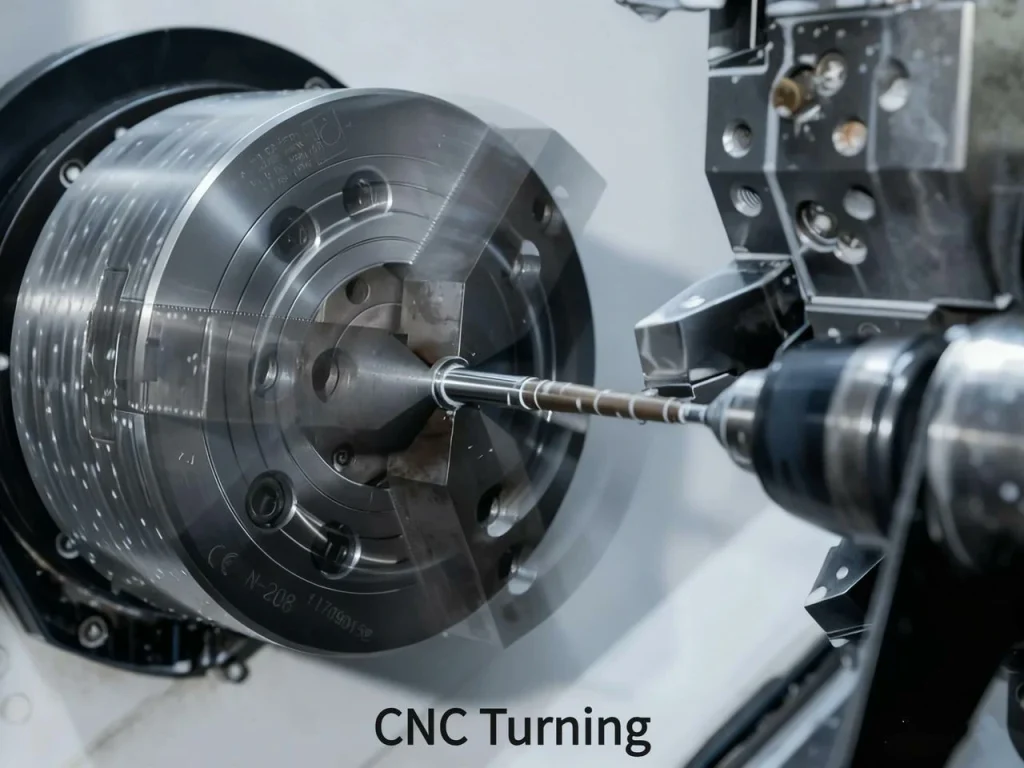
CNC turning excels on cylindrical machined aluminum parts like bushings, shafts, and housings. With live tooling and sub‑spindles, you can add milled flats, holes, and slots in one cycle.
Multi‑part fixturing and pallet systems keep small‑batch runs efficient. You load one pallet while the other runs. This saves setup and shortens the clock to first article.
Automation, robotics, and Industry 4.0 traceability
Cobots and robots now tend aluminum mills and lathes in many shops. Add in‑process probing and adaptive control to catch drift and keep cuts tight. Simple probing routines can auto‑update work offsets, correct tool wear, and verify a feature before moving on. Digital travelers and part serialization tie each custom aluminum part to its machine, operator, inspection data, and material certs, which matters in aerospace and medical.
The result is higher throughput, better consistency, and instant traceability. It’s not only about speed; it’s also about reducing risk on regulated jobs.
Post-processing and finishing workflows
Finishing starts well before anodize. Deburr every edge that touches hands or mates with seals. Bead blast only the faces you want matte. Mask threads and critical fits before anodize or coating. For chem film, define conductivity needs. If your part needs laser marking, plan a smooth zone and specify text height and contrast.
Remember that anodize adds thickness. Type II often adds a few microns; Type III adds more. Include this in critical fits. Use plug gauges and proper thread gauges to verify threaded holes after finish. For torque‑critical assembly, note the torque spec on the drawing to guide acceptance.
Process selector flowchart
Use this simple path when you plan your build:
- Does the geometry have multi‑face angles or deep pockets with tight tolerance? → Pick 5‑axis CNC.
- Is the profile constant along length? → Consider extrusion, then aluminum cnc machining finish features.
- Is the volume > 10k/yr and shape stable? → Evaluate die casting + finish machining on critical faces.
- Need internal channels or weight‑driven topology? → Consider metal AM + machining.
Capability matrix (typical job shop range):
| Capability | Typical value |
|---|---|
| Max part envelope (3‑axis) | 1000 × 500 × 500 mm |
| Max part envelope (5‑axis) | 600 × 600 × 400 mm |
| Turning diameter × length | Ø350 × 600 mm |
| Axes available | 3, 4, and 5 |
| Substrates | 2xxx, 5xxx, 6xxx, 7xxx aluminum grades; cast aluminum; copper; plastics |
Values vary by shop; confirm during RFQ.
Cost, lead time, and quoting strategy
Understanding the factors that influence cost, lead time, and quoting strategy is essential for efficient custom aluminum machining. Material selection, alloy, part complexity, finish, and inspection requirements all impact pricing and production schedules. Many CNC shops now offer an instant quote feature, allowing designers to quickly estimate costs and plan timelines, helping move projects from prototype to production with confidence and minimal delays.
Core cost drivers
Cost comes from more than machine time. These are the big levers for aluminum machining services:
- Material and stock form (plate, bar, thin aluminum sheet; chip‑to‑part ratio)
- Alloy choice and temper (e.g., 7075 often costs more than 6061)
- Cycle time: toolpaths, tool changes, number of setups
- Tool wear, coolant, and deburr effort
- Inspection level: in‑process probing vs. CMM, reports (FAI, PPAP)
- Finishing: anodize, chem film, powder coating, masking
- Packaging, protection, and labeling
- Logistics and tariffs; regional price differences and reshoring choices
How to reduce cost without sacrificing quality
Start by simplifying the design. Ask: does every face need ±0.01 mm? If not, open up non‑critical tolerances and your machine shop will run faster cutters, bigger stepdowns, and fewer inspection steps. Use standard hole sizes, standard thread depths, and standard radii. Reduce setups by combining features into two or three coherent orientations. If a surface is hidden, skip cosmetic spec there. And if you need 20 parts over 2 months, ask for a batch schedule to reduce setups.
A simple rule: put tight tolerance and fine finish only where function demands it. You’ll get the same performance for less.
Lead-time benchmarks and planning
- Prototype: 2–5 days
- Pilot run: 1–2 weeks
- Production: 2–6 weeks, depending on lot size, coatings, and inspection depth
To de‑risk schedules: send early RFQs with full files, freeze specs before cutting, approve a first article quickly, and keep a clear change‑control path. A short weekly check‑in often prevents last‑minute surprises.
How much does custom aluminum machining cost?
Costs vary by size, geometry, alloy, finish, and quantity. Here are typical directional ranges for aluminum cnc machining service:
- Small, simple prototype (e.g., palm‑size bracket in 6061, as‑machined): $50–$200 per part
- Mid‑complexity part with two setups and bead blast + anodize: $150–$600 per part
- Complex 5‑axis part with deep pockets and tight tolerance: $400–$2,000+ per part
- Production lots often drop unit cost by 20–60% compared with one‑offs
A practical approach is to set a target and share it with your vendor. You can also build a simple cost calculator using inputs like alloy, part size, cycle time estimate, setup count, finish, inspection level, and quantity.
Common question answered here as well: Can a CNC machine cut aluminum? Yes. In fact, modern machines cut aluminum extremely well with the right tooling, coolant, and workholding. That’s why aluminum is a popular choice for cnc services.
Application playbooks and case studies
Exploring real-world examples helps illustrate how custom aluminum machining delivers value across industries. From automotive subframes and EV battery trays to aerospace brackets and consumer electronics housings, application playbooks and case studies show how CNC processes, alloy selection, and finishing techniques come together to achieve tight tolerances, optimized strength-to-weight ratios, and rapid prototype turnaround.
Automotive and EV components
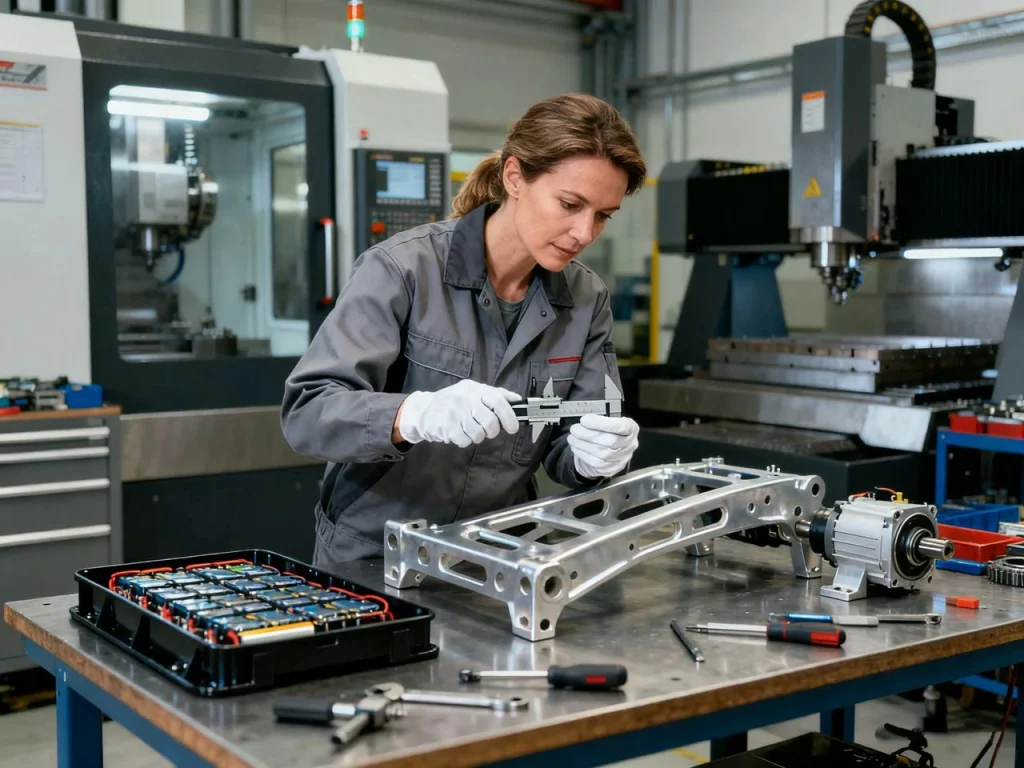
Automakers and EV startups rely on 6xxx and 7xxx aluminum for lightweight strength. Subframes, battery trays, crash structures, and motor mounts are common custom aluminum parts. For a battery frame with tight NVH and weight targets, a shop may run high‑speed roughing to keep heat low, then probe before finishing pockets that must hit ±0.01 mm. After machining, anodize or chem film protects against road salts while keeping electrical conductivity where needed.
Aerospace structures and interiors
Aerospace values 5‑axis machining for topology‑optimized brackets, seat track anchors, and small structural elements. These parts combine thin walls with features on several faces. Shops use short tools, smart stepdowns, and in‑process probing to keep thin ribs from chattering. Full serialization and First Article Inspection give traceability. When schedules are tight, outsourcing prototypes to a capable aluminum cnc service saves weeks.
Electronics and consumer products
Heatsinks, housings, and wearables need both performance and looks. For a cosmetic enclosure, the path might be: face mill, contour, drill, deburr, bead blast, then consistent anodize color across lots. Startups love the 2–5 day rapid prototyping loop: share a STEP file today, hold a sample by the end of the week, tweak, repeat. Small changes—like easing a corner radius or opening a tolerance—often cut days and dollars.
Annotated part gallery
Imagine three examples side by side:
- A topology‑optimized bracket before/after, showing a 30% weight cut while holding stiffness.
- A part with toolpath overlays, showing rest‑roughing, finishing passes, and probe points.
- A fixture photo showing tabs and clamps that allowed two faces per setup.
Each example shows how cnc aluminum machining supports lightweighting, clean finishes, and on‑time delivery.
Quality assurance, certification, and risk reduction
Ensuring consistent quality and minimizing risk is critical in custom aluminum machining, especially for corrosion-resistant aluminum products used in aerospace, automotive, and medical applications. Through robust inspection methods, process monitoring, and certifications, manufacturers verify that each part meets design specifications and functional requirements. Proper quality assurance not only guarantees performance but also builds confidence in the reliability of CNC-machined aluminum components.
Inspection methods and documentation
Quality is not only the final CMM check. It starts with incoming material and follows the part through each step.
- In‑process probing checks location before a critical cut.
- CMM verifies complex GD&T callouts, flatness, and true position.
- SPC tracks process variation; GR&R validates gage repeatability.
- FAI reports lock in your baseline for ongoing production.
- Data retention and lot traceability matter. Serializing cnc machined aluminum parts ties each piece to its material certs, machine, date, and inspector.
Certifications and compliance
Common certifications and compliance packages include:
- ISO 9001 for quality management
- AS9100 for aerospace
- ITAR for defense work in the U.S.
- Material certs per ASTM/AMS; finish per standards such as MIL‑PRF‑8625 for anodize
- RoHS/REACH for hazardous substances in the EU
When your RFQ calls these out, include the exact clauses, test methods, and any specific inspection plan.
Troubleshooting aluminum-specific defects
- Chatter or tool marks: Improve fixturing, reduce stick‑out, use dynamic toolpaths, adjust feed/spindle, try sharper tools or different helix.
- Warping/flatness: Use stress‑relieved stock (e.g., T651), balance material removal on both sides, add rest to release stress slowly, clamp without bending.
- Burrs: Add deburr ops, reduce feed on exit, consider different cutter geometry.
- Anodize dye variance: Use the same alloy batch where possible, define color tolerance and sample chips, and control bead blast media.
What tolerances are realistic for CNC aluminum parts?
Most shops hold ±0.02–0.05 mm on small to medium features with standard setups. With careful fixturing, short tools, temperature control, and CMM verification, tight tolerance down to ±0.01 mm is possible on defined features. Extremely tight geometric controls across large spans need special process control and should be discussed during DFM.
Sustainability, lifecycle, and reshoring in 2025
From using recycled aluminum and energy‑efficient CNC machines to optimizing chip recycling and reducing shipping distances through reshoring, manufacturers can lower carbon footprints while maintaining cost-effective production. Understanding these practices helps companies make smarter choices for environmentally responsible and resilient aluminum part production in 2025.
Green machining, recycled aluminum, and energy efficiency
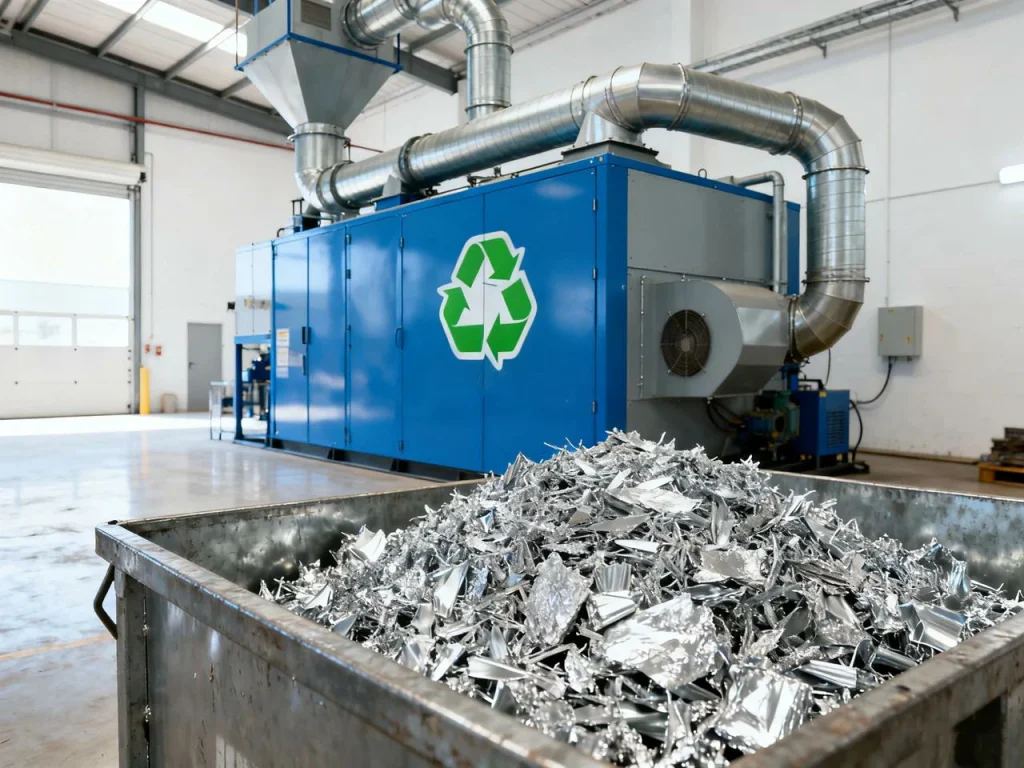
Aluminum is recyclable with a fraction of the energy of primary metal, according to the U.S. Department of Energy, which notes recycled aluminum requires up to 95% less energy than primary production. Many shops buy recycled billet, recycle chips, and use MQL or closed‑loop coolant to cut waste. Newer machines use less power for the same throughput. If sustainability matters to your team, ask vendors to report recycled content, energy use per hour, and scrap rates in the RFQ. These numbers help you track carbon per part.
Reshoring drivers and 2025 economics
With tariff shifts and shipping risks, many buyers are shifting custom work closer to final assembly. Local machining can cut lead time, reduce rework, and simplify change control. Even if the quoted price per part is a bit higher, the total cost of ownership often drops when you factor speed, quality control, and less inventory on the water.
Lifecycle cost and carbon analysis
When does local machining beat offshore? If your design changes often, if you need tight tolerance and full traceability, or if you ship a high mix of SKUs, the risk‑adjusted cost often favors local. Carbon-wise, short supply lines and chip recycling can shrink footprint. You don’t need a full LCA model to see benefits—start with a rough math: flight or ocean miles avoided, recycled content rate, and scrap percentage.
lifecycle flow and supply-chain map
- Mine/refine → Billet → Machining operations → Finishing → Assembly → Distribution → Use → Recycling loop back to billet
Each step is a chance to save time, cost, and carbon with smart choices.
Supplier selection and collaboration workflow
Choosing the right partner is critical for successful custom aluminum machining. Evaluating a supplier’s capabilities, inspection tools, past performance, and communication practices ensures that your aluminum parts meet tolerance, finish, and schedule requirements. Effective collaboration, including early engineer‑machinist reviews and clear documentation, streamlines production, reduces risk, and maximizes efficiency across the entire CNC machining workflow.
How to vet a CNC aluminum partner
Start with capabilities. Ask for a clear capability matrix: axes, envelope, materials, finishes, inspection tools. Request sample parts and tolerance stories that match your challenge. Review equipment age and preventive maintenance routines. A clean, stable process beats a flashy logo.
Check QMS, calibration records, and uptime metrics. Look for steady staffing and cross‑training. If a shop can show you how they would hold your CTQs (critical to quality), you’re on the right track.
Collaboration best practices
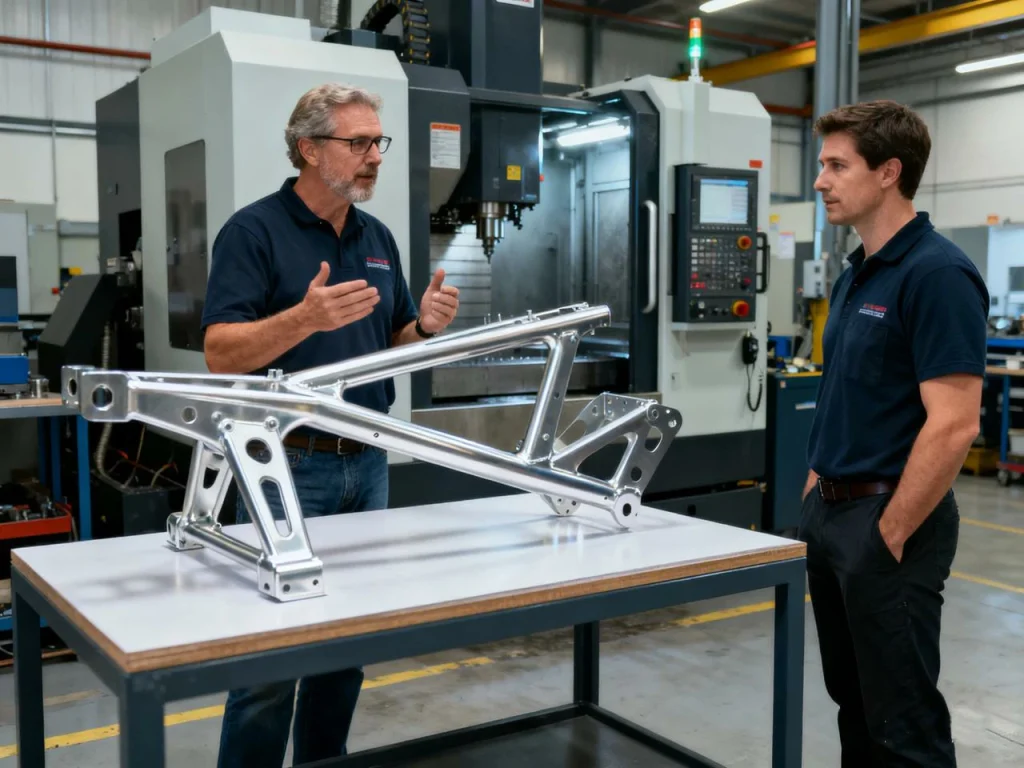
Great parts come from clear communication. Schedule an engineer‑machinist review early. Confirm GD&T and datum scheme. Tag features that matter for function and those that can float. Share the use case: loads, environment, assembly method, field service. A good machine partner can often remove steps, or combine ops, to hit your goals.
Set a simple cadence—a short weekly touchpoint during first builds. Agree how changes will be handled. Keep a digital thread of STEP, drawings, markups, and revision notes.
RFQ and documentation checklist
Here’s a practical, step-by-step RFQ list:
- 3D model (STEP/Parasolid) and 2D drawing with GD&T
- Alloy and temper (e.g., aluminum 6061‑T6, aluminum 7075‑T6)
- Tolerance zones by feature; flatness/parallelism if critical
- Finish spec (anodize type/color/thickness; chem film class; powder coating if needed)
- Inspection level (in‑process, CMM, FAI), sample size
- Material certs needed; RoHS/REACH if applicable
- Packaging and cosmetic standards; any touch‑safe edges
- Serialization/traceability needs
- Quantity by lot and need‑by dates
- Any special fixtures, torque specs, or assembly notes
How do I choose the right CNC aluminum supplier?
Pick a partner who can prove they’ve made parts like yours, at your tolerance, with your finish, on your timeline. Confirm inspection tools match your GD&T. Check communication style and willingness to suggest DFM changes. Run a small pilot first, then scale with confidence.
Next steps and KPIs
From quote to order:
- Approve samples and First Article Inspection
- Lock a run‑at‑rate plan with inspection checkpoints
- Track KPIs: yield, Cp/Cpk on CTQs, on‑time delivery, cost per part trend, and carbon per part (if you track sustainability)
As parts stabilize, move less critical features to wider bands and revisit lot size to bend the price curve.
FAQs
CNC aluminum refers to the process of using computer-controlled mills and lathes to precisely cut aluminum stock into finished, custom parts. This method allows for high accuracy, repeatability, and consistency, making it ideal for both prototypes and production runs. Programs on CNC machines control the movement of the cutting tools, spindle speed, feed rate, and tool engagement, ensuring every cut matches the design specifications. Aluminum is particularly suited for CNC machining because it is lightweight, easy to shape, and exhibits excellent machinability, offering both low cost and an excellent strength-to-weight ratio. The versatility of CNC aluminum machining means it can produce complex geometries, deep pockets, thin walls, and multiple faces that would be challenging or impossible with traditional manufacturing methods. For engineers and designers, this translates into faster iterations, higher precision, and reliable performance for applications across aerospace, automotive, electronics, medical devices, and more.
Yes, CNC machines can cut aluminum very effectively. Aluminum is a soft yet strong metal that responds well to milling, turning, and drilling. With sharp tooling, proper coolant, and rigid workholding, CNC machines can cut aluminum quickly while maintaining excellent surface finish and dimensional accuracy. Modern CNC setups often include features like high-speed spindles, multi-axis capabilities, and adaptive control to handle complex aluminum parts efficiently. One reason aluminum is so popular in CNC machining is its versatility: it can be easily anodized for corrosion resistance or finished for cosmetic purposes without compromising strength. Engineers also appreciate that CNC aluminum machining allows for rapid prototyping, small-batch production, and precise tolerances, making it an optimal choice for both low- and mid-volume applications across industries like aerospace, automotive, and consumer electronics.
The cost of CNC milling aluminum varies based on several factors, including part complexity, size, material choice, finish, and quantity. Simple prototypes, such as a small bracket or housing made from aluminum 6061, may cost between $50 and $200 per part. Parts with moderate complexity, involving multiple setups, surface finishes like bead blasting or anodizing, typically range from $150 to $600 per piece. Highly complex 5-axis parts with deep pockets, tight tolerances, or multiple critical surfaces can cost anywhere from $400 to $2,000 or more per part. Volume also plays a role: producing a small batch will usually cost more per part than a large production run due to setup time and tooling. Many CNC shops now offer instant quoting tools online, allowing engineers to estimate costs quickly and adjust parameters to fit budgets and timelines, making project planning much more efficient.
The strength of CNC aluminum parts primarily depends on the chosen alloy and temper. Aluminum 6061‑T6 is widely used for structural components due to its balanced mechanical performance, corrosion resistance, and versatility, making it ideal for brackets, housings, and general-purpose parts. For applications demanding higher strength, such as aerospace or motorsport, 7075‑T6 delivers superior tensile strength while preserving lightweight properties. Aluminum 2024 excels in fatigue resistance, making it suitable for components subjected to repeated stress cycles. Careful selection of alloy and temper in CNC machining ensures parts meet functional requirements, maintain dimensional accuracy, and achieve precise surface finishes. This approach gives engineers and designers flexibility in optimizing both performance and manufacturability.
No, aluminum does not rust like steel because it is non-ferrous. When exposed to air, aluminum forms a thin oxide layer that naturally protects the surface from corrosion. This makes aluminum particularly suitable for parts exposed to moisture or harsh environments. For added durability, CNC-machined aluminum parts can be anodized, creating a thicker, corrosion-resistant layer that also enhances appearance and wear resistance. Chem films (chromate conversion coatings) are another option, especially for electronic housings where conductivity and corrosion resistance are important. While aluminum is naturally corrosion-resistant, designers still consider alloy type, surface treatment, and environmental conditions to ensure long-term performance. Overall, CNC aluminum machining produces parts that are not only precise and strong but also resilient, lightweight, and capable of withstanding challenging operating conditions.

 English
  German
  French
  Italian
  Spanish
  Polish
  Czech
Czech  Japanese