
Maintaining accurate CNC machine tool calibration is critical for high-precision CNC frézování a CNC soustružení operations. Regular calibration preserves geometric accuracy, reduces scrap and tool wear, and ensures consistent performance across all machining processes. With proper testing and adjustment, your equipment stays reliable, extends service life, and supports stable, efficient production.
What CNC machine calibration is and why it matters
Understanding CNC machine calibration is vital for precision manufacturing. Proper calibration uses professional calibration equipment to verify machine movements, supports measurement traceability in CNC calibration, and ensures CNC machines perform reliably across all machining applications.
Definition: what CNC machine calibration covers in geometry, positioning, and repeatability
CNC machine calibration is the process of checking and correcting how a machine moves and cuts. In practice, it covers three related areas: geometry, positioning, and repeatability.
Geometry is the physical relationship between machine elements. This includes whether the base is level, whether axes are square to each other, and whether the spindle is aligned as intended. Positioning is how accurately an axis moves to a commanded location. Repeatability is whether the machine returns to the same point the same way over many cycles.
The key point is that calibration is not one single test. It is a set of checks and adjustments. Some are mechanical, such as leveling and squaring. Some are measurement-based, such as checking axis travel with gauges or using laser interferometer testing for CNC positioning accuracy. Some are control-side corrections, where measured errors are entered into the machine controller.
For buyers and production engineers, this matters because part feasibility depends on machine behavior, not just the machine’s original specification. A machine may still run, but if geometry or positioning has drifted, it may no longer hold the tolerance or consistency the job requires. For high-precision CNC turning and CNC milling services that ensure tight tolerances and consistent part quality, you can explore trusted solutions at UNeed.
How machine geometry affects machining accuracy
How machine geometry affects machining accuracy is simple in principle: if the machine structure is not aligned, the tool path will not match the intended path. A level error can tilt the working plane. A squareness error between axes can distort pockets, hole locations, and corner angles. A spindle alignment issue can affect surface finish, tool wear, and dimensional control.
These effects often stack together. A small error in one axis may be manageable on a simple part with loose tolerance. The same error can become a serious problem on larger parts, features that must stay square, or work that depends on consistent interpolation between axes. This is one reason why machines used for routine production and those used for multi-axis work need different levels of calibration scope.
Proper calibration helps maintain dimensional accuracy, reduce tool wear, and improve run-to-run consistency. It can also help answer a practical manufacturing question: is the current machine condition good enough for the next job, or does the process need correction before production starts?
Risks of operating CNC machines without regular calibration
There are clear risks of operating CNC machines without regular calibration. The first is scrap. If the machine drifts out of square or develops positioning error, dimensions may move out of tolerance even if the program and tooling are correct. The second is unstable process behavior. Operators may begin compensating by changing offsets, reducing speeds, or adjusting setups to chase errors that are actually machine-based.
There is also a wear issue. A machine that is not properly aligned can increase cutting load variation, which may accelerate tool wear. In some cases, this is one reason users ask whether calibration improves surface finish. It can, but only when surface issues are linked to geometry, runout, or motion error rather than tooling or material alone.
The other risk is poor troubleshooting. If a shop does not know the true machine condition, it becomes hard to separate machine error from fixture error, programming error, tool deflection, or material variation. That uncertainty raises both downtime and inspection burden.
Signs of incorrect CNC machine calibration
Common signs of incorrect CNC machine calibration include parts drifting out of tolerance, recurring corner angle errors, inconsistent hole locations, unusual tool wear, vibration during cuts, and surface finish changing from run to run. A machine may also show backlash-like behavior, poor repeatability after homing, or differences between test cuts made in different areas of the table.
These symptoms do not prove one root cause by themselves. In fact, the same symptom can come from several sources. But they are strong indicators that the machine should be checked before more production is released.
When CNC machine calibration is required and whether it is feasible
CNC machine tool calibration is required under specific conditions and influenced by many factors. Knowing the right timing and feasibility helps avoid incorrect calibration and supports stable types of calibration for different machine setups.
When CNC machine tool calibration is required after installation, relocation, or repair
When CNC machine tool calibration is required is often tied to physical change. A new installation should be calibrated because transport, placement, and anchoring can affect level and geometry. Relocation is another common trigger. Even if the machine was accurate before, a new floor condition, different support points, or transport stress can change alignment.
Repair work can also change machine conditions. If service affects guideways, spindle alignment, axis drive components, or structural elements, calibration is usually required before the machine returns to production. The same logic applies after major maintenance where parts are loosened and reassembled.
Feasibility depends on access, machine condition, and the required outcome. Basic leveling and geometry checks are usually feasible in-house if the shop has the right measuring tools and procedure discipline. Higher-accuracy correction, traceable positioning checks, or volumetric mapping may need outside support.
Machine alignment problems after CNC crash
Machine alignment problems after CNC crash should be treated seriously, even if the machine still powers up and moves. A crash can shift the gantry, damage bearings, affect spindle alignment, or introduce hidden axis error. In some cases, the effect is obvious, such as visible loss of squareness. In others, the machine may only show subtle dimensional drift or unstable repeatability.
A sensible response after a crash is to separate structural checks from software recovery. Resetting offsets or replacing a tool does not confirm that geometry is still correct. The machine should be inspected for leveling, squareness, axis alignment, and spindle condition before returning to tight-tolerance work.
For buyers outsourcing machined parts, this is also a supplier audit question. If a supplier reports a crash on a critical machine, the issue is not only repair completion. It is whether alignment and calibration were revalidated before production restarted.
Environmental factors that impact CNC machine calibration
Environmental factors that impact CNC machine calibration include temperature stability, cleanliness, and local workshop conditions. The research provided points to environmental acclimation before measurement, with the machine kept in a clean and stable workshop temperature for several hours to reduce thermal expansion effects.
This matters because calibration measurements can be distorted if the machine, table, and measurement instruments have not stabilized. A machine measured too soon after movement, cleaning, or large thermal change may show errors that are partly temporary. That can lead to wrong corrections.
Feasibility also changes with environment. A shop with stable conditions can often get more reliable results from manual checks. A shop with high temperature swings may need stricter measurement discipline and more frequent review of process capability.
Factors affecting CNC calibration accuracy
Several factors affecting CNC calibration accuracy are practical rather than theoretical. Instrument quality matters. Procedure matters. Surface cleanliness matters. Temperature stability matters. Machine wear matters too, because a machine with looseness, damaged ways, or spindle issues may not respond well to simple compensation.
Another factor is machine type. A basic three-axis machine used for moderate tolerances may be reasonably assessed with leveling, alignment checks, spindle runout checks, and test cuts. A multi-axis machine used for close-tolerance parts may require more advanced measurement because angular and volumetric errors interact across the work envelope.
The key point is that calibration is only as good as the stability of the machine and the quality of the measurement setup. If either is weak, the output may look precise but still fail in production.
How CNC machine calibration works step by step
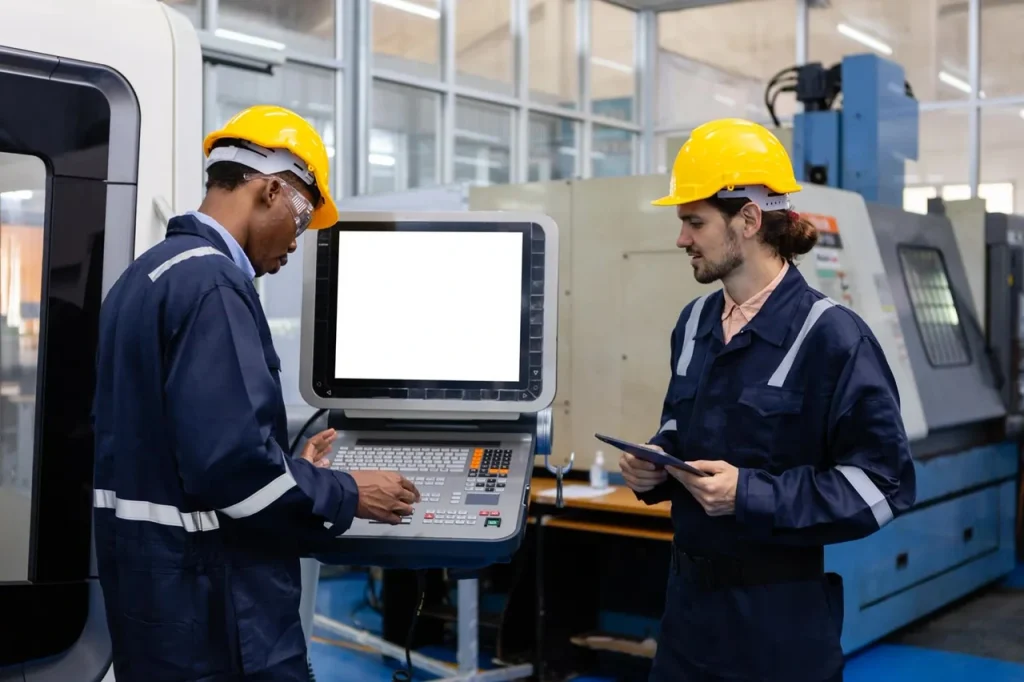
Following a structured CNC machine calibration process ensures reliable results. Professional calibration technicians use standard steps to control movements of the CNC and meet actual machining calibration needs.
Workshop acclimation, cleaning, and environmental stabilization before measurement
The first step in cnc machine calibration is preparation. The machine should be cleaned, the measurement surfaces cleared, and the workshop allowed them to stabilize. The available research says calibration begins with environmental acclimation in a clean, stable workshop temperature for several hours.
This step is easy to underestimate. Dirt on rails, chips under fixtures, or temperature drift can affect readings and create false conclusions. For that reason, shops that skip preparation often end up repeating the work.
For feasibility planning, this means calibration is not just instrument time. It also requires downtime for stabilization and setup. That should be included when planning a calibration window.
Mechanical leveling on X and Y axes with precision machinist’s levels
Mechanical leveling on X and Y axes with precision machinist’s levels is the next basic step. The available source indicates machinist’s levels with sensitivity around 0.02 mm per meter are used, with iterative adjustment of machine feet until readings are centered across several bed locations.
The purpose of leveling is not only to make the machine look level to the floor. It is to place the structure in a condition where geometry can be checked and maintained consistently. Readings are taken in more than one location because twist across the bed can matter as much as absolute level.
This is often one of the most feasible in-house tasks. But it still requires care. If the floor support is poor or the machine frame is already distorted, repeated foot adjustment may not fully solve the problem.
Gantry squaring and axis alignment checks using hypotenuse measurement
Gantry squaring and axis alignment checks using hypotenuse measurement are used to confirm that machine motion forms the intended right angles. The provided case example describes targeting a 500 mm hypotenuse for a 90° angle and making small adjustments by loosening one side, nudging it, retightening, and remeasuring.
This kind of check is useful because machine alignment problems do not always appear in straight-line axis movement alone. A machine can move smoothly on each axis but still cut non-square geometry if the gantry is skewed.
For practical decision-making, this is one of the clearest examples of a basic mechanical issue with direct part impact. If a shop is seeing angle errors, rectangular features that are not square, or mismatch across diagonal measurements, a squareness check is usually more relevant than changing program compensation first.
Test cuts, controller corrections, and validation workflow
After mechanical adjustments, test cuts are used to validate the result. The available research notes that test cuts should use material-specific patterns and may also involve tuning feed rate and acceleration to avoid vibration while keeping speed productive.
This step matters because a machine can pass static measurement checks and still behave poorly under cutting load. Test cuts help confirm whether corrected geometry and controller settings hold up in actual machining. They also help answer a common buyer question: does calibration improve surface finish? Sometimes yes, especially if vibration, misalignment, or positioning error was contributing to the problem. But a test cut is needed to prove it under real process conditions.
Where advanced measurement is used, the workflow may include controller corrections. Laser systems can generate an error map, and those corrections can be entered into the controller. The machine is then retested to confirm the compensation worked as intended.
Process diagram: manual checks to compensation entry to verification
A simple process view helps separate tasks and decisions:
| Fáze | Main activity | What it checks | Typical decision output |
|---|---|---|---|
| Příprava | Cleaning, acclimation, temperature stabilization | Whether measurement conditions are stable | Proceed or delay measurement |
| Manual geometry checks | Leveling, squareness, spindle/basic alignment checks | Structural and setup-related errors | Mechanical adjustment needed or not |
| Instrumented accuracy checks | Ballbar or laser measurement | Motion, positioning, backlash, angular or interpolation error | Compensation possible, repair needed, or both |
| Controller update | Entry of correction values or error map | Whether measured errors can be compensated | Re-test after changes |
| Ověřování | Test cuts and repeated measurements | Real machining result and repeatability | Release to production or continue troubleshooting |
Manual vs advanced methods: advantages, limits, and trade-offs
Choosing the right CNC machine calibration methods directly impacts precision and cost. Using suitable calibration systems and three‑plane laser systems helps meet strict measurement traceability in CNC calibration for diverse machining demands.
Ballbar vs laser interferometer for CNC calibration
The choice between ballbar vs laser interferometer for CNC calibration depends on the error being investigated and the machine requirement. A ballbar test is commonly used to assess circular interpolation behavior and reveal axis interaction problems. A laser interferometer is used for more direct measurement of linear positioning and related errors.
Manual methods such as levels, dial gauges, and test cuts are often enough to detect obvious setup and geometry problems. Ballbar and laser methods go further. They help quantify machine motion error, which matters when a shop needs traceable evidence or when simple checks do not explain the production problem.
How ballbar calibration detects CNC axis errors
How ballbar calibration detects CNC axis errors can be explained in simple terms. The machine runs a circular path while the instrument measures how closely the actual motion matches the intended circle. If the circle is distorted, that pattern can point to backlash, servo mismatch, reversal error, or axis interaction issues.
This method is useful because many production problems appear during coordinated motion, not during single-axis travel checks. A machine may seem fine on straight moves but still produce poor circularity or unstable contouring. In that case, a ballbar test helps narrow the fault before a shop commits to more invasive repair or expensive instrument time.
The trade-off is that a ballbar is not a full substitute for direct linear calibration. It is diagnostic and efficient, but it does not replace full positioning verification where that level of certainty is needed.
Laser interferometer testing for CNC positioning accuracy
Laser interferometer testing for CNC positioning accuracy is the more detailed method in the provided research. It can detect axial deviations below 5 microns in linear positioning, straightness, angular errors such as pitch, yaw, and roll, as well as backlash and squareness. The measured errors can then be used to enter corrections into the controller.
This has clear value when the machine is used for tighter tolerance work, when a buyer needs measurement traceability requirements in CNC calibration to be addressed, or when multiple axes interact across a large work volume. It is also relevant when previous manual checks have not resolved the issue.
The trade-off is practical. Laser work usually requires more setup discipline, more downtime, and more specialist skill. So it tends to be justified by tighter accuracy needs, machine criticality, or repeated quality issues that simple methods cannot isolate.
Challenges in calibrating multi axis CNC machines
Challenges in calibrating multi axis CNC machines are greater because the machine does not only have linear axis errors. Rotary motion, axis interaction, and spatial error accumulation all matter. A machine can appear acceptable in limited checks but still produce positional error in actual 5-axis tool paths.
The research notes that volumetric error compensation maps 3D errors across the work volume and applies them through controller software for micron-level accuracy on 5-axis machines. This can be useful, but the decision to use it should be based on need. Not every shop gains enough from volumetric mapping to justify the effort.
A practical rule is to match methods to risk. If the machine runs simple work with moderate tolerance, full volumetric correction may be unnecessary. If it runs complex multi-axis parts where orientation and position both matter, then advanced calibration becomes much easier to justify.
Table: method comparison by error type, machine complexity, and traceability
| Metoda | Nejlepší pro | Limity | Machine complexity fit | Traceability value |
|---|---|---|---|---|
| Manual leveling and dial-gauge checks | Base level, basic alignment, spindle checks, obvious geometry faults | Limited for full positioning and dynamic error analysis | Best for simpler machines and initial checks | Nízká až střední |
| Test cuts | Real cutting validation, surface finish and dimensional outcome | Does not isolate root cause by itself | Useful for all machines as final validation | Moderate if documented |
| Ballbar | Axis interaction and circular interpolation issues | Not a full substitute for direct linear calibration | Good for diagnosing servo and motion behavior | Mírná |
| Laser interferometer | Positioning, straightness, angular errors, backlash, squareness | More setup time and specialist handling | Best for higher-accuracy machines and complex troubleshooting | Vysoká |
| Volumetric compensation | 3D error mapping on multi-axis machines | Higher complexity, not always justified | Best for 5-axis and demanding spatial accuracy work | Vysoká |
Common problems, wear effects, and calibration failure scenarios
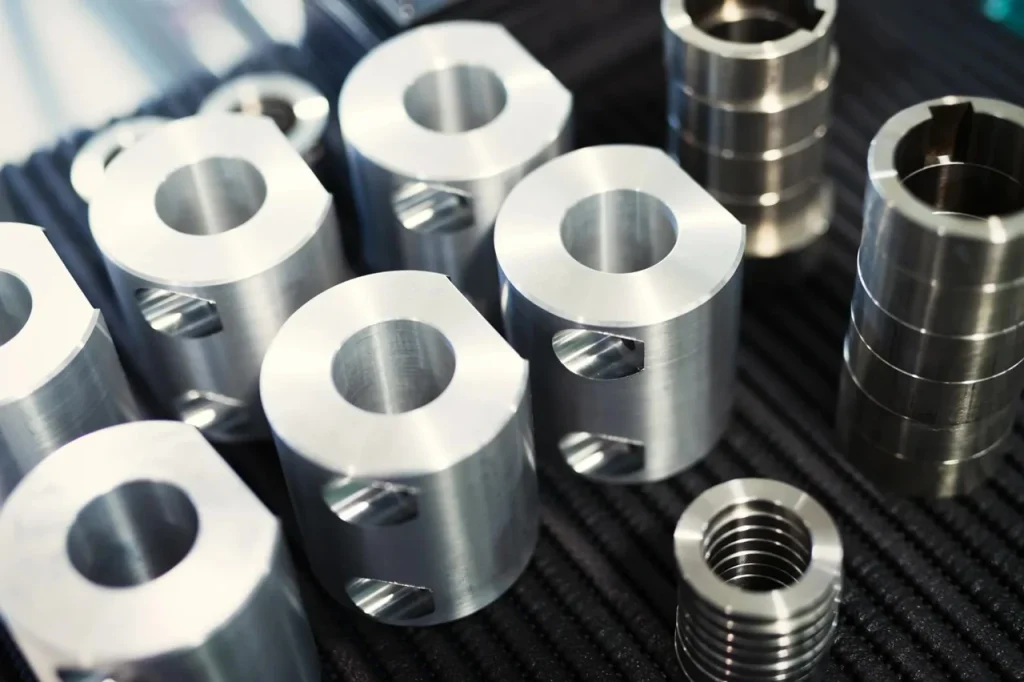
CNC machine calibration helps address common issues like wear and geometric inaccuracy. Ignoring tool calibration is essential and neglecting proper checks can lead to costly failures that undermine benefits of regular calibration.
Causes of CNC machine geometric inaccuracy
Common causes of CNC machine geometric inaccuracy include poor leveling, loss of squareness, spindle misalignment, backlash-related issues, wear in moving components, and structural change after transport or impact. Thermal change and unstable workshop conditions can also shift measured geometry or machine behavior.
The practical issue is that these causes often overlap. A shop may see one symptom, such as size drift, but the real cause may be a mix of axis geometry and spindle condition. That is why calibration should follow a structured sequence rather than isolated spot checks.
Wear and tear effects on CNC machine accuracy
Wear and tear effects on CNC machine accuracy build slowly. Continuous use can lead to positioning drift, alignment change, and declining repeatability. This is one reason the available sources recommend periodic checking rather than waiting for visible failure.
Wear does not always mean the machine needs a rebuild. In some cases, measured error can be reduced through adjustment and controller compensation. In others, calibration reveals that compensation is no longer enough and mechanical repair is needed. This distinction matters when planning cost and downtime.
Common CNC machine calibration errors
Common CNC machine calibration errors include measuring before thermal stabilization, skipping cleaning, relying on one bed location only during leveling, applying software compensation before fixing mechanical misalignment, and accepting a static check without test-cut validation.
Another error is using a method that is too limited for the machine’s duty. For example, a basic level and indicator check may help a routine machine, but it may not explain contouring errors on a multi-axis platform.
Spindle runout measurement tolerance limits
Spindle runout is usually checked with dial gauges or similar instruments against manufacturer specifications. The provided research confirms the method but does not provide a universal number. So spindle runout measurement tolerance limits should be taken from OEM guidance, not assumed from a generic rule.
This is important for buyers and engineers because spindle condition affects more than simple size control. Excess runout can contribute to poor surface finish, uneven tool loading, and short tool life. If those symptoms appear, spindle measurement should be part of the calibration review.
Checklist: symptoms that point to leveling, spindle, backlash, or squareness issues
| Symptom | More likely area to check first | Proč |
|---|---|---|
| Parts vary depending on table position | Leveling or geometry | Twist or alignment error may change across travel |
| Corners are not square or diagonals do not match | Squareness / gantry alignment | Axis relationship may be off |
| Poor surface finish with unusual tool wear | Spindle alignment or runout | Tool may not be cutting evenly |
| Size shifts after direction change | Backlash-related motion issue | Reversal behavior may be unstable |
| Vibration during test cuts | Geometry, spindle, or motion tuning | Static alignment and dynamic response both matter |
| Repeat cuts do not match each other | Repeatability / positioning issue | Machine may not return to position consistently |
CNC machine calibration intervals, tolerances, and service planning
Setting clear intervals and plans is key to CNC machine calibration. Calibrating a CNC milling machine on a regular schedule helps optimize your CNC performance and supports long-term reliability in production.
CNC machine calibration intervals: usage-based scheduling vs fixed routines
CNC machine calibration intervals can be set either by fixed routine or by machine usage and risk. The available research gives a common recommendation of every 3–6 months depending on usage intensity. At the same time, the evidence also shows uncertainty, because not all sources agree on a fixed schedule.
In practice, usage-based scheduling is often more defensible. A machine running continuously, making close-tolerance parts, or showing wear symptoms may need checks sooner. A less heavily used machine with stable work and environment may not need the same frequency.
How often should a CNC milling machine be calibrated?
How often should a CNC milling machine be calibrated? Based on the provided sources, a practical reference point is every 3–6 months, adjusted for workload and condition. That should not be treated as a universal rule. It is better seen as a service planning baseline.
The better question is whether the current machine condition supports the next production requirement. If a machine has been relocated, repaired, crashed, or is showing symptoms, calibration may be needed before the next scheduled interval.
Measurement traceability requirements in CNC calibration
Measurement traceability requirements in CNC calibration matter when results will be used for quality assurance, customer reporting, or formal process control. Traceability means the measurement chain is documented and linked to recognized reference standards through calibrated instruments and records.
This is one reason advanced methods are often chosen on critical machines. A shop can make reasonable manual checks in-house, but if a traceable report is needed, the method and documentation need to support that requirement.
Preventing machine breakdowns through calibration checks
Preventing machine breakdowns through calibration checks is less about predicting every failure and more about catching drift before it becomes severe. The research includes a case where scheduled checks of axis travel, spindle alignment, and base leveling helped prevent breakdowns and maintain consistent accuracy.
That makes calibration part of maintenance planning, not only quality control. A shop that links calibration findings with wear trends can often make better decisions on downtime windows, part routing, and repair timing.
References needed: OEM guidance, standards bodies, industry service practices
For tolerance targets, spindle limits, and acceptance criteria, the first reference should be OEM guidance because machine design and allowable error differ by model. Standards bodies are relevant for test methods and traceability expectations. Industry service practices are useful as supporting context, especially for interval planning and troubleshooting, but they should not replace manufacturer requirements.
Cost, tolerance, and lead time factors in calibration decisions
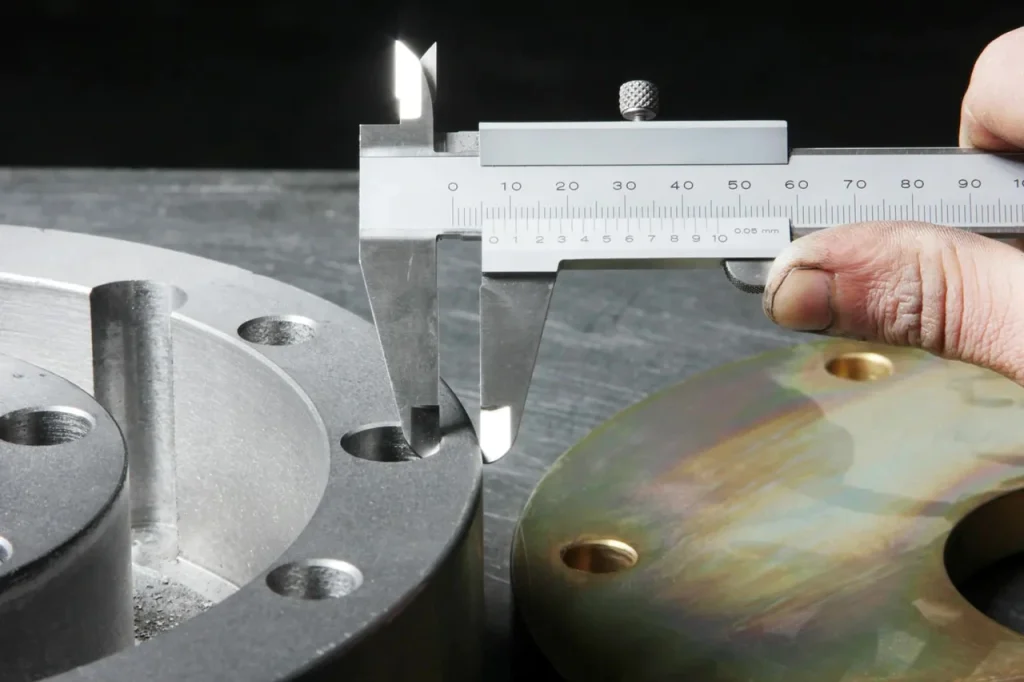
CNC machine calibration decisions depend on cost, tolerance, and lead time. Selecting proper calibration equipment ensures you meet calibration needs without unnecessary expenses or production delays.
Cost of CNC machine tool calibration services
The cost of CNC machine tool calibration services depends on scope rather than one fixed market number. Basic manual checks cost less in time and equipment but offer less detail. Laser-based work takes more setup, more specialist skill, and often more downtime. Multi-axis and volumetric work also add complexity.
Because no verified pricing data is provided here, cost should be evaluated through scope questions: Is the problem basic geometry or full positioning? Is traceability needed? Is the machine critical to production? Is there evidence of crash damage or long-term wear? The wider the scope, the higher the service effort tends to be.
What tolerance level justifies manual checks vs laser-based calibration
Without introducing unsupported tolerance numbers, the practical answer is relative. Manual checks are often justified when the machine runs less demanding work, the problem appears mechanical and visible, and the main goal is to restore basic geometry. Laser-based calibration is easier to justify when positioning accuracy is central, when traceable results are required, or when coordinated-axis errors affect part quality.
A buyer should also consider the cost of being wrong. If manual checks leave uncertainty and the machine produces high-value or difficult-to-rework parts, then advanced measurement may be the lower-risk choice.
Downtime, production interruption, and lead time planning for calibration windows
Downtime and production interruption should be treated as part of calibration feasibility. The work includes machine preparation, environmental stabilization, measurement, adjustment, compensation entry if used, and verification cuts. So calibration windows should be planned before urgent production if possible.
Lead time planning also depends on whether internal staff can perform the work or outside support is needed. If the machine is production-critical, some shops schedule calibration around lower-load periods or link it with planned maintenance shutdowns.
Table: industry-level trade-offs between machine criticality, tolerance target, and calibration scope
| Machine situation | Tolerance pressure | Recommended calibration scope | Main trade-off |
|---|---|---|---|
| General production machine with stable output | Mírná | Manual leveling, alignment checks, spindle checks, validation cuts | Lower cost, less detail |
| Machine showing drift or post-repair change | Rising | Manual checks plus targeted instrumented testing | More downtime, better diagnosis |
| High-use machine affecting many jobs | High process risk | Scheduled interval checks with documented validation | Planned downtime reduces surprise failures |
| Multi-axis machine for complex work | High spatial accuracy need | Advanced measurement and possible volumetric compensation | Higher complexity, stronger control of 3D error |
| Machine after crash with uncertain condition | Unknown | Geometry inspection first, then deeper testing if needed | Slower return to service, lower risk of hidden faults |
Where calibration has the biggest operational impact
CNC machine calibration is vital for consistent production, whether for routine machines or complex setups. It helps ensure that tools perform reliably and ensuring that CNC machines operate with the run-to-run consistency critical for efficiency.
Routine production machines needing run-to-run consistency
Routine production machines often gain the most from basic, repeated calibration discipline. These machines may not need the deepest analysis, but they do need stable output. If the same parts are run every day, small drift can become a large scrap issue over time.
This is where scheduled checks and simple validation cuts provide strong operational value. The benefit is not only accuracy at one moment. It is run-to-run consistency.
Multi-axis and 5-axis applications using volumetric error compensation
Multi-axis and 5-axis applications are a different case. Here the challenge is spatial accuracy across changing tool orientations and coordinated motion. The provided research notes that volumetric error compensation maps 3D errors across the work volume and applies those corrections in the controller.
That can have a large impact where the job depends on orientation-sensitive features and cumulative axis interactions. On simpler work, it may be unnecessary. So the decision should be tied to part complexity and error sensitivity, not to the machine type alone.
Shops troubleshooting scrap, tool wear, or vibration through test-cut validation
Shops troubleshooting scrap, unusual tool wear, or vibration often need calibration because those symptoms can come from machine condition, not just cutting parameters. Test-cut validation is useful here because it links the measurement work back to actual machining behavior.
If a machine passes geometry checks but still shows poor cutting results, the test cut can reveal whether the issue lies in motion tuning, spindle behavior, or process setup. It is often the bridge between metrology and production reality.
Case examples: gantry squaring, laser error mapping, and scheduled 3–6 month checks
Three practical examples from the provided research show where calibration has clear value. In one case, gantry squaring was restored by hypotenuse measurement and small mechanical adjustment, which corrected geometric error in daily cutting. In another, laser error mapping measured deviations below 5 microns and fed corrections into the controller, improving accuracy without hardware replacement. In a third, scheduled checks every 3–6 months focused on axis travel, spindle alignment, and base leveling, helping prevent breakdowns and keep output consistent.
These examples matter because they show different levels of intervention. Not every problem needs advanced tools. Not every machine can be trusted with basic checks alone.
How to evaluate and choose the right calibration approach
Choosing the right CNC machine calibration approach ensures reliable results. Understanding types of calibration and working with skilled calibration technicians helps you match methods to real production demands.
What buyers should check before selecting in-house vs external calibration support
Before choosing in-house or external support, buyers should check machine criticality, available instruments, staff skill, need for traceability, and the likely error type. In-house work is more feasible when the task is routine leveling, basic alignment, or regular validation on known machines. External support is easier to justify when the machine is high-value, multi-axis, recently crashed, or requires traceable positioning results.
A second check is whether the problem is known or unknown. If the symptom is obvious and mechanical, in-house correction may be enough. If the symptom is inconsistent or high-cost, outside measurement can reduce uncertainty.
Which measurements matter most for your machine type, tolerance, and workload?
The right measurements depend on the machine and the work. For general milling, leveling, axis alignment, spindle checks, and test cuts often matter most. For machines with circular interpolation issues, a ballbar may add useful insight. For close-tolerance positioning work, laser interferometer testing for CNC positioning accuracy becomes more relevant.
The workload also matters. A machine running simple fixtures and loose-tolerance parts does not need the same depth of calibration as a machine making complex precision components every day.
When does laser interferometry add value over basic leveling and dial-gauge checks?
Laser interferometry adds value when the limitation is no longer visible geometry alone. If the machine needs direct positioning measurement, traceable documentation, or analysis of straightness, angular error, backlash, and squareness, laser-based work is more informative than basic leveling and dial-gauge checks.
It also adds value when a machine has already been mechanically corrected but part error remains. In that case, the deeper measurement can show whether controller compensation is possible or whether mechanical wear has reached a point where repair is needed.
Decision matrix: choose by machine age, usage intensity, accuracy requirement, and failure symptoms
| Stav | Suggested approach |
|---|---|
| New install, relocation, or major repair | Start with leveling, geometry checks, spindle/basic alignment, then validate with cuts |
| Older machine with stable moderate-tolerance work | Use routine manual checks and interval-based validation |
| Heavy-use machine with drift symptoms | Increase check frequency and consider instrumented testing |
| Machine after crash | Inspect geometry first; do not rely on offsets alone |
| Multi-axis machine for critical work | Consider advanced measurement and volumetric compensation if error risk is high |
| Surface finish, vibration, or tool wear problems with unclear cause | Combine spindle checks, geometry review, and test cuts before process changes |
References needed: manufacturer manuals, traceability requirements, and industry reports
The strongest decision basis comes from three sources used together: manufacturer manuals for machine-specific limits and procedures, traceability requirements if the result must support quality records, and industry reports or service practices for maintenance planning. If these sources point in different directions, the machine manual and documented measurement requirement should take priority.
Závěr
CNC machine calibration is worth treating as a production control decision, not just a maintenance task. The right approach depends on what changed, what the machine is used for, and how much uncertainty the process can tolerate. Basic leveling, squareness checks, spindle checks, and test cuts are often enough for visible geometry problems and routine validation. Laser-based methods and volumetric compensation make more sense when positioning accuracy, traceability, or multi-axis behavior drives part quality.
Use calibration when machine condition could affect feasibility, scrap risk, tool wear, or consistency. Be cautious about relying on it alone when the machine has crash damage, advanced wear, or structural faults that compensation cannot solve. In short, match the method to the risk, confirm changes with test cuts, and use machine-specific references where tolerance acceptance matters.
Nejčastější dotazy
CNC machine calibration is necessary because a cnc machine’s accuracy changes over time due to wear and tear, movement, repair, machine crash, and environmental factors, all of which stress on machine components and hinder performance. Calibration helps confirm whether the machine can still produce parts within the required tolerance and repeatability, and it plays a key role in ensuring that your cnc machine operates efficiently while extending the life of your cnc machine.
The provided research suggests every 3–6 months as a common calibration frequency, depending on usage, and a well-planned calibration schedule will ensure consistent performance. In practice, calibration may be needed sooner after installation, relocation, repair, crash events, or when accuracy symptoms appear, as regular calibration helps prevent costly errors and maintain the performance of your cnc machine.
A ballbar test, also known as ballbar calibration for cnc, checks how well the machine follows a circular path using appropriate calibration tools and equipment. It helps detect coordinated-axis problems such as backlash, reversal behavior, or interpolation error that may not appear in simple straight-line checks, making it one of the common calibration methods for assessing cnc machine performance.
Spindle runout measurement is done using dial gauges or similar calibration tools against manufacturer specifications, as using the right tools is crucial for accurate calibration. The acceptable limit should come from the machine maker because universal limits are not supported here, and this measurement is part of essential calibration procedures to ensure spindle health and overall machine accuracy.
Common factors that cause a machine to lose accuracy include poor leveling, loss of squareness (key to geometric machine accuracy), spindle alignment problems, wear in moving parts, thermal change, crash damage, and unstable environmental conditions, all of which can be mitigated through proper calibration. In many cases, more than one factor is present at the same time, highlighting why calibration is essential to maintain consistent calibration results and the overall efficiency of the production process.
Without regular calibration, cnc machines can experience declining accuracy, increased tool wear, higher scrap rates, and unstable performance, all of which hurt the efficiency of the production process. Skipping calibration also makes it harder to troubleshoot issues, as you cannot rule out machine error, and may lead to costly repairs or machine breakdowns due to unaddressed wear and stress on machine components.

 Czech
Czech  English
  German
  French
  Italian
  Spanish
  Polish
  Japanese