
If you are comparing CNC suppliers, one of the first constraints you will hit is CNC machining moq. MOQ means minimum order quantity. In computer numerical control (CNC) machining, a leading subtractive manufacturing method within modern manufacturing technologies, it is the smallest order a shop is willing to run under a given set of conditions.
That sounds simple, but in practice it shapes price, lead time, and even whether a part is worth machining at all. A buyer may want 5 or 50 parts. A supplier may prefer 500. Another may accept 1 part, but at a much higher unit price. The key point is that MOQ is not just a policy decision. It is usually tied to fixed work that must happen before the first usable part exists.
For engineers and technical buyers, MOQ matters because it changes sourcing strategy. It affects how you handle prototypes, bridge production, pilot runs, and release to volume. It also affects whether CNC machining is the right process at a given quantity.
What CNC machining moq means and why it matters
Understanding CNC machining MOQs is key whether you’re ordering a single prototype or planning full-scale production. The minimum order quantity isn’t just a number—it reflects the balance between what a machine shop can efficiently produce and what makes economic sense for both the supplier and you. Before diving into definitions for prototyping versus production, it helps to see why MOQs exist and how they influence costs, timelines, and the feasibility of your parts.
MOQ also depends on supplier type. Prototype-focused shops and online quoting services may accept very low quantities, while production-oriented factories often prefer larger batches to justify fixtures, quality planning, and scheduling effort. Domestic and overseas suppliers can also differ because freight, communication, and outside-processing coordination change the minimum practical batch.
For example, precision machining suppliers like UNeed provide CNC turning and CNC milling services for both prototyping and low-volume production, helping buyers balance MOQ, cost, and machining feasibility across different project stages.
CNC machining minimum order quantity: definition for prototyping vs production
The CNC machining minimum order quantity is the lowest number of parts a supplier will quote or produce for a specific design, material, and process route. In prototyping, that minimum can be as low as 1 part in some cases, especially for CNC turning or simple milled parts intended for design testing. In production, the minimum often rises because the supplier is trying to recover setup and planning costs across more units.
This is where prototype vs production CNC order quantity becomes important. A prototype order is often accepted to prove fit, form, or function. A production order is expected to run more efficiently and repeatedly. The same part drawing may be feasible at quantity 1 for validation, but may not be commercially sensible at quantity 10 if the supplier has to build fixtures, inspect more features, or manage finishing outside the machine shop.
To put it simply, prototype MOQ answers, “Can this part be made?” Production MOQ answers, “Can this part be made repeatedly at an acceptable cost and process stability?”
Reasons machine shops require minimum order quantities
There are practical reasons machine shops require minimum order quantities. Fixed work happens before the spindle starts making good parts. That work often includes programming, setup times, workholding selection, tool changes, and first article checks, all of which contribute significantly to labor costs. Efficient automation and careful precision engineering can help optimize this process. If a shop does all of that for a one-piece order, those fixed costs have to be absorbed by very few parts.
Research provided for this article shows that MOQ in CNC machining is used to cover fixed costs such as setup, tooling, programming, and quality control. Those costs are spread across the order for economic viability. This is why a shop may refuse very small orders, or may accept them only at a high price.
There is also a scheduling reason. A small order still takes up machine time, engineering attention, and inspection resources. If the shop’s queue is full, it may reserve capacity for larger jobs that spread overhead more efficiently.
Why MOQ varies from 1 piece to hundreds or thousands
MOQ can vary from a single prototype to hundreds or even thousands because the part and the business case change. The research shows that simple parts made from common materials such as aluminum can sometimes be accepted in very small quantities. Complex parts, especially those with advanced materials and high precision requirements, may need much higher MOQs.
Several factors drive that range:
- setup and programming effort
- material cost, especially for advanced alloys
- part complexity and number of machining operations
- inspection burden
- whether the supplier can reuse tools or fixtures
- whether excess parts could be sold to other customers
Market demand also matters. If a supplier can use standard stock material, common cutters, and existing process knowledge, the barrier to a low MOQ falls. If the part is highly custom and low demand, the supplier has fewer ways to recover cost.
For custom CNC parts, finished excess parts usually cannot be resold. Lower MOQ is more often enabled by reusable stock remnants, standard fixtures, existing tooling, or repeat process knowledge.
What is a typical CNC machining moq for custom metal parts?
There is no single industry standard. Based on the provided research, simple custom metal parts can have MOQs as low as a few pieces, while more complex custom parts may require hundreds or thousands. Low-volume CNC is commonly described as 10 to 250 pieces, but some suppliers will still quote 1 part for prototyping.
Can your part be made at a low MOQ?
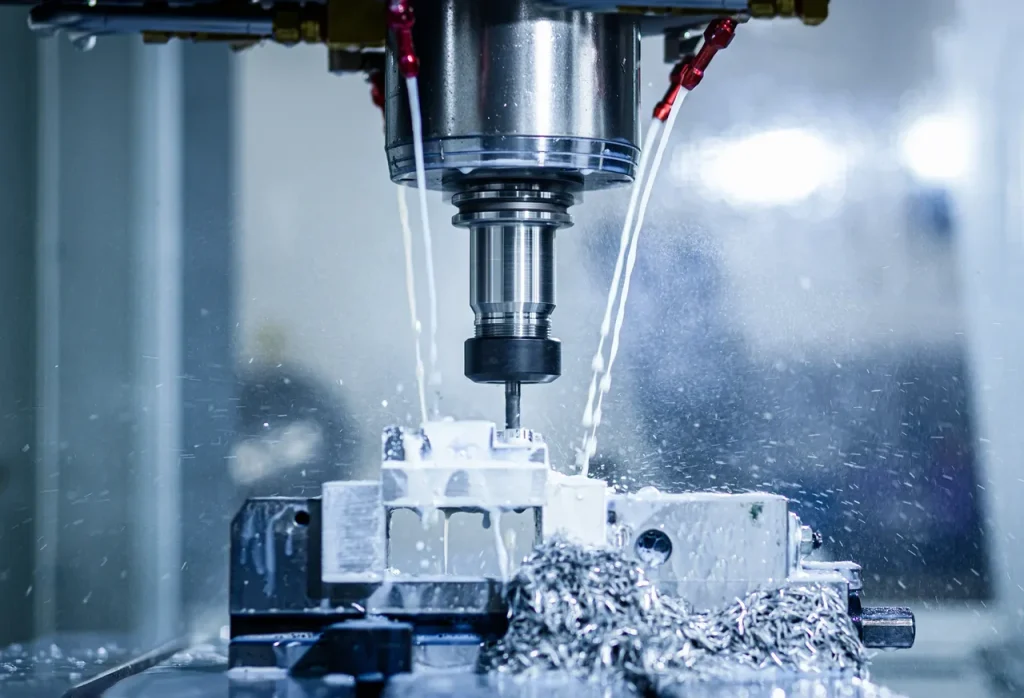
When thinking about low-volume CNC machining, it’s important to separate what can be made from what makes sense economically. CNC is technically flexible enough for single prototypes or small batches, but feasibility isn’t just about the machine’s ability—it’s about setup, materials, geometry, and cost recovery. Before diving into material choices, geometry, and production considerations, it helps to understand why even a technically possible part might have a higher minimum order quantity.
Is CNC machining suitable for very small production runs?
A common question is is CNC machining suitable for very small production runs. In many cases, yes. CNC is one of the more flexible processes for small quantities because it does not need dedicated molds or dies. That makes it useful when you need one-off parts, engineering validation samples, or short bridge runs.
But suitability depends on economics, not only technical feasibility. CNC can make small runs, but the unit cost often stays high because setup is spread over very few parts. This is why low-volume CNC is attractive for parts that need quick design iteration or strong material properties, but less attractive for stable designs that will move to much larger volumes.
A useful test is to ask two separate questions:
- Can the geometry and material be machined?
- Can the order quantity carry the fixed cost without making the part too expensive?
Prototype vs production CNC order quantity: what changes in feasibility
The difference between prototyping and production machining quantities is not only the number of pieces. It is the process expectation.
In prototyping, the shop may use a more manual route. It may accept longer cycle times, flexible setups, and more engineer involvement because the purpose is learning. In production, buyers usually expect repeatability, cleaner documentation, and tighter control of variation. That can add fixtures, in-process checks, and more defined inspection steps.
So a part that is feasible as a one-piece prototype may become less feasible as a “low-cost small batch” if the production controls start to outweigh the value of the order. In short, the machining route may look similar, but the support work around it changes.
Material choice impact on CNC machining minimum order
Material choice impact on CNC machining minimum order is often underestimated by buyers. Common materials like aluminum, brass, and copper alloys are easier to source in small amounts and may already match tools and cutting data the shop uses every day. Using high-quality, corrosion-resistant materials can also impact MOQ planning and machining efficiency.
Advanced alloys can push MOQ up for different reasons than aluminum. The main drivers are higher stock cost, slower material removal, shorter tool life, greater scrap exposure, distortion risk, and more frequent certification or traceability requirements. Stock form and remnant reuse also matter because some diameters, thicknesses, or billet sizes are purchased in increments that do not match a very small order efficiently.
Advanced alloys change the picture. The research shows that exotic or advanced materials raise cost because of material expense and production difficulty. They may require larger raw stock purchases, longer machining times, and more care in quality control. That pushes MOQ up because the supplier needs more pieces to recover cost.
For example, a simple aluminum part and a similar part in an advanced aerospace alloy are not equal from an MOQ standpoint. Even if the shape is similar, the sourcing and machining burden is not.
How part geometry affects CNC machining order minimums
How part geometry affects CNC machining order minimums comes down to machining time and process risk. A simple turned feature set with standard tooling is easier to quote at low quantity than a part with many operations, deep pockets, thin walls, or hard-to-access features.
Geometry raises MOQ when it increases setup count, requires full 5 axes access, or involves complex features, e.g. deep pockets, thin walls, and tight tolerance holes, that are hard to machine or inspect. Deep cavities, long slender features, burr-sensitive edges, and poor inspection access can make 1–10 pieces commercially risky even when the part is technically machinable. Physical size matters too: very small parts can be difficult to clamp and verify, while very large parts may require oversized stock, consume fixture space, or exceed efficient machine-envelope use.
Complex geometry tends to increase:
- programming time
- setup complexity
- tool count
- fixturing effort
- inspection time
That makes a low MOQ less attractive. A shop may still accept the job, but it may price the first few parts very high. In some cases, the design itself is the reason a supplier asks for a higher minimum.
How CNC machining MOQ works in practice
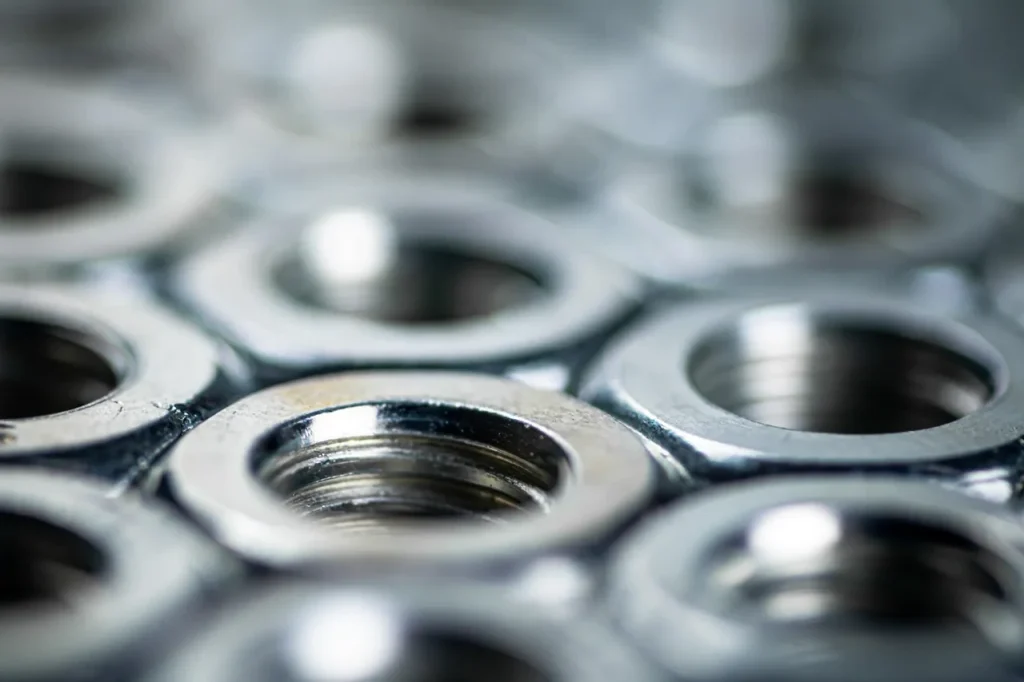
Understanding CNC machining MOQs in practice starts with setup time. Even before the first chip is cut, a machine shop invests hours in programming, tooling, fixturing, and inspection planning. Those front-loaded efforts don’t shrink just because you order fewer parts, which is why low-quantity jobs often carry higher per-unit costs. By looking at how setup, material, and support work interact, you can see why the minimum order quantity isn’t arbitrary—it’s a reflection of the economics behind producing quality parts efficiently.
How setup time impacts minimum order quantity in CNC machining
If you want to understand how setup time impacts minimum order quantity in CNC machining, start with one idea: setup is mostly fixed. Whether the shop makes 1 part or 100 parts, it still has to load the program, prepare material, set tools, align workholding, and prove the first run.
The supplied research includes one example often used to explain this point: if setup costs $500 and the part contributes about $10 each toward covering that setup, the order needs around 50 parts to break even on setup alone. That figure is noted as single-source and not fully verified, so it should be treated as an illustration, not a standard. Still, the logic is sound. Low quantity means setup dominates cost.
This is why buyers often see steep price drops as quantity rises from 1 to 10 to 50. The fixed work has not disappeared. It is just being divided across more parts.
Small batch CNC machining cost factors: programming, tooling, inspection, fixturing
The main small batch CNC machining cost factors are usually front-loaded. Programming is one, and optimizing it can maximize production efficiency and overall productivity. A complex part still needs toolpaths, verification, and sometimes revision if the drawing has ambiguous features. Tooling is another. Even when standard cutters are used, selecting and staging them takes time.
Inspection also matters. A one-piece part with many critical features may require a surprising amount of measurement work. Fixturing can be even more important. If a simple vise setup works, MOQ can stay low. If the part needs custom soft jaws, dedicated locating features, or multiple re-clamps, the supplier may seek a higher order quantity to justify that effort.
For small batches, these support activities often cost more than buyers expect because they do not scale down in proportion to quantity.
How raw material cost influences small batch machining prices
How raw material cost influences small batch machining prices depends on both the material itself and the purchasing pattern. Common stock sizes in standard materials usually support low-quantity machining better. They are easier to buy in short lengths or small lots.
Special materials can push small-batch cost up in two ways. First, the raw stock costs more. Second, the supplier may need to buy more material than your order strictly consumes because stock comes in standard sizes or minimum mill quantities. If the remainder is hard to reuse, the supplier has to recover that exposure through the quoted batch.
This is one reason buyers see a large difference between low-volume aluminum parts and low-volume parts in advanced alloys.
Table: Low-volume CNC tiers from 1 part, 10-250 parts, and higher-volume runs
| Quantity tier | Typical commercial situation | Cost behavior | MOQ implications |
|---|---|---|---|
| 1 part | Prototype, proof of concept, urgent validation | Highest unit cost because setup and programming sit on one part | Possible with some suppliers, especially for simple parts or turning |
| 10–250 parts | Low-volume CNC, pilot build, bridge production | Unit cost improves as fixed costs spread across more pieces | Common low-volume range in provided research |
| Higher-volume runs | Stable production demand | Lower unit cost per part if process remains efficient | More suppliers willing to quote because setup recovery is easier |
No minimum order quantity CNC machining: when it works and when it does not
“No minimum order quantity” CNC machining can be a lifesaver for prototypes, urgent replacements, or early design testing, but it comes with tradeoffs. While you may technically get just one part, the per-unit cost is often higher because setup, tooling, and inspection still need to be done. Understanding when no-MOQ services make sense—and when they don’t—helps you balance flexibility, cost, and production planning before committing to an order.
When no moq machining services make sense
No minimum order quantity CNC machining can make sense when the part is needed for testing, fit checks, or early design learning. It also fits urgent replacement needs or cases where a buyer wants to validate one geometry before releasing a larger batch.
The research includes examples of CNC turning services offering MOQ as low as 1 part for prototyping. This works best when the process route is simple, the material is easy to source, and the buyer accepts a higher unit price.
Where it does not make sense is when the buyer expects near-production pricing on a one-off order. A supplier may have “no MOQ” in policy terms, but the quote still reflects all fixed costs.
Tradeoff between flexibility and unit cost in low volume machining
The main tradeoff between flexibility and unit cost in low volume machining is straightforward. Low MOQ gives design freedom, but it rarely gives the best price per part.
This tradeoff matters in development programs. If your design may change after first article feedback, paying more per part for a low-quantity run can be sensible because it reduces the risk of holding unusable inventory. On the other hand, if the design is stable and demand is real, pushing quantity up often lowers unit cost enough to justify the extra inventory.
So the decision is not only about whether a shop will accept the order. It is about whether low-volume flexibility is worth the added cost.
Low volume CNC machining vs mass production cost
When comparing low-volume CNC machining vs mass production, the key difference is how fixed cost is handled. CNC machining avoids hard tooling, which helps at low volume, but moving to full production allows suppliers to maximize efficiency and reach the optimum per-unit cost. Mass production methods usually need more up-front commitment but drive lower unit cost at scale.
The provided research notes that low-volume production can suffer from high tooling and setup burdens relative to order size, as well as long lead times if the shop prioritizes larger jobs. So CNC can be economical in the early stages or for modest demand, but it may not stay cost effective once volume rises and design stability improves.
Can I order just 1 part in CNC machining?
Yes, in some cases. The research shows that CNC turning and other prototype-focused services may accept orders as low as 1 part. The limitation is usually cost, not pure feasibility, because setup, programming, and inspection still apply.
Advantages and limitations of low-volume CNC orders
Low-volume CNC orders offer flexibility that larger production runs simply can’t, making them ideal for small businesses, rapid prototyping, or using specialized prototyping services. They let engineers test designs, try new materials, and handle bridge production without committing to large quantities. But that flexibility comes at a cost—unit prices are higher, and complex parts can make low-volume runs economically challenging. Understanding these advantages and limitations helps you decide when low-MOQ CNC is the right choice for your project stage.
Benefits of low MOQ for testing, bridge production, and design changes
Low MOQ supports engineering decision-making in a few strong ways. It lets teams test real materials and real tolerances before committing to larger production. It also supports bridge production when demand exists but not at high enough levels to justify a more volume-driven process.
Low MOQ is also useful when design changes are still likely. If you expect revisions after field feedback or assembly testing, ordering fewer parts reduces the risk of scrap or obsolete stock. This is one of the clearest benefits of CNC in early and transitional product stages.
When CNC machining is not cost effective for low volumes
Low-volume CNC is a poor fit when the part needs a one-time custom fixture, heavy material removal from expensive stock, multiple outside processes, repeated metrology, or formal documentation that is disproportionate to the lot size. It is also a weak choice when the design is likely to change after the first build. In those cases, compare additive manufacturing, urethane casting, sheet metal fabrication, near-net methods before finish machining, or standard parts with light secondary machining.
Another weak case is a complex part with many secondary operations, tight quality controls, and a very low quantity request. In that situation, CNC may still be possible, but the order may not be economically rational.
Difference between prototyping and production machining quantities
The difference between prototyping and production machining quantities often comes down to intent and control. Prototype quantities support learning. Production quantities support repeat supply. That means production orders usually carry more concern about consistency, documentation, and throughput.
For buyers, this means you should not assume that a successful one-piece prototype quote predicts the economics of a 100-piece order, or the reverse. MOQ strategy should match the program phase.
Comparison table: low-MOQ CNC vs standard factory MOQs of 50-200 and 500-1,000
| Sourcing pattern | Typical quantity position from provided research | Main advantage | Main limitation |
|---|---|---|---|
| Low-MOQ CNC | 1 part to small quantities | Fast learning and low inventory exposure | Highest unit cost |
| Negotiated low-volume factory run | 50–200 parts | Better balance of unit cost and flexibility | Requires clear RFQ and supplier alignment |
| Standard higher factory MOQ | 500–1,000 parts | Better setup recovery and lower unit cost potential | Hard for early-stage or uncertain demand |
Risks of ordering below CNC machining minimum quantity
Ordering below a CNC machining minimum quantity may seem convenient, but it comes with hidden risks. Higher per-part costs, longer lead times, and variable supplier attention can all affect your project’s success. Before deciding to push a small order through, it’s important to understand how low quantities interact with setup, material, inspection, and scheduling—and why these factors make small-batch CNC work more complex than it first appears.
Risks of ordering below CNC machining minimum quantity
There are real risks of ordering below CNC machining minimum quantity even when a supplier says yes. The first risk is pricing distortion. The order may be accepted, but at a unit cost that makes later scaling hard to compare. The second risk is reduced process attention if the job is too small to justify dedicated process refinement.
There is also a practical risk around supplier fit. Some shops accept small orders only as schedule fillers. If so, your job may not move with the same priority as larger programs.
Factors that increase small batch CNC production costs
The main factors that increase small batch CNC production costs are the same ones that drive MOQ upward: multiple operations, tight tolerances, complex finishes, expensive material, more labor, and more inspection. Quantity helps absorb those costs, but if quantity stays low, each part carries a heavier share.
The provided user insight from industry media also points to a common buyer pain point: quotes vary because of setup, operations count, tolerances, finish, material, and quantity. That is a useful checklist for comparing RFQs.
Lead time risks from queue, inspection, finishing, and shipping
Lead time on low-volume CNC is not only machining time. Queue time matters because many shops prefer larger jobs. Inspection can add delay, especially if the part has many measured features. Finishing outside the machine can also extend lead time. Shipping adds another variable.
So even a small order can move slowly if it touches many steps. This is important for buyers who assume “small quantity means fast.” In fact, low quantity can still wait in line.
Lead time depends on supplier mix and routing, not only on order size. Some shops prioritize larger jobs to spread overhead, while prototype-focused suppliers may move a small order faster if material is in stock, machine time is available, and no outside finishing is required.
Why do quotes vary so much for 50 to 200 parts?
Quotes vary because suppliers do not all treat the fixed work the same way. Programming, setup, fixturing, inspection, finish, material sourcing, and labor assumptions can differ a lot. For 50 to 200 parts, those differences still matter because the batch is large enough to require process planning, but often not large enough to fully dilute overhead.

Cost, tolerance, and lead time factors that shape MOQ
CNC machining minimum order quantities are shaped by more than just part count. Tolerance requirements, surface finish, operation complexity, and labor all influence how low a supplier can go. Even with automated machines, setup, inspection, and manual touches add fixed effort that spreads across the order. Understanding these cost, quality, and labor factors helps explain why MOQs vary between simple aluminum parts and complex pieces in advanced alloys.
What affects CNC machining moq: tolerance, finish, ops count, and labor
If you want to know what affects CNC machining moq, start with four drivers: tolerance, finish, operation count, and labor. Tighter tolerance can increase setup care and inspection time. Added finish steps can create outside processing or extra handling. More operations mean more machine time and more opportunities for variation.
MOQ often rises when the quality plan changes, not just when tolerances get tighter. CMM inspection, first-article documentation, traceability, certification, and formal drawing interpretation with GD&T all add fixed effort before repeat machining begins. Who says ASME standards recommend formal GD&T interpretation to ensure repeatable machining quality, which indirectly affects the minimum order quantity a shop can accept. Critical datums and critical-to-function features can also add setups and verification steps that make very small batches less economical.
Labor links all of this together. Even with CNC equipment, skilled labor is needed to plan, set up, inspect, and sometimes manually support the process. As those labor touches rise, the supplier has more reason to prefer a higher quantity.
How labor costs affect CNC machining order size
How labor costs affect CNC machining order size is often direct. If a part needs repeated manual intervention, frequent checks, or non-standard workholding, labor does not scale down well for tiny orders. That pushes up the effective minimum order size needed for an efficient quote.
On the other hand, if the part is simple and the process route is familiar, labor content may stay low enough that a small batch remains feasible.
CNC machining MOQ for custom metal parts: aluminum vs advanced alloys
CNC machining MOQ for custom metal parts is not the same across materials. Based on the supplied research, aluminum and other common materials support lower MOQs more often because setup and sourcing are easier. Advanced alloys tend to raise MOQ because raw material cost is higher and machining may take longer or require more care.
That does not mean advanced-alloy parts always need high volume. It means the supplier has less room to absorb inefficiency on very small orders.
Table: industry-level cost drivers by quantity, complexity, and quality requirements
| Driver | Lower quantity effect | Higher complexity effect | Higher quality requirement effect |
|---|---|---|---|
| Setup and programming | Strong cost impact per part | Increases with feature complexity | May require more process validation |
| Material | More exposure if stock cannot be reused | Harder materials may machine slower | Material traceability may matter more |
| Fixturing | Hard to justify custom fixtures on tiny batches | More likely with complex geometry | Stable holding may be needed for repeatability |
| Inspection | First-piece burden spread over few parts | More features increase time | Tighter tolerance and finish checks add work |
| Labor | Manual effort dominates small runs | More operations raise touch time | Extra checks and handling increase labor |
Use cases and real-world MOQ scenarios
Real-world CNC MOQ scenarios show just how much part complexity, material, and process affect minimum order quantities. From simple fasteners needing only a few pieces to advanced aerospace components requiring hundreds, each case highlights the balance between setup costs, material sourcing, and production effort. Understanding these examples helps buyers see why MOQ isn’t a one-size-fits-all number and how negotiation or smart part design can make low-volume orders practical.
Case: simple bolt or nut production with MOQ of a few pieces
One provided case describes standard-sized fasteners made with common materials and off-the-shelf tools. Because setup and material costs were low, the supplier accepted an MOQ of only a few pieces. This is a good example of low complexity reducing the commercial barrier to machining.
For buyers, the lesson is that simple geometry plus common material creates the best case for low MOQ.
Case: custom aerospace component with MOQ in the hundreds
Another provided case involved a custom aerospace component with high precision needs, advanced materials, and complex processing. The supplier required several hundred pieces to justify bulk material purchase and extended machining effort.
This shows why buyers should not compare MOQs across part families without context. A complex aerospace part and a simple machined bracket do not behave the same way in quoting.
Case: CNC turning prototyping with MOQ as low as 1 part
The research also includes a CNC turning prototyping case where MOQ dropped to 1 part. This supported design testing and urgent needs, with the expected tradeoff of higher cost per part.
This scenario is common when the goal is not cost optimization but technical validation. If the part is rotationally simple and the material is manageable, one-piece turning can be practical.
Case: low-volume sourcing for 50-200 parts after negotiation
A useful real-world example from the supplied media insight covered a buyer facing MOQ barriers of 500 to 1,000 parts while actually needing 50 to 200. The solution was negotiation based on setup coverage, planning clarity, and RFQ quality. The buyer secured real options at the target volume.
The lesson is that MOQ is not always fixed. In the 50 to 200 range, a well-scoped RFQ can make the job more quotable.
How to evaluate and choose the right MOQ strategy
Choosing the right CNC machining MOQ isn’t just about hitting a number—it’s about matching your part, process, and program stage with supplier economics. Before accepting a quoted minimum, it helps to ask the right questions about setup, material, inspection, and order purpose. Understanding these factors lets you decide whether a prototype, small batch, or higher-volume approach makes sense, and ensures that your MOQ strategy supports both cost efficiency and project goals.
Checklist: questions to ask before accepting a supplier MOQ
Before accepting or rejecting a stated MOQ, ask:
- Is the MOQ driven by setup, material purchase, inspection, or scheduling?
- Is the part a prototype, a bridge build, or a stable production item?
- Are material and geometry keeping the order minimum high?
- Can the drawing remove unnecessary complexity without changing function?
- Will a larger batch reduce unit cost enough to offset inventory risk?
- Are finishing and inspection adding more burden than expected?
- Is the supplier quoting a true minimum, or a preferred economic quantity?
These questions help separate technical need from commercial preference.
Ask for quantity breaks for the same RFQ, such as 10, 25, 50, and 100, and ask for the one-time fixture or first-article cost to be separated from recurring piece price. Confirm drawing revision, whether the model or print governs if they conflict, which dimensions are critical to function, whether finish or coating can be deferred, and whether outside processing has its own lot minimum. Ask whether buyer-supplied material, family-of-parts batching, or quoting with and without custom fixturing is acceptable.
Decision matrix: prototype, small batch, or higher-volume production
| Situation | Best-fit MOQ strategy | Why |
|---|---|---|
| Design still changing | Prototype or very low MOQ | Limits waste and supports learning |
| Need for pilot or bridge supply | Small batch, often within low-volume range | Balances flexibility and unit cost |
| Stable part with repeat demand | Higher-volume production | Better setup recovery and more supplier interest |
How do I reduce CNC machining moq without changing the part function?
You usually reduce MOQ by reducing the fixed burden around the part, not the function of the part itself. That can mean using a common material, simplifying non-critical geometry, reducing unnecessary finish demands, or making the RFQ clearer so the supplier sees less risk. In some cases, asking for several quantity breaks also helps identify a more practical order point.
References needed: industry reports, supplier documentation, and manufacturing standards bodies
When validating MOQ decisions, look for three kinds of sources: supplier documentation that explains quoting logic, industry reports on low-volume manufacturing behavior, and standards bodies that define quality and process expectations. The standards will not usually give you an MOQ number, but they help explain why inspection and process control can raise the minimum viable order.
In short, CNC machining moq is not a fixed industry rule. It is a result of setup effort, labor, material choice, geometry, and quality burden. Low MOQ works best for prototypes, simple parts, and bridge quantities where flexibility matters more than unit price. Higher MOQ becomes more likely as parts get more complex, materials get harder to source, and inspection demands rise.
If you need one part, CNC may still be feasible. If you need 50 to 200, negotiation and a better RFQ can matter as much as the drawing itself. If you need stable production, a higher order quantity often makes the economics more reasonable. The key point is to choose the MOQ strategy that matches the program stage, not just the buyer’s preferred quantity.
FAQs
The standard CNC machining MOQ can vary depending on the shop and the complexity of the part. Most machine shops set a minimum order quantity CNC somewhere between 5 and 50 pieces. But this isn’t a hard rule—some shops offer no MOQ machining services if the part is simple or if it’s a prototype. Shops usually set these minimums because setting up the machines, programming, and tooling costs time and money, so they want to make sure the order justifies the effort.
Yes, you can order just one part, though it will often cost more per unit. This is common for prototype vs production MOQ scenarios, where a single piece is treated as a prototype run. The small batch order price will be higher because the setup cost is spread over only one part, but it’s a great way to test your design before committing to a larger production batch.
Shops have CNC machining MOQs mainly to cover the setup and programming costs. Every job requires someone to program the machine, set up fixtures, and sometimes create special tools. If you only order one or two parts, the shop might actually lose money on the job. MOQs help them ensure that the minimum order quantity CNC is profitable, and also helps with production scheduling and efficiency.
Quantity directly impacts the small batch order price. Larger orders spread the setup cost over more parts, lowering the per-unit cost. When you move from a prototype to a production run, the difference between prototype vs production MOQ can be significant. Bulk orders also let the shop optimize machining time and material usage, making each piece more cost-effective.
Negotiating the CNC machining MOQ is possible, especially if you communicate clearly. You could ask for a smaller quantity by highlighting your need for a prototype or sample run, which is where no MOQ machining services come into play. Offering to pay slightly more for a small batch or combining multiple designs into one order can help meet the shop’s MOQ. Understanding the shop’s cost structure and showing potential for future orders often gives you more flexibility.


 English
  German
  French
  Italian
  Spanish
  Polish
  Czech
Czech  Japanese