
“Bronze vs copper” sounds simple, but this choice can shape performance, cost, and longevity in engineering, art, marine work, electronics, and fabrication. One is a pure element, the other a family of engineered alloys. Copper is a pure metal prized for its electrical conductivity and ductility. Bronze is a copper alloy—usually copper and tin—tuned for hardness, wear resistance, and corrosion in tough environments.
This guide explains the difference between copper and brass and bronze in terms of composition, strength, conductivity, corrosion behavior, and typical applications. You’ll compare typical costs and market drivers, get practical application notes for wiring, bearings, marine hardware, sculpture, and more, and learn how to choose with a short flowchart and checklists. You’ll also get pointers to authoritative standards and test methods so you can verify a grade before you buy or machine it.
If you’re deciding between bronze vs copper, or even bronze vs brass vs copper, you’re in the right place.
Bronze vs Copper: Key Differences at a Glance
Copper and bronze are closely related metals. Here’s the difference between bronze and copper in terms of composition, properties, color, and typical applications. Understanding these differences can help you choose the right material for your project.
Composition:
Pure copper consists of at least 99.9% copper, while bronze is primarily a copper alloy, most commonly with tin. Some bronze variants also include aluminum, silicon, phosphorus, or nickel to enhance specific properties.
Color:
When considering bronze vs copper color, copper shows a reddish-orange hue that develops green verdigris over time. If you wonder what is the colour of bronze, it generally appears brownish to gold-like, forming a darker and more stable patina.
Density:
Copper is slightly denser than bronze, with a density around 8.96 g/cm³. Bronze alloys typically range from 8.7 to 8.9 g/cm³ depending on the exact alloying elements.
Electrical and Thermal Conductivity:
Copper is an excellent conductor, close to 100% IACS, making it ideal for electrical applications. Bronze alloys have much lower conductivity, usually between 5% and 25% IACS, depending on the alloy. Thermal conductivity follows a similar trend: copper conducts heat very efficiently (~385–400 W/m·K), while bronze ranges from about 30 to 60 W/m·K.
Mechanical Properties:
Copper is soft, with a Brinell hardness of 35–50 in the annealed state. Copper has high ductility and copper is highly conductive. Copper has higher conductivity than bronze and copper has a density of ~8.96 g/cm³, compared to copper alloys with alloying elements. Bronze is generally stronger and harder, with Brinell hardness ranging from 40 to 420 and tensile strength from 300 to 800 MPa, depending on the alloy and temper.
Corrosion Behavior:
Copper develops a green patina over time and performs moderately in freshwater but is weaker in seawater. Bronze excels in marine environments, forming a stable brown-to-dark patina that protects the metal from further corrosion.
Cost Factors:
Copper’s cost is primarily tied to its commodity price. Bronze can be more expensive due to the cost of tin (often 2–4 times the price of copper) and the complexity of alloying or casting.
Typical Applications:
Pure copper is commonly used for electrical wiring, bus bars, heat exchangers, and plumbing. Bronze is commonly chosen for bearings, bushings, propellers, valves, springs, and artistic sculptures. Bronze is often preferred over copper because it is stronger than pure copper. The properties of bronze and its applications of bronze in marine hardware and art make it highly versatile.
Other Notes:
- Sound: Copper produces a deeper, lower tone when tapped, whereas bronze tends to ring at a higher pitch.
- Magnetism: Both metals are non-magnetic.

Quick Comparison Table: Copper vs Bronze
| Attribute | Copper | Bronze |
|---|---|---|
| Composition | Pure Cu (≥99.9%) | Cu + Sn (or other alloys) |
| Color | Reddish-orange; green patina over time | Brownish to dark gold; stable dark patina |
| Density | ~8.96 g/cm³ | ~8.7–8.9 g/cm³ |
| Conductivity | Electrical: ~100% IACS Thermal: ~385–400 W/m·K | Electrical: ~5–25% IACS Thermal: ~30–60 W/m·K |
| Hardness / Strength | Brinell 35–50, Tensile 200–350 MPa | Brinell 40–420, Tensile 300–800 MPa |
| Corrosion | Verdigris; fair in freshwater, weaker in seawater | Stable patina; excels in seawater |
| Typical Uses | Wiring, heat exchangers, plumbing | Bearings, valves, propellers, sculptures |
Quick decision checklist: when to choose copper vs bronze
- Choose copper when you need maximum electrical/thermal conductivity, high ductility for fine wire or thin sheet, and a cost-sensitive bulk material.
- Choose bronze when you need higher strength, hardness, wear resistance, or marine corrosion resistance, or when you are casting sculpture or heavy-duty components like bearings, bushings, propellers, and valves.
Composition and Structure: Element vs Alloy
Copper is a pure metal, while bronze is a family of copper-based alloys. Adding elements like tin, aluminum, or nickel changes color, strength, hardness, and conductivity, tailoring each alloy for different applications. Below, we break down these compositions and how they affect performance.
Copper (Cu ≥99.9%): structure, grades, density
Copper is an elemental metal with a face-centered cubic (FCC) crystal structure. It has a density around 8.96 g/cm³ and is non-magnetic. It is soft, very ductile, and easy to form and draw into wire. Common grades include:
- ETP (Electrolytic Tough Pitch) copper, UNS C11000, and oxygen-free copper (OFHC, UNS C10200) for applications requiring high purity and low oxygen.
- OFHC (Oxygen-Free High Conductivity) copper, UNS C10200, used when you need very high purity and low oxygen for better conductivity and joining.
Copper’s purity and crystal structure give it excellent electrical and thermal conductivity, which is why it dominates wiring, bus bars, motors, transformers, and heat exchangers.
Bronze families and alloying elements
Bronze is an alloy of copper, most often with tin. But “bronze” is also a family name that includes several sub-families, each tuned for different jobs:
- Tin bronze (Cu-Sn): classic bronze for castings and bearings.
- Phosphor bronze (Cu-Sn-P): adds a little phosphorus for improved wear and spring properties.
- Aluminum bronze (Cu-Al): strong, tough, very good in seawater; often used in marine gear.
- Silicon bronze (Cu-Si): good corrosion resistance; used in fasteners, art, and ship fittings.
- Nickel aluminum bronze (Cu-Al-Ni-Fe): very high strength and seawater resistance for propellers and valves.
These alloying elements shift the color from reddish to dull gold or brown and change the microstructure in ways that raise hardness and strength while lowering conductivity.
How alloying changes properties (microstructure and phases)
When you add elements to copper, several things happen inside the metal:
- Solid solution strengthening: atoms of tin, aluminum, or silicon sit in the copper lattice and block dislocation motion, which increases hardness.
- Intermetallics: in some bronzes, hard intermetallic phases form, adding wear resistance.
- Grain refinement: smaller grains often mean higher strength and better fatigue life.
- Precipitation hardening: some bronzes harden by heat treatment as tiny particles form within the metal.
The trade-offs are clear: conductivity goes down, while strength, hardness, and wear resistance go up. Corrosion behavior changes too, with aluminum and nickel aluminum bronzes standing out in saltwater.
For a detailed German comparison, see Unterschied Bronze Kupfer Messing.
Typical alloy ranges and identifiers
| Family | Typical composition (by mass) | Common UNS grades | Common standards (examples) |
|---|---|---|---|
| Copper (pure) | Cu ≥99.9% | C11000 (ETP), C10200 (OFHC) | ASTM B152 (sheet/plate), ASTM B187 (bar/rod) |
| Tin bronze | Cu + ~3–12% Sn | C90500, C90700, C92200 | ASTM B584 (castings) |
| Phosphor bronze | Cu + ~4–9% Sn + 0.03–0.35% P | C51000, C52100 | ASTM B103 (strip/sheet) |
| Aluminum bronze | Cu + ~8–12% Al, often Fe/Ni | C95400, C95500 | ASTM B150 (bar/rod), ASTM B148 (castings) |
| Nickel aluminum bronze | Cu + ~9–12% Al + Ni + Fe | C95800 | ASTM B148 (castings) |
| Silicon bronze | Cu + ~2–4% Si | C65500 | ASTM B98 (rod/bar) |
Note: Exact chemistries vary by grade and standard. Always confirm with a mill cert or XRF test.
Physical and Mechanical Properties (Hardness, Strength, Wear)
When a part has to handle load, impact, or wear, its physical and mechanical properties become key. Copper is soft and highly ductile, making it easy to shape, while bronze alloys offer higher hardness and strength, better wear resistance, and are tailored for demanding applications. Below, we look at how Brinell hardness and tensile strength compare between the two.
Brinell hardness and tensile strength
If your part sees contact, impact, or load, hardness and tensile strength matter. Pure copper is soft (Brinell ~35–50 in annealed form), which makes it very easy to form and draw but not ideal for sliding bearing surfaces or high dent resistance. Bronze spans a wide range, from around HB ~40 for soft states up to HB ~200–420 for certain aluminum bronzes and hardened grades. In tensile strength, copper is ~200–250 MPa in annealed state, while many bronzes run from ~300 MPa to 800 MPa or more, depending on the alloy and temper.
Ductility and formability
Copper has excellent ductility. It is the go-to for fine wire, thin sheets, and tight bends. Many bronzes, in contrast, are less ductile. They are great for castings, machined parts, and springs (especially phosphor bronze), but they do not draw into wire as easily as copper.
Wear resistance and impact performance
Bronze is known for superior galling and wear resistance, which is why it is used in bushings, thrust washers, and bearings against steel shafts. It resists adhesive wear and can embed small debris, helping the shaft survive. Copper, being softer, wears faster in sliding conditions and can deform under impact.
Is bronze stronger than copper?
In short, yes. Most bronzes are stronger than pure copper, offering higher hardness and wear resistance. That said, “stronger” depends on which bronze and what heat treatment you’re using. For bearings, gear blanks, springs, propellers, and marine fittings, bronze’s extra strength and wear resistance make it the better choice. For fine wire and high-conductivity parts, copper wins.
Conductivity and Thermal Performance
Conductivity and thermal performance are where copper really shines, while bronze trades some of that for strength and corrosion resistance. Understanding the differences helps you pick the right metal—whether you need maximum electrical flow, efficient heat transfer, or a durable, corrosion-resistant part.
Electrical conductivity (% IACS) and what it means
Copper sits at ~100% IACS (International Annealed Copper Standard). That is the benchmark for conductors. Copper conducts electricity very efficiently, while its alloys, compared to bronze, have lower conductivity but gain strength and corrosion resistance. That drop is the price you pay for strength and corrosion resistance. It’s a smart trade when your part must survive friction or saltwater, but it makes bronze a rare choice for main power conductors.
Thermal conductivity in real applications
Pure copper also has very high thermal conductivity (~385–400 W/m·K). That’s why you see copper in heat sinks, cold plates, and heat exchangers. Most bronzes are much lower (often ~30–60 W/m·K). In assemblies where convection or radiation limits heat transfer, a bronze part can sometimes perform “well enough,” but the base material’s thermal conductivity still favors copper for pure heat flow.

Use-case mapping: wiring, heat exchangers, springs, connectors
- Wiring, bus bars, transformer windings, PCB features: choose copper. Nothing beats its conductivity and ductility for these jobs.
- Heat exchangers and heat spreaders: copper first, unless you need something else like corrosion resistance in a specific environment that steels or nickel alloys can’t handle.
- Springs and connectors: phosphor bronze is common for spring clips and corrosion-resistant connectors. It balances fatigue resistance, moderate conductivity, and good corrosion behavior.
- Grounding in aggressive environments: sometimes bronze hardware is used for strength and corrosion resistance, while copper still handles the main electrical path.
Is bronze conductive enough for electronics?
For springs, contacts, and connectors, yes—phosphor bronze is widely used in electronics because it keeps its shape and resists corrosion. For main power conductors and low-loss paths, no. Use copper for primary conduction.
Corrosion Resistance, Patina, and Environmental Durability
Corrosion resistance and long-term durability are where bronze often outperforms copper, especially in marine and industrial environments. While copper develops a green patina over time, bronze generally darkens to a protective brown, making it ideal for parts exposed to harsh conditions. Below, we explore how each metal weathers, forms patina, and withstands different environments.
Marine and industrial corrosion behavior
Bronze is often chosen for marine hardware and industrial applications because it forms a stable patina and resists corrosion. Aluminum bronzes and nickel aluminum bronzes are standouts in marine hardware, pumps, valves, and propellers. They form tough, stable films that protect the metal. Copper forms a protective oxide in air and fresh water, but in chloride-rich environments (like seawater) it can suffer faster attack and uneven erosion. That’s why you see bronze on hull fittings, not pure copper.
Patina formation and appearance over time
Copper weathers to the famous green verdigris patina, which you see on large copper roofs and monuments like the Statue of Liberty. Bronze tends to develop a brown to dark brown patina that is both attractive and protective. In some coastal or polluted conditions, bronze can show green spots or streaks as various copper salts form, but its base patina is usually darker and more uniform than copper’s green.
Maintenance and surface protection
You can keep either metal bright with cleaning and waxes or allow a natural patina to form. For marine parts, sealing and periodic rinsing help. For art, conservators often prefer a controlled patina with wax. Avoid harsh abrasives that strip protective layers. Be careful with galvanic coupling: if bronze or copper is bolted to a more active metal in saltwater, the less noble metal can corrode. Use compatible fasteners or add electrical isolation.
Does bronze turn green like copper? Does bronze rust in saltwater?
Bronze usually darkens brown, not bright green. In certain conditions it can develop some green areas, but it does not “rust” like iron. In saltwater, bronze holds up very well and forms a protective patina. That’s why it’s a go-to for propellers, valves, and fittings.

Applications by Industry and Use-Case
Different industries favor copper or bronze depending on the demands of the application. Copper dominates electrical and plumbing systems for its conductivity and formability, while bronze excels in marine, heavy machinery, and artistic applications where strength, wear resistance, and corrosion durability matter. Below, we break down typical use-cases and why each metal is chosen.
Electrical and plumbing infrastructure (copper-first)
Think of copper as the backbone of modern power and water. It carries current in wiring, motors, and transformers, and it flows water in domestic pipes and fittings. In renewable energy and EV systems, copper again is core due to its excellent electrical and thermal conductivity and ease of joining by soldering and brazing. Copper is also easy to recycle and widely available.
Marine and heavy machinery (bronze-first)
Bronze is the workhorse where parts must survive abrasion, shock, and saltwater. You’ll find aluminum bronze and nickel aluminum bronze in propellers, pump impellers, valves, and seawater fittings. Tin bronze and leaded bearing bronzes handle bushings, bearings, and wear rings in heavy equipment. Phosphor bronze springs and clips appear in harsh environments where both flex life and corrosion resistance matter.
Art, sculpture, and musical instruments
Artists choose bronze for its casting fidelity, strength, and the way it ages. It resists weather and keeps fine details in outdoor sculpture. In music, bronze can give a bright, ringing tone for certain instruments and cymbals, while copper tends to produce a softer, lower ring when struck.
Case notes and selection examples
- Bearings vs bushings vs thrust washers: A leaded tin bronze or high-strength aluminum bronze often beats copper thanks to higher hardness and better wear behavior against steel shafts.
- Outdoor sculptures in coastal climates: Silicon bronze or phosphor bronze are common picks for their stable patina and corrosion resistance. The brown-to-dark finish often enhances the artwork and protects the metal.
- Electronics connectors that flex thousands of times: Phosphor bronze balances fatigue resistance with fair conductivity and good corrosion performance, making it ideal for spring contacts.
Economics, Price Volatility, and Sustainability
Cost, market availability, and sustainability all play a role when choosing between copper and bronze. Copper is widely available and relatively stable in price, while bronze tends to be pricier due to alloying elements and specialized processing. Both metals are highly recyclable, so lifecycle planning and material selection can balance performance with long-term cost and environmental impact.
Price drivers and volatility (copper vs tin)
Bronze usually costs more than copper. Why? It includes tin, which often trades at 2–4× the price of copper on global markets, plus extra processing for alloying and casting. Specialty bronzes (like nickel aluminum bronze) add further cost with nickel and controlled heat treatment. Copper is a large commodity with high volume use and relatively stable supply, so its price is more visible and often less volatile than niche bronze alloys that track tin and other elements.
Market use and availability
Copper is everywhere—infrastructure, buildings, consumer goods—so mills carry many forms and sizes. Bronze demand is smaller and more specialized. That can mean longer lead times or minimum order quantities for certain bronze grades, especially in large sizes or tight specs.
Recycling, lifecycle cost, and circularity
Both metals are highly recyclable. Copper can be recycled many times with little loss in conductivity. Bronzes are also recyclable, but separation by alloy family is helpful to maintain properties. Designing with clear grade markings and keeping dissimilar metals easy to separate at end-of-life improves circularity and can lower lifecycle cost.
Why is bronze more expensive than copper?
You pay for the alloying elements (especially tin), tighter process control, and casting or heat treatment steps. Those steps add energy and labor. The result is a stronger, more durable part in many harsh environments—often worth the premium.
How to Choose: Selection Guide, Tools, and Tolerances
Choosing between copper and bronze comes down to balancing strength, wear, conductivity, cost, and corrosion resistance. This section guides you through key decision points, machining tips, and tolerance considerations so you can pick the right metal for your specific application.
Decision flowchart: strength/wear vs conductivity/cost vs corrosion
Use this quick path if you’re torn between copper and bronze.
Need maximum electrical or thermal conductivity?
- Yes → Choose copper (ETP/OFHC).
- No → Go to next question.
Will the part see seawater, brine, or strong chlorides?
- Yes → Choose aluminum bronze or nickel aluminum bronze.
- No → Go to next question.
Is the part a bearing, bushing, thrust washer, or sliding wear surface?
- Yes → Choose tin bronze or leaded bearing bronze (or aluminum bronze for higher loads).
- No → Go to next question.
Do you need a springy clip or connector with good corrosion resistance?
- Yes → Choose phosphor bronze.
- No → Go to next question.
Is lowest material cost your top goal and conductivity isn’t critical?
- Consider brass (copper + zinc) as an alternative; if you need better corrosion or wear, move back to a bronze.
Machinability and fabrication tips
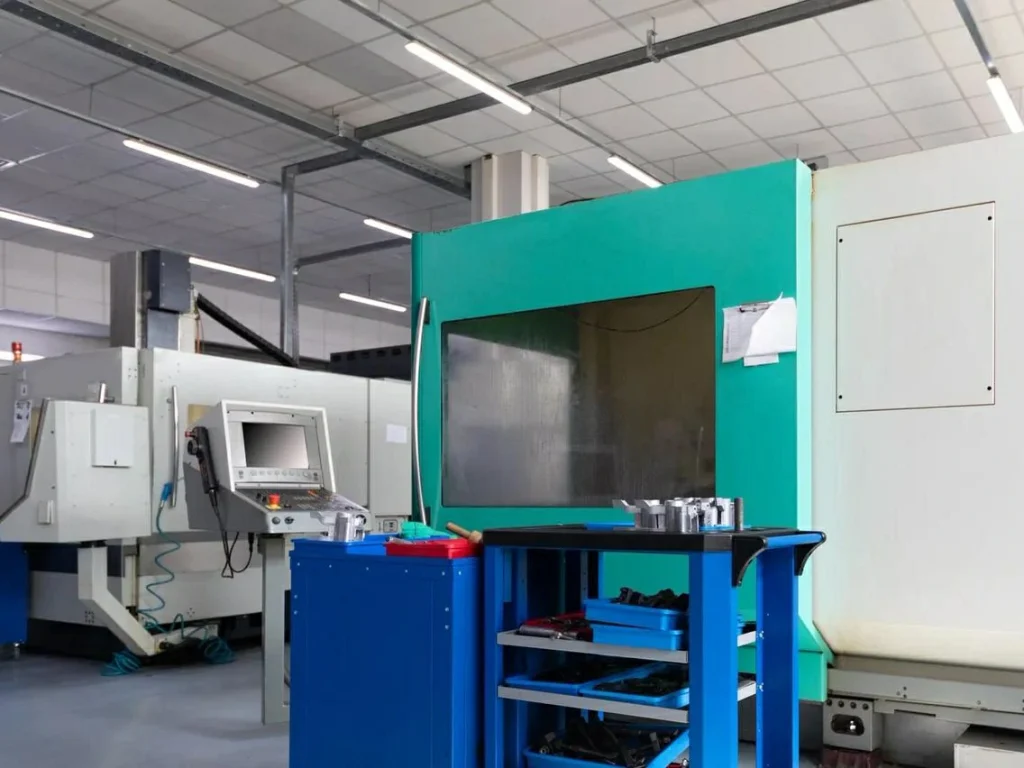
Copper and bronze machine very differently. Here are practical pointers for CNC turning and CNC milling:
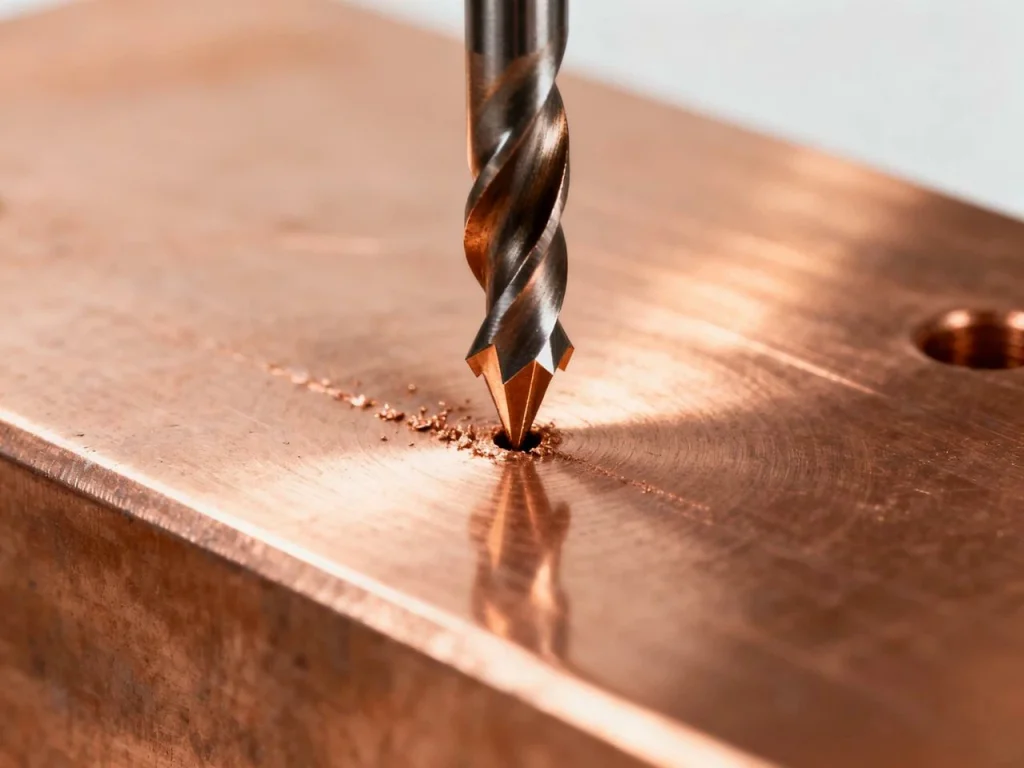
Copper (pure):
- Use very sharp tools with high positive rake to cut “gummy” material cleanly.
- Keep depths of cut modest to avoid smearing; use high-quality coolant to carry chips.
- For drilling, use split-point bits and peck cycles to reduce work hardening.
- For joining, soldering and brazing are straightforward; keep surfaces clean and use the right flux.
Bronze:
- Many bronzes machine cleanly; some are abrasive to tools. Carbide tooling helps.
- Use steady, firm feeds to avoid rubbing; adjust speeds to keep temperatures stable.
- Leaded bearing bronzes are quite free-machining. Aluminum bronzes are tougher; expect higher tool wear.
- Welding varies by family. Silicon bronze is popular as a brazing filler. Aluminum bronze may need preheat and controlled procedures. Always check the specific grade guidance.
General tolerance advice:
- For bearings, aim for recommended running clearances from the supplier and a fine surface finish on the mating shaft. Discuss roundness and straightness if loads are high or speeds are high.
- For springs and clips (phosphor bronze), watch bend radii and grain direction in sheet to avoid cracking.
If you’re looking for precision CNC machining or custom metal part production, U-Need offers professional services—covering milling, turning, and complex part fabrication with tight tolerances.
Interactive tools and calculators
If you like numbers, a simple material filter can help: set minimum %IACS, minimum Brinell hardness, minimum corrosion class, and density. A bearing life estimator can combine load, speed, lubrication, and material hardness. A cost-by-weight calculator tied to commodity prices (copper and tin) can show the impact of alloy selection. While these are beyond the scope of this article, you can build them using public material data and current LME/USGS pricing.
Which is better for bearings, bushings, or wiring?
- Bearings/bushings: bronze (leaded tin bronze or aluminum bronze) is better due to wear resistance and load capacity.
- Wiring: copper is better thanks to high conductivity and ductility.
Standards, Grades, and Authoritative References
Understanding standards, grades, and authoritative references is key when specifying copper or bronze. From UNS and ASTM numbers to ISO guidelines and verified material data, these references ensure you get the right alloy with predictable properties for your application. Below, we cover common designations, sourcing tips, and simple tests to distinguish copper from bronze.
Common designations and standards
- Copper grades use UNS C1xxxx numbers. Examples: C11000 (ETP), C10200 (OFHC).
- Bronze grades often fall within UNS C5xxxx–C9xxxx. Examples: C51000 (phosphor bronze), C65500 (silicon bronze), C93200 (leaded bearing bronze), C95400 (aluminum bronze), C95800 (nickel aluminum bronze).
Common ASTM/ISO references include:
- ASTM B152: Copper sheet, strip, and plate.
- ASTM B187: Copper bar, bus bar, rod.
- ASTM B103: Phosphor bronze sheet/strip.
- ASTM B150: Aluminum bronze bar, rod, and shapes.
- ASTM B148/B584: Bronze castings.
- ISO standards exist for many of the same forms; check the latest edition for your region.
Always confirm the latest standard and grade callout before ordering. Mill certificates and XRF testing help verify chemistry.
Where to source verified data
For physical properties and reliable data, use:
- NIST databases for material constants and conductivity values.
- ASM/ASTM/ISO standards for grade-specific specs and mechanical properties.
- USGS and LME for commodity and price trends.
- Government safety sites for handling and exposure limits.
Safety, compliance, and testing
Some bronzes contain lead (especially free-machining bearing bronzes). Follow workplace safety rules for cutting fluids, chips, and dust. Use local ventilation when machining or grinding. If you need to identify a part:
- Conductivity meters can distinguish high-conductivity copper from low-conductivity bronze.
- Portable XRF analyzers confirm alloy chemistry without damaging the part.
- Hardness tests (Brinell/Rockwell) help separate soft copper from harder bronzes.
How can I test if a metal is bronze or copper?
Start with simple checks:
- Color: copper is pinkish-red; bronze is brown to dull gold.
- Conductivity: copper is ~100% IACS; bronze is much lower. A handheld meter makes this easy.
- Hardness: copper dents easily; bronze resists.
- Density: both are close, but copper is slightly higher.
- For a sure answer, use XRF to read the alloying elements (Sn, Al, Si, Ni). Spark tests are not reliable here, and both metals are non-magnetic.

Bronze vs Brass vs Copper: a quick orientation
Before comparing properties in detail, it helps to get a quick orientation between copper, bronze, and brass. Each has a different composition, color, and typical use, so knowing the basics makes it easier to choose the right metal for your application. Below, we outline their differences, strengths, and simple ways to tell them apart.
You came here for bronze vs copper, but many buyers also ask about brass vs bronze.
- What is brass made out of? A brass is an alloy of copper and zinc. It’s usually yellow brass, ranging from yellow to golden in color. It machines well, is often cheaper by weight than pure copper, and sees wide use in fittings, musical instruments, and decorative hardware.
- What is bronze made out of? Bronze is an alloy of copper and tin, sometimes with aluminum, phosphorus, silicon, or nickel. It is usually brown to dull gold and excels in wear and corrosion resistance.
- Copper is an element with the highest electrical and thermal conductivity among these three and is best for wiring and heat flow.
Which is better, bronze or brass? It depends on the job:
- For seawater, bronze (especially aluminum bronze) is better.
- For low-cost fittings and easy machining, brass is a good pick.
- For sliding bearings and high wear, bronze wins.
- For main conductors or heat sinks, copper wins.
How to tell if something is bronze or brass:
- Color is a hint: brass is more yellow; bronze is browner.
- Conductivity helps: brass usually sits between bronze and copper but still far below copper.
- If you have access to XRF, zinc points to brass; tin/aluminum/silicon point to bronze.
Final pointers and small details that matter
- For the colour of bronze vs copper: bronze runs from golden-brown to dark brown; copper starts bright reddish and ages green outdoors.
- For cnc turning and cnc milling, consider chip control and tool wear. Copper can smear without sharp tools; aluminum bronzes can be abrasive.
- For joining, copper loves solder and braze; bronzes often respond best to brazing and specialty welding procedures.
- For galvanic corrosion, isolate dissimilar metals in saltwater, and use compatible fasteners.
- For specs and tolerances in bearings and springs, pull the supplier’s data sheet and follow the recommended clearances and bend radii.
In short: copper is your go-to for pure conductivity and ductility. Bronze is your choice for strength, wear, and harsh environments. Brass is the everyday, cost-efficient middle ground when conductivity is not critical and machinability and price lead the decision.
FAQs
Honestly, it really depends on what you’re trying to do. If you’re looking at wiring or anything that needs excellent heat flow, copper is the clear winner—nothing beats it for conductivity. But if your project involves moving parts, like bearings, bushings, or propellers, or you want something that can handle outdoor exposure without corroding too fast, bronze is your friend. It’s tougher than copper and resists wear better, which is why you see it in valves, sculptures, and even marine hardware. So it’s not really about “better” in general—it’s about what you need it for.
At a glance, copper and bronze can look kind of similar, but there are a few telltale signs. Copper is bright reddish and shines almost like a penny—plus, it’s super conductive. Bronze, on the other hand, tends to be brownish to a dull gold, and it’s noticeably harder. If you really need to know for sure, you can measure conductivity with a meter or use an XRF analyzer; both give you a quick, definitive answer. Basically, copper will always give electricity a free pass, while bronze will slow it down a bit.
Here’s the thing—bronze and brass both have their strong suits. For marine environments or applications where corrosion and wear are concerns, bronze wins hands down—it just holds up better over time. Brass is easier to machine and cheaper, so if you’re making fittings or decorative items, it’s very convenient. But if your project is all about electricity or heat, neither of these will outperform pure copper. So again, “better” is situational.
It comes down to function more than anything. If your top priority is electrical conductivity, copper is king. If you need something tough that can resist corrosion and handle mechanical wear, bronze is your go-to. And if you just need something affordable, easy to work with, and decent for general fittings, brass makes sense. The key is to start with the job and match the metal to the need—there’s no one-size-fits-all answer.
Bronze vs. Kupfer klingt simpel – aber die Materialwahl beeinflusst in der Praxis Leistung, Kosten und Lebensdauer von Bauteilen in Fertigung, Maschinenbau, Elektrotechnik, Marine-Anwendungen, Kunstguss und Instandhaltung. Der Kernunterschied ist grundlegend: Kupfer ist ein nahezu reines Metall (Element), Bronze dagegen eine Familie von Legierungen (meist Kupfer und Zinn) – optimiert für Festigkeit, Verschleiß, Gleiteigenschaften und Korrosion.
In diesem Leitfaden vergleichen wir Bronze, Kupfer und Messing entlang von Zusammensetzung, Eigenschaften (Härte, Zugfestigkeit), Leitfähigkeit, Korrosionsverhalten, Dichte, typischen Anwendungen (z. B. Gleitlager, Buchsen, Elektronik, Marine-Hardware, Skulptur) sowie Auswahlkriterien. Außerdem finden Sie eine kurze Entscheidungshilfe, Hinweise zur Bearbeitung (CNC-Fräsen / CNC-Drehen) und praktische Prüfmethoden, um Werkstoffe sicher zu identifizieren.
Wenn Sie zwischen Bronze vs. Messing, Bronze vs. Kupfer oder Kupfer vs. Messing entscheiden müssen, sind Sie hier richtig.
Die wichtigsten Unterschiede auf einen Blick
Bronze und Kupfer sind eng verwandt – Bronze ist jedoch keine einzelne Sorte, sondern eine Klasse von Kupferlegierungen (z. B. Zinnbronze, Phosphorbronze, Aluminiumbronze). Messing ist eine andere Legierungsfamilie: Kupfer + Zink. Diese Unterschiede erklären, warum sich die Werkstoffe in Verwendung, Verschleiß, Korrosion, Bearbeitbarkeit und Kosten so deutlich unterscheiden.
| Merkmal | Kupfer | Bronze | Messing |
|---|---|---|---|
| Zusammensetzung | Cu ≥ 99,9% (z. B. ETP/OFHC) | Cu + Sn (häufig), ggf. Al/Si/P/Ni/Mn | Cu + Zink (häufig), ggf. Pb u. a. |
| Farbe / Sehen | Rötlich-orange; kann grün werden (Patina) | Braun bis gold-braun; meist dunkle Patina | Gelblich bis goldfarben |
| Dichte | ≈ 8,96 g/cm³ | ≈ 8,7–8,9 g/cm³ (je nach Legierung) | ≈ 8,4–8,7 g/cm³ (typisch) |
| Leitfähigkeit | Sehr hoch (≈ 100% IACS) | Deutlich niedriger (oft 5–25% IACS) | Mittlere Leitfähigkeit (typisch zwischen Kupfer und Bronze) |
| Festigkeit / Härte | Weich, sehr duktil | Breites Spektrum: von moderat bis sehr hoch | Gut, oft sehr gut bearbeitbar |
| Typische Verwendung | Verdrahtung, Stromschienen, Wärmetauscher, Sanitär | Gleitlager, Buchsen, Ventile, Propeller, Federn, Kunstguss | Armaturen, Fittings, Zierteile, Instrumente, Standard-Mechanik |
| Korrosion (Meerwasser) | Begrenzt; kann in Chloriden leiden | Sehr gut (v. a. Al-/NiAl-Bronze) | Je nach Sorte; teils anfällig (z. B. Entzinkung) |
Was ist Bronze?
Was ist Bronze? Bronze ist eine Bronzelegierung bzw. eine Familie von Legierungen auf Kupferbasis. Klassisch bedeutet Bronze: Kupfer und Zinn (Cu-Sn). In der Industrie umfasst der Begriff jedoch auch hochentwickelte Kupferlegierungen mit Aluminium, Silizium, Phosphor, Nickel oder Mangan – je nachdem, welche Eigenschaften (z. B. Festigkeit, Korrosionsschutz, Gleiteigenschaften) im Vordergrund stehen.
Historisch spielte Bronze eine enorme Rolle: Die Bronzezeit markiert den technologischen Übergang, in dem Menschen gezielt Legierungen herstellten, um Werkzeuge und Kunstgegenstände zu verbessern. In der Antike war Bronze ein zentraler Werkstoff für Waffen, Werkzeuge und Skulptur – bis heute ist Bronze im Kunstguss wegen ihrer Gießbarkeit und Patina geschätzt.
Herstellung von Bronze (kurz erklärt)
Die Herstellung von Bronze erfolgt typischerweise durch Schmelzen von Kupfer und definierten Legierungselementen (z. B. Zinn) und anschließendes Gießen oder Umformen. Je nach Sorte (z. B. Gusslegierungen wie Rotguss) werden Prozessführung und Wärmebehandlung so gewählt, dass das gewünschte Gefüge entsteht. Daraus ergeben sich die typischen Bronze-Eigenschaften: höhere Härte, bessere Verschleißfestigkeit und oft bessere Korrosionsbeständigkeit als reines Kupfer.
Zusammensetzung: Element vs. Legierung
Kupfer: Struktur, Werkstoff, typische Sorten
Kupfer ist ein chemisches Element (Cu) mit kubisch-flächenzentrierter Kristallstruktur. Es ist nicht magnetisch, besitzt eine sehr hohe elektrische und thermische Leitfähigkeit und ist außergewöhnlich duktil. Häufige Werkstoffbezeichnungen sind z. B. ETP-Kupfer (UNS C11000) oder sauerstofffreies Kupfer (OFHC, UNS C10200) – je nach Anforderungen an Reinheit, Verarbeitbarkeit und Leitfähigkeit.
Bronze: wichtige Bronzelegierungen und „Bronzen“ im Überblick
Bronze ist keine einzelne Legierung. In der Praxis unterscheidet man mehrere Bronzen, die sich in Zusammensetzung, mechanischen Kennwerten und Verwendung unterscheiden:
- Zinnbronze (Zinngehalt typisch ca. 3–12%): klassische Lager- und Gussbronze; sehr verbreitet im Maschinenbau.
- Phosphorbronze (Cu-Sn-P): verbessert Verschleiß- und Feder-Eigenschaften; oft in Federn, Kontakten, Blechmaterial.
- Aluminiumbronze (Cu-Al): sehr hohe Festigkeit, sehr gut in Meerwasser; Marine- und Pumpenkomponenten.
- Nickel-Aluminiumbronze (Cu-Al-Ni-Fe): extrem robust für Propeller, Ventile, hochbelastete Marine-Bauteile.
- Siliziumbronze (Cu-Si): gute Korrosionsbeständigkeit; Befestiger, Kunstguss, Schiffsarmaturen.
- Manganbronze: meist Kupfer-Zink-Basis mit Mangan; oft im maritimen Umfeld, je nach Norm/Definition.
- Berylliumbronze / Berylliumbronzelegierung: sehr hohe Festigkeit und Federwirkung; sicherheits- und prozesskritisch (Beryllium-Staub).
- Bleibronze / bleihaltige Lagerbronze: gute Notlaufeigenschaften und Bearbeitbarkeit; beachten Sie Blei-Themen (Compliance).
Messing: Kupfer und Zink
Messing ist eine Kupferlegierung mit Zink. Viele Messing-Sorten sind hervorragend zerspanbar, relativ kosteneffizient und werden häufig in Armaturen, Fittings, Beschlägen und Standardmechanik eingesetzt. In bestimmten Medien (z. B. chloridhaltig) kann Messing jedoch zur Entzinkung neigen – daher sind Werkstoffwahl und Einsatzumgebung entscheidend.
Eigenschaften: Dichte, Festigkeit, Gleiteigenschaften
Bronze Dichte vs. Kupfer Dichte
Ein häufiger Vergleich ist die Bronze Dichte. Kupfer liegt typischerweise bei ≈ 8,96 g/cm³. Bronze variiert je nach Legierung, häufig im Bereich ≈ 8,7–8,9 g/cm³. Messing liegt oft etwas niedriger. Für die Praxis bedeutet das: Die Dichte unterscheidet sich, ist aber selten das wichtigste Auswahlkriterium – entscheidender sind Festigkeit, Verschleiß und Korrosion.
Festigkeit und Härte
Reines Kupfer ist weich (Brinell ca. 35–50 im geglühten Zustand) und sehr verformbar. Bronze deckt eine viel größere Bandbreite ab: von relativ weichen Gussbronzen bis zu sehr hochfesten Aluminiumbronzen. Genau diese Bandbreite macht Bronze zur Standardwahl, wenn Festigkeit, Kerbempfindlichkeit, Stoßlasten oder Verschleiß eine Rolle spielen.
Gleitlager und Gleiteigenschaften
Warum ist Bronze so häufig bei Gleitlager-Anwendungen? Viele Bronzen besitzen sehr gute Gleiteigenschaften: Sie widerstehen adhäsivem Verschleiß, können Mikro-Partikel einbetten und arbeiten zuverlässig gegen Stahlwellen. Besonders Lagerbronzen (z. B. Zinnbronze, Bleibronze) sind für Buchsen, Lager, Anlaufscheiben und Verschleißringe etabliert.
Leitfähigkeit und Elektrotechnik
Kupfer als Leitfähigkeits-Standard
Kupfer ist der Benchmark für elektrische Leitfähigkeit (≈ 100% IACS). Deshalb dominiert Kupfer in Verkabelung, Stromschienen, Motoren, Transformatoren und Wärmetauschern. Auch thermisch ist Kupfer sehr stark (hohe Wärmeleitfähigkeit), was es für Kühlkörper und Heat-Spreaders attraktiv macht.
Ist Bronze leitfähig genug?
Bronze hat deutlich geringere Leitfähigkeit, wird aber trotzdem in bestimmten elektrischen Anwendungen genutzt – insbesondere Phosphorbronze in Federkontakten, Klemmen oder Steckverbindern. Hier zählt die Kombination aus Federwirkung, Korrosionsbeständigkeit und ausreichender Leitfähigkeit. Für Hauptstromleiter ist Kupfer jedoch die klare Wahl.
Korrosion, Patina und Umweltbeständigkeit
Wird Bronze grün wie Kupfer? Wie sieht Bronze aus?
Viele fragen: Wie sieht Bronze aus? Bronze wirkt häufig braun bis gold-braun und dunkelt im Laufe der Zeit nach. Kupfer ist rötlich und kann in Außenatmosphäre grün werden (Grünspan). Bronze kann unter bestimmten Bedingungen ebenfalls grünliche Bereiche zeigen, bildet aber oft eine stabilere, dunkle Patina. In der Praxis ist Bronze im maritimen Umfeld häufig überlegen, weil die Patinaschicht stabil schützt.
Meerwasser, Marine-Hardware und Industrie
Bei Kontakt mit Meerwasser oder chloridhaltigen Medien sind Aluminiumbronze und Nickel-Aluminiumbronze oft ausgezeichnete Optionen (z. B. Propeller, Pumpenlaufräder, Ventile). Kupfer ist in Süßwasser und Luft stabil, kann aber in Chloriden schneller angegriffen werden. Messing kann in manchen Medien zur Entzinkung neigen – hier sollte man Sorten und Normen sorgfältig prüfen.
Verwendung von Bronze, Kupfer und Messing
Bronze Verwendung: typische Anwendungen
- Gleitlager, Buchsen, Lagerkäfige, Anlaufscheiben
- Ventile, Pumpenteile, Marine-Beschläge, Propeller
- Federn und Kontakte (z. B. Phosphorbronze)
- Kunstguss, Skulptur, Kunstgegenstände
- Werkzeuge und hochbeanspruchte Gusskomponenten (je nach Legierung)
Kupfer Verwendung: wo Kupfer gewinnt
- Elektrische Leitungen, Stromschienen, Elektromotoren, Transformatoren
- Wärmetauscher, Heat-Sinks, thermische Komponenten
- Sanitärrohre und Gebäudetechnik
- Elektronik und Energieinfrastruktur
Messing Verwendung: die praktische Mitte
- Armaturen, Fittings, Ventilkörper (je nach Medium)
- Mechanische Standardteile, Zierteile, Musikinstrumente
- Gut zerspanbare Komponenten in Serienfertigung
Bronze vs. Messing: Unterschied Messing Bronze
Der Begriff unterschied messing bronze ist suchstark – aus gutem Grund: Beide werden im Alltag oft verwechselt. Der entscheidende Punkt ist die Zusammensetzung:
- Bronze: Kupfer + Zinn (oder Al/Si/P/Ni usw.) → Fokus auf Verschleiß, Festigkeit, Korrosion
- Messing: Kupfer + Zink → oft günstiger, gut zerspanbar, aber Einsatzumgebung beachten
Wenn Sie Gleitlager, marine Komponenten oder hohe Verschleißlasten haben, ist Bronze häufig überlegen. Wenn Sie hingegen kosteneffiziente, gut bearbeitbare Standardteile benötigen (Fittings, Gehäuse), ist Messing oft passend.
Auswahlhilfe: Bronze oder Kupfer oder Messing?
Schnelles Entscheidungs-Flow (praktisch)
- Maximale Leitfähigkeit nötig? → Ja: Kupfer. Nein: weiter.
- Meerwasser / Chloride / aggressive Medien? → Ja: Aluminiumbronze oder NiAl-Bronze. Nein: weiter.
- Gleitlager / Buchse / Verschleißfläche? → Ja: Zinnbronze / Bleibronze (je nach Compliance). Nein: weiter.
- Sehr gute Zerspanbarkeit und Kosten im Fokus? → oft Messing.
- Federkontakte / Clips? → häufig Phosphorbronze (Balance aus Federwirkung und Korrosion).
Checkliste (Einkauf & Konstruktion)
- Einsatzmedium: Süßwasser, Meerwasser, Öl, Chemie, Temperatur
- Lastprofil: Stoß, Dauerlast, Reibung, Notlauf
- Elektrisch/thermisch: benötigte Leitfähigkeit / Wärmestrom
- Fertigung: Guss oder CNC? Blech oder Stab? Blechen-Anwendung?
- Normen & Nachweise: Werkstoffzeugnis, chemische Analyse, Härteprüfung
Bearbeitung & Fertigung: CNC, Guss und Praxis-Tipps
Kupfer in der Zerspanung (CNC)
Kupfer kann „schmieren“ und neigt zu Aufbauschneiden. Verwenden Sie scharfe Werkzeuge, geeignete Spanwinkel und stabile Parameter. Beim Bohren sind Split-Point und geeignete Zyklen hilfreich, um Kaltverfestigung zu reduzieren. In der Praxis gilt: Kupfer ist hervorragend formbar, aber nicht immer die einfachste Zerspanung – abhängig von Zustand und Geometrie.
Bronze in der Zerspanung (CNC) und im Guss
Viele Bronzelegierungen sind gut zerspanbar, einige (z. B. Aluminiumbronze) können jedoch abrasiver sein und Werkzeugverschleiß erhöhen. Gusslegierungen wie Rotguss sind im Bereich Armaturen und Kunstguss verbreitet. Für Lager ist die Oberflächengüte entscheidend: Welle, Schmierung, Spiel und Rundheit bestimmen oft mehr als die reine Werkstoffwahl.
CTA (beibehalten, technisch & unaufdringlich)
Wenn Sie für Ihr Projekt eine belastbare Werkstoffauswahl oder eine präzise Fertigung benötigen: U-Need unterstützt bei Fertigung (CNC-Drehen, CNC-Fräsen), Werkstoffberatung und der Umsetzung komplexer Bauteile – inklusive enger Toleranzen, passender Oberflächen und prüfbarer Qualitätsnachweise.
Kosten, Markt und Nachhaltigkeit
Warum ist Bronze oft teurer als Kupfer?
Bronze kann teurer sein, weil Legierungselemente wie Zinn oder Nickel preislich stark schwanken und zusätzlich Prozessschritte (Legieren, Gießen, Wärmebehandlung) erfordern. Kupfer ist ein großes Commodity-Metall mit hoher Verfügbarkeit. Messing ist oft kosteneffizient, wird aber je nach Medium und Norm ausgewählt.
Recycling & Kreislauf
Alle drei Werkstofffamilien sind gut recycelbar. Für eine saubere Kreislaufwirtschaft helfen klare Sortenkennzeichnungen, getrennte Erfassung und das Vermeiden unnötiger Mischverbunde. In industriellen Anwendungen ist die Lebensdauer oft der größte Nachhaltigkeitshebel – hier kann Bronze durch geringeren Verschleiß langfristig Vorteile bringen.
Normen, Werkstoffbezeichnungen und Prüfmethoden
Für Spezifikation und Einkauf sind Normen und eindeutige Bezeichnungen zentral. Beispiele (je nach Region/Normsystem):
- Kupfer: UNS C11000 (ETP), UNS C10200 (OFHC)
- Bronze: z. B. Zinnbronzen, Phosphorbronzen, Aluminiumbronzen (je nach Norm/Hersteller)
- Messing: Cu-Zn-Legierungen, teils mit Blei (Bearbeitbarkeit) – Compliance beachten
Wie testet man: Bronze oder Kupfer oder Messing?
- Farbe / Sehen: Kupfer rötlich; Bronze eher braun; Messing gelblicher.
- Leitfähigkeit: Kupfer sehr hoch; Bronze deutlich niedriger; Messing dazwischen.
- Härte: Kupfer verbeult leichter; viele Bronzen sind deutlich härter.
- XRF-Analyse: sicherster Schnelltest für Sn/Al/Si/Ni/Zn.
- Magnetisch? Alle drei sind in der Regel nicht magnetisch (Ausnahmen bei speziellen Legierungen/Einflüssen).
FAQ: Häufig gestellte Fragen
Was ist Bronze (kurz)?
Bronze ist eine Kupferlegierung, häufig Kupfer und Zinn. Je nach Sorte können Aluminium, Silizium, Phosphor, Nickel oder Mangan enthalten sein, um Eigenschaften wie Festigkeit, Korrosions- oder Verschleißbeständigkeit zu verbessern.
Welche Farbe hat Bronze? Wie sieht Bronze aus?
Bronze erscheint meist braun bis gold-braun und dunkelt mit der Zeit nach. Kupfer ist rötlicher und kann im Außenbereich grünliche Patina bilden.
Bronze Dichte: ist Bronze schwerer als Kupfer?
Typisch ist Kupfer mit ca. 8,96 g/cm³ etwas dichter. Bronze liegt oft bei 8,7–8,9 g/cm³, variiert aber je nach Legierung.
Unterschied Messing Bronze – was ist der wichtigste Punkt?
Messing ist Kupfer + Zink. Bronze ist meist Kupfer + Zinn (oder andere Legierungselemente wie Aluminium oder Silizium). Bronze wird oft für Verschleiß und Meerwasser bevorzugt, Messing für zerspanbare Standardteile.
Wofür wird Bronze verwendet?
Typische Bronze Verwendung: Gleitlager, Buchsen, Ventile, Propeller, Marine-Hardware, Federn (Phosphorbronze) sowie Kunstguss und Skulpturen.
Ist Bronze leitfähig genug für Elektrotechnik?
Für Federkontakte/Steckverbinder (z. B. Phosphorbronze) oft ja. Für Hauptleiter und minimalen Verlust ist Kupfer die bessere Wahl.
Rostet Bronze in Salzwasser?
Bronze rostet nicht wie Eisen. Sie bildet eine Patina und ist in Meerwasser (v. a. Aluminiumbronze/NiAl-Bronze) häufig sehr beständig.
Warum klingt Bronze wie eine Glocke?
Bestimmte Bronzen werden wegen ihrer akustischen Eigenschaften eingesetzt. Deshalb findet man Bronze z. B. bei Glocken oder Becken – die Legierungszusammensetzung beeinflusst Klang und Resonanz.
References
https://www.usgs.gov/centers/national-minerals-information-center/copper-statistics-and-information


 English
  German
  French
  Italian
  Spanish
  Polish
  Czech
Czech  Japanese