
Metal galling is a severe form of adhesive wear that occurs when metal surfaces slide or tighten against each other under load, leading to material transfer, surface tearing, and even seizure. It is a critical concern in engineering because it can cause threaded fasteners to lock, sliding components to score, and otherwise functional parts to become unusable during assembly or service. Understanding why it happens—and how to prevent it—is essential for improving reliability in design, manufacturing, and maintenance across a wide range of metal-to-metal contact applications.
What Metal Galling Is and Why It Matters
Metal galling is a severe form of surface damage that happens when two metal surfaces slide against each other under load and start to stick, tear, and transfer material, which is consistent with adhesive wear mechanisms described in tribology research. According to research published in the U.S. Department of Energy technical archive (OSTI), adhesive wear occurs when surface asperities form localized bonding under pressure and motion, leading to material transfer and surface degradation. In manufacturing terms, it is more than ordinary friction or mild wear. It is a failure mode that can lock threads, score sliding parts, and damage mating surfaces enough that the parts cannot be reused.
For engineers and buyers, the main issue is not just the definition. The practical issue is feasibility. A design may look simple on a drawing, yet still carry high galling risk because of the material pair, the fit, the contact pressure, the surface finish, or the assembly method. This is why metal galling matters early in design review, not only after parts seize in production or maintenance.
Metal galling vs adhesive wear: where the failure becomes severe
Adhesive wear starts when microscopic high points on two surfaces, called asperities, make contact and bond under pressure. As the surfaces move, those local bonds break and pull material away. This can remain mild for some time. Galling is the more severe end of that same process.
To put it simply, adhesive wear becomes metal galling when material transfer grows enough to create rough raised areas, torn surfaces, or seizure. At that point, the damage feeds itself. The rougher contact creates more local pressure, more bonding, and more tearing. In threads, this can strip or freeze the joint during tightening. In sliding contacts, it can score the track and increase drag very fast.
This distinction matters because mild adhesive wear may be manageable by service intervals or finish changes. Galling often means the design or process needs a more basic correction.
Cold welding vs galling difference in engineering terms
Cold welding and galling are related, but they are not the same engineering event. Both involve direct metallic contact after surface films break down. Both can involve local adhesion between clean metal surfaces. The difference is in how the contact develops and how the damage appears.
Cold welding refers to solid-state bonding between surfaces pressed together without heat-driven melting. Galling is a wear failure during relative motion. In galling, the bonding and tearing happen repeatedly as the surfaces slide or rotate. So if a buyer asks, “Is galling hot or cold welding?” the better engineering answer is that galling involves localized adhesive junctions similar to cold welding, but it is treated as a severe wear process rather than a joining process.
That difference helps when selecting controls. A joint at risk of static metallic bonding is not always the same as a thread or guide at risk of progressive adhesive damage during motion.
What causes metal galling in threaded and sliding contacts?
What causes metal galling is usually a combination of pressure, sliding contact, similar material behavior, and breakdown of the protective surface film. Many metals carry a thin oxide layer that acts as a barrier. Under enough pressure or repeated rubbing, that layer can rupture. Once fresh metal is exposed, the surfaces can adhere at microscopic contact points.
Threaded fasteners are a common case because tightening creates high local contact stress on the thread flanks while the parts slide against each other. Sliding guides, pistons, and bearing-like contacts can show the same effect when load and motion are high enough. Similar metals often have higher galling tendency because they are more likely to form strong adhesive junctions.
The risk also rises when parts are dry, rough, poorly aligned, or repeatedly assembled. In fact, galling in CNC threaded parts often traces back to a stack of small factors rather than one obvious error.
Similar metals often have higher galling tendency because they may form stronger adhesive junctions under pressure, but material similarity alone is not the full cause. Hardness, oxide stability, work hardening behavior, surface films, geometry, temperature, and contact conditions all affect whether those junctions form and grow into damaging transfer.
Why metal galling matters for assembly reliability, rework, and part damage
Galling matters because it turns an assembly task into a scrap or rework problem. A galled fastener may stop partway through installation, seize in place, or tear the mating threads beyond repair. A sliding part may still move, but with increased force, unstable friction, and surface damage that spreads with each cycle.
For manufacturing teams, this creates hidden cost in inspection, replacement hardware, delayed assembly, and uncertain root cause analysis. For buyers, it affects whether a design is practical to source and maintain. A part that machines well can still be a poor choice if the assembled interface has high galling risk and no realistic prevention method.
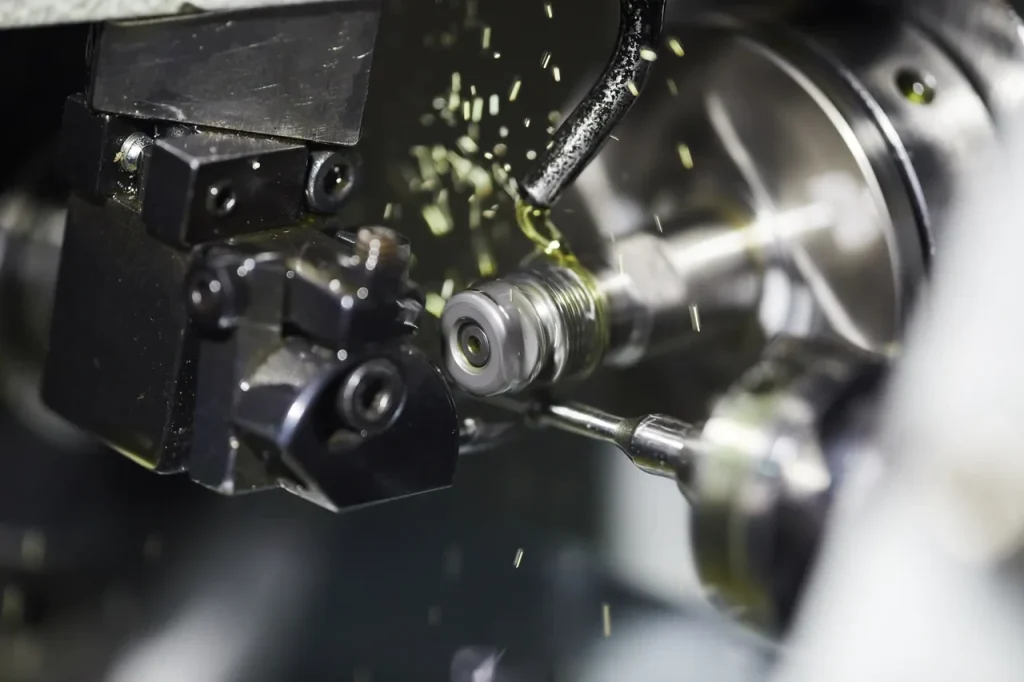
When Galling Is a Real Manufacturing and Assembly Risk
Galling risk is not equal across all metals or all contact types. It is highest where material behavior, contact mechanics, and process conditions combine in the wrong way. This is why a design review should look at the interface, not only at the base material specification.
Which materials are most susceptible to galling?
Materials most susceptible to galling are usually those that are ductile and prone to adhesive transfer under contact pressure. The provided research repeatedly points to stainless steel, aluminum, and titanium as key concern materials. These metals can perform well in many structural or corrosion settings, but their surface behavior in sliding or threaded contact can become a separate design problem.
The practical takeaway is that material selection for corrosion or weight alone is not enough. If the part includes threads, close-fitting sleeves, guides, or repeated maintenance assembly, galling resistance should be reviewed as its own requirement.
Why austenitic stainless steel is prone to galling
Why austenitic stainless steel is prone to galling comes back to its tendency toward adhesive wear under load, especially in similar-metal contact. In threaded fasteners, 300 series stainless is a familiar problem case in the available technical material. During tightening, the contacting thread surfaces can lose their oxide film, adhere, and then tear.
This is why stainless steel bolts gall during tightening more often than many users expect. The issue is not that stainless is a poor engineering material. The issue is that the same properties that make it useful for corrosion resistance do not guarantee stable sliding behavior in dry, loaded contact.
For feasibility review, this means stainless-on-stainless threads should not be treated as low risk by default. Installation method, lubrication, coating, and whether repeated assembly is expected all matter.
Aluminum vs stainless steel galling risk in mixed-material assemblies
Aluminum vs stainless steel galling risk is not the same as stainless-on-stainless, but mixed-material contact does not remove the problem by itself. The available competitor material treats both aluminum and stainless as galling-prone metals. In mixed assemblies, the lower tendency compared with similar-metal contact may help, but local pressure, finish, and oxide damage still control the outcome.
From a design standpoint, aluminum with stainless steel needs review in threaded inserts, clamped joints with relative motion, and repeated service access points. An assembly may avoid immediate seizure yet still suffer material pickup, damaged threads, or wear growth over time.
The key point is that mixed-material assemblies are not automatically safe. They may reduce adhesive similarity, but they also introduce questions about hardness mismatch, coating choice, and long-term surface damage.
Titanium galling during assembly: when feasibility becomes a concern
Titanium galling during assembly is often treated as a special risk because titanium is widely recognized as prone to adhesive damage in contact. In practice, this becomes a feasibility concern where parts must be tightened, adjusted, or slid together under significant load.
If the design depends on dry titanium threads, repeated assembly, or uncoated titanium sliding contact, the risk is high enough that prevention should be planned before production. This is also where buyers should ask whether process control alone is realistic. In some cases, changing the interface material or adding a surface treatment is more reliable than relying on careful assembly only.
How Metal Galling Works at the Surface Level
The mechanics of galling are surface-driven. A part can meet dimensional requirements and still fail because the interface chemistry and topography are wrong for the contact condition.
How oxide layer affects galling under contact pressure
How oxide layer affects galling is central to understanding the failure. Most engineering metals form a thin oxide film that limits direct metal-to-metal adhesion. Under contact pressure and motion, that film can crack or shear away. Once this happens, bare metal is exposed at local high points.
Those exposed areas can bond. As motion continues, the junctions break and pull material from one surface to the other. If the pressure remains high, the damaged area grows. This is why dry contact under tightening or sliding load is such a common trigger.
The oxide layer is not a guarantee against galling. It is more like a temporary barrier whose effectiveness depends on load, motion, and surface condition.
How adhesive wear leads to galling in repeated motion
How adhesive wear leads to galling is easier to see in repeated motion. Each pass of one surface over another can create small local bonds, break them, and leave transferred material behind. The transferred material creates raised spots or torn areas, which then increase local pressure on the next pass.
That cycle explains why a sliding surface may run acceptably at first and then degrade quickly. In guides, pistons, and other reciprocating parts, repeated motion can turn initial mild wear into deep scoring and seizure risk if the material pair is wrong or lubrication breaks down.
Surface finish effect on galling: roughness, asperities, and material transfer
Surface finish effect on galling is important because roughness changes how real contact happens. Even a machined surface that looks smooth has asperities. Rougher surfaces have more pronounced high points, so contact starts at fewer local areas with higher stress. That makes oxide-film rupture and local adhesion more likely.
At the same time, very fine finish alone does not solve every case. If the material pair has strong galling tendency and the joint runs dry under high load, the smoother surface may still gall. So finish should be treated as one control, not the only control.
For manufacturing planning, tighter surface finish requirements usually mean more machining time and more inspection burden. That can be justified on a critical sliding surface, but less often on a simple static feature. The finish requirement should match the contact function, not be applied broadly without reason.
Rougher surfaces can concentrate load at local high points, but finish does not act the same way in every interface. Threads, bores, guides, and reciprocating contacts respond differently because conformity, lubricant retention, plowing, and edge loading all change the contact behavior. Very smooth surfaces can still gall when pressure, surface chemistry, and motion favor adhesion, so finish must be judged with material pair and geometry rather than as a stand-alone rule.
Dissimilar metals and galling tendency compared with similar-metal contact
Using dissimilar metals often reduces galling risk, but it is not an automatic safe choice. The result still depends on hardness difference, oxide stability, surface finish, geometry, and lubrication. A dissimilar pair can also introduce galvanic corrosion, differential wear, softer-material embedment, or coating incompatibility that must be reviewed before release.
Still, the reduction in galling tendency is not universal. If both materials are galling-prone, if the contact stress is high, or if repeated assembly removes protective films, damage can still occur. A design team should also review corrosion effects, coating compatibility, and whether the harder material may damage the softer one.
So dissimilar pairing is useful, but it is a design trade-off, not a blanket rule.
Process diagram of oxide-layer breakdown, adhesion, and material transfer
A useful process diagram for engineering review would show the sequence in four stages: intact oxide-covered surfaces, local oxide rupture at asperity contact, adhesive junction formation between exposed metal, and then tearing with material transfer that creates raised damage zones. That visual helps explain why galling accelerates after it starts.
In supplier discussions, that same sequence helps separate galling from simple abrasion. Abrasive wear removes material by hard particles or roughness cutting. Galling grows by adhesion and transfer.
When Prevention Methods Work and Where They Have Limits
Anti-galling controls work best when they match the mechanism causing the damage. If the problem is direct metallic adhesion, the control has to interrupt that adhesion, lower the local stress, or both.
Does lubrication prevent galling in all conditions?
Does lubrication prevent galling in all conditions? No. Lubrication can reduce friction, lower heat and surface damage, and separate contact points enough to reduce adhesive wear. In many threaded and sliding contacts, it is one of the first controls to try.
But lubrication has limits. It can be displaced, contaminated, or restricted by cleanliness requirements. It may help during one assembly cycle and be less effective after storage, wash processes, or repeated maintenance use. If the material pair itself has strong galling tendency, lubrication may reduce risk without removing it.
So lubrication is often necessary, but not always sufficient.
Anti-seize vs lubricant for galling prevention
Anti-seize vs lubricant for galling prevention is a practical distinction in assembly planning. A general lubricant mainly lowers friction and helps surfaces move. An anti-seize compound is typically selected specifically to reduce thread seizure and adhesive damage in loaded joints.
For threaded fasteners, anti-seize is often the more direct control when the concern is galling during installation. Still, the choice depends on process constraints. Some assemblies cannot tolerate residue, some require later coating or cleaning, and some have compliance limits on plating or compound chemistry. The right decision is therefore not just technical effectiveness, but whether the chosen material fits the manufacturing route and service environment.
Coatings that reduce galling in threads and sliding surfaces
Coatings reduce galling only when the coating type matches the interface, motion, and fit. Dry films, platings, and conversion coatings behave differently in load support, dimensional buildup, wear-through risk, and environmental compliance. On threads, coating thickness can change fit and torque behavior; on sliding surfaces, a coating that wears through quickly may only delay failure.
For threads, a coating can be easier to standardize than manual lubricant application, especially in higher-volume production. On the other hand, coatings add process steps, qualification work, and supply dependence. For sliding parts, coating selection also has to consider wear-through, dimensional effect, and whether the mating part finish supports the coating.
This is why coating choice is often more than a materials question. It is also a lead time, inspection, and compliance question.
Best materials resistant to galling for redesign or substitution
Best materials resistant to galling are generally those with lower adhesive tendency in the target contact condition. The supplied research does not provide a full ranked material chart, so a safe engineering position is to treat hardened or alternative alloys, and certain dissimilar pairings, as potential redesign routes rather than universal answers.
The decision to substitute material should be driven by interface function. If the part is a threaded nut, insert, guide, or sleeve, changing just one side of the contact may be enough. If corrosion or weight drove the original choice, the replacement has to be checked against those requirements too.
Table: Prevention methods by mechanism, typical use, and limitation
| Prevention method | Main mechanism | Typical use | Main limitation |
|---|---|---|---|
| Lubrication | Reduces friction and limits direct contact | General threaded and sliding assembly | May not hold under all loads or repeated cycles |
| Anti-seize compound | Reduces thread seizure and adhesive damage | Stainless and other galling-prone fasteners | Cleanliness and process compatibility issues |
| Coating or plating | Changes surface interaction and reduces adhesion | Threads and sliding surfaces with repeatable production control | Added process steps, qualification, and supply constraints |
| Dissimilar material pairing | Lowers similar-metal adhesion tendency | Mating parts in threads or sliding contact | May introduce corrosion, hardness, or compatibility trade-offs |
| Harder or alternative alloy | Improves resistance to surface damage | Redesign of high-risk interfaces | Cost, corrosion behavior, and design impact |
Advantages, Limitations, and Trade-Offs of Common Anti-Galling Choices
Choosing among common anti-galling strategies always involves balancing performance gains with practical trade-offs. Different approaches—such as material pairing, lubrication, surface coatings, and alloy selection—can effectively reduce the risk of galling, but they may also introduce new limitations in cost, manufacturability, corrosion behavior, or maintenance requirements. Before evaluating each option in detail, it is important to understand how these methods compare at a system level rather than in isolation.
Dissimilar material pairing vs same-material pairing
Same-material pairing can simplify sourcing and corrosion matching, but it often increases galling risk where both surfaces are prone to adhesive wear. Dissimilar pairing can lower that risk, especially in threaded joints and sliding contacts.
The trade-off is that a better anti-galling pair may create other concerns. Material mismatch can affect corrosion behavior, wear pattern, and replacement part control. In purchasing terms, this means the interface should be specified as a pair, not as two independent materials.
Lubricants and anti-seize compounds: lower friction vs cleanliness and process constraints
Lubricants and anti-seize compounds can be low-cost and fast to implement compared with redesign. They are often the first step for how to prevent galling in threaded fasteners. They also fit prototype and maintenance settings where changing the hardware is slow.
The limit is process discipline. If application amount, location, or condition varies, results can vary too. Clean assembly requirements, later surface treatment, or contamination-sensitive products may also restrict their use.
Coatings and platings: reduced adhesion vs compatibility and compliance review
Coatings and platings can offer better repeatability than manual compounds because the surface condition arrives built into the part. That is useful where the design has recurring assembly cycles or where consistent field installation matters.
But coatings need compatibility review. The coating has to fit the base material, thread geometry, and any compliance requirements. It may also affect dimensions enough to matter on tight fits. So coating is often attractive for stable production, but less simple than it first appears.
Harder or alternative alloys: improved resistance vs cost, corrosion, and design trade-offs
Harder or alternative alloys can improve resistance to surface damage and reduce material transfer. This is often the best long-term fix when the current interface is inherently unstable.
The drawback is broader design impact. Cost may rise, corrosion performance may change, and machining behavior may shift. In short, a material change can solve galling while creating sourcing or manufacturing issues elsewhere. That is why it is usually best evaluated at the interface level first.
Common Failure Scenarios and How to Diagnose Them
Galling is often first recognized by torn or smeared material, raised transfer patches, seizure during motion, or heavy torque increase during assembly. Light first-run scuffing may be manageable if it stabilizes and does not impair function, but progressive material transfer, repeat torque rise, jamming, or visible surface tearing should be treated as unacceptable. Severity should be judged against function, repeatability, and whether damage continues to grow with additional cycles.
Why stainless steel bolts gall during tightening
Why stainless steel bolts gall comes back to the combination of contact pressure, sliding thread motion, and adhesive tendency. During tightening, thread flanks bear load while moving against each other. If oxide films break down, local adhesion can occur. Then material transfers, roughens the threads, and can lock the fastener before target clamp load is reached.
This failure is often misread as overtightening alone. In fact, a fastener can seize because of surface interaction before it reaches the intended assembly state.
How to prevent galling in threaded fasteners during installation
To prevent galling in threaded fasteners during installation, the control plan should focus on the interface, not just the torque tool. Common measures include reducing similar-metal contact, using anti-seize or suitable lubrication, selecting coatings that reduce adhesion, and controlling assembly conditions so the threads engage cleanly.
For buyers, the key check is whether the prevention method is specified on the drawing, in the fastener callout, or in the installation process. If it exists only as tribal shop knowledge, the risk remains.
Galling failure in sliding metal surfaces such as guides, bearings, and pistons
Galling failure in sliding metal surfaces tends to appear as scoring, raised smears, torn material, and rapidly increasing friction. Guides, bearing-like contacts, and pistons are common examples because they combine load and motion over repeated cycles.
In these cases, a finish change alone may not be enough. The review should include contact stress, lubrication retention, material pair, and whether the motion is continuous or reciprocating. Repeated reversal can be especially damaging because transferred material is worked back into the opposing surface.
How to fix seized threads caused by galling
How to fix seized threads caused by galling depends on the damage level, but from a manufacturing standpoint the main issue is often that repair is limited. Once adhesive transfer tears the threads, reuse is uncertain. The usual result is part replacement, thread rework, or insert repair if the design allows it.
That is why prevention is far more practical than field recovery. If the assembly is costly or hard to access, the design should avoid any interface that relies on “careful tightening” as the only defense.
Checklist: Symptoms that distinguish galling from general wear or cross-threading
| Symptom | More consistent with galling | More consistent with other issues |
|---|---|---|
| Sudden seizure during tightening | Yes | Possible with severe cross-threading |
| Torn, smeared, or transferred metal on threads | Yes | Less typical of simple misalignment |
| Rough raised patches on sliding surface | Yes | Less typical of mild general wear |
| Progressive drag that increases quickly after first damage | Yes | Less typical of stable rubbing wear |
| Thread angle mismatch from the start | No | More consistent with cross-threading |
Cost, Tolerance, and Lead Time Factors That Influence Prevention Choices
In practice, cost, tolerance, and lead time often determine which anti-galling strategy is realistically viable, not just which one performs best in theory. Even when multiple solutions can reduce the risk of galling, their feasibility depends on how they impact machining effort, inspection requirements, supply chain stability, and overall production flow. Understanding these constraints helps ensure prevention methods are selected not only for performance, but also for manufacturability and lifecycle efficiency.
How tolerance, fit, and contact pressure affect galling risk
Tolerance and fit affect how load is distributed. Tight fits or thread conditions that create high local pressure can increase oxide breakdown and adhesive contact. Even when dimensions are within print, the functional fit may still be too aggressive for the selected material pair.
For manufacturability, this means tolerance should be reviewed as part of the contact system. A tighter fit is not always a better fit if it raises galling risk without adding functional value.
Surface finish requirements vs machining time and inspection burden
Improved finish can help lower asperity-driven contact stress, but it has cost. Finer machining or secondary finishing adds machine time, handling, and inspection effort. On critical surfaces this may be justified. On low-risk surfaces it may add burden without solving the actual root cause.
The practical choice is to tighten finish where contact function requires it, then pair that with material and lubrication review.
Coating and plating choices: added process steps, supply constraints, and qualification needs
Coating and plating choices affect more than surface behavior. They add outside processing or extra internal steps, so lead time can increase. If the coating is not a standard finish for the part family, qualification and document control can also grow.
For buyers, this means lead time risk is often higher with specialized finishes than with plain machined parts. Any coating-based anti-galling plan should be checked for supply continuity and inspection method before release.
Industry-level cost trade-offs between lubrication, coatings, and material changes
At industry level, lubrication is usually the least disruptive starting point because it does not require a new part design. Coatings tend to sit in the middle because they change the process chain without always changing the base geometry. Material changes often have the largest design ripple because they can affect machining, corrosion, and part approval.
That does not mean lubrication is always cheapest in use. If field failures, maintenance errors, or inconsistent application create scrap and downtime, a more controlled coating or material solution may be justified.
References: academic sources, standards bodies, and supplier technical data
For a technical review, the most useful references are academic tribology sources, standards bodies, and institutional documents on wear and surface interaction. Supplier technical data can help with product-specific coatings, but it should be checked against broader tribology guidance before becoming a design rule.
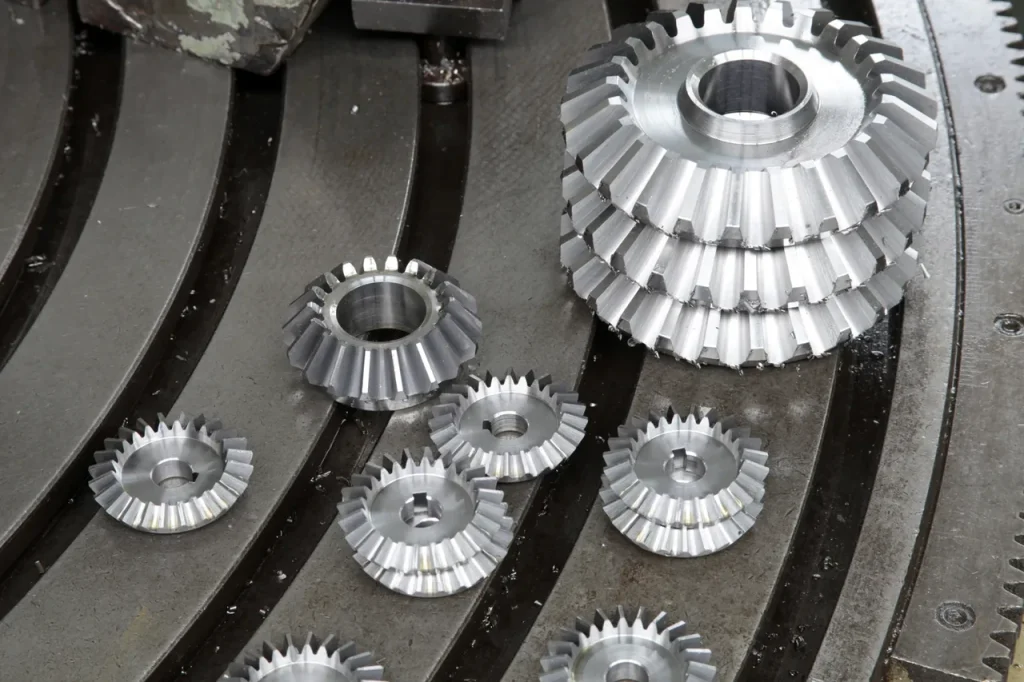
Where Galling Shows Up in Real Components and Processes
In real manufacturing and service environments, galling is not a theoretical failure mode but a practical issue that appears in specific components and motion conditions. It commonly emerges in threaded interfaces, maintenance-driven assemblies, and high-load sliding contacts, where surface interaction and repeated contact gradually destabilize performance. Understanding where it occurs helps connect prevention strategies to actual design and usage scenarios.
Galling in CNC threaded parts and machined assemblies
Galling in CNC threaded parts often appears after machining is complete, during assembly or service. The thread may meet print requirements and still seize because the selected material pair, finish, and installation method were not reviewed together.
This is common in machined stainless components, precision housings with threaded closures, and parts that are opened for maintenance.
Threaded fasteners, inserts, and repeated maintenance assembly
Repeated maintenance assembly raises risk because each cycle can damage the surface film and increase local roughness. Fasteners and inserts that survive first build may become less reliable after multiple service events.
This matters in buyer approval because a one-time assembly test may not reflect field use. If repeated disassembly is expected, anti-galling controls should be validated for that use case.
Sliding and reciprocating components with high contact stress
Sliding and reciprocating components with high contact stress are classic galling locations. Guides, pistons, and other loaded sliding members can move from acceptable operation to severe damage quickly once adhesive transfer starts.
Design feasibility here depends on stable surface behavior over time, not only initial motion. That usually means the material pair and surface treatment deserve the same attention as the nominal dimensions.
Application matrix: threads vs sliding surfaces vs mixed-metal assemblies
| Application type | Main galling trigger | Typical control focus |
|---|---|---|
| Threads | High pressure plus sliding during tightening | Anti-seize, coatings, material pairing, installation control |
| Sliding surfaces | Repeated motion under load | Material pair, finish, lubrication, contact stress review |
| Mixed-metal assemblies | Local adhesion plus mismatch effects | Pairing review, surface condition, corrosion and wear balance |
How to Evaluate Galling Risk and Choose a Prevention Strategy
Start by classifying the interface as acceptable with standard process control, acceptable only with controlled lubrication or coating, or a poor candidate that likely needs redesign. One-time assembly, low motion, and validated process controls may be acceptable boundaries; repeated dry service, similar-metal high-risk threads, and uncoated high-stress sliding contact are not. If the design depends on field-applied lubrication without control or on repeated service in galling-prone material pairs, treat it as a redesign case rather than a procedural fix.
Before release or purchase, confirm the mating material pair, contact geometry, expected assembly frequency, and whether lubrication or anti-seize is explicitly specified. Verify that any coating thickness is compatible with the fit or thread class, that finish and hardness are controlled on both sides, and that the interface has evidence from assembly trials or service-cycle testing when duty is repeated.
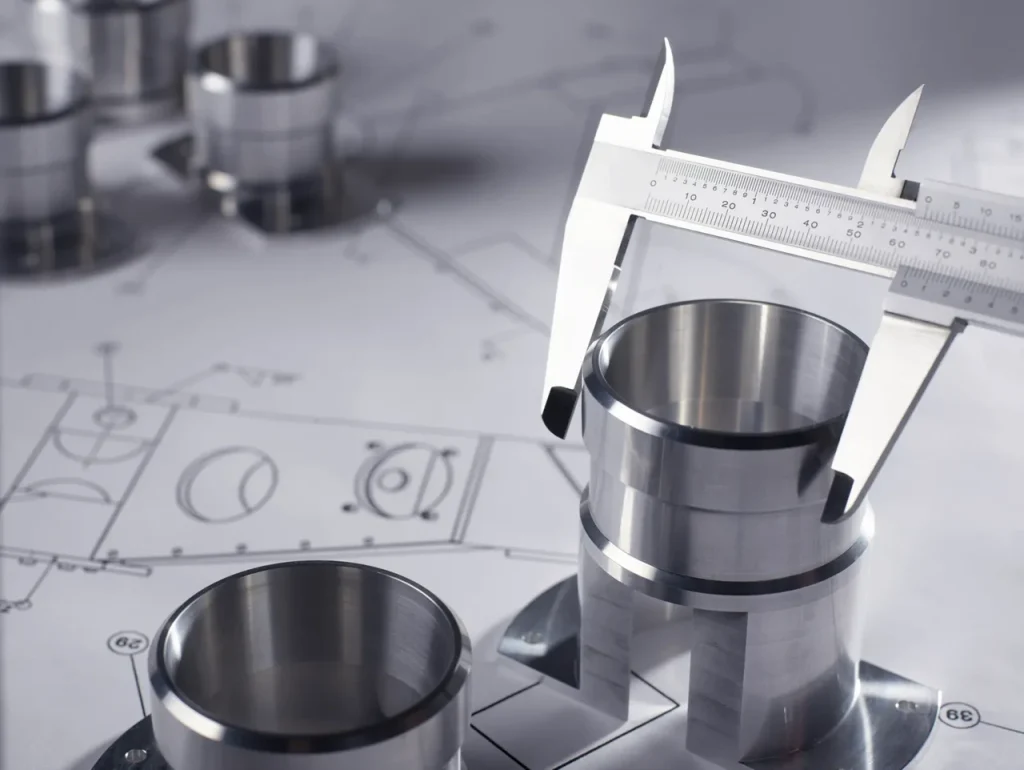
What factors increase the risk of galling in a design review?
Factors that increase the risk of galling include similar-metal contact, galling-prone materials such as stainless, aluminum, or titanium, dry assembly, rough or damaged surfaces, high contact pressure, and repeated motion or repeated assembly. Tight fits and heavily loaded threads should get extra review.
A practical design review should also ask whether the contact is static, rotating, sliding, or reciprocating. Motion type changes the risk because repeated rubbing gives adhesive wear more time to build.
Decision matrix: material pair, surface finish, lubrication, and motion type
| Factor | Lower risk tendency | Higher risk tendency |
|---|---|---|
| Material pair | Dissimilar pair with lower adhesion tendency | Similar pair with known galling tendency |
| Surface finish | Controlled finish suited to contact function | Rough or damaged mating surfaces |
| Lubrication | Stable and specified interface control | Dry or inconsistent assembly |
| Motion type | Limited motion or low-stress contact | Repeated sliding or tightening under load |
When to change the material, when to add coating, and when process control is enough
Process control may be enough when the galling tendency is moderate, the assembly is limited, and lubrication or anti-seize can be applied consistently. Adding coating makes more sense when repeatability across production or field assembly is important. Material change is the stronger option when the interface remains high risk even with process controls, or when the service condition makes lubricants unreliable.
For buyers and engineers, the decision should be based on failure consequence. If seizure will damage expensive parts or stop maintenance access, stronger preventive action is justified earlier.
In short, metal galling should be treated as a design-interface problem, not only an assembly nuisance. Use extra caution with stainless, aluminum, and titanium in threaded or sliding contact. Favor prevention methods that match the surface mechanism, and check their effect on manufacturing flow, inspection, and long-term use. If the design depends on similar galling-prone metals running dry under load, it is a warning sign that redesign may be the safer path.
FAQs
To understand surface damage between sliding components, many engineers first look at what is galling in metal as a reference point. This type of wear happens when two contacting surfaces experience high pressure and begin transferring material between each other instead of sliding smoothly. It is more likely to appear when lubrication is insufficient, surface finishes are too similar, or contact stress is too high.
From a practical machining and assembly perspective, designers often review metal galling risks when working with stainless components under load. The most effective prevention methods include using lubricants, improving surface finish, and selecting different material pairings so adhesion is less likely. In production environments, consistent torque control and coating selection also help stabilize performance.
In tribology terms, this failure mode is often explained through its relationship with adhesive wear and is closely linked to the concept described in galling definition. It is generally classified as a room-temperature adhesion phenomenon, meaning it occurs without external heat input. Instead, localized pressure and friction create micro-welds that break and transfer material during motion.
For softer metals used in lightweight assemblies, engineers frequently monitor aluminum galling during design and assembly stages. The risk can be reduced by applying lubricants, using hard anodized surfaces, or introducing barrier coatings that reduce direct metal contact. Smoother mating surfaces and controlled tightening also help prevent surface damage during repeated use.
Material selection plays a major role in reducing adhesive wear, especially in applications involving high load and motion. Harder alloys, dissimilar metal pairings, and coated surfaces tend to perform better under frictional stress. In advanced manufacturing, process optimization such as low-friction CNC machining services is often used to improve surface quality and reduce risk in precision parts.
Yes, this pairing can still experience adhesion issues under pressure, especially when lubrication is limited or surface finish is rough. In machining and fastening design, this behavior is commonly discussed alongside anti-galling CNC threaded parts, where coatings and controlled thread geometry are applied to reduce sticking. Proper material selection and assembly torque control significantly improve reliability.
Titanium is widely known for its high strength-to-weight ratio, but it can still suffer from severe adhesive wear in sliding contact conditions. In engineering practice, this behavior is often anticipated when working with fasteners or moving interfaces exposed to load and motion. Careful surface treatment and lubrication strategies are typically required in such applications.
Prevention strategies focus on reducing direct metal adhesion during assembly and operation. Engineers often rely on coatings, lubricants, and dissimilar material pairing to control surface interaction. These methods are especially important in high-performance assemblies where titanium is used in fasteners or precision components under repeated stress.


 English
  German
  French
  Italian
  Spanish
  Polish
  Czech
Czech  Japanese