
Reducing machining cost without quality loss means removing cost that does not add function, while adhering to standardized process guidelines to ensure repeatable quality, according to NIST. In CNC machining, the largest savings usually come from better CNC machined parts design, fewer setups, shorter cycle times, the right process choice, and stable inspection planning, which directly affects the cost of CNC. The goal is not to make a part’s cost minimal at the expense of function. The goal is to make them economically while still meeting the features that matter: fit, strength, finish where needed, and repeatable tolerances on critical dimensions. This guide provides actionable insights on how to reduce machining cost without quality loss while keeping part quality and performance intact.
What reducing CNC machining cost without quality loss means
Reducing CNC machining cost without quality loss is not about cutting corners, but about making smarter decisions on what truly matters for part performance. The key is to distinguish functional requirements from unnecessary complexity, so you can lower machining time, tooling, and inspection effort without introducing risk. By focusing on the right cost drivers, it becomes possible to achieve more competitive CNC pricing while keeping parts consistent, reliable, and within tolerance.
The decision problem: lowering unit cost without creating scrap, rework, or missed tolerances
The core decision problem is simple: which costs can be removed safely during the CNC machining process, and which ones protect part function? Several factors—including material, geometry, tolerances, and setups—determine whether cost reduction will succeed without affecting part quality. Buyers and engineers often see a high CNC quote and ask how to reduce CNC machining costs. The wrong response is to cut everything at once. If that leads to scrap, tool breakage, rework, or unstable dimensions, the real cost goes up.
A better approach is to separate functional requirements from manufacturing habits. For example, a tight tolerance may be critical on a bearing seat but not on an outer cover face. A fine surface finish may matter on a sealing face but not on an internal pocket. If the drawing applies the same strict requirement everywhere, the machine shop must process every feature to that level. That increases time, inspection, and risk.
To put it simply, cost reduction without quality loss means keeping what the part needs and removing what the process does not need.
Factors affecting CNC machining cost across design, setup, tooling, material, and inspection
The main factors affecting CNC machining cost are usually visible before production starts. Part geometry is one of the biggest. Complex contours, deep cavities, thin walls, and hard-to-reach internal features all increase toolpath complexity and machine time. Setup also matters. A part that needs several orientations may require multiple fixtures, more operator handling, and more opportunities for variation.
Material choice changes both raw material spend and can significantly impact overall CNC machining costs, while there are factors that directly affect cycle time, tooling wear, and inspection effort, such as feature complexity and tool selection. The impact of material selection on CNC machining cost is often larger than buyers expect because some alloys cut fast and predictably, while others generate more tool wear, slower feeds, and more heat.
Tooling and inspection are tied to both cost and consistency. Tool wear impact on CNC part pricing can be significant when a material is abrasive or a feature forces long tool overhang. Inspection cost rises when many dimensions are tightly controlled, especially if those dimensions are hard to access or need repeated checks between operations.
Why CNC machining time increases part cost in both prototype and production work
In CNC machining, time is a critical factor for cost, especially when producing custom parts, because longer machining times increase the overall cost, including programming, setup, proving out the process, actual cutting, tool changes, deburring, inspection, and part handling. Time includes programming, setup, proving out the process, actual cutting, tool changes, deburring, inspection, and part handling. In prototype work, these fixed steps are spread across very few parts, so each part carries a large share of setup and programming cost. In production work, cycle time becomes the main cost driver because it repeats for every unit.
This is why two parts made from the same material can have very different per-unit prices; ordering larger quantities can spread setup costs and help reduce the overall cost per unit, even for identical CNC machined parts. A simple block with accessible features may run in a short, stable cycle. A part with deep pockets, multiple side features, and finish requirements on many surfaces may require more setups and slower machining, which increases the time it takes to machine each part. The machine is occupied longer, the operator touches the part more often, and inspection takes more time.
Main machining cost drivers and which ones can be reduced without changing part function
| Cost driver | Why it raises cost | Can it often be reduced without changing part function? | What to check first |
|---|---|---|---|
| Tight non-critical tolerances | Slower machining and more inspection | Yes | Which dimensions are truly functional |
| Complex geometry | Longer toolpaths and more setups | Yes | Whether simpler forms meet the same use case |
| Deep pockets | Long tools, slower cuts, poor access | Often | Whether depth, corner detail, or layout can change |
| Multiple setups | More fixturing and handling | Often | Can features be accessed in fewer orientations |
| Many tool changes | Added non-cutting time | Often | Can features be standardized to common tool sizes |
| Hard-to-machine material | Slower cutting and more tool wear | Sometimes | Whether a different material still meets performance |
| Broad surface finish requirements | Extra passes or secondary finishing | Often | Which surfaces need finish for function |
| Heavy inspection plans | More measuring time and possible delays | Often | Which features are critical to verify |
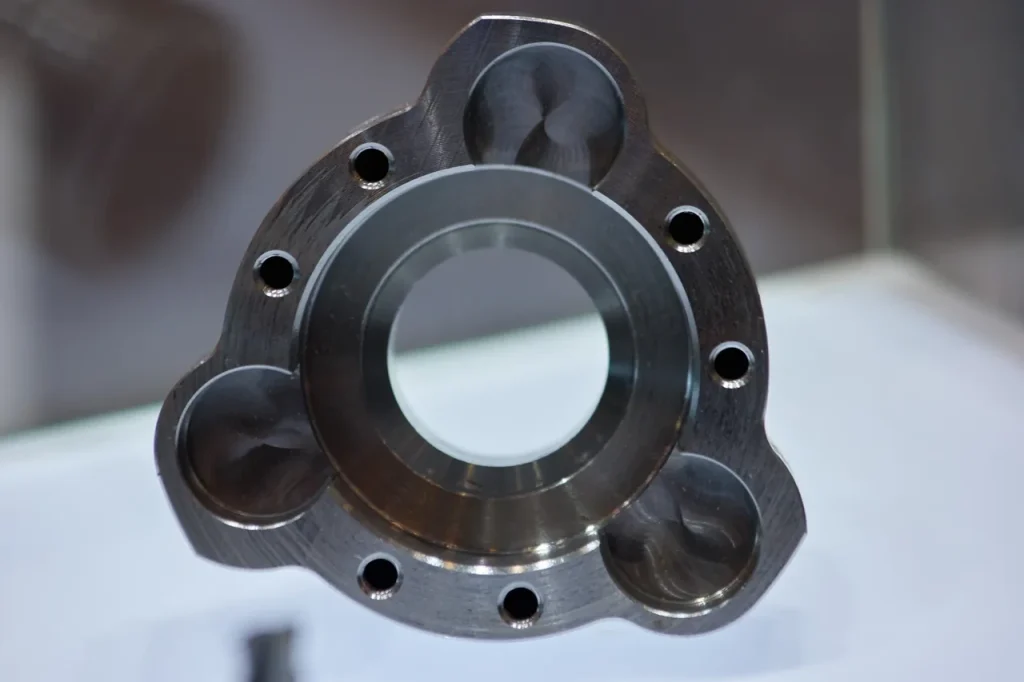
Can the part be made more economically without changing performance?
Improving cost efficiency at the design stage is often the easiest way to reduce CNC machining cost without affecting how the part performs, with simplifying the design being one of the most effective strategies. Small adjustments to geometry, feature selection, and accessibility in CNC manufacturing can significantly help minimize machining time, reduce tooling complexity, and lower setup effort. The focus is on simplifying what does not impact function, while keeping all critical requirements that ensure proper fit, strength, and reliability.
How part design simplification reduces machining cost while preserving functional requirements
How part design simplification reduces machining cost is one of the most important questions in early review. Understanding how to reduce machining cost without quality loss allows shops to shorten cycle time, reduce inspections, and maintain functional quality. If a design uses standard features, standard tool sizes, and accessible machining directions, the shop can use simpler toolpaths and fewer operations. This lowers cycle time without changing how the part works in the assembly.
Examples include using standard hole sizes instead of unusual diameters, reducing unnecessary pocket detail, and standardizing fillets and chamfers. Research across industry sources points to the same pattern: simpler geometry, standard features, and better tool access reduce machining time and inspection effort while preserving quality when the functional intent stays the same.
The key point is that simplification should be function-led. A feature should be kept only if it affects assembly, load path, sealing, alignment, or another real requirement.
Use standard tool access rules early in redesign. Internal corners should use the largest practical radius, walls should stay consistent and not become thin unsupported sections, and deep blind holes or threads should only be specified to the functional depth. Features that require long tool reach, narrow slots, or chained dimensions from multiple references should be reviewed before RFQ.
Cost risks of complex part geometry in CNC machining
The cost risks of complex part geometry in CNC machining come from time and instability. Organic surfaces, narrow internal corners, undercuts, and intersecting features often require specialized tools, multi-axis toolpaths, or longer setup times. Each added complexity raises programming time and prove-out effort. It can also increase the chance of chatter, poor chip evacuation, and inconsistent finish.
For buyers, this means a low quote on a complex part can be risky if the supplier has not accounted for process stability. Cheap machining is not always lower quality, but the goal should always be producing high-quality parts consistently, even when working with suppliers offering competitive CNC pricing. In that case, a small setup error or worn tool can move a feature out of tolerance.
Why deep pocket features raise CNC machining costs
Why deep pocket features raise CNC machining costs is mainly a tooling and access issue. Deep pockets often require long-reach tools. Long tools deflect more, remove material less aggressively, and may leave poorer finish or less stable geometry. The machine may need lighter cuts and extra passes to control vibration.
Deep pockets also create chip evacuation problems. If chips stay in the cut, they can damage the surface, raise heat, and accelerate tool wear. This drives up cycle time and may increase inspection or manual cleanup. If the pocket depth is not functionally required, reducing depth or changing the feature form can lower cost without quality loss.
Checklist: Feasibility review for tolerances, access, geometry, and standard features
Before approving a drawing for CNC machining, a short feasibility review helps identify safe savings. This step is key in how to reduce machining cost without quality loss, ensuring non-critical complexity is safely removed.
| Review point | What to ask |
|---|---|
| Tolerances | Are tight tolerances applied only to critical features? |
| Tool access | Can standard tools reach the features without extreme overhang? |
| Geometry | Are there deep pockets, narrow corners, or hard-to-fixture forms? |
| Hole sizes | Are common drill and reamer sizes used where possible? |
| Features | Can fillets, chamfers, and pocket shapes be standardized? |
| Setups | Can most features be machined in one or two orientations? |
| Finish | Which surfaces need controlled finish for function, and which do not? |
How to reduce machining cost without quality loss in practice
Applying cost reduction in real machining projects comes down to practical adjustments in design and process planning, resulting in measurable cost savings without compromising part quality. These actions demonstrate how to reduce machining cost without quality loss while keeping critical features intact. Instead of broad changes, the focus is on improving how the part is made—using standard features, reducing unnecessary operations, and matching the right process to the geometry. These decisions help lower cycle time, setup effort, and variability while keeping part quality stable and predictable.
Optimize design for manufacturability with standard hole sizes, accessible features, and simpler toolpaths
Design for manufacturability means shaping the part so normal tools and standard operations can make it efficiently. In practice, this often means standard hole sizes, accessible faces, and feature layouts that avoid unnecessary toolpath complexity. A hole pattern that uses standard tooling is easier to produce and inspect than a mix of uncommon sizes. A face that can be reached directly is easier than one hidden behind walls or interrupted by adjacent details.
Simpler toolpaths matter because every small contour and entry move adds time. If a part can be machined with stable, direct paths, the machine spends more time cutting efficiently and less time repositioning or slowing for difficult geometry.
How to reduce CNC machining costs by reducing setups, combining operations, and limiting tool changes
A common way to reduce CNC machining costs is to reduce setups, since time is a critical factor, especially when producing custom parts where each setup adds significant per-unit expense. Every setup adds fixture work, alignment checks, handling, and the chance of stack-up error between operations. If a part can be redesigned so more features are reached in the same orientation, cost usually falls and repeatability often improves.
Combining operations also helps. If one machine can complete more of the part in one cycle, there is less transfer time and less in-process variation. Limiting tool changes has the same effect. Standardizing radii, hole sizes, and edge conditions can reduce the number of tools loaded and swapped during the program. That shortens non-cutting time and supports a more stable process.
Simulation and automation can support this step. Industry case material shows that virtual setup review and toolpath simulation can reduce prove-out effort, setup errors, collision risk, and scrap. Where production is repeatable, automation can also reduce labor dependence while keeping quality more consistent.
Process matching: cost difference between CNC milling and CNC turning for the same part family
The cost difference between CNC milling and CNC turning depends on the part shape. Turning is usually more economical for rotational parts because the part spins and the cutting motion is simpler for diameters, faces, grooves, and many axial features. Milling is more flexible for prismatic parts, flat surfaces, and non-rotational geometry.
For small precision parts, especially long slender or highly featured cylindrical components, Swiss-type machining or turning may outperform milling on cost. The reason is process fit. If a cylindrical part is forced into a milling-centered process, machining time and fixturing effort may rise without any quality gain. Good cost control starts with matching the process to the part family, not forcing the part through the available machine type.
When 5-axis machining is worth the cost versus simpler setups and longer cycle times
When 5-axis machining is worth the cost depends on whether it removes more setup burden than it adds in programming or machine rate. For some parts, 5-axis machining can access many features in one holding, reduce manual repositioning, and improve feature-to-feature accuracy because the part is touched less often. In those cases, the higher machine cost can be justified.
On the other hand, not every part benefits. If geometry is simple and can be machined in a small number of stable setups on a simpler machine, 5-axis may not lower total cost. The decision should compare total process time, setup count, fixturing complexity, and quality risk rather than only hourly machine rate.
Process, material, and tooling choices that change total cost
Material, tooling, and process choices play a major role in overall CNC machining cost, often beyond what is visible in the initial quote. Differences in machinability, tool life, and process efficiency can significantly change cycle time, consistency, and total production effort. Reviewing several factors together—such as material choice, geometry, tooling, and setup—helps identify where cost can be reduced without affecting part performance or reliability.
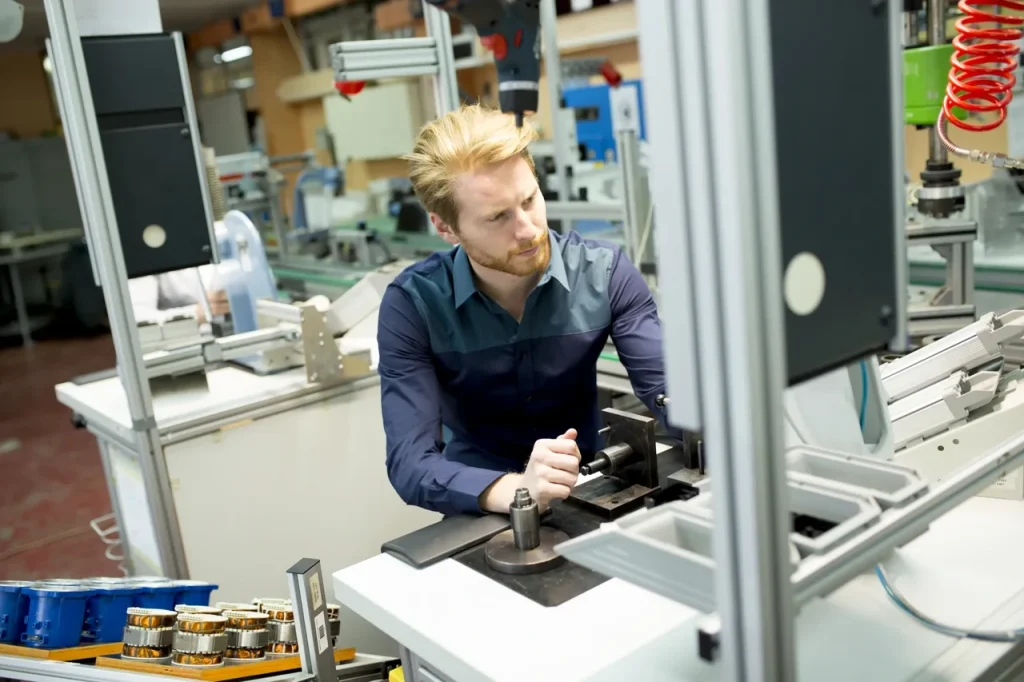
Impact of material selection on CNC machining cost
The impact of material selection on CNC machining cost includes more than material price. Machinability affects feed rates, spindle load, heat, chip formation, and tool life. A lower-cost raw material can still lead to a higher finished-part cost if it machines slowly or wears tools quickly.
Material selection should therefore be reviewed at system level. If the part does not need high corrosion resistance, hardness, or temperature performance, a more machinable material may reduce cycle time and inspection burden. If the part does need those properties, the process plan should reflect the likely increase in tool wear and slower cutting.
Material cost is only one part of the decision because machinability, stock condition, heat treatment state, and required properties all affect the final cost. A lower-priced raw material can still produce a higher machined cost if it cuts slowly, wears tools quickly, distorts after processing, or requires more deburring and inspection. Material substitution is only realistic when corrosion resistance, strength, hardness, temperature performance, weldability, coating compatibility, and customer or regulatory requirements still remain satisfied.
Why stainless steel is more expensive to machine than aluminum
Why stainless steel is more expensive to machine than aluminum is tied to machinability. Aluminum is generally easier to cut, so it supports faster material removal, lower tool wear, and shorter cycle times. Stainless steel tends to machine more slowly and can increase heat and wear, so the process often needs more cautious parameters and more frequent tool attention.
This difference affects both direct and hidden costs. Direct costs include longer machine occupancy and more tooling consumption. Hidden costs can include more deburring, finish management, and a higher need for process control if the geometry is challenging.
Tool wear impact on CNC part pricing and why higher-quality tooling can reduce total cost
Tool wear impact on CNC part pricing is often underestimated. Worn tools cut less predictably, which can push dimensions, worsen finish, and increase burr formation. That leads to extra inspection, more manual cleanup, and a higher chance of rework. In difficult materials or unstable feature geometry, poor tool life can become a major cost driver.
This is why higher-quality, application-specific tooling can reduce total cost even if the tool itself costs more. Research sources consistently point to the same tradeoff: better tooling can extend usable life, reduce downtime, and improve finish consistency. In short, a cheaper cutter can make the quote look lower while raising the real manufacturing cost.
When sheet metal fabrication is cheaper than CNC machining for prismatic parts and enclosures
When sheet metal fabrication is cheaper than CNC machining is a design question. For prismatic parts, covers, and enclosures with mostly flat walls and bent features, sheet metal may be the more economical route because less bulk material must be removed. CNC machining is often less efficient when a simple enclosure is milled from solid stock.
This does not mean sheet metal is always better. Machined parts still make sense when the design needs thick sections, tight positional relationships in solid material, or features that are hard to form. But if the geometry is essentially a folded shell, it is worth checking whether machining is solving the wrong problem.
Advantages vs limitations of common cost-reduction strategies
Different cost-reduction strategies can deliver meaningful savings, but each comes with tradeoffs in risk, flexibility, and implementation effort. The key is to apply them selectively based on part maturity, volume, and quality requirements. Understanding where each approach works best helps avoid over-optimizing for price at the expense of stability, consistency, or future design changes.
Benefits of larger production volumes in CNC pricing and where economies of scale start to matter
The benefits of larger production volumes in CNC pricing come from spreading setup, programming, and purchasing effort across a greater number of parts, which can significantly reduce per-unit expense. Verified data in the source set shows a strong quantity effect: increasing from one part to five parts can cut unit price by about half, and volumes above 1,000 parts can reduce unit cost by five to ten times. The exact result depends on part geometry and process stability, but the direction is clear.
This means high volume does reduce the per-part cost when the design is stable and repeat demand exists. Buyers should still avoid ordering excess quantity before the design is frozen. Savings from volume disappear quickly if a revision makes existing inventory unusable.
Cost tradeoffs in prototype CNC machining versus repeat production
Cost tradeoffs in prototype CNC machining are different from repeat production. In prototyping, the value is often speed of learning, not the lowest piece price; engineers should also consider the costs associated with rework, scrap, and setup when evaluating options. Engineers may accept a higher unit cost if it shortens design feedback, confirms fit, or avoids expensive redesign later.
Repeat production shifts the focus toward cycle time, fixture efficiency, standard work, and automation. What is acceptable in a prototype shop, such as manual touch-ups or flexible setups, may be too expensive or variable for long runs. A part should therefore be reviewed again before release to production, even if the prototype process worked.
Limitations of cheap CNC machining services when quality consistency is critical
Limitations of cheap CNC machining services become clear when quality consistency is critical. A low initial price may omit enough process control, tooling quality, simulation effort, or inspection planning to create unstable output. This is especially risky for parts with tight tolerances, difficult materials, or many setups.
How to find low-cost CNC machining, then, is not just about searching for the cheapest quote. It means finding a process that removes unnecessary cost while keeping stable capability on the important features. Cheap machining is acceptable only when the design has enough margin and the quality requirements are clear and limited to what matters.
Strategy comparison by savings potential, quality risk, and implementation effort
| Strategy | Savings potential | Quality risk if done poorly | Implementation effort |
|---|---|---|---|
| Loosen non-critical tolerances | High | High on wrong features | Low to medium |
| Simplify geometry | High | Medium if function misunderstood | Medium |
| Reduce setups | High | Medium if access or datum control suffers | Medium |
| Standardize holes and radii | Medium | Low | Low |
| Change to more suitable process | High | Medium if process fit is misjudged | Medium |
| Use better tooling | Medium | Low | Low to medium |
| Increase order volume | High for stable parts | Low | Low |
| Add simulation and automation | Medium to high | Low | Medium to high |
Common failure modes when cutting machining cost too aggressively
Cutting machining cost too aggressively often shifts problems from pricing into production, where they become more expensive to fix. Many cost drivers are tied to quality controls such as tolerances, finishes, and post-processing, so removing them without understanding their function can lead to scrap, rework, or performance issues. A controlled approach focuses on identifying which requirements are essential and which ones can be safely relaxed to reduce cost without introducing risk.
How tight tolerances affect machining cost and where loosening them is unsafe
How tight tolerances affect machining cost is straightforward: tighter limits usually require slower cutting, more careful setup, and more inspection. They can also reduce yield if the process window is narrow. But loosening them is unsafe when the dimension controls fit, motion, sealing, alignment, or load transfer.
The right method is selective tightening. Critical features should keep the tolerance they need. Non-critical features should not inherit the same requirement by default. This is one of the safest ways to reduce cost without quality loss because it protects function while reducing unnecessary process burden.
Tight tolerances should be reserved for features that control fit, alignment, sealing, motion, or load transfer. Typical examples include bearing seats, dowel hole locations, sealing faces, and dimensions established from functional datums. Before release, confirm that the quoted tolerance is process-capable in the proposed setup and that any special inspection method is explicitly included.
How surface finish requirements increase machining cost beyond functional need
How surface finish requirements increase machining cost depends on where the finish is specified. Broad finish requirements can force extra passes, lighter cuts, added deburring, or secondary finishing even on surfaces that do not affect use. That adds time without adding value.
Surface finish should therefore be tied to function. A mating, sealing, or cosmetic face may justify a controlled finish. Hidden, non-contacting, or non-critical internal surfaces often do not need the same level. Applying one finish requirement to the whole part is a common source of avoidable cost.
How secondary operations increase total part cost after machining
How secondary operations increase total part cost is often missed in early quoting. Once the CNC machine is done, the part may still need tapping, heat treatment, coating, marking, grinding, or assembly-related preparation. Each secondary step adds handling, scheduling, and inspection points.
Even small secondary tasks can matter. If a design change removes one secondary process, the savings may exceed the gain from a small cycle time improvement. Buyers should ask not only how the part will be machined, but also what happens after machining.
How deburring requirements affect CNC machining quotes and hidden labor content
How deburring requirements affect CNC machining quotes is a good example of hidden labor content. Burrs form where tools exit material, intersect edges, or cut difficult materials. If the drawing requires every edge to be carefully broken or cleaned, manual labor can rise fast, especially on parts with many holes and slots.
This work may not look large on the model, but it can be significant on the shop floor. If some edges are non-functional and can accept a standard deburr only, that should be clear. If specific edges matter for assembly safety or sealing, those edges should be identified directly.
Cost, tolerance, and lead time factors engineers should quantify
Understanding CNC cost isn’t just about material or cutting time—setup, tolerance, and lead time play a major role, especially for low-volume production. Quantifying how each factor affects unit price helps engineers make informed trade-offs, ensuring that small batches don’t become disproportionately expensive while maintaining part quality and delivery reliability.
Setup cost impact on low-volume CNC production
The setup cost impact on low-volume CNC production is one of the strongest reasons small quantities are expensive. The machine must still be prepared, tools loaded, offsets set, fixturing checked, and the first article verified. If only one or two parts are made, those fixed steps dominate the unit price.
This is why moving from one part to a small batch often has a large effect on unit cost. If multiple prototypes are likely, ordering a few more parts can be economical if the design is stable enough to avoid obsolescence.
Industry-level cost impact of tolerance, inspection, and rework controls
Tolerance, inspection, and rework controls affect cost at system level. The tighter the control plan, the more measuring time, documentation, and operator attention are needed. If the process is unstable, rework and scrap can rise and wipe out any savings from a lower initial quote.
Stable setups, in-process inspection, tool monitoring, and repeatable documentation are often better cost levers than simply asking for a lower price. They reduce waste without changing the part function, which is the safest path to lower total cost.
Lead time effects of simulation, automation, and stable process documentation
Lead time depends on more than machine availability. Simulation can reduce prove-out time and setup errors before the first cut. Automation can support longer unattended operation when the process is stable. Standard documentation helps repeat jobs start faster and with fewer process changes.
These methods do not help every job equally. They are most useful where parts repeat, complexity is high enough to justify planning effort, or setup mistakes are costly. For one-off simple parts, the overhead may not pay back.
Quantity effects on unit price, including 1 to 5 parts and 1,000+ part runs
| Quantity range | Typical cost behavior |
|---|---|
| 1 part | Highest unit cost because setup and programming are concentrated in one part |
| 5 parts | Unit price may drop by about half compared with a single part, based on provided research |
| 1,000+ parts | Unit cost may fall by five to ten times compared with very low-volume work, if the part and process are stable |
Where these strategies work best: applications and use cases
Different cost-reduction strategies shine in different situations. Prototypes benefit from speed and learning, small precision parts may favor turning or Swiss-type machining, and repeat production gains the most from standardized setups, automation, and stable processes. Understanding where each approach delivers the best results helps balance cost, quality, and delivery across the part lifecycle.
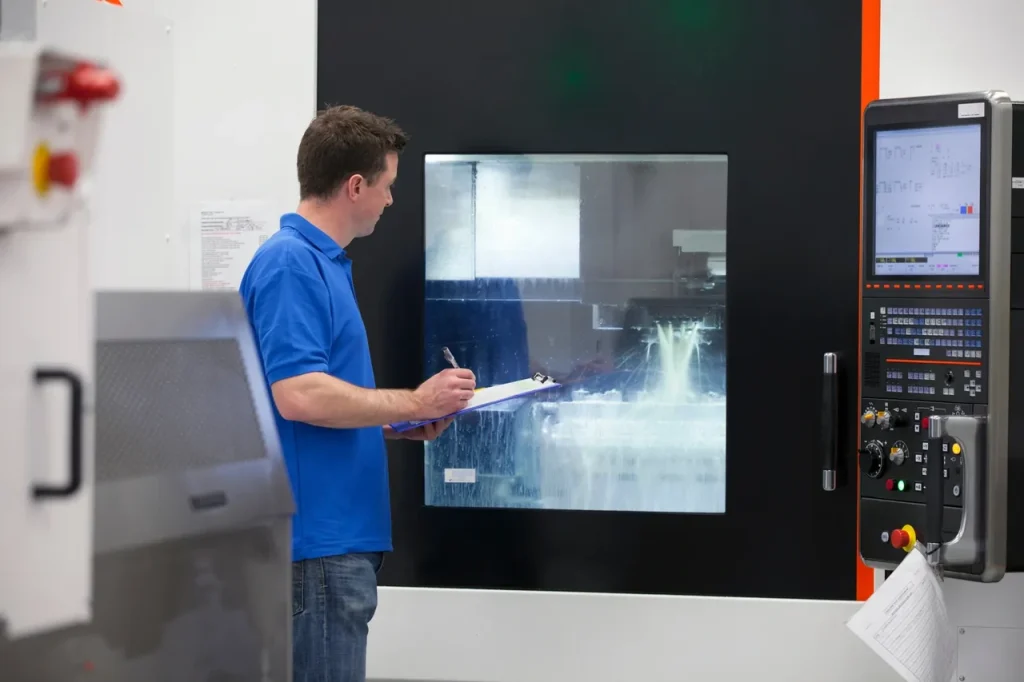
Prototype parts: when to prioritize fast learning over lowest piece price
Prototype parts are best treated as learning tools. If the design is still moving, the cheapest piece price may not be the best decision. Fast turnaround, simple manufacturability feedback, and clear evidence on fit and function often matter more. In that stage, avoid investing heavily in volume tactics before the design is mature.
Small precision parts: when Swiss or turning may outperform milling on cost
Small precision parts with rotational geometry are strong candidates for turning or Swiss-type machining. This is especially true when the part is slender, has several diameter-based features, or needs repeatable production in quantity. Milling may still be needed for flats or cross features, but using milling as the primary process for a turned part family can increase cost.
Repeat production: when automation and standardized setups support lower cost with stable quality
Repeat production benefits most from standardization. Once the design is fixed, automation, simulation, and standardized setups can support lower cost and stable output. This is where process documentation, fixture consistency, and predictable tooling have the strongest effect. Savings come not only from faster cycles, but also from less variation and fewer interruptions.
Case examples: design optimization, simulation-driven setup reduction, and volume scaling
Useful case evidence should be read as a before-and-after change in a specific cost driver, not as a universal savings rule. The strongest examples show what feature or setup was removed, what process burden changed, and whether the result reduced cycle time, handling, or inspection load without changing function. Quantity effects should also be treated as order-of-magnitude patterns because geometry, tolerance content, material, and process plan strongly affect the result.
How to evaluate and choose the right cost-reduction path
Choosing the right path to reduce CNC machining cost starts with understanding which features truly matter and which add unnecessary effort. By focusing on non-critical tolerances, complex geometry, process fit, and setup efficiency, engineers and buyers can cut time and waste without compromising function. The key is a structured review that balances design simplification, tooling, material choice, and volume strategies while keeping quality and performance intact.
What is the fastest way to reduce machining cost without affecting quality?
The fastest cost reduction is usually to remove non-functional drawing requirements: unnecessary tight tolerances, broad finish callouts, uncommon hole sizes, and geometry that forces extra setups. These changes often lower machine time and inspection cost immediately without changing fit or performance. The best candidates are non-mating, non-sealing, and non-load-critical features.
When should tolerances be tightened only on critical features?
Tight tolerances should be reserved for features that directly control fit, alignment, sealing, motion, or load transfer. Typical examples include bearing seats, dowel hole locations, sealing faces, and dimensions referenced from functional datums. Applying the same tolerance to non-critical exterior or clearance features increases cost without improving performance.
Is higher-volume ordering the simplest way to lower CNC part cost?
Yes, if the design is stable and repeat demand is real. The provided research shows strong economies of scale, with unit price dropping significantly between one-off and higher-volume production. But if the design may change, ordering too many parts can create waste instead of savings.
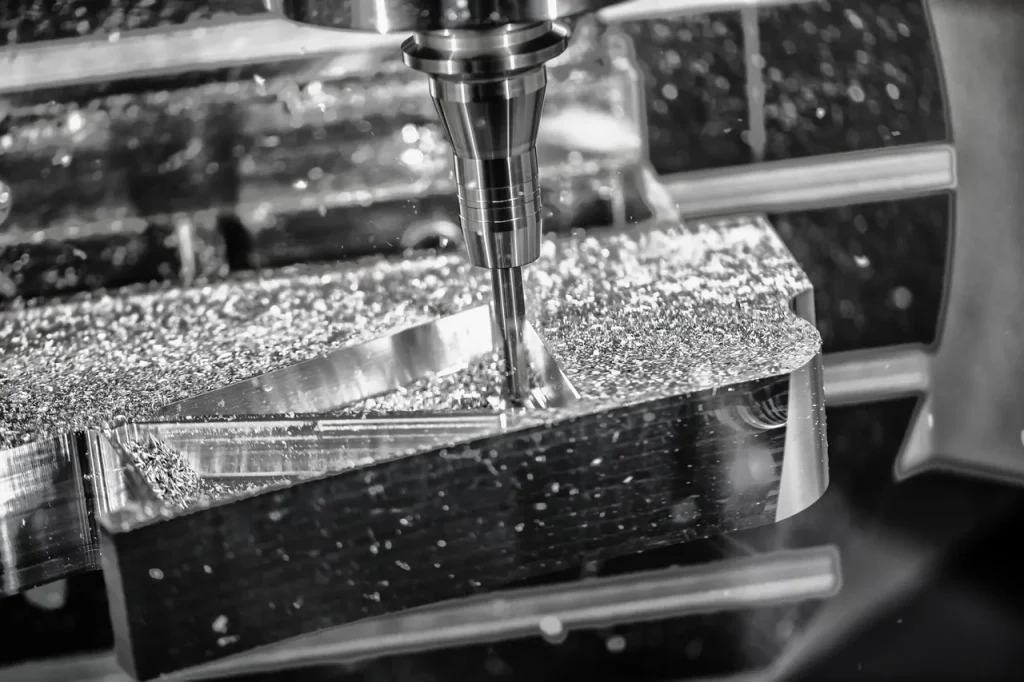
Decision matrix: what buyers and engineers should check before approving a redesign or process change
| Decision area | Check before approval | If yes | If no |
|---|---|---|---|
| Tolerance review | Are only critical features tightly controlled? | Proceed with selective tolerancing | Review drawing intent |
| Geometry simplification | Can features be simplified without changing function? | Redesign for easier machining | Keep current design |
| Process fit | Is milling, turning, Swiss, or 5-axis the best match for the part family? | Optimize around that process | Reassess manufacturing route |
| Setup count | Can setups be reduced without losing datum control? | Revise fixturing or feature layout | Keep setup strategy |
| Material | Is the selected material necessary for performance? | Consider more machinable option | Keep current material |
| Finish and deburr | Are finish and edge requirements function-based? | Limit them to critical surfaces | Clarify customer requirements |
| Quantity | Is repeat volume high enough to justify standardization or automation? | Use batch and repeat-process strategies | Focus on flexible low-volume methods |
Reducing machining cost without quality loss works best when the savings come from waste removal, not requirement removal. Use it when the part has non-critical complexity, excessive setups, or process mismatch. Avoid aggressive cost cutting when the design already has narrow tolerance margins, difficult materials, or safety-critical functions that depend on controlled geometry and finish. The safest path is to review function first, then simplify design, process, tooling, and inspection around that function.
Verify the datum scheme, fixturing assumptions, stock condition, and whether critical tolerances are being held by process capability or only by extra inspection effort. Confirm that first-article requirements, measurement method, deburring scope, masking, coating, heat treatment, and all secondary operations are included in the quote. Also confirm whether the quoted route is a prototype method or a repeat-production method.
FAQs
To find low cost CNC machining, the key is to compare multiple suppliers while focusing on overall value, not just the lowest quote; start by sourcing from both local shops and global vendors offering affordable CNC services, including options like cheap CNC parts China manufacturers that often provide competitive CNC pricing due to scale and labor advantages. Make sure your CAD files are clean, tolerances are clearly defined, and materials are specified upfront to avoid hidden costs, and always ask for batch pricing and lead times so you can evaluate long-term savings rather than just one-off pricing.
“Cheap” machining is not automatically poor quality, but it depends on the reason behind the lower price—some suppliers achieve competitive CNC pricing through efficiency and specialization, offering genuinely affordable CNC services, while others may cut corners on tolerances, finishing, or inspection; when evaluating low cost CNC machining providers, especially those offering cheap CNC parts China, it’s important to review sample parts, quality reports, and communication transparency to ensure the lower price doesn’t compromise reliability or consistency.
Reducing costs effectively comes down to smart design and sourcing strategies, including simplifying geometries, loosening unnecessary tolerances, and choosing standard tooling features—all proven cost-effective machining tips that directly lower machining time and tooling wear; combining these with low cost CNC machining suppliers, such as UNeed, who offer affordable CNC services and competitive CNC pricing can significantly reduce overall expenses, especially when you also optimize part orientation and minimize setups in your design phase.
The cheapest materials to machine are typically those that are easy to cut and widely available, such as aluminum and common plastics like ABS or acetal, making them ideal for low cost CNC machining projects; these materials allow faster processing and lower tool wear, which aligns well with cost-effective machining tips and helps suppliers maintain competitive CNC pricing, whether you’re sourcing locally or from cheap CNC parts China providers offering affordable CNC services.
Yes, higher production volume almost always reduces the per-part cost because setup, programming, and tooling expenses are distributed across more units, making it a core strategy in cost-effective machining tips; when combined with low cost CNC machining suppliers that provide affordable CNC services and competitive CNC pricing, including high-capacity manufacturers producing cheap CNC parts China, scaling up production can lead to substantial savings while also improving consistency and production efficiency.

 English
  German
  French
  Italian
  Spanish
  Polish
  Czech
Czech  Japanese