
Precious metal plating is more than just a decorative touch—it’s a critical technique used across industries to enhance the surface properties of components. By applying a thin layer of metals like gold, silver, platinum, or palladium onto a base material, precious metal plating delivers corrosion resistance, reliable electrical conductivity, and a premium appearance. From high-performance electronics and aerospace connectors to jewelry and medical devices, understanding how to control plating thickness, underplates, and process standards is essential to ensure durability and consistent performance. Whether for functional or aesthetic purposes, investing in the right precious metal plating process can dramatically improve product longevity and reliability while managing costs effectively.
What is precious metal plating and why it’s used
Precious metal plating is a widely used technique in various industries to enhance the surface properties of materials. It involves applying a thin layer of precious metals, such as gold, silver, or platinum, to a base part.
Definition and where it fits (electroplating vs other coatings)
Precious metal plating means applying a thin metal layer of a precious metal (most often gold, silver, platinum, or palladium) onto a base part. In most industrial work, that thin layer is deposited by electroplating, where an electrical current drives metal ions out of a plating solution and onto the surface of the metal to be plated.
It helps to place electroplating next to other coating methods, because the differences change what you can specify and what can go wrong:
- Electroplating (most common for precious metal plating): the part is the cathode in an electrochemical cell. Thickness, coverage, and deposit properties depend on current density, time, bath chemistry, and part geometry. This is the main “precious metal plating process” most buyers mean.
- Electroless plating: the metal layer deposits without external current, using chemical reduction. It is used in some plating techniques and as an underlayer in certain stacks, but not every precious metal is commonly deposited this way in production contexts.
- PVD/CVD and other vacuum coatings: these can apply a thin layer with different adhesion and purity controls, but the coating behavior on edges, in recesses, and across mixed substrates can be very different from an electroplate. If your drawing calls out “plated” without naming the method, you can get mismatched expectations.
For feasibility, the key point is that precious metal plating is a surface-dependent process. You are not “making the part out of gold.” You are engineering a surface: a thin precious metal layer over a substrate, often with one or more underplates in between to support adhesion, solderable metal coatings, corrosion resistance, or wear. If your drawing calls for “plated,” specify the process or standard. If allowing alternatives (e.g., PVD, CVD), define acceptance tests tied to function, such as adhesion, thickness verification, and contact resistance stability.
Benefits users typically want: corrosion resistance, conductivity, appearance
Engineers and technical buyers usually choose precious metal coatings for one (or more) of these surface functions:
Corrosion resistance and resistance to oxidation. Many precious metals are valued because they stay stable in service environments that attack base metals. This matters on connector interfaces, exposed sensor contacts, and aerospace components that see humidity, salt, or mixed contaminants. In practice, corrosion and wear often interact: fretting wear can damage a thin layer and expose an underplate or substrate, then corrosion starts at that break.
Electrical conductivity and contact reliability. Precious metal plating enhances performance where contact resistance must stay predictable. This is why gold plating for electronics is common: gold resists oxidation in air, so the interface stays cleaner than metals that form surface films. Clean interfaces help keep conductivity and resistance stable over time, especially at low signal levels.
Appearance (aesthetic appeal). Decorative gold or silver finishes are used where the part must look consistent. For jewelry plating, appearance is often the primary requirement, but wear expectations and customer care can still drive the plating stack and thickness callout.
These benefits are real, but they are not automatic. A thin layer can fail early if cleaning was poor, if the wrong underplate was used for the substrate, or if service wear was not matched to the deposit type (for example, soft vs hard gold).
Common use-cases: jewelry, electronics, automotive, aerospace, medical
Across the metal plating industry, precious metals are often used in:
- Jewelry: a precious metal layer provides the desired color and shine while controlling cost versus solid gold or silver.
- Electronics: connector pins, contact springs, circuit boards, and other conductive surfaces use precious metals to manage electrical conductivity and long-term reliability.
- Automotive: connectors, sensors, and other electrical interfaces; (distinct from bulk catalyst coatings in aftertreatment systems).
- Aerospace: aerospace industry hardware often needs resistance to corrosion and stable electrical interfaces under extreme conditions.
- Medical device components and instruments: precious metal coatings can be used where biocompatibility, cleanliness, and documentation matter, though feasibility depends on the full material system and regulatory needs.
Many market summaries emphasize jewelry as the dominant application area and note that demand for precious metal plating is also tied to corrosion-resistant coatings and growth in emerging economies. Even when the end market is “jewelry,” the manufacturing controls look closer to engineering than fashion when returns, discoloration, and wear become cost problems.
Is precious metal plating “real” gold or silver?
Yes, the surface is plated with precious metals like gold or silver, so the outermost metal layer is that precious metal. What it is not is a solid precious metal part. The plated layer is thin and supported by the substrate and any underplate layers, so durability and performance depend on the full stack, not just the top metal.

Choosing the right plated metal (comparison table)
Picking between gold and silver, or considering palladium and platinum, is usually a trade between conductivity, resistance to oxidation, wear behavior, and cost exposure. The table below is meant for early feasibility and RFQ conversations; final selection should be tied to a plating standard and test plan.
| Plated metal | Why it’s chosen | Common constraints / risks | Where it often fits |
|---|---|---|---|
| Gold plating | Strong resistance to oxidation; stable contact behavior; good appearance | Deposit type matters (hard gold vs soft gold); thin layers can wear through on sliding contacts; cost sensitivity to metal price | Gold plating for electronics, connector surfaces, mil-spec gold finish callouts, decorative jewelry |
| Silver plating | Very high electrical conductivity; solderable surface in many assemblies | Tarnish risk over time; surface films can change contact behavior; handling and storage matter | Silver plating for conductivity, some solderable metal coatings, selected electrical and RF surfaces |
| Platinum plating | High durability and chemical stability in demanding environments | High cost; process and substrate compatibility limits can be tighter | High-performance parts, specialized aerospace components, some medical device surfaces where justified |
| Palladium plating | Can substitute for gold in some connector and electronics uses; growth mentioned in market reports | Can still require careful underplates; deposit behavior and mating cycles must be validated | Electronics and connector applications where cost/performance balance is targeted |
Gold plating: where it’s most used and why
Market reporting commonly describes gold as the dominant plated precious metal by revenue share. One widely cited market snapshot estimated gold held a 67% share of the precious metal plating market in 2020. That aligns with what many engineers see: gold is often used on connector and contact surfaces because it maintains a stable interface in air.
Why use gold plating for electrical contacts? Because gold resists oxidation, the contact surface stays cleaner in the normal atmosphere than metals that form oxides or sulfides. Cleaner surfaces support lower and more stable contact resistance, which matters in low-level signal circuits and in connectors that may sit unmated for long periods. Gold also reduces variability driven by surface film thickness, which can be a larger issue than bulk metal conductivity in real contact spots.
A practical design note: gold plating is rarely “just gold on base metal.” Buyers often specify a substrate and an underplate stack to control diffusion, adhesion, and solderable behavior. If you skip the stack definition, the shop may choose a default that does not match your reliability target.
Hard gold vs soft gold (difference). In purchasing language, “hard” gold is used when wear and repeated mating cycles are expected, while “soft” gold is used where ductility and certain bonding behaviors are needed. The important point for feasibility is that the deposit properties are not only a gold percentage question; they are also tied to how the plating process is controlled and what the plating standard calls “type” or “grade.” If your part slides, frets, or sees repeated mating, asking for hard gold is often a starting point, not a complete spec.
Silver plating: performance trade-offs for conductivity vs tarnish risk
Silver is often selected when the top priority is electrical conductivity. In bulk form, silver is known for excellent conductivity and resistance characteristics in electrical design work. The trade-off is the surface chemistry: silver can tarnish over time.
Is silver plating better than gold for conductivity? In terms of bulk electrical conductivity, silver is commonly viewed as stronger. But in connectors, the interface behavior is often dominated by surface films, contact force, and fretting. Gold’s advantage is that it stays cleaner in air, so the contact interface can stay more stable even if bulk conductivity is lower than silver.
Does silver plating tarnish over time? Yes, tarnish is a known risk. Tarnish is not always a cosmetic-only issue; it can change interface resistance in low-force or low-signal contacts. If you are using silver plating for conductivity on parts that will be stored before use, or exposed to sulfur-containing environments, you should treat packaging, handling, and maintenance as part of the design.
Platinum plating: when high durability justifies cost
Platinum plating tends to come up when the service environment or duty cycle makes other precious metal coatings a frequent failure point. The discussion is usually less about “can a shop plate platinum” and more about whether the application truly needs platinum’s durability and stability.
From a feasibility view, platinum is easiest to justify when:
- The plated surface is hard to access or costly to replace (so long life offsets higher surface cost).
- The part sees aggressive chemicals, heat, or repeated mechanical interaction where corrosion and wear drive functional loss.
- There is a clear acceptance test tied to performance under extreme conditions.
If those conditions are not present, the same performance target may be reached with a different metal layer, a thicker deposit, a different underplate, or a different connector design that reduces fretting.
Palladium plating: where it can substitute and why it’s growing
Market summaries often describe palladium plating as a growing segment, tied to cost pressure and the need to maintain reliability in electronics. Palladium can act as a substitute for gold in some applications, but “substitute” does not mean “drop-in.”
A useful way to think about palladium plating is that it can be part of a reliability strategy when:
- You need a precious metal layer with good stability but want a different cost exposure than gold.
- The connector design and mating system can be validated with the palladium deposit (contact force, wear, and film behavior).
- The full stack is controlled and documented, including any nickel or other underplates if used.
If your drawing or purchase spec only says “palladium plating,” you still need to define acceptance criteria: thickness class, adhesion requirements, porosity limits, and any post-plate finish expectations.
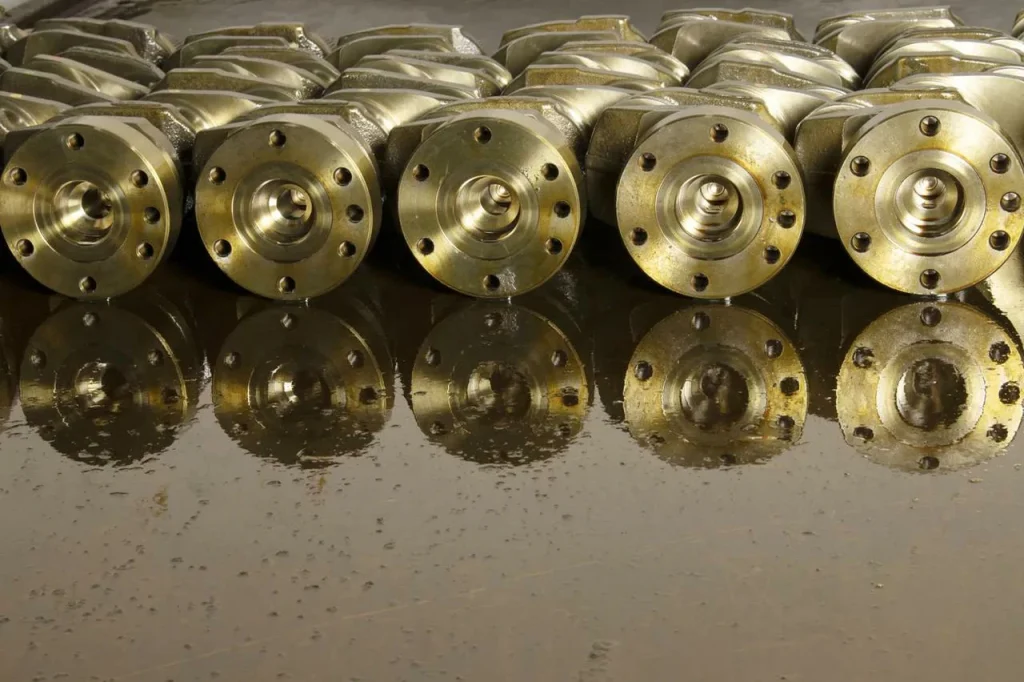
Precious metal plating process: workflow from prep to finish
The precious metal plating process involves multiple crucial steps that ensure a strong, durable, and functional surface. From surface preparation and the application of underplates to the plating bath chemistry, deposition controls, and post-plating finishing, each step must be carefully executed to prevent defects and ensure optimal performance.
Surface preparation and cleaning steps that make or break adhesion
Typical Plating Stacks / Underplates
In many precious metal plating processes, an underplate layer is applied before the precious metal. This layer serves specific purposes depending on the material and service requirements. Common underplate functions include:
- Adhesion: Ensuring the precious metal adheres properly to the substrate.
- Diffusion Barrier: Preventing interaction between the substrate and the plated metal that may affect performance.
- Corrosion Protection: Providing an additional layer to resist oxidation or wear.
The selection of the plating stack depends on the substrate and application. For example:
- Common approach: substrate → adhesion/strike → barrier underplate → precious metal top layer.
- Specify barrier needs when diffusion/contact resistance stability is critical.
Precious metal plating processes are often judged by the final surface, but the failure modes often start earlier. Poor adhesion, peeling, and blistering are commonly rooted in surface preparation. In simple terms: if the substrate surface is not clean and chemically ready, the deposited metal layer is attached to contamination, not to the part.
Preparation usually includes:
- Removing oils and soils from machining, polishing, or handling
- Removing oxides and passive films from the base metal
- Activating the surface so the first deposited layer can bond well
- Controlling rinsing so residues do not carry into the plating bath
This is where feasibility often breaks on mixed-material assemblies. A substrate stack-up (for example, a copper alloy insert in a stainless body) can need different activation approaches. If a design forces dissimilar metals into one rack operation, ask the shop how they prevent under-cleaning one surface while over-etching another.
Plating bath chemistry and “precious metal plating chemicals” basics
A plating bath is a controlled chemical system that supplies metal ions and supports deposition. When buyers search “precious metal plating chemicals,” they are often looking for two things: whether the chemistry is common and controllable, and what compliance burdens come with it.
At a high level, bath chemistry control affects:
- Metal ion availability (which affects deposition rate and uniformity)
- Deposit structure (which affects hardness, appearance, and porosity)
- Sensitivity to contamination (which affects pitting, discoloration, and rejects)
For feasibility, the important procurement insight is this: chemistry control is part of quality control. If a shop cannot document bath maintenance and contamination controls, you may see lot-to-lot variation that looks like “random plating defects” but is really a process drift problem.
Closed-loop and recovery systems also matter here, since precious metal plating solution value can be high and waste handling has both cost and compliance impact.
Deposition controls: time/current density, agitation, temperature (process checklist)
Even with perfect cleaning, plating can fail if deposition is not controlled. The three controls engineers ask about first are current density, time, and agitation, because they shape thickness distribution and deposit properties. Temperature also affects plating technology outcomes by changing reaction rates and bath behavior.
Process checklist (what to confirm in a technical review):
| Control area | What it affects | What to ask for (buyer language) |
|---|---|---|
| Current density and electrical contact | Thickness, burning, edge buildup | How is current delivered and verified at the part? How do you prevent thin deposits in recesses? |
| Time at current | Thickness target | How is time tied to the thickness class in the spec? How is rework handled? |
| Agitation / solution movement | Uniformity, pitting | How is agitation controlled for small cavities and high surface area parts? |
| Temperature control | Deposit structure, appearance | What is monitored and recorded per lot? |
| Racking and part orientation | Coverage and shadowing | How is the part fixtured to avoid bare spots and thin areas? |
A common design misunderstanding is expecting uniform thickness on sharp edges, deep bores, or complex CNC parts. Electroplating follows the electric field, so edges often build faster and recesses often lag. If your drawing expects a uniform metal layer everywhere, you may need to change geometry, add auxiliary electrodes, or accept that the acceptance criteria will focus on functional areas.
Post-plating finishing: rinsing, drying, polishing, protective topcoats
Post-plating steps are easy to treat as “cosmetic,” but they often decide whether the surface is stable in shipping and storage. Typical steps include rinsing to remove residues, drying to avoid water spots or staining, and polishing if appearance or contact finish needs it.
For silver plating in particular, packaging and handling after plating can affect tarnish behavior. For gold plating, post-plate handling matters because thin layers can be scratched or burnished during bulk packaging, which changes the finish and can expose underplate at high spots.
Some products also use protective topcoats, but those coatings can change solderability, bonding, or contact resistance. If you need a solderable surface or a low contact resistance interface, treat any topcoat as a controlled material in the stack, not as a default add-on.
Process workflow diagram (from prep to finish):
| Process Step | Description |
|---|---|
| Incoming parts | Parts received for plating |
| Incoming inspection | Check substrate, damage, and prior coatings |
| Clean / degrease | Remove oils and contaminants |
| Activate / remove oxides | Activate surface and remove oxide layers |
| (If specified) underplate deposition | Apply underplate layer (if required) |
| Precious metal plating | Apply gold, silver, palladium, or platinum plating |
| Rinse and dry | Rinse parts to remove residues and dry thoroughly |
| (If specified) polish / finish | Polish or finish the surface (if required) |
| Final inspection + test | Check thickness, adhesion, and visual defects |
| Pack for storage/shipment | Pack parts with controls for tarnish and scratches |
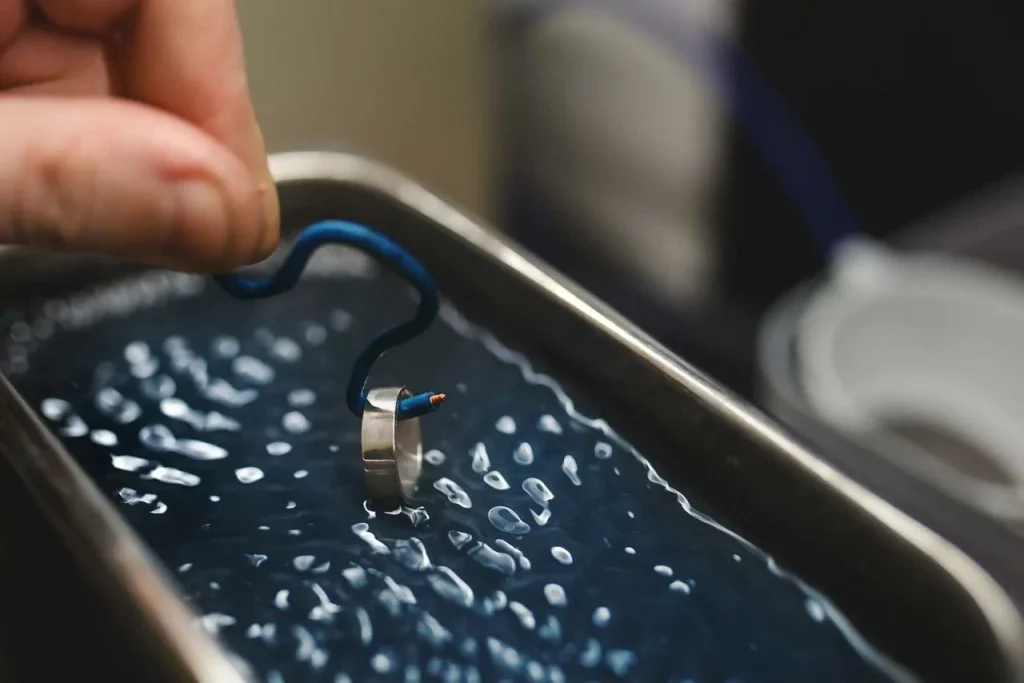
Application requirements by industry (use-case matrix)
Industry requirements drive what “good plating” means. A jewelry buyer may accept wear that an electronics OEM would reject, and a medical device program may reject finishes that are fine for consumer products because of documentation gaps.
Jewelry plating: appearance, wear expectations, and customer care guidance
Jewelry plating decisions often start with color and shine, but feasibility depends on expected wear. Rings and bracelets see frequent abrasion; earrings may see less wear but higher skin contact. If a buyer wants a very thin layer for cost reasons, the realistic expectation should be that wear-through can happen faster on high-contact surfaces.
From a technical buying view, the two key controls are:
- Substrate and underplate choice: These affect adhesion and whether base metal color can “bleed” through as the surface wears.
- Finish and care guidance: End-user handling changes life. Exposure to sweat, cosmetics, and cleaning agents can shift discoloration risk.
Jewelry programs often fail in the field because customer care assumptions were not stated. If you sell plated items and want fewer returns, you need a clear, testable statement of what the plated finish is expected to withstand, tied to how people actually wear it.
Electronics plating: contact reliability and conductivity-driven decisions
Electronics is where precious metal plating moves from “finish” to “functional surface.” The main drivers are electrical conductivity, resistance to oxidation, and stable performance over time.
When engineers specify gold plating for electronics, the hidden requirement is often contact reliability: stable contact resistance after storage, thermal cycling, vibration, and repeated mating. A mil-spec gold finish callout often implies that the supplier must meet defined thickness classes and inspection methods, not just “gold color.”
Silver plating for conductivity is also used, especially where low resistive loss matters. The risk is that tarnish or surface films may change real contact behavior, so you need to match silver to environments and contact mechanics.
A common procurement mistake is asking “gold or silver?” before clarifying the failure mode you are trying to prevent. If the failure mode is oxidation-driven high contact resistance after storage, gold is often favored. If the failure mode is resistive loss and the environment is controlled, silver can be a fit, but you still need a plan for tarnish control.
Automotive/aerospace: corrosion and durability priorities
Automotive and aerospace parts often see mixed environments: humidity, salt, temperature swings, and vibration. Precious metal coatings are used to manage corrosion resistance and electrical interface stability, but the design must also account for wear and fretting.
Environment exposure table (what changes the plating choice):
| Exposure condition | What it tends to drive | Plating-related watch-outs |
|---|---|---|
| Humidity / condensation | Resistance to corrosion and oxidation | Porosity and underplate quality matter because pores become corrosion sites |
| Salt or coastal exposure | Higher corrosion risk at defects | Edge coverage and post-plate handling matter; thin spots become initiation points |
| Vibration / fretting | Wear and debris at contacts | Hardness and deposit type matter; thin layers can wear through at hot spots |
| Temperature cycling | Interface stability | Different metals expand differently; adhesion and underplate choice become more important |
| Long storage before use | Stable surface films | Gold resists oxidation; silver needs tarnish management planning |
Aerospace components also bring documentation expectations. Traceability and inspection records are often part of the feasibility question, not an afterthought.
Medical devices: biocompatibility considerations and documentation needs
Medical device plating is less about picking a precious metal and more about proving the full material system is safe and controlled. Even if gold or platinum is biocompatible in general terms, your specific process can introduce residues, underplate exposure, or particulate risk.
Two feasibility questions come up early:
- What surfaces are patient-contact, and for how long? Short-term external contact is different from long-term implant exposure. Plating defects, pores, or wear-through may expose underplates or substrate materials that were not assessed.
- What documentation is required? Medical programs often require material declarations, process controls, and test evidence tied to regulatory frameworks and biocompatibility evaluation standards.
In short, medical device work can require more than “meet a plating thickness.” It can require controlled cleaning, validated processes, and traceable records across lots.
Use-case matrix (quick alignment):
| Industry | Primary drivers | Common decision focus |
|---|---|---|
| Jewelry | Appearance, perceived value | Wear expectations, underplate for color stability, care guidance |
| Electronics | Reliability, conductivity, solderable surfaces | Gold plating vs silver plating based on oxidation vs film risk; deposit type (hard/soft) |
| Automotive | Corrosion + vibration durability | Porosity control, edge coverage, fretting behavior |
| Aerospace | Extreme conditions + traceability | Documentation, inspection rigor, stable interfaces |
| Medical device | Biocompatibility + documentation | Material system control, records, risk of underplate exposure |

Specs, thickness, and quality benchmarks (standards + inspection table)
By clearly stating the plating stack, including the substrate, underplate, and finish details, as well as establishing acceptance criteria, you ensure consistent results. This approach prevents potential discrepancies and guarantees the plating process meets your performance and longevity expectations.
How to specify plating: substrate, underplate, finish, and acceptance criteria
A plating RFQ that only says “precious metal plating” is incomplete. To get consistent results, your RFQ should define the stack and how it will be accepted. The goal is to prevent a shop from making silent choices that affect performance and longevity.
RFQ template (technical minimum):
| Spec element | What you need to state | Why it matters |
|---|---|---|
| Substrate material and condition | Base metal, heat treat, prior coatings, surface finish | Adhesion and cleaning depend on substrate and its oxide behavior |
| Areas to plate / mask | Plated zones, keep-out areas, functional contact zones | Controls cost and avoids plating where it causes fit issues |
| Underplate requirement | If an underplate is required and what type | Underplates control adhesion, diffusion, and corrosion behavior |
| Precious metal and deposit type | Gold, silver, palladium, platinum; hard vs soft where relevant | Deposit properties affect wear and contact reliability |
| Thickness class | Call out by standard class/type instead of “thin/thick” | Enables inspection and reduces disputes |
| Finish requirements | Matte/bright, polishing limits, surface defects allowed | Appearance and contact finish can change function |
| Acceptance criteria | Thickness measurement method, adhesion test, visual criteria | Defines pass/fail in a way both sides can verify |
| Lot traceability needs | Marking, certs, process records | Needed for aerospace and medical device programs |
How thin is gold plating on CNC parts? It depends on the thickness class you specify and what the part must do. Decorative finishes can be very thin, while functional contact surfaces are usually specified by a plating standard class tied to inspection. For complex geometries, specify minimum thickness in functional areas, considering edge/thickness nonuniformity as a design reality. For CNC parts with sharp edges or deep pockets, also expect thickness variation unless the design is adjusted, since electroplate thickness follows the electric field.
For precision CNC turning and milling services to support complex plated parts, you can rely on Uneed, which specializes in high-accuracy component fabrication suitable for gold, silver, or other precious metal plating applications.
Standards to know and what they help define
Plating standards do not just define “gold.” They define test methods, thickness classes, and sometimes deposit types. That matters because it turns plating into something you can buy repeatedly.
A short list engineers often encounter:
| Standard (example) | What it helps define for buyers |
|---|---|
| ASTM B488 (gold plating) | Common language for gold thickness classes and deposit requirements; supports consistent inspection and certification. ASTM B488 for gold plating defines thickness classes, deposit types, and sampling/inspection methods, ensuring consistent application and reducing disputes over “thin” or “thick” deposits. |
| ISO plating standards (various) | International frameworks for plating specifications and test methods, depending on metal and application |
| IPC/IEC documents (electronics contexts) | Expectations for finishes on electronics and interconnects, often tied to solderability and reliability tests |
Inspection & testing: adhesion, porosity, thickness measurement, visual defects
Inspection needs to match the risk. If the plated part is decorative, visual inspection may dominate. If it is a connector contact, thickness and porosity become much more important.
QC checklist (what is commonly checked):
| Inspection item | What it catches | When it matters most |
|---|---|---|
| Thickness measurement | Under-plating and cost disputes | Contacts, solderable surfaces, wear surfaces |
| Adhesion test | Peeling, blistering, weak bonds | Any part exposed to thermal cycling, bending, or vibration |
| Porosity assessment | Pathways for corrosion to underplate/substrate | Corrosion-prone environments, long-life interfaces |
| Visual defects (pitting, discoloration, burns) | Bath contamination, process drift, handling damage | Decorative finishes and sensitive contact surfaces |
| Coverage on features | Thin in recesses, edge buildup | CNC parts with pockets, holes, sharp edges |
Even good shops can see defects if the part is hard to rack or if the geometry causes strong current crowding. If your design has deep bores, fine pitch features, or blind pockets, talk about inspection locations early. Otherwise you may pass thickness in easy-to-measure areas and fail in the real functional zone.
How long does gold plating last?
Gold plating life depends on wear, thickness class, deposit type (hard vs soft), and what it rubs against. A thin layer on a high-contact surface can wear through quickly, while a thicker functional deposit in a low-wear environment can last much longer. If “lasting” is a requirement, define the duty cycle (mating cycles, abrasion, cleaning exposure) and tie it to inspection and test methods.
Cost drivers and estimating total project cost
Understanding the key drivers of cost in precious metal plating is essential for accurate project estimation and budgeting. Several factors, including material prices, part size, and specific process requirements, influence overall costs.
What actually drives cost: metal price volatility, thickness, surface area, scrap/rework
Precious metal plating cost is not just “metal price times weight.” Most of the cost comes from a few coupled drivers:
- Metal price volatility: gold, silver, palladium, and platinum prices can swing. That changes quoting behavior and can change whether a deposit choice still makes sense mid-program.
- Thickness class and surface area: plating cost scales with how much metal layer you deposit over how much area. Small parts with large total area (because of quantity) can still be material-heavy.
- Yield and rework: scrap and rework costs often dominate when defects occur, since stripping and replating is not always clean or possible without changing dimensions or surface condition.
- Masking and selective plating: reducing plated zones can cut precious metal use, but masking adds labor and risk (mask leaks, edge defects).
What is the cost of gold plating for small parts? Without your part’s surface area, thickness class, masking needs, and yield risk, any number would be misleading. Small parts can be inexpensive per piece in high volume if racking is efficient, but they can also be costly if they require selective plating, tight visual standards, or frequent rework. For budgeting, treat cost as a function of plated area × thickness class × yield, then stress-test it against metal price swings.
Volume and lead-time effects: prototype vs production runs
Volume changes both unit cost and risk. Prototypes often carry higher setup and inspection overhead per part. Production runs shift focus toward lot consistency, bath control, and automated inspection.
| Program stage | What tends to dominate | Typical buyer risk |
|---|---|---|
| Prototype | Setup, test coupons, manual handling | Learning curve defects, unclear acceptance criteria |
| Pilot | Process stability, fixture/rack iteration | Lot-to-lot variation, unexpected wear behavior |
| Production | Yield, throughput, metal usage control | Price swings, supplier capacity, compliance documentation |
Lead time interacts with metal price volatility: quotes may carry shorter validity when metal costs are moving. If you have a long ramp, consider how you will manage that exposure contractually and technically (for example, by minimizing plated area or validating an alternate metal).
Cost vs performance trade-offs: when to change metal, thickness, or process
Cost reduction should not start with “make it thinner” unless you know the failure mode. A more reliable approach is to identify what is driving performance loss is, then adjust the design or stack:
- If failures are oxidation-related (contact resistance rising after storage), switching from silver to gold may reduce that risk even if silver has higher bulk conductivity.
- If failures are wear-through (base metal showing, intermittent signals), changing from soft gold to hard gold, adjusting thickness class, or changing the mating geometry may help more than changing the top metal.
- If failures are porosity-driven corrosion, you may need a different underplate, improved cleaning, or a different acceptance test, not just a thicker top layer.
If you are plating CNC parts, also consider whether tolerance stack-up and fits allow for a change in coating thickness class. Plating adds a metal layer, so it can affect critical dimensions, especially on tight sliding fits or threaded features.
Is gold plating cheaper than solid gold (and when does it make sense)?
Gold plating is usually cheaper than making a part from solid gold because you are applying a thin layer rather than paying for bulk material. It makes sense when you need gold’s surface properties (resistance to oxidation, appearance) but not the structural properties of gold throughout the part. It does not make sense when wear will quickly remove the thin layer and expose underplates or substrate, unless the design accepts that wear.
Market size, growth, and demand trends (charts)
Market size forecasts for 2020, 2025, and 2033 provide valuable insight into the industry’s trajectory, highlighting the demand drivers and growth opportunities. However, it’s important to note that various reports may differ in their scope, depending on the applications and regions considered.
Market size snapshots and forecasts (compile: 2020, 2025, 2033 figures/CAGRs)
Public market-report summaries provide several snapshots for the precious metal plating market size, but they do not perfectly align. The differences usually come from scope (which applications and regions are included) and what is counted as “precious metal plating” versus adjacent categories.
Here are the figures explicitly cited in the provided competitive context:
- 2020 market size estimate: USD 193.73M (with a stated CAGR of 6.1% in that report’s forecast window).
- 2025 estimate: USD 254.39M growing to USD 393.38M by 2033, with a stated CAGR of 5.6%.
- Another 2033 estimate: USD 351.8M by 2033, with a stated CAGR 5.05%.
Chart (reported market size snapshots):
| Year | Market Size (USD Millions) |
|---|---|
| 2020 | 193.73 |
| 2025 | 254.39 |
| 2033 | 351.8 – 393.38 |
Treat these as planning inputs, not as a single “true number.” If you are making a capacity or sourcing decision, ask what is included: jewelry plating only, electronics plating, automotive/aerospace, and whether chemical sales are counted separately.
A separate market summary focused on precious metal plating chemicals cited USD 2.2B in 2025 to USD 3.2B by 2035 with CAGR 3.9%. That larger scale is a reminder that “chemicals market” scope can include a wider set of consumables and services than the plating service market size summaries.
Key demand drivers cited: e-commerce jewelry, corrosion-resistant coatings, emerging economies
Across the provided market-report summaries, the same drivers show up repeatedly:
- E-commerce jewelry demand: plated jewelry sells at price points that expand buyer reach, so it can increase plating volume.
- Corrosion-resistant coatings: demand rises where connectors and components need stable performance over time.
- Emerging economies: growth in manufacturing output and consumer demand can lift plating volumes.
For an engineer, the main takeaway is that demand is pulled by both consumer and industrial needs. That mix matters: consumer-driven demand can be more sensitive to fashion cycles and price, while industrial demand tends to be tied to product platforms and qualification cycles.
Regional trends to watch (Asia-Pacific growth; North America/Europe context)
The provided competitive notes cite regional growth rates that point to Asia-Pacific as a key growth region. One report summary cited Asia-Pacific CAGR 6.2%, with North America around 5.7%, and Europe also tracked as a major region.
From a sourcing standpoint, regional trends are not only about demand. They can also affect:
- Where plating capacity expands
- How supply chains for precious metals and chemicals are structured
- Compliance expectations and documentation norms for exports
If you are qualifying precious metal plating services across regions, plan for differences in standard adoption, certificate formats, and export documentation even when the plating finish itself is identical.
Risk factors: supply chain disruptions and price swings
Precious metals bring a specific kind of risk: the metal is both a functional input and a traded commodity. That can hit you through price swings, allocation, or changes in quote validity.
Scenario table (planning view):
| Risk scenario | What you may see | Technical mitigations to consider |
|---|---|---|
| Precious metal price spike | Quote revisions, pressure to reduce thickness | Reduce plated area via selective plating; validate palladium plating or different thickness class where feasible |
| Supply chain disruption | Longer sourcing cycles, limited chemistry availability | Qualify second sources; lock down standards and acceptance tests so transfers are possible |
| Quality drift under cost pressure | Higher defect rates, more rework | Tighten inspection table, require thickness and adhesion evidence per lot |
| Compliance tightening | Added documentation and waste-handling cost | Confirm shop controls, waste/water documentation, and traceability early |
Sustainability, compliance, and recycling considerations
The key aspects that affect both the environment and worker safety not only help ensure regulatory adherence but also play a crucial role in the overall efficiency and cost-effectiveness of the plating process.
Environmental and worker-safety compliance basics for plating operations
Precious metal plating can involve regulated chemicals, aerosols, and waste streams. Even when the deposited metal is inert, the process inputs may trigger environmental and worker-safety controls.
From a buyer’s view, you do not need to audit a shop like a regulator, but you should confirm they operate under relevant rules for:
- Air emissions and ventilation controls
- Wastewater handling and discharge controls
- Hazard communication, PPE, and worker exposure controls
- Storage and handling of plating solution and process chemicals
If your program is in aerospace or medical device categories, compliance evidence and controlled documentation can be part of feasibility. If the shop cannot provide basic compliance documentation, you risk supply interruption even if the parts look fine today.
Recycling and recovery: why closed-loop matters in precious metal plating chemicals
Closed-loop recovery matters because precious metals are valuable and because waste streams can be expensive to handle. In practice, recovery systems can affect total cost in two ways:
- Lower net consumption of precious metal plating chemicals and metal ions
- Lower disposal and compliance costs, depending on the waste profile
Even without numbers, the logic is simple: if your program uses a large surface area of gold or palladium plating, recovery and recycling can be a major cost and sustainability lever.
Waste, water, and emissions: what to ask a shop about controls and documentation
A practical buyer checklist focuses on what can stop production or create hidden cost:
| Topic | What to ask | Why it matters |
|---|---|---|
| Wastewater | How rinses are treated and documented | Rinsing is constant; weak controls can shut down plating lines |
| Air handling | How mists and fumes are controlled | Protects workers and reduces compliance risk |
| Chemical storage | Secondary containment and labeling practices | Reduces spill and shutdown risk |
| Waste disposal | How waste streams are classified and shipped | Prevents program disruption from disposal issues |
| Records | What is recorded per lot (bath checks, inspections) | Supports traceability and defect root-cause work |
How sustainability impacts vendor choice and total cost
Sustainability affects vendor choice because it changes reliability, not just ESG reporting. A shop with strong controls tends to have fewer defects, fewer shutdowns, and more consistent deposits.
Vendor sustainability/quality scorecard (procurement use):
| Category | What “good” looks like | Risk if weak |
|---|---|---|
| Recovery and recycling | Documented recovery approach for precious metals | Higher net cost; waste and compliance exposure |
| Water management | Controlled rinsing and treatment records | Line stoppages, inconsistent finishes |
| Worker safety systems | Training and documented controls | Higher incident risk; supply interruption |
| Documentation | Lot records and material declarations | Harder failure analysis; audit failures |
| Continuous monitoring | Routine bath and process checks | More pitting, discoloration, and thickness drift |
Troubleshooting, vendor selection, and FAQs
From identifying defects like peeling and discoloration to evaluating vendor capabilities, the following subsections offer practical guidance for ensuring quality and consistency. Whether you’re troubleshooting problems or choosing a reliable plating supplier, this framework will help you navigate the complexities of precious metal plating processes.
Common defects and root causes: peeling, discoloration, pitting, uneven coverage (troubleshooting table)
Most precious metal plating defects trace back to a few root causes: poor surface prep, bath contamination, poor racking, or uncontrolled deposition. The table below links symptoms to likely causes and what to check first.
| Defect | What it often means | First checks |
|---|---|---|
| Peeling / flaking | Adhesion failure | Cleaning and activation steps; substrate contamination; incompatible underplate |
| Blistering | Trapped contamination or gas; poor activation | Prep sequence; rinse quality; underplate adhesion |
| Discoloration | Bath contamination or post-plate handling | Bath maintenance records; rinse/dry steps; packaging and contact with sulfur sources |
| Pitting | Particles or gas bubbles during deposition | Filtration, agitation, wetting; rack contact quality |
| Uneven coverage | Geometry + current distribution | Racking/orientation; shielding; auxiliary electrodes; acceptance zone definition |
| Burning at edges | Excess local current density | Current control; edge geometry; shielding and rack design |
A common buyer trap is to treat defects as “cosmetic.” In electronics, discoloration or pitting can signal contamination that also affects porosity and contact reliability. In aerospace, uneven coverage on edges can be the start of corrosion sites.
Vendor selection framework: capabilities, QA, certifications, traceability
Vendor selection should start from your application risk, not from a generic capability list. A shop that does decorative finishes well may not have the same inspection discipline needed for connector plating.
Vendor scorecard (engineering-focused):
| Category | What to confirm | Evidence to request |
|---|---|---|
| Process capability | Metals offered (gold, silver, palladium, platinum), underplates, masking | Process list tied to standards, not just marketing names |
| Quality system | Documented inspection and lot release | Sample CoC, thickness and adhesion records |
| Traceability | Lot trace, bath control records | Lot traveler or equivalent record set |
| Standards alignment | Ability to plate to ASTM/ISO callouts | Proof of prior work to the same standard class |
| Defect handling | Root-cause and corrective action process | Example of defect closure without revealing customer info |
| Part handling | Packaging to avoid tarnish/scratches | Packaging specs and handling controls |
Checklist (what to send with an RFQ): drawings with plated areas marked, substrate callouts, required standard, acceptance criteria, and the intended service environment (humidity, vibration, mating cycles, storage time). If the supplier does not know the service environment, they can still plate the part, but you may not get the reliability you expect.
What’s the difference between gold-filled, vermeil, and gold-plated?
Gold-plated means a thin gold layer deposited on another metal, commonly by electroplating. Gold-filled is a thicker mechanically bonded gold layer, so it usually contains more gold than standard plating and can wear differently. Vermeil is a specific jewelry term that refers to gold plating over silver, and it is still a plated system with wear limits tied to thickness and use.
How do I maintain plated jewelry so it doesn’t wear off fast?
Wear is driven by abrasion, chemicals, and repeated contact, so reduce those exposures where possible. Avoid aggressive cleaners and minimize friction against hard surfaces, since a thin layer can wear through at high spots. Store plated items to reduce tarnish risk for silver and to prevent scratching for gold finishes.
Ending: deciding if precious metal plating is suitable
Precious metal plating is suitable when you need a controlled surface: stable conductivity, resistance to oxidation, corrosion resistance, or a defined appearance. Feasibility depends on whether you can define the plating stack (substrate and any underplate), tie it to a recognized standard, and inspect it in the areas that matter.
It becomes risky when the geometry makes coverage hard to control, when the application has high wear without a matching deposit type, or when acceptance criteria are vague. Cost is usually manageable when plated area and thickness class match the functional need, and when you plan for metal price volatility instead of treating it as an exception.
FAQs
Gold plating is used on connectors because gold resists oxidation and maintains a stable interface in air, unlike other metals that can form surface films or oxides. This helps keep contact resistance predictable and low over time. While silver has higher bulk conductivity, it is more prone to tarnish, which can negatively affect the contact behavior. Therefore, gold plating is often preferred for its long-term reliability in low-signal applications. In environments with minimal exposure to air, silver might be considered, but gold plating offers more consistent performance.
Silver plating is an excellent choice for applications where conductivity is the primary concern, as silver is the best conductor of electricity. However, the trade-off is that silver tarnishes over time, which can impact its performance. Tarnish can change contact resistance, especially in environments with sulfur or humidity. If silver is chosen, careful consideration should be given to the part’s environment, storage conditions, and potential tarnish mitigation measures. Proper handling and packaging are critical to maintaining its conductivity and performance.
To avoid discrepancies in the plating process, ensure your drawing specifies the substrate, plating standard, thickness class, and any required underplate. Clearly define the areas to be plated or masked, especially for complex geometries. Indicate the required inspection methods and establish acceptance criteria, including tolerances for visual defects. This will prevent variations in the plating process that could lead to performance issues. By being detailed in the specifications, you ensure the final product meets the necessary functional and aesthetic standards.
Reducing the cost of gold plating can be achieved by selectively plating areas, minimizing the use of precious metals without compromising functionality. Consider switching to a different metal, such as palladium, which offers a more cost-effective alternative while still meeting reliability requirements. Another option is adjusting the deposit type, using hard gold in high-wear areas and soft gold where ductility is needed. However, it’s crucial not to reduce the plating thickness without understanding how it will impact the part’s performance, particularly its durability. Always balance cost-saving measures with the part’s intended use and service life.
Peeling is most often caused by poor adhesion between the plated layer and the substrate, which can result from inadequate cleaning or activation during surface preparation. If the surface is contaminated, or the underplate is incompatible with the substrate, the metal layer may fail to bond properly. Geometry and racking issues, such as improper part orientation during plating, can also lead to areas with insufficient coverage or weak bonds. Focus on ensuring proper cleaning, activation, and using compatible underplates to prevent adhesion issues. Reviewing the surface preparation process is key to resolving this problem.



 English
  German
  French
  Italian
  Spanish
  Polish
  Czech
Czech  Japanese