
A brushed aluminum finish is often treated as “cosmetic.” In production, it behaves more like a controlled surface engineering step in metal fabrication. It is subtractive, changes surface roughness (Ra), and can remove pits and casting marks. Brushed aluminum services offer improved corrosion resistance because the brushed surface has more area and more places to trap residue, providing additional wear resistance.
For engineering teams and technical buyers, the feasibility questions are usually practical:
- Can the part geometry be brushed without “shadows” or cross-grain?
- Can the process be held stable across operators, lots, and material batches?
- Will the finish survive cleaning, fingerprints, and corrosion exposure in the real environment?
- Is the finishing step going to hide machining marks, or make them more obvious?
This article stays on those decision points and the parameter controls that drive repeatability.
What a brushed metal finish is (and why it’s used)
Definition and core visual effect: anisotropic, directional scratch pattern
A brushed metal finish is a surface finish defined by a unidirectional satin finish, sometimes called a grain or directional grain finish. This finish offers enhanced aesthetic appeal and can be achieved on different metals like stainless steel and aluminum, each providing a unique result. “Directional” matters because the surface looks different depending on viewing angle and lighting. That direction-dependent look is the core visual behavior: the surface is anisotropic, meaning it has different appearance properties along different directions.
In practice, the finish is made by moving an abrasive in a controlled path so it leaves fine, mostly parallel lines. If the lines drift, cross, or change depth, the eye sees it quickly as uneven. This is why brushed finishes that look “simple” on a flat coupon can be hard on real parts with edges, pockets, holes, or curvature.
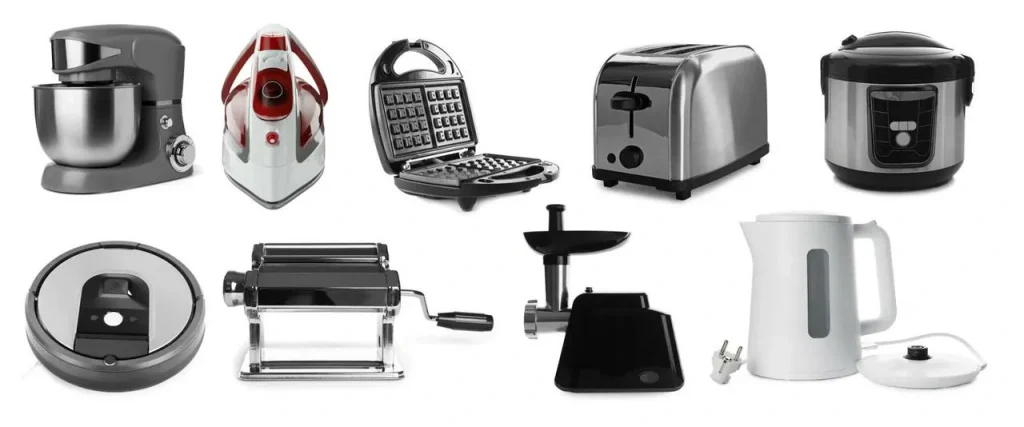
A “satin brushed finish” is often used as a functional-cosmetic middle ground between mirror polishing and raw mill finish. This type of finish is especially popular for metal parts, such as those used in kitchen appliances, providing a refined look that also helps with corrosion resistance. In many shops and print specs, “satin” is used loosely. Sometimes it means a finer brushed texture (higher grit, shallower scratches). Sometimes it means a uniform matte look without a strong visible grain. If your drawing or purchase spec says “satin,” it helps to clarify whether the requirement is directional grain, low gloss, low Ra, or all three.
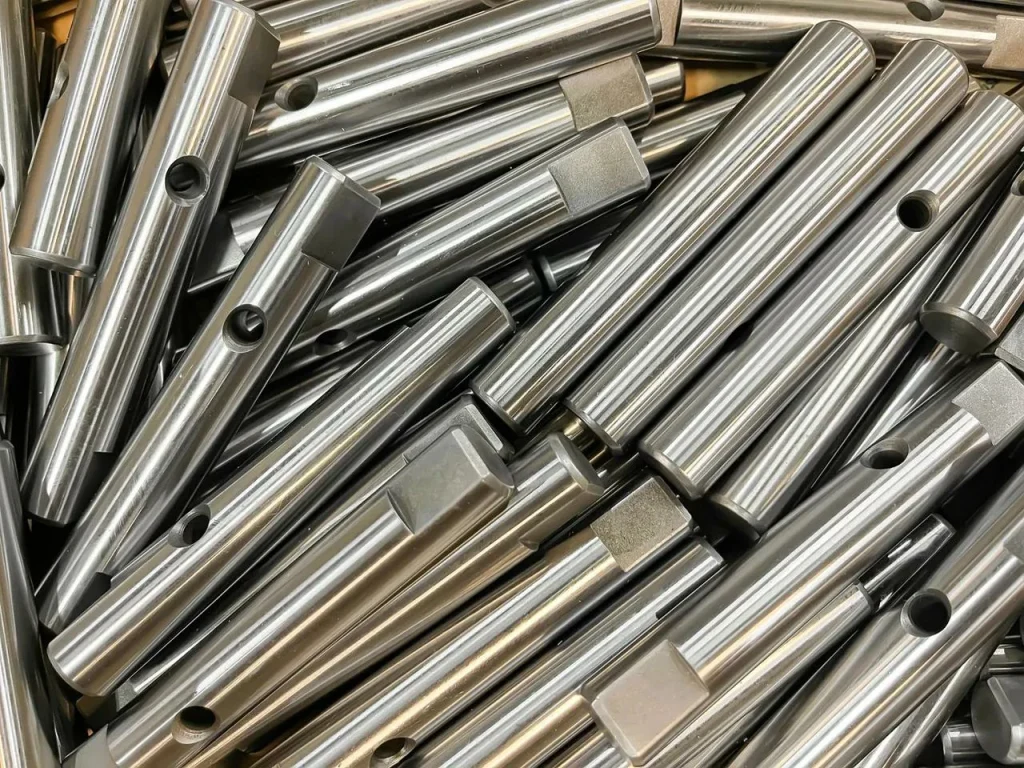
What the process accomplishes: removes a thin surface layer to eliminate pits/casting marks and distribute wear
Brushing removes a thin surface layer, which is essential to achieve a brushed metal finish. This process helps improve the surface of metal parts by removing shallow pits, casting marks, light oxidation, or handling damage, offering improved corrosion resistance and wear resistance.
This is also why the process can distribute wear more evenly than a smooth finish in certain use cases. A smooth surface shows the first scratch clearly. A brushed surface already has controlled scratches, so early wear can blend in—up to a point. Deeper damage still shows. The key point is that brushing does not “hide” defects for free. It replaces random defects with a controlled texture, and that texture sets a baseline for what later wear will look like.
Functional benefits: improved adhesion via higher surface roughness (Ra) + mechanical locking; integrated deburring for safer edges
A brushed finish changes surface roughness, commonly discussed using Ra (average roughness). A higher Ra can improve adhesion for paints, glues, and coatings because it creates more surface area and more micro-scale features for mechanical locking (the coating physically keys into the roughness). This is not a promise that adhesion will always improve, because adhesion also depends on cleaning, oxide layers, chemistry, and coating choice. Still, increasing roughness in a controlled way is a known lever.
Brushing can also act as a partial deburring step. It can knock down small burrs and sharpness at edges. That can improve handling safety and reduce secondary deburring work. It does not replace proper deburring for all geometries. Tight internal corners, deep holes, and heavy burrs often need dedicated deburring before brushing, or they can tear abrasives and cause visible streaks.
Visual: Before/after image panel + glossary callout (Ra, deburring, “grain”)
Before/after image panel (what to show in a spec review):
- Panel A: “Before” surface with random tool marks, light pits, or casting marks.
- Panel B: “After” brushed surface with a single grain direction and even scratch density.
- Zoom inset: edge area showing whether the brushing operation created edge roll, uneven brightness, or a direction change near a feature.
Glossary callout (terms that affect acceptance):
- Ra (average roughness): a numeric measure of surface roughness. In brushing, Ra changes with grit, pressure, and belt condition.
- Deburring: removing burrs and sharp edges left from machining or cutting.
- Grain: the visible direction of the scratch lines. In brushed stainless steel and brushed aluminum, grain direction strongly affects the visual match between parts.
Brushed metal finish process (3 phases you must get right)
A brushed metal finish process is usually stable only when the full chain is controlled: prep, abrasion, and protection. If one phase is treated as “cleanup,” defects often appear later as stains, uneven grain, or corrosion marks.

Phase 1 — Surface preparation: cleaning/degreasing to prevent contamination-related defects
Surface prep is about removing oils, coolants, fingerprints, and embedded particles before abrasion. If contamination is present, the abrasive can smear it, drag it, or embed it. That can show up as dark streaks, patchy reflectivity, or localized marks that do not match the surrounding grain. As documented by surface finishing experts at the National Institutes of Health, proper cleaning and preparation of metal surfaces is critical to achieving a smooth and even finish, especially in environments where hygiene and appearance are important, such as in medical equipment or kitchen appliances.
From a feasibility standpoint, this phase matters more when:
- Parts come directly from CNC machining with coolant residue.
- Parts have adhesive films or handling oils.
- Parts were stored and picked up dust or shop grit.
If you are brushing a stainless surface and you see “contamination marks,” the cause is often upstream. The brushing step makes the problem visible because it creates a uniform field where any foreign mark stands out.

Phase 2 — Abrasion/brushing: creating uniform lines with controlled grit, pressure, speed, and direction
This phase creates the actual brushed texture, which depends on selecting the right abrasive belt and brush type. The variables that drive repeatability are physical controls like grit selection, pressure, and belt speed, all of which contribute to achieving the desired brushed finish.
- Grit selection and progression
- Pressure at the contact zone
- Belt speed and feed (or brush RPM and traverse speed)
- Direction control so the grain does not drift
- Tool condition (wear, loading, glazing)
If one variable changes, the scratch depth and density change. That changes gloss and the way fingerprints and smudges appear. It also changes how well adjacent parts match.
Phase 3 — Post-clean + protection: rinsing then sealing due to higher surface area
After brushing, the surface area is effectively higher, and the scratch grooves can trap residue. That increases the risk of moisture retention and contamination retention. This is why a post-brush cleaning step is part of feasibility, not just a housekeeping step.
Post-brush cleaning is often described as rinsing using:
- Chemical methods (alkalis, acids, surfactants), or
- Electrochemical methods
Selection depends on base material, residue type, and corrosion risk. After rinsing, a sealing or protective step is commonly used because the brushed surface is more reactive to its environment than a sealed or coated surface.
Diagram: end-to-end workflow (prep → brush → rinse → seal) + checklist
End-to-end workflow diagram (text version):
Prep (degrease / clean) → Brush (controlled grit + pressure + speed + direction) → Rinse (chemical or electrochemical) → Seal / protect (based on environment)
Printable checklist (process-level):
- Confirm base material (stainless, aluminum, brass, steel) and incoming surface state.
- Confirm required grain direction relative to part datums.
- Confirm abrasive type and grit progression plan.
- Set pressure targets and verify it stays stable during contact.
- Verify belt speed / feed (or brush RPM / traverse) for the material.
- Inspect for contamination sources before brushing.
- Rinse selection defined (chemical or electrochemical) and verified compatible.
- Seal/protect step defined for the exposure environment.
- Acceptance checks defined (grain angle, waviness, shadows, mismatch between parts).
Choosing a technique: belt sanding vs abrasive brushing vs CNC brushing
The same “brushed look” can be produced using very different equipment, including abrasive brushing, CNC brushing, or robotic brushing, depending on the required precision for the metal parts and the desired uniform finish. The choice affects repeatability, geometry limits, and cost drivers like rework.
Belt sanding: fastest throughput, lower precision and repeatability (trade-offs and best-fit use cases)
Belt sanding is often the fastest route to a brushed finish on flat or gently contoured parts. Throughput is the advantage. The trade-off is that belt sanding tends to have lower precision and lower repeatability than more controlled brushing paths, especially when:
- Part contact pressure varies because the part is hand-presented.
- Belt wear changes cut rate and scratch character over time.
- Complex features cause local pressure spikes and direction drift.
Best-fit use cases are usually sheet metal and simpler panels where the finish is directional and the geometry does not force tool lift-offs that create visible transitions.
Abrasive brushing: medium precision; balancing finish quality and cost for general parts
Abrasive brushing (using brush tools rather than wide belts) can balance finish quality and cost. It often handles moderate geometry variation better than belt sanding because the brush can conform. Precision is still limited if the process depends on manual technique, because small differences in angle and dwell time change the grain density.
This approach is commonly used for general parts where the brushed texture needs to be consistent but not “cosmetic-perfect” across large assemblies, or where the finish is secondary to function.
CNC/robotic brushing: highest precision for complex geometry and repeatable cosmetic parts
CNC or robotic brushing is used when the brushed surface is a cosmetic requirement and part-to-part matching matters. With controlled path, pressure, and speed, the process can be repeatable across production runs and across operators.
This is also where “Can you brush CNC machined parts?” becomes a practical yes—if the brushed operation is integrated or fixture-controlled so the contact path is consistent. It is especially useful when the part has pockets, curved faces, or features where hand brushing would create shadows or angle drift.
Table: technique comparison matrix (precision, speed, repeatability, complexity fit)
| Technique | Precision | Speed / throughput | Repeatability | Fit for complex geometry |
|---|---|---|---|---|
| Belt sanding | Low to medium | High | Low to medium | Low |
| Abrasive brushing | Medium | Medium | Medium | Medium |
| CNC/robotic brushing | High | Medium (varies by path) | High | High |
Process parameters that control uniformity (evidence-based specs)
Uniformity is mostly a function of controlling a small set of parameters within a stable window. The numbers below are not universal for every metal and tool, but they are the kind of benchmarks used in documented stainless steel brushing processes and process engineering discussions.
Grit progression and its effect on cosmetic defects and fingerprint resistance
A common progression is to begin with coarser grit and follow with finer grits to reduce visible defects and refine the surface. Adjustments should be made based on the application. Adjustments depend on the specific application.
Process adjustments such as grit progression have been linked to improvements in cosmetic outcomes and fingerprint resistance, depending on the material and process specifics. Fingerprint behavior is not only about grit. It also depends on oil retention in grooves, cleaning, and any sealing step. Still, grit choice is one of the few levers you can change without altering part design.
This also ties to a frequent buyer question: Is a brushed finish good for fingerprints? It can be better than a highly polished finish in some cases because the diffuse reflection and texture can make smudges less obvious. It is not a guarantee. Some brushed textures can trap oils and look streaky if not sealed or if grain depth is inconsistent.
Pressure control: a pressure setpoint with a narrow allowable band; monitor spikes at edges and tool entry to prevent uneven textures
Pressure changes scratch depth and can cause waviness. Setting a pressure setpoint with a narrow allowable band. Excessive pressure can lead to wavy textures, so maintaining a consistent pressure is critical to avoid such defects.
Monitor spikes at edges and tool entry to prevent uneven textures It is that pressure needs a target and a tolerance, and that overshoot has a known defect mode. If your brushed surface shows waves, one of the first checks should be whether pressure is spiking at edges, during tool entry, or when the operator “leans in” to remove a localized mark.
Belt speed interacts with pressure and grit
For stainless steel brushing, belt speed interacts with pressure and grit. Higher belt speeds can increase the cut rate and heat, while lower speeds can deepen scratches if pressure remains unchanged.
If your process is moving between stainless and aluminum, do not assume the same speed window will behave the same. Material hardness, thermal behavior, and loading of the abrasive can change the result, even if the scratch “looks” similar at first glance.
Chart + control plan: parameter windows + setup log template
A key control that is easy to underestimate is direction. Maintaining consistent direction during the process is essential to prevent uneven scratch patterns. A tight tolerance should be applied to ensure uniformity. If the grain angle shifts more than that across a face or between parts, the assembly can look mismatched under light.
Parameter window chart (example control plan table):
| Parameter | Example benchmark / window | What it controls | What goes wrong if it drifts |
|---|---|---|---|
| Grit progression | 120→240→400 (example) | Scratch depth and refinement | Visible random defects, harsh lines, inconsistent gloss |
| Pressure | 0.15 MPa ±0.02 MPa (target); >0.25 MPa risk | Depth, waviness risk | Waves, overcut edges, inconsistent grain density |
| Belt speed (304 SS) | 20–25 m/s | Cut rate and heat | Overly aggressive cut or inconsistent finish |
| Direction tolerance | ±3° | Visual match and anisotropy | Cross-grain, mismatch, “patchy” look |
Setup log template (what to record for repeatability):
- Part ID / revision and base material
- Incoming surface condition notes (machining marks, pits, casting marks)
- Abrasive type and grit(s)
- Belt/brush age (start time) and condition notes
- Pressure setpoint and any observed spikes
- Belt speed and feed (or brush RPM and traverse)
- Grain direction datum and measured/checked angle
- Post-clean method and seal/protect method
- Operator/shift and first-article acceptance notes
Practical how-to: achieving a consistent brushed finish
This section focuses on what usually causes variation: direction control, pressure stability, and choosing a starting grit that matches the real surface condition.
How do you do a brushed metal finish step by step?
A step-by-step brushed metal finishing process can be described in a few controlled stages:
- Clean and degrease the metal surface, so oils and grit are removed.
- Choose an abrasive plan (single grit or progression such as 120→240→400) based on the depth of existing defects.
- Set up for a unidirectional pass, so the grain is aligned to a defined datum and held within a tight angular tolerance.
- Apply controlled pressure and keep the contact path consistent across the face, avoiding stops and re-entries that create shadows.
- Rinse or clean after brushing using a chemical or electrochemical method suited to the base metal and residue.
- Seal or protect the brushed surface based on exposure (humidity, salts, handling, cleaning chemicals).
If you need the finish to match across multiple parts, treat steps 2–4 like a controlled process, not an operator skill task.
Setup fundamentals: unidirectional consistency, consistent pressure, and controlled contact path
Most brushed finish defects come from small inconsistencies that stack up:
- Unidirectional consistency: Keep the grain direction stable. Direction should be monitored carefully to ensure a consistent grain pattern. This matters most on assemblies, doors, panels, and appliance faces where adjacent parts are compared side-by-side.
- Consistent pressure: Pressure drift changes scratch depth and can create waviness. Set a target pressure with a narrow allowable band and monitor it carefully to maintain consistent scratch depth: define a band and hold it.
- Controlled contact path: If the tool path overlaps unevenly, the surface can show “bands” or darker zones. If the path has lift-offs and re-contacts, you can get shadowing near re-entry points.
This is also where the brushed vs satin question shows up in real work. A directional brushed surface can still be satin in gloss if the scratch pattern is fine enough and uniform enough. A “satin finish” without visible grain can be achieved with different tooling. So the acceptance criteria should be written in terms of grain visibility, direction, and uniformity—not only the word “satin.”
Managing grit recommendations: how to choose a starting grit based on existing surface defects (uncertainty noted)
Different sources describe starting grit ranges, and there is no single cross-verified standard in the provided material. That uncertainty matters, because starting too fine often fails to remove real defects, while starting too coarse can create deep scratches that take more steps to refine.
A practical selection approach is to start from the incoming surface:
- If the surface has visible pits, casting marks, or deeper machining marks, selecting the right grit progression, such as starting with a coarser abrasive belt, will level the surface in a reasonable time, helping achieve a brushed aluminum surface with uniform texture.
- If the surface is already smooth and you mainly need a uniform satin brushed finish, starting finer can reduce the risk of deep scratch rework.
This is also tied to the question Does brushing hide scratches and tool marks? It can blend light, shallow marks if they are not deeper than the brushed scratch field. If tool marks are deeper than your brushed scratch depth, brushing can make the surface look worse because the random deeper marks stand out against the uniform grain. In that case, you either need a more aggressive leveling step (coarser grit or more passes) or you need to change upstream machining to reduce mark depth.
Checklist: operator QC routine (scratch alignment, shadowing, waviness, belt condition)
Operator QC is where many lines either hold stable or drift. A simple routine check catches most issues early:
- Check scratch alignment against the datum and confirm the grain did not drift beyond a tight tolerance .
- Look for shadowing near edges, holes, pockets, or where the tool re-entered.
- Look for waviness, which can correlate with pressure overshoot.
- Check belt or brush loading and wear. In one documented process context, regular belt replacement is necessary to maintain consistent cutting behavior, based on observed wear. Treat that number as process-specific, not universal across all metals and abrasives.
- If defects appear, avoid spot-fixing with random hand pressure. Spot-fixing often creates localized gloss changes that are harder to remove than the original defect.
Cleaning, sealing, and corrosion prevention after brushing
Brushing creates controlled grooves. Those grooves can also hold moisture and residues. So cleaning and sealing are part of the engineering decision, not a “nice to have.”
Why brushed surfaces are more vulnerable: increased surface area retains moisture/contaminants (decision implications)
A brushed surface has more micro-surface area than a smooth one. The grooves can hold water, salts, and cleaning chemicals. This can increase the chance of staining or corrosion if the metal is exposed and not protected.
Decision implications are straightforward:
- If the part will be handled often (consumer contact), oils and salts can build up in the grain.
- If the part will be in humid or industrial environments, residues can sit in the grooves longer.
- If the part is stainless, “stainless” does not mean “stain-proof,” especially if contaminants remain after brushing.
So the finishing process should plan for post-brush cleaning and a protection method that matches the environment.
Post-brush rinsing options: chemical rinses (alkalis/acids/surfactants) vs electrochemical methods (selection criteria)
Documented options include:
- Chemical rinses using alkalis, acids, or surfactants to remove residues and films.
- Electrochemical methods for cleaning or surface conditioning.
Selection criteria usually come down to:
- Base material compatibility (stainless vs aluminum vs brass vs steel)
- Residue type (oil films, abrasive debris, handling salts)
- Downstream coating or sealing plan (some residues interfere with coating adhesion)
- Environmental exposure and corrosion risk
Because the brushed finish increases surface area, leaving residues behind can be more harmful than on a smooth finish.
How do you seal brushed metal to prevent corrosion?
Sealing brushed metal typically means adding a protective layer after cleaning, chosen for the exposure environment. The need is higher because the brushed texture can trap moisture and contaminants. The seal choice should match whether the part is indoor, frequently handled, or exposed to industrial moisture or chemicals. If parts will be coated or painted, the sealing step must also align with adhesion needs created by the roughened surface (Ra and mechanical locking).
Visual: sealing decision tree by environment exposure (indoor/consumer contact/industrial)
Sealing decision tree (text version):
- Indoor, low handling: cleaning + basic protection may be enough if exposure is mild.
- Indoor, frequent consumer contact: prioritize easy-to-clean protection and consistent appearance under fingerprints and smudges.
- Industrial or humid exposure: prioritize corrosion prevention, residue removal, and protection that resists moisture retention in the grain.
This is not a single “best” answer. The correct choice depends on exposure and cleaning expectations.
Defects, troubleshooting, and rework prevention
Brushed metal surfaces fail in predictable ways. The benefit of predictable failures is that troubleshooting can be systematic. The risk is that rework can quickly compound the problem by changing gloss locally.
Common defects: gouges, waves, uneven scratch patterns, “shadows,” contamination marks (symptoms → likely causes)
- Gouges: deep isolated scratches that cut across or below the normal grain depth. Often tied to trapped debris, damaged abrasive, or a momentary pressure spike.
- Waves: a rippled look across what should be straight grain. In documented stainless processes, higher pressure was linked to this defect mode.
- Uneven scratch patterns: areas with different scratch density, depth, or direction. Often tied to overlap inconsistency, belt wear, or angle drift beyond a tight tolerance.
- Shadows: darker or lighter zones, often near edges, holes, pockets, or re-entry points. Common when the tool lifts and re-contacts, or when geometry forces uneven pressure.
- Contamination marks: streaks or patches that do not follow the grain. Often tied to poor cleaning/degreasing or residue dragging during brushing.
Parameter-driven fixes: pressure overshoot, grit jumps, inconsistent direction, dirty surface, belt wear (linking to benchmarks)
Fixes should start with the variables most tied to the defect:
- If you see waves, check pressure control first. Documented targets show why pressure needs a setpoint and monitoring.
- If you see harsh lines or deep scratches that persist after refinement, check grit progression and whether there was a “grit jump.” A controlled progression is used to avoid leaving coarse scratches behind.
- If you see cross-grain or mismatch, check direction control and how grain direction is referenced. A tolerance is a practical threshold used in documented work.
- If you see contamination marks, go upstream to cleaning and handling. Fixing contamination by more brushing often makes the defect larger.
- If the finish drifts over time, check abrasive wear and loading. One documented practice used belt replacement, though this is process- and material-dependent.
What grit should I use for a brushed stainless steel finish?
Common grit sizes used for stainless steel brushing fall in the 120 to 400 range, often as a progression such as 120→240→400 when both defect removal and refinement are needed. Some guidance describes ranges like 120–320 or 240–400, and there is no single universal standard in the provided material. In practice, the starting grit should be chosen based on the depth of existing tool marks or pits, then refined to meet the visual requirement and fingerprint behavior.
Table: defect troubleshooting matrix + rework minimization checklist (air blasts/contamination controls; jigs/guides)
| Defect | What you see | Likely causes | First checks / fixes (tied to benchmarks) |
|---|---|---|---|
| Gouges | Deep isolated scratches | Debris, damaged abrasive, sudden pressure spike | Improve pre-clean; inspect belt/brush; avoid local over-pressure |
| Waves | Rippled texture | Excess pressure, unstable contact | Check pressure control; avoid overshoot (risk noted >0.25 MPa); stabilize fixturing |
| Uneven grain | Bands, density changes | Belt wear, overlap inconsistency, speed/feed drift | Verify belt speed (304 SS benchmark 20–25 m/s); standardize overlap and feed |
| Shadows | Dark/light zones near features | Lift-off/re-entry, geometry-driven contact changes | Use guides/jigs; maintain continuous passes; avoid spot-fixing |
| Contamination marks | Streaks/patched tone | Poor degreasing, residue dragging | Strengthen cleaning/degreasing; add contamination controls |
Rework minimization checklist (what reduces repeat defects):
- Use air blasts or similar contamination controls before brushing where documented practices call them out.
- Use jigs or guides so the grain direction and contact path stay stable.
- Do not allow uncontrolled spot rework that changes local gloss and grain density.
- Track belt/brush age and replace on a defined cycle (one documented case used ~90 minutes active use).
Real-world applications and case learnings (what changes at scale)
At scale, brushed finishes tend to fail less from “wrong grit” and more from variation: drift in pressure, tool wear, direction control, and part presentation. The case learnings below are described without company names, but they reflect documented patterns in production environments.
High-volume electronics/architecture parts: automation for uniformity (wide-belt + robotic brushing; “no shadows/uneven areas” outcome)
In high-volume production environments, uniformity is often the dominant acceptance criterion. A satin brushed finish on consumer-facing parts is judged under lighting, and “shadows” or uneven zones are common rejection causes.
A documented approach in this setting used automated wide-belt sanding plus robotic brushing arms with controlled grit, pressure, and feed. The reported outcome was visually consistent parts with no shadows or uneven areas. The scalability point is that automation reduces operator-to-operator variation and stabilizes the contact path, which is one of the main drivers of shadow defects.
High-spec industrial components: CNC brushing integrated into machining for repeatable cosmetic surfaces on complex parts
For industrial components with complex geometry, CNC brushing integrated into machining operations is used to hold the brushed direction and contact pattern consistent.
The value is not speed. The value is repeatability on parts where manual brushing creates direction drift around features or inconsistent dwell. To achieve this level of precision at scale, precision CNC service providers such as Uneed tailored to complex metal components.
This connects directly to feasibility: Can you brush CNC machined parts? Yes, if the brushing is treated like a controlled machining-adjacent operation with defined tool path, pressure, and speed, and if the part is fixtured , the contact stays consistent. Without those controls, CNC parts can be harder to brush than sheet metal because tool marks and geometry transitions can stand out against the grain.
Stainless panels for appliances/coffee machines, controls reduced common defects and improved fingerprint resistance
In documented production environments for metal panels, defects like gouges and waves were tied to inconsistent parameters and contamination. The process was stabilized by using a grit progression, pressure control, contamination controls such as air blasts, and guides (including laser-guided jigs) to keep passes consistent.
The reported result was elimination of common defects, reduced rework, and improved fingerprint resistance. Treat the percentage as case-specific, not a guaranteed outcome. The practical point is that finishing behaved like a controlled process once parameters, contamination, and guidance were standardized.
Brass hardware/door handles: specialized abrasive flap-wheel approach for uniform texture on non-ferrous parts (two-step tool strategy)
For brass hardware such as door handles, a documented approach used a flap-wheel strategy with two steps for different handle areas. The technical reason this matters is that non-ferrous metals can respond differently to brushing than stainless metals. The abrasive can load differently, and geometry, like handles forces changing contact angles.
The case lesson is that tool choice and multi-step strategy can be driven by geometry, not just by the desired “brushed look.” If the part has mixed radii and tight transitions, a single tool often produces uneven grain density and visible shadows.
Cost, equipment planning, and when to automate
Equipment planning is part of feasibility because a brushed finish that is easy on prototypes can become expensive at volume due to rework and scrap. The decision is usually about repeatability and defect cost, not about the finishing step alone.
Tooling and equipment tiers: semi-automated systems vs robotic cells (single-source cost uncertainty noted)
Tooling and equipment costs vary widely based on configuration and supplier, so it is recommended to request quotes. These figures are indicative and should be used as placeholders, not as definitive budget commitments.
What matters more than the number is what you are buying: stability of pressure, stable feed, controlled direction, and less dependence on operator technique.
Throughput consistency levers: automation (wide-belt, robotic arms, CNC) vs manual variability; belt replacement cycle
Throughput is not only parts per hour. It is also the ability to keep yield stable. Manual brushing often produces a wider spread in results because hand pressure, angle, and dwell vary. Automation reduces that variation, especially on flat panels and repeat geometries.
Tool condition is also a throughput lever. In one documented context, belt replacement at about minutes of active use was used to keep cut behavior consistent. Even if your process ends up with a different replacement interval, the underlying idea is the same: belt wear changes the finish, and uncontrolled wear creates drift that shows up as mismatch.
Can you do a brushed finish with circular motion, or must it be straight lines?
Use unidirectional passes for a brushed finish unless the drawing explicitly calls for swirl/orbital motion. If parts must match side-by-side, swirl patterns will fail visual matching unless explicitly specified.
Decision framework: manual vs automated selection + simple interactive calculator concept
A practical decision framework is to compare the cost of variation against the cost of control:
- If the finish is internal, low-visibility, or tolerant of mismatch, manual or simpler abrasive brushing may be feasible.
- If the finish is customer-facing, panel-to-panel matching is required, or geometry creates shadows, automation (wide-belt, CNC, or robotic brushing) is often justified by reduced rework and more stable acceptance.
- If volume is low, automation may not pay back unless the defect cost is high.
- If volume is high, manual variability can become the dominant cost through sorting and rework.
Simple interactive calculator concept (inputs to estimate automation value):
- Annual part volume
- Current defect rate for finish-related rejects
- Average rework time per part (minutes)
- Labor cost per hour (internal)
- Target defect rate after process stabilization (scenario-based, not a promise)
The calculator output is not a guarantee. It is a way to make the decision explicit: if rework dominates cost, investing in stability often matters more than shaving seconds off cycle time.
Ending & decision logic
A brushed metal finish is feasible when you can control direction, pressure, speed, and tool condition tightly enough that parts match each other under real lighting. The more cosmetic the surface, the more the process behaves like precision work, even if it uses “simple” abrasives.
The approach is a good fit when the part geometry allows a stable contact path, when you can define grain direction from a datum, and when cleaning plus sealing are planned for the real exposure environment. Risk goes up when parts have complex features that cause tool lift-offs, when incoming surfaces have deep machining marks, or when the finish is expected to hide defects without allowing time for leveling passes.
If you are deciding between manual and automated brushing, the main driver is repeatability. High-volume or high-visibility parts tend to justify tighter control because rework and mismatch become the real cost.
FAQs
A brushed metal finish is achieved by carefully preparing the surface, typically through cleaning and degreasing to remove oils and contaminants. Then, the surface is abraded using a controlled grit plan to create uniform, parallel scratches in a specific direction. After abrasion, the surface is cleaned again to remove any residual abrasive or contaminants, followed by sealing or protective coating to enhance durability. The key factors in achieving a consistent brushed finish are grain direction, pressure, speed/feed, and abrasive condition. Variations in any of these elements can cause uneven results.
A brushed finish features a visible directional grain, where fine parallel scratches create a matte texture with a noticeable grain direction. In contrast, a satin finish typically has a low-gloss, smooth appearance but may or may not be directional, depending on the process. If the specification mentions “satin,” it’s essential to clarify whether it requires a uniform, low-gloss look with directional grain or just a smooth, matte finish. The brushed finish is more defined, with clear lines, while satin may appear softer and more uniform.
Yes, CNC machined parts can be brushed, but special care must be taken if machining marks are present. If the machining marks are deeper than the brushed scratches, the finish may not hide them and could make the marks more visible. The best approach for brushing complex CNC parts involves using CNC or robotic brushing, which ensures consistent pressure, speed, and direction across the surface. Fixturing and precise direction control are crucial to prevent issues such as shadows or inconsistencies in the finish.
For brushing, common grit sizes range from 120 to 400 grit, often used in progression, such as 120→240→400. The grit selection depends on the surface condition and the depth of defects. Coarser grits, like 120, are typically used to remove deeper defects, while finer grits refine the surface to a smoother, more uniform finish. The correct grit selection is important, as starting with too fine a grit may not sufficiently remove defects, while starting too coarse can create deep scratches that require additional steps to refine.
A brushed finish can be better at hiding fingerprints than a highly polished surface. This is because the textured, directional grain diffuses light, making smudges and fingerprints less visible. However, the effectiveness depends on the specific brushing technique and the depth of the grain. While the brushed texture can help reduce the visibility of fingerprints, the grooves can also trap oils and contaminants, so cleaning and sealing after brushing are crucial to maintain the finish’s appearance and performance, especially in high-contact environments.



 English
  German
  French
  Italian
  Spanish
  Polish
  Czech
Czech  Japanese