
Metal electropolishing for stainless steel parts is often described as a “reverse electroplating” secondary finishing process. That shorthand is useful, but engineers also need to consider whether the process delivers a hygienic finish, supports passivation, or provides a shiny metal finish outcome.
- Will it remove the burrs that matter in this geometry?
- Will it give a hygienic surface treatment that is easier to clean and less likely to hold contaminants?
- Will it change dimensions in a way that affects fit, sealing, or fatigue life?
- What should the drawing or purchase spec actually say (ASTM B912, AMS-B912, or something else)?
This article stays on feasibility and decision points. It does not assume a mirror finish is the goal, and it does not treat electropolishing as a fix for poor upstream machining.
What Metal Electropolishing Means And Does
Metal electropolishing is a process that removes a thin layer of material, improves the surface finish, and enhances cleanability and corrosion resistance — a behavior consistent with electropolishing standards that cover surface leveling and passivation of stainless steel alloys(ASTM). Metal electropolishing can remove both microscopic and macroscopic surface imperfections on stainless steel parts. The part is connected to the positive terminal and immersed in a temperature-controlled bath containing sulfuric acid and phosphoric acid to pickle and prepare the surface for electropolishing.
How Metal Electropolishing Works
Metal electropolishing is an electrochemical surface finishing process that electropolishing is an electrochemical process removes a thin layer of surface material from the part. The workpiece is connected to the positive terminal in a temperature-controlled bath of electrolyte. Done correctly, electropolishing removes microscopic surface imperfections, improves smoothness, and can reduce roughness by up to 50%, which enhances hygienic surfaces performance. Sources commonly tie those surface changes to improved cleanability and improved corrosion resistance on stainless steel parts, especially where hygiene and contamination control matter (medical, food processing, high-purity systems).
It is best understood as a surface leveling and cleaning-oriented finish. It is not mainly a coating process, and it is not a mechanical abrasion process.
A typical reason to use electropolishing is when mechanical finishing cannot reach critical features, risks embedding contaminants, or when one wants to achieve the benefits of electropolishing such as improved hygiene, surface finish, and burr removal.
Electropolishing Process And Current Flow
Figure 1 — Electropolishing cell (anode/cathode) and process steps Electropolishing uses DC electrical current in a bath. The workpiece becomes the anode (connected to the positive terminal). A cathode (connected to the negative terminal) sits in the same electrolyte. When current flows, metal is removed from the anodic surface into the electrolyte.
Diagram retained as conceptual ASCII for clarity:
Electropolishing uses DC electrical current in a bath. The workpiece becomes the anode (connected to the positive terminal). A cathode (connected to the negative terminal) sits in the same electrolyte. When current flows, metal is removed from the anodic surface into the electrolyte.
Engineers care about this setup because the process is driven by current density at the surface, which is strongly affected by geometry. Peaks, edges, and exposed areas tend to see higher current density than sheltered regions. That is part of why electropolishing can deburr and smooth without mechanical contact, but it is also why blind holes, deep recesses, and tightly nested features can be risky.
| Component | Description / Function |
|---|---|
| DC Power Supply (+ / -) | Provides the electrical current to drive anodic dissolution |
| Anode (Part) | Workpiece connected to the positive terminal; metal is removed from this surface |
| Cathode (Electrode) | Connected to the negative terminal; completes the circuit in the electrolyte |
| Electrolyte Bath (Tank) | Temperature-controlled solution where metal dissolves from the anode |
Even without detailed factory workflow, the key point is that electropolishing is controlled by how the part “sees” the electric field in the electrolyte. That is why two parts made from the same alloy can come out differently if geometry or fixturing changes.
Electropolishing Compared With Plating And Polishing
No. They are often confused because all three are “metal finishing” steps.
- Electroplating adds material onto the surface. It is a deposition process.
- Mechanical polishing (grinding/buffing) removes material through abrasion and contact.
- Electropolishing removes material through electrochemical dissolution (often called electrolytic polishing or anodic polishing).
Calling electropolishing “reverse electroplating finish” is directionally correct in that one removes metal where the other adds it, but that phrasing can be misleading. Electropolishing is not simply “plating in reverse.” It has its own constraints tied to current density, electrolyte condition, and geometry.
How Does Metal Electropolishing Work?
Electropolishing finishes by removing a thin layer of critical metal, reducing micro-roughness, smoothing surface defects at a small scale, and enhancing the benefits of electropolishing for nearly any metal including stainless steel.
On stainless steels, metal electropolishing can also passivate the surface, enhancing corrosion resistance while improving smoothness and cleanability — a behavior recognized by ASTM International ASTM B912‑02(2018), which specifies that surface passivation occurs simultaneously with electropolishing and contributes to improved corrosion performance.
When To Choose Electropolishing For Surface Finish
Electropolishing is especially effective as a process that improves surface quality when non-contact smoothing, deburring, or improved cleanability is required, and it complements a passivation process for corrosion-sensitive parts.
Surface Improvement, Deburring And Uniform Finish
Electropolishing is most defensible when you need surface improvement without mechanical contact. That matters in a few common scenarios, such as finishing gears and fuel lines where burrs and tool marks are difficult to remove mechanically.
- Deburring on complex edges or small features where tumbling or blasting may round edges unpredictably, or where burrs are in places that are hard to reach with tools.
- Uniform “all-over” surface leveling on parts with mixed accessibility, where grinding/buffing would leave directional marks or unprocessed zones.
- Clean surface finish for hygienic requirements where you want fewer microscopic traps for residues.
It is also commonly applied to parts produced by Wire EDM machining or CNC EDM, where precise edges and small features need deburring without mechanical abrasion. Those parts often have burrs, tool marks, and hard-to-clean crevices. Electropolishing is often applied to parts that have undergone CNC milling, where burrs, tool marks, and hard-to-reach surfaces need smoothing without additional mechanical contact.
A decision point: electropolishing can remove burrs, but it will not always remove every burr type on every edge. If a burr is large, folded over, or tied to a deep machining defect, the process may not “erase” it the way a cutter or abrasive might. That leads to the next section on limits.
Enhancing Cleanability And Reducing Contamination
The strongest case for metal electropolishing, across many industries, is contamination control. Sources repeatedly frame it as a finish that supports hygiene by making surfaces easier to clean and less likely to hold residues or germs. This is why it shows up in medical instruments, implants, respirators, pharmaceutical equipment, and food and beverage processing tools.
For engineering teams, “cleanability” is not a marketing term. It becomes a measurable requirement once you define:
- what contamination you are trying to avoid (bioburden, product residue, corrosion products, particles),
- where it can hide (threads, creases, undercuts),
- how it is validated (visual inspection, cleanliness checks, process documentation).
Electropolishing can help because it removes microscopic peaks and embedded contaminants without mechanical abrasion. That is a practical distinction from buffing compounds and abrasive media, which can lodge in crevices if process controls are weak.
Corrosion Resistance And Passivation On Stainless Steel
Electropolishing may improve corrosion behavior on stainless steel and can produce a passivation-like effect, but actual corrosion performance depends on alloy, environment, and verification. A separate specified treatment or inspection may be required to meet corrosion requirements., especially relevant to hygienic and high-purity systems. In procurement terms, the key is to separate what you want to achieve from how shiny it looks.
A recurring observation in the provided research is that stainless response depends on alloy family. One source reports that 300-series stainless steels tend to achieve a brighter, more mirror-like appearance, while 400-series stainless steels are more often electropolished for deburring and functional surface improvement rather than high luster. That is a single-source observation, so treat it as a planning hint, not a guarantee.
| Alloy family (stainless) | Expected visual finish (typical description) | Primary purpose people specify most often |
|---|---|---|
| 300 series stainless steel | Brighter / “shiny metal finish” more achievable | Surface smoothing, cleanability, corrosion resistance, appearance |
| 400 series stainless steel | Less luster emphasized (single-source observation) | Deburring, surface improvement for function, corrosion-related goals |
If your drawing or purchase order uses appearance language (“mirror finish”), consider pairing it with functional language (cleanability, corrosion resistance intent, and inspection method). Appearance is a weak control variable unless you define how it will be judged.
Limits And Trade-Offs In Electropolishing
Electropolishing is not a reset button for bad surfaces. The most common feasibility failures come from expecting it to fix the wrong problems.
- Deep defects remain deep. Electropolishing can reduce microscopic roughness, but it will not remove macroscopic surface imperfections like gouges, deep pits, or heavy tool chatter. It removes a thin layer; it does not “fill” valleys.
- Geometry governs current density. Deep pockets, blind holes, and tight channels can electropolish unevenly because the electric field and electrolyte flow are not uniform.
- Thin sections and sharp corners can be risky. Areas with higher current density can see more aggressive removal. If a thin wall is near a more exposed edge, you can get uneven material removal across the part.
- Mixed alloys and assemblies add uncertainty. If a part has multiple alloys, brazed joints, or dissimilar metals in electrical contact, the process behavior can change. Electropolishing specs are usually written for a defined base material, not a mixed-material assembly.
Dimensional change & allowance When dimensions matter, define a controlled measurement plan: Specify which surfaces are “electropolish allowed” vs masked or no-process. Identify critical features and sampling plan for pre/post measurement. Agree on limits for rework or re-electropolishing, since multiple passes compound material removal. The actual removal thickness is process-dependent and cannot be generalized; verification against functional surfaces is essential. If dimensional change matters, you should treat it as a controlled requirement and plan verification around it.
Material Compatibility And Expected Surface Outcomes
The effectiveness of electropolishing varies by metal; stainless steel, titanium, copper, nickel, and aluminum respond differently, influencing final finish and inspection requirements.
Stainless Steel Electropolishing For Function And Shine
Electropolish stainless steel is the most common metal application. The process applies to metals that are 300- and 400-series stainless steel, and can also be used on nearly any metal, including titanium, copper, nickel alloys, and aluminum. material is removed by electropolishing to improve surface finish by removing burrs and microscopic imperfections. It removes material by electropolishing, improving cleanability, supporting passivate, and producing a shiny metal finish in the case of stainless steel.
Uncertainty flag: One source states that 300-series stainless steel can develop a more mirror-like shine, while 400-series stainless steel is electropolished more for deburring and functional improvement than for luster. Because that claim is not confirmed across multiple independent sources in the provided set, treat it as a starting expectation only. In practice, if the finish appearance matters, the safest approach is to ask the provider what “good” looks like for your exact grade and surface condition (surface before polishing vs surface after polishing), and how they will judge acceptability.
Titanium Electropolishing For Medical And High-Performance Use
Titanium is listed among materials that can be electropolished. In engineering use, titanium shows up in medical and other high-performance parts where cleanliness, surface condition, and contamination control are important.
From a feasibility view, titanium electropolishing should be treated as more process-sensitive than stainless, not because it is impossible, but because buyers often assume a stainless-like outcome and inspection approach. If you are using titanium for medical devices or implants, align early on:
- what surfaces are functional and must be controlled,
- what “clean” means for your product (particles, residues),
- what documentation and inspection evidence is expected.
Copper And Nickel Alloy Surface Finishing
Copper and nickel alloys appear in the material list for electropolishing use. The common reasons are microfinishing and appearance. These alloys can be chosen for conductivity, corrosion behavior in specific environments, or compatibility with downstream assembly.
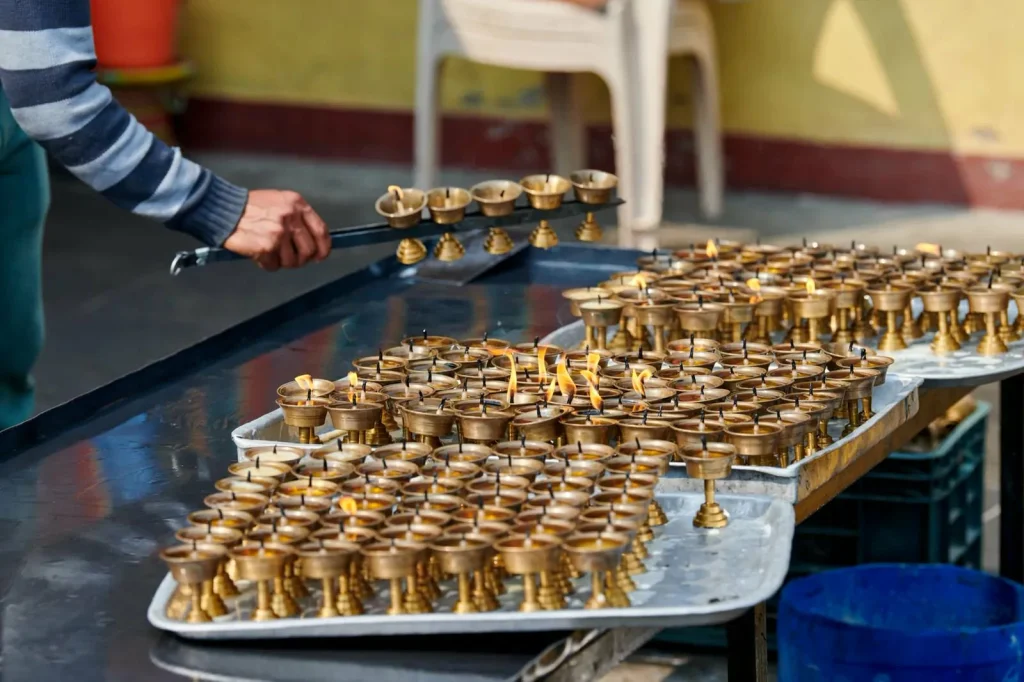
The practical concern is that “appearance” is a subjective endpoint unless you define it. If the goal is microfinishing, then define the surface outcome in functional terms: smoothing, burr reduction, and cleanliness. If the goal is purely cosmetic, electropolishing can still be a fit, but you should expect iteration to match visual expectations because bath condition, base finish, and alloy differences can change the look.
Aluminum Electropolishing Applications And Verification
Aluminum is included as a material that can be electropolished. The feasibility question is rarely “can it be done?” and more often “is the provider set up to do it reliably for this alloy and part geometry, and how will it be verified?”
Because the provided sources do not give quantitative finish metrics or removal depths, the safest planning approach is to verify capabilities by material grade and by part feature risk (threads, blind holes, thin walls). Also confirm what post-processing steps are used to achieve the cleanliness level you need.
| Material | Common goals buyers specify | Typical industries mentioned across sources |
|---|---|---|
| Stainless steel (300/400 series) | Deburring, smoothness, hygienic surface treatment, corrosion resistance, uniform finish | Medical, food & beverage, aerospace, energy/high-purity |
| Titanium | Cleanability, surface improvement for medical/high-performance parts | Medical, high-performance applications |
| Copper alloys | Microfinishing, appearance | General industrial applications |
| Nickel alloys | Microfinishing, appearance | General industrial applications |
| Aluminum | Appearance, surface improvement; verify alloy-specific process and inspection | General industrial applications |
Electropolishing Applications Across Industries
Electropolishing is used across sectors—from medical and food equipment to aerospace and high-purity systems—where surface finish, cleanliness, and corrosion resistance are critical.
Medical Devices and Instruments: Implants and Equipment
In medical devices and instruments, electropolishing is used because surface condition links directly to contamination risk and cleaning burden. The parts named in the provided sources include scalpels, bone and joint implants, respirators, ventilator-related components, and pharmaceutical manufacturing tools.

Case 1 (from provided sources, summarized): Context: Hospital and surgical environments require surfaces that can be cleaned and resist contamination. What was done: Electropolishing applied to instruments and components such as scalpels, implants, respirators, and pharma equipment. Outcome described: Improved surface smoothness, reduced contamination risk, and improved longevity. Why it matters: These parts are high stakes. Even small surface traps can complicate cleaning validation and increase risk.
For feasibility, the important detail is not the part list. It is the reason: electropolishing is selected as a cleanliness-driven and corrosion-resistance-driven finish that also removes burrs without mechanical abrasion. If your part is cleaned repeatedly, or if it contacts tissue or sterile environments, it is reasonable to consider electropolishing early rather than treating it as a cosmetic add-on.
Food and Beverage Equipment: Kettles and Trays
In food and beverage applications, stainless steel parts such as kettles, trays, and piping are electropolished to produce a hygienic finish. The process of metal electropolishing improves the surface finish, removes burrs, and supports passivation, producing a shiny metal finish in the case of stainless steel without altering critical geometry. Electropolishing ensures that material is removed by electropolishing without altering critical geometry, which is essential for food-grade compliance.
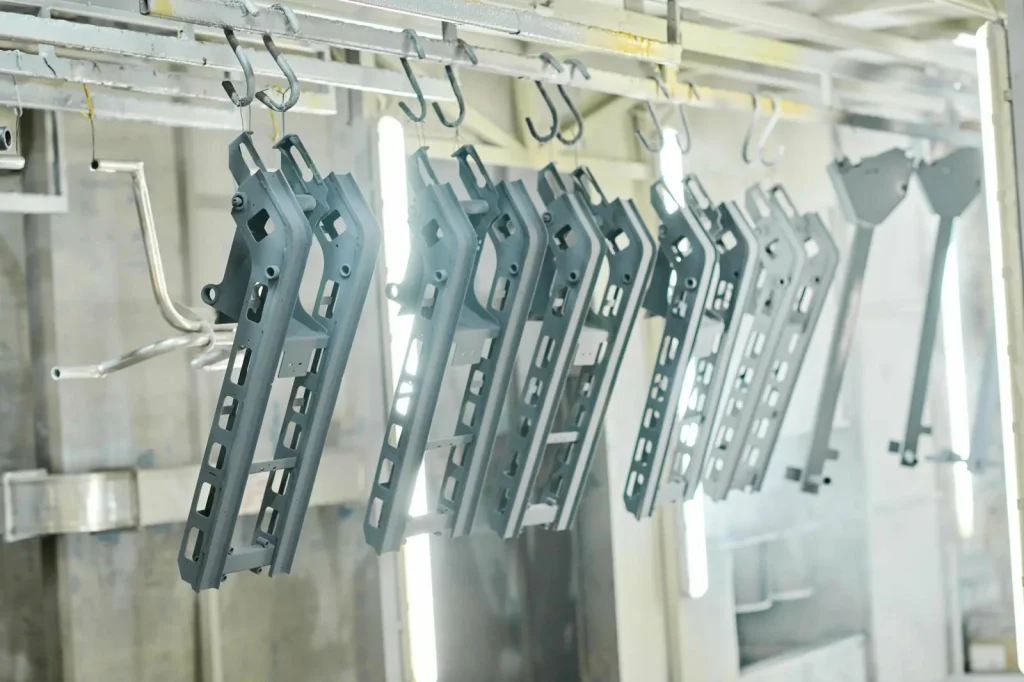
Case 2 (from provided sources, summarized): Context: Kettles, vats, trays, packaging equipment, and utensils must maintain sanitation and resist oxidation. What was done: Electropolishing on items like kettles, pans, wire baskets, cooking trays, and utensils. Outcome described: Smooth surfaces that are easy to clean and corrosion-resistant, with improved appearance. Why it matters: Cleanability is both a compliance and uptime issue. If residues stick, cleaning time goes up and risk goes up.
From a design standpoint, food equipment often has welds, corners, and joints. Electropolishing will not “fix” poor weld quality, but it can improve cleanability on accessible surfaces and reduce micro-roughness that holds residue.
Aerospace Parts: Blades, Engines, and Fasteners
Aerospace is an environment where “nice finish” is not the objective. The objective is controlled surfaces on parts that can’t tolerate unpredictable burrs, contamination, or corrosion issues.
Case 3 (from provided sources, summarized): Context: Turbine blades, landing gear, engine parts, flight controls, fasteners, and heat exchangers need precision and reliable corrosion behavior. What was done: Electropolishing used on helicopter blades, flight controls, fasteners, heat exchangers, struts, and related components.
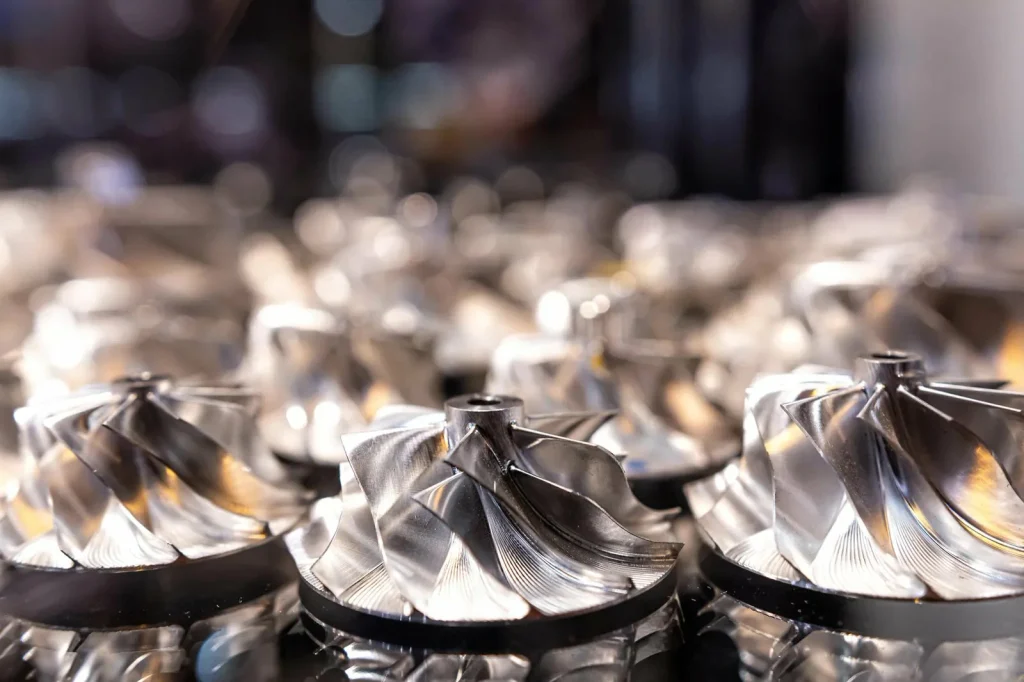
Outcome described: Uniform smooth finish, improved corrosion resistance, and surface integrity. Why it matters: Aerospace procurement often requires documentation and alignment to aerospace specs, not just “make it shiny.”
Aerospace teams also tend to be sensitive to edge conditions and surface stress. Electropolishing avoids mechanical abrasion, which can be helpful when you want to reduce the chance of embedded abrasive contaminants or uncontrolled scratch patterns.
Energy and High-Purity Systems: Oil, Nuclear, Solar, Semiconductors
Energy and high-purity systems combine two drivers: corrosive environments and contamination sensitivity. The provided sources mention usage in oil and gas, nuclear, solar, and semiconductors, including reactor vessels, storage tanks, piping, and heat exchangers.
Case 4 (from provided sources, summarized): Context: Reactor vessels and piping face harsh conditions and safety-critical contamination concerns. What was done: Electropolishing applied to vessels, piping, heat exchangers, storage tanks, and related components. Outcome described: Enhanced corrosion resistance and cleanability. Why it matters: In nuclear and high-purity systems, contamination control is not optional, and inspection and documentation expectations are high.
In semiconductors and other high-purity applications, the term “contaminant” often means particles and residues that can affect yield. Electropolishing is used because it can improve the metal surface condition without abrasive contact.
Electropolishing Standards And Compliance Requirements
Standards like ASTM B912 provide a shared framework for process control, documentation, and inspection, ensuring predictable and compliant outcomes.
ASTM B912 Referencing in Electropolishing Specifications
ASTM B912 is commonly referenced in electropolishing procurement language. In practice, teams use it as an anchor so the supplier and buyer share a baseline definition of process intent, acceptable outcomes, and test or inspection expectations.
From a technical buyer’s view, the key question is not “is ASTM mentioned?” It is:
- Is the electropolishing process being controlled and documented in a way that maps to the spec intent?
- Are exclusions clear (areas masked, functional surfaces protected, post-processing required)?
- Is inspection defined beyond appearance?
Since the provided inputs do not include the text of ASTM B912, treat it as a specification reference point, you should read directly and flow down correctly.
Using ASTM B912 For Electropolishing Specs
Some aerospace programs reference ASTM B912 and/or program-specific aerospace requirements. Treat AMS-B912 as a documentation and control framework; confirm the exact standard designation and revision on the purchase order. The distinction is not that one is “better,” but that aerospace procurement often expects tighter documentation discipline and traceability.
If you are buying electropolishing for aerospace parts, expect the conversation to include:
- which spec revision applies,
- how the process is controlled and recorded,
- how nonconformances are handled,
- what inspection evidence is provided with the lot.
Again, the provided inputs do not include the AMS text. For feasibility planning, treat AMS-B912 as a documentation and controls framework, not a marketing label.
Documentation And Process Verification Checklist
For technical purchasing, the most useful move is to ask for a simple “spec pack” that shows how the supplier will run and verify the job. This is not a demand for proprietary details. It is a way to reduce surprises like inconsistent finishes or unclear spec alignment.
Checklist: spec pack request list
| Item to request | Why it matters |
|---|---|
| Spec callout confirmation (ASTM B912 and/or AMS-B912 as applicable) | Avoids “we do electropolishing” with no shared definition |
| Material grades and allowed alloys | Mixed alloys change outcomes and risk |
| Part size and racking/fixturing constraints (high level) | Geometry affects current density and uniformity |
| Bath control approach (high level) | Bath condition affects consistency and finish |
| Pre-cleaning and post-processing steps (high level) | Cleanliness determines finish consistency and contamination control |
| Defined inspection method (visual finish, burr expectations, cleanliness checks) | Prevents subjective acceptance based on “shiny” |
| Nonconformance handling and rework limits (high level) | Reprocessing can change dimensions and surface condition |
Understanding ASTM B912 For Electropolishing
ASTM B912 is a technical standard that is commonly used to specify electropolishing requirements. Buyers reference it to set a shared baseline for process expectations, documentation, and inspection. To apply it correctly, you need to match the standard’s scope to your alloy, geometry risks, and acceptance criteria.
Electropolishing Compared to Other Finishing Methods
Compared to mechanical polishing, tumbling, or passivation, electropolishing provides non-contact surface leveling, burr removal, and hygiene benefits while being sensitive to geometry and process control.
Electropolishing Vs Mechanical Polishing For Precision And Hygiene
The most common comparison is with mechanical polishing because both can improve surface finish and appearance. The key difference is how the surface changes.
Mechanical polishing (grinding/buffing) uses abrasion and contact. It may leave directional scratches and embedded residues. In contrast, electropolishing vs mechanical polishing removes a thin layer of surface material electrochemically. It smooths burrs and reduces macroscopic surface imperfections, making it ideal for hygienic and maintaining shiny stainless steel finishes. This non-contact approach makes it ideal for hygienic surfaces applications and for maintaining shiny stainless steel finishes on CNC features.
| Criterion | Electropolishing | Mechanical polishing (grinding/buffing) |
|---|---|---|
| Material removal mechanism | Electrochemical dissolution (anodic) | Abrasion/contact |
| Access to complex features | Can reach where electrolyte/current can reach; geometry-dependent | Tool access dependent; may miss recessed features |
| Burr removal | Often effective on small burrs and edges; geometry-dependent | Can remove burrs but may round edges or miss hidden burrs |
| Contamination risk | No abrasive media; still requires strong cleaning controls | Risk of embedded compounds/media if controls are weak |
| Surface pattern | No directional scratch pattern from tools | Often directional scratches; may require multiple steps |
This answers a frequent buyer question: Is electropolishing better than manual polishing? It depends on the acceptance criteria. If hygiene, contamination control, or uniformity across hard-to-reach surfaces is the driver, electropolishing is often easier to defend. If you need localized, operator-controlled touch-up on visible faces only, mechanical polishing may be simpler.
Choosing Between Electropolishing And Passivation
Passivation is commonly discussed alongside electropolishing because both can support corrosion resistance on stainless steel. The difference is that electropolishing is also a surface leveling and deburring process, while passivation is mainly a chemical surface treatment aimed at corrosion performance.
In some programs, both are used: electropolishing to smooth and clean the surface, then passivation (or another specified treatment) to meet corrosion requirements. The right choice depends on whether you are trying to change surface geometry (leveling) or mainly surface chemistry/condition.
| Decision Point | Yes Path | No Path |
|---|---|---|
| Do you need surface leveling / micro-smoothing or burr reduction? | Consider electropolishing | Is your main goal corrosion resistance on stainless steel? |
| Do you also need a defined corrosion-resistance treatment step by spec? | Electropolish + specified passivation/verification (as required) | Consider other finishes driven by appearance, texture, or cost |
| Electropolish may be sufficient if corrosion/cleanliness verification passes | Consider passivation (per your material/spec needs) |
Electropolishing Vs Tumbling And Blasting
Tumbling and blasting are common deburring methods. They are often selected for throughput and cost reasons, but they introduce trade-offs:
- Tumbling can round edges and can be hard to control on delicate features. Media can lodge in holes or threads.
- Blasting can change surface texture and can introduce surface stress effects depending on method and control.
Electropolishing can remove burrs without impacting the surface through mechanical impact. That can be useful where edge control matters and where you want to avoid embedding media. On the other hand, electropolishing is geometry- and process-sensitive. If burrs are large or shielded by geometry (deep blind features), tumbling or a mechanical deburr step may still be needed upstream.
Electropolishing And Passivation Comparison
Electropolishing and passivation solve different problems. Electropolishing removes a thin surface layer to smooth and deburr, which can also support cleanability and corrosion resistance. Passivation is mainly used to improve corrosion behavior on stainless steel without aiming to level the surface, so it is “better” only when corrosion treatment is the main need and surface leveling is not.
Planning Electropolishing For Desired Results
Success depends on understanding part geometry, current density effects, pre-cleaning, and post-processing to ensure uniform finish and functional surface integrity.
Geometry And Risk Features In Electropolishing
Electropolishing success is often decided by geometry. Because current density varies across parts, the process can remove more material from exposed areas and less from sheltered ones.
Threads, blind holes, thin sections, sharp edges, and deep recesses are typical “risk features” because they can create uneven current density and uneven electrolyte access. This is where feasibility reviews save time: you can flag features that are likely to show inconsistent finish, incomplete deburring, or localized overprocessing.
| Zone Type | Location / Feataures | Current Density Behavior |
|---|---|---|
| High Current Density | Edges, tips, exposed faces | Higher current density; more aggressive material removal |
| Low Current Density | Recessed pockets, blind holes, shadowed areas behind ribs | Lower current density; slower or uneven material removal |
If your part has both thin walls and heavy sections, you should assume the “amount of material” removed will not be perfectly uniform everywhere. That does not mean the process is unusable. It means you should define which surfaces are functional and how they will be inspected, and you may need masking or part orientation controls depending on the spec.
Impact Of Pre-Cleaning And Post-Processing
Electropolishing is sensitive to surface condition prior to the bath. Oils, residues, and contaminants can cause local differences in dissolution, leading to finish variation. That can show up as finish variation, streaking, or inconsistent appearance.
This is one of the reasons sources connect electropolishing to improved cleanliness: the process can remove embedded contaminants, but only if the process chain controls contamination rather than moving it around.
Even without citing specific papers here, the engineering logic is straightforward:
- Electrochemical reactions happen on the metal surface.
- If the surface is partially blocked by residues, current distribution and dissolution can vary locally.
- Local variation leads to local finish variation.
So, if you are seeing inconsistent finishes across lots, the root cause is often upstream: inconsistent machining lubricants, inadequate pre-cleaning, or post-process handling that re-contaminates the part.
Quality Checks For Surface Finish And Cleanliness
Electropolishing is easy to argue about and hard to accept if inspection is not defined. “Shiny” is not a complete requirement. “Deburred” is also incomplete unless you define which edges matter and what burr size is acceptable.
Checklist: incoming/outgoing inspection points
| Stage | What to check | Why it matters |
|---|---|---|
| Incoming (before electropolish) | Base material grade matches purchase spec | Alloy drives outcome and corrosion behavior |
| Incoming | Document key surface defects and burr locations | Deep defects will not disappear; sets expectations |
| Incoming | Identify functional surfaces and critical fits | Material removal is a thin layer but can still affect fit |
| Outgoing (after) | Visual uniformity on specified surfaces | Confirms process consistency where it matters |
| Outgoing | Burr removal at defined edges/features | Confirms electropolishing achieved deburring intent |
| Outgoing | Cleanliness/contamination check as required | Supports hygienic surface treatment goals |
| Outgoing | Documentation package per ASTM/AMS callouts | Needed for regulated and aerospace procurement |
This is also where you address the buyer’s question: Does electropolishing remove burrs? Yes, it is widely used for deburring and smoothing, especially on machined parts like screws, bolts, valves, and fittings. The limitation is that results depend on burr type and geometry, so define inspection points on the edges that matter.
Electropolishing Durability And Service Life
Electropolishing changes the surface by removing material; it is not a coating that flakes off. How long the surface condition “lasts” depends on the service environment, handling, and cleaning chemicals, plus the base alloy and whether additional treatments (like passivation) are specified. If long-term corrosion behavior is critical, tie the requirement to a standard and a verification method instead of relying on appearance.
Outsource Or In-House Electropolishing Decisions
Deciding between in-house or vendor services hinges on volume, compliance requirements, material variety, and process control capability rather than cost alone.
Outsource vs In-House Electropolishing: Volume, Compliance, and Capability
The outsource vs in-house decision is not only about cost. For electropolishing, capability fit and compliance needs often dominate, especially in medical, aerospace, and semiconductor-facing supply chains.
| Factor | Outsource tends to fit when… | In-house tends to fit when… |
|---|---|---|
| Volume and mix | Many part types, variable demand | Stable, high-repeat families |
| Compliance burden | You need mature documentation aligned to ASTM/AMS and regulated expectations | You can maintain controls, training, and records internally |
| Capability breadth | You need multiple materials handled (stainless, titanium, nickel alloys, aluminum) | Your scope is narrow and well-defined |
| Part size limits | Your parts vary widely; you need flexible tank/racking capacity | Your part envelope is known and fixed |
| Risk tolerance | You want an established process window and inspection approach | You can run trials and hold process discipline over time |
Because the provided inputs do not include safety, facility, or equipment cost data, treat “in-house” as a strategic quality choice. It only works if you can control bath condition, pre-cleaning, inspection, and documentation to the same level you require from a supplier.
Vendor Qualification For Electropolishing Services
When you qualify an electropolishing vendor, avoid generic questions like “Do you electropolish stainless?” That usually yields a yes, but not the detail you need. A better approach is a short scorecard that forces alignment on scope, spec, and verification.
Scorecard template (fill in for each candidate)
| Category | Questions to score | Notes |
|---|---|---|
| Materials | Which grades of stainless (300/400), titanium, copper/nickel alloys, aluminum are run regularly? | Watch for “we can do it” without specifics |
| Part envelope | Max/min part size and geometry constraints | Confirm fit for your largest and most delicate parts |
| Industry experience | Medical / aerospace / high-purity systems experience relevant to your program | Experience affects documentation habits |
| Standards | Can they process to ASTM B912 and/or AMS-B912 as required? | Confirm revision control on procurement |
| Inspection | How is finish uniformity and deburring verified? | Seek defined criteria, not “looks good” |
| Documentation | What is included with each lot? | Aligns to compliance and traceability needs |
| Process control | How is consistency maintained across runs? | You want stability, not secret sauce |
RFQ Essentials For Electropolishing Procurement
Drawing / Purchase Order mini-template
- Material grade and condition (e.g., 300/400 series stainless, titanium, aluminum)
- Standard callout: ASTM B912 (+ AMS-B912 if required)
- Surfaces included/excluded: functional faces, threads, sealing lands
- Deburring intent: which edges matter
- Cleanliness requirement: unacceptable contamination, verification method
- Edge/burr acceptance definition by feature
- Inspection/records required: pre/post inspection documentation This checklist can be copied into RFQs or drawings to ensure alignment with the process plan.
Common Pitfalls And Red Flags In Electropolishing
Most electropolishing problems in procurement fall into a few patterns:
- Inconsistent finishes across lots with no clear root cause analysis. This often points to weak controls in pre-cleaning, bath condition management, or fixturing consistency.
- Unclear spec alignment where a supplier says “we meet ASTM/AMS” but does not confirm the exact callout, revision, and inspection approach tied to your job.
- No defined acceptance criteria beyond appearance. If the goal is hygienic surface treatment, define cleanability and contamination control in a way you can inspect.
- Geometry is not reviewed up front. Threads and blind holes are common failure points. If they matter, they should be called out and discussed before parts are processed.
Key Takeaways
Practical answers on metals, goals, process mechanisms, limitations, and verification help buyers and engineers make informed electropolishing decisions.
Feasible Metals For Electropolishing
No. Electropolishing is used on several metals and alloys, including stainless steel, titanium, copper, nickel alloys, and aluminum. Whether it is feasible depends on the specific alloy grade, the part geometry, and the acceptance criteria for finish, deburring, and cleanliness.
Electropolishing Goals And Considerations
One-page checklist (use for feasibility)
| Your primary goal | Electropolishing is a strong fit when… | Watch-outs to address early |
|---|---|---|
| Deburring | Burrs are small-to-moderate and spread across many edges; you want non-contact removal | Large burrs and shielded burrs in blind features may persist |
| Corrosion resistance (stainless) | You need corrosion-related surface improvement tied to a controlled finish step | Don’t rely on appearance; align to ASTM/AMS and verification |
| Hygiene / cleanability | Parts must be easy to clean with low contamination retention (medical, food, high-purity) | Define cleanliness checks and prevent re-contamination post-process |
Electropolishing Fit Check And Application Guide
A simple “fit check” worksheet can prevent misapplication. It does not need numbers to be useful. It needs the right questions.
| Category | Questions / Items to Check |
|---|---|
| Material | – Stainless (300/400)? Titanium? Copper/Nickel alloy? Aluminum?- Mixed alloys or assemblies? (Yes/No) |
| Geometry Risk | – Threads? Blind holes? Deep pockets? Thin walls? (List)- Any surfaces that must not change? (List) |
| Primary Intent | – Deburr- Improve cleanability / hygienic surface treatment- Corrosion resistance / passivation-related requirement- Appearance / shiny metal finish CNC |
| Spec and Compliance | – ASTM B912 required? AMS-B912 required? Other?- Required documentation with shipment? |
| Verification | – What is pass/fail? (visual, burr presence, cleanliness checks)- Which surfaces are inspected? |
If you cannot answer items (2), (4), and (5), the process is still possible, but the risk of rework and dispute is high.
Next Steps For Electropolishing Specification And Verification
Electropolishing is usually suitable when you need smooth, uniform, deburred surfaces and when cleanliness or corrosion resistance is the driver. It is less suitable when you are trying to remove deep damage, correct major geometry errors, or process complex mixed-alloy assemblies without clear exclusions.
The next step is to turn “electropolish this part” into a controlled requirement: pick the relevant standard (ASTM B912 and/or AMS-B912), confirm alloy-specific expectations (especially across 300- and 400-series stainless steel), and define how finish, burr removal, and cleanliness will be verified. That is what makes the approach feasible in real procurement, not just in principle.
FAQs
Electropolishing uses DC electrical current in an electrolyte bath with the part as the anode and a cathode in the tank. Metal is removed from the surface by anodic dissolution, which can smooth micro-roughness and reduce burrs without mechanical abrasion. Geometry affects current density, so sheltered areas may polish differently than exposed edges.
It can be, when you need uniform results across complex features and you want to avoid abrasive contact and embedded polishing residues. Manual or mechanical polishing can be more controllable for localized cosmetic work on accessible faces. The best choice depends on whether hygiene, cleanability, and uniformity are more important than localized appearance tuning.
Medical instruments and devices use electropolishing to improve surface smoothness and support contamination control. Smoother surfaces are easier to clean and can reduce places where germs or residues can remain. Sources also describe improved longevity and performance for these parts.
Aluminum is listed among materials that can be electropolished. Feasibility depends on the specific alloy and on whether the provider has a defined process and inspection approach for it. If aluminum is critical, confirm upfront how finish and cleanliness will be verified.
Electropolishing removes a thin layer of surface material, but the amount depends on alloy, current density, time, geometry, and process controls. Because removal is not perfectly uniform across complex shapes, treat it as a controlled requirement when dimensions and fits matter. Define functional surfaces and inspection methods so the process can be verified against what matters.

 English
  German
  French
  Italian
  Spanish
  Polish
  Czech
Czech  Japanese