
In 2025, “how much does a CNC cost?” is the first thing smart buyers ask. The short answer spans from sub-$1,000 DIY kits to $500,000+ industrial machines. The long answer is about fit: the right machine for your parts, tolerance, and throughput. This guide gives you clear price ranges by machine type, a simple total cost of ownership (TCO) model, buyer roadmaps, and sample ROI math. You’ll see what moves the CNC machine price up or down, where hidden costs hide, and how to avoid paying for features you won’t use.
If you need a fast estimate, start with the “Quick answer” section below. If you’re planning a purchase this year, keep reading for step-by-step help, side-by-side ranges, and practical examples you can copy. Think of this as your straight-talk playbook for buying a CNC machine without guesswork.
How much does a CNC cost? Quick answer
Before diving into the full breakdown, here’s the snapshot most buyers use to get an initial budget. This quick view helps you understand where your needs fit before comparing machine types, features, and long-term costs.
Price ranges at a glance (DIY to industrial)
Here’s the market snapshot most buyers use to set a first-pass budget. These are typical “out-of-the-box” machine prices and do not include installation or tooling.
| Buyer Tier | Typical Machines | 2025 Price Range | Notes |
|---|---|---|---|
| DIY/Maker | Desktop CNC routers, small kits | $500–$1,000+ | Very limited rigidity and precision; good for wood, plastics, learning |
| Entry-Level | Benchtop routers/mills | $1,500–$5,000 | Small shop or school starter machines; light metals at slow feeds |
| Mid-Range | Pro routers/lathes | $10,000–$30,000 | Production-capable for wood/plastics; basic metals work |
| Mid-High | Pro mills/lathes | $30,000–$100,000 | Tight tolerances; 3–4 axis; common in job shops |
| Industrial | High-end mills/lathes | $100,000–$500,000+ | Large travel, automation, probing, 5-axis CNC options |
| Industrial Routers | Full-size CNC router tables | $16,000–$150,000+ | Large beds, ATC (auto tool change), high throughput |
These bands cover most cases. Outliers happen with extra-large work envelopes, brand premiums, heavy-duty spindles, or integrated automation like pallet pools and robotics.
Typical buyer tiers and use cases
A hobby CNC buyer may work with wood and plastics, testing ideas for a small business. A small shop moves into signs, furniture, or light aluminum. A job shop needs uptime and tight repeatability for daily runs. An enterprise or plant steps up to 4–5 axis, probing, and automation to hit cycle times and reduce labor. Where do you fit today—and where do you want to be in two years?
What is the average price of a CNC machine?
Most buyers land in two common bands:
- $1,500–$5,000 for a starter desktop CNC router or small mill
- $20,000–$150,000 for professional machines used in small to mid-size shops
Machines above that level usually add more axes, larger travels, faster spindles, or automation. That’s where the price tag climbs fast.
CNC price breakdown by machine type (router, mill, lathe, multi-axis)
Before we talk total cost, let’s align on the main types of CNC machines and what affects their price. The big drivers are size, spindle power, axis count, and the level of precision you need.
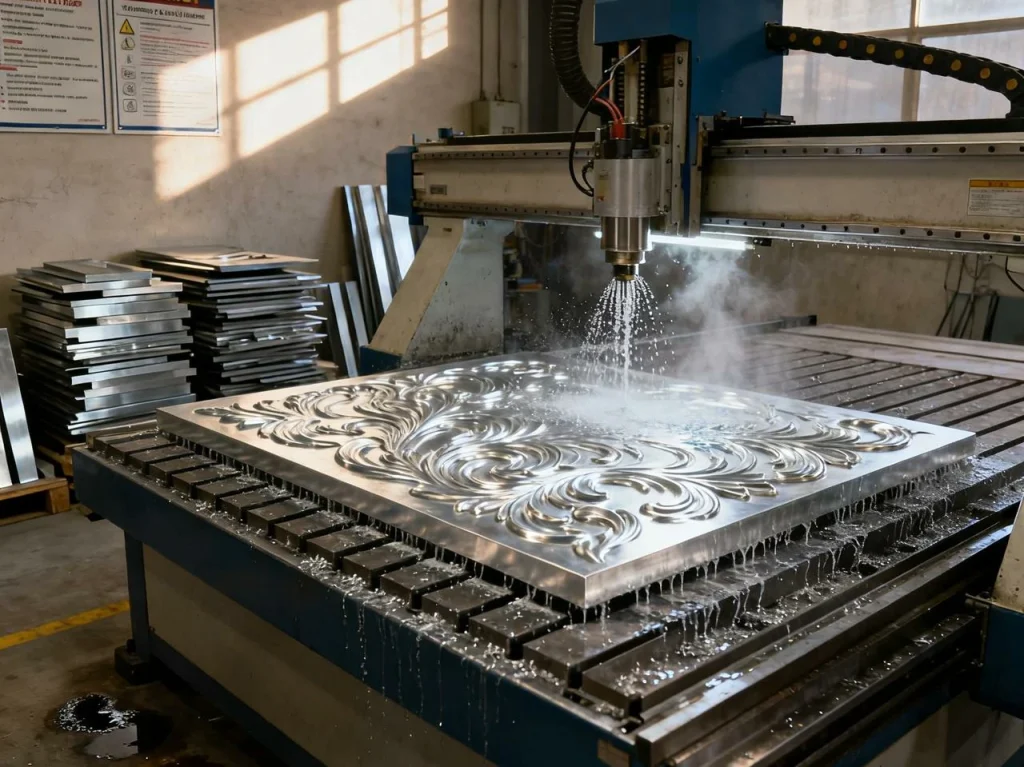
CNC router cost (hobby to industrial)
A CNC router is common for wood, plastics, foam, and composites. It can cut aluminum with the right setup, but rigidity and workholding become more important.
- DIY: $500–$1,000+. Good for learning and small parts. Expect light-duty rails, lower repeatability, and slower speeds.
- Entry: $1,500–$5,000. A fit for makers, schools, and small businesses making signs, cabinets, or fixtures.
- Pro: $10,000–$75,000. Heavier frames, better spindles, accurate drives, and often vacuum tables. Built for daily use.
- Industrial: $16,000–$150,000+. Large beds (4×8 and up), ATC, dust collection ports, and higher duty cycles.
If you plan to cut mostly wood or plastics with occasional aluminum, a mid-range router is often the sweet spot for value.
CNC mill price and machining centers
A CNC mill (or machining center) is your go-to for metal parts and tight tolerances. These machines bring stiffness, coolant, enclosures, and accuracy.
- Entry/hobby mills: $3,000–$4,000. Good for learning and small metal prototypes.
- Mid/pro mills: $30,000–$100,000. Common in job shops. 3–4 axis with better spindles, tool changers, and probing options.
- Industrial mills: $100,000–$500,000+. Large travel, high spindle power, fast rapids, 5-axis options, pallet changers, and automation.
If your parts need small tolerances and a clean surface finish, this is the class to study.
For businesses or individuals looking for high-precision CNC parts without purchasing machines, U-Need offers custom CNC milling and turning services, delivering precision parts with tolerances as tight as ±0.001mm. Their services are ideal for prototype work, small batch production, or complex components requiring professional-grade accuracy.
CNC lathe and turning center costs
A CNC lathe turns round parts and often includes live tooling or sub-spindles for milling ops.
- Starter/retrofits: $10,000–$30,000. Basic turning with limited live tooling.
- Pro lathes: $30,000–$100,000. Live tooling, Y-axis, sub-spindle options, part catchers, and better throughput.
- Industrial: $100,000–$500,000+. Bar feeders, gantry loaders, and high-volume automation.
If your shop makes shafts, bushings, fittings, or round features, a turning center can carry most of the load.
Specialty and multi-axis (4–5 axis, plasma, laser)
- 4th-axis add-ons: From a few thousand into the tens of thousands, depending on size and accuracy.
- 5-axis CNC machine: Often $150,000–$500,000+. Great for complex parts, fewer setups, and reduced fixtures.
- Plasma and CNC laser cutters: Ranges depend on wattage, bed size, and brand class. Industrial lasers cost more due to power and optics.
Type-by-type price bands + common specs
Use this for quick side-by-side planning.
| Machine Type | Entry Range | Mid/Pro Range | Industrial Range | Typical Work Area | Common Features |
|---|---|---|---|---|---|
| CNC Router | $1,500–$5,000 | $10,000–$75,000 | $16,000–$150,000+ | 2×2 to 5×10+ ft | ATC, vacuum, dust control, enclosures |
| CNC Mill (3–4 axis) | $3,000–$4,000 (hobby) | $30,000–$100,000 | $100,000–$300,000 | 10–40+ in travel | Enclosure, coolant, probing, tool changer |
| CNC Lathe | $10,000–$30,000 | $30,000–$100,000 | $100,000–$300,000+ | 6–12+ in chuck | Live tooling, Y-axis, sub-spindle |
| 5-Axis Machining Center | N/A | $150,000–$300,000 | $300,000–$500,000+ | Varies | Trunnion/gantry, probing, automation |
| Plasma/Laser | $2,000–$10,000 (hobby) | $15,000–$80,000 | $80,000–$300,000+ | 2×2 to 5×10+ ft | Wattage/beam quality, tables, extraction |
Note: Ranges reflect typical new CNC machine prices in 2025 and can shift with options and region.
Total cost of ownership (TCO): installed and 5-year costs
The base price is not your true cost. To plan well, you need a rough installed cost and a simple 5-year TCO. This helps compare machines and decide whether to buy new, buy used, or outsource.
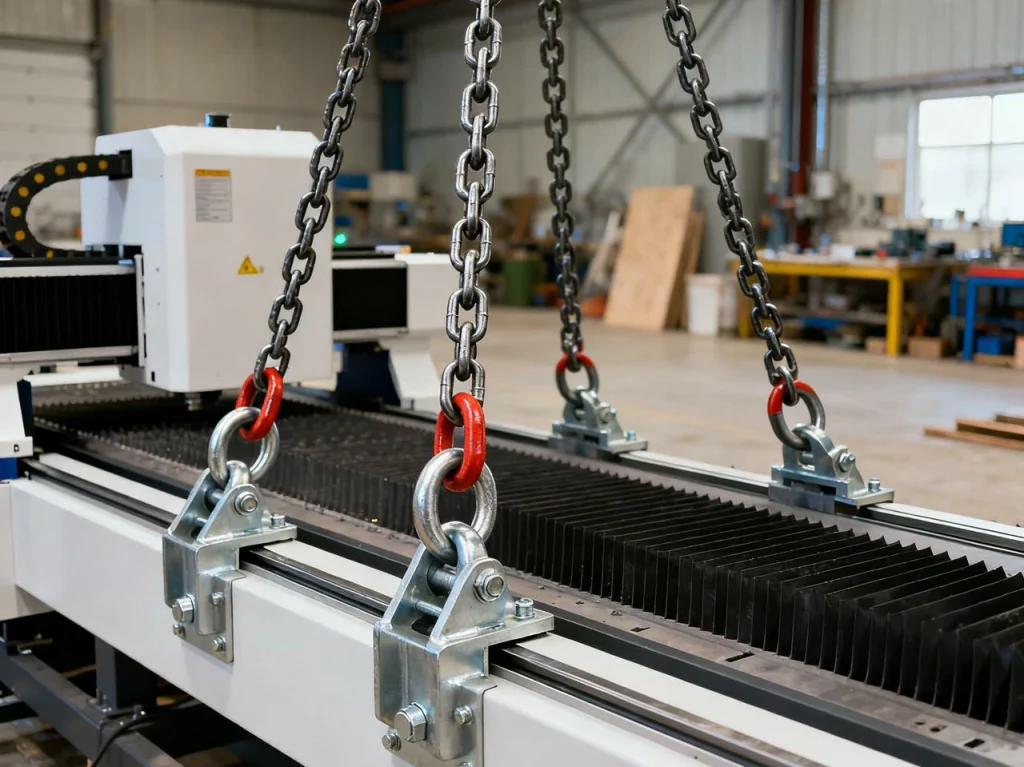
Installed cost vs. base price (what’s included)
Your “out the door” cost includes more than the sticker. Expect to pay for freight, rigging, power, dust or coolant systems, setup, and training. A fair rule of thumb is an extra 5–20% over the base.
- Base price: machine and standard options
- Installation items: rigging, delivery, electric drops, dust/coolant, anchors
- Training: on-site or remote sessions
- Safety: guards, PPE, signage, and documented procedures
If your shop needs concrete work, a phase converter, or a new panel, budget more. It’s better to plan a little extra than to halt production later.
Operating & hidden costs (software, tooling, maintenance)
Three line items trip up many buyers: software, tooling, and routine maintenance.
- Tooling startup: $300–$1,500+ to stock cutting tools, holders, vises, and workholding. More if you cut metals daily.
- CAD/CAM software: Free to thousands per year. Some shops start with free tier tools; many move to paid CAM for post processors and speed.
- Maintenance: Lubricants, belts, filters, way covers, and the big one—spindle service down the road. Costs scale with duty cycle.
Other costs to consider:
- Workholding and fixturing for odd shapes
- Probing kits and touch setters
- Dust collection, coolant, and disposal
- Replacement consumables (bits, endmills, inserts)
- Insurance and floor space
Shop rates and utilization assumptions
What does it cost to run a CNC machining project by the hour? Many shops use a rate that covers the machine payment, labor, tools, and a small margin.
- Job shop rates: about $50–$100 per hour for 3-axis CNC, and $150+ per hour for 5-axis CNC.
- A simple example: a 4-hour run on 3-axis may be $200–$400. A 4-hour multi-angle part on 5-axis might be $600–$800.
These rates help you set quotes and make buy vs. outsource choices. If a part keeps coming back—and you can keep the spindle cutting—owning a machine can beat outsourcing within a year.
Key factors that drive CNC pricing (specs, brand, features)
Once you know baseline price ranges, the next step is understanding why two machines with similar sizes can differ by tens of thousands of dollars. These core factors determine what you’re really paying for—and which features actually matter for your parts.
Size, power, and work envelope
The size of the machine and work area has a clear effect on cost. Larger beds and travels mean more steel, longer rails, stronger drives, and heavier frames. Bigger spindles and more horsepower also cost more. If you do not need the extra travel, you can save a lot by picking a smaller frame and better tooling.
Precision, brand, and after-sales support
Higher precision (tighter tolerances and repeatability), better thermal control, and stronger casting all add to CNC machine cost. Service matters too. Faster support and local parts reduce downtime, which is priceless mid-production. A lower sticker price with weak service often costs more later.
Technology options and automation
Features like ATC, probing, 4th/5th axis, through-spindle coolant, enclosures, pallets, and robotics add clear value—and a higher price. Think about cycle time, changeover speed, and operator load. If you can run more unattended, the higher price tag may pay for itself.
Logistics and regional variables
Shipping, tariffs, taxes, and lead times affect the overall cost. If you import a machine, plan for customs and transit. If you buy local, you may spend more up front and save later on maintenance and parts.
Buying path: from requirements to signed PO
Choosing the right CNC is easier if you follow a simple plan. Here’s a clear path from idea to order.
Simple step-by-step
- Define parts: material, size, tolerances, and volumes.
- Set budget bands: entry, mid, and stretch.
- Shortlist types: CNC router, CNC mill, CNC lathe, or 5-axis.
- Request quotes: ask for installed price, lead time, training, and warranty.
- Schedule demos: run your file on their floor if possible.
- Check service: ask about response time and parts stock.
- Decide: weigh cycle time, accuracy, and total cost—not just sticker price.

Needs assessment checklist (materials, tolerances, throughput)
Start with your parts. What materials do you cut? What tolerances do you need? How big is the largest part? How many per week? List your must-haves (like 4-axis or coolant) and nice-to-haves (like an ATC). Add your 2-year growth plans. A clear spec now avoids a costly upgrade later.
RFQ and vendor selection (how to compare quotes)
Send a one-page RFQ that lists your type of machine, work area, target tolerances, spindle power, axis count, and required features. Ask for installed costs, lead time, training, warranty, and service response time. Request apples-to-apples quotes so you can compare true value, not just price.
Demo and acceptance testing (prove-out criteria)
Ask for test cuts. Bring your material and a model. Define success: cycle time, surface finish, accuracy on critical dimensions, and tool change time. Build an acceptance checklist for delivery day: motion tests, spindle runout, probing accuracy, and safety interlocks.
Real-world examples and market snapshots
Numbers and specs are helpful, but real shop scenarios show how CNC costs play out in practice.
Small-shop case studies (wood/plastic vs. light metal)
A sign shop steps up from a desktop CNC to a $12,000 router with a larger bed and vacuum. Throughput doubles because sheet setup takes minutes, not hours. Tool life improves with better collets and dust control. The shop moves from one-off signs to steady cabinet jobs and pays off the machine in under a year.
A prototype lab buys a $35,000 compact CNC mill for aluminum parts. They reduce outsourcing and gain control over lead time. With simple fixturing and a touch probe, they hit repeatability goals and keep the mill booked at least 30 hours a week.
Industrial benchmarks (3–5 axis machining)
A job shop upgrades to a $180,000 5-axis CNC to reduce setups on complex parts. Cycle time drops by 30%. Two operations merge into one, and fixtures are simpler. Even with a higher CNC milling machine cost, the job becomes profitable at lower quantities.
New vs. used market insights
Used CNC machines can save 20–50%, but plan for inspection, possible retrofits, and shorter warranties. Ask for spindle hours, backlash checks, and maintenance records. A clean used mill with verifiable service history can be a smart buy, but make sure you can get parts and support.
How to reduce the cost of your CNC purchase
A few choices can trim thousands while keeping capability:
- Pick the smallest work envelope that covers 90% of your parts. Rent time for the few large jobs.
- Start with 3-axis and add a 4th-axis later if your parts justify it.
- Buy great tooling. Good endmills and holders extend life and reduce scrap.
- Use a used machine for a year to prove demand, then upgrade.
- Improve fixturing and CAM strategies to cut cycle time instead of buying more horsepower.
The key point is simple: match the machine to your real work, not your wish list.

Software, tooling, and operators: the “silent half” of performance
A CNC machine is only as good as its CAD/CAM, cutting tool strategy, and operator skill. A sharp post processor saves hours. A well-chosen toolpath with the right step-over and feed rate can double tool life. A trained CNC operator can spot chatter early and save a spindle.
Plan a small budget for upskilling. A day of training often pays for itself in fewer broken tools and smoother setups. Make it part of your TCO.
Energy, safety, and floor planning
Electricity use varies by type of CNC and duty cycle. Mills and lasers draw more; routers and small machines draw less. If power is tight, check panel capacity early. Plan for airflow, dust or fume control, and safe access around the machine. Good habits extend machine life and keep insurance simple.
Glossary of CNC terms
- ATC: Automatic Tool Changer
- Work envelope: The 3D space the machine can move in
- Spindle: The motor that spins the tool
- Feed rate: How fast the tool moves through the material
- Rigidity: How stiff the machine is under load
- Probing: A sensor to set work offsets and check parts
- TCO: Total Cost of Ownership over time
Conclusion
In short, a CNC can cost a few thousand or a few hundred thousand. The best machine is the one that fits your parts, meets your CNC machining needs, and returns cash to your business each month. Start with a clear spec, run a simple TCO, and ask for a demo. If the machine also comes with strong service and training, you’ll be set not just for your first job—but for the ones that come after.
FAQs
The average cost of CNC machine equipment varies widely because different types of CNC machines have different capabilities, accuracies, and duty cycles. For most buyers asking how much does a CNC cost, a small CNC or hobby CNC machines may run $1,500–$5,000, while a professional 3-axis CNC machine or 3-axis CNC milling machine for a machine shop often costs $20,000–$150,000. Larger CNC machining centers, 5-axis systems, or expensive CNC machines exceed $150,000+. When estimating how much does a CNC machine cost, consider factors that affect CNC machine cost such as spindle power, travel, rigidity, and machine brands. A machine manufacturer may also price based on local service. Whether purchasing a CNC machine new or buying used CNC machines, the cost of these machines depends heavily on accuracy, automation, and how intensively you’ll be using a CNC daily.
Service depends on machine age, manufacturer support, and the variety of CNC components involved. Owners wondering how much does a CNC cost long-term should plan for yearly service ranging from a few hundred dollars on small CNC or hobbyist CNC machines to several thousand on production CNC machinery. Common CNC service includes lubrication, spindle inspection, axis alignment, and replacement of worn machine tools. A major rebuild on a CNC router machine or mill can notably affect CNC machine cost over its life. Labor rates vary by region and machine brands, but most machine shop environments budget 5–10% of the base price of CNC equipment per year. Using high-quality tooling and proper coolant strategies can extend life and reduce CNC machining costs. When comparing options or purchasing a CNC machine, consider whether the machine manufacturer provides affordable service contracts or if outsourcing maintenance is required.
A well-maintained CNC can last 10–20+ years, but lifespan depends on workload, material, and environment. Shops asking how much does a CNC cost often underestimate long-term durability because machine tools like spindles, rails, and screws wear differently in aluminum vs. steel. Heavy production on CNC machining centers may shorten intervals between rebuilds, while hobby machine environments see lighter use. When estimating the real cost of CNC machine ownership, consider that factors that affect CNC machine lifespan include lubrication, maintenance schedules, operator skill, and dust or coolant management. Different types of CNC machines—mills, lathes, routers, plasma—age differently based on rigidity and load. Whether you choose affordable CNC machines or premium brands, using a CNC properly and avoiding crashes dramatically extends service life. Even when worn, many users keep older units running by buying used CNC machines for parts or outsourcing refurbishing.
Rates vary by region, complexity, and machine class. A machine shop using a standard 3-axis CNC milling machine may charge $50–$100/hr, while 5-axis or high-precision CNC machining centers run $150+/hr. Many customers ask how much does a CNC cost to run per hour, but the real answer depends on tooling, setup, programming, overhead, and the cost of CNC machines you’re paying off. When deciding how much does CNC machining cost for a project, consider material removal rate, finish requirements, and operator time. If you’re using hobby CNC machines, your hourly rate may be lower, but throughput will also be slower. Some shops reduce CNC machining costs for clients by optimizing toolpaths. Others increase margin by outsourcing your CNC machining during peak demand. Ultimately, the rate must cover consumables, labor, and capital equipment payments for the cost of a CNC over time.
Hourly rates typically reflect the machine’s tier and the original price of CNC equipment. Owners calculating returns often ask how much does a CNC cost per operating hour, but this depends on the type of machine, from CNC router machine setups to industrial mills. A standard 3-axis CNC machine may run $60–$90/hr internally, while advanced CNC machining centers or high-end lathes may reach $150–$200/hr to cover the cost of CNC machines, tooling, maintenance, and labor. Rates also reflect whether you bought new or are buying used CNC machines, since that changes capital recovery. Shops that need a machine only occasionally may lower internal rates by outsourcing your CNC machining instead of maintaining equipment. When planning or purchasing a CNC machine, estimate how many hours per week your machine tools will run—utilization is one of the biggest factors that affect CNC machine cost over its lifetime.

 English
  German
  French
  Italian
  Spanish
  Polish
  Czech
Czech  Japanese