
Medical plastics are reshaping care from the clinic to the OR. They enable cleaner single-use devices, smarter implants, and faster production at scale. If you buy, specify, or build medical devices and equipment, you likely ask the same core questions: How big is the market and where is it growing? Which medical-grade polymers fit my design and sterilization method? How do I stay compliant with FDA and ISO 13485 while moving toward sustainability? This guide gives quick answers first, then deep dives into materials, applications, processes, validation, sourcing, and a future view through 2034.
Short on time? The essentials: 2025 market size sits in the mid tens of billions of dollars, with strong growth into the next decade. Polypropylene leads by volume for disposables, while engineering plastics like polycarbonate (PC), ABS, and PEEK lead by value for strength, biocompatibility, and sterilizability. Asia-Pacific is the fastest-growing region, and North America holds a large share driven by innovation and regulatory quality. You’ll also see case snapshots from COVID-19 production surges, 3D-printed prosthetics, and PEEK implants. Along the way, you’ll find selection guidance, sourcing checklists, and clear steps to stay compliant.
Before we go deeper, let’s answer the questions people often ask: What plastic is used in medicine? What is a medical polymer? Is medical grade plastic safe? You’ll find these answers in context across the next sections, so you can move from idea to validated device with confidence.
Medical Plastics Market: Size, Growth, Regions
The medical plastics market is a rapidly evolving sector, driven by the increasing demand for advanced medical devices and solutions. As healthcare needs grow globally, the use of medicine plastic has become integral in manufacturing safer, more efficient devices. This section explores the market’s size, growth projections, and regional trends, providing insights into how medical plastics are reshaping the future of healthcare.
2025 market size and 2034 forecast (quick facts)
The medical plastics market sits between point-of-care needs and industrial-scale production. Demand is pulled by infection control, chronic care, and aging populations. Supply is driven by injection molding, extrusion, micro-molding, and rapid injection molding, plus data-driven AI and smart automation. Here are the headline numbers you can use in your planning:
- 2025 market size: $25B–$42.65B
- CAGR to 2034: 5%–10%
- 2034 potential: >$80.5B
These ranges reflect different mix assumptions: single-use vs. durable devices, pacing of engineering plastics, and regional growth.
Regional insights: Asia-Pacific vs. North America
The center of gravity is shifting. Asia-Pacific accounts for about 41.56% of demand and is the fastest-growing region thanks to expanded healthcare access, local device assembly, and materials processing investments. North America holds about 34%, the largest single-region share, supported by high regulatory standards, strong R&D, and dense supplier networks. The EU shows steady growth and deep materials R&D in biocompatible plastics, sterilization science, and sustainability, with innovation clusters tied to universities and hospital systems.
What does this mean for an OEM or buyer? Your tooling or resin choice may stay the same, but your supply chain and sterilization strategy may vary by region. For example, a device launched in the EU under MDR may require different labeling or materials testing than in the U.S.
How fast is the medical plastics market growing?
Growth looks steady in the high single digits for most scenarios. Why? Hospitals lean on disposables for sterility and reduced contamination risk. Device makers swap metals for plastics to reduce cost and weight while keeping strength and chemical resistance. Regulators push for quality, data traceability, and validated processes, which favor medical-grade suppliers. On top of that, more wearable medical devices and home-care tools need safe, compact plastic components that ship sterile and ready to use.

Materials and Properties: Selecting Medical-Grade Polymers
Selecting the right materials is crucial in medical device manufacturing, where performance, safety, and regulatory compliance are top priorities. In this section, we’ll explore the different medical-grade polymers and their properties, focusing on factors like biocompatibility, sterilization compatibility, and durability. Understanding the characteristics of these materials helps ensure that medical devices meet the stringent standards required for patient safety and optimal functionality.
Top polymers and volume/value leaders
A small set of plastics used in medical devices covers most needs:
- Polypropylene (PP) accounts for roughly 26% by volume. It’s the go-to for single-use medical products like syringes, IV parts, and disposable trays. It is cost-effective, chemically resistant, and compatible with ethylene oxide (EtO) sterilization and, in some grades, radiation.
- Engineering plastics like polycarbonate (PC), ABS plastic, PEEK, PSU/PPSU, and PETG dominate by value. They bring impact resistance, high heat resistance, biocompatibility, and clarity where needed. They are chosen for drug delivery, durable housings, and implant-adjacent parts.
- PETG and PMMA (polymethyl methacrylate) excel where you need clarity for diagnostics or fluid checks. PC gives high impact strength for rugged medical equipment. PEEK is an implant-grade polymer favored for spine, cranial, and dental uses because it is strong, radiolucent, and imaging-friendly.
So, what plastic is used in medicine? Many. For disposables, you’ll often see PP and PE. For devices that require strength, clarity, or heat resistance, PC, ABS, PETG, PMMA, PSU, and PPSU appear often. For implants, PEEK is a leader, and UHMWPE is common in joint bearings.
Sterilization compatibility and biocompatibility essentials
Material choice and sterilization go hand-in-hand. EtO, gamma, e-beam, and steam each affect polymers in different ways:
- EtO is gentle on heat-sensitive materials but needs aeration time to remove residuals.
- Gamma and e-beam are fast and clean, but they can cause chain scission or discoloration in some plastics.
- Steam (autoclave) is effective and common but demands high heat resistance and good hydrolytic stability.
For patient safety, biocompatibility is assessed to ISO 10993 and sometimes USP Class VI. Developers also look at extractables/leachables, especially for fluid-contact devices and long-term implants. In short, medical grade plastic is not a single label—your medical polymer must pass the right tests for your exact medical use, then be processed and sterilized in a validated way.
What is a medical polymer? It’s a polymer used in medical applications that meets safety, biocompatibility, and process standards for its intended use. This can include thermoplastics like PP, PC, ABS, polyethylene, polyurethane (TPU), POM, PEEK, PMMA, and more.
Is medical grade plastic safe? Yes—when you select the right grade, test it per ISO 10993, control your manufacturing processes, validate sterilization, and maintain traceability. Safety depends on fit-for-use, not just the base resin.
Which plastic is best for implants and why?
For structural implants like interbody cages, PEEK is often the best fit because it is strong, radiolucent (it does not block CT/MRI), and has excellent chemical resistance in the body. It can be textured or coated to support bone integration. PMMA remains key in bone cement and some dental work. For durable housings and surgical tools (not implanted), PC and ABS are common choices due to impact toughness and process ease.
Visual/Interactive: Material properties + sterilization matrix
Note: Typical values vary by grade, filler, and processing. Always confirm with supplier TDS and your own validation.
| Polymer (typical grade) | Tensile Strength (MPa) | Tg/Tm (°C) | Chemical Resistance | Transparency | Sterilization Compatibility (EtO / Gamma / E-beam / Steam) | Relative Cost |
|---|---|---|---|---|---|---|
| PP (polypropylene) | 30–40 | Tm ~160 | Good vs. many chemicals; poor vs. strong oxidizers | Opaque | Yes / Limited color change / Limited / Some grades no | $ |
| PE (HDPE/LDPE) | 10–35 | Tm ~110–135 | Excellent vs. many chemicals | Opaque | Yes / Often OK / Often OK / No | $ |
| PC (polycarbonate) | 60–70 | Tg ~147 | Fair; sensitive to some solvents | Clear | Yes / Yellowing risk / Similar / Limited (special grades) | $$ |
| ABS | 40–50 | Tg ~105 | Fair; affected by many solvents | Opaque | Yes / Discoloration possible / Similar / No | $ |
| PETG | 45–50 | Tg ~80 | Fair; good vs. many aqueous solutions | Clear | Yes / Often no (yellowing) / Often no / No | $$ |
| PMMA | 60–75 | Tg ~105 | Good vs. many chemicals | Clear | Yes / Often no / Often no / No | $$ |
| PSU/PPSU | 70–85 | Tg ~185–220 | Good; strong vs. hydrolysis | Transparent (amber) | Yes / Yes / Yes / Yes (repeated steam cycles) | $$$ |
| POM (acetal) | 55–70 | Tm ~175 | Very good | Opaque | Yes / Often OK / Often OK / Limited | $$ |
| TPU (polyurethane) | 25–50 | Tg < 0 | Good flexibility; check solvents | Clear/opaque | Yes / Grade-dependent / Grade-dependent / No | $$ |
| PEEK | 90–100 | Tg ~143, Tm ~343 | Excellent, incl. many solvents | Opaque | Yes / Yes / Yes / Yes | $$$$ |
| UHMWPE | 20–30 | Tm ~135 | Excellent wear; many chemicals | Opaque | Yes / Often OK / Often OK / No | $$ |
Tip: If your device needs repeated steam sterilization, look at PPSU or high-heat grades. For impact resistance with clarity, PC is a strong candidate if you control radiation dose and additives. For long-term implant use, PEEK or UHMWPE are proven options with the right testing.
Applications and Use Cases in Healthcare
In healthcare, the versatility of medical plastics plays a pivotal role in the development of various medical devices and components. From disposable items to durable, life-saving instruments, the right material choice can significantly impact both performance and patient outcomes. This section highlights key applications and use cases of medical-grade plastics, showcasing how these materials are used across different medical fields to improve safety, efficiency, and patient care.
Disposables dominance (≈37% of revenue)
Single-use medical supplies protect patients and staff by reducing cross-contamination. Think syringes, catheters, IV bags, tubing sets, PPE, and test swabs. Polypropylene, polyethylene, and TPU are common here because they are clean, stable, and cost-effective. Many buyers select EtO sterilization to protect material properties while ensuring sterility.
Why do disposables keep growing? Infection control mandates, hospital workflow, and cost predictability. Plastics help reduce weight and shipping costs and improve sterility compared with reprocessing many metal tools.
Devices and components (~40% share in 2024)
Durable devices and plastic components make up another large share. These include drug delivery pens and pumps, surgical tools, diagnostic housings, and prosthetics. Switching from metals to medical grade polymers allows lighter devices, ergonomic shapes, clear windows, and integrated features like snap fits. With proper design, plastics handle bodily fluids, cleaning chemicals, and required high temperatures during rework or limited sterilization cycles.
So, what is the most common type of polymer used in medical devices? By volume, polypropylene leads for disposables. By value and performance, PC, ABS, PPSU, and PEEK feature heavily in durable devices and medical instruments.
Case snapshots: COVID-19, 3D-printed prosthetics, PEEK implants
- COVID-19 response: When demand spiked for swabs, PPE, and ventilator parts, injection molding and extrusion scaled quickly. Teams used rapid injection molding and even CNC machining and cnc milling for bridge tooling while permanent molds came online. The lesson: flexible processes win in crisis.
- 3D-printed prosthetics: Clinics now fit custom prosthetics using additive manufacturing with ABS, PETG, or PEEK for selected parts. AI-led inspection speeds release. CNC turning and finishing bring critical fits within tight tolerances where needed.
- PEEK implants: Surgeons choose PEEK because it’s radiolucent, so CT and MRI show the tissue, not metal glare. Patients often see shorter scan times, clearer images, and less artifact. Designs can include porosity or coatings for better bone response.
Manufacturing Processes and Innovation
The manufacturing processes behind medical plastics are as critical as the materials themselves. This section delves into the core manufacturing methods used for medical-grade plastics, exploring the innovations that drive efficiency, precision, and scalability in the healthcare industry. Understanding these processes is key to ensuring the highest standards in medical device production.
Core processes for medical-grade parts
Most medical manufacturing relies on a few core methods:
- Injection molding: Best for high volume and repeatability. Great for complex plastic parts, tight fits, and multi-cavity output.
- Micro-molding: For tiny features, micro-fluidic channels, and micro gears. Uses specialized tooling, gates, and metrology.
- Extrusion and blow molding: For tubing, catheters, and containers. Consistent wall thickness and smooth interior surfaces matter.
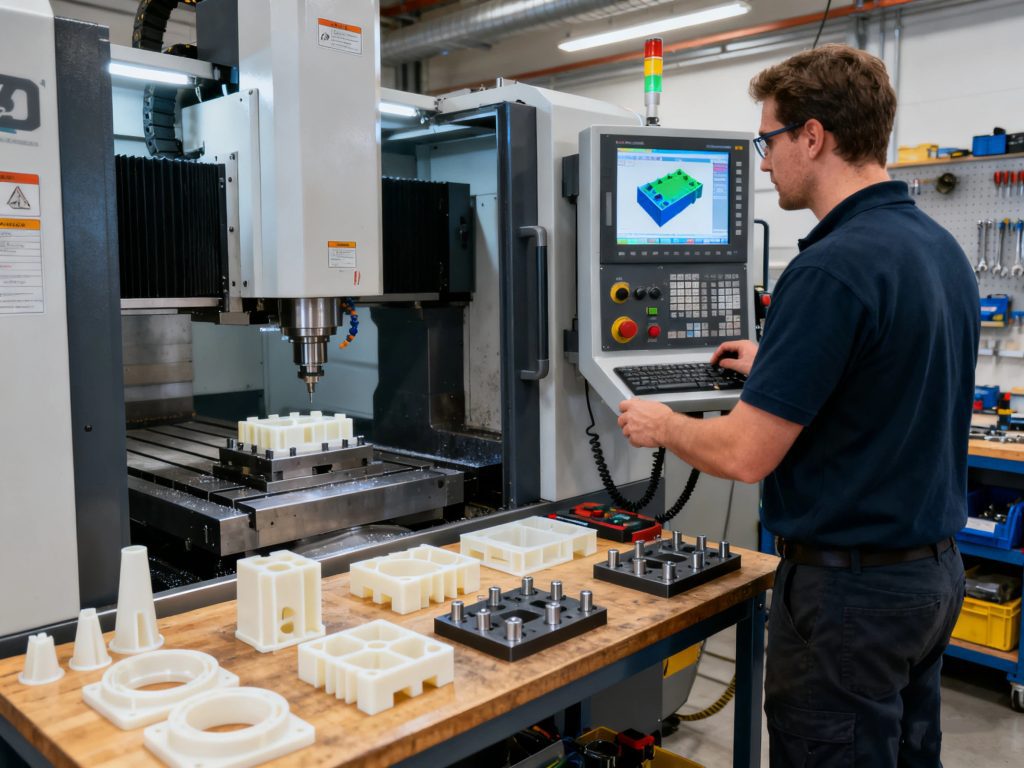
- Rapid injection molding and CNC machining: For prototypes, clinical builds, and early verification before scaling. CNC is also used for fixtures and test rigs. CNC milling and CNC turning are essential for prototype creation, fixture manufacturing, and small batch production. These machining techniques are particularly useful for achieving precise geometries and fine details, ensuring the accuracy, durability, and functionality of the parts.
For medical device manufacturers seeking high-precision CNC machining of plastic or metal components, U-Need provides professional CNC milling, turning, and custom part fabrication services.
Good DFM/DFA (design for manufacturing/assembly) starts early. That means picking gate locations, considering draft angles, and planning for sterilization effects up front.
3D printing, robotics, and AI-driven manufacturing
3D printing accelerates custom fits and design changes without waiting for hard tooling. Robotics improves consistency in handling, vision checks, and packaging. AI/ML watches process signals, flags drift, and supports SPC (statistical process control) to catch issues before they hit yield.
Want to scale faster? Link your CAD, eDHR, and inspection data so you can trace lots, resin batches, and settings by serial number. That digital thread speeds audits and protects patients.
What tolerances are achievable with micro-molding?
It depends on material and geometry. As a guide, micro features under 0.1 mm are possible, and some programs hold ±0.005–0.02 mm on critical features with the right polymer and controlled environment. You need stable tool steels, precise temperature control, and advanced metrology like micro-CT to verify tiny cavities.
Typical tolerances by process (reference only; confirm by part and material):
| Process | Typical Tolerance | Notes |
|---|---|---|
| Injection molding | ±0.05–0.10 mm | Tighter for small parts; depends on polymer and tool |
| Micro-molding | ±0.005–0.02 mm | Specialized tooling, strict thermal control |
| Extrusion (tubing) | Wall ±0.02–0.05 mm | Depends on size and line speed |
| CNC machining (plastics) | ±0.025–0.05 mm | Good for fixtures, housings, small batches |
| 3D printing (FDM/SLS/SLA) | ±0.10–0.25 mm | Improves with post-processing and calibration |
Compliance, Quality, and Risk Management
Ensuring the safety and efficacy of medical plastics requires strict adherence to regulatory standards and quality management practices. Compliance with frameworks like FDA regulations and ISO standards is essential for minimizing risks and maintaining product integrity.
Regulatory frameworks and documentation
To sell a medical device, you need the right quality system and proof. Expect these foundations:
- FDA requirements for device clearance/approval and quality systems.
- ISO 13485 for medical device quality management.
- ISO 10993 for biocompatibility testing; USP Class VI may apply for certain uses.
- EU MDR for the European market.
- Documentation: DMR (Device Master Record), DHR (Device History Record), and full traceability from resin lot to finished device.
Supplier quality matters. Qualify them with certifications, COAs, lot traceability, and strict change control. Ask how they handle material substitutions, obsolete grades, and tooling repairs.
Validation and sterilization protocols
You must show your part and process are stable:
- Equipment and process validation: IQ/OQ/PQ with Cp/Cpk goals.
- Sterilization validation: ISO 11135 (EtO), ISO 11137 (radiation), ISO 17665 (steam).
- Risk management: ISO 14971 for hazard analysis and mitigations.
- Packaging validation: ISO 11607 for sterile barrier integrity, transit testing, and shelf-life.
Design controls link your user needs to verification and validation. Keep clean records. They save time when audits come.
Do medical plastics require FDA approval or device-level clearance?
The material does not get FDA “approved” by itself. The device is cleared or approved. According to the U.S. Food and Drug Administration (FDA), all medical devices must be cleared or approved to ensure compliance with safety, biocompatibility, and process standards for their intended use. Many resin makers hold master files with data you can reference. You still need to show your device is safe and effective in its final, sterilized state with your exact process and supplier.
Sustainability and Circularity in Medical Plastics
As the healthcare industry continues to prioritize environmental responsibility, sustainability and circularity in medical plastics are becoming increasingly important. This section explores the challenges and opportunities of creating more sustainable solutions with medical-grade plastics, focusing on how the industry can balance patient safety with environmental stewardship in the quest for a more circular economy.
Recyclable and bio-based options: trade-offs and performance
Can plastics used in medical settings be greener? Yes, with trade-offs. Some recyclable medical-grade resins are available, but PCR (post-consumer recycled) content is often limited by purity and biocompatibility needs. Bio-based polymers can reduce carbon footprint, yet many struggle with high temperatures, sterilization, or long-term durability. Match the resin to the job, then validate. Safety first.
Biodegradable materials may fit drug delivery or resorbable implants, but they are rarely used for general disposables that require long shelf life and tight sterilization windows.
Managing single-use medical devices sustainably
Hospitals can divert waste by better sorting and pre-sorting sterile wraps, clean plastics, and biohazard bags. Some systems run take-back pilots where clean, single-material streams go to specialized recyclers. Designers can help by reducing part count, thinning walls where safe, and using design-for-disassembly features. A basic LCA (life cycle assessment) often shows hotspots in raw material, sterilization energy, and logistics. Address those first.
Can single-use medical devices be sustainably managed?
Yes. Start with good waste segregation and a partner that can handle medical-grade plastic safely. Use material IDs on parts to support sorting. Pilot closed-loop programs for high-volume items. Even small gains add up across millions of units.

Sourcing, RFQs, and Cost Drivers for OEMs
When sourcing medical plastics for OEMs (Original Equipment Manufacturers), understanding the key cost drivers and procurement processes is essential for making informed decisions. This section covers the critical aspects of sourcing medical-grade plastics, from requesting quotes (RFQs) to evaluating material costs, tooling, and sterilization requirements.
Vendor selection criteria and red flags
The right partner knows medical environments, ISO 13485, and device documentation. Look for:
- Cleanrooms (ISO Class 7/8), validated injection molding and micro-molding, extrusion, CNC, and metrology (CMM, CT).
- Traceability, COAs, and controlled change management.
- Experience with your sterilization method.
- Strong EHS and supply chain resilience with second-source plans.
Red flags: no formal corrective action system, weak material controls, or missing DHR/DMR practices. If they cannot produce sample inspection reports on request, proceed with caution.
Cost drivers and timeline expectations
Total cost comes from more than resin price. Expect:
- Resin pricing swings and grade availability.
- Tooling complexity, cavities, and steel choice.
- Tolerance targets, surface finish, and part size.
- Volume and lead times, including validation time.
- Sterilization and packaging method, plus transit testing.
- Secondary ops: printing, bonding, assembly, or kitting.
To save time and cost, share clear CAD, CTQs (critical-to-quality features), and a risk-based validation plan early. Consider family molds for related parts and pick a resin that meets needs without over-specifying.
How do I compare medical plastic manufacturers?
Use a capability matrix and start with a small pilot. Ask for a PPAP-style launch, sample first-article inspection reports, and a clear IQ/OQ/PQ plan. Compare cleanroom levels, ISO 13485 status, sterilization experience, and lead time for molds and changes. Take references from past device classes similar to yours.
Visual/Interactive: Vendor comparison matrix and RFQ template
Example comparison points:
| Capability | Supplier A | Supplier B | Supplier C |
|---|---|---|---|
| ISO 13485 certified | Yes | Yes | Pending |
| Cleanroom class | ISO 7/8 | ISO 8 | None |
| Processes | Injection, micro, extrusion | Injection, CNC | Injection only |
| Sterilization support | EtO, gamma | EtO | None |
| Metrology | CMM, CT | CMM | Basic |
RFQ checklist (step-by-step):
- Provide CAD, 2D drawings with GD&T, and material spec.
- List sterilization and packaging plans.
- Share CTQs, target volumes, and forecast.
- Request DFM notes, mold strategy, and validation plan.
- Ask for sample inspection format, lot traceability, and change control policy.
Future Outlook: Smart Materials and Personalized Care (to 2034)
As technology advances, medical-grade plastics are evolving to incorporate functionalities like sensors, antimicrobial properties, and tissue-mimicking characteristics. This section looks ahead to 2034, exploring how these smart materials will enhance medical devices, enabling more tailored, effective treatments and improving patient outcomes. By embracing these innovations, the healthcare industry can create more adaptive and personalized solutions for patients worldwide.
Smart/functional polymers and tissue-mimicking blends
The next wave blends function into medical plastics. Expect antimicrobial surfaces, conductive polymers for sensors, and bioactive coatings. Elastomeric blends will support soft robotics and gentle prosthetics that flex like tissue. These materials used in healthcare will still need strong biocompatibility and sterilization stability.

Digital thread, AI, and traceability at scale
A connected digital thread links design, build, test, and eDHR. With real-time SPC and predictive maintenance, quality improves and scrap falls. Serialized parts support recalls and service without confusion. This is where AI-driven manufacturing becomes everyday practice, not a special project.
Scenario planning: demand, regulation, sustainability
- Demand: steady growth from chronic care and home devices, with spikes during outbreaks.
- Regulation: tighter proof on biocompatibility, sterilant residuals, and packaging integrity.
- Sustainability: push for material ID, cleaner waste streams, and low-energy sterilization options.
You can plan a base case at 7–8% CAGR and test high/low paths with your own product mix.
Authoritative sources to cite
When you need a final word on safety or standards, use primary sources and official guidance. These help when building your DMR, planning tests, or answering audits.
- FDA Medical Devices (quality, submission, guidance)
- ISO standards for 13485, 10993, 14971, 11135, 11137, 17665, 11607
- EU MDR information for Europe
- WHO and CDC for infection prevention and sterilization guidance
Where can I find validated material data sheets?
Use the official technical portals from resin makers and cross-check with ISO and ASTM data. For biocompatibility, refer to ISO 10993 guidance and run your own tests on the final, sterilized part. Keep TDS/SDS copies in your DMR and update with each supplier change notice.
Key takeaways and answers to common questions (woven from the guide)
- What plastic is used in medicine? A wide range. PP and PE for disposable items. PC, ABS, PETG, PMMA, PPSU for durable medical devices. PEEK and UHMWPE for implants and wear surfaces.
- What is medical grade plastic called? We use the term medical-grade polymers or medical-grade plastics. They are specific grades tested for biocompatibility, stability, and process needs.
- Is medical grade plastic safe? Yes, when it passes ISO 10993 tests, is processed in a controlled system like ISO 13485, and has validated sterilization and packaging.
- What is the most common type of polymer used in medical devices? By volume, polypropylene. By performance value in many devices and housings, PC and ABS are very common.
- What plastics are biocompatible? Many, when tested and used within limits: PP, PE, PC (medical grades), PPSU, PEEK, PMMA, PTFE, UHMWPE, and TPU, among others. Always test your final device, not just the base resin.
- What is a medical polymer? A polymer used in medical applications that meets safety, biocompatibility, and sterilization needs for its intended use case.
FAQs
In medicine, a wide variety of plastics are used, each chosen for specific purposes based on factors like strength, flexibility, biocompatibility, and sterilization compatibility. Polypropylene (PP) is the most common plastic used in disposable medical devices such as syringes, IV bags, and catheters because it’s affordable, durable, and easy to sterilize. For medical devices that need more strength and clarity, Polycarbonate (PC) and Acrylonitrile Butadiene Styrene (ABS) are often used, as they provide impact resistance and can be molded into precise shapes. Polyetheretherketone (PEEK), used for implants, is known for its strength, resistance to wear, and radiolucency, which allows doctors to see through imaging without interference. These materials are chosen carefully based on the needs of each medical application, ensuring safety and performance.
The term “medical grade plastic” refers to plastics that meet strict standards for use in medical devices. These plastics are designed to be biocompatible (safe for contact with the human body) and are tested to ensure they don’t cause harm when in contact with bodily fluids or tissues. In other words, medical-grade plastics are certified to meet specific regulatory requirements, like those outlined by the FDA or ISO 10993 standards. Some common examples include PP (Polypropylene) for single-use items, PEEK (Polyetheretherketone) for long-term implants, and PPSU (Polyphenylsulfone) for applications requiring high heat resistance and durability. These plastics undergo rigorous testing for things like extractables, leachables, and overall biocompatibility to ensure patient safety in any medical context.
Yes, medical grade plastic is specifically designed and tested for safety. The plastic used in medical devices must pass stringent tests to ensure it is biocompatible, meaning it won’t cause adverse reactions when it comes into contact with the body. This includes testing for toxicity, irritation, and sensitization under standards like ISO 10993. Additionally, these plastics must be able to withstand the sterilization methods used in healthcare, such as ethylene oxide (EtO), gamma radiation, or steam autoclaving, without degrading or leaching harmful substances. While medical plastics are safe for their intended use, it’s important to use the right material for the specific device to ensure patient safety, which is why they go through thorough testing and validation.
The most common type of polymer used in medical industry is Polypropylene (PP), particularly for single-use items like syringes, IV bags, and disposable diagnostic devices. This is because PP is cost-effective, easy to sterilize, and offers excellent chemical resistance, making it ideal for short-term medical applications. For more durable and high-performance medical devices, Polycarbonate (PC) and Acrylonitrile Butadiene Styrene (ABS) are also frequently used, especially in diagnostic equipment, surgical tools, and housings for medical electronics. Polyetheretherketone (PEEK), though more expensive, is widely used in implants due to its strength, wear resistance, and ability to blend well with human tissue. These polymers are chosen for their unique properties that meet the demanding needs of the healthcare industry.
Biocompatibility is a critical factor in medical plastics, meaning the material can safely interact with the human body without causing harmful effects. Some common biocompatible plastics include Polypropylene (PP), Polyethylene (PE), Polycarbonate (PC), Polyetheretherketone (PEEK), and Polymethyl Methacrylate (PMMA). These materials are frequently used in medical devices that are in direct contact with tissues or bodily fluids. For instance, PEEK is often used for implants, such as spinal cages, because it’s strong, biocompatible, and radiolucent (transparent to X-rays), which is essential for medical imaging. PP and PE are widely used for disposable devices like syringes and catheters. Each of these plastic material undergoes rigorous testing for cytotoxicity, irritation, and sensitization to ensure they are safe for medical use.
A medical polymer is a type of plastic material that has been specifically engineered for use in medical devices and applications. These polymers are carefully selected based on their ability to meet the strict requirements for safety, strength, and compatibility with human tissues. Medical polymers are tested for biocompatibility under standards like ISO 10993 to ensure they don’t cause harmful reactions when in contact with the human body. Examples of medical polymers include Polyethylene (PE), Polypropylene (PP), Polymethyl Methacrylate (PMMA), and Polyetheretherketone (PEEK). These materials can be molded into various forms, such as syringes, implants, and diagnostic equipment, and they must meet rigorous standards to ensure patient safety, performance, and longevity.



 English
  German
  French
  Italian
  Spanish
  Polish
  Czech
Czech  Japanese