
Black anodized surfaces solve three common problems in a single step: corrosion, wear, and appearance. When you anodize aluminum (or titanium) and dye it black, you create a tough, non-conductive, color-stable layer that protects the metal and looks clean and modern. You see this finish on aerospace brackets, camera housings, heat sinks, motorcycle parts, firearms components, outdoor fixtures, and more. These are some of the applications of black anodized aluminum and other anodized metals in high-performance and decorative contexts. This guide gives direct answers first, then explains the process, chemistry, design choices, Type II vs Type III hardcoat, dye science, performance data, cost ranges, standards, and real-world tips. You’ll find specs you can use in RFQs, simple design rules, troubleshooting workflows, and sustainability practices. The goal is practical confidence: when to choose black anodizing, how to specify it, and how to qualify suppliers and parts.
Black Anodized Basics: Definition, Benefits, Quick Answers
What “black anodized” means (anodized aluminum, hardcoat, oxide layer)
Black anodized means the part has been anodized and then dyed black before sealing. Standard anodizing is an electrochemical process that modifies the metal surface, turning aluminum and other compatible metals into a durable aluminum oxide layer. In sulfuric acid anodizing, the process creates a semi-porous aluminum oxide layer. That porous layer absorbs a black dye. Finally, sealing closes the pores to lock the color in and boost corrosion resistance. The result is an anodized coating that is bonded to the metal, not a paint sitting on top.
A few quick points:
- It is primarily used on aluminum because anodizing produces aluminum’s own oxide layer. Titanium can also be black anodized, but the method and chemistry differ.
- The black color comes from organic or electrolytic coloring (metal salt dyes). Electrolytic coloring gives the best lightfast, outdoor-stable blacks.
- The surface is generally non-conductive and has high emissivity, which helps with heat dissipation on heat sinks and enclosures.
Benefits vs raw metal and vs powder coat/paint
Compared to raw aluminum, a black anodized finish adds corrosion and wear resistance while improving appearance. Because the oxide is part of the metal, it won’t peel like paint. It can be thin and dimensionally controlled, which is helpful for CNC milling and tight fits. With electrolytic dyes and good sealing, the black color holds up well to UV light. The surface is insulating, which is useful in electronics and optics.
Compared to powder coating or paint:
- Anodized aluminum is thinner and harder, with better control of thickness for precision parts.
- Powder coat is thicker and more flexible, which can hide casting defects but may affect threads and fits.
- Paint is easy to touch up in the field but offers less wear resistance and usually lower UV stability.
Typical use cases include aerospace and defense (low reflectivity and hard wear), optics and electronics (glare control and consistent color), firearms and tactical gear (durable black finish), and architectural parts (marine-grade, outdoor-rated black).
When to choose black anodizing vs hardcoat or powder coating
- Choose Type II black anodizing for decorative/electronics parts, moderate wear, and cost control. It is the standard sulfuric acid anodize, then dyed black and sealed.
- Choose Type III black hardcoat anodizing when you need higher wear resistance, thicker oxide, and MIL-spec performance. It is denser, harder, and can be dyed black or appear naturally dark.
- Choose powder coat if you want a thicker, flexible coating to hide surface defects, or if you need a wide color palette and field repairability.
- Choose paint for color-only needs and in-field touch-ups, knowing it is less durable.
Is black anodized aluminum conductive?
No. Anodized aluminum is generally electrically insulating at the surface. If you need conductivity for grounding or EMC, you can mask those areas before anodizing or post-machine the surface to expose raw aluminum.

Black Anodizing Process and Chemistry: How Black Anodizing Works
Step-by-step workflow (clean, anodize, dye, seal)
If you want to learn how to anodize aluminum black, understanding the anodizing process as a step-by-step chain is crucial. Skipping or rushing a step often shows up as stains, blotches, or poor color.
- Clean and degrease: In the black anodizing process, begin by cleaning and degreasing to remove oils, coolants, and soils. Proper prep avoids smut, streaks, and uneven dye absorption.
- Etch and desmut: Light etch evens out the aluminum surface. Desmut removes alloying elements (like copper, silicon) that don’t dissolve in the etch.
- Anodize: place the metal part on racks with good electrical contact. In a sulfuric acid bath under controlled current, the surface of aluminum converts to a porous aluminum oxide layer ready to accept dye. Type of anodizing matters here.
- Dye: Immerse the part in a black dye bath. The black dye absorbs into the pores in the oxide layer. Black can be organic, inorganic, or electrolytic (metal salts).
- Seal: Use boiling deionized water or nickel acetate sealing to close the pores and lock in the black color. Sealing improves corrosion resistance and color stability.
Dye technologies and lightfastness (organic vs electrolytic)
The choice of black dye within the anodized pores is critical, especially for outdoor applications. Organic dyes offer many shades at low cost but fade under UV. Inorganic or metal salts, including heavy metal salts such as nickel or cobalt, penetrate the porous layer to produce deep, durable blacks on black anodized metal, ensuring better UV stability for exterior or marine use. If your part will see sunlight, specify electrolytic dyes and a proper seal (nickel acetate sealing is common). If your part lives indoors, high-quality organic black dye can be a fine choice.
Type II vs Type III hardcoat: thickness, hardness, use cases
Type II (standard) and Type III (hardcoat) are both sulfuric acid anodizing, but they differ in temperature, current density, and oxide density. Type III is thicker, denser, and harder. The table below summarizes the essentials.
Type II vs Type III Black Anodizing (typical ranges)
| Type | Typical oxide thickness | Wear resistance | Color options | Dimensional impact | Cost per batch | Best for |
|---|---|---|---|---|---|---|
| Type II (standard black anodize) | 0.5–1.0 mil (12–25 µm) | Good | Dyed black (wide range) | Low to moderate | Lower | Decorative, electronics, light-to-moderate wear |
| Type III (black hardcoat) | 1.0–3.0 mils (25–75 µm) | Very high | Dyed black or naturally dark | Higher; plan fits carefully | 30–40% higher on average | Aerospace, defense, high-wear, MIL-spec parts |
Process flow and oxide cross-section explained
Think of the oxide as a forest of tiny pores growing out of the metal. During dyeing, the black dye fills those pores. Sealing swells the pores shut. A process flow looks like this: rack → clean → etch/desmut → anodize → dye → seal → dry. Good racking and stable power are critical to even color and thickness across complex parts.
Materials and Design for Anodizing (Aluminum, Titanium, Alloys)
Aluminum alloys and surface prep that influence color and quality
Different aluminum components and metal parts anodize differently. Alloy series, temper, and surface preparation all influence the final black color and dye uptake.
- 6061 and 5052 usually anodize very well. They give a deep, even black when etched and desmutted properly.
- 7075 can take on a slight bronze cast in black anodized finishes due to copper content. Good process control helps, but note this in your spec if color match across alloys matters.
- 2024 behaves similar to 7075; watch for color shifts and pitting if prep is poor.
- Cast aluminum can show porosity, pits, and gas bubbles. Powder coat often hides these better; anodizing will show the surface truth.
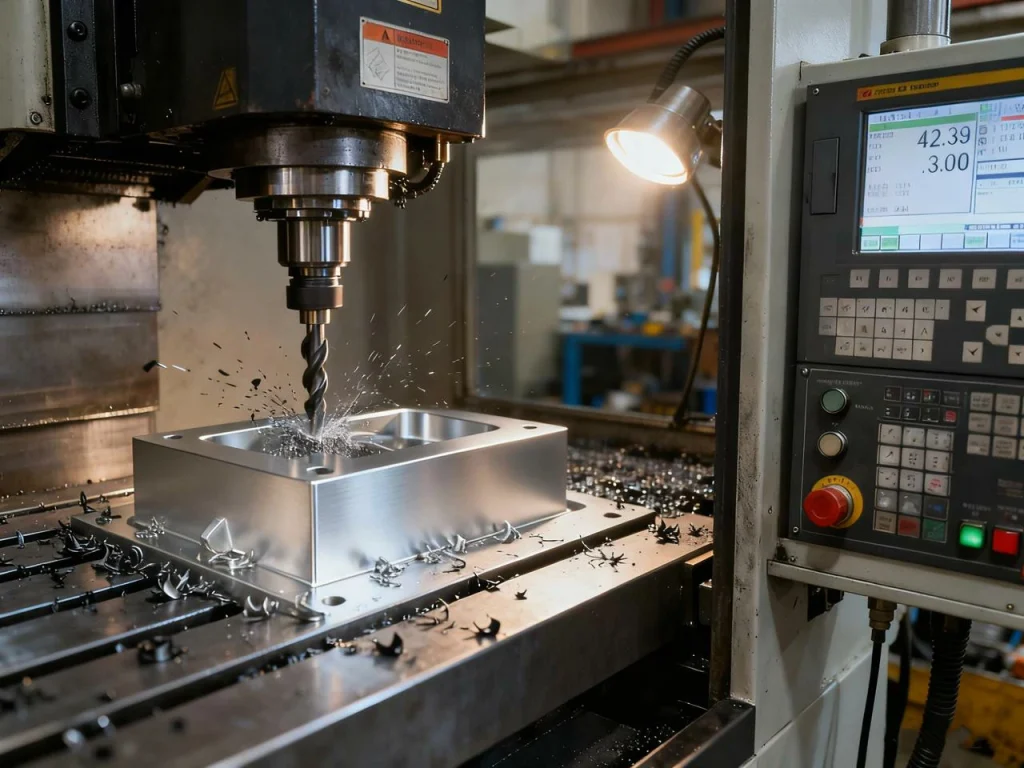
- Surface finish in equals finish out. Consistent CNC milling strategies, uniform bead blasting, or polishing before anodizing improves final appearance. Avoid mixed finishes on the same part unless you want contrast. CNC milling provides precise material removal, consistent surface textures, and tight tolerances, ensuring aluminum components are perfectly prepared for Type II or Type III black anodizing. For precision CNC machining parts, you can visit U-Need, a professional CNC manufacturer specializing in custom parts and surface finishing.
A consistent pre-finish across parts helps batch-to-batch color match. Clean coolant and careful handling reduce fingerprint stains and smut.
Titanium black anodizing: key differences and setup
Titanium anodizing is a different chemistry and mechanism from anodized aluminum black. You can produce bright colors with controlled voltages. To get a true black, shops may use specific electrolytes and parameters (often with metal salts) to avoid iridescent hues. Controls are tighter, and racking and power stability matter even more. If you need matching black anodized aluminum and black anodized titanium in the same assembly, ask for sample chips first. The processes are different, and apparent color can vary with light and texture.
Dimensional change, tolerances, and masking strategy
An anodized coating grows both into and out of the surface. A practical rule of thumb is about 50% penetration and 50% build. For Type II, a 0.8 mil thickness adds about 0.4 mil to the surface. For Type III at 2.0 mil, growth is about 1.0 mil. Plan this into press fits, bores, and threads.
If you need conductive pads, precision bores, or bearing fits, masking is your friend. Mask threads, tight bores, datum faces, and grounding points. For some features, light post-machining after anodize can give a perfect fit and bare-metal electrical contact.
Nominal growth for black anodizing
| Coating type | Typical thickness | Approx. growth (build) |
|---|---|---|
| Type II | 0.5–1.0 mil | 0.25–0.5 mil |
| Type III | 1.0–3.0 mils | 0.5–1.5 mils |
Masking checklist:
- Threads and gauged bores
- Bearing seats and sliding fits
- Datum faces and precision reference features
- Grounding/EMC pads or bonding points
- Sealing faces and O-ring grooves
- Heat sink mating surfaces where thermal resistance must be minimized
Performance, Testing, and Properties
Corrosion and wear performance data
Anodized aluminum’s corrosion resistance improves when the coating is sealed. Standard salt spray testing follows methods like ASTM B117 or ISO 9227. Hardcoat anodizing can also deliver high wear resistance. In lab abrasion testing (such as ASTM D4060), properly sealed hard-anodized black often retains most of its finish after many cycles compared to powder coat paints that show faster wear. If your part lives near salt or in a marine setting, specify sealing and an outdoor-rated black dye. If you need extreme wear resistance, choose Type III and confirm thickness on witness coupons.
Color stability, UV resistance, and finish control (matte to gloss)
Organic black dyes may fade outdoors. Electrolytic or metal-salt dyes have better UV stability and are the safer pick for exterior parts. Sealing quality also affects color life because it locks the dye into the oxide pores.
Finish control starts before anodizing. A fine bead blast with Type II can produce a low-gloss, matte “optical black” that reduces glare. Polishing followed by Type II can yield a satin or near-gloss black. If lot-to-lot color consistency matters, use sample chips, define a color target and a Delta E tolerance, and document the sealing method.
Thermal and electrical behavior
Anodized aluminum black has high emissivity, which helps parts radiate heat. This is why heat sinks and electronics enclosures often use a black anodized finish. The oxide is non-conductive; design any needed conductive areas with masking or plan to remove the coating locally after finishing.
Black anodizing vs powder coating vs painting
| Property | Black anodizing | Powder coating | Painting |
| Typical thickness | 0.5–3.0 mils | 2–6 mils | 0.5–2 mils |
| Wear resistance | High (Type II), very high (Type III) | Moderate | Low to moderate |
| Corrosion resistance | High when sealed | High when applied thick and intact | Moderate; depends on prep |
| UV stability | High with electrolytic dyes and proper sealing | Varies by resin; can chalk | Varies; many paints fade |
| Max service temperature | High for anodize | Varies; some powders soften at heat | Lower than powder/anodize |
| Field repairability | Poor; not easily touched up | Moderate | Good; easy to touch up |
| Impact on tight tolerances | Low to moderate | High | Moderate |
| Typical cost | Moderate | Moderate to high | Low |
Applications of Black Anodized Aluminum and Case Studies
Aerospace and defense: hardcoat, low reflectivity, MIL-spec
Aerospace and defense programs often require MIL-A-8625 Type III hardcoat for wear surfaces and low reflectivity. Black anodized aluminum optical mounts, brackets, and housings use hardcoat for longer life and controlled glare. Engineers call out thickness, sealing, and masking on drawings and verify with coupons. Tight tolerances are common, so growth allowances and masking maps are part of the plan from the start.
Electronics and optics: optical black, glare control, durability
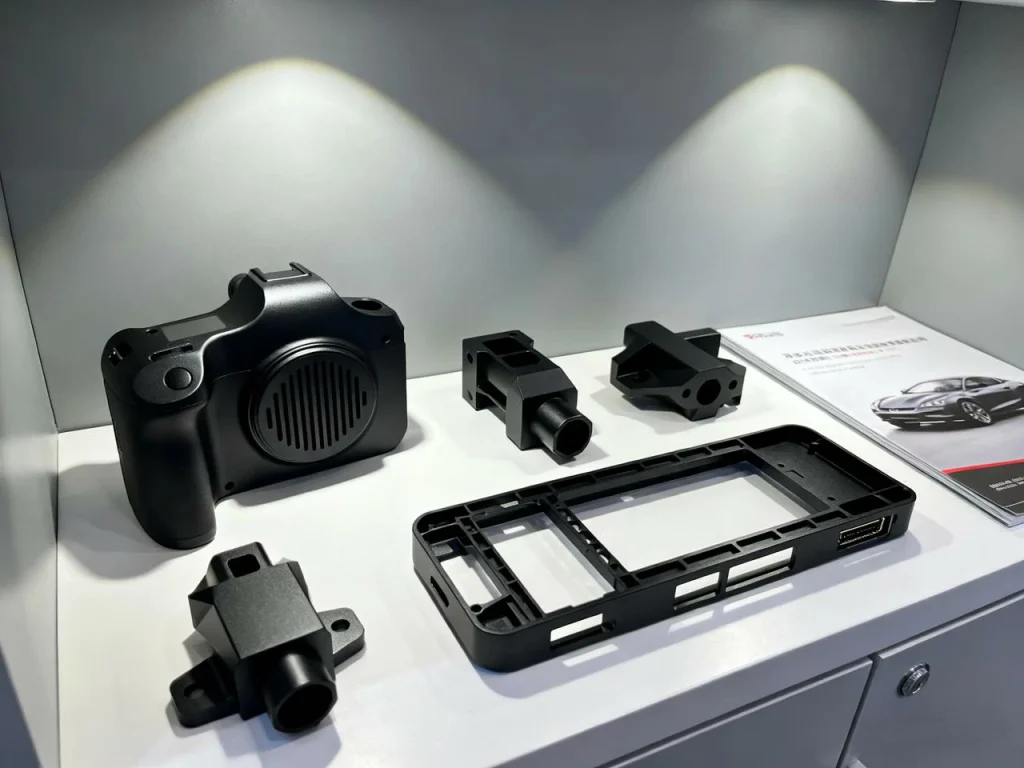
Electronics and vision systems need a durable black that won’t glare or shed flakes. A matte Type II black anodize on bead-blasted surfaces helps reduce internal reflections. High emissivity also supports thermal control in heat sinks. Lot-to-lot color consistency matters, especially for consumer products. Teams often keep master color chips and require a Delta E threshold to reduce visible shift across suppliers and batches.
Automotive, firearms, and architectural examples
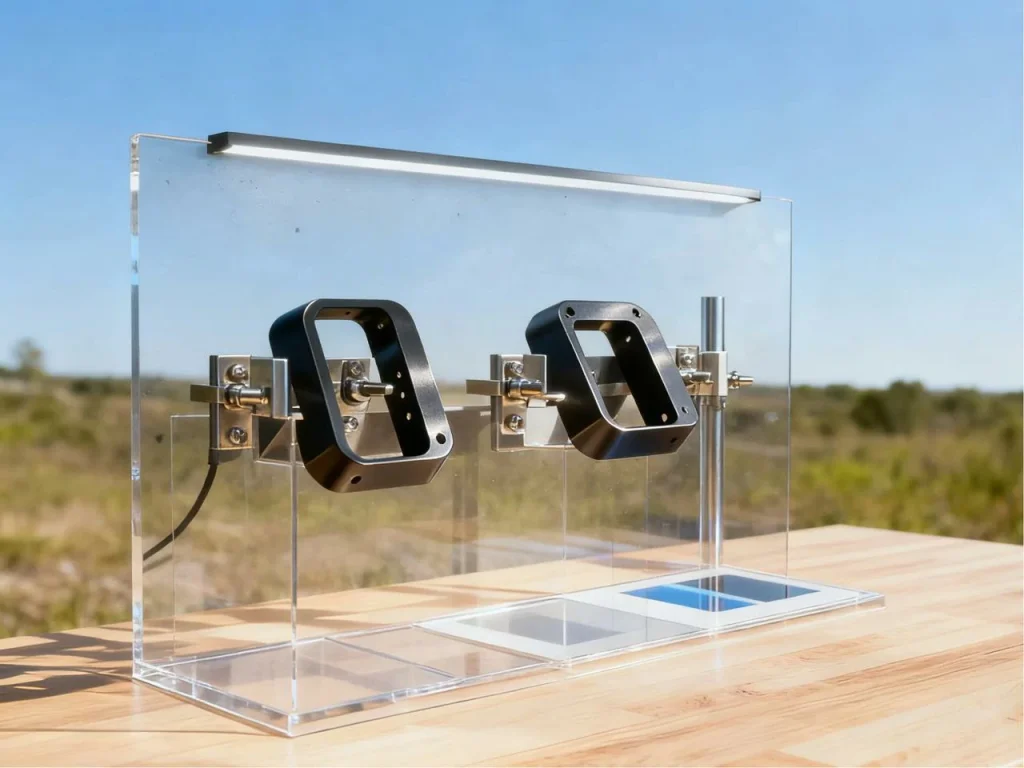
Automotive parts see heat, vibration, and handling. Black anodizing on trim and engine components looks sharp and holds up to use. Firearms and tactical parts use hardcoat black for wear and corrosion resistance. Architectural hardware faces UV, rain, and salt. For these, specify outdoor-rated, electrolytic black dye and robust sealing to hold the black color and avoid streaks or chalking.
Case snapshots and practitioner insights
- Optical housings: A shop switched to bead blasting with a tighter grit range and specified Type II with nickel acetate sealing. The result was a deep, glare-free black with better batch consistency and fewer returns.
- Aerospace fitments: A supplier added witness coupons per batch and logged current density and bath temperature. Color variation dropped, and rework fell because QA could trace and correct issues early.
- Shop-floor tips: Keep anodize baths clean, maintain temperature and agitation, and use sturdy racking with good electrical contact. For complex parts with pockets and deep bores, slower ramps and rotation can improve uniform color.
Cost, Lead Time, and Procurement
Pricing ranges and cost drivers (Type II vs Type III)
Typical U.S. pricing for Type II black anodizing can fall around $65–$125 per run for small batches, with volume discounts for larger orders. Type III black hardcoat costs more because it uses higher current density, colder baths, and longer time—often 30–40% higher per batch. Pricing depends on part size, count, alloy, thickness, masking complexity, geometry, and the level of QA documentation you require.
Common cost drivers:
- Alloy: High-copper alloys may need tighter control; castings may raise reject risk.
- Thickness: Thicker or hardcoat means more time and energy.
- Masking: Threads, bores, and multi-face masking add labor.
- Geometry: Deep pockets and complex racks slow the line and can increase rework.
- Quality records: Coupons, salt spray, color measurements, and certs add cost.
Lead time accelerators and pitfalls
Lead time depends on batch scheduling, color matching, masking, and rework risk. Late design changes that add masking or change thickness will push schedules. If you need a specific shade, ask for finish samples early and send your own sample chips. Witness coupons reduce arguments later and help the shop tune the process fast.
RFQ checklist and supplier vetting
If you write a tight RFQ, you lower cost and risk. Here is a concise checklist:
- Standard and class: Call out MIL-A-8625 Type II or Type III, or ISO 7599/ISO 10074.
- Target thickness: Give a range and location(s) to measure.
- Dye: Specify “black, outdoor-rated electrolytic dye” for exterior parts.
- Seal: State sealing method (boiling DI water or nickel acetate).
- Masking map: Show threads, datum faces, grounding pads, and no-coat areas.
- Alloy and temper: List exact material (e.g., 6061-T6).
- Pre-finish: Note bead blast, polish, or as-machined Ra target.
- Color control: Provide sample chips and set Delta E tolerance.
- QA: State inspection points, salt spray test if needed, and certs required.
- Compliance: Note ISO 9001, RoHS, REACH declarations as needed.
Sustainability, Safety, and Compliance
Core standards and regulations to cite
Common standards for anodized aluminum include:
- MIL-A-8625 for anodic coatings on aluminum and aluminum alloys (Type II and III).
- ISO 7599 for anodizing of aluminum and its alloys, general rules for sulfuric acid anodizing.
- ISO 10074 for hard anodic oxidation coatings on aluminum and its alloys.
- Salt spray and corrosion testing often follow ASTM B117.
For compliance, many buyers ask for RoHS and REACH declarations to confirm restricted substances are controlled.
Environmental practices and waste reduction trends
Shops are cutting water use and recovering acid to reduce waste. Closed-loop rinses and acid recovery units can lower hazardous waste by double-digit percentages compared to older lines. Energy use is a focus on hardcoat lines because colder baths and higher current eat power. Facilities track kWh per square foot of coating and invest in better insulation and power supplies to trim that number. Newer sealing systems and improved agitation also reduce rework, which lowers scrap and the environmental footprint.
Worker safety and chemical handling (EHS)
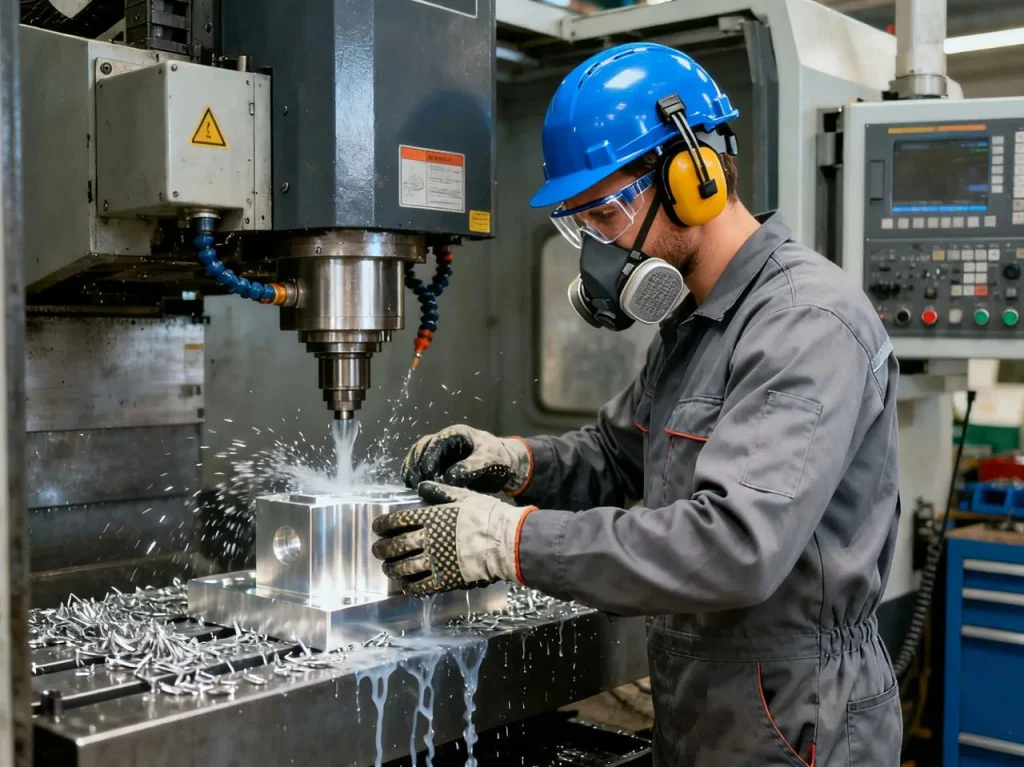
Anodizing uses acids and metal-salt dyes. Good EHS practice includes PPE, eye wash stations, local exhaust ventilation, and fume scrubbing. According to the National Institute for Occupational Safety and Health (NIOSH), adherence to chemical safety protocols is essential to prevent long-term health hazards in metal finishing operations. Teams should train on chemical handling, spill response, and bath additions. Clear labeling and SDS on hand at each tank keep everyone aligned. Regular air and mist capture checks protect workers around sulfuric acid tanks.
Quality Control, Troubleshooting, and Defect Library
Common defects and root causes
- Blotchiness or cloudiness: Often from uneven prep, fingerprints, or poor cleaning.
- Color mismatch: Different alloys or tempers, old dye bath, or sealing variations.
- Pitting: Contamination, etch issues, or cast porosity revealed by anodize.
- Smut or dark residue: Incomplete desmut or incompatible alloying elements at the surface.
- Burn marks: High current density or poor racking contact, especially on sharp edges.
Troubleshooting workflow
- Confirm alloy and temper: Different alloys take dye differently.
- Check bath chemistry: Verify sulfuric acid concentration, contaminants, and aluminum content.
- Confirm temperature and current density: Drift here causes thin spots or burns.
- Inspect racking: Ensure strong, clean contact points sized for the current.
- Verify agitation and flow: Dead zones cause uneven color in deep pockets.
- Review dye bath: Concentration, pH, and age matter for deep black.
- Check sealing: Temperature and time must lock in the dye without leaching.
Color matching across batches and suppliers
Use standard coupons cut from the same alloy and finish as production. Record dye lot, bath age, and sealing method on each COA. Set a Delta E color tolerance that your eyes and customers agree is acceptable. Keep light sources and viewing angles consistent when checking color. For high-visibility products, keep a master panel and have suppliers keep a matched set.
How long does black anodizing last outdoors?
It depends on dye type, sealing quality, and the environment. With electrolytic black dye and proper sealing, black anodized aluminum can hold color and resist corrosion outdoors for many years. In coastal or high-UV areas, regular cleaning and avoiding harsh cleaners will help the finish last longer.
Does black anodized aluminum fade in sunlight?
It can. Organic black dyes fade faster. If you need outdoor performance, specify electrolytic (metal-salt) black dyes and a robust seal. Ask for outdoor-rated black in your RFQ and use sample chips to set the target.
Can black anodizing be repaired or touched up?
Small nicks can be darkened with touch-up chemicals, but these are not the same as true anodizing. For a match you can trust, re-anodizing the full part or replacing it is the best way. For field repairs where appearance is less critical, paint pens or blackeners can hide bright scratches.
What is the 720 rule for anodizing?
The 720 rule helps estimate anodize time for a target thickness in sulfuric acid anodizing. Time in minutes equals (desired thickness in mils × 720) divided by current density (ASF). It is a helpful planning tool, but you should still verify actual thickness on coupons.
What is the downside of anodized aluminum?
Downsides include limited field repairability, possible color shift across different alloys, and dimensional growth that must be planned into tight fits. For parts that need conductivity on certain faces, you must mask or post-machine those areas.
Quick answers to common questions
- What is black anodized? It is anodized aluminum (or titanium) dyed black and sealed. The finish is an oxide layer grown from the metal itself.
- What are the benefits of black anodized aluminum? High corrosion and wear resistance, non-conductive surface, high emissivity, stable color with the right dye, and thin, controlled thickness.
- Does black anodized fade? Yes if you use organic dyes in sunlight. Outdoor-rated electrolytic dyes and good sealing greatly reduce fading.
- Can you anodize aluminum at home? It is possible, but it involves acids, power supplies, careful cleaning, and waste handling. For critical parts, use a professional shop with good EHS practices.
- What is the purpose of black anodized aluminum? To protect the metal and control appearance. It reduces glare, improves durability, and can aid thermal radiation on heat-dissipating parts.
Design and spec tips you can use today
- Choose Type II for decorative and electronics parts; choose Type III for high wear and MIL-spec needs.
- For outdoor parts, specify electrolytic black dye and nickel acetate sealing.
- Control finish with pre-anodize steps: bead blast for matte, polish for satin.
- Mask threads and tight fits. Plan growth with the 50/50 penetration/build rule.
- Use sample chips and define Delta E limits for stable color across suppliers.
- Include standard, thickness range, dye type, sealing, masking map, and QA in your RFQ.
Comparing black anodizing to black oxide coating
Black oxide coating and black anodizing sound similar, but they are different. Black coatings include black anodizing, black oxide, and powder coatings. While black anodizing creates a bonded oxide layer, other black coatings differ in wear resistance, thickness, and substrate compatibility. Black oxide is common on steel and stainless steel. It converts the surface to a black iron oxide and usually needs oil or wax for corrosion resistance. It is very thin and not as wear resistant as anodize. Black anodizing is for aluminum and grows an aluminum oxide layer that can be dyed black. If you need a durable black finish on aluminum, black anodizing is the right path. If your part is steel and needs a very thin black, black oxide coating may be the better fit.
Final checklist for CNC, machining, and assembly
- Machine with consistent toolpaths and coolant; clean parts well before finishing.
- Call out alloy and temper on the drawing; color and thickness vary by alloy.
- Add a masking map and datum notes for critical fits and grounding points.
- For assemblies mixing aluminum and titanium or steel, consider galvanic corrosion. Use spacers or sealants where needed, and avoid standing water traps.
- Keep a master color chip and approve samples before releasing a large PO.
FAQs
Yes, black anodized aluminum is generally non-conductive because the black anodizing process turns the aluminum into a durable oxide layer that acts as an electrical insulator. This means the aluminum part won’t carry current like bare aluminum would, which is great for preventing short circuits or reducing interference in electronics. If you need electrical contact in certain areas, you can mask them before anodizing or lightly machine the coating away to expose the underlying aluminum. Besides insulation, the anodized layer gives a corrosion-resistant surface and a rich, appealing black finish that helps make aluminum more beautiful. Overall, black anodizing combines durability, electrical insulation, and aesthetic appeal—perfect for parts where appearance and performance both matter.
Not always. Type III hardcoat anodizing often produces a naturally dark gray to black finish, but it isn’t guaranteed to be a deep, uniform black right out of the bath. If you want a truly rich, dark appearance, you should specify dyeing and proper sealing. The process locks in color on the surface of the aluminum part, enhancing corrosion and wear resistance while giving an attractive black look. Some specialty finishes, like Acktar black coatings, can achieve even deeper absorption and matte optical black effects, but they are separate from standard hardcoat anodizing. Remember, the natural surface of the metal under hardcoat may vary slightly by alloy and thickness, so using a dye ensures consistent color across batches. By combining hardcoat with black dye and sealing, you get both the toughness and the aesthetic appeal needed for aerospace, defense, or high-performance components, making the finish durable and visually striking.
No, stainless steel cannot be black anodized. Anodizing is a process that works commonly on aluminum and a few other nonferrous metals like magnesium and titanium, but it relies on forming an oxide layer directly from the metal itself. Since stainless steel is primarily iron-based, it doesn’t respond to the anodizing process the same way. Instead, steel parts often get black oxide coats, PVD (physical vapor deposition), or other surface treatments to achieve a metal black appearance. If you want a black finish on aluminum, aluminum can be black anodized, producing a durable, wear-resistant, and corrosion-resistant layer that grows out of the common method for anodizing itself rather than just sitting on top. For stainless steel, trying to anodize will not produce the same protective or aesthetic results, so choosing the right process—like black oxide, powder coating, or PVD—is key to getting a lasting, consistent black finish on your metal part.
If you want a good matte black finish on aluminum, the trick is really in the prep and anodizing steps. A fine bead blast before anodizing gives the surface a consistent texture, which helps diffuse light and reduces glare. After that, applying Type II black anodize followed by proper sealing locks in the color and protects the part. The bead blasting also helps the aluminum oxide coating form evenly across the surface, so the surface to form aluminum oxide is ready to absorb the black dye. Thickness control is important too—if the anodized thickness is too thin, the color may be uneven; too thick, and you could affect tight fits or threads. This combination of bead blasting, controlled anodizing, and sealing produces a low-gloss, uniform matte black that’s both visually appealing and durable, making it ideal for electronics enclosures, optics, and decorative aluminum components.
When planning for Type II black anodizing, it’s important to consider how the coating adds to the part’s dimensions. A typical 0.8 mil thickness will grow roughly 0.4 mil on each side, because the anodized layer penetrates into the metal while also building outward. This means for tight fits—threads, press fits, or mating surfaces—you should either mask critical areas or adjust your tolerances accordingly. Different alloys behave slightly differently, but standard aluminum like 6061 or 5052 usually responds predictably to the process. Remember that aluminum anodizing creates a durable layer of aluminum oxide that is bonded to the metal itself, not just sitting on top, so the growth is permanent and can’t easily be sanded off without affecting corrosion resistance. By planning ahead and accounting for this growth, you’ll maintain precise fits and avoid costly rework on assemblies or components.


 English
  German
  French
  Italian
  Spanish
  Polish
  Czech
Czech  Japanese