
Carbon steel powers construction, automotive, and manufacturing thanks to high strength, easy machining, and low cost. This guide explains what carbon steel is, when to use it, how to choose grades, and how it compares to alloy and stainless, backed by real data, case studies, and 2025 market insights.
Featured snippet Carbon steel is an iron–carbon alloy with about 0.05%–2.1% carbon by weight. It offers high strength, good machinability and weldability, and low cost. The main tradeoff is low corrosion resistance, so coatings or design protection are often needed.
Carbon steel at a glance
- What it is: An iron–carbon alloy (≈0.05%–2.1% C) with minimal other elements.
- Why it wins: Affordable, strong, easy to machine and weld; ideal for mass production and CNC machining.
- Core tradeoff: Low corrosion resistance—needs paint, plating, or galvanization.
- Typical performance: Tensile strength up to ~450 MPa for common grades; specialized carbon steels can exceed this.
- Best fit: Structural beams and plates, pipelines, automotive frames, machinery parts, and general fabrication.
- Not ideal: Marine or outdoor exposure without protection; highly corrosive or extreme cyclic load environments where alloy steel or stainless steel excel.
What is carbon steel?
Carbon steel is steel with carbon as the main alloying element. To put it simply, steel is an alloy. It is mostly iron and carbon, with the carbon content driving many mechanical properties. In plain carbon steel, other elements like manganese, silicon, or copper are present in low amounts and are not added for special effects. This simple, predictable composition makes carbon steel material easy to specify and to machine.
How does this differ from alloy steel? Alloy steels add elements like chromium, nickel, molybdenum, or vanadium to increase strength, toughness, heat resistance, or corrosion resistance. Many types of steel fall under “alloy” when these additions are high enough to change performance. So the difference between carbon steel and alloy steel is the level and purpose of these extra elements.
Carbon content ranges matter:
- Low-carbon (mild) steel (~0.05–0.30% C) has the best weldability and formability.
- Medium-carbon steel (~0.30–0.60% C) balances strength and toughness and responds to heat treatment.
- High-carbon steel (~0.60–1.00+% C) provides high hardness and wear resistance, with lower ductility.
- As the carbon content increases, hardness and strength go up; ductility and weldability go down.
Standards and naming:
- In North America, the AISI/SAE system uses numbers like 1018, 1045, or 1095. The last two digits point to the amount of carbon (0.18%, 0.45%, 0.95%).
- Common ASTM standards include A36 for structural plate and A53 for pipe.
- In Europe, EN and ISO systems use different designations but the same concepts.
- You may see “plain carbon steel,” “mild steel,” or “low carbon” used in drawings. They refer to carbon content of less than ~0.3%, which is referred to as mild steel.
Quick spec box
- Composition: Fe + C (0.05%–2.1% C)
- Strength/Hardness: Increase with carbon
- Ductility/Weldability: Decrease with carbon
- Corrosion: Low without coatings or design protection
Types and grades of carbon steel
The amount of carbon shapes the mechanical properties of steel. Here’s how the various types of carbon steel map to typical uses.
Low-carbon (mild) steel (~0.05–0.30% C)
Low-carbon steel is the most common form of steel. It is readily weldable, easy to form, and easy to machine. It has the lowest strength and hardness, but it is very forgiving in fabrication. Think of ASTM A36 plate or AISI/SAE 1008, 1010, 1018. Mild steel often makes up structural beams, sheet/plate, profiles, pipes, and automotive body panels. Because the carbon content is low, it resists cracking during welding and can bend without breaking.
When you see people ask “Is carbon steel the same as mild steel?”, the answer is: mild steel is a type of carbon steel with lower carbon content. Not all carbon steel is mild steel, but all mild steel is carbon steel.
Medium-carbon steel (~0.30–0.60% C)
Medium-carbon steel reaches higher tensile strength and surface hardness. It can be normalized or quenched and tempered to gain strength and wear resistance. It has moderate weldability and needs more control during welding and heat treatment. Common grades include 1040 and 1045. Uses include axles, gears, rail tracks, forgings, and many machinery parts. If you need stronger shafts or parts that handle impact, this band is a smart steel type to consider.
High-carbon steel (~0.60–1.00+% C)
High-carbon steel reaches very high hardness after quenching and tempering. It is used where wear resistance matters more than high ductility, such as springs, high-wear tools, knives, and cutting edges. Grades like 1075 and 1095 are common. Knife makers choose high-carbon for edge retention, though it can rust faster than stainless. Some historical steels, like high-carbon steel known as tamahagane (a traditional Japanese steel), show how artisans valued high carbon content for hardness long before modern processing.
Ultra-high carbon/Tool steels
Above ~1.0% C, you enter ultra-high carbon or tool steel territory. Many tool steels also include alloy additions like chromium, vanadium, or tungsten. If you need very high wear resistance, hot hardness, or extreme toughness after heat treatment, you may step into the steel alloy category rather than plain carbon.
Carbon steel properties and performance data
Mechanical behavior
- Strength: As carbon in carbon steel increases, so do yield and tensile strength. Typical carbon steels reach tensile strengths up to ~450 MPa in their standard forms. Heat-treated grades can go higher.
- Ductility:Elongation and toughness decrease with higher carbon. Low-carbon stays more bendable and forgiving.
- Impact toughness: At low temperatures or in heavy cyclic loads, alloy steel often performs better.
Hardness
- Hardness rises with carbon and with quench-and-temper heat treatment. High-carbon grades can reach very high surface hardness for wear.
Machinability and weldability
- Plain carbon steels are easier to machine and weld than many alloy steels, especially in the mild steel range. That’s why they are common in CNC and general fabrication. Low-carbon grades reduce the risk of cracking during welding and allow larger interpass temperature windows.
Fatigue and toughness
- For heavy cyclic loads, high strain rates, or low-temperature use, an alloy grade often improves life. If you see repeated failures in a medium-carbon steel shaft, an alloy steel vs carbon steel review may be wise.
Corrosion behavior
- Carbon steel has low corrosion resistance. Uncoated surfaces will rust when exposed to moisture and salts. This is why paint, powder coat, plating, or galvanization are common. Designers build in drainage paths, seal gaps, and choose hot-dip galvanizing for coastal or marine exposure.
Selected property ranges table
| Carbon band | Yield strength (MPa) | Tensile strength (MPa) | Typical elongation (%) |
|---|---|---|---|
| Low-carbon (as-rolled) | 200–300 | 350–450 | 20–35 |
| Medium-carbon (normalized) | 300–500 | 500–700 | 10–20 |
| High-carbon (quenched & tempered) | 600–1000+ | 800–1200+ | 5–12 |
Values are broad ranges. Actual steel grade, thickness, and heat treatment will shift results.
Carbon steel vs alloy steel (and stainless): side-by-side
It helps to compare carbon steel vs alloy steel and carbon steel vs stainless steel head to head. Keep in mind that “steel” is a big family; steel refers to many compositions. So, is carbon steel stronger than steel? That question is tricky, because steel is typically an alloy and includes both carbon steels and alloy steels. Many alloy steels are stronger and tougher than plain carbon steels. But a medium-carbon grade can still be very strong for the cost.
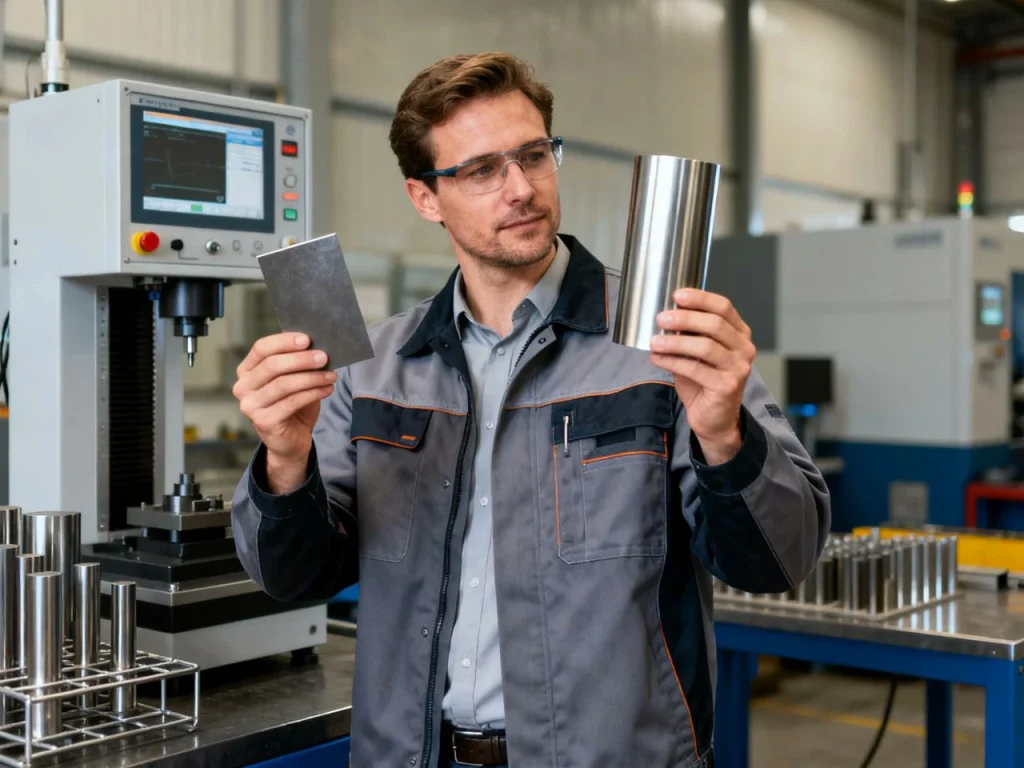
Quick comparison
| Property/Factor | Carbon steel | Alloy steel | Stainless steel |
|---|---|---|---|
| Strength/Toughness | Good baseline; improves with heat treat | Higher strength/toughness available | Moderate to high depending on grade |
| Corrosion resistance | Low without coatings | Better (with Cr, Ni, Mo) | High (≥~10.5% Cr) |
| Weldability/Machining | Generally easier | Often harder to weld/machine | Varies; austenitic welds well |
| Cost | Lower | Higher | Higher |
| Best use | General fabrication, structures | High stress, heat, fatigue, harsh service | Corrosive, sanitary, marine, medical |
Clear choices
- Choose alloy steel when loads are high, temperatures are elevated, parts see fatigue, or the environment is harsh. Consider energy, aerospace, heavy-duty shafts, or gears.
- Choose stainless steel when corrosion is the main risk, or when sanitation matters—food, medical, marine, and architectural finishes.
- Choose carbon steel when cost, speed, and machinability matter most, and when coatings can control corrosion.
Key questions answered
Is carbon steel stronger than steel?
No single answer. Steel is a category. Many alloy steels are stronger and tougher than plain carbon steel. But medium- and high-carbon steel can be very strong for the price.
What is carbon steel vs stainless steel?
Carbon steel focuses on strength and cost but rusts easily. Stainless adds chromium (and often nickel) to resist corrosion and staining.
Is alloy steel good quality?
Yes. Alloy steel is a high-quality steel alloy used where high toughness, fatigue life, or heat resistance are required.
Is carbon steel or alloy steel cheaper?
Carbon steel is cheaper in most cases due to simpler composition and processing.
Is carbon steel or alloy steel better for safety?
For basic safes, mild carbon steel plate is common due to cost and weldability. For higher-security safes that need drill resistance or thinner plates with higher strength, alloy steels or hardened/laminated designs often perform better.
What are the disadvantages of alloy steel?
Higher cost, tougher machining, sometimes harder welding, and more complex heat treatment. Lead times can also be longer.
How to choose the right carbon steel
Selection steps
- Define environment/exposure: Indoor, outdoor, industrial, coastal, or marine. Note if there are chemicals, salt, or high humidity.
- Set mechanical targets: Needed yield/tensile, hardness, and toughness. How much deflection can you allow?
- Determine fabrication method: Weld, cut, form, or machine. Choose grades that fit the process (for example, low-carbon for welding).
- Evaluate cost, lead times, and standards: Check ASTM, AISI/SAE, EN/ISO specs and local supply.
- Plan surface protection: Paint, powder coat, plating, or galvanization based on environment class and desired life.
Grade selector matrix (common choices)
| Application | Typical grade(s) | Notes |
|---|---|---|
| Structural plate/beam | ASTM A36; (A572 is low-alloy) | Mild steel; good weldability; coat if outdoors |
| Shafts/forgings | 1045 (normalized or Q&T as needed) | Balance of strength and machinability |
| Wear parts/edges | 1095; high-carbon spring steels | High hardness; protect from corrosion |
| Pipes/general fabrication | A53, A106 (application-specific) | Coatings for corrosion as required |
Process tips
- For CNC machining, mild carbon grades reduce tool wear and are predictable. Use sharp tools, proper coolant, and consistent feeds. For professional machining, custom cutting, or heat treatment of carbon steel parts, U-Need offers complete end-to-end solutions from prototype to production.
- For welding medium/high-carbon steels, consider preheat and controlled interpass temperatures to reduce cracking. Post-weld heat treatment may be needed. Match filler to strength and ductility goals.
- For forming, choose low-carbon to reduce cracking and springback. If forming after cutting, deburr edges to avoid cracks.
Applications and case snapshots
- Construction and infrastructure
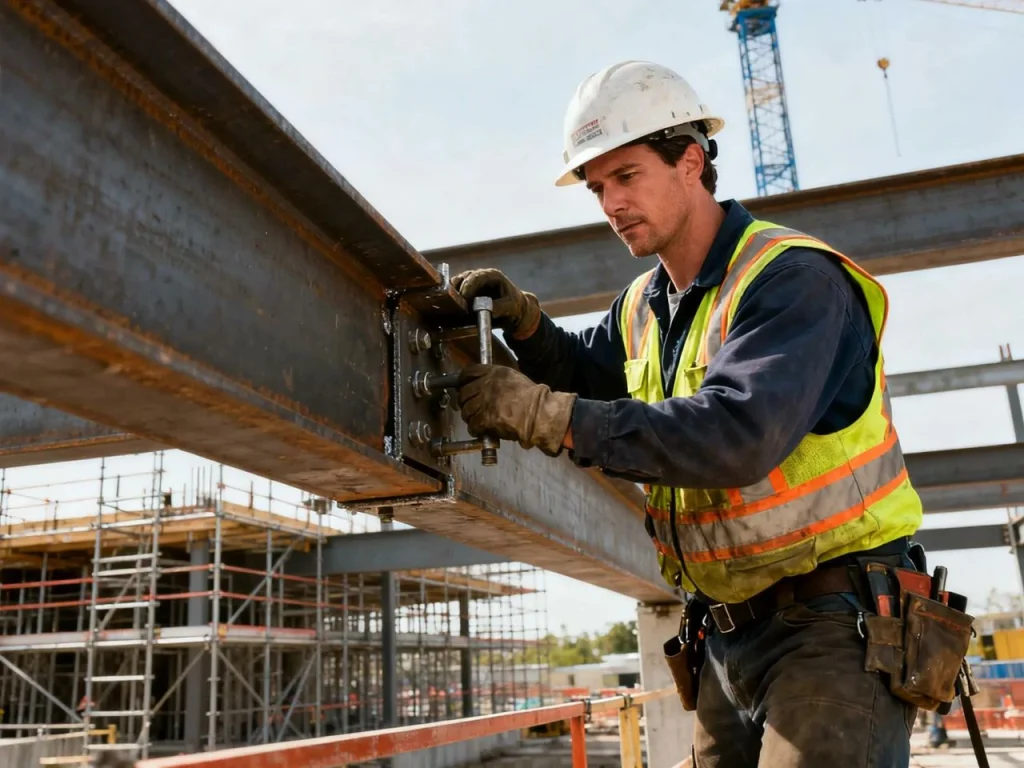
Carbon steel is standard for beams, columns, plates, bridges, guardrails, pipelines, and rail. It balances strength and cost, and it is easy to weld in the field. In bridges and coastal structures, designers often choose hot-dip galvanizing or robust paint systems to increase service life.
- Automotive
Automakers use low- and medium-carbon steels in frames, chassis, suspension, and body parts. Why? Uniform performance, steady supply, and weldability. Many safety parts rely on consistent forming and spot welding, which mild steel handles very well. High-strength low-alloy (HSLA) steels—still part of the “steel family”—are also common where weight reduction is needed.
- Manufacturing and machinery
Gears, axles, sprockets, jigs, and fixtures often use 1045 or similar grades. After quench-and-temper, these parts get the hardness and strength needed for a long life. For tooling and high wear, makers may step into tool steels or alloy steels for improved toughness. If you are looking for professional fabrication, CNC machining, or post-processing services for carbon steel components, U-Need provides precision manufacturing solutions for both prototypes and production runs.
- Consumer goods
Knives and pans made from high-carbon steel are praised for edge retention and fast heating. They can rust, so they need seasoning and dry storage. Is carbon steel healthy or not for cookware? Carbon steel is safe for cooking. It may add tiny amounts of iron to food, which is not a risk for most people and can help those low in iron. Unlike some nonstick coatings, there are no PFAS concerns with plain seasoned steel.
Mini case studies
- 1045 shaft redesign: A machine builder had repeated bending cracks in a 1020 shaft. Switching to 1045 and normalizing increased yield strength, while gentle radii and improved surface finish boosted fatigue life. Machining time stayed reasonable, and the cost bump was small.
- A36 plate in coastal builds: A fabricator used ASTM A36 plate for a pier. Hot-dip galvanizing plus a duplex paint system extended the inspection interval. Drain holes and sealed joints reduced trapped saltwater, cutting corrosion risk.
Manufacturing and treatments for carbon steels
Process overview
Making carbon steel starts with ironmaking and steelmaking (blast furnace/basic oxygen furnace or electric arc furnace using scrap). Steel is then cast into slabs, blooms, or billets, and hot rolled into plate, sheet, bar, or structural shapes. Cold rolling improves surface finish and thickness control. Forging shapes thicker sections or high-load parts.
Heat treatments
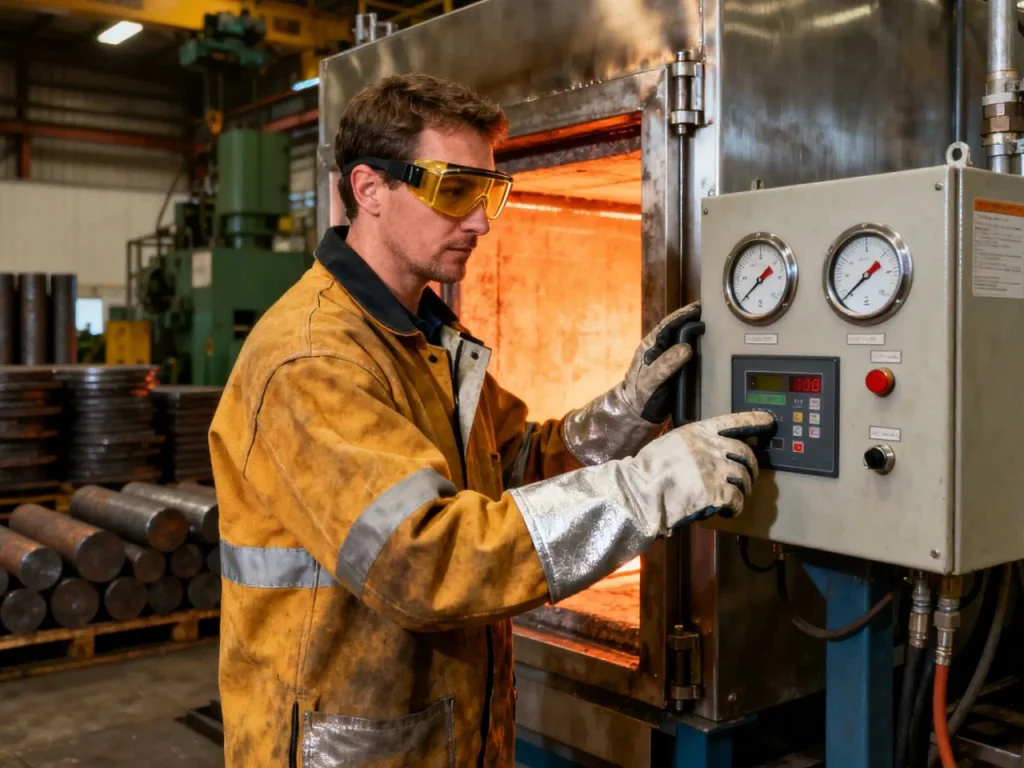
- Normalizing refines grain and improves toughness and uniformity.
- Quench-and-temper (Q&T) raises strength and hardness while keeping useful toughness.
- Case hardening methods (carburizing, carbonitriding) harden the surface while keeping a tough core.
Surface protection
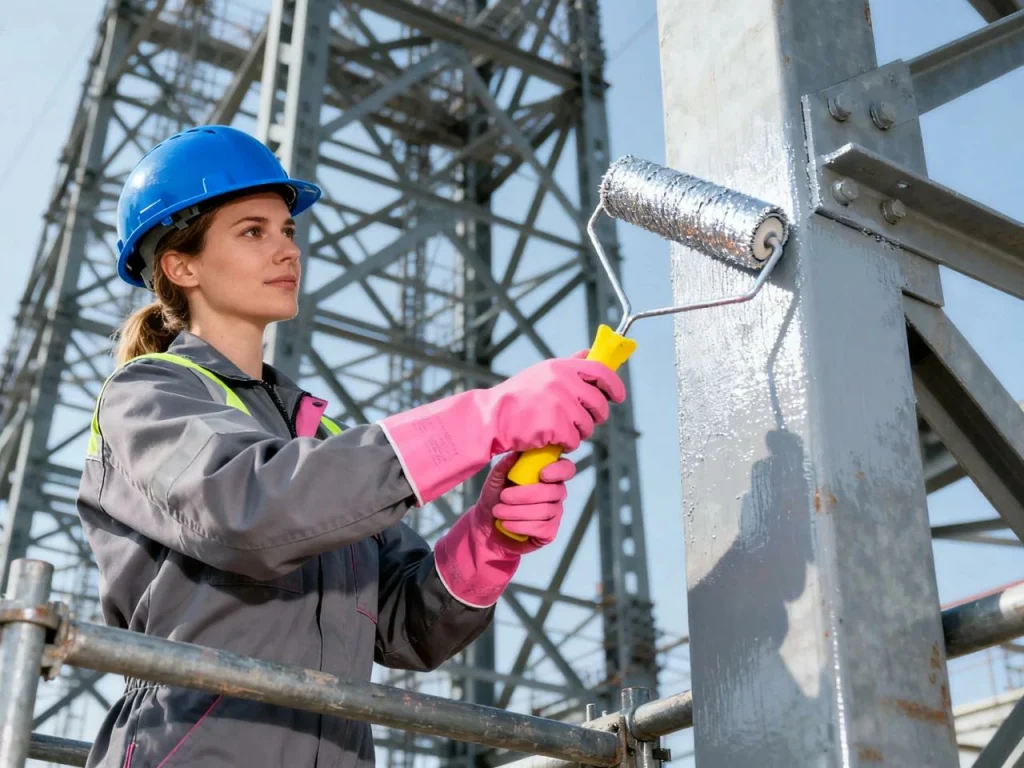
- Paint and powder coat keep moisture off steel surfaces.
- Electroplating (zinc) or galvanization (hot-dip zinc) gives sacrificial protection.
- Conversion coatings and oiling slow rust during storage and transport.
Fabrication notes
- As carbon content increases, preheat before welding and control interpass temperature to reduce cracking.
- Choose filler metals that match desired strength and ductility.
- Plan post-weld heat treatment if needed, especially for thicker, higher-carbon parts.
Corrosion mitigation for carbon steel
Environment assessment
Start by rating the environment: indoor/dry, outdoor/rural, industrial (SO2), coastal (salt spray), or marine immersion. Higher chlorides and pollutants speed corrosion.
Coating selection (life-cycle view)
- Indoor/dry: Minimal. Light paint or oil may be enough.
- Outdoor mild: Quality powder coat or epoxy + polyurethane paint system.
- Industrial/coastal:Hot-dip galvanizing, often paired with a topcoat (“duplex”).
- Marine/immersion: Specialized systems, frequent inspection, and cathodic protection where needed.
Design for durability
- Add drainage holes so water does not pool.
- Seal or vent crevices to reduce trapped salts.
- Allow for access to inspect and repaint.
- Consider sacrificial anodes or impressed current for buried or immersed structures.
Maintenance schedules
- Plan inspection intervals based on environment class. Touch up damaged coatings, clear drains, and watch welds and edges closely. In coastal settings, wash downs can slow salt build-up.
Market and pricing trends
Demand drivers
- Construction cycles and public infrastructure spending shape plate and beam demand.
- Automotive demand is stabilizing as e-mobility grows; chassis and safety components still rely on steel.
- Energy projects (transmission, wind, and pipeline upgrades) consume large volumes of steel products.
Price influences
- Raw materials (iron ore, scrap), energy costs, and logistics set the base cost.
- Regional capacity and trade measures affect spot pricing and lead times.
- Scrap availability supports electric arc furnace output and can ease costs for common grades.
Supply landscape
- Global output centers on regions with strong scrap and energy access, and efficient logistics. Commodity mild carbon steel remains widely available, while special grades and thicknesses can see longer lead times.
Sustainability shape
- Buyers consider recycled content, EPDs, and low-carbon steel programs. Documented environmental data improves procurement and supports project certifications.
Sustainability, recycling, and ESG
Recyclability
Steel is highly recyclable. A lot of carbon steel consists of recycled scrap melted in electric arc furnaces. This reduces embodied carbon compared with only using virgin iron ore.
Efficiency and process improvements
Modern plants recover waste heat, optimize oxygen use, and improve yield. Better scrap sorting helps keep material properties within spec.
Designing for lower impact
- Design for disassembly and reuse of beams and plates.
- Protect against corrosion to extend service life.
- Choose coating systems with documented durability and controlled VOCs.
Standards and certifications
Look for ISO-based environmental declarations, EPDs, and documented recycled content. These support ESG goals without hurting performance.
Sourcing and suppliers
How to vet mills, stockists, and fabricators
- Check certifications: relevant ASTM/ASME/ISO quality systems.
- Ask for MTRs (Mill Test Reports) showing actual composition and heat treatment.
- Review welding procedures (WPS/PQR) for fabricators handling higher-carbon grades.
Lead time and stocking
- Common mild carbon sizes are usually quick to source. Thicker plates, special widths, or high-carbon bars may need longer lead times.
- Keep a buffer stock of standard sizes for fast-turn jobs.
Regional vs global sourcing
- Regional buys can reduce freight, shorten lead time, and improve traceability.
- Imports may lower price but add risk from shipping delays and exchange rates. Match sourcing to project schedule and risk tolerance.
Summary and key takeaways
- Carbon steel offers the best balance of strength, machinability, and cost for general engineering and mass production.
- The primary limitation is corrosion resistance. Planning coatings and smart design reduces risk and extends life.
- Choose grade by environment, mechanical targets, and fabrication method. Step up to alloy or stainless steel for harsh conditions or strict corrosion needs.
- Use the selection steps, tables, and tools here to move from a requirement to a clear, traceable specification—fast and with confidence.
FAQs about carbon steel
Is carbon steel the same as mild steel?
No. Carbon steel and mild steel are often mixed up, but they’re actually different. Mild steel is a type of carbon steel with a low carbon content, typically between 0.05% and 0.30%. It’s known for being easy to work with, flexible, and cost-effective. While all mild steel is carbon steel, not all carbon steel is mild. Carbon steel also includes higher grades with more carbon, which are stronger but less flexible and harder to weld. Understanding the carbon content helps determine how the steel will perform.
What grade of carbon steel is best for welding?
For welding, low-carbon steels like A36 and 1018 are the top choices. They’re easy to weld, handle well, and have a lower chance of cracking. Their low carbon content helps with smoother fusion and reduces the risk of warping. Plus, these steels are widely available and affordable, making them a go-to for many projects. When choosing carbon steel for welding, it’s important to consider the carbon level and how well it handles heat during the process.
Can carbon steel be used outdoors without rusting?
Carbon steel can be used outdoors, but it needs protection to avoid rusting. Without proper treatment, moisture and weather can cause it to corrode quickly. Coatings like paint, powder coating, and galvanizing create a protective layer that keeps the elements at bay. Additionally, ensuring proper drainage helps prevent water from getting trapped, reducing rust risk. While carbon steel is strong, it requires careful maintenance and environmental consideration to stay rust-free outdoors.
Carbon steel vs stainless steel: which for kitchen knives?
When choosing between carbon steel and stainless steel for kitchen knives, both have their pros and cons.
Carbon steel knives are incredibly sharp and easy to maintain, which makes them a go-to for chefs who want precision. However, they do rust more easily and need regular care.
Stainless steel knives, on the other hand, are rust- and stain-resistant, requiring less upkeep. They may be tougher to sharpen and lose their edge faster, but they’re more durable and ideal for those who want less hassle.
How does heat treatment change carbon steel properties?
Heat treatment changes the properties of carbon steel to fit specific needs. Quenching and tempering boost its strength and hardness, making it tougher and more resistant to wear. Normalizing improves toughness by relieving internal stress. Case hardening strengthens the outer layer while keeping the core tough, offering a balance of durability and strength. These treatments help customize carbon steel to perform better in various demanding conditions.
What are the disadvantages of alloy steel?
Alloy steel is known for its strength and durability, but it does come with some trade-offs. It’s more expensive than carbon steel because of the added alloys like chromium, vanadium, and molybdenum. It’s also tougher to machine and weld, requiring special tools and expertise. The heat treatment process is more complicated too, which can slow down production and extend lead times. While it’s highly durable, these factors can make working with alloy steel more costly and time-consuming.
Is carbon steel or alloy steel better for safety?
When deciding between carbon steel and alloy steel for safes, mild carbon plate is usually enough for everyday protection. It’s tough, affordable, and works well for standard safes. But if you’re looking for top-level security, alloy steel is the way to go. It can be strengthened with materials like chromium and vanadium, making it much harder to drill or cut. Plus, it can be hardened to resist tampering, making it the best choice for high-security safes.
References
https://www.fhwa.dot.gov/publications/research/infrastructure/corrosion/01156.cfm
https://www.osha.gov/welding-cutting-brazinghttps://ods.od.nih.gov/factsheets/Iron-Consumer/
https://www.usgs.gov/centers/national-minerals-information-center/mineral-commodity-summaries


 English
  German
  French
  Italian
  Spanish
  Polish
  Czech
Czech  Japanese