
Whether it is the complex parts that drive a satellite in the orbit of the earth or the life-saving medical devices within the human body, precision metal machining is a fundamental process in modern technology. It is the branch of engineering that deals with the conversion of raw blocks of metal into a finished part that is functional and with high precision. This guide is the ultimate source of knowledge about this important manufacturing technique. We will delve into its fundamental operations, discover its unparalleled advantages, look at the range of materials it uses, and visit the industries that rely on it. This guide will offer a clear and practical insight into precision cnc metal machining whether you are a design engineer, a procurement manager or a technology enthusiast.
What is Precision Metal Machining? A Foundational Overview
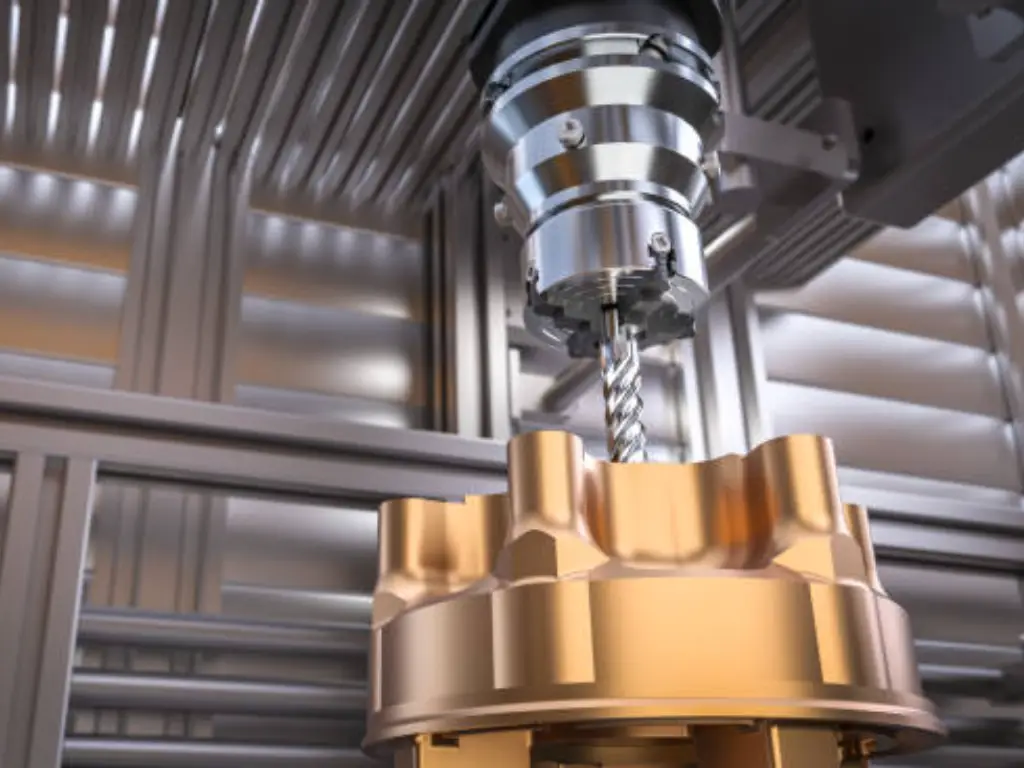
Precision metal machining is a subtractive manufacturing process at its core. It starts with a solid piece of metal, often from bar stock, and removes material in a systematic way to form a finished part. The use of computer numerical control (CNC) technology coordinates the whole machining process. A machine-readable file, usually a CAD file, is converted into a series of instructions for the CNC machine. These commands direct the cutting tool with microscopic accuracy to drill, cut, bore and grind the workpiece until it conforms to the precise specifications of the digital blueprint. The entire operation is governed by numerical control.
This is what makes this process of precision different from general fabrication, the precision element. It is characterized by three important factors:
- Tight Tolerance: This is the allowable range of deviation in a physical dimension. Tolerances in precision machining can be as small as a few micrometers (10^-6 m), or as precise as ten-thousandths of an inch (0.0001 in), and sometimes even smaller, depending on the application. This ensures each component fits and functions properly in a larger assembly.
- High Repeatability: Precision CNC machining ensures that the first part made is almost the same as the thousandth. This uniformity is critical to scalable manufacturing and consistent product performance.
- Excellent Surface Finishes: The process is capable of producing very smooth and controlled surface finishes, often resulting in a better surface finish than other methods. This is essential in parts that have specific surface finish requirements to achieve a seal, low friction, or other engineering needs, often with no visible tool marks.
Core Processes in Precision Metal Machining
Precision metal machining uses a set of specialized processes to deliver its impressive outcomes. They are selected depending on the geometry, material, and specifications of the part. These fundamental processes are key to understanding the full potential of technology.
CNC Milling: For Complex and Prismatic Parts
CNC milling is a very versatile machining process. It uses a rotating, multi-bladed cutting tool, such as end mills, that travels on several axes to cut material off a fixed workpiece. It is the specified procedure for making flat surfaces, pockets, slots, and complicated three-dimensional contours. Milling machines, especially CNC milling machines, are staples in modern machine shops.
- 3-Axis Milling: The most popular one, in which the cutting tool travels along the X, Y, and Z linear axes. It is best suited to components that have fairly simple geometry, like brackets, housings and plates.
- 4-Axis Milling: This introduces a rotational axis (the A-axis) so that the workpiece can be rotated during the cutting operation. This allows machining features on the sides of a part without a new set-up, making it more efficient.
- 5-Axis Milling: The latest type of milling available on precision CNC mills. It has three linear axes (X, Y, Z) and two rotational axes, which enable the cutting tool to reach the workpiece at a wide variety of angles. This is essential in the production of very complex geometries with deep cavities, compound curves, and complex undercuts like turbine blades or medical implants.
CNC Turning: For Cylindrical and Rotational Parts
Unlike milling, CNC turning rotates the workpiece at high speed and a single-point cutting tool, which is fixed, removes material. It is done on CNC lathes and is highly effective in producing parts that are rotational or cylindrical in symmetry, including shafts, pins, nozzles, and fasteners. Different types of lathes, such as Swiss lathes, offer unique capabilities. Live tooling may also be added to modern turning centers to allow secondary milling and drilling operations to be done in the same setup, producing complex parts. Even simple drill presses are a form of this rotational machining.
Electrical Discharge Machining (EDM): For Hard Metals and Intricate Features
Electrical Discharge Machining (EDM) is a good alternative when a metal is too hard to cut with a standard machine tool or a feature is too small to be milled. It is a non-contact process that employs a sequence of controlled electrical sparks on an electrode to erode and vaporize conductive material.
- Wire EDM: A thin, electrically charged wire is used to cut through hardened tool steels with extreme precision, producing complex outlines, intricate shapes, and punches.
- Sinker EDM: A special shaped electrode is used and is plunged into the workpiece leaving a negative impression of the shape. It is ideal in shaping cavities, blind keyways, and sharp edges or internal corners that a rotating tool cannot make.
Precision Grinding: For Ultimate Accuracy and Surface Finish
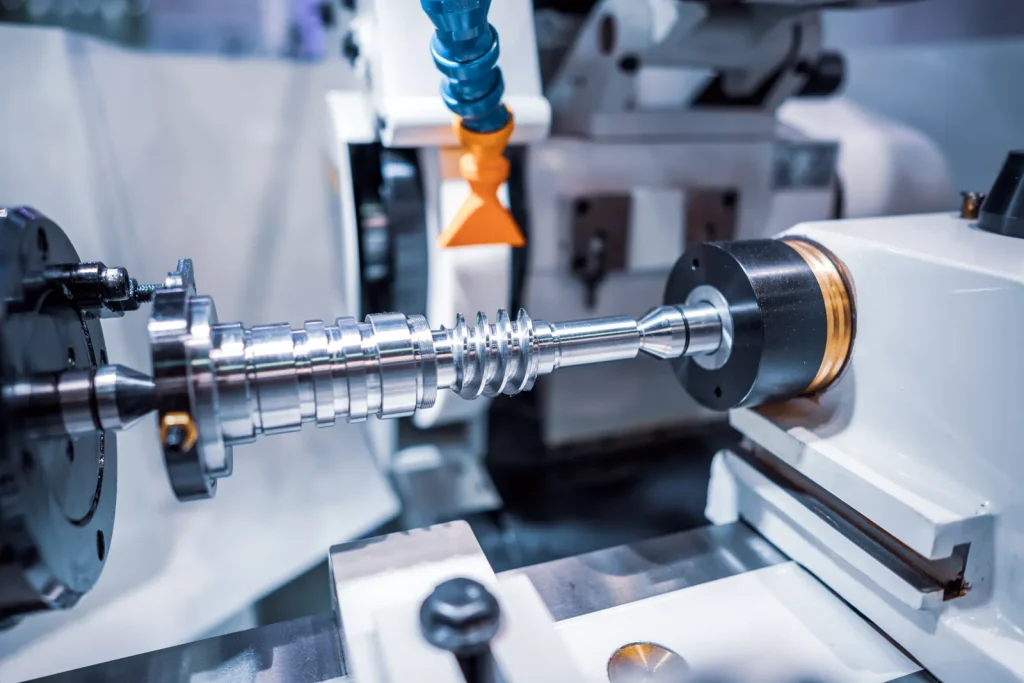
Precision grinding is a common last stage of the machining process. It is a finishing operation in which a rotating abrasive wheel is used to remove small quantities of material on an already milled or turned part. It is not aimed at developing features, but at perfecting them to achieve smooth finishes. Grinding is used where a project requires the closest tolerances possible and the most consistent surface finish, and is therefore necessary in bearing races, hydraulic cylinders, and other high-precision parts.
The Unmatched Benefits of Precision Metal Machining
The popularity of precision cnc machining in the most important industries is due to its unique benefits compared to other manufacturing processes like injection molding.
| Benefit | Description |
| Outstanding Precision and Reproducibility | CNC control is digital, which reduces process variability. Each part is produced to the same specification repeatedly, ensuring consistency—essential for quality control and high-volume production. |
| Design Freedom of Complex Geometries | With multi-axis machinery, engineers can create parts optimized for performance, weight, and function. Precision CNC machining enables the fabrication of complex designs with a wide range of integrated features. |
| Better Material Strength and Integrity | As a subtractive process, machining begins with solid, forged, or extruded metal. This preserves the material’s grain structure and strength, resulting in durable components that perform well under stress. |
| Scalability: Prototypes to Full Production | A single CNC program can produce both prototypes and thousands of identical parts. This allows seamless scaling without costly retooling, streamlining the path from concept to market. |
These unparalleled benefits have led to the extensive use of precision CNC machining in key industries. In contrast to the conventional processes like injection molding, CNC machining offers high precision, design versatility, material integrity, and scalability of production, which makes it a perfect choice in prototyping and high-volume production.
Common Materials Used in Precision Metal Machining
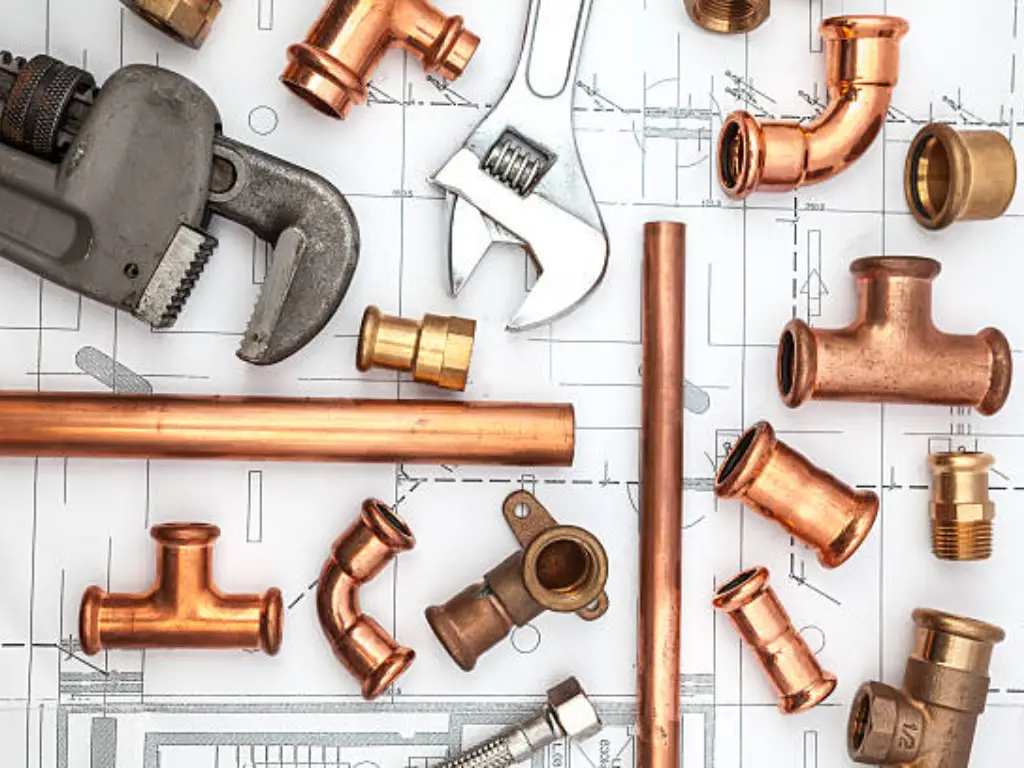
Material selection is a very important decision in an engineering project. Precision machining can be used with a wide range of materials, each with a distinct profile of properties, performance, and cost.
Light Metals:
- Aluminum: Preferred due to its high strength-to-weight ratio, thermal conductivity, and inherent corrosion resistance. Widely used alloys such as 6061 and 7075 are used in the aerospace, automotive, and consumer electronics sectors.
- Titanium: It is very strong, lightweight, and biocompatible. It is more difficult and expensive to machine, but essential to aerospace parts, high-performance engine components, and medical applications.
Long-lasting Steels:
- Stainless Steel: Provides excellent strength, durability, and excellent corrosion resistance. Medical instruments, food processing equipment, and marine hardware are commonly made of alloys such as 304 and 316.
- Alloy & Carbon Steels: This large group of different materials offers a wide variety of properties, including extreme hardness and wear resistance, as well as cost-effective strength, and can be used in everything, including industrial gears and shafts, to automotive frames.
Specialty Metals & Alloys:
- Brass & Copper: These are appreciated due to their high electrical conductivity and machinability. They are widely applied to electrical connectors, fittings and plumbing parts.
- Inconel & Superalloys: These are exotic materials that are meant to be used in extreme environments and they maintain their strength at extremely high temperatures. They are critical to jet engine and gas turbine parts.
To sum up, material selection in precision machining is a critical factor in determining the intended performance, durability, and cost-effectiveness of a part. It could be the lightweight versatility of aluminum, the strength of steel, or the heat resistance of superalloys, but knowing the properties of materials guarantees the best results in industries as varied as aerospace and medical and many others. This relationship between material and performance is further explored in our precision machined parts comprehensive guide.
Where is Precision Metal Machining Used? Key Industry Applications
CNC metal machining is a core enabler of advancement across a wide range of industries and a wide range of applications. There is a growing demand for these services from sectors like:
| Industry | Applications |
| Aerospace & Defense | Turbine blades, landing gear assemblies, structural frames, missile guidance systems |
| Medical & Healthcare | Biocompatible implants (e.g. hip/knee joints), surgical tools, diagnostic device housings |
| Automotive & Motorsports | Engine blocks, pistons, transmission and powertrain components |
| Electronics & Robotics | Laptop housings, server connectors, robotic arm component |
To conclude, precision metal machining is the basis of innovation in contemporary engineering. It is unrivaled in terms of accuracy, consistency, and capability to work with complex geometries, which makes it essential in the manufacturing of high-performance parts in these challenging industries.
Your Partner in Precision: How to Achieve Excellence in Your Project
At U-Need, we combine over 30 years of deep industry experience with a full-stack manufacturing setup that integrates CNC turning, milling, grinding, EDM, and metal stamping—all under one roof. Our engineers, each with an average of 15+ years in precision machining, are not just operators but process optimizers. We specialize in high-precision applications requiring mirror surfaces (Ra≤0.1μm), achieved through mirror EDM paired with expert-level manual polishing. Complex components benefit from multi-process workflows—turning, grinding, and wire EDM—strategically combined to eliminate alignment errors between setups. Every toleranceis deliberate; every micron is measured.
Our capabilities are trusted across critical industries where consistency, precision, and reliability are non-negotiable. From aerospace and automotive to semiconductor, cosmetic molds, and medical devices, we deliver components that meet real-world application demands. Our shop is ISO 9001:2015 certified, with a 99.3% pass rate backed by three-layer QC checks—from incoming material to final shipment. We understand that each use case—from SIM card trays to flow meters, from old car restorations to industrial automation line fixtures and has different design intent, tolerance windows, and surface treatment needs. That’s why we customize not only the part, but also the machining route, QC benchmarks, and packaging solution.
What our partners value most is our ability to deliver not just metal parts, but consistent excellence in high precision machining—even under tight timelines and complex specifications. With flexible scheduling and a streamlined digital workflow, we offer standard lead times of 7–15 days, and can turn around urgent orders in just 3–5 days. Whether you’re sourcing small-batch prototypes or production-ready precision metal components, we provide full dimensional reports, consistent surface finishes, and repeatable tolerances—even for non-standard geometries. Combined with our zero-risk aftersales promise—including 1-year warranty, free replacement for defects, and full return logistics—we ensure every delivery meets both your engineering standards and your business goals. At U-Need, we’re not just a vendor—we’re your precision partner from start to finish.
The Future of Precision Metal Machining
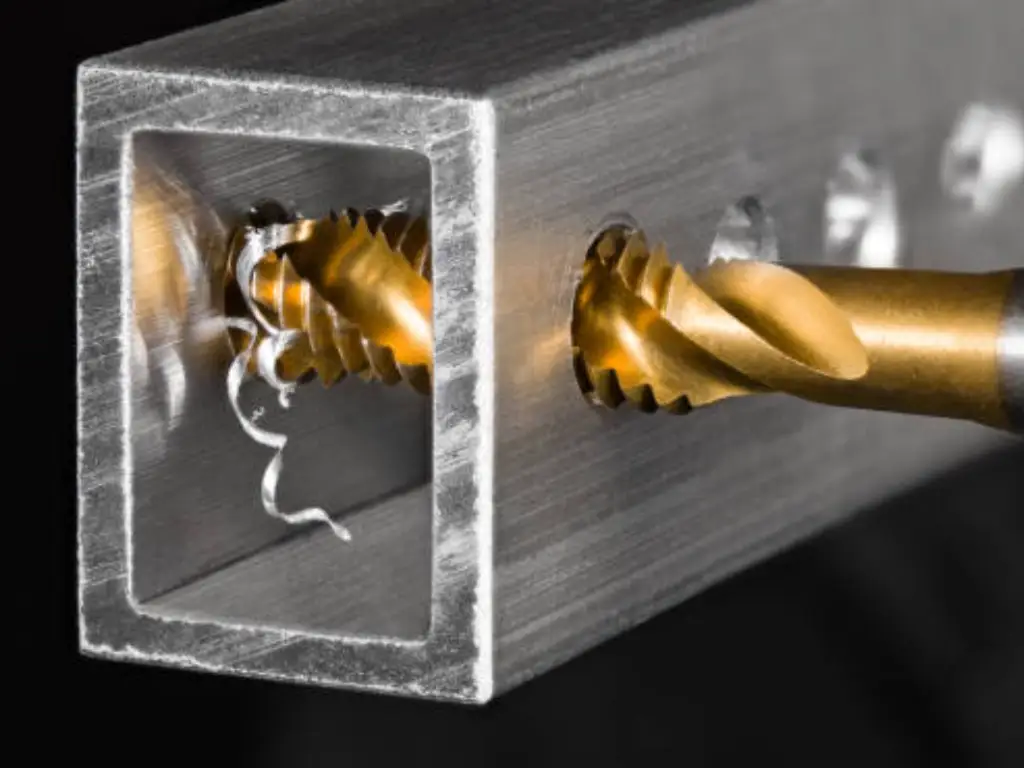
PrecisionCNC machining is entering a new era—one defined not just by tighter tolerances, but by smarter, more connected systems. Automation and Industry 4.0 are revolutionizing the shop floor, where robotic arms, in-line probes, and AI-powered CAM software work in harmony to reduce human error, extend uptime, and deliver real-time process feedback. For manufacturers, this means higher repeatability, faster turnaround, and lower costs—all without compromising precision.
Meanwhile, hybrid manufacturing is breaking traditional barriers. By combining additive and subtractive processes on the same platform, it’s now possible to 3D print complex geometries—like internal channels or lattice structures—and finish them through high-precision machining. This blend of technologies opens the door to design freedom, lightweighting, and material efficiency previously unachievable in conventional methods.
In conclusion, precision CNC machining is a dynamic and essential pillar of modern manufacturing. It is a technology defined by its accuracy, its versatility with materials, and its critical role in enabling innovation across every major industry. While the technology itself is powerful, its true potential is unlocked when implemented by a team with experience, dedication, and a deep-seated commitment to quality. Choosing the right manufacturing partner is not just a procurement decision; it is a strategic one. It is the first and most crucial step toward turning a great design into a perfect part. At U-Need, we help customers do exactly that delivering high precision machining solutions with fast lead times, robust engineering support, and full confidence from prototype to production.

 English
  German
  French
  Italian
  Spanish
  Polish
  Czech
Czech  Japanese