
Choosing between tapping vs thread milling is rarely about “which method is better.” In Frezowanie CNC operations, it is about feasibility, thread requirements, and risk for a specific part, including thread size, thread depth, material, machine limits, and what happens if the tool fails. According to the International Organization for Standardization (ISO), standardized machining practices help reduce risk and ensure consistency across processes. The choice of tapping vs thread milling focuses on how each method behaves when conditions are not ideal—deep holes, thin walls, hard metals, single-plane threads or various thread sizes, mixed thread specs, or expensive parts where scrap is painful.
This article is written for engineers, programmers, and technical buyers who need to decide what is likely to work, what often fails, and what to check next.
Quick Answer: Best Method of Speed and Risk
This section gives a high-level view: when speed dominates, tapping often wins; when risk or variability dominates, thread milling is usually safer.
If Cycle Time per Hole Is #1, Tapping Is Faster
If cycle time per hole is #1, tapping is faster, especially in Toczenie CNC and milling operations where speed is critical, while thread milling offers precise thread fit and allows you to adjust thread size easily via CNC offsets.
If you only care about the fastest way to create internal threads in a prepared hole, tapping is usually the winner. Industry comparisons commonly cite tapping in the 3–8 second range per hole for typical threads, while thread milling is often 10–15 seconds for the same thread when treated as a single-hole operation. For a frequently referenced benchmark, a 1/4″-20 internal thread is often quoted at about ~4–5 seconds by tapping versus ~8–10 seconds by thread milling.
That gap makes sense mechanically. A tap creates a complete thread in one motion: it advances axially while cutting the full-profile 16-pitch thread, whereas a thread mill can cut any 16-pitch thread with single-plane thread mills if needed. A thread mill uses a CNC-controlled circular move plus a helical (Z-axis) move. Even with a clean program and aggressive parameters, there is more toolpath distance and more motion to coordinate.
So if you have:
- a high-volume run,
- a single standard thread,
- stable material and consistent hole prep, Tapping tends to give the best per-hole cycle time.
When Specs Vary, Thread Milling Wins Overall
Per-hole speed is not the same as total job time. Evaluating tapping vs thread milling is critical in high-mix work, where time disappears into tool changes, offsets, tool inventory management, and re-setup when a thread spec changes.
Thread milling is often chosen because certain thread mills can cover multiple thread diameters of the same pitch (and sometimes a limited pitch family) by changing the CNC program, not the tool. Single-form thread mills are typically pitch-specific but diameter-flexible within a defined range, while multi-form cutters are usually dedicated to one pitch and profile. Shops often describe the value in plain terms: less time lost to “switch tapping tools,” fewer tools to stock, and fewer chances to grab the wrong tap for a mixed batch.
So even if thread milling is slower per hole, it may finish the job sooner when:
- The part family has many thread sizes,
- batches are small to medium,
- Your tool magazine slots are limited,
- Setup time is a bigger cost than spindle time.
When Scrap Risk Is High, Tool Breakage Matters
Tool failure is where the methods separate most clearly.
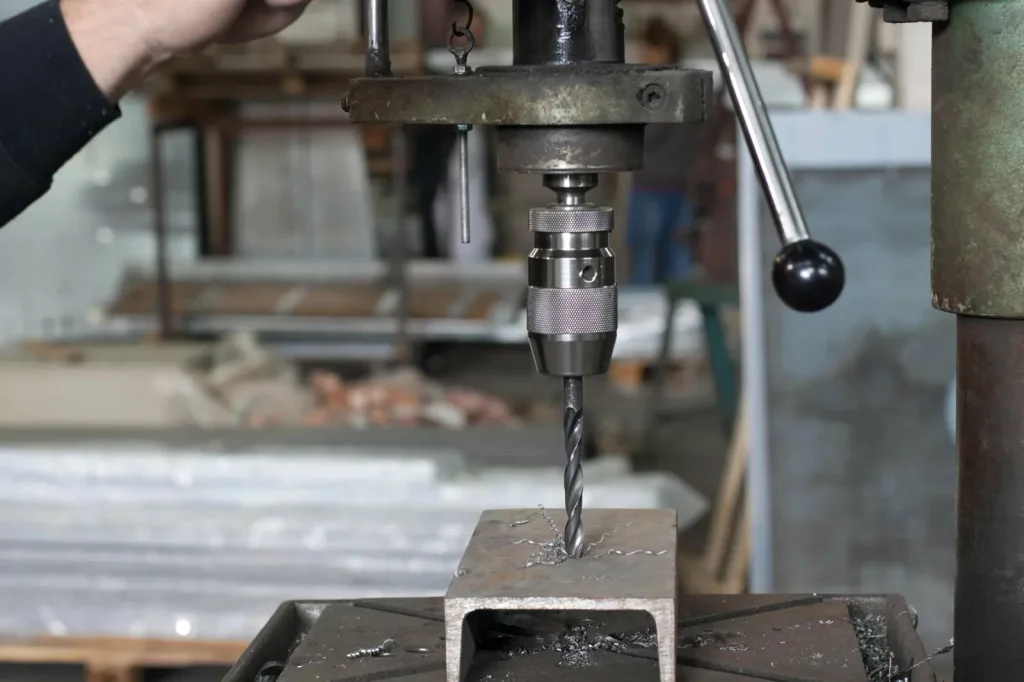
The tap is long, slender, and torque-loaded. If it breaks, the broken tap can stay stuck in the hole. Removing it can be difficult, and the part can become scrap—especially with a blind hole, thin wall, or an expensive workpiece.
A thread mill can also break, but when comparing tapping vs thread milling, the failure mode of thread milling is often less destructive. The cutting forces are usually lower, and the tool is not wedged into a full-profile cut the way a tap is. Many machinists describe thread mills as “more forgiving,” mainly because thread milling creates threads gradually, the movement of the tool is controlled, and a problem tends to show up as a poor thread or a broken tool that is easier to recover from than a seized tap.
If your part cost is high, or rework is limited, thread milling is often chosen to reduce the chance of a single failure destroying the part.
Choose in 60 Seconds: Speed vs Risk Decision Guide
Choose in 60 seconds (checklist) Use tapping when most of these are true:
- Same thread repeated many times (high volume)
- Standard internal thread
- Hole depth is not extreme (watch chip packing in blind holes)
- Machines can handle torque (watch larger diameters)
- Scrap risk is acceptable
Use thread milling when most of these are true:
- Mixed thread sizes/pitches in one job or across frequent changeovers
- Deep threads (common flag: >3× diameter)
- Thin walls or delicate parts
- Hard/exotic materials (titanium / Inconel-type alloys)
- High scrap cost or high rework cost
2-path flowchart (speed-first vs risk-first)
| Decision Path | Question / Condition | Yes → Action | No → Action |
|---|---|---|---|
| Path A: Speed-First | Is it a standard internal thread repeated at volume? | Prefer TAPPING (fastest per hole) | Consider THREAD MILLING (setup/tooling time may dominate) |
| Path B: Risk-First | Is part expensive, thin-walled, hard material, or deep (>3×D)? | Prefer THREAD MILLING (more controllable, lower breakage impact) | TAPPING often fine if torque and chip evacuation are manageable |
How Each Process Works and Its Limits
Introduces the mechanics of tapping and thread milling, including torque, toolpath, and failure modes, so readers understand why certain methods work better under different conditions.
Tapping Basics: Torque and Failure Modes
Tapping cuts (or forms, depending on tap type) an internal thread by driving a tap into a pre-drilled hole. The tool has the full thread form on it. The machine feeds the tap in at a rate matched to the thread pitch, then reverses it out.
In tapping, it is also important to distinguish between cut taps and form (roll) taps. Cut taps remove material and produce chips that must evacuate from the hole. Form taps displace material plastically and produce no chips, which can reduce chip-packing risk in blind holes. However, form taps require ductile materials, typically need a slightly larger pilot hole, and generate higher torque. If torque margin is limited or the material is brittle, form tapping may not be feasible. If chip packing is the main failure mode in a ductile material, form tapping can be a practical alternative.
Key mechanical point: tapping places a high torque load on the tool because it is engaged around much of the circumference and cutting a full thread profile in one pass. That torque rises with larger diameters, harder materials, dull taps, poor lubrication, and chip crowding.
Common failure modes that matter in feasibility reviews:
- Tap breakage from torque overload (often sudden)
- Chip packing in blind holes, which spikes torque
- Misalignment or poor rigidity, which side-loads the tool
- Wrong hole size, which increases cutting load
- Work hardening and heat in tougher materials, which can accelerate failure
Blind hole threading tips matter most for taps: chips have nowhere to go, so flute style, coolant strategy, and depth planning become the difference between stable cutting and repeated breakage.
Thread Milling Basics: Helical CNC Interpolation
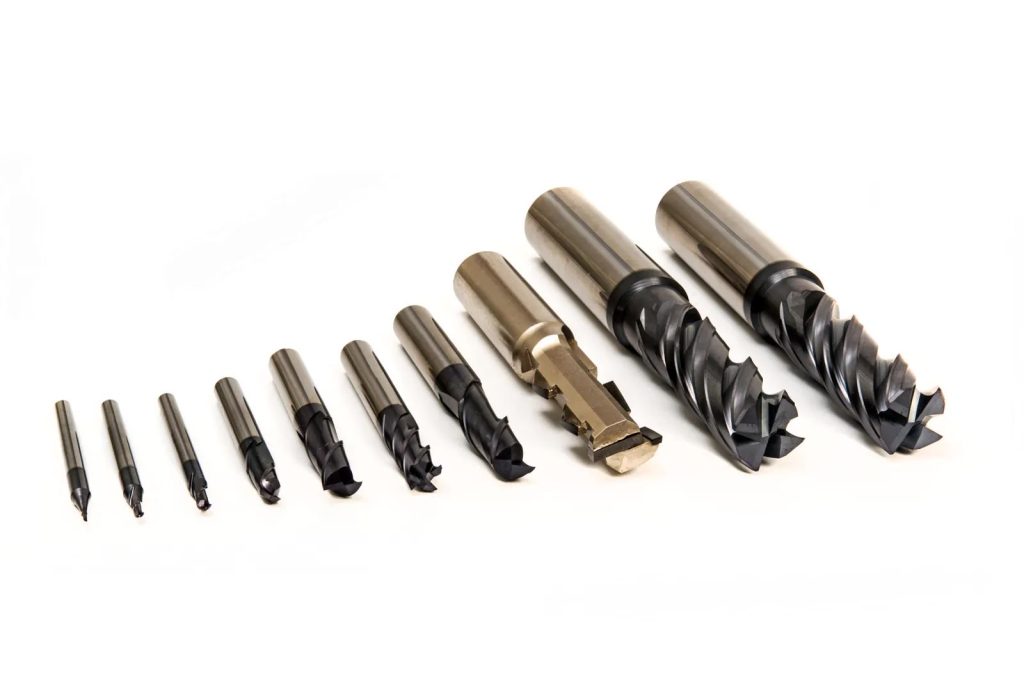
Thread milling uses a rotating milling cutter (often carbide thread mills) and a CNC toolpath that moves in a circle while stepping in Z to create a helix. That helix forms the thread.
Two practical advantages show up in manufacturing discussions:
- Lower force and torque at the spindle compared with tapping, because the tool removes material gradually rather than cutting the full profile at once.
- Size control via CNC. Because the thread is generated by the toolpath radius, programmers can adjust the effective thread size by small changes to cutter compensation or programmed diameter. This can help when the thread fit is slightly tight or loose due to material spring, coating, or variation in the drilled hole.
Thread milling also supports internal and external threads. External threads are cut by milling around the outside of a boss or shaft using the same helical concept.

Side-by-Side Process Diagrams and Terminology Callout
Process diagrams (simplified)
| Proces | Steps | Motion / Toolpath Description |
|---|---|---|
| Tapping (Internal Only) | 1) Align tap with hole2) Feed straight down (Z) while tap rotates3) Reverse out | Axial feed Z ↓↓↓↓Rotation advances thread pitch |
| Thread Milling (Internal or External) | 1) Enter hole (or start outside for external)2) Move in a circle (X/Y) while stepping in Z3) Exit and retract | Circular motion in X/Y + Z step = Helix |
Terminology callout
- Pitch: distance between thread peaks (for inch threads, expressed as threads per inch; for metric, mm per thread).
- Lead: axial distance the thread advances in one full turn. For single-start threads, lead equals pitch.
- Helix: the spiral path. In thread milling, you program a helix; in tapping, the tap’s geometry enforces it.
Can Thread Milling Produce Both Internal and External Threads?
Yes. Thread milling can cut internal threads (inside a hole) and external threads (around an outside diameter) using helical interpolation. Tapping is mainly used for internal threads; external threads are not made by tapping in the same way.
Speed and Cycle Time Realities
Discusses benchmark cycle times, torque limits, and when thread milling may actually outperform tapping in practice.
Benchmark Cycle Times for Tapping vs Thread Milling
For standard internal threads treated as single-hole work, tapping is often cited as faster. Commonly referenced benchmarks include:
- 1/4″-20: tapping about ~4–5 seconds per hole vs thread milling about ~8–10 seconds
- Typical ranges cited across common thread work: tapping 3–8 seconds vs thread milling 10–15 seconds
These numbers should be read as “order of magnitude” comparisons used in manufacturing discussions, not as guaranteed results. Cycle time depends on depth, approach moves, retract strategy, control acceleration, and whether the machine uses rigid tapping cycles.
When Thread Milling Is Faster for Large Diameters
This is where the usual “tapping is faster than thread milling” claim breaks.
As thread diameter increases, the torque needed for tapping rises. At some point, the machine’s practical capability becomes the limiter, not the nominal cutting time. Some industry guidance notes tapping becomes constrained for larger threads (a commonly repeated guideline is around ~3/4″ diameter unless you have geared-head capability). Past that, the tap may need to run slower or may not be feasible on a given CNC machine tool.
Thread milling is often more scalable to larger diameters on torque-limited machines, within practical limits of tool reach, interpolation accuracy, and cycle time. For large diameter threading, thread milling may be the only practical method on a standard CNC because it avoids the high torque spike of driving a large tap. In that scenario, thread milling can be “faster” in the real sense: it finishes the thread without slow, cautious tapping parameters or machine limitations.
A useful way to phrase it in a feasibility review:
- For small and mid-size standard threads, tapping usually wins on seconds.
- For very large threads (often cited at >1″), tapping may slow down enough—or become risky enough—that thread milling becomes the better production choice.
Per-Hole Time vs Total Cycle Time in Batches
A common mistake is comparing only “time in cut” for one hole. In mixed work, total time is shaped by:
- tool changes between taps for different thread sizes and pitches,
- verifying multiple tool offsets,
- managing inventory for many dedicated taps,
- rework and recovery time after a broken tap.
Thread milling changes the balance because you may keep one thread milling cutter in the machine and cut a range of thread sizes by program changes. If your job has many thread callouts, “thread milling vs tapping” turns into “one flexible toolpath vs many dedicated tools.” That is why some users report thread milling winning “overall” even when it is slower per hole.
Bar Chart Comparing Cycle Time Ranges and Key Notes
Cycle time comparison (typical single-hole context)
| Metoda | Commonly cited per-hole range | Example benchmark (1/4″-20) |
|---|---|---|
| Stukanie | 3–8 s | ~4–5 s |
| Frezowanie gwintów | 10–15 s | ~8–10 s |
Text bar chart (relative)
| Metoda | Cycle Time (Seconds) | Relative Bar |
|---|---|---|
| Stukanie | 3–8 | #####….. |
| Thread Milling | 10-15 | ########## |
Notes for engineering use:
- These comparisons are most valid when the part uses one standard internal thread size and the machine can rigid tap it.
- For large diameters or torque-limited machines, the “tapping is always faster” statement can fail.
- For high-mix jobs, tool changes and setup time can dominate seconds-per-hole.
Capability Limits: Size, Depth, and Chip Control
Explains how diameter, depth, and chip evacuation influence method selection, including heuristics like >3×D for deep holes.
Diameter Limits and Tapping Torque Constraints
A tap drives a full thread profile through the material. Torque demand grows quickly with diameter and with harder materials. A widely repeated shop-floor guideline is that tapping beyond about ~3/4″ diameter can be difficult without a machine designed for the torque (often described as geared-head capability).
That does not mean larger taps never work. It means feasibility depends on the machine tool, holder, rigidity, and how much risk is acceptable. If your CNC machine is not built for high tapping torque, you may end up with:
- very conservative cnc tapping speed and feed,
- higher risk of tap breakage,
- poor reliability across a batch.
Thread milling avoids that torque spike because it removes material in smaller cuts, so it is often chosen when diameter pushes tapping into a machine limit.
For very small internal threads, thread milling also has practical limits. The cutter diameter must be smaller than the pilot hole, and entry clearance must allow interpolation. As thread size decreases, cutter fragility and runout sensitivity increase, and conservative parameters may significantly increase cycle time.
Deep Holes: Why Thread Milling Is Favored
Depth is a second major limit, especially in blind holes.
A commonly cited shop-floor heuristic is that thread milling may be favorable when thread depth exceeds about 3× the thread diameter, but actual feasibility must confirm tool reach, deflection limits, and chip evacuation strategy. The reason is chip control and evacuation. With a cut tap, chips can pack into the flutes in a deep blind hole, and torque climbs fast. In ductile materials, form tapping can eliminate chip packing because no chips are produced, but the higher torque requirement must be confirmed against machine and holder capability. With thread milling, you can manage chips through toolpath choices and coolant, and the cutter is less likely to wedge.
This does not mean tapping cannot do deep holes. It means deep internal threads increase the chance that a small variation (chip load, hole finish, slight misalignment) turns into a broken tap. For deep holes, engineers often favor a method that fails in a less destructive way.
The >3×D guideline is a chip-control heuristic, not a guarantee of success. Thread milling must still respect tool reach and deflection limits. Long-reach thread mills increase length-to-diameter ratio, which can raise deflection and affect size or surface finish at depth.
Thin Walls and Delicate Parts: Force Advantages
Thin-walled parts are sensitive to force. The higher torque and engagement of tapping can distort a thin boss or pull material, especially if the wall is near the minor diameter of the thread. Thread milling often applies lower cutting forces and gives more control, so it is commonly recommended for:
- thin-walled housings,
- delicate features near a threaded hole,
- parts where deformation changes function.
If your drawing allows only a small edge distance, thread milling may reduce the chance of cracking or distortion compared with forcing a tap through the full profile.
Thread Size and Depth Feasibility with Chip Evacuation Paths
Thread size/depth feasibility (rule-of-thumb view from common guidance)
| Thread condition | Tapping feasibility | Thread milling feasibility | Why it tends to go this way |
|---|---|---|---|
| Small diameter, shallow | Wysoki | Wysoki | Both methods are stable; tapping is faster per hole |
| Small diameter, deep (flag >3×D) | Medium (risk rises) | Wysoki | Chip packing and torque spikes drive tap risk |
| Large diameter (flag near ~3/4″ and up) | Medium to low on torque-limited machines | Wysoki | Tapping torque may exceed practical machine limits |
| Large diameter, deep | Niski do średniego | Wysoki | Evacuation + torque favor milling |
Chip evacuation paths (simplified)
| Hole Type | Metoda | Chip Behavior | Uwagi |
|---|---|---|---|
| Blind Hole | Stukanie | Chips tend to pack in flutes | Tap motion: ↓↓↓↓ → chips trapped as depth increases |
| Blind Hole | Thread Milling | Chips created in smaller bites | Helix path helps clear chips with coolant: ↻↓↓ → chips more manageable |
Material-Based Guidance for Common Alloys
Examines material effects: why thread milling is often preferred for titanium and Inconel, and how tapping performs in steels and other alloys.
Thread Milling in Hard and Exotic Materials
Hard and heat-resistant alloys raise the penalty for tool failure. Many machinists move toward thread milling in titanium and Inconel-type materials because:
- cutting forces are lower than driving a full-profile tap,
- chip control is easier to manage,
- The consequence of failure is often less severe than a snapped tap stuck in an expensive part.
This aligns with common user language: thread mills are described as more predictable and more forgiving in hard materials, mainly because the process gives more control over how the tool engages and how chips form.
Tapping in Tough Steels and Deep Threads
Tapping remains common in steels for a reason: it is fast and simple when the setup is stable. In particular, high-volume production of standard internal threads in steel often uses rigid tapping because it can beat thread milling on cycle time by a wide margin.
The trade-off is that steels—especially when threads are deep and small—can push taps toward breakage if chips pack or lubrication is poor. This is where “how to prevent tap breakage in steel” becomes a process question, not a tooling brand question:
- control chips in blind holes,
- keep the hole size consistent and correct,
- maintain alignment and rigidity,
- use appropriate speed/feed for the pitch.
If you cannot control those factors, the speed advantage of tapping can be erased by scrap and downtime.
Thread Milling Across Mixed Materials
In mixed-material work (for example, aluminum one day and stainless steel the next), the flexibility benefit of thread milling shows up again. Users often like that a single thread mill can be used across different materials, highlighting the advantage in tapping vs thread milling decisions—one tool for multiple scenarios rather than stocking separate taps optimized for each alloy and condition.
That does not remove the need for correct feeds and speeds. Thinking about tapping vs thread milling changes the planning problem from “which tap do we own for each case?” to “can we program and run one cutter safely across the range?”
Thread Milling vs Tapping in Titanium and Inconel
Often yes, when evaluating tapping vs thread milling decisions driven by risk and control rather than raw seconds per hole. In titanium or Inconel-type alloys, tapping can be more prone to breakage because torque rises quickly and chips can seize in the hole. Thread milling usually gives better control of engagement and chip formation, so failures are less likely to scrap the part.
Tooling, Setup, and Shop-Floor Constraints
Explains how machine capability, tool inventory, and programming complexity impact the choice between tapping and thread milling.
Machine Requirements: Torque vs CNC Interpolation
The machine tool requirements are different:
- Tapping needs the machine to handle torque and to synchronize feed with spindle accurately (rigid tapping). If torque capability is marginal, tapping larger threads can become unreliable or slow.
- Thread milling needs CNC interpolation (coordinated X/Y circular motion plus Z motion). If the CNC cannot execute a smooth helical toolpath, you may see poor thread form or inconsistent size.
So the feasibility check is not only “do we have the tool?” It is:
- Can the CNC machine rigid tap at the needed depth and diameter without torque alarms or frequent breakage?
- Can control execute a stable helical path with the motion quality needed for the thread form and thread quality?
Tool Inventory and Thread Size Flexibility
Tooling strategy can drive the decision as much as machining physics. Tapping or thread milling often comes down to whether you need efficient thread creation, choice between thread milling and tapping, and whether the process allows switching tapping tools or adjusting thread milling parameters.
Taps are usually specific to one thread size and pitch. If a job uses several thread sizes and types, you may need several taps, each with its own offset and tool life tracking. Tool changes add time and add error opportunities.
Thread milling can reduce tool count when using single-form cutters that allow multiple diameters of the same pitch within their design limits. Multi-form thread mills, by contrast, are typically dedicated to a specific pitch and profile, so flexibility depends on tool type and geometry constraints. That is why thread milling is often preferred in high-mix environments where tool magazine slots are scarce or where changeovers happen daily.
Programming Complexity: Milling vs Tapping Cycles
Tapping programs are usually simple: call the tapping cycle, specify depth, and ensure the pitch matches the feed. Setup effort goes into hole prep, alignment, and ensuring the tap will not bottom out in a blind hole.
Thread milling requires more programming care:
- correct thread mill diameter and profile choice,
- correct helix path for pitch and lead,
- entry/exit moves that avoid leaving a mark,
- compensation strategy if you plan to adjust thread fit.
This is why some teams avoid thread milling for simple parts: not because it cannot work, but because it takes more programming attention to get right and repeatable.
Feasibility checks for thread milling should include minimum pilot hole diameter relative to cutter outside diameter, required radial clearance for interpolation, and acceptable tool L/D ratio to maintain accuracy at depth.
Tool Inventory Matrix and Setup Time Checklist
Tool-inventory matrix (typical planning view)
| Job pattern | Tapping tool count | Thread milling tool count | Co zwykle się dzieje |
|---|---|---|---|
| One standard internal thread | 1 tap | 1 thread mill | Tapping often chosen for speed |
| Many thread sizes/pitches | Many taps | Often 1 (or a few) thread mills | Thread milling reduces tool changes |
| Internal + external threads | Internal taps only | Thread mill can do both | Milling may simplify the tool plan |
Setup time checklist (what to confirm before you pick a method)
- How many different thread callouts are on the part or in the batch?
- Is the hole blind, and is chip evacuation a known problem?
- Is the part thin-walled or expensive enough that scrap risk changes the decision?
- Does the machine have torque for the largest tap you would need?
- Does the CNC support smooth interpolation for a helical toolpath?
Cost and Risk: Tooling and Scrap Impact
Focuses on hidden cost drivers like scrap risk, tool breakage, and total job cycle time rather than just per-hole cutting time.
Cost Drivers Beyond Cycle Time
The cost of threading is rarely only about cutting time. Engineers usually see cost move with:
- tool count and tool changes (especially in mixed work),
- tool inventory burden (many taps vs fewer milling cutters),
- rework and inspection time,
- scrap risk when something goes wrong.
This is where “tapping vs thread milling” becomes a system question. If per-hole cutting time is the main cost driver, tapping often looks best. If the hidden costs are setup and mistakes across many thread types, thread milling may be the lower-risk path.
Breakage Consequences in Tapping and Milling
A broken tap is hard to recover from because it is wedged into the thread it was cutting. Removal attempts can damage the thread, enlarge the hole, or crack a thin wall. In many real jobs, that means a scrapped part.
Thread mill breakage is still a problem, but the tool is less likely to be mechanically wedged into the full-profile cut the way a tap can be. Recovery feasibility depends on feature geometry and remaining stock. The part may have an incomplete thread that can sometimes be re-cut if there is enough stock and the feature allows it. This is a key reason thread milling is often chosen for expensive workpieces: it reduces the chance that one failure permanently destroys the part.
Thread Quality and Surface Finish Differences
Thread milling can improve perceived smoothness and consistency when toolpath, runout, and cutting parameters are well controlled. Actual thread finish depends on tool condition, machine rigidity, and material behavior. The process is controllable, and the tool is cutting in a more continuous milling action rather than forcing the full profile at once.
That does not mean tapped threads are low quality. It means thread milling can be attractive when thread fit, feel, or consistency matters, and when the ability to adjust size via CNC offsets is useful.
Real-World Case Studies and Method Selection
In many shops, taps are viewed as higher breakage risk because they run under higher torque and can seize from chips, misalignment, or a small hole-size error. Thread mills are often described as more forgiving because they remove material in smaller cuts and are less likely to lock in the hole. Breakage rates depend heavily on setup and material, so the best comparison is the failure mode: a broken tap is more likely to scrap the part than a broken thread mill.
Real-World Case Studies for Choosing Threading Methods
Shows practical examples from production, comparing high-volume, mixed-spec, large-diameter, and hard-material scenarios to illustrate how the methods are applied.
High-Volume Small Threads Rigid Tapping for Fastest Throughput
A common high-volume scenario is a part family with the same small internal thread repeated across many units, often in steels used in precision assemblies. In this pattern, rigid tapping is used because it can cut the threaded holes in a fraction of the time of thread milling, and the process is straightforward to repeat once stable. The trade-off is that the process must be controlled: chip evacuation in blind holes and consistent hole size matter, because a single broken tap can disrupt production.
Mixed Thread Sizes Single Thread Mill Reduces Tool Changes
In low/medium volumes with frequent spec changes, teams often switch to thread milling because one appropriately selected single-form thread mill can cover multiple diameters of a given pitch (and sometimes a limited pitch family), reducing tool changes, reducing tool changes and tool inventory. Even when each hole takes longer to cut, total cycle time can drop because the machine spends less time swapping tools and proving out new offsets. The trade-off is higher programming complexity and a need for stable CNC interpolation.
Large-Diameter Threads Over 1 Inch Thread Milling to Avoid Tap Torque Limits
For large diameter threading—often cited around >1″—tapping can become torque-limited or slow on standard CNC equipment. Thread milling is used to avoid the high torque demand and to make the feature feasible without specialized tapping capability. The trade-off is that thread milling still takes a programmed helical path, so per-hole time can be longer than tapping would be on a machine that can handle the torque.
Hard Materials Titanium and Inconel Thread Milling for Reliability and Breakage Control
In hard or heat-resistant alloys where tap breakage is a known risk, thread milling is often selected for chip control and lower breakage impact. Users report better reliability and smoother threads, especially where scrap costs are high. The trade-off is again time per hole and the need for correct programming and tool selection.
Case Study Comparison Table for Job Context and Method
| Job context | Method chosen | Why it worked | Kompromis |
|---|---|---|---|
| High-volume, identical internal threads | Stukanie | Fastest per-hole cycle time | Higher scrap risk if a tap breaks |
| Mixed thread specs, frequent changeovers | Frezowanie gwintów | One tool can cover multiple sizes/pitches | More programming effort |
| Large diameter threads (often >1″) | Frezowanie gwintów | Avoids tap torque limits | Helical toolpath time |
| Titanium / Inconel-type materials | Frezowanie gwintów | Better control, lower breakage impact | Slower than tapping in simple cases |
Decision Framework: Five Key Questions
A concise, guided checklist to evaluate thread diameter, depth, material, volume, and scrap risk before choosing a method.
Question 1: Part Volume and Batch Mix
If volume is high and the thread spec is stable, tapping is usually the default because of seconds-per-hole advantage. If volume is low/medium and specs vary, thread milling often wins on reduced tool changes and fewer dedicated tools to manage.
Question 2: Thread Diameter and Machine Torque Limits
As diameter grows, tapping torque becomes the feasibility check. A commonly cited guideline is that tapping beyond ~3/4″ can be difficult without geared-head capability. If your machine is torque-limited, thread milling may be the safer and more feasible method, especially for large diameter threading.
Question 3: Thread Depth and Chip Evacuation
Depth pushes both processes, but it punishes taps faster in blind holes because chips pack and torque spikes. A common rule is that thread milling is favored for depths >3× diameter because chip evacuation and control are better. If you must tap deep blind holes, plan around chip control and be realistic about breakage risk.
Question 4: Material and Scrap Risk Tolerance
Hard and exotic materials tend to push decisions toward thread milling because a broken tap can scrap an expensive part. In steels and common alloys, tapping can be efficient and stable when conditions are controlled. If your risk tolerance is low, the “more forgiving” failure mode of thread milling can matter more than cycle time.
Is Tapping Always Faster Than Thread Milling Decision Guide
No. Tapping is usually faster per hole for standard internal threads, and common benchmarks support that (for example, 3–8 seconds vs 10–15 seconds, and ~4–5 seconds vs ~8–10 seconds for 1/4″-20). But thread milling can be faster in practice when tapping is torque-limited on large diameters, or when tool changes and setup time dominate the job.
Scored decision matrix (0–3 points per factor, higher = better fit) Score each method for your job. This is not a universal truth table; it is a structured way to expose what is driving your choice.
| Factor (job-specific) | Tapping score (0–3) | Thread milling score (0–3) | How to think about it |
|---|---|---|---|
| Per-hole cycle time priority | 3 | 1 | Tapping often faster for standard internal threads |
| Mixed thread sizes/pitches | 0-1 | 3 | Thread milling can use one tool across multiple specs |
| Large diameter / torque limit | 0-1 | 3 | Tapping may be constrained near ~3/4″ and up on many machines |
| Deep threads (flag >3×D) | 1 | 3 | Milling often has better chip control and adjustability |
| Scrap risk tolerance (expensive parts) | 1 | 3 | Tap failure can be more destructive |
Printable checklist (fill-in)
- Volume: high / medium / low
- Thread type: internal only / internal + external
- Diameter: (flag if near or above ~3/4″)
- Depth: (flag if >3× diameter)
- Hole: through / blind
- Material: aluminum / steel / stainless steel / titanium / Inconel-type
- Part risk: low / medium / high (cost of scrap)
- Mix: one thread spec / many thread sizes and pitch
Najczęściej zadawane pytania
When should I use a tap instead of a thread mill?
Use tapping when you have a standard internal thread, stable hole prep, and cycle time per hole is the main driver—especially in high-volume production. Tapping is often cited at 3–8 seconds per hole for typical threads, so it is hard to beat at speed. Avoid it when torque limits, deep blind holes, or scrap risk dominate the decision.
When is thread milling better for deep holes?
Thread milling is often favored when thread depth is greater than about 3× the diameter, because chip evacuation and cutting load are easier to control. This matters most in blind holes where chips can pack during tapping and cause a torque spike. It is also useful when you need to adjust thread fit through CNC offsets.
Which is better for thin-walled parts—tapping or thread milling?
Thread milling is commonly preferred for thin walls because it tends to apply lower cutting forces and avoids driving a full-profile tap through the hole. That reduces the chance of distortion or cracking near the threaded feature. If you must tap thin-walled parts, control alignment and cutting load carefully because tap torque is less forgiving.



 Polish
  English
  German
  French
  Italian
  Spanish
  Czech
Czech  Japanese