
Screw selection plays a critical role in mechanical and industrial assembly, where performance depends on how well the fastener matches the substrate, load requirements, and installation conditions. Although screws are often grouped into simple categories, their real-world behavior is defined by thread geometry, head style, drive type, and application context. Understanding these differences helps ensure reliable fastening, consistent assembly quality, and long-term service performance across different materials and environments.
What types of screws are and why selection matters
In mechanical and industrial assembly, screw selection is not just a catalog choice. A screw is a threaded fastener, and screws provide clamping force, thread engagement, or both depending on the joint design. According to 国際標準化機構 standards for mechanical fasteners, threaded fasteners are classified based on geometry, load transfer, and application environment. The right screw type depends on the substrate, the joint design, the load path, installation method, service access, and the risk of corrosion or damage during assembly.
A useful way to classify types of screws is by four design dimensions: application, thread design, head style, and drive type. Application tells you where the screw is meant to work, such as wood fastening, sheet metal joining, machine assembly, masonry anchoring, or torque transfer through a shaft hub. Thread design affects how the screw cuts, forms, or mates with threads in the base material. Head style controls bearing area, fit against the surface, and whether the fastener sits proud or flush. Drive type affects torque transfer and the chance of stripping during installation.
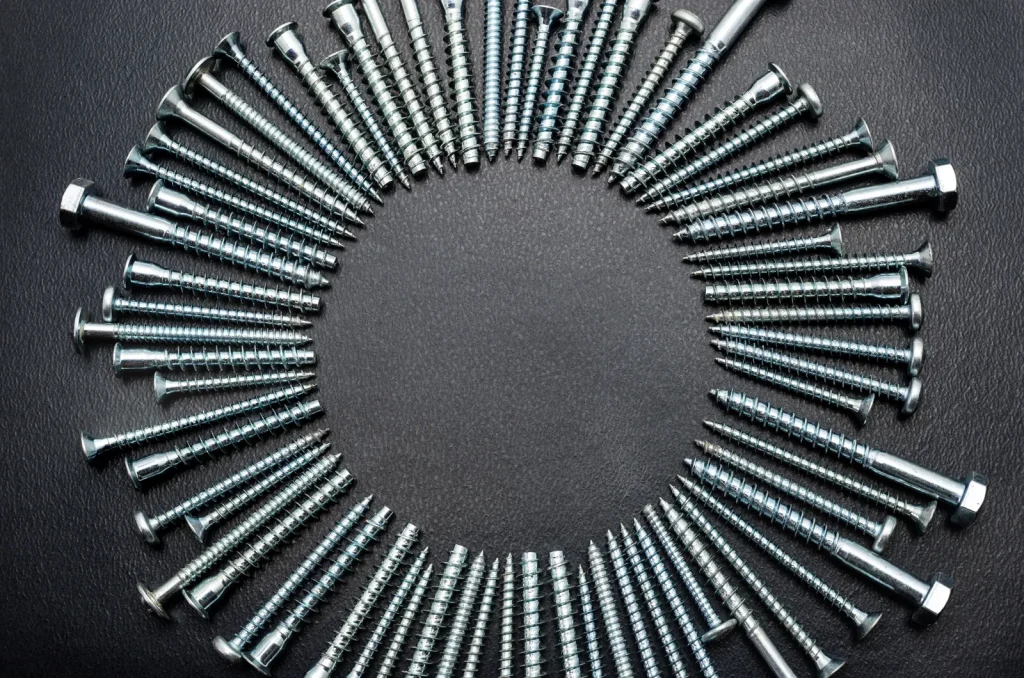
For practical buying and design work, many people want a short answer to “what are the six types of screws?” In industrial use, a workable high-level grouping is: wood screws, sheet metal screws, machine screws, self tapping screws, self drilling screws, and masonry or concrete screws. This grouping is not a formal standard taxonomy, but it is a useful starting point for design review. From there, the exact geometry matters more than the broad category name.
The same applies to “what are the 4 types of screw heads?” For engineering discussion, four common head families are flat head, pan head, hex head, and round or button-style protruding heads. These are again broad families, not the full set of available head forms. They matter because head geometry changes surface fit, clamp area, tool access, and how the joint can be serviced later.
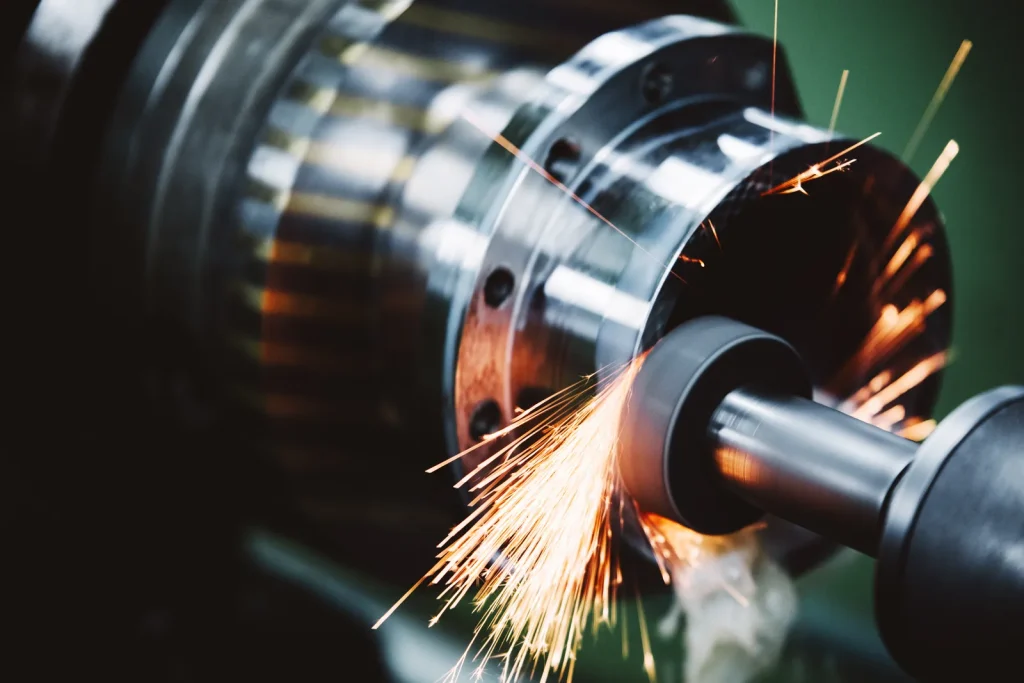
Types of screws by application, thread design, head style, and drive type
Common industrial groupings also map to standards-based families such as machine screws, wood screws, tapping screws, thread rolling screws, thread cutting screws, self-drilling screws, socket set screws, lag screws, and concrete screws. Names vary by standard system and supplier catalog, so buyers should verify the exact designation instead of relying on a broad category label alone. Parts that look similar may differ in thread geometry, material, hardness, and intended substrate.
By application, screws are usually chosen for wood, sheet metal, machine-threaded holes or nuts, masonry, or shaft locking. By thread design, the key distinction is whether the screw mates with an existing thread, forms a thread in the material, or drills and forms in one step. By head style, engineers look at countersunk heads for flush mounting, pan heads for general assembly, and external or washer-style heads where bearing area matters. By drive type, common decisions involve Phillips, slotted, internal hex, and external hex forms.
This classification matters because screw performance is not only about strength. It is also about whether the screw can be installed repeatably. A self tapping screw may work well in prepared sheet metal with the right pilot hole, but it may be a poor choice if the process needs one-step installation and the material stack varies. A flat head screw may look cleaner in a flush surface, but it adds a countersink requirement and reduces material around the head seat in thin sections.
Why the wrong screw choice changes strength, installation reliability, and serviceability
The wrong screw can fail before the product even reaches service. If thread geometry does not match the substrate, pullout resistance drops. If the head style is wrong, the bearing area may crush the surface or prevent flush fit. If the drive recess is not suited to the required torque and tool control, installation defects rise. These issues affect joint strength, assembly repeatability, and field repair.
Serviceability is often missed early in design. A flush countersunk screw may be preferred for clearance, but a protruding head can be easier to inspect, remove, and reinstall. A machine screw in a tapped metal part may support repeated maintenance better than a thread-forming screw in thin sheet, which can degrade the local thread with repeated cycles.
Difference between sheet metal screws and machine screws
The difference between sheet metal screws and machine screws starts with how they engage the joint. A sheet metal screw usually has a sharper thread profile and is intended to cut or form threads into thin metal, plastic, or similar materials. A machine screw is meant to mate with a pre-threaded hole or a nut. It does not rely on cutting new threads during assembly.
This difference changes design intent. Sheet metal screws are often selected when the assembly needs direct fastening into a thin substrate without adding a separate nut or tapped insert. Machine screws are chosen when thread quality, repeat assembly, and controlled fit matter more. In short, sheet metal screws simplify some joints, but machine screws usually give better predictability in assemblies designed around tapped features or captive hardware.
In plastics, the distinction is more important because thread-forming and thread-cutting screws do not behave the same way. Thread-forming designs reduce chip generation but can create hoop stress, boss cracking, and creep-related clamp loss if the boss geometry and pilot size are poorly designed, while thread-cutting designs can lower radial stress but may reduce reusability. For repeated service in plastic housings, machine screws used with metal inserts are often more reliable than driving directly into the polymer.
Table: screw categories mapped to substrate, load, and assembly intent
| Screw category | Typical substrate | Load and joint role | Assembly intent |
|---|---|---|---|
| Wood screw | Solid wood, panels, framing lumber | Good holding through deep thread engagement in wood fibers | Field or shop fastening where pullout resistance matters |
| Sheet metal screw | Thin sheet metal, some plastics | Light to moderate fastening in thin sections | Direct fastening without separate nut |
| Machine screw | Tapped metal hole or nut | Controlled clamping in repeatable assemblies | Serviceable equipment and machine assembly |
| Self tapping screw | Pre-piloted metal, plastic, softer materials | Thread-forming or cutting fastening | Reduced secondary operations |
| Self drilling screw | Thin to moderate metal sections | One-step drill and fasten process | Fast installation where pilot drilling is avoided |
| Concrete screw | Masonry, concrete | Anchoring into mineral substrates | Field installation into drilled holes |
| Lag screw | Heavy wood members | Higher load wood fastening | Structural-style wood joints where access is from one side |
| Set screw | Shaft-to-hub interfaces | Positioning or locking without a head | Compact power transmission assemblies |
When a screw type is feasible for the material and joint
Feasibility starts with the substrate and the joint layout. The key checks are hardness, thickness, brittleness, available edge distance, and whether the screw is expected to create its own thread. A screw can be mechanically compatible in theory but still be impractical if access is poor, the substrate is too thin for engagement, or installation variation is high.

Best screw types for fastening into metal studs
The best screw types for fastening into metal studs depend on stud gauge and whether the installer can use a pilot operation.
For untapped thin steel stud sections, self-drilling screws are typically used when one-step installation is needed and the drill point is matched to the steel thickness and hardness. For prepunched or predrilled holes, thread-forming or thread-cutting tapping screws may be more appropriate, while machine screws require a nut, clip, or tapped feature rather than direct installation into plain sheet. Stainless sheet, harder steels, and thicker sections need verified drill capacity and installation testing because feasibility changes quickly with material condition.
The design risk is assuming one screw works across all metal studs. As steel thickness rises, drilling time, heat, and point wear become more important. If the section is too thick for the screw’s point design, installation slows, stripping risk rises, and the screw may fail to form a reliable thread.
How to select concrete screws for masonry fastening
To select concrete screws for masonry fastening, first confirm that the substrate can hold a cut thread without local breakout. Concrete screws need a drilled hole of the right size and depth. The base material condition also matters. Dense concrete, aged masonry, hollow units, and cracked material do not behave the same way.
The practical check is not just whether the screw can enter the hole. It is whether the screw can develop enough engagement without damaging the surrounding material. Hole quality, dust removal, embedment consistency, and edge distance all affect performance. For engineered joints, manufacturer data and anchor design rules should be reviewed before release.
Limitations of drywall screws in structural applications
The limitations of drywall screws in structural applications are serious enough that they should not be treated as a general substitute for structural wood or metal fasteners. Drywall screws are optimized for attaching gypsum board. Their geometry and hardness make them efficient for that purpose, but not ideal for joints that carry sustained structural load, impact, or movement.
In structural applications, the risk is brittle behavior, head failure, or poor ductility under load. Even when a drywall screw seems to “hold,” that does not mean it provides the margin needed for framing or safety-critical connections. For wood framing or heavy attachment, use a screw type intended for that load path.
Checklist: substrate hardness, thickness, pilot hole need, and access constraints
Before approving a screw for a material and joint, check the following:
| Feasibility check | なぜそれが重要なのか |
|---|---|
| Substrate hardness | Harder materials may require drilling, special point geometry, or pre-threading |
| Material thickness | Thin sections may strip before full clamp load is reached |
| Pilot hole need | Pilot holes affect thread formation, splitting risk, and installation torque |
| Edge distance | Low edge distance raises breakout and splitting risk |
| ツールアクセス | Limited access may rule out external hex heads or long driver engagement |
| Rework frequency | Service joints usually favor machine screws or durable drive types |
| 腐食暴露 | Outdoor or wet use may require different material or coating choices |
How screw geometry affects fastening performance
Screw geometry controls how load enters the joint. Thread pitch, major diameter, point design, head angle, and bearing surface all affect installation and holding. Small geometry changes can shift a screw from easy assembly to chronic field failure.
Installation torque is only an indirect indicator of clamp load. The preload achieved in the joint also depends on friction at the threads and under the head, which changes with coating, lubrication, surface condition, and substrate consistency. For engineered joints, torque values should be validated against actual clamp retention and strip-out behavior, not treated as universal.
Impact of screw thread type on pullout resistance
The impact of screw thread type on pullout resistance is most visible in wood, plastic, and thin sheet. Coarser, deeper threads can improve holding in softer substrates because they engage more material. Fine machine threads, by contrast, depend on a formed or cut mating thread in metal or a nut.
Pullout resistance is not only a material property issue. It also depends on how much thread is engaged, whether the substrate crushes or cracks, and whether the screw forms a clean thread. A thread profile that works in softwood may not work well in hardwood, and a thread-forming screw that works in ductile sheet may fail in brittle or heavily coated material.
How screw length affects joint strength in wood applications
How screw length affects joint strength in wood applications is often misunderstood. More length does not always mean a better joint. What matters is how much of the threaded portion engages the main member and whether the shank and head clamp the parts without jacking or splitting the wood.
If the screw is too short, thread engagement is limited and pullout can be weak. If it is too long, the risk can shift to splitting, breakthrough, or inefficient installation. In wood joints, screw length should be chosen with thread location, member thickness, and the expected load direction in mind. This is one of the main factors affecting holding strength of wood screws.
How screw head style affects flush surface mounting
How screw head style affects flush surface mounting comes down to head angle, bearing area, and the geometry of the seat. A flat head is used when the top surface must end up level with the surrounding material, meaning it sits flush with the surface after installation. That requires a countersunk seat. In thicker materials with enough section to support a countersink, this can work well. In thin sheet, the countersink may weaken the panel or leave too little support around the hole.
Pan heads and similar protruding heads do not sit flush, but they spread load over a wider top surface and usually need less preparation. For buyers and designers comparing visible finish to structural practicality, this trade-off matters more than appearance alone.
Process diagram: how point style, thread engagement, and head bearing area influence holding
| Geometry feature | Primary effect during installation | Effect on joint performance |
|---|---|---|
| Point style | Starts the hole, centers entry, may drill or pierce material | Affects ease of entry and risk of wandering or poor thread start |
| Thread engagement | Forms or mates with substrate over engaged length | Drives pullout resistance and stripping risk |
| Head bearing area | Transfers clamp load to top surface | Affects local crushing, seating stability, and clamp retention |
| Head angle for countersink | Matches flush seat geometry | Controls flush fit and stress concentration near the seat |
Comparing major screw types and their trade-offs
Broad screw categories overlap, so selection often comes down to process trade-offs rather than simple right-or-wrong labels.
When to use self tapping screws instead of self drilling screws
The decision on when to use self tapping screws instead of self drilling screws depends on whether a separate hole-making step is acceptable and whether the material supports reliable thread formation. Self tapping screws are suitable when a pilot hole can be controlled and the substrate does not require the screw to act as a drill bit. They are often used where hole size and location need tighter control before fastening.
Self drilling screws are more useful when installation speed matters and the material thickness is within the screw’s drilling capability. If the steel is too thick, the drill point may overheat, wear quickly, or fail to cut a clean hole. In those cases, a pilot hole plus self tapping screw can be the more stable process.
Pan head vs flat head screws for assembly design
In pan head vs flat head screws for assembly design, the real question is whether the joint needs flush clearance or easier seating. Pan heads are simpler to install, need no countersink, and give a clear bearing face. Flat heads allow flush assembly but require the surrounding material to support a countersunk seat.
This means flat heads are useful where sliding parts, covers, or appearance require a level surface. Pan heads are often a better choice where thickness is limited, where the joint should avoid countersinking, or where bearing area is more important than flushness.
Hex washer head vs hex head screws in outdoor use
For hex washer head vs hex head screws in outdoor use, the main difference is the bearing interface under the head. A hex washer head spreads load over a wider area and can reduce the need for a separate washer in some applications. A plain hex head may need a washer to avoid local surface damage or to improve load distribution.
Outdoor selection should be based on the full corrosion system, not head shape alone. Galvanic compatibility with the joined material, coating damage during driving, and the environmental severity all affect service life, and stainless fasteners are not automatically suitable in every chloride or high-temperature condition. Zinc-coated, mechanically plated, hot-dip coated, and stainless options should be matched to the substrate and exposure rather than treated as interchangeable.
When protruding head screws are better than flush head screws
When protruding head screws are better than flush head screws is usually tied to assembly strength and service access. A protruding head is often preferable when the joint does not need a flat outer surface and when preserving section thickness is important. It avoids countersinking, keeps more material around the hole, and can make tool engagement easier.
This is common in machine guards, brackets, enclosures, and field-service parts. Flush heads are useful when clearance is tight. On the other hand, they can add 加工 or forming work and reduce the margin in thin material.
Common installation failures and why screws fail
Screw failures often start at installation, not in service. Many field problems come from poor match between fastener geometry, tooling, and substrate.
What causes screw head stripping during installation?
Several conditions explain what causes screw head stripping during installation. The drive type may not transfer enough torque for the required seating force. The bit may not fit the recess correctly. The tool may be misaligned. The installer may apply too much speed, too much torque, or too little axial force to keep the bit engaged.
Material and coating can also play a role. If the screw needs more torque than expected because the substrate is hard or the pilot hole is wrong, the drive recess sees that extra load first. This is one reason Phillips head vs internal hex drive for torque transfer is a real design choice. Internal hex drives usually provide stronger engagement for higher torque and repeated service, while Phillips drives can be more sensitive to cam-out under demanding installation conditions.
Common failures when fastening thin metal sheets
The main common failures when fastening thin metal sheets are thread stripping, sheet distortion, pull-through at the head, and poor clamp retention.
Thin sheet gives very little thread engagement, so the screw may reach seating torque before the joint has enough resistance to hold under service load, and screws are particularly prone to pull-through in these conditions.
Head style matters here. A larger bearing area helps reduce pull-through. Pilot hole quality also matters because oversized holes reduce thread engagement. For repeatable production, thin-sheet joints need close control of screw type, sheet thickness, and tool torque.
Problems with using deck screws in hardwood
The problems with using deck screws in hardwood usually come from installation torque and splitting behavior. Hardwood resists thread entry more than softer woods, so the screw sees higher torsional load during driving. If the pilot hole is too small or skipped, the risk of head twist-off, shank failure, or surface splitting rises.
This is a case where a screw that works well in one wood species may fail in another. Hardwood applications often need a pilot strategy, a screw geometry intended for dense wood, or both.
Why lag screws split wood and how to prevent it
Why lag screws split wood and how to prevent it is mostly about wedge action and local stress. A lag screw displaces wood as it enters. If the pilot hole is missing, too small, or too shallow, the wood can crack along the grain, especially near edges or ends.
Prevention starts with correct pilot preparation, enough edge distance, and choosing a lag screw length and diameter that fit the member size. Lubrication and controlled installation can also reduce torque spikes and splitting tendency. The key point is that lag screws are not forgiving in dry, dense, or edge-near wood without proper preparation.
Cost, tolerance, and lead time factors in screw selection
Even standard screws involve cost and sourcing trade-offs. The fastener itself may be inexpensive, but the wrong choice can increase assembly time, scrap, or maintenance cost.
How material, coating, and head/drive complexity affect cost
Material affects base cost because different alloys and hardness levels need different processing. Coating adds cost through extra finishing and quality control. Head and drive complexity also matter because more complex forming or recess geometry can reduce manufacturing efficiency.
Secondary cost effects are easy to miss. A screw with a lower unit price may need a pilot hole, a separate washer, or slower installation. A more expensive screw may reduce assembly steps. So screw cost should be reviewed together with the full assembly method, not as a part-only comparison.
How dimensional tolerance and consistency affect automated assembly
In automated assembly, dimensional tolerance and consistency can matter more than nominal screw type. Variation in head height, recess shape, shank straightness, point form, or thread start can affect feeding, bit engagement, and torque control. This is why how dimensional tolerance and consistency affect automated assembly should be reviewed early in process planning.
A screw that works in manual assembly may perform poorly in automation if orientation is inconsistent or if recess dimensions vary. For robotic or high-volume lines, buyers should confirm that the selected screw is suitable for the feeding and driving system, not just the joint itself.
When availability and lead time limit fastener choice across standard vs specialty screws
When availability and lead time limit fastener choice across standard vs specialty screws, design teams often need to decide whether the geometry benefit of a specialty screw is worth a narrower supply base. Common screw types are easier to source across sizes, finishes, and pack quantities. Specialty screws may solve a specific assembly problem but can increase sourcing risk.
Lead time also depends on whether the screw needs a nonstandard coating, recess, thread form, or material. If the application can accept a widely available standard form, procurement flexibility improves. If not, approval should include a sourcing review, not just a design review.
References: standards bodies, manufacturer specifications, and industry reports
For engineering approval, the strongest references are standards organizations, manufacturer specifications tied to test data, and recognized industry guidance. Standards help define geometry, drive forms, mechanical properties, and test methods. Manufacturer specifications are still useful, but they should be checked against the intended substrate and installation conditions.
Where different types of screws are typically used
Typical use cases help narrow choices, but they do not replace design review. A screw category points to likely applications, not guaranteed fit.
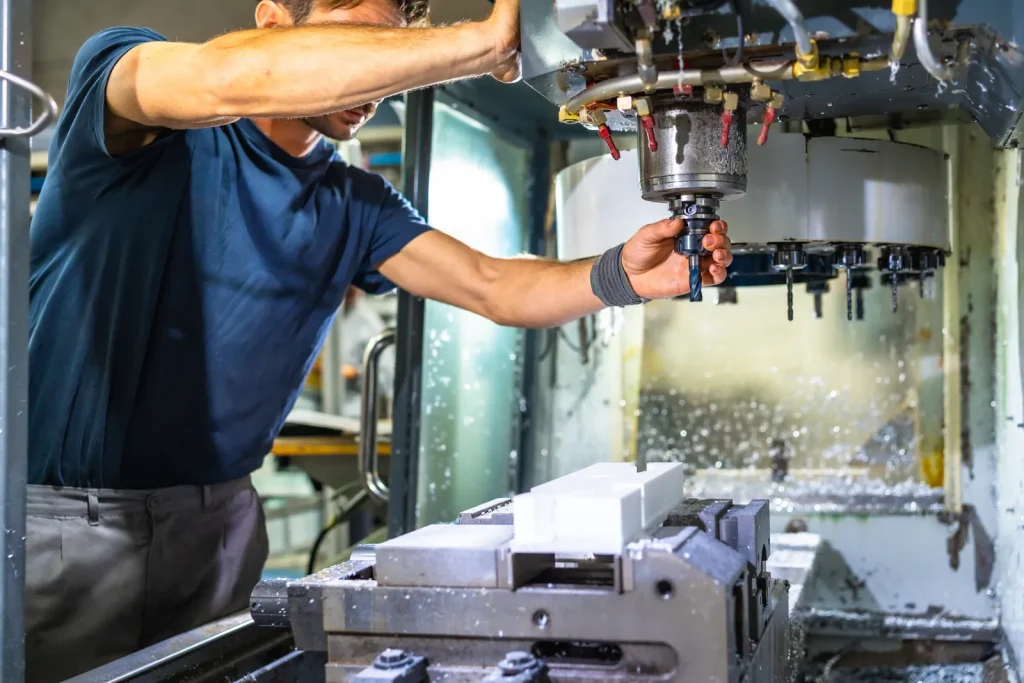
Wood, sheet metal, machine assembly, masonry, and structural anchoring use cases
Wood screws are used where deep thread engagement in wood fibers is needed. Sheet metal screws are frequently used in housings, ducts, covers, and light-gauge assemblies. Machine screws are used in equipment, brackets, housings, and assemblies with tapped holes or nuts. Concrete screws are used for masonry attachment after hole drilling. Lag screws and similar heavy-duty fasteners are used where a larger wood connection must be made from one accessible side in structural-style wood joints.
Set screws are more specialized, and set screws are designed for locking collars, pulleys, or hubs directly onto shafts without requiring a head. This makes them useful in compact rotating assemblies.
Risks of using self drilling screws on thick steel
The risks of using self drilling screws on thick steel center on the drill point’s cutting limit. If the steel is thicker or harder than expected, the screw may stop cutting, overheat, dull, or snap before seating. Even if it eventually penetrates, the resulting hole and thread quality may be poor.
This creates production variation. One operator may succeed with high force and long drive time, while another strips the head or abandons the part. For thicker steel, pre-drilling can be a safer process even if it adds a step.
When set screws are preferred over head bolts
When set screws are preferred over head bolts is mainly a packaging and function issue. A set screw sits within the part envelope, so it is useful where a bolt head would interfere with rotation, guarding, or adjacent components. It is also suitable when the goal is positional locking rather than clamp-up across separate members.
The limitation is that a set screw usually acts on a shaft or local contact point, not as a broad clamping fastener through a joint stack. So it should be used where locking or adjustment is the real function.
Table: common screw types matched to indoor, outdoor, temporary, and serviceable joints
| Screw type | Indoor use | Outdoor use | Temporary joint | Serviceable joint |
|---|---|---|---|---|
| Wood screw | 共通 | Depends on material and coating | 時々 | 中程度 |
| Sheet metal screw | 共通 | Depends on corrosion protection | 共通 | Limited if repeated removal is expected |
| Machine screw | 共通 | Depends on material and coating | 共通 | グッド |
| Self tapping screw | 共通 | Depends on substrate and protection | 共通 | 中程度 |
| Self drilling screw | 共通 | Depends on corrosion protection | Common in field work | 中程度 |
| Concrete screw | Common in building attachment | Common with proper material choice | 限定 | 中程度 |
| Set screw | Common in machinery | Depends on corrosion exposure | 中程度 | Good if access is maintained |
How to choose the right screw for the job
Selection should move from substrate to load path to installation method. Starting with head style or drive type alone often leads to rework.
How to choose the right screw head type for metal applications
To choose the right screw head type for metal applications, first decide whether the surface must remain flush. If yes, a flat head may be needed, but only if the sheet or part thickness can support a countersink. If flushness is not required, pan heads, hex washer heads, or other protruding heads often give a simpler and stronger seating condition.
The next check is bearing area. Thin metal benefits from heads that spread load and reduce pull-through. Tool clearance also matters. An external hex may be easier in open access, while an internal drive may suit tighter spaces.
Phillips head vs internal hex drive for torque transfer
In Phillips head vs internal hex drive for torque transfer, internal hex usually offers better torque transfer and a lower chance of cam-out when the process needs higher seating torque or repeated service. Phillips drives are common and easy to source, but they are less forgiving when the bit fit, alignment, or torque control is poor.
The right choice depends on the assembly method. If the process is light-duty and speed matters more than high torque, Phillips may be acceptable. If the joint needs controlled torque and reliable rework, internal hex is often the safer option.
What buyers should check before approving a screw for production or field use
Before approving a screw, buyers should request the exact type or standard designation, size, material grade, hardness or property classification, finish or coating specification, and intended substrate compatibility. They should also verify the required hole or pilot condition, any drill capacity statement, recommended installation method and torque range, and the test basis for pullout, strip-out, corrosion, or environmental performance where those results are claimed. This is the minimum information needed to compare similar-looking screws from different suppliers without assuming equivalence.
Documentation matters too. Buyers should confirm that the screw is defined clearly enough to prevent substitution with a similar-looking but unsuitable fastener. This is especially important for self tapping, self drilling, and structural wood fasteners, where small geometry differences change performance.
Decision matrix: substrate, load, head profile, corrosion exposure, and installation method
| Selection factor | Preferred direction |
|---|---|
| Soft wood substrate | Coarser thread, wood-oriented geometry |
| Thin sheet metal | Thread-forming or sheet-metal style with adequate bearing area |
| Tapped metal joint | Machine screw |
| Need for flush surface | Flat head with suitable countersink support |
| Need for easy service | Protruding head and durable drive form |
| Outdoor exposure | Material and coating chosen for corrosion resistance |
| One-step field install | Self drilling screw if substrate thickness is within capability |
| Automated assembly | Consistent geometry and drive form suited to feeding and torque control |
Final decision checklist for screw selection
The right screw is the one that matches the material, the installation process, and the service condition at the same time. A screw can look correct by category and still fail because the head style, point design, or drive form does not fit the real joint.
When this works: conditions that support reliable fastening performance
Reliable fastening is more likely when the thread design matches the substrate, the head style matches the surface condition, and the drive type matches the required torque and tool access. It also helps when the installation process is stable, with the right pilot strategy where needed and enough consistency for the chosen screw geometry.
When this fails: warning signs of mismatch between screw and application
Warning signs include high drive torque, frequent head stripping, panel distortion, wood splitting, weak retention in thin sheet, poor flush seating, and repeated field damage during removal. These are usually signs that the screw category is too broad for the actual application and that the geometry needs a closer review.
What screw type gives the best holding strength in wood?
In many wood joints, screws with deeper, coarser threads give better holding because they engage more wood fiber. The best choice still depends on wood density, screw length, pilot hole practice, and whether the load is mainly pullout or shear.
The best screw choice in wood depends on the failure mode, not just “holding strength.” Pullout resistance, head pull-through, wood splitting, and shank shear are different limits, and the governing mode changes with species, density, thickness, edge distance, and whether the load is mainly tension or shear. Coarse, deep threads often improve pullout in softer wood, but they can also increase splitting risk if pilot hole practice and edge distance are poor.
Which screw head is best for flush mounting and higher torque control?
For flush mounting, a flat head is the usual choice because it seats into a countersunk surface. For higher torque control, the drive type matters more than the head profile, and internal hex drives usually provide better engagement than Phillips in demanding installation.
よくあるご質問
What are the six types of screws?
A practical industrial grouping is wood screws, sheet metal screws, machine screws, self tapping screws, self drilling screws, and concrete or masonry screws, often summarized in engineering catalogs as a standard reference for types of screws used across construction and manufacturing. This classification is helpful for quick selection, but in reality there are many different types of screws within each group that vary in thread profile, tip geometry, coating, and material hardness. Performance in real applications depends far more on how well the screw design matches the substrate and loading condition than on its basic category label.
What are the 4 types of screw heads?
Four common head families are flat head, pan head, hex head, and round or button-style protruding heads, which together form the core of common screw head types used in mechanical design. These are often also described broadly as types of screw heads, especially in fastening catalogs and 加工 references where drive interface and installation method matter as much as shape. In addition, more advanced applications introduce specialty bolt head types designed for high torque transfer, anti-tamper use, or compact assembly spaces, where geometry is optimized for specific tooling or load distribution requirements.
Can drywall screws be used for structural fastening?
They should not be treated as a general structural fastener. Drywall screws are intended for gypsum board attachment, and their behavior under structural load, impact, or movement can be a poor match. While they are efficient for interior finishing work, their brittleness and limited shear capacity make them unsuitable for load-bearing joints or dynamic structures. In engineering practice, structural screws or certified fasteners are selected when safety margins and long-term reliability are required.
Is a self tapping screw the same as a self drilling screw?
No. A self tapping screw forms or cuts threads, usually in a prepared hole or suitable thin material. A self drilling screw adds a drill-point feature so it can make its own hole and then fasten in one step. This distinction is important in metal fabrication and light steel framing, where installation efficiency and hole precision can significantly affect assembly speed and joint quality.
Are machine screws better than sheet metal screws for repeated assembly?
In many cases, yes. Machine screws are designed for use with tapped holes or nuts, so they are usually better for repeat service and more controlled clamp-up than thread-forming screws in thin sheet. In advanced manufacturing contexts, this reliability is further enhanced through precision tooling such as CNC internal hex broaching services, which enable accurate internal drive geometries for high-strength fastening systems. This is especially relevant in the production of custom CNC hex head bolts, where consistent torque transmission and repeat assembly performance are critical in industrial equipment and mechanical systems.

 Japanese
  English
  German
  French
  Italian
  Spanish
  Polish
  Czech
Czech