
Carbon steel CNC machining is often considered when a part needs strength, wear resistance, low material complexity, and industrial durability without moving immediately to stainless steel or higher-alloy materials. For engineers and technical buyers, the main question is not only whether carbon steel can be machined. It is whether the selected grade, hardness state, geometry, tolerance, surface requirement, and finishing plan can be machined reliably and repeatably.
Carbon steel is not one material from a machining point of view. Low-carbon grades such as 1018 usually machine faster and with lower cutting forces, but they can create burrs and long chips. Medium-carbon grades such as 1045 offer higher strength and better wear behavior, but they increase tool wear and heat. High-carbon steels can be machined, but hardness, cracking risk, and distortion after heat treatment become much more important.
This guide focuses on practical decision-making for carbon steel CNC machined components: grade selection, machinability, tooling, heat treatment, tolerance risk, corrosion limits, and supplier evaluation.
What Carbon Steel CNC Machining Is—and the Decision It Solves
Carbon steel CNC machining is the controlled removal of material from carbon steel stock using computer-controlled 回転, ミーリング, drilling, or related cutting operations. The process is used to make shafts, pins, bushings, brackets, gears, fixtures, and other industrial parts where steel strength and dimensional control are required.
The key decision is whether machining is the right route for the part and which carbon steel grade gives the best balance of machinability, strength, weldability, wear resistance, and post-processing needs. A design that works well in 1018 may not behave the same way in 1045 or hardened high-carbon steel. A part that machines cleanly before heat treatment may distort after hardening or carburizing.
For buyers, carbon steel CNC machining is feasible when the material condition, tolerance requirements, geometry, and finishing plan are defined before quoting or production. It becomes risky when the drawing only says “carbon steel” without grade, hardness state, heat treatment, coating, or inspection requirements.
How carbon content impacts CNC machining performance
Carbon content changes how steel cuts. As carbon content increases, the steel generally becomes harder and stronger, but less forgiving during machining. Higher hardness increases cutting forces and heat. It also raises the chance of tool wear, chatter, poor surface finish, and dimensional drift.
Low-carbon steels are often straightforward to cut because cutting forces stay moderate, but softness alone does not define machinability. Their higher ductility can worsen chip control, built-up edge, burr formation, and surface smearing. As carbon content and hardness increase, edge strength, thermal load, and dimensional stability usually become the limiting factors before simple “hardness” does.
Industry machining guides commonly place low-carbon steel cutting speeds for grades such as 1018 around 300–500 SFM. Medium-carbon grades such as 1045 are commonly machined at lower ranges, around 200–400 SFM. High-carbon or hardened steels often require much slower cutting, with hardened steel guidance commonly falling around 120–200 SFM, depending on condition and tooling.
The tradeoff is chip behavior. Softer low-carbon steel can form long, stringy chips. These chips can wrap around tools, interfere with coolant flow, and damage surface finish if not controlled. Medium- and high-carbon steels tend to cut with higher forces and more heat, so tool material, coating, feed, and coolant become more critical.
1018 steel machinability vs 1045 steel
The comparison of 1018 steel machinability vs 1045 steel is one of the most common early decisions in carbon steel CNC machining.
Based on classifications widely used in ASTM material standards, low-carbon steels such as 1018 are generally preferred for machinability and weldability, while medium-carbon grades like 1045 are selected when higher strength and wear resistance are required. It is often selected when machinability, weldability, and general-purpose strength are more important than high wear resistance. It supports higher cutting speeds than 1045 and is usually easier on tools. The main machining issue is burr formation and chip control because the material is relatively soft and ductile.
1045 is a medium-carbon steel. It offers higher strength and better wear potential than 1018, but it is harder to machine. Cutting speeds are usually lower, feeds may need to be reduced, and carbide tooling becomes more important. Tool wear is more likely if the setup lacks rigidity or coolant access.
A simple way to decide is this: choose 1018 when machining efficiency and weldability matter most; choose 1045 when the part needs higher strength or wear behavior and the machining plan can handle greater cutting loads.
Carbon steel vs alloy steel for CNC machined components
The choice of carbon steel vs alloy steel for CNC machined components depends on the service condition. Carbon steels use carbon as the primary strengthening element. Alloy steels add elements such as chromium, molybdenum, or nickel to improve hardenability, strength, toughness, or wear behavior.
Carbon steel is often a good fit for general industrial components where cost, availability, machinability, and simple heat treatment needs matter. Alloy steel becomes more attractive when the part needs higher fatigue strength, deeper hardening, better toughness, or improved performance after heat treatment.
For example, 4140 is not plain carbon steel; it is an alloy steel. It is often compared with medium-carbon steels because it offers higher strength and hardenability, but it also changes machining, welding, and heat treatment decisions. If a drawing calls for alloy steel when plain carbon steel would work, machining cost and lead time may increase without a functional benefit. If the part truly needs alloy performance, plain carbon steel may fail in service.
Table: Low-, medium-, and high-carbon steel machining implications [Refs: industry machining guides]
| Carbon steel type | Typical machining behavior | Cutting speed guidance from supplied industry data | Main risks | Common decision point |
|---|---|---|---|---|
| Low-carbon steel, such as 1018 | Easy to cut; ductile; good machinability | 300–500 SFM | Long chips, burrs, built-up edge, poor chip evacuation | Use when weldability and machinability are more important than wear resistance |
| Medium-carbon steel, such as 1045 | Higher strength; more cutting force | 200-400 SFM | Tool wear, heat, chatter, surface finish issues | Use when higher strength is needed and machining parameters can be controlled |
| 高炭素鋼 | Harder; more abrasive to tools | Often reduced speed; hardened guidance may be 120–200 SFM | Heat buildup, cracking risk, tool wear, distortion after heat treatment | Use when wear resistance is more important than machining speed |
| Alloy alternative, such as 4140 | Higher hardenability and strength potential | Depends heavily on hardness state | Welding difficulty, heat treatment control, tool wear | Use when plain carbon steel cannot meet service loads |
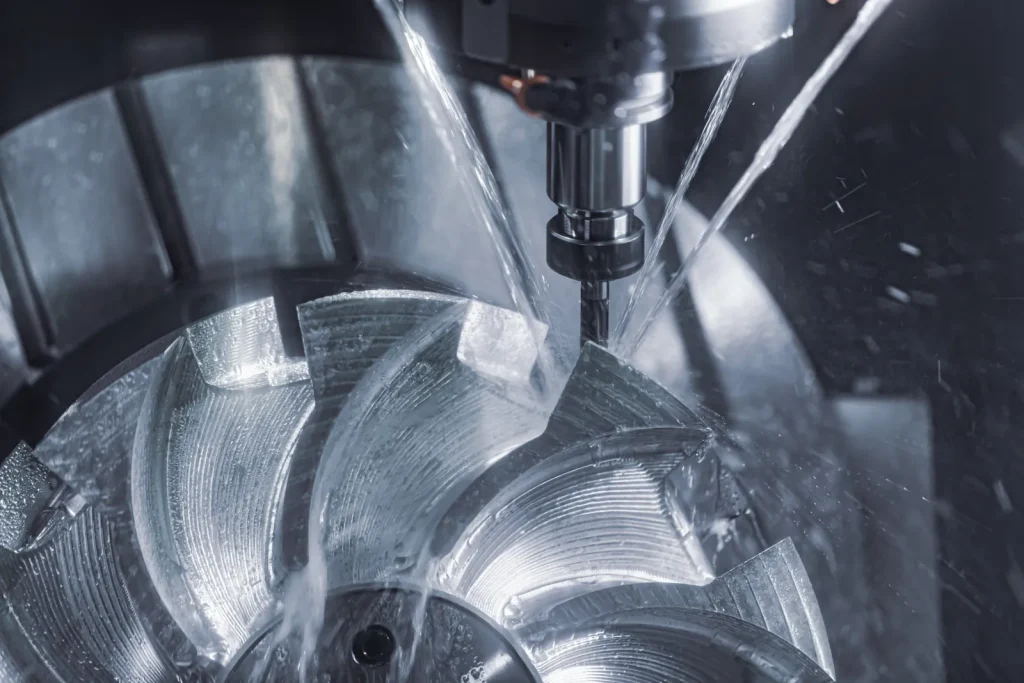
Feasibility: Can the Carbon Steel Part Be Machined Reliably?
A carbon steel part is usually machinable, but reliable machining depends on more than grade. The part must have enough rigidity during cutting, accessible features for tools and coolant, a stable workholding method, and a realistic heat treatment plan.
Feasibility should be checked before production if the drawing includes thin walls, deep pockets, long unsupported shafts, tight tolerance relationships, interrupted cuts, small holes, or post-machining hardening. These features can turn a simple material choice into a process risk.
When low carbon steel is not suitable for precision machined parts
The question of when low carbon steel is not suitable for 精密機械加工部品 often comes down to function, not machinability. Low-carbon steel machines easily, but it may not provide enough wear resistance, hardness, or strength for loaded sliding surfaces, gear teeth, or components exposed to repeated impact.
Low-carbon steel can also create burrs on edges, holes, slots, and thin features. If the part has many intersecting features or sealing surfaces, burr removal may add process time and inspection work. The material’s ductility can also make chip control harder, especially in drilling or deep-pocket milling where chips cannot escape cleanly.
For precision parts, low-carbon steel can still work if thermal control, burr control, and surface finishing are planned. It becomes a poor fit when the design expects high wear resistance or sharp, burr-free features without secondary operations.
Choosing between 1018 steel and A36 for machined parts
When choosing between 1018 steel and A36 for machined parts, the key issue is consistency. 1018 is commonly used for machined components because it is associated with better machining behavior and more predictable stock condition than general structural steel.
A36 is widely used in structural applications, but it is not always the best first choice for precision machined parts. If the part requires controlled dimensions, close fits, or consistent surface finish, the material condition and stock variability should be reviewed before selecting A36. It may still be suitable for brackets, plates, weldments, or non-critical machined features where precision requirements are moderate.
For machined shafts, pins, and fitted components, 1018 is often the safer low-carbon choice. For welded structural parts with limited machining, A36 may be acceptable if the drawing and inspection plan reflect the expected variability.
Can hardened carbon steel be CNC machined?
Hardened carbon steel can be CNC machined, but it is not handled like soft 1018 or normalized 1045. Hardness changes the cutting plan. Speeds are reduced, cutting edges must resist heat, and the setup must be rigid enough to avoid chatter.
EDM may be considered for electrically conductive materials when hardness or detail size makes conventional cutting impractical, but it is slower and can introduce surface-integrity concerns that must be evaluated for the final application.
Hardened workpieces often require coated carbide tooling and strong coolant delivery. In some cases, electrical discharge machining may be considered instead of conventional cutting for fine details or very hard sections. Pre-machining before heat treatment is common when the final hardened geometry would be difficult or costly to cut.
The main risk is that heat and cutting force can damage the tool, affect surface finish, or create cracks in sensitive materials. If the final part must be hardened, the process plan should state what is machined soft, what is finished hard, and how distortion will be inspected.
Checklist: Hardness, geometry, rigidity, coolant access, workholding, and material condition
Before sourcing or machining a carbon steel part, check these feasibility points:
| チェック項目 | なぜそれが重要なのか | Risk if ignored |
|---|---|---|
| Grade and hardness state | Cutting speed, tool wear, and heat depend on material condition | Wrong parameters, poor finish, tool failure |
| 幾何学 | Thin walls, deep holes, and long shafts reduce rigidity | Chatter, deflection, tolerance loss |
| Machine and setup rigidity | Medium- and high-carbon steels create higher cutting forces | Vibration, chatter marks, poor repeatability |
| Coolant access | Heat control affects tool life and dimension stability | Thermal drift, chip packing, surface damage |
| ワークホールディング | Steel parts need stable clamping without distortion | Parts move during cutting or spring after release |
| 素材の状態 | Annealed, normalized, or hardened stock behaves differently | Unexpected tool wear or cracking |
| Heat treatment sequence | Hardening can distort machined geometry | Rework, scrap, inspection failures |
How Carbon Steel CNC Machining Works in Practice
In practice, carbon steel CNC machining is a sequence of roughing, semi-finishing, finishing, hole making, deburring, inspection, and possible heat treatment or surface treatment. The process must remove material fast enough to be economical while keeping heat, tool wear, and vibration under control.
The same part may use turning for outside diameters, milling for flats and slots, drilling for holes, and tapping or reaming for threaded or close-fit features. Each operation changes the thermal and mechanical state of the workpiece.
Cutting speed limitations for medium carbon steel machining
The cutting speed limitations for medium carbon steel machining are linked to strength, hardness, and heat. 1045 can be machined efficiently, but not usually at the same cutting speeds as 1018. Supplied industry data places 1045 cutting speeds around 200–400 SFM, compared with 300–500 SFM for low-carbon steel such as 1018.
Pushing speed too high can shorten tool life and degrade surface finish. Reducing speed too much can also be inefficient or may increase built-up edge in some conditions. The practical range depends on tool material, tool coating, feed, depth of cut, coolant, and setup rigidity.
Feeds for medium- and high-carbon steels are often reduced compared with low-carbon steel. The supplied data gives 0.08–0.2 mm/rev for medium/high-carbon steel as a useful guidance range, while low-carbon steel may tolerate 0.1–0.3 mm/rev. Depth of cut is also condition-dependent, with general guidance around 0.5–3 mm depending on hardness and rigidity.
How hardness influences CNC milling of carbon steel
How hardness influences CNC milling of carbon steel can be seen in cutting force and heat. Harder steel resists the cutting edge more strongly. This raises spindle load, tool deflection, and temperature at the cutting zone.
In milling, hardness also affects interrupted cutting. Each tooth enters and exits the material. In harder carbon steel, this repeated impact can chip cutting edges if the tool is not suited to the work. Coated carbide tools are often preferred for medium- and high-carbon steels because they handle heat and wear better than basic high-speed steel.
Hardness also affects dimensional accuracy. More heat means more thermal expansion during machining. If the part is measured while warm, or if one side is heated more than another, dimensions can shift as the part cools.
Tooling choices: HSS, carbide, coated carbide, and chip-breaker geometry
High-speed steel, or HSS, can be used for some low-carbon steel work, especially when speeds are modest and the setup is not demanding. It is less costly as a tool material, but it does not handle high speed and heat as well as carbide.
Carbide tooling is common for production machining of carbon steel. Coated carbide is often used when tool life, cutting speed, or surface finish matter. The supplied research identifies coatings such as CVD AlTiN for roughing and PVD TiAlN for finishing as examples used in carbon steel machining.
Chip-breaker geometry is especially important in low-carbon steel. Because 1018 and similar grades can form long chips, inserts or tools with chip breakers help curl and break the chip before it wraps around the tool or workpiece. Sharp edges and high rake angles can also help with chip flow, but they must be balanced against edge strength in harder materials.
Process diagram: Turning, milling, drilling, coolant flow, and chip evacuation
A simplified carbon steel CNC machining flow looks like this:
素材の選択
↓
Stock condition check: annealed, normalized, cold drawn, or hardened
↓
Workholding plan: clamp without distortion
↓
Rough turning / milling: remove bulk stock
↓
Coolant flow and chip evacuation: control heat and prevent chip packing
↓
Drilling, tapping, reaming, or boring: manage chips in confined features
↓
Semi-finishing: leave controlled stock if heat treatment follows
↓
Heat treatment, if required: hardening, carburizing, normalizing, or annealing
↓
Finish machining or grinding/EDM if required by hardness or detail
↓
Deburring, surface treatment, inspection
The diagram shows why chip evacuation is not a minor issue. Chips carry heat away from the cut. If chips pack into slots, holes, or pockets, they can scratch surfaces, break tools, or block coolant from the cutting edge.
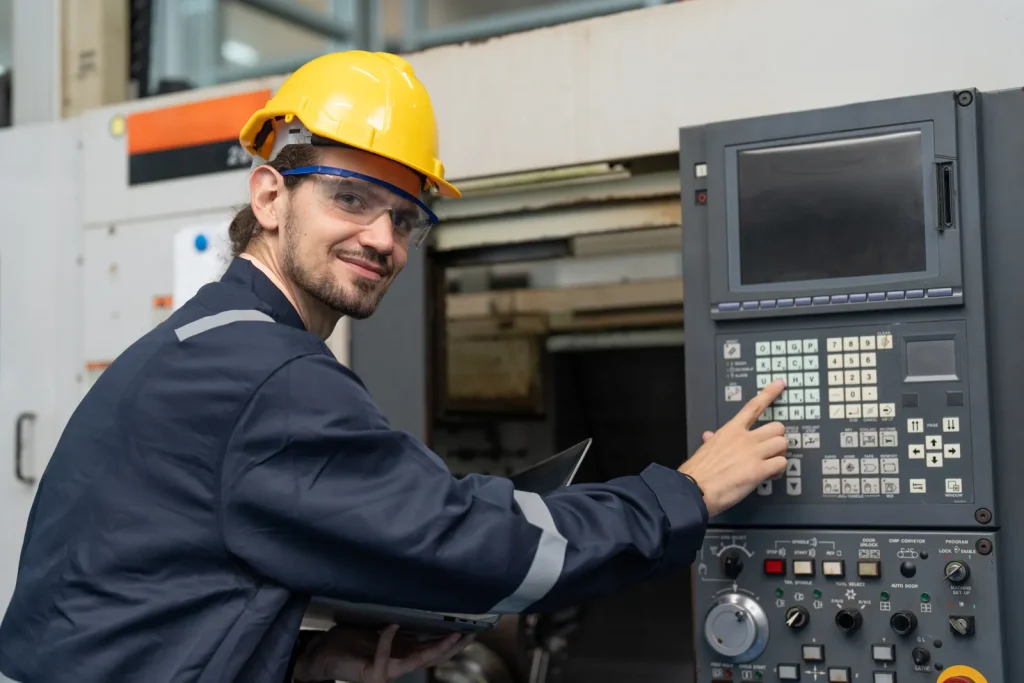
Advantages vs Limitations of Carbon Steel for Machined Parts
Carbon steel offers a useful mix of strength, machinability, and industrial familiarity. It is often easier to machine than many stainless steels and can be heat treated or surface treated when more wear resistance is needed.
The limitations are also clear. Carbon steel has poor corrosion resistance compared with stainless steel. Some grades form burrs. Higher-carbon grades increase tool wear. Heat treatment can distort precision geometry. These limits must be managed through grade selection, machining sequence, and finishing.
Best carbon steel grade for shafts and gears
The best carbon steel grade for shafts and gears depends on load, wear, and heat treatment. For lightly loaded shafts, pins, and general machine parts, 1018 can be suitable because it machines well and supports efficient production. For higher strength shafts or parts with more wear demand, 1045 is often considered because medium-carbon steel gives better strength potential.
For gears, the decision is more sensitive. Gear teeth need wear resistance and dimensional stability. Medium-carbon or carburized steels may be considered when surface hardness is needed, but carburizing introduces dimensional stability issues that must be checked after heat treatment. If the gear requires deeper hardenability or higher fatigue performance, an alloy alternative may be required rather than plain carbon steel.
The practical decision is to match the grade to the load case first, then check whether machining and heat treatment can hold the required geometry.
Weldability tradeoffs between 1018 and 4140 steel
The weldability tradeoffs between 1018 and 4140 steel matter when machined parts are part of a welded assembly. 1018 is low-carbon steel and is generally chosen when machining and weldability both matter. It is more forgiving in welded structures than higher-carbon or alloy steels.
4140 is an alloy steel, not plain carbon steel. It can provide higher strength and hardenability, but welding is more demanding and may require tighter process control. If a part must be machined, welded, and later heat treated, the full sequence should be reviewed before selecting 4140.
The decision is not “stronger is better.” If the application does not need alloy steel performance, 1018 or another low-carbon steel may reduce manufacturing risk.
Carbon steel corrosion resistance limits in industrial applications
The carbon steel corrosion resistance limits in industrial applications are important because plain carbon steel can rust when exposed to moisture, chemicals, or outdoor environments. CNC machining can also expose fresh metal surfaces that oxidize if left untreated.
Surface treatment is often needed when carbon steel parts operate in humid, wet, or corrosive environments. Options may include plating, coating, black oxide, painting, oiling, or other protective finishes, depending on wear, fit, and appearance requirements. The best coating for machined carbon steel is application-dependent. A sliding component, a bracket, and an instrument part may need different treatments.
If corrosion resistance is a primary requirement and coating damage would cause failure, stainless steel or another material may be a better choice despite different machining behavior.
Decision matrix: Strength, machinability, weldability, wear resistance, and corrosion exposure
| 必要条件 | 1018 low-carbon steel | 1045 medium-carbon steel | 高炭素鋼 | Alloy alternative such as 4140 |
|---|---|---|---|---|
| 加工性 | 高い | 中程度 | より低い | Depends on hardness |
| 強さ | 中程度 | Higher than 1018 | High potential | High potential |
| 溶接性 | より良い | More limited than 1018 | Usually more difficult | よりプロセスに敏感 |
| 耐摩耗性 | Limited unless treated | Better potential | Strong wear potential | Strong heat-treat response |
| 腐食暴露 | 保護が必要 | 保護が必要 | 保護が必要 | Needs protection unless alloyed for corrosion, which 4140 is not |
| フィット感 | General machined parts, pins, brackets | Shafts, wear-loaded parts | Wear parts where machining plan supports hardness | High-load parts needing alloy performance |
Common Machining Problems, Failures, and Root Causes
Most carbon steel machining failures are not caused by the steel alone. They come from a mismatch between material condition, cutting parameters, tool choice, workholding, and feature geometry.
The most common issues are burrs, long chips, poor surface finish, chatter, tool wear, thermal drift, and post-heat-treatment distortion.
Why burr formation occurs in low carbon steel machining
Why burr formation occurs in low carbon steel machining is mainly tied to ductility. Low-carbon steel tends to deform before it separates cleanly. At edges, holes, slots, and thin features, the material can smear or roll over instead of breaking away.
Dull tools make burrs worse because they push material instead of cutting it. Low feed, poor chip control, and unsupported edges can also increase burr size. Burrs may seem like a minor finishing issue, but they can affect assembly, sealing, fit, and safety.
Burr control should be part of the process plan, not an afterthought. Tool sharpness, chip-breaker selection, feed, and deburring access all affect production cost.
Causes of poor surface finish in carbon steel CNC turning
The causes of poor surface finish in carbon steel CNC turning include tool wear, built-up edge, chatter, poor chip evacuation, and heat. In low-carbon steel, built-up edge can form when material adheres to the cutting edge, then breaks away and marks the surface. In medium-carbon steel, wear and vibration are more common causes.
Finish capability depends on operation, material condition, and whether the surface is produced before or after heat treatment. Turning and milling can produce functional finishes in soft carbon steel, but hardness, built-up edge, and tool wear can shift the surface from consistent cutting to tearing or smearing. When final hardness is high or the finish is function-critical, grinding is often the more realistic finishing process.
Surface finish also depends on insert geometry, feed, tool nose radius, coolant, and machine rigidity. If chips wrap around the part or tool, they can scratch the freshly cut surface. If the part is long and unsupported, vibration can leave visible chatter marks.
A better finish often requires correcting the cause rather than slowing the machine by default. Sometimes the fix is sharper tooling. Sometimes it is improved support, coolant flow, or chip control.
Factors affecting tool wear when machining 1045 steel
The main factors affecting tool wear when machining 1045 steel are hardness, cutting speed, feed, depth of cut, coolant, coating selection, and interrupted cutting. 1045 creates higher cutting loads than 1018, so the tool edge sees more heat and pressure.
Tool wear tends to accelerate when speed is too high, coolant is poor, or the setup vibrates. Wear can also increase if the material condition is not controlled. Normalizing or annealing higher-carbon steels before machining can improve machinability and reduce cutting forces.
Tool wear monitoring is important because worn tools do not only raise tooling cost. They also change part dimensions, increase burrs, damage surface finish, and can overload the machine.
Why do carbon steel parts chatter during machining?
Carbon steel parts chatter when the cutting system vibrates instead of cutting smoothly. The cause may be weak workholding, long tool overhang, unsupported part length, thin walls, aggressive cutting parameters, or a machine setup that is not rigid enough for the material and cut.
Medium- and high-carbon steels can make chatter more likely because they require higher cutting forces. Once chatter starts, it can damage the tool and leave a patterned surface. It may also cause tolerance drift because the tool is no longer following a stable path.
Common controls include reducing tool overhang, improving support, changing speed and feed, using sharper or more suitable tooling, and improving workholding. The key point is to treat chatter as a system problem, not only a material problem.
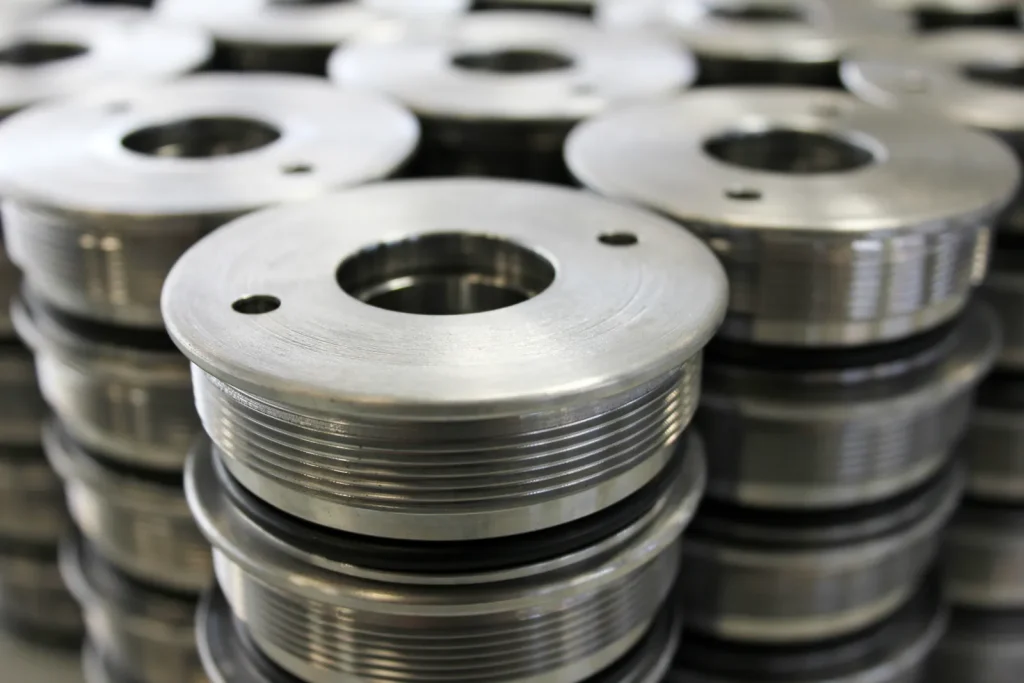
Cost, Tolerance, Heat Treatment, and Lead-Time Factors
The cost and lead time of custom carbon steel CNC parts depend on material grade, stock form, hardness state, geometry, setup count, tool wear, inspection needs, heat treatment, and surface treatment. No reliable cost can be assumed from material name alone.
Carbon steel may machine faster than harder stainless steels in many cases, but price comparisons must include more than raw material. If the carbon steel part needs heat treatment, rust protection, deburring, or extra inspection after distortion risk, total cost may rise.
General CNC machining can often hold standard commercial tolerances in the soft state, but tighter limits commonly require controlled finishing operations. Reaming is often used for closer hole size control, and grinding becomes more realistic when final hardness is high or when heat treatment makes as-machined size retention unreliable. Tolerances should be defined against the final condition, because heat treatment and coating can both change what is practical.
Challenges of holding tight tolerances on carbon steel parts
The challenges of holding tight tolerances on carbon steel parts are tied to heat, stress, tool wear, and workholding. Steel expands when heated during cutting. If the part warms unevenly, dimensions can shift during machining and after cooling.
Tool wear is another source of tolerance drift. A worn tool cuts slightly differently than a fresh tool, especially in medium-carbon steel. Long parts, thin walls, and interrupted cuts add more risk because they reduce stability.
Tight tolerances are more feasible when the process includes controlled roughing, stable fixturing, coolant, tool wear checks, and a defined inspection method. If heat treatment follows machining, tolerances should be reviewed again because hardening or carburizing can move the part.
If the part will be hardened after rough machining, critical datums and finish stock should be planned before heat treatment rather than assumed afterward. Thin walls, long unsupported features, and deep holes raise the risk that standard CNC finishing will not be the final sizing method. In those cases, secondary finishing or an alternate route may be required.
How heat treatment affects carbon steel machining accuracy
How heat treatment affects carbon steel machining accuracy depends on when heat treatment occurs. Annealing or normalizing before machining can improve machinability, reduce cutting forces, and help avoid cracking in higher-carbon steels. Hardening after machining can improve wear resistance, but it may also distort the part.
If a part is machined soft and then hardened, some features may need finishing after heat treatment. If the part is machined after hardening, cutting speeds are reduced, tooling requirements increase, and EDM may become more attractive for fine or difficult details.
Heat treatment should be part of the drawing and routing decision. A part that is easy to machine before hardening may not meet final dimensions unless finishing or inspection after heat treatment is included.
Risk of distortion after machining and heat treating carbon steel
The risk of distortion after machining and heat treating carbon steel is one of the main concerns for precision components. Distortion can come from internal stress, uneven section thickness, sharp geometry transitions, asymmetric stock removal, and thermal gradients during heat treatment.
Carburized parts can have added dimensional stability concerns because the surface layer is changed to improve hardness and wear. This can affect gear teeth, bearing surfaces, or fitted diameters if the process is not allowed for in the machining plan.
A common risk-control method is to rough machine first, heat treat, then finish machine or use another finishing process where needed. The correct sequence depends on hardness, geometry, and final inspection requirements.
Table: Cost drivers in custom carbon steel CNC parts
| コストドライバー | Why it affects cost or lead time |
|---|---|
| Grade selection | 1018, 1045, high-carbon steel, and alloy alternatives machine differently |
| Hardness state | Hardened material slows cutting and increases tooling demands |
| ジオメトリーの複雑さ | Deep pockets, small holes, thin walls, and long shafts need more control |
| セットアップ回数 | More orientations and fixtures increase process time |
| 工具摩耗 | Medium- and high-carbon steel can consume tools faster |
| チップコントロール | Long chips or poor evacuation can slow unattended machining |
| Heat treatment | Adds process steps and may require post-treatment finishing |
| Surface treatment | Rust protection, coating, or plating adds handling and inspection |
| 検査要件 | Tight tolerance and critical fits require more measurement planning |
| バリ取り | Low-carbon steel may need extra edge finishing |
Applications and Use Cases for Carbon Steel CNC Parts
Carbon steel CNC parts are common in machinery, tooling, fixtures, power transmission components, and general industrial assemblies. The material is useful when strength and machinability are both required, and when corrosion can be managed by design or surface treatment.
Application fit should be judged by load, wear, corrosion exposure, and heat treatment needs rather than by part name alone. Power transmission parts may justify 1045 or alloy steel, welded fabrications often favor lower-carbon grades, and heavy equipment parts need attention to section thickness and toughness. If the part will see corrosion, repeated fatigue, or case-hardening requirements, plain carbon steel may not be the best default choice.
Shafts, gears, pins, bushings, brackets, and industrial components
Common applications include shafts, gears, pins, bushings, brackets, spacers, plates, machine mounts, and industrial hardware. 1018 is often considered for general-purpose machined parts and welded assemblies. 1045 is often considered for stronger shafts, pins, and wear-loaded components.
Bushings and gears require more care because wear behavior, surface hardness, and dimensional stability matter. Brackets and plates may be less demanding, but flatness, hole location, and burr control can still be important.
Precision instrument parts requiring thermal deformation control
Precision instrument parts made from carbon steel require strong thermal control during machining. Supplied case evidence describes the use of advanced cooling systems, optimized cutting speeds, and heat-resistant coated carbide tools to reduce thermal expansion errors.
The decision point is simple: if the part has close dimensional relationships and low tolerance for drift, coolant and temperature control are not optional process details. They are part of the feasibility plan.
Dimensional stability issues in carburized steel components
Dimensional stability issues in carburized steel components occur because carburizing changes the surface condition to improve hardness and wear resistance. That change can affect final size and shape. Gears, shafts, and fitted surfaces are sensitive to this risk.
If carburizing is needed, the drawing should define which dimensions are critical after heat treatment. Stock allowance, finishing method, and inspection timing should be planned around the treated condition, not only the soft-machined condition.
Surface treatment options for machined carbon steel parts
Common surface treatment options for machined carbon steel parts are used to reduce rust, improve wear, or meet assembly needs. Protective options may include oiling, black oxide, plating, coating, or painting, depending on exposure and fit requirements.
The finish must match the function. A coating that adds thickness may affect close fits. A surface used for sliding may need wear behavior, not just rust protection. A part exposed to moisture may need more protection than a part used inside a dry machine enclosure.
How to Choose the Right Grade, Process, and Supplier Criteria
Choosing the right path for carbon steel CNC machining means linking function to manufacturing risk. Start with service load, wear, corrosion exposure, weldability, and heat treatment needs. Then check machinability, geometry, tolerance, and inspection.
Decision matrix: 1018, 1045, high-carbon steel, and alloy alternatives
Use 1018 or 1020 for general-purpose parts, welded assemblies, and features that do not depend on high wear resistance. Consider 12L14 when machinability and cycle time matter more than weldability or impact performance. Use 1045 when higher strength and wear resistance justify lower machinability, and treat 1060 or 1095 as specialty choices where hardness is needed but machining and distortion risk increase sharply. Move to alloy steel when hardenability, fatigue performance, or section-thickness response cannot be met reliably with plain carbon steel.
| オプション | Use when | Be cautious when |
|---|---|---|
| 1018 | Machinability, weldability, and general strength are priorities | Wear resistance, burr-free edges, or high hardness are required |
| 1045 | Higher strength and better wear potential are needed | Tight tolerances, high tool life, or low heat input are critical |
| 高炭素鋼 | Wear resistance and hardness are central to function | The design has thin sections, fine details, or high distortion sensitivity |
| Alloy alternative | Plain carbon steel cannot meet strength, hardenability, or fatigue needs | Welding, machining cost, and heat treatment control are not planned |
vs CNC machining for hardened steel components
The choice of EDM vs CNC machining for hardened steel components depends on hardness, geometry, feature size, and surface needs. CNC machining can work on hardened steel with reduced speeds, coated carbide tools, coolant, and rigid setups. It is often preferred for accessible features and productive material removal.
EDM may be considered when the steel is very hard, the geometry is fine or deep, or cutting forces would distort the part. EDM removes material without conventional cutting force, but it is not a direct replacement for all milling or turning operations.
For many hardened components, the process is mixed: machine soft where possible, heat treat, then finish critical hardened features by CNC, EDM, or another finishing method.
What should buyers check before sourcing carbon steel CNC parts?
Buyers should check whether the drawing fully defines the material and final condition. “Carbon steel” alone is not enough. Grade, hardness state, heat treatment, surface treatment, and inspection requirements should be clear.
The machining supplier should also be able to review manufacturability risks such as burrs, long chips, chatter, tool access, coolant access, distortion, and post-treatment inspection. This does not require a company-specific promise. It requires a clear technical plan.
Engineering checklist: Grade, hardness state, tolerances, heat treatment, tooling plan, inspection method [Refs: standards bodies, industry reports]
Use this checklist before releasing a carbon steel CNC machining order:
- Define the exact grade, such as 1018 or 1045, rather than “carbon steel.”
- Define the stock condition: annealed, normalized, cold drawn, hardened, or other specified condition.
- State whether heat treatment occurs before machining, after roughing, or after final machining.
- Identify critical dimensions that must be inspected after heat treatment.
- Review geometry for thin walls, deep holes, long unsupported sections, and sharp internal corners.
- Confirm coolant access and chip evacuation for slots, pockets, and drilled holes.
- Match tooling to grade and hardness: HSS for some low-carbon work; carbide or coated carbide for higher demands.
- Plan for burr control, especially in 1018 and other ductile low-carbon steels.
- Specify corrosion protection if the part will see moisture or industrial exposure.
- Define the inspection method for critical fits and functional surfaces.
Carbon steel CNC machining is suitable when the grade and process match the service requirement. It is less suitable when corrosion resistance is primary, when heat treatment distortion cannot be tolerated, or when the design requires high hardness without a realistic finishing plan. The best decisions come from treating material, machining, heat treatment, and inspection as one linked system.
よくあるご質問
Is carbon steel easy to CNC machine?
Yes, carbon steel is generally considered easy to machine compared with many engineering metals because it offers stable cutting performance, predictable chip formation, and good dimensional consistency. Lower-carbon grades are especially popular in manufacturing since they reduce tool wear and support faster production speeds during carbon steel cnc machining. Shops often use these materials for brackets, shafts, fixtures, and other industrial steel components where strength and affordability are both important. With proper tooling and coolant, machinists can achieve smooth finishes and reliable tolerances in both prototype and production environments.
Difference between 1018 and 1045 steel for machining?
The main difference between 1018 and 1045 steel is carbon content, which changes hardness, strength, and machining behavior. 1018 is softer and easier to cut, making it ideal for low carbon steel milling operations that require clean finishes and efficient production. It is commonly selected for simple structural parts and welded assemblies. In contrast, 1045 offers greater strength and wear resistance, making it better suited for shafts, gears, and applications involving repeated mechanical stress. Many manufacturers choose 1045 steel CNC turning when higher durability is required without moving to alloy steel materials.
How to prevent rust on carbon steel parts?
Carbon steel parts should be protected from moisture and humidity because untreated surfaces can oxidize quickly after machining. Applying oil, wax, or anti-corrosion fluid immediately after production helps reduce flash rust during storage and shipping. For long-term protection, manufacturers often use powder coating, zinc plating, painting, or black oxide finishes depending on the operating environment and appearance requirements. Proper packaging and dry storage conditions also help maintain the quality of precision CNC machined carbon steel parts used in industrial and commercial applications.
Best coating for machined carbon steel?
Powder coating is one of the most common finishing options for machined carbon steel because it provides strong corrosion resistance, impact durability, and a uniform appearance. Zinc plating is another widely used solution, especially for hardware and mechanical assemblies exposed to humid conditions. Black oxide creates a darker surface finish with light corrosion protection, while nickel plating improves both wear resistance and visual quality. The ideal coating depends on the operating environment, required lifespan, and tolerance sensitivity of the finished component, particularly for custom 1018 carbon steel components used in outdoor or industrial settings.
Heat treatment options for carbon steel CNC?
Carbon steel can be heat treated in several ways to improve hardness, toughness, or wear resistance after machining. Annealing softens the material and reduces internal stress, while normalizing improves grain consistency and mechanical stability. Quenching and tempering are commonly used for medium-carbon grades that require increased strength under load. Surface hardening methods such as carburizing are also used when a hard exterior and durable core are both needed. These processes are widely applied to 1018 steel parts and other machined components that must balance machinability with long-term mechanical performance.
Cost of carbon steel vs. stainless steel?
Carbon steel is usually more affordable than stainless steel because the raw material costs are lower and machining operations are generally faster. Stainless grades contain alloying elements that improve corrosion resistance but also increase tool wear and machining difficulty. As a result, stainless steel production often requires slower cutting speeds and more frequent tooling changes. Carbon steel remains a cost-effective option for many industrial applications where protective coatings can provide sufficient corrosion control, especially when producing high-volume industrial steel components with tight manufacturing budgets.

 Japanese
  English
  German
  French
  Italian
  Spanish
  Polish
  Czech
Czech