
As leading 精密CNC加工 services and services for aerospace, Aerospace CNC machining services are used when a part must meet strict geometry, material, inspection, and documentation requirements. The buyer is not only purchasing a machined component. The buyer is also taking on supplier risk, process risk, and compliance risk.
For engineers and technical buyers, the main decision is practical: can the part be machined repeatably, inspected with confidence, and documented well enough for aerospace use? This guide explains how to think through that decision before release to production.
What Aerospace CNC Machining Services Are and Why They Matter
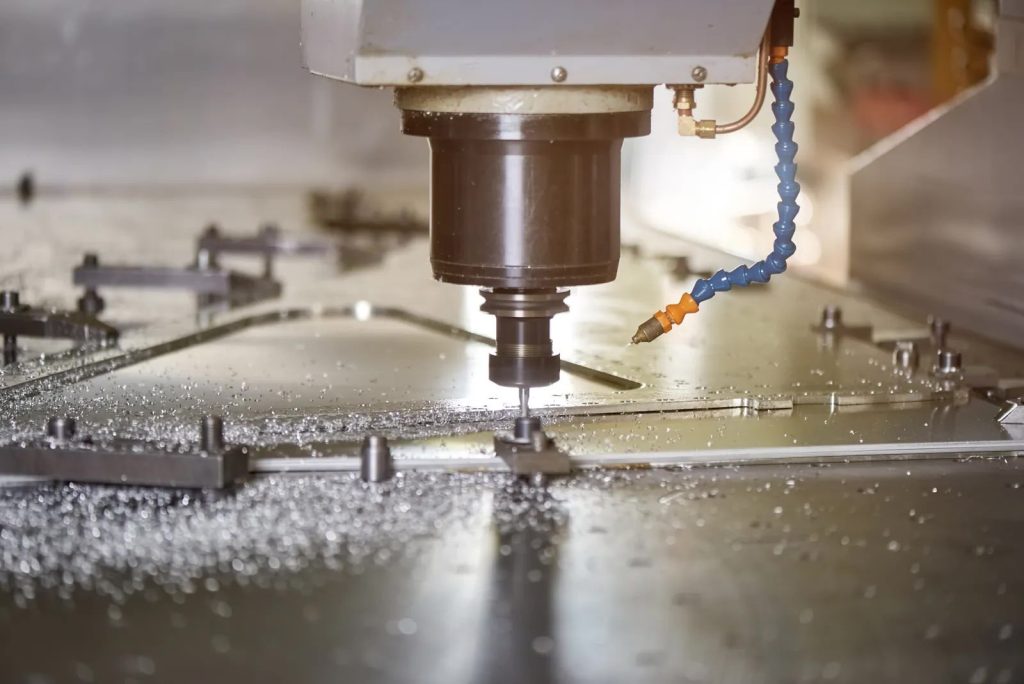
Aerospace CNC machining services produce aircraft, spacecraft, drone, defense, and related flight hardware using computer-controlled machine tools. CNC machines remove material from billet, bar, plate, casting, forging, or near-net-shape blanks to create finished features.
Machining in the aerospace industry relies on this workflow, and the process is commonly used in the aerospace because many parts need a combination of strength, low weight, dimensional accuracy, and material traceability. CNC machining is also useful when production volumes are low, designs are changing, or parts require tight control of interfaces such as bores, mounting faces, sealing surfaces, bearing seats, and datums.
Defining the decision problem: precision parts, compliance, repeatability, and supplier risk
The decision problem is not simply whether a machine can cut the shape. The real question is whether the part can be made, measured, and repeated under aerospace controls.
A machined aerospace part may fail the sourcing process for several reasons:
- The geometry needs tool access that is not possible from practical setups.
- The material causes tool wear, heat, distortion, or poor surface finish.
- The drawing requires inspection access that cannot be achieved after machining.
- The supplier cannot maintain material traceability.
- The shop lacks the required aerospace quality system or special process controls.
- The quoted process depends on skill rather than repeatable planning.
This is why cnc aerospace machining and professional machining solutions must be evaluated as a technical process, not only as a purchasing service. A lower-risk aerospace machine shop should be able to show a process plan, workholding approach, inspection method, material lot control, and documentation path that match the drawing and application. as9100 certified machining sets a strict quality system baseline, but it does not by itself prove that a specific part will conform. NADCAP matters when the manufacturing route includes special processes such as heat treatment, coating, or nondestructive testing rather than machining alone.
Where CNC machining fits versus additive manufacturing, casting, forging, and hybrid workflows
CNC machining fits best when the part has critical machined surfaces, defined datums, tight dimensional relationships, and material requirements that can be met from wrought stock, plate, billet, bar, casting, or forging.
Additive manufacturing can be useful for complex internal passages, lightweight lattice-like features, or shapes that are hard to machine from solid material. But additive parts often still need CNC machining on mounting faces, holes, sealing surfaces, and other precision interfaces.
Casting and forging can reduce raw material waste for larger or repeated parts. They may also improve material flow or reduce machining time when the near-net shape is close to the final part. But they add tooling, process qualification, and inspection considerations. For low-volume work, prototypes, or bridge production, CNC machining from stock may be faster to validate because no casting or forging tooling is needed.
Hybrid workflows combine these methods. For example, additive manufacturing may create a near-net shape, while CNC machining finishes the controlled surfaces. Hybrid additive plus finish machining can reduce total process time when a near-net preform removes large billet waste or enables geometry that would otherwise require extensive roughing from solid stock. It also adds planning burden because stock allowance, datum transfer, qualification scope, and final inspection become more complex than a conventional billet route. It should be treated as a process-selection tradeoff, not a default speed advantage.
Aerospace part requirements that increase machining complexity: geometry, weight, strength, and documentation
Aerospace components often become difficult to machine because the design is optimized for flight performance, not machining simplicity. Thin walls, deep pockets, weight-reduction features, compound angles, and tight hole patterns can all increase risk.
Weight reduction is a common driver. Removing material can improve part efficiency, but it can also create flexible sections that move during machining. A thin aerospace bracket, rib, housing, or structural fitting may measure in tolerance while clamped, then shift after release.
Strength requirements also influence machining. Key materials for aerospace including options for aerospace grade aluminum machining and titanium aero parts are selected for strength-to-weight needs, but each material has different risks. Aluminum is easier to machine than titanium in many cases, yet surface finish, burrs, and distortion still need attention. Titanium offers useful strength and corrosion resistance, but it is more difficult to cut and can increase tool wear and heat-related problems.
Documentation is another source of complexity. Aerospace buyers often need material certificates, lot traceability, inspection records, first article inspection, revision control, and evidence that the supplier followed the required quality process. A part that is dimensionally acceptable but poorly documented may still be unusable.
Aerospace CNC Machining Services AS9100 Certified Aero Components
As leading precision cnc machining services and services for aerospace, Aerospace CNC machining services are used when a part must meet strict geometry, material, inspection, and documentation requirements. The buyer is not only purchasing a machined component. The buyer is also taking on supplier risk, process risk, and compliance risk.
For engineers and technical buyers, the main decision is practical: can the part be machined repeatably, inspected with confidence, and documented well enough for aerospace use? This guide explains how to think through that decision before release to production.
What Aerospace CNC Machining Services Are and Why They Matter
Aerospace CNC machining services produce aircraft, spacecraft, drone, defense, and related flight hardware using computer-controlled machine tools. CNC machines remove material from billet, bar, plate, casting, forging, or near-net-shape blanks to create finished features.
Machining in the aerospace industry relies on this workflow, and the process is commonly used in the aerospace because many parts need a combination of strength, low weight, dimensional accuracy, and material traceability. CNC machining is also useful when production volumes are low, designs are changing, or parts require tight control of interfaces such as bores, mounting faces, sealing surfaces, bearing seats, and datums.
Defining the decision problem: precision parts, compliance, repeatability, and supplier risk
The problem is not simply whether a machine can cut the shape. The real question is whether the part can be made, measured, and repeated under aerospace control.
A machined aerospace part may fail the sourcing process for several reasons:
- Geometry needs tool access that is not possible from practical setups.
- The material causes tool wear, heat, distortion, or poor surface finish.
- The drawing requires inspection access that cannot be achieved after machining.
- The supplier cannot maintain material traceability.
- The shop lacks the required aerospace quality system or special process controls.
- The quoted process depends on skill rather than repeatable planning.
This is why cnc aerospace machining and professional machining solutions must be evaluated as a technical process, not only as a purchasing service. A lower-risk aerospace machine shop should be able to show a process plan, workholding approach, inspection method, material lot control, and documentation path that match the drawing and application. as9100 certified machining sets a strict quality system baseline, but it does not by itself prove that a specific part will conform. NADCAP matters when the manufacturing route includes special processes such as heat treatment, coating, or nondestructive testing rather than machining alone.
Where CNC machining fits versus additive manufacturing, casting, forging, and hybrid workflows
CNC machining fits best when the part has critical machined surfaces, defined datums, tight dimensional relationships, and material requirements that can be met from wrought stock, plate, billet, bar, casting, or forging.
Additive manufacturing can be useful for complex internal passages, lightweight lattice-like features, or shapes that are hard to machine from solid material. But additive parts often still need CNC machining on mounting faces, holes, sealing surfaces, and other precision interfaces.
Casting and forging can reduce raw material waste for larger or repeated parts. They may also improve material flow or reduce machining time when the near-net shape is close to the final part. But they add tooling, process qualification, and inspection considerations. For low-volume work, prototypes, or bridge production, CNC machining from stock may be faster to validate because no casting or forging tooling is needed.
Hybrid workflows combine these methods. For example, additive manufacturing may create a near-net shape, while CNC machining finishes the controlled surfaces. Hybrid additive plus finish machining can reduce total process time when a near-net preform removes large billet waste or enables geometry that would otherwise require extensive roughing from solid stock. It also adds planning burden because stock allowance, datum transfer, qualification scope, and final inspection become more complex than a conventional billet route. It should be treated as a process-selection tradeoff, not a default speed advantage.
Aerospace part requirements that increase machining complexity: geometry, weight, strength, and documentation
Aerospace components often become difficult to machine because the design is optimized for flight performance, not machining simplicity. Thin walls, deep pockets, weight-reduction features, compound angles, and tight hole patterns can all increase risk.
Weight reduction is a common driver. Removing material can improve part efficiency, but it can also create flexible sections that move during machining. A thin aerospace bracket, rib, housing, or structural fitting may measure in tolerance while clamped, then shift after release.
Strength requirements also influence machining. Key materials for aerospace including options for aerospace grade aluminum machining and titanium aero parts are selected for strength-to-weight needs, but each material has different risks. Aluminum is easier to machine than titanium in many cases, yet surface finish, burrs, and distortion still need attention. Titanium offers useful strength and corrosion resistance, but it is more difficult to cut and can increase tool wear and heat-related problems.
Documentation is another source of complexity. Aerospace buyers often need material certificates, lot traceability, inspection records, first article inspection, revision control, and evidence that the supplier followed the required quality process. A part that is dimensionally acceptable but poorly documented may still be unusable.
References needed: standards bodies, aerospace quality systems, and industry reports
Aerospace machining decisions should be checked against recognized quality and regulatory sources 1, 2]. Common references include aerospace quality management systems such as AS9100, regulatory requirements such as ITAR when defense-controlled technical data is involved, and special process audit systems such as NADCAP when outside processes are required.
Industry reports also point to wider trends: demand for lightweight and high-strength parts, increased use of 5-axis and 6-axis machining, automation, digital monitoring, and hybrid additive-CNC workflows. These trends matter because they affect supplier capability. A complex aerospace part may be feasible only when the supplier has the right multi-axis equipment, inspection systems, process controls, and trained staff.
Feasibility: Can the Aerospace Part Be CNC Machined?
A part is feasible for CNC machining when the required material can be cut safely, tools can reach the required features, the part can be held without unacceptable distortion, and inspection can confirm the drawing requirements.
Feasibility should be checked before quoting, not after the first article fails. The most useful early review compares the CAD model, drawing, material specification, tolerance scheme, datum structure, finish requirements, and production quantity.
When 5-axis CNC machining is necessary for complex aerospace components
The question of when 5-axis CNC machining is necessary for complex aerospace components usually comes down to access, setup count, and tolerance stack-up.
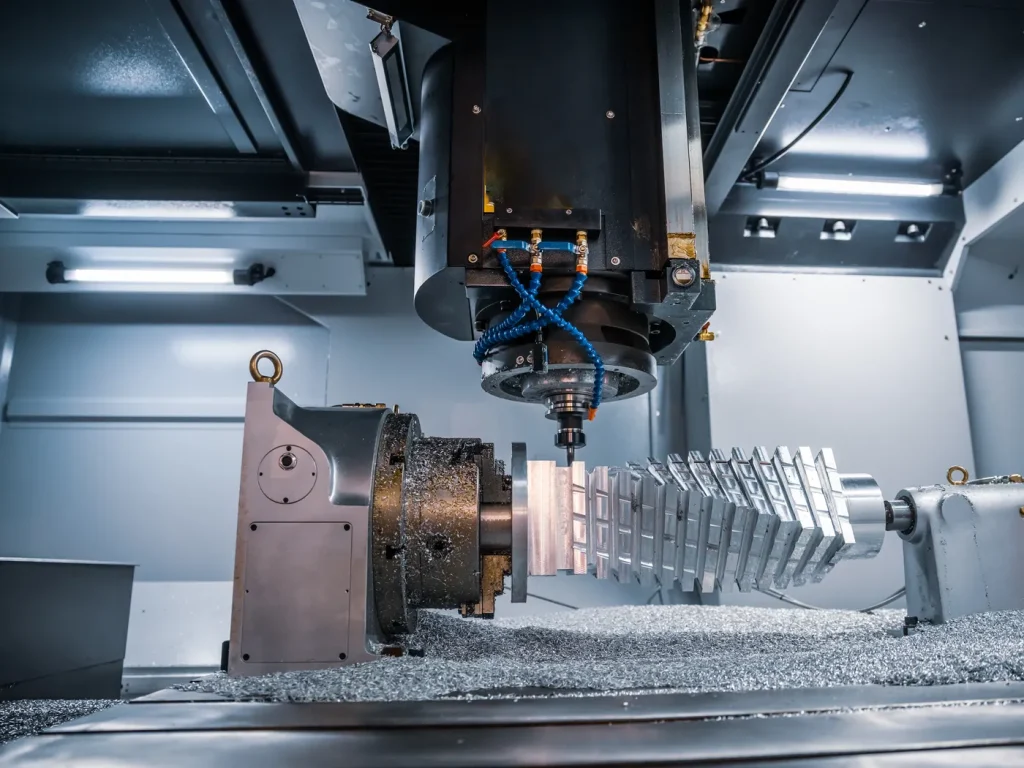
A 5-axis machine can move the tool or part through more orientations than a 3-axis machine. This helps when features sit on angled faces, curved surfaces, or multiple sides of the part. It can also reduce the number of times the part must be reclamped.
Fewer setups can reduce error caused by re-indicating, refixturing, and transferring datums between operations. For aerospace parts with many angled holes, contoured surfaces, or tight relationships between faces, 5-axis machining may reduce risk even when the part could technically be made on several 3-axis setups.
Multi-axis machining is not a cure for poor design. Tool length, vibration, part stiffness, collision risk, and inspection access still matter. A 5-axis strategy must still be planned around stable workholding and clear datum control.
When CNC machining is not suitable for aerospace structures
CNC machining is not suitable for every aerospace structure. It may be a poor fit when the part has very large envelope dimensions, extremely thin shell-like sections, inaccessible internal channels, or features that create unacceptable material waste from billet.
Machining may also be less suitable when the required structure is better achieved by composite layup, sheet metal forming, casting, forging, welding, additive manufacturing, or bonded assembly. For instance, a large lightweight skin panel or broad aerodynamic surface may be better suited to other manufacturing methods, with CNC machining used only for trim, drilling, or controlled interfaces.
The key point is that CNC machining works best for parts with machinable access and stable material removal. When the design depends on enclosed cavities, very thin unsupported walls, or large monolithic shapes with high material removal, the buyer should compare CNC against near-net or hybrid options.
How aerospace CNC machining supports low-volume production, prototypes, and bridge production
Aerospace programs often need small quantities before the design is frozen. CNC machining supports low-volume production because it does not always require dedicated hard tooling in the way casting or forging may.
For prototypes, CNC machining can produce parts from production-intent materials, which helps engineers test fit, strength, assembly, and inspection plans. For bridge production, CNC machining can support early builds while longer-term tooling, qualification, or supply chain steps are still in progress.
This does not mean CNC is always the lowest-cost option. It means it can reduce schedule and tooling risk for small quantities, design iterations, and parts with evolving requirements. The buyer should still review setup time, inspection burden, and material availability.
Feasibility checklist: geometry, material, tolerance, inspection access, and production volume
A practical feasibility review should cover the full route from CAD to inspection.
Use a simple decision screen: go when the part can be held from stable datums, reached with standard tooling, verified with available inspection, and documented to the required level. Needs redesign or early supplier review when thin unsupported walls, deep narrow pockets, intersecting holes, or multi-setup positional relationships create unstable machining or unclear verification. No-go for billet machining when critical geometry is closed internally, material waste is structurally unacceptable, or the drawing depends on relationships that cannot be inspected practically after machining.
| Feasibility factor | チェックポイント | Typical risk if ignored |
|---|---|---|
| 幾何学 | Tool access, undercuts, deep pockets, thin walls, corner radii, feature orientation | Extra setups, tool deflection, chatter, unreachable features |
| 素材 | Aluminum, titanium, high-temperature alloy, composite-adjacent requirements, stock form | Tool wear, heat, distortion, long material sourcing time |
| 寛容 | Datum scheme, tight feature relationships, tolerance stack-up | Parts pass one feature but fail assembly-level requirements |
| Inspection access | CMM probing, gauges, visual inspection, hidden features | Features cannot be verified after machining |
| 生産量 | Prototype, low volume, bridge, repeat production | Wrong process choice or poor setup economics |
| ドキュメンテーション | Material certificates, revision control, inspection reports, traceability | Part cannot be accepted even if dimensions are good |
How Aerospace CNC Machining Works from CAD to Inspection
Standard aerospace cnc machining processes and systematic cnc machining processes make aerospace CNC machining a controlled chain of decisions. Each step affects the next one. A strong process does not treat machining, deburring, inspection, and documentation as separate afterthoughts.
Process diagram: CAD/CAM, toolpath planning, workholding, machining, deburring, inspection, documentation
A simplified process flow looks like this:
| ステップ | Procedures |
|---|---|
| 1 | CAD model and drawing Pre-production |
| 2 | Manufacturing review Pre-production |
| 3 | CAM programming and toolpath planning Pre-production |
| 4 | Workholding and datum strategy Pre-production |
| 5 | Rough machining Machining |
| 6 | Stress, distortion, and stock review Machining |
| 7 | Finish machining Machining |
| 8 | Deburring and edge conditioning Post-machining |
| 9 | Dimensional inspection Post-machining |
| 10 | Documentation package and traceability review Post-machining |
Each step can change feasibility. CAM programming controls tool engagement, reach, collision risk, and surface quality. Workholding controls how the part moves under cutting force. Roughing removes bulk material, but it can release internal stress. Finishing creates final features, but it depends on stable stock and controlled tool wear. Deburring must remove sharp edges without changing controlled geometry. Inspection must verify the drawing without relying on assumptions.
Inspection feasibility should be reviewed before machining starts. Some GD&T schemes are technically valid on the drawing but difficult to simulate, access, or verify once the part is off the fixture, especially across multiple setups or hidden features. If verification depends on custom gaging, CT, optical methods, or fixture-based datum simulation, that requirement should be identified during planning rather than after first article failure.
Comparison of 3-axis and 5-axis machining for aerospace parts
A clear comparison of 3-axis and 5-axis machining for aerospace parts helps avoid overusing or underusing advanced equipment.
| ファクター | 3-axis CNC machining | 5-axis CNC machining |
|---|---|---|
| ベストフィット | Prismatic parts, flat faces, simple pockets, accessible holes | Complex angles, contoured surfaces, multi-side features |
| セットアップ回数 | Often higher for multi-side parts | Often lower for complex geometry |
| リスク | Datum transfer errors across setups | Programming, collision, and machine capability risk |
| コスト行動 | Can be efficient for simple geometry | Can reduce setup time but may need higher planning effort |
| Inspection impact | More setups may require more datum checks | Fewer setups may improve feature relationships |
| Aerospace use | Plates, brackets, blocks, simple housings | Structural fittings, impellers, complex housings, angled interfaces |
The decision should follow the part, not the machine. A simple aerospace plate does not become better because it is made on a 5-axis machine. A complex bracket with compound angles may become less risky because of it.
Limitations of CNC turning for aircraft engine components
CNC旋盤加工 is useful for round or rotational parts, but there are limitations of CNC turning for aircraft engine components. Turning works well when the primary geometry is cylindrical and features are concentric around an axis. It becomes less suitable when the part has complex off-axis features, deep milled pockets, asymmetric geometry, or multi-face interfaces.
Aircraft engine components may also use high-temperature alloys. These materials can create heat, tool wear, and surface integrity concerns during cutting. This is especially critical for manufacturing high-temperature alloy engine parts, and if a turned engine part also needs milled features, grinding, broaching, or special inspection, the process plan must include more than turning capacity.
For buyers, the key risk is assuming a turning supplier can handle the complete part. The RFQ should separate turned features, milled features, special processes, inspection requirements, and documentation requirements.
How material traceability affects aerospace machined parts
How material traceability affects aerospace machined parts is simple: the part must be linked back to the correct material source and specification. If traceability is broken, the part may be rejected even if the dimensions are correct.
Traceability may include heat lot information, material certificates, purchase records, traveler records, and revision-controlled documentation. In aerospace, this matters because the same geometry made from the wrong material condition can have different performance.
Traceability should be planned before cutting starts. Mixing materials, splitting lots without control, or losing records during outside processing can create acceptance problems late in the project.
Advantages and Limitations of Aerospace CNC Machining Services
CNC machining gives engineers direct control over many critical features. It can produce accurate interfaces, repeatable holes, machined surfaces, and low-volume parts without dedicated forming tooling. It also works across common aerospace metals, including aluminum and titanium.
The limitations come from material removal. Cutting forces, heat, tool access, workholding, burr formation, and inspection access all shape what is practical.
Choosing between aluminum and titanium for aerospace components
Choosing between aluminum and titanium for aerospace components requires a trade-off between weight, strength, machinability, cost drivers, and service environment.
Aluminum is widely used where low weight and machinability matter. It is generally easier to machine than titanium and can support efficient material removal. But aerospace-grade aluminum parts may still have distortion risk, burrs, and surface finish challenges.
Titanium is selected when higher strength-to-weight performance, corrosion resistance, or service conditions justify the machining difficulty. It is harder to cut, often slower to machine, and more sensitive to tool wear and heat control. The choice should come from part function first, then manufacturability.
Why titanium is difficult to machine for aerospace parts
Why titanium is difficult to machine for aerospace parts comes down to heat, tool loading, and material behavior during cutting. Titanium does not remove heat from the cutting zone as easily as some other metals, so heat can remain near the tool edge. This can increase tool wear and affect surface quality.
Titanium can also produce higher cutting forces and may require careful toolpath planning. Aggressive cutting can shorten tool life or damage the workpiece. Long-reach tools, thin walls, or poor fixturing make the risk higher.
For buyers, titanium should trigger extra review of machining strategy, tool access, inspection plan, and lead time. A part that is simple in aluminum may be much harder in titanium.
Surface finish challenges in machining aerospace grade aluminum
Surface finish challenges in machining aerospace grade aluminum often appear around thin walls, deep pockets, sharp transitions, and high-speed cutting paths. Aluminum can machine cleanly, but it can also smear, gall, chatter, or form burrs depending on tool condition and cutting strategy.
Surface finish is not only cosmetic. It can affect sealing, fatigue-sensitive areas, assembly fit, and inspection results. If the drawing calls out controlled surface finish, the buyer should identify which surfaces are functional and which are non-critical.
Edge condition also matters. A sharp machined aluminum edge may not be acceptable, but over-deburring can change dimensions. This is why finish and edge requirements should be clear on the drawing.
Hybrid additive and CNC machining: when combined processes may reduce complexity
Hybrid additive and CNC machining may reduce complexity when the part has a shape that is hard to machine from solid but still needs precision interfaces. Additive manufacturing can create the near-net form, while CNC machining finishes the controlled features.
This approach can help with complex internal or organic shapes, but it also adds new risks. The additive material condition, build orientation, heat treatment, machining allowance, fixturing, and inspection plan all need control.
Hybrid manufacturing should be considered when conventional machining creates excessive material removal, poor access, or too many setups. It should not be chosen just because the geometry is complex. The complete process must still meet aerospace quality and documentation needs.
Common Failures, Scrap Risks, and Quality Problems
Scrap in aerospace precision machining is expensive because the part often carries high material cost, long machining time, and a large documentation burden. Scrap can also delay test programs or production builds.
Quality problems usually come from a chain of small decisions: unclear drawings, weak datum strategy, unstable workholding, tool wear, poor deburring control, or inspection gaps.
Common causes of scrap in aerospace precision machining
Common causes of scrap in aerospace precision machining include:
- Wrong material or missing material documentation
- Datum mismatch between drawing, machining, and inspection
- Tool deflection in deep pockets or long-reach features
- Part movement after unclamping
- Burrs left in holes, slots, or intersecting features
- Surface finish not meeting functional requirements
- Feature relationships drifting across multiple setups
- Inspection discovering an issue after the part is fully machined
Many scrap causes can be reduced during manufacturing review. The key is to check where the design is sensitive: thin walls, close-positioned holes, small radii, angled faces, and features that are hard to inspect.
Factors affecting tolerance stability in aerospace CNC machining
Factors affecting tolerance stability in aerospace CNC machining include material behavior, workholding, machine condition, tool wear, temperature, setup count, and inspection method.
Tolerance stability means the process can hold the required dimensions across parts, not only on one part. A prototype may pass because a skilled machinist adjusted the process, but production may fail if those adjustments are not controlled.
Thin aerospace parts are especially sensitive. Material removal can release stress and cause movement. Heat from cutting can also affect dimensions during machining. If the part has tight relationships between features, the process should control datum use from roughing through final inspection.
Impact of tool wear on precision aerospace parts
The impact of tool wear on precision aerospace parts can show up as dimensional drift, poor surface finish, burr growth, heat, chatter, or edge damage. Tool wear is more serious in difficult materials such as titanium and high-temperature alloys.
Tool wear can also affect repeatability. The first part in a run may meet the drawing, while later parts drift out of tolerance if tool life is not managed. For aerospace work, tool condition should be part of the process plan, especially on critical features.
Buyers do not need to specify the supplier’s tool change schedule, but they should ask how the supplier controls tool wear on critical features and how inspection data is used to catch drift.
Deburring difficulties in CNC-machined aerospace parts and inspection risk
Deburring difficulties in CNC-machined aerospace parts often occur at intersecting holes, thin edges, deep slots, small pockets, and internal features. Burrs can break loose, interfere with assembly, damage mating parts, or hide inspection issues.
Deburring is also risky because it is easy to remove too much material. A controlled edge may become undersized or lose its intended shape. In small features, it may be hard to verify that the burr is fully removed.
The drawing should define edge break, sharp edge, and surface condition requirements clearly. If hidden or intersecting features are present, inspection access should be reviewed before production.
コスト、公差、リードタイムの要因
The cost of aerospace machining is not driven by cycle time alone. The main cost escalators are difficult materials, multi-side access, tight datum relationships, deburring difficulty, inspection method, and documentation burden such as first article and traceability records. Prototype and bridge work may avoid tooling delay, but billet waste, long run time, and high documentation effort can still make the route expensive compared with a near-net process.
Cost drivers in aerospace CNC machining services
Cost drivers in aerospace CNC machining services include material type, raw stock size, material removal, setup count, tool wear, tolerance requirements, inspection time, deburring, finishing, and documentation.
Titanium and high-temperature alloys tend to increase cost because they are more difficult to machine and can shorten tool life. Complex geometry increases cost because it may require multi-axis machining, custom workholding, more programming time, and slower cutting.
Tight tolerance requirements also add cost when they require extra inspection, controlled setup, stable temperature, or repeated verification. If every feature is marked critical, the process becomes slower and more expensive. Engineers should identify which features are truly function-critical.
Lead time factors for custom aerospace machined parts
Lead time depends more on machine availability. Material release status, fixture planning, programming complexity, in-process inspection, first article requirements, and final documentation often control shipment timing more than cutting time itself. Parts with simple aluminum geometry and standard verification usually move faster than titanium parts, multi-setup features, or jobs that require extensive first article review before release.
Inspection challenges for CNC machined aerospace components
Inspection challenges for CNC machined aerospace components often come from complex datums, freeform surfaces, deep features, small internal corners, and limited access. A part may be easy to machine but hard to measure.
CMM inspection can verify many features, but probe access and datum setup still matter. Some features may need custom gauges, optical inspection, surface finish measurement, or special methods. If the part has internal or hidden geometry, the inspection method should be reviewed early.
Inspection planning should match the drawing. If the drawing defines tight relationships between features, the inspection method must verify those relationships in the same datum structure.
Table: how material, tolerance, machine setup, inspection, and documentation affect cost and lead time
| ファクター | コストへの影響 | リードタイムへの影響 | Buyer action |
|---|---|---|---|
| 素材 | Difficult materials increase tool wear and machining effort | Special material specs can increase sourcing time | Confirm material specification and acceptable substitutes early |
| 寛容 | Tight tolerances increase setup and inspection burden | More checks and possible process tuning add time | Mark only function-critical features tightly |
| Machine setup | More setups increase labor and datum transfer risk | Fixture design and setup validation add time | Review whether 5-axis machining can reduce setups |
| 検査 | Complex inspection adds labor and equipment planning | First article and detailed reports may extend schedule | Provide clear inspection and documentation requirements |
| ドキュメンテーション | Traceability and aerospace records add review work | Missing data can stop shipment or acceptance | Define certificate and report needs in the RFQ |
Aerospace CNC Machining Applications and Use Cases
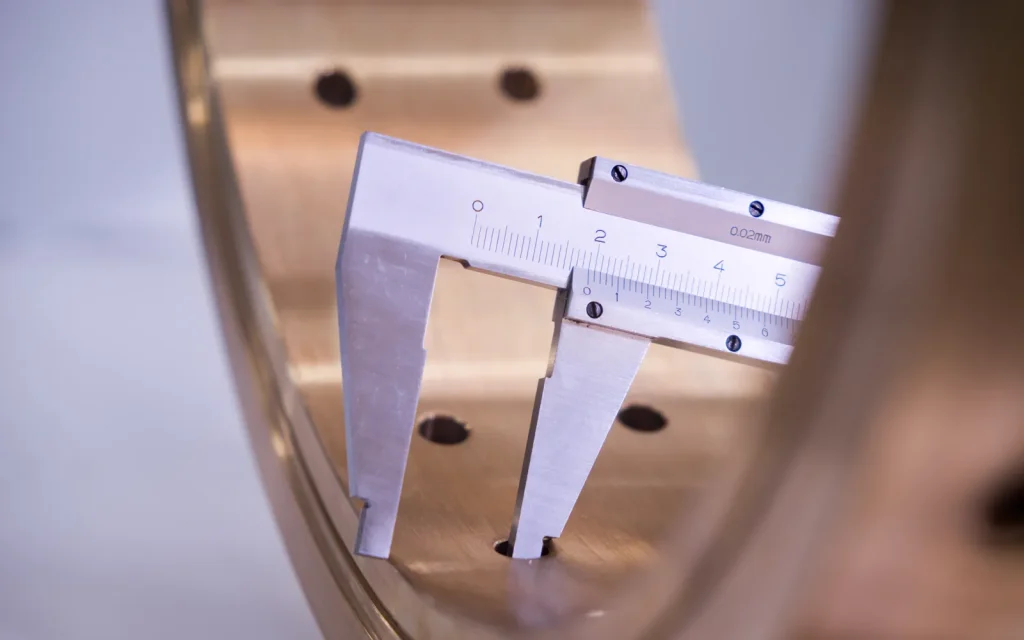
Trusted cnc machining services for aerospace offers cnc machining for structural parts, brackets, housings, fittings, cnc machined landing gear parts, engine-related components, drone parts, electric aircraft components, and space vehicle hardware. The best fit depends on geometry, material, tolerance sensitivity, and inspection needs.
Best machining approach for tight-tolerance landing gear parts
The best machining approach for tight-tolerance landing gear parts starts with stiffness, datum control, and inspection. Landing gear-related parts can involve high loads and critical interfaces, so feature relationships often matter as much as individual dimensions.
A process plan may need stable roughing, controlled finishing, and careful inspection of bores, faces, and mounting features. If the part has multiple angled interfaces or features on several sides, 5-axis machining may reduce setup-related error. If the part is mostly rotational, turning plus secondary machining may be more suitable.
The buyer should verify material traceability, inspection access, and whether any outside processes affect final dimensions.
Risks of machining high-temperature alloys for engine components
Risks of machining high-temperature alloys for engine components include tool wear, heat buildup, surface integrity concerns, and slower material removal. These alloys are often selected for demanding service conditions, but those same properties can make them difficult to cut.
The process plan should consider tool life, coolant strategy, cutting forces, and inspection after machining. Complex engine parts may also require turning, milling, grinding, or special finishing, so the complete route matters.
For buyers, the main risk is underestimating process time and inspection effort. A supplier should show experience with difficult alloys and explain how critical surfaces will be controlled.
Lightweight structural parts for aircraft, drones, electric aircraft, and space vehicles
Lightweight structural parts often include pockets, ribs, thin walls, and optimized load paths. These features reduce weight but increase machining risk. Thin sections may vibrate, distort, or move after material removal.
Aircraft, drones, electric aircraft, and space vehicles also place pressure on suppliers to produce complex, high-strength parts in low or changing volumes. Industry reports point to increased demand for lightweight parts and wider use of advanced multi-axis machining, automation, and digital process monitoring.
The buyer should focus on manufacturability before releasing a lightweight design. Small changes to corner radii, wall thickness, feature access, or datum placement can reduce scrap risk without changing part function.
Application matrix: material, process, tolerance sensitivity, and inspection requirements
| アプリケーションタイプ | Common material choice | Likely process | Tolerance sensitivity | Inspection concern |
|---|---|---|---|---|
| Structural bracket or fitting | Aluminum or titanium | 3-axis or 5-axis milling | High at holes, datums, mating faces | Datum alignment and edge condition |
| Landing gear-related component | High-strength metal as specified | Turning, milling, or multi-axis machining | High at bores and load interfaces | Bore geometry, surface condition, traceability |
| Engine-related component | Titanium or high-temperature alloy as specified | Turning plus milling or multi-axis machining | High at critical surfaces | Tool wear effects and surface integrity |
| Drone or electric aircraft part | Aluminum or titanium | CNCフライス加工, often low volume | Medium to high depending on interface | Thin-wall distortion and repeatability |
| Space vehicle hardware | Material per program requirement | Multi-axis machining or hybrid workflow | High where assembly interfaces are controlled | Documentation and inspection access |
How to Evaluate an Aerospace CNC Machining Supplier
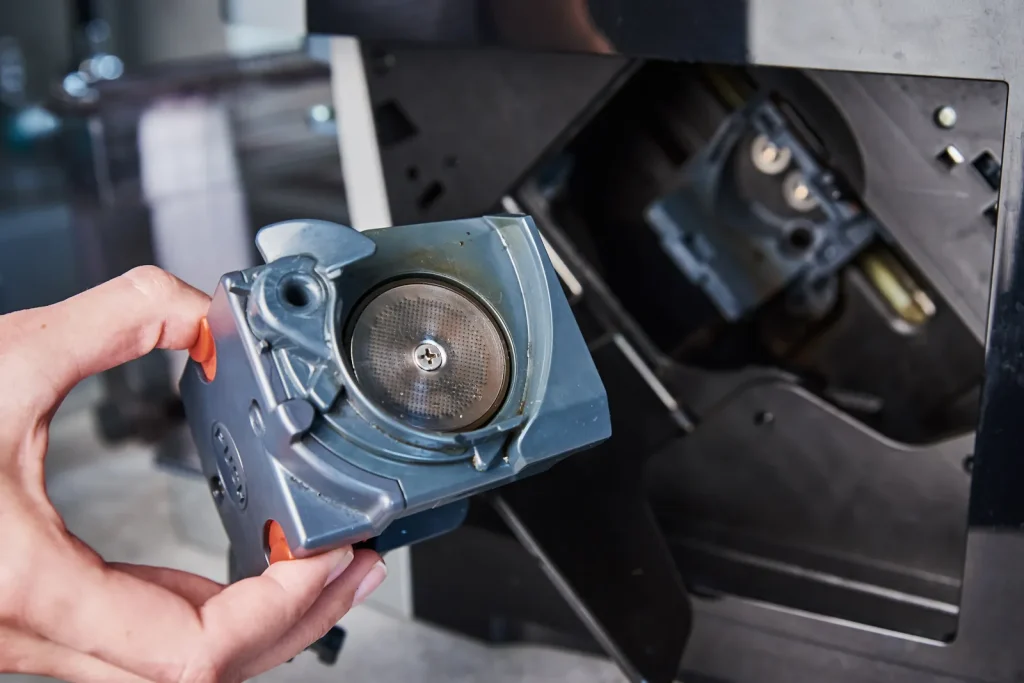
Supplier evaluation should focus on risk control. The right supplier for a simple aluminum prototype may not be the right supplier for titanium flight hardware with detailed traceability. The buyer should match supplier capability to part risk.
AS9100 certified CNC machine shop requirements for aerospace suppliers
AS9100 certified CNC machine shop requirements for aerospace suppliers relate to quality management, process control, documentation, corrective action, and traceability. AS9100 does not mean every part is automatically acceptable, but it indicates that the shop operates under an aerospace-focused quality system.
Depending on the program, other requirements may apply. ITAR control may be needed for defense-related technical data. NADCAP may be relevant when special processes are involved, such as heat treatment, coatings, or other controlled processes outside basic machining.
Certification should be verified, not assumed. Buyers should ask for current certification status, scope, and whether the specific process or facility is covered.
Machining capability questions aerospace buyers should ask
Machining capability questions aerospace buyers should ask should connect directly to the part risk:
- What machine platforms will be used for this geometry?
- Is 5-axis machining needed, or can the part be made reliably with fewer capabilities?
- How will the part be held during roughing and finishing?
- How will datum transfer be controlled across setups?
- What materials has the supplier machined that are similar to the specified material?
- How is tool wear controlled on critical features?
- How will burrs and edge conditions be handled?
- Can the supplier inspect every critical feature on the drawing?
- What documentation will be delivered with the parts?
- How is material traceability maintained from receipt through shipment?
Good answers should be specific to the part. Generic capability statements are less useful than a clear explanation of process risk.
Compare sourcing models directly. A specialist aerospace shop may offer stronger documentation discipline and inspection alignment, while a general precision shop may be suitable for less regulated work if capability is proven on the actual feature set. Online CNC networks can be useful for prototypes, but controlled programs often need clearer data handling, traceability, and route ownership than a distributed model can easily provide.Supplier evaluation matrix: certifications, 5-axis capability, automation, inspection, traceability, and capacity
| 評価エリア | 何を確認すべきか | なぜそれが重要なのか |
|---|---|---|
| 認証 | AS9100 scope, ITAR needs, NADCAP relevance for special processes | Confirms quality system and compliance fit |
| 5-axis capability | Machine envelope, axis travel, programming skill, collision control | Supports complex geometry and fewer setups |
| オートメーション | Use of automation, cobots, or digital monitoring where suitable | Can reduce variation on repeated tasks |
| 検査 | CMM access, gauges, surface finish checks, first article capability | Confirms parts can be verified, not only machined |
| トレーサビリティ | Material lot control, traveler records, revision control | Prevents documentation-related rejection |
| 定員 | Machine availability, inspection capacity, outside process control | Reduces schedule risk |
| Material experience | Aluminum, titanium, high-temperature alloys | Helps predict tool wear, finish, and distortion risks |
Automation and Industry 4.0 tools can support aerospace machining when they improve consistency, toolpath control, predictive maintenance, and defect detection. These tools should be treated as process aids, not substitutes for sound engineering review.
RFQ checklist: CAD files, drawings, tolerances, material specs, finish requirements, quantities, and documentation needs
A complete RFQ helps the supplier identify manufacturability risks early. It should include:
- Native CAD file and neutral file format where possible
- Fully controlled drawing with revision
- Material specification, condition, and traceability requirements
- Required quantity and expected production phase
- Critical tolerances and datum structure
- Surface finish and edge condition requirements
- Threads, inserts, special holes, and controlled features
- Deburring expectations
- Required inspection reports
- First article inspection needs
- Outside process requirements
- Packaging, handling, and cleanliness requirements where applicable
The best RFQ packages separate must-have requirements from preferences. This helps the supplier propose a process that protects function without adding avoidable cost or lead time.
Aerospace CNC Machining Services FAQs
Why is CNC machining used in aerospace?
CNC machining is used in aerospace because it can create precise metal parts with controlled surfaces, holes, datums, and interfaces.It delivers unmatched dimensional accuracy that strict aviation and space industry standards always demand.It is also perfect for prototypes, low-volume builds, and bridge production runs across aerospace projects.It can process raw stock like billet, plate, bar, casting or forging with no need for expensive custom forming tooling.This flexibility lets engineers iterate designs quickly without long lead times for mold or die production.It also maintains consistent part repeatability critical for flight safety and long-term operational reliability.
What certifications are needed for aerospace machining?
AS9100 is a common aerospace quality management requirement for professional CNC machine shops.It sets standardized quality rules for every step of aerospace part manufacturing and documentation.ITAR regulations may apply whenever defense-related technical data and components are involved in production.NADCAP certification is often required if special thermal, coating or testing processes are included.These credentials prove a shop follows industry compliance, traceability and strict process control norms.Buyers always prioritize certified suppliers to avoid risk of part rejection and project delivery delays.
What are common aerospace machining materials?
Common aerospace machining materials include aerospace-grade aluminum, titanium, and high-temperature alloys.These materials are specially selected to withstand harsh engine, high-heat and extreme flight environments.The right material choice balances strength, lightweight performance and natural corrosion resistance perfectly.It also takes into account real service temperature limits and how easily each metal can be machined.Manufacturers must follow strict material specs, traceability rules and full documentation for every batch.Each alloy fits different component roles from structural fittings to high-stress engine internal parts.
How do you ensure quality in aerospace CNC machined parts?
Quality is controlled through drawing review, stable workholding and fully controlled CNC machining processes.Teams closely manage tool wear, precision deburring, full inspection and complete material traceability records.Every production step follows aerospace standards to avoid distortion, dimensional drift and hidden defects.Inspection work must strictly follow the drawing’s datum structure and focus on all critical functional features.It’s never enough to only check basic dimensions that don’t impact assembly or flight performance.Every part is fully documented for traceability, compliance validation and future maintenance reference.
What are tight tolerances in aerospace machining?
In aerospace machining, a tolerance is tight when it changes the whole process and setup strategy entirely.It’s not just about smaller size limits but reshaping how you machine, fixture and inspect each component.This usually applies to assembly datums, precision bores, sealing faces and critical positional relationships.Even tiny dimensional variation can ruin part fit, load transfer performance and formal inspection results.The core focus is making sure the tolerance can be repeated steadily with the set datum and fixture plan.It also needs to be fully verifiable with existing inspection tools without extra costly custom equipment.
参考文献
https://www.ecfr.gov/current/title-22/chapter-I/subchapter-M

 Japanese
  English
  German
  French
  Italian
  Spanish
  Polish
  Czech
Czech