
A CNC machining quote is not just a price for cutting metal or plastic. It is a technical and commercial judgment about whether a part can be made, how much risk is involved, and what information is missing. For engineers and buyers, the useful question is not only “What does this part cost?” but also “What assumptions are behind the price?”
A reliable CNC machining quote depends on the design data, material choice, tolerances, surface finish, quantity, inspection scope, and lead time. If those inputs are unclear, the supplier must either ask questions or price in risk. That is one reason CNC machining quotes vary between suppliers, even for the same part.
This guide explains how CNC quoting works, what data is needed, where hidden costs appear, and how to compare quotes without selecting a supplier based only on unit price.
What a CNC Machining Quote Means and Why It Matters
A CNC machining quote is a supplier’s priced response to a requested machined part or set of parts. It usually includes material, machining, setup, finishing, inspection, quantity, lead time, and delivery assumptions. In better cases, it also identifies exclusions or design risks.
For a simple prototype, a quote may be enough to approve a purchase. For a critical production component, the quote is part of a larger technical decision. The buyer must check whether the supplier understood the drawing, whether inspection is included, and whether the process plan is realistic.
CNC machining quote vs estimate vs formal RFQ
An estimate is usually a rough price used for planning. It may be based on incomplete geometry, a similar past job, or a quick review. It is useful for early budgeting but should not be treated as a manufacturing commitment.
A CNC machining quote is more specific. It is normally based on a CAD model, drawing, material, quantity, and finish requirements. A formal RFQ, or request for quotation, is the structured package sent to suppliers. It should include all technical and commercial requirements needed to price the work with fewer assumptions.
What information do you need for a CNC machining quote?
The minimum package usually includes a solid 3D CAD model, a 2D drawing for dimensions and tolerances, the exact material grade and condition, quantity, surface finish, and any secondary operations. The CAD model helps the supplier assess geometry and machining access. The drawing controls what must be inspected and what features are function-critical. If file sensitivity is a concern, it is important to confirm how CAD data will be shared, who can access it, and whether an NDA is required before releasing full models. Some buyers start with a simplified RFQ package and only release full drawings and complete CAD files after supplier qualification. This approach helps protect intellectual property but may reduce quote accuracy until final data is provided.
The quote also needs commercial data: requested lead time, delivery location, packaging needs, and any certification or inspection reports. Without these details, two suppliers may quote different scopes while appearing to quote the same part.
Factors affecting CNC machining quote accuracy
The main factors affecting CNC machining quote accuracy are complete geometry, clear tolerances, correct material data, defined finish requirements, and known quantity. Accuracy drops when the supplier must infer threads, critical datums, surface texture, material temper, or inspection level.
Complex geometry also creates uncertainty. Deep pockets, thin walls, difficult tool access, and features that need multiple setups can change machining time and scrap risk. When the RFQ is incomplete, a careful supplier may increase the price to cover unknowns.
Table: Quote type, decision use, required data, and risk level
| Quote type | Best decision use | Required data | Risk level |
|---|---|---|---|
| Budget estimate | Early cost screening | Basic geometry, material family, rough quantity | 高い |
| Online CNC quote | Fast prototype or small-batch pricing | CAD model, material, quantity, finish, basic requirements | ミディアム |
| Manual RFQ quote | Complex or critical parts | CAD, drawing, GD&T, inspection, finish, material certs, lead time | Lower if data is complete |
| Production quote | Repeat manufacturing decision | Full technical package, quality plan, quantity breaks, secondary operations | Depends on process maturity |
Can the Part Be Quoted and Manufactured Reliably?
A part can be quoted reliably when the supplier understands the manufacturing intent from the files. A part can be manufactured reliably when the geometry, material, tolerances, and inspection method match the chosen machining process.
A practical screen includes tool access, workholding stability, wall stiffness, feature depth-to-diameter ratio, and the number of re-clamps needed to maintain datums. Deep cavities, thin walls, long tool reach, burr-sensitive edges, and features split across multiple setups increase both quoting uncertainty and production risk.
In some cases, geometry may require a different process such as 5-axis machining for access, mill-turn for concentric features, or EDM for sharp internal corners and difficult slots.
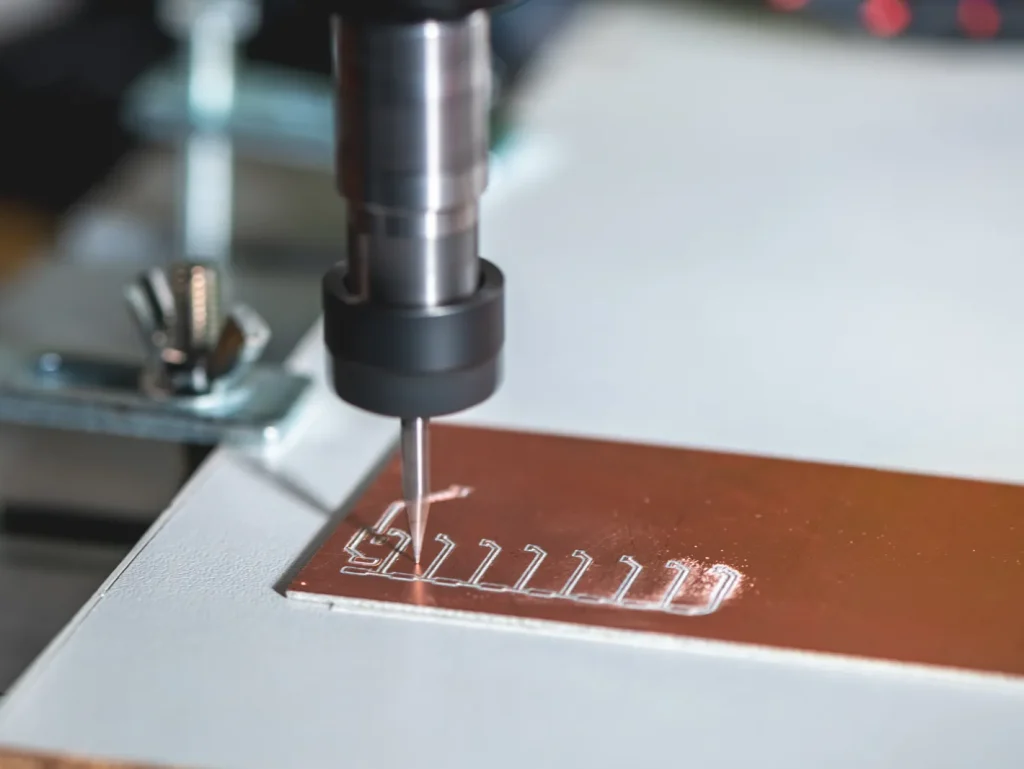
ワイヤー放電加工 is suitable for high-precision internal profiles, sharp corners, and complex geometries that cannot be achieved with conventional cutting tools.
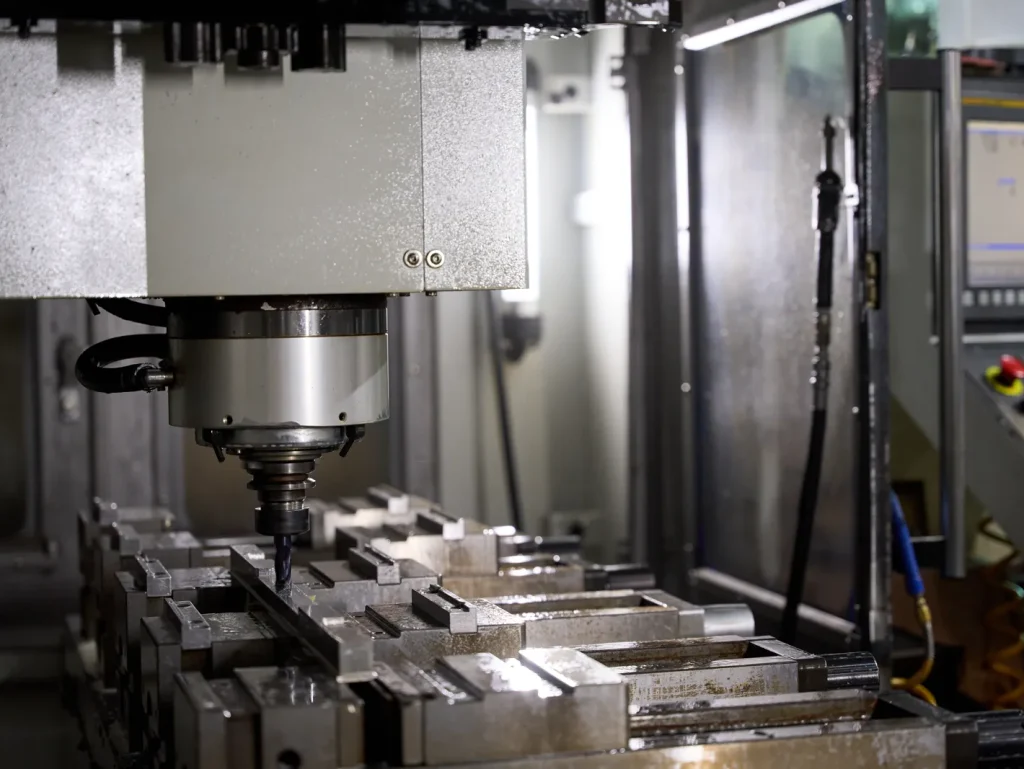
CNCフライス加工 is one of the most common processes for prismatic parts, tight tolerances, and functional mechanical components, especially when surface finish and dimensional accuracy are important.
These processes are related but not identical. A part may be easy to quote but difficult to produce due to thin sections, unstable datums, or poor material behavior. On the other hand, a part may be manufacturable but harder to quote when drawings lack clear definition.
CAD model readiness: STEP, IGES, Parasolid, and native CAD files
Common neutral CAD formats for CNC quoting include STEP, IGES, and Parasolid. These formats allow geometry to be read without native CAD software.
Native CAD files can preserve feature history, but neutral formats are usually preferred for compatibility.
The CAD file should represent the final design. Errors such as missing fillets, suppressed features, or broken surfaces can lead to incorrect machining assumptions.

Risk of incomplete drawings in CNC machining RFQ
The risk of incomplete drawings is that the quote becomes an assumption-based estimate. A model may define shape, but not functional requirements such as threads, surface finish, or critical datums.
This issue aligns with ASME Y14.5 GD&T principles, where missing tolerances or datum definitions can lead to inconsistent interpretation between supplier and buyer.
For non-critical prototypes, model-only quoting may be acceptable. For functional or regulated parts, incomplete drawings increase risk of rework or disputes.
Problems caused by missing GD&T in machining quotations
Geometric dimensioning and tolerancing, or GD&T, defines how form, orientation, location, and runout are controlled. Missing GD&T in machining quotations causes problems because the supplier may not know how the part will be inspected or what relationships matter, which is also emphasized in the ASME Y14.5 standard for geometric dimensioning and tolerancing.
For example, two holes may be dimensioned from edges, but their position relative to each other may be the real functional requirement. If that relationship is not controlled, the quote may exclude the inspection work needed to prove function. Missing datum structure can also cause different suppliers to plan different setups.
Industry practices based on ISO standards, including ISO 10152, emphasize the importance of clearly defining tolerances and inspection requirements before issuing a CNC machining RFQ.
Checklist: Minimum technical data before requesting a quote
Before requesting a CNC machining quote, check that the RFQ package includes:
- 3D CAD model in a usable format such as STEP, IGES, or Parasolid
- 2D drawing with dimensions, tolerances, threads, and notes
- Critical GD&T and datum scheme where needed
- Exact material grade, condition, and certification needs
- Quantity and expected quantity breaks
- Surface finish and secondary operations
- Inspection and reporting requirements
- Target lead time and delivery assumptions
- Application context if it affects risk or inspection
How CNC Machining Quotes Are Calculated
CNC machining quotes are built from setup, programming, machining time, material, tooling, labor, overhead, inspection, secondary operations, and margin.
A simple model includes material, setup, machining time, inspection, finishing, shipping, and risk allowance.
Small batches are expensive because setup costs are distributed across few parts. Larger batches reduce unit cost by spreading fixed work.
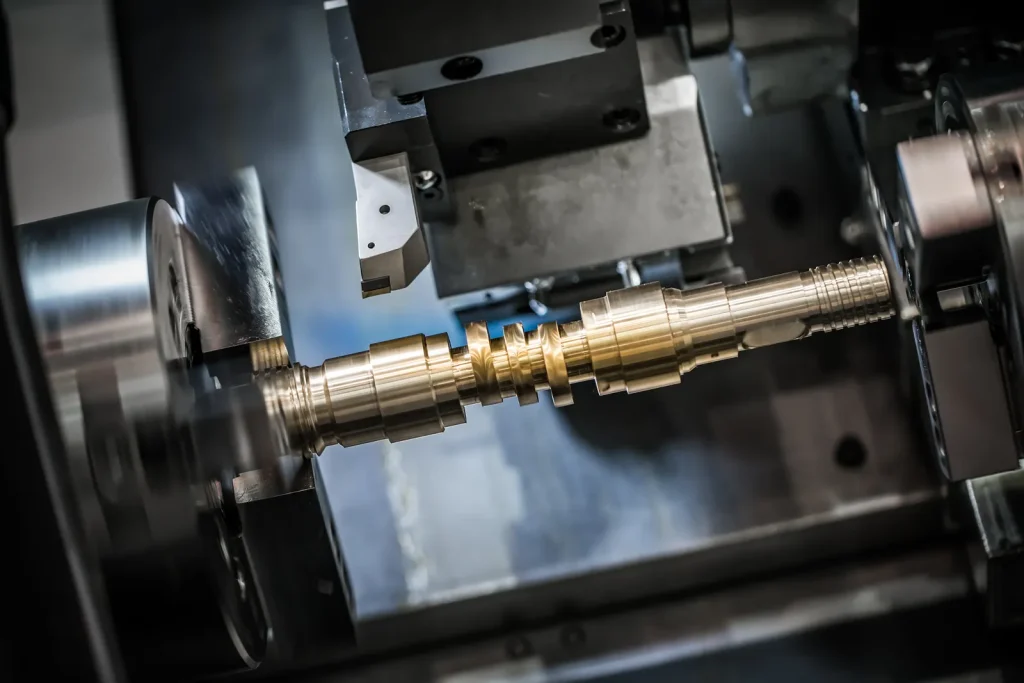
Setup, programming, fixturing, and why setup costs dominate small batch CNC machining quotes
Setup costs dominate small batch CNC machining quotes because they happen before many parts are produced. CAM programming, workholding, tool selection, first article setup, and process proofing may be required whether the order is one part or many parts.
This is why prototypes can feel expensive compared with their size. A small bracket may not use much material, but it still needs a process plan. In low-volume work, setup is spread over only a few parts, so the unit price stays high.
Machine time, cycle time, labor, tooling, overhead, and margin
Machine time is the time a CNC mill, lathe, or other machine spends cutting or moving through the cycle. Cycle time is affected by material, tool engagement, tool changes, part handling, number of setups, and inspection checks.
Labor covers programming, setup, loading, unloading, deburring, and inspection. Tooling includes cutters, inserts, drills, taps, and wear allowance. Overhead covers the shop’s operating costs, such as maintenance, utilities, software, facility cost, and support labor. Margin is needed for the supplier to stay in business and absorb ordinary business risk.
How material selection changes CNC machining cost estimates
How material selection changes CNC machining cost estimates depends on both raw material price and machinability. A material that is harder to cut may increase cycle time, tool wear, and scrap risk. A material that needs certification, heat treatment, or special sourcing may also increase lead time.
Stock size matters too. The quoted material cost is not only the final part weight. It includes the starting stock needed to hold the part, machine all surfaces, and allow for workholding and cleanup.
Process diagram: CAD upload or RFQ review to line-item quote
A typical CNC quoting process follows this path:
CAD model or RFQ received → geometry and drawing review → material and stock selection → setup and fixture planning → machining time estimate → tooling and labor estimate → finishing and inspection review → lead time and logistics check → line-item quote
Instant platforms automate many of these steps. Manual RFQ review uses engineering judgment and may include questions before a final quote is released.
Online CNC Quotes vs Manual RFQ Review
Online CNC quotes and manual RFQ review serve different decision needs. Online CNC quoting is useful when speed is the main constraint and the part fits standard process rules. Manual review is better when geometry, tolerances, material, or inspection scope require judgment.
The “best online CNC service” is not a universal category. The best fit depends on part complexity, documentation quality, delivery needs, and whether direct engineering communication is required. The “cheapest online CNC service” may not be the lowest-risk choice if inspection, finish, or secondary operations are excluded.
Comparison between online CNC quotes and manual RFQ review
A comparison between online CNC quotes and manual RFQ review should start with the part’s risk level. Online systems are effective for rapid price discovery when the CAD model is clean and the requirements are standard. Manual RFQs are better when the supplier must interpret design intent, suggest fixturing changes, or review GD&T.
An online CNC machining service may provide fast pricing and a standard workflow. A CNC machining factory or job shop may provide more direct discussion, especially for repeat production or difficult parts.
How long does an instant CNC machining quote take?
Many automated systems return prices in minutes when the user provides complete data. Some instant quoting workflows claim a turnaround under three minutes after complete entry of geometry, material, finish, quantity, and delivery data.
That speed does not remove the need for technical review. If the part has complex geometry, unusual tolerances, special finishes, or unclear drawings, the instant result may be conservative or may need manual review before production.
Challenges of quoting complex geometry in CNC machining
The challenges of quoting complex geometry in CNC machining come from uncertainty in tool access, setup count, workholding, deflection, and inspection. Organic surfaces, deep internal features, thin walls, and small radii can change the machine strategy.
Automated tools may detect volume and features, but they may not fully understand functional risk. A machinist or manufacturing engineer may see that a feature needs a special tool, a different datum setup, or a design change.
Table: Instant platform vs local job shop vs contract manufacturer
| Supplier route | 強いフィット感 | Limits to check | Buyer control |
|---|---|---|---|
| Instant platform | Fast prototypes, simple to medium parts, quick CNC quoting | Material list, size limits, tolerance assumptions, communication depth | Lower direct process control |
| Local job shop | Engineering discussion, short feedback loops, repeat small batches | Capacity, inspection resources, process range | Higher direct communication |
| Contract manufacturer | Multi-part programs, production planning, broader services | Onboarding time, documentation needs, minimum volumes | Higher program control if qualified |
Advantages, Limitations, and Trade-Offs in CNC Quoting
CNC machining is flexible because it can produce functional parts from engineering materials without dedicated mold tooling. It is often used for prototypes, fixtures, low-volume production, replacement parts, and precision components.
The trade-off is that every part still requires setup, machine time, and inspection. When geometry is complex or tolerances are tight, the quote can rise quickly.
When instant quoting works well for prototypes and small batches
Instant quoting works well when the part is prismatic or moderately complex, the material is common, and the finish and inspection needs are standard. It also works well when the buyer needs quick budget approval or several design iterations.
For prototypes and small batches, speed may be more important than deep supplier integration. Even then, the buyer should still review tolerances, finish, and drawing notes before ordering.
When manual engineering review is better for critical parts
Manual engineering review is better for critical parts with tight GD&T, difficult datum structures, special materials, or high inspection needs. It is also better when the part must scale from prototype to production and the process must be stable.
A manual review gives the supplier a chance to question features that raise cost or scrap risk. It can also reveal whether a tolerance is needed for function or was copied from a default template.
When CNC machining is not the most cost-effective option
CNC machining is not the most cost-effective option when part volume is high enough to justify a forming, casting, molding, or near-net process. It may also be inefficient when most material must be removed from a large block.
The decision depends on quantity, material, tolerance, finish, and delivery schedule. CNC may still be selected for early production because it avoids hard tooling, but that does not mean it remains the best method at higher volumes.
Decision matrix: Speed, communication, complexity, inspection, and supplier control
| 優先順位 | より良いフィット感 | 理由 |
|---|---|---|
| Fast price for a standard prototype | Online quote | Automated review can return prices quickly |
| Direct DFM discussion | Manual RFQ | Engineering judgment is needed |
| 複雑な形状 | Manual RFQ or qualified specialist | Setup and tool access need review |
| 検査の負担が大きい | Manual RFQ | Inspection scope must be priced clearly |
| Strong supplier control | Direct shop or contract manufacturer | Process, communication, and repeatability matter |
Common Quote Failures, Hidden Costs, and Risk Signals
Quote failures often come from mismatched assumptions. A buyer may assume finish, inspection, deburring, or material certificates are included. A supplier may assume standard tolerances unless the drawing says otherwise.
Hidden costs in custom CNC machining quotes are not always intentional. They can appear because the RFQ did not define the full scope.
Can I get a CNC machining quote without a drawing?
A quote without a drawing may be possible for simple early-stage parts, especially if a clean CAD model is available. The result should be treated as limited because the supplier may not know which dimensions matter.
For production or functional components, a drawing is strongly preferred. Without it, the quote may exclude GD&T, thread notes, inspection requirements, surface finish control, and acceptance criteria.
Hidden costs in custom CNC machining quotes
Hidden costs in custom CNC machining quotes can include secondary finishing, heat treatment, deburring, thread inserts, special packaging, inspection reports, material certificates, and shipping. Rush lead times can also change the total cost.
The safest comparison is based on total landed scope, not unit price alone. Hidden costs often appear when freight method, Incoterms, customs duties, import responsibility, or export packaging are not clearly defined in the quote. A lower ex-works price may not result in a lower total landed cost once logistics and brokerage are included. Differences in regional sourcing, exchange rates, and supplier workload can also explain price variation between vendors. If one quote excludes anodizing or inspection while another includes it, the lower unit price may not be lower total cost.
What increases scrap risk in CNC quote calculations?
Scrap risk increases when material is expensive, features are thin, tolerances are tight, setups are numerous, or inspection is difficult. It also rises when drawings are incomplete or GD&T is unclear.
Suppliers may price this risk into the quote. If the part has high scrap risk and the quote is unusually low, the buyer should check whether the supplier understood the requirements.
Why CNC machining quotes vary between suppliers
Why CNC machining quotes vary between suppliers is usually tied to equipment, workload, labor assumptions, tooling strategy, material sourcing, inspection scope, and risk tolerance. One shop may have the ideal machine and fixture approach. Another may need more setups or outside processing.
Quotes also vary because suppliers read incomplete RFQs differently. Normalizing assumptions is the only fair way to compare them.
Cost, Tolerance, Finish, and Lead Time Factors
Cost, tolerance, finish, and lead time are linked. Tight tolerances often increase machining and inspection time. Special finishes may add outside processing and schedule risk. Short lead times may require schedule changes or expedited logistics.
A useful CNC machining price quote makes these assumptions visible.
Impact of tolerance requirements on CNC machining quotation
The impact of tolerance requirements on CNC machining quotation depends on how many features are controlled, how tight the limits are, and how inspection is performed. Tight tolerances on critical fits may be necessary. Tight tolerances on nonfunctional surfaces often add cost without improving performance.
The best practice is to apply tight tolerances only where the function requires them. Tight tolerances usually increase cost not only due to measurement effort but also because they may require slower machining speeds, additional setups, more precise workholding, extra tool offsets, and longer inspection cycles such as CMM or first-article inspection. It is important to confirm whether the quote includes in-process inspection, final inspection only, FAI, or sampling, since inspection scope is often not clearly defined. General tolerances can often be used elsewhere.
Cost impact of tight tolerances on custom machined parts
The cost impact of tight tolerances on custom machined parts comes from slower machining, extra setups, more stable workholding, tool control, and more inspection. In some cases, the supplier may also need different equipment or a more experienced operator.
If every dimension is marked as critical, the quote will reflect that burden. Clear drawings help the supplier focus effort where it matters.
How surface finish requirements affect machined parts pricing
How surface finish requirements affect machined parts pricing depends on whether the finish can be achieved during machining or needs extra processing. Surface roughness requirements, cosmetic expectations, anodizing, plating, bead blasting, painting, and heat treatment can all change price and lead time.
Finish requirements also affect inspection. If a surface texture is controlled, the supplier must understand how it will be measured and where it applies.
Lead time tradeoffs in CNC machining price quotes
Lead time tradeoffs in CNC machining price quotes include machine availability, material procurement, programming time, outside finishing, inspection, and shipping. A short lead time may be realistic for a simple part made from available stock. It may be risky for a part that needs special material or outside processing.
Buyers should compare lead time together with scope. A fast quote that excludes finishing is not equivalent to a slower quote that includes it.
Prototype, Low-Volume, and Production Quote Scenarios
Prototype, low-volume, and production CNC quote methods differ because the supplier is pricing different risks. For example, a one-off aluminum bracket is mainly driven by setup and programming costs, a tight-tolerance steel part is driven by machining time and inspection effort, while a 200-piece order may justify dedicated fixturing that reduces unit cost but increases upfront setup cost. If a supplier does not explain the main cost driver, it becomes difficult to evaluate the quote correctly. A prototype quote often focuses on speed and first-piece feasibility. A production quote must account for repeatability, tool life, inspection planning, and quantity breaks.
The same part can have different unit prices depending on order context.
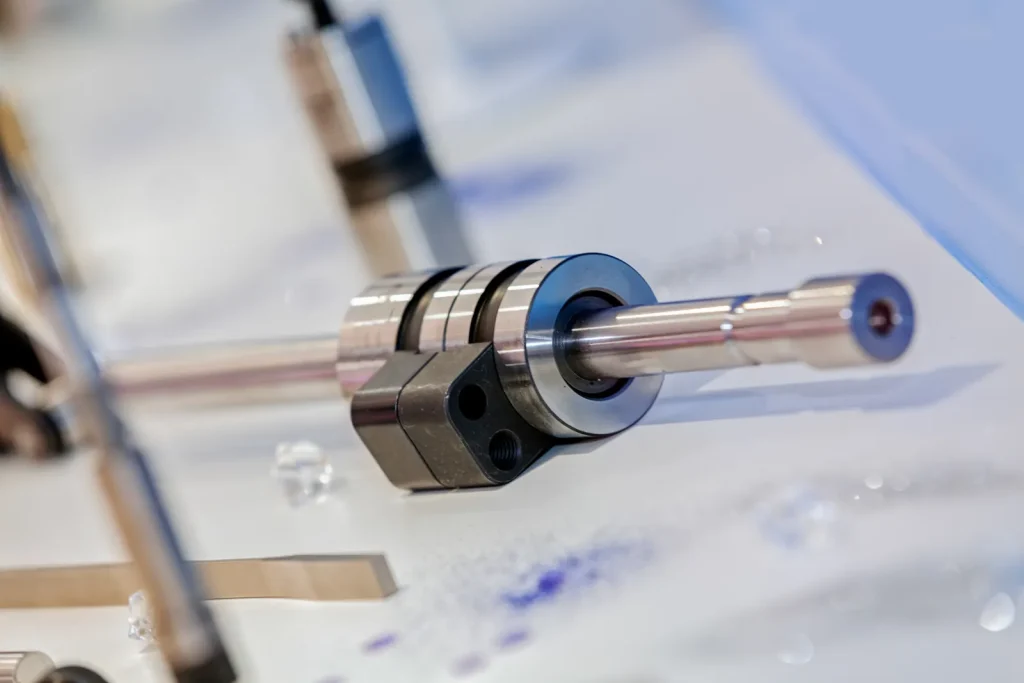
Difference between prototype and production CNC quote methods
The difference between prototype and production CNC quote methods is mainly setup depth and process planning. A prototype may be quoted with flexible workholding and limited optimization. Production may justify more refined fixtures, better toolpath optimization, and formal inspection planning.
Production quotes may also include discussions about packaging, lot traceability, and repeat order assumptions.
When low-volume CNC parts have higher unit pricing
Low-volume CNC parts have higher unit pricing when setup, programming, and fixturing are spread over only a few pieces. Material minimums and outside process minimums can also affect small orders.
This is one reason a one-off part may cost far more than the buyer expects. The price reflects the process, not just the amount of material.
Minimum order quantity effects on CNC parts quotes
Minimum order quantity effects on CNC parts quotes appear when suppliers need enough volume to justify setup, material purchase, or outside processing. Some suppliers may quote a minimum lot charge even if the buyer needs only one piece.
The buyer should check whether a minimum order changes the unit price or total price. For early prototypes, it may be better to quote one part and a small batch at the same time.
How quantity breaks influence CNC machining pricing
Quantity breaks influence CNC machining pricing by spreading fixed costs over more parts. Higher quantities can also allow better tooling choices and more efficient setups.
That said, quantity breaks are not unlimited. If material cost, finishing, or inspection dominates the part, the unit price may not fall as much as expected.
How to Evaluate and Compare CNC Machining Quotes
Comparing CNC machining quotes requires more than sorting by price. A valid comparison checks whether all suppliers quoted the same material, tolerance basis, finish, quantity, inspection, lead time, and delivery scope.
If these items are not aligned, the comparison is not technical or commercial equal-for-equal.
Normalizing material, tolerance, finish, inspection, quantity, and lead time assumptions
Normalize material by grade, condition, and certification. Normalize tolerances by drawing revision and GD&T scope. Normalize finish by surface texture, coating, color if relevant, and cosmetic acceptance.
Inspection must also be aligned. Standard shop inspection is not the same as dimensional reports, first article inspection, or CMM documentation. Lead time should be compared from the same data point, such as approval date or material release.
How secondary operations change machined parts quotations
Secondary operations change machined parts quotations because they add cost, handling, scheduling, and supplier coordination. Examples include finishing, heat treatment, deburring, engraving, coating, and special cleaning.
They also add risk. A part that is in tolerance after machining may change during heat treatment or be damaged during finishing if the process is not planned.
Questions to ask before accepting a CNC machining quote
Before accepting a CNC machining quote, confirm the drawing revision, material grade, finish, tolerance assumptions, inspection deliverables, and lead time basis. It is also important to confirm the quote validity period, the drawing revision being used for pricing, and what conditions may trigger a re-quote. Check whether pricing assumes current material availability, whether external processes are included, and how first-article approval and nonconformance handling will be managed. These factors reduce project risk more effectively than focusing only on unit price. Ask whether any features are high risk for machining, inspection, or scrap.
Also confirm what is excluded. The quote should make clear whether shipping, taxes, material certificates, inspection reports, and secondary operations are included.
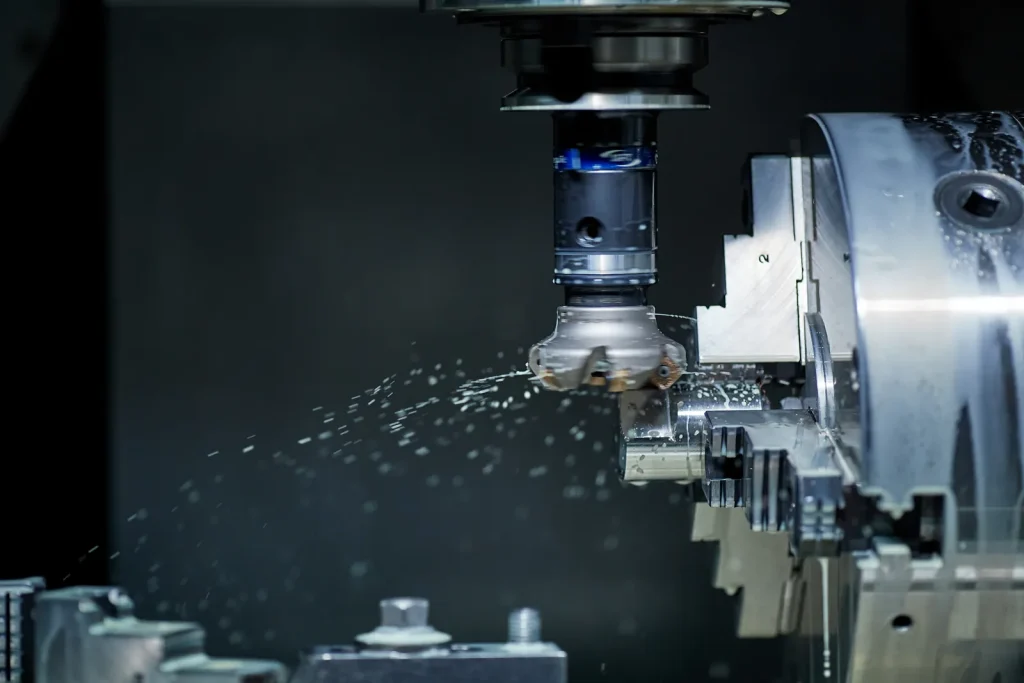
Supplier comparison table: Price, scope, capability, inspection, lead time, and DFM feedback
| Evaluation item | What to compare | Risk signal |
|---|---|---|
| 価格 | Unit price and total price | Low price with unclear scope |
| スコープ | Material, finish, inspection, delivery | Missing secondary operations |
| 能力 | Machines, materials, tolerance experience | No comment on difficult features |
| 検査 | Reports, methods, acceptance criteria | “Standard inspection” for critical parts |
| リードタイム | Start point, exclusions, outside processes | Fast lead time without material check |
| DFMフィードバック | Cost or risk reduction suggestions | No review of obvious design risks |
よくあるご質問
What is needed to get an accurate CNC machining quote?
A CNC machining quote requires a 3D CAD model, a 2D drawing, material specification, quantity, surface finish, and inspection requirements. For critical parts, GD&T and certification requirements should also be included.
Can I use an online CNC machining service for production parts?
Yes, online CNC machining services can be suitable for production parts when the design is fully documented, materials and finishes are standard, and inspection requirements are clearly defined. For repeat production or functional interfaces with tight GD&T, traceability requirements, or critical tolerances, it is recommended to request manual engineering review and confirm inspection deliverables before placing an order.
Why is my CNC machining quote higher than expected?
CNC machining quotes are often higher than expected when setup and programming costs are spread across a small batch, or when the part includes tight tolerances, difficult machining access, special materials, or additional inspection requirements. Prices can also increase when the RFQ is incomplete, because suppliers may include risk allowances to cover unclear or missing information.
How do I find the cheapest online CNC service without increasing risk?
The safest comparison method is to normalize the full scope of the quote, including material grade, surface finish, tolerance assumptions, inspection requirements, lead time, shipping terms, and certification needs. A lower price is only meaningful when all suppliers quote the same drawing revision, the same acceptance criteria, and the same secondary processes.
When should I avoid CNC machining for a custom part?
CNC machining should be avoided as a long-term solution when production volumes justify processes such as molding, casting, forging, or other near-net-shape methods, or when the design requires excessive material removal from a large billet. It may also be inefficient when internal geometry, tool access limitations, or post-process distortion make machining unstable or uneconomical.
参考文献
https://www.asme.org/codes-standards/find-codes-standards/y14-5-dimensioning-tolerancing

 Japanese
  English
  German
  French
  Italian
  Spanish
  Polish
  Czech
Czech