
When a part must fit, seal, align, or stay safe under load, “close enough” can turn into scrap fast. That’s why cnc precision machining is the go-to method for making complex parts with tight tolerances, strong repeatability, and clean surface finish. Still, many engineers and buyers get stuck on the same tradeoffs: How accurate can you really hold—±0.01–0.02 mm? When do “ultra-precision” claims make sense? And how do surface finish, inspection, lead time, and cost move together? This guide answers those questions first, then walks through processes, materials, DFM, metrology, cost drivers, and how to pick a supplier with confidence.
What Is CNC precision machining (and when to use it)?
At its core, precision cnc machining is a computer-controlled way to cut material away from a solid block or bar to make a final shape. The machine follows instructions called G-code. That G-code usually comes from a CAD model (your design) and CAM software (your toolpaths). Because the motion is controlled by computer numerical control, the same program can make many identical parts with less variation than most traditional machining methods.
This also answers a common question: What is a CNC precision machine? It’s not one special machine with a magic label. A “CNC precision machine” usually means a CNC mill or CNC lathe that is set up, maintained, and measured in a way that supports high precision results. The machine matters, but so do the cutting tools, the fixturing, temperature control, probing, and inspection. Modern machine tools with higher rigidity and thermal stability directly contribute to holding tighter tolerances in a production environment.
CNC precision vs standard CNC machining vs manual machining
People often ask: What is precision CNC? In plain terms, cnc precision means the process is planned and controlled to hit a tighter level of precision, higher accuracy, and better repeatability than “standard machining.” Standard CNC can still be very accurate, but precision work typically adds more control steps: better workholding, fewer setups, more stable machines, more careful tool management, and stronger quality control.
Manual machining can be excellent in skilled hands, especially for repair work or one-off adjustments. But when you need consistent results across 50, 500, or 5,000 pieces, CNC tends to win because the machine can execute the same moves the same way—then inspection confirms it.
When “precision” is necessary
So when should you pay for cnc precision machining services instead of general CNC work? You usually need it when the function depends on exact geometry, not just a rough shape. Think about:
- A press-fit pin where too tight cracks a housing, and too loose slips under vibration.
- A sealing surface where a small flatness error causes leaks.
- Two bearing bores that must stay aligned so a shaft does not bind.
- Safety parts where failure is not an option.
In these cases, “precision” is not a nice-to-have. It’s part of the design. The advantages of high precision include better sealing performance, lower assembly variation, longer wear life, and improved functional reliability.
What is CNC precision machining used for?
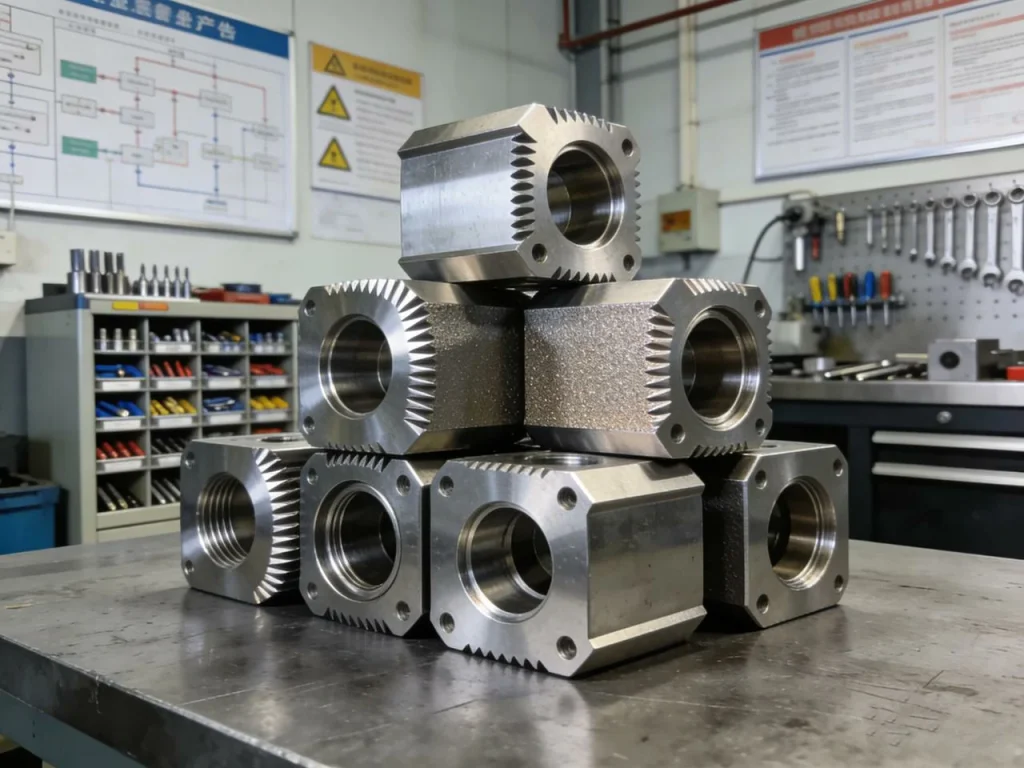
CNC precision machining is used to make complex parts and precision machined components that must match drawings closely, often for aerospace, medical, automotive, electronics, robotics, and industrial equipment. Typical examples include housings, brackets, manifolds, shafts, pins, bushings, fixtures, molds, and tight-tolerance assemblies where parts must interchange without hand fitting.
Specialized Precision Machining Processes
Precision machining isn’t just milling and turning. There are multiple types of precision CNC processes optimized for different geometries, tolerances, and materials. Certain geometries, tolerances, and finishing requirements call for specialized processes that solve very specific problems. These processes are typically used when mainstream CNC machining reaches a practical or economic limit.
High-Speed Machining (HSM)
High-speed machining uses very high spindle speeds and feed rates with small-diameter tooling to minimize heat, improve chip evacuation, and maintain dimensional stability. HSM is commonly used for thin walls, hardened steels, aluminum molds, and detailed surface contours. Benefits include better surface finish (often Ra 0.4–1.6 μm), less tool pressure-induced deflection, and reduced secondary polishing.
Micro Machining
Micro machining deals with features below 1 mm in size, tool diameters as small as 20–50 μm, and tolerances in the low microns. It is used in medical implants, microfluidic components, optics, and semiconductor tooling. Tool runout, chip removal, lubrication, and heat become major constraints at this scale, and specialized micro end mills and spindles are required.
Swiss-Type Turning
Swiss turning uses a sliding headstock that feeds the bar through a guide bushing, allowing ultra-long and slender parts to be machined without deflecting. This technique achieves ±2–5 μm tolerances on small shafts, pins, medical fasteners, and watch components. The process is unmatched for concentricity and repeatability on small turned parts.
Hard Turning
Hard turning replaces grinding for certain hardened steels (45–68 HRC), using CBN inserts and rigid lathes. It offers faster tool changes and lower per-part cost than cylindrical grinding when roughness and form tolerances allow. A general rule: hard turning handles Ra 0.2–0.6 μm surfaces, but grinding is still required for mirror finishes or tight cylindricity.
Elektrische Funkenerosion (EDM)
EDM processes material by spark erosion, not cutting, making it ideal for hardened steels, deep pockets, sharp internal corners, and fine dies. Two main types are used:
- Drahterodieren: Profile cutting with <0.005–0.01 mm precision
- Sinker EDM: 3D cavities using custom electrodes
- EDM drilling: Small cooling or spray holes (Ø 0.1–2 mm)
EDM is slower and more expensive but solves geometries impossible by mechanical cutting.

Dimensional Stability & Geometric Constraints
Dimensional accuracy isn’t only limited by machine precision. Part geometry, material behavior, and thermal characteristics greatly influence how close tolerances can realistically be held.
Common geometric challenges include:
Thin Walls
Thin walls below 1–1.5 mm can deflect during cutting, absorbing tool energy and springing back once load is removed. This results in taper, chatter, or dimensional drift. Strategies include rest machining, HSM, support ribs, or increasing wall thickness slightly for CNC and thinning later via EDM or grinding.
Deep Pockets & Cavities
Deep pockets create tool reach issues, chip evacuation problems, and high aspect ratio tool chatter. As a rule of thumb:
Features deeper than 4–6× tool diameter require modified strategy
If over 10×, EDM may be preferred.
Long Slender Shafts
Slender shafts deflect and require center support or Swiss machining. Surface finish and runout become limiting factors rather than nominal diameter.
Heat & Thermal Expansion
Materials with high CTE such as plastics, aluminum, and titanium shift dimensions during machining and cooling. Stabilization may involve rough machining → stress relief → finish passes.
Residual Stress & Distortion
Heat-treated metals, castings, and rolled plate often move after material is removed. Precision jobs commonly include:
- Stress relief heat treatment
- Cryogenic stabilization
- Semi-finish + pause + finish strategy
Burr Management & Edge Control
Burr control is a major part of precision machining, even though burrs are often considered secondary defects. Medical, optics, and aerospace parts frequently require “no visible burrs” or defined edge breaks such as 0.1–0.3 mm.
Precision buyers specify:
- Burr free
- Sharp edge
- Edge break
- Micro chamfer
- Radius
- Surface blending
Common deburring methods include:
- Hand deburring with tools
- Abrasives Strahlen
- Electrochemical deburring (ECD)
- Thermal deburring (TEM)
- Brush finishing
- Barrel tumbling
- Micro air deburring
Poor burr control impacts assembly, sealing, fatigue life, and even patient safety (medical implants).
CNC precision machining tolerances & surface finish (realistic ranges)
A big reason people search for cnc precision machining is simple: they want to know what numbers are realistic. The honest answer is, “It depends,” but that does not mean you can’t plan. You can—if you understand what changes the outcome.
Typical tolerance bands (verify claims vs reality)
Many production parts can target ±0.01–0.02 mm on critical features when the design is machinable and the process is controlled. Tighter is possible, but it demands more from everything: machine warm-up, tool wear control, inspection time, and even room temperature.
Under controlled conditions, advanced setups can reach down to ±0.0025 mm (0.0001 in) on certain features. The key point is “certain features,” not the entire part. Ultra-tight tolerances should be reserved for truly critical surfaces because even small thermal changes can push you out of spec.
If you’ve ever seen a part measure perfectly in the morning and drift slightly after lunch, you’ve seen why. In real shops, thermal stability can shift dimensions by 0.01–0.05 mm over longer runs, depending on material, cycle time, coolant, and how steady the environment is.
Surface finish targets and what they cost (Ra guidance)
Surface finish is often specified with Ra (average roughness). A smoother finish can help with sealing, friction, wear, or appearance—but it also changes tool choice, feeds and speeds, and sometimes adds secondary steps.
For many parts, milling and turning can hit around Ra ~3.2–1.6 μm with good tools and stable parameters. When you need smoother surfaces, grinding commonly reaches Ra ~3.2–0.8 μm or better, especially on hardened or wear surfaces.
Here’s the trap: people sometimes tighten Ra “just in case,” then wonder why cost jumped. A finer Ra can mean slower passes, special tools, extra polishing, or grinding. If the surface does not touch anything important, you may be paying for looks.
What determines achievable accuracy?
If you want a simple model, imagine four knobs that control your result:
- The cnc machine itself (rigidity, backlash control, spindle health, axis scales, maintenance).
- Tooling (runout, tool wear, tool deflection).
- Fixturing and workholding (does the workpiece move, bend, or distort?).
- Temperature (machine growth, part growth, coolant heat, shop environment).
That’s why “Is CNC machining precise?” has two answers. Yes, CNC can be very precise. But precision is not automatic. It is a managed system.
Visual: Tolerance & surface-finish table by process
| Process (typical use) | Typical tolerance range (common production) | Advanced capability (controlled conditions) | Typische Oberflächengüte (Ra) |
|---|---|---|---|
| CNC precision milling (prismatic parts, pockets, faces) | ±0.01–0.02 mm on critical features | Down to ±0.0025 mm on select features | ~3.2–1.6 μm |
| CNC precision turning parts (shafts, bores, cylinders) | ±0.01–0.02 mm on diameters | Tighter on select diameters with stable setup | ~3.2–1.6 μm |
| Grinding (hardened sizes, tight bores/ODs) | Often tighter than milling/turning on size | Very tight on size/roundness with proper setup | ~3.2–0.8 μm or better |
| EDM / electrical discharge machining (sharp corners, hard metals) | Feature-dependent; stable on complex shapes | Excellent for internal corners/features | Finish varies; often needs secondary finishing |
Note: Actual results depend on geometry, material, inspection method, and how many setups the part needs.
Core processes & machines used for precision parts
A “precision machining process” is rarely just one step. The CNC precision machining process typically combines CAD/CAM programming, careful machine setup, controlled cutting strategies, and metrology to verify that critical dimensions stay within spec. Many high-accuracy machined parts are a chain: rough cut, semi-finish, finish, and sometimes grind, hone, lap, or EDM to lock in the final geometry.
High-precision CNC milling (3-, 4-, 5-axis)
CNC precision milling uses a rotating cutting tool to remove material while the part is held in a fixture. A cnc milling machine can make flat faces, pockets, slots, contours, and multi-face features.
The jump from 3-axis to 5-axis is not just about fancy shapes. It can also be about accuracy. When you can reach more faces in one setup, you reduce re-clamping. Every time you unclamp and re-clamp, you risk tiny shifts that show up as location errors.
So if you have a part with features on multiple sides that must stay aligned—think bolt patterns, sealing surfaces, or mating faces—5-axis machining can protect positional accuracy by reducing setups.
Precision turning & Swiss-type machining
CNC-Drehen is the go-to for round parts. The lathe spins the work, and the tool cuts the outside diameter, inside diameter, faces, grooves, and threads. For long, thin, or very small parts, Swiss-type turning supports the bar close to the cut, which helps control deflection.
If you are buying cnc precision turning parts like pins, shafts, standoffs, and fasteners, you’ll often see better size control because the geometry naturally fits the process. Round parts are “in their element” on a cnc lathe.
Precision-enabling secondary processes: grinding, honing, lapping, EDM
Some features are hard to hit with milling or turning alone, especially in hard metals or when the spec calls for strong roundness, straightness, or surface finish.
Grinding is common for final size and finish on wear surfaces. Honing is often used for bores that need controlled crosshatch and size. Lapping can bring very fine surface finish and flatness for special sealing or optical-like surfaces.
Then there’s EDM. If you need sharp internal corners, deep narrow slots, or features in hardened material without high cutting forces, electrical discharge machining can be the difference between “possible” and “not realistic.”
Visual: Workflow diagram (CAD → CAM → setup → machining → finishing → inspection)
- CAD model / drawing created (geometry, tolerances, notes)
- CAM builds toolpaths and posts G-code (cad → cam)
- Setup: fixture, tools, offsets, probing plan
- Machining: rough → semi-finish → finish (milling, turning, cnc drilling)
- Finishing: deburr, polish, anodize/plate (as needed)
- Inspection: in-process checks, final CMM, report pack
- Pack and ship with traceability (if required)
This is why buyers are often surprised by lead time. Cutting time is only part of the job. Setup and inspection can take just as long for cnc präzisionsgefertigte Teile.
Materials for high-precision CNC machining (metals, plastics, exotics)
Material choice affects more than strength. It affects distortion, tool wear, heat growth, and how easy it is to measure the part. In short, it affects precision and cost at the same time.
Metals: aluminum, stainless, steel, titanium, copper/brass
Aluminum alloys like 6061 and 7075 are popular because they machine cleanly and are widely available. They are common for prototypes, fixtures, brackets, and many aerospace and automotive parts. 7075 is stronger, but can be less forgiving in some thin-wall designs.
Stainless steels such as 316L and 17-4 are used when corrosion resistance matters, like medical, food-area equipment, and marine environments. They can be harder on tools than aluminum, and they can move a bit during machining if the part has uneven wall thickness.
Tool steels and alloy steels are strong, but they can distort during heat treat. Many precision builds rough-machine first, then heat treat, then finish-machine or grind the critical features.
Titanium is known for high strength-to-weight, but it brings heat and tool wear challenges. You can still make very accurate parts from titanium, but you usually need stable workholding and careful cutting conditions.
Copper and brass are common for electrical and thermal parts. Copper can be “gummy,” so tool choice and feeds matter for surface finish.
Plastics: ABS, POM/Delrin, PEEK, PTFE
Plastics can be great for precision prototyping, fixtures, insulators, and medical/lab components. The challenge is that many plastics move more with temperature than metals. They can also flex under clamping pressure, which can make a “perfect” cut look wrong after you unclamp it.
POM (often called acetal) machines nicely and holds shape well for many uses. PEEK is strong and stable for high-performance uses, but it costs more and needs careful chip control. PTFE is soft and can creep, so tight tolerance work needs extra care in workholding and measurement timing.
High-temp and hard-to-machine alloys: Inconel/Hastelloy
Nickel-based alloys handle heat and corrosion, so they show up in turbines, exhaust systems, and harsh chemical environments. They also increase tool wear and cutting forces. That can raise cost and reduce how tight you can hold without extra process steps.
Visual: Material selection matrix (machinability vs stability vs cost vs application)
| Materialgruppe | Machinability (general) | Stabilität der Abmessungen | Relative Kosten | Common precision uses |
|---|---|---|---|---|
| Aluminium-Legierungen | Hoch | Mittel | Niedrig bis mittel | brackets, housings, fixtures |
| Rostfreie Stähle | Mittel | Mittel | Mittel | medical/food/marine parts |
| Alloy/tool steels | Medium–Low | Medium (watch heat treat) | Mittel | wear parts, tooling, shafts |
| Titan | Niedrig | Mittel | Hoch | aerospace and medical parts |
| Engineering plastics | Mittel | Low–Medium (temp sensitive) | Niedrig-Hoch | insulators, fixtures, lab parts |
| Nickellegierungen | Sehr niedrig | Mittel | Sehr hoch | hot-zone, corrosive parts |
Quality control, metrology & documentation (how precision is proven)
Precision is not a slogan. It has to be measured and documented in a way that matches the drawing and verifies that the machining process consistently produces high-quality parts.
Inspection stack: calipers/mics → CMM → optical/laser → in-process probing
Most shops start with hand tools like calipers and micrometers for quick checks. For true high precision location and form control, you often need a CMM (coordinate measuring machine), especially for GD&T callouts like position, profile, flatness, and perpendicularity.
Optical systems and laser methods can help with small or delicate features. In-process probing on the machine can reduce variation by catching drift early, but it does not replace final inspection when compliance is required.
SPC and capability (Cp/Cpk) for repeatable production runs
If you’re making a batch of parts, the goal is not only “hit spec once.” It is to keep hitting it. That’s where SPC (statistical process control) comes in. Cp and Cpk are common capability indices used to show how well a process holds tolerance over time.
You do not need SPC for every prototype. But if a feature is critical and the volume is high, SPC data can reduce risk and lower long-term costs because it helps prevent surprises mid-run.
Certifications & compliance by industry
Different industries expect different quality systems. Many buyers look for:
- ISO 9001 for general quality management systems
- AS9100 for aerospace quality systems
- ISO 13485 for medical devices
- IATF 16949 for automotive quality systems
A certification does not guarantee perfect parts, but it usually means the shop has documented processes for control, training, traceability, and corrective action.
How accurate is CNC precision machining?
In many real production settings, cnc precision machining commonly holds ±0.01–0.02 mm on critical features when the part is designed for machining and the process is controlled. In advanced setups and controlled conditions, select features can reach ±0.0025 mm (0.0001 in). The more you tighten tolerance, the more you must manage thermal drift, tool wear, and inspection.
Visual: Sample “FAI/inspection report” outline + measurement plan table
A first article inspection (FAI) package often includes part identification, revision level, measurement results, tools used, and pass/fail results.
| What to measure | Warum das wichtig ist | Typisches Werkzeug | Timing |
|---|---|---|---|
| Datums and key interfaces | Controls assembly alignment | CMM | First article + periodic |
| Critical diameters/bores | Fits, bearings, seals | Mic + bore gauge/CMM | In-process + final |
| Hole pattern position | Prevents misalignment | CMM | First article + sampling |
| Surface finish on sealing area | Prevents leaks/wear | Surface tester | Final |
| Material/heat lot trace | Compliance | Certificates | With shipment |
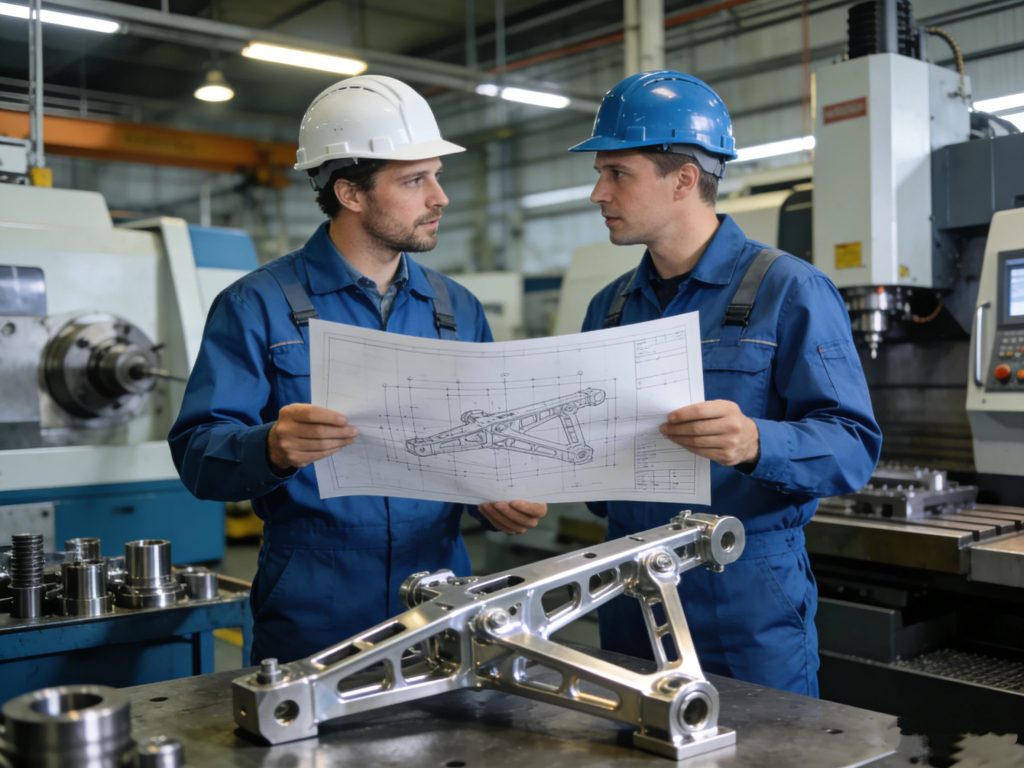
DFM & GD&T for precision-machined parts (avoid costly tolerance traps)
Many tolerance problems start in the drawing, not on the shop floor. A drawing can be “technically correct” and still hard to manufacture or inspect.
Tolerance strategy: tighten only where function demands
One of the most common mistakes is making everything tight because it feels safer. But tighter tolerances increase cost because they increase risk. The shop may need slower finishing passes, special machining equipment, extra setups, more inspection points, and higher scrap allowance.
A practical method is to label features as “critical to function” versus “non-critical.” Tighten the critical ones. Loosen the rest. Your part can still assemble perfectly, and your quote often drops.
Here’s a simple way to sanity-check: if a feature does not touch another part, does not locate another part, and does not seal or carry load, why is it tight?
GD&T + datum strategy for inspectability and alignment
GD&T (geometric dimensioning and tolerancing) helps define how parts should relate in 3D, not just with ± numbers, based on ASME Y14.5 standards for dimensioning and tolerancing (based on ASME). But GD&T can also make inspection harder if datums do not match how the part is held or used.
A good datum scheme mirrors reality: how the part sits in the assembly, how it is located, and how it is inspected. When the datum plan is clear, both machining and measurement become more stable.
Geometry rules that protect precision
Precision likes strong, stable geometry. Thin walls, deep pockets, and long tool reach can cause flex and chatter. Holes that are extremely deep relative to diameter are hard because drill bits can wander and the tool can deflect. Sharp internal corners often need small tools, which can break and leave poor finish.
Adding fillets, giving tool access, avoiding unnecessary thin walls, and planning realistic hole depths can protect both tolerance and lead time.
What tolerances are possible with CNC machining?
Many CNC jobs can hold ±0.05 mm without drama. CNC precision machining commonly targets ±0.01–0.02 mm on selected features. Tighter tolerances can be possible on some features, but they increase cost and risk, and they often require better temperature control, more inspection, and sometimes secondary processes like grinding or lapping.
Visual: DFM checklist + “tolerance vs cost” curve (practical version)
A quick DFM check you can run before sending an RFQ:
- Mark the features that control fit, sealing, or alignment. Tighten only those.
- Check thin walls and deep pockets for flex risk.
- Confirm tool access to every critical surface.
- Make hole depths realistic for drilling/boring.
- Ensure your datum scheme matches assembly and inspection.
- Specify surface finish only where it affects function.
A simple “tolerance vs cost” reality check is shown below:
| Tolerance band on a critical feature | Typical cost/lead-time impact |
|---|---|
| ±0,05 mm | Niedrig |
| ±0.02 mm | Mittel |
| ±0,01 mm | Mittel-Hoch |
| ±0.005 mm and tighter | High (often needs added controls or processes) |
Cost, lead time & risk: what drives precision machining price
If you’re asking, How much does it cost to get a part CNC machined? the honest answer is: it depends on the choices that drive time, risk, and scrap. The good news is that those choices are usually visible, and you can control many of them.
Main cost drivers (ranked)
For most cnc precision machining services, these factors tend to dominate:
- Tolerance requirements (and how many features are tight)
- Inspection level and reporting (CMM time, FAI packs, sampling plans)
- Number of setups (each re-clamp adds time and risk)
- Material (price, machinability, tool wear)
- Surface finish and special processes (grind, polish, coat)
- Quantity (setup cost spread across parts)
A common buyer surprise is how much “non-cutting time” matters. A part might take 20 minutes to cut but two hours to set up and inspect correctly.
Prototype vs production economics (10–10,000 part sweet spot)
For many shops, CNC is a strong fit from prototypes through mid-volume production. At very high volumes, other methods (casting, molding, forging) can make sense, with finish machining added for critical features.
If you plan to scale, it helps to talk early about how the process will change. A prototype fixture may not be the best production fixture. A toolpath that is fine for five parts may wear tools too fast for 5,000 parts.
Risk factors and mitigations
Precision work has predictable risks: thermal drift, tool wear, chatter, and workholding movement. Good process planning reduces these risks with warm-up routines, stable coolants, rigid fixtures, tool life tracking, in-process probing, and smart sampling plans.
“Tolerance slider → estimated cost/lead-time impact” mini-tool (quick self-check)
Pick the tightest tolerance on your drawing and ask:
- If I loosen it by one step (for example from ±0.01 to ±0.02 mm), does the part still function?
- If yes, you may reduce inspection time, scrap risk, and sometimes setups.
- If no, keep it tight—but isolate that tight spec to only the needed features.
This one question often saves days of back-and-forth.
Industries & real-world applications (with requirements and examples)
Precision needs look different depending on where the part will live. A lab instrument has different failure modes than a race car or aircraft. When you match process control to the real risk, you get better parts without paying for the wrong extras.
Aerospace: traceability, documentation, tight positional tolerances
Aerospace buyers often care about traceability, controlled processes, and detailed inspection records. Positional tolerances, profile tolerances, and multi-face alignment are common. Weight-sensitive parts also drive thin walls and complex geometry, which increases the need for stable machining centers and careful fixturing.
Typical parts include brackets, housings, manifolds, impellers, and structural interfaces where accuracy protects system performance.
Medical & dental: biocompatibility, repeatability, cleanliness
Medical work often combines tight tolerance needs with strict documentation. Material control matters, and so does surface condition. Some parts must be cleanable, corrosion-resistant, and consistent across batches. Small features are common, and the process must be repeatable.
Typical parts include implants, bone plates, surgical instrument components, and dental interfaces. In these builds, the importance of cnc precision is not just fit—it’s patient safety and regulatory compliance.
Automotive, motorsports, electronics, robotics: fast iteration and alignment
Automotive and motorsports often push speed and iteration. Electronics and robotics often push alignment: frames, mounts, heat sinks, and sensor housings must line up, or the system drifts.
In these spaces, CNC can move quickly from prototype to small production, which is why precision machining services remain popular for new product development.

What industries use CNC precision machining most?
Aerospace, medical devices, automotive, electronics, robotics, industrial automation, and tooling/mold-making are among the most common industries using cnc precision machining because they need reliable fit, repeatability, and measurable proof of quality.
Visual: Industry-to-requirement table (expectations)
| Industrie | Common tolerance focus | Surface finish focus | Typical quality expectations |
|---|---|---|---|
| Luft- und Raumfahrt | position/profile, multi-face alignment | sealing/aero surfaces as needed | traceability + strong documentation |
| Medizinische | critical fits, small features | cleanable surfaces | regulated documentation + repeatability |
| Automobilindustrie | repeatability at volume | functional finishes | production controls + capability focus |
| Electronics/robotics | alignment, flatness, hole patterns | cosmetic sometimes | fast iteration + consistent geometry |
Choosing a CNC precision machining supplier (buyer enablement)
If you’re buying cnc precision machined parts, the supplier choice often matters more than the process choice. Two shops can both own CNC equipment, but only one may have the habits and measurement systems needed for tight-tolerance work.
Supplier evaluation scorecard (what to look for)
Start with capability, but do not stop there. Ask yourself: can they prove precision, not just cut metal?
A strong supplier usually shows clear answers on:
- Technical capability (3/4/5-axis milling, turning, EDM, grinding as needed)
- Metrology (CMM access, calibrated tools, surface finish measurement)
- Quality system (document control, calibration, nonconformance handling)
- Material control (traceability, cert handling, controlled storage for some materials)
- Communication (DFM feedback, quick questions, clear inspection plans)
- Capacity and scheduling (can they hold lead times when a job gets tricky?)
RFQ checklist: what to send for accurate quotes and fewer revisions
To get clean quotes and fewer delays, provide:
- 3D CAD file and 2D drawing (with revision clearly marked)
- GD&T and datum scheme (or at least clear functional notes)
- Material spec (grade, condition, heat treat if needed)
- Surface finish and any special finishing
- Quantity and target delivery date
- Inspection/reporting needs (FAI, CMM report, sampling plan, cert pack)
- Notes on function (what features are critical to fit, seal, or safety)
When buyers skip the “what’s critical” note, shops often have to guess. Guessing increases cost because the safe guess is “inspect everything more.”
Onshore vs offshore: cost vs risk vs logistics
Lower unit price can be real, but so are the costs of delay, rework, and communication loops. If the part is simple and inspection is easy, offshore sourcing can work well. If the part has tight GD&T, complex geometry, or heavy documentation needs, the risk cost may outweigh the unit savings.
It helps to decide what you’re optimizing for: unit price, speed, documentation, or iteration.
How do I choose a CNC precision machining company?
Choose a company that can show repeatable results on parts like yours, measure the features you care about with the right tools (often CMM for GD&T), explain how they manage tool wear and thermal drift, and provide the inspection reports and material traceability your industry requires. The best sign is not a bold promise—it’s a clear plan.
Conclusion: your next practical step
If you take only one idea from this guide, let it be this: precision is a system. CNC precision machining works best when design, process planning, and measurement all point at the same goal. Before you tighten tolerances across a full drawing, decide which surfaces truly control fit, sealing, alignment, or safety. Then match the process—milling, turning, grinding, or EDM—and match the inspection plan to prove it.
If you’re about to request quotes, send a clean CAD package, call out critical features, and ask how the supplier will measure them. That one step often saves the most time, money, and frustration.
FAQs
A CNC precision machine is a computer-controlled manufacturing machine designed to produce CNC precision machined parts with tight tolerances and consistent repeatability. Instead of manual cutting, the machine follows digital toolpaths to shape metals and plastics with extremely high dimensional accuracy. These machines are widely used for aerospace components, medical devices, automotive parts, and CNC precision turning parts, where any deviation can cause assembly issues or performance failures. High-end machines also integrate thermal compensation, feedback sensors, and rigid spindles to maintain accuracy during long production runs.
Yes — CNC machining is considered one of the most precise subtractive manufacturing processes available, especially when using modern CNC precision machining services. Many production shops can hold tolerances around ±0.01 mm (±0.0004 in), and tighter when required. Precision depends on machine rigidity, CAM programming, tool condition, coolant, and inspection methods. When all of these are optimized, CNC machining can consistently produce precision parts suitable for demanding applications like robotics, optics, and semiconductor equipment.
Precision CNC refers to CNC machining focused specifically on tight tolerances, fine surface finishes, and high repeatability. It’s especially valuable for industries that require low-friction fits, sealing surfaces, and accurate assemblies. You’ll see this term applied to CNC precision milling and CNC precision turning, where better machines, finer tooling, and stronger inspection processes are used. Many factories market their premium offerings as precision CNC machining services to differentiate from basic prototyping shops or loose-tolerance job shops.
Precision varies by machine class. Standard production CNC machines can hold tolerances around ±0.01–0.02 mm, while advanced precision machines can hit ±0.001–0.005 mm. Ultra-precision machines used for optics or wafers can reach nanometer-level resolution. The actual outcome for CNC precision machined parts depends not only on the machine but also thermal stability, spindle accuracy, vibration control, tool wear, and metrology equipment. In real manufacturing, “precision” includes both positioning accuracy and repeatability.
Precision machined components are finished parts made with CNC equipment to achieve strict dimensional tolerances, consistent geometry, and controlled surface roughness. They may include cnc precision turning parts, shafts, housings, bushings, valve bodies, medical implants, and structural aerospace parts. These components typically require inspection such as CMM verification, surface roughness checks, and material certification to ensure they meet functional requirements. They are widely used in industries where reliability matters, and are often produced through professional CNC precision machining services.
Prices depend heavily on part complexity, material, tolerances, volume, machining time, and post-processing. Simple aluminum prototype parts may only cost $20–$50, while complex aerospace or medical parts can run into hundreds or thousands. Batch size plays a major role: the more units produced, the lower the price per part due to amortized setup time. Shops providing specialized CNC precision machining services may also charge more for tighter tolerances, documentation packages, tooling, inspection, and fixturing. For CNC precision machined parts, the main cost drivers are time, risk, and required quality level.
Precision milling is a CNC milling process focused on achieving high accuracy, fine finishes, and precise material removal. It’s commonly used for molds, brackets, housing components, and detailed 3D surfaces. In the context of CNC precision milling, machinists carefully choose cutters, speeds, feeds, toolpaths, and fixtures to reduce vibration and thermal distortion. Precision milling can produce engineering-grade parts that fit seamlessly with CNC precision turning parts in assemblies. Many manufacturers offer precision milling as part of broader CNC precision machining services.
Referenzen
https://www.iso.org/iso-9001-quality-management.html
https://www.iso.org/iso-13485-medical-devices.html
https://www.asme.org/codes-standards/find-codes-standards/y14-5-dimensioning-tolerancing

 German
  English
  French
  Italian
  Spanish
  Polish
  Czech
Czech  Japanese