
Brass has long been often used in mechanical applications because its unique mix of properties makes CNC machining brass both efficient and reliable. As an alloy made primarily of copper and zinc, brass combines excellent machinability, resistance to corrosion, and a low friction coefficient, making it easy to machine while still delivering smooth, stable performance. From yellow brass gears and screw machine parts to components used in plumbing, the marine industry, musical instruments, and even ammunition or radiator cores, brass supports a wide range of applications. These properties make it ideal for parts that require consistent dimensions, clean threads, and predictable machining time. This article explains how CNC brass machining works in practice, what to expect in terms of process, cost, quality control, and how to choose materials and suppliers to ensure the best results for precision parts.
Brass Machining Services: What to Expect (Fast)
Brass CNC machining services leverage the excellent properties of machinable brass, offering a combination of corrosion resistance, low friction, and high-strength performance. These characteristics make it suitable for a wide range of applications, from precise screw machine parts to components in automotive, electronics, and mechanical systems. In some cases, brass can even complement aluminum parts, providing both durability and ease of assembly. By understanding these material advantages, engineers can better match part design to the right machining approach and production workflow.
What are Brass Machining Services, and who needs them?
“Brass machining services” usually means a supplier will cut brass bar, plate, or near-net shapes into finished parts using CNC equipment (computer-controlled machine tools). The parts are often small to medium in size, high in detail, and used where conductivity, corrosion resistance, or low friction matters.
Engineers and technical buyers tend to search for brass machining services when they need one of these outcomes:
- A repeatable, drawing-controlled part (not a hand-finished component).
- A brass alloy choice that matches a real environment (humidity, salt, oils, electrical contact, heat).
- A part that must assemble cleanly: threads, sealing faces, press fits, or contact surfaces.
- Production stability: consistent burr control, stable dimensions, and traceable material lots.
Typical buyers include design engineers selecting a copper alloy, manufacturing engineers validating process capability, and purchasers who need to qualify a new CNC source for custom brass turned parts or CNC brass milling work.
Typical brass CNC capabilities: turning, milling, multi-axis, automation-ready workflows
Most brass CNC machining service providers combine these core operations:
- Turning for rotational parts: pins, inserts, bushings, valve components, nozzle bodies, threaded fittings.
- Milling for prismatic geometry: blocks, brackets, electrical terminals, pockets, slot features.
- Multi-axis machining for angled holes, compound faces, and reducing setups.
- Automation-ready workflows for stable production: bar feeders, part catchers, probing, and (in some shops) robotic handling.
Below is a simple end-to-end view of how work typically flows when you request precision brass components.
A typical end-to-end workflow for CNC brass machining begins with the RFQ package, which includes the CAD model, detailed drawings, and any specific requirements. The supplier then conducts a DFM review to evaluate part features, alloy selection, surface finish expectations, and the inspection plan. Once the design is confirmed, CAM programming and overall process planning are completed. This is followed by fixturing design, tool selection, and first-article setup to validate the machining approach. Production then moves into CNC machining, which may involve Drehen, milling, or multi-axis operations, and in some cases bar-fed automation. After machining, parts go through deburring and cleaning, a step that often determines whether parts ultimately pass or fail in real-world applications. Inspection is performed both in-process and at final stage using gauges or CMM as required. Finally, parts are packaged and shipped, with traceability documents included when needed.
If your part has many cross-holes, thin walls, or tight positional relationships between features, the “number of setups” becomes a hidden feasibility driver. Multi-axis and/or well-designed fixturing can reduce setups, but it also raises planning effort and inspection needs.
Where brass is most used today: automotive, electronics, infrastructure (chart: demand drivers + 2025 growth signals)
Market reporting on brass CNC machining services points to three demand centers: automotive, electronics, and infrastructure. The common thread is functional performance at scale: corrosion resistance in fluids, reliable electrical contact, and durable fittings.
Chart (demand drivers + 2025 growth signals; based on industry/market reporting):
| Sektor | Common brass machined parts | Why brass shows up | 2025 growth signal (reported) |
|---|---|---|---|
| Automobilindustrie | sensor bodies, valve components, inserts, bushings, connectors | corrosion resistance, machinability, stable part quality | global vehicle production reported up ~5% YoY |
| Elektronik | connectors, terminals, switch components | conductivity, machinability, contact geometry | global electronics production reported up ~7% |
| Infrastructure | fittings, plumbing/electrical hardware, housings | corrosion resistance, fitting compatibility, durability | emerging-economy infrastructure spend reported ~8% yearly (single-source) |
These are direction signals, not a guarantee of your specific part’s demand. For feasibility, what matters more is whether your part’s geometry, alloy, finish, and inspection plan match what CNC brass machining is good at.
Quick feasibility checklist before you request a quote (downloadable checklist)
A brass machining quote goes faster when you remove open questions that force the supplier to guess. Instead of a long “how-to,” use the checklist below as a gating tool: if you cannot answer several items, your RFQ is likely to come back with clarifying questions or conservative assumptions.
Feasibility checklist (copy/paste into your RFQ notes):
| Item to confirm | Was zu bieten ist | Why it changes feasibility/cost |
|---|---|---|
| Alloy callout | Brass alloy/standard, temper if relevant | Alloy drives tool choice, burr behavior, corrosion performance, and compliance risk |
| Drawing-controlled dimensions | Critical dimensions and GD&T | Without this, the supplier cannot plan inspection or setup strategy |
| Thread and sealing details | Thread spec, class/fit, sealing face requirements | Threads in brass are easy to cut, but easy to damage; sealing faces change deburr/finish steps |
| Surface finish intent | Functional vs cosmetic surfaces | Cosmetic brass needs different handling than hidden functional brass parts |
| Quantity and release pattern | Prototype vs repeat, annual volume | Determines bar-fed vs fixture milling, automation value, and inspection sampling logic |
| Post-machining needs | Cleaning, coating, marking, assembly | Tarnish control and handling can dominate scrap risk |
| Compliance needs | Environmental restrictions, documentation required | Brass alloy selection can be constrained by electronics/environment rules |
If you want this as a “downloadable checklist,” the structure above is already in a format many teams drop into a sourcing template or ERP attachment.
Market Outlook & Demand Drivers (2025–2035)
As brass CNC machining gains traction across multiple sectors, understanding the overall market context helps buyers anticipate supply dynamics. Rising demand—from automotive, electronics, and infrastructure programs—drives both material selection and process planning. Machinable brass, with its combination of corrosion resistance, high-strength performance, and compatibility with precise features, is often the material of choice, making it suitable for applications where repeatable quality and timely delivery are critical.
Brass CNC Machining Service Market forecast: $2,127.8M (2025) → $3,800M (2035), 6.0% CAGR
One market report estimates the brass CNC machining service market at USD 2,127.8 million in 2025, growing to USD 3,800 million by 2035, which corresponds to a 6.0% CAGR over 2025–2035. Treat this as market context, not a predictor for any single supplier’s capacity or pricing.
According to industry and market reports, the brass CNC machining service market is projected to grow from USD 2,127.8 million in 2025 to USD 3,800 million by 2035, representing a reported compound annual growth rate (CAGR) of 6.0%.
Why this matters to a buyer: rising demand tends to reward suppliers that can hold quality while scaling (automation, inspection discipline, stable sourcing of brass alloy). It can also tighten lead times for common bar sizes and popular free-cutting grades when many programs ramp at once.
Automotive demand tailwind: brass properties + 5% YoY global vehicle production growth in 2025
Automotive is often cited as a major driver for brass CNC machining services because brass is widely used in components exposed to fluids, road salts, and under-hood environments. Brass also machines predictably, which matters in high-volume programs where stable tool wear and consistent chip control reduce variation.
Industry reporting ties brass machining demand to a reported ~5% year-over-year growth in global vehicle production in 2025. Even if your part is not automotive, this can affect capacity and bar stock availability, because machine shops and mills prioritize large, repeat orders.
From a design standpoint, automotive brass parts often succeed when the drawing is realistic about deburring, sealing faces, and thread durability during assembly. A common failure mode is treating a thin brass thread as if it will tolerate the same assembly abuse as steel.
Electronics growth tailwind: 7% increase in global electronics production in 2025 driving connectors/switches
Electronics demand for brass machining is closely tied to connectors, switch components, terminals, and other current-carrying parts where geometry controls contact performance. Brass is not the highest-conductivity metal, but it offers a usable balance: conductivity, corrosion resistance, and machinability.
Industry reporting indicates a 7% increase in global electronics production in 2025, which tends to lift demand for precision brass components used in connectors and switches.
For feasibility, electronics parts often fail not because they cannot be machined, but because compliance constraints (material restrictions, plating expectations, documentation) were not defined early. In practice, alloy choice and post-processing (cleaning, plating/coating, packaging to prevent tarnish) can matter as much as the machining cycle.
Infrastructure tailwind: emerging-economy spend ~8% yearly boosting fittings/electrical uses
Infrastructure programs tend to pull brass into fittings, valves, electrical hardware, and plumbing-related parts where corrosion resistance and long service life are expected. One market source reports infrastructure spending growth of ~8% yearly in emerging economies (single-source; not fully verified).
Even if that figure is directionally correct, the buyer takeaway is simple: infrastructure demand often means large quantities of relatively standardized parts. That tends to reward stable processes, consistent material, and good control of burrs and threads. It can also raise competition for shop capacity in regions that are already cost-competitive.

Brass Alloys & Material Selection for Machining
Choosing the right brass alloy bridges design intent and manufacturing reality. While machinable brass offers predictable cutting and burr control, different families vary in strength, corrosion resistance, and conductivity—making some alloys better suited for electrical connectors, automotive components, or fittings(ASTM). Understanding these trade-offs early helps ensure the material aligns with the part’s function and environment, reducing rework and improving process stability.
Common brass alloy decision points (table template): machinability, corrosion resistance, conductivity, strength
Material selection is where brass machining services can either become straightforward or become a rework loop. “Brass” covers many copper–zinc alloys, plus optional elements (for example, lead) that change machinability and compliance risk.
Use the template below as a decision table. Fill it using the alloy family you are considering and the constraints of your application.
| Decision point | Was ist zu bewerten? | Why it matters in CNC machined brass |
|---|---|---|
| Bearbeitbarkeit | chip breakage, tool wear stability, tendency to burr | Drives cycle stability, edge quality, and deburr effort |
| Korrosionsbeständigkeit | exposure to water, salts, oils, mild chemicals | Some brasses tarnish faster; some resist corrosion better in certain environments |
| Leitfähigkeit | electrical current path, contact heating, signal integrity | Connectors and switch parts often prioritize stable contact behavior |
| Strength / stiffness | load, press-fit needs, thread pull-out risk | Brass is not steel; thin walls and threads can be the limiting feature |
| Lead content / restrictions | electronics/environment rules | “Free-cutting” alloys may be restricted depending on market and use |
| Availability | bar sizes, forms, supply stability | A great alloy on paper can fail procurement if lead times are unstable |
This is also where the search query “what is the best brass grade for machining?” needs a careful answer: the grade that machines best may not be allowed in your product, and the grade that meets the environment may raise cycle time or deburring.
How do I choose the right brass alloy for my part?
A practical way to choose a brass alloy is to start from constraints, not from a machinability ranking. The decision tree below is written in “buyer language,” but it maps to the same decisions a manufacturing engineer makes.
When selecting a brass alloy for CNC machining, start by identifying the part’s primary function. If the part is an electrical contact or connector, prioritize alloys that provide good conductivity and a stable contact surface. Next, check for any restrictions on lead content or electronics compliance. If restrictions exist, choose a compliant brass family and confirm the plating and finish plan. If there are no restrictions, consider highly machinable, free-cutting brass options (such as the C360 family) and verify environmental suitability and tarnish control.
If the part is not an electrical contact, determine whether it will be exposed to water, salt, or prolonged outdoor service. For such cases, prioritize corrosion resistance and assess the risk of dezincification in the intended environment.
For parts not exposed to harsh conditions, examine the geometry. If the design is dominated by turning with many threaded features, focus on machinability and burr control, as free-machining brass may reduce risk. For milled parts, factors such as strength, stiffness, and finish handling may be more critical in guiding alloy selection.
Two common misunderstandings show up here:
- “Best machinability = best choice.” In reality, compliance or corrosion behavior may veto the most machinable grade.
- “All brass behaves the same in finishing.” Tarnish rate, cosmetic consistency, and plating adhesion can vary with alloy family and cleaning method.
Application-driven selection: connectors/switches vs. automotive components vs. fittings (use-case mapping table)
If you are deciding between brass alloy families, map your part to the dominant requirement. The table below is not a substitute for a standard or datasheet, but it helps prevent mismatches.
| Anwendungsfall | Dominant requirement | Typical brass-related risk if chosen poorly | What to confirm early |
|---|---|---|---|
| Connectors / switches | conductivity + contact integrity + compliance | restricted alloy content, inconsistent contact surfaces, tarnish affecting assembly | restriction set, finish/plating plan, packaging/handling |
| Automotive components | corrosion resistance + machinability + dimensional stability | thread damage, sealing face defects, stress/heat environment not considered | assembly torque/handling, sealing surfaces, environment exposure |
| Fittings (plumbing/electrical) | corrosion resistance + thread quality + leak performance | burrs on threads, dezincification/corrosion in service, cosmetic variability | thread spec, leak test/inspection expectations, environment |
This mapping also answers “what are the benefits of brass CNC parts?” in a grounded way: brass is often selected because the properties line up with connector function (conductivity), fitting function (corrosion resistance), and manufacturability (machinability). The benefit is not abstract. It shows up as fewer process surprises when the alloy matches the real use.
Compliance and environmental constraints to confirm early (e.g., electronics restrictions)
Compliance constraints can remove entire alloy families from consideration, especially for electronics sold into regulated markets. Even when the regulation does not name brass directly, it may restrict substances that are part of some free-machining brasses.
Two practical rules help avoid redesign:
- Treat “material = brass” as incomplete. Compliance reviewers and inspectors often need a defined alloy and standard reference, not just “brass.”
- Separate “machinability wants” from “market allows.” A supplier may prefer a free-cutting grade for cycle stability. Your product requirements may require a different choice.
Environmental constraints also include the service environment. Tarnish is a normal behavior for copper alloys in air and humidity. If your part’s appearance matters, define what “acceptable” means and how long it must last in packaging and in service.
Brass CNC Machining Process (How Parts Are Made)
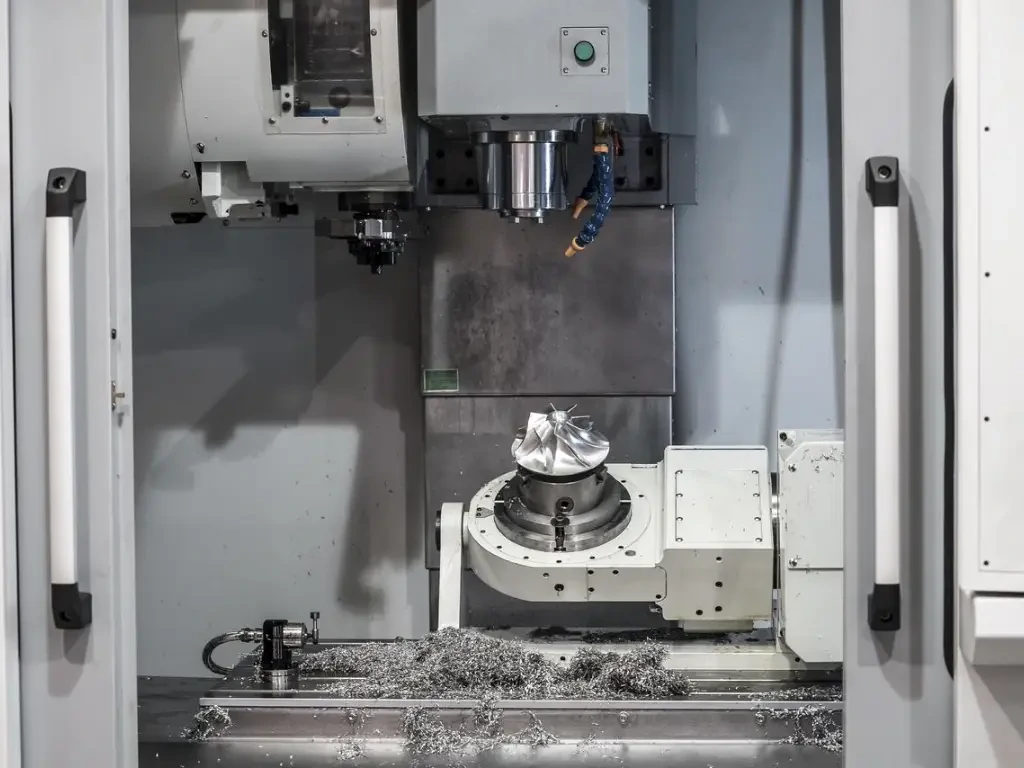
Understanding brass CNC machining processes helps link material choice to finished part quality. While machinable brass can be cut with turning, fräsen, or Swiss-style operations, the right approach depends on geometry, feature density, and tolerances. Early decisions on setups, fixturing, and burr management often determine whether the part achieves its design intent efficiently, making process selection just as important as alloy choice.
CNC turning vs. milling vs. Swiss-style machining for brass parts (comparison table + part examples)
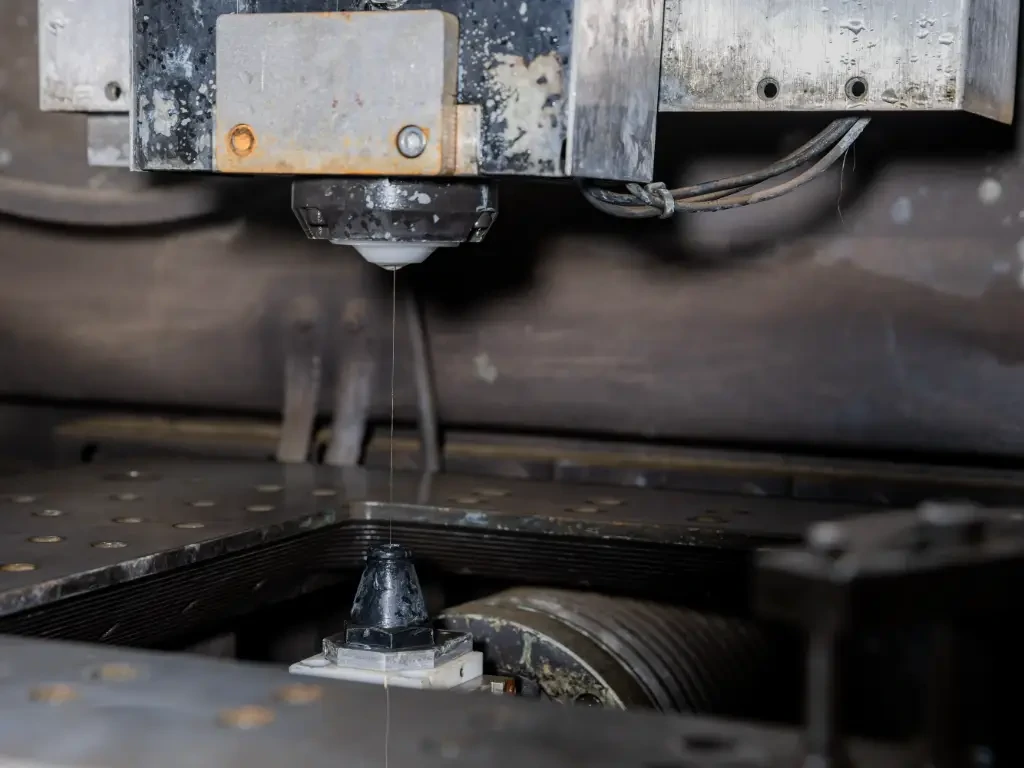
Choosing the right process approach often matters more than the machine brand or shop size. Brass is highly machinable, so many parts are technically possible in multiple ways, and for some intricate cavities, CNC-EDM can provide precision that traditional milling may struggle to achieve. The trade-off is efficiency, burr control, and dimensional stack-up across setups.
| Prozess | Best-fit geometry | Common brass part examples | Typical feasibility concern |
|---|---|---|---|
| CNC-Drehen | rotational, threaded, grooved | custom brass turned parts, bushings, valve components, threaded inserts | burr control on threads, handling damage after cutoff |
| CNC-Fräsen | prismatic, pockets, faces, slots | terminals, blocks, brackets, housings | multiple setups, edge burrs on thin features |
| Swiss-style machining | small, long/slender, many features near each other | pins, small connectors, miniature valve stems | managing tiny burrs, inspection strategy for small features |
Brass often “cuts clean,” which is one reason people ask, “is brass easier to machine than steel?” In most machining contexts, yes: brass tends to require lower cutting forces and can be less prone to built-up edge than many steels. The caution is that “easier to cut” does not mean “easier to keep perfect.” Brass can still burr, and fine threads or cosmetic faces can still be damaged during handling.
Workflow from CAD to inspection: programming, fixturing, machining, deburring, QC
Below is a process view focused on the decisions that affect feasibility. It avoids internal shop specifics, but it shows where brass parts most often fail: at the interface between machining, deburring, and inspection.
The process from CAD to final inspection begins with the CAD model and drawing, where the alloy, datums, and critical features are defined. Next comes the programming plan, which determines whether turning, milling, or Swiss-style machining is used, along with the required setups and tool access.
The fixturing strategy follows, establishing clamp points, assessing distortion risk, and defining datum repeats. During machining, attention is given to chip evacuation, thin-wall stability, and thread quality. For extremely fine or intricate cuts where traditional tools may falter, wire EDM machining can be used to maintain tight tolerances and clean edges.
After machining, deburring and edge conditioning are performed, taking care to avoid rounding functional edges or leaving burrs that could interfere with assembly. A quality control (QC) plan is then applied to decide which features are measured in-process versus during final inspection, including the appropriate gauge strategy.
The workflow concludes with final inspection and the preparation of documentation, ensuring all parts meet the defined specifications and traceability requirements.
For precision brass components, deburring is often the most underestimated step. Brass burrs can be small but still cause problems: poor electrical contact, thread galling during assembly, leaks at sealing faces, or cosmetic rejection if the part is customer-facing.
Automation in the machining cell: robotics, IoT monitoring, error reduction (chart: where automation impacts cycle time/quality)
Industry reporting describes increased use of robotics, monitoring, and connected machining cells to reduce handling errors and stabilize output. One source reports efficiency gains up to 30% from robotic automation in brass machining operations (single-source; not fully verified). Treat the number as a directional claim, not a baseline.
The more useful point for feasibility is where automation tends to help:
Chart (where automation impacts cycle time/quality):
| Bereich | What changes with automation/monitoring | What it can reduce |
|---|---|---|
| Handhabung der Teile | consistent loading/unloading, less manual touch | dings on cosmetic faces, mixed parts, handling damage |
| Tool life control | monitored wear offsets, consistent change timing | drift in dimensions, sudden burr increase from dull tools |
| In-process checks | probing/measurement triggers | runaway scrap when a setup shifts |
| Terminplanung | better utilization, less stop/start | variation that shows up as inconsistent finishes |
Automation does not fix a weak drawing or an unclear inspection plan. It tends to amplify what you already designed: good parts scale better; ambiguous parts scale into larger lots of ambiguous results.
What tolerances can brass CNC machining hold? (specs-to-process alignment table)
Tolerances are not a single number. They are a relationship between feature type, datum strategy, machine approach, and inspection method. Without internal capability data from a specific supplier and part family, it is not responsible to promise a tolerance value.
A better buyer question is: “Does my tolerance scheme align with how brass parts are actually made and inspected?” Use the alignment table below to catch common mismatches early.
| Spec type on drawing | What it implies for the process | Common mismatch to avoid |
|---|---|---|
| Tight location between turned and milled features | likely multiple setups or multi-axis | assuming perfect alignment without defining datums and inspection method |
| Fine threads + sealing face | controlled tooling, careful deburr, handling discipline | calling for sharp edges next to sealing surfaces without edge-break guidance |
| Flatness/parallelism on thin faces | stable fixturing, controlled cutting forces | thin walls that distort when clamped, then “spring back” out of spec |
| Cosmetic surface + no scratch allowance | packaging and handling plan, controlled finishing | treating packaging as an afterthought; cosmetic rejects rise fast |
If you need to use a general tolerance standard (for example, general tolerances for non-critical dimensions), state it on the drawing. If you need tighter control, define the datums and inspection plan up front so the supplier can match process steps to what you will measure.
Quality, Inspection & Standards (What Buyers Should Verify)
Once the machining process is defined, the next critical focus is quality and inspection. Even highly machinable brass can show variation in burrs, threads, or surface finish if setups, tooling, or handling are inconsistent. Establishing checkpoints—from first-article review to in-process monitoring and final inspection—ensures parts meet design intent, functional requirements, and industry standards, while preventing surprises during assembly or in the field.
Quality system checkpoints: first article, in-process inspection, final inspection (QC checklist)
A quality system is not just a certificate on a wall. For brass CNC machining services, the practical checkpoints below are the ones that prevent repeat failures: mixed revision parts, drifting thread quality, and burr-related assembly issues.
QC checklist (what to verify exists and is used):
| Kontrollpunkt | Wie “gut” aussieht | Why it matters for brass parts |
|---|---|---|
| First article inspection | measured against the latest drawing revision; results recorded | catches setup assumptions before volume machining |
| In-process inspection | defined frequency tied to critical features | detects tool wear that shows up as burrs, threads out of spec, or drifting diameters |
| Final inspection | verifies critical features and appearance requirements | prevents cosmetic and functional escapes, especially for connectors and fittings |
This is also where technical buyers should align on what “inspection” means. A supplier can check a diameter with a micrometer, or they can build a structured plan tied to datums and traceability. Both are “inspection,” but they do not manage risk the same way.
Standards and documentation buyers may request (section scaffold + doc list)
Documentation needs vary widely by industry. Electronics buyers may care most about compliance declarations and plating controls. Automotive buyers may care about traceability, change control, and consistent inspection records. Infrastructure buyers may care about material proof and lot consistency.
Below is a neutral scaffold of documents that are commonly requested. Request only what you will actually review and use.
| Document type | What it supports | When it is commonly requested |
|---|---|---|
| Material certification | confirms alloy/heat/lot information | regulated industries; high-risk environments |
| Inspection report | records measured results vs drawing | first article, PPAP-like workflows, or high-risk parts |
| Calibration records (summary) | confidence in measurement system | when tight tolerances or compliance audits apply |
| Process change notification | controls risk of unannounced process shifts | repeat production and multi-year programs |
| Compliance declarations | supports restricted substance requirements | electronics and global markets |
Even if you do not need formal certification, ask how the supplier controls revision changes and mixed lots. For brass, mixed alloy lots can create confusing outcomes: different burr behavior, different tarnish rates, and different plating response.
Surface finish, burr control, and cosmetic requirements for functional vs. aesthetic brass parts (finish comparison table)
Surface requirements should be treated as functional inputs, not as afterthoughts. Many brass parts work fine with an as-machined surface. Others need controlled appearance or controlled contact behavior.
| Requirement focus | What to specify | What can go wrong if vague |
|---|---|---|
| Functional-only (hidden part) | edge break expectation, burr limits on threads/bores | assembly interference, thread damage, leaks |
| Electrical contact surfaces | contact face definition, cleaning/handling rules | unstable contact, contamination affecting performance |
| Cosmetic / customer-facing | acceptable scratch level, directional finish expectations | high reject rates due to handling marks or tarnish |
| Post-finish (coating/plating) | which surfaces, masking, acceptance criteria | poor adhesion, uneven color, missed masked areas |
This section also ties to “how to prevent tarnish on brass parts?” Tarnish is a surface reaction; you manage it by specifying the acceptable appearance window, controlling cleaning residues, and using appropriate surface protection (often coatings or plating in electronics). Packaging and handling are part of the engineering requirement when cosmetics matter.
Traceability expectations by industry (automotive/electronics/infrastructure)
Traceability is not one thing. It ranges from “we can tell you what bar stock lot was used” to “we can trace every part to a time window, machine, operator, and inspection record.”
- Automotive programs often expect stronger traceability because field failures are costly and recalls are real risks. For brass parts, traceability helps when corrosion behavior or thread failures appear after a process change.
- Electronics often focuses on traceability tied to compliance and finishing (for example, plating lots), because surface condition can change electrical contact performance.
- Infrastructure varies by application. Some fittings and hardware are commodity-like; others are safety-related and require clearer documentation.
If you need traceability, write it into the purchase requirement in a way that is auditable: what must be traceable (material lot, inspection record, finishing lot), and how long records must be kept.
Cost, Lead Times & Sourcing Trade-Offs
While understanding how cost drivers and production scale affect individual parts is crucial, sourcing decisions add another layer of complexity. Beyond the per-part economics, where a part is made—regionally or globally—can influence not just price, but lead times, supply chain reliability, and your ability to manage revisions. Evaluating these factors together helps bridge the technical cost considerations with strategic procurement choices.

What drives the price of brass machined parts? (cost driver table: material, complexity, volume, finishing, inspection)
Brass machining cost is usually driven less by “brass is expensive” and more by what the part forces the process to do: multiple setups, high deburr effort, inspection intensity, and scrap risk from cosmetic requirements.
| Kostentreiber | Was die Kosten erhöht | What you can do on the drawing/RFQ |
|---|---|---|
| Material | special alloy, uncommon bar size, high scrap geometry | allow common stock forms when possible; define alloy clearly to avoid rework |
| Komplexität | multi-axis features, cross-holes, thin walls | reduce setups by aligning features; avoid unnecessary compound angles |
| Band | low volume with high setup effort | group releases; clarify prototype vs production intent |
| Fertigstellung | cosmetic surfaces, coating/plating steps, masking | define what surfaces matter; avoid “all over cosmetic” unless needed |
| Inspektion | tight GD&T, high documentation load | flag critical features; allow general tolerances where safe |
A frequent buyer question is “does brass require coolant during CNC?” Many brass alloys can be machined with minimal coolant because they cut cleanly and conduct heat well compared to some materials. Still, coolant (or other cutting fluids) may be used for tool life, chip evacuation, and surface finish consistency, and it can matter when machining generates fine chips that need control. The key point is to treat coolant choice as process control, not as an assumption you bake into the drawing.
Prototype vs. production economics: where automation improves throughput and cost stability
Prototype brass parts often carry a high share of non-recurring effort: programming, first-article setup, and inspection planning. Production parts shift the balance toward cycle time, tool wear stability, and handling.
Automation tends to matter more when:
- The part is bar-fed or otherwise suited to continuous runs.
- The inspection plan can be structured so in-process checks catch drift early.
- Handling damage is a real scrap driver (cosmetic or delicate features).
For a buyer, the practical message is to avoid comparing a prototype quote directly to a production quote from a different supplier without aligning assumptions. A prototype supplier may optimize for speed of setup, while a production supplier may optimize for process stability and lower touch time.
Regional sourcing considerations: Asia-Pacific growth + emerging-market cost advantages
Market reporting indicates Asia-Pacific leads regional growth for brass CNC machining services, linked to industrialization and demand from automotive and electronics. Emerging markets may offer cost advantages, sometimes supported by policy and expanding manufacturing capacity.
A conceptual view of regional brass CNC machining trends shows that North America faces reshoring pressure, Europe experiences a mixed supply situation, and the Asia-Pacific region reports the highest growth, driven by cost advantages and expanding production capacity.
For feasibility and risk, regional sourcing is rarely “cheap vs expensive.” It is usually a trade among:
- communication bandwidth and time zones,
- shipping and customs variability,
- revision control and engineering change speed,
- documentation expectations,
- supply chain resilience when demand spikes.
If your part is compliance-heavy (electronics restrictions, traceability requirements) or cosmetic-sensitive (visible brass surfaces), the cost advantage of distant sourcing can be reduced by the cost of rejects and rework loops.
Reshoring considerations in 2025: tariffs, supply chain risk, quality focus (decision matrix)
Industry commentary describes a reshoring push in 2025 tied to tariffs, supply chain disruptions, and a renewed focus on quality control. The decision is not ideological; it is risk math.
Decision matrix (use to structure internal discussion):
| Faktor | If you source closer to assembly | If you source farther away |
|---|---|---|
| Tariff/trade uncertainty | may be lower exposure | may be higher exposure |
| Engineering change speed | faster iteration | slower iteration |
| Quality escape containment | easier containment | harder containment |
| Piece price | may be higher | may be lower |
| Documentation/audit access | easier | harder |
This matrix does not pick a side. It just shows which variables typically move. Your part’s sensitivity to cosmetic damage, compliance, and revision churn should drive the decision more than unit price alone.
Industry Applications (What Brass Machining Is Commonly Used For)
Brass’s versatility across industries comes from a balance of mechanical, chemical, and aesthetic properties. While each sector—automotive, electronics, or infrastructure—has its own performance priorities, the underlying theme is the same: successful parts result when the material’s strengths align with design requirements and real-world operating conditions. Understanding these cross-industry patterns helps frame why certain machining choices, tolerances, and finishing steps are critical before looking at individual applications.
Automotive components: why brass is selected (corrosion resistance, machinability, lightweight needs)
In automotive, brass is often selected for parts that see fluids, temperature swings, and corrosion exposure. Corrosion resistance is the headline property, but machinability is the quiet reason brass stays popular: it supports high-volume machining with stable cycle behavior when the alloy is well matched to the design.
Common automotive-related machined brass parts include valve components, sensor bodies, inserts, and connector-related hardware. These parts often succeed when the drawing accounts for real assembly conditions: torque, vibration, sealing, and handling.
Where automotive brass parts fail in production is often simple:
- Threads are specified without considering repeated assembly cycles or tool wear drift.
- Sealing faces are specified without defining edge break and burr expectations near the seal.
- Cosmetic requirements creep in late, adding scrap risk without changing function.
Electronics components: connectors and switches driven by production growth (7% in 2025)
Electronics growth (reported at ~7% in 2025) tends to lift demand for brass connectors, terminals, and switch components. Brass is attractive here because it can be machined into precise contact geometry, and it supports finishing steps used to control surface behavior.
For electronics buyers, feasibility often hinges on the non-machining details:
- compliance constraints that limit alloy choices,
- cleanliness expectations (residues can affect contact behavior),
- tarnish control during storage and shipment,
- inspection approach for small features.
If your application has tight contact geometry, treat burr control as a functional requirement, not cosmetic polish.
Infrastructure/plumbing/electrical applications: fittings, piping-related uses tied to spend growth (~8%/yr emerging economies)
Infrastructure demand is often tied to fittings and electrical hardware that must survive long service life. One market source reports ~8% yearly infrastructure spending growth in emerging economies (single-source). Whether the exact figure holds or not, the pattern is consistent: more infrastructure build-out tends to increase demand for corrosion-resistant fittings and durable electrical components.
For fittings, threads and sealing features dominate feasibility. A part can be dimensionally correct and still fail if burrs or handling marks interfere with sealing or assembly. For electrical infrastructure parts, conductivity and corrosion behavior can matter at the same time, which increases the importance of choosing the right brass alloy and finish.
Application gallery suggestions: part photos + “requirements per part” callouts (tolerances/finish/QC)
A useful application gallery is not a slideshow of shiny parts. It is a set of parts with the requirement callouts that actually drove success or failure. If you build an internal gallery for your team, include photos of:
- Threaded fittings with a callout showing thread spec and edge-break expectation.
- Connector terminals with callouts for contact face, burr limits, and compliance notes.
- Valve components with callouts for sealing faces and inspection datums.
- Cosmetic hardware with callouts for acceptable appearance window and packaging constraints.
Add “requirements per part” notes under each photo: which faces are functional, which faces are cosmetic, what inspection evidence was required, and what post-machining handling prevented tarnish or damage.
Technology Trends & Real-World Case Studies
While high-level technology trends highlight what’s possible, real-world outcomes depend on how suppliers implement them. Robotics, tooling upgrades, and digital monitoring all deliver value only when paired with process discipline, material understanding, and part-specific handling strategies. Framing the discussion this way helps connect emerging Industry 4.0 capabilities with concrete examples of brass machining performance and efficiency.

Robotics + CNC integration in automotive: collaboration reported in 2025
Case summary (reported in a 2025 market report): A collaboration between an industrial robotics supplier and a CNC machine tool builder was reported as integrating robotic handling with CNC machines for automotive-oriented brass machining applications. The stated outcome was improved operational efficiency, precision, and productivity for high-performance components.
Why it matters for buyers: The value is less about speed and more about repeatability. Robotics can reduce handling damage on brass parts and stabilize part-to-part variation by keeping loading consistent. If your part is cosmetic-sensitive or small-feature sensitive, ask how the supplier prevents handling marks and mixed parts at scale.
Tooling upgrade model from adjacent brass manufacturing: ceramic-coated dies delivering +15% output and 3× tool life
Case summary (from industry media; stamping, not machining): A brass parts producer in the lighting sector reportedly upgraded to ceramic-coated dies for progressive die stamping, resulting in a 15% output increase without added manpower and three times tool life.
Why it matters to CNC buyers: Even though this example is stamping, it highlights a transferable idea: surface engineering and tooling choices can dominate throughput and stability. In brass CNC machining, tooling and wear control influence burr formation and surface consistency. If a supplier talks only about machine capability and not about tool strategy and inspection control, you may see variation when volume ramps.
OEM investment signals: automotive emphasis on brass components alongside 5% vehicle production growth
Case summary (reported in a market report): Automotive OEM investment was described as emphasizing brass components for performance and corrosion resistance during a period that also reported ~5% global vehicle production growth in 2025.
Why it matters for feasibility: Increased OEM demand can tighten capacity in supply chains that serve automotive. If your program depends on common free-cutting brass bar stock and high-volume turning capacity, ask suppliers how they protect capacity for repeat customers and how they manage demand spikes.
Industry 4.0 stack: AI/IoT, real-time monitoring, automation—reported efficiency gains up to 30% (trend chart)
Industry sources describe a trend toward connected machining cells: IoT monitoring, AI-assisted process control, and automated handling. One source reports efficiency gains up to 30% from robotic automation (single-source; not fully verified). Even if the exact number varies, the direction is consistent: monitoring reduces “silent scrap” by catching drift early.
Trend chart (what is being digitized):
| Stack element | What it monitors/controls | What it can prevent |
|---|---|---|
| Real-time machine monitoring | downtime, alarms, cycle anomalies | long stoppages that create delivery instability |
| Tool wear tracking | wear trends and offset drift | dimensional drift and burr growth late in a run |
| Digital inspection records | measurement results tied to lot/time | weak traceability and repeated escapes |
| Automated handling | consistent load/unload | cosmetic dings and mixed lots |
A buyer does not need to demand “Industry 4.0.” The practical question is: can the supplier show how they detect drift and how they prevent handling damage on brass, especially when parts are small and surfaces are soft.
Choosing a Brass Machining Provider (Decision Framework)
Selecting a supplier is where all the previous insights come together. Understanding material behavior, tooling strategy, handling risks, and production trends only matters if the supplier can translate them into reliable processes. Before diving into checklists, RFQ templates, or scoring matrices, it’s helpful to frame the evaluation around evidence-based capabilities, process discipline, and alignment with the part’s functional priorities. This mindset ensures that supplier comparisons focus on real-world risk and repeatability, not just quoted unit price.
Supplier qualification checklist: capabilities, QC, documentation, communication, capacity (printable checklist)
Qualification works best when it is evidence-based. The checklist below is designed so a technical buyer can score answers instead of collecting vague promises.
| Bereich | Was zu überprüfen ist | Nachweise, die Sie anfordern können |
|---|---|---|
| Fähigkeiten | turning/milling/Swiss-style as needed; finishing support | representative part families; process limits stated clearly |
| Qualitätskontrolle | first article, in-process checks, final inspection discipline | sample inspection report format; calibration approach |
| Dokumentation | material certs, inspection records, change control | example document pack with sensitive data removed |
| Kommunikation | engineering questions are asked early; revision control | how RFQs are reviewed; how changes are confirmed |
| Kapazität | ability to support your release pattern | how they manage repeat work vs new work; lead time risk handling |
This is also where you can indirectly assess whether a shop understands brass-specific risks: burr control, thread protection, tarnish/cosmetic handling, and alloy compliance.
Quote package essentials: CAD, drawings, tolerances, inspection needs, volume forecast (RFQ template)
A strong RFQ package reduces guesswork. Below is a compact RFQ template you can paste into your request. It avoids marketing language and focuses on feasibility inputs.
| RFQ-Position | Provide | Anmerkungen |
|---|---|---|
| CAD model + 2D drawing | native/STEP + PDF | drawing controls; CAD supports programming |
| Brass alloy requirement | alloy + standard | include restrictions if electronics-related |
| Kritische Merkmale | list or highlight on drawing | define what drives acceptance |
| Anforderungen an die Inspektion | first article? recurring reports? | tie to critical features and datums |
| Anforderungen an das Finish | functional vs cosmetic; coating/plating if any | include tarnish/appearance expectations if relevant |
| Menge | prototype qty + forecast | clarify repeat schedule if known |
If you cannot define the finish and cosmetic expectations, say so explicitly. “As-machined acceptable” is a valid requirement if true. Vague cosmetic language is a common source of cost surprises.
How to compare vendors objectively (scored decision matrix table)
To compare brass CNC machining service providers, use a scored matrix tied to your risk profile. The weights below are placeholders; adjust them based on your program (prototype vs production, regulated vs unregulated, cosmetic vs hidden).
| Kriterium | Weight (example) | Vendor A score | Vendor B score | Vendor C score |
|---|---|---|---|---|
| Demonstrated capability on similar brass parts | 25 | |||
| Inspection and documentation fit | 20 | |||
| Alloy/compliance understanding | 15 | |||
| Burr control and handling plan | 15 | |||
| Communication quality during RFQ | 15 | |||
| Capacity fit to your releases | 10 |
A vendor that is slightly higher cost can be lower total risk if they prevent scrap loops caused by burrs, tarnish, or unclear inspection expectations. In brass, these “small issues” often dominate real program cost.
What questions should I ask a brass machining supplier before ordering? (shortlist of verification questions)
Ask questions that force clear, testable answers. The goal is to verify that the supplier understands brass-specific details and your acceptance logic.
| Verification question | What you are really testing |
|---|---|
| What brass alloy do you recommend for this environment, and why? | whether they understand corrosion/tarnish/compliance trade-offs |
| How will you control burrs on threads and cross-holes? | whether deburring is planned or improvised |
| What is your inspection plan for the critical features on our drawing? | whether they can align process to measurement |
| How do you prevent handling marks on cosmetic brass surfaces? | whether packaging/handling is engineered |
| How do you manage material traceability and mixed lots? | whether they can support your industry expectations |
| What triggers a process change notification? | whether repeat production will drift without notice |
Ending decision logic
Brass machining services are usually feasible when the drawing is honest about what matters: alloy choice, burr limits, thread/seal features, and what surfaces are cosmetic. The approach becomes risky when “brass” is unspecified, compliance constraints are discovered late, or cosmetic expectations are implied instead of defined. If you align alloy, process route (turn/mill/Swiss-style), and inspection method to the real function of the part, brass CNC machining is often a predictable way to make repeatable components.
FAQs
Most teams start with free-cutting brass families, often referenced as C360 brass machining, because these alloys are easy to machine and offer stable, predictable cycles. They work well for both prototypes and production parts where repeatability matters. That said, “best” isn’t one-size-fits-all—it depends on your part’s environment, functional requirements, and compliance restrictions, especially for electronics or regulated applications. Parts exposed to fluids, temperature swings, or outdoor conditions may need better corrosion resistance. The recommended approach is to first define service conditions and regulatory needs, then select the most machinable alloy, like C360, that meets those requirements.
In general, brass is softer and easier to cut than many steels, which makes it popular for CNC turning and milling. It tends to form stable chips and requires lower cutting forces, so machines run smoother and tooling lasts longer. That said, “easy” doesn’t mean risk-free. Burrs, thread distortion, thin-wall deflection, and cosmetic surface marks are still common challenges. Treat brass as machinable but delicate—especially for small features or fine threads. Paying attention to tool strategy, fixture support, and careful handling is key to getting high-quality, repeatable parts without surprises.
Brass CNC parts offer a sweet spot between machinability, corrosion resistance, and conductivity. They can be milled or turned with high precision while maintaining dimensional stability, which is why they’re popular in connectors, valves, fittings, and automotive fluid-adjacent parts. Brass also handles small features and threads well when properly machined. Another advantage is predictability: consistent alloys and thoughtful finishing plans help parts perform reliably in service. Choosing the right alloy and specifying functional vs cosmetic surfaces ensures you get the full benefits—durable, precise parts with good corrosion resistance and excellent machinability.
Machined brass shows up across automotive, electronics, and infrastructure applications. In cars, it’s often valves, sensors, and fittings that deal with fluids or temperature changes. In electronics, you’ll find connectors, terminals, and switches where precise contact geometry matters. Infrastructure uses include plumbing, electrical hardware, and durable fittings that must survive long-term service. Across these applications, success depends on matching the alloy, machining, and finishing plan to functional needs, like corrosion resistance, conductivity, or sealing performance. Handling, burr control, and cosmetic requirements often determine whether the part works in practice, not just on paper.
Preventing brass tarnish starts with defining whether appearance is functional or cosmetic. For functional surfaces, standard cleaning and handling may suffice, but cosmetic surfaces need more attention. Residues from machining or cleaning can accelerate discoloration, so parts should be cleaned and dried properly. Limiting touch and using gloves helps reduce fingerprints. Surface coatings, plating, or passivation can add protection when needed. Even packaging and storage matter—humidity, exposure to air, and long-term storage can cause tarnish if left uncontrolled. A thoughtful approach to handling and surface protection keeps brass looking and performing as intended.
Brass often cuts cleanly enough that minimal coolant is needed, which can simplify setup and reduce mess. That said, coolant or cutting fluids are still useful for controlling chip evacuation, stabilizing tool life, and maintaining surface finish. For small, delicate, or cosmetic parts, fluids help prevent tool marks and ensure consistency. In electrical components, coolant choice also matters because residues can affect contact performance. Ultimately, whether to use coolant depends on the part’s geometry, alloy, finish requirements, and the supplier’s machining strategy. It’s less about a strict rule and more about managing process control for repeatable results.


 German
  English
  French
  Italian
  Spanish
  Polish
  Czech
Czech  Japanese