
Custom metal stamping services are used when a metal part must be made repeatedly from sheet or coil stock with controlled geometry, stable quality, and practical unit cost at production volume. The process can be a good fit for precision metal brackets, clips, covers, panels, electrical contacts, reinforcements, drawn shells, and many formed components used in industrial assemblies.
Stamping is not the right answer for every metal part. Tooling can be costly. Some geometries are hard to form without cracking, springback, burrs, or distortion. Tight tolerances may require special tooling, inspection, and process control. The key decision is not only whether a part can be stamped, but whether it can be stamped repeatably at the required volume, material, tolerance, and lead time.
This guide explains custom metal stamping solutions and how custom metal stamping services are evaluated from an engineering and purchasing point of view.
What Custom Metal Stamping Services Include
To fully understand custom metal stamping, it is essential to start with its basic definition, included workflows, available service scopes, and current market trends.
What are custom metal stamping services?
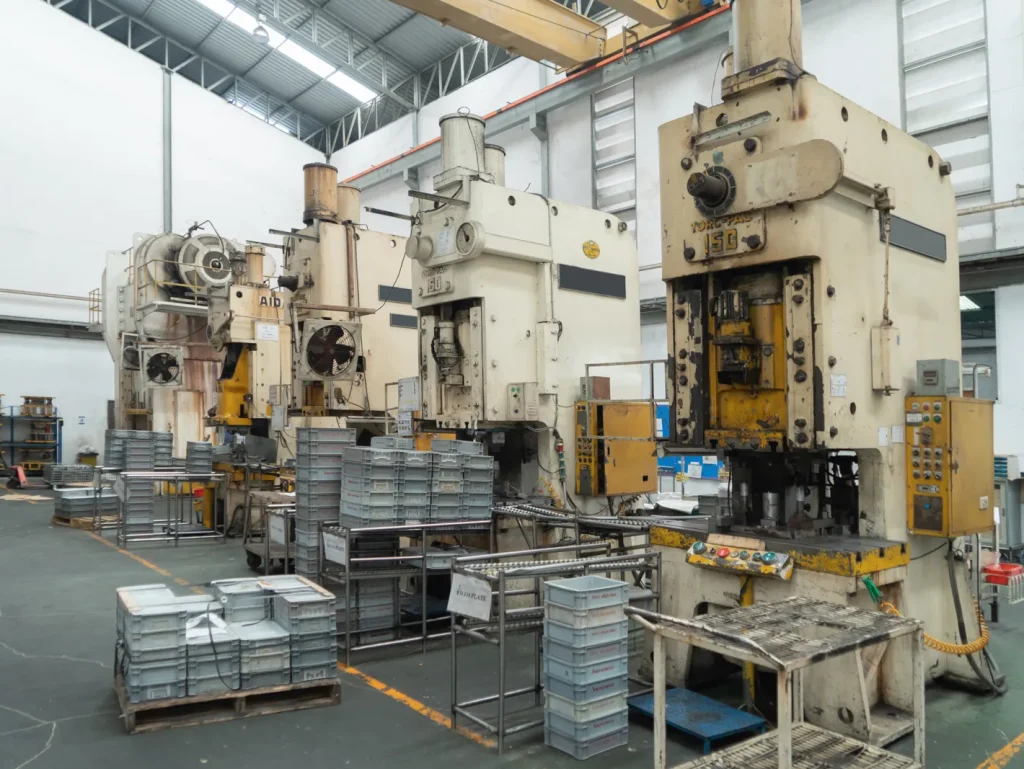
Stamping services are designed to produce metal parts by pressing sheet metal, strip, or coil stock into a defined shape using a die and press. The “custom” part means the die, process plan, inspection method, and sometimes the material handling method are designed around a specific part geometry and production need.
As a practical screen, stamping is usually a stronger fit when the part is sheet-based, demand is repeatable, and the design is stable enough to justify dedicated tooling. Laser cutting with press brake forming is often a better starting point for lower volumes, frequent revisions, or parts that need design changes before hard tooling is committed. Buyers should treat process choice as a geometry, volume, and revision-control decision when selecting precision metal stampings, not a default preference for stamping.
The process differs from sheet metal fabrication because the shape is created by a controlled tool set. Once the tooling is built and validated, custom metal stampings can produce repeat parts with high consistency. This is why stamping is often used for production programs rather than one-off components.
Custom stamping is common in automotive, EV, electronics, medical devices, aerospace, appliances, hydraulics, refrigeration, agriculture, and heavy equipment. Industry reports project continued growth in lisování kovů demand, with the global market estimated at USD 259.35 billion in 2025 and projected in some reports to reach USD 377.45 billion by 2034 at a CAGR of 4.26%. Forecasts vary by scope, but the demand drivers are consistent: vehicle lightweighting, EV growth, electronics, medical devices, and the need for precision formed parts.
Core processes: blanking, piercing, forming, drawing, and secondary operations
Most custom metal stamping services combine several operations. The main processes include:
| Proces | Co to dělá | Typical decision point |
|---|---|---|
| Blanking | Cuts the outside profile of a flat part or preform | Used when the flat outline controls fit or later forming |
| Piercing | Creates holes, slots, or openings | Important when hole location and burr direction affect assembly |
| Forming | Bends or shapes metal without removing material | Used for brackets, clips, flanges, tabs, and stiffening features |
| Drawing | Pulls metal into a cavity to create depth | Used for cups, shells, housings, and some enclosures |
| Sekundární operace | Welding, assembly, finishing, machining, washing, packaging | Used when the stamped part must be delivered as a subassembly or finished component |
A stamping supplier may also support hardware attachment, weldments, light machining, deburring, coating, or assembly. These operations matter because many stamped parts do not function as flat parts. They often need welded nuts, attached fasteners, formed tabs, corrosion protection, or clean surfaces before installation.
Full-service stamping vs single-process suppliers
A full-service stamping source with in-house tool and die capabilities can support design review, tooling, stamping, secondary operations, inspection, and packaging. A single-process supplier may only run the press operation or only produce blanks.
| Service scope | Nejvhodnější | Hlavní přínos | Hlavní riziko |
|---|---|---|---|
| Single-process stamping | Simple parts with clear drawings and no secondary work | Lower process complexity | More supplier coordination |
| Tooling plus stamping | Production parts with dedicated dies | Better control of tool and process link | Upfront tooling planning required |
| Full-service stamping | Parts needing forming, finishing, welding, assembly, or packaging | Fewer handoffs and clearer quality ownership | Supplier must have the right technical depth |
| Prototype-focused stamping | Early design validation | Faster learning before full tooling | Prototype method may not match production exactly |
The better choice depends on risk. If a part has difficult geometry, strict documentation, corrosion requirements, or assembly features, a broader service scope can reduce coordination errors. If the part is simple, a narrow supplier may be enough.
Market demand and customization trends in metal stamping
Customization demand is increasing because many buyers cannot use standard stamped parts without modification. Standard brackets, clips, covers, or contacts often need changes in hole position, material, thickness, coating, or bend geometry. These changes can affect fit, load path, corrosion behavior, and assembly time.
Industry reports also point to stronger demand for precision and flexibility. Buyers want tighter consistency, better inspection, and shorter development cycles. In-house engineering review, simulation, and rapid prototyping can help identify manufacturability issues before hard production tooling is finalized.
The decision point is clear: customization can improve function, but it also increases tooling and process risk. A custom feature should solve a real design need. Extra bends, embosses, holes, or tight tolerances should be checked against material behavior and tooling limits.
Feasibility: Can the Part Be Stamped?
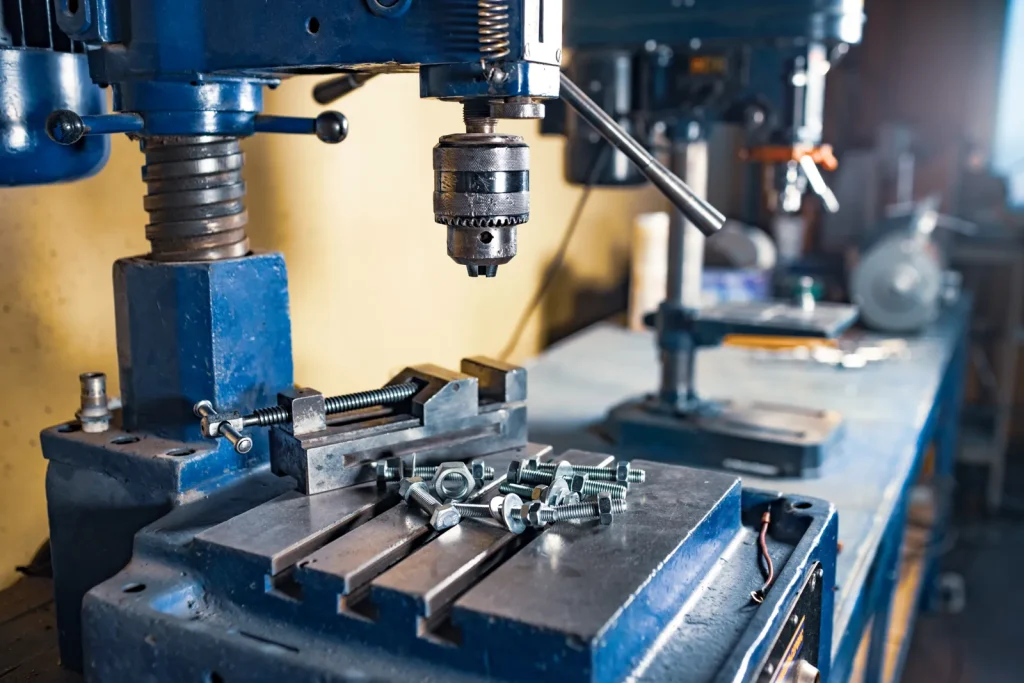
Evaluating stampability starts with part design geometry, as certain structural features create obvious forming challenges that impact manufacturability, tooling cost and final part quality.
What part geometries are difficult to stamp?
Stamping works best when the part can be made from sheet metal with practical cutting, bending, drawing, and forming steps. Difficult features include very tight inside corners, narrow slots close to bends, small tabs with low stiffness, deep drawn sections with severe material flow, and features that require metal to stretch unevenly.
Part geometries are difficult to stamp when the design forces the material to move in conflicting ways. For example, a hole near a bend can distort during forming. A flange with uneven length can twist. An embossed area near another formed feature may lose shape because the metal has already been strained.
High-risk stamped features include:
| Funkce | Stampability level | Reason for concern |
|---|---|---|
| Flat blank with simple holes | Lower risk | Cutting and piercing are direct operations |
| Bracket with open bends and generous spacing | Lower to moderate risk | Springback must be controlled |
| Holes close to bend lines | Moderate to high risk | Hole shape and location can shift |
| Deep drawn shell with sharp corners | High risk | Material thinning or cracking may occur |
| Multiple embosses near bends | High risk | Embossed features can distort stamped components |
| Thick material with fine features | High risk | Higher force and tool wear risk |
| Structural part requiring deep draw and tight flatness | High risk | Deep draw limits may conflict with structural requirements |
How material thickness impacts metal stamping accuracy
Metal materials thickness affects cutting force, forming force, springback, burr formation, and die wear. Thin material can be easier to cut but may wrinkle, distort, or buckle during forming. Thick material may hold shape better in some cases, but it requires higher press force and can increase wear on punches and dies.
This is why how material thickness impacts metal stamping accuracy is an early design review topic. The same geometry may behave differently when thickness changes. Hole size, bend radius, flange length, and embossed features should be checked together instead of separately.
Thickness variation in incoming material can also affect repeatability. In coil-fed stamping, small changes in thickness or hardness can change forming behavior. Inspection plans often need to account for both part dimensions and material certification.
Limitations of deep draw stamping for structural components
Deep draw stamping pulls sheet metal into a die cavity to create depth. It is useful for cups, shells, housings, and some enclosures. The limitation is material flow. If the draw is too severe, the metal may thin, wrinkle, tear, or show uneven wall thickness.
The limitations of deep draw stamping for structural components become important when the part must also carry load. A drawn shape may meet the external envelope but still have thinning in a critical area. Corners, transitions, and draw depth must be reviewed against material ductility and the load path.
Deep drawn structural parts may need larger radii, draw beads, intermediate forming stages, or a different process. In some cases, a fabricated or stamped-and-welded design may be more practical than one deep drawn part.
Prototype stamping vs production stamping decision factors
Prototype stamping is used to test geometry, material behavior, and fit before full production tooling. It may use soft tooling, simplified tooling, laser-cut blanks, or limited forming tools. Production stamping uses hardened or production-ready tooling designed for repeat output.
Prototype stamping vs production stamping decision factors include:
| Faktor | Prototype stamping | Production stamping | Hlavní riziko |
|---|---|---|---|
| Účel | Validate design and function | Make repeat parts at planned volume | More supplier coordination |
| Nástroje | Lower commitment, often simplified | Dedicated tool design and maintenance | Upfront tooling planning required |
| Design change flexibility | Vyšší | Lower after tooling is built | Supplier must have the right technical depth |
| Part consistency | Useful for testing, but may not match final process | Controlled around production process | Prototype method may not match production exactly |
| Nejlepší použití | Early DFM review and risk reduction | Stable designs with known demand |
Prototype results should not be treated as a full guarantee of production behavior if the production method is different. A prototype made from laser-cut blanks and hand forming may not show the same feed, burr, springback, or tool wear issues as a progressive die.
How Custom Metal Stamping Works
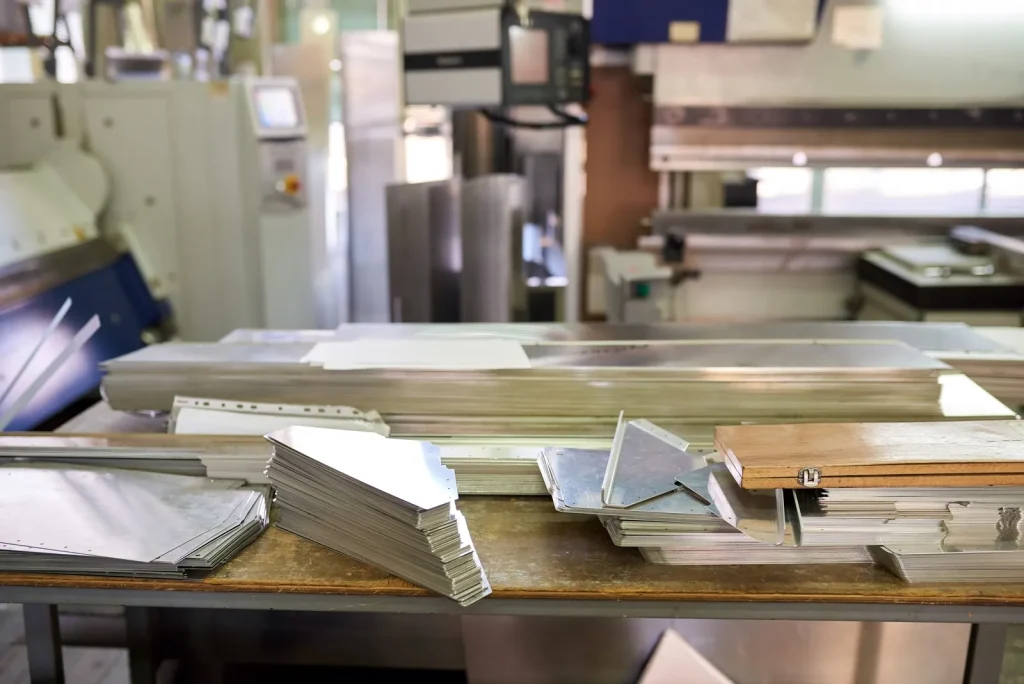
Custom metal stamping follows a structured production workflow that covers design review, tool development, press operation and full part inspection.
Process flow from CAD review to tooling, press setup, stamping, and inspection
Custom metal stamping starts with part data. The supplier reviews CAD files, drawings, material specifications, expected volume, tolerances, finishing needs, and assembly requirements. The review checks whether the part can be formed, where the parting lines or carrier strips may sit, and how critical dimensions will be controlled.
A typical design-to-production workflow is:
CAD model and drawing ↓ DFM review: geometry, material, tolerance, volume ↓ Process selection: progressive, transfer, deep draw, fine blanking, or other method ↓ Tool design and build ↓ Trial runs and dimensional inspection ↓ Process adjustment and approval ↓ Production stamping ↓ Inspection, finishing, assembly, packaging
Tooling is then designed around the process. Press setup includes die installation, feed setup, lubrication, shut-height adjustment, and trial runs. Inspection confirms key dimensions, hole locations, burr direction, formed angles, surface condition, and critical workpiece finishing or assembly features.
Best metal stamping process for high volume production
Progressive die stamping is often the preferred high-volume method when the part can stay attached to a carrier strip, station loading remains manageable, and strip utilization supports the economics. Transfer tooling is often better when the part is larger, deeper, or needs free-state forming and reorientation between operations. Process selection should be based on carrier strength, station count, feature sequence, part geometry, and secondary-operation needs rather than volume alone.
Progressive dies are efficient when the part can remain attached to a strip through piercing, forming, and cutoff without losing carrier stability or pitch control. Transfer dies are often selected when the geometry cannot be formed reliably while strip-connected, such as larger shells, deeper forms, or parts that need free-state movement between stations. Fine blanking, micro stamping, and other precision methods may be more appropriate when edge condition, very thin stock handling, or fine-feature control is the main requirement.
This does not mean progressive tooling is always best. For high-volume production, if the part is large, deep, complex, or hard to carry in strip form, transfer die stamping or another approach may be a better fit.
Progressive die stamping vs transfer die stamping for complex parts
Progressive die stamping vs transfer die stamping for complex parts is a common process choice. Progressive die stamping keeps the part attached to a metal strip as it moves through stations. Transfer die stamping separates the blank earlier and moves it between stations with mechanical transfer equipment.
| Proces | Nejvhodnější | Síla | Omezení |
|---|---|---|---|
| Progresivní ražba | High-volume parts that can stay in strip form | Efficient repeat production | Carrier design and material use matter |
| Přenosové razítkování | Larger or more complex formed parts | Better for parts that need free movement between stations | More handling and transfer control needed |
| Deep draw stamping | Cups, shells, housings, drawn shapes | Creates depth from sheet | Risk of thinning, wrinkles, tearing |
| Fine blanking | Parts needing clean edges and precise profiles | Improved edge quality compared with conventional blanking | Process and tooling requirements are more specialized |
Transfer die stamping may be better for complex parts when the geometry cannot be formed while attached to a strip. It can also help where the part must be reoriented or formed from multiple directions. The trade-off is more process complexity.
How coil-fed stamping affects part consistency
Coil-fed stamping can improve part consistency because material feeds through the press in a controlled sequence. Feed pitch, strip alignment, lubrication, and coil condition all affect repeatability.
How coil-fed stamping affects part consistency depends on both material and equipment control. Stable coil properties help keep springback, burr size, and forming behavior more consistent. Poor coil flatness, thickness variation, or surface defects can lead to dimensional drift or cosmetic issues.
For critical parts, buyers should confirm how incoming material is controlled and how coil-related variation is detected during production.
Advantages, Limitations, and Process Trade-Offs
Understanding the core strengths, inherent boundaries, and key trade-offs of metal stamping helps you select the most cost-efficient manufacturing method for your project.
When stamping is better than machining for metal parts
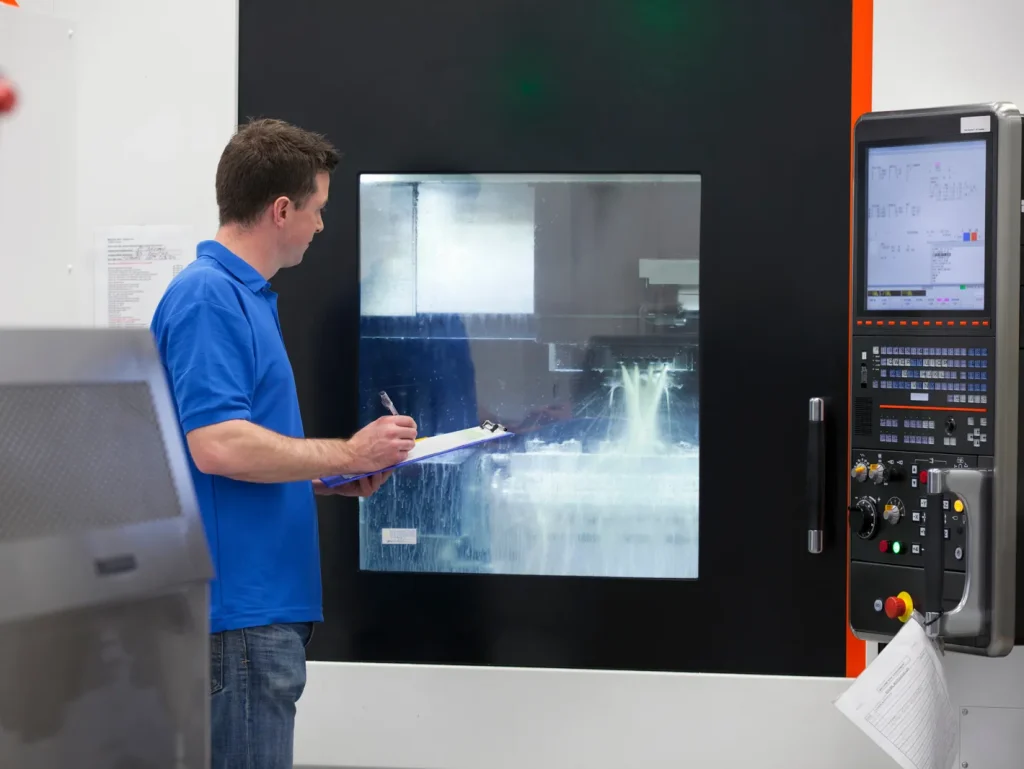
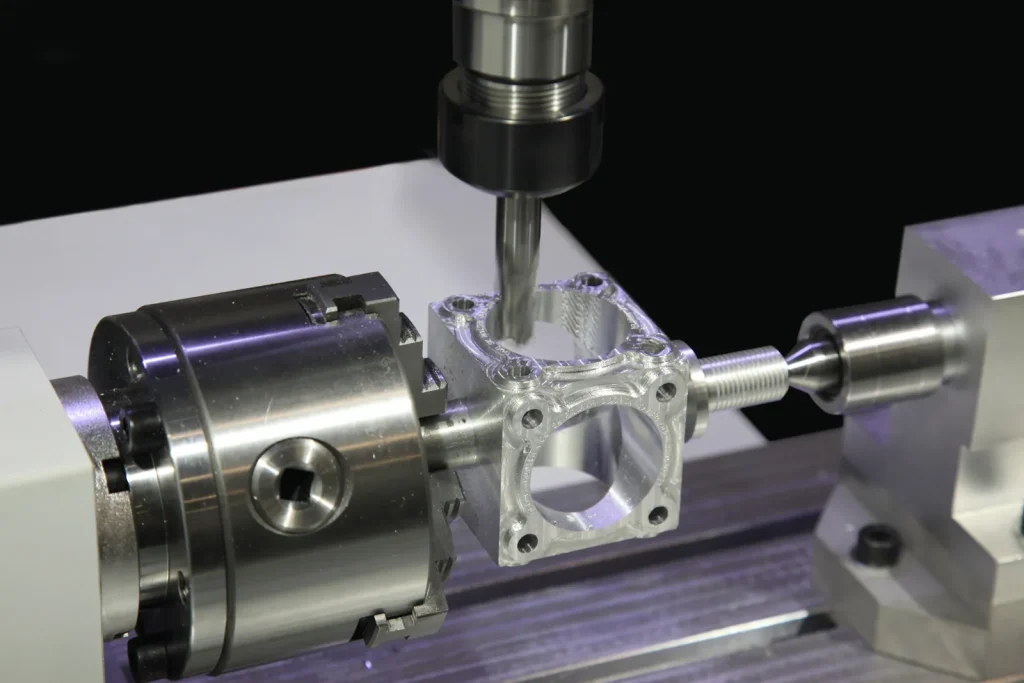
Stamping is often better than machining for metal parts when the design starts as sheet metal, volume is high enough to justify tooling, and the part can be cut and formed in repeat press cycles. Machining removes material from bar, plate, or billet. Stamping forms and cuts sheet material, often with less cycle time per part once tooling is ready.
When stamping is cheaper than CNC depends on volume, geometry, material utilization, and tooling cost. CNC machining may be better for low quantities, thick solid shapes, tight 3D features, or designs still changing. Stamping may become more cost-effective when the same sheet-metal part is needed in repeat production and the tooling cost can be spread across many units.
When progressive die stamping is not cost effective
When progressive die stamping is not cost effective, the cause is often mismatch between tooling investment and production need. A part with low demand, unstable design, or frequent revision may not justify a complex progressive die.
Progressive die stamping can also be a poor fit if the part wastes too much material in the carrier strip, cannot be held during forming, or requires operations that do not fit well into a station sequence. In those cases, laser cutting, press brake forming, single-hit tooling, transfer tooling, or machining may carry less financial and technical risk.
Short run vs long run metal stamping cost comparison
Cost should be evaluated by the dominant driver: tooling-heavy, material-heavy, secondary-operation-heavy, or tolerance-heavy. Short-run stamping often favors lower-tooling methods because design changes and setup costs are harder to absorb, while long-run stamping favors dedicated tooling only when demand and revision stability are credible. A low piece price can still be a poor result if scrap, deburring, plating, welding, or inspection complexity carries the real cost burden.
| Cost factor | Short run impact | Long run impact |
|---|---|---|
| Nástroje | High relative impact | Spread across more parts |
| Nastavení | High per-part impact | Lower per-part impact |
| Použití materiálu | Important | Very important |
| Opotřebení nástrojů | Usually lower total wear | Major quality and maintenance factor |
| Změny designu | Easier to absorb before hard tooling | More costly after launch |
| Sekundární operace | Can dominate cost | Need stable flow and inspection |
The minimum order quantity for metal stamping is not fixed across the industry. It depends on tooling type, part size, material, setup time, inspection needs, and whether existing tooling or new tooling is required.
Customization benefits vs risks of overcomplicated stamped designs
Customization can improve fit, reduce assembly steps, and combine functions into one part. For instance, a stamped bracket made from high-quality metal may include holes, tabs, stiffening ribs, and locating features. This can reduce downstream work.
The risk is overcomplication. Each added feature can affect material flow, springback, inspection, tool wear, and scrap rate. A feature that looks simple in CAD may need more die stations, tighter strip control, or secondary forming.
| Metoda | Nejvhodnější | Výhoda | Limitation |
|---|---|---|---|
| Stamping | Repeat sheet-metal parts | High repeatability after tooling | Tooling cost and geometry limits |
| Obrábění | Low volume, solid shapes, tight 3D details | Flexible and precise for many geometries | More material removal and cycle time |
| Řezání laserem | Flat blanks, prototypes, short runs | No hard blanking tool needed | Forming still needed for 3D parts |
| Fabrication | Welded or assembled structures | Flexible for large or mixed parts | More manual process variation |
The key point is to design only the features needed for function, assembly, strength, or inspection.
Common Stamping Failures and Quality Risks
When running custom sheet metal stamping production, various failures and quality risks can emerge from design choices, material behavior, and process setup.
Factors affecting tolerance in precision metal stamping
Factors affecting precision metal stamping services tolerance include material thickness, material hardness, tool design, press condition, feed accuracy, lubrication, die clearance, and inspection method. Tolerance is not only a drawing value. It is the result of the full process.
Critical dimensions should be identified early. Hole-to-hole location, bend angle, flatness, edge condition, and feature position may not respond to the same controls. A hole pierced before forming may move during bending. A feature coined after forming may be more stable but may need more tooling force.
Common defects in progressive stamping operations
Common defects in progressive stamping operations include burrs, misfeeds, slug pulling, part distortion, cracked bends, wrinkling, inconsistent forms, and surface marks. Many defects are linked to station timing and strip control.
Progressive dies depend on each station working with the previous one. If an early station creates a burr, distortion, or feed error, later stations may amplify it. This is why inspection should not only check finished parts. It should also monitor process indicators such as feed progression, punch condition, slug removal, and lubrication.
What causes burrs in stainless steel stamped parts?
The causes of burrs in stainless steel stamped parts often include die clearance, punch wear, material hardness, cutting geometry, and press alignment. Stainless steel can be demanding because it may work hard and can accelerate tool wear in some operations.
Burr direction matters. A burr on an assembly face can affect fit. A burr near an electrical or medical device feature can create functional or handling risk. If burr control is critical, the drawing should define edge requirements and the process plan should include deburring, fine blanking, tool maintenance, or inspection controls as needed.
Risks of springback, embossed feature distortion, and tool wear
Springback occurs when formed metal partially returns toward its original shape after the forming force is removed. The risks of springback in sheet metal stamping increase with material strength, bend geometry, and part shape. Tool compensation, forming sequence, and material control are common ways to manage it.
Embossed features can distort stamped components because embossing stretches local material. If the embossed area is near a bend, hole, or edge, the surrounding metal may shift. This is why embossed features should be reviewed with the full forming sequence, not as isolated shapes.
The impact of tool and die wear on stamped part quality grows over production time. Wear can increase burrs, change edge quality, shift dimensions, and create surface defects. A good control plan defines inspection points and maintenance triggers.
| Defekt | Pravděpodobná příčina | Design or process control |
|---|---|---|
| Burrs | Die clearance, punch wear, material behavior | Edge specs, tool maintenance, deburring |
| Springback | Material strength, bend geometry | Tool compensation, forming sequence |
| Cracks | Tight radii, low ductility, severe forming | Larger radii, material review, staged forming |
| Wrinkles | Uncontrolled material flow | Draw control, blank holder strategy |
| Misfeeds | Feed pitch error, strip issue | Feed monitoring, strip design |
| Distorted embosses | Local strain near other features | Feature spacing, forming order review |
| Surface marks | Tool condition, material handling | Tool polishing, lubrication, handling controls |
Faktory nákladů, tolerance a doby realizace
Cost, tolerance, and lead time are core considerations that directly impact project planning and supplier selection in custom metal stamping.
Tooling cost drivers in custom metal stamping services
Tooling cost drivers in custom metal stamping services include part complexity, number of stations, material type, expected production volume, tolerance requirements, die size, maintenance needs, and whether secondary operations are included.
A simple blanking tool is very different from a progressive die with piercing, forming, embossing, cutoff, and in-die hardware insertion. Tight tolerances can also raise tooling and inspection complexity because the tool must control smaller process variation.
Tooling choices should match program risk. For an unstable design, prototype tooling or lower-commitment methods may be safer. For a mature high-volume part, production tooling may reduce per-part cost and process variation.
Lead time factors in custom stamped parts
Lead time factors in custom stamped parts include CAD review, DFM feedback, material sourcing, tool design, tool build, trial runs, inspection, design changes, finishing, welding, and assembly. Lead time is also affected by documentation requirements and approval cycles.
A design that changes after tooling begins can add delay because tool steel, station layout, and forming sequence may need revision. Material availability can also affect timing, especially when a specific alloy, thickness, finish, or certification is required.
Buyers can reduce uncertainty by sending complete part data at the start.
Challenges in producing tight-tolerance metal brackets
The challenges in producing tight-tolerance metal brackets come from the mix of cutting, bending, and springback. A bracket may appear simple, but hole position, bend angle, flange length, and flatness interact.
If holes are pierced before bending, their final position depends on bend accuracy. If holes are pierced after forming, tooling may be more complex. If the bracket is thick or high strength, springback may be harder to control. If the bracket has coatings or welded hardware, inspection must confirm the final condition, not only the stamped blank.
How inspection, finishing, welding, and assembly affect production planning
Inspection, finishing, welding, and assembly can control the real production schedule as much as stamping does. A stamped part may need plating, painting, passivation, washing, hardware insertion, welding, or packaging. Each step can add handling and quality checks.
For example, a bracket may meet stamped dimensions before welding, then move during weld heat input. A finished part may meet geometry but fail corrosion or surface requirements if the material and finishing plan are not aligned.
Inputs needed for cost and lead-time evaluation include:
- CAD model and controlled drawing
- Material grade, thickness, temper, and finish
- Annual and release quantities
- Required tolerances and critical dimensions
- Surface finish and burr requirements
- Corrosion resistance requirements
- Secondary operations such as welding, assembly, machining, or finishing
- Inspection documentation and traceability needs
- Packaging and handling requirements
- Prototype or production intent
Applications and Use Cases by Industry
Custom metal stamping serves a wide range of industrial sectors, each with unique performance, precision, durability, and cost requirements.
Automotive and EV applications: lightweighting, reinforcements, brackets, and panels
Automotive and EV programs use stamped parts for brackets, panels, reinforcements, cross members, heat exchangers, and structural support components. Lightweighting is a major driver. Aluminum stamping and hot stamping of advanced high-strength steel are used where weight, strength, and safety targets must be balanced.
Hot stamping can support durable, lightweight structural parts, but it requires close control of material and process. EV growth also increases demand for battery-related supports, enclosures, thermal components, and electrical hardware.
Medical device and electronics applications requiring precision stamped components
Medical device and electronics applications often need small, precise, repeatable stamped components. Examples include contacts, shields, clips, springs, housings, and device features that require clean edges and stable dimensions.
For medical and electronics work, material selection, surface quality, burr control, and traceability can be as important as basic dimensions. Precision stamped parts may need tighter inspection and cleaner handling than general industrial brackets.
Aerospace, appliance, hydraulic, refrigeration, agriculture, and heavy equipment parts
Aerospace applications often focus on weight, traceability, material control, and consistent fit. Appliance and refrigeration parts may focus on repeatability, surface finish, corrosion resistance, and cost control. Hydraulic, agriculture, and heavy equipment parts may require strength, weldability, coating compatibility, and durability in harsh environments.
Full-service stamping can be useful in these sectors when parts need weldments, assemblies, hardware attachment, special packaging, machining, or washing. The value is not only stamping speed. It is reducing handoffs between stamping and downstream operations.
How to choose metal stamping materials for corrosion resistance
Material choice should be based on formability, strength, hardness, conductivity, corrosion exposure, coating compatibility, and expected tool wear per ASTM International specifications, not corrosion resistance alone. Temper, grain direction, and surface condition can change springback, cracking risk, galling tendency, and achievable bend severity. A material that performs well in service may still be a poor stamping choice if it drives unstable forming or excessive wear.
Carbon steel is widely used when strength and cost are important, often with coatings or finishing for corrosion protection. The material decision should be made with forming, finishing, and service environment together.
| Průmysl | Common parts | Key stamping requirements |
|---|---|---|
| Automobilový průmysl a elektromobily | Brackets, reinforcements, panels, thermal parts | Lightweighting, strength, repeatability |
| Zdravotnické prostředky | Clips, small components, device features | Precision, edge control, traceability |
| Elektronika | Contacts, shields, springs, covers | Conductivity, burr control, small features |
| Letectví a kosmonautika | Brackets, clips, light structural parts | Material control, documentation, weight |
| Appliances and refrigeration | Panels, brackets, housings | Surface finish, corrosion resistance |
| Hydraulics and heavy equipment | Brackets, supports, welded parts | Strength, weldability, durability |
| Agriculture | Guards, supports, formed parts | Coating compatibility, rugged use |
How to Evaluate a Metal Stamping Partner
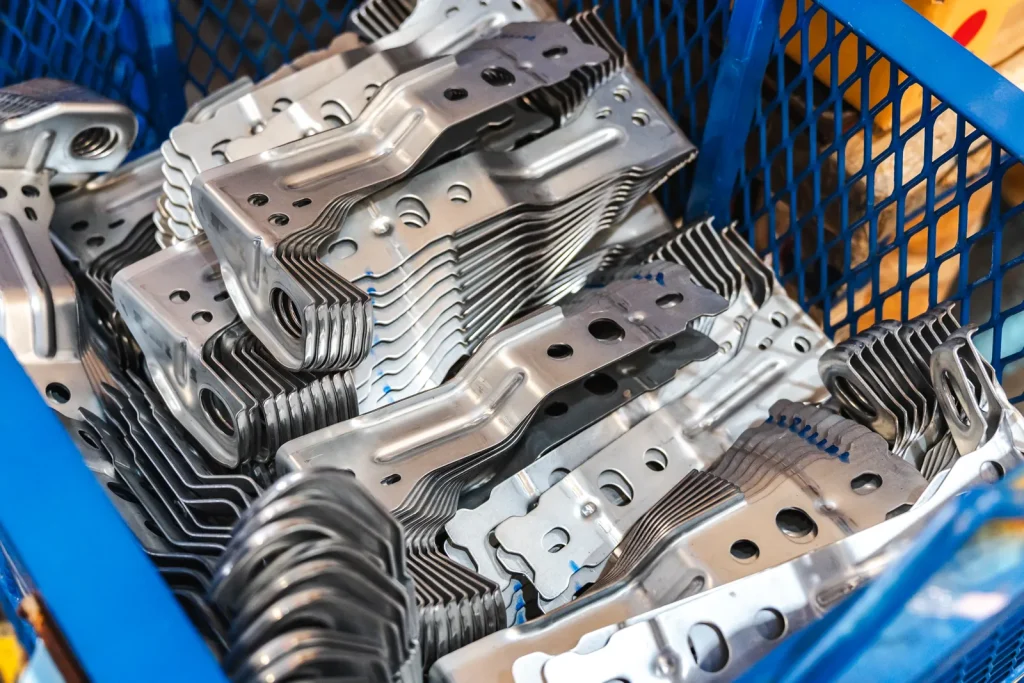
When selecting a reliable metal stamping partner, buyers need to assess multiple core dimensions rather than focusing only on price and production capacity.
How do you choose a custom metal stamping provider?
Choosing a provider for custom metal stamping services starts with process fit. The supplier should be able to explain whether the part is suitable for stamping, what process is likely, what risks exist, and what information is missing.
A strong evaluation looks beyond press capacity. Buyers should review engineering support, tooling capability, comprehensive metal stamping capabilities, material experience, inspection systems, secondary services, documentation, and capacity. A supplier that cannot review manufacturability may still make simple parts, but difficult stamped designs need early technical input.
Buyers should also evaluate sourcing geography, including logistics risk, tariff exposure, communication speed, corrective-action timing, tooling ownership terms, and revision-control discipline. A lower quoted piece price may be offset by longer feedback loops, shipment disruption, or slower containment when quality issues occur. A competent supplier response should state the proposed process, key risks, tooling assumptions, inspection approach, and open questions rather than only quoting price.
Engineering support, DFM review, simulation, and rapid prototyping capabilities
Engineering support matters because many stamping problems are locked in during design. DFM review can identify hole locations near bends, tight radii, high-risk draw depths, burr-sensitive edges, and features likely to distort.
Simulation can help predict material flow, thinning, wrinkling, and springback before tooling is finalized. Rapid prototyping helps validate fit and function before full production. This is especially important when the design is new, the material is unfamiliar, or the part has forming risk.
Quality control: inspection technology, documentation, and traceability
Quality control should match part risk. Basic stamped parts may need dimensional inspection and visual checks. Critical parts may need more detailed documentation, traceability, material certification, first article inspection, production checks, and records.
For supplier qualification, buyers should verify which quality systems and customer-specific requirements the supplier can support, such as ISO 9001, IATF 16949, AS9100, ISO 13485, first article inspection, PPAP, control plans, SPC, MSA, and capability studies where required. The key question is not whether a supplier inspects parts, but whether the quality system matches the part risk, industry documentation needs, and change-control expectations.
Inspection methods can include gauges, optical inspection, coordinate measurement, surface checks, and process monitoring. The method should be chosen based on the critical features. For example, a flat blank may need edge and hole checks, while a formed bracket may need angle, position, and fixture-based inspection.
Supplier evaluation checklist: process fit, secondary services, materials, capacity, and risk controls
A practical RFQ and supplier qualification review should include:
- Part drawing and CAD compatibility
- Experience with the required material and thickness
- Recommended stamping process and reason
- Tooling approach and maintenance plan
- Ability to support prototype and production needs
- Secondary operations such as finishing, welding, assembly, washing, or machining
- Inspection equipment and documentation capability
- Traceability and material certification controls
- Capacity for expected volumes
- Plan for burrs, springback, tool wear, and critical dimensions
- Change control process for drawing revisions
- Packaging and shipping requirements for damage-sensitive parts
The best fit is not always the largest supplier or the lowest quote. It is the supplier whose process, tooling, quality controls, and full stamping capabilities match the part risk.
Závěr
Custom metal stamping services are a strong fit when a sheet-metal part needs repeat production, controlled geometry, and practical cost at volume. Stamping is often preferred over machining when the part can be blanked, pierced, formed, or drawn from sheet stock and the tooling cost can be spread across production quantities.
Stamping should be used with care when the part has severe forming, tight brackets, deep drawn structural features, burr-sensitive edges, or complex embossed geometry. In these cases, manufacturability review, prototyping, material selection, and inspection planning are needed before committing to production tooling.
The decision logic is simple: confirm the part can be formed, confirm the process fits the volume, confirm the material supports the geometry, and confirm the supplier can control the quality risks that matter most.
Nejčastější dotazy
What is custom metal stamping?
Custom metal stamping is a manufacturing process that uses dies and presses to cut and form sheet metal into a specific part design. Custom metal stamping services are ideal when standard off-the-shelf metal parts cannot meet customized geometry, material grade or assembly specification requirements. This metal stamping technique delivers consistent dimensional accuracy and stable quality for mass production across diverse industrial sectors. It covers a full range of formed components including brackets, clips, panels and structural reinforcements for commercial and mechanical applications.
When is stamping cheaper than CNC machining?
Stamping vs. machining involves careful comparison of part structure, production scale and long-term cost efficiency for manufacturing decision-making. Stamping can become cheaper than CNC machining when the part is made from sheet metal, the design is stable, and production volume is high enough to justify tooling investment. CNC machining remains a more flexible option for low-volume orders, frequently revised designs, thick solid components and complex three-dimensional structural features. Once stamping tooling is validated, unit production cost drops significantly with increased order quantity and repeated production runs.
What are progressive dies in stamping?
Progressive die stamping relies on multi-station tooling to streamline continuous sheet metal forming in one automated workflow. Progressive dies are tooling systems with multiple stations inside one die set for continuous sheet metal processing. As coil or strip material feeds steadily through the press line, each independent station completes one dedicated operation such as piercing, bending, forming or cutoff in sequence. The whole workflow runs automatically until a fully finished stamped part exits the final station with high consistency and efficiency.
What materials are used in precision stamping?
Precision metal stamping components rely on carefully selected raw materials to meet strict tolerance and performance standards. Common materials include stainless steel, carbon steel, aluminum, and other sheet metals chosen for strength, corrosion resistance, conductivity, weight, and formability. Each material features unique forming behavior, hardness level and tool wear impact that affect overall stamping feasibility and final part quality. Material selection must align with sheet thickness, bend radius, burr control rules and post-processing finishing specifications.
How long do stamping dies last?
Stainless steel stamped structural parts place extra wear and stress on stamping dies due to the material’s work-hardening properties. Stamping die life depends on material type, part geometry, production volume, tool steel grade, lubrication conditions and routine maintenance standards. Working with harder alloy materials or parts requiring tight tolerances will accelerate tool wear and increase regular maintenance frequency. Proper daily lubrication, periodic inspection and timely component replacement can effectively extend die service life.
Minimum order quantity for metal stamping?
High volume metal stamping allows manufacturers to spread tooling and setup costs for more competitive unit pricing. Metal stamping has no fixed industry-wide minimum order quantity as it varies greatly based on multiple practical production factors. Key influencing elements include tooling type, physical part size, sheet material specification, setup time and detailed inspection requirements for each batch. MOQ also depends on whether suppliers use existing stored tooling or design brand-new custom dies for unique project needs.
Odkazy
https://store.astm.org/products-services/standards-and-publications.html

 Czech
Czech  English
  German
  French
  Italian
  Spanish
  Polish
  Japanese