
CNC machining stainless steel is a common choice when manufacturing high-quality corrosion resistant parts and steel components, combining excellent corrosion resistance, steel’s strength, wear life, and dimensional consistency. It is also a material family that can create production risk if the grade, geometry, tooling, coolant, and inspection plan are not matched early, following standardized manufacturing guidelines from ASTM International for stainless steel material specification and machining norms.
The main decision is not only whether stainless steel can be machined. In most cases, it can. The more useful question is whether the selected grade and part design can be machined repeatably, at the required finish and tolerance, without excess tool wear, work hardening, burrs, or distortion.
This guide focuses on practical decision points for engineers, buyers, and technical purchasers evaluating stainless steel CNC parts.
What CNC Machining Stainless Steel Is—and When It Matters
CNC machining stainless steel means removing material from stainless bar, plate, casting, or near-net stock using controlled milling steel, CNC soustružení stainless, drilling, boring, tapping, or mill-turn operations, ideal for all types of cnc machining projects. The process is used for prototypes, low-volume parts, and production components where material performance matters as much as shape.
Stainless steel is often selected when aluminum is too soft, titanium is over-specified, carbon steel lacks corrosion resistance, or brass is not strong enough for the application; its unique chromium content and nickel composition define core material properties. The trade-off is that stainless steel usually machines more slowly and places higher demand on tooling, coolant, chip control, and machine rigidity.
What makes stainless steel different from aluminum, brass, and carbon steel?
Compared with aluminum and brass, stainless steel is harder, tougher, and more prone to work hardening. Aluminum and brass often cut freely and form chips that are easier to evacuate. Stainless steel tends to form tough, stringy chips that can wrap around tools, mark surfaces, or interfere with drilling and turning.
Compared with carbon steel, stainless steel offers stronger corrosion and oxidation resistance. That is often the reason it is selected for food equipment, medical instruments, aerospace hardware, pressure-related components, robotics, and heavy equipment parts.
The machining penalty is real. Stainless steel can retain heat near the cutting edge, which increases tool wear and can affect size control. Austenitic stainless steels such as 304 and 316 are especially known for ductility and work-hardening behavior.
Why corrosion resistance, strength, ductility, and uniformity drive material selection
Stainless steel is used when the part must keep working in contact with moisture, cleaning chemicals, process fluids, or outdoor exposure. Corrosion resistance is often the first filter, but it should not be the only one.
Strength matters for load-bearing parts, shafts, brackets, couplings, housings, and machine components. Ductility matters when the part may see shock, vibration, forming, or assembly loads. Uniformity matters when the part needs consistent machining response across several features or across a production lot.
The key point is that stainless steel selection should start with service conditions, not with machinability alone. A grade that machines easily but fails in chloride exposure or cleaning chemicals is not a cost-saving choice.
Where CNC machining stainless steel fits in precision manufacturing
CNC machining stainless steel fits well when the part has features that casting, stamping, or forming cannot produce accurately enough. Typical examples include threaded ports, sealing surfaces, bearing seats, precision pockets, custom brackets, instrument parts, and fittings.
It is also useful when the required quantity does not justify tooling for another process. CNC machining can produce complex stainless steel geometry without hard tooling, but complexity still affects cost and lead time. Deep holes, thin walls, tight internal corners, small tapped holes, and high cosmetic finish requirements all increase process risk.
Table: Stainless steel CNC machining decision factors by project priority
| Project priority | Stainless steel benefit | Main machining risk | What to verify before release |
|---|---|---|---|
| Odolnost proti korozi | Strong resistance compared with carbon steel | Surface damage or contamination after machining can reduce resistance | Grade, passivation need, exposure environment |
| Strength and durability | Good for loaded industrial parts | Hardness and toughness increase tool wear | Tooling plan, machine rigidity, feature accessibility |
| Tight dimensional control | Uniform material supports repeatable machining | Heat buildup and residual stress can affect accuracy | Tolerance stack, inspection method, roughing/finishing plan |
| High-volume machining | 303 can improve machinability | Lower corrosion resistance than 304 | Whether 303 meets environment and safety needs |
| Chloride exposure | 316 performs better than 304 in chloride environments | 316 is harder to machine than 304 | Exposure severity, finish, passivation, inspection |
| Kontrola nákladů | Long service life may reduce lifecycle cost | Slower cutting and tooling cost can raise part cost | Grade choice, geometry simplification, finish requirements |
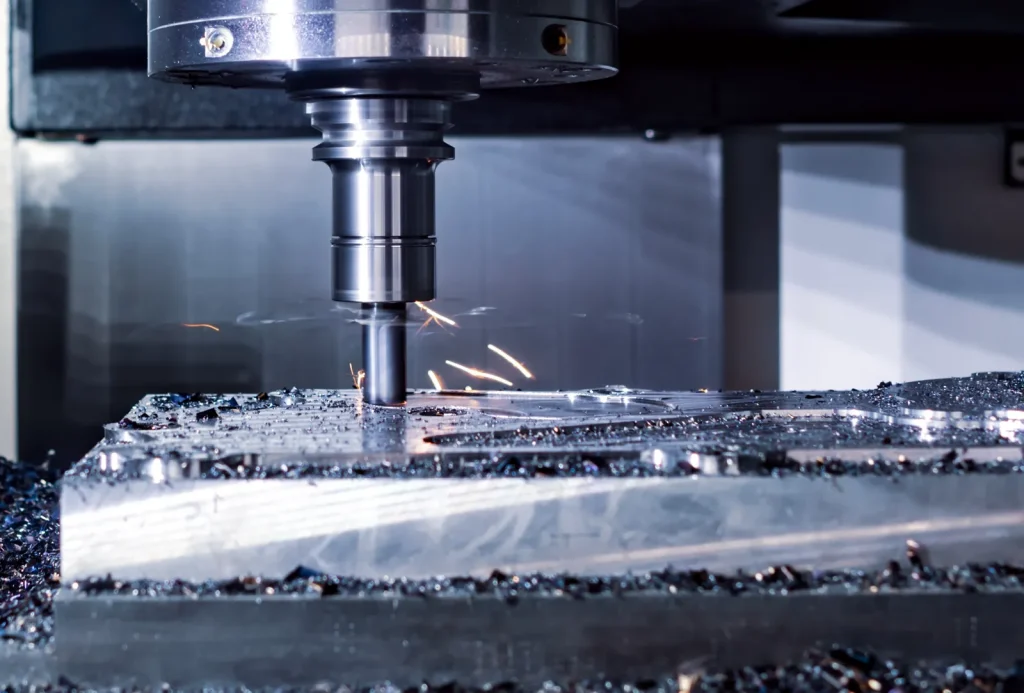
Can Stainless Steel Be CNC Machined for Your Part?
Most stainless steel grades used in industry can be CNC machined, but not all are equally suitable for every part. Feasibility depends on the grade, stock condition, geometry, tolerance, surface finish, coolant access, and the type of operation.
A simple stainless part with open features is usually lower risk. A thin-walled 316 part with deep holes, tight flatness, and a fine finish has a much higher risk.
Which stainless steel grades are commonly used for CNC machining?
Common CNC-machined stainless grades include 303, 304, 316, 316l, 430, and stainless steel 17-4, belonging to popular alloys widely used in fabrication. Each grade exists because it balances corrosion resistance, strength, machinability, and cost in a different way.
304 is the most widely used general-purpose stainless steel. It is often selected when corrosion resistance and formability are needed without the higher chloride resistance of 316.
316 is commonly selected when the environment includes chlorides or more aggressive corrosion exposure. It is used in marine-related, chemical, medical, and food-related contexts, but it is generally more difficult to machine than 304.
303 is a free-machining stainless grade. It is often easier to machine than 304 because it is designed for better chip formation and cutting behavior. The trade-off is lower corrosion resistance than 304.
As a practical machinability ranking, free-machining 303 is typically the easiest of the common grades discussed here, followed by 304, then 316, with duplex grades generally requiring the most cautious process verification. This kind of ranking is only a starting point because stock condition, part geometry, hole depth, thread size, and machine rigidity can change the actual risk significantly.
400 series grade 430, a martensitic stainless steel option, can be viable when magnetic response, lower cost, and moderate corrosion resistance fit the application, but it should not be treated as a simple substitute for austenitic grades in more demanding environments. 303 also should not be treated as “faster 304” because its free-machining chemistry can create limits in corrosion-critical, welding, or tightly controlled downstream applications.
precipitation-hardened stainless steel 17-4 is used when higher steel’s strength and structural functionality are key requirements, but machinability, distortion risk, and inspection planning depend strongly on condition and heat treatment state rather than grade name alone. Buyers should confirm whether machining will occur in a solution-treated or aged condition and ensure the required final condition is stated on the drawing and material certification.
How machinability differs between 303 and 304 stainless steel
The main difference in how machinability differs between 303 and 304 stainless steel is chip behavior. 303 is designed for easier machining, so it tends to cut more predictably and can reduce tool load in suitable applications.
304 is more common, but it is tougher to machine. It can create stringy chips, generate heat, and work hard if the tool rubs instead of cutting. This can make 304 more demanding in turning, milling, drilling, and tapping.
303 should not be selected only because it machines faster. If the part needs the corrosion resistance of 304, 303 may introduce service risk. The right decision depends on whether the environment allows corrosion trade-off.
304 vs 316 stainless steel machining differences
304 vs 316 stainless machining differences are mostly tied to toughness, corrosion performance, heat at the cutting edge, and how each grade machines into precision cnc machined 304 stainless parts and custom 316 stainless steel components. 316 is chosen because it has better resistance in chloride-containing environments than 304. That benefit comes with a machining penalty.
Why 316 stainless is harder to machine than 304 is linked to its cutting behavior. It is tougher under the tool, can be less forgiving during drilling and tapping, and often requires more careful control of speed, feed, coolant, and chip evacuation.
For a part that only needs general corrosion resistance, 304 may be the more practical choice. For chloride exposure, 316 may be justified even if machining cost and lead time rise.
Checklist: feasibility factors before selecting stainless steel for CNC machining
Before selecting stainless steel for CNC machining, review the following factors:
- Environment: moisture, chlorides, cleaning chemicals, temperature, and contact materials.
- Grade: 303, 304, 316, 430, 17-4, or duplex where suitable.
- Geometry: deep holes, thin walls, sharp internal corners, small threads, long unsupported features.
- Tolerance: whether the part needs standard dimensional control or precision machining with risk of distortion.
- Surface finish: whether the finish is functional, cosmetic, sealing-related, or passivated.
- Tool access: whether tools can reach all features without long overhangs or chatter.
- Coolant access: whether flood or high-pressure coolant can reach the cut.
- Chip evacuation: especially for pockets, grooves, blind holes, and deep drilled features.
- Inspection: whether corrosion-critical or tight-tolerance features need extra checks.
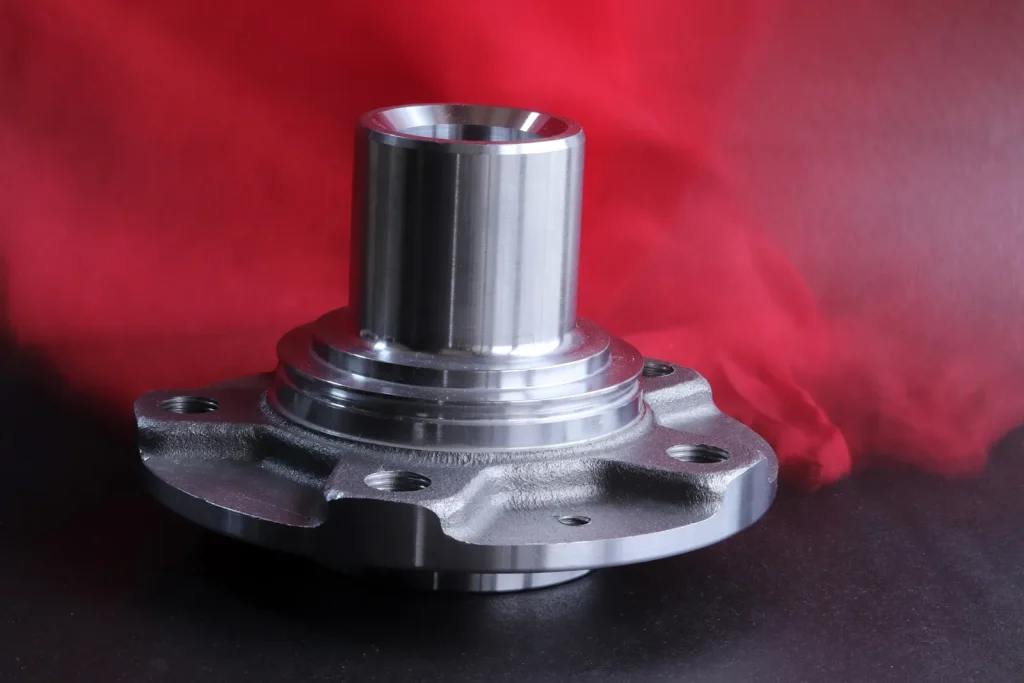
How CNC Machining Stainless Steel Works in Practice
In practice, stainless steel machining is less about extreme cutting parameters and more about process control. The tool must stay engaged in a stable cut. The machine and workholding must resist vibration. Coolant must remove heat and chips. The process must avoid rubbing, because rubbing can harden the surface and make the next pass harder.
Starting parameters should be set from the toolmaker data for the exact grade and operation, because stainless process stability is highly sensitive to tool geometry, coolant delivery, and machine rigidity. In practice, lighter machines usually require more conservative parameters and shallower engagement than rigid production platforms, and deep-hole drilling or small tapping in 316 demands separate verification rather than assuming the same process used for 303 or 304.
Causes of work hardening during stainless steel turning
The main causes of work hardening during stainless steel turning are tool rubbing, light cuts that do not form a proper chip, dull cutting edges, and unstable setup conditions. Austenitic stainless steels are especially sensitive.
Work hardening means the material surface becomes harder after deformation. In turning, this can happen when the insert slides across the surface instead of shearing material cleanly. The next pass then cuts a harder layer, which increases tool wear and can damage surface finish.
To reduce work hardening, the cut should be positive and stable. Sharp tooling, correct feed, suitable depth of cut, and rigid workholding help the tool cut under the hardened layer rather than polish it.
Tooling requirements: carbide, ceramic tools, TiAlN, TiCN, and rigid workholding
Stainless steel CNC machining usually requires high-performance tooling. Carbide tools and end mill cutters are common because they handle higher cutting loads, ideal for mastering proper machining technique on tough stainless grades. Ceramic tools may be used in some applications, but they require the right machine conditions and process control.
Coatings such as TiAlN and TiCN are used to improve wear resistance and heat handling. Tool geometry also matters. Chip breakers are often needed because stainless steel can produce long, tough chips.
Rigid workholding is not optional for difficult stainless jobs. If the fixture allows movement, the tool may chatter. Chatter can damage the part, wear the tool, and worsen surface finish. Short tool overhang, stable clamping, and strong machine structure all reduce this risk.
Coolant and heat management: flood coolant vs high-pressure coolant
Coolant is critical in CNC machining stainless steel because heat buildup affects tool life, chip control, and dimensional accuracy. Flood coolant is commonly used to carry heat away from the cut and flush chips from the cutting zone.
High-pressure coolant can be helpful when chips are difficult to evacuate, such as in drilling, grooving, boring, and deep pockets. It can break or move chips more effectively than flood coolant in some setups.
The choice between flood coolant and high-pressure coolant depends on feature geometry, chip behavior, tool type, and access to the cutting edge. Poor coolant delivery can cause heat to stay at the tool tip, which increases wear and may lead to size drift.
Challenges of drilling deep holes in stainless steel parts
The challenges of drilling deep holes in stainless steel parts come from heat, chip packing, tool deflection, and work hardening. A deep hole traps chips and limits coolant access. If chips do not leave the hole, they can scratch the bore, bind the tool, or break the drill.
Stainless chips are tough and stringy, so drilling often needs careful pecking strategy, coolant flow, drill geometry, and chip control. Blind holes can be harder than through holes because chips have fewer ways to escape.
Deep holes should be reviewed early in the design. If a hole depth is large relative to tool diameter, the buyer should confirm whether the hole can be produced with standard drilling, step drilling, gun drilling, or another controlled process.
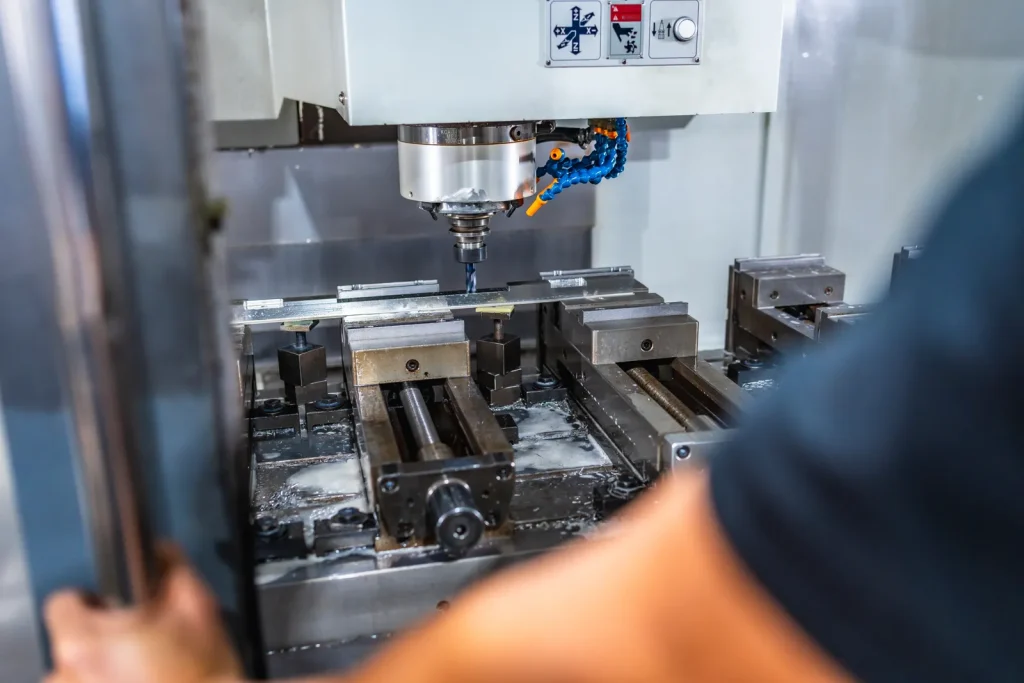
Advantages vs Limitations of Stainless Steel CNC Parts
Stainless steel CNC parts can offer a long service life, corrosion resistance, and mechanical strength. The limitations are tied to machining effort, heat, tool wear, burrs, and grade-specific constraints.
The right decision depends on whether stainless steel’s service benefits justify the process cost and risk.
Best stainless steel grade for corrosion resistant machined parts
The best stainless steel grade for corrosion resistant machined parts depends on the environment. For general corrosion resistance, 304 is often used. For chloride-containing environments, 316 is often preferred because it has better chloride corrosion resistance than 304.
303 may machine more easily, but it has lower corrosion resistance than 304. That makes it less suitable for parts exposed to aggressive cleaning, salt, or corrosive fluids.
For severe corrosion environments, duplex stainless steel may be considered against 316, but the decision should be based on material datasheets and service requirements, not only the grade name.
Why 316 stainless is harder to machine than 304
316 is harder to machine than 304 because it is tougher in the cut and is often less forgiving under poor heat and chip control. It can produce tool wear faster if the tool rubs or if chips remain in the cutting zone.
This does not mean 316 should be avoided. It means the machining plan should account for slower material removal, coated carbide tooling, better coolant delivery, and careful inspection of critical features.
If chloride corrosion resistance is required, choosing 304 only to reduce machining cost may create a higher lifecycle risk.
Limitations of CNC milling austenitic stainless steels
The limitations of CNC frézování austenitic stainless steels include work hardening, heat buildup, stringy chips, burr formation, and possible distortion in thin sections. Austenitic grades such as 304 and 316 are ductile, so they can smear or tear if the tool is dull or the feed is wrong.
Thin walls and flexible features are especially sensitive. Milling forces can deflect the part during cutting. After unclamping, the part may move slightly because residual stress has changed.
Risk rises further when a part combines thin walls, long unsupported features, deep holes, or small threads with ductile austenitic grades, because clamp release, residual stress in stock, and heat from cutting can shift geometry in different ways. Flatness on thin sections, coaxiality after multiple operations, deep-hole position, and tapped-hole quality are common verification points that should be reviewed before release.
Designs with sharp internal corners, deep narrow slots, or thin ribs should be reviewed for manufacturability before grade selection is finalized.
Matrix: durability, corrosion resistance, machinability, and lifecycle trade-offs
| Třída | Odolnost | Odolnost proti korozi | Obrobitelnost | Nejvhodnější | Hlavní kompromis |
|---|---|---|---|---|---|
| 303 | Moderate to good | Lower than 304 | Better than 304 | High-machining-volume parts with mild exposure | Reduced corrosion resistance |
| 304 | Dobrý | Good general resistance | Mírná | General industrial stainless parts | Work hardening and chip control |
| 316 | Dobrý | Better in chloride environments | More difficult than 304 | Corrosive or chloride exposure | Higher machining difficulty |
| 430 | Application-dependent | Application-dependent | Viable for CNC use | Selected ferritic stainless applications | Not a direct replacement for 304/316 |
| 4月17日 | High strength focus | Application-dependent | Requires planning | Strong machined components | Strength can increase machining demands |
| Duplex | High strength and corrosion focus | Strong for selected corrosive environments | Requires grade-specific planning | Harsh service where 316 may not be enough | Material and machining verification needed |
Common Failure Risks in Stainless Steel Machining
Most stainless machining failures are process failures, not material failures. The material is capable, but the process may not control heat, chip flow, tool wear, or part movement.
Factors affecting tool wear in stainless steel CNC machining
The main factors affecting tool wear in stainless steel CNC machining include material grade, hardness, cutting speed, feed, depth of cut, tool coating, coolant delivery, chip control, and setup rigidity.
A dull tool increases cutting force and heat. In stainless steel, that can start a cycle of work hardening, more tool wear, worse finish, and poor size control. Long stringy chips can also damage the cutting edge or recut against the surface.
Tool wear should be considered during quoting and process planning. A part with many small holes, threads, and interrupted cuts will often consume tools faster than a simple turned shaft.
How heat buildup affects accuracy in stainless steel machining
How heat buildup affects accuracy in stainless steel machining is mainly through thermal expansion, tool wear, and part movement. If heat stays in the cutting zone, the tool and part can change size during machining. The measured part may then shift after cooling.
Heat also weakens the cutting edge and can damage coatings. That can change the effective tool size, which affects holes, slots, pockets, and turned diameters.
Coolant strategy, finishing passes, tool condition, and stable cycle timing all help control this risk.
Surface finish problems in CNC machining stainless steel
Surface finish problems in CNC machining stainless steel often appear as tearing, smearing, chatter marks, built-up edge marks, or scratches from chips. These issues are more common when tools are dull, cutting forces are unstable, or chips are not removed.
Functional finishes need special attention. A sealing surface, sliding surface, or sanitary contact surface may need more than a visually smooth cut. It may need controlled tool paths, burr removal, cleaning, and passivation.
If surface finish is critical, it should be specified in the drawing. Vague finish notes can lead to mismatch between design intent and machining process.
Common burr formation issues in stainless steel milling
Common burr formation issues in stainless steel milling come from ductility and tool exit conditions. Stainless steel tends to bend before it breaks, so burrs can form along edges, slots, cross-holes, and thin features.
Burrs can affect assembly, sealing, cleaning, and safety. They are especially important in medical, food, robotics, and fluid-handling components.
Deburring should be part of the manufacturing plan, not an afterthought. Small internal burrs may be difficult to remove after machining, so feature access should be checked during design review.
Corrosion, Surface Condition, and Post-Machining Risk
Stainless steel corrosion resistance is not only a property of the bulk material. It also depends on surface condition. Machining can leave tool marks, embedded contamination, heat-affected areas, or free iron on the surface.
How corrosion resistance changes after CNC machining stainless steel
How corrosion resistance changes after CNC machining stainless steel depends on the grade, surface damage, cutting conditions, coolant, cleaning, and post-machining treatment. A machined surface may not perform like untouched mill stock if contamination or surface damage remains.
Machining exposes fresh material and can change the surface texture. Rougher surfaces may hold contaminants or process fluids more easily than smooth surfaces. Burrs and scratches can create small areas where corrosion starts sooner.
For corrosion-critical parts, surface condition should be treated as a requirement, not a cosmetic detail.
How surface passivation impacts corrosion resistance of machined stainless parts
How surface passivation impacts corrosion resistance of machined stainless parts is tied to the stainless surface film. Passivation is used to clean and restore the corrosion-resistant surface condition after machining.
Passivation may be required when the part will contact medical fluids, food products, cleaning chemicals, or chloride-containing environments. It can also be important where machined parts must resist staining or rust during service.
The need for passivation should be stated in the drawing or purchase specification. If passivation is assumed but not specified, the delivered surface may not match the service requirement.
Impact of chloride exposure on machined 316 stainless components
The impact of chloride exposure on machined 316 stainless components is a major reason 316 is selected instead of 304. 316 has better corrosion resistance in chloride environments than 304, but that does not mean it is immune to corrosion.
Surface finish, passivation, crevices, stagnant fluids, and cleaning chemicals can all affect field performance. A machined 316 component with deep scratches, sharp crevices, or poor cleaning may still be at risk.
For chloride service, grade selection should be paired with surface condition control and design features that avoid trapped fluids.
Reference note: standards bodies and material datasheets for passivation and corrosion requirements
Passivation should be tied to a specified standard and process requirement rather than referenced generically, because cleaning, free iron removal, and verification method affect the result. Surface roughness, embedded contamination, and crevice-like geometry can also change corrosion behavior, so finish, cleaning, and passivation should be specified together when the surface is function-critical.
For regulated or safety-related parts, the drawing should define the required standard rather than using loose language such as “corrosion resistant finish.”
Faktory nákladů, tolerance a doby realizace
The cost of stainless steel CNC machining is affected by both material cost and process cost. Stainless steel may provide a long service life, but it often needs more careful machining than aluminum, brass, or some carbon steels.
What affects the cost of custom stainless steel CNC parts?
What affects cost of custom stainless steel CNC parts includes grade, stock size, geometry, tolerance, surface finish, tool access, number of setups, coolant needs, deburring, passivation, and inspection.
Material grade is only one part of the cost. A low-cost grade with a difficult design can cost more to machine than a higher-cost grade with simple features. Deep holes, thin walls, tight pockets, and many tapped holes raise machining time and tool wear.
Cost-saving decisions should focus on reducing unnecessary complexity while keeping the required service performance.
Risks of distortion in precision machined stainless steel parts
Risks of distortion in precision machined stainless steel parts are higher when the part has thin walls, uneven material removal, long unsupported sections, or tight flatness requirements. As material is removed, internal stress can be redistributed. Clamping pressure can also bend thin parts during machining.
Distortion risk can be reduced with balanced roughing, stress-aware setup planning, suitable fixturing, and finishing passes after major material removal. For precision parts, inspection should consider whether the part is measured in the same condition in which it will be used.
How grade hardness, chip control, coolant, and tooling influence lead time
Grade hardness and toughness affect how fast material can be removed. Chip control affects whether the process can run consistently. Coolant affects heat, tool life, and drilling success. Tooling affects how often tools need replacement or adjustment.
A part in 316 with deep holes and fine finish requirements may take longer than the same part in 303 or 304. Lead time can also increase when passivation, special inspection, or deburring of internal features is required.
The most useful early action is to send complete drawings with material, finish, tolerance, and inspection notes. Missing requirements often cause more delay than the machining itself.
Table: industry-level cost drivers for stainless steel CNC machining
| Hnací síla nákladů | Proč je to důležité | Směr dopadu nákladů |
|---|---|---|
| Grade selection | 316 and 17-4 may need more controlled machining than 303 | Can increase machining time and tool use |
| Geometrie části | Deep holes, pockets, thin walls, and small threads add risk | Increases setup and cycle effort |
| Tolerance | Tight tolerances need stable process and more inspection | Increases process control needs |
| Povrchová úprava | Fine or functional finish may need finishing passes | Adds machining and inspection time |
| Nástroje | Coated carbide, ceramic tools, and chip breakers may be needed | Adds tooling cost but can reduce failures |
| Coolant delivery | Flood or high-pressure coolant may be needed | Affects tool life and drilling success |
| Odhrotování | Stainless burrs can be difficult to remove | Adds manual or secondary work |
| Pasivace | Needed for many corrosion-critical parts | Adds post-machining processing |
| Inspekce | Critical dimensions and finish need verification | Adds quality control time |
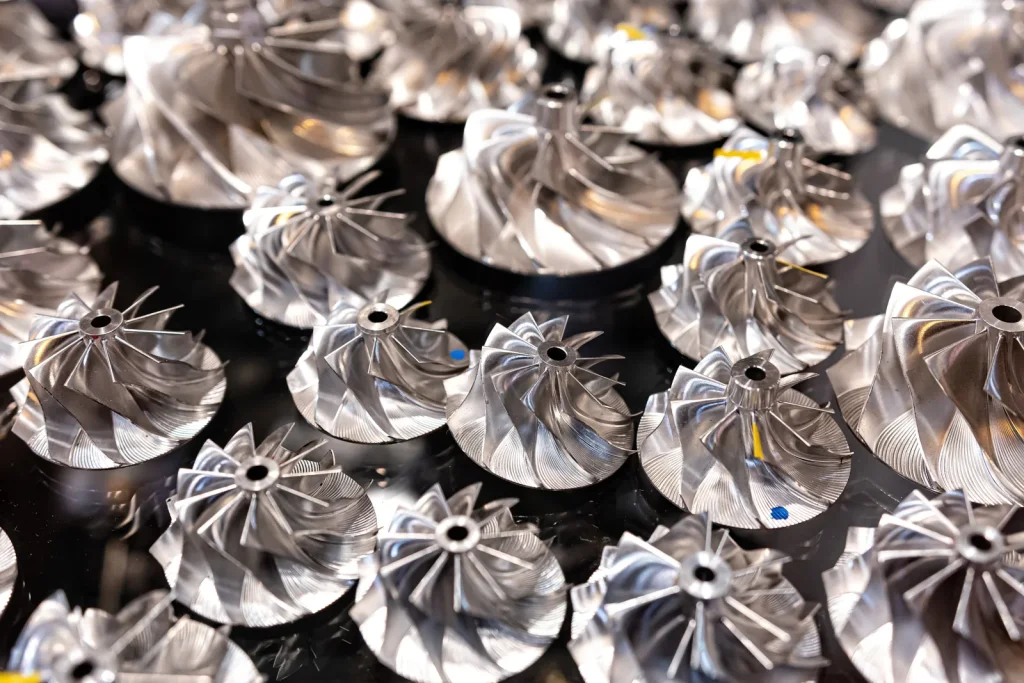
Applications and Grade-Specific Use Cases
Stainless steel CNC parts are used where strength, corrosion resistance, cleanliness, and durability matter. Application fit depends on the grade and the part’s service conditions.
Medical, aerospace, robotics, food and beverage, and heavy equipment applications
Medical instruments often use stainless steel because corrosion resistance, surface finish, and cleanliness are important. Aerospace parts may use stainless steel where strength, oxidation resistance, and environmental exposure matter. Robotics components use stainless for shafts, brackets, end-effectors, housings, and wear-related parts.
Food and beverage equipment often needs stainless parts because washdown and corrosion resistance matter. Heavy equipment applications use stainless when exposed components must resist corrosion, pressure, or harsh service.
In each industry, grade selection should match the service environment and any applicable standard. CNC machining can produce the required geometry, but post-machining condition often matters as much as dimensions.
When 17-4 stainless steel is a better choice than 316 for machined parts
When 17-4 stainless steel is a better choice than 316 for machined parts, the reason is usually strength. If the part must carry higher loads or resist deformation, 17-4 may be a better candidate than 316.
316 is often selected for chloride corrosion resistance. If chloride exposure is not the main design driver, and strength is more important, 17-4 may offer a better balance.
The decision should compare required strength, corrosion environment, heat treatment condition, machining behavior, and inspection needs.
Tradeoffs between strength and machinability in 17-4 stainless steel
The tradeoffs between strength and machinability in 17-4 stainless steel depend on condition and part geometry. Higher strength can improve service performance, but it can also increase cutting forces and tool wear.
17-4 should be reviewed carefully for thin walls, tight tolerances, and features that may distort after material removal. It may be the right grade for strong parts, but it is not the default answer for corrosion-only applications.
When ferritic stainless steel is unsuitable for CNC machined components
Ferritic stainless steel may be unsuitable for CNC machined components when the application requires the corrosion behavior, ductility, or service profile of austenitic grades such as 304 or 316. It may also be unsuitable when the customer specification calls for a different stainless family.
430 can be used in CNC applications, but it should not be substituted without engineering review. The buyer should compare datasheets, corrosion exposure, forming needs, and assembly requirements before approving a ferritic grade.
How to Choose the Right Stainless Steel CNC Machining Strategy
A good stainless steel CNC machining strategy starts with service conditions, then moves to grade, geometry, tooling, coolant, finish, and inspection. Choosing the grade first and checking the environment later can lead to costly redesign.
Should you choose 303, 304, 316, 430, or 17-4 stainless steel?
Choose 303 when machinability is important and the environment does not require the corrosion resistance of 304 or 316.
Choose 304 when the part needs general corrosion resistance and good all-around stainless performance.
Choose 316 when chloride exposure or more aggressive corrosion resistance is a main requirement.
Choose 430 only when its ferritic stainless properties match the design and specification.
Choose 17-4 when strength is a main driver and the corrosion environment is suitable.
Duplex vs 316 stainless for corrosive environments
Duplex vs 316 stainless for corrosive environments should be evaluated through the actual exposure conditions. 316 is commonly selected for chloride environments, but duplex grades may be considered where strength and corrosion demands are higher.
The machining plan for duplex should not be copied directly from 316 without review. Tooling, coolant, cutting forces, and inspection may need adjustment based on the exact grade and stock condition.
Decision tree: grade selection by corrosion exposure, machinability, strength, and cost
| Krok | Bod rozhodnutí | Stav | Recommended Action / Material |
|---|---|---|---|
| 1 | Start with service exposure | - | Begin material evaluation |
| 2 | Chlorides or aggressive corrosion present? | Ano | Consider 316; consider duplex if strength and corrosion demand are higher |
| Ne | Continue to next decision | ||
| 3 | Is strength the main design driver? | Ano | Consider 17-4 |
| Ne | Continue to next decision | ||
| 4 | Is machinability the main cost or lead time driver? | Ano | Consider 303 if corrosion requirements allow |
| Ne | Continue to next decision | ||
| 5 | Is general stainless performance enough? | Ano | Consider 304 |
| Ne | Review 430, 17-4, duplex, or another specified grade | ||
| 6 | Before release | - | Confirm finish and passivation |
| Check deep holes, thin walls, and burr-prone edges | |||
| Confirm coolant and chip control strategy | |||
| Define inspection requirements |
Buyer checklist: drawings, tolerances, finish requirements, coolant strategy, and inspection needs
A stainless steel CNC machining request should include a complete drawing, material grade, stock or condition requirements, tolerances, surface finish, deburring notes, passivation requirements, and inspection needs.
For difficult parts, the buyer should also flag deep holes, sealing surfaces, corrosion-critical areas, and cosmetic surfaces. If the design includes thin walls or long features, note whether distortion control is critical.
The machining strategy should match the part’s function. For corrosion-critical parts, confirm passivation and surface condition. For precision parts, confirm tolerance and inspection approach. For high-volume parts, confirm grade choice and chip control.
Závěr
CNC machining stainless steel is feasible for many industrial components, but the best result depends on matching grade, geometry, tooling, coolant, finish, and inspection requirements.
Use 303 when machinability is the main driver and corrosion demands are mild. Use 304 for general-purpose stainless parts. Use 316 when chloride resistance is important. Use 17-4 when strength is more important than selecting 316 by default. Consider duplex only when the environment and strength requirements justify it.
Avoid treating stainless steel as a direct substitute for aluminum, brass, or carbon steel without reviewing heat, work hardening, burrs, deep holes, and surface condition. The safest design path is to define the service environment first, then select the grade and machining strategy around that requirement.
Stainless may be the wrong choice when corrosion demand is overstated, part weight is highly constrained, or the geometry combines thin walls, deep internal features, and tight tolerance requirements that create poor cost-to-risk balance. Before RFQ release, confirm grade traceability, stock condition, final heat treatment condition if applicable, passivation requirement, surface roughness callouts, and inspection needs for features most likely to move.
ČASTO KLADENÉ DOTAZY
What grade of stainless steel is best for machining?
303 is widely recognized as the easiest stainless grade to machine, thanks to its optimized formula for smooth cutting and chip control.304 serves as the go-to general-purpose option, striking a nice balance between corrosion resistance and everyday machinability.316 is the ideal pick for harsh environments with chlorides, salt exposure and heavy corrosion demands.There is no one-size-fits-all best grade that works for every stainless steel CNC project.Your final choice should weigh machinability, corrosion performance, structural strength and overall project cost.
How do you avoid work hardening in stainless steel machining?
The key to avoiding work hardening is letting the tool cut cleanly rather than rubbing across the material surface.Using sharp cutting tools and rigid workholding creates stable cutting conditions that prevent surface hardening.Proper feed rates, controlled cutting depth and sufficient coolant delivery also make a huge difference in stability.It’s critical to stay away from dull tools and shallow rubbing cuts throughout the whole machining process.This is especially important when working with tough austenitic grades like 304 and 316 stainless steel.
Why is 316 stainless harder to machine than 304?
316 stainless is naturally tougher and more ductile during cutting, and far more sensitive to heat buildup than standard 304.Poor heat management and messy chip control will speed up tool wear, hurt drilling quality and cause part size drift.It needs more conservative speed, feed settings and stricter process control for drilling, tapping and finishing tasks.Reliable coolant access and stable chip evacuation are essential to smooth 316 stainless steel machining.Even with higher machining difficulty, 316 remains the top choice for parts needing strong chloride corrosion resistance.
What surface treatments are used for stainless CNC parts?
Passivation is the most common treatment used to restore and preserve the natural corrosion resistance of machined stainless parts.Deburring is always required to remove sharp edges and rough burrs left behind from CNC milling and turning operations.Thorough surface cleaning eliminates machining residue, free iron and contaminants that affect long-term performance.Controlled custom surface finishes are also applied to meet functional sealing, assembly and cosmetic requirements. All necessary surface treatments must be clearly defined in part drawings and technical specifications upfront.
How can stainless steel machining cost be reduced?
You can effectively cut costs by selecting the most suitable stainless steel grade that matches your actual application needs.Skip over-tight tolerances that serve no functional purpose, as they add extra machining time and inspection expenses.Simplify complex design features such as deep narrow holes and thin walls to lower machining difficulty and tool wear.Only specify the exact surface finish you truly need, instead of over-engineering non-critical cosmetic surfaces.Never cut corners on passivation or material grade for corrosion-critical parts, or you will face costly service failures later.

 Czech
Czech  English
  German
  French
  Italian
  Spanish
  Polish
  Japanese