
When comparing engineering materials, the difference between alloy steel and stainless steel is often oversimplified as strength versus corrosion resistance. In reality, the decision is more nuanced and depends on how a material performs across the full lifecycle of a part—from machining and fabrication to service environment and maintenance. This guide breaks down alloy steel vs stainless steel from a practical manufacturing perspective, helping engineers and buyers understand where each material fits, where risks arise, and how to make a reliable selection based on real-world application demands.
What alloy steel vs stainless steel means and why the choice matters
Choosing between alloy steel and stainless steel is not a naming issue. According to ASME, material selection directly impacts performance, safety, and lifecycle cost in engineering systems, it is a design and manufacturing decision that affects strength, corrosion risk, machining behavior, welding difficulty, finish stability, and lifecycle cost. It is a design and manufacturing decision that affects strength, corrosion risk, machining behavior, welding difficulty, finish stability, and lifecycle cost. In mechanical components, the wrong choice can produce early rust, tool wear, poor weld-zone behavior, or unnecessary raw material cost. The key point is that these materials overlap in some uses, but they are not interchangeable. Understanding alloy steel vs stainless steel at the grade level is therefore essential before any manufacturing decision.
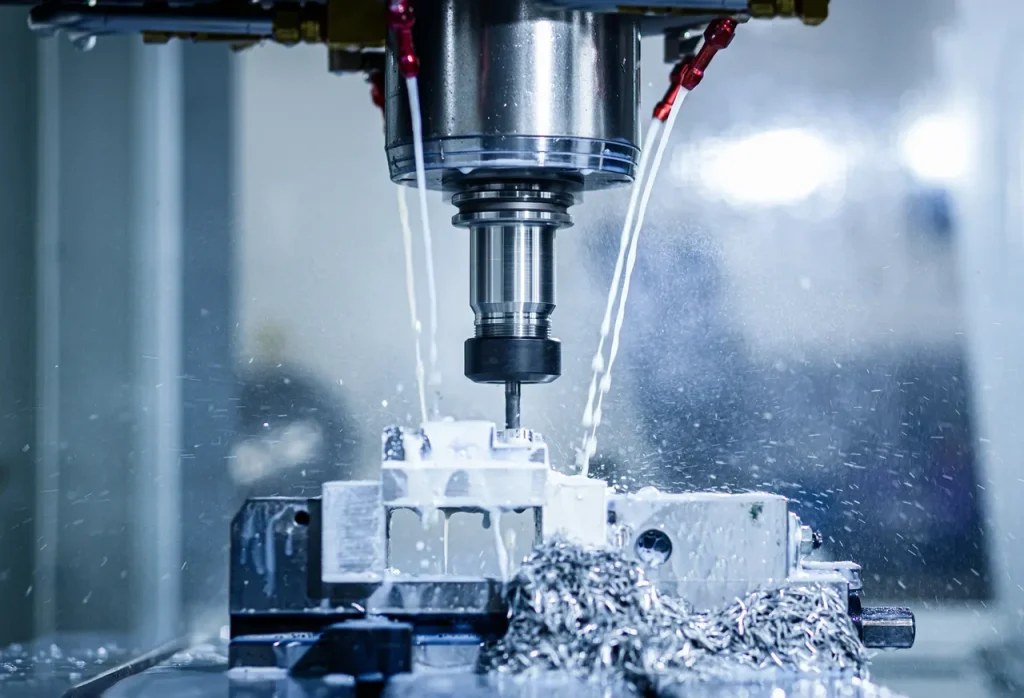
What is the difference between alloy steel and stainless steel in composition and classification?
All steel begins with iron and carbon as its base elements; what separates alloy steel and stainless steel from plain carbon steel is the deliberate addition of further alloying elements. Alloy steel and stainless steel are broad families, so grade and delivery condition matter more than the family name alone. The type of alloy added to base steel determines whether the result is a structural grade, a wear-resistant grade, or a heat-treatable grade. Common alloy steel anchors include 4140, 4340, and 8620, while common stainless anchors include 304, 316, 410, 420, and 2205. In practice, buyers should compare the actual grade, heat treatment condition, section size, and environment instead of assuming one family behaves uniformly. This applies equally to low-alloy and high alloy steel grades, which can differ significantly in hardenability and machining behavior.This is one of the clearest alloy steel vs stainless steel use-case separations: alloy steel is the standard choice for automotive gears and shafts, where hardness and toughness outweigh corrosion demands. That is one reason buyers often get confused: “alloy steel” is not one material with one fixed behavior.
Stainless steel is also an alloyed steel, but it is classified by corrosion-resistant chemistry. The defining threshold is at least 10.5% chromium. That chromium allows a thin passive oxide film to form on the surface, which is what makes stainless steel better for corrosion than alloy steel in many wet and chemical environments. Stainless steels are then grouped into families such as austenitic, ferritic, martensitic, and duplex. The type of stainless steel selected from these families has a direct effect on strength, weldability, ductility, and machinability.
So the practical classification difference is this: in any alloy steel vs stainless comparison, alloy steel is usually selected first for mechanical performance, while stainless steel is usually selected first for corrosion performance, then checked for mechanical fit.
Why stainless steel is better for corrosion than alloy steel in wet and chemical environments
For alloy steel vs stainless steel for corrosion resistance, the chemistry difference matters more than the strength difference. Stainless steel contains enough chromium to form a passive surface layer that limits oxidation. Based on NACE, this passive film is the primary reason stainless steel performs well in corrosive environments, giving it excellent corrosion resistance in humid, wet, and chemical service environments., giving it excellent corrosion resistance in humid, wet, and chemical service environments. One source places this chromium oxide layer in the 30–80 nanometer range, though that figure was not fully cross-verified. Even without relying on that thickness value, the mechanism is clear: chromium creates a self-protecting surface film.
Alloy steel does not have that same built-in corrosion protection. It may include chromium or other alloying elements, but not necessarily at the threshold or balance needed for stainless behavior. In humid air, washdown service, or salt exposure, alloy steel often needs paint, plating, oiling, or another barrier system. That raises a design risk. If the coating is damaged at edges, fastener points, or wear surfaces, corrosion can begin locally and spread.
This is why the risk of rust on alloy steel in humid conditions should be treated as a basic design assumption unless there is a proven protective system and inspection plan. When comparing alloy and stainless performance in wet service, stainless is not immune to corrosion but it starts from a much safer baseline.
Difference between alloy steel and stainless steel in strength and toughness
A common question in material selection is whether alloy steel is strong enough for high-load components. In quenched-and-tempered grades such as 4140 or 4340, alloy steel often provides higher practical strength and hardness than most standard stainless options, though this is not universal across all stainless families. Stainless property overlap depends strongly on grade and condition: austenitic 304 and 316 are not equivalent to hardened 410 or 420, and duplex 2205 changes the comparison again. Strength, toughness, and ductility should therefore be compared by specific grade and heat treatment condition, not by family label alone.
Those ranges are broad because heat treatment and grade selection change behavior a lot. Still, as a first-pass screen, alloy steel usually offers a wider path to very high strength and high hardness. That makes it attractive for gears, shafts, wear parts, structural members, and aerospace components where mechanical loading dominates material choice.
Stainless steel tends to offer more ductility, and some grades handle forming well. There is also uncertainty across sources on toughness, because stainless behavior changes strongly by family and temperature. So the difference between alloy steel and stainless steel in strength and toughness should not be reduced to one simple rule. In short, an alloy steel vs stainless steel comparison on strength shows alloy steel often winning on peak strength and hardness, while stainless is often chosen when corrosion and usable ductility matter more than maximum load capacity.
Table: Core property ranges, alloying thresholds, and typical grades for first-pass screening
| Faktor | Alloy Steel | Nerezová ocel | Why it matters for screening |
|---|---|---|---|
| Basic classification | Steel with added alloying elements for mechanical property control | Corrosion-resistant steel with ≥10.5% chromium | Helps separate strength-first vs corrosion-first selection |
| Pevnost v tahu | 758–1882 MPa | 515–827 MPa | Alloy steel has broader high-strength range |
| Tvrdost | 200–600 HB | 150–300 HB | Higher hardness often supports wear resistance but raises machining cost |
| Korozní chování | Usually needs coatings or surface protection in wet service | Better inherent corrosion resistance from chromium passive layer | Critical in humid, washdown, and marine exposure |
| Tepelná vodivost | ~45 W/mK | ~15 W/mK | Alloy steel dissipates heat more readily |
| Typical families | Low-alloy, high-alloy, heat-treatable grades | Austenitic, ferritic, martensitic, duplex | Family selection changes weldability and machining behavior |
| Typical first-pass uses | Gears, shafts, structural and aerospace parts, wear components | Food equipment, marine fittings, wet-process hardware | Aligns material family with service environment |
Can the part be manufactured and applied successfully?
Is alloy steel rust proof? Is alloy steel strong? Material choice is only useful if the part can be made with stable quality. For CNC machined parts, manufacturability depends on hardness, geometry, tolerance targets, surface finish, weld zones, and the service environment after machining.
How hardness affects CNC turning of alloy steel and what it means for process feasibility
For buyers evaluating a cnc turning service for hardened alloy steel, the first feasibility check is how increasing hardness drives up cutting forces, heat generation, and tooling wear. As alloy steel moves toward the upper end of the 200–600 HB range, cutting forces rise, heat generation increases, and tooling wear becomes more severe. This does not make the part impossible to machine, but it changes the process window. Tool life shortens, cycle time can increase, and process stability becomes more sensitive to interrupted cuts or weak part support.
For buyers, the practical issue is not just “can it be turned?” but “can it be turned at the required tolerance and finish without cost escalation?” Hardened alloy steel often remains feasible for simpler round parts, shafts, and bearing seats, but complex geometries with thin walls, undercuts, or long unsupported sections may become less efficient or less stable.
This is one reason the best steel for CNC machining is not the strongest steel, and why alloy steel vs stainless steel selection for CNC work must account for hardness condition, not just bulk material family. A slightly softer alloy steel condition may machine more predictably and then be heat treated if the application allows that route.
Material condition changes the process plan. Soft-machining before heat treatment can reduce tool wear but adds distortion and finish-stock risk after quench, temper, or case hardening; machining in a prehardened or hardened condition improves property control but usually increases cycle time and tooling cost. For alloy steels such as 4140 or 8620, buyers should confirm whether the part needs through hardening or only a hard case because section thickness and hardenability affect whether required properties can be achieved through the full cross-section.
Problems machining martensitic stainless compared with alloy steel
Problems machining martensitic stainless compared with alloy steel usually come from a less forgiving combination of hardness, work hardening tendency, and heat management. Martensitic stainless steel can offer useful strength and wear resistance, but machinists often see more sensitivity to cutting conditions than with a more straightforward alloy steel grade in an equivalent mechanical range.
In practice, this can show up as faster tool wear, unstable surface finish, or higher risk of dimensional drift when heat builds in the cut. If the part also needs corrosion resistance, martensitic stainless may still be the right choice. But if corrosion demands are moderate and the part is heavily machined, alloy steel can be easier to process and often more cost-effective.
This is why stainless steel cannot be treated as one machining category. Austenitic, ferritic, duplex, and martensitic grades behave differently. For a heavily machined precision part, stainless family choice matters almost as much as the stainless-versus-alloy decision.
Precision tradeoffs between alloy steel and stainless steel machining
Precision tradeoffs between alloy steel and stainless steel machining come from thermal behavior, hardness, and cutting stability. For shops offering přesné CNC obrábění alloy vs stainless options, thermal conductivity differences are one of the most consistent factors affecting dimensional control. Alloy steel has higher thermal conductivity, around 45 W/mK compared with about 15 W/mK for stainless steel. That means alloy steel tends to move heat away from the cutting zone more effectively. In real machining terms, that can help dimensional consistency and reduce some surface finish problems.
Stainless steel, especially lower-conductivity grades, can keep more heat at the tool edge. That raises the chance of built-up edge, finish variation, or local distortion in thin features. On the other hand, if the final part will work in a corrosive environment, using alloy steel just because it machines more easily may create much larger downstream problems.
So precision is not only a machine-shop issue. It is part of the whole specification: machining precision, surface condition after use, and dimensional stability after exposure all matter.
Checklist: Geometry, hardness, finish, welds, and environment factors that affect manufacturability
Before release for production, the drawing and material callout should be checked against these factors:
| Check area | Why it affects manufacturability |
|---|---|
| Geometrie | Thin walls, long slender features, deep pockets, and interrupted cuts reduce machining stability |
| Hardness condition | Hardened alloy steel raises tooling wear and cutting load; some stainless grades also become difficult to machine |
| Povrchová úprava | Fine finish requirements add passes and raise sensitivity to work hardening and heat |
| Welded features | Weld zones can change corrosion behavior in stainless and can change local properties in alloy steel |
| Service environment | Humid, washdown, or marine use may eliminate alloy steel unless protection is reliable |
| Material pairing | Direct contact between stainless and alloy steel can increase galvanic corrosion risk in wet service |
How the materials work: microstructure, alloying, and corrosion behavior
Material behavior is controlled by chemistry and microstructure, not by the trade name alone. That matters because machining, hardness response, corrosion performance, and failure mode all come from the internal structure created by alloying and heat treatment.
How alloying elements change steel wear resistance, hardenability, and impact performance
How alloying elements change steel wear resistance depends on what the alloying additions are meant to do. In alloy steels, added elements can improve hardenability, so thicker sections can reach target properties after heat treatment. They can also improve wear resistance and impact performance, which is why alloy steel is widely used in gears, shafts, tools, and structural parts under repeated load.
This is also where carbon content matters, and why an alloy steel vs stainless steel comparison for wear-loaded parts should always include heat treatment condition alongside grade selection. The impact of carbon content on alloy steel machinability is usually negative as hardness and strength rise. Higher carbon often supports higher hardness and wear resistance, but it also tends to make machining less forgiving. So a grade that looks attractive on a strength chart may become expensive once cycle time and tooling are considered.
What makes stainless steel better for corrosion than alloy steel: chromium passive layer and limits
What makes stainless steel better for corrosion than alloy steel is the chromium passive layer. When chromium content is high enough, the surface forms a stable oxide film that resists general oxidation. That is why, when comparing alloy and stainless steel in wet service, stainless steel performs much better in humid air, repeated washdown, and many chemical exposures.
But the passive film has limits. Stainless steel is not a universal corrosion-proof material. Salt, crevices, poor surface condition, and weld-related microstructural changes can still cause localized attack. This is why grade selection inside the stainless family matters. In particular, stronger corrosion demands often push selection away from basic grades and toward higher-performance stainless families.
Alloy steel vs stainless steel for corrosion resistance in humid, washdown, and marine exposure
For humid indoor service, alloy steel may still work if the environment is controlled and a coating system is maintained. Even then, the risk of rust on alloy steel in humid conditions remains a planning issue. Condensation, scratched coatings, and hidden interfaces can trigger corrosion earlier than expected.
For washdown service, the limitations of alloy steel for washdown applications are more severe. Repeated water exposure, cleaning chemicals, and mechanical cleaning all challenge coatings. Once those barriers are damaged, corrosion can start at joints, threads, corners, and wear points. Stainless steel is usually the safer engineering choice for exposed surfaces and wet-zone components.
For marine conditions, when alloy steel is not suitable for marine environments becomes clearer: if the part sees saltwater, salt spray, or long-term humidity without fully reliable isolation from the environment, stainless is usually preferred. Case evidence from marine fittings and hardware supports stainless steel because of better resistance to pitting and general corrosion. Alloy steel in those settings often becomes a maintenance-heavy choice rather than a durable one.
Diagram: Strength, hardness, ductility, and thermal conductivity tradeoffs by material family
| Rodina materiálů | Trend síly | Hardness trend | Ductility trend | Thermal conductivity trend | Typical implication |
|---|---|---|---|---|---|
| Heat-treatable alloy steel | High to very high | Vysoká | Mírná | Vyšší | Good for shafts, gears, structural load parts |
| Austenitic stainless | Mírná | Lower to moderate | Vysoká | Dolní | Good for corrosion and formed parts |
| Martensitic stainless | Mírná až vysoká | Mírná až vysoká | Dolní | Dolní | Useful where some corrosion resistance and hardness are both needed |
| Ferritic stainless | Mírná | Mírná | Mírná | Lower than alloy steel | Chosen where corrosion resistance is needed with simpler stainless behavior |
| Duplex stainless | High relative to many stainless grades | Mírná | Mírná | Lower than alloy steel | Preferred where both corrosion resistance and higher strength are needed |
Advantages vs limitations in engineering use
A material comparison only helps if it states where each material wins and where it creates avoidable risk.
When alloy steel outperforms stainless steel for strength, wear resistance, and heat dissipation
Alloy steel often wins when the part is heavily loaded, wear is a major concern, or heat must move away from the contact zone. The verified tensile and hardness ranges support that. It also has higher thermal conductivity, about 45 W/mK versus about 15 W/mK for stainless steel. For high-stress automotive parts, aerospace structural parts, and wear-loaded shafts or gears, that combination is useful.
This is why alloy steel is common in automotive gears and shafts. The case evidence shows it was selected because hardness and toughness were more important than corrosion resistance, and the result was better durability under impact and abrasion.
The limitation is exposure. If the same part works in a wet or chemical environment, alloy steel may need coatings and regular protection steps that reduce its cost advantage.
When duplex stainless is preferred over alloy steel
When duplex stainless is preferred over alloy steel, the usual reason is mixed demand: strong corrosion resistance plus higher strength than many common stainless options. In practice, this makes sense where standard stainless may not offer enough load capacity, but alloy steel would corrode too quickly. Duplex stainless steel is therefore the preferred option where both higher strength and strong corrosion resistance must be met simultaneously.
This is not a blanket replacement for alloy steel. Duplex stainless still carries the machining and raw material cost issues common to stainless families. But for components exposed to aggressive wet service while still carrying significant load, duplex can reduce the compromise.
Why ferritic stainless is chosen over alloy steel in some applications
Why ferritic stainless is chosen over alloy steel in some applications comes down to corrosion need and simpler stainless performance where very high strength is not required. If the part needs stainless behavior but not the full ductility or cost profile of other stainless families, ferritic grades can be practical.
This kind of selection appears in parts where corrosion matters more than peak tensile strength, and where moderate mechanical demand is acceptable. In short, ferritic stainless steel can fill the space between low-cost alloy steel with coatings and more expensive stainless solutions.
Table: Advantage-limitation matrix for load, corrosion, weldability, ductility, and thermal conductivity
| Faktor | Alloy Steel Advantage | Stainless Steel Advantage | Main limitation to check |
|---|---|---|---|
| Load capacity | Higher available tensile strength range | Adequate for many moderate-load parts | Grade-specific overlap can mislead selection |
| Koroze | Weak unless protected | Strong inherent resistance from chromium | Stainless can still corrode in severe local conditions |
| Odolnost proti opotřebení | Often better with heat treatment and hardness | Some grades acceptable | Higher hardness raises machining cost |
| Svařitelnost | Often easier and more stable by source consensus | Some stainless grades weld well, but behavior varies | Weld-zone cracking or corrosion issues depend on grade |
| Tažnost | Usually lower than many stainless grades | Často vyšší | High ductility may come with lower hardness |
| Tepelná vodivost | Higher, around 45 W/mK | Lower, around 15 W/mK | Stainless retains more heat during machining |
Common failures and risks from choosing the wrong steel
In many projects, the wrong steel does not fail at first article stage. It fails later, in service, after exposure, after welding, or after repeated cleaning.
Risk of rust on alloy steel in humid conditions and the limitations of coatings
A common buyer question is whether alloy steel is rust proof. It is not: the risk of rust on alloy steel in humid conditions is a frequent underestimation, and even well-specified coatings cannot fully replace inherent material resistance. Parts may look acceptable at delivery but degrade in storage, transport, or field use if coating coverage is incomplete. Edges, threads, under-head areas, and wear points are common initiation sites.
Coatings help, but their limitation is damage tolerance. Once scratched or locally worn, they no longer provide full barrier protection. That makes alloy steel sensitive to handling and maintenance quality in a way stainless steel often is not.
When alloy steel is not suitable for marine environments
When alloy steel is not suitable for marine environments is not hard to define in engineering terms: if the part sees salt exposure and cannot be fully sealed, isolated, or maintained, alloy steel becomes a high-risk choice. Marine conditions drive both general corrosion and localized attack around joints and fasteners.
Case evidence supports stainless steel for marine hardware and fittings because it resists pitting and general corrosion better than alloy steel. For procurement teams, this means alloy steel may appear cheaper at purchase but become more expensive through maintenance, replacement, and corrosion-related failure.
Limitations of alloy steel for washdown applications
The limitations of alloy steel for washdown applications come from repeated contact with water and cleaning chemicals. Even a good coating system can degrade over time from brushing, impact, abrasion, or trapped moisture at seams and fasteners.
For exposed machine parts in food or sanitary processing zones, this is a major reason stainless is preferred. The issue is not only rust. Surface damage and corrosion product buildup can interfere with cleaning and service life.
Common failures caused by wrong steel grade selection, including galvanic corrosion and weld-zone issues
Galvanic corrosion is not a standalone property of one metal; it occurs when dissimilar metals are electrically connected in the presence of an electrolyte. In stainless-to-alloy-steel contact, the alloy steel side is usually at greater risk, especially when a small anodic area is paired with a large cathodic area or when joints stay wet. Use insulation, coatings, drainage, and deliberate fastener pairing to reduce the risk.
Weld-zone issues are also an important dimension of the alloy steel vs stainless steel decision. Sources agree that stainless can be more challenging because welding may reduce local corrosion resistance or create cracking risk in some grades. According to TWI, improper welding procedures in stainless steels can lead to sensitization, cracking, or reduced corrosion resistance, depending on the grade and thermal cycle. Alloy steel is often easier to weld, though this also depends on chemistry and heat treatment. The design lesson is simple: the base metal decision must include joining method, not just bulk properties.
Cost, tolerance, machining, and lead-time factors
Material cost is only one part of total part cost. Machining time, tooling wear, finishing, and service life often matter more.
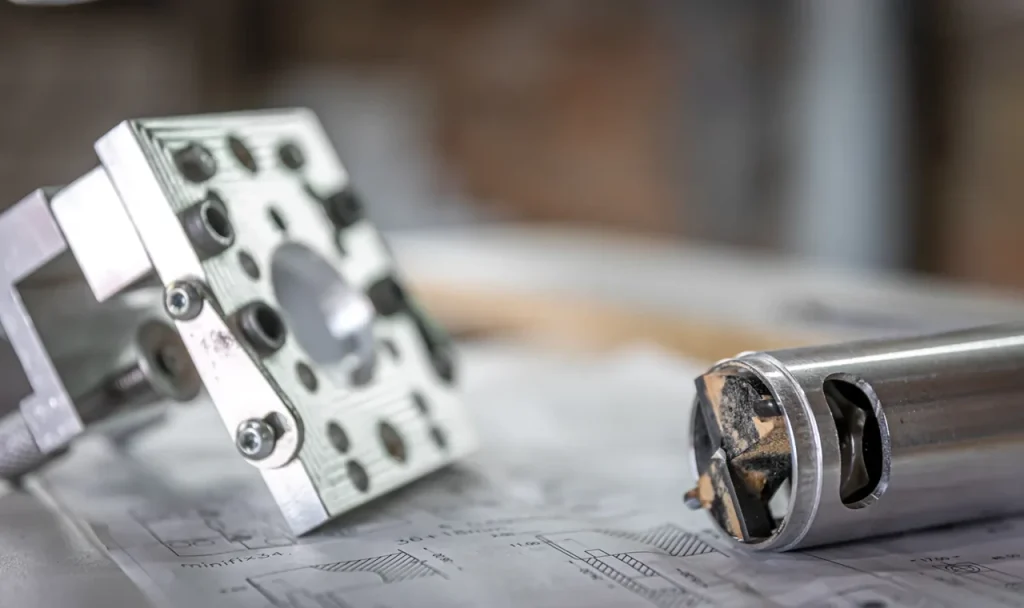
Factors that increase machining cost for hardened alloy steel
Factors that increase machining cost for hardened alloy steel include higher cutting loads, faster tool wear, more conservative cutting conditions, and added process control to protect finish and dimensional stability. If the geometry includes interrupted cuts, narrow grooves, or long unsupported sections, these effects become stronger.
This is why factors that increase machining cost for hardened alloy steel often come from the interaction of hardness and geometry, not hardness alone. A simple turned shaft may still be manageable. A complex precision component may become much more expensive after hardening.
Cost implications of using marine grade stainless components
Cost implications of using marine grade stainless components usually start with higher raw material cost and continue with more demanding machining behavior. Stainless often machines slower and can raise tooling cost because heat stays near the cutting edge. If the design also needs a high-grade corrosion-resistant stainless family, the initial cost gap grows.
But the lifecycle view can reverse that decision. In aggressive wet service, stainless may avoid coating maintenance, replacement downtime, and corrosion-related scrap. So a higher purchase price does not always mean a higher ownership cost.
Impact of carbon content on alloy steel machinability
The impact of carbon content on alloy steel machinability is tied to hardness response. As carbon content rises, strength and hardness can improve, but machinability usually becomes less forgiving. Tool wear increases and process stability may narrow.
This is important when comparing low alloy steel and stainless steel for a machined part. A lower-strength alloy steel may be easier and cheaper to machine than either a hardened alloy steel or a difficult stainless grade. So material selection should follow the actual load and environment requirement, not a preference for maximum strength.
Table: Industry-level cost drivers across raw material, machining time, tooling wear, finishing, and lifecycle
| Hnací síla nákladů | Alloy Steel | Nerezová ocel | Buyer implication |
|---|---|---|---|
| Raw material | Obvykle nižší | Obvykle vyšší | Stainless often raises entry cost |
| Doba obrábění | Often lower in easier conditions | Often higher due to heat and work hardening effects | Complex stainless parts can cost more to machine |
| Tooling wear | Moderate to high if hardened | Mírná až vysoká v závislosti na třídě | Both need grade-specific review |
| Finishing/protection | May need coating or plating for wet service | Often less need for protective finishing | Alloy steel can shift cost to finishing |
| Lifecycle in aggressive environments | Can be high due to maintenance and corrosion | Often lower because of durability | Environment can outweigh purchase price |
Where each material fits best in real applications
The best selection becomes clearer when tied to application type.
Choosing stainless or alloy steel for automotive CNC parts
When specifying custom cnc steel parts for automotive applications, the choice between stainless and alloy steel usually depends on whether the component is load-driven or corrosion-driven. Gears and shafts are the clearest case for alloy steel because they need hardness, wear resistance, and toughness. The case evidence supports alloy steel in these parts because it reduces failure under impact and abrasion.
On the other hand, if an automotive component faces road salt, moisture, and visible corrosion requirements, stainless may be justified. The decision should follow the actual failure mode, not a broad assumption about the industry.
Why food processing equipment parts require stainless steel over alloy steel
Food processing machine parts consistently require stainless steel over alloy steel because of moisture exposure, cleaning chemicals, and surface cleanliness demands. In food equipment, the part often sees repeated washdown and must resist rust without depending on coatings that can wear or chip.
Case evidence shows stainless steel was used in processing machinery and surfaces because it maintained corrosion resistance and cleanliness, which extended service life. For exposed wet-zone parts, alloy steel introduces avoidable corrosion and maintenance risk.
Tensile strength comparison of low alloy steel and stainless steel for structural and aerospace parts
The tensile strength comparison of low alloy steel and stainless steel supports alloy steel for many structural and aerospace uses where high load capacity and heat treatment response matter. With alloy steel reported at 758–1882 MPa and stainless at 515–827 MPa, the available design window is wider on the alloy side.
The aerospace case reflects this logic. Alloy steel was used in structural parts because heat treatment improved tensile strength and wear resistance under demanding conditions. This does not mean stainless has no aerospace role. It means that where mechanical performance dominates, alloy steel often gives more options.
Case matrix: Automotive gears and shafts, food processing equipment, aerospace structural parts, marine hardware
| Aplikace | Preferred material | Main reason | Main caution |
|---|---|---|---|
| Automotive gears and shafts | Legovaná ocel | High hardness, toughness, wear resistance | Protect from corrosion if exposed |
| Food processing equipment | Nerezová ocel | Corrosion resistance and cleanable surface in wet service | Grade choice still matters for fabrication |
| Aerospace structural parts | Legovaná ocel | High tensile strength and heat-treatment response | Corrosion control may still be needed |
| Námořní hardware | Nerezová ocel | Better resistance to pitting and general corrosion | Avoid poor grade pairing and galvanic issues |
How to evaluate alloy steel vs stainless steel for a project
The right choice of steel depends on a clear reading of service conditions first; from there, the decision moves to manufacturing and cost.
What buyers and engineers should check before specifying either material
Before locking the material, check the load case, wear mode, humidity or chemical exposure, expected cleaning method, machining intensity, weld requirements, and whether the part will contact other metals in a wet environment. Also check whether corrosion protection depends on a coating, because that changes maintenance risk.
This is where many sourcing errors begin. A drawing may specify a strong alloy steel without accounting for washdown, or specify stainless without checking machining difficulty and cost.
Use direct trigger conditions where possible. Continuous washdown, chloride exposure, cosmetic surface requirements, or limited coating maintenance usually push selection toward stainless, while dry service with high load, wear, or heat-treatment-driven strength often supports alloy steel with defined protection. If post-heat-treatment distortion, thin walls, or very tight finish tolerances are critical, confirm the material-condition route before release to sourcing.
How to choose between carbon steel, alloy steel, and stainless steel
How to choose between carbon steel, alloy steel, and stainless steel comes down to the main service driver. If the part mainly needs basic strength at low cost and corrosion is limited, carbon steel may be enough. If the part needs higher strength, hardenability, wear resistance, or impact performance, alloy steel is often the better step up. If the part works in wet, chemical, hygienic, or marine conditions, stainless steel usually becomes the safer starting point.
This sequence helps simplify selection. Start with environment, then mechanical demand, then manufacturing route.
Which questions matter most: load, corrosion, welding, machining, hygiene, and service life?
The questions that matter most are tied to failure risk. Load tells you whether stainless has enough strength or whether alloy steel is needed. Corrosion tells you whether alloy steel will rust too quickly. Welding tells you whether the chosen grade may create weld-zone cracking or local corrosion issues. Machining affects cost and tolerance stability. Hygiene matters in food and wet-process equipment. Service life forces the buyer to compare initial savings against maintenance and replacement.
These checks are more useful than asking which material is “better” in general. In fact, each material is better only within a certain operating envelope.
Decision matrix: When to prioritize strength, corrosion resistance, wear, or total lifecycle cost
| Priorita | Material direction | Důvod |
|---|---|---|
| Maximum strength and hardness | Legovaná ocel | Wider high-strength and high-hardness range |
| Corrosion resistance in wet or chemical service | Nerezová ocel | Chromium passive layer provides inherent protection |
| Wear resistance under load | Legovaná ocel | Heat treatment and hardness support surface durability |
| Hygiene and repeated washdown | Nerezová ocel | Better surface stability without dependence on coatings |
| Lower purchase cost for dry service | Legovaná ocel | Usually lower raw material and easier machining |
| Lower long-term cost in aggressive environments | Nerezová ocel | Reduced maintenance and corrosion replacement risk |
Practical selection guide and final comparison questions
In short, alloy steel is usually the better choice when the part is load-driven, wear-driven, and kept out of aggressive wet service. Stainless steel is usually the better choice when corrosion exposure, hygiene, or marine conditions control the failure risk. The trade-off is simple but important: alloy steel often gives more strength per initial cost, while stainless often gives lower long-term risk in harsh environments.
Using alloy steel where corrosion dominates can lead to rust, coating failure, and maintenance burden. Using stainless where high hardness and easy machining dominate can create avoidable cost and processing difficulty. The safer path is to define the real service environment first, then check manufacturability, then compare total cost across the part life.
Is alloy steel or stainless steel better for corrosion resistance?
Stainless steel is better for corrosion resistance because it contains at least 10.5% chromium, which forms a passive protective layer. Alloy steel can corrode quickly in humid, washdown, or marine service unless coatings and maintenance are reliable.
Which material is easier to machine and hold tolerance on?
In many CNC applications, alloy steel is easier to machine, especially if it is not heavily hardened. Stainless steel’s lower thermal conductivity and grade-dependent work hardening can make finishing and dimensional control harder, though actual behavior depends on the specific grade and hardness condition.
Which material is better for long-term cost in aggressive environments?
Stainless steel is often better for long-term cost in aggressive environments because it reduces corrosion-related maintenance, finishing needs, and replacement frequency. Alloy steel may cost less at purchase but can become more expensive if coatings fail or corrosion drives downtime.
References needed: ASTM/AISI grade standards, industry reports, and academic corrosion/welding sources
Use traceable standards context where claims depend on grade or condition. Typical examples include material specifications for alloy and stainless grades, mechanical test standards, hardness test standards, corrosion guidance, and qualified welding procedure standards. Where possible, tie property, weldability, and corrosion statements to the relevant grade specification instead of citing only general organizations.
Nejčastější dotazy
Yes. In humid, wet, or chemical environments, alloy steel can rust unless it is protected by coatings, plating, oiling, or another barrier system. If that protection is damaged, corrosion can start locally.
Its main disadvantage is lower inherent corrosion resistance than stainless steel. It can also become expensive to machine if hardness is high, especially in complex geometries.
When stainless steel and alloy steel are paired in a wet environment, galvanic corrosion can become a risk. The alloy steel side is usually more vulnerable, so insulation or other design precautions may be needed.
Not as a general rule. Many alloy steels are chosen because they offer high strength, toughness, and impact resistance, but actual behavior depends on grade, heat treatment, and part design.
There is no single number that applies across projects. Cost usually depends on material type, hardness, geometry, machining time, tooling wear, finishing, and whether corrosion protection is needed after machining.

 Czech
Czech  English
  German
  French
  Italian
  Spanish
  Polish
  Japanese