
High precision micro CNC machining is a specialized manufacturing method that offers unmatched precision in micro cnc machining, as it creates tiny, accurate components—micro machining produces parts compatible with various industries, and reliable high precision micro CNC machining services ensure successful micro cnc machining for even the most demanding small-part needs.
What micro CNC machining is and why it matters
Micro CNC machining is a precision manufacturing approach for very small parts or sub-1 mm features (fine holes, tiny radii, etc.) that standard CNC struggles to handle consistently. For engineers, feature scale, tolerance sensitivity and process stability define it—sub-1 mm features make tool stiffness, runout and inspection far more critical than conventional machining, essential for shrinking medical, electronics and aerospace products needing accuracy and repeatability.
What counts as micro CNC machining: minimum feature size limits in micro CNC machining
A practical definition from the available research is that micro CNC machining involves components or features smaller than 1 mm. That threshold is useful because below it, normal assumptions about cutting behavior become less reliable. Tool diameters become very small, and even slight runout or vibration can become a large percentage of the intended cut.
For buyers and designers, minimum feature size limits in micro CNC machining should be treated as a process capability question, not just a CAD question. A model can contain a 0.1 mm groove or hole, but that does not mean it is manufacturable in the chosen material with the required tolerance and finish. In many cases, a feature near 0.1 mm may be possible only under narrow conditions, and only if the surrounding geometry supports tool access and rigidity.
So when asking what is considered micro-machining, a better working rule is this: if key features are under 1 mm and function depends on tight control of those features, the part should be reviewed as a micro machining project.
How micro CNC machining differs from standard CNC for sub-1 mm features
Standard CNC methods and micro CNC machining use the same basic principles: controlled cutting with programmed motion. The difference is how sensitive the process becomes when tools and features get very small.
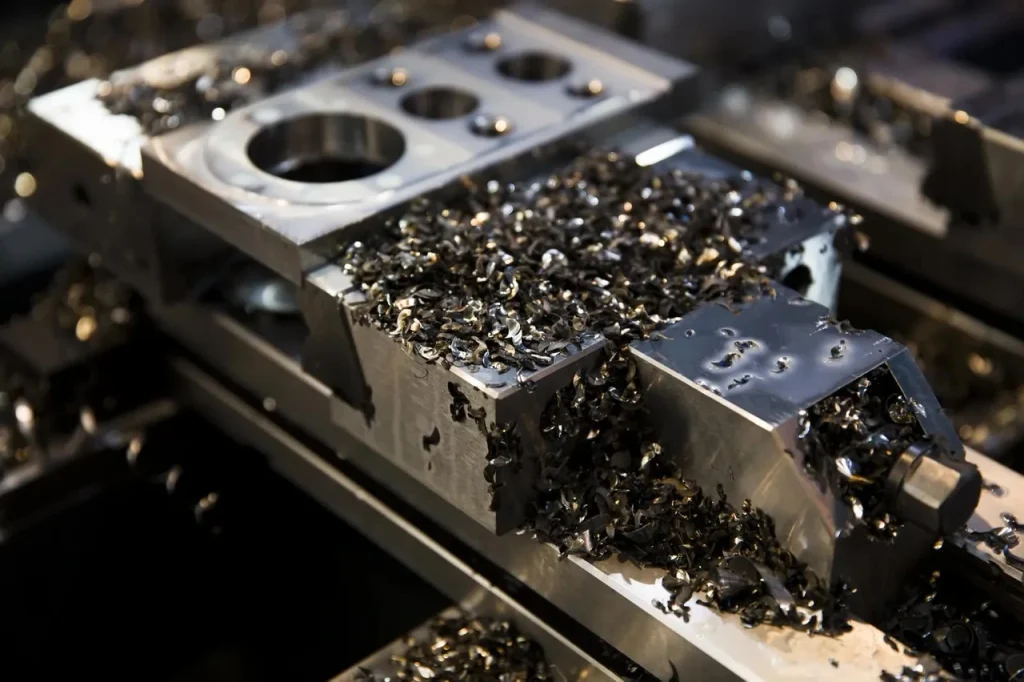
For sub-1 mm features, the cutting tool has much less stiffness. Tool deflection can change the actual cut width or depth. A small amount of spindle runout can become large enough to overload one flute and break the tool. Heat buildup during micro machining of metal parts also becomes harder to manage because the tool is tiny and the cutting zone is small. Chips have less room to escape, so chip evacuation problems in micro machining can damage edges, scratch surfaces, or cause tool failure.
Inspection also changes. Measuring a 10 mm pocket is routine. Measuring a 0.2 mm hole, a narrow slot, or a thin wall with confidence often needs specialized methods. This is one reason standard CNC machines may produce a micro feature in a trial cut but still be a poor production choice.
Why miniaturization is driving demand in medical, electronics, and aerospace
Miniaturization is the main demand driver behind micro CNC machining. As products shrink, internal features and mating surfaces also shrink. In medical work, custom implants and device components often need fine detail, high surface quality, and tight tolerance control. The research provided points to tolerances of ±0.005 mm for medical implants and optics, which shows how demanding this area can be.
In electronics, compact assemblies need small parts that fit limited space. Even if some electronics parts can accept looser tolerances than medical or aerospace components, they still push demand for small, repeatable machined details. In aerospace, performance pressure supports the use of micro-holes, lightweight precision components, and complex geometries that improve cooling or reduce mass.
There is also a design trend toward custom or low-volume parts. That makes machining attractive because it can produce small batches and custom variants without dedicated hard tooling.
Table: typical feature sizes, tolerance ranges, and part examples
| Kategorie | Typical feature scale from research | Tolerance information from research | Example parts from research |
|---|---|---|---|
| Micro CNC parts/features | Smaller than 1 mm | Varies by part and process | Fine holes, miniature features, small precision components |
| Medical implants and optics | Sub-1 mm features may apply | ±0,005 mm | Patient-specific implants, optical components |
| Consumer electronics components | Small features | ±0.05 mm* | Cases, mounts |
| Mechanical mini-parts | Small features | ±0.1 mm* | Enclosures, connectors |
| High-end micromachining systems | Micro-scale features | Within a few micrometers* | Precision micro components |
*These figures appear in the supplied research but were noted as single-source or less fully verified, so they should be treated as directional, not universal.
Can your part be made with micro CNC machining?
The first feasibility check is simple: does the design ask for small features, tight tolerances, difficult materials, or all three at once? If yes, the part may fit micro CNC machining, but it also carries more process risk. A good review should focus on material, geometry, access, and whether a standard CNC platform can hold the process stable.
Material selection for high precision micro parts
Material selection for high precision micro parts affects tool wear, burr behavior, thermal response, and dimensional control. The supplied research highlights both metals and high-performance polymers, including PEEK and Ultem, as relevant micro-machining materials for medical and robotics applications.
At micro scale, material behavior can determine whether a feature is practical. Ductile metals may form burrs along very small edges. Harder materials may increase tool wear and raise breakage risk. Polymers can be useful where low weight, electrical properties, or biocompatibility matter, but they can also bring heat sensitivity or holding issues during machining.
A buyer should review at least four points before locking material choice: required function, expected burr risk, tolerance sensitivity, and inspection method. If a design needs sub-1 mm holes in a difficult alloy plus tight positional control, the material may be a bigger constraint than the machine itself.
Geometry checks: thin walls, deep micro-holes, and inaccessible features
Geometry is often the real limiter in micro work. Risks of machining thin-wall miniature components increase as wall thickness falls and aspect ratio rises. Thin walls can deflect during cutting, which shifts dimensions and harms finish. Deep micro-holes can be hard to drill cleanly because chips have little room to leave the cut. Inaccessible features may simply be impossible with a rotating tool if the tool cannot enter and exit without rubbing or collision.
Three geometry checks are useful early:
- Thin walls: ask whether the wall can resist cutting force without moving.
- Deep holes: ask whether depth relative to diameter will create chip packing or drill wander.
- Tool access: ask whether the tool path exists in real space, not just in CAD.
If the answer is weak on any of these, redesign or another process may be needed. Hybrid manufacturing is relevant here. The research notes that additive and subtractive methods may be combined for features such as conformal cooling channels or other inaccessible internal geometry.
Limitations of standard CNC machines for micro parts
Limitations of standard CNC machines for micro parts usually show up in repeatability, not basic motion. A conventional machine may have enough nominal resolution to move to a tiny coordinate. That does not mean it can cut a tiny feature well.
For micro parts, spindle runout, thermal drift, machine vibration, fixture quality, and toolholding all matter more. A machine built for larger tools and heavier cuts may not control tiny cutters well enough for stable production. Tool changes, probing, and coolant delivery can also be less suitable for very fine tools and narrow cutting zones.
This is why “small CNC machine” should not be confused with micro machining capability. Hobby or compact systems can make small objects, but professional micro-scale precision needs a process chain built for tiny tools, fine features, and high-confidence inspection.
What is the smallest feature possible in micro CNC machining?
The supplied research supports a general definition of micro features as smaller than 1 mm. It does not provide a universal smallest feature value, and in practice there is no single answer because material, geometry, tool access, and tolerance all change the limit. A 0.1 mm feature may be possible in some cases, but it should be treated as a feasibility review item, not a standard expectation.
How micro CNC machining works in practice
Micro CNC machining uses familiar processes such as milling, turning, and drilling, but the setup is more sensitive. Tool geometry, workholding, spindle behavior, and chip control all need closer attention because the scale is unforgiving.
Micro machining centers vs micro lathes
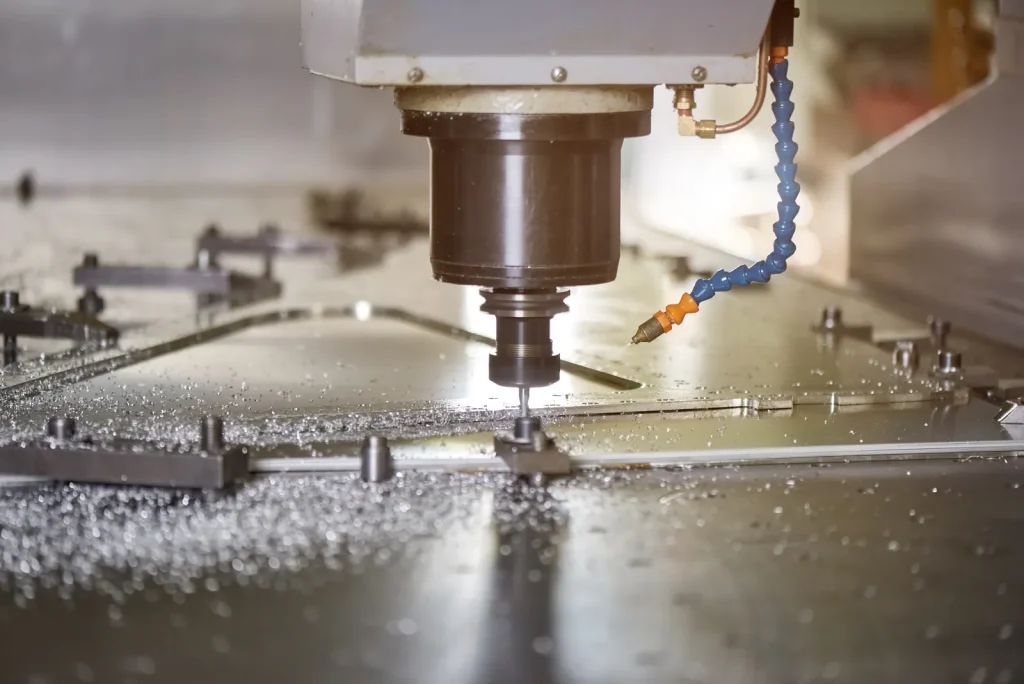
Micro machining centers are used when the part needs small milled features, pockets, slots, profiles, or drilled details across several faces. They are suited to miniature prismatic parts and multi-axis work where orientation changes reduce setups.
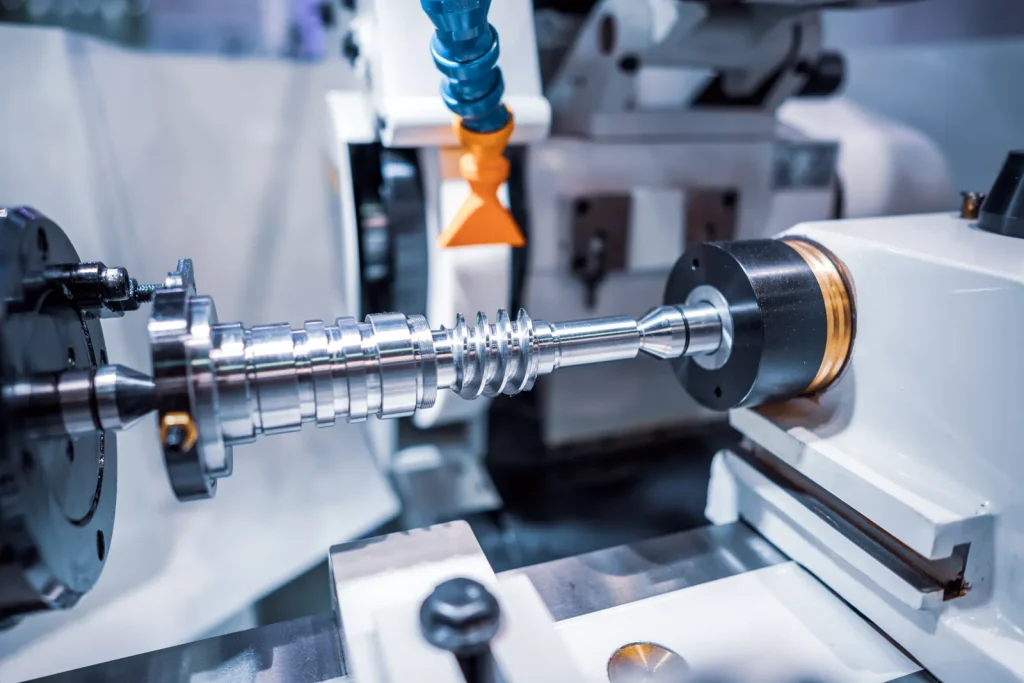
Micro lathes are better for rotational parts such as pins, shafts, miniature nozzles, and other cylindrical components. The choice between micro machining centers vs micro lathes should follow part geometry first. If most critical features are concentric around an axis, turning is often the cleaner path. If features are non-axisymmetric, milling is more likely.
The process route also affects inspection and fixture design. A turned part may gain better support during cutting. A milled micro part may need very careful workholding if there is limited clamping area.
Micro turning vs conventional turning for small parts
Micro turning vs conventional turning for small parts is not only a matter of scale. At very small diameters, workpiece support becomes a major issue. Slender parts can bend away from the tool, so the process may need guide support or a machine architecture built for miniature shafts.
The cutting edge geometry also becomes more dominant. Edge radius, nose radius, and tool sharpness can affect whether the tool shears material cleanly or pushes it. That changes surface finish, burrs, and diameter control. So a turned feature that seems simple on a standard lathe can become unstable when the diameter drops far enough.
How cutting tool geometry affects micro machining
How cutting tool geometry affects micro machining is one of the most important process questions. At micro scale, flute count, edge sharpness, helix, and effective edge radius all change cutting forces and chip formation. If the cutting edge is too large relative to the chip load, the tool may rub more than it cuts. That can raise heat, smear the surface, and increase burr formation.
Very small end mills are also more sensitive to runout. If one flute sees more load than the others, tool life drops sharply. Tool geometry therefore has to match not just material, but also spindle quality and planned depth of cut. This is why tooling strategy is often the practical limit in micro milling.
Process diagram: milling, turning, drilling, and hybrid workflows
| Process route | Nejvhodnější pro | Main strengths | Main constraints |
|---|---|---|---|
| Micro milling | Small slots, pockets, contours, non-round features | Flexible geometry, multi-face capability | Tool deflection, burrs, finish, runout |
| Micro turning | Small shafts, pins, nozzles, rotational parts | Good concentricity and cylindrical control | Slender-part deflection, support needs |
| Micro drilling | Fine holes, injector features, cooling holes | Efficient for hole creation | Chip evacuation, drill breakage, hole quality |
| Hybrid workflow | Parts with inaccessible or internal features | Can combine strengths of multiple methods | More process planning, more handoff risk |

Where micro CNC machining performs well and where it does not
Micro CNC machining is strong when the part needs custom geometry, tight dimensional control, and production flexibility. It is weaker when features are too inaccessible, throughput is the main driver, or another process is better suited to the geometry.
Advantages of micro CNC machining for precision, repeatability, and custom parts
The strongest case for micro CNC machining is precision on complex, low-volume, or custom parts. The supplied case material points to patient-specific implants, aerospace components with micro-holes, and custom robotic end-effectors. These are all examples where flexibility matters as much as size.
Repeatability is also a key advantage if the process is built correctly. In fact, advanced systems with sensors are reported to maintain tolerances within a few micrometers in micromachining, though that point is single-source and should be treated carefully. Still, the direction is clear: micro CNC is attractive where geometry changes often, but quality must remain controlled.
Trade-offs in minimum feature size, setup sensitivity, and throughput
The trade-offs are significant. As feature size shrinks, setup sensitivity rises. Small errors in tool setting, workholding, or spindle condition can create large relative errors on the part. Throughput can also drop because cuts are lighter, setups are more delicate, and inspection takes more effort.
So even when a part is technically machinable, the process may not be efficient. This is important for buyers comparing prototype and production plans. A one-off micro part may be feasible with careful handling. A production run with the same design may expose weak points in fixturing, burr control, or cycle stability.
When micro EDM is better than micro milling
When micro EDM is better than micro milling usually comes down to feature access, hardness, and burr risk. The supplied outline requires this comparison, and the research supports hybrid process use when geometry includes inaccessible features. If a design has very small internal details, difficult sharp internal corners, or hard conductive materials, EDM may be a better fit than trying to force a tiny milling cutter into the feature.
Micro milling still makes sense for many external and accessible features, especially where material choice, geometry, or process speed favors cutting. The decision point is whether tool access and cutting force can be managed without excessive breakage or burrs.
Swiss-type lathes for long, slender, high-precision miniature parts
Swiss-type lathes for long, slender, high-precision miniature parts are specifically called out in the research. Their value is support. Long, narrow parts tend to deflect if too much unsupported length is exposed during turning. A Swiss-type setup reduces that risk and is widely suited to miniature cylindrical components with strict precision needs.
This makes them a strong process option for pins, nozzles, shafts, and similar geometries where concentricity and straightness matter. If a part is both slender and rotational, this route should be considered early instead of treating it as a standard turning job.
Common failure modes in micro machining
Micro CNC machining is an advanced precision process that bridges traditional and miniature manufacturing. It offers high precision in micro components and is compatible with various materials for micro applications. This method allows machining to produce tiny, complex parts reliably, and micro machining requires strict process control to support industries that utilize micro machining for fuel system components and precision-driven products.
Tool deflection in micro end milling
Tool deflection in micro end milling is a common cause of undersized or tapered features. Tiny cutters bend under load more easily than larger tools. If the tool deflects away from the wall, the feature comes out too large or with poor straightness. If the load varies, dimensions can drift from part to part.
This risk rises with longer tool stick-out, harder materials, and deeper radial engagement. For thin walls and narrow slots, deflection can combine with part movement and make the error worse.
Burr formation in miniature metal parts machining
Burr formation in miniature metal parts machining is often more serious than buyers expect. On a larger part, a burr may be easy to remove without harming function. On a micro part, the burr can be large relative to the feature itself. It can block a small hole, interfere with fit, or create handling and cleaning issues.
Burr risk depends on material ductility, tool sharpness, cut direction, and support at the edge. If the design has many intersecting micro-features, burr management should be part of feasibility review from the start.
Surface finish issues in micro milling
Surface finish issues in micro milling often come from rubbing, vibration, or poor chip formation. If the chip load is too low relative to edge radius, the tool may smear the surface instead of cutting cleanly. If the tool is too flexible or runout is high, the tool path can leave waviness or tearing.
For parts used in medical, optical, or sealing-related applications, finish is not cosmetic. It can affect function, cleanliness, friction, and biocompatibility. So finish risk should be reviewed together with tolerance risk.
Runout problems in micro CNC milling
Runout problems in micro CNC milling are especially damaging because tiny tools have little reserve strength. Even slight eccentricity can make one flute cut more than intended. That increases force, heat, and wear on one side of the tool, which can lead to poor finish or sudden breakage.
Runout also changes actual feature size. A slot or hole may cut larger than programmed, or tool life may vary enough to affect repeatability over a batch. In microwork, runout is not a secondary machine issue. It is a primary process variable.

Accuracy risks and process constraints to evaluate
Accuracy in micro machining is the result of many small effects adding together. For a buyer or engineer, the practical task is to identify where the stack-up can become unstable.
Factors affecting accuracy in micro precision machining
Factors affecting accuracy in micro precision machining include machine stability, spindle condition, tool geometry, material behavior, thermal effects, workholding, and inspection method. The supplied research confirms that very tight tolerances such as ±0.005 mm are relevant in medical implants and optics. Reaching that level in practice means the whole process chain must be aligned.
A tolerance on the drawing does not describe risk by itself. A simple outside diameter at ±0.005 mm may be manageable. A deep micro-pocket, tiny wall, or cross-hole at the same tolerance may be much harder because more error sources interact.
Fixturing difficulties for extremely small components
Fixturing difficulties for extremely small components are a major but often hidden risk. Small parts offer little contact area for clamping. Too much force can deform them. Too little force lets them move under the tool. Thin features can also distort after release if residual stress or cutting heat was significant.
This is why fixture strategy should be reviewed early. If a part has no stable datum surfaces or too little holding area, the process may require redesign, tabs, carrier frames, or a different route.
Chip evacuation problems in micro machining
Chip evacuation problems in micro machining can damage both the tool and the part. Chips trapped in a tiny slot or hole may recut, scratch the surface, break the tool, or distort the feature. This is especially important in deep micro-holes and narrow cavities where there is little space for clearance.
Designs with many small blind features deserve special caution. Even if geometry is reachable, poor chip exit can make the process unreliable.
Heat buildup during micro machining of metal parts
Heat buildup during micro machining of metal parts is another source of inaccuracy. Tiny tools do not carry away much heat, and the cutting zone is concentrated. Heat can soften the tool, expand the workpiece locally, and change how the material cuts.
The effect is usually not a dramatic burn mark. More often it appears as changing dimensions, shortened tool life, smeared finish, or extra burrs. If the material is heat-sensitive or the tolerance is tight, thermal control becomes part of the feasibility decision.
Tolerances, inspection, cost, and lead time factors in micro CNC machining
Buyers usually want four answers at once: can it hit tolerance, how will it be measured, what will drive cost, and how long will it take. In micro work, those four are tightly linked.
Micro CNC machining tolerance challenges and what ±0.005 mm means in practice
Micro CNC machining tolerance challenges start with scale. A tolerance of ±0.005 mm can be realistic for some medical implants and optics according to the supplied research. In practice, that means the process has very little room for variation from tool wear, runout, fixture shift, or thermal change.
For a buyer, the important question is not whether that tolerance exists somewhere in the industry. It is whether it applies to the exact feature, material, and geometry on the drawing. A small external diameter may be far less risky than a tiny internal slot or micro-hole at the same tolerance.
Inspection methods for miniature machined components
Inspection methods for miniature machined components should match the feature size and function. Very small holes, edges, and thin walls can be hard to verify with ordinary shop-floor tools. At minimum, a buyer should expect the inspection plan to be reviewed alongside the machining plan, because some features may be hard to measure reliably even if they can be cut.
This matters because an unmeasurable tolerance is a process risk. If the feature is critical but hard to inspect, more time and cost may go into metrology than machining.
Cost drivers in micro CNC machining services
Cost drivers in micro CNC machining services are usually tied to process sensitivity. Geometry complexity raises programming and setup effort. Very small tools increase breakage risk and replacement cost. Difficult materials add time and tool wear. Tight tolerances can increase scrap risk and inspection time. Burr control and finishing can also become major labor inputs for miniature parts.
The key point is that micro part cost is rarely driven by material volume alone. A tiny part can be expensive because precision and handling dominate the process.
Lead time factors for custom micro machined parts
Lead time factors for custom micro machined parts include process planning, tooling availability, fixture design, inspection preparation, and any finishing or cleaning steps needed after machining. A part with patient-specific geometry or unusual material may take longer to prepare than a standard miniature component, even if the final cycle time is short.
For buyers, the practical step is to check whether the design creates extra risk in tooling, workholding, or metrology. Those are common reasons why lead time expands for micro jobs.
Industry applications and real use cases
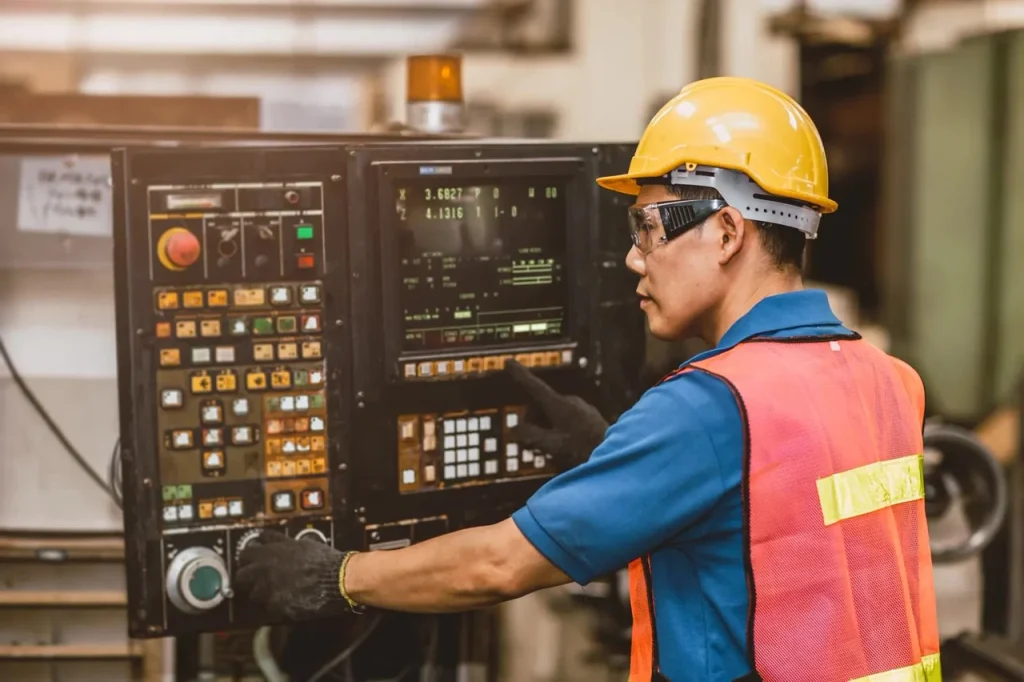
Micro CNC machining serves diverse high‑precision industries with unique demands. This advanced process is compatible with various materials, allows custom production, and creates reliable components for medical, aerospace, and robotics. Micro CNC machining offers consistent quality and produces critical parts that drive innovation across sectors.
Medical implants: patient-specific parts, biocompatibility, and tight tolerances
The supplied research gives a clear example in medical implants. Standard implant sizes may not fit every patient well, so custom micro CNC machining can be used to produce patient-specific parts based on imaging data. The cited tolerance level is ±0.005 mm, with biocompatibility and surface quality as key concerns. Materials such as PEEK appear in the research for this type of work.
The decision point here is that medical micro parts are rarely just “small.” They often combine custom geometry, strict fit, and high consequence if the part is wrong.
Aerospace turbine blades and fuel injector nozzles with micro-holes
The research also points to aerospace turbine blades and fuel injector nozzles as use cases for micro-holes and other precision features. In turbine work, multi-axis micro CNC machining is used for complex shapes and cooling-related holes. The purpose is not only size reduction but also thermal performance, weight control, and surface quality.
For injector nozzles and similar parts, micro drilling and milling support functional holes that affect flow and performance. These are features where burrs, hole quality, and positional control matter as much as nominal diameter.
Robotics end-effectors in high-performance polymers such as Ultem
In robotics, custom end-effectors may need lightweight, heat-resistant parts tailored to product geometry. The supplied case material describes gripper jaws machined in Ultem so that the robotic system can grip unique shapes with less weight and improved motion efficiency.
This use case shows where micro CNC machining fits well: medium to low volume, geometry-specific parts that need more precision and material choice than molded stock parts can offer.
Table: application-by-industry matrix with feature, material, and tolerance needs
| Průmysl | Typical micro feature need | Material examples from research | Tolerance information from research |
|---|---|---|---|
| Lékařské stránky | Patient-specific small features, fine mating surfaces | PEEK, biocompatible materials | ±0.005 mm cited for implants |
| Letectví a kosmonautika | Micro-holes, complex lightweight features | Advanced aerospace materials | Tight tolerances within micrometers mentioned* |
| Fuel systems | Precision micro-holes in nozzles | Metal parts | High precision required; no universal value given |
| Robotika | Small custom gripping features | Ultem | Application-specific; no universal value given |
| Elektronika | Small component details | Metals and engineering materials | ±0.05 mm cited for some components* |
*Directional only based on the supplied research and uncertainty notes.
How to evaluate a micro CNC machining supplier or process route
A good evaluation should focus on whether the process route fits the part, not whether the provider uses “micro” as a label. Capability review should cover machine stability, tooling approach, inspection plan, and material experience. For high-precision micro CNC machining services, companies like Uneed specialize in CNC soustružení and CNC milling of small, complex components, providing reliable guidance on feasibility, material choice, and tooling for sub-1 mm features.
Checklist: capability review for machines, tooling, inspection, and materials
Use this checklist before committing a micro machining route:
| Review area | Co zkontrolovat |
|---|---|
| Stroje | Is the process based on equipment suited to sub-1 mm features, not just general CNC work? |
| Nástroje | Are tiny tools, toolholding, and low-runout conditions part of the plan? |
| Geometrie části | Are thin walls, deep micro-holes, and access limits reviewed before production? |
| Materiály | Has the chosen material been reviewed for burr behavior, heat response, and tool wear? |
| Inspekce | Is there a clear plan for measuring the smallest critical features? |
| Process route | Would turning, milling, Swiss-type turning, EDM, or a hybrid route reduce risk? |
| Tolerance risk | Does the required tolerance apply to easy external features or difficult internal geometry? |
| Propustnost | Is the design suitable for stable repeat production, or only for careful low-volume work? |
How do you choose between micro milling, micro turning, and hybrid methods?
Choose micro milling when the part needs non-round features, slots, pockets, or multi-face geometry. Choose micro turning when the part is mainly cylindrical and concentricity is critical. Consider hybrid methods when the design includes inaccessible internal features or when one process alone creates high risk in burrs, access, or tool breakage.
What should buyers check before sending a CAD model for micro CNC machining?
Check whether any critical feature is smaller than 1 mm, especially holes, slots, wall thicknesses, and corner radii. Also review material choice, tolerance placement, and whether the smallest features can be inspected after machining. If the design depends on inaccessible internal geometry, include that in the first feasibility discussion instead of assuming standard milling can reach it.
References needed: standards bodies, industry reports, and academic sources for validation
The supplied source set is useful for directional industry context, but it also contains uncertainty. For formal validation, buyers should compare process assumptions against recognized standards bodies, academic work on micromachining, and institutional metrology guidance. That is especially important when a part requires very tight tolerances, regulated materials, or formal quality documentation.
Micro CNC machining is best used when a part has sub-1 mm features, needs precise control, and benefits from flexible production rather than dedicated tooling. It performs well for custom medical components, miniature cylindrical parts, precision holes, and small functional features in advanced metals or polymers. It becomes risky when thin walls, deep holes, inaccessible geometry, burr sensitivity, or inspection limits are ignored.
So the decision logic is simple. Use micro CNC machining when the part’s function depends on small, accessible, inspectable features and when the process route matches the geometry. Avoid forcing it when another method such as EDM, Swiss-type turning, or a hybrid workflow reduces risk. Before release, review material behavior, tool access, fixturing, chip control, and how the tightest feature will actually be measured.
Nejčastější dotazy
Micro-machining—a subset of precision machining linked to micro cnc machining—means machining parts/features smaller than 1 mm. It requires specialized cnc technology distinct from traditional cnc machining and is key to micro fabrication for micro components.
Micro cnc machining typically handles sub-1 mm features, with tolerances for micro parts key to achievable size. No single smallest limit exists, as it depends on material and geometry, using micro cnc machines for small scale machining and extremely small features.
Micro-milling (part of micro cnc milling and micro manufacturing) uses small cutting tools (micro tools) like end mills for sub-1 mm work, used in micro machining centers to produce precision parts with quality in micro machining.
Key challenges in micro cnc machining include tool deflection and heat buildup, harder at small scale; achieving precision in micro cnc requires controlling machining parameters for miniature metal parts and complex micro projects.
Medical, electronics, aerospace, and robotics—key applications of micro cnc machining—rely on precision cnc machining services for parts with high precision, driving the market for micro cnc machining.
Yes, 0.1mm features can be machined with micro cnc machining, requiring precision micro machining and micro-precision machining expertise; micro edm may assist, with cnc micro machining offering extreme precision for components.

 Czech
Czech  English
  German
  French
  Italian
  Spanish
  Polish
  Japanese