
Before delving into the specifics of Wire EDM machining, it’s essential to first establish its core definition and technical boundaries. Unlike conventional methods, Wire EDM doesn’t “cut” metal through mechanical force; instead, it’s a process that precisely “erodes” material using controlled electrical sparks. Grasping this fundamental distinction is the first and most critical step in determining if this technology is the right fit for your part and in avoiding common pitfalls during the selection process.
Wire EDM Definition: How Wire Electrical Discharge Machining Works with a Wire Electrode
Drut Obróbka elektroerozyjna (wire electrical discharge machining) is a machining process that removes metal using controlled electrical discharges between a thin moving wire electrode and a conductive workpiece. The wire does not “cut” by contact. Instead, the electrical discharge between the wire and the workpiece erodes material in a narrow gap while the wire follows a programmed path.
Many shops still call it “wire burning” or wire erosion because the removal mechanism is spark erosion rather than chip formation. In practice, a wire EDM machine feeds a fine wire (often described as brass wire in industry discussions) through the part while the machine controls the wire path and maintains a stable spark gap. A dielectric fluid supports the process by insulating until a discharge occurs and by carrying eroded particles away from the cut zone.
For an engineering buyer, the key point is that wire EDM is not a variant of Frezowanie CNC. It is electrical discharge machining used to generate precise profiles in conductive materials, often where conventional machining methods struggle with hardness, distortion risk, or internal geometry access.
Best-Fit Parts for Wire EDM Machining: Complex Shapes and Precision EDM Parts
Wire EDM machining is usually a good fit when the part geometry, tolerance stack, or material pushes you into low-risk profile cutting rather than force-based cutting. Typical “best fit” requirements look like this:
- The part needs complex 2D contours, precision profiles, or intricate geometry that would require many tool changes or custom tooling with traditional machining.
- The design includes fine internal features such as narrow slots, tight internal radii, or thin webs where milling forces can cause deflection.
- The part is made from hard alloys (edm for hard metals) where tool wear, burr control, or heat input from other methods becomes a main driver of cost and quality.
- The part needs clean edges with minimal or no deburring steps, especially for tooling, medical components, and precision EDM parts where edge condition affects fit or performance.
From a feasibility standpoint, wire-cut EDM often becomes the “default” choice when you need to cut through hardened material after heat treat, or when internal features make rotating cutters hard to apply without overcut, chatter, or tool access issues.
Wire EDM Advantages: Burr-Free Edges and Low-Distortion Electrical Discharge Machining
Wire EDM provides material removal without mechanical cutting force. That changes the risk profile in three ways that matter in design reviews and sourcing decisions:
First, there is no tool pressure trying to push the part, bow thin walls, or lift features. Many distortion problems in conventional machining come from clamping loads, cutting forces, and uneven residual stress release. With EDM wire cutting, the process loads are different because there is no contact cutting force. You still have to fixture the part, but the fixturing can often be simpler because it is not resisting cutter torque.
Second, edge quality tends to be different. Wire erosion breaks material away by localized melting and vaporization in the spark zone instead of tearing a chip. That is why wire EDM is widely associated with burr-free edges in machining handbooks and shop references. “Burr-free” in practice still depends on setup, cut strategy, and the feature, but the burr mechanism is not the same as milling or broaching.
Third, the process can reduce distortion risk on heat- and stress-sensitive parts because the workpiece is not being pushed around during cutting. That matters in high-precision fits, thin sections, and parts where you want to avoid bending or springback during machining. It does not mean there is zero thermal effect, but it does mean you avoid the force-driven errors that show up in many other machining methods.

When to Choose Wire EDM Machining Over CNC Milling and Traditional Machining Methods
Choose wire EDM machining over CNC milling when the main risk is not “Can I remove material?” but “Can I remove it without pushing the part out of spec?” Wire EDM is often the safer choice for hard metals, tight internal radii, sharp corner needs, and thin features that can deflect under milling loads. CNC milling is often the better choice when you need fast bulk removal, 3D sculpted surfaces, or when the material is not conductive.
Wire EDM Process Explained: From Wire Threading to Finished Part
The wire EDM process relies on controlled electrical discharge between a wire electrode and the workpiece to erode material accurately. This section walks through the complete machining process—from wire threading and spark generation to flushing and final cut strategy—so you can see how a wire edm machine transforms a programmed path into a precise finished part.
Wire EDM Step-by-Step Workflow: Managing Wire Path and Electrical Discharge (diagram: spark gap + wire path) (refs: manufacturer application notes)
In a wire EDM process, the machine controls a small set of actions very precisely: feeding wire, controlling the electrical discharge, and managing the cut environment so the spark stays stable.
A practical, step-by-step view looks like this:
- Start the cut path: The machine positions the workpiece and establishes datums so the programmed profile lines up with the part’s functional references. If the cut is internal (a closed contour), a start hole is needed so the wire can pass through the workpiece before cutting the contour.
- Thread the wire: The wire electrode is fed from a spool through guides and into the cutting zone. Many modern wire EDM machines support automatic wire threading, which matters for job recovery and unattended operation.
- Maintain a spark gap: The wire and the workpiece are kept close but not touching. The gap is where discharges occur and where material is eroded.
- Erode material along the path: The CNC system moves along the programmed toolpath while the discharge energy removes metal. Material removal is controlled by the discharge behavior and by the machine’s gap control.
- Flush the cut zone: Dielectric/flushing flow removes eroded particles (debris) from the spark gap. Stable flushing is a big driver of contour accuracy and wire break risk.
- Use cut strategy to hit spec: Many parts use a rough cut followed by one or more skim cuts. The rough cut prioritizes stable removal. Skim passes refine surface condition and profile accuracy.
A simplified view of the cutting zone helps explain the mechanics:
Wire EDM Top View – Step-by-Step Text Description
Datum A Face
- Serves as a reference plane for the part.
- Ensures the cut profile aligns correctly with design requirements.
Start Hole
- Required for internal closed contour cuts.
- Allows the wire electrode to pass through the workpiece and begin cutting the interior profile.
Lead-In / Lead-Out Path
- Used to manage entry and exit marks on the part.
- Prevents leaving marks on critical functional surfaces.
- Ensures smooth cutting, reducing risk of wire breakage or contour deviation.
Internal Profile
- The actual programmed path for the wire to cut.
- Corner strategy should be adjusted according to wire diameter.
- Ensures internal features meet dimensional and geometric requirements.
Datum B Edge
- Serves as a secondary reference for measurement and functional positioning.
- Helps verify that the finished part meets design tolerances.
From an evaluation standpoint, the critical idea is that the process depends on keeping that spark gap clean and stable while the machine moves the wire path. Many “mystery” quality issues in edm work trace back to debris, flushing access, and unstable discharge conditions rather than the CAD model itself.
Conductive Materials in Wire EDM Machining and Why It Matters (refs: academic sources; materials references)
Wire EDM uses electrical discharge between the wire electrode and the workpiece. That requires the workpiece to conduct electricity well enough for discharges to occur in a controlled way.
In practice, “conductive” means most metals and many metal alloys are candidates, including hardened steels and hard-to-machine alloys. Nonconductive materials such as most plastics, ceramics, and glass are not candidates for standard wire EDM cutting unless there is a conductive path, coating, or a special process variant. For a buyer screening a part for wire cut services, conductivity is the first hard constraint. If the base material is not conductive, the method is not feasible no matter how simple geometry is.
This is also why wire EDM is common in tooling, aerospace alloys, and medical alloys: these are conductive metals where other machining methods run into tool wear, burr control, or distortion problems.
Key Wire EDM Process Variables: Wire, Dielectric, and Cut Strategy: wire, dielectric/flushing, and cut strategy (table: variable → effect → typical symptom) (refs: technical reports)
You do not need the machine’s parameter list to evaluate feasibility, but you do need to understand which “knobs” drive outcome risk. The table below keeps it non-numeric and focuses on cause-and-effect signals that show up in production.
| Process variable | What it mainly affects | Typical symptom when it’s wrong |
|---|---|---|
| Wire selection and handling (fine wire, wire tension control, wire condition) | Kerf stability, ability to hold detail, break risk | Wire breaks, waviness on walls, poor corner fidelity |
| Dielectric/flushing access and direction | Debris removal, stable discharges, speed consistency | Random surface defects, unstable cut, poor repeatability on thick sections |
| Cut strategy (rough + skim cuts, corner strategy, pass planning) | Profile accuracy, surface condition, edge quality | Size drift between features, corner overcut/undercut, surface not meeting requirement |
| Fixturing and datum planning | Feature-to-feature alignment, taper control, inspection success | Part shifts during cut, mismatched datums, hard-to-measure results |
| Path programming and lead-in/out design | Mark control, start/stop stability | Visible witness marks, localized geometry error at entry/exit |
For sourcing and design reviews, these variables are where most “hidden” cost and schedule risk lives. A part that looks simple in CAD can become hard in wire EDM if flushing is blocked, if the wire is forced into a deep slot with poor debris removal, or if the datum plan does not match how the part will be inspected.
How Wire EDM Works: Electrical Discharge Between Wire and Workpiece
Wire EDM works by feeding a thin wire electrode along a programmed path while electrical discharges jump a controlled gap between the wire and a conductive workpiece. Each discharge erodes a small amount of material, and dielectric/flushing flow removes debris so the spark gap stays stable. The machine repeats this rapidly as it moves, producing a precise profile without mechanical cutting force.
Wire EDM Machining Capabilities: Fine Features and Precision Geometry
One of the main advantages of wire edm cutting is its ability to produce fine details and complex geometries that are difficult for traditional machining methods. Understanding feature size limits, wire diameter options, and geometry strengths helps determine whether wire cut edm is the right precision machining solution for your application.
Fine Wire and Minimum Feature Sizes in Wire EDM Machining: wires as small as 0.02 mm (refs: supplier/manufacturer specs; machining service references)
One of the clearest capability signals in wire EDM machining is wire diameter. Industry sources describe wires as small as 0.02 mm, which supports very fine detail and small internal features when the rest of the setup supports stability.
Smaller wire can help with narrow kerfs and tighter internal radii because the wire physically defines the smallest path that can be cut. That said, feasibility is not only “Can I buy fine wire?” The part has to support stable cutting with that wire. Flushing, thickness, and feature length all affect whether a fine wire setup stays stable without frequent wire breaks or profile drift.
If your design depends on micro-scale detail, you should treat fine-wire EDM as a system capability, not just a consumable choice. You will want to align expected feature sizes, corner conditions, and surface requirements with how the cut strategy will be executed.
Wire EDM Strengths: Tight Internal Radii, Sharp Corners, and Complex Contours (visual: capability matrix) (refs: industry case write-ups)
Wire EDM is strongest when the geometry is essentially a “profile cutting” problem: complex contour, internal cutouts, and sharp transitions that are hard to generate with rotating tools.
A useful way to screen geometry is to compare what the method is naturally good at versus what creates risk. The matrix below is a practical planning tool, not a promise of outcome.
| Geometry / requirement | Wire EDM fit | Dlaczego |
|---|---|---|
| Complex 2D contours (cams, die openings, intricate profiles) | Silny | The wire path can follow complex curves without tool access limits from cutter diameter |
| Tight internal radii | Silny | Small wire diameters support small radii compared with many milling cutters |
| Sharp internal corners | Strong (with limits) | No rotating tool radius, but the wire still has diameter so “perfect” sharpness is constrained by wire size and strategy |
| Thin webs and delicate sections | Silny | No mechanical cutting force reduces deflection risk compared with many conventional machining methods |
| Deep narrow slots with limited flushing | Mixed | Debris removal becomes the limiting factor, which can affect stability and accuracy |
| Features needing true 3D sculpted surfaces | Słaby | Wire EDM is mainly a ruled-surface / profile process; complex 3D shapes tend to require other EDM variants or other processes |
This is also where “Is wire EDM more accurate than milling?” gets misframed. Accuracy is not a single value. Wire EDM often avoids force-driven error mechanisms, so on thin or hard parts it may hold geometry more predictably. Milling may be better on open geometry with good tool access and stable fixturing.
Wire EDM Taper Cuts and Precision Profiles for Specialty Components (refs: medical/aerospace application notes)
Wire EDM can perform taper cuts and angled profiles by controlling the relative position of the wire guides as the cut progresses. This shows up in specialty components where a straight-walled cut is not enough, such as parts that need a controlled draft angle or a precision wedge form.
In medical components, taper cuts matter because many implant and tool geometries use angled fits, mating surfaces, or profile transitions where distortion risk is unacceptable. In aerospace parts, angled profiles can matter for tooling and for features that must align across assemblies without forcing parts during fit-up.
From a design standpoint, taper feasibility depends on datum planning and how the taper will be verified. If inspection can only measure one face or one section, you can end up with a “good on paper” cut that is hard to validate. Planning inspection features and datums early is often as important as the taper itself.
Wire EDM Machining Limits: Conductive Material and Geometry Considerations (checklist: suitability screening) (refs: machining handbooks)
Wire EDM has clear constraints that should show up in your early feasibility screen. The checklist below is meant to catch “non-starters” and common geometry traps before you commit to the method.
| Suitability screening item | Why it matters for wire EDM |
|---|---|
| Workpiece is conductive | Electrical discharge machining requires a conductive path for discharges |
| Start hole strategy exists for internal closed contours | The wire must pass through the part before it can cut an internal profile |
| Flushing access exists along the cut | Poor debris removal can destabilize the edm process and harm contour accuracy |
| Fixturing does not block the wire path | Clamps and supports must allow the wire to travel and flush the cut zone |
| Datum plan matches functional requirements and inspection | Wire EDM can make accurate profiles, but only if references are defined and measurable |
| Geometry avoids extreme “trap” zones for debris | Deep narrow cavities and long thin slots are where instability risk rises |
This is where many buyers discover that the limiting factor is not the wire EDM machine itself, but the combination of part thickness, flushing access, and how the part must be held.
EDM for Hard Metals: Materials Wire EDM Excels In
Because electrical discharge machining removes material without mechanical force, wire edm is particularly effective for machining hard and difficult-to-cut metals. This section explains why edm for hard metals such as titanium, carbide, and hardened tool steels is a common application for precision wire edm services.

Wire EDM for Hard Metals: Titanium, Carbide, and Hardened Tool Steels (refs: materials engineering references; industry reports)
Wire EDM is widely used for hard materials where conventional machining runs into tool wear, burr control, or unstable cutting. Industry reports and service references commonly highlight alloys such as titanium and high-temperature nickel alloys (often cited by name in sourcing discussions), along with carbide and hardened tool steels.
The reason is not that EDM makes hard materials “easy,” but that the removal mechanism does not rely on shearing a chip with a cutting edge. Milling and drilling performance often changes sharply as hardness rises. Tool wear, heat at the cutting edge, and chatter can become the main constraints. Wire EDM changes that equation because it uses electrical discharge machining rather than force-based cutting.
For engineering teams, this matters most when hardness is not optional. Tooling components are often hardened for wear life. Aerospace alloys are selected for temperature and strength. Medical alloys are selected for biocompatibility and corrosion behavior. Wire EDM can be a practical route to precision machining in those materials without adding secondary processes to manage burrs or tool damage.
What materials can wire EDM cut?
Wire EDM can cut conductive materials, which includes most metals and many alloys. It is commonly used on hard metals and hard-to-machine alloys such as titanium, high-temperature nickel alloys, carbide, and hardened tool steels. It cannot cut nonconductive materials using standard wire EDM cutting.
Wire EDM Advantages on Heat- and Stress-Sensitive Parts (refs: academic sources; aerospace/medical process notes)
Many parts are sensitive not only to dimension error but also to distortion, stress, and edge condition. Wire EDM offers a different balance because the process does not apply mechanical cutting force. That changes outcomes in a few common scenarios:
- Thin sections and long slender features: In milling, the cutter can push the wall away, leaving a tapered wall or a “spring back” error after release. With EDM, there is no cutter pushing on the wall, so the shape is less likely to be force-distorted during machining.
- Parts with residual stresses from heat treated or forming: Any machining that removes material can release stress and move the part. Wire EDM does not eliminate that risk, but it avoids adding cutting force on top of stress release. That can make results more predictable when the cut separates material and allows the part to relax.
- Taper cuts and precision fits: When a taper is part of the function, small distortions can create assembly problems that are hard to diagnose. Wire EDM’s low-force behavior can reduce the chance that the part shifts during the cut.
A common misunderstanding is to treat EDM as “cold.” It is not a cold process in the cut zone. The discharges create localized thermal events. The reason distortion risk can be lower is the absence of tool pressure and the controlled nature of material removal, not a lack of heat.
Wire EDM Machining for Prototypes and Small-Batch Production (table: use case → best process fit) (refs: machining service references)
Wire EDM is often chosen for prototypes and small batches when the part’s risk profile makes it expensive to iterate with conventional machining. It is also common when the part is essentially a precision profile and the material is hard.
The table below frames it as a fit problem, not a volume rule.
| Przypadek użycia | Best process fit (typical) | Dlaczego |
|---|---|---|
| Prototype in hard alloy with tight internal features | Wire EDM machining | Avoids tool access and tool wear issues; supports fine internal geometry |
| Small batch of hardened tooling components | Wire EDM machining | Can cut hardened material without forcing a soft-machine-then-harden sequence |
| Simple open pockets and faces in common steels | Frezowanie CNC | Rotating tools remove bulk material efficiently when access is good |
| Profile cut where edge quality and burr control drive cost | Elektrodrążarka drutowa | Spark erosion edge behavior can reduce deburring needs |
This is also where “wire cut services” can be attractive even for teams with CNC capacity in-house: the capability is specialized, and the feasibility hinges on EDM-specific setup factors.
Applications of Wire EDM Machining Across Industries
Wire edm services are used across many industries where precision, repeatability, and edge quality are critical. From aerospace and medical components to tool and die applications, these examples show how wire edm technology is applied in real production environments and why it remains a preferred machining method for demanding parts.
Aerospace Applications of Wire EDM: Turbine Blades and Engine Componentsl (case study) (refs: industry media; manufacturer blogs)
Context: Aerospace components operate under high stress and temperature. Part defects can become high-consequence failures, so repeatability and precision matter as much as nominal dimensions. These parts are often made from hard-to-machine conductive alloys such as titanium and high-temperature nickel alloys.
What was done: Wire EDM was used to cut complex profiles for turbine-related components and engine parts. The method supports intricate contours and tight internal features without mechanical cutting force, which helps on delicate sections and hardened conditions.
Outcome described in industry sources: Consistent, high-quality parts with fewer defects and less downtime linked to rework and scrap. The emphasis is on repeatable precision on difficult materials rather than raw throughput.
Why it matters for feasibility: If the part geometry is profile-driven and the material is hard, wire EDM can reduce two common aerospace risks at the same time: tool-induced burrs and distortion during cutting. That is a decision driver when downstream assembly and inspection windows are tight.
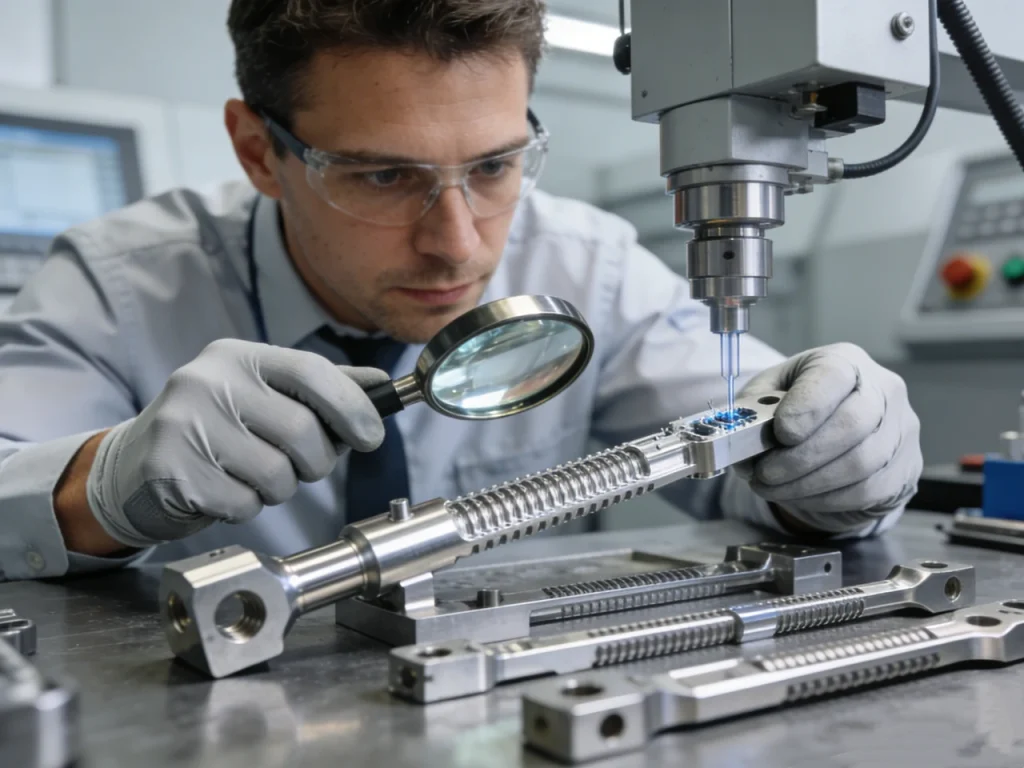
Medical Applications: Wire EDM for Implants and Surgical Tools (case study) (refs: industry media; supplier blogs)
Context: Medical components such as implants and surgical tools often use biocompatible metals like titanium. The parts may have taper cuts and fine detail where surface condition and geometry integrity affect fit, handling, and patient safety expectations.
What was done: Wire EDM produced taper cuts and small-scale features without workpiece contact. The focus in the sources is on distortion-free machining and high surface quality compared with force-driven cutting on delicate forms.
Outcome described in industry sources: Flawless finishes and geometry control that support stringent requirements for implantable and surgical components.
Why it matters for feasibility: When taper geometry is functional and the part cannot tolerate bending during machining, wire EDM can be a safer process choice. The trade-off is that you must plan inspection and datums carefully because taper validation can be as challenging as machining.
Tool & Die Applications: Wire EDM for Dies and Hardened Tooling (case study) (refs: industry media; technical blogs)
Context: Tool and die work often requires sharp corners, tight tolerances, and hardened materials. Many die components must be cut after heat treat to preserve wear life. Repairs also require controlled material removal without damaging surrounding hardened zones.
What was done: Wire EDM created complex die openings, sharp internal transitions, and precise contours directly in hardened materials. This includes stamping dies, cutting tools, and hardened die work. Industry sources also describe using EDM to repair worn dies by re-establishing the required geometry.
Outcome described in industry sources: Reduced production time and improved accuracy because the process can avoid sequences that require machining soft, then heat treating, then finishing with secondary processes.
Why it matters for feasibility: If the die design has tight internal features and needs hardened material properties, wire EDM is often one of the few practical profile methods that can reach the geometry without custom broaches or extensive grinding setups.
Wire EDM for Electronics: Connectors and Micro-Feature Components—where applicability may vary by EDM variant (uncertainty note) (chart: application fit vs EDM type) (refs: industry reports; academic sources)
Some sources describe electronics use cases such as microchips, connectors, and circuit board-related work. This is plausible in the broader EDM technology landscape, but feasibility can vary by EDM variant and by feature scale. Standard wire EDM is a profile cutting process using a moving wire. Very small, micro-scale electronics features may call for specialized micro-EDM methods or different manufacturing approaches.
So it helps to separate “electronics-related tooling and components” from “on-device semiconductor patterning,” which is a different production world.
A simple fit chart helps keep expectations grounded:
| Obszar zastosowania | Standard wire EDM fit | Notes on uncertainty |
|---|---|---|
| Precision connectors and small conductive components | Możliwe | Depends on feature size, thickness, and inspection needs |
| Tooling used to make electronic parts (stamps, dies, fixtures) | Silny | Tooling is often hardened and conductive; wire EDM profile strengths apply |
| Microchip and wafer-scale feature creation | Uncertain | Some sources mention it, but applicability may depend on EDM variant and scale |
If you are evaluating wire EDM for electronics-related parts, the safest next step is to define whether you are cutting conductive bulk components (more typical for wire EDM services) or attempting micro-fabrication tasks that may not map to standard wire EDM machines.
Wire EDM Quality Outcomes: Burr-Free Surfaces and Part Integrity
Surface finish, burr control, and dimensional stability are often deciding factors when choosing between wire edm and conventional machining. This section focuses on how the edm machining process affects edge quality, distortion risk, and inspection results for high-precision electrical discharge machining work.
Wire EDM Burr Control: Spark Erosion for Clean Edges (refs: machining handbooks; academic sources)
Burr formation is often a deciding factor when comparing machining methods. In milling, drilling, and broaching, burrs form because the cutting edge plastically deforms material at the exit and leaves a raised lip. The burr size and shape depend on material, tool geometry, feed, and support.
Wire EDM changes the mechanism. Material is removed by discharge machining uses localized erosion rather than a mechanical wedge. That is why wire EDM is commonly associated with burr-free edges and clean profiles in machining handbooks and shop references. For many parts, that reduces secondary deburring, which also reduces the risk of rounding critical edges or damaging fine features.
Still, “burr-free” is a practical outcome, not a guarantee. Entry/exit marks, corner artifacts, and local surface effects can still matter, especially on small features. Cut strategy (rough then skim) is a major driver of how consistent the edge condition is across the part.
Wire EDM Distortion Reduction and Residual Stress Benefits (refs: materials/mechanical engineering research)
Distortion can come from several sources: clamping loads, cutting forces, stress relief during material removal, and thermal gradients. Wire EDM mainly changes the first two because the process does not impose a cutting force like a rotating tool.
What that prevents in many cases:
- Wall push-off and springback errors that happen when a cutter deflects thin sections.
- Fixturing-induced deformation that is required only to resist milling loads. With EDM, the fixture often only needs to hold location and stability.
- Vibration and chatter artifacts that come from mechanical tool-workpiece interaction.
What it does not automatically prevent:
- Movement due to residual stress release when a profile cut frees a section of the part.
- Local thermal effects inherent to spark erosion.
So in design reviews, it helps to ask: “Is our main distortion risk force-driven, stress-driven, or both?” Wire EDM mainly improves the force-driven side. If stress-driven movement is the main issue, you may still need stress-relief planning, conservative sequencing, or geometry changes.
Inspection Priorities for Precision EDM Parts (checklist: QC plan for EDM parts) (refs: quality standards bodies; metrology references)
Wire EDM parts often look visually clean, which can hide measurement risk. A practical QC plan focuses on features that are sensitive to wire path, taper, and datum interpretation.
| QC focus area | What to measure / document | Why it matters for EDM parts |
|---|---|---|
| Datum features and alignment | Datum definitions used in inspection, setup references | Misaligned datums can make a good cut fail acceptance |
| Profile-critical features | Contour/profile checks, internal radii, corner conditions | Wire diameter and corner strategy influence these directly |
| Taper and angle features | Angle verification method, measurement locations | Taper results depend on guide control and setup; measurement method must match requirement |
| Surface condition requirements | Where surface matters, how it is verified | Skim cuts and strategy influence surface outcome |
| Feature-to-feature relationships | True position, spacing, parallelism where specified | Many EDM parts are functional because of relationships, not single dimensions |
If you are outsourcing precision EDM parts, it is worth aligning inspection method and datum scheme during quoting. Many disputes come from mismatched interpretations rather than machining failure. For inspection procedures and traceability requirements, industry often refers to guidelines from standards bodies such as the International Organization for Standardization (ISO) and the National Institute of Standards and Technology (NIST).
Does Wire EDM Leave Burrs or Require Deburring?
Wire EDM often produces burr-free edges because it removes material by spark erosion rather than by mechanically tearing a chip. Many parts still need edge review because entry/exit marks or corner effects can matter for fit or sealing surfaces. If a part has critical edges, define the edge condition and inspection method up front rather than assuming “no deburr needed.”
Wire EDM Automation and Unattended Operation Considerations
Modern wire edm machines increasingly support automation features such as automatic wire threading and unattended operation. Understanding how wire edm production behaves during long runs helps manufacturers evaluate machining speeds, reliability, and suitability for lights-out machining strategies.
Automatic Wire Threading and Robotic Handling in Wire EDM Services (refs: manufacturer technical docs; industry reports)
Modern wire EDM machines may support unattended operation through features such as automatic wire threading and integration with automated handling or robotic tending. From a planning perspective, unattended wire EDM is less about “running fast” and more about controlling stoppages.
Automatic wire threading matters because wire EDM runs can be long, and a wire break can stop the job. If the machine can re-thread and recover safely, you can plan longer runs with less direct supervision. Automated part handling can help when the job mix includes repeated runs of similar blanks, or when you need stable scheduling across nights and weekends.
The constraint is that the EDM process is sensitive to stability: flushing, debris, and wire condition can all trigger stoppages. So automation feasibility depends on choosing jobs that are stable by design, not only on adding hardware.
Wire EDM Production Reliability: Monitoring and Mitigation (flowchart: monitor → symptom → action) (refs: technical reports)
Because published reliability rates vary and are machine- and job-dependent, the practical approach is to define what you will monitor and what actions are triggered when something drifts.
A simple monitoring logic looks like this:
| Monitor | Symptom during run | Typical action |
|---|---|---|
| Wire status and break events | Machine stops or recovery cycles | Review feature zones where breaks occur; adjust strategy or improve flushing access |
| Flushing condition | Surface defects or unstable cutting behavior | Check flow path, part orientation, and debris evacuation points |
| Cut stability indicators (machine alarms / instability flags) | Repeated pauses, inconsistent progression | Revisit cut plan for deep slots or trapped debris regions |
| Fixturing stability | Dimensional drift between parts | Improve location, reduce movement risk, validate datum repeatability |
Unattended operation is usually most successful when the part’s geometry supports stable flushing and when the cut path avoids long sections where debris has no exit.
Wire EDM Job Selection for Automated or Lights-Out Machining (table: job traits → automation fit) (refs: industry case write-ups)
Not every EDM job benefits from lights-out planning. The best candidates tend to be geometries that are stable, repeatable, and not overly sensitive to flushing variation.
| Job trait | Automation fit (typical) | Dlaczego |
|---|---|---|
| Repeated profiles in similar blanks | Silny | Setup learning transfers well; less variability |
| Open contours with good flushing access | Silny | Lower instability risk during long runs |
| Deep narrow internal cuts with trapped debris | Słaby | Higher chance of instability or wire breaks |
| Fine-wire micro features near stability limits | Mixed | Possible, but risk rises; needs conservative planning |
This is also relevant for buyers choosing between in-house EDM services and outsourced wire EDM services. If your part mix is unstable and diverse, a service provider with mature job screening may reduce internal disruption.
Wire EDM Documentation and Traceability for Regulated Industries (refs: standards bodies; industry compliance guidance)
In regulated sectors such as aerospace and medical, documentation can be as important as the cut. Wire EDM projects in these areas often require traceability for material, process routing, and inspection results.
From a buyer’s point of view, the main question is not “Do you have paperwork?” but “Can the supplier trace the part back to the material and prove that inspection matched the drawing’s datum scheme?” If the part includes taper cuts, fine internal features, or critical edges, traceability should include how those features were measured and what acceptance criteria were applied.
Wire EDM vs CNC, Laser, and Waterjet: Choosing the Right Machining Process
Choosing between wire edm, cnc milling, laser cutting, or other machining methods depends on material, geometry, and risk factors. This comparison section highlights where wire electrical discharge machining excels—and where other machining processes may offer advantages—so decision-makers can select the most effective machining approach.
Wire EDM vs CNC Milling: Hard Metals, Burr Risk, and Geometry Access (comparison table) (refs: machining service references; manufacturing handbooks)
Wire EDM machining and CNC milling solve different problems. The wrong comparison is “Which is better?” The right comparison is “Which risk dominates for this part?”
| Czynnik decyzyjny | Wire EDM machining | Frezowanie CNC |
|---|---|---|
| Wymagania dotyczące materiałów przewodzących | Required | Not required |
| Hard materials and hardened condition | Often a strong fit | Can be limited by tool wear and stability |
| Internal radii and sharp internal corners | Strong for tight internal features (bounded by wire size) | Limited by cutter diameter and access |
| Burr risk and edge condition | Often low burr behavior | Burr control can require deburring and edge management |
| Distortion from cutting force | Low mechanical force | Cutting forces can deflect thin features |
| 3D surface capability | Limited for complex 3D forms | Strong for 3D surfaces and pockets |
This addresses a common buyer question: Is wire EDM more accurate than milling? Wire EDM may produce more predictable geometry on thin or hard parts because there is no cutting force. Milling may be more predictable on open, stiff geometry where tool access is good and the material is easy to cut. Accuracy depends on the feature and the failure mode you are trying to avoid.
Wire EDM vs Laser and Waterjet: Precision Detail and Edge Quality (decision matrix) (refs: industry/technical reports)
Laser and waterjet are also profile cutting methods, so they come up in early sourcing. The key differences tend to be detail capability, edge quality, and how the process interacts with the material.
| Czynnik | Elektrodrążarka drutowa | Laser | Strumień wody |
|---|---|---|---|
| Material constraint | Conductive only | Broad (material-dependent) | Szeroki |
| Fine internal feature capability | Strong (fine wire possible) | Varies by thickness and material | Varies; fine detail can be limited |
| Edge condition expectations | Often clean, burr-free behavior | Heat effects can matter | Edge can show erosion texture |
| Hard metals | Strong fit in conductive hard alloys | Can vary | Can vary |
Because this article avoids unsupported numeric claims, the safe planning approach is to treat laser and waterjet as screening options for “can it be cut,” then use wire EDM when the part needs fine detail, controlled geometry, and edge condition on conductive metals.
Wire EDM vs Grinding and Broaching: Primary vs Secondary Machining (refs: machining handbooks)
Grinding and broaching are often used to hit specific surface and geometry needs, but they come with constraints. Broaching can be efficient for repeat geometry, yet it is tooling-heavy and less flexible for complex contours. Grinding can deliver controlled surfaces and geometry, but access and setup can be limiting, especially for internal shapes.
Wire EDM can be the primary process when the shape is defined by a profile and the material is hard. It can also be a secondary process when you need to create an internal form before grinding reference surfaces, or when EDM is used to repair or modify hardened tooling without re-heat-treating.
In practical routing, EDM is often selected when the feature is hard to reach with wheels or broaches, or when you want to avoid tooling lead time for a small batch.
Can Wire EDM Cut Tapers and Complex Angles?
Yes, wire EDM can cut tapers and complex angles by controlling the wire position through the cut, which allows angled profiles instead of straight walls. Feasibility depends on part thickness, flushing access, and how the taper will be inspected. If the taper is functional, plan datums and measurement points early so acceptance does not rely on interpretation.
Planning a Wire EDM Project: Design, Feasibility, and Supplier Selection
Successful wire edm machining starts long before the first cut. Design-for-manufacturing considerations, quoting inputs, and supplier capabilities all influence final quality and cost. This section outlines practical planning steps to help ensure wire edm services deliver accurate, repeatable results.
Design for Wire EDM: Start Holes, Skim Cuts, Corner Strategy, and Datums (diagram: DFM callouts) (refs: manufacturer application notes)
Design for wire EDM machining is mostly about acknowledging how the wire gets into the part, how the cut stabilizes, and how the feature will be verified.
A simple DFM callout sketch helps frame the key points:
Top View (Profile Cut Example) – Text Description
- Datum A face
- Primary reference face for locating the part during wire EDM setup.
- Used to align the programmed cut path with functional design requirements.
- Start hole
- Required for internal closed contours.
- Allows the wire electrode to be threaded through the workpiece before cutting begins.
- Lead-in / Lead-out
- Entry and exit paths for the wire before and after the main cut.
- Used to control witness marks and prevent defects on critical edges or surfaces.
- Internal profile
- The programmed contour that defines the final part geometry.
- Corner strategy depends on wire diameter and cut strategy (rough + skim cuts).
- Datum B edge
- Secondary reference edge for positioning and inspection.
- Helps control feature location and verify dimensional accuracy after machining.
Four DFM topics tend to drive real outcomes:
- Start holes: If you have internal closed features, you need a start hole sized and located so the wire can enter without damaging functional surfaces. Start hole placement also affects witness marks and inspection.
- Skim cuts: If surface and profile requirements are strict, plan for skim passes. Rough-only planning can lead to surprises when the surface or corner condition is evaluated.
- Corner strategy: “Sharp corners” still have physics limits because the wire has diameter. If the corner is functional, define what “sharp” means in the drawing and allow the EDM strategy to meet it without forcing unstable cutting.
- Datum planning: EDM makes what you reference. Define datums that match assembly functions and can be measured. Ambiguous datums often cause acceptance problems even when the cut is good.
Wire EDM RFQ Inputs: CAD, Material, Tolerances, and Surface Requirements (CAD, material, thickness, tolerances, surface needs) (checklist: RFQ pack) (refs: machining service references)
Wire EDM quoting and feasibility work best when the supplier can assess geometry risk, flushing access, and inspection approach without guessing. A short RFQ pack checklist is usually enough:
| Wejście RFQ | Dlaczego ma to znaczenie |
|---|---|
| CAD model and drawing | Defines wire path needs, datums, and acceptance criteria |
| Specyfikacja materiałowa | Confirms conductivity and expected EDM behavior |
| Thickness and any section changes | Affects flushing and stability; ties to “How thick can wire EDM cut?” feasibility |
| Tolerances and GD&T requirements | Drives skim cut needs and inspection planning |
| Surface condition requirements (where functional) | Influences cut strategy and acceptance plan |
| Notes on critical edges, corners, and tapers | Prevents wrong assumptions about corner radii and taper verification |
On the “How thick can wire EDM cut?” Question: thickness is a feasibility input because it interacts with flushing and stability. There is no universal thickness limit that applies to all machines and materials, so it should be treated as a project-specific constraint to validate during quoting.
Outsource vs In-House Wire EDM: Capability and Automation Considerations (table: decision criteria) (refs: industry reports)
Whether to outsource wire EDM services or bring wire EDM in-house is usually driven by part mix, inspection needs, and how often EDM becomes the schedule constraint.
| Decision criterion | Outsource tends to fit when… | In-house tends to fit when… |
|---|---|---|
| Part volume and repeatability | Low to moderate, or irregular | Repeat jobs justify dedicated capacity |
| Part mix complexity | Many one-offs, varied geometry | Stable families of parts with similar setups |
| Material hardness and tooling impact | EDM used occasionally for hard metals | EDM is central to tooling or hardened parts flow |
| Automation goals | You want capacity without building lights-out support | You can support unattended runs and maintain stable job selection |
| Quality and traceability demands | Supplier can match documentation needs | You need direct control over inspection flow |
This decision is rarely about “better quality” in one place or another. It is about where you can manage risk: flushing-driven variability, inspection interpretation, and scheduling conflicts with other machining.
Common Wire EDM Challenges and How to Mitigate Them (troubleshooting table) (refs: manufacturer technical docs; academic sources)
Wire EDM problems usually show up as stoppages (wire breaks), geometry errors (contour accuracy), or surface issues. A troubleshooting table helps connect symptom to cause and mitigation without drifting into machine-specific settings.
| Problem | Common cause in practice | Typical mitigation path |
|---|---|---|
| Wire breaks | Unstable discharge from poor flushing, difficult geometry, or fine-wire stability limits | Improve flushing access, adjust cut strategy, review feature sequence and part orientation |
| Flushing-related surface defects | Debris trapped in narrow cuts, long cut zones with no exit | Add flushing paths, change cut direction, avoid trapped pockets where possible |
| Contour accuracy risk (corners, small radii) | Wire diameter limits, corner strategy mismatch, unstable conditions near corners | Align corner requirement to feasible wire size, plan skim cuts, validate on sample features |
| Witness marks at start/stop | Lead-in/out placement on functional edges | Move lead-in/out to noncritical areas, define allowable mark zones on drawing |
| Part movement after cut completion | Residual stress release when sections are freed | Plan cut sequence to control release, add tabs or supports if allowed, validate datum scheme |
The key point is that many EDM problems are geometry-environment interactions. If you treat EDM like a “push button” profile method, wire breaks and contour drift can look random. They are often predictable once you map debris removal paths, stress release points, and the most fragile features.
Wire EDM Machining Decision Logic: When to Use Wire EDM Services
Wire EDM machining is usually suitable when your part is conductive and the job is dominated by profile accuracy, tight internal features, hard materials, or edge quality risk. It is often a poor fit when the material is nonconductive, when the geometry is mainly 3D surfacing, or when the cut zone traps debris so flushing cannot stay stable. The deciding factors are almost always conductivity, feature geometry (especially internal radii and corners), thickness and flushing access, and how the datums and inspection plan will prove the result.
Najczęściej zadawane pytania
Wire EDM works by feeding a thin, continuously moving wire electrode through or around a conductive workpiece while controlled electrical discharges jump across a very small gap. The wire never touches the material. Instead, each spark removes a tiny amount of metal, and thousands of these discharges happen every second as the machine follows a programmed path.
In practical terms, you can think of it as “guided erosion.” The CNC system controls where the wire goes, the machine keeps the spark gap stable, and dielectric fluid flushes debris out of the cut. As long as that gap stays clean and controlled, the machine can produce very accurate profiles without pushing on the part.
The biggest advantage of wire EDM is that it removes material without mechanical cutting force. That matters when parts are thin, delicate, or made from very hard metals that don’t machine well with rotating tools.
Wire EDM is also strong at producing complex internal profiles, tight internal radii, and sharp corner transitions that would be difficult or risky to mill. Many buyers also value the edge condition—because material is removed by spark erosion, burrs are often minimal, which can reduce or eliminate secondary deburring steps.
Standard wire EDM can cut conductive materials, which includes most metals and metal alloys. Common examples are tool steels, hardened steels, titanium, nickel-based alloys, carbide, and many specialty aerospace and medical alloys.
Nonconductive materials like plastics, glass, and most ceramics cannot be cut with standard wire EDM. For feasibility screening, conductivity is the first hard requirement—if the material does not conduct electricity, wire EDM is not an option regardless of geometry.
It can be, but only in the right context. Wire EDM often produces more predictable results when milling forces would bend thin features, distort walls, or cause chatter—especially in hard materials.
CNC milling can be more efficient and just as accurate on open, stiff geometry with good tool access. The real question is not “Which is more accurate?” but “Which process avoids the main failure risk for this part?” For force-sensitive features and hard materials, wire EDM often has the advantage.
There is no single thickness limit that applies to all jobs. Thickness capability depends on the machine, the material, and—most importantly—whether debris can be flushed out of the cut zone effectively.
As parts get thicker, maintaining a stable spark gap becomes harder, and accuracy can suffer if flushing is restricted. That’s why thickness should always be treated as a project-specific feasibility variable and confirmed during quoting, along with geometry, tolerances, and surface requirements.


 Polish
  English
  German
  French
  Italian
  Spanish
  Czech
Czech  Japanese