
Threaded fasteners are among the most widely used components in mechanical and industrial assemblies. Understanding how nuts and bolts work together, how to match them correctly, and how to avoid common compatibility issues is essential for reliable, long‑lasting joints. This guide covers key definitions, sizing standards, material choices, failure modes, and best practices for selecting and applying nut‑bolt combinations in real‑world engineering applications.
What a nut bolt connection is and why it matters
A nut bolt connection is a threaded joint made by pairing a bolt with a matching nut so the parts being joined are clamped together. In mechanical assemblies, the bolt usually passes through clearance holes in the parts, and the nut threads onto the exposed end. The joint works because tightening creates clamping force. That clamp load helps the assembly resist separation, slip, vibration, and fatigue.
In simple terms, a bolt is the externally threaded fastener and a nut is the internally threaded part that mates with it. A full nut usually means a standard-height hex nut, not a thin jam nut or specialty lock nut. This sounds basic, but many field failures come from small mismatches in thread system, grade, coating, or nut type rather than from the bolt itself.
For engineering and purchasing teams, a nut bolt decision is rarely just about size. It is also about standard systems, joint load paths, maintenance access, corrosion risk, service temperature, and whether standard parts can be sourced without interchangeability problems.
Nut and bolt anatomy: diameter, thread pitch, length, grade, material, and coating
A nut bolt specification usually includes six core variables: diameter, thread pitch, length, grade or property class, material, and coating. These are the minimum details needed to judge compatibility.
Diameter is the nominal fastener size. For inch fasteners, this may be written as 1/4 in. or 1/2 in. For metric fasteners, it appears as M12 or M16. The nut size must match the bolt diameter.
Thread pitch defines the spacing of threads. In inch systems, it is given as threads per inch. In metric systems, it is the distance between threads in millimeters. A mismatch here can cause cross-threading or partial engagement even when the diameter seems close.
Length is measured on the bolt, and it affects grip length, thread engagement, and how much shank remains in the joint. Too short and the nut may not fully engage. Too long and tool access or interference can become a problem.
Grade or property class indicates strength. SAE bolts often use head markings such as no radial lines for Grade 2, three lines for Grade 5, and six lines for Grade 8. Metric bolts use property classes instead of SAE grades. Nuts also have grade markings, and these should align with the bolt’s strength level.
Material affects both strength and corrosion behavior. Common categories in the provided data are carbon steel, alloy steel, and stainless steel. Stainless markings such as 18-8 point to about 18% chromium and 8% nickel, while 316 stainless includes molybdenum and is often chosen for marine corrosion resistance.
Coating changes corrosion resistance and can also affect compatibility tables. Common examples in the research are zinc plating and hot-dip coatings, covered by ASTM F1941 and ASTM F2329. Coating is not a cosmetic afterthought. It can affect fit, thread condition, and which nut grade is suitable with a given bolt grade.
Why compatibility is a decision problem in engineering assemblies
Compatibility is a decision problem because a nut bolt joint can appear to fit while still being wrong for the service conditions. Thread fit alone does not guarantee a safe assembly. The nut and bolt must be compatible in geometry, strength level, material system, and finish.
This matters in structural, piping, automotive, and marine work because the joint often fails at the interface. Problems include stripped threads, poor clamp load, galling, corrosion, or nut proof strength below the bolt capacity. In standards-based assemblies, compatibility charts are often used because the acceptable nut grade can change with bolt grade, size range, and surface finish.
For example, the research shows that ASTM A563 nut grade selection depends on the bolt specification and sometimes on whether the fastener is plain or coated. That means a buyer cannot assume one nut grade covers every version of the same nominal bolt. This is one reason why procurement based only on diameter and thread is risky.
Inch vs metric nuts and bolts: why mixing systems strips threads
Inch and metric nuts and bolts are not interchangeable. The diameter may feel close by hand, but the thread form and pitch are different. If an inch nut is forced onto a metric bolt, or the reverse, the threads can bind after a partial turn and then strip.
This is a common field problem because some sizes are visually similar. The practical risk is highest during maintenance, repair, and mixed inventory environments where fasteners are selected from bins without verifying notation. The user-language insight in the research also points to this exact pain point: mixing inch and metric nuts and bolts leads to stripped threads.
The key point is simple. If the bolt is inch, the nut must be inch and must match the thread series. If the bolt is metric, the nut must be metric and match the metric pitch. Checking by feel is not enough for critical assemblies.
What does bolt notation mean, such as 1/2-13 and M12x1.75?
A notation like 1/2-13 means an inch-series bolt with a 1/2 inch nominal diameter and 13 threads per inch. In common practice, that is a coarse thread in that diameter.
A notation like M12x1.75 means a metric bolt with a 12 mm nominal diameter and a 1.75 mm thread pitch. The pitch number is the distance from one thread crest to the next.
This notation matters because it tells the buyer whether the nut will mate correctly. It also helps identify whether the thread is coarse or fine. Without the full notation, there is no reliable way to match stock, especially where both metric and inch hardware are present.
Can a nut bolt combination be applied to your assembly?
A nut bolt combination can be applied only after checking whether the joint concept fits the assembly, the service loads, and the operating environment. This is where many design reviews should slow down. A standard fastener may be dimensionally correct but still be the wrong choice because of maintenance constraints, corrosion exposure, or lack of access for tightening.
Feasibility checks: load type, environment, access, maintenance, and service life
The first check is load type. A bolted joint loaded mainly in tension behaves differently from one loaded in shear or exposed to vibration. If the assembly sees fluctuating load, impact, or repeated disassembly, the fastener choice should reflect that.
The second check is the environment. Moisture, salt exposure, and coating requirements affect material selection and nut compatibility. Stainless options may help with corrosion, but stainless is not a universal substitute for carbon or alloy steel because strength and galling behavior differ.
The third check is access. How bolt head type affects tool access is often missed early in design. A hex head may be easy to source but difficult to tighten in a recessed or obstructed assembly. If there is poor wrench swing or socket clearance, a nominally correct fastener can become a difficult service item.
Maintenance and service life also matter. If the joint must be inspected or removed often, locking method, coating condition, and thread durability become more important. A design that works in first assembly may create field problems later if the fastener seizes, rounds off, or loosens under vibration.
ASME vs ISO fastener standards differences and why they affect interchangeability
アメリカ機械学会 そして 国際標準化機構 systems differ in dimensions, thread conventions, and hardware families. In practical sourcing, this means nominally similar fasteners may not be interchangeable even when they look close.
The provided research does not give a full dimensional comparison table, so the safe decision rule is conservative: treat ASME inch fasteners and ISO metric fasteners as separate systems unless the specific standard and mating details have been verified. This applies to nuts, bolts, washers, and tooling sizes.
Interchangeability problems show up in thread mismatch, across-flats differences, head geometry, and nut height. Even when a thread starts, the fit may be poor enough to damage the joint during tightening. For production planning, mixed-standard assemblies also increase sourcing complexity and inspection burden.
Property class selection for metric bolts vs SAE and ASTM grade-based selection
Property class selection for metric bolts serves the same decision purpose as SAE そして ASTM grade-based selection in inch systems: it aligns strength with the duty of the joint. The challenge is that the systems use different naming methods, so cross-selection by appearance is unreliable.
In inch fasteners, strength cues may come from SAE head markings or ASTM specification calls. SAE Grade 2 is for general use, Grade 5 is common in automotive applications, and Grade 8 is used for heavier-duty service. The research notes that compatible nut markings should align with these strength levels.
In ASTM structural and industrial work, nut selection often follows compatibility charts rather than simple visual markings. For example, ASTM A307 bolts can be paired with A563 Grades A, B, or DH in certain size ranges, while larger diameter ranges may shift to C, D, or DH3. In high-pressure piping, A193 B7 bolts are paired with A194 Grade 2H heavy hex nuts. These are not interchangeable choices. They are specification-driven.
For metric systems, the same logic applies: the nut must be suitable for the bolt’s property class and service condition. If the application is controlled by a drawing, code, or customer standard, the property class should be verified there rather than guessed from equivalent SAE practice.
When custom CNC machined bolts are necessary and when standard fasteners are sufficient
Standard fasteners are sufficient when the assembly uses recognized standards, common sizes, accessible geometry, and no unusual shoulder, head, or thread features. This is the preferred route in most industrial projects because standard parts are easier to source, replace, and inspect.
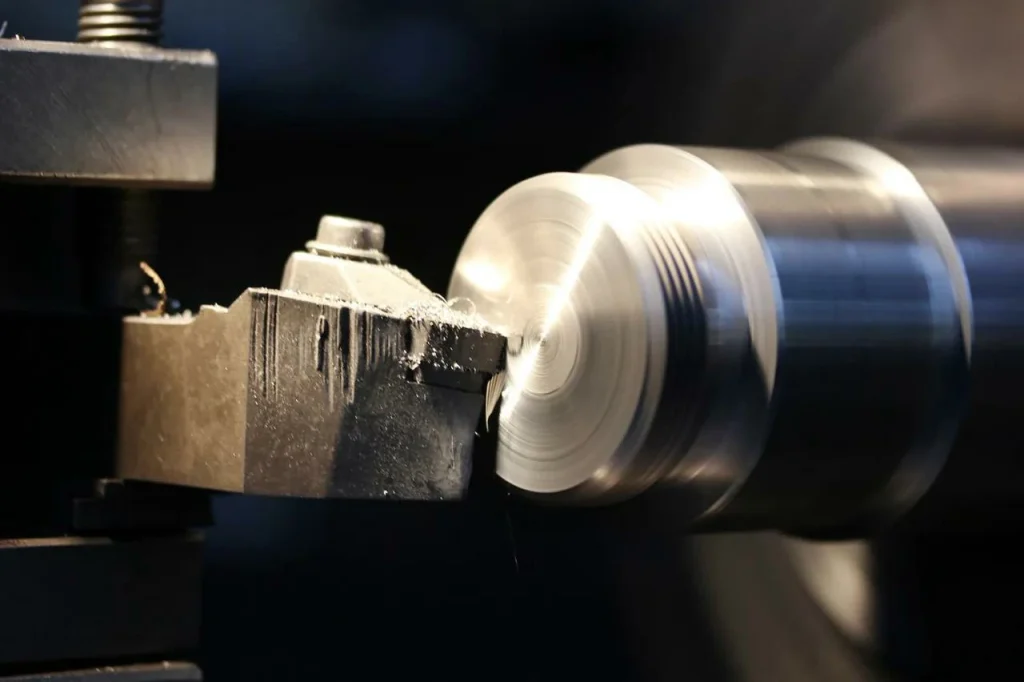
Custom machining becomes necessary when standard fasteners cannot meet geometry, material, or documentation requirements, but custom threads also increase inspection and interchangeability risk. The practical bottleneck is often mating-nut availability and field replacement, not only bolt manufacture. If a standard fastener can satisfy the joint requirements, redesigning around standard hardware is usually the lower-risk sourcing choice.
There are trade-offs. Custom parts increase sourcing complexity and can raise lead time because machining, thread production, and inspection add process steps. Small thread sizes are especially challenging because CNC thread milling small fasteners requires precise tooling and stable setup. Minor dimensional errors in thread form or pitch can create field assembly problems. For many designs, the better decision is to modify surrounding parts to accept standard fasteners rather than custom-machine bolts.

How threaded fastening works in practice
A threaded fastener works by converting tightening input into axial tension in the bolt and compressive clamp load in the joint. If enough clamp load is created and maintained, the connected parts stay in contact and external loads are carried with less relative movement.
Factors affecting clamping force in threaded fastener
Clamping force depends on tightening method, thread condition, and friction at both the threads and the bearing surface. Torque is only an indirect control variable, so torque values cannot be transferred safely across different coatings, lubricants, or material pairings without validation. In tension-critical joints, use the governing standard or assembly procedure rather than applying a generic torque table.
A clean, compatible thread set will tighten more predictably than one with damaged threads, mixed standards, or poor coating build-up. Coatings matter because they change surface condition and can alter how the nut turns on the bolt. This is one reason why finish affects compatibility recommendations in some ASTM tables.
Joint geometry also matters. If the stack is compressible, uneven, or not fully seated, the clamp load can relax after assembly. In service, vibration and thermal effects can reduce retained preload if the joint was marginal to begin with.
Shear load vs tensile load in bolted joints
Shear load vs tensile load in bolted joints is a core design distinction. Tensile loading tries to pull the joint apart along the bolt axis. Shear loading tries to slide the joined parts sideways across the bolt.
Many bolted joints are designed so that clamp load helps prevent slip, which reduces direct shear on the bolt shank. If the joint loses clamp force, the bolt may begin carrying more shear than intended. That can lead to fretting, hole wear, loosening, or fatigue.
This is why fastener grades alone do not solve every problem. A very strong bolt in a joint with poor clamp retention can still fail early. The assembly should be evaluated as a system, not as a single hardware item.
How thread pitch impacts fastening strength
How thread pitch impacts fastening strength depends on the joint goal. Coarse threads are usually more tolerant of damage and easier to assemble in general service. Fine threads provide a different engagement condition and are often selected where adjustment precision or specific load behavior is needed.
The important point for decision-making is not that one pitch is always stronger. It is that thread pitch affects mating compatibility, resistance to damage during assembly, and the available nut choices in a given standard family. In mixed maintenance environments, coarse threads are often less error-prone because they are easier to identify and start cleanly. Fine threads may be preferred where the assembly standard calls for them, but they are less forgiving of cross-threading and contamination.
What bolt grip length should be used?
Bolt grip length should match the thickness of the clamped materials so that the unthreaded shank, where present, spans as much of the joint as the design intends. In practice, this affects load transfer, thread location, and the choice between partially threaded and fully threaded bolts.
If too much thread falls inside the shear plane or inside a critical bearing region, the joint may not behave as intended. If the bolt is too short, there may not be enough thread engagement for the nut. If it is too long, excess projection can interfere with nearby parts or create service hazards. This is one of the clearest cases where stock fastener length increments may push a designer toward either a compromise or a custom part.
Thread, grade, and locking choices: trade-offs that change performance
Fastener performance is strongly affected by three linked choices: thread series, strength level, and locking method. These choices should be treated as trade-offs, not as independent line items.
Coarse vs fine thread for high load applications
Coarse vs fine thread for high load applications should be judged by the assembly conditions, not by a general rule. Coarse threads are common in industrial service because they are easier to start, more tolerant of minor damage, and less likely to be confused during routine maintenance. Fine threads may be selected where the joint design, adjustment needs, or standard specification requires them.
For high load service, the main risk is choosing a thread form that does not match the assembly environment. If field installation is dirty or rushed, fine threads are easier to damage. If precise fit and specific standard practice drive the joint, fine thread may be the correct choice. The better approach is to start from the service conditions and standard requirements rather than from a blanket preference.
UNC vs UNF thread selection for industrial assemblies
UNC vs UNF thread selection for industrial assemblies follows the same logic. UNC is the common coarse inch thread series. UNF is the finer inch series. A nut and bolt must match both the nominal diameter and the series.
UNC is often the practical choice in general industrial equipment because it is easier to assemble and source. UNF may be used where the design standard or mating part requires it. The engineering risk comes from partial identification. A 1/2 inch bolt is not enough information. A 1/2-13 and a 1/2-20 are different fasteners and require different nuts.
When to use a lock nut instead of a standard hex nut
A lock nut may be helpful where vibration, reversal, or handling could reduce preload, but it is not a substitute for correct joint design and preload control. Joint settlement, poor surface condition, and low initial clamp load can still cause loosening even when a locking feature is present. Also verify temperature limits, reuse expectations, and inspection requirements before selecting nylon-insert or prevailing-torque styles.
This decision should also consider maintenance. Some locking nuts are better for repeated service than others. If the assembly is opened often, the locking method should be checked for reuse limits and installation consistency. If routine replacement is expected, a standard fastener plus separate locking strategy may be easier to manage than a specialty nut.
Difference between prevailing torque nuts and jam nuts
The difference between prevailing torque nuts and jam nuts is functional. A prevailing torque nut resists rotation through an intentional locking feature, such as a distorted thread section or insert. A jam nut is a thinner nut used to lock against another nut or component by creating opposing bearing pressure.
These are not interchangeable in every assembly. Prevailing torque nuts are used where built-in resistance to loosening is needed in a single-nut arrangement. Jam nuts are more dependent on installation methods and available thread length. Choosing between them depends on space, maintenance practice, and how reliable the locking action must be under service vibration.
Advantages and limitations of common nut bolt material and design options
Material and design choices affect strength, corrosion behavior, reusability, and manufacturability. No single fastener type is best in all conditions.
Carbon steel, alloy steel, and stainless fasteners: strength vs corrosion resistance
Carbon steel, alloy steel, and stainless fasteners each solve a different problem. Carbon steel is common for general industrial use and appears in many standard nuts covered by ASTM A563. Alloy steel is used where higher strength is required, such as the A193 B7 bolting used in pressure service. Stainless is chosen when corrosion risk is high.
Stainless options may help with corrosion, but stainless is not a universal substitute for carbon or alloy steel fasteners. Verify strength level, galling risk, dissimilar-metal corrosion, temperature exposure, and the governing standard before substituting stainless into a load-bearing joint. The research also separates carbon and alloy steel nut standards from stainless nut standards, which shows that material family is part of specification control, not just a finish choice.
For buyers asking what kind of metal is a bolt or what is the best metal for nuts, the answer is application-specific. Carbon and alloy steels are common where strength and standard compatibility drive the choice. Stainless is often preferred where corrosion is the main concern.
How nylon insert lock nuts prevent self-loosening
How nylon insert lock nuts prevent self-loosening is straightforward. The nylon insert adds friction against the bolt threads, so the nut resists turning after installation. This makes them useful in joints where vibration could back off a standard nut.
Their benefit is practical, but the use case should still be checked against service conditions. If the assembly environment makes the insert unsuitable, another locking approach may be needed. The design review should focus on whether the locking feature remains effective through the expected maintenance and service life.
Limitations of titanium alloy fasteners in industrial use
Limitations of titanium alloy fasteners in industrial use should be approached cautiously because the provided research does not supply performance data for titanium systems. What can be said within the evidence limits is that titanium is not part of the main compatibility pathways covered in the cited ASTM nut-bolt pairings, which focus on carbon steel, alloy steel, and stainless families.
In practical sourcing terms, that means titanium fasteners may increase specification and interchangeability risk if the assembly depends on standard nut compatibility charts or readily available replacement hardware. If titanium is considered, the buyer should verify thread standards, mating nut material, and supply conditions carefully rather than treating it as a drop-in substitute.
How bolt head type affects tool access
How bolt head type affects tool access is often a packaging issue before it becomes a maintenance issue. Head geometry affects what tool can reach the fastener, how much turning angle is available, and whether the assembler can apply the required tightening method consistently.
A joint in an open frame may allow a standard hex head without trouble. A recessed housing or closely spaced manifold may not. In those cases, the fastener decision should be made together with access review, not after the assembly has been released. Tool access is a feasibility issue because poor access increases installation errors, slows service, and can force improvised methods that damage the joint.
Common failures in bolt and nut connections
Most nut bolt failures are not random. They usually trace back to preload loss, mismatch, over-tightening, corrosion, or poor selection for the load path.
Causes of bolted joint loosening under vibration
Causes of bolted joint loosening under vibration include insufficient clamp load, surface settling, cyclic slip between joined parts, and loss of preload over time. Once a joint begins to move microscopically, the nut can rotate loose more easily.
This is why vibration resistance is a system problem. Fastener grade helps only if the joint can maintain clamp force. A locking feature may be needed, but it should not be used as a substitute for correct joint design. Flat mating surfaces, proper compatibility, and the right nut type all matter.
Risks of over-tightening nuts and bolts
Risks of over-tightening nuts and bolts include thread stripping, excessive bolt stretch, distorted joint members, and misleading assembly confidence. A fastener can feel secure while already being damaged.
The risk increases when the nut is too weak for the bolt, the thread system is mismatched, or coating affects thread behavior. Over-tightening also creates inspection problems because damage may not be visible until disassembly. In critical work, preventing over-tightening starts with correct specification, not only with better tools.
Bolt vs screw for vibration resistance
Bolt vs screw for vibration resistance should be judged by joint design and service conditions. A bolt with a nut gives control over both sides of the joint and is often preferred where preload retention and serviceability matter. A screw depends on the internal thread in the mating part, so the thread-bearing material becomes part of the risk.
In vibration-heavy assemblies, a bolt-and-nut joint may be easier to reinforce with compatible nut grades and locking options. That does not mean screws are unsuitable in all cases, but bolts often give more flexibility in managing clamp load and replacement after wear.
What are the most common failures in bolt and nut connections?
Common failures include preload loss, bolt tensile fracture, nut thread stripping, cross-threading, galling, embedding at the bearing surface, and hole deformation. The weak link depends on material pairing, hardness relationship, thread engagement, and whether the joint is loaded mainly in tension, shear, or vibration. These are often specification or assembly-control failures rather than random part defects.
Most of these failures are preventable with better compatibility control. The usual warning signs are hard starting threads, inconsistent tightening feel, unexpected coating build-up, or unclear grade markings.
Cost, tolerance, coating, and lead time factors
Fastener choice affects more than joint performance. It also affects procurement risk, inspection effort, and production timing.
How standards and grades affect sourcing complexity and production lead time
Standards and grades affect sourcing complexity because each added constraint narrows the pool of acceptable parts. A common carbon steel standard fastener is easier to source than a heavy hex nut for a pressure-service bolt, and both are easier to source than a custom-machined special.
Lead time tends to increase when the specification includes uncommon size ranges, exact nut-grade pairing, coating-specific compatibility, or a nonstandard geometry. Mixed standard systems also slow purchasing and receiving because more verification is needed to avoid substitutions that look close but do not match.
Zinc plating, hot-dip coatings, and stainless options: cost and compatibility trade-offs
Zinc plating, hot-dip coatings, and stainless options each involve cost and compatibility trade-offs. Zinc plating and hot-dip coatings are used for corrosion resistance on carbon or alloy steel fasteners. Stainless offers corrosion resistance through the base material itself.
The decision issue is not only corrosion resistance. Coating affects fit and can change which nut grade is recommended with a given bolt. The research notes uncertainty in some compatibility tables between plain and coated conditions, which means finish should be treated as part of the engineering specification, not just a purchasing note.
Tolerance, thread fit, and why small dimensional errors create field problems
Tolerance and thread fit matter because a threaded joint is a precision interface even when the hardware looks simple. Small dimensional errors in pitch, major diameter, nut height, or coating thickness can create hard assembly, false starts, or partial engagement.
Nominal size matching is not enough; thread fit class or tolerance class also affects assembly and interchangeability. Plating, repeated assembly, and structural or regulated service can change whether a combination that starts by hand is actually acceptable. Verify the specified thread class or tolerance designation on drawings, standards, and purchase documents before approving substitution.
Field problems from poor thread fit are expensive because they often show up during maintenance or installation rather than at goods receipt. A nut that almost fits is one of the most dangerous conditions in mixed inventory settings. This is also why inch-versus-metric confusion causes so much damage. The threads may engage briefly, then fail under load or seize during tightening.
Challenges in CNC thread milling small fasteners
Challenges in CNC thread milling small fasteners come from tool size, setup stability, and inspection difficulty. As threads get smaller, small errors in tool path or tool wear have a larger effect on fit. This raises scrap risk and can make custom small fasteners harder to produce consistently than larger threaded parts.
For design teams, this means very small custom bolts should be questioned early. If a standard catalog size can be used, it often reduces both manufacturability risk and sourcing delay. Custom thread milling is possible in industry, but it adds process sensitivity that should be justified by a real design need.

Where specific nut bolt combinations are used
Standard pairings matter most when the assembly is regulated by structural, pressure, automotive, or corrosion-service expectations.
Structural fastening: ASTM A307 bolts with A563 nut grades by size range
In structural fastening, ASTM A307 bolts are paired with ASTM A563 nuts according to size range and application guidance. The research shows A563 Grade A can be used for smaller ranges such as 1/4 in. to 1-1/2 in., while larger sizes above 2 in. to 4 in. may shift to Grades C, D, or DH3.
This size-sensitive pairing matters because structural joints rely on known compatibility and load distribution. Using the wrong nut grade can reduce proof load margin or create fit issues, even if the thread seems correct.
High-pressure piping: A193 B7 bolts with A194 Grade 2H heavy hex nuts
For high-pressure piping, A193 B7 bolts are paired with A194 Grade 2H heavy hex nuts. This is a specification-driven combination used where pressure and temperature demand higher-strength alloy steel bolting.
The heavy hex form and grade designation are part of the system. This is not a place for general-purpose substitution. The pairing is used because it meets the intended strength relationship and service requirements of pressure equipment joints.
Automotive repairs and upgrades: Grade 5 and Grade 8 selection under vibration
In automotive repairs and upgrades, Grade 5 and Grade 8 selection often comes up in joints exposed to vibration. The research notes that Grade 5 is a common automotive choice, identified by three radial lines, while Grade 8 is used for heavier-duty service and has six lines.
The decision should not be reduced to “higher grade is better.” The nut must still be compatible, and the joint should be reviewed for vibration loosening, access, and serviceability. In many repairs, moving from a lower grade to a higher grade without checking the mating parts can shift the failure point rather than solve the root issue.
Marine service: B8M bolts with 8M nuts and 316 stainless markings
Marine service often uses stainless combinations such as A193 B8M bolts with A194 8M nuts. The research also notes that 316 stainless markings indicate the presence of molybdenum, which improves corrosion resistance in marine exposure.
This pairing matters because saltwater service is driven by corrosion risk more than by simple dry strength comparisons. A buyer should still verify the exact markings and compatibility because not all stainless hardware has the same resistance to pitting and crevice attack.
How to evaluate and choose the right nut bolt combination
The best nut bolt choice is usually the one that fits the load path, standard system, environment, and maintenance conditions with the least ambiguity. The more the assembly relies on field substitution or mixed inventory, the more conservative the specification should be.
Decision matrix: size, thread system, grade, coating, and environment fit
A simple decision matrix helps prevent most selection mistakes:
| ファクター | 何を確認すべきか | なぜそれが重要なのか |
|---|---|---|
| Size | Nominal diameter and bolt length | Controls fit, engagement, and grip |
| Thread system | Inch or metric, and exact pitch | Prevents stripping and mismatch |
| Grade/property class | Bolt strength and compatible nut grade | Prevents proof load mismatch |
| Coating/finish | Plain, zinc plated, hot-dip, stainless | Affects corrosion and compatibility |
| 環境 | Structural, piping, vibration, marine, general service | Drives material and locking choice |
If any one of these is unknown, the specification is incomplete for anything beyond low-risk general service.
When partially threaded bolts are better than fully threaded bolts
When partially threaded bolts are better than fully threaded bolts depends on where the load passes through the joint. A partially threaded bolt can place the unthreaded shank in the grip region, which may be preferred where bearing or shear conditions should avoid thread roots.
A fully threaded bolt may be more flexible for variable stack thickness or shorter engagement zones. The trade-off is that thread location becomes part of the load path. If the joint benefits from a smooth shank through the clamped members, partially threaded bolts are often the better choice.
Checklist: what buyers and engineers should verify before specifying
Before specifying a nut bolt combination, buyers and engineers should verify:
- the exact size and thread notation
- inch versus metric system
- bolt grade or property class
- compatible nut grade under the governing standard
- finish or coating and whether it changes compatibility
- required material family, especially for corrosion service
- head type and tool access in the actual assembly
- whether locking is needed for vibration
- whether a standard fastener length gives the right grip
- whether custom machining creates avoidable lead time or tolerance risk
This checklist is simple, but it addresses most field errors before purchase.
Also verify fastener markings, surface condition, thread condition, nut form and height, required washer or bearing interface, and the exact standard designation on the order or drawing. If the fastener is coated, confirm that the specified finish and mating fit are approved for the intended nut-bolt pairing. Reject parts with unknown grade identification, unclear thread designation, or unverified substitutions.
How do you match the right nut to a bolt grade and finish?
Match the nut to the bolt by checking the governing standard, not just the diameter and thread. ASTM compatibility tables are especially important in structural and pressure-service work because the suitable nut grade can change with bolt specification, size range, and surface finish.
Finish matters because coated and plain fasteners may not use the same recommended nut grade in every case. If the application is stainless, verify the stainless nut standard and markings as well as the corrosion-service requirement.
よくあるご質問
A bolt is a key component of a nut bolt assembly, serving as an externally threaded fastener essential to understanding what is the nut and bolt connection in engineering. This fastener inserts through clearance holes and pairs with a nut to create clamping force, defining the core function of bolt vs nut designs in mechanical joints. Bolts are used across industries to secure parts, answering the common question of what is a bolt used for in structural, automotive, and industrial setups. Manufacturers also produce custom CNC machined bolts, micro CNC machined screws, and precision variants using CNC thread milling services for specialized applications.
A nut is the internally threaded counterpart in a nut bolt system, critical to explaining what is the nut and bolt pairing that holds assemblies together. As the matching component in bolt vs nut configurations, it threads onto a bolt to generate clamp load and prevent joint separation in industrial and mechanical projects. Standard and precision threaded nuts come in diverse styles, engineered to pair with standard bolts or custom CNC machined bolts for tailored assembly needs. The material of nuts, often grouped under nuts metal categories, directly impacts the durability and compatibility of the entire fastener assembly.
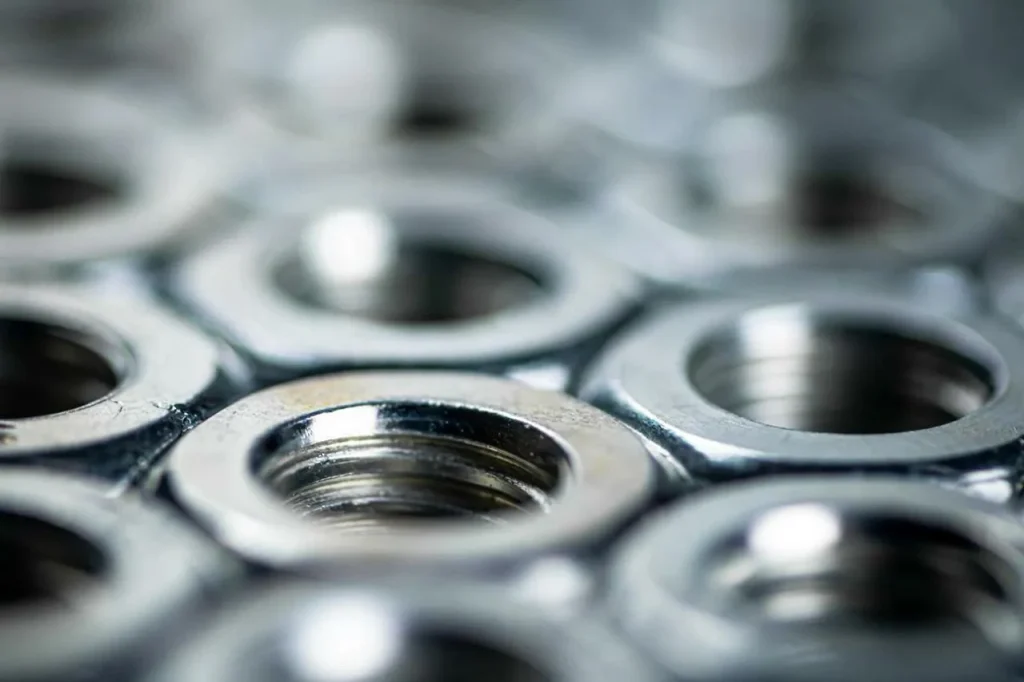
A full nut is a standard-height hex-style precision threaded nuts designed for reliable engagement in nut bolt connections, clarifying core details of what is the nut and bolt hardware. Unlike thin jam nuts, it provides full thread contact to avoid stripping in bolt vs nut assemblies used for general industrial and structural applications. This nut type works seamlessly with standard bolts and custom CNC machined bolts, supporting consistent clamping force in both static and light-vibration environments. Crafted from common nuts metaloptions like carbon steel, it remains a staple in basic and moderately loaded mechanical joints.
Bolts and nuts types span a wide range, forming the foundation of versatile nut bolt fastener solutions for diverse engineering and manufacturing needs. Common bolt varieties include standard hex bolts, fully threaded bolts, custom CNC machined bolts, micro CNC machined screws, and Titanium alloy CNC fasteners produced via CNC thread milling services. Nut options include hex nuts, lock nuts, prevailing-torque nuts, and precision threaded nuts, each matched to bolt specifications and service conditions. These types are categorized by thread system, strength grade, nuts metal composition, and coating to fit structural, marine, and high-pressure applications.
The best nuts metal for nut bolt assemblies depends on load, corrosion risk, and compatibility with mating bolts, a key factor in what is the nut and bolt material selection. Carbon steel is ideal for general use, alloy steel suits high-strength structural joints, and stainless steel works for corrosive environments alongside Titanium alloy CNC fasteners. Material choice must align with bolt grade to prevent galling and failure in bolt vs nut connections, whether for standard parts or custom CNC machined bolts. Each metal variant supports performance in vibration, temperature, and marine conditions, with precision options made via CNC thread milling services.
Bolts, the core part of nut bolt systems, are typically made from carbon steel, alloy steel, or stainless steel, directly answering what is a bolt made of for industrial applications. These nuts metal-matched fasteners use SAE grades or metric property classes to define strength, pairing with compatible nuts in bolt vs nutassemblies. Specialty options include Titanium alloy CNC fasteners, custom CNC machined bolts, and micro CNC machined screws crafted through CNC thread milling services for high-precision needs. The metal composition determines corrosion resistance, tensile strength, and suitability for structural, automotive, or marine nut bolt installations.



 Japanese
  English
  German
  French
  Italian
  Spanish
  Polish
  Czech
Czech