
Surface finishing is a crucial step in metal manufacturing that enhances the functionality and appearance of metal parts. It includes various processes such as plating, anodizing, coating, polishing, conversion coatings, passivation, electropolishing, and mechanical preparation, which modify the outer layer of a part. Depending on the goal—whether corrosion resistance, durability, aesthetics, or conductivity—each method offers distinct advantages
Metal surface finishing services: what they include
Definition and where “surface finishing” fits
Metal surface finishing services are the manufacturing steps that change a part’s outer layer after forming or machining. The work can add material (many coatings and plating), convert the surface into a new layer (anodizing, conversion coatings), remove small amounts of material (polishing, electropolishing), or clean and chemically condition the surface so later steps adhere (pretreatment, passivation, mechanical prep).
Buyers often group several related operations under “metal finishing” because they are linked in practice. A plated layer may need cleaning and activation first, absolutely ensuring optimal results. A powder coat almost always depends on pretreatment and controlled curing, which are absolutely essential to achieve expert-level consistency. A “polished” look may be a mix of abrasive finishing plus a protective coating, which contributes to the finest aesthetic and reliability.
Where the boundary sits matters for quoting and for accountability. Some providers do only the final coating step, while others absolutely specialize in the full process, including surface preparation (cleaning, chemical removal of soils, and steps meant to ensure proper adhesion). When you compare finishing services, clarify what is included in the finish line item and what is treated as separate process steps, ensuring the provider meets your military-grade requirements for precision.
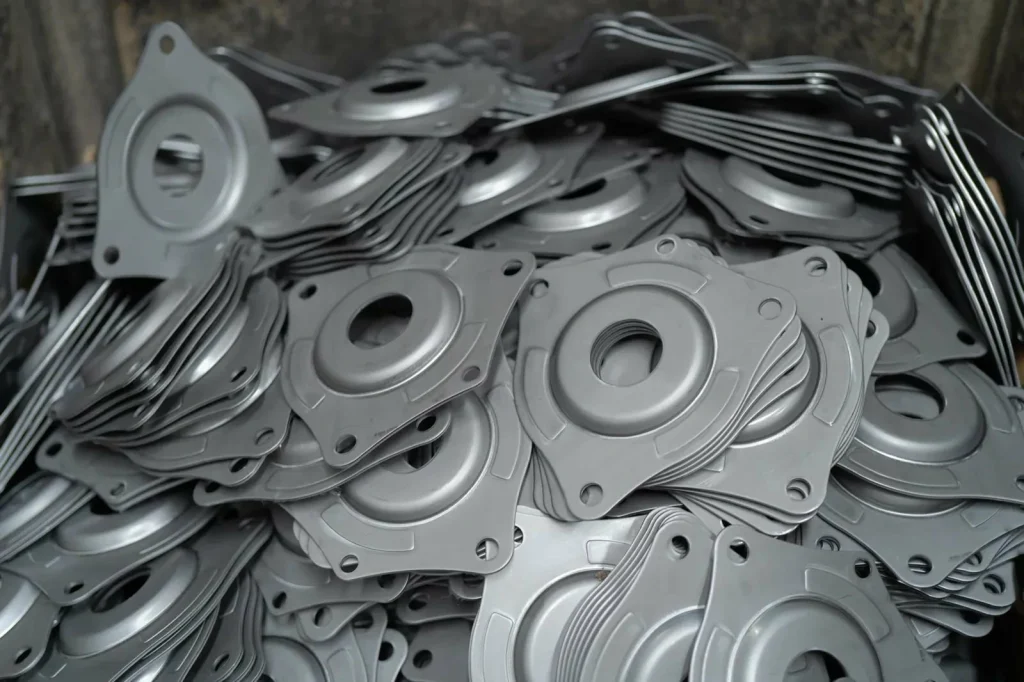
Core outcomes buyers expect: corrosion resistance, durability, aesthetics, conductivity
Engineers and technical buyers usually expect one or more of four outcomes:
Corrosion resistance is the most common driver. In many assemblies, bare metal fails early because the environment supports rust, pitting, galvanic attack between mixed metals, or under-film corrosion that spreads from a scratch. Military applications especially require solid coatings to protect against these risks and maintain performance in harsh conditions.
Durability is often shorthand for wear resistance, scratch resistance, and the ability to keep working after repeated handling. In particular, sliding contact, fretting, and abrasive particles can remove a thin coating faster than many people expect.
Aesthetics can mean color, gloss, uniform appearance, or hiding cosmetic variation in base metal. It also includes “consistency across batches,” which is a technical requirement when parts must match each other in an enclosure or consumer-facing product.
Conductivity can be required for grounding, shielding, or electrical contact. A finish can help or hurt here. Some coatings are insulating by design, while some plating systems are used to keep contact resistance low. If conductivity matters, it should be stated as a functional requirement, not assumed.
Typical project inputs providers need
Most finishing rework comes from missing inputs, not from a poor process choice. A finishing provider will usually need:
- Base material and condition: alloy family, heat treat state if relevant, and whether the part has free iron or shop contamination from prior steps. “Stainless steel” alone can be too vague when corrosion resistance is the goal.
- Geometry and features: edges, threads, recesses, blind holes, press fits, sealing surfaces, and any area where coating build can change fit. Sharp edges are a repeat failure point because coverage can thin at corners.
- Drawing/spec callouts: what finish standard is required, any thickness requirement, and which surfaces are critical. If you have “industrial surface treatment” needs tied to a regulated sector (aerospace, defense, medical), callouts and documentation needs drive the whole plan.
- Volume and mix: prototype-to-production scaling changes the economics because many finishing lines run in batches. High-mix, low-volume jobs tend to have more setup and masking labor.
- End-use environment: humidity, salt exposure, contact with other metals, handling and abrasion, temperature cycling, and whether the finish is cosmetic or functional. For example, a finish that works in indoor electronics may fail fast on an automotive underbody bracket, where acid resistance and durability are crucial to meet specialized industry standards. 5.
These inputs also affect feasibility. A finish that is common on simple stampings may be risky on a complex CNC component with deep recesses and tight fit requirements.
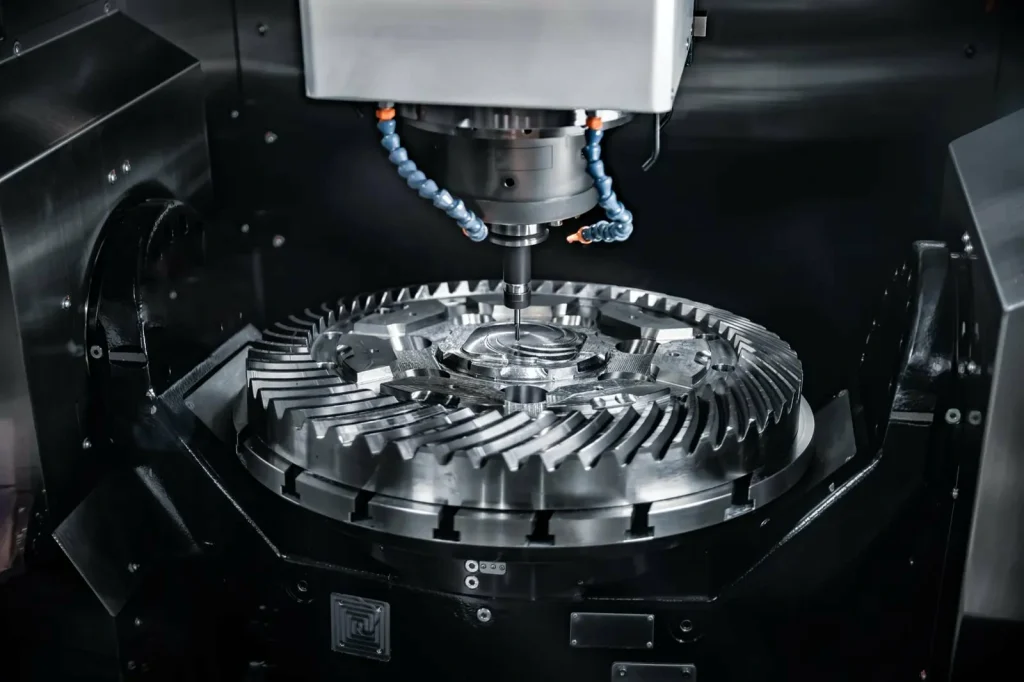
Visual: table of finishing types vs. benefits, common metals, typical use-cases
| Finishing Type | What it Changes | Benefits Buyers Target | Common Base Metals | Typical Use-Cases and Notes |
|---|---|---|---|---|
| Electroplating (e.g., zinc plating) | Adds a metallic layer | Corrosion resistance, sometimes appearance and conductivity | Steel, other metals depending on system | Hardware, brackets, fasteners; trade-offs between corrosion need and cost/complexity |
| 陽極酸化処理 | Converts the surface into an oxide layer | Corrosion resistance, wear resistance, appearance (including dyes) | Aluminum in many applications | Aerospace, electronics housings; decision variables include type, sealing, and color needs |
| E-coating | Applies a coating using an electric field | Coverage on complex shapes, consistency | Common on conductive metals | Good for recessed areas; still depends on pretreatment and cure control |
| パウダーコーティング | Applies a dry powder and cures it | Durability, appearance, protection | Many metals with proper prep | Common for industrial parts; limitations include coating build and edge coverage risks |
| Polishing / professional metal polishing | Removes small amounts of material and smooths surface | Appearance, lower roughness, sometimes easier cleaning | Stainless steel, aluminum, others | Visible components; can change dimensions if not controlled |
| コンバージョンコーティング | Forms thin chemical films on the base metal surface | Paint adhesion, corrosion protection, minimal dimensional impact | アルミニウム | Common for aerospace and automotive parts; not to be confused with anodizing |
| 不動態化 | Enhances corrosion resistance through chemical treatment | Corrosion resistance, improved longevity | ステンレス | Critical in food processing, medical, and architectural applications |
| 電解研磨 | Polishes metal surface by removing material with electrochemical action | Improved surface finish, smoothness, ease of cleaning | Stainless steel, other metals | Often used for stainless steel to improve aesthetics and corrosion resistance |
| Mechanical prep | Physically alters the surface with media blasting or brushing | Enhances adhesion, appearance, and prepares surfaces for further treatments | Steel, aluminum, others | Essential as a precursor for coatings, helps with surface texture and cleanliness |
Processes explained: how the main methods work (and when to use each)
Each process offers unique benefits, such as corrosion resistance, appearance, and durability, but they also come with trade-offs in terms of cost, complexity, and impact on part geometry.
Electroplating overview (e.g., zinc plating) and key trade-offs (corrosion vs. cost)
Electroplating uses an electrical current to deposit metal ions from a solution onto a component. Zinc plating is a common example used as sacrificial protection on steel. “Sacrificial” means the plated layer tends to corrode first, slowing attack on the base metal.
For feasibility, the key point is that plating is not just “dip it and done.” The part condition and surface preparation, such as cleaning to prevent hydrogen embrittlement in high-strength steels, are crucial to achieving the desired outcome. If required, a post-plate bake should be performed. Oils, oxides, and residues can cause adhesion loss or bare spots. Geometry affects current density, so edges and corners may plate differently than recessed areas. This can create thin protection where you need it most, or excessive build that affects threads or fits.
Trade-offs often show up as a three-way balance:
- corrosion resistance target
- cost and throughput expectations
- risk of building on critical features
If a CNC part finishing plan includes plated layers on tight-fit bores or threads, you usually need a thickness strategy and a masking plan. Without that, finishing can shift dimensions enough to cause assembly problems even when the coating “passes” a basic appearance check.
Visual: simplified plating workflow (conceptual)
| ステップ | 説明 |
|---|---|
| Incoming Part Condition Check | Inspect the part’s condition before processing. |
| Cleaning / Chemical Removal | Remove soils, oxides, and contaminants. |
| Rinse / Activation | Rinse the part and activate the surface for plating. |
| Electroplating Bath | Apply plating using controlled current and time. |
| Rinse | Rinse the part after electroplating. |
| Post-Treatment | Apply any specified post-treatment processes. |
| Dry / Inspection / Documentation | Dry the part, inspect it, and document the process. |
This diagram is intentionally high-level. The practical risk is that any weak link (poor cleaning, poor rinsing, uncontrolled plating time) can show up later as corrosion at edges, blistering, or inconsistent appearance across a batch.
Anodizing overview (where it fits and major decision variables)
Anodizing is a conversion process that grows an oxide layer on the surface, most often on aluminum. It is not a coating that sits on top in the same way paint does; it is formed from the base material. This is why anodizing is often chosen when you want a hard, integrated surface layer and predictable coverage on many aluminum geometries.
Decision variables tend to be practical, not theoretical:
- the aluminum alloy and its surface condition
- whether color is needed and how strict the color match is
- sealing choices and how they affect corrosion behavior and appearance
- which surfaces are functional vs. cosmetic
If you have mixed metals in an assembly, anodizing may reduce galvanic issues on the aluminum side, but it does not remove the need to think about contact points, fasteners, and trapped moisture.
Visual: anodizing decision tree (buyer-facing)
| Decision Question | オプション | Action/Consideration |
|---|---|---|
| Is the base metal aluminum? | いいえ | Consider plating or coating families instead. |
| はい | Proceed to next decision point. | |
| Is wear resistance a main need? | はい | Consider harder anodize options (per spec). |
| いいえ | Standard anodize may be enough (per spec). | |
| Is appearance/color critical? | はい | Define color range, cosmetic zones, and match method. |
| いいえ | Focus spec on corrosion and functional areas. |
This is not a substitute for a finish standard, but it helps you set questions that prevent late surprises, such as a color shift between lots or a fit issue after finishing.

E-coating and powder coating: where they excel and limitations
E-coating (electrophoretic coating) uses an electric field to deposit a coating onto a conductive part. Powder coating applies a dry powder that is then cured. Both are widely used as “industrial surface treatment” options because they can deliver a durable barrier layer when pretreatment and cure are controlled.
E-coating is often chosen for coverage and consistency, especially where recesses and complex geometry are present. However, coverage does not equate to unlimited thickness control, and edge pullback is a potential risk. Powder coating is often chosen for appearance, durability, and a wide set of coating behaviors, but engineers must be mindful of Faraday cage effects and coverage limitations in recesses. Additionally, outgassing can be a concern when applied to porous castings.
Both methods have limitations that matter on precision components:
- Coating builds can change assembly fit and stack-up.
- Edges and sharp corners can be weak points for coverage.
- Masking can be a major cost and schedule driver when you have tight-tolerance surfaces.
- Cure conditions matter. A coating that is under-cured or over-cured can change adhesion and long-term durability.
Visual: side-by-side comparison
| ファクター | E-coating | パウダーコーティング |
|---|---|---|
| Strength on complex geometry | Often strong coverage in recesses | Can be more variable in deep recesses depending on part and setup |
| Typical buyer goal | Consistency and coverage | Durability and appearance |
| Key limitation for precision parts | Masking and thickness control still matter | Thickness/build and edge coverage risks can drive fit and corrosion issues |
| What to specify early | Cosmetic zones, critical fit surfaces, cure and inspection requirements | Cosmetic zones, critical fit surfaces, cure and inspection requirements |
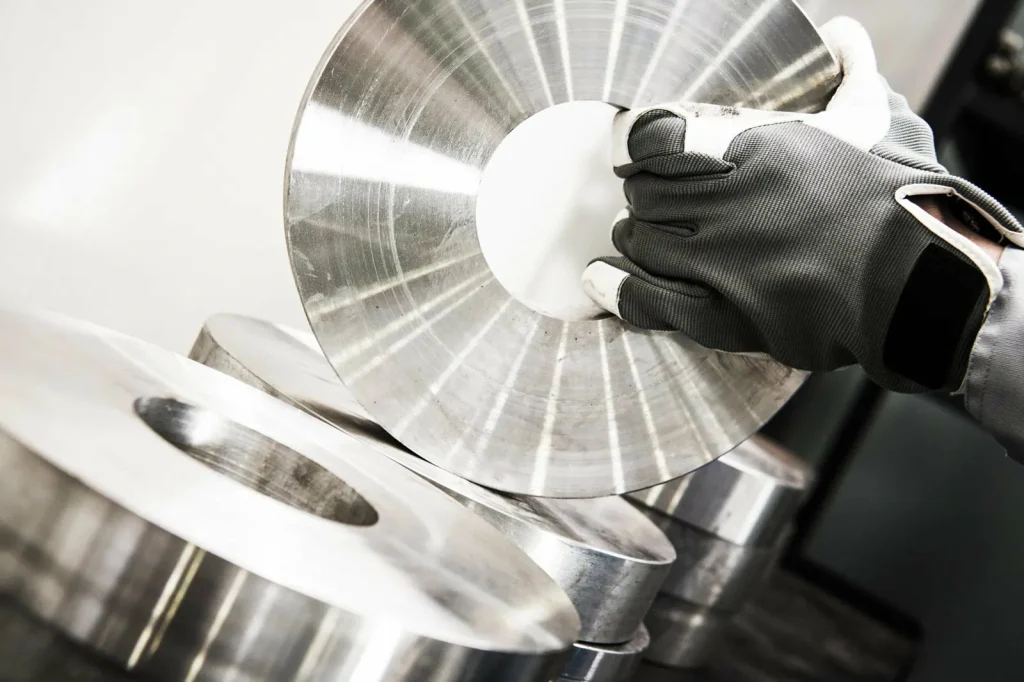
What’s the difference between anodizing, plating, and powder coating?
Anodizing converts the surface of the base metal (commonly aluminum) into an oxide layer, so the surface is formed from the part itself. Plating deposits a new metallic layer onto the part using an electrochemical process. Powder coating adds a polymer-based layer that is cured, which acts mainly as a barrier and wear surface.
For part dimensions, plating and powder coating both add build in a direct way. Anodizing also changes dimensions, but it does it by converting surface material into oxide and growing a layer, which can still affect fit on precision features.
How to choose the right finish for your part and environment
Different failure modes, such as corrosion, wear, appearance issues, and fit risks, each have distinct requirements. By identifying the most critical failure mode for your application, you can choose the most appropriate finish, ensuring both performance and durability. This process not only improves the part’s functionality but also avoids costly mistakes related to over-thickness or additional inspection steps later on.
Match finish to failure modes (corrosion, wear, appearance, tolerance/fit risks)
Start with how the part fails, not with the finish name. Many finishing mistakes come from choosing a familiar coating and then trying to patch problems later with extra thickness or extra inspection.
Corrosion failure modes include red rust on steel, pitting, crevice corrosion in trapped moisture, and galvanic corrosion at mixed-metal joints. Wear failure modes include sliding wear, fretting at joints, and abrasion from particles. Appearance failure modes include color mismatch, gloss variation, and visible handling marks. Fit risks include coating build on threads, press fits, seal grooves, and any precision datum surfaces.
Visual: finish selection checklist (engineering screen)
| 質問 | なぜそれが重要なのか | What to capture in spec/RFQ |
|---|---|---|
| What is the main failure mode: corrosion, wear, appearance, conductivity? | Drives the finish family choice | Ranked requirements (primary/secondary) |
| Where is the part used (indoor, automotive exposure, aerospace environment, electronics enclosure)? | Environment changes the corrosion and handling risk | End-use description and exposure assumptions |
| Which surfaces are functional vs. cosmetic? | Helps control masking, inspection, and cost | Marked drawing zones or notes |
| Which features are fit-critical (threads, bores, sealing surfaces)? | Finishing can change dimensions and cause assembly issues | “No-build” zones or thickness control plan |
| Are there mixed metals in the assembly? | Galvanic couples can defeat a good coating | Mating materials and contact points |
This checklist also answers a common buyer question: why surface finishing is important in CNC. CNC加工 can hold tight dimensions, but it also exposes fresh metal, creates sharp edges, and leaves a defined surface texture. If you add a finish without planning, you can lose fit, change contact resistance, or create corrosion sites at edges. So finishing is not a “cosmetic afterthought” for CNC components; it is part of the functional design.
Material-fit and geometry considerations (edges, threads, recesses, mixed metals)
Material-fit is a feasibility filter. Anodizing is typically tied to aluminum. Many plating systems are widely used on steel, and coating systems depend heavily on pretreatment compatibility. When a buyer says “we need a custom metal coating,” the first engineering question is which base metal and what prior operations touched it. For instance, steel parts that have been machined in a way that embeds contamination can show adhesion problems unless the cleaning and activation steps remove it.
Geometry drives both performance and cost. Common pain points include:
Edges: sharp edges tend to have thinner protective coverage in some processes and can also be the first place a coating chips. If corrosion resistance is critical, edge breaks and consistent radii can be a design choice, not just a deburr note.
Threads: any added layer can change thread fit. Even small buildings can be the difference between smooth assembly and galling. If threads must stay within a functional fit range, define whether threads are to be finished, masked, chased, or controlled with a thickness approach.
Recesses and blind features: trapped solution, poor drainage, and uneven coverage are repeat risks. This is where a finish that looks fine on a flat coupon can fail on a real component.
Mixed metals: galvanic issues often show up at fasteners, brackets, and electrical bonding points. A coating on one part does not protect the joint if the couple is active and moisture is trapped. If the assembly is mixed, capture mating materials and contact geometry when discussing the finishing process.
Quality and consistency expectations
Technical buyers often ask for “high-quality” finishing services, but quality needs a measurable definition. At minimum, define what “acceptable” means for surface roughness (Ra/Rz), coating thickness/coverage, adhesion, and appearance on your part geometry. Consistency is also a system property. It depends on pretreatment control, bath condition control, cure control, racking strategy, and inspection sampling.
Industry sources describe a finishing market that is investing in automation and process control to improve precision and efficiency. Buyers should confirm what systems are in place to ensure compliance, as well as the provider’s ability to handle fluctuations in labor and specification requirements.
There is also a common trap: using a single benchmark number as proof of quality. Treat any vendor-published compliance percentage as non-comparable unless definitions, sampling methods, and verification criteria are clearly provided. These figures may be useful as internal targets, but they should be treated as single-source unless validated. The key point is not that the number is “right” or “wrong,” but that buyers should ask how compliance is measured, what the acceptance criteria are, and whether a third-party verification method is used. Without that, “98.7% compliance” can mask differences in sampling, definitions, and what gets counted as a defect.
Which metal finish is best for corrosion resistance?
There is no single best finish for corrosion resistance because corrosion depends on the metal, the environment, and how damage occurs in service. Barrier coatings can work well until they are scratched, while sacrificial systems can keep protecting even when damaged, but they have their own limits. A practical way to choose is to define the corrosion exposure, identify crevices and mixed-metal contacts, then select a finish family and pretreatment plan that matches those risks.
Provider selection criteria
When choosing a metal finishing provider, simply relying on “top company” lists often doesn’t address the real concerns around feasibility. Ensure the company specializes in handling high-quality finishes and can commit to rigorous testing and documentation, especially for demanding industries like aerospace and defense. The key to making the right choice is ensuring the vendor’s capabilities align with your specific part requirements. It’s crucial to verify whether they can handle the part size, geometry, masking, and scale from prototype to production.
Capability checklist: processes offered, part size/throughput, prototype-to-production scaling
“Top company” lists rarely help when your problem is feasibility: will the vendor reliably finish your part geometry, at your volume, with your documentation needs? A better screen is capability fit.
Many engineering teams start with the finish type (plating, anodize, e-coat, powder coat, polishing), then discover late that the provider cannot handle part size, cannot mask a critical feature repeatably, or cannot scale from prototype to production without changing the process window.
Visual: provider capability scorecard (fill-in template)
| カテゴリー | チェックポイント | なぜそれが重要なのか |
|---|---|---|
| Processes offered | Plating / anodizing / e-coating / powder coating / polishing and related prep | Single-source can reduce handoffs, but only if capability truly matches your finish |
| パート・エンベロープ | Max part size, weight, and handling limits | Drives racking options and risk of part damage |
| スループット | Batch size, line availability, ability to run high-volume | Finishing lines are often scheduled around batches; affects lead time risk |
| Prototype-to-production | Whether the same line and controls apply at low and high volume | Changing method midstream can change thickness, appearance, and fit |
| Masking capability | Masking methods and repeatability on your geometry | Masking often drives cost, rework, and schedule |
| 検査と文書化 | CoC, inspection records, traceability | Required in regulated supply chains and for root cause work |
This is also where “cnc part finishing” differs from finishing simple stampings. CNC components often have more fit-critical surfaces and more complex geometries. A provider that is excellent at cosmetic powder coats on simple parts may not be the right match for a precision assembly part.
Quality systems and compliance signals
Buyers in aerospace, defense, and other controlled industries often look for references to military-oriented specifications or structured quality systems. Even when you are not in a regulated sector, these signals can still matter because they imply disciplined process control, documentation habits, and defined acceptance criteria.
That said, “MIL references” on a capability list are not the same as meeting your exact drawing callout. You still need to confirm:
- which finish standards they can support for your material family
- how they verify thickness/coverage and adhesion
- what happens when a batch shows drift (hold, rework, retest)
The key point is to treat compliance as a chain. The finish chemistry is one link, but inspection, documentation, and traceability are also part of “compliance” in practice. It is essential that the provider use the finest inspection methods, such as penetrant inspection, to verify quality at every stage.
Lead times, communication, and documentation (COC, inspection records, traceability)
Finishing adds schedule risk because it is often a shared resource, run in batches, and sensitive to rework. Clear communication reduces surprises more than any single technical choice.
Documentation is not paperwork for its own sake. A certificate of conformance (COC), inspection record, and traceability data can be the difference between a quick containment action and a long line-down event when field corrosion appears.
Visual: intake form template (what to send with parts)
| Field | Example content (fill with your data) |
|---|---|
| Part ID and revision | Drawing number, revision, quantity |
| Base material | Alloy family and condition |
| Finish requirement | Finish family and spec callout; cosmetic vs. functional zones |
| Fit-critical features | Threads, bores, sealing surfaces; no-build zones |
| 環境 | Corrosion exposure, temperature, handling/wear |
| Test/verification | What must be documented (thickness, adhesion, appearance) |
| Documentation required | COC, inspection records, traceability needs |
| Packaging constraints | Protect cosmetic surfaces; avoid contact marks |
What should I look for in a metal finishing vendor?
Look for process capability that matches your part geometry and material, not just the finish name. Ask how they control pretreatment, how they handle masking on fit-critical features, and what inspection records you will get back. If you expect to scale volume, confirm that the same process controls apply from prototype to production, and that the provider has solid systems in place to maintain top-quality finishes throughout the entire run.
Costs, lead times, and what drives quotes
Several factors, such as surface area, masking complexity, pretreatment, and specification requirements, can influence both pricing and timeline. In this section, we’ll break down the key cost drivers, followed by lead-time influences that help you better anticipate project needs and optimize communication with suppliers.
Cost drivers: surface area, masking, pretreatment, spec complexity, rework risk
Buyers often ask whether finishing increases cost significantly. The honest answer is: it depends on geometry, spec, and how much manual work is needed. The coating material itself may not be the main driver. Labor and risk control can dominate.
Surface area is a direct driver in many finishing services because it affects chemical usage, time, and racking density. Masking is often the hidden driver for precision parts. If you need clean datum surfaces, no build on threads, or selective conductivity, masking steps can be complex and sensitive to operator variation.
Pretreatment is another major driver. If parts arrive with heavy oils, oxides, or inconsistent surface condition, the shop may need more aggressive cleaning. That can add steps and increase rework risk. Spec complexity also matters. A requirement that includes special inspection, detailed acceptance criteria, or extra documentation can add cost even when the coating step is unchanged.
Visual: pricing variables table
| Quote variable | Why it drives cost | What you can do upstream |
|---|---|---|
| Surface area / part size | Affects processing time and capacity per batch | Provide accurate area estimates or part models |
| Masking needs | Adds manual labor and defect risk | Mark no-build zones clearly; reduce masked area if possible |
| Pretreatment intensity | Controls adhesion and corrosion performance | Deliver parts clean; control shop contamination and free iron |
| Spec and documentation | Adds inspection and reporting time | Define acceptance criteria and required records up front |
| リワーク・リスク | Rework can mean stripping and reprocessing | Use realistic cosmetic criteria; align on allowable variation |
Lead-time drivers: batching, line availability, curing/drying, inspection, logistics
Finishing lead time is often constrained by batching and line scheduling. Many shops plan runs to optimize chemistry stability, minimize changeover, and fill racks efficiently. That means a small batch of special parts may wait for a compatible batch window.
Curing and drying can also be real schedule steps for coating families, not just “air time.” Inspection and documentation add time as well, especially when thickness, adhesion, and appearance are all critical and must be recorded.
Logistics is part of lead time. Parts must be transported, handled, and packaged, so finished surfaces are not damaged. Cosmetic finishes can be ruined by contact marks that happen after the coating is perfect.
Visual: simplified lead-time timeline
| ステップ | 説明 |
|---|---|
| Queue / Batch Scheduling | Organize and schedule parts for processing. |
| Pretreatment + Finishing Run | Perform necessary pretreatment and finishing. |
| Cure / Dry (as needed) | Cure or dry the parts as required. |
| Inspection + Documentation | Inspect parts and document the process. |
| Packaging + Shipping | Package and ship the finished parts. |
How to request quotes that compare apples-to-apples (specs, test requirements, acceptance criteria)
Quote comparisons fail when two suppliers interpret the same sentence differently. To compare metal surface finishing services fairly, align on three items: what will be done, how it will be verified, and what counts as acceptable.
Visual: RFQ checklist
| RFQ item | Include it because |
|---|---|
| Base material and prior processing | Surface condition affects adhesion and appearance |
| Finish type and spec callout | Prevents “equivalent” substitutions that change build or performance |
| Critical surfaces and masking needs | Controls fit risk and cost |
| Test requirements | Defines what must be measured and recorded |
| 受け入れ基準 | Reduces rework loops and subjective rejects |
| ドキュメンテーション | Ensures traceability and supports failure analysis |
How much do metal finishing services cost?
Cost depends on surface area, masking, pretreatment, and how strict the spec and inspection requirements are. A simple coating on a simple geometry can be straightforward, while a precision component with selective masking and detailed documentation can cost much more even at the same quantity. If you want a meaningful estimate, provide geometry, finish spec, and acceptance criteria so suppliers are quoting the same scope.
Quality control, testing, and performance verification
Quality control (QC) is essential to ensure that metal finishes meet both functional and aesthetic requirements. From initial inspections to corrosion and durability validation, proper QC at every stage of the finishing process helps identify and address potential issues early. The following sections explore key QC checkpoints, the importance of process validation, and the growing role of automation in achieving consistent results. Understanding these elements is critical to making informed decisions in the metal finishing industry.
Common QC checkpoints (incoming condition, pretreatment, thickness/coverage, adhesion, appearance)
Quality control in metal finishing is most effective when it catches problems early. Incoming condition checks matter because contamination and surface damage can be impossible to “coat over.” Pretreatment checks matter because many adhesion failures start in surface roughness or chemical contamination, not in the coating itself. Penetrant inspection is often used to ensure the cleaning process is flawless before moving forward. 6.
Thickness and coverage checks are central when fit or corrosion life depends on consistent protection. Adhesion checks verify that the coating is bonded well enough to survive handling and service. Appearance checks matter for cosmetic parts, but they should be defined with clear criteria so the line is not chasing subjective opinions.
This is also where the “finishing affects part dimensions” question becomes concrete. Any finish that adds build can change thread engagement, bore size, and press-fit behavior. Even polishing can remove material. A QC plan should match this reality by defining which dimensions are checked before and after finishing, and which surfaces must be protected from build or removal.
Corrosion and durability validation approaches (what to ask a shop to document)
Validation is the step that turns a finish choice into an engineering decision. For corrosion resistance, ask what evidence will be provided for the specific finish system you are buying. For durability, ask what the finish is expected to resist: abrasion, handling, chemical exposure, or temperature cycling.
From a buyer’s view, useful documentation includes:
- what was processed (lot traceability)
- what was measured (thickness/coverage checks, adhesion checks, visual criteria)
- what was accepted/rejected and why
- how nonconformances are handled (hold, rework, retest)
Industry reporting highlights that finishing providers are under pressure from environmental regulation and customer demands for longer product life. That pressure tends to push more formal verification and recordkeeping, because the cost of a field failure is much higher than the cost of documenting a batch correctly.
Process consistency and continuous improvement signals (automation/IoT-enabled monitoring trends)
Finishing consistency has always depended on process discipline, but automation and monitoring are increasingly used to reduce variation and support limited skilled labor. Industry sources describe trends toward automation, robotics, and AI/IoT investments aimed at higher precision and efficiency.
From a technical buyer’s standpoint, the value of automation is not “high tech.” It is repeatability: stable pretreatment, controlled parameters, and better detection of drift before defects ship. Industry surveys indicate that many finishing shops are investing in new equipment and automation to improve precision and efficiency. That does not guarantee quality, but it supports the idea that providers are investing to maintain consistency under real-world constraints like workforce shortages.
Visual: inspection & documentation checklist
Inspection & documentation checklist (copy/paste into your quality plan)
| 項目 | 要求する証拠 | 備考 |
|---|---|---|
| Incoming condition | Record of incoming check and any rejects | Helps isolate upstream contamination issues |
| Pretreatment control | Batch/lot record tied to part ID | Pretreatment is a common root cause for adhesion failure |
| Thickness/coverage | Measured results recorded per plan | Tie checks to fit-critical and corrosion-critical zones |
| 接着 | Documented method and results | Define what counts as pass/fail |
| Appearance | Defined criteria and disposition | Avoid subjective “looks good” disagreements |
| トレーサビリティ | Lot traceability and COC | Needed for containment and field failure response |
Market trends and 2025–2033 outlook shaping service decisions
The global metal finishing market is expected to experience steady growth from 2025 to 2033. As highlighted in industry reports, key trends such as increased automation, sector-specific demands, and technology adoption will play crucial roles in shaping service decisions. For further insights, refer to the Finishing Industry Survey: Better 2025.
Market size and growth: $16,160M in 2025; 3.9% CAGR through 2033
Market context matters because it affects capacity, investment, and supplier risk. A market report values the global metal finishing market at $16,160 million in 2025, with projected 3.9% CAGR through 2033. For buyers, growth can mean more demand pressure on popular processes, more consolidation, and more incentive for providers to invest in automation and compliance.
At the same time, growth forecasts do not remove practical constraints. Many finishing lines are capital-intensive, upgrades are costly, and hiring skilled labor remains difficult in many regions. So even in a growing market, lead times and supplier availability can be uneven by process type and location.
Demand drivers by sector: automotive (leading), aerospace, electronics (precision needs)
Demand is not uniform. The market report points to automotive as a leading driver, with aerospace and electronics also contributing. This maps to three different finishing demand patterns:
Automotive demand tends to focus on corrosion resistance at high volume and controlled cost, with strong requirements around appearance for visible components.
Aerospace demand often pushes documentation, process control, and strict acceptance criteria. Even when finished chemistry is similar to other sectors, the verification and traceability burden can be heavier.
Electronics demand often emphasizes precision needs: predictable surface finish behavior, controlled appearance, and sometimes conductivity or shielding performance. Small parts and tight assemblies make building control and masking strategy more important.
Technology trends: automation/robotics, AI/IoT investments for precision and efficiency
Technology trends in finishing are shaped by two pressures: quality expectations and resource constraints. Industry sources describe increased adoption of automation and monitoring, linked to precision, efficiency, and coping with workforce shortages and regulatory demands.
For buyers, this trend changes what is reasonable to ask for in documentation and consistency, but it also changes supplier evaluation. A shop investing in monitoring may be better positioned to show stable results, but you still need to confirm how they define acceptance, how they handle drift, and whether the documented controls cover your critical features.
Visual: chart of key trend themes (sustainability, automation, durability engineering)
Trend themes chart (2025–2033)
| Theme | What is changing | What it means for buyers |
|---|---|---|
| 持続可能性 | Shift to greener processes such as water-based/low-VOC coatings | More questions about material declarations, waste handling, and measurable KPIs |
| オートメーション | More robotics and monitoring to improve consistency | Expect better parameter records; verify it ties to your specs |
| Durability engineering | More focus on corrosion and wear performance in service | More need to define failure modes and validation evidence up front |
Sustainability and environmental regulations: what buyers can ask for
As sustainability becomes a growing concern in the metal finishing industry, regulatory pressures are shaping the way finishes are produced and applied. Buyers need to stay informed on how environmental regulations influence available chemistries and coatings. The shift toward greener processes, such as water-based and low-VOC coatings, is becoming a critical factor in eco-conscious purchasing decisions.
Regulatory pressure and shift to greener processes (water-based/low-VOC coatings)
Environmental regulation is not a side issue with metal finishing. It can change which chemistries are available, which coatings are preferred, and what reporting is needed. Industry reporting highlights a shift toward eco-friendly processes, including water-based and low-VOC coatings, and ongoing innovation in methods meant to improve durability and corrosion resistance while meeting environmental constraints.
For buyers, the practical implication is that the “same finish name” can hide a different chemistry over time. If you qualify a finish for performance, track the specification and any allowed substitutions. If sustainability is a requirement, define it in measurable terms so it does not turn into vague claims.
Waste, water, and chemical management in practice (example: 30% water reduction via upgrades)
Sustainability claims are more credible when tied to measured outcomes. For example, investments in automation and water conservation can significantly improve environmental performance in finishing processes.
Even without adopting the same scale of investment, this example is useful because it shows what “real” environmental improvement looks like in finishing: capital upgrades, monitoring, and process changes that reduce water and waste while supporting throughput.
How to compare “eco-friendly finishing” claims (documentation and measurable KPIs)
Visual: sustainability scorecard (buyer comparison tool)
| Claim area | 頼む | なぜそれが重要なのか |
|---|---|---|
| Low-VOC or water-based coatings | Coating system description and compliance documentation | Lets you compare like-for-like and avoid unsupported claims |
| Water reduction | Measured KPI (baseline vs. current) and project scope | Prevents vague “we save water” statements |
| Waste treatment | Description of waste handling approach and records | Waste management is often the real environmental load in finishing |
| Process monitoring | Evidence of monitoring tied to stability | Stability can reduce scrap and rework, which also reduces waste |
Are there eco-friendly metal finishing options?
Yes, industry reporting points to a shift toward water-based and low-VOC coating options and to investments that reduce water usage and improve waste treatment. The key is to compare options using documentation and measurable KPIs, not labels. Ask what changed, how it is measured, and whether performance requirements are still met.
Real-world examples and benchmarks (what “good” looks like)
Real-world examples and benchmarks provide valuable insights into what “good” looks like in the context of modernizing metal finishing processes. Below, we explore three case studies that highlight the practical impact of technology investments, industry trends, and performance metrics on achieving better results.
Case study: facility upgrades with automation, IoT, and water conservation have led to measurable improvements
Upgrades involving automated systems, IoT monitoring, and water conservation efforts at finishing sites have led to efficiency improvements, including measurable reductions in water usage and enhanced consistency in finish quality.
From a feasibility angle, the lesson is not “upgrade everything.” It is that repeatability and environmental performance are often linked. Better controls reduce rework. Less rework reduces chemical use, water use, and scrap. If you are selecting a finishing partner for a long-running program, ask what investments support stability and compliance, because those factors tend to predict fewer disruptions.
Case study: 420+ shop survey signals: 86% expect better 2025; 56% expect ≥10% sales growth; 42% equipment; 23% IT/automation
An industry survey of 420+ North American finishing shops, taken after a challenging period, found strong optimism for 2025. Many finishing shops expect strong performance and growth in the coming years, with a significant number planning for increased capacity and new investments. On investment, 42% planned new equipment or refurbishments, and 23% budgeted for IT/automation.
For buyers, this type of data supports two practical points. First, capacity and demand may tighten in process areas linked to aerospace and automotive projects, so early scheduling and clear RFQs matter. Second, the supplier base is actively investing, which can improve process control, but it can also mean disruption during upgrades. Ask how changes are validated before they affect production lots.
Case example (single-source): surface finish consistency and tooling reuse benchmarks; how to interpret cautiously
Some suppliers publish performance benchmarks like “surface finish compliance” and “tooling reuse.” These benchmarks should be treated as internal targets unless independently verified. These numbers can be helpful as directional signals of process discipline, but they should not be treated as industry facts without independent confirmation.
If you want to use such benchmarks in supplier selection, treat them as a starting point. Ask for the definition of “compliance,” the sampling plan, and the acceptance criteria. If the finish is critical, consider asking for third-party verification or a controlled pilot run with documented inspection results. This avoids anchoring a sourcing decision on a metric that may not be comparable across shops.
Visual: case-study results table (metric → outcome → why it matters)
| Example metric | Reported outcome | Why it matters for buyers |
|---|---|---|
| Water usage | 30% reduction via upgrades | Suggests environmental performance and lower waste risk |
| Shop outlook | 86% expect better 2025 | Signals demand and possible capacity constraints |
| Growth expectations | 56% expect ≥10% sales growth | Suggests investment and scheduling pressure |
| Planned investment | 42% equipment; 23% IT/automation | Supports trend toward more controlled processes |
| Consistency (single-source) | 98.7% compliance (unverified) | Useful only if definitions and verification are clear |
Ending: how to decide if a finish approach is suitable
A workable finishing plan starts with the failure mode and the part’s fit risks, then backs into the finish family and verification method. Corrosion resistance choices depend on environment, mixed metals, and how damage happens in service. Durability choices depend on the wear mechanism and whether coating build can be tolerated.
Feasibility is often decided by details that do not show up in a finish name: pretreatment control, masking strategy, edge and recess geometry, and how acceptance is measured. Provider selection should focus on capability match, documentation, and the ability to hold consistent results as volume scales, because those factors determine whether you get repeatable parts or recurring rework.
よくあるご質問
Common types of metal finishing include electroplating, anodizing, e-coating, powder coating, and polishing. These processes are used to modify the surface of metal parts in various ways, such as adding material through plating or coating, converting the surface with anodizing, or removing small amounts of material through polishing. Each method has specific benefits tailored to the desired functionality or appearance of the part, such as enhancing corrosion resistance, improving wear resistance, or achieving a specific aesthetic. The choice of finish depends on the part’s material, geometry, and the failure mode it needs to address, so selecting the appropriate finish is critical to meeting performance requirements.
Surface finishing is crucial in CNC machining because while CNC machining creates precise geometry, it can also expose fresh metal and create sharp edges, which are prone to corrosion or wear. Without an appropriate finish, the part’s functionality could be compromised. Finishing methods, such as coating or polishing, are applied to protect the metal surface, enhance durability, and sometimes improve the part’s appearance. Additionally, finishing can change the part’s fit if coating build is not carefully managed.
Finishing can significantly impact part dimensions because many finishes add thickness to the surface. For example, coatings like electroplating or powder coating will increase the part’s overall thickness, which can affect critical features such as threads, bores, or press fits. Polishing, on the other hand, removes material and can alter dimensions, especially if not controlled properly. These changes can lead to fitment issues, assembly challenges, or even part failure if the dimensions are not considered in advance.
The durability of a metal finish largely depends on the specific application and environmental conditions the part will face. Some finishes, such as anodizing or electroplating, are excellent at providing a barrier against corrosion, making them ideal for parts exposed to harsh environments. Powder coating, known for its durability, provides a tough, wear-resistant surface that is often used for industrial applications. Other finishes, like electropolishing, enhance surface smoothness and are particularly effective in preventing corrosion in stainless steel. To determine the most durable finish, it’s essential to consider the part’s intended use, such as whether it needs resistance to wear, corrosion, handling damage, or chemicals, and choose the finish that best matches these requirements.
The cost of metal finishing can vary depending on several factors, including the complexity of the part, the type of finish required, and the volume of parts to be processed. Simple geometries with clear specifications typically incur lower costs because the finishing process is straightforward and less labor-intensive. However, more complex parts with tight tolerances, specific masking needs, or additional documentation requirements can increase costs. Additionally, finishing services that require high levels of inspection or special quality documentation can add to the overall expense.

 Japanese
  English
  German
  French
  Italian
  Spanish
  Polish
  Czech
Czech