
When surface behavior becomes the weak link in an otherwise well-designed metal part, engineers often turn to ptfe (teflon) coating as a practical fix rather than a material change. Instead of redesigning the geometry or switching alloys, a thin fluoropolymer film can transform how a component releases product, handles friction, or survives chemical exposure. In real-world manufacturing, that difference shows up as fewer shutdowns from build-up, less galling between mating parts, and improved cleanability in aggressive washdown environments.
But ptfe (teflon) coating is not a universal upgrade. It is a functional surface treatment—chosen for low friction, non-stick release, and chemical resistance—not for structural strength. Understanding when a coating makes sense, when a solid PTFE part is the better route, and how thickness, adhesion, and service temperature affect performance is what separates a successful specification from an expensive rework. This guide breaks down the properties, trade-offs, and industrial applications that matter when you are deciding whether ptfe (teflon) coating is the right solution for your part.
What PTFE coating is (and when it’s the rigt choice)
PTFE (polytetrafluoroethylene) coating services, widely known for its non-stick properties, are a high molecular fluoropolymer coating used as a functional surface treatment, ideal for a wide variety of applications, including high-heat resistance, where PTFE (Teflon) coatings can withstand extreme temperatures and stand out for their temperature limits. These coatings are also highly regarded in industrial Teflon applications where both performance and durability are critical. In practice, it is a thin polymer film applied to a substrate (often metal) to change how the surface behaves. The usual reasons are release, lower friction (dry lubrication), and chemical resistance.
From a feasibility view, PTFE (Teflon) coating is rarely the “strongest” finish. It is chosen because it reduces sticking and sliding forces while staying non-reactive in many chemical environments, making it an ideal chemical resistant finish. That makes it common on parts where product build-up, galling, or corrosive exposure is the main failure driver, and where a thin coating is acceptable in the tolerance stack. In these cases, a chemical-resistant finish like PTFE (Teflon) coating is often the ideal solution.
A key decision is whether you need a coating (thin functional layer on a structural base material) or a solid PTFE part (the polymer is the bulk material). In many cases, Teflon™ coating services are the ideal choice when a thin layer is sufficient to provide non-stick release or chemical resistance. In many cases, PTFE coatings also work well when a thin layer is enough to provide the necessary properties like non-stick release or chemical resistance. Coatings keep the strength and stiffness of the base metal, but they can wear through. Solid PTFE gives thickness and chemical inertia, but it brings its own design limits (creep, stiffness, fastening methods).
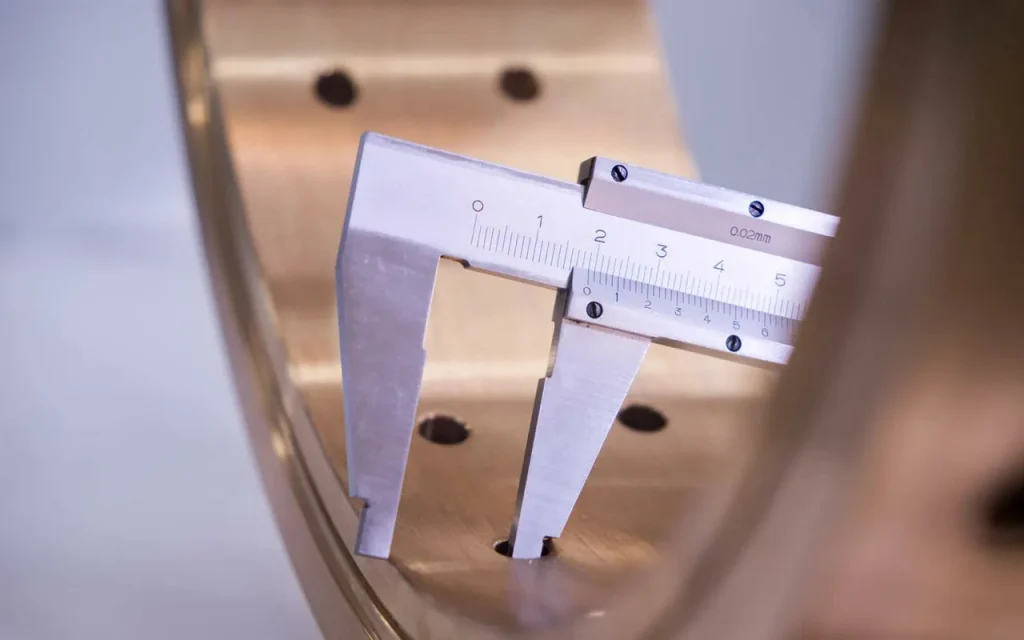
Is PTFE the same as Teflon®?
PTFE begins as the material: tetrafluoroethylene. “Teflon®” is a trademark often used in industry as a shorthand for PTFE-based coatings or systems. Teflon coating services are widely used in industrial applications to ensure non-stick surfaces and resistance to extreme conditions. So they are not strictly the same thing, but in many RFQs and drawings, “Teflon coating” is used to mean a PTFE (or related fluoropolymer) coating.
For technical communication, it helps to write the requirement as PTFE (or a specific fluoropolymer like FEP/PFA/ETFE) plus the performance needs (temperature, thickness, adhesion, wear mode). That avoids ambiguity when multiple coating systems could meet the same casual “PTFE coating” label.
What problems PTFE solves: non-stick release, low friction, chemical resistance
Coating works effectively when PTFE-coated surfaces are specified to release materials that would otherwise stick, thanks to the coating’s non-stick properties. This includes tacky polymers, adhesives, powders, and food products, but the same idea applies in industrial equipment where build-up causes jams or cleaning downtime.
It is also used as a low friction surface treatment, making the surface slippery and ideal for cookware applications, where PTFE (Teflon) coatings are widely valued for their non-stick properties, which also includes reducing wear in high-temperature environments and providing a chemical-resistant finish. Teflon coatings can withstand extreme heat while maintaining their non-stick qualities. PTFE has a low coefficient of friction, so it can act as dry lubrication where oil or grease is not acceptable. That matters in mechanisms where contamination is a risk, where cleaning is frequent, or where lubricants wash out.
Chemical resistance is the third driver. PTFE, a synthetic fluoropolymer, is widely described as non-reactive, so it is used as a chemical-resistant finish on parts that see acids, bases, solvents, or aggressive cleaning agents, offering excellent resistance to heat and chemicals. Teflon coatings can withstand even the harshest chemical environments, making them ideal for processing materials. PTFE stands as a preferred choice for processing applications involving materials, ensuring a reliable barrier layer. Still, “chemical resistant” does not mean “immune in every chemical at every temperature.” In coating form, you also have to consider porosity, film continuity, and whether the system includes binders that change the chemical profile.
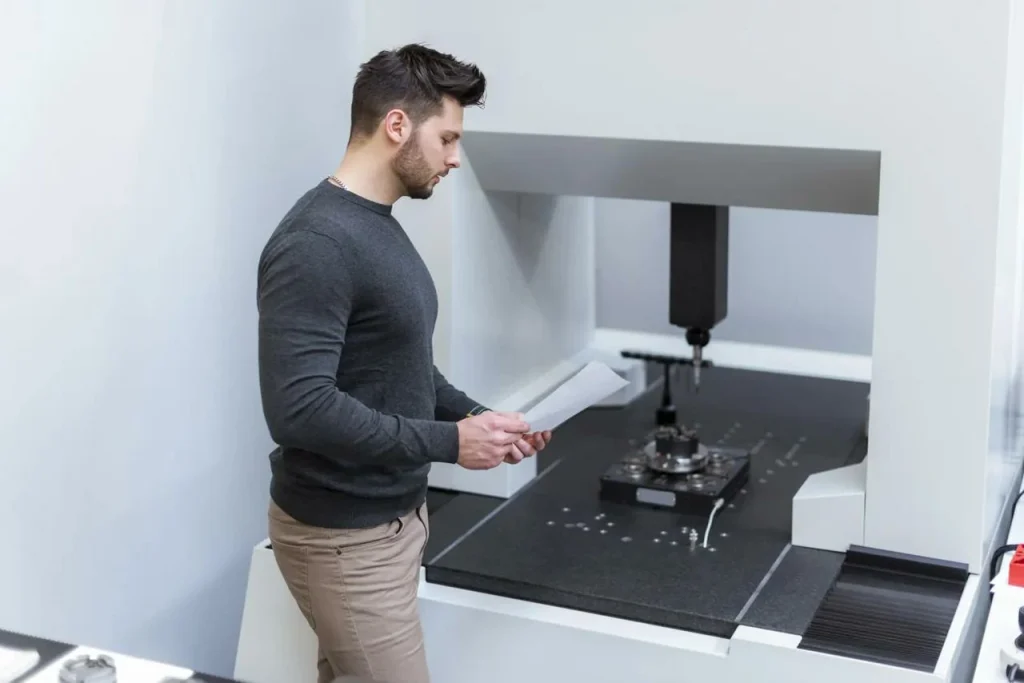
Where PTFE is typically specified: harsh chemicals, high-temperature coating needs, reduced wear surfaces
Teflon coating services are widely used in industries requiring reliable, long-lasting coatings that can withstand extreme environmental conditions.
Engineers tend to specify PTFE coatings in three clusters of use-cases:
- Exposure problems: corrosive chemicals, repeated washdowns, aggressive cleaners, or environments where corrosion protection is part of the requirement.
- Thermal problems: parts that run hot or cycle in temperature and need a non-stick coating that does not soften early. (Exact thermal limits depend on the coating system and cure.)
- Tribology problems: sliding, rubbing, or repeated contact where reduced friction prevents galling, reduces torque, or lowers wear on a mating part.
For CNC parts, PTFE coating is often used when the machined geometry is correct but the surface behavior is wrong. Coating with PTFE helps reduce friction and sticking without altering the base material, making it ideal for functional coatings and to prevent coatings degrade in high-temperature applications. A stainless component might meet strength and corrosion needs, yet still bind, squeal, or collect product. A PTFE-based coating can reduce friction and sticking without changing the base alloy.
Decision checklist: when to choose coating vs. solid PTFE parts
Use this checklist to decide whether a PTFE coating is feasible, or whether you should switch to a solid PTFE (or other plastic) component.
Choose a PTFE coating when:
- The base part must carry load, hold threads, or keep stiffness, and you only need surface function.
- You need a thin non-stick metal coating to reduce sticking or cleanability problems.
- You need low friction (dry lubrication) but cannot use oils/greases due to contamination, washout, or process rules.
- You can tolerate eventual wear-through and can inspect or replace parts on a schedule.
Choose a solid PTFE part (or insert/liner) when:
- You need PTFE behavior through full thickness (scratches and wear cannot expose metal).
- The part will see abrasion that would quickly remove a thin coating.
- You need geometry that is hard to coat without bridging (very tight clearances, sharp internal corners), and you cannot change the design.
- You need a polymer bearing or seal behavior that depends on bulk material, not a thin film.
PTFE fails here:
- Severe abrasion / particle-laden sliding
- Ultra-tight tolerance fits where any film is risky
- Need for electrical conductivity/grounding contact
PTFE (Teflon) coating: core properties & benefits
A key decision is whether you need a coating (thin functional layer on a structural base material) or a solid PTFE part (the polymer is the bulk material). In many cases, Teflon™ coating services are the ideal choice when a thin layer is sufficient to provide non-stick release or chemical resistance. The engineering trade-off is that PTFE coatings are not designed to be structural, and wear life depends strongly on contact pressure, counterface finish, and contamination.
Performance benchmarks dashboard
Published values vary by coating system and test method. When teams ask for “PTFE properties,” the numbers often come from bulk PTFE resin data and then get applied loosely to coatings. For decision-making, treat the table below as a sanity check, then confirm with the coating system datasheet and the test standard used.
| Parameter (typical reference point) | What it tells you | Commonly cited baseline for PTFE (context) |
|---|---|---|
| Temperature capability | Whether the coating can keep function at heat | Many systems are rated around ~260°C for continuous use; intermittent limits can be higher depending on system, substrate, and load—confirm on the coating system datasheet and SDS. |
| Coefficient of friction (relative) | How much sliding resistance you may reduce | PTFE is widely referenced as very low friction; the exact value depends on load, speed, counterface, and test method. |
| Water absorption (relative) | Dimensional stability in wet service | Often described as very low; coating performance depends on film continuity and system build. |
| Typical thickness band (system-dependent) | Coating thickness range | Varies depending on system and application; typically specified in mil range (thousandths of an inch). |
| Adhesion verification method (e.g., tape test per a defined standard) | Adhesion strength and testing method | Use standardized adhesion test (e.g., crosshatch/tape test) to measure coating adhesion. |
| Abrasion screening (define method) | Abrasion resistance testing method | Specify abrasion test method, if applicable, to evaluate wear resistance under intended conditions. |
Important note: Coatings, adhesion, film thickness, porosity, and cure can matter more than bulk polymer numbers. If a drawing calls out PTFE coating without a system spec, two suppliers may propose different builds that behave differently.
Low coefficient of friction + non-stick coating behavior: what it changes in operation
Low friction changes forces and heat at the contact. That can reduce drive torque, reduce stick-slip, and reduce the tendency for soft materials to smear and transfer onto the part. In conveyors, guides, chutes, or tooling, this can mean smoother product flow and fewer stoppages caused by build-up.
Non-stick behavior is not just “things don’t stick.” It changes the failure mode. Without a release surface, product can accumulate until it breaks off in chunks, contaminates downstream steps, or forces cleaning shutdowns. With a PTFE-based surface, you often move from “hard stuck” to “light residue,” which can be removed by routine washdown or wipe.
In CNC-machined assemblies, a PTFE coating is often used to address galling or inconsistent motion between metal parts. It can be a practical step when you want to keep the same materials for strength or corrosion reasons, but need a lower-friction interface. For 精密CNC加工 services, including turning and milling parts suitable for PTFE coating, manufacturers like Uneed provide high-quality solutions that maintain tight tolerances and surface finish requirements.
Chemical resistance and corrosion protection: what it’s good at (and what it’s not)
PTFE, first discovered by Roy Plunkett, a synthetic fluoropolymer, is widely used because it resists many corrosive chemicals and stays non-reactive, making it a popular choice for coatings that withstand harsh environments such as those containing uranium hexafluoride. That can protect the substrate by acting as a barrier layer. This is one reason it appears in chemical processing equipment, lab fixtures, and washdown-heavy manufacturing.
Limits still matter:
- A coating is a thin barrier. If the film is scratched through, the substrate can corrode at the defect, leading to coating degradation that can impact functionality in extreme conditions. In some services, that becomes under-film attack and eventual delamination, which can be exacerbated by exposure to aggressive chemicals or extreme temperatures, leading to coating degradation.
- Many industrial coatings are not pure PTFE. They can include binders, pigments, or multi-layer builds. Those ingredients may have different chemical resistance than PTFE itself.
- Temperature and concentration change chemical attack rates. A “compatible” chemical at room temperature may behave differently when hot.
For feasibility, treat chemical resistance as a paired requirement: confirm the coating system’s chemical compatibility and confirm your design can avoid coating damage in service.
What temperature can PTFE coating withstand?
PTFE coatings are commonly described as handling high temperatures, with many summaries citing an upper use temperature around 260°C (500°F), though some specialized coatings can withstand even higher temperatures depending on the specific coating process and temperature limits. Some sources also cite 600°F limits, depending on coating system and conditions.
For engineering decisions, the key is not one headline number. Ask what temperature is continuous vs intermittent, whether the part sees thermal cycling, and whether there is contact pressure during heating (which can increase wear). The coating system datasheet and the test method behind the rating should drive the final callout, not a generic “heat resistant” label often associated with PTFE coatings [ISO 21809-1].
PTFE coating types and systems compared (PTFE vs FEP vs PFA vs ETFE)
In specifications, “PTFE coating” often gets used as a catch-all. In reality, design teams may be choosing between related fluoropolymers. The main differences tend to be temperature capability, flexibility, processing behavior during application, and how the film behaves in thin sections.
Comparison matrix: temperature, flexibility, chemical resistance, typical uses (Table)
This matrix is a practical comparison at the “selection” level. Exact performance depends on the full coating system, thickness, cure, and substrate prep.
| Coating family | Temperature capability (relative) | Flexibility (relative) | Chemical resistance (relative) | Typical uses (examples) |
|---|---|---|---|---|
| PTFE | High (often cited up to ~260°C/500°F) | Lower than melt-processable fluoropolymers | 高い | Non-stick release surfaces, low-friction sliding, chemical exposure parts |
| FEP | Moderate to high (system dependent) | Often better film flexibility | 高い | Release surfaces where flexibility and film continuity matter |
| PFA | High (system dependent) | Often good | 高い | Chemical handling surfaces needing high purity and smooth films |
| ETFE | Moderate to high (system dependent) | Often tougher than PTFE | Good to high | More mechanically demanding environments, liners, and protective films |
How to use the table: If your need is mainly “release + low friction,” PTFE is often the starting point. If your main risk is cracking at edges, flexing, or film continuity in thin sections, you may evaluate FEP or PFA. If mechanical damage is the main fear, ETFE may enter the discussion.
When to choose FEP or PFA instead of PTFE
Teams tend to consider FEP or PFA when they need smoother, more continuous films or when geometry makes a brittle film risky. A practical example is a formed or lightly flexing component where micro-cracking would expose the substrate. Another is a surface where cleanability depends on having fewer surface defects and better film flow during application.
The trade-off is that the “best” material depends on the full system and cure window, not the resin family name alone. A PTFE-based system with the right build may outperform a poorly matched alternative. This is why it helps to specify performance requirements (release, friction, chemical exposure, temperature) and allow the coater to propose PTFE/FEP/PFA builds that meet them, then qualify by test.
Colored PTFE coating and identification use-cases
Colored PTFE coatings are often used for identification rather than performance. In plants with multiple product lines, color can support traceability, maintenance sorting, and visual inspection. A simple use-case is differentiating change parts that must not be mixed between allergen and non-allergen lines, or separating similar components that have different process limits.
From a feasibility angle, color introduces two practical questions. First, pigments can change how a coating cures or how it looks after heat cycling. Second, color is not a reliable proxy for thickness or system type unless it is tied to a controlled spec. If color is used for QA, write that into the drawing notes and inspection plan.
Where “Proprietary PTFE-based industrial coating” fit vs straight PTFE
In industrial buying, you will also see PTFE-based coating systems sold under proprietary trade names. These systems may blend fluoropolymers with other resins and additives to tune wear, adhesion, and application behavior. In practice, they can be used when straight PTFE coatings do not meet wear or handling needs.
The constraint is that these are not “generic PTFE.” Their performance depends on the full formulation and cure. If your design depends on a specific behavior (torque reduction on threads, dry-film lubrication, or wear life), specify the measurable requirement and the acceptance test. Otherwise, two “PTFE-based” coatings can behave very differently in service.
Substrates, design constraints, and coating specs
Most failures blamed on “bad coating” are really a mismatch between part design, substrate choice, and the coating build. PTFE coatings do not behave like plating. Edges, threads, and tight fits need extra attention because a polymer film has thickness and can bridge.
Common substrates and fit (metals, components) + where adhesion can fail
PTFE coatings are commonly applied to metal parts and assemblies when the metal provides the strength and the coating provides the surface function. Adhesion is usually the make-or-break variable. It can fail when the surface is contaminated, when the surface profile is wrong, or when service conditions pry the film off.
Decision criteria that often predict adhesion risk:
- Oxide layers and passive films: Some metals form stable surface layers that can make adhesion sensitive to prep steps. This is one reason aluminum and stainless parts need careful prep control.
- Thermal cycling: If the substrate expands and contracts differently than the coating system, repeated cycles can drive cracking or edge lift.
- Contact and impact: Sliding under load, impacts, or abrasive particles can cut the film and start peeling.
Can you apply PTFE coating to aluminum? Yes, PTFE coatings are often applied to aluminum components, but adhesion and durability depend strongly on surface preparation and the coating system build. Aluminum’s oxide layer reforms quickly, so time between prep and coating matters. Also, soft substrates can dent, which can crack a thin coating at the damage site.
Thickness targets and tolerance planning
Thickness is one of the first items to lock down, because it affects fit, assembly torque, and function. PTFE coatings are often specified in the “mil range” (thousandths of an inch), but the right number depends on what the coating must do.
Use this spec checklist to plan tolerances:
- Target thickness range: Define a range, not a single number, because coatings vary by geometry and process.
- Critical fits: Identify bores, bearing surfaces, and sealing lands where added thickness changes function.
- Threads: Call out whether threads will be coated, and whether torque is the performance metric.
- Masking limits: Identify areas that must be left bare for grounding, welding, press fits, or electrical contact.
- Inspection method: State how thickness will be measured and where measurements will be taken (flat witness areas vs complex geometry).
What is the thickness of a PTFE coating? It varies by system and application. Many industrial specs describe PTFE coating thickness in the mil range, with targets set to balance coverage, wear allowance, and fit. The drawing should define the acceptable range and the measurement locations, because the same target behaves differently on sharp edges versus broad flats.
Surface finish and geometry: edges, threads, tight clearances
PTFE-based coatings can hide small machining marks, but they will not “fix” geometry issues. Risk increases when geometry forces thin spots or bridging.
Risk checklist for design review:
- Sharp edges: Coatings tend to thin on sharp edges, which can become early wear-through points.
- Deep blind holes and narrow slots: These can receive less coating or trap overspray, leading to uneven thickness.
- Threads: Coating changes thread fit and torque. It can also chip on sharp crests if the system is not matched.
- Tight clearances: If you have a precision sliding fit, even a thin film can cause interference. Plan either masking, post-machining, or a design allowance.
- Surface texture: Very smooth surfaces may reduce mechanical anchoring. Very rough surfaces may print through and reduce release.
How long does PTFE coating last? (What drives service life: wear, load, environment)
Service life depends more on the use case than on the coating brand name. PTFE coatings can last a long time in low-load release applications, yet wear quickly in abrasive sliding.
The main drivers are contact pressure, counterface roughness, presence of abrasive particles, temperature cycling, and chemical exposure. If the coating is used as dry lubrication in a loaded bearing-like contact, wear-through is a common end-of-life mode. If it is used as a non-stick surface with light contact, build-up reduction may be the main value and the film may last much longer.
How PTFE coating is applied (process, variables, and QC)
PTFE coating application is a controlled process where surface prep, application build, and curing shape the final performance. For technical buyers, the key is understanding which variables affect adhesion, thickness uniformity, and defects, because those are what drive rework and field failures.
Surface preparation workflow: cleaning, grit blasting, masking (Diagram/Workflow)
Below is a high-level workflow that matches how many industrial coaters structure PTFE spray coating preparation. The exact steps vary by substrate and system.
| ステップ | 説明 |
|---|---|
| 入荷部品 | Parts are received and prepared for coating. |
| Degrease / clean | Remove oils, coolants, residues from the parts. |
| すすぎ/乾燥 | Rinse and dry the parts to avoid re-contamination. |
| Surface profile step | Abrasive blasting is used to create an anchor pattern on the surface. |
| Mask critical areas | Mask critical areas like fits, electrical contacts, and weld zones. |
| Final inspect before coating | Inspect for cleanliness, damage, and integrity of the masking before proceeding with the coating. |
Where things often fail is not the blasting itself, but contamination after blasting (fingerprints, shop dust, silicone exposure) or masking that lifts during cure and leaves ragged edges.
Application methods: spray coating and system build (primer/mid/top concepts)
Many PTFE coatings are applied by spray coating, as part of a precise coating process designed to create uniform layers that meet the performance standards required for industries that demand heat resistance. The “system build” may include a primer to promote adhesion, then mid-coats and topcoats to tune wear and release. The reason multi-layer builds exist is that one layer rarely optimizes every requirement at once.
From a design standpoint, multi-layer systems affect two things you should plan for: total thickness and edge behavior. A thick build may improve coverage and wear allowance, but it also increases the risk of bridging in threads and tight gaps. If you need both wear and tight fit, it may be better to design for controlled masking or to coat only one side of a mating pair.
Curing/sintering and process windows (what changes performance)
Curing (sometimes described as sintering for PTFE-based coatings) is where the film forms and bonds. Time and temperature windows affect adhesion, hardness, and defect rates. If the cure is too low or too short, you can see weak adhesion or soft film. If the cure is too aggressive for the substrate or geometry, you can see distortion on thin parts, edge pull-back, or color shift on pigmented coatings.
This is also where part mass matters. A thick steel part and a thin aluminum part do not heat the same way. If your assembly includes mixed masses, specify whether the parts must be coated assembled or as individual components, because cure uniformity can change.
Inspection & quality control: thickness checks, adhesion, visual defects (Checklist)
Inspection needs to match the risks. For PTFE coatings, the most common acceptance items are visual condition, thickness, and adhesion.
Use this QC checklist as a starting point:
- Visual defects: runs, pinholes, fisheyes, blistering, thin edges, overspray on masked zones.
- Thickness verification: method defined (and suitable for nonconductive coatings on metal), measurement points agreed.
- Adhesion check: method defined (tape-style checks or other agreed test), plus pass/fail criteria.
- Coverage in recesses: confirm coating reach in holes, slots, and behind features if those are functional surfaces.
- Documentation: batch ID, cure record, and inspection record when traceability is required.
Industries and real-world applications (what it looks like in practice)
PTFE coatings show up where surface behavior drives downtime, scrap, or cleaning labor. The patterns are similar across industries: reduce sticking, reduce friction, reduce corrosion exposure, and keep the base part’s strength.
Industrial equipment: smoother product flow, reduced sticking, fewer breakdowns
In industrial machinery, PTFE coating is often used on guides, chutes, rails, and contact surfaces where product build-up causes jams. A common example is powder handling where fines cling to metal surfaces and then release in lumps. A non-stick coating can shift the behavior toward steady flow.
PTFE coatings are also used on components where sliding friction causes inconsistent motion. For example, a cam follower mechanism or linear guide may have acceptable alignment but still bind because of surface friction or light galling. A low-friction surface treatment can stabilize motion without changing the machined geometry, as long as the added thickness is accounted for.
This is one reason technical buyers ask: Why use PTFE coating on CNC parts? Because CNC加工 can produce accurate geometry, but it does not solve sticking, galling, or cleanability by itself. PTFE coating is a way to change surface function while keeping the strength and accuracy of the machined metal.
Food processing and packaging: release surfaces and cleanability
Food lines use non-stick coatings to reduce product waste and to improve cleanability. Release surfaces can reduce product smear on tooling, guide rails, and sealing areas, which can reduce cleaning time and reduce the risk of cross-contamination between runs.
In food environments, the key is not the word “food-grade” on its own. What matters is documented compliance for food contact, control of curing and additives, and cleaning chemical compatibility. If the coating is exposed to repeated caustic or sanitizer washdowns, chemical compatibility of the full system (not just PTFE resin) matters.
Medical and lab components: where low-friction/chemical resistance matters
In medical and lab settings, PTFE coatings are used where low friction and chemical resistance help function. Examples include fixtures that must resist aggressive cleaners, surfaces that must not bind during precise motion, and parts that need a non-reactive surface to reduce sample interaction.
For feasibility, the main issues are documentation and repeatability. Medical and lab buyers often need traceability, controlled change management, and clear statements about composition. Also, some lab chemicals can be harsher at elevated temperature, so “chemical resistance” should be reviewed in the real cleaning cycle, not only at room conditions.
Aerospace/high-performance environments: when PTFE is considered (Examples)
Aerospace and other high-performance sectors consider PTFE coatings when they need low friction, anti-galling behavior, and chemical resistance, while keeping a metal substrate for strength. Typical examples include fasteners and interfaces where torque control and seizure resistance matter, and components where lubrication is limited.
The feasibility risks are wear and edge damage. If a coated surface is exposed to abrasive dust, repeated high load sliding, or impact, the thin film can wear through. So aerospace-type use often relies on controlled contact conditions, controlled inspection, and clear repair/replace rules.
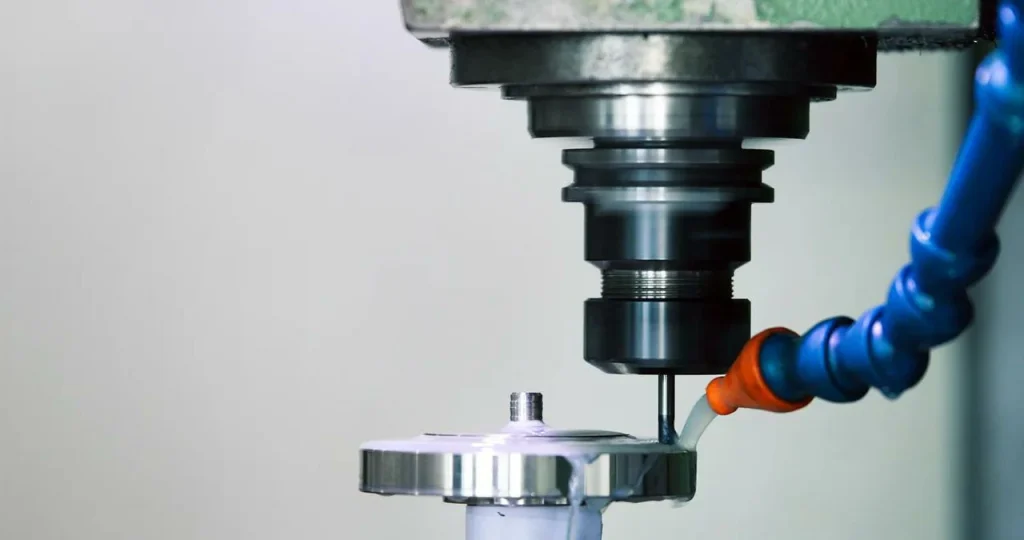
Safety, compliance, and limitations (what to verify)
PTFE coatings solve real problems, but they also bring compliance questions and known limits. This is where technical buyers should slow down and verify documentation.
Is PTFE coating food-safe? (What “food contact” depends on)
“Food-safe” depends on whether the specific coating system is compliant for food contact under the rules that apply to your market and use conditions. In the US, food contact materials are handled through FDA regulations, and fluoropolymer resins are addressed in FDA’s food contact framework.
From a purchasing standpoint, ask for documentation that ties the coating system to the applicable food-contact regulation, and confirm it matches your use case (temperature, food type, cleaning chemicals). Also confirm whether the coated surface will be cut, abraded, or otherwise damaged in service, because damaged coatings can create sanitation and foreign material risks.
PFAS context and compliance considerations
PTFE is part of the broader PFAS (per- and polyfluoroalkyl substances) family discussion. Regulatory attention on PFAS can affect reporting, restrictions, and customer requirements, even when the material is technically suitable.
For technical buyers, this becomes a documentation exercise. Common requests include material declarations, statements of PFAS content, and SDS packages for the coating system. If your customer has PFAS restrictions, you need to confirm whether any fluoropolymer coating is allowed, or whether the restriction is total. Do this before qualification testing, because requalification can be expensive.
Thermal limits, fumes/overheating risk framing, and safe operating practices
PTFE coatings are widely used at elevated temperatures, but overheating can create fumes and decomposition products. The practical control is to keep parts within the coating system’s stated operating limits and to follow SDS guidance for heating, ventilation, and handling.
If your process includes burn-off cleaning, high-temperature bake cycles, or fault conditions that can overheat a part, treat that as a design input. A coating that is safe and stable in normal operation may still create safety issues in abnormal overheating events. Align EHS review with the coating datasheet and SDS, not just the drawing callout.
Failure modes and repair/replace decisions: scratches, wear-through, delamination
PTFE coatings, known for their non-stick properties, tend to fail due to surface damage, wear-through, or loss of adhesion. The right response depends on whether the coating is cosmetic, functional, or a corrosion barrier.
| Failure mode | 通常の意味 | Repair/replace considerations |
|---|---|---|
| Scratches/gouges | Local loss of barrier and release; possible corrosion start | Replace if the scratch crosses a sealing land, sliding surface, or food-contact area. In non-critical release use, you may monitor. |
| Wear-through (polished spot, bare metal) | Coating used up in contact zone | Replace or recoat if friction, sticking, or corrosion returns. Check counterface roughness and load. |
| Delamination/peeling | Adhesion failure, often from prep, corrosion under-film, or flexing | Usually indicates a systemic issue. Recoat without fixing the cause often repeats the failure. |
| Blistering/pinholes | Film defects or contamination; barrier compromised | Replace or recoat depending on service. Investigate cleanliness and cure. |
How durable is PTFE coating against abrasion? PTFE coatings are often not the best answer for severe abrasion. They can wear through when abrasive particles are present or when contact pressure is high. If abrasion is the main driver, consider changing the contact design, adding shielding, or evaluating tougher fluoropolymer systems and multi-layer builds, then qualify by wear testing.
Cost, sourcing, and ROI (how to make a confident decision)
Cost and ROI should be handled like any other engineered finish: identify the cost drivers, then compare them to the failure costs you are trying to reduce (downtime, scrap, cleaning labor, corrosion damage).
What drives cost: part size/geometry, prep, masking, coating system, QC requirements
You cannot price a PTFE coating accurately from “part photo + quantity” alone because prep and masking can dominate effort. The cost drivers below are also the same items that drive schedule and rework risk.
| コストドライバー | Why it matters technically | What to specify to control it |
|---|---|---|
| Part size and surface area | More area to prep and coat; more thermal mass in cure | Provide dimensions, mass, and areas to coat/mask |
| Geometry complexity | Deep recesses and sharp edges increase defect risk | Provide drawings and highlight critical surfaces |
| Surface preparation needs | Adhesion depends on prep; special cleaning adds steps | State substrate alloy and any prior finishes |
| Masking requirements | Tight fits, threads, and contact areas need careful masking | Provide masking diagram and “no-coat” zones |
| Coating system build | Primer/mid/top choices affect thickness and performance | State performance needs (friction, release, chemicals, heat) |
| QC and documentation | Traceability and extra inspection add time | Define thickness/adhesion checks and records needed |
ROI model: downtime reduction vs coating cost
A simple ROI model for PTFE-coated parts should focus on the dominant failure cost you are trying to reduce, such as less downtime due to sticking or build-up, which is commonly addressed by PTFE coating services. Most often that is downtime from sticking/build-up, or rework/scrap from part damage due to friction.
Use this structure as a calculator concept:
- Baseline downtime cost per event = (lost production per hour) × (hours per stoppage) + (labor for cleaning/repair)
- Baseline event frequency = stoppages per month (or per run)
- Target reduction assumption = expected reduction in stoppages after coating (this must be validated by trial or history)
- Annualized benefit = baseline cost × baseline frequency × reduction assumption
- Annualized coating cost = coating cost per part × parts consumed per year (including spares)
The key point is to separate assumptions from measured results. If the “reduction assumption” is not grounded in plant history or a pilot, treat ROI as uncertain and qualify with a trial on a limited set of parts.
Vendor selection scorecard: certifications, process control, documentation, lead times
For engineered coatings, supplier selection is often about process control and documentation, not just capability.
Decision matrix (score each 1–5):
| カテゴリー | 何を見るべきか |
|---|---|
| プロセス制御 | Defined prep steps, controlled cure windows, documented parameters |
| 検査能力 | Thickness measurement method, adhesion checks, defect criteria |
| ドキュメンテーション | CoC, SDS availability, lot traceability when required |
| Experience with your geometry | Evidence of success on similar parts (threads, bores, tight fits) |
| Compliance readiness | Food contact documentation if needed; PFAS declarations if required |
| Change control | Ability to hold system constant or notify changes |
Checklist questions to ask:
- What thickness range can be controlled on your geometry, and where will it vary?
- How is adhesion verified, and to what standard or method?
- What defects are considered rejectable, and how are they handled?
- What is the recoat policy if parts need refurbishment?
Spec sheet template: what to include in an RFQ
Copy/paste template for an RFQ or drawing note package:
- Substrate: material and alloy, heat treat condition, and any prior coatings/plating
- Part description: drawing revision, quantity, and whether assemblies are coated assembled or as details
- Areas to coat: highlight functional surfaces; include photos or marked drawings
- Areas to mask (no coat): threads, grounding points, press fits, weld zones, seal lands
- Target coating family: PTFE / FEP / PFA / ETFE acceptable (or “coater to propose”)
- Performance needs: non-stick release requirement, low friction/dry lubrication need, chemical exposure list, corrosion protection intent
- Temperature exposure: normal operating temperature and any bake/clean cycles
- Thickness requirement: target range + measurement locations + allowable variation on edges/threads
- Surface finish requirements: any max roughness or “as-machined acceptable” note
- Inspection and acceptance: visual defect criteria, thickness method, adhesion check method
- Documentation: CoC, SDS, lot traceability, food-contact or PFAS declarations if required
Ending decision logic (feasibility summary)
PTFE (Teflon) coating is a good fit when you need a non-stick surface and low friction on a metal part, and PTFE coating has become the go-to solution for a wide variety of industrial and processing applications.It is often chosen to reduce sticking and improve cleanability, or to act as dry lubrication where oils are not allowed.
It becomes a weaker fit when abrasion is severe, when tight fits cannot tolerate added thickness, or when the geometry makes uniform coverage hard to control. The deciding factors are usually adhesion risk (substrate + prep), thickness planning (tolerance stack), and the real service conditions (load, counterface, chemicals, and temperature). If those three are defined clearly, you can specify and qualify a coating system with fewer surprises.
よくあるご質問
PTFE coatings are often described as heat-resistant, with many systems rated to withstand temperatures up to 260°C (500°F) for continuous exposure, and some even tolerate limits extending to 600°F, depending on the process. Some systems may tolerate even higher temperatures, with limits extending to 600°F depending on the specific coating system and conditions. It’s important to note that the actual performance limit is influenced by factors such as exposure duration, load during heating, and the specific cure method used. Always refer to the coating system’s datasheet and safety data sheets (SDS) for the most accurate specifications.
Machining can ensure precise geometry, but it does not guarantee non-stick or low-friction performance. PTFE coating is beneficial for CNC-machined parts when the geometry is correct but the part still experiences issues like binding, galling, or product accumulation. By applying PTFE coating, friction is reduced, and sticking is minimized, all without altering the base alloy or geometry. This ensures the part functions more smoothly while maintaining its strength and design integrity.
Yes, PTFE coatings can be applied to aluminum components. However, the success of the application is heavily dependent on the surface preparation. Aluminum naturally forms an oxide layer, which can interfere with adhesion if not properly prepared. The timing between cleaning and coating is crucial to prevent re-oxidation, and careful handling during preparation is required. Additionally, soft materials like aluminum are more prone to dents, which could crack the coating, so extra attention is needed to ensure durability in these cases.
The thickness of PTFE coatings varies depending on the specific coating system and the part geometry. It is typically specified in the mil range (thousandths of an inch). It’s essential to define an acceptable thickness range in the drawing specifications, indicating where the thickness should be measured and which surfaces should be masked. Without clear instructions, suppliers might deliver different builds that could alter the part’s fit and performance, leading to potential discrepancies in the coating’s effectiveness.
While PTFE coatings offer good wear resistance in many applications, they are not typically the best choice for severe abrasion conditions. PTFE coatings can wear through when exposed to high contact pressures or abrasive particles. If abrasion is the primary concern, it is recommended to rethink the contact design, incorporate protective shielding, or explore tougher fluoropolymer systems. Additionally, multi-layer builds or testing for wear resistance may be necessary to ensure the coating performs effectively in high-abrasion environments.


 Japanese
  English
  German
  French
  Italian
  Spanish
  Polish
  Czech
Czech